

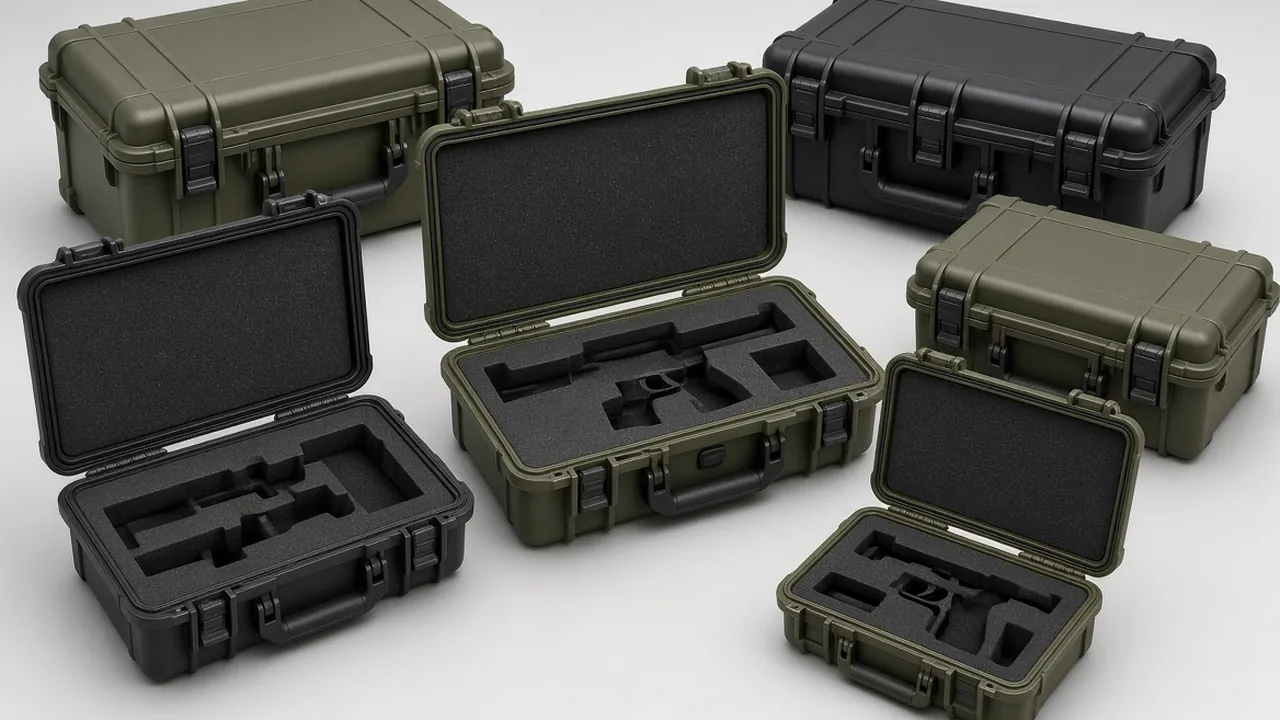
A command operations case is a dedicated equipment container built for field, emergency and mobile command scenarios, used to integrate communication terminals, display and control devices, power modules, cabling kits, positioning units and various command spares. These mission environments usually involve rapid movement, field setup, rough transit and harsh weather, so the equipment must transfer frequently with vehicles and personnel yet still unfold quickly into working capability on arrival. The core demand on a command operations case is therefore not merely to hold the gear, but to integrate scattered command items into a unified Equipment Cases: General Instrument & Gear Transport Protection system through modular design, achieving fast loading, reliable protection, orderly storage and efficient deployment. This article explains, from a container-engineering perspective, how command operations cases are specified across shell structure, modular integration, shock isolation, sealing, hardware, electronic protection and acceptance, referencing the design logic of Electronic Equipment Case: Vibration and ESD Protection to help command support units build a standardized storage and transport scheme.
1. Transit Pain Points and Protection Goals for Field Command Gear
Field command gear is characterized by mixed types, high value and strong interdependency. A single command operations case often holds a display, a computer, a switch, a radio, a power supply and cables at the same time; damage to any one item during transit can interrupt the entire command link. Mechanical vibration during transport can loosen connectors and harm the backlight and polarizer layers of precision displays. Moisture and sand erode interfaces and cooling openings, while stacking and handling shock can crush weak shell points. Against these pain points, the protection goals of a command operations case can be grouped into four aspects. The first is rigid load bearing: the shell must survive vehicle vibration, airdrop drops and multi-layer stacking. The second is modular integration: different functional items are zoned and tray-based so the interior forms its own system. The third is environmental isolation: sealing and dehumidification keep the interior clean and dry. The fourth is rapid deployment: after opening, item positions are obvious and retrieval is orderly, shortening setup time. Around these goals, the shell strength discussed in Case Shell: Structural Materials and Molding Process of Protective Cases and the liner zoning emphasized in Case Foam Lining: Cushioning and Customization of Case Interiors together form the capability base of the command operations case for demanding field use.
Looking at the whole life cycle, the container should also be evaluated by total cost rather than purchase price alone. A slightly more expensive shell with better ribs and a replaceable liner often costs less over five years than a cheap case that needs full re-lining or early retirement after hard field service. Units should therefore budget for consumables such as gaskets and foam, and for a small spare-parts kit, so protection does not quietly degrade once the warranty ends. Treating the case as a maintained asset, not a disposable box, is what keeps a command post ready through repeated deployments and seasonal climate swings without surprise failures at the worst possible time.
2. Shell Structure and Equipment-Case Integration
Within the equipment-case family, a command operations case usually plays the role of a main case: it must hold a lot yet dock with other sub-cases to form a complete storage and transport system. In shell material, engineered plastic cases are light and impact resistant, suited to maneuver units; aluminum cases offer higher rigidity and better shielding, suited to fixed command posts or vehicle rack integration. In form, the clamshell type is convenient for whole-piece access, the front-opening type suits operating devices in a half-deployed state, and the pull-out tray type lets display and control devices slide out as a unit for use. Selection should match vehicle compartment size, personnel carry ratio and deployment method, avoiding a case too large to enter the cabin or too small to hold the complete kit.
At the integration level, the main case and sub-cases should share unified stacking corners and limiting interfaces so multiple cases stack stably and quickly join into a work surface. For command cases that dock into vehicle racks, standard mounting holes and rails should be reserved so the case fixes directly into a cabinet or shelter. Consistent with the integration thinking in Industrial Equipment Cases: Oil Exploration, Nuclear Inspection, Surveying & Rail Maintenance, a command operations case should treat whether it fits the existing loading platform as a prerequisite rather than evaluating a single case in isolation, which is the only way to guarantee interoperability across the fleet.
Beyond geometry, the integration plan should also consider lead time and spare-parts strategy. Custom-molded main cases take longer to tool than standard cases, so units with firm deployment dates should freeze the kit list early and order shell tooling ahead of the liner processing to compress the schedule. A small number of spare liners and latches should be stocked so that a worn cavity or broken latch can be swapped in the field without returning the whole case to the factory. When several command posts share a common case family, standardizing dimensions and tray footprints across posts lets a tray from one case serve another during surge operations, which is a real advantage when casualties or losses occur. Planning for these operational realities at the procurement stage is what turns a well-designed container into a resilient, reusable asset rather than a one-off purchase that becomes a bottleneck the moment the mission changes.
3. Modular Integration: Zoning and Tray-Based Storage
Modular integration is what sets a command operations case apart from an ordinary gear box. Modularity means breaking the command chain into functional units such as communication, display and control, power supply and cabling, each occupying its own tray or independent cavity with standardized interconnects. The benefits are clear: load by unit, deploy by pulling out units, and maintain by swapping units, greatly reducing error probability. Tray-based storage also lets one case adapt to different task compositions by simply changing the kit inside a tray, which is a major advantage in fluid command scenarios.
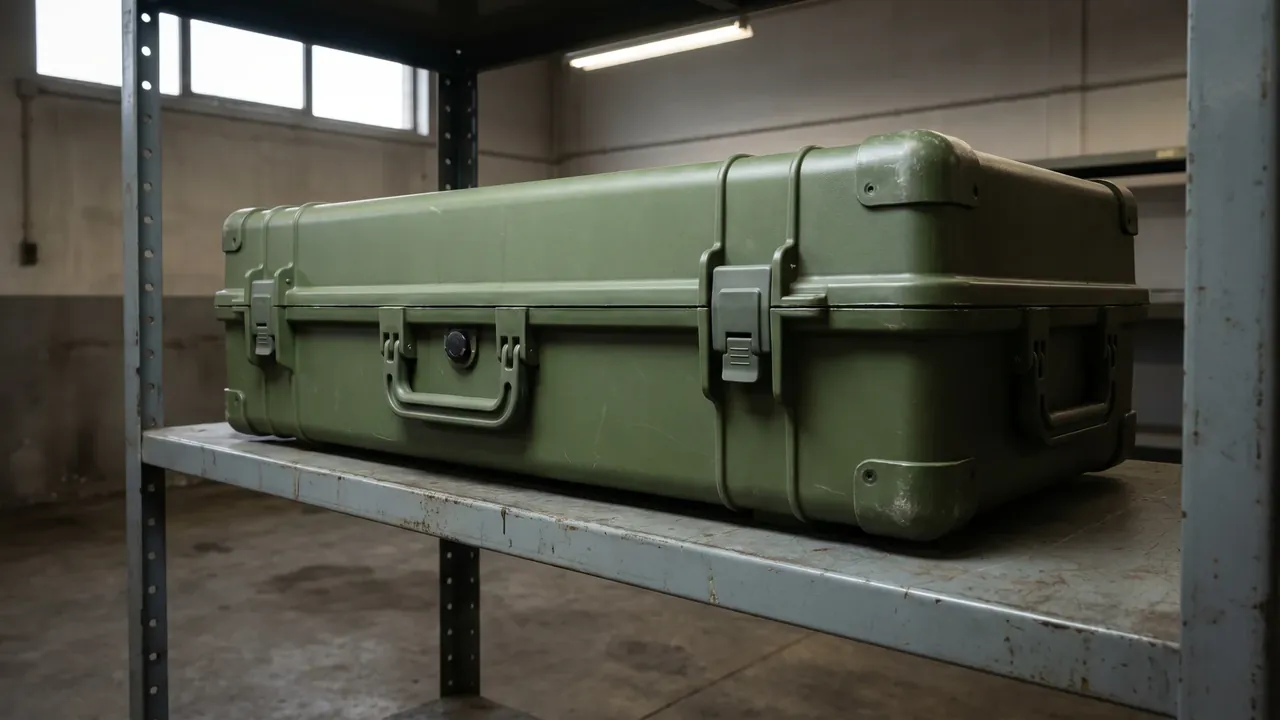
To realize modular integration, the liner must be milled precisely from the equipment 3D model and each unit restrained with elastic straps and limit blocks. For easy-to-loosen connectors, add buckles or hook-and-loop fixations inside the slot to prevent plugs from falling out in transit. Cables should be bundled separately in side pockets or cable channels to avoid pressing under devices and causing dents. Another key point of modular integration is leaving blank space: every tray should reserve redundancy for temporarily added items and consumables, avoiding on-site forced naked storage. The zoning logic can reference Equipment Case and Gear Case: Zoning and Internal Layout, upgrading command gear from loose piles into an orderly system with accountability for each item.
4. Shock Isolation and Impact Attenuation
The interior of a command operations case is mostly electronic devices sensitive to vibration and shock. The isolation idea is the same as an ordinary instrument case: through multilayer foam and elastic supports, external shock energy is absorbed in compression and damping, lowering peak acceleration transmitted to devices. But unlike pure optics, a command case stresses restraint in a half-deployed state, where some devices may be used with the tray pulled out and cantilevered, so the tray rails and limit mechanism must absorb operating vibration and prevent the device from sliding off the tray.
In materials, a high-density bottom foam carries the main buffer while a conforming top foam absorbs high-frequency jitter, and silicone pads or damping films can be added under key devices. Selection should set foam density from device weight and allowable acceleration, and verify with vibration-table and free-drop rechecks at acceptance. For long vehicle hauls, add cushion pads between case and vehicle and strap the case to limit sliding, forming a multi-stage isolation chain of vehicle, case, tray and device. The principle also applies to Shockproof Cases: Cushioning Structure & Impact Isolation Design, letting command units set a unified isolation acceptance standard for the whole inventory.
5. Sealing, Dust Control and Dehumidification
Field command often unfolds in sand, mud and high humidity, so sealing and dehumidification directly affect device life. A command operations case should carry a continuous gasket reaching IP65 or higher to block sand and splash. The gasket should be aging- and UV-resistant EPDM or silicone, inspected regularly for hardening and cracking. Paired with sealing, dehumidification matters: the case can have a desiccant bay or silica pocket with a humidity indicator card for real-time monitoring; for long storage or cross-climate transfer, an electronic dehumidification module can hold relative humidity in a safe band.
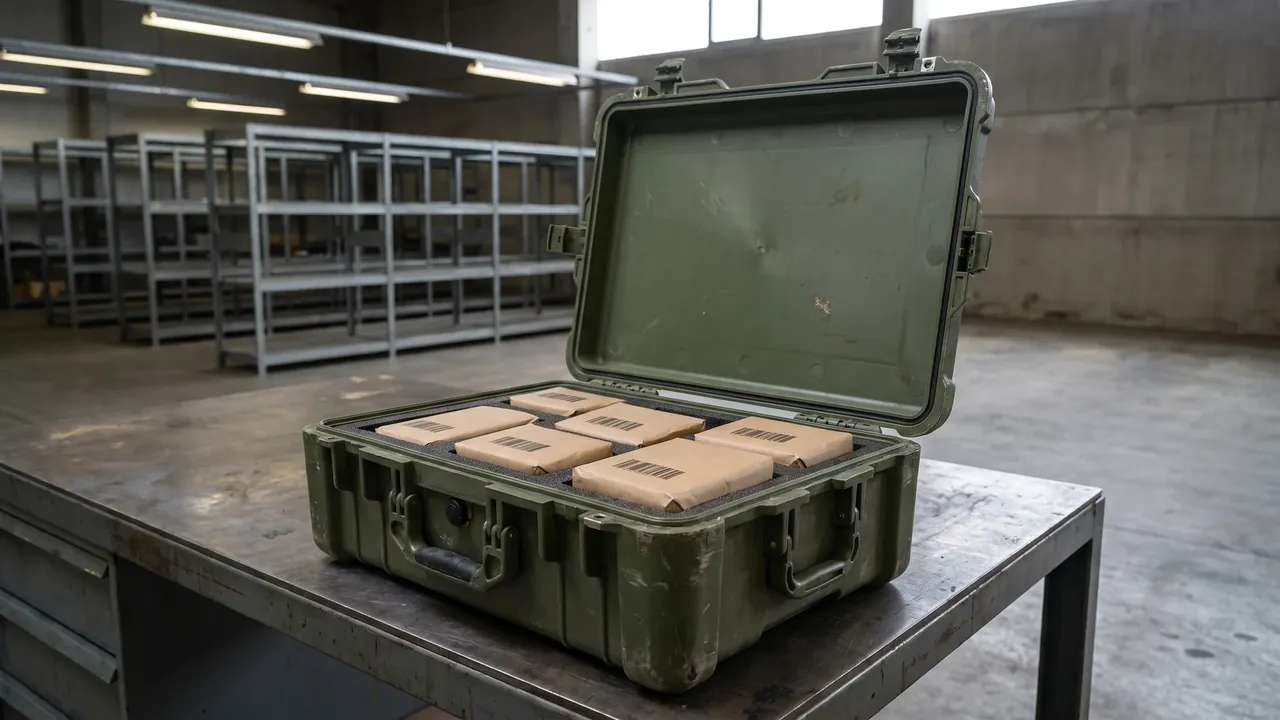
It must be emphasized that this article discusses only container-level sealing and dehumidification management and does not touch the internal circuits or working principles of any command device. Specific operation should follow the manufacturer's instructions and local regulations. In daily maintenance, after opening for use, reseal promptly and replace saturated desiccant to avoid massive outside moisture entry. If devices move from low temperature to warm humidity, let them warm gradually inside the sealed case before opening to reduce condensation. Gasket replacement and care can follow What to Do When a Protective-Case Gasket Ages, incorporating consumable management into the routine maintenance plan for continuous protection across the deployment.
6. Latch Pressure Resistance and Anti-Theft Configuration
A command operations case bears large loads in transit and stacking, so Case Latch: Pressure and Theft Resistance Hardware for Protective Cases must both resist pressure and deter theft. Common configurations include tongue locks, butterfly clasps and lockable anti-theft bases. For pressure, latch points should be symmetric so lid force is even, avoiding mid-bulge that breaks sealing; for large main cases, place multiple latch points on long edges and add lock pins at corners. For anti-theft, beyond mechanical locks, use wire seals, tamper screws and numbered lead seals so illegal opening during unattended transfer is detectable.
Selection details are in How to Choose a Protective-Case Latch: Types, Compression Points, and Selection Checklist. It must be clear that latches are only a physical barrier; real safety still relies on standard operation and full-process supervision. For cases loading high-value command devices, it is recommended to apply a one-time anti-counterfeit seal after closing and record the seal number on the handover sheet, forming a traceable security responsibility chain. Even after multiple handling and transfers, the box can be quickly judged whether it was abnormally opened, which is essential for accountable custody of sensitive equipment.
7. Stacking Corners and Vehicle Stacking Fixation
When multiple command operations cases stack in a vehicle or warehouse, Case Stacking Corner: Load-Bearing and Alignment Hardware for Stacked Cases ensures accurate alignment and load distribution. Stacking corners guide the upper weight to reinforcement ribs rather than weak walls, improving whole-stack stability while protecting internal devices from compression. Inside the compartment, cases should also be secured with straps, anti-slip mats and limit blocks to prevent the whole stack from shifting or tipping during hard braking or off-road bumps.
Stacking planning follows heavy-bottom, light-top, same-size-first, with a transition board for mixed stacks. For main cases with precise display devices, stacking height must be strictly controlled to avoid over-compressing the bottom case and weakening liner grip. Note that stacking only solves static load; dynamic bumping in transit is still absorbed by liner shock isolation, and the two cannot substitute. Consistent with the turnaround logic in Stackable Cases: Warehouse Turnaround & Stacking Protection, a command operations case should treat stable stacking and quick de-stacking as part of compartment loading design for safe movement.
8. Electronic Devices and ESD Protection
A command operations case holds many devices with circuit boards and semiconductors that are static sensitive. When handling in dry environments, the human body or packaging may generate electrostatic discharge that damages internal components. Therefore cavities carrying powered devices should use anti-static foam or a composite anti-static surface, with conductive webbing and ground tabs to route static to the shell. Operators should wear anti-static wrist straps before and after opening, following standard ESD procedures throughout the handling process.
The surface resistance of anti-static lining should be in a proper range, dissipating static without causing short-circuit risk from over-conductivity. For purely passive gear, excessive ESD treatment is unnecessary; the focus remains dust and shock. Distinguish the electrical nature of items before deciding lining to avoid needless cost and weight. This thinking aligns with Sensor Case: ESD and Shock Protection for Sensitive Elements, both emphasizing matching packaging material to the device. If the case holds both strong-current and weak-current units, also partition them to avoid cable cross-interference, which is a common but avoidable source of field communication faults during command operations.
9. RF Adaptation and Antenna Storage for Communication Gear
A command operations case often integrates radios, antennas and RF cables, which demand both electromagnetic environment and mechanical protection. On one hand, a poorly designed metal case may form a Faraday shield that hurts built-in radio reception; on the other hand, antennas are slender and easily bent, needing independent straight-tube or coiling storage to avoid bending fatigue. The solution is an RF bulkhead interface on the lid or side wall, letting the antenna feeder exit in a shielded way while keeping the case sealed and protecting the communication path.
Antenna storage can use a dedicated hard tube or flexible reel, with feeders bundled separately and labeled by band. Deployment connects quickly by label, and recovery returns items to the original place, reducing misoperation contact failures. Consistent with the RF adaptation logic in Communication Equipment Case: RF Compatibility and Protection Design, a command operations case handling wireless gear should weigh signal fluency and physical protection equally, and when necessary add a transmit-receive joint test at acceptance to confirm communication performance does not drop with the case closed, securing the mission link.
10. Labeling and Rapid Deployment
In command scenarios where setup time is counted in minutes, clear labeling sharply improves deployment efficiency. A command operations case should mark on the lid exterior the equipment name, model, weight, fragile and upward marks, with an internal contents list, tray numbers and connection diagram. Each tray can also be numbered so devices, cables and interfaces correspond one to one, avoiding field misconnection. For devices with calibration status, add valid or re-calibration tags to remind pre- and post-use checks.
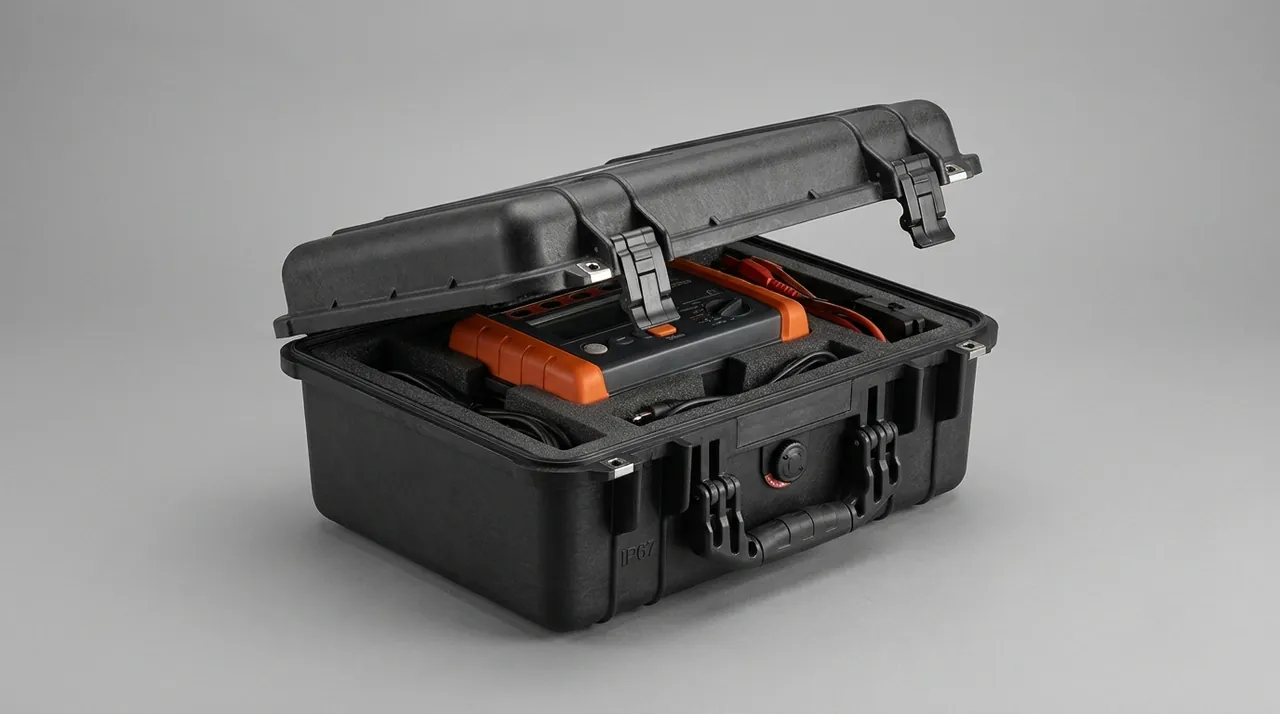
Modern management can introduce QR codes or RFID tags linking the case to an asset system for scan inventory and lifecycle tracking. Consistent with the inventory thinking in Spare Parts Case: Moisture Protection and Rapid Inventory for Critical Spares, a command operations case also benefits from standardized labeling and information management. Exterior labels should use weatherproof materials, and key warnings can be laser etched or use metal nameplates to avoid peeling after sun and rain. Binding labels to the deployment flow lets newly assigned personnel also complete rapid setup by following the diagram, which is a force multiplier for short-notice command openings in the field.
11. Temperature Tolerance and Environmental Adaptation
A command operations case must work in extreme environments, from plateau cold to desert heat, from coastal salt fog to rainforest humidity, so the shell and sealing system must endure. Engineered plastic shells generally perform across a wide temperature band but become brittle in cold and soften in heat, so check minimum and maximum service temperatures when selecting. The temperature grade of gasket and foam must also match the mission; avoid low-temperature hardening that loses seal or high-temperature sticking that binds lining, both of which degrade protection over time.
Salt fog strongly corrodes metal fittings; aluminum-magnesium shells and steel latches need anti-corrosion treatment, and where possible choose all-plastic shells with non-metal latches to reduce rust risk. Rainforest humidity tests drainage and anti-mold ability; the case bottom can have drain holes and hydrophobic lining to prevent water pooling. For missions across large temperature differences, conduct high-low temperature cycling tests to verify structural integrity and sealing after abrupt changes. An environment checklist that drives design is the fundamental guarantee of command operations case reliability in every climate the unit may operate within during extended deployments.
12. Carry and Mobility: Wheels, Frames and Man-Portable Load
Field command stresses mobility, so the carry design of a command operations case cannot be ignored. Medium main cases usually have wheels and a telescoping handle for towing on smooth roads; heavy main cases can add fork pockets or lifting rings for vehicle loading. For cases that must be carried by one person into complex terrain, ergonomic shoulder straps or external mount points should let the case integrate with a frame pack, keeping the center of gravity close to the back to reduce fatigue during long moves across rough ground.
Carry design must balance with protection: wheel and handle mounts must not weaken shell corner strength, and external mount points must avoid becoming leak points on the seal face. Selection should measure loaded carrying comfort and decide whether a lightweight shell or split-case strategy is needed based on expected carry distance. Similar to the loading thinking in What Belongs in a Car Toolbox? A Driver's Complete Loading Checklist, the carry configuration of a command operations case should also revolve around how it is actually used rather than paper specs alone. A reasonable carry scheme significantly improves a unit's mobility and sustained operational ability in complex terrain where vehicles cannot reach.
13. Certification Standards and Quality Acceptance
Although a command operations case is a packaging container, its reliability is often verified by general protective-case standards. Common ones include IP rating, MIL-STD-810H environmental engineering and test methods, and relevant domestic military and industry specifications. These standards use drop, vibration, spray, sand, salt fog and low-pressure tests to simulate real transit and use stress. Buyers can request corresponding test reports from suppliers as objective quality evidence when evaluating bids for a command fleet.
At receiving inspection, establish a simple flow: check shell for cracks and deformation, verify latch smoothness, confirm gasket integrity and fit, confirm liner slots match devices, and check lid-gap at empty and loaded states. For high-value main cases, do vibration-table and free-drop re-check on first article to confirm isolation and sealing before batch issue. Note that this article discusses only the packaging container's structure and performance; cross-region transport of related equipment must follow local regulations and export control, assessed separately by the user. This article does not address any performance parameters of the contained devices, keeping the discussion strictly within the container engineering scope and compliant with applicable trade rules.
Frequently Asked Questions
Q: What is the essential difference between a command operations case and a normal gear box? A: The essential difference lies in integration level and mission orientation. A normal gear box mainly stores a single class of tools or devices with low requirements for lining fit and modularity, while a command operations case serves communication, display, power and cabling devices together, and its core is to integrate scattered equipment into one case through modular and tray-based design for fast loading, reliable protection and efficient deployment. It is stricter on shell rigidity, liner zoning, shock sealing, latch pressure and stacking integration, often milled one-to-one from equipment 3D models and reserved with stacking corners and vehicle mount interfaces so multiple cases join into a work surface. Therefore a command operations case is not merely about fitting items in, but about integrating stably, protecting firmly and deploying quickly, with design serving the uninterrupted command link as the fundamental goal of the whole container system. The practical payoff is that a damaged or delayed main case can stall an entire command post, so the container is engineered as a mission enabler rather than a passive storage box that simply holds gear until the next move.
Q: How should modular integration be implemented in practice? A: Modular integration is implemented by breaking the command chain into functional units such as communication, display and control, power supply and cabling, each occupying its own tray or independent cavity with standardized interconnects. Load by unit, deploy by pulling out units, and maintain by swapping units, which greatly reduces error probability on a busy field setup where time is scarce. The liner should be milled precisely from the equipment 3D model, with each unit restrained by elastic straps and limit blocks; easy-to-loosen connectors get buckles or hook-and-loop fixations, and cables are bundled separately in side pockets or channels to avoid pressure damage. Every tray should reserve redundancy for temporarily added items and consumables, avoiding on-site forced naked storage that invites loss. Modular integration lets one case adapt to different task compositions by swapping tray contents, which is the key step that upgrades scattered gear into an orderly system with clear accountability for each component during the mission and makes cross-training of new operators substantially easier under pressure.
Q: How is electrostatic protection done for electronic devices inside a command case? A: Electronic static protection works from both lining and operation. Cavities carrying powered devices should use anti-static foam or a composite anti-static surface, with conductive webbing and ground tabs routing static to the shell for safe release instead of accumulating on sensitive boards. Operators should wear anti-static wrist straps before and after opening and follow standard ESD procedures, avoiding direct contact with circuit boards in dry environments where discharge risk is highest. The surface resistance of anti-static lining should be in a proper range, dissipating static without short-circuit risk from over-conductivity that could itself harm components. For purely passive gear, excessive ESD treatment is unnecessary; the focus remains dust and shock. If the case holds both strong-current and weak-current units, also partition them to avoid cable cross-interference that degrades signals. Distinguishing the electrical nature of items before deciding the scheme avoids needless cost and weight while better matching actual protection needs for reliable field command support across varied climates and terrains.
Q: How are communication antennas stored inside a command operations case? A: Communication antennas are slender and easily bent, so they need independent storage inside the case to avoid bending fatigue that could break elements during rough transit. A common method is a dedicated hard tube or flexible reel that fixes the antenna straight or coiled, with feeders bundled separately and labeled by band so recovery is intuitive. The case can have an RF bulkhead interface on the lid or side wall so the feeder exits in a shielded way, keeping the seal while not hurting communication performance of the built-in radio. Deployment connects quickly by label, and recovery returns items to the original place, reducing misoperation contact failures that waste precious setup minutes. Note that a poorly designed metal case may shield signals, so RF adaptation and protection design must be considered together from the start, and when necessary add a transmit-receive joint test at acceptance to confirm performance does not drop with the case closed, truly balancing signal fluency and physical protection for the link.
Q: Can command operations cases be stacked in multiple layers, and what are the limits? A: Stacking is allowed but must use stacking corners and never exceed the rated load marked by the manufacturer for safe field use. Stacking corners align upper and lower cases precisely and guide weight to reinforcement ribs rather than weak walls, distributing static load and improving whole-stack stability during long convoy moves. Stacking should follow heavy-bottom, light-top, same-size-first, with a transition board for mixed stacks, and secure the whole stack with compartment straps and anti-slip mats to prevent shifting. For main cases with precise display devices, stacking height must be strictly controlled to avoid over-compressing the bottom case and weakening liner grip on fragile equipment. Emphasize that stacking only solves static load; dynamic bumping in transit is still absorbed by liner shock isolation and cannot be substituted by any stacking hardware. Never exceed the manufacturer marked stacking limit, and re-check alignment and strapping after every loading to keep the column safe during movement across rough terrain and unexpected braking events.
Q: Does gasket aging affect the use of a command operations case? A: Yes, directly and often sooner than operators expect in harsh field conditions. After gasket aging the surface hardens and becomes brittle, cracks appear or elasticity is lost, and it cannot rebound after compression, so local gaps may appear after lid closure, reducing dustproof and waterproof capability; in spray or sand environments moisture and particles enter and erode interfaces and devices. Once these signs are found, handle promptly: remove the old strip, clean the channel residue, then install a same-cross-section, material-matched gasket with continuous no-break around the perimeter to restore the face seal. After replacement, do closure compression check and simple spray verification before returning the case to service. Daily maintenance should avoid sand embedding and organic solvent wiping to extend life. Replacement steps can follow the gasket aging guide, incorporating consumable management into routine maintenance so the command operations case keeps its continuous protection ability through the entire deployment cycle without unexpected failure at a critical moment.
Q: What documents should be requested when purchasing a command operations case? A: When purchasing, request three categories of documentation to support a defensible buying decision. First, material and structure description covering shell material, liner scheme, latch and stacking corner configuration, and vehicle mount interfaces, to judge whether weight and environment requirements are met by the proposed design. Second, protection performance test reports such as IP rating, MIL-STD-810H or corresponding national military standard items for drop, vibration, spray, sand and salt fog, as objective reliability evidence rather than marketing claims that cannot be verified. Third, customization and integration capability description, such as CNC slotting from equipment 3D models, anti-static lining support and RF bulkhead interface availability for wireless gear. After receipt, users should establish a simple acceptance flow checking no cracks, complete seal, matched slots, and do first-article vibration and drop re-check for high-value main cases before batch issue, avoiding mismatch that could disrupt the mission at a critical moment when replacement is impossible. Keeping these documents together with the case also simplifies later audits, warranty claims and fleet expansion, which matters as the inventory grows and responsibilities shift between units over the service life of the container family.
Q: How should a command operations case be fixed during transport to be secure? A: Transport fixation works at two levels: the case itself and the compartment environment where it rides. The case itself must have all latches compressed, the gasket fitted, and internal trays and devices limited by straps to avoid sliding during transit that could concentrate impact at one corner. At the compartment level, place the case upright or in the marked orientation, secure it with straps through handles or limit rings, and add anti-slip mats and limit blocks at the bottom to prevent the whole stack from shifting or tipping during hard braking or off-road bumps. Multi-case stacking aligns stacking corners with heavy main cases at the bottom for stability. For air or high-altitude transport, fit a breathable valve with waterproof membrane to balance pressure and reduce latch burden on the lid. After fixation, do a light push test to confirm no looseness, then record the transport list and seal number on the handover sheet for a traceable security responsibility chain that survives every transfer and handover.