

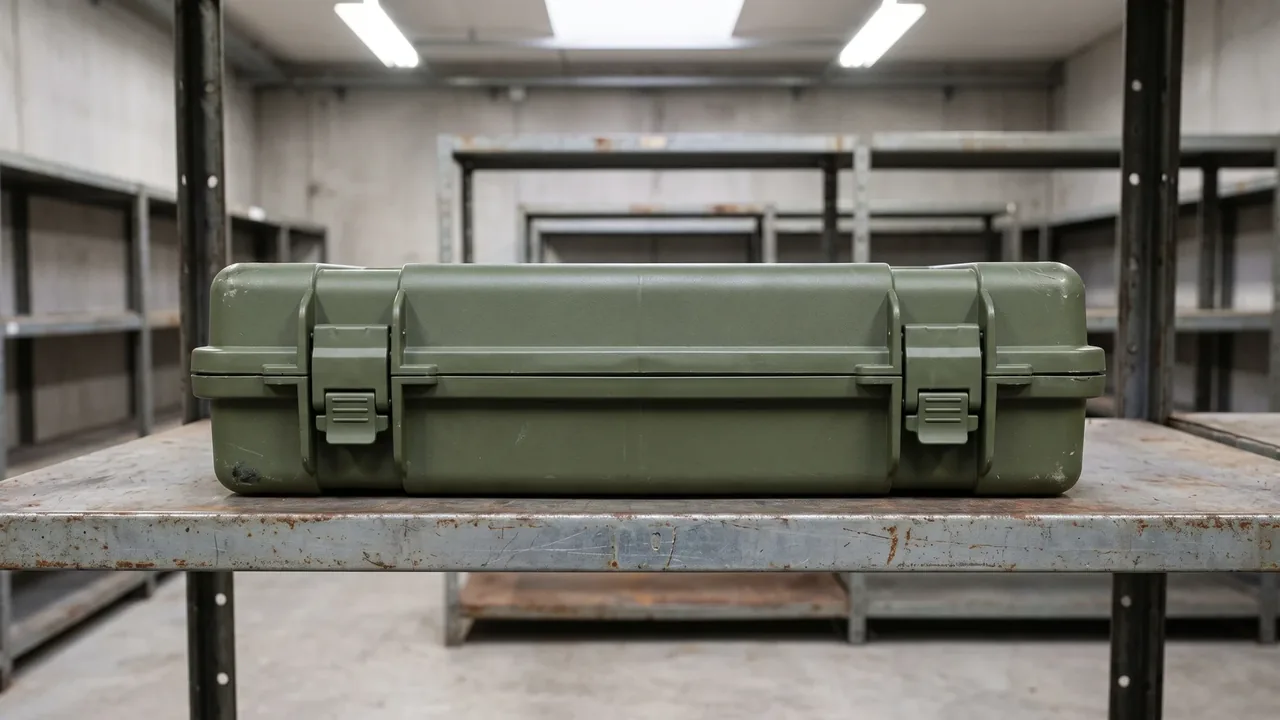
A spare parts case is a purpose-built equipment case for fleet workshops, depot support units, and overseas sustainment points, keeping critical replaceable components tidy, dry, and quickly accounted for. The discussion stays with the protective container: shell materials, sealing, cushioning liners, stacking, and labeling treated as engineering problems, not a description of any stored item's physical or chemical make-up. Where a shipment crosses a border, local regulation and export control apply, and the packaging container is all that is covered here. The case acts as both a transport unit and a small inventory node, and how well it is designed drives departure preparation time and the rate of first-time fixes in the field. Treating it as a working part of the support system, rather than a passive box, is where reliable operations begin.
A spare parts case should be specified along the whole custody chain, not at a single moment. Between a component leaving its supplier and being fitted in the field, the container is the only steady environment the spare ever sees, so its design sets the floor for the condition on arrival. That custody view is why shell, seal, liner, and label carry equal weight: a rigid shell with a poor seal still lets humidity in, and a flawless seal with no location scheme still burns minutes during a breakdown. Procurement should therefore demand a matched set of performance data covering drop height, stack load, ingress protection, and label durability, and should turn down cases that offer only one headline figure. Units that work this way tend to settle on a small family of case sizes, which eases crew training, trims the number of spares kept for the cases themselves, and simplifies lending between points. The reward is a support chain that audits cleanly and activates fast when the clock is already running, because everyone knows where each critical part lives. Steady ageing is another benefit: with one standard family, the depot stores a single line of seals and catches instead of a long tail, so replenishment stays cheap and predictable. A case family chosen with that discipline also travels better through audits, because the same specification can be checked against each delivered box without reopening the original negotiation, and it gives a new depot a single reference point when it takes on the stock. Over time this steady approach turns the container from a recurring cost into a settled part of the support budget.
The Role of a Spare Parts Case
The head-line task of a spare parts case is to give critical spares a steady, controlled home so a maintenance crew can put a hand on the right component within minutes, in a workshop, a depot, or the field. Different from a plain storage bin, it weighs protection against traceability: protection means surviving drops, crushing, rain, and dust, while traceability means every compartment and part carries a legible location label. A vehicle fleet usually keeps the case in the cab or on the bed, so it must be light yet take a hit. An overseas sustainment point adds heat, damp, and salt spray, which pushes sealing and corrosion resistance to the top of the requirement. Start planning by profiling the spares for size, weight, and environmental sensitivity, then pick case size and liner to match, rather than tipping everything into one big box. A spare parts case is never a catch-all, and going past its rated load or protection grade erodes reliability, so drawing the line between what it is for and what it is not matters just as much. As the inventory grows, add a small group of cases by trade rather than one huge box nobody can search in a hurry. A short written brief for each case, listing what it is meant to hold and what it must never hold, saves a great deal of argument later when new staff inherit the stock.
Picking a Shell: ABS, PP, or Aluminum
A case's weight, stiffness, and ability to resist weather all trace back to the shell. ABS engineering plastic moulds to close tolerances and takes a finish nicely, which suits injection shells whose liners must sit exactly. PP polypropylene brings more toughness and low-temperature impact strength, and at the same wall thickness it is lighter, so it is a favourite for a case lifted by hand day after day. Aluminum gives the most stiffness and the highest protection grade, at the cost of weight and price, which is why it usually stays in fixed or heavy-duty storage. A wider discussion of material and moulding sits in Case Shell: Structural Materials and Molding Process of Protective Cases. In the field, maintenance points mostly pick PP or ABS injection shells, since they neatly balance damp resistance, drop survival, and cost; when the spares include sensitive electronics, an anti-static foam layer can go into the liner, but the container is all this text addresses and the electrical behaviour of any stored item is out of scope. Match the material to the temperature band as well: cold country favours PP for its resistance to cracking, while a need for rigidity may justify aluminum after a proper review. Wall thickness and rib pattern count for as much as the resin, so ask for a cross-section drawing before placing a large order.
Sealing Against Moisture
Of all the threats to spares, moisture is the greatest, especially through the rainy season and on sea freight, since condensation inside quickly invites rust on metal parts. Two paths must work together. The first is the Case Seal Strip: The Key Waterproof and Dustproof Accessory for Protective Cases, which lays a continuous face as the lid shuts and keeps outside vapour out. The second is a desiccant bag or humidity card inside, which soaks up what moisture is left and shows its level. Seal strips are elastomers, and both their compression set and their ageing cycle matter; once rebound is lost after long compression, sealing is gone. The structure behind immersion protection is set out in Waterproof Cases: Sealing Structure & Immersion Protection, and the meaning of a rating code in What Is an IP67 Protective Case? Core Protection and Selection. Sealing guards the interior volume only, and the chemical stability of any stored item is outside this text. Around salt spray or heavy damp, check the seal seam for gaps and change the desiccant the moment it saturates, so moisture control stays a closed loop instead of a one-off step. Logging the humidity card at each open-close turns a vague sense of dryness into a record that can be audited.
Foam Cushioning and Zoned Cells
Parts such as bearings, sensors, and connectors are easy to hurt, and transit vibration is a quiet source of damage. Cushioning comes from the Case Foam Lining: Cushioning and Customization of Case Interiors, whose cutouts hold each part in a pocket of its own so nothing knocks together. Where the inventory is mixed, the Can You Add Dividers to a Protective Case? Designing a Removable Divider System idea lets a crew rearrange cells without fresh tooling. Zoned storage cuts damage and helps counting too: every cell lines up with a label, and the location code matches the part number. EVA and PE are the usual liner foams and behave differently in bounce and in water take-up, so the maker should set density from part weight and shape. A sound liner also keeps a margin of travel, so on impact the foam gives and soaks up the energy rather than passing the jolt to the spare. Layered liners hold heavy parts low and light parts high, which prevents crush damage. When one case serves several trades, colour-coded inserts let crews change the interior for the day's job while the outer shell keeps its standard.
Fast Counting: Labels, Cells, and QR Codes
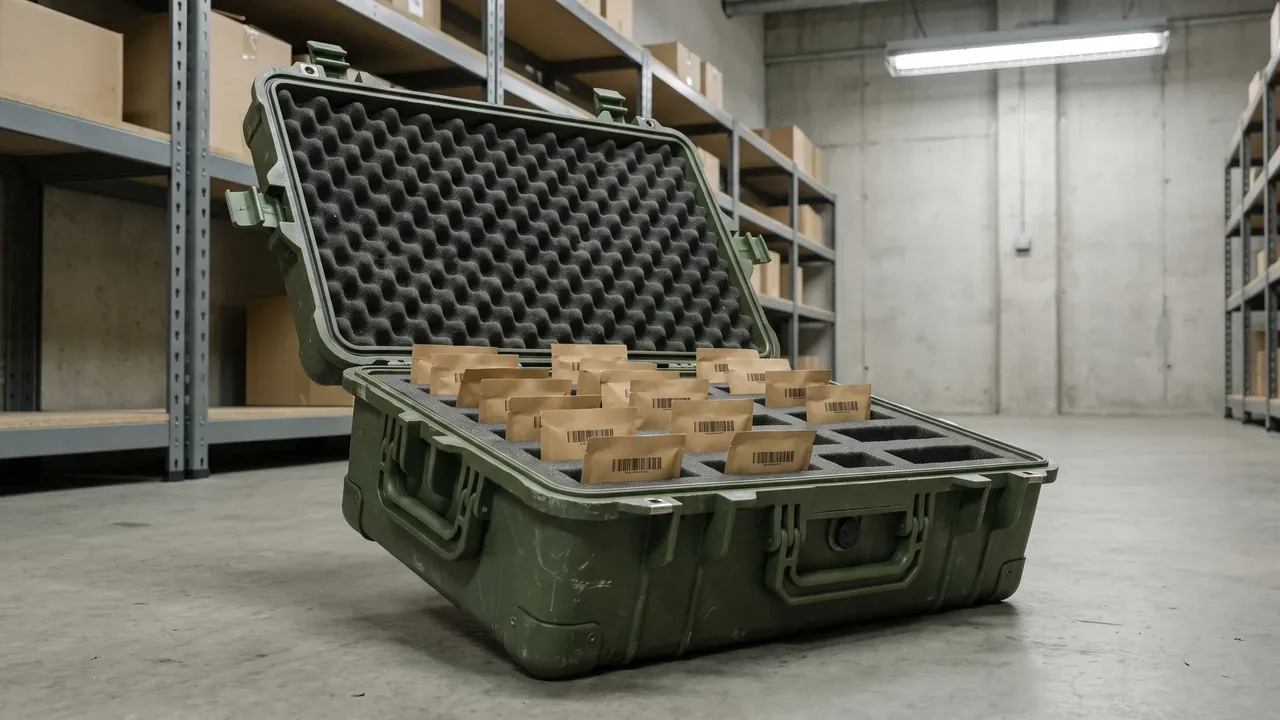
Fast inventory is what marks out a spare parts case from an ordinary toolbox. When a crew must confirm in seconds that a given seal is inside before rolling, the labeling has to suit both the eye and a scanner. The basic layer is a weatherproof label per cell giving name, model, and quantity. The advanced layer brings in Digital Management for Protective Cases: Asset Numbering and QR Code Traceability, putting a unique QR code on every case and cell so a handheld reader can check items in and out. Speed comes from one standard: fixed positions, matching labels, and a single coding rule, so any shift searches the same way. With several cases in play, QR codes also tie the transfer history together and stop both duplicate orders and silent gaps. Label stock needs to stand up to oil and scuffing, and a silk-screened category word on the shell helps from across the room. Put the counting routine into the support spec, naming when the weekly, monthly, and pre-departure checks fall due, so the QR habit lives in daily work rather than on a shelf. Replace worn labels to the same template, or the coding slips and the speed advantage fades. In practice the strongest results come from treating the label, the liner cell, and the QR record as one system designed together, so a part's physical home and its digital entry always match, which removes the mismatch behind most counting errors. Reviewing the whole scheme once a year against real repair traffic keeps it aligned with how the workshop actually works.
Sorting Critical Parts and Laying Out Cells
Good classification moves a case from barely fits to easily found. The useful axes are function, how often a part is consumed, and how critical it is. Frequently changed parts belong in the top cell you reach as the lid opens, while critical-path parts want a locked or separate cavity so they are not mis-picked. Position planning can take the long-keeping principles from Storage Cases: Long-Term Keeping and Warehouse Management, sinking low-frequency items and bringing high-frequency ones forward. For standard fasteners, the cell logic of Screw, Nut & Bearing Parts Boxes: Fastener Sorting drops straight into the liner grid. Classification is not a one-off; a depot should keep tuning positions from repair records so the contents mirror real consumption. As spares multiply, widen the case group before adding height, keeping reach and count speed intact so one case never becomes a junk drawer. A handy rule is that no cell should take more than two moves to reach, which keeps a full case quick to serve even on a night breakdown.
Stacking, Transport, and Shock Control
Cases are stacked in warehouses and on trucks, and how steady the stack is comes down to the Case Stacking Corner: Load-Bearing and Alignment Hardware for Stacked Cases at the corners, which passes load between layers and gives an alignment stop against drift. The general approach is in Stackable Cases: Warehouse Turnaround & Stacking Protection. Vibration on the road is shared between shell stiffness and liner; Shockproof Cases: Cushioning Structure & Impact Isolation Design sets out the buffer layering. Layers must keep inside the rated stack load, since overload flattens the lower seal strip and leaves hidden deformation, so weigh and measure each load and lash the cases down against sideways movement. On long runs, allow for the road spectrum and the vehicle's suspension, and slip an anti-vibration pad between case and vehicle where needed, which cuts high-frequency transfer to the spares and stretches their usable storage window inside the container. Print the height limit on the case panel so a temporary loader does not overrun it at the dock.
Climate Control and Safety Stock
The case doubles as a small inventory node for the support point. The safety-stock reasoning in How Should Protective Case Inventory Be Planned? Setting Safety Stock for Common Specifications carries over directly to the minimum holding of critical spares inside the case. A humidity indicator or a compact logger lets a crew spot an abnormal interior state early, say when the desiccant fails and humidity rises. How Should Protective Cases Be Stored? Moisture and Sunlight Rules for Warehousing makes the point that protecting one case and managing the warehouse are two halves of the same job. Safety-stock figures should come from consumption history and replenishment lead time rather than a guess, so busy spells do not run dry and quiet spells do not pile up. For spares with a seasonal swing, use dynamic safety stock and lift the floor ahead of peak maintenance. Logger traces also serve as traceability evidence that the spares stayed in a controlled environment throughout. Pair the case with a short consumable list so the crew can order desiccant and seals on one purchase order instead of chasing them when the indicator first turns.
Latches, Corners, and Securing the Load
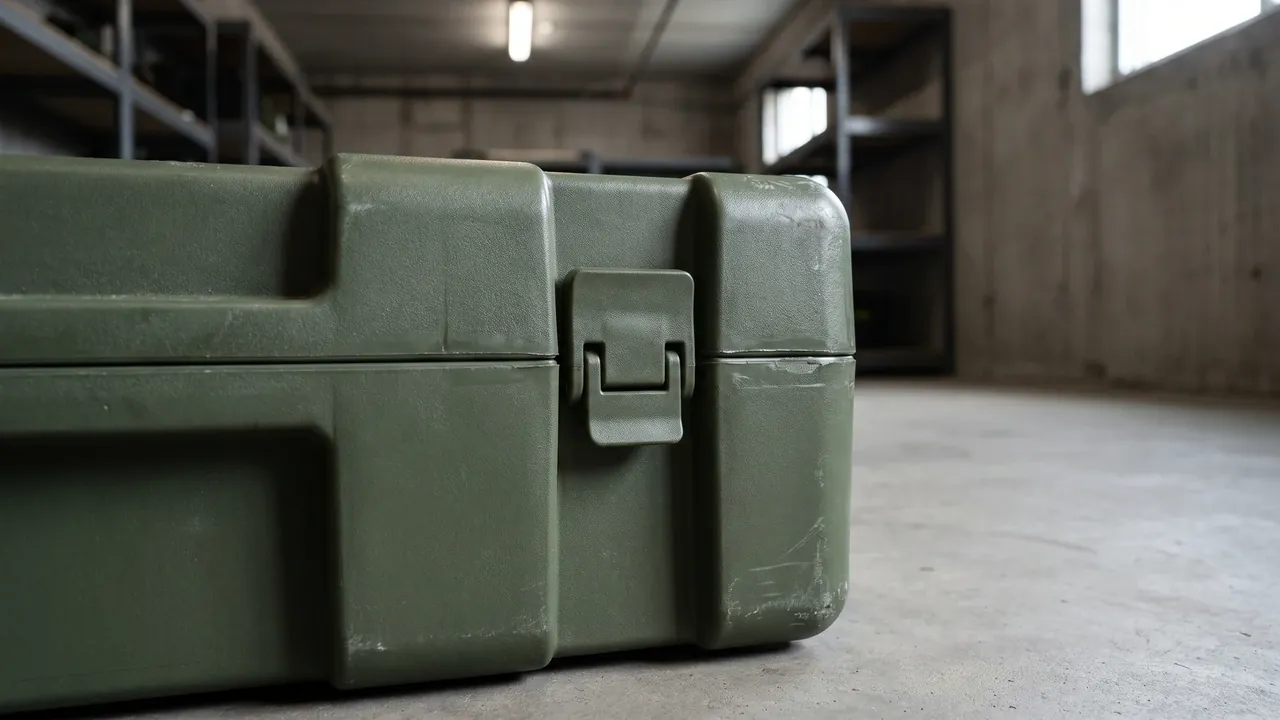
In transit the case has to beat both theft and a lid that opens by accident. Case Latches: Holding Pressure and Resisting Theft covers latch pressure and anti-theft design. A press latch is fine for daily use, while a holed latch takes a cable seal or padlock where accountability matters. Stacking corners came up earlier; with the latches they make the outer skeleton, one controlling opening and the other controlling stacking. For fixing, run webbing through the carry handles or the purpose-cut slots so the case holds its place under hard braking and rough ground, clear of knocks against neighbouring cases or the truck side. A case kept long-term in a vehicle can gain anti-slip feet to damp resonance. At a shared support point, put the seal number and handover note into the ledger, so every opening traces to a named person and both theft and wrong picks are discouraged. Check latch tongues for cracks at each quarterly service, since a latch that fails in transit can spill the liner and turn a tidy inventory into a roadside scramble.
Reading the Marks: IP67, GJB, MIL-STD-810H
The familiar certification marks are IP67, GJB, and MIL-STD-810H. IP67 means the case survives limited-depth immersion without ingress, a direct read on sealing. GJB, the domestic military standard, sets defense-compliance and environmental and mechanical test requirements, detailed in GJB Military Standard Cases: China Defense Compliance & Testing. For the temperature shock, vibration, and drop logic, What Does MIL-STD-810 Testing Cover? How Protective Cases Comply is a thorough walkthrough. Certification proves the container under the given conditions only; whether a stored item meets trade or export control is not judged here and follows local law. Ask for the original test report rather than accepting a nameplate when comparing grades. At the same rating, makers vary widely in seal design, wall thickness, and latch count, so the specific test conditions in the report outweigh the code as a buying input. Keep a one-page summary of each certificate beside the ledger, so an auditor or a new hand can confirm the grade without a filing-system hunt.
Standard Handling Within the Equipment Case Family
A spare parts case is one member of the equipment case family, and standard handling is what multiplies its worth. Field Camp Case: Living and Equipment Storage for Field Bivouac shows case groups working together in the field; Logistics Support Box: Modular Resupply Configuration argues for resupply organised by module. With Reusable Shipping and Storage Container: Economics of Returnable Logistics, a depot can loop the same cases between warehouse, vehicle, and site and cut one-way packaging waste. A common box type, label, and liner module mean later batches swap cells and parts, shrinking the count of non-standard items on the support chain and lifting response speed. Where several trades share one case standard, spare transfers and temporary loans between points become practical, further compressing prep time and improving asset use across the chain. The gain is sharpest when demand spikes and a replacement crew can pick up a familiar arrangement at a glance instead of feeling their way around a strange box.
Colour Coding for Quick Recognition
Stand a row of cases together and colour becomes the quickest way to sort them. Custom Colours for Protective Cases: Pantone and Masterbatch Notes shows custom colouring can be ordered. A spare parts case can be tinted by trade, drivetrain in one shade and electrical in another, with a silk-screened word so a crew reads the contents from a distance. Colour backs up the label system but cannot take the place of location codes, since shade drifts in low light or with age. Once decided, the scheme goes into the support spec so later orders keep the palette and avoid same-colour, different-class mix-ups. A civilian box taken on temporarily can carry a coloured ring or face strip to mark ownership, though the factory palette is best over the years. Colour can also carry a warning meaning, tagging restricted content in a set hue; this article covers container identification only, not the control classification of the contents. Keep a printed colour chart in the depot so a faded case can be matched to the standard rather than guessed at in poor light.
Upkeep, Cleaning, and Worn-Part Swaps
A spare parts case lasts well but is not maintenance-free. Spare Items for Protective Cases: A Stocking Reference names the seal strips, latch tongues, and handles to keep in stock. Routine care means looking the seal over for deformation, clearing dust from the liner, and keeping labels readable; swap the strip once it hardens or a latch loses rebound. Ten Common Faults to Spot in Protective Case Purchasing helps catch thin walls and weak latch welds at intake. Protective Case Longevity: The Deciding Factors points out that life follows material, usage, and environment, and that clean, correct storage adds years. Use a neutral detergent instead of a solvent that attacks seal and shell; before a long stand-down, dry the liner, renew the desiccant, and keep the case off the floor so it is usable when called upon. A short care card in a clear lid pocket shows any handler the steps the moment the lid opens.
Common Questions
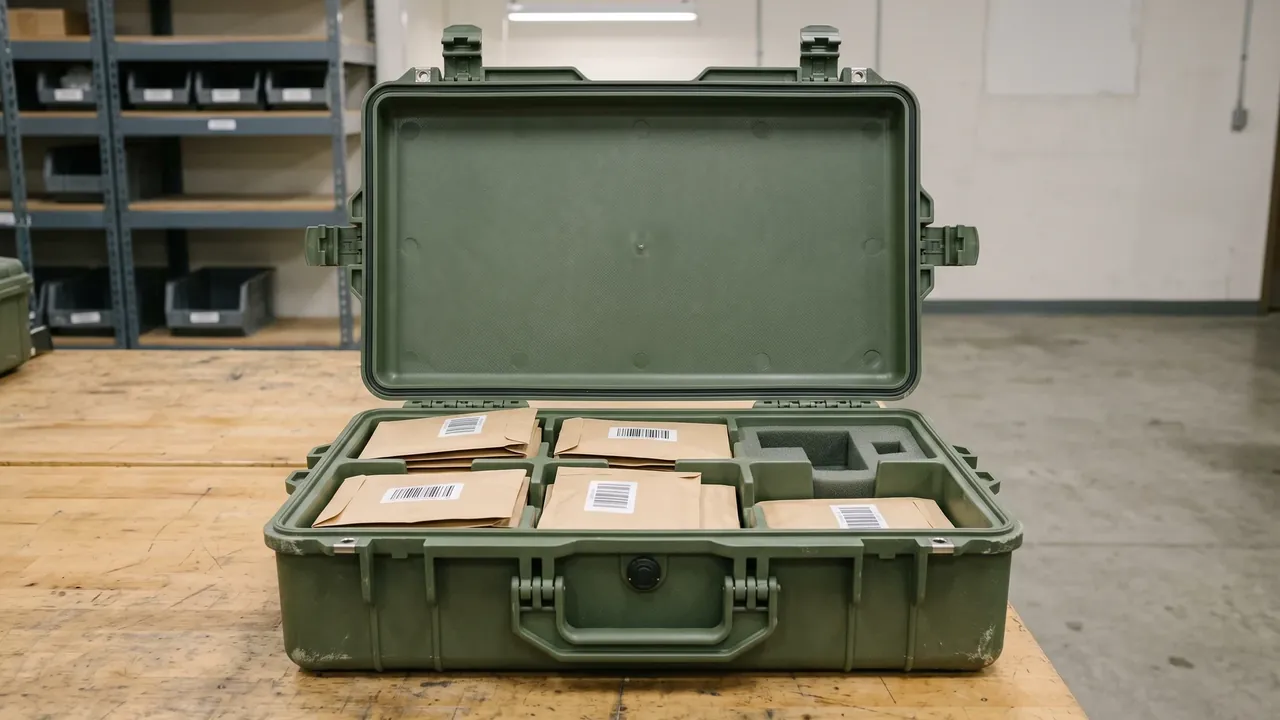
Q: How is a spare parts case different from a normal toolbox? A: The split comes down to purpose and management logic. A toolbox holds everyday hand tools and prizes easy access and portability. A spare parts case keeps critical equipment running without stoppage, storing bearings, seals, connectors, and modules, so it emphasises damp resistance, shock isolation, traceability, and fast counting. At container level, a spare parts case usually carries a fuller seal, a zoned liner, and location labels, and often a QR asset code, where a toolbox is an open rack. For a support unit, choosing a spare parts case means standardising and digitising the find-the-part step, which shortens departure prep and improves stock visibility. Only the container structure is covered here, not the technical parameters of any stored item; where trade rules apply, local law and export control govern. Keep procurement, acceptance, and the ledger apart from tool management too, or mixing consumables with tools blurs the count and hides a real shortage. In practice a workshop needs both, but the case is the one that travels to the breakdown.
Q: Which shell material should I choose for a spare parts case? A: Shell material trades weight against stiffness and cost. ABS injection shells hold tight tolerances and finish well, which suits a liner that must sit precisely. PP polypropylene is tougher, takes low-temperature impact better, and weighs less, so it fits a case carried daily in a vehicle. Aluminum is the stiffest but the heaviest and priciest, usually destined for fixed heavy storage. For most fleets and sustainment points, PP or ABS already balances damp and drop. Weigh the temperature band and the chance of salt spray, and add a surface treatment for weather resistance where needed. Material affects the container alone; compatibility of stored items is outside this text and follows local regulation and export control. In cold country PP's resistance to cracking is a clear plus, while a metal shell should be reviewed only after a genuine need for rigidity or load support appears, never by habit. Comparing wall thickness and rib design across suppliers says more than the resin grade on its own, because the same resin behaves very differently after a year of field abuse.
Q: What is the effective way to keep a spare parts case dry? A: Real dryness needs sealing and absorption at once. The lid seal strip forms a continuous face when shut, blocking outside humidity, and that strip must be checked often for rebound and ageing. A desiccant bag or humidity card inside takes up what moisture remains and shows its level. In a very damp setting, add a second seal at the lid or move to a higher-grade shell. Understand that drying only guards the interior volume and cannot change how a stored item takes on moisture, so open the lid briefly and close it quickly. For a cross-border or harsh-environment move, follow local regulation and export control; this text addresses the packaging alone. Change the desiccant as soon as it saturates, and with the card reading it forms a closed-loop record that keeps relative humidity inside the safe band for the spares. Logging each open-close with that reading turns a vague sense of dryness into evidence that stands up to inspection weeks later.
Q: How should the foam liner be arranged to cut spare damage? A: Every part wants a close-fitting pocket of its own. Route or cut the foam so fragile pieces rest in separate hollows and cannot clash on the road, and for awkward shapes layer the foam with light parts above and heavy parts below. EVA and PE foam differ in bounce and water take-up, so set density by part weight. A removable divider set handles a changing inventory without any new tooling. Leave a label spot at each hollow so pockets map to codes and counting stays easy. Foam buffers mechanical shock only; electrical or chemical protection of the contents is beyond this text and follows local rules. On impact the foam compresses and absorbs the energy, so its thickness and density should answer to the drop the case might take rather than being filled in at random, or the cushion bottoms out and the shock passes straight through. Where one case serves several trades, colour-coded inserts let the crew swap the interior for the day's job while the shell stays standard.
Q: What real help does a QR inventory system give a spare parts case? A: QR shifts the job from a person hunting a part to a system pointing the way. Code every cell or part once, and a handheld reader logs items out and back in while the system keeps stock current and flags a shortfall. The same codes chain the transfer history between cases, so a duplicate order or a silent gap is spotted early. Three gains follow: a critical part is confirmed before departure, a repair is written off the moment it is done, and the monthly count becomes a reader sweep rather than a manual tally, which cuts mistakes sharply. Settle on one coding rule and write it into the support spec so every shift runs it the same way. Only the container-side labelling is in view here, not the information rules for the contents. Against a barcode, a QR holds more and shrugs off dirt, which suits a greasy field where labels soil quickly; the discipline holds only if replacements follow the same template.
Q: What should I watch when stacking spare parts cases? A: Stack safety turns on the corner blocks and the rated load. A stacking corner gives an alignment stop and carries load between layers against drift; no layer may exceed the rated stack load, or the lower seal strip is crushed and hidden deformation follows. Weigh and measure each load so a tall stack does not become unstable. In a vehicle, lash the stack down so hard braking cannot slide cases into one another. For long storage, keep to the moisture-and-sun rules: lift the case off the floor and keep it out of direct light to slow ageing. These figures govern the container only; whether the contents tolerate stacking is not judged here and follows local law. Before stacking, look over the four corners, since worn lugs weaken positioning and should be swapped for spare corners on schedule. Print the height limit on the case panel so a busy dock hand does not overrun it under time pressure.
Q: Which certifications should I verify when buying a spare parts case? A: The usual marks are IP67, GJB, and MIL-STD-810H, which verify sealing, domestic defense compliance, and mechanical-environment testing in turn. The check is to ask for the original test report rather than trust the nameplate, and to confirm the tested items cover your real drop, vibration, temperature shock, and immersion conditions. Verify as well the rated stack load, the operating temperature band, and the seal material notes. At intake, run a common quality-problem list to catch thin walls, weak latch welds, and discontinuous seal joints. Certification proves the container under the given conditions; whether a stored item meets trade or export control is not covered here and follows local law. Under the same code, makers differ clearly in measured margin, so the specific conditions in the report count for more than the code itself. Keep a one-page certificate summary beside the ledger so an auditor can confirm the grade without a filing-system hunt.
Q: How long does a spare parts case typically last? A: Service life follows the shell material, how hard the case is used, and where it is stored. PP and ABS injection shells often last years in normal use, but constant sun speeds ageing, salt spray attacks metal latches, and repeated drops build up micro-cracks. Extend life by replacing worn seals and latch tongues on schedule, keeping the liner clean, storing the case off the floor and out of sun, and tying it down properly in transit. Retire a case once the seal face deforms permanently or a latch point breaks. Life data here applies to the container only; the shelf life or validity of stored items is not covered and follows local regulation and export control. A simple service-life and refurbish ledger lets a batch rotate out before expiry, so the support chain never fails because a case gave way unnoticed. Check latch tongues each quarter, since a latch that fails in transit can spill the liner and turn a tidy inventory into a roadside job.