

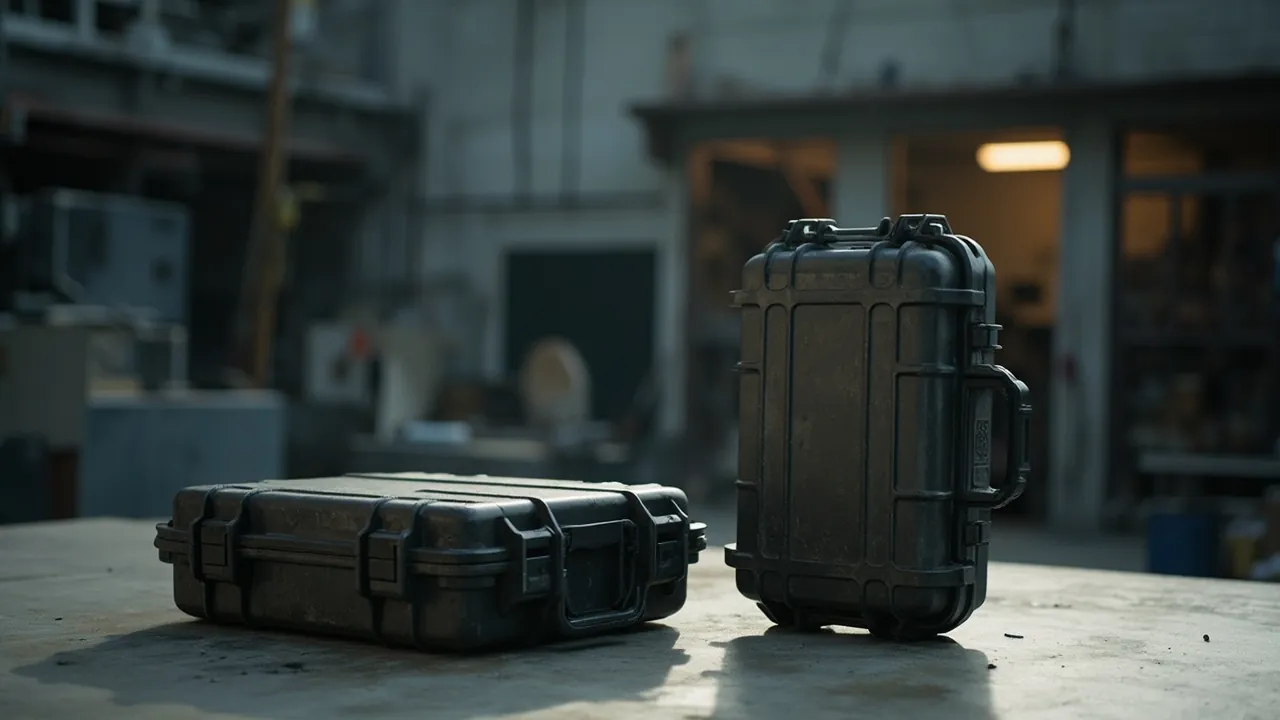
The short answer: there is no single service life for a protective case. Its real life is set by four conditions together — material, gasket, use intensity and environment. Under normal indoor storage with occasional handling, a compliant plastic protective case typically serves 8 to 15 years. Under outdoor, vehicle-mounted, coastal or high-cycle conditions, empirical life often drops to 3 to 8 years. And the part that almost always expires first is not the shell but the gasket. In other words, the shell is a long-life component and the gasket is a short-life consumable, and the whole case is usually held back by a gasket worth very little. Once that is understood, the question of "how many years" stops being a guessing game and becomes a manageable maintenance problem.
This guide is written for B2B buyers, equipment managers and maintenance engineers. It answers three questions. What does the life of a protective case actually mean, and what are the typical ranges. Which factors are most damaging under real duty. And how can maintenance and spare parts strategy stretch the effective life. Every figure is a typical or empirical value. Actual life should be judged from the resin grade, the structural design, the service conditions and the results of periodic inspection, never from a single marketing claim.
Contents
- The short answer: life is a set of conditions, not a number
- Three different meanings of "life" that must be separated first
- Typical life ranges: material against duty
- Factor one: the intrinsic weatherability of the material
- Factor two: ultraviolet and photo-oxidative ageing
- Factor three: thermal cycling and low temperature embrittlement
- Factor four: the gasket, the part that expires first
- Factor five: mechanical fatigue of latches and hinges
- Factor six: use intensity and open-close frequency
- Factor seven: storage environment and stacking load
- Factor eight: cleaning agents and chemical contact
- Maintenance strategy for extending life
- Judging the end of life and when to replace
- Frequently asked questions
- Conclusion and related reading
The short answer: life is a set of conditions, not a number
Start by dismantling a common misconception. The question "how many years does a protective case last" has no meaningful answer unless material, duty and maintenance conditions are specified. The same case, used as an archive box in a temperature controlled warehouse, can last twenty years without drama. Put it on a coastal shore, exposed daily to ultraviolet, salt spray and twenty open-close cycles a day, and it may develop problems at the sealing face and latches within three years. The difference is not whether the batch was any good. The difference is that the same product has been placed in two completely different stress fields.
So the professional way to ask is in three parts. First, how long is the structural life of the shell, which material and strength decide. Second, what is the replacement interval for the seal and moving parts, which the consumables decide. Third, in the given duty, where does the usable life of the whole case fall, which the combination decides. Separate the three questions and the answer stops being an adjective and becomes a manageable number.
| Way of asking | Deciding factor | Management action | Form of answer |
|---|---|---|---|
| --- | --- | --- | --- |
| Shell structural life | Resin grade, wall thickness, ribs, hinge bosses | Material selection and structural validation | Years, usually far longer than the whole case |
| Seal and moving part life | Gasket material, latch and hinge material and structure | Periodic replacement | Months or years, on a cycle basis |
| Whole case usable life | The two above plus use intensity and environment | Maintenance and spare parts strategy | A range, for example 3 to 8 years |
In one line: the shell life is designed, the gasket life is replaced, and the whole case life is managed.
Three different meanings of "life" that must be separated first
In engineering and procurement, "life" carries at least three different meanings, and mixing them leads directly to bad decisions.
The first is design life. This is the target service period set during design for a product under a defined duty, normally derived together with material selection and structural validation. It is a target, not a promise.
The second is functional life. This is the number of years a product can actually be used while keeping its core function, meaning ingress protection, strength and normal opening and closing. A failed seal or a broken latch ends functional life early, even though the shell itself is still sound.
The third is safe life or the mandatory replacement interval. This is the periodic replacement or inspection interval imposed for safety or reliability. For consumables such as gaskets, management is usually on a cycle basis: replace at the interval regardless of how the part looks.
Practical advice: in a purchase contract, do not write only "life not less than X years". Split it into three lines. The shell shows no functional failure under the specified test conditions. The seal is replaced on a defined cycle. The functional life of the whole case under the agreed duty is not less than a stated range. Only then is it verifiable and enforceable.
Typical life ranges: material against duty
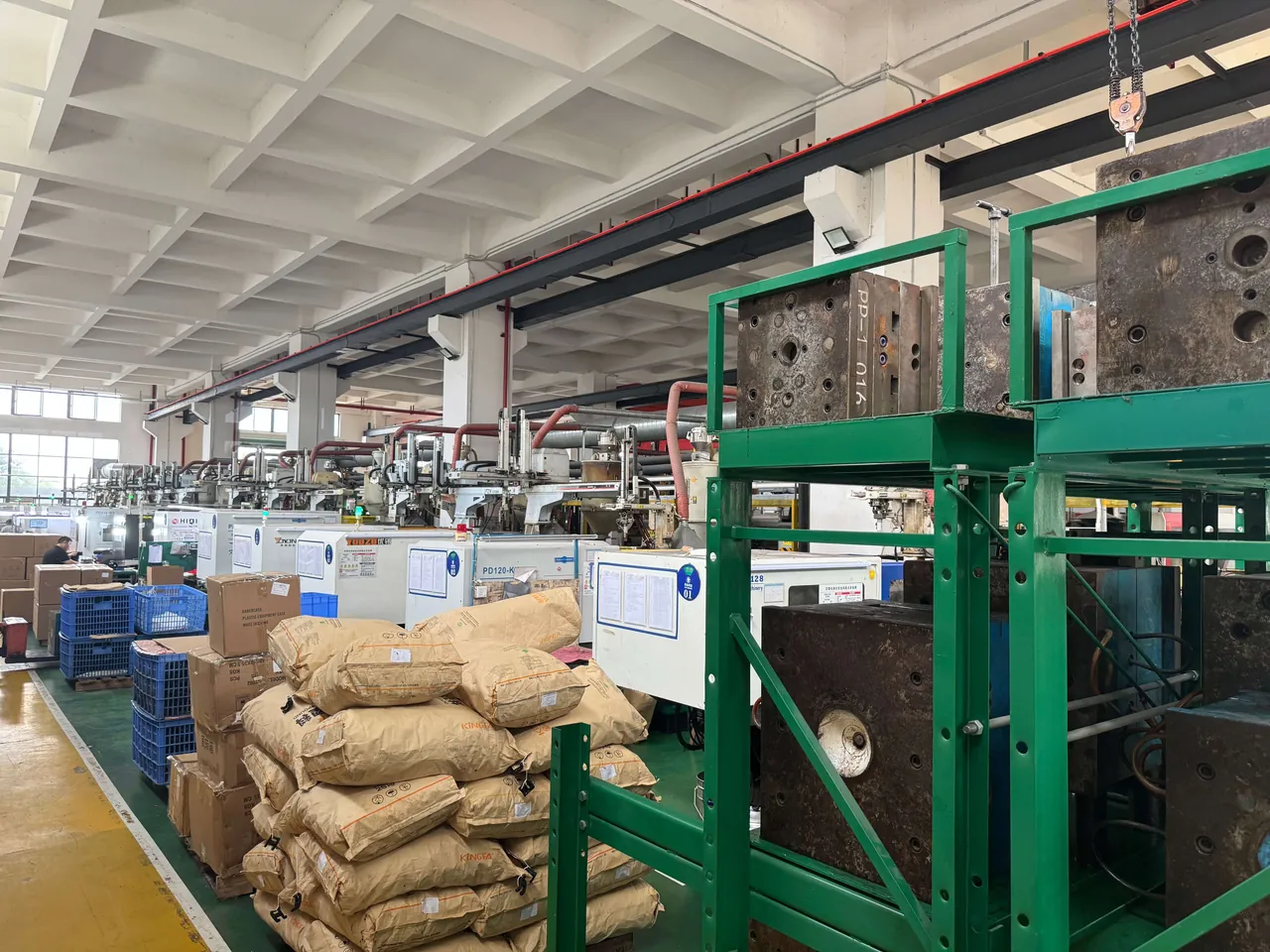
The table below gives empirical ranges for a quick sense of magnitude. It is not a commitment for any specific product. In reality, the same material can differ by more than a factor of two across duties.
| Duty (typical description) | Copolymer PP shell | ABS shell | PC or PC/ABS shell | Gasket replacement interval |
|---|---|---|---|---|
| --- | --- | --- | --- | --- |
| Indoor controlled warehouse, occasional handling | Over 15 years | 12 to 18 years | Over 15 years | 5 to 8 years |
| Mixed indoor and outdoor, normal temperature, normal cycling | 10 to 15 years | 8 to 12 years | 10 to 15 years | 3 to 5 years |
| Outdoor sun and rain, medium frequency | 6 to 10 years | 5 to 8 years | 7 to 12 years | 2 to 4 years |
| Coastal salt spray plus strong ultraviolet | 4 to 7 years | 3 to 6 years | 5 to 9 years | 1.5 to 3 years |
| Vehicle mounted, vibration, thermal cycling | 4 to 8 years | 3 to 6 years | 5 to 10 years | 1 to 3 years |
| Daily high frequency cycling, equipment case | 5 to 8 years | 4 to 6 years | 6 to 10 years | 1 to 2 years |
A few notes. First, material differences show mainly in toughness, weatherability and low temperature behaviour. PC and PC/ABS usually beat ABS on impact, while copolymer PP combines good chemical resistance with low temperature performance. Second, the gasket is nearly always the part that expires first, with a replacement interval clearly shorter than the shell life. Third, the shortening effect of severe duty comes mainly from the combination of ultraviolet, salt spray and thermal cycling rather than any single factor.
Factor one: the intrinsic weatherability of the material
Intrinsic weatherability sets the floor for how the shell behaves under long term environmental stress. Differences appear in three areas.
Hydrolysis and chemical resistance. Over long contact with moisture, cleaning agents and oils, does the polymer chain break down. PP generally has good chemical resistance, PC needs care in strong alkaline environments, and ABS has weaker solvent resistance.
Impact retention and toughness. Does the material keep its toughness after long term ageing. Some ABS grades powder and embrittle relatively quickly under ultraviolet, showing loss of gloss and micro-cracking on the surface. PC has excellent impact resistance but is notch sensitive and can suffer environmental stress cracking under sustained load.
Heat distortion and dimensional stability. Deformation and shrinkage under temperature change directly affect the flatness of the sealing face, and therefore indirectly affect the ingress protection rating.
For a systematic comparison of how materials fit different duties see how to choose plastic materials for protective cases and the difference between PP, ABS and PC protective cases. The conclusion is that no material is absolutely better, only better matched to the duty. On the life dimension, a wrong material choice is the hardest error to fix later.
Factor two: ultraviolet and photo-oxidative ageing
Ultraviolet is the main chronic killer of outdoor protective cases. Under combined ultraviolet and oxygen, plastics undergo photo-oxidative ageing, showing as loss of gloss, discolouration, powdering and micro-cracking, which then reduce toughness and surface strength. For a protective case, the real danger is not that it looks worse, but that the gasket groove and the sealing face lose flatness through powdering and micro-cracking, so the gasket can no longer form a continuous contact band.
Three variables govern ultraviolet ageing: cumulative irradiance, which depends on geography, orientation and shading; the material formulation, meaning whether ultraviolet stabilisers are present and whether a weather resistant grade was used; and surface colour, since dark colours usually absorb more heat and run hotter. As an empirical judgement, cases used outdoors long term in southern China or Southeast Asia age visibly faster at the surface than cases kept indoors in temperate conditions.
There are three ways to slow it down: choose a weather resistant grade with an ultraviolet stabiliser system, keep the case in a shaded or partly shaded location where possible, and avoid long term ponding and dust accumulation, which acts together with ultraviolet to accelerate ageing. For how outdoor waterproofing design reduces the combined effect of ultraviolet and moisture, see how waterproofing is designed into outdoor cases and how to choose materials for outdoor cases.
Factor three: thermal cycling and low temperature embrittlement
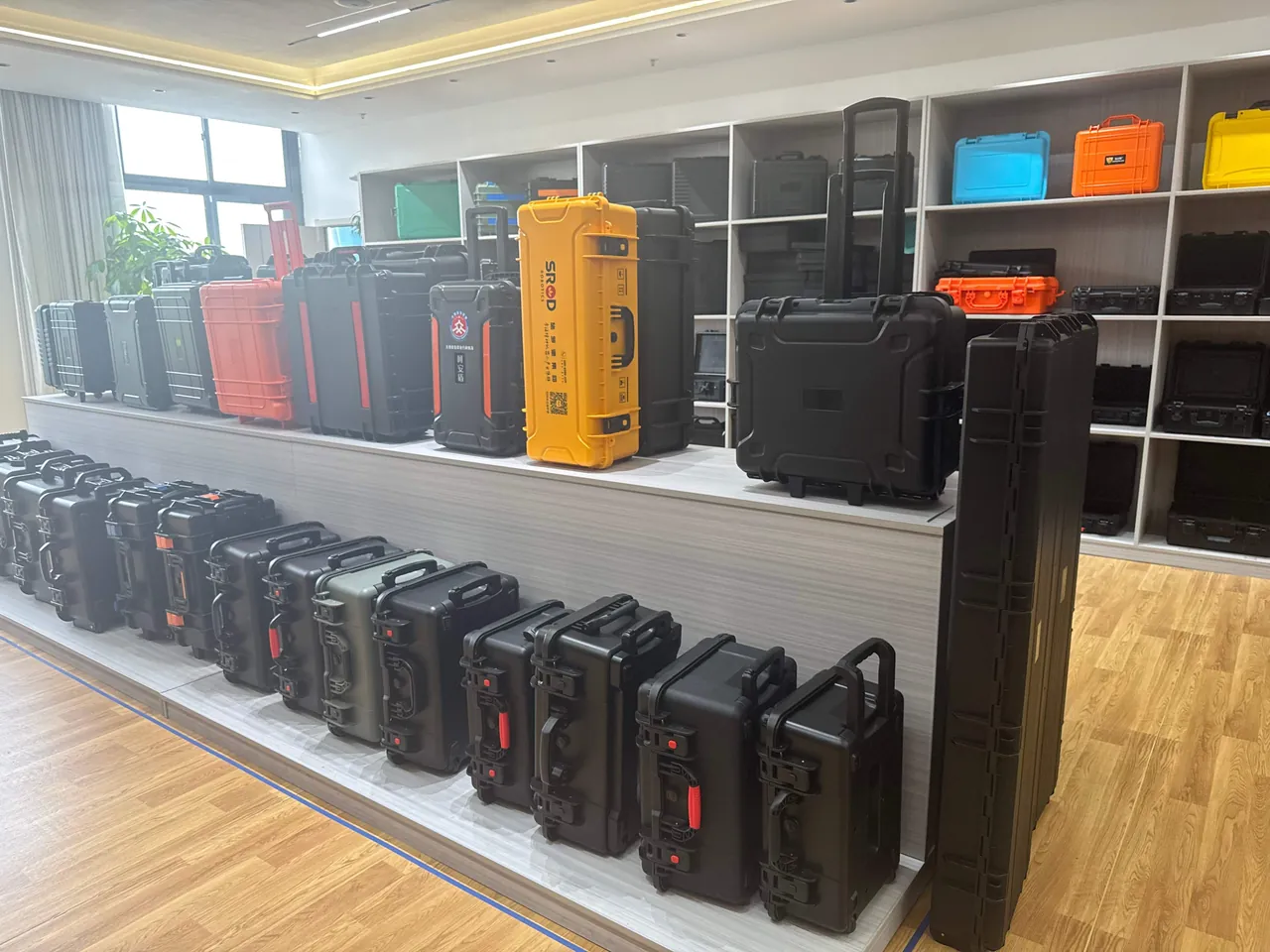
Temperature affects life through two paths. The first is low temperature embrittlement. Plastics lose toughness and gain brittleness in the cold, so a drop or impact more easily cracks them. Internal corners, screw bosses and the roots of reinforcement ribs concentrate stress, and cracks often start at these points. The second is thermal cycling fatigue. Repeated expansion and contraction produce differential displacement between different materials, meaning the shell, the gasket and the metal hinge. Over time this causes permanent set in the gasket, loosened fasteners and debonded layers.
One detail is easily overlooked: the shell and the gasket have different coefficients of thermal expansion. As temperature swings between cold and hot, the gasket experiences a continuous compression and recovery cycle, and its ageing runs clearly faster than in a constant temperature environment. This explains why the gasket replacement interval for vehicle mounted, cold chain and outdoor equipment cases is often half that of an indoor case.
There are three countermeasures: choose a low temperature grade, avoid sharp corners and abrupt wall thickness changes in the structure, and raise the gasket replacement frequency where thermal cycling is severe. For the trade-offs between materials and environments see case materials and structural strength.
Factor four: the gasket, the part that expires first
This is the point the article most wants to make. In the great majority of cases, the functional life of a protective case is set by the gasket, not the shell. The gasket carries sustained compression, thermal cycling, moisture and possibly chemical contact. Together these cause compression set and hardening. Once the gasket loses its recovery, the case rim cannot form a continuous contact band and the ingress protection rating fails, even though the shell looks intact.
Gasket life is usually differentiated by material, as an empirical value. Silicone VMQ has a wide temperature range and good weatherability. EPDM has excellent moisture and weather resistance and is the common choice for outdoor cases. Nitrile NBR resists oil but is weaker against ozone. Neoprene CR sits in the middle overall. Under the same duty, replacement intervals across these materials can differ by more than a factor of two.
To judge whether a gasket needs replacing, watch four signals: a surface that has hardened or become tacky, cracking or a permanent compression mark, a clear colour change, and a failed sealing quick check by negative pressure or immersion. For a fuller treatment of materials and ageing see what material protective case gaskets use, how gaskets age and how to tell and the replacement cycle for silicone gaskets. Treating the gasket as a consumable rather than a component is the first principle of protective case life management.
Factor five: mechanical fatigue of latches and hinges
If the gasket decides whether the case can still keep water out, the latch and hinge decide whether it can still close and still clamp tight. These parts carry the fatigue load of repeated cycling. Their failure modes are mainly three: a latch catch that fatigues and cracks or loosens, a hinge pin that wears and walks out axially, and cracking where the hinge boss joins the shell.
Four variables affect life: material, such as PA, POM, metal or reinforced plastic; structure, meaning whether there is an engagement feel and a retention stop; assembly precision, since either too much interference or too much clearance accelerates wear; and use habit, meaning whether users slam the latch or cycle the case under load.
One practical maintenance action is to keep a cycle count record. For high frequency equipment cases, record or estimate cumulative open-close cycles and inspect latches and hinges proactively when the empirical threshold is approached, with several thousand cycles a common engineering target depending on supplier data. For selection and structural matching see how to select case latches and how hinges, latches and seals work together.
Factor six: use intensity and open-close frequency
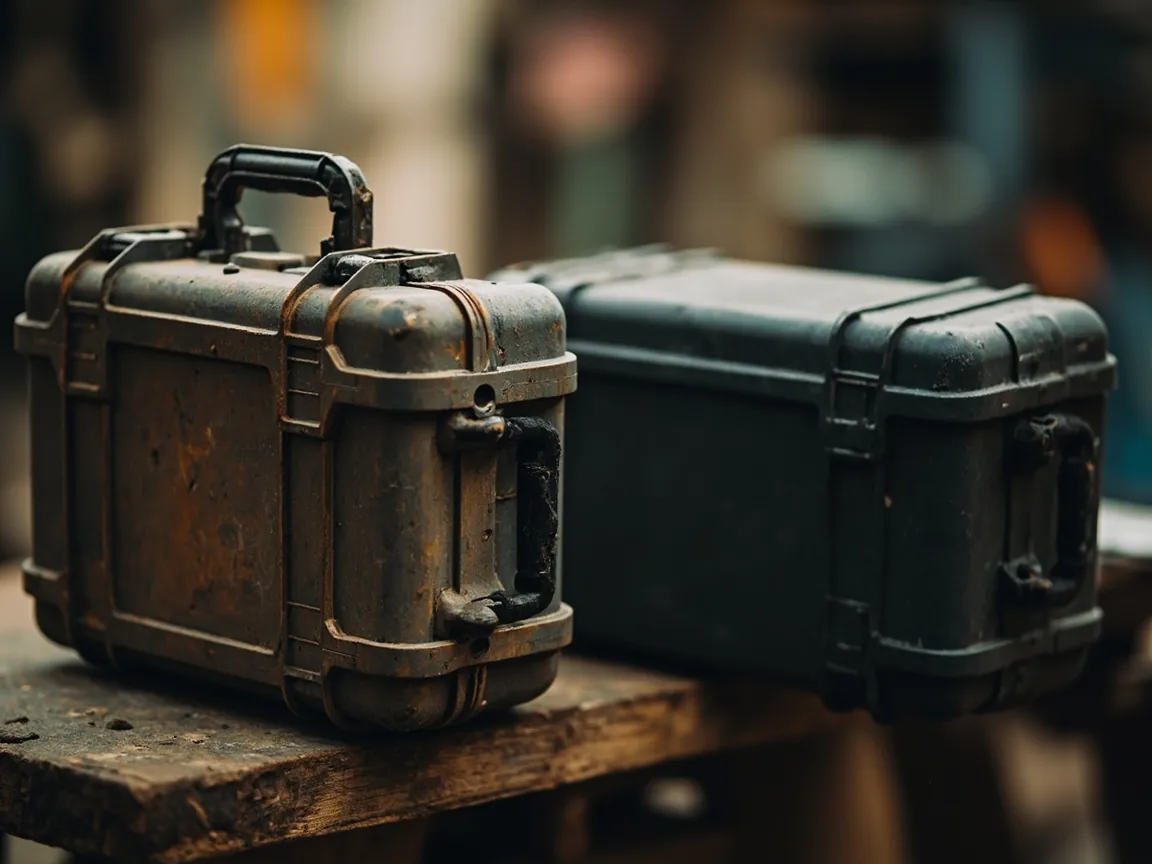
Use intensity is the multiplier that converts theoretical life into real life. Take two identical cases, one opened twice a month and one opened twenty times a day. The consumption rate of the gasket and the latch is completely different. Empirically, open-close frequency affects the seal and moving parts almost linearly, while its effect on the shell is comparatively mild.
Beyond cycle frequency, three other forms of use intensity matter. Load weight, since sustained overloading keeps the walls under load. Handling method, since dragging, throwing and standing on the case all take a toll. The history of drops and impacts. A single severe drop may not crack the case immediately, but it can leave micro-cracks at an internal corner or a rib root that become the starting point for later failure.
A management recommendation: set inspection and replacement intervals by duty band. High frequency cases get an annual seal and latch check, low frequency cases can be checked every two to three years, and "a severe drop has occurred" should trigger an early inspection.
Factor seven: storage environment and stacking load
How idle cases are stored also affects life. There are three common problems. First, long term heavy stacking, which keeps lower cases under sustained static load and can cause wall creep and lid deformation that then affect the flatness of the sealing face. Second, storage in hot, humid or strongly ultraviolet conditions, which accelerates material ageing and gasket hardening. Third, improper stacking, such as putting heavy items at the centre of a lid, or leaving a case twisted for long periods.
Stacking advice is threefold: observe the supplier's maximum stack height, use a flat pallet board, and keep cases empty or lightly loaded for long term storage while rotating the bottom layer periodically. If cases are kept in a warehouse long term, avoid leaning them directly against a wall, avoid a damp base and keep ventilation open. For good warehouse practice see warehouse storage rules for protective cases.
Factor eight: cleaning agents and chemical contact
The effect of cleaning and chemical contact on life is often underestimated. Strong solvents such as acetone, lacquer thinner and some strongly alkaline cleaners attack the plastic surface, causing loss of gloss, whitening, swelling and even stress cracking. For the gasket, oils, ketones and strong acids or alkalis cause swelling, hardening or breakdown, directly shortening seal life.
Two principles apply. First, identify the material before cleaning and choose a neutral cleaner matched to it. Second, avoid letting cleaner sit for long on the gasket and the sealing face. For cleaning restrictions and correct methods by material see how to clean and maintain a protective case, and the cleaning taboos by material. A counterintuitive fact is that a good number of protective case seal failures are caused early by cleaning too hard and with the wrong cleaner.
Maintenance strategy for extending life
Turning the eight factors above into executable actions gives a maintenance strategy. The core is tiered management, periodic inspection and spare parts held in advance.
- Classify by duty. Split cases into indoor low frequency, outdoor medium frequency and severe high frequency, and set inspection and replacement intervals for each.
- Fix the inspection items. Each periodic check covers gasket condition, latch and hinge feel, rim flatness, shell cracking, particularly at internal corners and rib roots, and corrosion of metal parts.
- Hold spares in advance. Stock gaskets, latches, handles and other consumables by model, so that a failure does not idle the whole case while parts are awaited. For how to build the list see the consumable spare parts stocking list for protective cases.
- Record and trace. Keep a log for each case or batch, recording commissioning date, duty, inspection and replacement history, so that life becomes data rather than a feeling.
- Replace the part, not the case. In most cases a gasket or latch change restores function, and the whole case does not need to be scrapped.
Judging the end of life and when to replace
When should a gasket be replaced, and when should the case be scrapped? The table below gives an operational logic using typical and empirical values.
| Part or condition | Continued use | Replace the part | Scrap the whole case |
|---|---|---|---|
| --- | --- | --- | --- |
| Gasket hardened, light compression mark | Recheck periodically | Replace when cracked, without recovery, or failing the quick check | Not applicable |
| Latch loose or catching on one side | Watch the opening force | Replace when the catch cracks or cannot lock reliably | Not applicable |
| Hinge wobbling, pin walking out | Add axial retention | Replace when the pin escapes or the boss cracks | Not applicable |
| Rim sealing face deformed | Light deformation can be offset by the gasket | Replace the lid or the case when sealing is affected | When deformation is irreversible and repair is costly |
| Cracking at an internal corner or rib root | Light cracking can be watched | Local reinforcement if the crack does not propagate | When the crack penetrates or reaches the sealing face |
| Extensive powdering and embrittlement of the shell | Not applicable | Not applicable | Structural life has ended |
The principle: if a part change can solve it, do not change the whole case. But once a crack enters the sealing face or a structural load path, scrap the case. This principle cuts maintenance cost significantly.
JUNZHJIA, manufactured by KeXin New Materials (Guangdong) Co., Ltd., supplies matched consumables such as gaskets, latches, handles and feet by model, and helps customers set inspection and replacement intervals. The company serves wholesale, distribution and OEM/ODM projects.
Frequently asked questions
Q: How many years can a protective case actually be used? Is there an official figure? A: There is no single official figure, and any claim that a case lasts X years is meaningless unless it carries the duty conditions with it. The workable approach is to manage the three meanings of life separately. Shell structural life is set by material and structure and, under a given duty, usually reaches the order of a decade or more. Gasket life is a consumable life on a cycle basis, ranging from one year to eight depending on material and duty. Whole case functional life is the result of the first two combined with use intensity and environment, with empirical ranges of roughly 8 to 15 years indoors and 3 to 8 years outdoors. In procurement, split these into verifiable clauses: no functional failure of the structure under test conditions, gasket replacement on a defined cycle, and functional life of the whole case under the agreed duty not less than a stated range. Do not accept an isolated year figure.
Q: Why does the gasket decide the life of the whole case? A: Because the core function of a protective case is sealing, and the gasket is the only part guaranteed to reach the end of its life first. The shell is usually made from engineering plastics such as PP, ABS or PC, and given correct material selection and sound structure, it ages and fatigues far more slowly than a rubber seal. The gasket carries sustained compression, thermal cycling, moisture and chemical contact, and gradually develops compression set and hardening. Once it loses recovery, the rim cannot form a continuous contact band and the ingress protection rating fails even though the shell looks intact. From a functional standpoint, the whole case is therefore held back by the gasket. Managing the gasket as a consumable, with a replacement interval set by material and duty, is the most cost effective way to extend case life.
Q: For cases used outdoors, what shortens life most? A: Three factors acting together: ultraviolet, thermal cycling and moisture. Ultraviolet and oxygen cause photo-oxidative ageing, showing as loss of gloss, powdering and micro-cracking, with the most damaging result being loss of flatness at the sealing face. Temperature acts at two levels: cold makes plastic brittle and prone to cracking in a drop, while repeated expansion and contraction creates differential displacement between the shell and the gasket that accelerates permanent set. Moisture in the form of rain, condensation and salt spray simultaneously accelerates hydrolysis of the material and corrosion of metal parts. In coastal, high ultraviolet and high diurnal swing regions the combination is especially pronounced, and empirically the gasket replacement interval falls to less than half that of an indoor case. The response is to choose a weather resistant grade, avoid long term ponding and dust, and raise inspection frequency.
Q: Does a cold northern winter significantly shorten protective case life? A: Yes, but the effect concentrates in two areas. The first is occasional damage from low temperature embrittlement: toughness falls in the cold, so a drop or impact readily starts a crack at an internal corner, screw boss or rib root, and this damage usually forms in one event and is irreversible. The second is accelerated gasket ageing from thermal cycling: diurnal or indoor-outdoor temperature swings make the gasket compress and recover repeatedly, and hardening and permanent set run clearly faster than in a constant temperature environment. It is worth noting that cold alone will not make an idle case fail by itself. The real risk is mechanical impact while cold. The maintenance focus in northern duties should therefore be to avoid loaded drops at low temperature, to shorten the gasket replacement interval, and to avoid sharp corners and abrupt wall thickness changes in the structure.
Q: If the shell powders or whitens, is that a quality problem or normal ageing? A: Two cases must be distinguished. If a surface shows even loss of gloss and light powdering after long outdoor ultraviolet exposure, that is normal photo-oxidative ageing in plastic, and it can be slowed by cleaning and maintenance without immediate scrapping. But if powdering appears near the gasket groove or the sealing face and comes with micro-cracking, it already affects sealing and should be addressed quickly. A second case is a new case whitening or powdering within a short period, which usually points to a material problem such as a general purpose grade with poor weatherability or excessive regrind, and that is a quality defect that can be pursued against the specification and the contract. The key is location plus timing: on the sealing face it is serious, on a non-loaded decorative surface it can be watched; within one year it is abnormal, after long outdoor use it is normal.
Q: After replacing the gasket, does the case return to as-new life? A: Functionally it largely recovers, but it does not equal a new case. After fitting a compliant original or identical specification gasket, sealing performance usually returns to the factory level, provided the gasket groove and the sealing face themselves are free of deformation, cracking and permanent damage. If rim flatness is already out of tolerance from long term deformation or impact, changing the gasket alone gives only partial improvement, and the lid or the whole case may need replacement. In addition, ageing of the shell is not reversed by a gasket change, so the more accurate description is that functional life is extended by one gasket interval. This is why it makes sense to check rim flatness, latches and hinges at the same time as a gasket change, replacing everything due in one pass rather than dismantling the case repeatedly.
Q: How do you set up a simple, executable life management system for protective cases? A: Four steps. First, classify: split cases into indoor low frequency, outdoor medium frequency and severe high frequency, and set inspection and gasket replacement intervals for each. Second, fix the items: gasket condition, latch and hinge feel, rim flatness, shell cracking with emphasis on internal corners and rib roots, and corrosion of metal parts, recorded item by item. Third, hold spares: stock gaskets, latches and handles by model, and write "replace the part, not the case" into the procedure. Fourth, keep records: log each case or batch with commissioning date, duty, inspection and replacement history so that life management moves from judgement to data. The system needs no complex tools. One table and one spare parts cabinet are enough to start.
Q: How long can spares, especially gaskets, be stored before they go bad? A: They can go bad. Rubber seals also age in storage, mainly under temperature, humidity, light and ozone, showing as hardening, cracking or blocking. Spare parts inventory should therefore follow two principles. First, control turnover: stock to actual consumption and avoid bulk hoarding, and empirically the inventory turnover of seals should not exceed half their recommended storage period. Second, improve storage conditions: keep them dark, cool and away from ozone sources such as motors and welding equipment, lay seals flat or hang them in original packaging to avoid long term compression set, and do not apply unknown grease. How long a given material can be stored should follow the supplier's material declaration. If a spare has been stored a long time, check appearance and resilience before fitting, and use it only when there is no hardening, cracking or permanent compression mark.
Conclusion and related reading
Back to the original question: how long do protective cases last? The answer is that it depends on four conditions — material, gasket, use intensity and environment — not on a fixed number of years. Under normal indoor storage with occasional handling, a compliant plastic protective case has an empirical life of 8 to 15 years. Under outdoor, vehicle-mounted, coastal or high cycle duty, it often falls to 3 to 8 years. And what actually decides when it fails is usually the gasket that ages first.
Three actions you can take immediately. First, split life into structural life, gasket interval and whole case functional life, and manage the three separately. Second, treat the gasket as a consumable, set its replacement interval by material and duty, and hold spares in advance. Third, build a tiered inspection log by duty, so that a failure means a part change and only a crack reaching the sealing face means scrapping the case.
JUNZHJIA, manufactured by KeXin New Materials (Guangdong) Co., Ltd., produces protective cases, toolboxes, military-specification storage cases and waterproof junction boxes for wholesale, distribution, OEM and ODM programmes and global supply. The company supplies matched consumables such as gaskets by model, provides inspection and replacement interval guidance, and supports drawings, material declarations and test documents so customers can fold life management into their equipment maintenance system.
Related Reading