

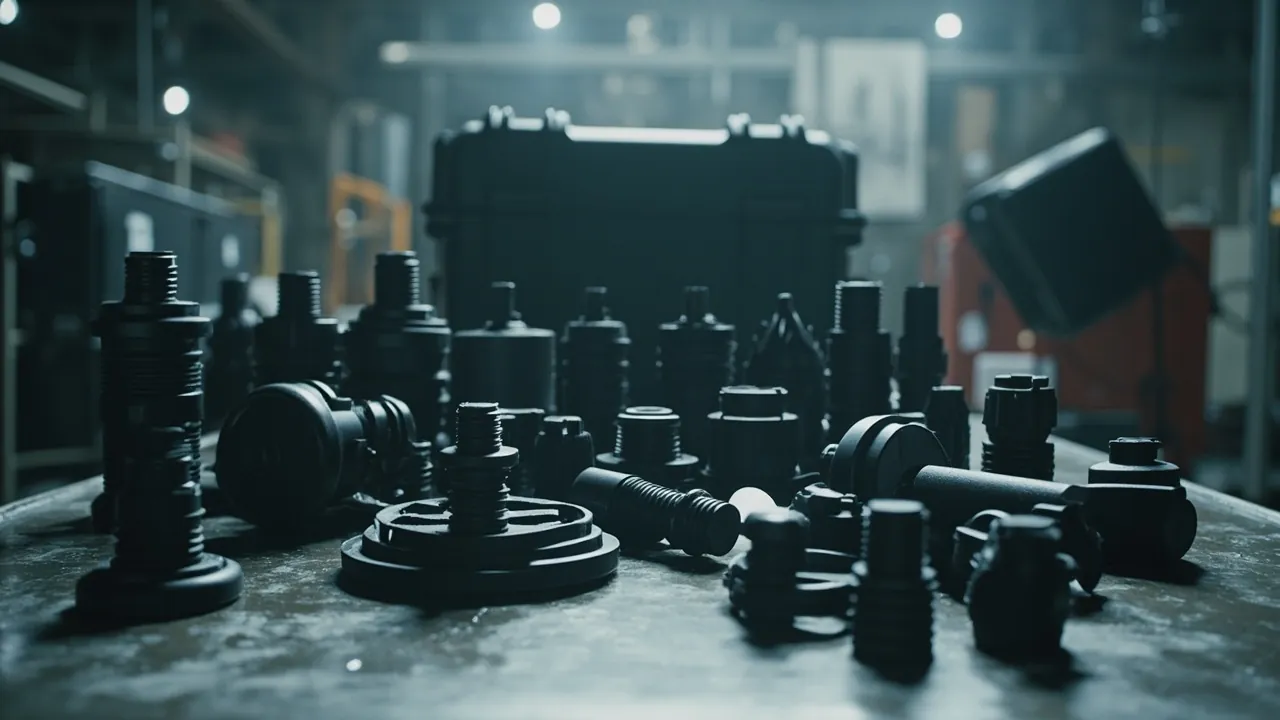
Start with the conclusion: protective case spares come from four main sources, namely the original manufacturer, authorized channels, the generic parts market and self-made substitutes, ranked from highest to lowest reliability and almost exactly in reverse order of price. What really decides where to buy is not the channel but whether the part maps one-to-one onto the original case model. A gasket is judged on cross-section dimensions and material, a latch on mounting hole pattern and snap geometry, a handle on load rating and interface. A stocking list only needs to cover five consumable families, namely gaskets, latches, hinges, handles and feet or pressure valves, plus foam inserts as the hidden consumable. Size the safety stock as usage frequency multiplied by per-part life divided by procurement lead time, and you will usually land between stockouts and tied-up cash.
A protective case is a long-life tool with a design life often measured in five to ten years, yet almost every moving part on it reaches end of life long before the shell does. Gaskets harden with age, latches loosen under fatigue, handles break during handling, feet wear through and fall off, and foam inserts dust and crumble. When these failures cluster, buyers frequently discover that the maker does not sell parts separately, that the model is too old and has been discontinued, and that gaskets bought elsewhere are a fraction of a millimeter off. Dozens of otherwise serviceable cases are then scrapped whole.
This guide is written for B2B buyers, asset managers and maintenance leads. It works through each consumable family in turn: the failure mechanism, the expected replacement cycle, how to choose a sourcing channel, how to size the stock, how to manage part numbering, and how to write the clauses into a purchase contract. All life figures are typical or empirical values; the formal stocking plan should be based on actual operating conditions, life data from the supplier and your own inventory policy.
Table of Contents
- Start With the Conclusion: Scope of Consumables and Three Stocking Principles
- What Counts as a Consumable on a Protective Case
- Where to Buy: Original, Authorized, Generic and Self-Made Options
- Replacement Cycles and Service Life Reference
- How to Size Your Stock: Quantity, Frequency and Lead Time
- Gaskets and Seals: the First to Age and the Must-Stock Item
- Latches and Hinges: Where Mechanical Fatigue Happens
- Handles, Feet, Pressure Valves and Other Small Parts
- Foam Inserts: the Hidden Consumable
- Part Numbering and Inventory Management
- Spare Parts Clauses in the Purchase Contract
- Frequently Asked Questions
- Conclusion and Related Reading
Start With the Conclusion: Scope of Consumables and Three Stocking Principles
First, define the term. The parts of a protective case fall into three groups. Structural parts such as the shell, the lid and the reinforcement ribs are long-life items that normally last as long as the case itself. Functional parts such as the gasket, the latch, the hinge and the pressure valve carry the sealing and opening functions and are the shortest-lived group. Auxiliary parts such as the handle, the feet, the nameplate and the foam insert behave as consumables, with wear and aging that is comparatively visible. A stocking list mainly covers the latter two groups.
Three principles govern stocking: identification first, critical parts first, standardization first.
Identification first means that before buying the first batch of spares, you must record the specification of every part on every case model: cross-section dimensions and durometer of the gasket, model and mounting method of the latch, axial dimensions of the hinge, load rating of the handle. Without that cross-reference table, any sourcing decision is guesswork. This is why the guide keeps returning to the one-to-one model mapping as the first test of a channel.
Critical parts first means that when the budget is limited, stock the parts whose absence makes the case unusable. A missing gasket strips the case of its water and dust protection; a missing latch prevents the lid from closing. These are critical and must be permanently stocked. Nameplates and cosmetic parts are non-critical and can be bought on demand.
Standardization first means that when buying the next case model, favor a design whose consumables are shared across models. A common gasket cross-section and a common latch hole pattern cut both the number of part numbers and the inventory cost. This must be raised at the selection stage, not after the cases have been bought.
| Part group | Typical parts | Failure mechanism | Stock as standard? |
|---|---|---|---|
| --- | --- | --- | --- |
| Structural | Shell, lid, ribs | Impact cracking, long-term creep | No (comes with the case) |
| Sealing | Gasket, seal strip | Aging and hardening, compression set | Yes (critical) |
| Latching | Latch, clasp, hinge pin | Fatigue loosening, fracture, pin drift | Yes (critical) |
| Functional | Pressure valve, breather valve | Diaphragm aging, clogging | Yes (model dependent) |
| Handling | Handle, pull bar, wheels | Fatigue fracture, abrasion | Yes (high frequency) |
| Auxiliary | Feet, labels, nameplate | Detachment, wear | On demand |
| Insert | PE / EVA / PU foam, flocking | Dusting, crumbling, bond failure | On demand (depends on handling) |
What Counts as a Consumable on a Protective Case
Expanding the table above, here is why each family is prone to early failure.
The gasket or seal strip is the only part on the whole case that is destined to reach end of life first. Under the combined action of oxygen, ultraviolet light, thermal cycling and mechanical compression, rubber gradually loses elasticity, becoming harder, crazed and slower to rebound until it can no longer form a continuous seal. The failure is rarely detected at once; instead it progresses from "fine in light rain" to "leaking when immersed." For the material selection logic, see which material a protective case gasket should use.
Latches and clasps carry the fatigue load of repeated opening and closing and the impact load of a drop. Low-cost parts are typically brittle, thin-walled and vague about their closing feedback, and they loosen, fail to hold or break outright after only a few hundred cycles. For latch selection logic, see how to choose a latch for a protective case.
Hinges usually fail through pin wear and axial drift. The hinge carries the entire opening and closing motion of the lid, so once the pin loosens the lid wobbles when closed, the gasket compression changes and protection is indirectly affected. For how latch, hinge and gasket work as one system, see how the hinge, latch and seal of a case work together.
Handles and pull bars are the primary load path during manual handling. A handle typically breaks at the moment of a full-load or one-handed lift, and the failure site is usually the transition between grip and mounting base, or between base and shell.
Pressure or breather valves appear on higher-rated sealed models that must accommodate changes in air pressure or temperature. The diaphragm ages just like a gasket, and once clogged with dust it causes hard opening or a loss of sealing.
Feet and anti-slip pads are wearing parts that detach after prolonged dragging. Once they are gone the case base contacts the ground directly, which accelerates shell abrasion.
Foam inserts and flocking are often dismissed as "not a part," yet they are the first thing to look bad in service: low-density foam begins to dust after a year or two, and flocking with weak adhesion peels away and contaminates the payload.
Where to Buy: Original, Authorized, Generic and Self-Made Options
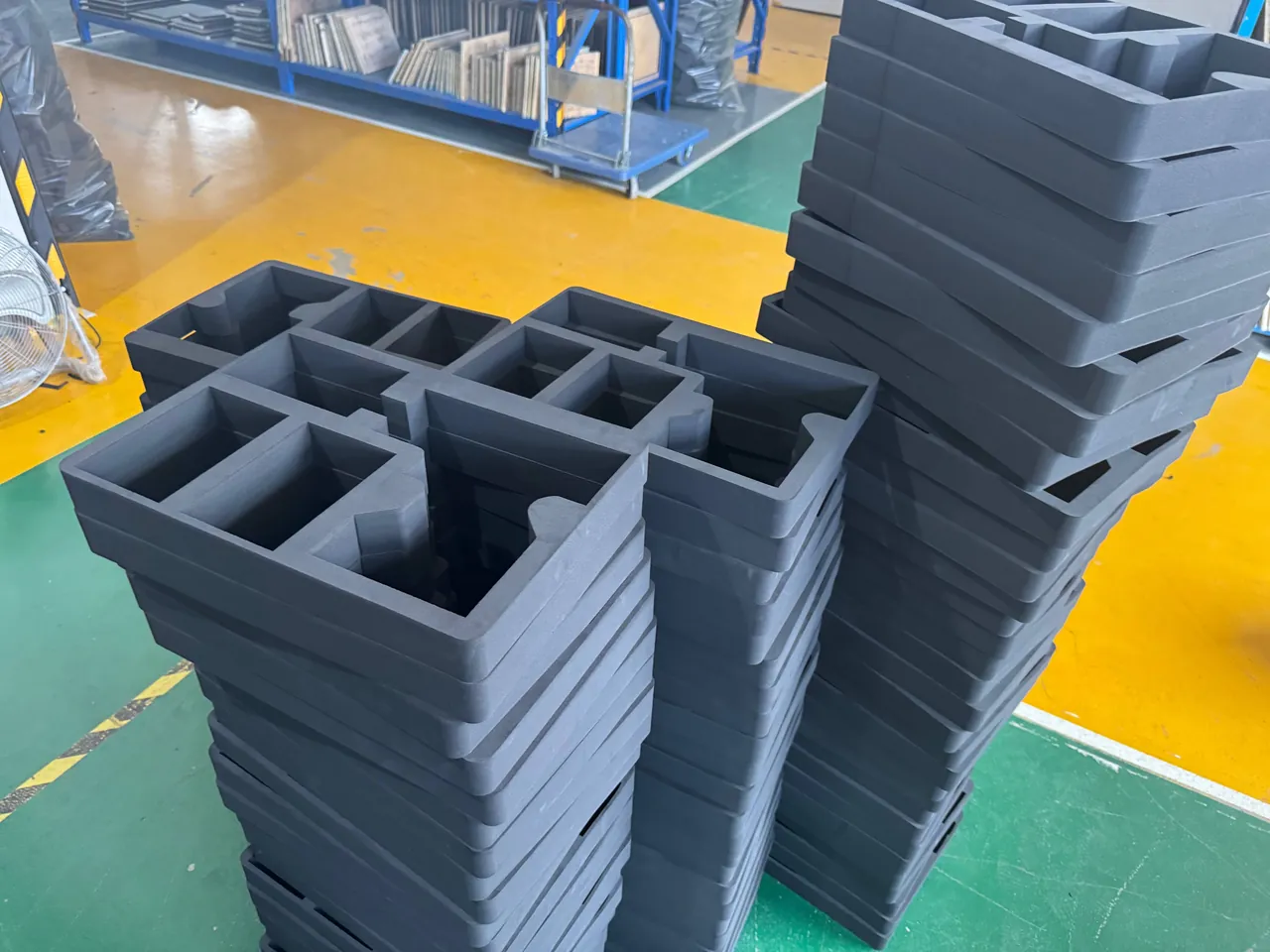
This is the heart of the question. Each of the four channels has its own conditions, so it is not accurate to say the original is always best, though it is fair to say the original offers the highest traceability.
Channel one: direct from the original manufacturer. The advantages are one-to-one specification matching, traceable material and batch, and long-term supply by case model. The disadvantages are a higher minimum order quantity, a higher unit price and a lead time that follows the production schedule. This suits critical parts such as gaskets and latches, and buyers with larger volumes. The original channel has a hidden advantage: it can supply a material declaration and batch record, which makes the question "is the replacement part the right one" answerable with evidence.
Channel two: authorized distributors. The advantage is small-batch purchasing within the original framework and relatively flexible lead times; the disadvantage is an added service margin, and capability depends on the distributor's stock depth. This suits smaller or mid-sized buyers with irregular usage.
Channel three: the generic parts market. The advantage is low price, fast availability and a wide range of specifications; the disadvantage is that "looks the same" is not "performs the same." A nominal gasket cross-section may be off by 0.2 to 0.5 mm, and the material may be downgraded from silicone to reclaimed rubber. The correct use of generic parts is only in non-critical positions, or in volume after physical comparison and trial fitting.
Channel four: self-made substitutes. Consider this only when the original is discontinued and the case model is still widely in service. A self-made part has to solve two problems at once: material formulation and dimensional tolerance. Without material data and a sealing test, a self-made gasket carries very high risk.
| Channel | Specification match | Price | Lead time | Traceability | Best fit |
|---|---|---|---|---|---|
| --- | --- | --- | --- | --- | --- |
| Original direct | High (one-to-one) | High | Schedule dependent | High (batch plus material record) | Critical parts, high volume |
| Authorized distributor | High | Medium-high | Flexible | Medium-high | Small to mid batches, urgent needs |
| Generic market | Low to medium | Low | Fast (from stock) | Low | Non-critical, use after validation |
| Self-made | Depends on machining | Process dependent | Self-controlled | Low | Discontinued models in long service |
To judge whether a channel is reliable, ask one question: can you name the original case model this part belongs to? A channel that maps a part to a model understands the specification system. A channel that answers "universal type, it should fit" is effectively asking you to carry the trial-and-error cost. For identification methods at the procurement stage, see how to avoid procurement pitfalls when buying protective cases.
Replacement Cycles and Service Life Reference
Life data is not about precise prediction; it provides a starting point for stock sizing. The figures below are typical values under ordinary operating conditions. Actual life depends heavily on material, ambient temperature, opening frequency and maintenance practice.
| Consumable | Main influences | Typical replacement cycle (empirical) | Replacement difficulty | Affects protection directly? |
|---|---|---|---|---|
| --- | --- | --- | --- | --- |
| Silicone gasket | Temperature, UV, compression | 2 to 5 years | Low (field replaceable) | Yes |
| EPDM gasket | Ozone, temperature | 3 to 6 years | Low | Yes |
| Latch or clasp | Cycle count, material | Tens of thousands of cycles, or 3 to 5 years | Low to medium | Indirectly |
| Hinge pin | Cycle count, load | Tens of thousands of cycles | Medium | Indirectly |
| Handle | Handling method, load | 2 to 5 years, or on load failure | Low | No |
| Feet | Dragging frequency | 1 to 3 years | Low | No |
| Pressure valve diaphragm | Thermal cycling, media | 2 to 4 years | Medium | Yes |
| Foam insert | Handling frequency, density | 2 to 5 years | Low | No |
Place this table next to the case design life and one important conclusion follows: a case designed for ten years will need its gasket replaced at least once or twice, and its latch and handle perhaps once. Spares are therefore not emergency items bought after a failure but periodic consumables that belong in the operating budget. For assessing the case life itself, see how many years a protective case typically lasts.
Note that gasket replacement cannot be driven by time alone; condition matters too. For judging methods, see how often to replace a gasket and how to tell it is due and how to replace a protective case gasket.
How to Size Your Stock: Quantity, Frequency and Lead Time
Sizing does not need a complex model. A practical starting formula is: safety stock = (cases in service x annual replacement rate) x lead time in years + buffer.
Take an example. Suppose a site has 200 protective cases in service, the empirical annual replacement rate for gaskets is 25 percent, meaning an average four-year life, the supplier lead time is 1.5 months or about 0.125 years, and the buffer is 10 percent.
- Annual demand = 200 x 25 percent = 50 units per year
- Lead time coverage = 50 x 0.125, approximately 7 units
- Buffer = 50 x 10 percent = 5 units
- Safety stock, approximately 12 units, replenished on a rolling quarterly basis
The key parameter is the annual replacement rate, and it must come from real experience rather than a guess. The recommended approach is to estimate an initial value from theoretical life, then record the actual number of replacements each year and correct the figure in the following year. For a more systematic treatment of stock and safety stock, see how to set safety stock for protective cases.
Beyond the base quantity, apply three corrections. First, operating intensity: outdoor, high-humidity and high-salt-spray environments shorten seal life markedly, so the annual replacement rate should be increased. Second, opening frequency: in applications opened many times per day, latch and hinge replacement rates run well above average. Third, supply stability: if the supplier changes models frequently or the lead time is volatile, increase the buffer.
Gaskets and Seals: the First to Age and the Must-Stock Item
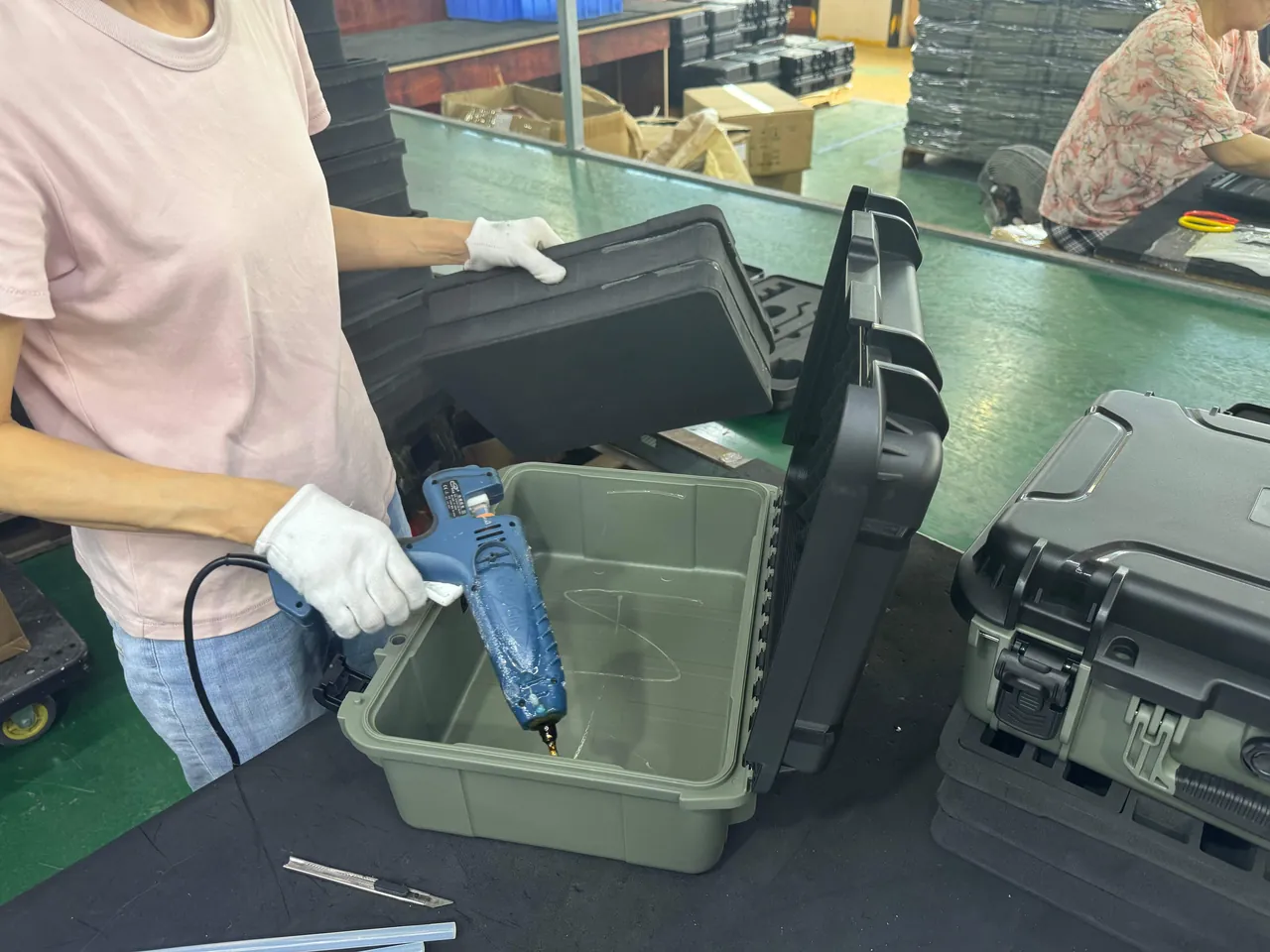
The gasket deserves its own section because its failure is exactly equivalent to the loss of the case's protective performance.
Three points govern selection. First, material: silicone (VMQ) has a wide temperature range and good weathering and is a common choice for outdoor cases; EPDM offers excellent ozone and weather resistance at moderate cost; NBR resists oil well but weathers only moderately; CR is balanced. Second, hardness: the common range is Shore A 40 to 70; too soft and the gasket extrudes, too hard and it cannot compress enough. Third, cross-section: it must match the case sealing groove in both profile, whether round, square or profiled strip, and tolerance.
Three points govern stocking. First, stock by case model, because sealing grooves differ between models and a universal part leaks easily. Second, prefer a field-replaceable design, such as a snap-in or groove-seated gasket, avoiding dedicated tooling or adhesive curing. Third, mind the storage conditions, because rubber parts left exposed to ultraviolet light and ozone age prematurely; gaskets should be stored out of light and heat and without heavy compression, on a first-in-first-out basis. For general storage requirements, see what to consider when storing protective cases in a warehouse.
One detail that is routinely overlooked: when replacing a gasket, clean the sealing groove at the same time. Sand, old adhesive residue or oil in the groove will create a local gap after the new gasket is compressed. Cleaning the groove and checking for chips and deformation is the key step that guarantees the replacement works. It costs nothing and matters a great deal.
Latches and Hinges: Where Mechanical Fatigue Happens
Latches and hinges fail in the manner of "still usable but no longer reliable." Unlike a gasket, they have no clear performance threshold; instead they slowly loosen, deform and lose their closing feedback.
Four signals indicate a replacement is due. First, loss of closing feedback: the closing no longer produces a clear click, or several presses are needed to latch. Second, abnormal play: the lid wobbles laterally or fore-and-aft when closed, indicating clearance in the latch or hinge. Third, visible deformation: whitening, cracking or obvious flexing of the latch body. Fourth, a change in opening force: noticeably lighter, meaning preload has been lost, or noticeably heavier, meaning the mechanism is binding or distorted.
The core problem in stocking is installation compatibility. Latches mount by screw, snap-in or riveting, and replacement reuses the original holes, so a spare must match the original hole pitch, depth and snap geometry. If hole positions vary slightly between production batches of the same model, label the spares by batch to prevent mixing.
Hinges require particular attention to axial retention of the pin. A hinge without axial retention can lose its pin after prolonged vibration, so when replacing, prefer a design with a retention feature or end cap. For how hinge, latch and gasket work as a system, see how the hinge, latch and seal of a case work together.
Handles, Feet, Pressure Valves and Other Small Parts
The handle is the primary load-bearing part in manual handling, and stocking should assume high frequency. Selection focuses on three points: whether the load rating matches the fully loaded weight with a safety margin, whether it mounts by screw or snap, and whether the material becomes brittle in cold. Outdoor winter applications should pay particular attention to low-temperature toughness so a handle does not snap in the cold.
Feet do not affect sealing but do affect base abrasion and placement stability. Once feet detach, the case base contacts the ground directly and prolonged dragging wears through the bottom wall thickness, turning a cosmetic issue into a structural one. Stock feet at a fixed proportion of the fleet.
Pressure and breather valves are stocked according to the sealing rating of the case model. Where a case regularly experiences pressure or temperature changes, for example air freight or mountain transport, the valve diaphragm should be a standard stock item, because an aged or clogged diaphragm causes hard opening or a loss of sealing. After replacement, run a simple sealing verification.
Labels, nameplates and QR tags are management accessories. Laminated or metal labels last well, while paper labels fade within months outdoors. Where cases are used for asset management, see how to manage protective case assets with QR codes.
Screws and fasteners are a commonly ignored family. Corrosion resistance varies widely between materials in outdoor environments, with stainless steel markedly better than ordinary zinc plating. Record the screw specification for each model and stock them by the pack.
Foam Inserts: the Hidden Consumable

An insert is not a wear part, yet in operating cost it is often the hidden big-ticket item. There are three reasons. First, the replacement area is large, so a full insert can cost a meaningful share of the case price. Second, its life is not necessarily long, because low-density foam dusts, crumbles and loses its fit under repeated handling. Third, it is highly customized, so a profiled cut insert often requires re-tooling or a new cutting program.
A stocking strategy should distinguish full replacement from local repair. For adjustable divider inserts, it is usually enough to restock foam board. For cut-foam inserts, keep a full set of spares at 10 to 20 percent of the fleet, for the most heavily damaged cases. Where flocking has peeled off but positioning accuracy is unaffected, a local repair will do rather than a whole insert.
Two practices extend insert life. First, improve handling discipline so that fingernails and tools do not repeatedly scrape the foam cavity. Second, control the storage environment, since prolonged heat and humidity cause foam compression set. For precision instrument inserts, also consider whether an antistatic material is required. If the original insert is ESD grade, the replacement must be the same grade and cannot be ordinary foam.
Part Numbering and Inventory Management
By this point the question of where to buy has been answered and the question of how much has an algorithm. What remains is how to manage it. The core of spare parts management is establishing a two-way, searchable mapping between parts and case models.
Step one is to build spare part master data. Each record should include at minimum the part name, applicable case models, supplier, material, specification such as gasket cross-section and durometer, minimum order quantity, lead time, unit price and storage conditions. This table should be maintained jointly by procurement and maintenance.
Step two is to assign part numbers. The rule need not be complex; a structure of model code plus part category code plus specification suffix works well, for example a model code combined with a gasket cross-section specification. The point of a part number is that anyone picking up a gasket in the storeroom can trace it back to the model it fits.
Step three is to set a minimum stock level. Combining the safety stock calculated earlier, set a reorder trigger for each critical part and act when the level is breached. For models with long lead times and distant suppliers, raise the minimum accordingly.
Step four is to keep a replacement log. Record the date, case serial number, part replaced and reason for every replacement. This log has two values: it corrects the annual replacement rate so the next stock cycle is more precise, and it reveals systemic quality problems. If the latches on one model fail in a cluster over a short period, the model or the batch likely has a design or material defect that should be fed back to the supplier.
Spare Parts Clauses in the Purchase Contract
The greatest risk in spare parts supply is a supplier that stops supporting parts while the cases are still in service. Spare parts clauses should therefore be a standard part of the purchase contract. At minimum, write five of them.
- Consumable list and model cross-reference: require the supplier to deliver it with the goods, naming each part, its material, specification and applicable case models.
- Right to buy separately: state clearly that consumables such as gaskets, latches, hinges, handles, feet and pressure valves may be purchased separately from complete cases, and agree the minimum order quantity.
- Supply duration commitment: agree how long spares will be supplied after a model is discontinued or revised, commonly a number of years from the last delivery of complete cases.
- Change notification obligation: any change in material, dimensions or supplier of a part must be notified in writing in advance and confirmed by the buyer, and changes to critical parts should trigger re-validation.
- Quality assurance and nonconformance handling: spares are subject to the same incoming inspection and nonconformance rules, with sampling following the inspection level and AQL logic of GB/T 2828.1 and batch records provided under an ISO 9001 framework.
Writing spare parts clauses into the main contract costs far less than chasing parts by email after a failure. This experience applies to almost every long-life industrial product.
JUNZHJIA, manufactured by KeXin New Materials (Guangdong) Co., Ltd., serves wholesale, distribution, OEM/ODM and global supply. JUNZHJIA can supply case-specific consumables including gaskets, latches, hinges, handles, feet and pressure valves, supports separate and long-term purchasing, and provides part-to-model cross-reference tables, material declarations and batch records so that buyers can write spare parts supply into a long-term agreement.
Frequently Asked Questions
Q: Where can I generally buy spare parts for a protective case? A: There are four main channels. First, direct from the original manufacturer, which offers one-to-one specification matching and traceable material and batch, the highest reliability, and is best for critical parts such as gaskets and latches, though it usually carries a minimum order quantity and a lead time tied to production. Second, authorized distributors, which allow small-batch purchasing within the original framework with relatively flexible lead times at a medium to high price. Third, the generic parts market, which is cheap and fast from stock but where "looks the same" does not mean "performs the same" because gasket cross-sections may be off by a fraction of a millimeter and materials may be downgraded, so it is best used for non-critical positions or after trial fitting. Fourth, self-made substitutes, considered only when the original is discontinued and the model is still widely in service, which requires solving both material formulation and dimensional tolerance. To judge a channel, ask one question: can you name the original case model this part fits?
Q: Which protective case parts must be kept in stock, and which can be bought on demand? A: Divide spares into three tiers. The must-stock tier contains critical parts whose absence stops the case working: gaskets, latches and hinges, which determine sealing and opening directly. Keep these permanently with a minimum stock level. The standard tier contains parts used often or whose failure has obvious consequences: handles, feet and pressure valve diaphragms. Handles matter especially because they are the primary load path during a loaded lift, and a failure causes a drop. The on-demand tier contains management and cosmetic accessories such as labels, nameplates, QR tags and trim, which can be bought as needed. Foam inserts sit between the standard and on-demand tiers: for custom cut inserts, keep a full spare set at 10 to 20 percent of the fleet, because reordering a custom insert takes longer.
Q: Can I use a generic gasket instead of the original when replacing one? A: In principle, avoid unvalidated generic parts in critical protective applications. Gasket reliability depends on three conditions that must hold simultaneously: material formulation, cross-section dimensions and hardness. Generic parts most often fail on dimensional deviation between nominal and actual cross-section, and on material downgraded from silicone to reclaimed or low-grade rubber, which looks fine at first but hardens, crazes and loses rebound within six to twelve months. If substitution is unavoidable, do it in three steps. First, measure the original and the substitute and compare, focusing on cross-section height and width. Second, verify material and hardness, asking the supplier for a material declaration. Third, run a fitted test, installing the substitute and performing an immersion or vacuum check to confirm the intended protection rating before buying in volume. For outdoor, military-spec or energized-equipment projects, insist on original parts with batch records.
Q: How do I know a gasket needs replacing rather than just following the calendar? A: Time is a reference; condition is the criterion. Judge on four dimensions. First, appearance: remove the gasket and check for crazing, hardening, discoloration, flattened areas that do not recover, or powdery bloom on the surface. Second, feel: pinch and release; a sound rubber part rebounds immediately, while slow rebound or a retained impression means compression set is out of specification. Third, fitted condition: after refitting, check that the gasket sits flat in the groove with no twist, bulging or local lifting. Fourth, functional verification: run a simple vacuum check or immersion test, and replace immediately if water enters or pressure will not hold. In harsh conditions such as outdoor, high-humidity, high-salt-spray or wide-temperature environments, shorten the inspection interval. For the replacement method itself, see how to replace a protective case gasket.
Q: What logic should I use to size the stock? A: Start with a simple formula: safety stock = (cases in service x annual replacement rate) x lead time in years + buffer. For example, with 200 cases in service, an annual gasket replacement rate of 25 percent and a lead time of one and a half months, annual demand is 50 units, lead time coverage is about 7 units, a 10 percent buffer adds about 5 units, and safety stock is roughly 12 units, replenished on a rolling quarterly basis. The key parameter is the annual replacement rate, which must come from actual usage data rather than an estimate: use theoretical life for an initial value in the first year, then correct it each year with actual replacement numbers. Apply three corrections as well: operating intensity, where outdoor and high-salt-spray environments push the rate up; opening frequency, where high-use applications raise latch and hinge replacement rates; and supply stability, where volatile lead times justify a larger buffer.
Q: How should parts be managed to prevent ordering the wrong model? A: Do three things. First, build a spare part master data table, with each record covering part name, applicable case models, supplier, material, specification, minimum order quantity, lead time and storage conditions, maintained jointly by procurement and maintenance. Second, assign a uniform numbering scheme, for example model code plus part category code plus specification suffix, so that anyone holding a gasket in the storeroom can trace it back to the model. Third, mark traceable information on the case itself, such as a nameplate or QR tag recording the model code and production batch, so a replacement part can be matched directly. In addition, keep a replacement log with the date, case serial number, part replaced and reason. The log both refines the next stocking cycle and highlights systemic quality problems: if one model's latches fail in a cluster over a short period, that model or batch likely has a design or material defect.
Q: What can I do if the supplier has discontinued the parts? A: Work through four steps. First, confirm the scope of the discontinuation: whether the whole case is discontinued or only a specific model, whether stock remains, and how long it will last. Second, look for a compatible route: ask whether there is a substitute model part, an adapter, or drawings and specifications that allow third-party production. Third, assess self-made or third-party manufacturing: for elastic parts such as gaskets, third-party tooling requires material formulation and dimensional tolerance and carries high risk, while for molded parts such as latches and handles, third-party reproduction is more feasible given drawings and a material grade, but must be validated for fit and life. Fourth, revisit the asset strategy: if the model is still widely in service and parts cannot be supplied reliably, evaluate the cost and benefit of replacing the fleet rather than depending indefinitely on unstable substitutes. The best preventive measure is to write the post-discontinuation supply duration into the contract at the procurement stage.
Q: How should spare parts clauses be written into the purchase contract? A: Write at least five. First, a consumable list and model cross-reference, delivered with the goods, naming each part, its material, specification and applicable models, which underpins all later purchasing. Second, a right to buy separately, stating that gaskets, latches, hinges, handles, feet and pressure valves may be purchased independently of complete cases, with a minimum order quantity and a pricing mechanism. Third, a supply duration commitment, covering how long spares will be supplied after discontinuation or revision, commonly a number of years from the last delivery of complete cases. Fourth, a change notification obligation, requiring written notice and buyer confirmation before any change in material, dimensions or supplier, with re-validation triggered for critical parts. Fifth, quality assurance and nonconformance handling, applying the same incoming inspection rules to spares, with sampling following the inspection level and AQL logic of GB/T 2828.1 and batch records supplied under the ISO 9001 framework so that every delivery is traceable.
Conclusion and Related Reading
Returning to the question in the title: where can you buy protective case spare parts? First solve the model mapping, then choose the channel, and finally lock in long-term supply by contract. The original manufacturer, authorized channels, the generic market and self-made substitutes each have a legitimate use, and the first test of a channel is not price but whether it can map a part one-to-one onto the original model. The stocking list centers on five consumable families, namely gaskets, latches, hinges, handles and feet or pressure valves, plus foam inserts as a hidden consumable.
Three actions you can take immediately. First, build a model-to-part cross-reference table, the foundation of all stocking and purchasing without which any channel decision is a guess. Second, calculate safety stock from the annual replacement rate and lead time, and refine the parameters each year with actual replacement data so stocking moves from experience to arithmetic. Third, write the consumable list, the right to buy separately and the supply duration into the purchase contract, so the situation never arises where the cases are still in service but the parts can no longer be found.
JUNZHJIA, manufactured by KeXin New Materials (Guangdong) Co., Ltd., covers protective cases, tool cases, military-spec storage cases and waterproof junction boxes, serving wholesale, distribution, OEM/ODM and global supply. The company supplies case-specific consumables including gaskets, latches, hinges, handles, feet and pressure valves, supports separate and long-term purchasing, and provides part-to-model cross-reference tables, material declarations and batch records so that buyers can fold spare parts supply into a long-term agreement.
Related Reading