

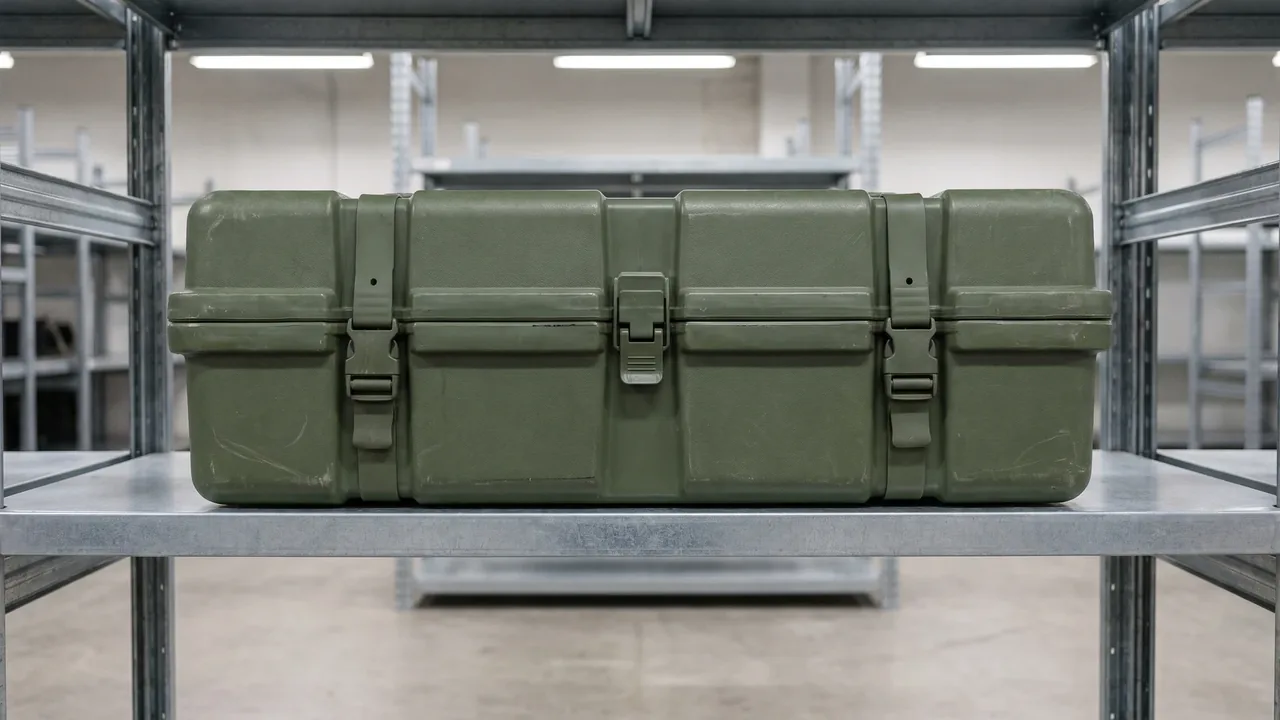
A field camp case is the most basic movable container used during field bivouac, camp operations, and long outdoor assignments. Its job is not to manufacture or modify the items it carries, but to gather living supplies, personal kit, shared gear, and ration provisions into a form that can be transported, stacked, and traced. This article looks only at the container engineering perspective: case materials, sealing structure, foam lining, shock and stacking behavior, latches, marking, and certification. For the record, and subject to local regulations and export controls, this text discusses packaging containers only and does not address the properties or use of any contents.
Usage Scenarios and Positioning of Field Camp Cases
A field bivouac usually means people live for days or longer without fixed buildings. Tents give shelter, while the field camp case provides the smallest independent unit of supplies. A good case should carry one functionally complete set of goods on its own: a squad's cooking gear, a section's communication spares, or one person's sleep and hygiene items. Splitting supplies into several standard sized boxes is easier to count, load, and move in an emergency than loose stacking.
In positioning, the field camp case sits between a household storage box and a professional transit case. It does not chase the extreme isolation precision of a lab instrument case, nor does it serve only short carries like a simple toolbox. It faces dust, rain, temperature swing, and repeated stacking together, so the shell must balance weight against structural strength. When we evaluate, the core metrics should be whether it can be dragged on mud, stacked steadily in a vehicle, and protect contents in damp air.
Note that the case is not the contents. Judging a field camp case always revolves around the container elements: shell, lining, seal, latch. This boundary is the premise of every selection decision that follows. The value of a container lies precisely in turning disordered supplies into manageable units, so the support line stays clear and controllable even in a complex field environment. That is why we keep returning to the box itself rather than what sits inside it.
Shell Materials: Choosing Between ABS, PP, and Aluminium
Field camp case shells mainly come in three materials: modified ABS engineering plastic, polypropylene PP, and aluminium alloy. ABS shells are hard, scratch resistant, and keep a crisp shape after injection molding, suiting scenes that need tidy appearance and frequent opening; the downside is reduced toughness at low temperature, so extreme cold needs attention to shell brittleness. PP is tougher, more chemical resistant, and lighter, but ages and brittles more under long ultraviolet exposure, so outdoor PP shells often need UV modification.
Aluminium takes another route: high strength, repairable, stable in size across heat and cold, but heavier and costlier, and metal shells dent rather than crack on impact. For battalion level master cases that need airdrop, lifting, or long service, aluminium still holds an irreplaceable place; for squad level daily boxes issued in volume, ABS or PP is usually the better value. The choice is rarely about which material is universally superior.
Whatever the material, check the stated service temperature range. No container material is "best"; only "most matched to the mission profile". In coastal humid, salt spray, high UV bivouac sites, environmental adaptation matters more than nominal strength. Procurement should also ask for flammability and environmental declarations, so the shell does not release unpleasant odor inside a closed vehicle cabin where personnel spend long hours.
Sealing Structure: The Key to Water and Dust Resistance
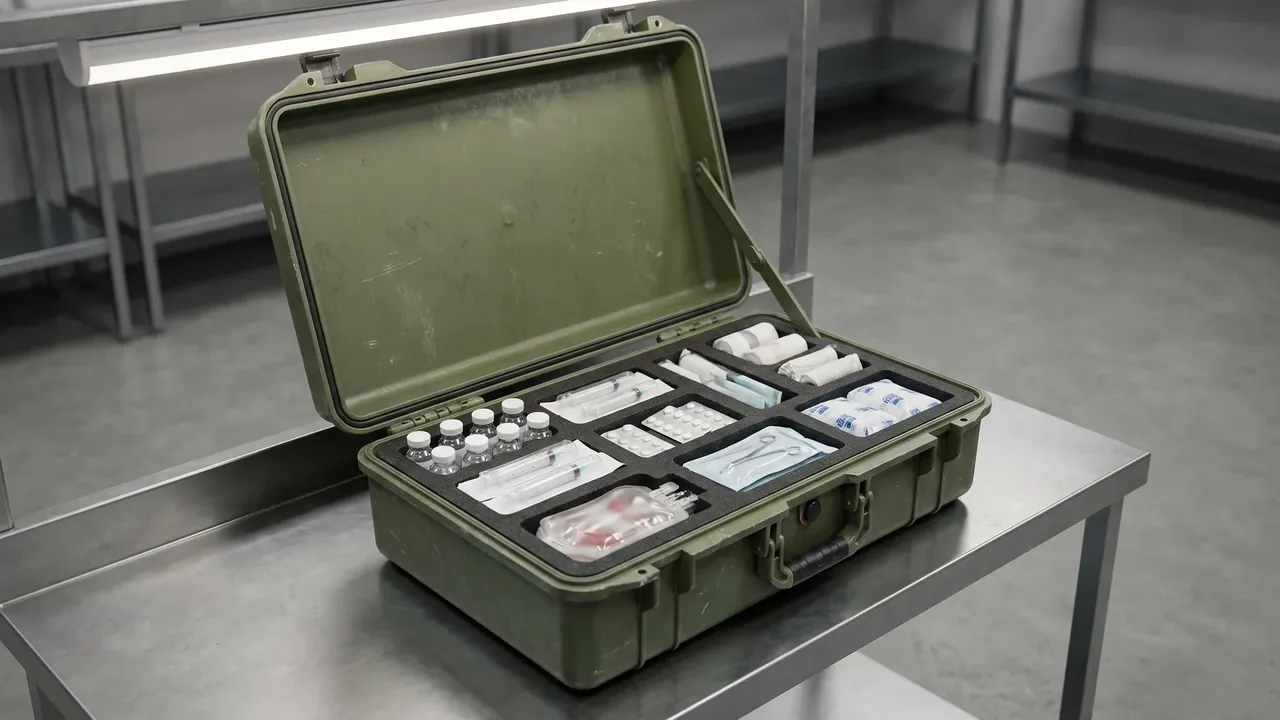
Sealing of a field camp case centers on the gasket between lid and body plus the stopper interface. A common approach lays a ring of EPDM or TPU foam gasket inside the lid, forming a closed compression band at the body stopper when closed, blocking rain and dust. Judging sealing is not just "is there a strip" but the gasket cross section, compression, and whether the four sides compress evenly.
Where wading or heavy rain occurs, the IP67 rating is often quoted. It means dust tight and short term water immersion resistance under defined conditions. But the rating comes from a lab; real performance also depends on gasket aging, compression set, and whether the lid is fully closed. Beyond the rating, check whether the case shows clear closure indication or latch pressure equalization structure.
A related detail is pressure balance. Big day night temperature swings in the field can shrink internal air and create negative pressure, making the lid hard to open or sucking the gasket flat. Some cases hide a waterproof breathable valve to balance internal and external pressure. For valve selection, see the guidance on Case Seal Strip: The Key Waterproof and Dustproof Accessory for Protective Cases. A well designed seal also reduces the chance of condensation pooling at the bottom, which matters more than many buyers realize during a wet season.
Lining and Foam: Zoning and Cushioning of Equipment
The interior of a field camp case is rarely empty. To stop gear colliding in transit and to give each item a fixed place, foam lining is nearly standard. A common scheme uses two layers: a full sheet of EVA or PE foam at the bottom for overall cushioning, and a customizable grid foam or die cut locator foam on top that nests each item into its own pocket. This one item one pocket layout prevents both impact and loss.
Density and rebound decide cushioning. Low density foam is light and cheap but weak in support; high density supports well yet costs more weight and money. For heavy pots and tools that tolerate slight vibration, a thin general foam suffices; for precise survey instruments or communication spares, use higher rebound material with separate isolation. For lining cushioning ideas, read Case Foam Lining: Cushioning and Customization of Case Interiors.
Zoning should also separate wet from dry and raw from cooked. The tableware zone and food zone of a cooking box should be divided, as should the clean clothes and boots zones of a personal box. Movable dividers and small boxes are more flexible than permanently gluing the whole lining, and adapt better to changing load lists. A good lining also shortens the time to open the case and get ready, helping troops fumble less and err less when cold or tired.
Damping and Stacking: Stability in Transport and Storage
Field camp cases get stacked on trucks, boats, and temporary shelves. Stacking stability comes from two points: the rigidity of the shell itself and the stacking locators at its corners. Many professional cases set stacking corners or locator ribs on top and bottom so upper and lower boxes lock and avoid slip. For this structure, see Case Stacking Corner: Load-Bearing and Alignment Hardware for Stacked Cases.
Damping focuses on low frequency sway and high frequency jolts in transit. Elastic feet, lining foam, and item straps form the damping chain. Be clear that the damping goal of a field camp case is to keep contents from scattering or damaging in handling, not to reach instrument transit grade isolation. Layering needs avoids paying for unnecessary specs.
In long camp storage, avoid placing boxes directly on the ground. Skids or pallets vent the base and reduce moisture rising; avoid long direct sun on the case face to slow material aging. These seemingly trivial habits often decide how long a batch of cases lasts more than a single material parameter. During transport, strapping the whole stack also sharply cuts the risk of boxes sliding off under hard braking or rough roads.
Latches and Hinges: Pressure Resistance and Theft Deterrence
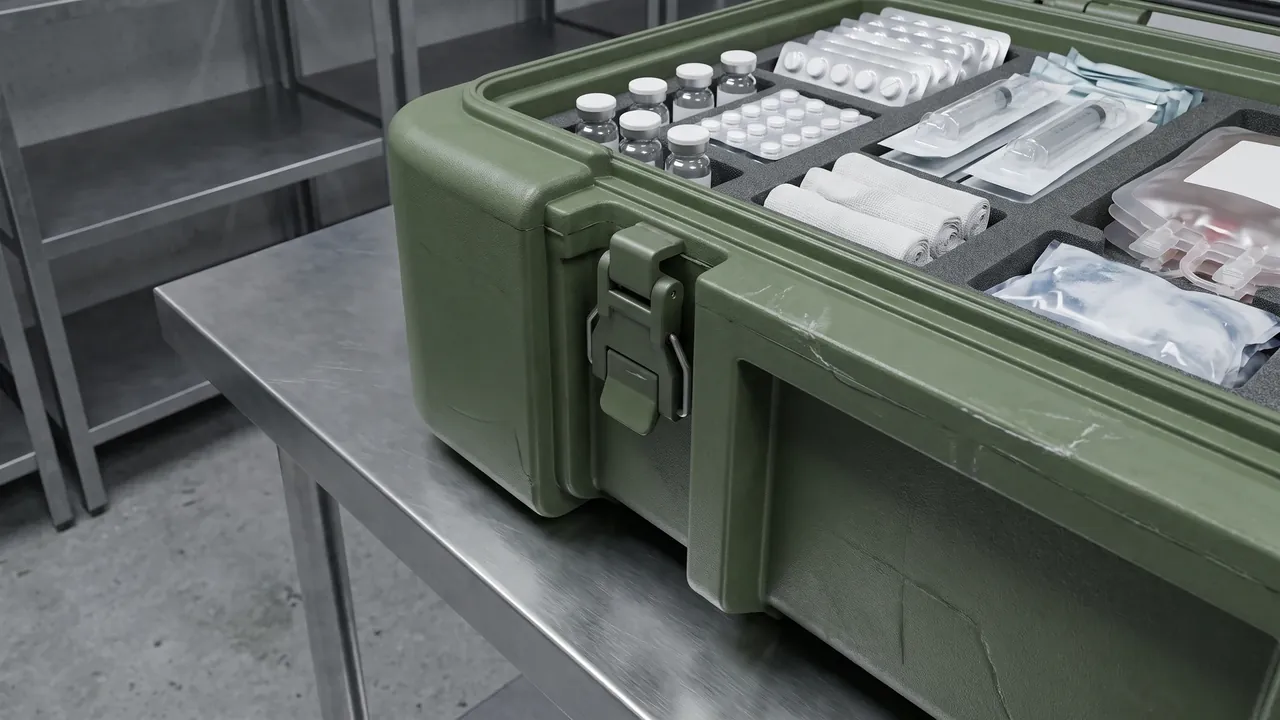
The latch of a field camp case has two tasks: keep the lid closed in transit, and give basic theft deterrence in storage. Common latch forms are single point press latch, double point flip latch, and latch ears that accept a padlock. Press latches are fast for frequent access; ears allow numbered locks or seals for accountable items.
For pressure, the latch must not release when the case is squeezed or dropped. Hinges matter too; metal insert or full pin hinges outlast simple plastic living hinges. For latch pressure and theft configuration, learn more from Case Latch: Pressure and Theft Resistance Hardware for Protective Cases.
Theft deterrence is relative. The field camp case aims to delay unlawful opening and assign responsibility, not resist professional attack. The more reliable management practice is to gather high value goods into sealed cases, then fix them inside tents or vehicles, rather than trust one case lock against everything. Corrosion protection of the latch also deserves attention; coastal environments should prefer stainless steel or surface treated metal parts, so the latch never seizes from rust when quick access matters most.
Ration Box Companion: Food Grade Sealing and Bulk Issue
The ration box is the most special class in the field camp case system because it touches food directly. It needs not only the water and dust resistance of a normal case but also hygiene at food contact surfaces: the liner material should resist oil, acid and alkali, be washable, and release no odor or harmful substance. In bulk issue, ration boxes are often grouped by the standard of one ration per box set, easing quick distribution and recovery.
Sealing is especially critical for ration boxes. Food molds easily in hot humid conditions, so the lid gasket must close fully, and the interior should zone staples, cans, seasoning, and drinking water to avoid odor transfer and cross contamination. In rotation, the ration box must tolerate repeated wash and disinfection, so the surface should be smooth with no dead corners. For food grade sealing details, see Ration Box: Food-Grade Sealing and Bulk Issue.
In camp operation, ration boxes and personal cases should be managed on separate chains: ration boxes on the living support line emphasize hygiene and rotation; personal boxes on the individual kit line emphasize portability and personalization. The two should share dimensions so they can use common pallets, vehicles, and stacking space. Ration boxes also need a first in first out rotation rule, avoiding long stagnation that ages the package or expires the contents.
Moisture and Mould Control: Environmental Management for Long Bivouac
The most hidden enemy of long bivouac is moisture. Day warm and night cold make condensation on the case face; rainy season ground dampness wets the base. The first defense against damp is sealing, the second is desiccant or moisture cards inside, the third is periodic opening for ventilation and drying the lining.
For ration boxes and personal item boxes, mould prevention matters more than waterproofing. Beyond antimicrobial lining materials, take the foam out to air dry after each mission to stop wet foam from spreading mould back inside. Coastal or rainforest environments can add a salt spray coating outside to extend metal latch life; for environmental validation thinking, compare How to Run a UV Aging Test on a Protective Case: Xenon Arc and Outdoor Exposure.
Emphasize that damp control is a system action, not "buy one good case and done". Shell, lining, desiccant, and storage environment together keep mould and rust within acceptable range. On site, also inspect the seam between base and gasket regularly; once mildew appears, wipe and air it promptly to stop spread to neighbouring equipment, because a small patch left alone can ruin a whole case interior.
Marking and QR Codes: Traceability and Fast Access
When a camp holds hundreds or thousands of cases, finding is harder than packing. Field camp cases should build a unified marking system: color tags separate supply classes, numbers separate responsible units, and QR codes link the packing list. Scanning before opening tells what is inside, who owns it, and when it was last counted, greatly reducing blind searching.
Marking must balance durability and concealment. Outdoor case labels should be scratch and weather resistant, preferably etched or thermal transfer rather than ordinary stickers; for low visibility needs, use removable temporary marks that return the case to plain color after the task. Either way, the mark must match the backend ledger, avoiding "case says A but system says B".
Another value of marking is accountability closure. Seal number, case number, and packing list bound together leave a record on every opening, useful for ration rotation, gear handover, and loss tracing. For cross border or cross region tasks, marks should also support multiple languages and common symbols, lowering communication cost and easing audit trails across units and contractors alike.
Certification and Testing: IP67 and MIL-STD-810H
When buying field camp cases, certification and test reports beat vendor claims. Water and dust resistance often cites IP ratings, with IP67 a common outdoor threshold; transport reliability can reference MIL-STD-810H, an environmental test method covering drop, vibration, humid heat, salt spray, and low pressure. Understand that the standard gives test methods; which procedures passed and at what level still depend on the manufacturer's actual report.
For domestic troops and emergency units, some procurement also references GJB related environmental tests. Whatever system is cited, the core is replacing subjective judgment with repeatable experiment. For the meaning of waterproof design, read Why Does an Outdoor Protective Case Need Waterproof Design?.
Users should also beware label only certification: writing a rating without test conditions, or claiming a whole case passed from one component. A responsible supplier provides full test records including sample count, failure modes, and corrective actions. The buyer should attach the test report to the contract as acceptance and claim evidence, not let it become a mere formality that nobody checks.
Molding Process: Injection Versus Rotational
How the shell is made directly decides its strength profile and cost. Injection molding suits high volume, fine shape, dimensionally stable ABS or PP cases; once the mold is set, unit cost is low and consistency high; the downside is large mold investment, poor for small batches, and relatively even wall thickness at corners relying on material for impact.
Rotational molding excels at large, complex curved, seamless overall shells, with locally thickenable walls and better impact and twist resistance, fitting large irregular camp master cases. The cost is slower cycle, higher energy, and higher unit price. For shell structure and molding, compare Case Shell: Structural Materials and Molding Process of Protective Cases.
Do not be led by "one process is superior". For small batch many spec daily boxes, injection is usually better value; for large impact resistant master cases, rotomolding's advantage truly shows. For cases needing local reinforcement, preset stiffener ribs and impact corner guards at the mold stage raise durability through structure rather than material alone, which is often the smarter investment for rough field service.
Size and Stacking Plan: Camp Layout
Field camp cases are not used alone; they embed into the camp's pallets, racks, vehicles, and tents. So size planning precedes purchase: first decide how many cases a standard pallet holds, how many layers a standard truck stacks, how many fit a rack cell, then reverse the single case shape. A common practice unifies several modular sizes to avoid "every case different, none stackable".
Stacking plans also reserve aisles and center of gravity. High stacks must use locator ribbed cases, with total center kept low; heavy boxes bottom, light boxes top is basic safety. In vehicle transport, strap or cage the whole stack to prevent sliding on hard braking.
Also, ration boxes and personal boxes should share modules so they can ride one pallet and split by function after arrival, saving both transport and space. The planning phase should also reserve maintenance aisles and fire spacing, so a wall of cases never blocks tent exits or hides emergency equipment from view.
Maintenance: Extending Case Life
Field camp cases are durable goods, but durable goods need care. After each mission, clear mud from the face, check the gasket for skew or cracks, and confirm latches and hinges move smoothly. Replace a locally deformed gasket promptly rather than waiting for leaks; for replacement and material choice, see How Do You Replace a Protective Case Gasket? Original Parts Versus Substitutes.
Before long storage, dry the shell, take lining out to air, and lightly oil metal parts. Store in ventilated shade, avoiding long compression deformation. A one case one file maintenance record helps a unit track each case's service state and retire aged individuals in time.
The other side of maintenance is correct use. No overload, no standing on the lid, no using case edges as pry bars; these habits sharply cut non combat loss and let a batch reach design life. For recovered old cases, also assess shell cracks and latch wear to decide repair, downgrade, or scrap, avoiding sick service that fails at the worst moment.
Selection Checklist: Configure Field Camp Cases by Mission
Condense the points into a checklist for procurement: first, define the mission profile (days, climate, transport mode); second, set shell material and temperature range; third, confirm sealing rating and pressure balance design; fourth, plan lining zones and foam density; fifth, verify latch form and theft need; sixth, unify modular size for stacking; seventh, implement marking and ledger; eighth, request certification and test reports.
Users needing both field survival and storage variety can also reference How to Choose a Tactical Storage Box: A Multi-Scenario Guide from Field Use to Collection Storage; units emphasizing modular resupply can combine Logistics Support Box: Modular Resupply Configuration to build the whole supply system.
To restate, the value of a field camp case is turning chaotic supplies into ordered units. Judge by the container's material, seal, lining, damping, latch, and marking, and you will find a truly usable batch within budget. Subject to local regulations and export controls, this article discusses packaging containers only. Selection is not a one time purchase but a continuous support process that iterates with each mission and deserves real attention from planners. In practice, keeping a simple batch ledger that records each case's contents, weight and inspection date makes the whole fleet easier to manage, and it turns a one-off purchase into a maintainable asset base that supports every subsequent mission.
Frequently Asked Questions
Q: What is the real difference between a field camp case and a normal household storage box? A: The essential difference is that a field camp case must satisfy three requirements at once: transport, stacking, and environmental protection, rather than only static storage. Household boxes mostly sit indoors and carry almost no design margin for drops, rain, dust, or long vibration; a field camp case usually has thicker walls, more reliable gaskets, pressure capable latches, and locator structures for stacking. Moreover, field camp cases often use weather resistant materials like ABS, PP, or aluminium, and may cite IP67 or reference MIL-STD-810H test items, none of which a household box emphasizes. Be clear this article discusses the container itself and does not judge what goes inside. When buying, write the mission profile clearly, then compare the three core metrics of material, sealing, and stacking, avoiding distraction by flashy appearance. A case that fits the environment beats a case that looks tough in a showroom, and the difference only becomes obvious after the first storm, the first muddy drag, and the first stacked pile that must not shift on a rough road.
Q: What container requirements must a ration box meet for food contact? A: Because a ration box touches food directly, its hygiene at the container level is the first gate. First, the liner and food contact material should resist oil, acid and alkali, be washable, and release no odor or harmful substance. Second, the lid gasket must close fully to keep rain and dust from contaminating food. Third, the interior should allow dry wet or raw cooked zoning to avoid cross contamination and odor transfer. Fourth, in rotation the box must tolerate wash and disinfection, so the inner surface should be smooth with no dead corners. Everything discussed here is the sanitary design of packaging containers, not any food formula or preservation process. In actual issue, ration boxes are often grouped by the standard of one ration per box set for fast distribution and recovery, which also requires dimensions compatible with personal field camp cases to share pallets and vehicles. Good container design extends the usable window of food under field conditions and keeps a batch of boxes safe to reuse across many meals without hidden hygiene risk.
Q: How should I reasonably choose the sealing rating of a field camp case? A: Sealing rating should match the real environment, not blindly chase high numbers. For general field bivouac, a case that is dust tight and resists short rain is usually enough; if you work in heavy rain, wading, or possible short immersion, look at the common IP67 threshold, which means dust tight and short term water resistance under defined conditions. But remember the rating comes from a lab; real performance also depends on gasket aging, compression set, and whether the lid is fully closed each time. So beyond the rating, inspect the gasket cross section, compression, and whether a waterproof breathable valve balances the negative pressure from day night temperature swings. For the gasket itself, refer to seal strip articles. In short, write the use environment specifically when choosing a rating; that matters more than memorizing an IP number on a brochure, and it prevents paying for a grade the mission will never actually meet in practice while still leaving real gaps unaddressed.
Q: What lining foam materials exist and what should each hold? A: Common field camp case linings include EVA, PE, and tear grid foam. EVA feels soft and rebounds well, fitting precise spares with close fitting limits; PE foam costs less and supports steadily, fitting overall bottom cushioning; tear grid foam lets the user peel cells to nest each item into its own pocket for one item one pocket impact layout. Choose by density and rebound: low density is light and cheap but weak in support, high density supports well yet is heavier and dearer. Heavy pots and tools that tolerate slight vibration can use thin general foam, while precise survey instruments or communication spares deserve higher rebound material with separate isolation. All discussion stays within the container's internal cushioning structure and does not touch the contents themselves. Reasonable zoning also separates wet from dry and raw from cooked; movable dividers beat permanently glued lining for flexibility, and let the load list change between missions without rebuilding the whole case interior from scratch, which saves both time and money.
Q: Which is more durable, ABS or PP shell material? A: ABS and PP each have their fit; neither is simply more durable. ABS shells are hard, scratch resistant, and keep a crisp shape after molding, fitting frequent opening and tidy appearance, but toughness drops in extreme cold with a brittleness tendency. PP is tougher, more chemical resistant, and lighter, but ages and brittles more under long ultraviolet exposure, so outdoor PP shells often need UV modification. If the mission is in humid, salt spray, high UV coastal bivouac sites, material weatherability matters more than nominal strength. A third route is aluminium: strong, repairable, wide temperature range, but heavy and costly, mostly for battalion master cases. The conclusion is to choose material by mission profile rather than trust one type. This article discusses container materials only and not the items inside the case, so the right answer always starts from where and how long the case will serve in the field, then matches shell, wall, and coating to that reality rather than to a single parameter.
Q: How high can a field camp case be stacked in a camp? A: Stack height has no universal constant; it is decided by shell rigidity, stacking locator structure, per layer weight, and base flatness together. Professional cases set stacking corners or locator ribs on top and bottom so upper and lower boxes lock without slip, which is the premise of safe height. The general rule is heavy boxes low, light boxes high, with total center kept low, and high layers must use locator structured cases. In vehicle transport, strap or cage the whole stack to prevent sliding on hard braking. Note that rated stack layers often assume an ideal flat surface, while real mud or slope should discount them. This article talks only about the container stacking structure itself; the exact limit should follow the manufacturer's test and on site stability, never exceed it to save space, because an overhigh pile risks both the cases and the people nearby, and it also overloads the bottom shells into permanent deformation that shortens the whole batch.
Q: How can latches balance fast access with basic theft deterrence? A: The latch of a field camp case balances fast and stable. Frequently accessed daily boxes suit press or flip latches openable with one hand; accountable goods can use cases with latch ears, adding numbered locks or one time seals so opening leaves a trace. Latch pressure resistance also matters: latch points must not release when the case is squeezed or dropped, so metal insert or full pin hinges are more reliable. But be sober that the field camp case latch aims to delay unlawful opening and assign responsibility, not resist professional attack. The more reliable management practice is to gather high value goods into sealed cases, then fix them inside tents or vehicles. This article discusses latch hardware only and not overall security system design. In humid or coastal sites the latch should also be corrosion treated, otherwise a rust seized latch slows urgent access at exactly the wrong moment and turns a convenience into a burden that crews learn to distrust.
Q: During long bivouac, how do I stop a field camp case from getting damp and mouldy? A: Damp and mould control is a system project; one good case is not enough. The first defense is sealing, keeping the lid gasket fully closed; the second is desiccant or moisture cards inside absorbing residual humidity; the third is periodic opening for ventilation and taking the lining foam out to air dry, avoiding wet foam spreading mould back inside. For ration boxes and personal item boxes, mould prevention matters more than waterproofing, so linings should prefer antimicrobial materials and be washed dry after every mission. Coastal or rainforest environments can give metal latches salt spray treatment to slow rust. This article discusses the container's damp proof design only and not the preservation process of contents. Remember that shell, lining, desiccant, and storage environment together keep mould and rust within acceptable range, and treating damp control as routine discipline rather than a one time purchase is what actually preserves supply integrity through a long and wet deployment.