

The short answer: UV resistance for protective cases is verified along two parallel tracks, laboratory accelerated ageing and natural outdoor exposure. On the laboratory side the workhorse is xenon arc ageing, based on ISO 4892-2, ASTM G155 and the corresponding national standard, in which a filtered xenon lamp simulates the solar spectrum and a controlled combination of irradiance, black panel temperature, chamber humidity and spray cycles compresses several years of sunlight into a few hundred to a few thousand hours. On the outdoor side, ASTM G7, ASTM D1435 and ISO 877 govern 12 to 24 months or more of real exposure at high-irradiance sites such as South Florida and Arizona. The two tracks are not interchangeable: accelerated testing ranks formulations and controls batches, while outdoor exposure establishes the real service-life reference.
Many people assume that UV resistance simply means "the plastic does not fade". That is a narrow reading. Ultraviolet damage to polymers is a whole photo-oxidation process: UV photons break molecular chains, oxygen forms peroxides, and heat accelerates the reaction rate. The visible outcome is surface chalking, colour shift, gloss loss, brittleness and micro-cracking in the surface layer, and a decline in mechanical properties. For a protective case those changes are not merely cosmetic. Surface embrittlement weakens impact resistance, gasket ageing directly destroys water resistance, and embrittled plastic latches or handles can snap during use. The purpose of UV validation therefore is not an attractive colour. It is the retention of function across the service life.
This article is written for procurement, structural design, materials engineering and quality staff. It covers what a UV test actually measures, the difference between xenon arc and fluorescent UV ageing and where each belongs, how the parameters are set, how cumulative irradiance converts into an equivalent exposure period, how to choose an outdoor exposure site, how to define the assessment metrics, which parts of a case are most vulnerable, how material systems and additive packages respond, and how to write UV requirements into a technical agreement in an enforceable way. All irradiance figures, temperatures, durations and conversion ratios quoted here are typical or empirical values; binding conditions must come from the current standards and the agreed test plan.
Contents
- What a UV Test Actually Measures
- The Standard Family: ISO 4892-2, ASTM G155 and National Equivalents
- How Xenon Arc Ageing Works and How the Equipment Is Built
- Fluorescent UV Ageing: The Other Accelerated Route
- Setting the Parameters: Irradiance, Temperature, Humidity and Cycles
- Converting Test Duration into Service Years
- Outdoor Exposure: Site, Angle and Duration
- How Accelerated Testing Relates to Outdoor Exposure
- Assessment Metrics: Colour Difference, Gloss, Chalking and Mechanical Retention
- Which Parts of a Protective Case Are Most Vulnerable to UV
- Material Systems and UV Packages: Absorbers, HALS and Pigments
- Writing UV Requirements into a Technical Agreement
- Common Misconceptions and Traps
- Frequently Asked Questions
- Conclusion and Related Reading
What a UV Test Actually Measures
Define the target first. Ultraviolet damage to plastics is photo-oxidative degradation, and it breaks into four stages:
- Photon absorption. Certain groups in the polymer chain, such as carbonyls and unsaturation, along with impurities and catalyst residues in the formulation, absorb UV photons and enter an excited state.
- Chain initiation and scission. Excited molecules break, generating free radicals. The radicals react with oxygen to form peroxy radicals, which sustain a chain reaction that consumes the polymer itself.
- Thermal-oxidative synergy. Higher temperature markedly accelerates these reactions, which is why xenon arc testing must control black panel temperature and not irradiance alone.
- Macroscopic outcome. Chain scission and crosslinking accumulate in the surface layer, producing chalking, micro-cracks and colour change. Falling molecular weight degrades the mechanical properties of that layer, and once additives such as stabilisers and plasticisers are consumed or have migrated, the rate of degradation can suddenly increase.
The question a UV test answers is therefore this: under a given spectrum, cumulative irradiance, temperature and humidity, how much have specific properties of the material changed?
For a protective case, six functional changes matter:
- Colour difference, expressed as delta E
- Gloss retention
- Degree of chalking
- Surface cracking and flaking
- Impact strength retention, especially at low temperature
- Change in gasket hardness, compression set and resilience
Impact strength retention is the one most often omitted, yet it is among the most important. A case that looks almost unchanged but has an embrittled surface can perform far worse than a new one when struck in cold conditions. That is why the conclusion of a UV report should not read merely "no significant discolouration", but should include mechanical retention.
The Standard Family: ISO 4892-2, ASTM G155 and National Equivalents
UV testing standards fall into three groups: laboratory light source exposure methods, outdoor exposure methods, and post-exposure property assessment methods. Understanding the division of labour between the three is the prerequisite for reading an ageing report.
| Standard | Title and scope | Category | Typical use |
|---|---|---|---|
| --- | --- | --- | --- |
| ISO 4892-2 | Plastics, methods of exposure to laboratory light sources, part 2: xenon arc lamps | Laboratory method | Internationally used xenon arc ageing |
| ASTM G155 | Operating xenon arc light apparatus for exposure of non-metallic materials | Laboratory method | The most common North American xenon method |
| GB/T 16422.2 | Plastics, laboratory light source exposure, part 2: xenon arc lamps | Laboratory method | Domestic xenon arc reports |
| ASTM G154 | Operating fluorescent ultraviolet lamp apparatus for exposure of nonmetallic materials | Laboratory method | Fluorescent UV accelerated ageing |
| ASTM D4329 | Fluorescent UV exposure of plastics | Laboratory method | Rapid UV screening of plastic parts |
| GB/T 16422.3 | Plastics, laboratory light source exposure, part 3: fluorescent UV lamps | Laboratory method | Domestic fluorescent UV reports |
| ASTM G7 | Atmospheric environmental exposure testing of nonmetallic materials | Outdoor method | Overall requirements for outdoor exposure |
| ASTM D1435 | Outdoor weathering of plastics | Outdoor method | Natural ageing of plastics |
| ISO 877 | Plastics, methods of exposure to solar radiation | Outdoor method | International natural exposure |
| ISO 4582 | Determination of changes in colour and properties after exposure | Assessment method | Harmonised assessment basis |
| ASTM D2244 | Calculation of colour tolerances and colour differences | Assessment method | Delta E calculation |
| ASTM D523 | Specular gloss measurement | Assessment method | Gloss retention |
| ISO 4628-6 | Assessment of chalking of coatings | Assessment method | Chalking grade |
One point deserves emphasis: laboratory accelerated methods and outdoor exposure methods are different categories of standard. They do not substitute for one another, and there is no official equivalence table. The ISO 4892 series and ASTM G155 define how to reproduce a repeatable light, temperature and moisture stress spectrum in the laboratory. ASTM G7 and ASTM D1435 define how to expose specimens to the real outdoor environment. Any correspondence between the two is empirical and material-specific.
Nor are xenon arc and fluorescent UV the same thing. A filtered xenon lamp reproduces the solar spectrum fairly completely, including visible and some infrared radiation, and is therefore closer to real exposure. A fluorescent UV lamp concentrates its output in the ultraviolet region, delivers higher acceleration, and omits visible light entirely. For certain systems whose stability depends on visible light or on pigment photochemistry, fluorescent UV can produce a ranking that does not match field results. Choose by purpose: for formulation screening and fast comparison, fluorescent UV is efficient; for realistic assessment and external reports, xenon arc is the better choice.
How Xenon Arc Ageing Works and How the Equipment Is Built
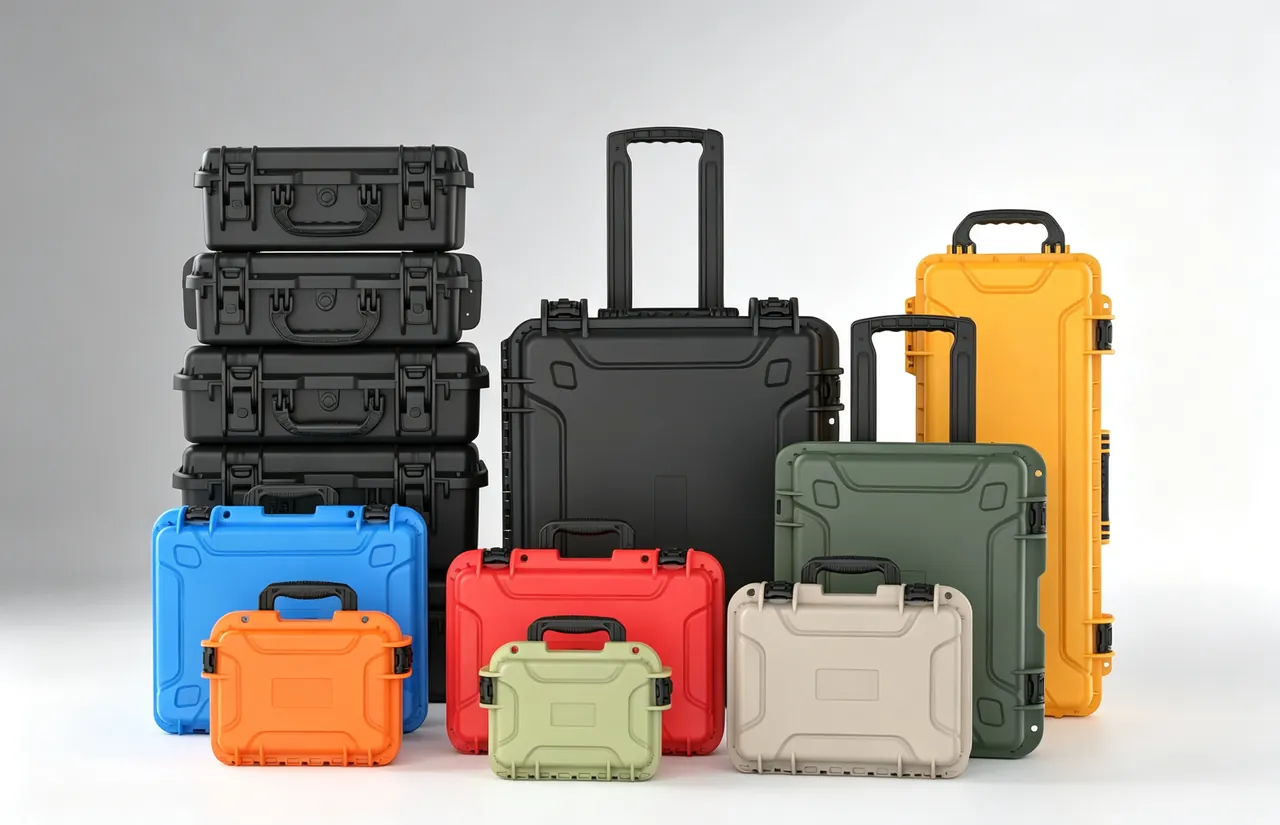
A xenon arc lamp is a gas discharge source whose continuous spectrum, once filtered, can simulate solar radiation. The equipment has four core subsystems.
- Light source and filter system. The raw xenon spectrum is strong in the short wavelengths and weak in the long ones, so filters are essential. The filter configuration determines the spectral distribution, which means results from reports using different filters cannot be compared. Common configurations simulate direct daylight or daylight behind window glass, and the report must state which was used.
- Irradiance monitoring and control. A UV or broadband sensor monitors irradiance continuously and feeds back to the lamp power supply to hold the set value. This is what makes acceleration controllable. Closed-loop equipment compensates for lamp ageing and keeps the cumulative dose consistent across a run.
- Temperature and humidity control. A black panel thermometer or black standard thermometer characterises the temperature of the specimen surface, while chamber air temperature and relative humidity are separately controlled. Surface temperature is often markedly higher than air temperature, and that gap is a major source of acceleration.
- Spray and condensation system. Periodic spraying or condensation simulates the washing and hydrolytic effect of rain and dew. Spraying matters particularly for pigmented and flame-retardant materials, where it can leach additives and dull the surface.
Once these four subsystems are understood, the parameter block of an ageing report becomes readable: filter configuration, irradiance set point, black panel temperature, chamber temperature, relative humidity, cycle programme with light and spray durations, and total duration or cumulative irradiance. Without any one of these, the severity of the report cannot be judged.
Fluorescent UV Ageing: The Other Accelerated Route
Fluorescent UV ageing, covered by ASTM G154, ASTM D4329 and the corresponding national standard, uses fluorescent ultraviolet lamps whose emission is concentrated in the shorter wavelengths. Most such equipment has no visible light output at all. Its characteristics are:
- High acceleration. The cumulative UV dose delivered in a given time is often higher than with xenon arc, making it well suited to ranking formulations quickly.
- Low equipment and running cost. Lamps are inexpensive and maintenance is simple, which suits high-volume incoming inspection.
- Incomplete spectrum. With no visible or infrared output, the difference from real sunlight is substantial, so conclusions for some pigment systems can diverge from field behaviour.
- Strong emphasis on hydrolysis. Combined with condensation cycles, it evaluates the hydrolytic stability of coatings, printing and certain surface treatments effectively.
The practical rule is that fluorescent UV is for screening and xenon arc is for reporting. Internal formulation screening and incoming inspection can use fluorescent UV for speed. External reports, customer certification and marketing claims should use xenon arc or outdoor exposure. Where the customer's standard mandates a method, that method governs.
| Method | Light source | Spectral completeness | Acceleration | Equipment cost | Typical role |
|---|---|---|---|---|---|
| --- | --- | --- | --- | --- | --- |
| Xenon arc ageing | Xenon arc lamp with filters | High, includes visible | Medium | High | External reports, realistic assessment |
| Fluorescent UV ageing | Fluorescent UV lamps | Low, concentrated in UV | High | Low | Formulation screening, incoming inspection |
| Outdoor exposure | Real sunlight | Complete | Low, real time | Site cost | Service-life reference, final validation |
| Carbon arc ageing | Carbon arc lamp | Medium | Medium | Medium | Legacy methods in specific industries |
Setting the Parameters: Irradiance, Temperature, Humidity and Cycles
The parameters are not free choices; together they determine the acceleration factor. ISO 4892-2 and ASTM G155 both provide reference cycles, and sound practice is to select one of those cycles and record it completely.
Irradiance. Usually expressed as spectral irradiance at 340 nm or 420 nm, or as integrated irradiance across the 300 to 400 nm band. A higher set point accelerates more, but beyond a limit the failure mechanism departs from real ageing, for example by producing thermal degradation that would not occur outdoors. Irradiance cannot be raised indefinitely, and the acceleration factor cannot be extrapolated linearly.
Black panel temperature. This characterises specimen surface heating. Typical set points are in the 60 to 70 degrees C range, for example 65 plus or minus 3 degrees C. Surface temperature is markedly above chamber air temperature, and this is the origin of the thermal-oxidative synergy in accelerated ageing. For heat-sensitive materials such as polyolefins with lower heat deflection temperatures, excessive temperature can soften and distort the specimen, which undermines appearance assessment altogether.
Chamber air temperature and relative humidity. Chamber temperatures commonly fall in the 38 to 50 degrees C range, with relative humidity commonly around 50 percent. Humidity strongly influences hydrolytic degradation and additive migration.
Cycle programme. The common arrangement is light with periodic spray, for example a continuous cycle of several minutes of light followed by ten or more seconds of spray, or a longer division into light and dark segments. Spray simulates rain washing and condensation simulates overnight dew, and the two act on the surface differently. Whether spray is included, and at what frequency, materially changes the outcome, so the report must state it.
Test duration. This can be expressed in hours or in cumulative irradiance. Cumulative irradiance is preferable because it normalises differences in irradiance and makes comparison easier.
| Parameter | Common empirical setting | Effect on results | Consequence of getting it wrong |
|---|---|---|---|
| --- | --- | --- | --- |
| Irradiance | Set at 340 nm or 420 nm, commonly around 0.5 W per square metre | Determines acceleration | Too high distorts the mechanism |
| Black panel temperature | 60 to 70 degrees C range | Thermal-oxidative intensity | Too high softens and distorts the specimen |
| Chamber temperature | 38 to 50 degrees C range | Reaction rate | Confusing it with surface temperature misleads assessment |
| Relative humidity | Around 50 percent | Hydrolysis and migration | Alters additive leaching behaviour |
| Cycle and spray | Light plus periodic spray | Washing and hydrolysis | Unstated values make results irreproducible |
| Total irradiance | Derived from the target service period | Determines equivalent duration | Hour counts alone are not comparable |
Converting Test Duration into Service Years
This is the question buyers and marketing teams care about most, and it is also the one most frequently overstated. State the position plainly first: there is no universal, officially sanctioned conversion factor between laboratory accelerated ageing and real outdoor exposure. The various "so many hours equals a year" ratios circulating in the industry are empirical and specific both to the material and to the climate.
Two relationships can nevertheless be used rigorously.
- Additivity of irradiance. Cumulative irradiance equals irradiance multiplied by time. Running 1,000 hours at an irradiance of 0.5 W per square metre yields a cumulative dose of 0.5 times 1,000 times 3,600, which is 1.8 megajoules per square metre at that wavelength. Provided the other conditions match, the same material at the same cumulative dose should show comparable ageing, which gives a basis for comparing results across different equipment and lamp batches.
- Outdoor reference values. Long-term published statistics exist for annual cumulative UV irradiance at high-irradiance sites such as South Florida and Arizona, and these can serve as the denominator. The common engineering approach is to multiply the annual UV dose at the target market's location by the intended service years to obtain a target cumulative irradiance, then convert that into laboratory hours.
It must be stressed that accelerated ageing is not the same as real ageing. An accelerated test compresses several years of UV dose into a few months, but it cannot simultaneously compress the seasonal temperature cycle, long-term humidity fluctuation, deposition of pollutants, or slow internal relaxation of the material. Accelerated ageing is therefore better at answering "which formulation is more weatherable" than "how many years will this case last outdoors". The latter still requires outdoor exposure data.
The more defensible approach in practice is to build your own material database. Put the same formulation through both xenon arc ageing and outdoor exposure, accumulate the relationship between the two for that specific material, and derive conversions from your own data rather than applying a generic coefficient. This is precisely why a technical agreement requiring both accelerated and outdoor data from a supplier is more valuable than one demanding an impressive hour count.
Outdoor Exposure: Site, Angle and Duration
Outdoor exposure is the most realistic ageing assessment and is conducted under standards such as ASTM G7, ASTM D1435 and ISO 877. Four elements must be defined: site, mounting angle, duration and assessment intervals.
Site. The climate type sets the stress spectrum. The two best known benchmark sites are South Florida, which is hot and humid with intense UV, and Arizona, which is dry and hot with intense UV and large diurnal swings. The former is better for evaluating moisture and hydrolysis-related failures, the latter for pure photo-thermal ageing and chalking. Where the target market is the Middle East, Southeast Asia or Northern Europe, choosing a site whose climate resembles that market is more meaningful than choosing a famous location.
Mounting angle. The common arrangement is a fixed angle facing the equator, with the angle affecting the irradiance received. Sun-tracking mounts are also used to increase dose. The report must state the angle and whether tracking was used, otherwise the data cannot be compared.
Duration. Typical steps are 12 and 24 months, with some products running to 36 months or more. Materials sensitive to UV, such as polyethylene and polypropylene, show visible change within 12 months, whereas materials with good carbon black or stabiliser systems may show little appearance change at 24 months, in which case mechanical and colour data are needed to differentiate.
Assessment intervals and sampling. The value of outdoor exposure lies in the time series. Sampling and testing at fixed intervals, for example every three or six months, yields a curve of property change over time rather than a single endpoint. An outdoor report that provides only endpoint data conveys far less information.
Specimen form. Results differ greatly between flat panels and complete cases. Panels make colour and gloss measurement straightforward, while whole-case exposure also exercises assembly stresses, gasket compression, and the actual state of latches and hinges, which is closer to real failure. The ideal arrangement runs both in parallel: panels for intrinsic material weatherability and whole cases for product-level weatherability.
| Exposure element | Common choice | Basis for choice | Effect on results |
|---|---|---|---|
| --- | --- | --- | --- |
| Site | Hot-humid or hot-dry high-irradiance location | Target market climate | Sets the humidity and temperature spectrum |
| Mounting angle | Fixed equator-facing angle or tracking | Target irradiance | Determines cumulative dose |
| Duration | 12 to 36 months or more | Target life and material sensitivity | Determines whether formulations separate |
| Sampling interval | Every three or six months | Need for a trend curve | Determines information content |
| Specimen form | Panels and whole cases in parallel | Material-level and product-level assessment | Determines whether results extrapolate |
How Accelerated Testing Relates to Outdoor Exposure
Seen together, the two are complementary and not interchangeable. Four statements capture the relationship.
- Accelerated ageing ranks; outdoor exposure calibrates. Accelerated testing separates formulations in a short time, while outdoor exposure gives the rate of change under real conditions.
- Accelerated ageing suits batch control; outdoor exposure suits design freeze. During production, accelerated testing provides affordable batch consistency checks. At design freeze, outdoor exposure establishes the baseline.
- The failure mechanism must match for the conclusion to be usable. If an accelerated test produces a failure that would not occur outdoors, such as surface melting or heavy additive bloom, the condition has lost its predictive value and serves only as an upper bound of tolerance.
- Spectral difference is the biggest variable. Fluorescent UV has an incomplete spectrum, xenon arc depends on its filter configuration, and outdoor exposure uses the full solar spectrum. Cross-method conclusions can only be drawn cautiously, and only where the mechanism agrees.
The practical advice for buyers is this. A report stating only "1,000 hours of xenon arc ageing, no significant appearance change" has limited value. A report that states the filter configuration, irradiance, black panel temperature, humidity, cycle, total irradiance, and provides colour difference, gloss, chalking and mechanical retention data has genuine engineering value.
Assessment Metrics: Colour Difference, Gloss, Chalking and Mechanical Retention
The conclusion of a UV test depends on which metric is used. The table below lists six metrics commonly applied to protective cases.
| Metric | Measurement basis | Typical expression | Notes |
|---|---|---|---|
| --- | --- | --- | --- |
| Colour difference, delta E | ASTM D2244, ISO 4582 | Numeric, lower is better | Must state illuminant and observer conditions |
| Gloss retention | ASTM D523 | Percentage | Glossy surfaces are more sensitive than matte ones |
| Chalking | ISO 4628-6, ASTM D4214 | Grade, with 10 the best | Direct evidence of pigment and filler surfacing |
| Surface cracking and flaking | Visual and magnified inspection | Grade or description | Should accompany colour data |
| Impact strength retention | Charpy, Izod or drop weight methods | Percentage | The most critical mechanical metric for cases |
| Gasket property change | Hardness, compression set | Value or percentage | Directly tied to water resistance |
Three points deserve expansion.
First, colour difference must be judged against a tolerance, not an absolute value. What counts as a failure depends on the product positioning and the customer requirement. Dark and light parts perceive the same delta E differently, and light parts are generally more sensitive. The technical agreement should state the specific tolerance and the evaluation illuminant.
Second, the chalking grade must cite a standard and a level. Different standards use different scales, so "slight chalking" is a vague statement, whereas "assessed at grade X under standard Y" can be accepted or rejected.
Third, mechanical retention is the bottom line for a protective case. The core function is to protect the contents, and surface embrittlement materially reduces impact resistance. UV validation should therefore include at least one mechanical retention metric, ideally tested at low temperature to simulate the combined condition of outdoor ageing followed by a winter drop. Related cold brittleness assessment is covered in how high and low temperature testing works.
Which Parts of a Protective Case Are Most Vulnerable to UV
Sensitivity varies widely between parts. Ranking by risk:
First, gaskets and rubber components. Rubber is highly sensitive to UV and ozone, and ageing shows up as rising hardness, surface cracking, falling resilience and increasing compression set. Once a gasket loses resilience, the water resistance of the case degrades quickly. This is the most critical failure point in case ageing, and the mechanism and replacement intervals are covered in gasket ageing and replacement cycles and seal material ageing in cases.
Second, the case surface. The outer skin of a plastic case takes UV and rain directly. It shows colour change, gloss loss, chalking and micro-cracking. Dark parts, especially black, run hotter at the surface and therefore age faster through thermal oxidation.
Third, latches, hinges and handles. These are usually composites of plastic and metal. The plastic portion, once embrittled, can fracture during opening or lifting, which is a safety-relevant failure, while the metal portion mainly shows coating and plating degradation.
Fourth, foam and liners. Some foams, particularly open-cell types and certain polyurethane systems, chalk, collapse or hydrolyse under UV and damp heat. A liner is not normally in direct sunlight, but it receives light whenever the case is opened, and over time it can shed particles that contaminate the contents.
Fifth, printing and labelling. The ink systems used in screen printing, pad printing and labels vary greatly in weatherability. Fading, loss of adhesion and flaking do not affect function but do affect brand presentation and traceability.
Sixth, transparent windows. Where a case has a PC or acrylic window, UV ageing causes yellowing and reduced light transmission, and such changes are usually irreversible.
Material Systems and UV Packages: Absorbers, HALS and Pigments
UV resistance ultimately depends on the material system and the additive package. Three protective routes dominate.
UV absorbers. These absorb UV photons and dissipate the energy as heat, reducing the number of photons that reach the polymer chain. Benzotriazole and benzophenone chemistries are common. Their effectiveness depends on thickness, so they perform less well in thin-walled parts than in thick ones.
Hindered amine light stabilisers, HALS. These do not absorb UV directly. They interrupt the photo-oxidation chain by trapping free radicals and decomposing peroxides, which makes them highly efficient at relatively low loadings and the mainstay for polyolefin systems. Combining a UV absorber with HALS is usually better than either alone, and this is standard industry practice.
Pigments and fillers. Pigments both colour the material and shield it from light. Carbon black is one of the most effective light shielding agents, and its particle size, structure and dispersion strongly affect performance: poorly dispersed carbon black not only shields less effectively but can act as a stress concentrator. Conversely, some organic pigments are themselves light-sensitive and fade before the substrate degrades, producing a case that has lost its colour while the material is intact. White pigments such as titanium dioxide combine opacity and shielding, but some crystal forms are photocatalytically active and require surface treatment to suppress that activity.
| Base polymer | Intrinsic weatherability | Common stabiliser package | Engineering note |
|---|---|---|---|
| --- | --- | --- | --- |
| PP | Poor, prone to photo-oxidation | HALS primary, UV absorber secondary | Long outdoor life needs generous HALS; light colours are harder |
| ABS | Poor, butadiene phase ages readily | UV absorber plus HALS, or ASA co-extrusion | Long outdoor life favours a co-extruded ASA surface layer |
| PC | Moderate, sensitive to yellowing | UV absorber plus surface coating | Transparent parts need yellowing and transmission monitoring |
| PC/ABS | Moderate | UV absorber and HALS system | Balance colour difference against impact retention |
| PE | Fair, greatly improved by carbon black | Carbon black plus HALS | Black parts far outperform light colours |
For a fuller treatment of material selection, see how to choose materials for outdoor cases, how to choose plastics for protective cases and the differences between PP, ABS and PC.
One engineering fact is frequently overlooked: the same base polymer in the same colour can differ several-fold in weathering performance between suppliers. The difference usually lies not in the polymer grade but in the stabiliser package and the dispersion process. Direct comparative ageing tests under identical conditions during material qualification therefore carry far more weight than datasheet claims.
Writing UV Requirements into a Technical Agreement
A UV requirement that cannot be turned into an executable clause is only a wish. Six items belong in the agreement.
- Test method and standard number. State whether xenon arc or fluorescent UV applies, cite the standard number and edition, such as ISO 4892-2, ASTM G155, ASTM G154, or the corresponding national standard.
- Complete test parameters. Filter configuration, irradiance set point and reference wavelength, black panel temperature, chamber temperature, relative humidity, cycle and spray regime, and total duration or cumulative irradiance.
- Specimen form and state. Flat panel or complete case; whether liners, latches and gaskets are fitted; specimen colour and thickness.
- Assessment metrics and acceptance thresholds. Colour difference tolerance, minimum gloss retention, maximum chalking grade, minimum mechanical retention, and limits on gasket property change.
- Sampling and assessment intervals. Whether intermediate data are required, and whether a trend curve must be provided rather than a single endpoint.
- Change and retest rules. Whether a change of material grade, pigment, stabiliser system or supplier triggers revalidation.
| Agreement element | Risk if omitted | Recommended wording |
|---|---|---|
| --- | --- | --- |
| Method and standard number | Reports cannot be cross-accepted | Cite standard number and edition |
| Test parameters | Severity cannot be judged | List all parameters individually |
| Specimen form | Results cannot be extrapolated to the product | Specify panels and whole cases separately |
| Acceptance thresholds | No basis for acceptance | Provide numeric limits |
| Sampling intervals | Only endpoint data | Require at least three time points |
| Change rules | Uncontrolled risk after a material swap | Define retest triggers |
It is also worth running a whole-case outdoor exposure or whole-case xenon exposure at first article approval, rather than panels alone. Whole-case exposure exercises assembly stresses, gasket compression state and hardware weatherability at the same time, and is an effective way to catch the problem of a qualified material producing an unqualified product. The overall design requirements for outdoor cases are covered in what an outdoor protective case is.
Common Misconceptions and Traps
Misconception one: equating UV resistance with fade resistance. Colour is the surface symptom; surface embrittlement and gasket ageing are the functional risks.
Misconception two: looking only at accelerated hours. "Passed 1,000 hours of ageing" conveys nothing without the test parameters. Cumulative irradiance is more comparable than an hour count.
Misconception three: assuming the acceleration factor extrapolates linearly. Raising irradiance and temperature to push the factor higher beyond a certain point moves the failure mechanism away from real climate behaviour, and the conclusion loses predictive value.
Misconception four: substituting fluorescent UV conclusions for xenon or outdoor conclusions. An incomplete spectrum can distort formulation ranking, especially where pigment systems differ substantially.
Misconception five: ignoring the difference between black and light colours. Black parts run hotter and age faster through thermal oxidation, while light parts show colour change more readily. They should not share a single acceptance threshold.
Misconception six: ignoring the gasket. A report covering only the case material misses the fact that the first failure usually occurs in the gasket, which is the most common gap in case weathering validation.
Misconception seven: testing appearance but not mechanics. A specimen with no visible change may already have lost significant impact strength.
Frequently Asked Questions
Q: Should a protective case UV test use xenon arc or fluorescent UV? A: The two have different roles, so divide the work by purpose. A filtered xenon arc lamp reproduces the solar spectrum fairly completely, including visible and some infrared radiation, and is closer to real exposure, which makes it suitable for external reports, customer certification and marketing claims, under ISO 4892-2, ASTM G155 or the corresponding national standard. Fluorescent UV lamps concentrate output in the ultraviolet region with no visible light, offer higher acceleration and lower equipment cost, and suit internal formulation screening and incoming inspection under ASTM G154, ASTM D4329 or the corresponding national standard. Because the spectrum is incomplete, fluorescent UV conclusions can diverge from field behaviour for certain pigment systems, so it is not advisable as the sole basis for an external report. The most robust arrangement is to screen internally with fluorescent UV, report externally with xenon arc, and include one whole-case outdoor exposure at design freeze.
Q: How many hours of ageing equal one year outdoors? A: There is no universal official conversion factor. The ratios circulating in the industry are empirical and depend strongly on the material system, the additive package, the colour and the climate type. Two relationships can be used rigorously. The first is the additivity of irradiance: cumulative irradiance equals irradiance multiplied by time, so results from different equipment and lamp batches can be normalised through total irradiance. The second is the outdoor reference value: long-term published statistics for annual UV irradiance at high-irradiance sites provide a denominator. The common engineering approach is to multiply the annual UV dose at the target market by the intended service years to obtain a target cumulative irradiance, then convert it into laboratory hours. It must be recognised, however, that accelerated testing cannot compress seasonal temperature cycling, long-term humidity fluctuation, pollutant deposition or slow internal relaxation at the same time. It is better at answering which formulation is more weatherable than how many years a specific case will last.
Q: Which parameter matters most in a xenon arc ageing test? A: No single parameter dominates, because they are coupled, but the combination of irradiance, black panel temperature and cycle programme most strongly determines the outcome. Irradiance sets the acceleration factor and is usually expressed at 340 nm or 420 nm. Black panel or black standard temperature reflects specimen surface heating and commonly sits in the 60 to 70 degrees C range, and it sets the intensity of thermal-oxidative synergy. The cycle programme determines whether spray and condensation are included, and therefore whether hydrolysis and washing participate. The filter configuration determines the spectral distribution, and a report that does not state it cannot be compared with any other report. Relative humidity and chamber air temperature are also required records, since they influence additive migration and hydrolysis. The simplest way to judge whether a report is credible is to check that all of these parameters are stated individually.
Q: Can a fluorescent UV report and a xenon arc conclusion be accepted interchangeably? A: Not unconditionally. The spectra differ substantially. A filtered xenon lamp covers ultraviolet, visible and some infrared radiation and approximates the solar spectrum, whereas a fluorescent UV lamp concentrates its output in the ultraviolet with virtually no visible light. That difference creates two problems. First, for systems whose stability depends on visible light or on the photochemistry of the pigment itself, the two methods can rank formulations in opposite orders. Second, fluorescent UV accelerates more aggressively, and the material may follow a failure path different from real outdoor exposure. The two can be referenced against each other but should not be treated as equivalent evidence. Where the customer specifies a method, follow the customer standard. Where the customer asks only for an ageing report, provide at least a xenon arc report and supplement it with outdoor exposure data where relevant.
Q: What counts as a pass after UV testing? A: Acceptance criteria should be set jointly by product positioning and customer requirements, but they must cover both appearance and function. Appearance metrics typically include colour difference, gloss retention, chalking grade and surface cracking. Functional metrics should include at least one mechanical retention figure, such as impact strength retention, ideally tested at low temperature to simulate outdoor ageing combined with a winter drop. For a protective case, gasket ageing must be listed separately, checking hardness change, compression set and resilience, because it directly determines whether water resistance is retained. Every threshold should be written as a numeric clause, for example a maximum colour difference, a minimum impact retention percentage, or a maximum chalking grade. Qualitative wording such as "no significant change" cannot be accepted and becomes unenforceable in a dispute.
Q: Why does a case that performed well in the laboratory still fade in real outdoor use? A: Three causes are common. The first is spectral mismatch: fluorescent UV has an incomplete spectrum, or the xenon filter configuration differs from the solar spectrum of the target market, so the laboratory conditions fail to cover a critical waveband of the real environment. The second is missing secondary stresses: accelerated tests usually apply only light, temperature and humidity, whereas real outdoor exposure adds pollutant deposition, salt spray, acid rain, abrasive dust and cleaning agents, all of which can accelerate surface degradation. The third is neglected assembly stress: a flat panel has no assembly stress, no gasket compression and no galvanic corrosion between hardware components, whereas a complete case outdoors experiences all of them simultaneously. The most effective remedy is to improve realism: set parameters according to the target market climate, include a spray cycle, and arrange at least one whole-case exposure or whole-case ageing run.
Q: Do black cases age faster than light-coloured ones? A: From a thermal standpoint, yes. Dark surfaces absorb more solar radiation and run hotter, so thermal-oxidative ageing is more intense and the rate of bulk degradation is higher at the same irradiance. From a visual standpoint, however, light parts are more sensitive to colour difference, and the same delta E value is generally more noticeable to the eye on a light part than on a dark one. These two effects pull in opposite directions, so it is not accurate to say one colour is simply better or worse. Set separate acceptance thresholds for each. Note also that light parts using titanium dioxide may need surface treatment to suppress the photocatalytic activity of certain crystal forms, while black parts depend heavily on the particle size, structure and dispersion of the carbon black, with poor dispersion introducing defects. The reliable approach is to validate ageing for the actual colour scheme rather than inferring from colour depth.
Q: Can a material supplier's ageing data be adopted directly? A: It can serve as an initial screen but should not be adopted directly as acceptance evidence, for three reasons. First, supplier data are usually based on flat panels, whereas a protective case is a real component with ribs, holes and assembly stresses, so product-level behaviour may differ from material-level behaviour. Second, supplier data may omit key test parameters, especially filter configuration, cycle regime and total irradiance, and without them severity cannot be judged. Third, the same base polymer and colour from different grades can differ several-fold in weathering performance because of differences in the stabiliser system and dispersion process, so qualitative datasheet statements such as "good weathering resistance" carry limited weight. The recommended approach is to run comparative ageing on candidate grades under identical conditions during material qualification, and to arrange whole-case exposure or whole-case ageing at first article approval, building your own material weathering database in the process.
Q: What should be watched when running a UV test on a complete case? A: Whole-case exposure reflects real failure better than panels, but four points need attention. First, the orientation should match actual use, whether flat, upright or stacked, because orientation affects dust and water accumulation as well as the angle of light received. Second, gaskets, latches, hinges and handles should all be fitted, because embrittlement of plastic hardware and ageing of rubber seals usually appear before changes in the case body. Third, opening force and sealing performance should be recorded and assessed, not just appearance, because surface ageing changes the modulus and friction characteristics of the material, which in turn affects opening feel and gasket compression. Fourth, intermediate sampling should be scheduled instead of relying on an endpoint, so that the inflection point in property decline can be seen and a judgement made between gradual degradation and accelerated deterioration after a certain point. A further benefit of whole-case exposure is that it exposes the gap between a qualified material and an unqualified product, for example premature failure through compression set at an assembly stress concentration.
Conclusion and Related Reading
Back to the question in the title: how do you run a UV ageing test on a protective case? The answer is to run two tracks in parallel, using xenon arc ageing under ISO 4892-2, ASTM G155 or the corresponding national standard for controlled, repeatable accelerated assessment, and using outdoor exposure under ASTM G7, ASTM D1435 or ISO 877 to establish the real service-life reference. The value of a test lies not in how many hours it ran but in whether the parameters are complete, whether the metrics cover function, and whether the conclusion can support a decision. Colour difference and gloss speak the language of appearance; impact strength retention and gasket property change speak the language of function.
Three actions you can take immediately. First, rewrite the technical clause from "passed a given number of ageing hours" to "method plus seven parameters plus numeric thresholds plus sampling intervals", so the clause becomes reproducible and enforceable. Second, assess appearance and mechanics together, and list the gasket as a separate evaluation item, because the essential function of a case is protecting its contents, and surface embrittlement and gasket ageing threaten that function directly. Third, screen internally with fluorescent UV, report externally with xenon arc, and arrange a whole-case outdoor exposure at design freeze, a three-layer structure that controls cost while producing a credible service-life reference.
JUNZHJIA, manufactured by KeXin New Materials (Guangdong) Co., Ltd., produces protective cases, tool boxes, military-spec storage cases and waterproof junction boxes for wholesale, distribution, OEM and ODM programmes and global supply. The company can match material and UV stabiliser systems to the target market climate, supply material data and ageing test reports, support whole-case exposure validation, and provide technical coordination from material selection through to test documentation.
Related Reading