

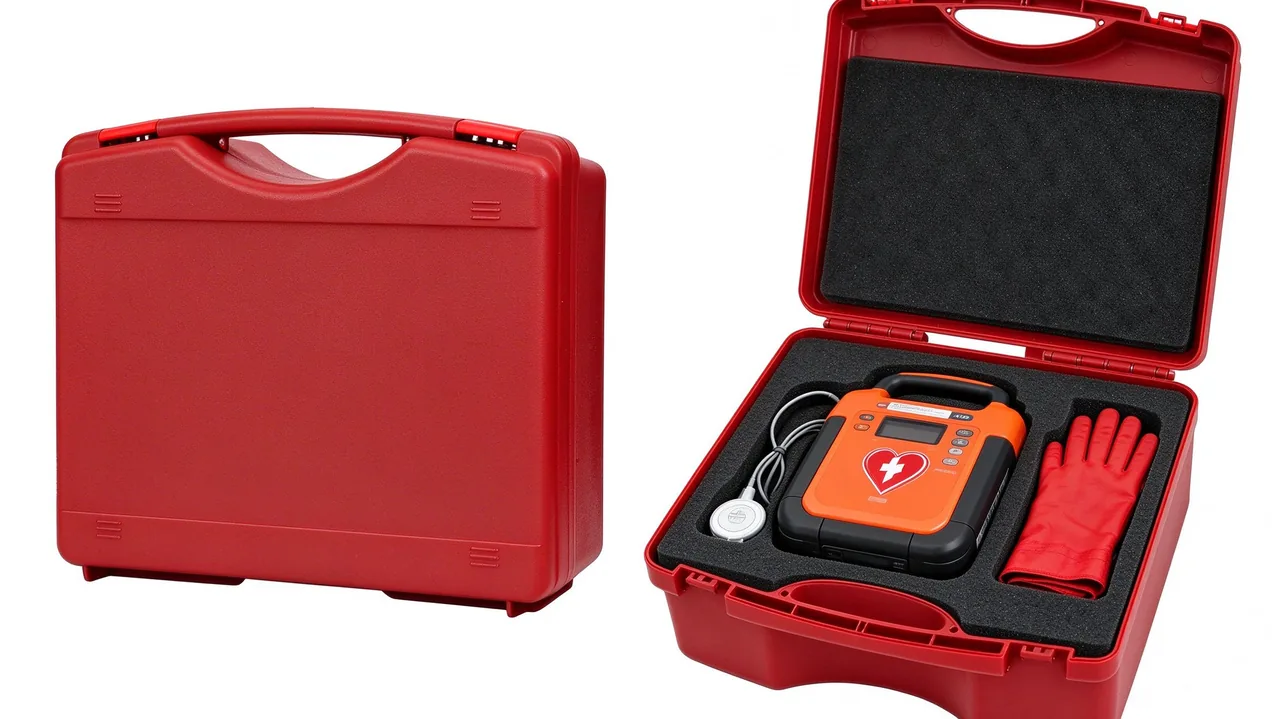
The seal strip is the most overlooked component of a protective case, yet it is the single accessory that decides whether the closed case can actually keep water and dust out. Whether the case serves field surveying, offshore work, or warehouse transit, the ability to block moisture and fine particles after the lid closes depends almost entirely on this continuous elastic gasket running around the lid flange. As a fundamental Case Accessory, the seal does not carry load, but it determines the protection grade the whole case can reach. This article examines the seal strip from a container engineering perspective, covering material, cross section, compression, groove fit, environmental aging, and replacement, so purchasers and retrofit shops can select, install, and maintain this Case Accessory correctly, and understand how it relates to Case Shell: Structural Materials and Molding Process of Protective Cases and Case Latch: Pressure and Theft Resistance Hardware for Protective Cases. To dig further into latch choices, see protective-case latch selection: types and clamping points.
The Role of the Seal Strip Within a Protective Case
A protective case does not owe its protection only to a rigid shell. Much of the real performance comes from handling a few weak interfaces, and the seam between lid and body is the most critical one. The seal strip is the elastic element that fills this gap. When the lid is clamped, the strip deforms in a controlled way and closes the air path that would otherwise connect the interior with the outside. As a basic Case Accessory, the seal takes no structural load, yet it sets the ceiling for the case protection rating, so its importance is often higher than its appearance suggests.
Functionally the seal strip does three jobs at once. It blocks liquid water from creeping along the lid seam, it stops fine dust from entering the cavity, and it cushions the impact when the lid snaps shut. These three tasks are related but they do not demand the same material or cross section, so selection must start from the use case before any technical route is chosen. Treating the strip as an ordinary rubber cord that can be swapped at will is one of the most common roots of field leakage. During procurement, the strip should enter the technical review rather than the appearance check, with the supplier asked for cross section drawing, hardness, and compression rebound data instead of only price and color. For cases that carry critical duty, the reliability of the strip often deserves more budget than the shell color or handle style, because it directly decides whether the contents survive a hostile environment.
From a maintenance view, the strip is also the easiest Case Accessory to judge on site. After opening the lid, a quick visual sweep for cracks, permanent marks, or dislodged sections along the ring gives a first read on seal health. Building this low cost inspection habit intercepts most water entry incidents before they happen, rather than tracing the cause only after internal equipment has been damaged by moisture.
Waterproof and Dustproof: Where the Boundaries Lie
Waterproofing and dustproofing look similar but place different demands on the seal strip. Dust control mainly relies on continuous contact along the seam; as long as the cross section leaves no through gap after compression, most particles stay out. Water is harder because liquid has surface tension and hydrostatic pressure. When the case is partly submerged or hit by a spray, the seal must keep enough contact pressure and the groove must offer no overflow bypass.
Engineers describe this boundary with an ingress rating such as IP67, which means the case can survive short immersion without water entry. The seal strip is the key Case Accessory for reaching that rating, but it must work together with lid clamping force and groove geometry. Simply fitting a softer strip will not automatically upgrade the rating. Understanding the difference between waterproof and dustproof requirements is the first step in good seal design and the yardstick that separates an adequate case from an excellent one. A practical way to see the difference is to test each separately: a dust challenge needs only continuity of contact, while a water challenge also needs margin against pressure and time. Many cases pass a quick dust wipe yet fail a hose spray, precisely because the strip was chosen for the easier requirement.
Specifiers should therefore state both requirements explicitly in the purchase order, with the expected exposure described as a scenario rather than a vague grade. Saying the case will face road spray and occasional puddle splash tells the engineer more than quoting a number alone, and it prevents over or under specification that either wastes cost or leaves a real gap in protection.
Common Seal Materials: EPDM, Silicone, and Foam Rubber
Three materials dominate seal strips for protective cases. EPDM, or ethylene propylene diene monomer rubber, resists ozone and weathering well and rarely cracks under long outdoor exposure, making it the most common choice among general Case Accessory lines. Silicone keeps its elasticity across a wide temperature range and stays flexible in cold climates, suiting food contact or cleanroom scenarios, though its mechanical strength is lower. Foam rubber uses a closed cell structure to achieve light weight and good rebound with low compression set, ideal for weight sensitive equipment cases.
Material choice should return to the environment. Hot, humid, and long outdoor service points to EPDM. Low temperature or clean service points to silicone. Light weight with even contact pressure points to foam rubber. Whatever the choice, the seal as a Case Accessory should declare its material and hardness so future stock and replacement stay consistent, avoiding batch to batch variation in feel and compression. In general transport scenarios such as Equipment Cases: General Instrument & Gear Transport Protection, material traceability matters a great deal. Procurement should ask each delivery for a material certificate and hardness test record, and sample the incoming batch for compression rebound verification to stop substitution by the supplier. For export or cross climate transit, also confirm the material meets the destination environmental and flame rules so the case is not rejected at port for non compliant material.
Furthermore, the color of a seal strip does not equal its performance. Black, gray, or white strips mostly differ by carbon black or filler, with no direct link to sealing ability. Selection should rest on material grade, hardness, and profile, not on appearance. Keep one material and one profile for the same case to reduce the fit uncertainty that mixing introduces across batches and service events.
Cross Section: Solid, Hollow, and Lip Profiles
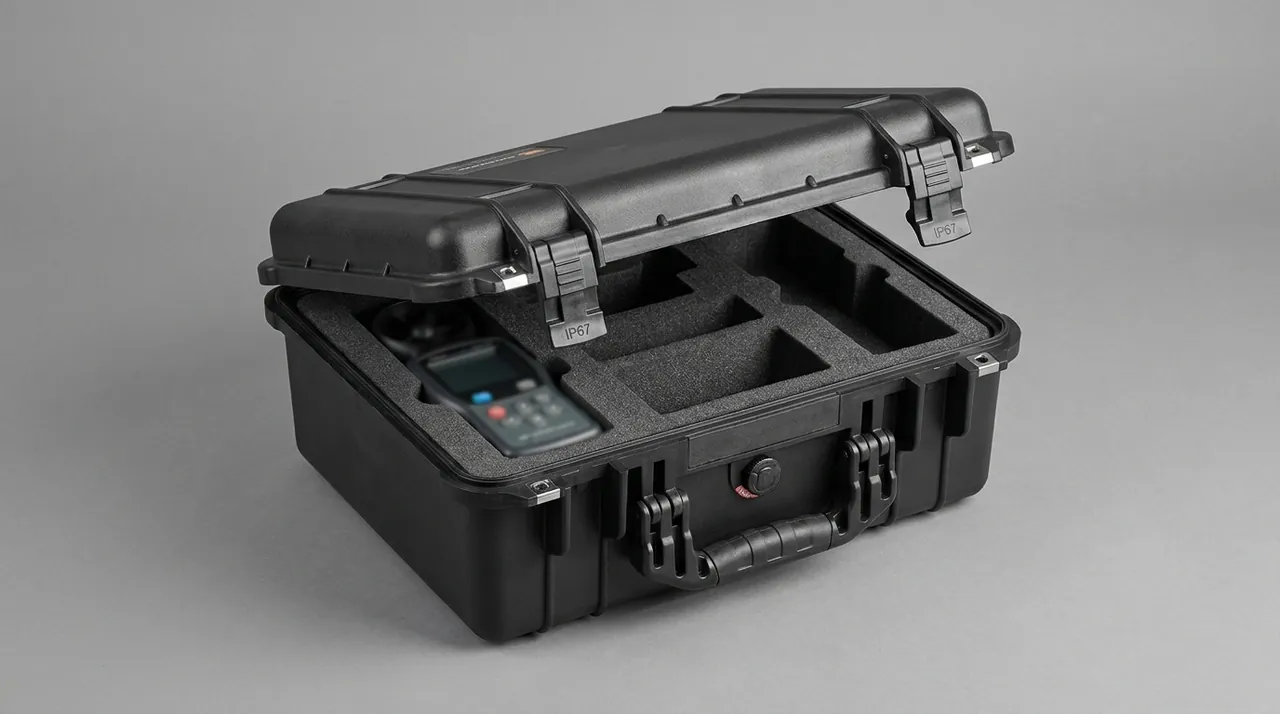
The cross section of a seal strip directly governs its compression behavior and reliability. A solid section is simple and pressure resistant but needs higher clamping force, fitting heavy duty cases with rigid lids and ample latch pressure. A hollow, or tube, section flattens under relatively small force, tolerates uneven seams well, and is the default for most portable protective cases. A lip profile rolls outward against one side when compressed and helps against directional water spray, often used on gear cases that face hose washing.
As a Case Accessory, the profile must match the lid closure type. Flip lids, opposite side closures, and plug in lids load the seam in different directions and need different profiles. During selection, ask for the cross section drawing and verify the width and height of the mating face. At the same time, leave allowance for shell manufacturing tolerance so that molding variation does not make the profile fit too tight or too loose, which would hurt the uniformity of the whole perimeter seal. Working with Instrument Cases: Precision Meter Transport & Protection raises the bar further on consistency. Precision instruments tolerate almost no ingress, so the profile must hold its compression through thousands of cycles without creep. In such cases a hollow section with stable wall thickness is often preferred, and the supplier should provide a creep curve rather than a single hardness number, because the long term behavior under sustained clamping is what protects the instrument.
It is also worth noting that a larger cross section is not automatically better. An oversized profile may need more latch force than the shell can provide, leaving the corners under compressed exactly where leaks start. The right size is the smallest section that meets the required compression band, paired with a latch layout that delivers even pressure around the whole perimeter without overloading the shell.
Compression and Rebound Behavior
Compression is the core parameter of seal engineering, defined as the percentage the strip is flattened when the lid closes. Too little compression leaves a gap, making both dust and water protection unreliable. Too much compression causes permanent set, so the strip cannot rebound after opening and the seal fails. Solid sections are typically compressed fifteen to twenty five percent, while hollow sections can reach thirty to fifty percent depending on hardness and wall thickness.
Rebound decides whether the seal keeps performing after repeated opening. A good Case Accessory recovers most of its height shortly after unloading and shows low permanent set after many cycles. A simple acceptance check is to compress a sample to the design compression for a while, release it, and measure the recovery height. Insufficient rebound means changing the supplier or adjusting the profile. For demanding bodies such as precision instrument cases, this rebound check should never be skipped, and a documented sample report is good practice for audit trails. The check is cheap: a strip coupon, a fixture to hold design compression, a timer, and a caliper. Yet it catches the difference between a strip that recovers and one that slowly takes a set, which a casual squeeze by hand cannot reveal because hand feel ignores the time factor under load.
Compression set also interacts with temperature. A strip that rebounds well at room temperature may creep under sustained heat, so the sample test should be run at the expected service temperature, not only on the bench. When the duty spans cold storage to hot truck, test both ends of the range and pick the profile whose worst case still clears the required compression band with margin for aging.
How the Seal Relates to IP67 Rating
Many buyers treat IP67 as a label stuck on the seal strip, but IP67 certifies the whole case, and the strip is only one link. To reach IP67, the strip, the groove, the lid flatness, and the latch clamping force must all meet spec. Fitting a strip marketed as waterproof cannot deliver the rating if the groove or clamping force is mismatched. For the full background on whole case ratings, see What Is an IP67 Protective Case? Core Protection and Selection.
Therefore, when upgrading the seal strip as a Case Accessory, evaluate it inside the whole case system. Is the seam width stable? Do the four corners show local under pressure because the shell deforms? Does the latch layout spread pressure evenly around the perimeter? Only when these structural conditions are met can the strip reliably deliver IP67 level waterproof and dustproof performance. Otherwise even expensive material is merely decorative, and the case will fail exactly where it is needed most.
Adhesive and Embedded Mounting Processes
Seal strips are mounted in two main ways. Adhesive mounting uses a dedicated glue to fix the strip in a groove on the lid or body. It is flexible and suits retrofits and small batches, but glue aging and temperature resistance are weak points that can debond after long heat or thermal cycling. Embedded, or push in, mounting presses the strip's own barb into a molded groove and relies on mechanical engagement, making removal and replacement easy and reliable, which is the mainstream for mass produced cases.
Whichever process, the joint of the strip as a Case Accessory is critical. The butt joint should be cut at forty five degrees and pressed tight to avoid a straight seam gap. A continuous ring seal must never have a break. Retrofit shops replacing a strip should keep the original profile and mounting method to reduce seal risk introduced by process change. Like Case Foam Lining: Cushioning and Customization of Case Interiors, the seal strip is also a foundational component that affects whole case reliability and should never be taken lightly during specification.

Groove Design and Dimensional Fit
The groove is the bed of the seal strip, and poor dimensional fit directly ruins sealing. A groove too wide lets the strip shift sideways after pressing and drift under load. A groove too narrow makes insertion hard and shears the material locally, accelerating aging. Groove depth must link with section height and compression. Too shallow fails to reach design compression, too deep leaves a seam gap.
Engineering practice often uses seventy to ninety percent of the section height as effective compression to back calculate groove depth. As a Case Accessory, the strip supplier should provide recommended groove dimensions, and the shell designer tools the mold accordingly. In retrofit, if the original groove is worn or deformed, repair the channel before fitting a new strip. Do not thicken the strip to force compression, because uneven pressure at corners and straight runs invites leakage. The surface roughness of the groove also affects sealing, since an overly rough channel can scratch the strip surface and start a failure. The groove bottom and walls should be finished smoothly, with small fillets at sharp corners so the strip is not locally sheared on closure. During tooling, review the groove drawing jointly with the strip supplier, and when sensible build a prototype for actual press fit and spray verification before mass production to confirm compression lands in the design band.
For flip lid cases, the four corners of the lid flange are the spots most likely to under compress, because the shell behaves complexly and deforms where it turns. The design should add ribs or local thickness there, and in trial production use a pressure film to inspect corner pressure distribution. Only when straight runs and corners both reach even compression is the ring truly closed; any weak point becomes the entry for water.
Temperature Adaptability and Environmental Aging
Seal strips sit long term in temperature, ultraviolet, and ozone exposure, and the material ages gradually. EPDM weathers better than most rubbers but still rises in hardness and loses elasticity under sustained heat. Silicone tolerates wider temperature but is more easily scratched. Dust and water protection decay with aging, showing as a tacky surface, cracks, or permanent compression marks.
As a Case Accessory, the environmental adaptability of the strip should be written into the technical requirement: clarify the operating temperature window, contact with oil or solvent, and long outdoor sun exposure. The wider the storage and transit temperature swing, the more attention goes to low temperature brittleness and high temperature softening. Regular visual inspection of the strip surface is a low cost and effective preventive measure. In extreme environments such as desert, coast, or high altitude, the inspection frequency should be raised further to catch aging before it becomes leakage.
Replacement Interval and Wear Judgment
A seal strip has no fixed shelf life; its real life depends on opening frequency, environmental severity, and material. Signals that replacement is due include longitudinal cracks or crumbling on the surface, compression marks that do not recover, local light leakage after the lid closes, or water traces inside after spraying. Any one of these should trigger replacement rather than waiting for a failure.
In daily care, the seal strip among Case Accessory items must not be wiped with strong solvents, which swell or embrittle rubber. Use a neutral cleaner with a soft cloth, and after drying apply a thin silicone based protectant to slow aging. Keeping a replacement log that records fit date and duty helps shift from reactive repair to planned maintenance. Components such as Case Stacking Corner: Load-Bearing and Alignment Hardware for Stacked Cases that also affect transit reliability should be brought into the same log so the whole accessory set is managed on one plan.
Cooperative Sealing With the Case Shell
The seal strip is not an isolated part; it is directly tied to the flatness and rigidity described in Case Shell: Structural Materials and Molding Process of Protective Cases. If the shell warps at the lid flange because of molding variation, even the best strip will under compress locally. Raising seal reliability often starts with the shell manufacturing tolerance and rib layout, keeping the lid plane within the specified tolerance band before any strip work begins.
In retrofit practice, the strip and shell are tuned as one system. First correct the lid plane, then choose a matching profile, and finally use the clamping force distribution from How to Choose a Protective-Case Latch: Types, Compression Points, and Selection Checklist to make pressure even around the perimeter. Only when shell, strip, and latch cooperate can the Case Accessory system perform steadily; any single point optimization cannot compensate for a system weakness elsewhere in the closure.
Matching With Latch Clamping Force
The compression of the seal strip is provided by lid clamping force, which comes from Case Latch: Pressure and Theft Resistance Hardware for Protective Cases. Too few latches or a biased layout leave some seam segments under compressed and others over compressed, and the under compressed spots are exactly where water enters. Latch selection and strip profile must therefore be designed together, not purchased independently by separate buyers.
Engineering can place carbon paper or a pressure film along the seam to observe whether the post closure pressure distribution is continuous and even, then adjust latch position or strip profile. As a Case Accessory, the latch travel should also match the strip compression. Too short a travel fails to compress, too long fatigues the shell under sustained load. Balancing the two is the key to whole case seal stability and also bears directly on the long term sealing behavior of the case under drop and transport vibration, where repeated micro movement tests the strip daily.
Selection Checklist and Common Mistakes
When buying a seal strip as a Case Accessory, confirm item by item: define operating temperature and outdoor exposure, determine seam width and flatness, pick material and hardness, settle profile and compression, confirm mounting process and groove size, request a sample for compression rebound test, and plan the replacement interval. Addressing each item avoids the embarrassment of a strip that looks fine but leaks in use.
Common mistakes include treating IP67 as a rating a strip alone can reach, blindly increasing compression with a softer strip, ignoring even corner pressure, buying on price instead of specs, and mixing different batches that yield inconsistent compression. Correcting these mistakes essentially means thinking of the strip inside the whole case system rather than as a randomly replaceable rubber cord. Only by building a four part accessory view of shell, seal, latch, and lining can a protective case become truly reliable, instead of a collection of individually acceptable but collectively failing parts.
Frequently Asked Questions
Q: How often should a protective case seal strip be replaced? A: A seal strip has no universal replacement interval because its real life depends on how often the case opens, how harsh the environment is, and which material was chosen. Scenarios with long outdoor sun exposure, frequent opening, or contact with oils and solvents age the strip much faster and may require inspection and replacement within about a year. A case kept in static storage with stable temperature and humidity can last far longer. The practical trigger for replacement is a visible signal rather than a calendar date: longitudinal cracks or crumbling on the surface, compression marks that fail to recover, local light leakage after the lid closes, or water traces inside after spraying. When any of these appears, replace the strip. Daily care with a neutral cleaner and a soft cloth, avoiding strong solvents, noticeably slows aging and turns reactive repair into planned maintenance. Keeping a replacement log that records duty helps schedule replacement before a failure, not after a leakage incident forces it.
Q: Why does water still leak after fitting a softer seal strip? A: Leakage is rarely caused by strip hardness alone. The strip is only one link in the whole case protection system, and waterproof performance also needs lid flatness, groove geometry, and latch clamping force to meet spec. A softer strip compresses easily, but if the groove size is mismatched, the shell flange warps, or the latch layout leaves local under pressure, a through gap remains in the seam. Worse, blindly adding compression can make corner and straight run pressure uneven and create an overflow bypass. The correct approach is to first correct the shell lid plane, then choose a matching profile, and finally check whether latch clamping force is even around the perimeter. Evaluate the strip inside the system instead of replacing the material in isolation. In field troubleshooting, place carbon paper along the seam to map the closure pressure and locate the truly under compressed segment before adjusting anything else.
Q: How should I choose between EPDM and silicone seal strips? A: The two serve different priorities. EPDM resists ozone and weathering exceptionally well and rarely cracks under long outdoor exposure and hot humid conditions, making it the most common choice among general Case Accessory lines with good value. Silicone keeps elasticity across a wider temperature range and stays flexible in cold climates, suiting food contact, cleanroom, or extreme temperature duty, though its mechanical strength is lower and it scratches more easily. Selection should return to the real environment: long outdoor service with budget sensitivity points to EPDM, while low temperature, clean, or extreme temperature service points to silicone. Either way, declare the material, hardness, and profile to the supplier, and request a sample for compression rebound testing to guarantee batch consistency. Never judge by color or feel alone; base the decision on measured compression and rebound rate from a documented sample. If the case must serve both hot and cold climates, ask the supplier for a temperature performance curve rather than a single hardness figure, because the strip's behavior at the extremes is what protects the contents during transit. Where budget allows, keep a small spare batch of the chosen profile so a future replacement matches the original rather than forcing a redesign of the groove.
Q: How should the seal strip joint be handled to avoid leakage? A: The seal strip should run continuously around the lid with no break, because any gap becomes a direct water entry channel. The butt joint is best cut at forty five degrees and pressed tight to avoid a straight seam that tends to open under compression. A ring seal must never have a lap that misses or a gap in the middle. After installation, check under the closed state whether the joint is compressed as evenly as the rest of the run and whether light passes through. For adhesive mounting, the glue layer must be continuous and full, using a dedicated adhesive that resists aging and temperature to prevent debonding after thermal cycling. For embedded push in mounting, ensure the barb fully seats in the groove with no lift at the joint. After completion, a spray test confirming no trace at the joint is the safest way to release the case to service.
Q: Can I reach IP67 just by changing the seal strip? A: No. IP67 certifies the whole case, meaning the case can survive short immersion without water entry, and the strip is only one link. To reach that rating, the strip, the groove design, the lid flatness, and the latch clamping force must all meet spec. Fitting a strip marketed as waterproof cannot deliver the rating if the groove is mismatched or the clamping force is insufficient. During selection, evaluate the strip inside the whole case system: is the seam width stable, do the four corners show local under pressure from shell deformation, and does the latch layout spread pressure evenly? Only when the structural conditions are met can the strip reliably deliver IP67 level waterproof and dustproof performance. Whole case certification cannot be substituted by a single part, and system coordination is what truly counts in the field. If a buyer needs a certified rating, the proper path is to test the complete case, not to assume a strip rating carries over. A documented ingress test on the assembled case, with the chosen strip, groove, and latch together, is the only evidence that the rating actually holds under real conditions and over the expected service life.
Q: Can a worn groove be fixed by fitting a thicker seal strip? A: It is not advisable to force compression by thickening the strip. The groove is the supporting structure of the seal. Too wide a groove lets the strip shift sideways after pressing and drift under load. When the groove is severely worn or deformed, even a thicker strip leaves uneven pressure at corners and straight runs and invites local leakage. The correct practice is to repair or re machine the groove so its width and depth return to recommended dimensions, then fit a matching profile. Groove depth must be linked with section height and compression: too shallow fails to reach design compression, too deep leaves a seam gap. The shell designer should tool the mold from the groove dimensions the strip supplier recommends, and retrofits should keep the original profile and mounting method. If the channel is badly deformed, replace the shell or the groove insert rather than simply thickening the strip.
Q: What cleaner is safe for maintaining a seal strip? A: As a Case Accessory, the seal strip must never be wiped with strong solvents. Gasoline, banana oil, strong acid, or strong alkali cleaners will swell or embrittle rubber and actually accelerate aging. For daily care, use a neutral cleaner with a soft cloth to remove surface dust and salt spray residue, and rinse with clean water if needed then dry. After drying, apply a thin silicone based protectant to form a slow corrosion layer that delays ozone and ultraviolet hardening and cracking. Cleaning frequency depends on environment; coastal, saline, or dusty duty should raise inspection and cleaning frequency. Keep a replacement log that records fit date and duty to move maintenance from reactive repair to planned management, and during each cleaning inspect the corners and joints to catch early aging signs before they spread. If the case has been near oil, fuel, or strong chemicals, rinse those residues off promptly, because some contaminants attack rubber even when the cleaner itself is neutral. A light talc free dusting after drying can reduce the strip sticking to the lid on long closed storage, but avoid petroleum based dressings that soften the material over time.
Q: What is the risk of mixing seal strip batches during retrofit? A: Even strips with the same nominal model can differ in hardness, section size, or rebound rate because of supplier process variation between batches. Mixed use makes compression and rebound inconsistent along the same lid flange. When the latch clamps, the pressure distribution becomes unbalanced: local over compression accelerates permanent set while local under compression leaves a water entry gap. Different materials also age at different speeds, making the overall replacement interval hard to plan. Retrofit and stock should lock to one supplier, one profile, and one hardness with traceable batch numbers. When replacing, swap the whole ring at once rather than mixing old and new, which avoids the uneven sealing that mixed installation creates. For mission critical cases, enforce a strict whole ring same batch replacement rule without exception. Document the batch number on the maintenance log alongside the fit date, so any future leak can be traced to a specific lot and a supplier corrective action can be opened if a pattern appears. Treating the strip as a controlled consumable, not a commodity, is what keeps a fleet of cases consistently sealed across years of service.