

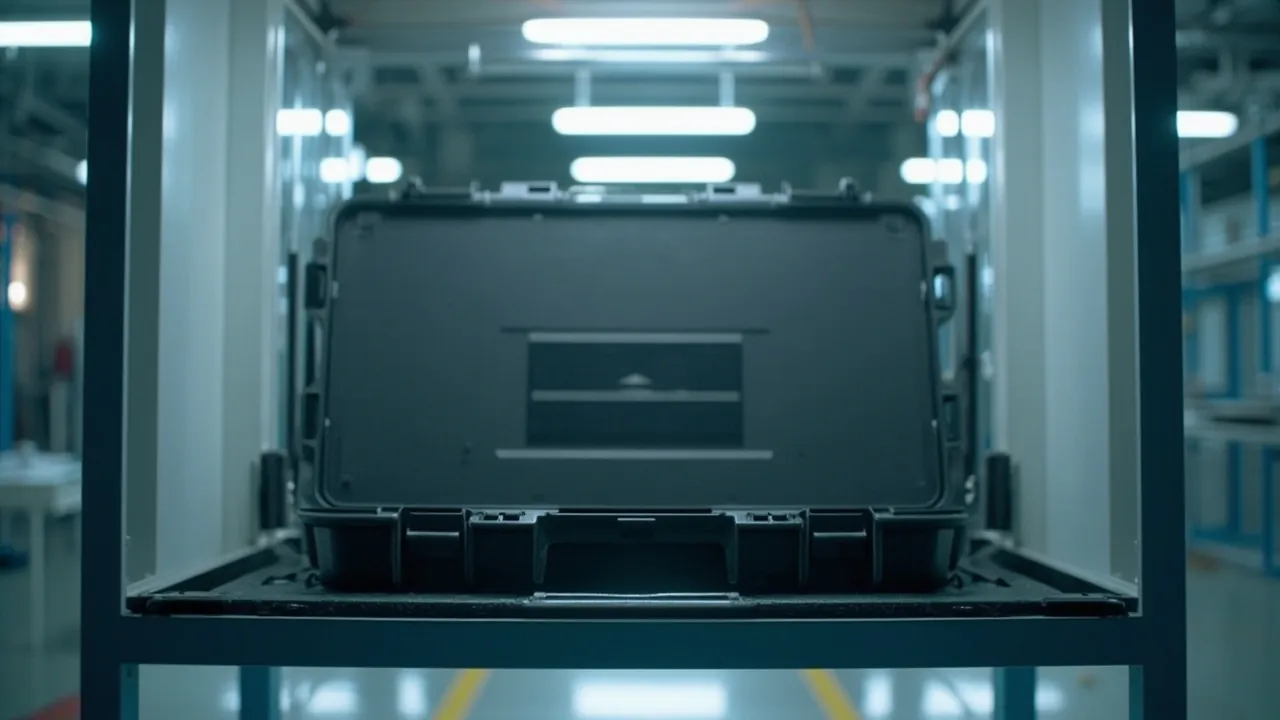
The short answer: MIL-STD-810 is not a pass or fail checklist but a manual of environmental test methods, organised as Method 500 through Method 516 and covering altitude, high and low temperature, temperature shock, humidity, salt fog, sand and dust, immersion, vibration, shock and acceleration. The real difficulty is not which methods you run but tailoring — selecting the applicable methods against the equipment's life cycle profile, setting the stress levels and durations, and assembling them into a reproducible test profile. For a protective case, the five methods that matter most in practice are 507 humidity, 509 salt fog, 510 sand and dust, 512 immersion, and 514 vibration with 516 shock. Compliance is not achieved by a label. It comes from material, sealing, structure and verification working together.
Many buyers treat MIL-STD-810 as a certification mark, so when a supplier writes "compliant with MIL-STD-810" they assume the product "passed the military standard." That misreads what the document is. MIL-STD-810 is issued by the US Department of Defense and describes itself as a methods manual, not a product specification. It tells you how to run a test; it does not decide for a given product which methods are mandatory or how severe they should be. Those decisions must be written by the customer into the test plan. Two reports that both say "compliant with MIL-STD-810" can therefore be worth very different amounts: one may have run only a high-temperature storage soak, while the other may cover humidity, salt fog, sand and dust, immersion, vibration and shock in full.
This guide is written for procurement and engineering staff in military, law enforcement, rescue, industrial and premium outdoor equipment programs. It breaks down the method list, the tailoring logic, how 810 relates to the IEC and ISTA systems, and the technical route to compliance for a protective case, and it ends with a report checklist you can use directly in tender evaluation. All stress values are marked as typical or empirical, and the binding test conditions are whatever the two parties confirm in the test plan against the released standard.
Contents
- What MIL-STD-810H is: purpose and basic philosophy
- Tailoring: the real core methodology of 810
- Method 500 to 516: the list and its categories
- Climatic methods: high temperature, low temperature and temperature shock (501/502/503)
- Climatic methods: humidity, salt fog, sand and dust, solar radiation (507/509/510/505)
- Mechanical methods: immersion, acceleration and vibration (512/513/514)
- Method 516 shock: functional shock and crash safety
- The five methods a protective case most needs
- How a case complies: material, sealing, structure, verification
- How MIL-STD-810 divides work with IEC 60529 and ISTA
- Setting the test profile and sequence
- How to read a MIL-STD-810 test report
- Common misunderstandings and traps
- Frequently Asked Questions
- Conclusion and Related Reading
What MIL-STD-810H is: purpose and basic philosophy
MIL-STD-810 is titled Environmental Engineering Considerations and Laboratory Tests and is issued by the US Department of Defense, with the latest major revision being MIL-STD-810H. Understanding its nature comes down to three statements.
- It is a methods manual, not a product specification. It defines how to run tests, not what level a given product must reach.
- It starts from the life cycle profile. Test conditions should be derived from the environments the equipment realistically meets over its life, not copied from a fixed number.
- It insists on tailoring rather than wholesale adoption. The document repeatedly stresses that applying every method without tailoring is expensive and may drift away from the real service condition.
This contrasts sharply with IEC 60529 for ingress protection, ISTA for transport packaging and ISO 9227 for salt spray, all of which hand you fixed test conditions. An IP rating says that you tested to IP67 and the result goes in the report. MIL-STD-810 says that you selected methods from the service condition, set the levels and ran a profile, and the result depends entirely on your test plan.
What does that mean for a protective case? It means a buyer should never ask only "does it pass 810." The right question is: to what test plan, which methods, at what levels and durations, and with what pass thresholds. A good 810 report is worth about as much as a full health check of the structural and sealing design.
Tailoring: the real core methodology of 810
Tailoring is the soul of 810. It means identifying, from the equipment's life cycle profile, the environmental stresses it will actually meet; selecting the applicable methods; setting sensible levels and durations; and assembling the methods into an executable test profile. There are five steps.
- Define the life cycle profile. What environments will the equipment pass through from factory release, transport, storage and use to maintenance? A protective case typically sees factory stacking, road, sea and air transport, outdoor storage, field opening and closing, washing and rinsing, and possible drops and impacts.
- Identify the environmental stresses. Extract temperature range, humidity level, salt fog exposure, dust concentration, immersion depth, vibration spectrum, shock energy and orientation.
- Select methods. Choose only the methods that correspond to the identified stresses, and avoid running the entire set.
- Set levels and durations. Use measured data, historical data from similar equipment or standard recommendations to fix temperature extremes, cycle counts, test durations, vibration levels and durations.
- Assemble the profile and sequence. Define the order of methods and the intermediate check points to produce a reproducible test outline.
| Tailoring step | Input | Output | Common failure |
|---|---|---|---|
| --- | --- | --- | --- |
| Define life cycle profile | Use and transport scenarios | List of environmental events | "Outdoor use" with no specific events |
| Identify stresses | Climate and mechanical data | Temperature, humidity, salt fog, vibration, shock levels | Copying standard recommendations directly |
| Select methods | Stress to method mapping | Applicable method list | Running everything, cost out of control |
| Set levels and durations | Measured or historical data | Test condition table | Levels chosen by feel, not reproducible |
| Assemble profile and sequence | Method list | Test outline | No sequence stated, result meaningless |
The value of tailoring in one line: two programs can both "pass 810," but good tailoring means the product was genuinely verified against your service condition, while poor tailoring means an experiment unrelated to the field. This is the first thing to probe in tender evaluation.
Method 500 to 516: the list and its categories
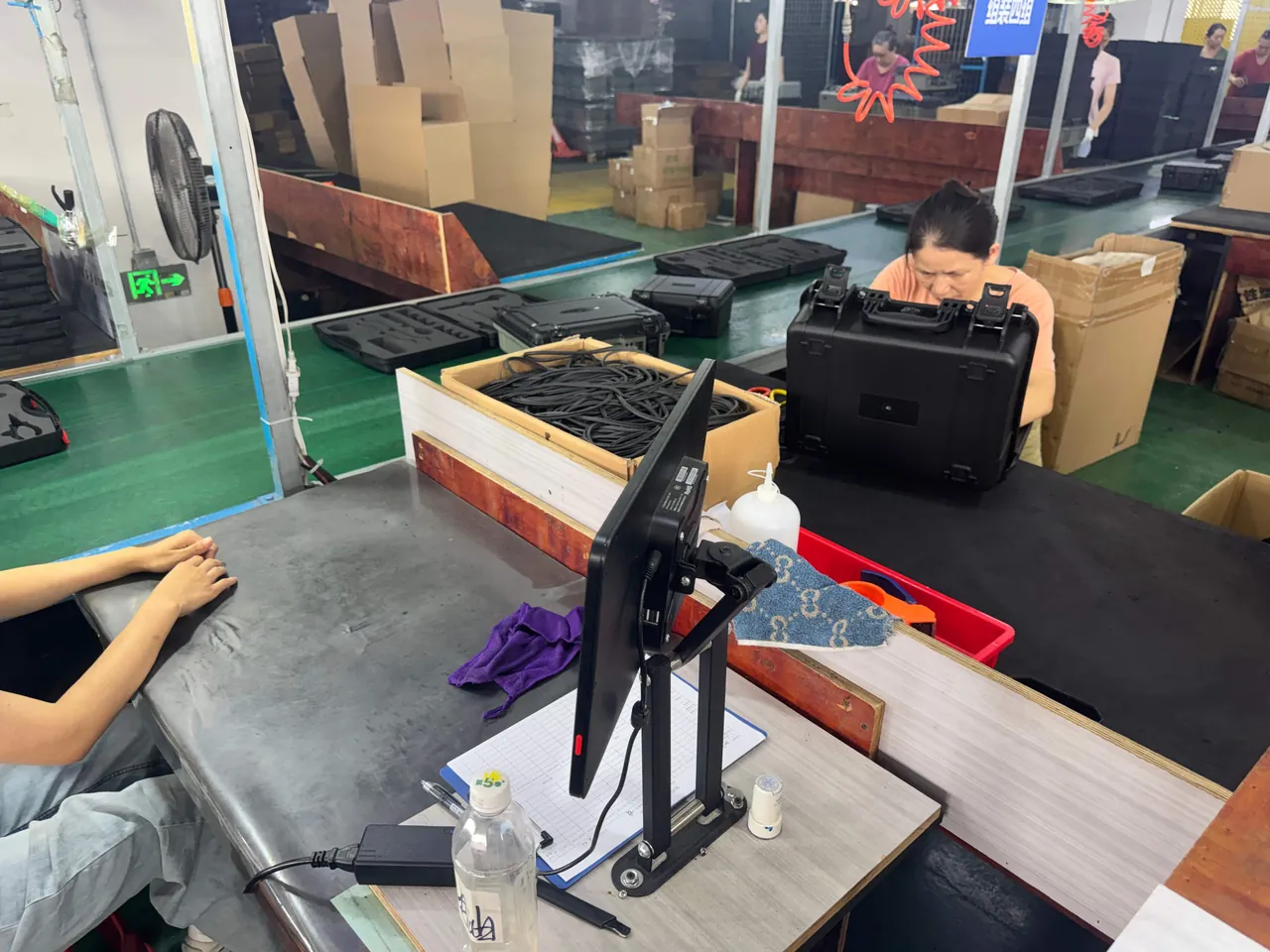
The method numbers in 810H run broadly in sequence and can be understood as climatic and mechanical groups. The table lists the methods, with their relevance to protective cases noted. Numbers and titles follow the standard.
| Method | Title | Category | Relevance to cases |
|---|---|---|---|
| --- | --- | --- | --- |
| 500 | Altitude | Climatic | Medium (air freight, high plateau) |
| 501 | High Temperature | Climatic | High (vehicle cabins, sun exposure) |
| 502 | Low Temperature | Climatic | High (alpine, air cargo hold) |
| 503 | Temperature Shock | Climatic | High (day-night swings, rapid transfer) |
| 504 | Contamination by Fluids | Climatic | Medium (oils, cleaning agents) |
| 505 | Solar Radiation | Climatic | High (outdoor ageing) |
| 506 | Rain | Climatic | High (outdoor waterproofing) |
| 507 | Humidity | Climatic | Very high (condensation, mould, seals) |
| 508 | Fungus | Climatic | Medium (hot humid regions) |
| 509 | Salt Fog | Climatic | Very high (coastal, sea freight) |
| 510 | Sand and Dust | Climatic | High (desert, dusty sites) |
| 511 | Explosive Atmosphere | Climatic | Low (special cases) |
| 512 | Immersion | Climatic | Very high (corresponds to IP67/IP68) |
| 513 | Acceleration | Mechanical | Medium (transport shock) |
| 514 | Vibration | Mechanical | Very high (transport vibration) |
| 515 | Acoustic Noise | Mechanical | Low |
| 516 | Shock | Mechanical | Very high (drops, impacts) |
The numbers do not imply that everything must be run. 810H explicitly requires selection according to the tailoring result. A report covering 507, 509, 510, 512, 514 and 516 is already substantial. Running 500 to 516 in full drives cost and schedule out of control and includes many methods unrelated to a protective case.
Climatic methods: high temperature, low temperature and temperature shock (501/502/503)
Method 501, high temperature. Evaluates storage and operating capability in hot environments. Typical stress divides into two segments: storage high temperature, commonly in the range of plus 60 to plus 71 degrees Celsius and sometimes higher for short periods, and operating high temperature, commonly plus 49 to plus 55 degrees. For a protective case, high temperature softens and creeps engineering plastics, which can change gasket land flatness and seal compression, and prolonged heat accelerates seal ageing. Sealing and critical dimensions should be retested afterwards.
Method 502, low temperature. Evaluates storage and operating capability in the cold, with typical storage values around minus 40 to minus 51 degrees and operating values around minus 20 to minus 33 degrees. Low temperature is the method a plastic protective case must respect most, because plastics shift from ductile to brittle fracture when cold. A case that passes IK08 at room temperature can become noticeably brittle at minus twenty degrees, which is why low temperature and shock are often combined.
Method 503, temperature shock. Rapid transitions between hot and cold test the thermal stress on materials and the adaptability of seals. For a protective case, the most direct failure is mismatched coefficients of thermal expansion between the body, the metal inserts and the seal, which can loosen inserts, permanently deform seals or cause cracking.
| Method | Typical stress (empirical) | Main risk to a case | Suggested retest |
|---|---|---|---|
| --- | --- | --- | --- |
| 501 High temperature | Storage plus 60 to plus 71 C; operating plus 49 to plus 55 C | Softening and creep, seal ageing, dimensional drift | Sealing, critical dimensions |
| 502 Low temperature | Storage minus 40 to minus 51 C; operating minus 20 to minus 33 C | Embrittlement, stiff seals, hard opening | Cold impact, opening force |
| 503 Temperature shock | Rapid transitions between extremes | Loosened inserts, cracked seals, warping | Sealing, structural integrity |
The figures above are common industry ranges. The binding conditions come from the tailoring result. For how low-temperature embrittlement affects a case, see how low-temperature brittleness testing works.
Climatic methods: humidity, salt fog, sand and dust, solar radiation (507/509/510/505)
Method 507, humidity. Evaluates tolerance of high humidity, typically at 85 to 95 percent relative humidity, 30 to 60 degrees Celsius, for tens of hours or tens of cycles as empirical values. For a protective case there are three core implications. First, condensation: when the case cools sharply, water vapour inside condenses and can corrode the internal equipment. Second, seal material: hot humid conditions accelerate rubber ageing and cause compression set. Third, mould and metal corrosion. Humidity is often combined with temperature cycling to form a temperature-humidity cycle, which is one of the best ways to expose sealing defects. For condensation control, see how to control condensation inside a case.
Method 509, salt fog. Evaluates corrosion of materials and plating by salt fog. The typical approach is neutral salt spray (NSS) with about five percent salt solution at about 35 degrees Celsius, for a duration set by tailoring, commonly 24, 48, 96 or 240 hours. For a protective case, the focus is not the plastic body, since most engineering plastics resist salt fog well, but the metal parts: latches, hinges, screws, inserts and handles. For duration selection in coastal and sea freight scenarios, see how many hours of salt spray testing a case needs.
Method 510, sand and dust. Evaluates intrusion of sand and dust into seals and mechanisms. It is run as dust blowing or dust settling, with parameters for wind speed, dust concentration and duration. For a protective case, the point is whether fine dust penetrates the seal, the vent valve or the gaps, and whether dust jams latches and valves. The design requirement links closely to the IP6X dust protection level in IEC 60529.
Method 505, solar radiation. Evaluates ageing from solar radiation including ultraviolet. It is usually run with a xenon lamp simulating the solar spectrum, combined with temperature and humidity cycling, to test the combined effect of ultraviolet, heat and moisture. For outdoor protective cases, solar radiation is one of the main causes of colour fading, plastic chalking and seal ageing.
| Method | Typical conditions (empirical) | Main risk to a case | Related design |
|---|---|---|---|
| --- | --- | --- | --- |
| 507 Humidity | RH 85 to 95 percent, 30 to 60 C, tens of hours to tens of cycles | Condensation, seal ageing, metal corrosion | Seal material, condensation control |
| 509 Salt fog | NSS, about 5 percent salt, 35 C, 24 to 240 hours and beyond | Hardware corrosion, jammed latches | Plating, material selection |
| 510 Sand and dust | Blowing or settling, tailored to concentration and duration | Dust ingress, jammed latches | IP6X sealing design |
| 505 Solar radiation | Xenon simulation with temperature-humidity cycling | Fading, chalking, seal ageing | UV-resistant materials and formulations |
Mechanical methods: immersion, acceleration and vibration (512/513/514)
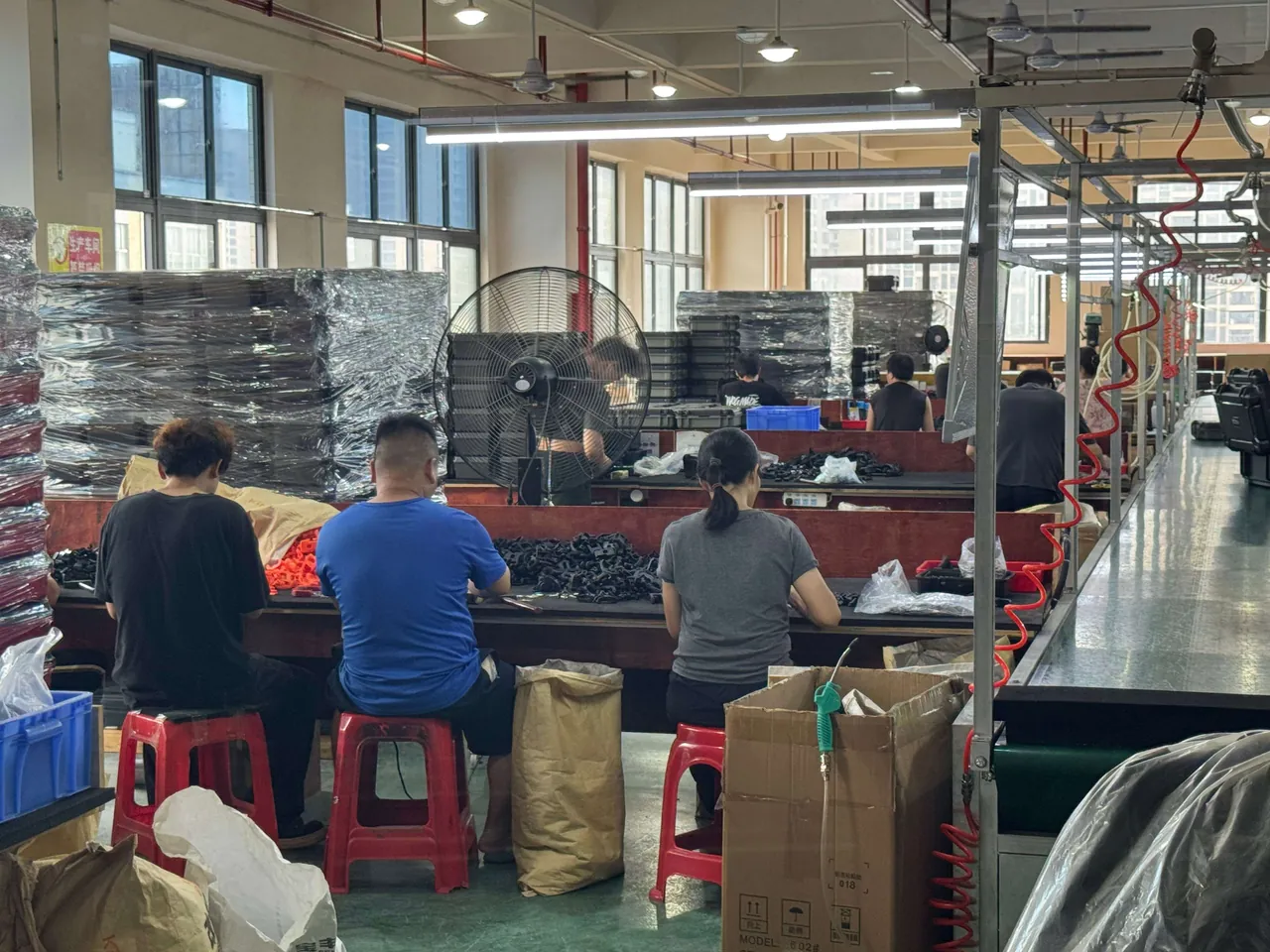
Method 512, immersion. Evaluates the ability of equipment to function after immersion in water and is the most intuitive method for a protective case. The immersion method in 810 is layered by depth and mode, consistent in philosophy with IPX7 and IPX8 in IEC 60529. IPX7 corresponds to short-term immersion, typically one metre for 30 minutes, while IPX8 uses an agreed depth and duration, deeper and longer. For a case, the critical factors are seal compression, gasket land flatness, even latch clamping and the sealing and pressure balance of the vent valve. For the related structure, see IP67 protective case design and verification.
Method 513, acceleration. Evaluates steady-state acceleration such as launch, manoeuvre or handling acceleration. Relevance to ordinary protective cases is moderate, and it is mainly used in military and aerospace programs.
Method 514, vibration. Evaluates structural integrity and functional retention under vibration. Transport scenarios commonly use random vibration described by a power spectral density curve, while sinusoidal vibration is used for resonance search. For a protective case, the concerns are whether latches release under sustained vibration, whether hinge pins migrate axially, whether the insert and contents shift, and whether the stacked structure fatigues. For the practical method, see transport vibration testing for protective cases and vibration testing and resonance.
| Method | Loading form | Main risk to a case | Key criterion |
|---|---|---|---|
| --- | --- | --- | --- |
| 512 Immersion | Hydrostatic immersion (depth x time) | Seal failure, water ingress | No water inside |
| 513 Acceleration | Steady-state acceleration | Structural load, loosened fixings | Intact structure, normal function |
| 514 Vibration | Random or sinusoidal | Latch release, insert shift, fatigue | Function retained, no release |
Method 516 shock: functional shock and crash safety
Method 516 is the method closest to everyday use of a protective case. It usually divides into two procedures.
- Functional shock: evaluates whether equipment continues to work after shock. It is non-destructive or lightly destructive.
- Crash safety: evaluates safety in a crash event. It is destructive and common in aviation and vehicle programs.
For a protective case, shock testing complements the IK impact test in IEC 62262 well. Method 516 leans towards how a whole system behaves under a real shock spectrum, while IK grades an enclosure under calibrated single-point energy. They cannot replace each other, but together they form a complete evidence chain of enclosure impact resistance plus system impact resistance. For IK, see IK ratings and impact testing for cases. For drop testing, see how to set drop test height for cases.
The five methods a protective case most needs
Not every method matters equally. Ranked by engineering value, the five that should be implemented are:
- Method 507 humidity: exposes sealing and condensation problems at low cost with high information value, so run it first.
- Method 509 salt fog: determines the life of metal parts in coastal and sea freight conditions and directly affects complaints.
- Method 510 sand and dust: verifies dust sealing and echoes IP6X.
- Method 512 immersion: the core selling point of a protective case, and it must be verified against the IP rating.
- Method 514 vibration with 516 shock: verifies structural integrity and latch retention in transport and use.
The remaining methods follow the service condition. Products exposed to long-term sun should add 505 solar radiation. Alpine or air cargo scenarios should add 502 low temperature and 503 temperature shock. Sea freight and high plateau may justify 500 altitude and 505.
| Priority | Method | Trigger scenario | Typical verification goal |
|---|---|---|---|
| --- | --- | --- | --- |
| Must | 507 Humidity | All outdoor and hot humid scenarios | Sealing, condensation resistance |
| Must | 509 Salt fog | Coastal, sea freight, industrial | Metal part corrosion resistance |
| Must | 512 Immersion | Waterproof cases | Corresponding to IPX7/IPX8 |
| Must | 514 and 516 Vibration and shock | Transport and use | Structure, latch retention |
| Recommended | 510 Sand and dust | Desert, dusty sites | Dust sealing |
| Optional | 501/502/503/505 | Extreme temperature and sun | Material and seal adaptability |
How a case complies: material, sealing, structure, verification
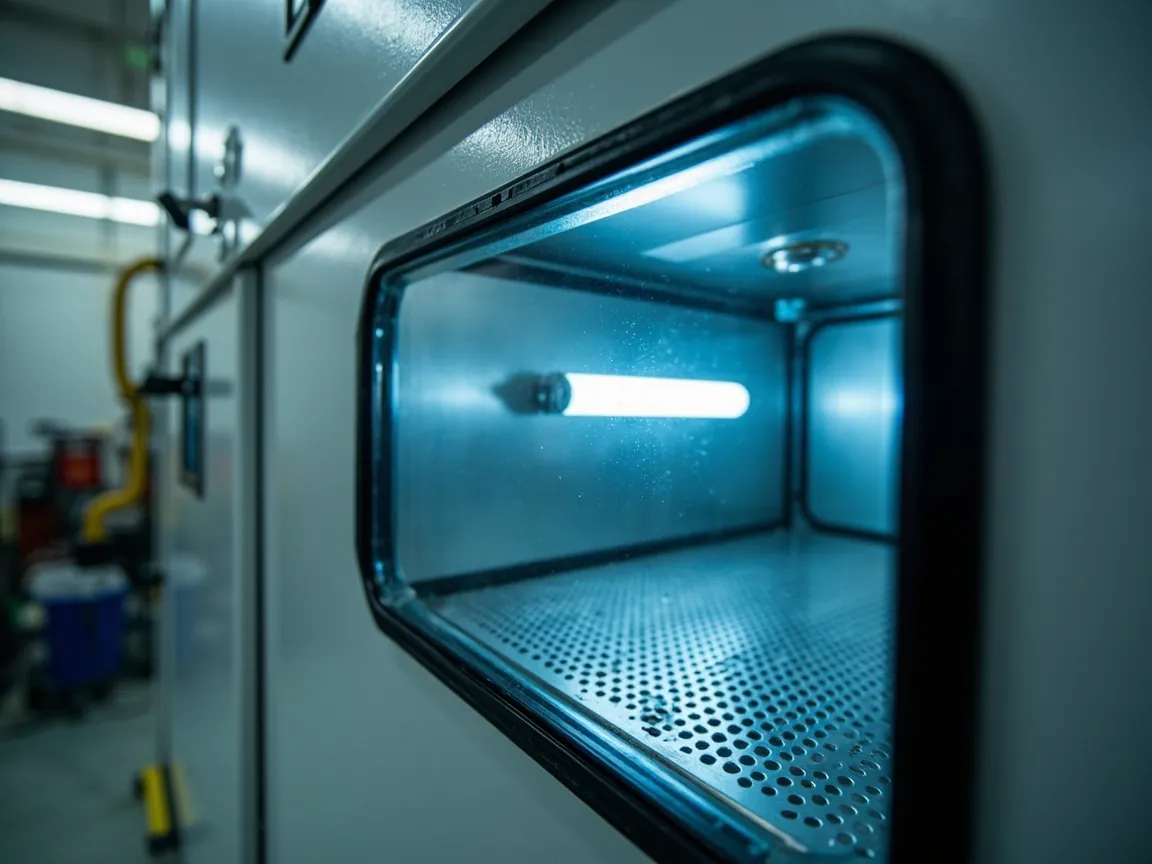
Compliance is a system, and it breaks down into four lines of work.
First, material. The plastic substrate must balance toughness, weathering and chemical resistance; the seal material must tolerate temperature and ageing; metal parts need adequate plating thickness and corrosion class. For the systematic logic of material selection, see how to choose plastics for protective cases and PP, ABS and PC differences for cases.
Second, sealing. The cross-section, compression ratio and groove fill factor of the seal, whether an O-ring or a moulded gasket, must match the gasket land geometry. As an empirical rule, compression ratio is held between 15 and 30 percent. For seal material selection, see how to choose case seal materials and case seal ring design.
Third, structure. Reinforcement ribs, fillets and thickness gradients determine vibration and impact resistance, while the fastening method for latches and hinges determines whether they release under vibration. For structural detail, see how to design a high-strength case structure and reinforcement rib design.
Fourth, verification. Use 507, 509, 510, 512, 514 and 516 to build the test profile, with intermediate checks and retests at key points. In particular, the sequence of vibration and shock first, immersion afterwards, then seal retest exposes the hidden failure chain where water enters only after impact.
| Line | Key control point | Common failure | Verification method |
|---|---|---|---|
| --- | --- | --- | --- |
| Material | Toughness, weathering, plating | Cold cracking, fading, corrosion | 502/505/509 |
| Sealing | Compression, material, groove | Leakage, compression set | 507/512 |
| Structure | Ribs, fillets, thickness, fastening | Release, warping, cracking | 514/516 |
| Verification | Profile and sequence | Hidden failure chain missed | Combined profile |
How MIL-STD-810 divides work with IEC 60529 and ISTA
The three systems are often conflated, yet their roles are clear.
| System | Nature | Question it answers | Use for a case |
|---|---|---|---|
| --- | --- | --- | --- |
| MIL-STD-810 | Environmental test methods manual | Can equipment tolerate the environments in its life cycle profile | Environmental suitability for military and premium equipment |
| IEC 60529 / GB/T 4208 | Enclosure protection rating standard | What IP class for dust and water | Ingress protection declaration |
| ISTA | Transport packaging test procedures | Can the package withstand logistics drops and vibration | Transport packaging qualification |
The relationship is complementary, not substitutive. IP provides the ingress protection class, which is the most direct market language. ISTA provides transport packaging qualification, which is closest to logistics reality. MIL-STD-810 provides the full environmental suitability evidence, which is closest to military, law enforcement and premium equipment procurement. A mature protective case line typically declares an IP rating, runs ISTA transport verification, and runs tailored 810 methods for environmental suitability at the same time. For the transport test method, see how to run ISTA transport testing.
Setting the test profile and sequence
The profile and sequence are what separate a serious 810 report from a shallow one. Follow these principles.
- Non-destructive before destructive. Run methods that do not damage the sample first, such as 507 humidity, 501/502 temperature and 514 vibration, and destructive methods such as 516 crash and post-immersion sectioning last.
- Environmental pre-conditioning before mechanical assessment. Let the sample experience temperature, humidity and ageing first, then vibration and shock, so the risk after material degradation is exposed.
- Insert intermediate checks at key points. After each method, inspect and record appearance, structure and function, and retest sealing where necessary.
- Let the sequence serve the failure mechanism. If the concern is water ingress after impact, place shock before immersion. If the concern is impact resistance after ageing, place temperature and humidity before shock.
- State whether one specimen can be reused. Destructive methods should use fresh specimens, and such samples should not count towards lot acceptance.
| Sequence strategy | Purpose | Example profile |
|---|---|---|
| --- | --- | --- |
| Ageing first | Expose risk after material degradation | 507 to 502 to 505 to 514 to 516 |
| Failure chain first | Expose leakage after impact | 514 to 516 to 512 |
| Stepwise severity | Raise levels progressively | 512 shallow to 512 deep |
| Parallel groups | Improve efficiency | Separate specimens for climatic and mechanical |
How to read a MIL-STD-810 test report
In tender evaluation, check a report that claims MIL-STD-810 compliance against the following list.
- Standard revision: 810F, 810G or 810H? Methods and conditions differ between revisions.
- Test plan: does it include the tailoring basis, and how is the life cycle profile defined?
- Method list and levels: which methods were run, and what were the temperature, humidity, salt fog duration, vibration spectrum and shock energy for each?
- Sequence and intermediate checks: is the sequence sound, and are there intermediate check records and seal retests?
- Specimen consistency: do the model, material, seal and latch configuration in the report match the production version?
- Conclusion and photographs: are before-and-after photographs, structural images and the final conclusion attached?
- Change-triggered retest: are retest rules agreed for material or structural changes?
A report without a test plan and without stated levels cannot be assessed for severity. The logic matches how an IK report is checked, as described in how to verify an IK report.
Common misunderstandings and traps
Mistake one: treating 810 as a product certification. It is a methods manual; pass or fail depends on the test plan, not the standard.
Mistake two: writing only "compliant with 810" without methods. A single line claiming MIL-STD-810 compliance may cover only a high-temperature storage soak, which is worth far less than it sounds.
Mistake three: running everything to be safe. Running all methods without tailoring drives cost out of control and may drift from the real service condition.
Mistake four: ignoring the sequence. Placing immersion before shock means you will never find the failure where water enters only after impact.
Mistake five: ignoring metal parts. Salt fog and humidity failures usually occur at latches, hinges and screws, not in the body itself.
Mistake six: levels chosen by feel. Levels without measured or historical support cannot be reproduced and cannot serve as a technical basis.
Frequently Asked Questions
Q: Is MIL-STD-810 a certification or a set of test methods? A: It is a methods manual, not a product certification. Issued by the US Department of Defense, it is organised by method number and defines how to apply environmental stress, how to run tests and how to record results. It does not state which methods a given product must pass or at what level. There is therefore no such thing as "MIL-STD-810 certification." The correct wording is that testing was completed to MIL-STD-810H methods 507, 509, 510, 512, 514 and 516 under an identified test plan. Under the same standard, two reports can be worth very different amounts, and the difference lies not in the standard but in the test plan: which methods, at what levels and durations, in what order, with what pass thresholds. If a tender document shows "compliant with 810" but no test plan, you cannot assess its severity at all.
Q: Does a protective case have to run every method from 500 to 516? A: Usually not, and running the full set without tailoring is not advisable. 810H explicitly requires tailoring against the life cycle profile, selecting only the methods that correspond to environments actually met. For a protective case the highest priorities are method 507 humidity, 509 salt fog, 510 sand and dust, 512 immersion, 514 vibration and 516 shock, which map to condensation and sealing, metal corrosion, dust protection, waterproofing, transport vibration and drop shock. The rest follow the service condition: add 505 solar radiation for long-term outdoor sun exposure, add 502 low temperature and 503 temperature shock for alpine or air cargo hold conditions, and consider 500 altitude for sea freight and high plateau. Running everything raises cost and schedule sharply, and many methods are unrelated to a protective case, which dilutes the focus of the report.
Q: Is the immersion method in 810 the same as IPX7 and IPX8? A: The philosophy is the same, but the systems and wording differ. IPX7 and IPX8 come from IEC 60529 and GB/T 4208 and are written as ingress protection class codes, with IPX7 typically corresponding to one metre for 30 minutes and IPX8 using an agreed depth and duration. Method 512 immersion in MIL-STD-810H also applies hydrostatic pressure by depth and time, but its conditions are set by tailoring, so it can be made more severe and can be combined with temperature cycling. For procurement, the safest approach is to require both an IP rating declaration and verification to method 512, with depth, duration and temperature stated, avoiding descriptive wording such as "waterproof." The two do not conflict and can complement each other: IP for market communication, method 512 for environmental suitability evidence.
Q: Why does test sequence matter so much? A: Because sequence determines whether the real failure chain is exposed. Take water ingress after impact. If immersion runs first and shock afterwards, the case is still intact during immersion and will not leak; the local deformation of the gasket land, the warped lid and the changed seal compression caused by the impact only show up if immersion follows the impact. Similarly, if the concern is impact resistance after ageing, temperature, humidity and UV ageing should precede vibration and shock, otherwise you are measuring a new material rather than one that has seen service. A high-quality 810 test plan is therefore not a list of methods but a logical timeline: non-destructive before destructive, environmental pre-conditioning before mechanical assessment, with intermediate checks and seal retests at key points. State the sequence and the report gains engineering value.
Q: How much weight does salt spray carry in 810, and how many hours is appropriate? A: Salt fog is method 509, and it weighs heavily for a protective case, because the failure points are usually metal parts rather than the plastic body. Most engineering plastics resist salt fog well, and what actually corrodes are latches, hinges, screws, inserts and handles. Testing typically uses neutral salt spray at about five percent solution and about 35 degrees Celsius, for a duration set by tailoring, with common options at 24, 48, 96 and 240 hours. The right duration depends on the target market and transport route. Inland dry markets may accept shorter durations, while long coastal exposure or sea freight export usually requires longer durations combined with plating class requirements for metal parts. For duration selection and pass criteria across coastal scenarios, see how many hours of salt spray testing a case needs.
Q: Why is a plastic protective case especially at risk in the cold? A: Because most engineering plastics have a ductile-to-brittle transition temperature, below which the material shifts from ductile to brittle fracture and its impact energy absorption drops sharply. A case that passes IK08 at room temperature can become markedly brittle at minus twenty degrees or lower, cracking outright under impact instead of denting. This is exactly why method 502 low temperature and method 516 shock need to be combined. Low temperature alone only measures whether it tolerates cold; shock alone only measures whether it resists impact at room temperature. Only low-temperature pre-conditioning followed by shock answers the real question of whether it shatters when dropped on a cold day. Outdoor, cold chain, alpine and air cargo hold scenarios especially need this combination, with pre-conditioning temperature, soak time and test sequence stated in the test plan.
Q: The supplier says "compliant with MIL-STD-810." What should I probe? A: Six points. First, the standard revision: 810F, 810G or 810H. Second, whether a test plan is provided, including the life cycle profile definition and tailoring basis. Third, which methods were run and at what levels and durations, for example how many degrees for high temperature, how many hours for salt fog, what vibration spectrum and what shock energy in joules. Fourth, how the sequence and intermediate checks were arranged, and whether seal retesting after impact is included. Fifth, whether the model, material, seal and latch configuration in the report match the production version. Sixth, whether retest rules are agreed for material or structural changes. Asking these six questions tells you whether the claim is solid environmental suitability evidence or a marketing line.
Q: Is 810 testing expensive, and is there a more economical route? A: Cost depends on the number of methods, the levels and the duration. Climatic methods such as temperature, humidity and salt fog are usually more manageable, while immersion, vibration, shock and crash testing consume more equipment capacity and specimens. The more economical route is not to run fewer projects but to run the right ones. First, tailor so that only genuinely relevant methods are run instead of the full set. Second, prioritise climatic methods, which carry high information value at relatively low cost and expose sealing and metal part problems early. Third, screen out obvious problems first with routine testing such as IP verification to IEC 60529 and transport verification to ISTA, then add tailored 810 methods for military, law enforcement or premium programs. Fourth, concentrate destructive methods at the design-freeze stage and run only non-destructive sampling in production. This controls cost without sacrificing the credibility of the key conclusions.
Conclusion and Related Reading
Back to the question in the title: MIL-STD-810 consists of methods 500 to 516 covering altitude, high and low temperature, temperature shock, humidity, salt fog, sand and dust, solar radiation, immersion, acceleration, vibration and shock. It is not a certification but a methods manual built around tailoring. For a protective case, compliance means using methods 507, 509, 510, 512, 514 and 516 together with the four lines of material, sealing, structure and verification to form a sequenced, checked and reproducible test profile.
Three actions you can take immediately. First, ask for the test plan rather than a line claiming 810 compliance, so the life cycle profile, method levels, sequence and pass thresholds are all visible. Second, write "shock and vibration before immersion" into the agreement, specifically to catch the hidden failure chain of water ingress after impact. Third, use IP as the market language, ISTA for transport verification and tailored 810 for environmental evidence, so the three systems each do their job and reinforce one another.
JUNZHJIA is manufactured by KeXin New Materials (Guangdong) Co., Ltd. The product line covers protective cases, tool cases, military-spec storage cases and waterproof junction boxes, serving wholesale, distribution, OEM and ODM customers and global supply. The company tailors test programs to customer life cycle profiles and supplies structural documentation, material data and test documents.
Related Reading