

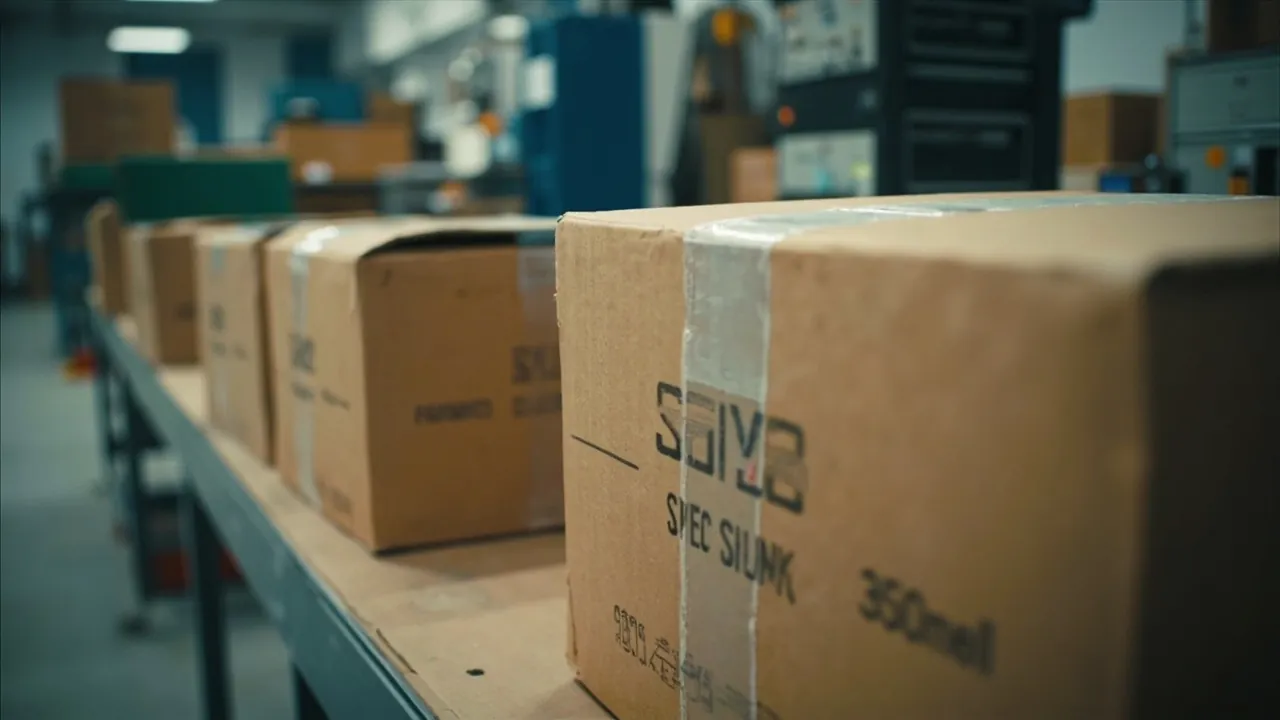
In machining, assembly and maintenance sites, the time spent "finding parts" among fasteners and cutting tools often takes a large share of the work. The conclusion is clear: scientific sorting with screw parts boxes, nut parts boxes, bearing parts boxes, as well as cutting-tool blade boxes, drill-bit storage boxes and tap storage boxes minimizes mixing, misapplication, loss and chipping it is the most basic yet most effective step in lean production and on-site 5S management.
Many workshops still dump screws, nuts, bearings and blades into a drawer, so M3 mixes with M4, metric with imperial, bearing raceways collect dust and blade edges chip. Dedicated parts boxes use divided cells, transparent windows, labels and stacking structures so every small part "has a name and a home." This article covers the box family for fasteners and tools, giving a practical checklist for selection and layout.
Table of Contents
- Why sorted fastener storage matters
- Cell and label design of the screw parts box
- Capacity and anti-mix of the nut parts box
- Dust and rust protection of the bearing parts box
- Safe storage in the cutting-tool blade box
- Location and anti-chip of the drill-bit storage box
- Damage prevention in the tap storage box
- Material and stacking structure
- Specification reference and selection
- Labeling system and barcode management
- Workshop layout and link support
- Maintenance and volume supply
- Lifecycle management and replacement signals for parts boxes
- Procurement agreement and standardization clauses
Why sorted fastener storage matters
Fasteners are cheap but consequential: one wrongly assembled screw can cause whole-machine vibration noise; one mixed nut can stop an assembly line for rework. The core value of sorted storage is "anti-mix, anti-loss, anti-error, anti-damage." When every specification has a fixed cell and label, picking efficiency and traceability rise together.
In the supporting of the hardware toolbox series, parts boxes often act as divided inserts inside the toolbox or as independent storage units, forming integrated "toolconsumable" management with the toolbox.
Rule of thumb: a standardized divided parts-box system can cut fastener picking time by roughly 40%–60% and bring mixing error rates close to zero.
Cell and label design of the screw parts box
The screw parts box is most often a multi-cell drawer or flip-lid divided box, each cell for one specification (such as M3×8, M4×12). Design points: cell depth should let screws lie flat rather than stack, avoiding tipping and mixing; the body should be transparent or semi-transparent for visual stock; each cell gets an oil-resistant label stating specification, material (stainless/carbon steel) and surface treatment.
Small screws roll easily; cell walls should be slightly high with smooth inner chamfers to prevent slipping out during counting. For very small sizes (M1.6–M2.5), inner cups or divider inserts are recommended to avoid mutual mixing.
Capacity and anti-mix of the nut parts box
The nut parts box follows similar logic to the screw box, but nuts are flatter and stack easily, so cells should be shallow and dense. The key anti-mix method is "color + label" double insurance: for example galvanized nuts in one cell, stainless in another, nylon-lock in another, distinguished at a glance by color. The lid should have a transparent window to count even when closed.
For workshops mixing metric and imperial, the two systems must be physically isolated; a red-blue strip on the box exterior prevents mixing that would seize threads.
Dust and rust protection of the bearing parts box
The bearing parts box shifts from "dividing" to "cleanliness." Bearing raceways and cages are extremely sensitive to dust and moisture; dust acts as abrasive to accelerate wear, and moisture causes rust seizure. Such boxes should have sealed lids or dust-foam, with lint-free soft liner to avoid scratching raceways; for long storage, anti-rust paper or desiccant can be added.
Handle bearings with finger cots or dedicated pliers to avoid sweat corrosion. Cells are zoned by bore (such as 608, 6200, 6900 series) and labeled by precision grade (P0/P5/P6) for on-demand access.
Safe storage in the cutting-tool blade box
The cutting-tool blade box primarily considers personal safety and edge protection. CNC inserts, mills and turning tools are mostly carbide with sharp edges and fear shock. The box should give each blade an independent slot or magnetic position, edge inward and not touching others; the lid interior adds a soft pad to prevent blade shifting when inverted.
For indexable inserts, divide by material (coated/ceramic/CBN) and chipbreaker, labeling the applicable workpiece material in each cell. Workshops can reference the shock-proof thinking of the precision instrument case to give high-precision blades cushioning liners.
Location and anti-chip of the drill-bit storage box
The drill-bit storage box must let every bit "stand steady, be found fast, not hit the edge." The common solution is a wave-shaped EVA or injection locator, arranged by diameter from small to large, labeled by length and material (HSS/carbide). The bit tip is most fragile; the locator end should leave buffer margin to avoid hitting the wall.
For step drills, center drills and other special shapes, set irregular slots. The body should have a transparent lid for inventory without fully opening.
Damage prevention in the tap storage box
The tap storage box targets the thin, easily bent tap and its easily bruised thread. Taps should stand vertically or obliquely fixed, avoiding horizontal rolling that crushes tips; each hole labels pitch and tolerance (such as M6×1 H2). Hand and machine taps are zoned, coated taps in separate cells to avoid scraping.
Tip: taps are precision cutting tools; the liner hardness should be lower than the tap material to avoid micro-chipping from hard contact.
Material and stacking structure
Parts-box materials are mainly PP, PS and ABS: PP is tough and drop-resistant; PS is highly transparent and low-cost but brittle; ABS is rigid. For high-frequency workshop opening, PP or PP+ABS is recommended. Stacking structures are snap-in and rail types; snap-in is more stable, rail is easier to pull.
For anti-static scenarios (such as electronics workshops), anti-static modified material is available, referencing the ESD standard of the anti-static component box.
Specification reference and selection
| Stored object | Suggested cells | Cell size (mm) | Material | Window |
|---|---|---|---|---|
| --- | --- | --- | --- | --- |
| Screws | 12–36 | 40×40×30 | PP | Semi-transparent |
| Nuts | 18–48 | 35×35×20 | PP | Transparent |
| Bearings | 6–18 | 60×60×40 | PP+ABS | Sealed lid |
| Blade | 10–30 | By blade type | ABS | Soft-pad lid |
| Drill bits | 10–29 | By diameter | PP | Transparent |
| Taps | 8–24 | By length | PP | Transparent |
Labeling system and barcode management
Efficient parts boxes rely on labeling. Each cell gets a waterproof label with specification, material and batch; further, a QR or barcode can link to the warehouse system for "scan-cell in/out." For batch standardization, unify the label template to avoid format chaos across workshops.
JUNZHJIA, at its Zhongshan plant, can provide customized parts boxes with silk-screen logos or pre-cut label positions, delivered together with OEM/ODM cases to unify corporate visual and asset coding.
Workshop layout and link support
Parts-box layout should follow the "closest when used" principle: common specs near the assembly station, long-tail specs in the warehouse; blade boxes near the machine, drill boxes moving with equipment. With the industrial equipment protective case, a "tooltoolingconsumable" three-in-one line-side station can be built beside the machine.
Maintenance and volume supply
- Periodically empty and wipe to prevent oil caking that sticks screws.
- Clean fogged transparent windows with neutral cleaner.
- Replace aged dust foam in sealed bearing boxes promptly.
- Repair weakened magnetic positions in blade boxes to avoid blade drop.
- Batch purchase standardizes by color and label template, with consistent quality per batch.

Lifecycle management and replacement signals for parts boxes
Although plastic parts boxes are durable, they still age under long-term oil, ultraviolet light and repeated opening. Replacement signals include: brittle and cracked body, lost-elasticity latches, severely fogged transparent window that cannot be cleaned, fallen labels that become unreadable, and collapsed liners that cause screw mixing. When any of these appears, replace promptly to avoid "broken box, mixed parts" undermining the 5S result. In the supporting of the anti-static component box, ESD parts boxes also need periodic surface-resistance testing and immediate replacement when out of spec.
For management, a "color station owner" ledger is recommended with quarterly inventory. JUNZHJIA, at its Zhongshan plant, can provide customized parts boxes with silk-screen asset codes, with OEM/ODM standardization, making every cell traceable and easing cross-workshop transfer and batch replenishment. The hardware toolbox series and precision instrument case show how the same ledger logic keeps tools and gauges aligned with their boxes.
Rule of thumb: workshops running quarterly inventory and timely replacement can cut fastener mixing error rates by about 40% versus "use until broken."
A subtle failure mode is "redundant boxes": a workshop accumulates dozens of slightly different bins from different suppliers, so the same M4 nut lives in three incompatible cells across stations. Standardization at procurement prevents this; once bins diverge, consolidation is painful. The electronics box series faces the same issue with component trays, and the lesson is identical define one cell standard per item family and enforce it through the technical agreement rather than letting buyers choose freely. For outdoor or UV-exposed stores, specify UV-stabilized material in the agreement, because standard PP can chalk and crack under sun, a failure invisible until a cell wall suddenly gives way.
Procurement agreement and standardization clauses
In volume procurement of parts boxes, the technical agreement should lock: first, material clause specify PP/ABS/PS grade and flame rating; second, structure clause cell count, single-cell size, snap/rail type consistent with the sealed sample; third, labeling clause oil-resistant label material, silk-screen or pre-cut barcode positions; fourth, document clause provide material and flame proofs per batch; fifth, traceability clause each batch gets a unique lot number traceable to the production batch.
For multi-site enterprises, JUNZHJIA supports OEM/ODM standardized supply, bringing the screw parts box, nut parts box and bearing parts box into one visual and coding system. The agreement should reserve a replenishment clause for spares (latches, labels, liners) to avoid one damaged cell sinking the whole box. The cutting-tool blade box, drill-bit storage box and tap storage box benefit from the same clause language, so a mixed fastener-and-tool program stays coherent.
| Agreement clause | Locked content | Acceptance basis |
|---|---|---|
| --- | --- | --- |
| Material | PP/ABS/PS grade and flame | Material certificate |
| Structure | Cell count / size / latch | Sample comparison |
| Labeling | Oil-resistant label / barcode | Physical check |
| Documents | Test and material proofs | Per-batch delivery |
| Traceability | Lot number and code | Scan-verifiable |
Beyond the table, specify the labeling durability test: labels should survive the workshop's actual cleaners, not just a gentle wipe, because solvent exposure is where cheap labels die first. Also require the supplier to keep a sealed reference sample for the contract term; when a field bin is disputed, the sample decides. For sites running the esd component box alongside, add a surface-resistance clause so conductive and non-conductive bins are never confused in storage. Finally, align the bin standard with the wider store: the it-carry case and it operations toolkit often share the same line-side space, and consistent coding across all of them turns a pile of boxes into a manageable system.
Sizing cells to the fastener mix
The most common parts-box mistake is choosing cell count by price rather than by the actual fastener mix. A workshop that uses mostly M3–M6 screws needs many small cells; one that stocks M8–M12 and bearings needs fewer, larger cells. Counting the SKU distribution before buying prevents the classic failure of a 48-cell box where half the cells stay empty while M4 and M5 fight for space. The hardware toolbox series applies the same SKU-first logic to tools, and the precision instrument case applies it to gauges.
Cell depth is the second variable. Screws should lie flat, not be stacked, so a cell 30 mm deep suits most small screws while a 20 mm cell suits nuts. Bearings need deeper, padded cells to protect raceways; blades and taps need shaped slots so edges never touch. The cutting-tool blade box and tap storage box are the specialized versions of this idea, and the drill-bit storage box shows how diameter-ordered slots speed retrieval.
| Item family | Cell count bias | Cell depth |
|---|---|---|
| --- | --- | --- |
| Small screws M1.6–M6 | Many small cells | 30 mm |
| Nuts / washers | Many shallow cells | 20 mm |
| Bearings | Few deep padded | 40 mm |
| Blades / taps | Shaped slots | Per item |
A modular approach pays off when the mix changes. Instead of buying a new box, swap the insert: keep the shell, change the divider layout. The esd component box and electronics box series both support swappable inserts, a pattern worth borrowing so the parts box grows with the bill of materials rather than being replaced.
Inventory discipline and kanban linkage
A parts box is only as good as the discipline around it. The simplest effective method is two-bin kanban: when the active cell empties, the reserve cell becomes active and a refill is triggered. This keeps the bench fed without over-stocking, and it makes the box a signal device, not just a container. The it-carry case and it operations toolkit use the same kanban thinking for consumables on service calls.
Labeling discipline closes the loop. Every cell needs a durable, oil-resistant label with specification and batch; barcodes or QR codes link the cell to the warehouse system so a scan issues the refill. The label template must be standardized across workshops, or the same M5 screw appears under three labels and inventory drifts. The anti-static component box shows how a fixed label template scales across a sensitive-product line, and the same rule keeps fastener inventory honest.
Finally, audit the boxes on a fixed cadence. Quarterly counting against the system exposes the cells that never move (candidates for removal) and the cells that always run low (candidates for a larger cell). This continuous tuning turns a static box into a living inventory tool, and it is far cheaper than discovering a missing size mid-assembly.
Extending parts boxes into lean production and digital warehousing
As workshops move toward lean production and digital warehousing, the parts box upgrades from a "storage container" to a "data node." Every cell carrying a barcode or QR code maps to a stock record in the system: a pick decrements, a refill increments, and fastener book-to-physical variance drops to near zero. In practice, start by assigning fixed barcoded cells to high-frequency specs M3–M6 screws, M8–M12 nuts, 608/6200 bearings and dynamic cells to long-tail specs, so common items stay fast to pick while rare items do not consume space. The same "one cell one code" idea extends to the hardware toolbox series and measuring-tool case, turning tools and gauges into a station-level material loop.
Material kitting is the second extension. A parts box at an assembly station can be pre-loaded with one set of fasteners per bill of material, so the line picks complete and any shortage shows immediately, sharply reducing missing or wrong assembly. For high-mix low-volume work, a swappable insert converts one shell between models far more economically than buying multiple dedicated boxes. JUNZHJIA, at its Zhongshan plant, can provide customized parts boxes with silk-screen asset codes and pre-cut barcode positions, with OEM/ODM standardization so the box itself becomes the physical entry point of the warehouse system.
Rule of thumb: workshops running "one cell one code" can cut fastener book-to-physical variance by roughly an order of magnitude versus manual ledgers, with far lower inventory labor.
Coordination with the anti-static component box matters too. When ordinary fastener boxes and electronic trays circulate on the same line, the layout should zone them so metal parts never accidentally enter an ESD area and cause discharge risk. The digital system can enforce "no-mix zones" at the barcode level, backing up the process with a rule. Ultimately, the parts box is no longer an isolated plastic grid but a nerve ending connecting shop-floor work to back-office inventory among the plainest yet most effective footholds of Industry 4.0 on the line.
The cost angle reinforces the case. A barcoded box looks more expensive than a plain bin, but when you add the labor saved in counting, the scrap saved from mixing, and the time saved finding the right size, the total cost of ownership usually favors the coded box within a year. The electronics box series and precision instrument case show the same TCO logic for higher-value contents, and the parts box is simply the highest-volume expression of it.
Implementation has pitfalls worth naming. The first is label durability: a barcode that rubs off in two months defeats the system, so specify oil-resistant, scratch-proof labels and verify them against the workshop's actual cleaners. The second is cell drift over time workers start parking the M5 in the M6 cell "just this once," and the data rots; a weekly spot audit with a handheld scanner caught early keeps the discipline. The third is over-barcoding not every washer needs a code, so apply codes where the value of accuracy outweighs the cost, typically the top 80% of pick frequency. The it operations toolkit and it-carry case use the same 80/20 rule for consumable tracking on service calls.
Sustainability is the quiet bonus. Standardized, durable, repairable boxes outlast throwaway bins by years, and a modular insert means the shell survives a product change that would otherwise scrap the whole box. For organizations with environmental targets, this longevity is a defensible procurement argument alongside the operational ones. The road-bridge detection case and rail-transit signal case benefit from the same durability reasoning when specified for long infrastructure projects.
Finally, measure the program like any other capital. Track pick accuracy, inventory labor hours and mixing incidents per quarter; the trend tells you whether the coded box is earning its keep and where the next improvement lies. This closes the loop from a plastic bin to a managed system, and it is the difference between buying containers and building capability.
In real-world deployments, selecting Screw, Nut & Bearing Parts Boxes: Fastener Sorting should never reduce to picking a box by its outer dimensions. These units face combined hazards of dust, moisture, vibration and temperature swing, so dust/water protection, shock resistance and foam retention must be specified together to avoid costly rework after delivery.
From a supply-chain perspective, categories like screw nut bearing parts boxes fastener sorting protective case are better served by batch customization than scattered purchases. A volume program locks case color, silkscreen identity, custom-cut foam and seal slots, keeping equipment consistent across sites and cutting the cost of non-interchangeable spares.
Standards give the acceptance its backbone. Screw, Nut & Bearing Parts Boxes: Fastener Sorting should map to GB/T 4208 (IEC 60529) for the IP code, MIL-STD-810H for drop and vibration methods, and the ISTA transit series; where flammability matters, add the UL94 rating. Put the standard numbers in the contract so vendors cannot substitute claims for test reports.
On materials, modified PP, ABS and PC each trade off differently. PP brings toughness and low-temperature resistance for large cases; ABS is rigid but brittle when cold; PC excels in impact and clear windows. For screw nut bearing parts boxes fastener sorting protective case, a one-piece shell with neoprene or EPDM foam gasket tends to age more predictably under salt spray and UV.
Foam is what turns a generic case into a purpose-built one. CNC-cut EVA, layered foam and adjustable dividers let the device sit with zero clearance, so it cannot shift under shock or drop. For Screw, Nut & Bearing Parts Boxes: Fastener Sorting, custom foam also shortens field setup and re-stow time, and the investment is usually far below a single instrument repair.
Maintenance is routinely overlooked. After each use, wipe standing water and salt from the lid, and on coastal sites rinse the gasket with fresh water then air-dry; periodically check latches and hinges for looseness and the gasket for cracks or loss of spring. Stocking latches and gaskets at about 3% of case count contains sudden failures.
Test documentation is the lever for traceability. Ask the supplier to ship material statements, IP summaries, drop and vibration records, and batch numbers for gasket, latch and hinge. For screw nut bearing parts boxes fastener sorting protective case, also keep a seal-status template for handover and audit, closing the loop from order to operation.
The procurement spec should name five hard metrics: target IP grade, the matching shock standard, flammability grade, foam form and the identification/seal position. Make sample-case acceptance a contract milestone, lock process and materials on the sample, then inspect volume lots to the same standard with per-batch files to keep lot-to-lot variance in check.
On site, traceable seal status often matters more than the case itself. Build a one-case-one-record habit listing the device inventory, calibration validity and seal state, checked before every use. This supports availability and gives closed-loop evidence for audits and accountability, especially at scale.
JUNZHJIA typically offers OEM/ODM and device-shaped foam tooling for Screw, Nut & Bearing Parts Boxes: Fastener Sorting, and can deliver per-batch test-file packages covering material flammability, sealing and drop, so buyers can call them up during supplier review and annual re-inspection.
Temperature swing is often underestimated. If Screw, Nut & Bearing Parts Boxes: Fastener Sorting is used in freezing or hot environments, confirm the material brittle-point and heat-deflection temperatures to avoid cold cracking or heat softening. For screw nut bearing parts boxes fastener sorting protective case, an insulated wall or phase-change buffer can keep the interior steadier during short transits.
Stacking and transit design affect field efficiency. The lid should carry anti-slip ribs or locating bosses so stacked cases will not slide sideways, and latches must not pop open under stacked load. For Screw, Nut & Bearing Parts Boxes: Fastener Sorting, calculate gross weight against the container limit and secure with straps or a cage to prevent latch fatigue from in-vehicle rolling.
ESD and EMC are implicit requirements for electronic equipment cases. For sensitive devices, use anti-static foam and consider a conductive layer or metallized film in the wall for shielding that lowers cross-talk with other radios. For screw nut bearing parts boxes fastener sorting protective case, apply these only as the device manual's ESD/EMC spec demands, avoiding blind over-build.
Cost should not be judged on unit price alone. A case below about 1% of the device value usually means cut materials and seals, and the long-run repair and downtime cost is higher. For Screw, Nut & Bearing Parts Boxes: Fastener Sorting, use a whole-life cost view that counts failure rate, spare availability and seal-verification time to find the option that is truly cheaper.
A smooth customization flow protects the lead time. The ideal path is: provide the device list and 3D data, the supplier returns a foam layout and a sample case, and volume runs start after seal verification. For Screw, Nut & Bearing Parts Boxes: Fastener Sorting, writing the foam tooling and sample milestone into the contract sharply reduces field rework and repeated changes.
A scenario-based grade map cuts selection guesswork. For screw nut bearing parts boxes fastener sorting protective case, build a table linking scenario to IP grade and liner form so apron, warehouse and channel environments each map to a case, letting front-line crews pick by the table and lowering the risk of water entry or calibration drift from misuse.
In real-world deployments, selecting Screw, Nut & Bearing Parts Boxes: Fastener Sorting should never reduce to picking a box by its outer dimensions. These units face combined hazards of dust, moisture, vibration and temperature swing, so dust/water protection, shock resistance and foam retention must be specified together to avoid costly rework after delivery.
From a supply-chain perspective, categories like screw nut bearing parts boxes fastener sorting protective case are better served by batch customization than scattered purchases. A volume program locks case color, silkscreen identity, custom-cut foam and seal slots, keeping equipment consistent across sites and cutting the cost of non-interchangeable spares.
Standards give the acceptance its backbone. Screw, Nut & Bearing Parts Boxes: Fastener Sorting should map to GB/T 4208 (IEC 60529) for the IP code, MIL-STD-810H for drop and vibration methods, and the ISTA transit series; where flammability matters, add the UL94 rating. Put the standard numbers in the contract so vendors cannot substitute claims for test reports.
FAQ
Q: Drawer or flip-lid screw parts box, which is better? A: It depends on frequency and space. The drawer type has large capacity, suits warehouses and central racks, and pulling one does not disturb others. The flip-lid type is compact, suits line-side stations, and shows contents on open. High-frequency picking stations should use flip-lid or half-drawer; low-frequency storage uses full drawer. Either way, cell depth should let screws lie flat, material resist oil, and labels be waterproof. Unified structure in batch helps management and inventory.
Q: Can nuts and screws share one parts box? A: Strongly not recommended. Nuts are flat and screws have shanks; mixed together they interlock and are hard to separate, forcing re-sorting that lowers efficiency; worse, metric and imperial in one box may be wrongly assembled and seize threads. The correct practice is independent divided boxes for screws and nuts, color-coded by material (galvanized/stainless/nylon-lock). If space is tight, at least physically isolate different specs within one box using fixed dividers.
Q: Why must a bearing parts box be sealed? A: Bearing raceways and balls are extremely sensitive to dust and moisture. Dust acts as abrasive, accelerating raceway wear, increasing noise and even early failure; moisture causes rust seizure. A sealed box with lint-free liner and anti-rust paper maintains a clean micro-environment during storage and transit. Handle with finger cots, zone by bore and precision, to maximize protection. Long-term storage relative humidity is recommended below 50% with periodic inspection.
Q: Magnetic or insert positioning for the cutting-tool blade box? A: Each has pros and cons. Magnetic positioning is fast and keeps blades from shifting, but requires ferromagnetic blades (such as some carbide steel substrates) and moderate magnetism; too strong makes access hard. Insert/EVA positioning has no magnetic limit and is friendlier to coated blades, but needs proper seating. Precision indexable inserts recommend soft-insert independent slots with edge inward; lid interior adds a soft pad against inversion. The key is blades not touching each other and edges not hitting hard objects.
Q: Why shouldn't the drill-bit tip hit the box wall? A: The drill tip (especially carbide) is extremely fragile; if the tip jams the wall during transport, tiny shock may chip it, affecting drilling accuracy or even breaking. The locator end should leave 3–5 mm buffer margin, arranged by diameter small to large with length and material labels. A transparent lid eases inventory; step and center drills get dedicated slots to avoid forced insertion and deformation.
Q: Vertical or horizontal for tap storage boxes? A: Prefer vertical or oblique fixing. Taps are thin; the tip and thread fear bruising. Horizontal rolling causes tip chipping and thread scraping; vertical per-hole independence labels pitch and tolerance (such as M6×1 H2) without disturbing neighbors. Hand and machine taps are zoned, coated taps separate. Liner hardness should be lower than the tap to avoid micro-chipping from hard contact. A transparent body helps quick specification location.
Q: Do parts boxes need anti-static? A: Ordinary machining workshops generally do not, but electronics and semiconductor workshops must. Although screws and nuts are not sensitive, if they circulate in the same environment as PCBs and chips, static may indirectly harm precision parts; label-equipped boxes also need ESD consideration. Such scenarios should use anti-static modified material (meeting surface-resistance standards) and follow the ESD standard of the anti-static component box for grounding and labeling. Ordinary fastener boxes need not add this cost.
Q: How to do barcode management for parts boxes? A: First put a waterproof label in each cell with specification, material and batch; then add a 1D or 2D code linked to the WMS for "scan-cell in/out, automatic picking." The key is a unified label template and fixed coding rule to avoid format chaos across workshops. In batch standardization, having the supplier pre-cut label positions or silk-screen codes is better. Combined with color (material) and barcode (spec traceability), fastener management upgrades from "human memory" to "system management."
Q: How to ensure consistency across workshops in batch purchase? A: Write structure, material, cell count, color, label template and silk-screen code into the technical agreement and lock them; require the supplier to provide per-batch consistency testing and documents with an agreed sampling ratio. JUNZHJIA can supply customized parts boxes and OEM/ODM per requirement, unifying visual and asset codes, delivering quality per batch, facilitating cross-workshop transfer and inventory, and avoiding the management black hole of "same item, different boxes."
Conclusion and Further Reading
Fasteners and cutting tools are small but are the "capillaries" of manufacturing and maintenance sites. Scientific sorting with screw parts boxes, nut parts boxes, bearing parts boxes, cutting-tool blade boxes, drill-bit storage boxes and tap storage boxes is the practical move to put 5S, lean and error-proofing into each cell.
Related Reading