

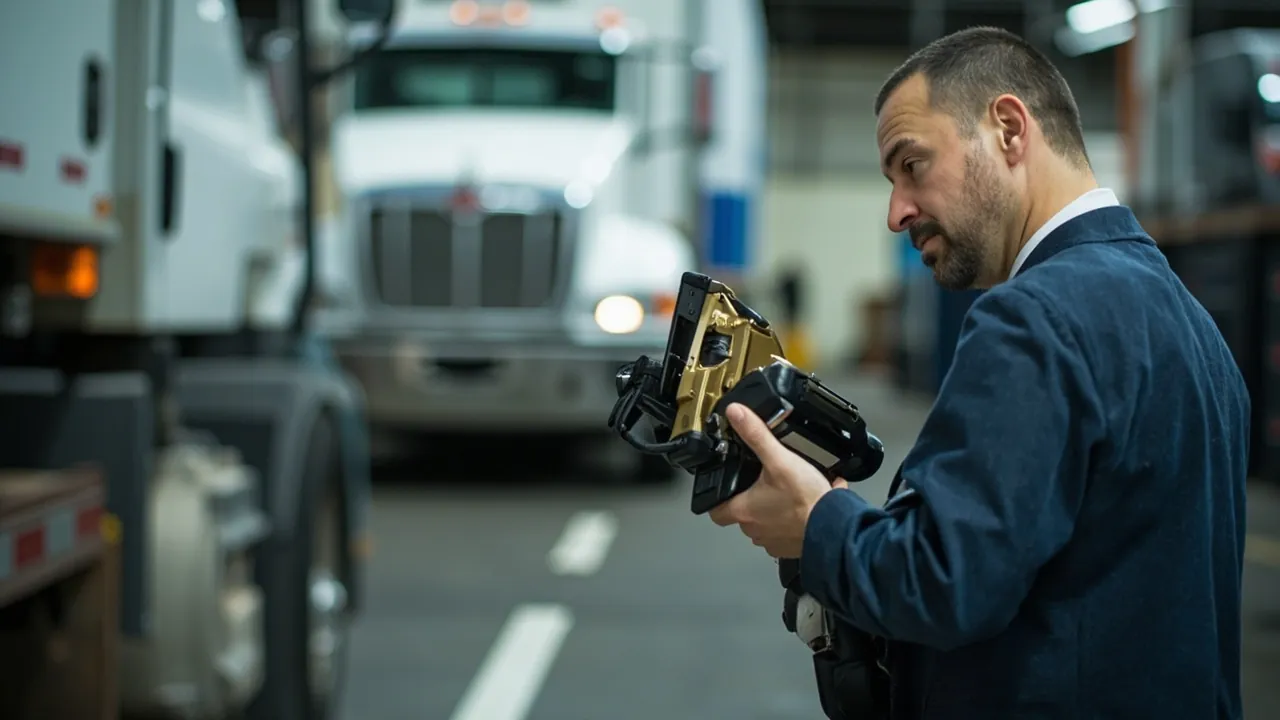
Traffic enforcement happens outdoors, at night, in rain and in confrontational scenes; once body cameras, speed meters, alcohol testers and evidence gear are damaged or data is lost, it directly affects enforcement validity and evidence legality. The conclusion is clear: issuing dedicated traffic-enforcement evidence cases to the front line puts equipment protection, zoned storage, data security and rapid dispatch in place the basic equipment support for standardized enforcement, fixed evidence and intact enforcement gear.
Many units still use ordinary backpacks or briefcases for devices, resulting in scratched body-camera screens, contaminated alcohol-probe mouths, mixed-lost memory cards and rain-flooded devices. The dedicated traffic-enforcement evidence case turns "naked-pack risk" into "controlled inside the box" through screen films, divided inserts, waterproof seals, anti-theft latches and fast opening. This article covers equipment protection for traffic-enforcement evidence with a practical checklist.
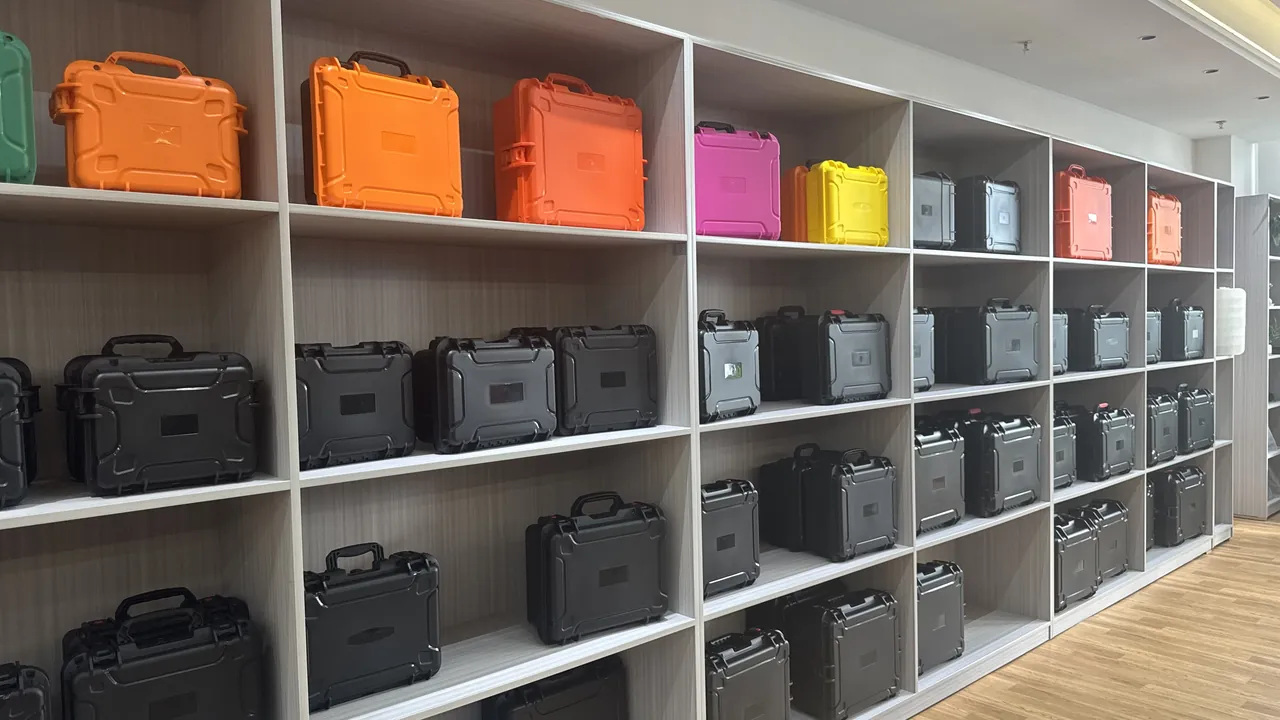
Table of Contents
- Why traffic enforcement needs dedicated evidence cases
- Functional positioning of the traffic-enforcement evidence case
- Protection of recording devices
- Zoned storage of evidence gear
- Data security and anti-tamper
- Night and harsh-weather adaptation
- Ratings and standard references
- Material and portable structure
- Selection parameters reference
- Field deployment and rapid dispatch
- Maintenance and batch standardization
- Transport, storage and OEM/ODM
- Daily inspection and lifecycle management of the cases
- Procurement agreement and standardization clauses
Why traffic enforcement needs dedicated evidence cases
Traffic enforcement has three "high" features: high outdoor exposure, high conflict risk and high evidence requirement. Body-camera footage, speed data, alcohol-test values and on-site evidence are all key bases for later penalties and reviews. If devices fail, it is not just instrument damage but an evidence-chain break. The dedicated traffic-enforcement evidence case manages both "intact gear" and "legal evidence."
In the system of the police evidence box and scene investigation box, traffic-enforcement evidence emphasizes vehicle-borne carry and rapid dispatch; it is the specialization of the broad forensic box in traffic-management scenarios. The protection logic of the traffic-enforcement evidence case can also reference the vehicular anti-vibration design of the emergency command comms case.
Rule of thumb: uniformly issued traffic-enforcement evidence cases with divided inserts can bring device loss and mis-grab rates extremely low, and visibly shorten on-site take/return time.
Functional positioning of the traffic-enforcement evidence case
The traffic-enforcement evidence case is not simply "a box for devices" but the carrier of a "mobile evidence workstation": it must simultaneously hold body cameras, portable speed/range meters, alcohol/drug rapid testers, radios, lighting, evidence bags and documents. The core positioning is the four-in-one of "protection + zoning + security + fast access."
By form, it splits into vehicular fixed type (with the patrol car, large capacity, emphasizing anti-vibration) and individual carry type (shoulder, emphasizing light weight and fast open). One unit should standardize by vehicle type and post, achieving "same post same box, same box same label."
Protection of recording devices
The body camera is the evidence core; the screen and lens fear scratches and contamination most. The box should give the camera an independent soft cavity, lens toward a soft pad to avoid friction with hard objects; the touchscreen carries a high-transparency anti-scratch film with enough margin at the front-frame cutout. Camera battery and host are recommended in separate cells for rotation endurance. Multiple cameras fixed by numbered cells prevent mix-up.
Zoned storage of evidence gear
Traffic-evidence gear is miscellaneous and sensitive: alcohol probes fear contamination, speed meters fear vibration, evidence bags fear odor crossover, memory cards fear loss. Zoned storage is key each gear in an independent labeled cell; easily contaminated items (probes, swabs) in separate small cups; easily lost items (cards, pens) in shallow lidded cells. Reference the divided thinking of the security inspection box: "one item one cell, every cell traceable."
Data security and anti-tamper
The legality of enforcement data relies on a complete chain: body-camera data should enable Ethernet/wireless auto-upload or encrypted export; memory cards in an independent fire-proof, moisture-proof small chamber inside the box, never mixed with keys and metal. The box should have a seal position and number for open/close records; important data media transferred with the case, not left long in the box. For classified scenarios, reference the shielding thinking of the EMI-shielded case.
Night and harsh-weather adaptation
Traffic enforcement largely happens at night, in rain-fog and high temperature. The box should reach above IP65 with EPDM gasket against rain and dust; at night, reflective strips and built-in lighting aid recognition; high-temperature regions need temperature-resistant material. Snow-fog days put desiccant inside against condensation. Portable structure with shoulder strap and quick-release suits long roadside standing.
Ratings and standard references
| Item | Recommended | Standard | Scenario |
|---|---|---|---|
| --- | --- | --- | --- |
| Dust/water | IP65 | IEC 60529 / GB/T 4208 | Rain-fog / roadside |
| Impact | IK08 | IEC 62262 | Vehicular handling |
| Env. reliability | MIL-STD-810H | Vibration / humidity | |
| Transport | ISTA 3E | Long-haul logistics | |
| Flammable shell | V-2 | UL 94 | Fire compliance |
Material and portable structure
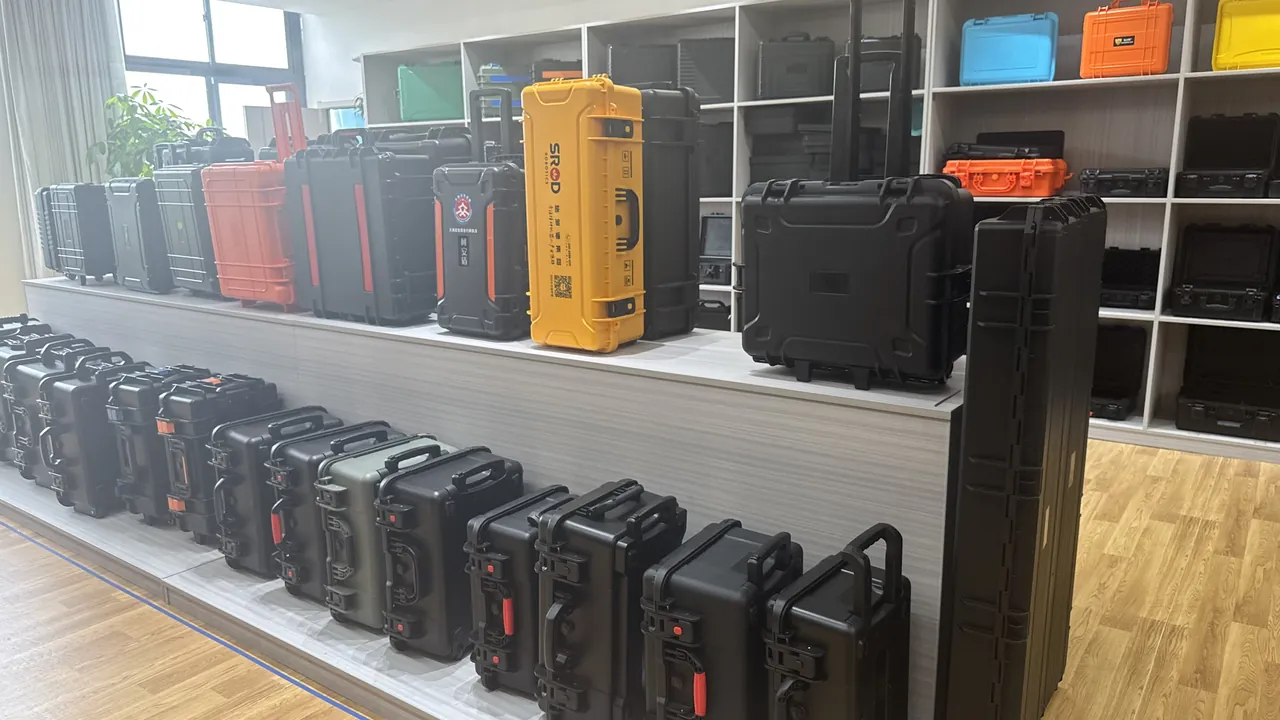
Shells are mainly PP, ABS and PC alloys; vehicular anti-vibration chooses thickened PP+ABS; individual carry uses light PP. Latches unified with anti-theft holes and seal positions. Portable structures split into vehicular wheeled boxes and individual back-clip boxes: the former values stability, the latter weight reduction. Rounded shell against scrapes; exterior reflective strips aid night recognition.
Selection parameters reference
| Form | Clearance (mm) | Material | Adapted gear |
|---|---|---|---|
| --- | --- | --- | --- |
| Vehicular fixed | 500×350×250 | PP+ABS | Camera / speed / evidence |
| Individual carry | 380×280×160 | PP | Camera / rapid test / docs |
| Evidence small box | 300×220×150 | PP+ABS | Evidence bags / samples |
Field deployment and rapid dispatch
Traffic enforcement emphasizes "dispatch on alert"; the traffic-enforcement evidence case should be pre-positioned at the patrol-car spare position, equipped by post list; night-check, accident and special campaigns each get different inserts, taken on arrival. The box carries a task list and asset number to avoid on-site searching. JUNZHJIA can customize liners and silk-screen numbers, with OEM/ODM enabling detachment-level standardization.
Maintenance and batch standardization
- Before dispatch, check the list; confirm camera, probe and memory card complete.
- Periodically check gasket for sand; clean promptly to prevent leakage.
- Clean the alcohol probe per spec to avoid cross-contamination.
- Memory card in locked independent chamber, transferred not retained.
- Maintain latches and hinges with silicone grease; unify color and number.
Transport, storage and OEM/ODM
For new issue or replacement, evidence cases transport in batches with gear, packed per ISTA 3 validated stacking, single-layer load within 70% of nominal. Storage ventilated and dry; rinse and dry after salt-fog exposure. JUNZHJIA provides wholesale, agency and OEM/ODM globally with consistent per-batch quality and documents for detachment standardization.
Daily inspection and lifecycle management of the cases
Traffic-enforcement evidence cases deploy at high frequency with patrol cars, often at night, in rain-fog and in confrontational scenes, so inspection relates to evidence legality. A three-tier mechanism is recommended: before dispatch check seal intact, body camera and memory card complete, gasket sand-free; after return check liner deformation and probe contamination; quarterly check does seal sampling and salt-fog rinsing. When the gasket hardens, lock fails or liner collapses, replace promptly. In the coordination of the police evidence box and scene investigation box, case life should enter the same ledger, recorded by asset number.
Rule of thumb: detachments running the three-tier inspection can extend average evidence-case service life by about 30% and significantly reduce evidence-chain risk from seal or contamination failure.
For management, align the replacement cycle of the traffic-enforcement evidence case with the equipment refresh plan, achieving "inspect and replace together" to avoid missing boxes affecting enforcement during night checks or special campaigns. The electronics box series and emergency command comms case illustrate how the same discipline keeps recording gear ready. A subtle failure is judging the box by its shell: the desiccant card, seal position and probe cup are where problems start, so the quarterly check must open the box and verify the seal and probe rather than trust appearance. The esd component box adds that, for electronic evidence, liner resistance also belongs in inspection.
Procurement agreement and standardization clauses
In volume procurement of enforcement evidence cases, the technical agreement should lock: first, standards clause clearly state IP, IK, MIL-STD-810H, UL 94 and versions; second, structure clause box type, material, latch, seal position, liner density and silk-screen number consistent; third, document clause provide IP, drop, salt-fog and flame proofs per batch; fourth, sampling clause 3%–5% sampling and non-conformance handling; fifth, traceability clause each box gets a unique asset code transferable across squads.
For detachment re-equipment, JUNZHJIA can provide OEM/ODM standardized supply across the full chain from tooling, injection, liner to packaging, with per-batch test documents, easing the inclusion of enforcement evidence cases into global support. The agreement should reserve a replenishment clause for spares (gaskets, latches, liners, seal positions) to avoid single-point failure sinking the whole box. The security inspection case and anti-static component box, when procured alongside, benefit from matching traceability clauses.
| Agreement clause | Locked content | Acceptance basis |
|---|---|---|
| --- | --- | --- |
| Standards | IP / IK / MIL / UL and version | Third-party report |
| Structure | Box type / material / latch / liner | Sample comparison |
| Documents | Test and material proofs | Per-batch delivery |
| Sampling | Ratio and re-inspection | Inbound inspection |
| Traceability | Asset code | Scan-verifiable |
Beyond the table, state environmental exposure explicitly: roadside and tunnel-adjacent posts need specified salt-fog duration and humidity cycles, not vague "weather resistant" wording, because the gasket is the only barrier between the recorder and condensation that can corrupt footage. The drop test should reference the exact MIL-STD-810H procedure so a lighter routine cannot be substituted. The hardware toolbox series and it operations toolkit, when bought for the same fleet, should carry matching traceability clauses so a missing box resolves to a responsible unit. Finally, require a sealed reference sample retained for the contract term; disputed field boxes are judged against the sample, removing delay from readiness. The emergency command comms case shows how the same agreement scales cleanly to a mixed enforcement kit.
Sizing the case to enforcement role
Enforcement roles differ enough that one case rarely fits all. A patrol car needs a vehicular fixed box holding the full kit; a foot-stop officer needs a light shoulder box with only the recorder, tester and documents; a night-check squad needs a box organized by check type. Sizing each to its role avoids both an over-heavy carry box and an under-equipped vehicle box. The military equipment box and tactical gear box separate their roles the same way, and the hardware toolbox series does for tools.
The recorder deserves its own sizing logic. Its screen and lens are the evidence surface, so the cavity must hold it without pressure on the bezel and with the lens facing a soft pad; a generic padded box that lets the recorder shift will scratch the very surface that proves the stop. The electronics box series shows how a 1:1 liner protects a screen, and the same care applies here.
| Role | Case form | Contents bias |
|---|---|---|
| --- | --- | --- |
| Patrol vehicle | Fixed, large | Full kit |
| Foot stop | Shoulder, light | Recorder, tester, docs |
| Night check | Organized by type | Per-check inserts |
A sizing detail easily missed is the document pocket. Enforcement generates paperwork and seals that must travel with the gear; a case without a clean, separate document pocket forces papers into the instrument cavity, where they scratch lenses. Reserve a dedicated, contamination-free pocket, as the scene investigation box does for evidence forms.
Dispatch workflow and evidence-chain discipline
The case supports a tight dispatch loop: pre-position it in the vehicle by the shift's task list, open only what the stop needs, and return items to their numbered cells so the next stop starts complete. This discipline is what keeps the evidence chain intact under pressure. The emergency command comms case and security inspection case run the same pre-position-and-return loop for incident response.
Data handling is the fragile link. Memory cards should move from the recorder to an independent, locked, fire- and moisture-resistant chamber in the case, then be transferred with the case file never left loose or mixed with keys. The anti-static component box and esd-shield case show how isolated, labeled chambers protect sensitive media, and the same isolation protects against both loss and tampering here.
Finally, audit the cases. After each shift, note any broken seal, failed latch or missing card in the asset record; repeated patterns tell the supervisor which squad needs retraining and which case model needs redesign before the next procurement round.
Compliance extension and data security for enforcement evidence cases
As enforcement digitizes, the evidence case's job extends beyond physical protection to compliance and data security. A case that isolates the memory card in a locked, fire- and moisture-resistant chamber, labels it, and keeps it with the case file does more than protect hardware it helps prove the chain of custody that courts require. The military equipment box and scene investigation box share the same chain-of-custody discipline for evidence, and the same principles apply at the roadside.
Data handling is the fragile link. The recorder's footage and the tester's values are only as admissible as their custody; a card left loose or mixed with keys invites challenge. Segregate the card in its own chamber, transfer it with the case file, and never leave it in the device overnight. The anti-static component box and esd-shield case show how isolated, labeled chambers protect sensitive media, and the same isolation defends against both loss and tampering here.
Rule of thumb: an evidence case with a locked, labeled, isolated media chamber turns "we recorded it" into "we can prove we recorded it."
Coordination with the emergency command comms case and security inspection case matters when an enforcement stop escalates into an incident: the evidence case feeds the command case, and both should share coding so a finding travels with its context. The electronics box series extends the same branding to the devices inside, building one coherent enforcement system rather than a pile of mismatched boxes.
Compliance also means standards. Specify IP and IK ratings, drop and salt-fog tests, and flame rating in the technical agreement, and require per-batch test documents so a disputed box can be verified rather than argued. The hardware toolbox series and precision instrument case benefit from the same clause language when procured alongside, keeping the whole kit comparable and auditable.
Implementation pitfalls deserve naming. First, the "convenience gap": officers sometimes leave the card in the device to save a step, breaking custody; a chamber designed for one-handed transfer closes that gap. Second, label drift: a chamber without a durable label loses its link to the case file; specify oil-resistant, scratch-proof marking. Third, over-codes: not every accessory needs a code, so apply codes to the items whose custody matters. The it operations toolkit and it-carry case use the same 80/20 coding rule for field kits.
Sustainability is the quiet bonus. Standardized, durable, repairable cases outlast throwaway bins, and a modular insert lets the shell survive a device refresh that would otherwise scrap the whole box. For agencies with environmental targets, longevity is a defensible procurement argument beside the compliance ones. The rail-transit signal case and road-bridge detection case benefit from the same durability reasoning on long programs.
Finally, measure the program. Track evidence challenges, card-loss incidents and box-related repairs per squad per quarter; the trend tells supervisors which units need retraining and which case model needs redesign before the next procurement round. This closes the loop from a plastic case to a managed, defensible enforcement capability.
In real-world deployments, selecting Traffic-Enforcement Evidence Cases: Law-Enforcement Recording & Evidence Gear should never reduce to picking a box by its outer dimensions. These units face combined hazards of dust, moisture, vibration and temperature swing, so dust/water protection, shock resistance and foam retention must be specified together to avoid costly rework after delivery.
From a supply-chain perspective, categories like traffic enforcement evidence cases law recording gear protective case are better served by batch customization than scattered purchases. A volume program locks case color, silkscreen identity, custom-cut foam and seal slots, keeping equipment consistent across sites and cutting the cost of non-interchangeable spares.
Standards give the acceptance its backbone. Traffic-Enforcement Evidence Cases: Law-Enforcement Recording & Evidence Gear should map to GB/T 4208 (IEC 60529) for the IP code, MIL-STD-810H for drop and vibration methods, and the ISTA transit series; where flammability matters, add the UL94 rating. Put the standard numbers in the contract so vendors cannot substitute claims for test reports.
On materials, modified PP, ABS and PC each trade off differently. PP brings toughness and low-temperature resistance for large cases; ABS is rigid but brittle when cold; PC excels in impact and clear windows. For traffic enforcement evidence cases law recording gear protective case, a one-piece shell with neoprene or EPDM foam gasket tends to age more predictably under salt spray and UV.
Foam is what turns a generic case into a purpose-built one. CNC-cut EVA, layered foam and adjustable dividers let the device sit with zero clearance, so it cannot shift under shock or drop. For Traffic-Enforcement Evidence Cases: Law-Enforcement Recording & Evidence Gear, custom foam also shortens field setup and re-stow time, and the investment is usually far below a single instrument repair.
Maintenance is routinely overlooked. After each use, wipe standing water and salt from the lid, and on coastal sites rinse the gasket with fresh water then air-dry; periodically check latches and hinges for looseness and the gasket for cracks or loss of spring. Stocking latches and gaskets at about 3% of case count contains sudden failures.
Test documentation is the lever for traceability. Ask the supplier to ship material statements, IP summaries, drop and vibration records, and batch numbers for gasket, latch and hinge. For traffic enforcement evidence cases law recording gear protective case, also keep a seal-status template for handover and audit, closing the loop from order to operation.
The procurement spec should name five hard metrics: target IP grade, the matching shock standard, flammability grade, foam form and the identification/seal position. Make sample-case acceptance a contract milestone, lock process and materials on the sample, then inspect volume lots to the same standard with per-batch files to keep lot-to-lot variance in check.
On site, traceable seal status often matters more than the case itself. Build a one-case-one-record habit listing the device inventory, calibration validity and seal state, checked before every use. This supports availability and gives closed-loop evidence for audits and accountability, especially at scale.
JUNZHJIA typically offers OEM/ODM and device-shaped foam tooling for Traffic-Enforcement Evidence Cases: Law-Enforcement Recording & Evidence Gear, and can deliver per-batch test-file packages covering material flammability, sealing and drop, so buyers can call them up during supplier review and annual re-inspection.
Temperature swing is often underestimated. If Traffic-Enforcement Evidence Cases: Law-Enforcement Recording & Evidence Gear is used in freezing or hot environments, confirm the material brittle-point and heat-deflection temperatures to avoid cold cracking or heat softening. For traffic enforcement evidence cases law recording gear protective case, an insulated wall or phase-change buffer can keep the interior steadier during short transits.
Stacking and transit design affect field efficiency. The lid should carry anti-slip ribs or locating bosses so stacked cases will not slide sideways, and latches must not pop open under stacked load. For Traffic-Enforcement Evidence Cases: Law-Enforcement Recording & Evidence Gear, calculate gross weight against the container limit and secure with straps or a cage to prevent latch fatigue from in-vehicle rolling.
ESD and EMC are implicit requirements for electronic equipment cases. For sensitive devices, use anti-static foam and consider a conductive layer or metallized film in the wall for shielding that lowers cross-talk with other radios. For traffic enforcement evidence cases law recording gear protective case, apply these only as the device manual's ESD/EMC spec demands, avoiding blind over-build.
Cost should not be judged on unit price alone. A case below about 1% of the device value usually means cut materials and seals, and the long-run repair and downtime cost is higher. For Traffic-Enforcement Evidence Cases: Law-Enforcement Recording & Evidence Gear, use a whole-life cost view that counts failure rate, spare availability and seal-verification time to find the option that is truly cheaper.
A smooth customization flow protects the lead time. The ideal path is: provide the device list and 3D data, the supplier returns a foam layout and a sample case, and volume runs start after seal verification. For Traffic-Enforcement Evidence Cases: Law-Enforcement Recording & Evidence Gear, writing the foam tooling and sample milestone into the contract sharply reduces field rework and repeated changes.
A scenario-based grade map cuts selection guesswork. For traffic enforcement evidence cases law recording gear protective case, build a table linking scenario to IP grade and liner form so apron, warehouse and channel environments each map to a case, letting front-line crews pick by the table and lowering the risk of water entry or calibration drift from misuse.
In real-world deployments, selecting Traffic-Enforcement Evidence Cases: Law-Enforcement Recording & Evidence Gear should never reduce to picking a box by its outer dimensions. These units face combined hazards of dust, moisture, vibration and temperature swing, so dust/water protection, shock resistance and foam retention must be specified together to avoid costly rework after delivery.
From a supply-chain perspective, categories like traffic enforcement evidence cases law recording gear protective case are better served by batch customization than scattered purchases. A volume program locks case color, silkscreen identity, custom-cut foam and seal slots, keeping equipment consistent across sites and cutting the cost of non-interchangeable spares.
Standards give the acceptance its backbone. Traffic-Enforcement Evidence Cases: Law-Enforcement Recording & Evidence Gear should map to GB/T 4208 (IEC 60529) for the IP code, MIL-STD-810H for drop and vibration methods, and the ISTA transit series; where flammability matters, add the UL94 rating. Put the standard numbers in the contract so vendors cannot substitute claims for test reports.
On materials, modified PP, ABS and PC each trade off differently. PP brings toughness and low-temperature resistance for large cases; ABS is rigid but brittle when cold; PC excels in impact and clear windows. For traffic enforcement evidence cases law recording gear protective case, a one-piece shell with neoprene or EPDM foam gasket tends to age more predictably under salt spray and UV.
Foam is what turns a generic case into a purpose-built one. CNC-cut EVA, layered foam and adjustable dividers let the device sit with zero clearance, so it cannot shift under shock or drop. For Traffic-Enforcement Evidence Cases: Law-Enforcement Recording & Evidence Gear, custom foam also shortens field setup and re-stow time, and the investment is usually far below a single instrument repair.
Maintenance is routinely overlooked. After each use, wipe standing water and salt from the lid, and on coastal sites rinse the gasket with fresh water then air-dry; periodically check latches and hinges for looseness and the gasket for cracks or loss of spring. Stocking latches and gaskets at about 3% of case count contains sudden failures.
Test documentation is the lever for traceability. Ask the supplier to ship material statements, IP summaries, drop and vibration records, and batch numbers for gasket, latch and hinge. For traffic enforcement evidence cases law recording gear protective case, also keep a seal-status template for handover and audit, closing the loop from order to operation.
The procurement spec should name five hard metrics: target IP grade, the matching shock standard, flammability grade, foam form and the identification/seal position. Make sample-case acceptance a contract milestone, lock process and materials on the sample, then inspect volume lots to the same standard with per-batch files to keep lot-to-lot variance in check.
On site, traceable seal status often matters more than the case itself. Build a one-case-one-record habit listing the device inventory, calibration validity and seal state, checked before every use. This supports availability and gives closed-loop evidence for audits and accountability, especially at scale.
FAQ
Q: What is the difference between a traffic-enforcement evidence case and a normal toolbox? A: The essential difference is the "evidence attribute." A normal toolbox only protects tools; the traffic-enforcement evidence case protects body cameras, speed data, alcohol-test values and on-site evidence all statutory bases for later penalties and reviews. Once damaged or data lost, it is an evidence-chain break. Therefore it requires divided anti-odor cells, an independent fire/moisture-proof chamber for memory cards, a seal position and number for traceability, and emphasizes fast take/return for "dispatch on alert." A normal toolbox lacks these forensic-compliance designs and cannot directly replace it.
Q: How to place a body camera in the box without hurting the screen? A: The camera is the evidence core; screen and lens fear scratches and contamination most. The box should give an independent soft cavity, lens toward a soft pad to avoid friction with hard objects; the touchscreen carries a high-transparency anti-scratch film with enough margin at the front-frame cutout. Host and battery in separate cells ease rotation endurance; multiple cameras fixed by numbered cells prevent mix-up. Store the box vertically or as specified to avoid gravity pressing keys. Open to dry after return, avoiding sealed moisture.
Q: How to avoid cross-contamination of the alcohol-test probe? A: The probe is a contaminable item and must be stored in a separate small cup or independent cell, never with swabs or evidence; clean per spec with dedicated items after each use, never by hand or ordinary cloth. Easily contaminated items (probe, sampling swabs) are isolated; easily lost items (cards, pens) in shallow lidded cells. Periodically calibrate and self-check the probe per manufacturer, and mark validity on the lid list for pre-operation check.
Q: How to ensure evidence data security? A: Legality relies on a complete chain. Body-camera data should enable Ethernet or wireless auto-upload, or encrypted export, reducing local-media risk; memory cards in an independent fire/moisture-proof chamber inside the box, never mixed with keys and metal against short circuit or magnetization. The box has a seal position and number for open/close records; important data media transferred with the case, not left long in the box. For classified scenarios, reference the EMI-shielded case for shielding against wireless eavesdropping or leakage.
Q: What adaptations does a rainy-foggy night enforcement box need? A: First, protection box above IP65 with EPDM gasket against rain and dust; second, recognition reflective strips and built-in lighting on the exterior for quick location in dim environments; third, moisture desiccant inside on snow-fog days against condensation; fourth, temperature high-temperature regions need softening-resistant material, low-temperature non-brittle. Portable structure with shoulder strap and quick-release suits long roadside standing. Individual carry type should be light and fast-open; vehicular type values anti-vibration stability, selected by post.
Q: How to choose vehicular vs individual type? A: By post and vehicle. The vehicular fixed type has large capacity and emphasizes anti-vibration, at the patrol-car spare position, holding camera, speed and evidence as a full set; the individual carry type is light, shoulder and fast-open, suiting foot stops and long roadside work. One unit should "same post same box, same box same label"; night-check, accident and special campaigns can share appearance with different inserts. JUNZHJIA can customize liners and silk-screen by vehicle and post for detachment-level standardization.
Q: How does a detachment batch-standardize traffic-enforcement evidence cases? A: Lock case type, material, color, latch, liner density and silk-screen number into the technical agreement; require the supplier to provide IP, drop, flame and salt-fog documents per batch with an agreed sampling ratio. Establish color and number rules by detachment or post so every box is traceable and transferable across squads. JUNZHJIA provides OEM/ODM and global supply with consistent per-batch quality for one-time rollout and later unified management.
Q: What if the box floods or condenses and data media is inside? A: First immediately power off and disconnect; take out the memory card/camera, blot the surface with a lint-free cloth, never power on to read to avoid short circuit; place in desiccant or a dry cabinet for slow dehumidification, professional recovery if necessary. Dry the box itself, clear gasket sand, replace desiccant before reuse. Daily prevention beats aftercare: sealed box with EPDM gasket, humidity card inside, open to dry after return, minimizes condensation risk.
Q: Can a traffic-enforcement evidence case share with other police gear boxes? A: Not recommended for long mixing. The evidence box emphasizes complete evidence chain and anti-odor, anti-contamination; if mixed with explosion-proof tools or investigation tools, metal sharps may scratch the camera screen and evidence may cross-contaminate. The correct practice divides with the police evidence box and scene investigation box: the evidence box manages recording and evidence, the investigation box manages survey and collection, the command box manages aggregation. Multiple boxes share color/label for systematic support.
Conclusion and Further Reading
From equipment protection and zoned storage to data security and rapid dispatch, the dedicated traffic-enforcement evidence case puts "standardized enforcement, fixed evidence" into every well-stored detail. Getting the case right is holding the first gate of intact enforcement gear and legal evidence.
Related Reading