

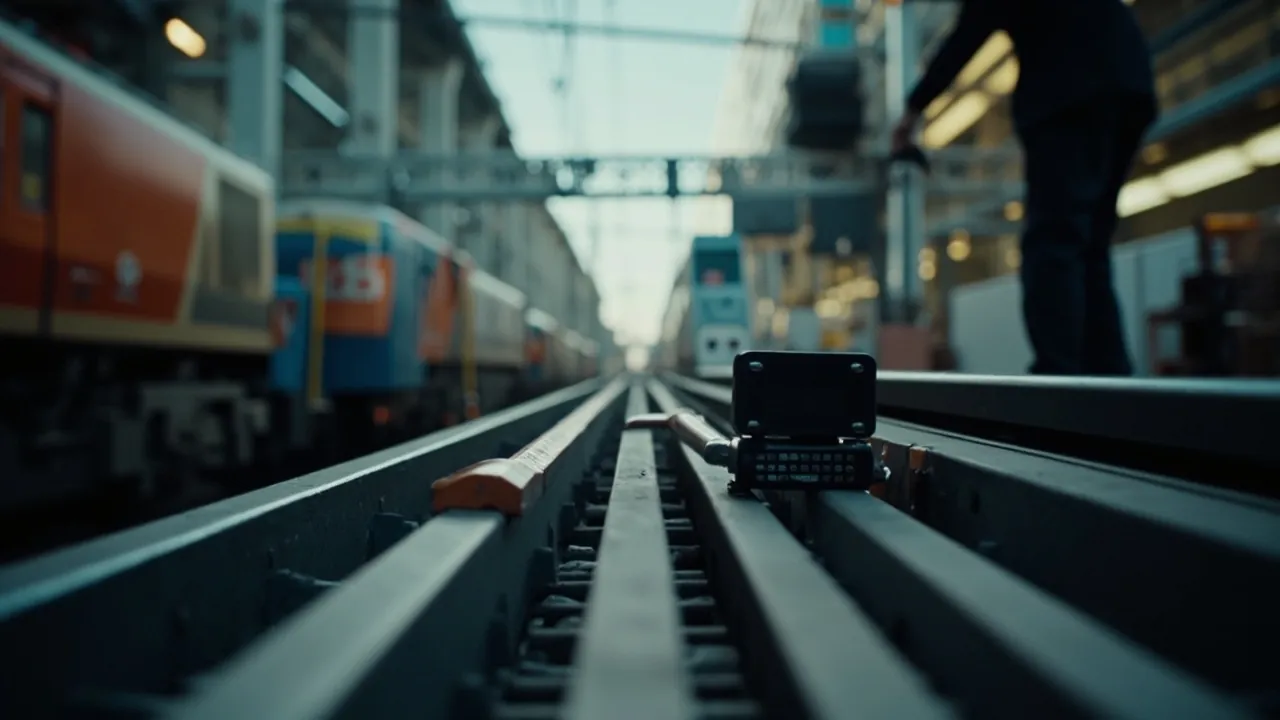
Rail-transit signaling, communication and power systems demand extremely high reliability, yet maintenance windows mostly race against time in nightly "track-block" periods. The conclusion is clear: equipping signal devices, detection instruments and maintenance tools with dedicated rail-transit signal equipment cases, railway detection instrument cases and metro maintenance toolboxes puts moisture resistance, anti-vibration, anti-theft and fast access in place the underlying support for punctuality and maintenance safety.
The along-line environment is complex tunnel humidity, viaduct sand, depot oil, long inspection walks and exposed equipment easily rusts, drifts under vibration and loses accessories. Dedicated cases use sealing gaskets, anti-vibration liners, zoned storage and unified latches to keep "transport loss" outside the equipment. This article covers the case family for rail-transit maintenance with a practical configuration plan.
Table of Contents
- Why rail-transit maintenance needs dedicated cases
- Design points of the rail-transit signal equipment case
- Portable protection of the railway detection instrument case
- Zoned storage of the metro maintenance toolbox
- Three protections for signal and communication gear
- Transport safety of batteries and cables
- Ratings and standard references
- Material and anti-vibration structure
- Selection parameters reference
- Night track-block work and on-vehicle config
- Field deployment and maintenance
- Transport, storage and batch standardization
- Daily inspection and lifecycle management of the cases
- Procurement agreement and standardization clauses
Why rail-transit maintenance needs dedicated cases
Rail-transit maintenance has three features: high-reliability demand, short work windows and long inspection routes. Once a signal device miscodes from moisture or vibration, it may cause interlocking anomalies; an inaccurate detector misses defects; a lost tool directly delays that night's block. The dedicated case manages both "environmental stress" and "work efficiency."
In the system of the power-grid inspection case, rail-transit power detection and grid patrol share logic; their cases can reference each other, especially on insulation-test and grounding-test tools.
Rule of thumb: with zoned anti-vibration cases, the re-test rate from instrument reading drift along the line drops about 30%, and tool-loss rate falls significantly.
Design points of the rail-transit signal equipment case
The rail-transit signal equipment case mainly loads signal machines, balises, track-circuit and interlocking test terminals. Design points: first, electromagnetic compatibility metal latches and seams form a continuous conductive path for auxiliary attenuation of external interference; second, moisture proofing tunnel high humidity needs above IP65 with desiccant; third, consistency signal terminals on one line should be standardized with cases for cross-station transfer.
The box should reserve device brackets and cable storage to avoid suspended, vibrated connectors. For on-board signal host modules, reference the anti-static liner thinking of the electronics box to prevent static damage to boards.
Portable protection of the railway detection instrument case
The railway detection instrument case targets rail-geometry, rail-flaw and catenary detectors that often enter sections on foot. Its demands are "light, stable, fast": reduce weight to ease long carries, line with anti-vibration to protect sensors, and open-to-take to seize the block. Flaw detectors and geometry cars are mostly precision electronics; recommend independent compartments with buffer layers.
Mountain and alpine lines should also consider temperature tolerance; box material and gasket must resist low-temperature cracking. In similar outdoor scenarios of the geological environment case, weather and anti-vibration designs can borrow from each other.
Zoned storage of the metro maintenance toolbox
The metro maintenance toolbox focuses on mechanical and electrical maintenance in depots and tunnels, with many tool types and specs. Zoned storage is key: wrenches, sockets, gauges, lighting and insulated tools each in their cell, with labels and color codes. Insulated tools must be in an independent, clearly marked cell, never mixed with metal sharps to avoid insulation damage.
For parallel night shifts, color by trade (power blue, signal yellow, vehicle green) to reduce mis-grabbing. The box should have wheels or a shoulder strap for long depot transfers.
Three protections for signal and communication gear
Rail-transit signal and communication gear emphasize the three protections: water-proof, dust-proof, vibration-proof. Tunnel and viaduct salt fog and dust corrode connectors; vibration loosens boards. The box should reach IP65 and IK08, with suspended liner supporting key modules; communication gear can reference the modular insert of the communication test case, fixing terminals layer by layer.
Transport safety of batteries and cables
Rail maintenance uses many batteries and cables; transport safety cannot be ignored. Batteries need an independent fire-proof cell, warning labels and insulated packaging, never mixed with metal tools; cables coil in dedicated channels with limited bend radius. For HSR and metro emergency power modules, the box reserves fixed straps and buffers to prevent displacement short circuits.
Ratings and standard references
| Item | Recommended | Standard | Scenario |
|---|---|---|---|
| --- | --- | --- | --- |
| Dust/water | IP65 | IEC 60529 / GB/T 4208 | Tunnel / viaduct |
| Impact | IK08 | IEC 62262 | Depot handling |
| Env. reliability | MIL-STD-810H | Vibration / humidity | |
| Transport | ISTA 3E | Long-haul logistics | |
| Flammable shell | V-2 | UL 94 | Fire compliance |
Material and anti-vibration structure
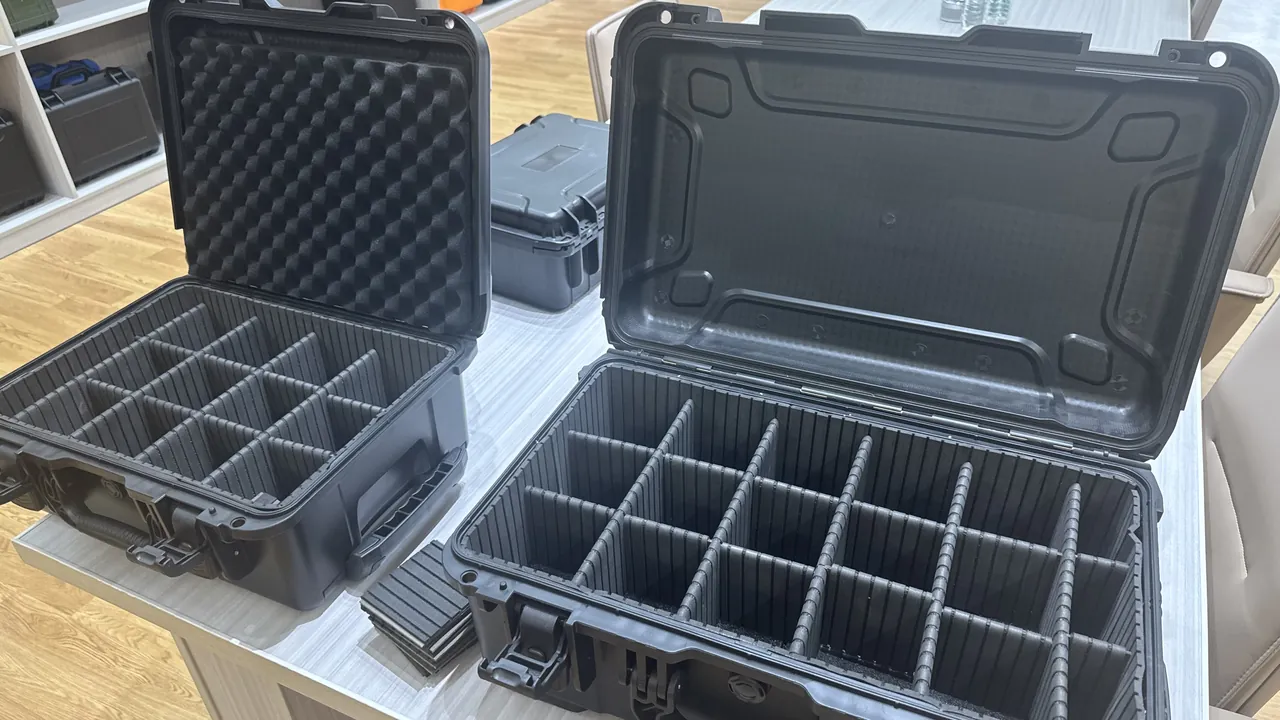
Shells are mainly PP, ABS and PC alloys; tunnel-humid scenarios prefer weather-resistant PP+ABS; high-value signal modules use thickened PC alloy. Anti-vibration relies on "suspended liner + corner buffer," with key boards supported at four corners to avoid point loading. Latches should be unified with anti-theft holes for depot security.
Selection parameters reference
| Case type | Clearance (mm) | Material | Adapted equipment |
|---|---|---|---|
| --- | --- | --- | --- |
| Signal equipment case | 450×320×200 | PC alloy | Signal test terminal |
| Railway detector case | 500×350×180 | PP+ABS | Flaw / geometry car |
| Metro maintenance box | 550×350×250 | PP | Electromechanical tool set |
Night track-block work and on-vehicle config
Track-block time is tight; cases should be "pre-positioned": before work, configure cases by list in the station spare-parts depot, then enter the section by track car or on foot. On-vehicle config favors wheeled transport cases to reduce manual carrying; signal and maintenance tools load in separate cars for instant access. JUNZHJIA can customize liners and silk-screen numbers per requirement, with OEM/ODM enabling line-level standardization.
Field deployment and maintenance
- Before dispatch, check the list; confirm devices complete and desiccant valid.
- Periodically check gasket for sand; clean promptly to prevent leakage.
- Insulated tools in locked independent cell, never with sharps.
- Battery cell insulated and packaged; strap before transport.
- Maintain latches and hinges with silicone grease periodically.
Transport, storage and batch standardization
For new-line opening or existing-line renovation, cases enter in batches with equipment, packed per ISTA 3 validated stacking, single-layer load within 70% of nominal. Storage ventilated and dry; rinse and dry after salt-fog exposure. JUNZHJIA provides wholesale, agency and OEM/ODM globally with consistent per-batch quality and documents for line-level standardized management.
Daily inspection and lifecycle management of the cases
Rail-transit cases work in tunnel humidity, viaduct sand and depot oil, so inspection decides protection life. A three-tier mechanism is recommended: before dispatch check gasket sand, latch smoothness and desiccant validity; after return check liner deformation and equipment leakage; quarterly check does seal sampling and salt-fog rinsing. When the gasket hardens, liner collapses or latch loosens, replace promptly. In the coordination of the power-grid inspection case and communication test case, case life should enter the same ledger, recorded by asset number.
Rule of thumb: units running the three-tier inspection can extend average case service life by about 30% and significantly reduce instrument moisture from seal failure.
For management, align the replacement cycles of the rail-transit signal equipment case, railway detection instrument case and metro maintenance toolbox with the line maintenance plan, achieving "inspect and replace together" to avoid missing boxes delaying the track-block window. The electronics box series and esd component box illustrate how the same ledger discipline keeps sensitive contents safe across a mixed fleet. A frequent mistake is inspecting only the shell: the inside liner and desiccant card are where failure starts, so the quarterly check must open the box and weigh or test the desiccant rather than judge by appearance.
Procurement agreement and standardization clauses
In volume procurement of rail cases, the technical agreement should lock: first, standards clause clearly state IP, IK, MIL-STD-810H, UL 94 and versions; second, structure clause box type, material, wall thickness, latch, liner density and silk-screen number consistent; third, document clause provide IP, drop, salt-fog and flame proofs per batch; fourth, sampling clause 3%–5% sampling and non-conformance handling; fifth, traceability clause each box gets a unique asset code transferable across lines.
For new-line opening and existing-line renovation, JUNZHJIA can provide OEM/ODM standardized supply across the full chain from tooling, injection, liner to packaging, with per-batch test documents, easing the inclusion of different-trade cases into global support. The agreement should reserve a replenishment clause for spares (gaskets, latches, liners) to avoid single-point failure sinking the whole box. The industrial equipment case and precision instrument case benefit from the same clause language when procured alongside.
| Agreement clause | Locked content | Acceptance basis |
|---|---|---|
| --- | --- | --- |
| Standards | IP / IK / MIL / UL and version | Third-party report |
| Structure | Box type / material / latch / liner | Sample comparison |
| Documents | Test and material proofs | Per-batch delivery |
| Sampling | Ratio and re-inspection | Inbound inspection |
| Traceability | Asset code | Scan-verifiable |
Beyond the table, specify environmental exposure explicitly: coastal or tunnel-heavy lines need stated salt-fog duration and humidity cycles, not vague "weather resistant" wording, because the gasket is the only thing standing between the instrument and condensation. Similarly, the drop test should reference the exact MIL-STD-810H procedure so suppliers cannot substitute a lighter routine. The hardware toolbox series and it operations toolkit, when procured for the same depot, should carry matching traceability clauses so a missing box is always resolvable to a responsible station. Finally, require a sealed reference sample retained for the contract term; disputed field boxes are then judged against the sample, removing delay from mission readiness.
Sizing cases to the line environment
Rail cases must be sized to where the line lives. A tunnel section means high humidity and poor ventilation, favoring IP65-plus sealing and desiccant; a viaduct section means wind-blown sand and temperature swing, favoring impact rating and weather-resistant gasket; a depot means oil and handling abuse, favoring thick walls and drain-able liners. Buying one "rail case" for all three stores the wrong priorities in the wrong place. The power-grid inspection case and communication test case face the same split between substation and tower, and use the same environment-first sizing.
Weight is the second variable. A line-patrol case that must be carried kilometers down the track cannot be the same as a vehicle-borne case that rides the inspection car. Size the carry case to a single person's comfortable load and reserve the large capacity for the vehicle. The geological environment case and road-bridge detection case both separate carry and vehicle versions for the same reason, and the electronics box series does the same for the instruments inside.
| Line segment | Dominant threat | Case emphasis |
|---|---|---|
| --- | --- | --- |
| Tunnel | Humidity, fumes | IP65+, desiccant |
| Viaduct | Sand, thermal | IK08, weather gasket |
| Depot | Oil, handling | Thick wall, drain |
| Patrol on foot | Weight | Light, shoulder |
A detail often missed is the pressure-equalization valve orientation during transit. Boxes shipped by rail or air need the valve unblocked and the box upright; a valve buried in foam defeats its purpose and can let the gasket push out. The hardware toolbox series and it operations toolkit carry the same transit note for kits that fly with crews.
Track-block workflow and handover
The track-block window is short, so the case must support a fast, error-free workflow. Pre-position the right case in the station spare depot by the night's task list; load signal and maintenance cases on separate carts so they reach different work faces without unpacking. Each case should carry a task card and asset number so the crew grabs the correct one without opening it roadside. The emergency command comms case and security inspection case use the same pre-position-and-label routine for incident response.
Handover at shift change is where boxes are lost or mixed. A simple rule scan the case out, scan it back turns the box into a tracked asset rather than a loose item. The anti-static component box and precision instrument case rely on the same scan-in-scan-out discipline for sensitive contents, and applying it to rail cases prevents the "which box went where" gap that delays the next block.
Finally, debrief the cases. After each block, note any damaged gasket, missing insert or failed latch in the asset record; trends across cases tell the maintenance planner which line's environment is harder than assumed and where to upgrade the next batch.
Green and total-cost-of-ownership view of rail cases
As lines enter long operation cycles, cases should not be evaluated only on unit price but on total cost of ownership and green procurement. A well-sealed case with replaceable gasket and liner can serve several equipment maintenance cycles, while a cheap thin-wall box often fails its gasket in the first salt-fog season and cracks its wall, driving up both box replacement and instrument repair. The same TCO view holds for the power-grid inspection case and communication test case: buy right once, save for years.
On the green side, repairable cases with swappable liners and recyclable shells beat single-use thin-wall boxes on sustainability. For new lines and urban-renewal projects, the tender can score "repairability," "spare availability" and "recycled-content ratio," steering suppliers toward long-life products. JUNZHJIA, at its Zhongshan plant, provides OEM/ODM standardized supply across tooling, injection, liner and packaging, with per-batch documents, easing the inclusion of different-trade cases into one green ledger.
Rule of thumb: TCO-evaluated rail cases typically cost 20%–40% less over five years than "lowest-price" bids, with notably fewer moisture-related instrument returns.
Coordinated with the geological environment case, the "life by environment" method can be shared: tunnel-humid, viaduct-salt and depot-oil segments naturally have different replacement rhythms, and a segmented ledger enables precise replenishment instead of one-size waste. A digital system then links each box's service count, repair record and replacement trigger by barcode, so "replace when due" replaces "replace on schedule."
Finally, the case upgrades from consumable to managed asset. Fix code and standard at purchase, log inspection and repair at use, iterate with inserts at refresh, trace and recycle at retirement. Getting this box right is what makes rail O&M's "lower cost, higher quality, greener" land on every block and every kilometer. The emergency command comms case and security inspection case benefit from the same asset view when procured alongside.
The procurement mechanics deserve detail. A TCO bid should require the supplier to state expected service life under the stated environment, the price of spare gasket and liner sets, and the recycled-content percentage of the shell. Bidders who cannot state these are implicitly shipping disposable boxes. The hardware toolbox series and it operations toolkit should answer the same questions so the whole kit is compared on life, not sticker. The electronics box series extends it to the instruments inside, where a protected board outliving two shells is the greenest outcome of all.
Implementation has pitfalls. First, the cheapest bid often wins on paper because TCO is not in the scoring; fixing the tender weights is the lever. Second, spare parts vanish after delivery; the agreement should commit to a spare supply window matching the stated life. Third, recycling claims are vague; require a documented material declaration, not a slogan. The anti-static component box and esd-shield case show how a material declaration also supports ESD compliance, turning one clause into two benefits.
Measurement closes the loop. Track cost per served year and instrument return rate per case type per line; the trend tells planners which environment is harsher than assumed and where to upgrade the next batch. This is how a box becomes a managed capability rather than a recurring purchase.
In real-world deployments, selecting Rail-Transit Signal Cases & Railway/Metro Maintenance Toolboxes should never reduce to picking a box by its outer dimensions. These units face combined hazards of dust, moisture, vibration and temperature swing, so dust/water protection, shock resistance and foam retention must be specified together to avoid costly rework after delivery.
From a supply-chain perspective, categories like rail transit signal cases railway metro maintenance toolboxes are better served by batch customization than scattered purchases. A volume program locks case color, silkscreen identity, custom-cut foam and seal slots, keeping equipment consistent across sites and cutting the cost of non-interchangeable spares.
Standards give the acceptance its backbone. Rail-Transit Signal Cases & Railway/Metro Maintenance Toolboxes should map to GB/T 4208 (IEC 60529) for the IP code, MIL-STD-810H for drop and vibration methods, and the ISTA transit series; where flammability matters, add the UL94 rating. Put the standard numbers in the contract so vendors cannot substitute claims for test reports.
On materials, modified PP, ABS and PC each trade off differently. PP brings toughness and low-temperature resistance for large cases; ABS is rigid but brittle when cold; PC excels in impact and clear windows. For rail transit signal cases railway metro maintenance toolboxes, a one-piece shell with neoprene or EPDM foam gasket tends to age more predictably under salt spray and UV.
Foam is what turns a generic case into a purpose-built one. CNC-cut EVA, layered foam and adjustable dividers let the device sit with zero clearance, so it cannot shift under shock or drop. For Rail-Transit Signal Cases & Railway/Metro Maintenance Toolboxes, custom foam also shortens field setup and re-stow time, and the investment is usually far below a single instrument repair.
Maintenance is routinely overlooked. After each use, wipe standing water and salt from the lid, and on coastal sites rinse the gasket with fresh water then air-dry; periodically check latches and hinges for looseness and the gasket for cracks or loss of spring. Stocking latches and gaskets at about 3% of case count contains sudden failures.
Test documentation is the lever for traceability. Ask the supplier to ship material statements, IP summaries, drop and vibration records, and batch numbers for gasket, latch and hinge. For rail transit signal cases railway metro maintenance toolboxes, also keep a seal-status template for handover and audit, closing the loop from order to operation.
The procurement spec should name five hard metrics: target IP grade, the matching shock standard, flammability grade, foam form and the identification/seal position. Make sample-case acceptance a contract milestone, lock process and materials on the sample, then inspect volume lots to the same standard with per-batch files to keep lot-to-lot variance in check.
On site, traceable seal status often matters more than the case itself. Build a one-case-one-record habit listing the device inventory, calibration validity and seal state, checked before every use. This supports availability and gives closed-loop evidence for audits and accountability, especially at scale.
JUNZHJIA typically offers OEM/ODM and device-shaped foam tooling for Rail-Transit Signal Cases & Railway/Metro Maintenance Toolboxes, and can deliver per-batch test-file packages covering material flammability, sealing and drop, so buyers can call them up during supplier review and annual re-inspection.
Temperature swing is often underestimated. If Rail-Transit Signal Cases & Railway/Metro Maintenance Toolboxes is used in freezing or hot environments, confirm the material brittle-point and heat-deflection temperatures to avoid cold cracking or heat softening. For rail transit signal cases railway metro maintenance toolboxes, an insulated wall or phase-change buffer can keep the interior steadier during short transits.
Stacking and transit design affect field efficiency. The lid should carry anti-slip ribs or locating bosses so stacked cases will not slide sideways, and latches must not pop open under stacked load. For Rail-Transit Signal Cases & Railway/Metro Maintenance Toolboxes, calculate gross weight against the container limit and secure with straps or a cage to prevent latch fatigue from in-vehicle rolling.
ESD and EMC are implicit requirements for electronic equipment cases. For sensitive devices, use anti-static foam and consider a conductive layer or metallized film in the wall for shielding that lowers cross-talk with other radios. For rail transit signal cases railway metro maintenance toolboxes, apply these only as the device manual's ESD/EMC spec demands, avoiding blind over-build.
Cost should not be judged on unit price alone. A case below about 1% of the device value usually means cut materials and seals, and the long-run repair and downtime cost is higher. For Rail-Transit Signal Cases & Railway/Metro Maintenance Toolboxes, use a whole-life cost view that counts failure rate, spare availability and seal-verification time to find the option that is truly cheaper.
A smooth customization flow protects the lead time. The ideal path is: provide the device list and 3D data, the supplier returns a foam layout and a sample case, and volume runs start after seal verification. For Rail-Transit Signal Cases & Railway/Metro Maintenance Toolboxes, writing the foam tooling and sample milestone into the contract sharply reduces field rework and repeated changes.
A scenario-based grade map cuts selection guesswork. For rail transit signal cases railway metro maintenance toolboxes, build a table linking scenario to IP grade and liner form so apron, warehouse and channel environments each map to a case, letting front-line crews pick by the table and lowering the risk of water entry or calibration drift from misuse.
In real-world deployments, selecting Rail-Transit Signal Cases & Railway/Metro Maintenance Toolboxes should never reduce to picking a box by its outer dimensions. These units face combined hazards of dust, moisture, vibration and temperature swing, so dust/water protection, shock resistance and foam retention must be specified together to avoid costly rework after delivery.
From a supply-chain perspective, categories like rail transit signal cases railway metro maintenance toolboxes are better served by batch customization than scattered purchases. A volume program locks case color, silkscreen identity, custom-cut foam and seal slots, keeping equipment consistent across sites and cutting the cost of non-interchangeable spares.
Standards give the acceptance its backbone. Rail-Transit Signal Cases & Railway/Metro Maintenance Toolboxes should map to GB/T 4208 (IEC 60529) for the IP code, MIL-STD-810H for drop and vibration methods, and the ISTA transit series; where flammability matters, add the UL94 rating. Put the standard numbers in the contract so vendors cannot substitute claims for test reports.
On materials, modified PP, ABS and PC each trade off differently. PP brings toughness and low-temperature resistance for large cases; ABS is rigid but brittle when cold; PC excels in impact and clear windows. For rail transit signal cases railway metro maintenance toolboxes, a one-piece shell with neoprene or EPDM foam gasket tends to age more predictably under salt spray and UV.
Foam is what turns a generic case into a purpose-built one. CNC-cut EVA, layered foam and adjustable dividers let the device sit with zero clearance, so it cannot shift under shock or drop. For Rail-Transit Signal Cases & Railway/Metro Maintenance Toolboxes, custom foam also shortens field setup and re-stow time, and the investment is usually far below a single instrument repair.
Maintenance is routinely overlooked. After each use, wipe standing water and salt from the lid, and on coastal sites rinse the gasket with fresh water then air-dry; periodically check latches and hinges for looseness and the gasket for cracks or loss of spring. Stocking latches and gaskets at about 3% of case count contains sudden failures.
Test documentation is the lever for traceability. Ask the supplier to ship material statements, IP summaries, drop and vibration records, and batch numbers for gasket, latch and hinge. For rail transit signal cases railway metro maintenance toolboxes, also keep a seal-status template for handover and audit, closing the loop from order to operation.
The procurement spec should name five hard metrics: target IP grade, the matching shock standard, flammability grade, foam form and the identification/seal position. Make sample-case acceptance a contract milestone, lock process and materials on the sample, then inspect volume lots to the same standard with per-batch files to keep lot-to-lot variance in check.
On site, traceable seal status often matters more than the case itself. Build a one-case-one-record habit listing the device inventory, calibration validity and seal state, checked before every use. This supports availability and gives closed-loop evidence for audits and accountability, especially at scale.
FAQ
Q: Why does a rail-transit signal equipment case emphasize EMC? A: Rail signal systems work in strong EM environments (catenary, traction return, radio); external interference may cause miscodes or even interlocking anomalies. Metal latches and seams form a continuous conductive path for auxiliary attenuation of external RF; more critical is the internal device's own shielding and grounding. When selecting, confirm latches and hinges are metal and reliably bonded, adding conductive foam if needed. High-value signal modules also need suspended liners against vibration loosening. With the modular thinking of the communication test case, immunity improves further.
Q: How light must a railway detection instrument case be? A: No fixed number; the principle is "carryable on foot in the section, quickly openable in the block." Mountain and long-tunnel patrols may walk kilometers, so the box should be within one-hand-carry or backpack range, with light high-resilience EVA liner. But weight reduction must not sacrifice protection flaw and geometry sensors still need independent compartments and buffers. Select by patrol distance and terrain: plain short sections use standard boxes; mountain long sections use light PC-alloy thin-wall boxes.
Q: How to avoid damage to insulated tools in a metro maintenance toolbox? A: Insulated tools (such as insulated wrenches, voltage testers) once mixed with metal sharps or compressed, the insulation easily fails and endangers life. The correct practice is independent-cell storage, prominent labels and locking, never with screwdrivers or files; the cell interior uses soft liner to avoid scraping. For parallel shifts, color by trade (power blue, signal yellow, vehicle green) to reduce mis-grabbing. The box with wheels or shoulder strap suits long depot transfers and lowers handling bumps.
Q: How to transport batteries safely in a maintenance case? A: Batteries need an independent fire-proof cell, insulated packaging and warning labels, never mixed with keys or cables to prevent short circuits; the battery cell locked, strapped before transport to prevent displacement. For HSR and metro emergency power modules, reserve buffer and strap positions to avoid terminal loosening under vibration. For long storage, charge to recommended level and inspect periodically to prevent leakage corroding the liner. If transporting multiple batteries, separate them with insulating partitions.
Q: IP65 or IP67 for the protection rating? A: Most rail scenarios IP65 (dust-proof, low-pressure spray) suffices for tunnel seepage and viaduct showers; if the device needs short immersion (such as section pump rooms or wading checks) or rides under track cars splashing mud, choose IP67 with EPDM gasket. Do not blindly pursue high grades; IP67 costs more and weighs more. The key is weather-resistant gasket material (EPDM better than PVC) and periodic sand cleaning, or even a high grade leaks from pressure marks.
Q: How to configure cases most efficiently for night track-block work? A: The core is "pre-position and separate loading." Before work, configure cases by that night's list in the station spare depot; load signal and maintenance tools in separate cars (or layers), enter the section by track car or foot, take on arrival and return after use. Cases with wheels reduce manual carrying; each case labeled with task list and asset number avoids on-site searching. JUNZHJIA can customize liners and silk-screen per line so different-trade boxes are "known by color, matched by number."
Q: How to standardize cases in batch for new-line opening? A: Lock case type, material, color, latch, liner density and silk-screen number into the technical agreement; require the supplier to provide IP, drop, flame and salt-fog documents per batch with an agreed sampling ratio. Establish color and number rules by line or trade so every box is traceable and transferable. JUNZHJIA provides OEM/ODM and global supply with consistent per-batch quality for one-time rollout and later unified maintenance.
Q: Will a tunnel-humid environment cause condensation inside the case? A: Yes, especially with large day-night temperature differences or moving from cold sections to warm tunnels. Countermeasures: choose above IP65 sealed box with EPDM gasket; place indicator desiccant or humidity card inside, replace periodically; after devices return to depot, open to dry before storing to avoid sealing moisture. For signal and communication boards, add anti-static bags and reference the liner practice of the electronics box to further reduce the dual risk of condensation and static.
Q: Can on-vehicle and foot-patrol cases be interchangeable? A: Not fully recommended. The on-vehicle case values large capacity, wheeled transport and multi-device loading; the foot-patrol case values light weight, body fit and fast access. Forced interchange leads to either too heavy to carry or too small for large instruments like flaw detectors. Select separately by "car-patrol vs foot-patrol" scenarios; if needed, share the same color/label appearance system for line-level standardization.
Conclusion and Further Reading
From the rail-transit signal equipment case and railway detection instrument case to the metro maintenance toolbox, rail-transit maintenance support is moving toward "moisture/vibration resistance, zoned fast access, line-level standardization." Getting the case right is holding the first gate of punctuality and maintenance safety.
Related Reading