

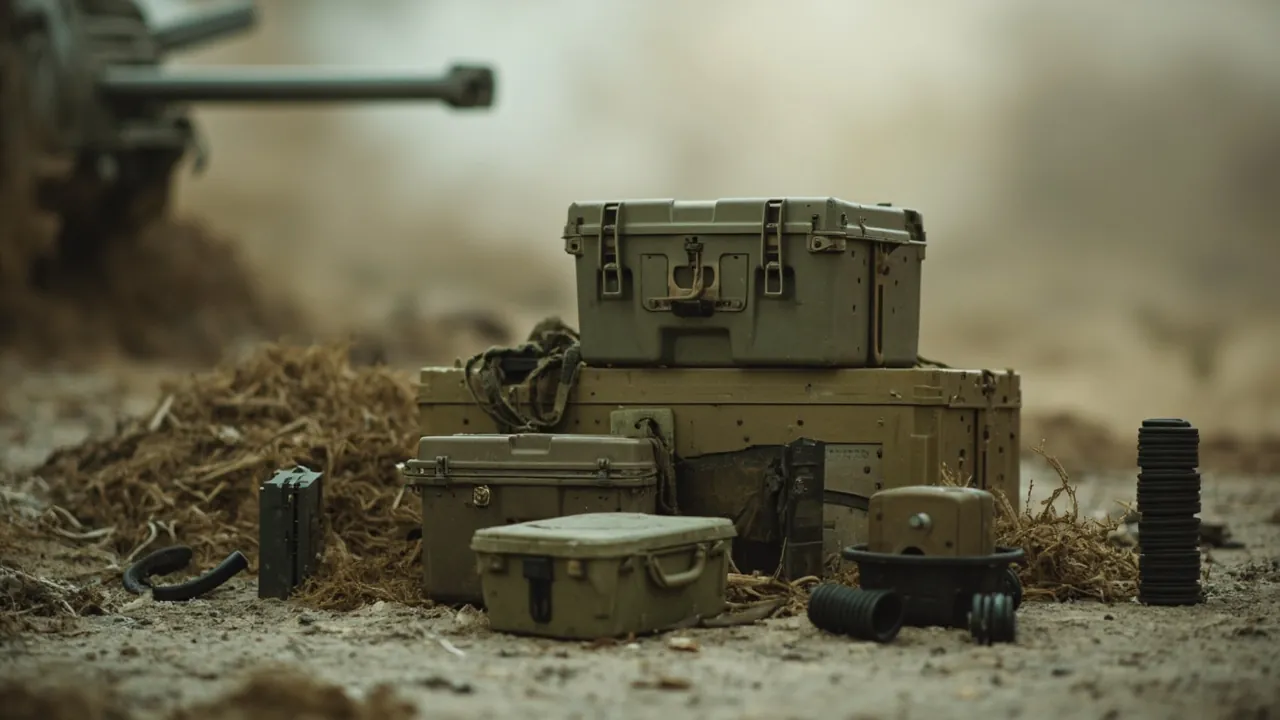
When military, police and security units execute missions, the readiness of their equipment directly determines operational success. The conclusion is clear: a system of purpose-divided military equipment boxes and tactical gear boxes keeps scopes, night-vision devices, radar accessories, power sources, EOD and evidence tools "ready out of the box" under bumping, sand, rain and electromagnetic interference it is the critical node of closed-loop equipment support from depot to position.
The traditional approach of stuffing all gear into a generic case results in crushed precision optics, cross-contaminated evidence and rusted explosion-proof tools. Dedicated protective boxes use zoned positioning, sealed moisture protection, shock-absorbing liners and unified latches to protect individual items while supporting batch standardization. This article covers the box family across military, police and security scenarios to help support departments build a practical configuration standard.
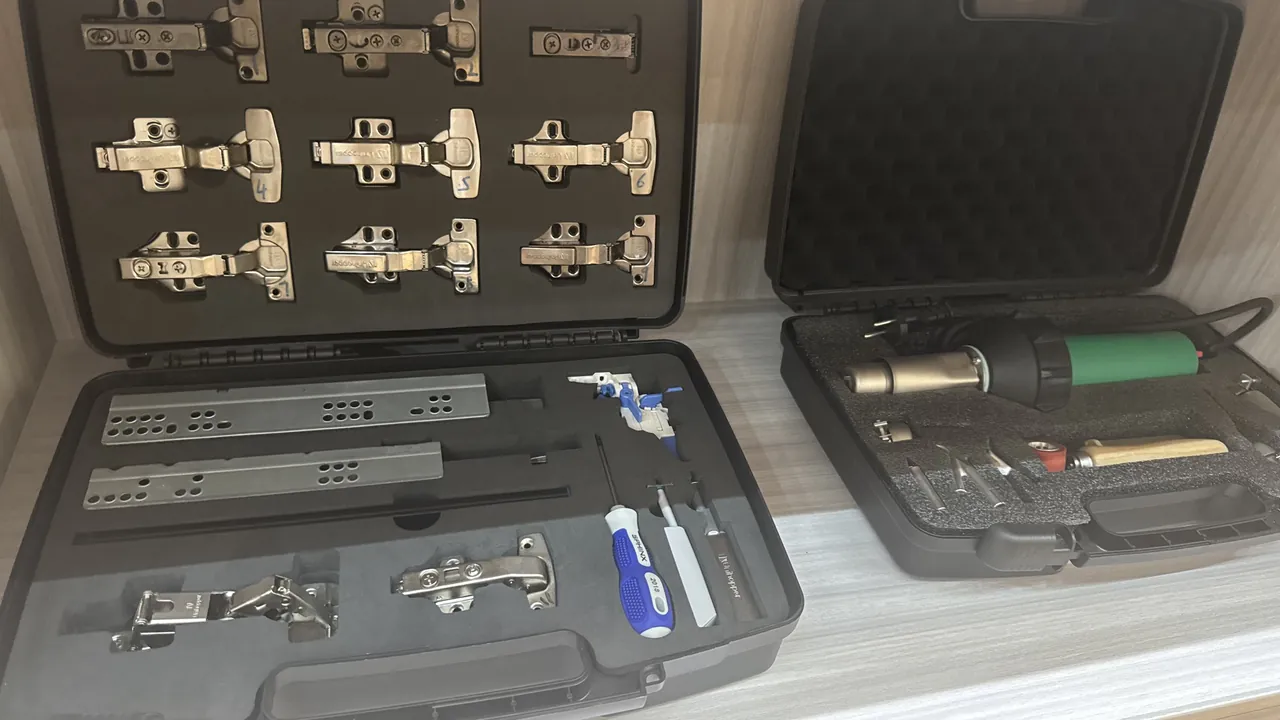
Table of Contents
- Positioning and classification of the police/military box series
- Common design of military and tactical gear boxes
- Optical protection: scope and night-vision boxes
- Radar and power support: radar accessory and military power boxes
- EOD and explosion-proof: EOD, explosion-proof toolkit and inspection boxes
- Police evidence and investigation: evidence, scene, forensic and accident boxes
- Security inspection and engineering: inspection, engineering and surveillance boxes
- Mobile lighting and command: lighting and emergency command boxes
- Ratings and military-standard references
- Material, latch and sealing structure
- Selection parameters and capacity reference
- Custom liner and OEM/ODM
- Field deployment and maintenance
- Transport, storage and batch standardization
Positioning and classification of the police/military box series
Military, police and security equipment can be classified by "precision hazard evidence requirement" into three types: high-precision optical/electronic, hazardous-operation (EOD, explosion-proof) and evidence/forensic. The corresponding boxes range from the general military equipment box to the professional tactical gear box and then to subdivided functional boxes, forming a hierarchical family.
The point of classification is risk isolation: keep delicate optics away from rust-prone metal, evidence away from contaminated tools, and explosion-proof gear away from power sources. In the military protective case selection guide, rifles, ammunition and individual equipment are systematically discussed; this article focuses on the lighter, more modular "box" form.
Rule of thumb: batches of standardized boxes with unified latches and color labels can roughly halve on-site mis-grabbing and cut return time by over 30%.
Common design of military and tactical gear boxes
The military equipment box emphasizes weather resistance and stacking, mostly for base storage and vehicular transport; the tactical gear box emphasizes fast access and light weight, mostly for individual carry and ad-hoc deployment. Their common features include IP67 sealing, EPDM gaskets, compression-resistant shells, pressure-equalization valves (for altitude changes in air transport) and external attachment points for shoulder straps or MOLLE webbing.
Liners generally use high-density EVA or pre-cut foam fixed 1:1 to the equipment contour. For boxes with frequently changed contents, a modular drawer design can be used, each layer for one class of gear.
Optical protection: scope and night-vision boxes
Optics are the most delicate category in the police/military box family. The scope protective box needs thickened cushioning at the body and adjustment turrets, with an independent soft cavity at the objective end to prevent coating scratches; the night-vision equipment box additionally focuses on light blocking and moisture the image intensifier is humidity-sensitive, so the box should include a desiccant chamber and avoid co-location with strong magnets.
In the military electronics protective case system, night-vision and thermal devices are often managed alongside aviation and shipboard equipment, but individually carried night-vision gear is better in an independent small protective box for rapid relocation.
Radar and power support: radar accessory and military power boxes
Field radar arrays have high-value, numerous spare parts and connectors. The radar accessory box uses multi-cell dividers to separate waveguides, RF cables, fuses and tools, avoiding mutual scratching of high-frequency interfaces. The military power box carries battery packs, inverter modules and cables; the focus is insulation isolation and short-circuit prevention the battery cavity must be independent and labeled, never mixed with metal tools.
EOD and explosion-proof: EOD, explosion-proof toolkit and inspection boxes
EOD operations demand extreme reliability. The EOD equipment box transports robotic arms, X-ray probes and cutting tools; the liner must absorb shock and support step-by-step access. The explosion-proof toolkit carries non-sparking tools such as copper alloys; the box itself should be anti-static and flame-retardant. The explosion-proof inspection box targets portable inspection kits at temporary checkpoints, emphasizing light weight and rapid deployment.
Tip: explosion-proof boxes must never be mixed with ordinary metal tools, and the lid interior should list tools and expiry dates for pre-operation checks.
Police evidence and investigation: evidence, scene, forensic and accident boxes
Law-enforcement scenarios strictly require an unbroken evidence chain. The police evidence box and scene investigation box seal traces, biological samples and electronic data; liners must prevent odor crossover and contamination. The forensic evidence box further requires sterile separation and temperature-zone labels. The accident investigation box integrates surveying, lighting and recording gear for traffic and similar scene investigations.
In the emergency command comms case system, the investigation box and command box often deploy together: the former collects, the latter aggregates, forming a "collectreport" closed loop.
Security inspection and engineering: inspection, engineering and surveillance boxes
Both fixed and mobile inspection rely on reliable carriers. The security inspection box stores portable gear such as metal detection and explosive trace detection; the security engineering box serves installers' screws, connectors and meters; the video surveillance box protects cameras, lenses and NVR modules from moisture and shock in transit. All three emphasize interface protection and cable zoning.
Mobile lighting and command: lighting and emergency command boxes
Night and power-outage scenarios need lighting and command. The mobile lighting box integrates strong flashlights, headlamps and spare batteries, emphasizing an independent battery cavity and fast access. The emergency command box carries communication terminals, map boards and command documents the "minimum deployable unit" of a temporary field command post.
Ratings and military-standard references
The credibility of police/military boxes comes from citable standards:
- MIL-STD-810H: validates drop, random vibration, humidity-heat and salt fog; the main basis for military equipment box reliability.
- IEC 60529 / GB/T 4208: IP rating, commonly IP67.
- ISTA 3 series: long-haul transport packaging testing.
- UL 94: shell flammability, recommended above V-2.
- IK rating (IEC 62262): impact resistance, IK08 suits field use.
| Equipment category | Recommended IP | Reference standard | Key requirement |
|---|---|---|---|
| --- | --- | --- | --- |
| Optical / electronic | IP67 | MIL-STD-810H | Moisture, anti-vibration |
| EOD / explosion-proof | IP65 | ISTA 3E | Anti-static, flame retardant |
| Evidence / forensic | IP67 | GB/T 4208 | Anti-contamination, anti-odor |
| Lighting / command | IP54 | MIL-STD-810H | Light, fast access |
Material, latch and sealing structure
Shells are mainly PP, ABS and PC alloys; military/police scenarios prefer high-rigidity thickened PC alloy. Latches come in press, butterfly and combination types; batch issue should unify the model for key/tool commonality. Sealing uses EPDM foam gaskets, more weather-resistant than ordinary PVC; high-altitude air-transport boxes should add a pressure-equalization valve to prevent gasket separation from pressure difference.
Selection parameters and capacity reference
| Box type | Typical clearance (mm) | Suggested material | Adapted equipment |
|---|---|---|---|
| --- | --- | --- | --- |
| Scope protective box | 400×120×120 | PC alloy | Sniper / observation scope |
| Night-vision equipment box | 250×180×120 | PP+ABS | Individual night vision |
| Radar accessory box | 500×350×200 | PP+ABS | RF spares |
| Military power box | 400×300×200 | PC alloy | Battery / inverter |
| EOD equipment box | 600×400×250 | PC alloy | Robotic arm / probe |
| Police evidence box | 350×250×150 | PP+ABS | Evidence / sample |
Custom liner and OEM/ODM
Irregular equipment and instrument sets are best customized. JUNZHJIA supports 1:1 liners from physical samples or 3D models, can silk-screen unit logos, asset numbers and equipment lists on the lid, and provides full-chain OEM/ODM (tooling, injection, liner, packaging) with documentation (IP, drop, flame, salt-fog). In the supporting of the explosion-proof inspection toolkit, custom boxes can unify appearance with standard security boxes for systematic support.
Field deployment and maintenance
- Before deployment, check the lid list; confirm gear complete and desiccant valid.
- Periodically check the gasket for embedded sand and clean promptly.
- Explosion-proof and power boxes must not mix metal tools; lock the independent battery cavity.
- Clean evidence boxes by contamination level after use to avoid cross-contamination.
- Maintain latches and hinges with silicone grease periodically.
Transport, storage and batch standardization
Batch standardization recommends "branch color label + asset number": for example desert color for reconnaissance, bright orange for EOD. Transport follows ISTA 3 validated stacking, single-layer load not exceeding 70% of nominal. Storage relative humidity 40%–60%; boxes exposed to salt fog should be rinsed and dried periodically.
JUNZHJIA provides wholesale, agency and OEM/ODM to global B2B customers, delivering consistent quality control and documentation per batch to support the standardized support of large security teams.
Daily inspection and lifecycle management of the boxes
A dedicated protective box is not "buy it, use it, replace it when broken"; its life and protection depend on daily inspection. A three-tier mechanism of "before dispatch after return quarterly check" is recommended. Before dispatch, check whether the gasket embeds sand, whether latches move smoothly and whether the desiccant is valid. After return, check whether the liner is deformed and whether equipment leaks oil. The quarterly check does seal sampling and rinses salt-fog-exposed parts. When the gasket hardens and cracks, the liner collapses or the latch loosens, replace promptly to avoid small damage causing large loss.
In the coordinated system of the explosion-proof inspection toolkit and the emergency command comms case, box lifecycle management should enter the same ledger, recording inspection and repair by asset number. For equipment already filed in the military protective case selection guide, the box replacement cycle should align with the host maintenance cycle, achieving "inspect and replace together."
Rule of thumb: units running the three-tier inspection can extend average box service life by about 30%–50% and significantly reduce moisture accidents caused by seal failure.
A practical trap is treating the box as maintenance-free. Field teams sometimes ignore a slightly stiff latch or a discolored desiccant card until a mission fails. The fix is ownership: assign each box to a custodian, log every open/close in the asset system, and trigger a conditional check after any drop or immersion event. The hardware toolbox series applies the same custody logic to tools, and aligning the two systems prevents the common gap where the tool is tracked but its case is not. For ESD-sensitive contents, the anti-static component box shows how liner resistance should also be part of the inspection, a principle that extends to signal and power boxes stored near strong fields.
Key clauses in the procurement technical agreement
In volume procurement of police/military security boxes, the technical agreement is the quality backstop. At least the following clauses should be locked: first, standards clause clearly state IP, IK, MIL-STD-810H, UL 94 and their referenced versions; second, structure clause box type, material, wall thickness, latch model, liner density and silk-screen must match the sealed sample; third, document clause provide IP, drop, salt-fog and flame proofs per batch; fourth, sampling clause agree on 3%–5% sampling ratio and non-conformance handling; fifth, traceability clause each box carries a unique asset code transferable across units.
For brand owners and large security teams, JUNZHJIA can provide OEM/ODM standardized supply across the full chain from tooling, injection, liner to packaging, with per-batch test documents, easing the inclusion of the military equipment box and tactical gear box into global support. The agreement should reserve a replenishment clause for spares (gaskets, latches, liners) to avoid a single-point failure sinking the whole box. The electronics box series and precision instrument case illustrate how the same agreement language scales to other product families without renegotiating basics.
| Agreement clause | Locked content | Acceptance basis |
|---|---|---|
| --- | --- | --- |
| Standards | IP / IK / MIL / UL and version | Third-party report |
| Structure | Box type / material / latch / liner | Sample comparison |
| Documents | Test and material proofs | Per-batch delivery |
| Sampling | Ratio and re-inspection | Inbound inspection |
| Traceability | Asset code | Scan-verifiable |
Beyond the table, buyers should also specify environmental exposure in the agreement: if boxes serve coastal or tropical bases, the salt-fog duration and humidity-cycle counts must be explicit, not vague "weather resistant" language. Similarly, the drop height and number of drops should reference MIL-STD-810H procedure numbers so suppliers cannot substitute a lighter test. The electrician toolkit and communication test case families benefit from the same precision when procured alongside, keeping the whole kit comparable. Finally, require the supplier to retain a sealed reference sample for the contract term; when a field box is disputed, the sample is the arbiter, removing the he-said-she-said that otherwise delays mission readiness.
Sizing the box to the mission profile
A common procurement error is buying one "standard" box for every role. The military equipment box, tactical gear box and the many subdivided boxes serve different stress profiles, and forcing one size creates either rattling or wasted volume. The practical method is to profile the mission first: how far is the carry, what is the dominant threat (dust, water, shock, EMI), and how fast must the operator open it. A base-storage box can be larger and heavier; a dismounted tactical box must be light and open in one motion. The hardware toolbox series shows the same logic for tool roles, and the electrician toolkit applies it to instrument roles.
Once the profile is clear, size the internal cavity to the largest single item plus a 10–15 mm clearance on each axis, then size accessory cavities to the rest. Do not size to the total volume of all items stacked; that guarantees pressure on the largest item. The precision instrument case is the extreme example, where even a few millimeters of pressure on a measuring face changes the reading. For boxes that must sit inside a larger transit case, also check the outer nesting dimension so the inner box does not become the bottleneck of the whole kit.
| Mission profile | Priority feature | Avoid |
|---|---|---|
| --- | --- | --- |
| Base storage | Capacity, stacking | Over-weight for carry |
| Dismounted patrol | Light, fast open | Bulky latches |
| Vehicle transit | Shock, securing | Loose interior |
| EMI environment | Conductive path | Assuming shield |
Another sizing factor is future growth. A box bought for today's kit often must absorb a new accessory next year; leaving one spare cavity or a modular insert avoids a second purchase. The esd component box and electronics box series both support modular inserts that grow with the contents, a pattern worth copying for security boxes too.
Storage, stacking and transport discipline
Even a perfectly specified box fails if storage and transport are careless. Stacking should respect the rated load: the ISTA 3 validated stacking assumes a single-layer load at or below 70% of nominal, and exceeding it risks creeping collapse during long transit. Pallets should be wrapped and edge-protected, and boxes with pressure-equalization valves must be oriented so the valve is not blocked. The power-grid inspection case and rail-transit signal case follow the same palletizing rules when shipped to sites.
Warehousing discipline matters as much as shipping. Keep relative humidity at 40%–60%, away from direct sun that ages PP and PS, and rotate stock so the oldest boxes deploy first. Salt-fog-exposed boxes common near coastal bases should be rinsed and dried before storage to preserve the EPDM gasket. The road-bridge detection case uses the identical routine for tunnel-humid environments, confirming that the discipline transfers across domains.
Finally, train the user. A box with a perfect spec still fails when a soldier props it open with a multitool or stores batteries inside for months. A short usage card silk-screened on the lid, referencing the inspection and agreement clauses above, closes the loop between procurement and practice. The emergency command comms case and security inspection case benefit from the same lid card, turning three separate purchases into one coherent field system.
In real-world deployments, selecting Military Equipment Boxes & Tactical Gear Boxes: Police/Military Case Series should never reduce to picking a box by its outer dimensions. These units face combined hazards of dust, moisture, vibration and temperature swing, so dust/water protection, shock resistance and foam retention must be specified together to avoid costly rework after delivery.
From a supply-chain perspective, categories like military equipment boxes tactical gear police case series are better served by batch customization than scattered purchases. A volume program locks case color, silkscreen identity, custom-cut foam and seal slots, keeping equipment consistent across sites and cutting the cost of non-interchangeable spares.
Standards give the acceptance its backbone. Military Equipment Boxes & Tactical Gear Boxes: Police/Military Case Series should map to GB/T 4208 (IEC 60529) for the IP code, MIL-STD-810H for drop and vibration methods, and the ISTA transit series; where flammability matters, add the UL94 rating. Put the standard numbers in the contract so vendors cannot substitute claims for test reports.
On materials, modified PP, ABS and PC each trade off differently. PP brings toughness and low-temperature resistance for large cases; ABS is rigid but brittle when cold; PC excels in impact and clear windows. For military equipment boxes tactical gear police case series, a one-piece shell with neoprene or EPDM foam gasket tends to age more predictably under salt spray and UV.
Foam is what turns a generic case into a purpose-built one. CNC-cut EVA, layered foam and adjustable dividers let the device sit with zero clearance, so it cannot shift under shock or drop. For Military Equipment Boxes & Tactical Gear Boxes: Police/Military Case Series, custom foam also shortens field setup and re-stow time, and the investment is usually far below a single instrument repair.
Maintenance is routinely overlooked. After each use, wipe standing water and salt from the lid, and on coastal sites rinse the gasket with fresh water then air-dry; periodically check latches and hinges for looseness and the gasket for cracks or loss of spring. Stocking latches and gaskets at about 3% of case count contains sudden failures.
Test documentation is the lever for traceability. Ask the supplier to ship material statements, IP summaries, drop and vibration records, and batch numbers for gasket, latch and hinge. For military equipment boxes tactical gear police case series, also keep a seal-status template for handover and audit, closing the loop from order to operation.
The procurement spec should name five hard metrics: target IP grade, the matching shock standard, flammability grade, foam form and the identification/seal position. Make sample-case acceptance a contract milestone, lock process and materials on the sample, then inspect volume lots to the same standard with per-batch files to keep lot-to-lot variance in check.
On site, traceable seal status often matters more than the case itself. Build a one-case-one-record habit listing the device inventory, calibration validity and seal state, checked before every use. This supports availability and gives closed-loop evidence for audits and accountability, especially at scale.
JUNZHJIA typically offers OEM/ODM and device-shaped foam tooling for Military Equipment Boxes & Tactical Gear Boxes: Police/Military Case Series, and can deliver per-batch test-file packages covering material flammability, sealing and drop, so buyers can call them up during supplier review and annual re-inspection.
Temperature swing is often underestimated. If Military Equipment Boxes & Tactical Gear Boxes: Police/Military Case Series is used in freezing or hot environments, confirm the material brittle-point and heat-deflection temperatures to avoid cold cracking or heat softening. For military equipment boxes tactical gear police case series, an insulated wall or phase-change buffer can keep the interior steadier during short transits.
Stacking and transit design affect field efficiency. The lid should carry anti-slip ribs or locating bosses so stacked cases will not slide sideways, and latches must not pop open under stacked load. For Military Equipment Boxes & Tactical Gear Boxes: Police/Military Case Series, calculate gross weight against the container limit and secure with straps or a cage to prevent latch fatigue from in-vehicle rolling.
ESD and EMC are implicit requirements for electronic equipment cases. For sensitive devices, use anti-static foam and consider a conductive layer or metallized film in the wall for shielding that lowers cross-talk with other radios. For military equipment boxes tactical gear police case series, apply these only as the device manual's ESD/EMC spec demands, avoiding blind over-build.
Cost should not be judged on unit price alone. A case below about 1% of the device value usually means cut materials and seals, and the long-run repair and downtime cost is higher. For Military Equipment Boxes & Tactical Gear Boxes: Police/Military Case Series, use a whole-life cost view that counts failure rate, spare availability and seal-verification time to find the option that is truly cheaper.
A smooth customization flow protects the lead time. The ideal path is: provide the device list and 3D data, the supplier returns a foam layout and a sample case, and volume runs start after seal verification. For Military Equipment Boxes & Tactical Gear Boxes: Police/Military Case Series, writing the foam tooling and sample milestone into the contract sharply reduces field rework and repeated changes.
A scenario-based grade map cuts selection guesswork. For military equipment boxes tactical gear police case series, build a table linking scenario to IP grade and liner form so apron, warehouse and channel environments each map to a case, letting front-line crews pick by the table and lowering the risk of water entry or calibration drift from misuse.
In real-world deployments, selecting Military Equipment Boxes & Tactical Gear Boxes: Police/Military Case Series should never reduce to picking a box by its outer dimensions. These units face combined hazards of dust, moisture, vibration and temperature swing, so dust/water protection, shock resistance and foam retention must be specified together to avoid costly rework after delivery.
From a supply-chain perspective, categories like military equipment boxes tactical gear police case series are better served by batch customization than scattered purchases. A volume program locks case color, silkscreen identity, custom-cut foam and seal slots, keeping equipment consistent across sites and cutting the cost of non-interchangeable spares.
Standards give the acceptance its backbone. Military Equipment Boxes & Tactical Gear Boxes: Police/Military Case Series should map to GB/T 4208 (IEC 60529) for the IP code, MIL-STD-810H for drop and vibration methods, and the ISTA transit series; where flammability matters, add the UL94 rating. Put the standard numbers in the contract so vendors cannot substitute claims for test reports.
On materials, modified PP, ABS and PC each trade off differently. PP brings toughness and low-temperature resistance for large cases; ABS is rigid but brittle when cold; PC excels in impact and clear windows. For military equipment boxes tactical gear police case series, a one-piece shell with neoprene or EPDM foam gasket tends to age more predictably under salt spray and UV.
Foam is what turns a generic case into a purpose-built one. CNC-cut EVA, layered foam and adjustable dividers let the device sit with zero clearance, so it cannot shift under shock or drop. For Military Equipment Boxes & Tactical Gear Boxes: Police/Military Case Series, custom foam also shortens field setup and re-stow time, and the investment is usually far below a single instrument repair.
Maintenance is routinely overlooked. After each use, wipe standing water and salt from the lid, and on coastal sites rinse the gasket with fresh water then air-dry; periodically check latches and hinges for looseness and the gasket for cracks or loss of spring. Stocking latches and gaskets at about 3% of case count contains sudden failures.
FAQ
Q: What is the real difference between a military equipment box and a tactical gear box? A: The core difference is where and how they are used. The military equipment box is used for base storage, vehicular transport and long-haul movement, emphasizing weather resistance, stacking and high protection, with thicker shells and larger capacity. The tactical gear box targets individual carry and ad-hoc deployment, emphasizing light weight, fast open/close and attachment expansion (such as MOLLE webbing and shoulder straps), with more compact capacity. They share the same basics: IP67 sealing, EPDM gaskets and shock liners. Define "mounted on the vehicle or carried by the person" first, then decide the box type, to avoid using a transport case as an individual box and overburdening the operator.
Q: Why does a scope protective box need a separate soft cavity? A: The objective coating and adjustment turrets are the most scratch- and bump-sensitive parts. Even tiny displacement in transit may let the body rub the wall, damaging the anti-reflection coating or shifting zero. The soft cavity forms independent buffering at the objective end, and the turret position uses thickened EVA to "suspend" the body. Also, store the scope vertically or as specified to avoid long-term gravity on the adjustment mechanism. High-value tactical scopes should use thickened PC-alloy boxes with pressure-equalization valves for air-transport pressure.
Q: How to make night-vision equipment box moisture protection adequate? A: The image intensifier and microchannel plate are extremely humidity-sensitive; moisture causes noise increase and even permanent damage. The night-vision box should reserve a desiccant chamber in the liner and place a humidity indicator card for visual judgment; the box itself must reach IP67 with a weather-resistant gasket. During transport, never co-locate with strong magnets to avoid magnetic bias; long-term storage should keep relative humidity at 40%–60% with periodic desiccant replacement. If condensation appears, dry the lid open and confirm dryness before storing.
Q: Can an EOD equipment box share with a normal toolbox? A: Absolutely not. EOD gear is high-value and life-critical; mixing ordinary metal tools not only scratches connectors and risks magnetization but may also cause grabbing the wrong tool in an emergency. The EOD box should use independent shock liners zoned by disposal steps (detectcuttransfer), with a list and expiry on the lid. The accompanying explosion-proof toolkit and explosion-proof inspection box should also be managed separately, with anti-static and flame-retardant box bodies.
Q: How does a police evidence box protect the evidence chain? A: The key is isolation, labeling and traceability. The evidence-box liner must have odor-proof, contamination-proof dividers, with biological samples, traces and electronic data fixed in separate cells; each cell labeled with name and validity. Clean by contamination level after use to avoid cross-contamination; the lid can silk-screen unit logo and asset number and use seals to form a closed loop. The forensic evidence box also needs sterile separation and temperature-zone labels. With the division of scene and accident investigation boxes, the whole "collectsealsubmit" process is traceable.
Q: What goes wrong most often with video surveillance boxes in transit? A: The most common are lens mold and loose interfaces. Cameras and lenses are humidity-sensitive; if the box seal fails or desiccant expires, the glass grows mold. NVR modules and disks fear continuous vibration causing loose connectors or bad sectors. The video surveillance box should add an independent soft cavity at the lens, include desiccant, and fix disks/modules with EVA card slots to avoid displacement. Screws and connectors in the security engineering box should be zoned from instruments to avoid metal pressing equipment.
Q: How to store batteries safely in a mobile lighting box? A: Batteries must be fully separated from lamps and metal tools, with the battery cavity independently locked and warning-labeled, never mixed with keys or cables to prevent short circuits. Spare cells should have insulating sleeves; a fire-isolation layer inside the box is even better. Access follows "take lamp first, battery later" to avoid accidental contact while moving. For long storage, charge to the recommended level and inspect periodically to prevent leakage corroding the liner.
Q: Is the emergency command box a "minimum command post"? A: That is a fair understanding. The emergency command box carries communication terminals, map boards, command documents and backup power the minimum deployable unit when no fixed command facility exists. It forms a "portablevehicular" two-tier with the emergency command comms case: the box for individuals or small teams forward, the case for the vehicular main node. The box should zone "commsdocumentslighting" and reserve interfaces to other investigation and evidence boxes, realizing the collectaggregatereport loop.
Q: What pitfalls should batch standardization avoid? A: The easiest to overlook is "model drift." If different batches do not fix latch model, color, liner density and gasket material, the field will see non-common keys, uneven stacking and inconsistent sealing. Lock these parameters in the technical agreement, require the supplier to provide IP, drop, flame and salt-fog documents per batch, and agree on a sampling ratio. Establish asset-number and color-label rules in advance so every box is traceable and quickly identifiable.
Conclusion and Further Reading
From the military equipment box and tactical gear box to the subdivided boxes for scopes, night vision, radar, power, EOD, explosion-proof, evidence, investigation, forensic, accident, inspection, security, surveillance, lighting and command, military/police/security equipment support is moving toward a system of "one item one box, every box traceable." Isolate risk inside the box and standardize management across batches that is the key from depot to position.
Related Reading