

Power-grid O&M spans transmission, substation, distribution, and consumption, with detection and maintenance equipment working long-term in fields, at height, in energized environments, and through bumpy transport. The core conclusion: the baseline of a power-grid inspection case is "electrical safety above all" - the case itself must not conduct, must not generate static, must not break instrument accuracy, while balancing waterproof, dustproof, and quick access. This article covers four families - power-line patrol cases, substation maintenance toolkits, distribution-room test cases, and power detection equipment cases - explaining ingress grades, insulation and anti-static, liners, and field-operation points.
The pain point of grid equipment is "precision instrument plus high-voltage environment" coexisting: infrared thermal, partial-discharge, and relay-protection testers are valuable and vibration-fragile; meanwhile the site has strong electric fields and induced current, and a conducting or static-interfering case harms both equipment and personnel. Selection must run two lines - protect instrument and protect person. The following expands item by item.
Table of Contents
- Risks and Protection Baseline of Power-Grid O&M Cases
- Field and Height Response of Power-Line Patrol Cases
- Insulation and Anti-Miscontact of Substation Maintenance Toolkits
- Compact and Dustproof Distribution-Room Test Cases
- Precision Protection of Power Detection Equipment Cases
- Protection and Electrical Standards: IP, Insulation and EMC
- Materials and Anti-Static, Insulation Treatment
- Liners and Instrument Positioning
- Cable Management and Cable-Gland Sealing
- Temperature-Humidity and Data Retention
- Field Operation and Transfer Flow
- Test Documentation and Certification
- OEM/ODM and Procurement Advice
- Common Selection Mistakes
Risks and Protection Baseline of Power-Grid O&M Cases
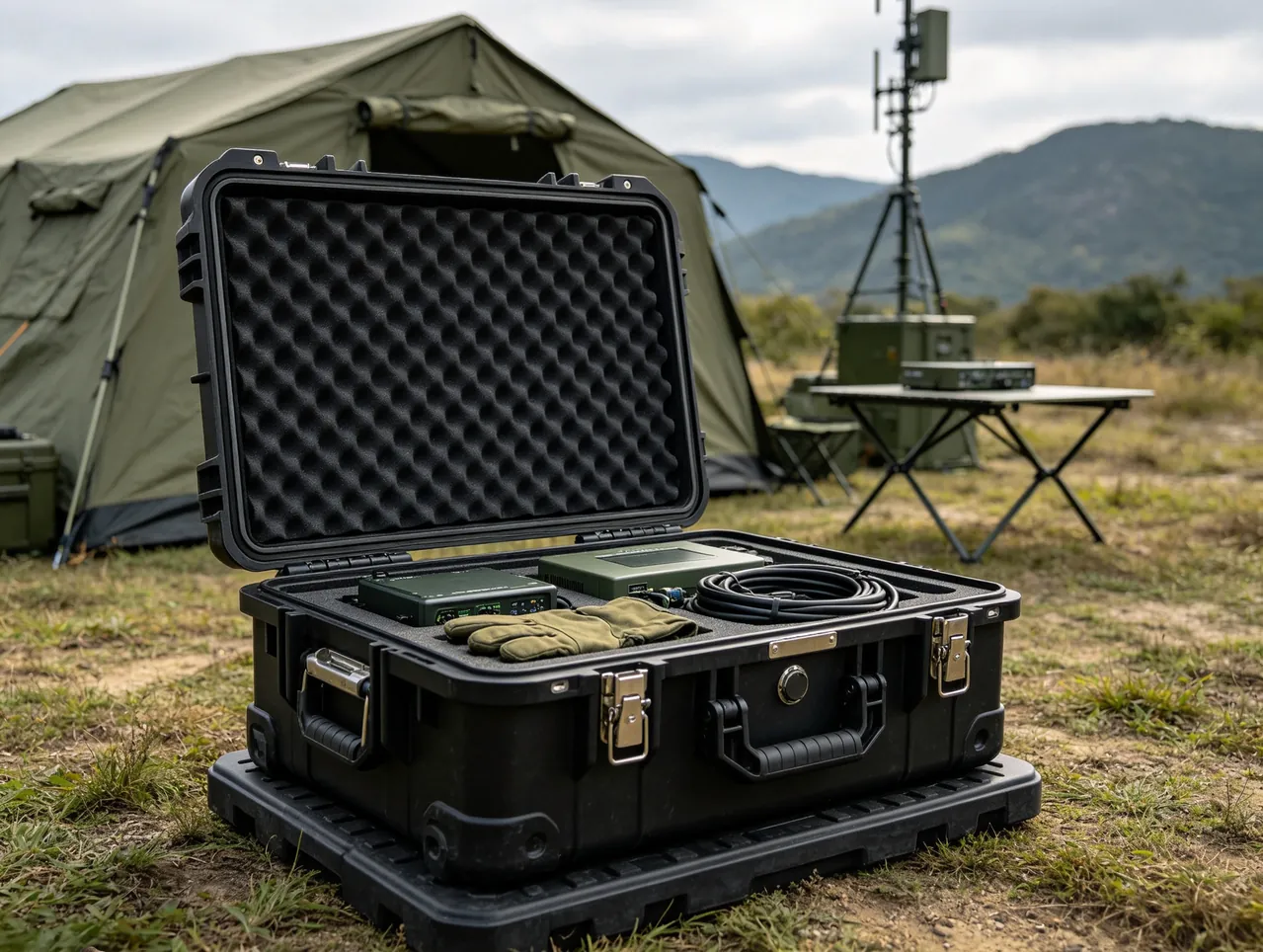
The first risk at grid sites is electric shock and induced current. A conducting or static case in energized-area work may form a discharge path through tools. The second risk is instrument inaccuracy: infrared, partial-discharge, and relay-protection precision devices deviate from calibration under vibration, moisture, or EMI. The third is drop and loss: open cases at height and in fields, parts scatter hard to find.
The protection baseline locks three points: case and accessories non-conducting or reliably insulated (shell engineering plastic, metal parts insulated coating), anti-static to avoid sampling interference (surface resistance 10^4-10^11 ohm), sealing controlled (IP65-IP67 dust-water). Related energized-environment protection references the anti-static thinking in Explosion-Proof Equipment Cases.
Before purchase, define the work voltage grade and whether energized, then set case insulation and grounding. For stations with fire fighting, cases should coordinate storage with Fire-Fighting Equipment Cases & Rescue Forcible-Entry Kits.
Field and Height Response of Power-Line Patrol Cases
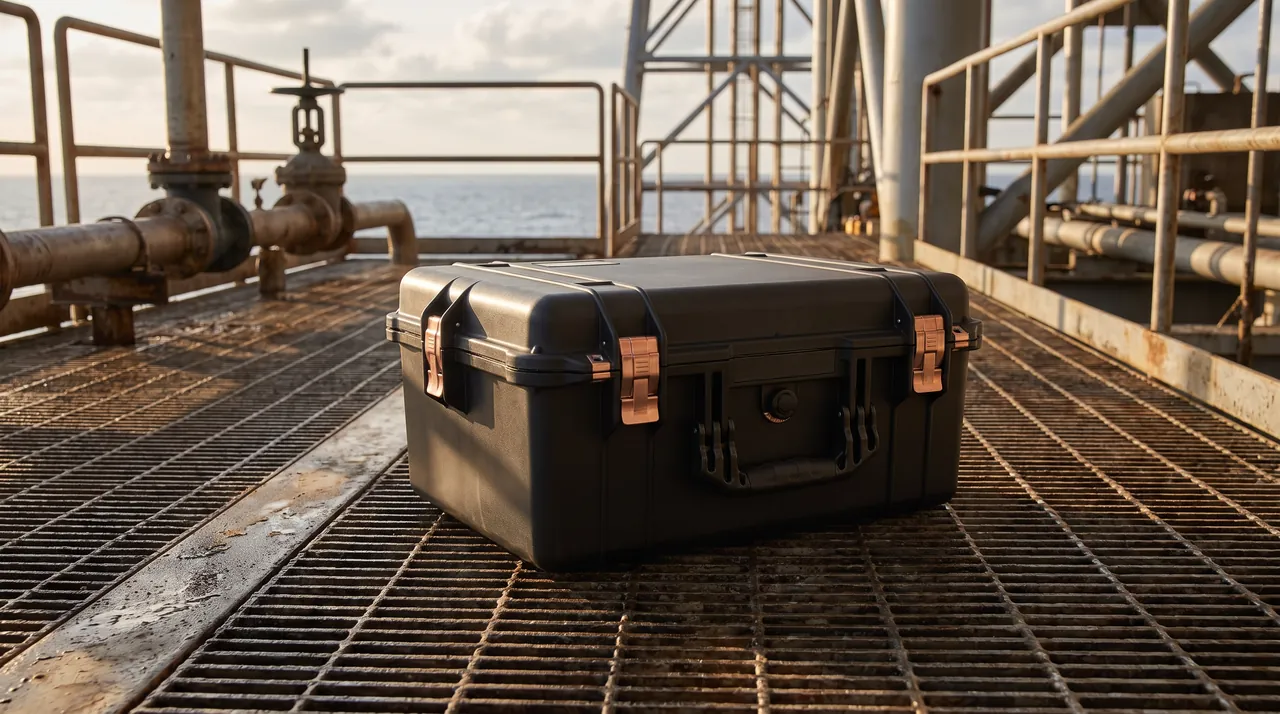
Power-line patrol walks or rides along lines through mountains, farmland, roads, and towers. The case needs lightness and shoulder strap; liner with independent slots for infrared thermal imager, partial-discharge sensor, rangefinder. Height work cases should tether anti-drop, latches with anti-misopen to avoid wind-vibration pop and falling objects.
Ingress IP65 covers most fields, rain combat IP67. Case material weather and UV resistant, metal parts dacromet or 316 stainless, salt-fog experience value 96-480 h. Transport follows MIL-STD-810H 514.8 random vibration. For multi-instrument patrol, compartment logic references the quick-access design in Detection Instrument Protective Cases.
JUNZHJIA can die-cut liners by patrol instrument list and integrate test leads and label-machine accessories, reducing on-site assembly. For cross-region teams, RFID or QR on the case aids asset tracing.
Insulation and Anti-Miscontact of Substation Maintenance Toolkits
Substations have dense equipment and near energized bodies; toolkits must insulate and prevent miscontact. Shell uses non-conducting modified PP, metal latches insulated-coated or engineering plastic; tools (wrench, screwdriver) recommend insulated grips to avoid touching energized bodies. Liner layers, power and manual tools zoned, calibrators separate slot.
Ingress IP65, outdoor terminal-box work IP67. Case with viewing window to see internal status lights, latches anti-misopen. For relay-protection and measurement calibration, related electrical testing references the EMC thinking in Communication Equipment Cases & Network/Radio Tester Cases. JUNZHJIA can custom-cut insulated liners and accessories by substation tool list, providing ESD and flame-retardant records.
In real-world deployment of the protective case, sealing performance must be verified against GB/T 4208, which is equivalent to IEC 60529, with IP67 as the common target: fully dust-tight and able to survive immersion at 1 m depth for 30 minutes. For units that are airdropped, vehicle-mounted, or shipboard-transported, it is advisable to add MIL-STD-810H drop (Method 516.8) and random vibration (Method 514.8) to confirm environmental adaptability, and to require a formal test report with a defined sampling plan at acceptance rather than relying on the manufacturer's claimed rating. JUNZHJIA can supply the corresponding documentation package for batch OEM programs. Related approaches are described in the equipment case program. Flame retardancy and corrosion resistance are hard thresholds for the enclosure in harsh conditions. The shell is preferably modified PP, ABS, or PC and should be rated under UL94, typically targeting V-0 or V-1; salt-fog and damp-heat environments are tested per GB/T 10125 neutral salt spray, with metal parts preferably 316 stainless steel or corrosion-resistant engineering plastics. For this class of equipment case, the service life of latches, hinges, and gaskets under corrosion often decides the usable years of the whole case earlier than the shell itself does. Related approaches are described in the equipment case program. From a maintenance-support angle, the case should be field-repairable. The liner is custom-cut to the tool or spare list, with edges and pressure parts in separate pockets; common latches and gaskets are made field-replaceable. For this case, attach a concise maintenance card: inspect gasket, lubricate latch, dehumidify liner every 3 to 6 months; strengthen corrosion control in salt fog; rotate stock to stay fresh, sharing standardized upkeep with similar equipment to keep missions uninterrupted. Related approaches are described in the equipment case program. On standards mutual recognition, export or defense-trade cases often need parallel standards: domestic IP per GB/T 4208, international IP per IEC 60529 equivalently; environmental testing per MIL-STD-810H or associated GJB methods; flame per UL94 or the corresponding national standard. For the buyer, requiring readable test reports with sampling plans is more valuable than a single pass/fail verdict and lets the same evidence chain be reused across multiple national acceptances. Related approaches are described in the equipment case program.
Compact and Dustproof Distribution-Room Test Cases
Distribution rooms have limited space and complex dust and EMI; test cases stress compact and dustproof. Typical load: multimeter, clamp meter, insulation resistance tester, thermometer. Liner lays "common on top, meters below", meter positions hard support anti-vibration. Ingress IP65, heavy-dust zones IP66.
Case should stack, handle and shoulder strap dual mode, reserve QR asset plate. For data-recording devices, case can set moisture-proof compartment. Related low-voltage meter protection references the portable thinking in Multimeter Toolkits & Clamp-Meter Protective Cases. JUNZHJIA supports liner and accessory integration by distribution-room list, suitable for batch supply-station issue.
Transport fixation is the easily-overlooked step. When cases are stacked, anti-slip ribs and locating bosses keep the stack stable; single-stack height limits and counterweights must be stated in the specification. Vehicle transport fixes the case with webbing through the lift-ring so it does not shift during hard braking or cornering. ISTA procedures (e.g., ISTA 2A/3A) simulate accumulated damage from road and intermodal shipping and serve as a useful reference method before the equipment case leaves the factory, markedly reducing field open-box breakage rates. Related approaches are described in the equipment case program. On risk control, configuration errors of the case are costly: mixed weapons and ammunition, sample leakage, or instrument shock damage all translate directly into mission failure. For this case, run a failure-mode analysis (FMEA thinking) before design freeze to identify high risks such as seal failure, fixation loosening, temperature drift, and EMC interference, and add redundancy; before delivery, use ISTA/MIL-STD sampling verification so every batch falls within an acceptable quality interval rather than depending on one sample case passing. Related approaches are described in the equipment case program.
Precision Protection of Power Detection Equipment Cases
Power detection equipment (partial-discharge, relay-protection tester, power-quality analyzer) is valuable, multi-channel, vibration and moisture fragile. Liner layers: host bottom hard support, module independent slot, probe and cable independent routing groove. Cushioning follows MIL-STD-810H 514.8 ensuring zero shift under vehicle bumps. Humidity card and desiccant judge condensation.
For EMC, sensitive acquisition under strong substation interference needs shielding: conductive cloth or metallized foam liner forms continuous shielding, seams conductive gasket, lead exit filtered cable gland. Shielding effectiveness needs third-party attenuation data in files. JUNZHJIA can custom-cut liners and sealed glands by detection module, providing ESD and flame-retardant records for acceptance. Related shielding design references IT Carry Cases.
Cushioning and liner are the core of protecting precision contents. High-density EVA is custom-cut to the three-dimensional profile of the equipment; heavy items use contoured pockets plus straps, optics get independent shock-isolated compartments, and tool edges get separate cut-resistant pockets. The buffering design should address both impact (IK-rated 0.5 to 20 J) and long-term compression creep. JUNZHJIA can produce custom-cut liners from the equipment list so every item is individually located and stays put when opened or closed, with modular dividers replaceable in the field. Related approaches are described in the equipment case program. In real-world deployment of the protective case, sealing performance must be verified against GB/T 4208, which is equivalent to IEC 60529, with IP67 as the common target: fully dust-tight and able to survive immersion at 1 m depth for 30 minutes. For units that are airdropped, vehicle-mounted, or shipboard-transported, it is advisable to add MIL-STD-810H drop (Method 516.8) and random vibration (Method 514.8) to confirm environmental adaptability, and to require a formal test report with a defined sampling plan at acceptance rather than relying on the manufacturer's claimed rating. JUNZHJIA can supply the corresponding documentation package for batch OEM programs. Related approaches are described in the equipment case program.
Protection and Electrical Standards: IP, Insulation and EMC
Ingress grade uses IP (IEC 60529 / GB/T 4208), field IP65, rain IP67, heavy dust IP66. Insulation and anti-static cite GB/T 32304 / IEC 61340, shell surface resistance 10^4-10^11 ohm anti-static; case material high volume resistance, non-conducting. EMC cites GB/T 17626 series and YY 0505 style thinking, shielding effectiveness by scenario.
The table gives common device grading:
| Device / Scenario | Suggested IP | Insulation / ESD | Transport |
|---|---|---|---|
| --- | --- | --- | --- |
| Power-line patrol | IP65/IP67 | Anti-static | MIL-STD-810H 514.8 |
| Substation tool | IP65/IP67 | Insulation + anti-static | ISTA 3A |
| Distribution test | IP65/IP66 | Anti-static | Vehicle random vibration |
| Power detection | IP65 | Shielding + anti-static | MIL-STD-810H 514.8 |
Grading should enter acceptance, avoiding verbal debate. More standard explanation in Industrial Equipment Cases.
Temperature control and seal-failure analysis matter greatly. Gaskets are preferably foamed silicone or EPDM, retaining elasticity from -40 deg C to +80 deg C; extreme ranges require high-low temperature cycling (MIL-STD-810H Methods 502.7/501.7) to confirm no embrittlement or leakage. For cases holding electronics, reagents, or samples, reserve a slot for a temperature-humidity data logger so the whole transit is recorded and traceable at goods receipt, supporting accountability and acceptance evidence. Related approaches are described in the equipment case program. Flame retardancy and corrosion resistance are hard thresholds for the enclosure in harsh conditions. The shell is preferably modified PP, ABS, or PC and should be rated under UL94, typically targeting V-0 or V-1; salt-fog and damp-heat environments are tested per GB/T 10125 neutral salt spray, with metal parts preferably 316 stainless steel or corrosion-resistant engineering plastics. For this class of equipment case, the service life of latches, hinges, and gaskets under corrosion often decides the usable years of the whole case earlier than the shell itself does. Related approaches are described in the equipment case program. Transport fixation is the easily-overlooked step. When cases are stacked, anti-slip ribs and locating bosses keep the stack stable; single-stack height limits and counterweights must be stated in the specification. Vehicle transport fixes the case with webbing through the lift-ring so it does not shift during hard braking or cornering. ISTA procedures (e.g., ISTA 2A/3A) simulate accumulated damage from road and intermodal shipping and serve as a useful reference method before the equipment case leaves the factory, markedly reducing field open-box breakage rates. Related approaches are described in the equipment case program.
Materials and Anti-Static, Insulation Treatment
Case material is mainly modified PP, ABS/PC; grid scenarios prefer non-conducting PP. Metal accessories (latches, hinges) insulated-coated or dacromet plus insulating paint to avoid conducting paths. Gaskets EPDM or silicone closed-cell foam. UV environments add stabilizers for longer life.
Anti-static: shell surface resistance 10^4-10^11 ohm to avoid sampling interference; conductive liner cloth for shielding scenarios needs insulation isolation to prevent personnel touching live. JUNZHJIA recommends material and gasket by list, delivery file with media and ESD notes. For coastal substations, material also needs salt-fog resistance; related treatment references the salt-fog solution in PV Inspection Equipment Cases & Wind-Turbine Maintenance Toolkits.
Procurement acceptance should write the case metrics into a technical specification and close the loop with test documents. The core checklist: IP rating (GB/T 4208), drop and vibration (MIL-STD-810H), flame rating (UL94), impact (IK level), non-spark latches and cycle life, certifications and compliance files, lead time and OEM/ODM capability. For batch programs, sample first to confirm liner and protection, then validate in a small batch, then mass-produce, avoiding systemic risk from a single large order placed blindly. Related approaches are described in the equipment case program. Cushioning and liner are the core of protecting precision contents. High-density EVA is custom-cut to the three-dimensional profile of the equipment; heavy items use contoured pockets plus straps, optics get independent shock-isolated compartments, and tool edges get separate cut-resistant pockets. The buffering design should address both impact (IK-rated 0.5 to 20 J) and long-term compression creep. JUNZHJIA can produce custom-cut liners from the equipment list so every item is individually located and stays put when opened or closed, with modular dividers replaceable in the field. Related approaches are described in the equipment case program.
Liners and Instrument Positioning
Power instruments are "multi-channel, multi-accessory"; liner value turns a list into positions. Flow: list, measure sizes, layered layout, CNC die-cut, trial fit. Heavy instrument bottom hard support, precision instrument upper soft foam, cable independent groove. Each instrument a unique fixed position, take-out without collision.
Liner material by scenario: normal EVA 30-60, anti-static conductive foam, shielding metallized foam. JUNZHJIA supports OEM/ODM liners by list, lid transparent pouch for operation cards. For multi-probe partial-discharge, compartment references the quick-access design in Detection Instrument Protective Cases.
In operational composition, the equipment case is rarely used alone; it is paired with command, communication, medical, and supply units into a system. Taking this case as an example, it can interface with command-comms, scene-investigation, and maintenance-support units to form a complete chain such as command-weapon-support or detect-handle-review. Select interfaces and standardized outer dimensions early so same-batch cases stack, intermodal-ship, and share maintenance, lowering lifecycle management and inventory cost. Related approaches are described in the equipment case program. Material and structure decide reliability under harsh duty. Wall thickness is usually 2.5 to 4 mm with thickened corners and stiffeners against deformation; PC may be used for transparent status viewing but needs UV treatment against yellowing. For this case, impact resistance depends not only on the shell but also on latch load paths and lid hinge design; in severe environments prefer metal-cored axles and widened latch bolts, validated to IK08 or above. Related approaches are described in the equipment case program. Temperature control and seal-failure analysis matter greatly. Gaskets are preferably foamed silicone or EPDM, retaining elasticity from -40 deg C to +80 deg C; extreme ranges require high-low temperature cycling (MIL-STD-810H Methods 502.7/501.7) to confirm no embrittlement or leakage. For cases holding electronics, reagents, or samples, reserve a slot for a temperature-humidity data logger so the whole transit is recorded and traceable at goods receipt, supporting accountability and acceptance evidence. Related approaches are described in the equipment case program. Procurement acceptance should write the case metrics into a technical specification and close the loop with test documents. The core checklist: IP rating (GB/T 4208), drop and vibration (MIL-STD-810H), flame rating (UL94), impact (IK level), non-spark latches and cycle life, certifications and compliance files, lead time and OEM/ODM capability. For batch programs, sample first to confirm liner and protection, then validate in a small batch, then mass-produce, avoiding systemic risk from a single large order placed blindly. Related approaches are described in the equipment case program.
Cable Management and Cable-Gland Sealing
Power test leads are many and long (high-voltage leads, current-clamp wires, communication wires); poor management tangles. Liner sets coil grooves and clips, color-fixed by wire type. For exit, use cable gland keeping overall IP seal. High-voltage leads separately shielded, avoiding mutual inductance with precision instruments.
Cable-gland material weather and media resistant, pressure equalization valve with waterproof breathable membrane anti-clog. JUNZHJIA customizes wire grooves and glands by lead spec, providing ESD records. Related gland design references the integration thinking in Military Electronics Protective Cases.
From a lifecycle-cost view, the equipment case should not be compared on unit price alone. Gasket aging, liner replacement, latch repair, and re-verification all incur ongoing cost; a one-case-one-file record of batch, repair, and rotation minimizes the chance of missing a case before mission. For scaled outfitting, modular liners and universal gasket kits cut spare-part variety and let the front line self-replace, raising equipment readiness. Related approaches are described in the equipment case program. In operational composition, the equipment case is rarely used alone; it is paired with command, communication, medical, and supply units into a system. Taking this case as an example, it can interface with command-comms, scene-investigation, and maintenance-support units to form a complete chain such as command-weapon-support or detect-handle-review. Select interfaces and standardized outer dimensions early so same-batch cases stack, intermodal-ship, and share maintenance, lowering lifecycle management and inventory cost. Related approaches are described in the equipment case program. Material and structure decide reliability under harsh duty. Wall thickness is usually 2.5 to 4 mm with thickened corners and stiffeners against deformation; PC may be used for transparent status viewing but needs UV treatment against yellowing. For this case, impact resistance depends not only on the shell but also on latch load paths and lid hinge design; in severe environments prefer metal-cored axles and widened latch bolts, validated to IK08 or above. Related approaches are described in the equipment case program.
Temperature-Humidity and Data Retention
Precision probes are temperature-humidity sensitive; in-case temp-humidity tag records the whole transfer, read on arrival, evaluate before use if exceeded. Data includes calibration validity, maintenance date, asset number, with RFID or QR for "case-instrument-person" tracing.
For short sample storage (e.g. oil sample) scenarios, logging is more critical. JUNZHJIA provides batch traceability and test summaries at delivery for asset systems. Related data thinking references Logistics Monitoring Cases & Cold-Chain Recorder Cases. Oil-sample transfer also references the leak-proof bladder in Oil-Well Pressure Instruments & Pipeline Inspection Equipment Cases.
EMC and ESD protection are not negligible for electronic contents. Cases holding PCBs, batteries, or sensors should use conductive liners and grounding following general ESD practice (in the spirit of IEC 61340); for radiated or strong-magnetic environments add a shielding layer. When the case involves night-vision, comms, or detection gear, transport and storage avoid strong magnetic fields and unknown radiation, with temperature, humidity, and shock logging forming an auditable transit file. Related approaches are described in the equipment case program. From a lifecycle-cost view, the equipment case should not be compared on unit price alone. Gasket aging, liner replacement, latch repair, and re-verification all incur ongoing cost; a one-case-one-file record of batch, repair, and rotation minimizes the chance of missing a case before mission. For scaled outfitting, modular liners and universal gasket kits cut spare-part variety and let the front line self-replace, raising equipment readiness. Related approaches are described in the equipment case program.
Field Operation and Transfer Flow
Standard flow: before outbound check insulation and seal, verify instruments by list, fix during transport to prevent shift, open at a flat insulated site, take by liner, clean and return after work, close and verify seal, inventory on return. In energized areas verify voltage before wiring, ground wire standard connection.
Transport fixation uses straps through fixing rings, avoid sun heating interior in vehicles. Height work cases must tether anti-drop. For cross-region patrol, cases should coordinate with Emergency Command Comms Cases & Scene Investigation Kits for communication and data return.
Packaging and marking are the last compliance step. Hazardous, weapon, or sample classes must have matching seal numbers, consistent in-case manifest and shipping note, and full traceability; high-visibility color and warning marks aid identification and inventory. For cross-border or defense-trade scenes, reserve a certification nameplate position stating IP, applied standard, and manufacturer, together with GB/T 4208 and MIL-STD-810H documents, reducing customs and acceptance friction. Related approaches are described in the equipment case program.
Test Documentation and Certification
Delivery files should contain IP grade report, IK report, insulation/ESD parameters, salt-fog report, vibration record, EMC shielding data, UL94 flame-retardant grade, factory inspection sheet. Export needs RoHS, REACH statements. Files numbered, sample photos, co-signed.
JUNZHJIA provides bilingual test summaries and traceability numbers by batch, supporting OEM/ODM customers into acceptance. Testing turns "experience values" into "citable conclusions", key for overseas customs and acceptance. Related quality spec references Security Inspection Cases & Explosion-Proof Inspection Toolkits.
Scenario-based selection beats parameter stacking. If the case is for alpine border duty, prioritize weatherability, UV resistance, and low-temperature toughness; if shipboard, prioritize salt-fog corrosion resistance and anti-sway fixation; if urban emergency, prioritize fast open-close and modular swap. For this case, list the usage profile (temperature, humidity, drop, vibration, exposure media) first, then match material, seal, and liner backward, avoiding both over-design and under-protection. Related approaches are described in the equipment case program.
OEM/ODM and Procurement Advice
Grid units often run multi-site, multi-voltage grades; recommend a "standard shell plus swappable liner plus insulated accessories" module: fix non-conducting case type and latches, swap liner by instrument. Shells batch-purchased spread cost, liners small-batch custom, inventory drops.
Communicate with the maker: instrument list, work voltage grade, energized or not, EMC shielding needed or not. JUNZHJIA supports from single-case customization to full-line OEM/ODM, gaskets by model, liners by drawing, plus test files. Contract should specify protection grade, insulation and ESD parameters, acceptance standard number, warranty and spare supply; writing standard numbers into contract gives a basis for disputes.
Common Selection Mistakes
Mistake one: metal case causing conduction risk in energized zones. Mistake two: ignoring anti-static, sampling drift. Mistake three: liner too loose, transport inaccurate. Mistake four: high-voltage leads mixed with precision instruments, mutual inductance. Mistake five: no EMC shielding, data chaotic near substation. Mistake six: no temp-humidity log, condensation damage unnoticed. Mistake seven: no batch tracing, loss hard to find.
The core to avoid is "electrical safety first plus instrument protection plus traceable", writing standard numbers into files. Using Power-Line Patrol Cases & Substation Maintenance Toolkits as reference shortens evaluation.
Frequently Asked Questions
Q: Why can power-grid inspection cases not use metal cases, how to ensure insulation? A: In energized and induced-current environments, a metal case may form a discharge path through tools, endangering personnel and equipment, so the shell prefers non-conducting engineering plastic (modified PP), metal latches and hinges insulated-coated or engineering plastic, tools with insulated grips. Insulation is not just "non-conducting box" but a combo of non-conducting shell plus insulated metal parts plus internal tool insulated grips. JUNZHJIA can custom-cut insulated liners and accessories by substation tool list, providing ESD and flame-retardant records. Write insulation requirements and voltage grade into contract and acceptance, avoiding vague "plastic case" replacing citable conclusions.
Q: What anti-drop and anti-misopen designs for power-line patrol cases at height? A: Height anti-drop core is "no opening no drop, catch if fallen". Case with anti-drop tether clipped to person or tower point; latches with anti-misopen safety avoid wind-vibration pop; wide soft-padded handles reduce fatigue; long tools vertically separated and individually fixed to avoid swinging out. Field light with shoulder strap, liner with independent slots for infrared, partial-discharge, rangefinder. Transport follows MIL-STD-810H 514.8 random vibration verifying vehicle shock. JUNZHJIA die-cuts liners and integrates accessories by patrol list, RFID or QR for asset tracing, lowering height loss risk.
Q: Why do substation toolkits need both EMC shielding and anti-static? A: Substations have strong EMI; sensitive relay-protection and partial-discharge acquisition with only anti-static but no shielding drifts from electromagnetic coupling; with only shielding but no anti-static, shell charge may discharge and damage chips. So shell surface resistance per GB/T 32304 / IEC 61340 stays 10^4-10^11 ohm anti-static, while conductive cloth or metallized foam liner forms continuous shielding, seams conductive gasket, lead exit filtered cable gland. Shielding effectiveness needs third-party attenuation data in files. JUNZHJIA custom-cuts liners and sealed glands by detection module with ESD and flame-retardant records for system acceptance. Related shielding design references IT carry cases.
Q: Do distribution-room test cases need IP67, how to dustproof? A: Most indoor distribution rooms IP65 suffices, heavy-dust zones upgrade IP66; only outdoor terminal-box work needs IP67. Dustproof key is gasket material and compression: EPDM or silicone closed-cell foam, compression 25-35 percent of cross-section height, too little leaks too much ages fast. Case stackable, handle shoulder strap dual mode, liner "common on top, meters below", meter positions hard support anti-vibration. For data-recording devices set moisture-proof compartment. JUNZHJIA integrates liners and accessories by distribution-room list for batch supply-station issue; related low-voltage meter protection references multimeter toolkits and clamp-meter cases.
Q: How to manage power detection equipment test leads to avoid mutual inductance? A: Power test leads are many and long (high-voltage leads, current-clamp wires, communication wires); liner sets coil grooves and clips color-fixed by wire type to avoid tangling. For exit use cable gland keeping overall IP seal; high-voltage leads separately shielded, avoiding mutual inductance with precision instruments. Gland weather and media resistant, pressure equalization valve waterproof breathable membrane anti-clog. JUNZHJIA customizes wire grooves and glands by lead spec with ESD records. Related gland design references military electronics protective cases, turning "wire in place" into a verifiable liner layout.
Q: Do grid cases need temperature-humidity logging, what is it for? A: Very necessary. Precision probes are sensitive; an in-case temp-humidity tag records the whole transfer, read on arrival, evaluate before use if exceeded to avoid sick operation. Data includes calibration validity, maintenance date, asset number, with RFID or QR for "case-instrument-person" tracing. For short oil-sample storage logging is more critical. JUNZHJIA provides batch traceability and test summaries at delivery into asset systems; oil-sample transfer references the leak-proof bladder in oil-well pressure instrument cases, related data thinking references logistics monitoring cases, turning environment data into auditable evidence.
Q: What to provide for liner die-cutting, how long the cycle? A: At minimum provide instrument list (name, size, weight, vulnerability) and outline (2D or 3D, physical measurable). Flow is measure, layered layout, CNC die-cut, trial fit, revise; small-batch sample cycle experience value 1-3 weeks. Normal EVA 30-60, anti-static conductive foam, shielding metallized foam. To shorten, provide clear drawings at quotation and specify foam hardness. JUNZHJIA supports OEM/ODM liners by list, lid transparent pouch for operation cards; multi-probe scenarios borrow the quick-access design in detection instrument cases.
Q: What must test files contain, any extra export requirements? A: Basic files should contain IP grade report, IK report, insulation/ESD parameters, salt-fog report, vibration record, EMC shielding data, UL94 flame-retardant grade, factory inspection sheet, numbered, sample photos, co-signed. Export needs RoHS, REACH statements, some markets require corresponding language. Files issued by qualified labs, avoiding verbal guarantees. JUNZHJIA provides bilingual test summaries and traceability numbers by batch for direct overseas acceptance. Writing standard numbers and insulation/ESD parameters into the contract is the most effective way to reduce acceptance disputes and ease overseas customs.
Q: How to use modular design to lower multi-voltage-grade site inventory? A: First sort the large case types shared by multi-site units, fix non-conducting case type and insulated latch accessories, only swap liner by instrument, liner with quick-release for on-site switch. Benefits: shells batch-purchased spread cost, liners small-batch custom, inventory variety drops. Key points: shell reserves uniform liner fixing, liner numbered to site and task, build borrow-return ledger. For units running transmission, substation, distribution together, this system balances protection consistency and task flexibility, annual re-inspection only targets the shell, liners supplemented as needed, lowering total ownership cost.
Conclusion and Related Reading
Selecting power-grid O&M cases has the baseline "electrical safety above all": non-conducting shell and insulated accessories prevent shock, ESD and EMC protect accuracy, liner and vibration verification protect instruments. Power-line patrol cases, substation maintenance toolkits, distribution-room test cases, and power detection equipment cases each emphasize different points, but all revolve around insulation, dustproof, and traceability.
Related Reading