

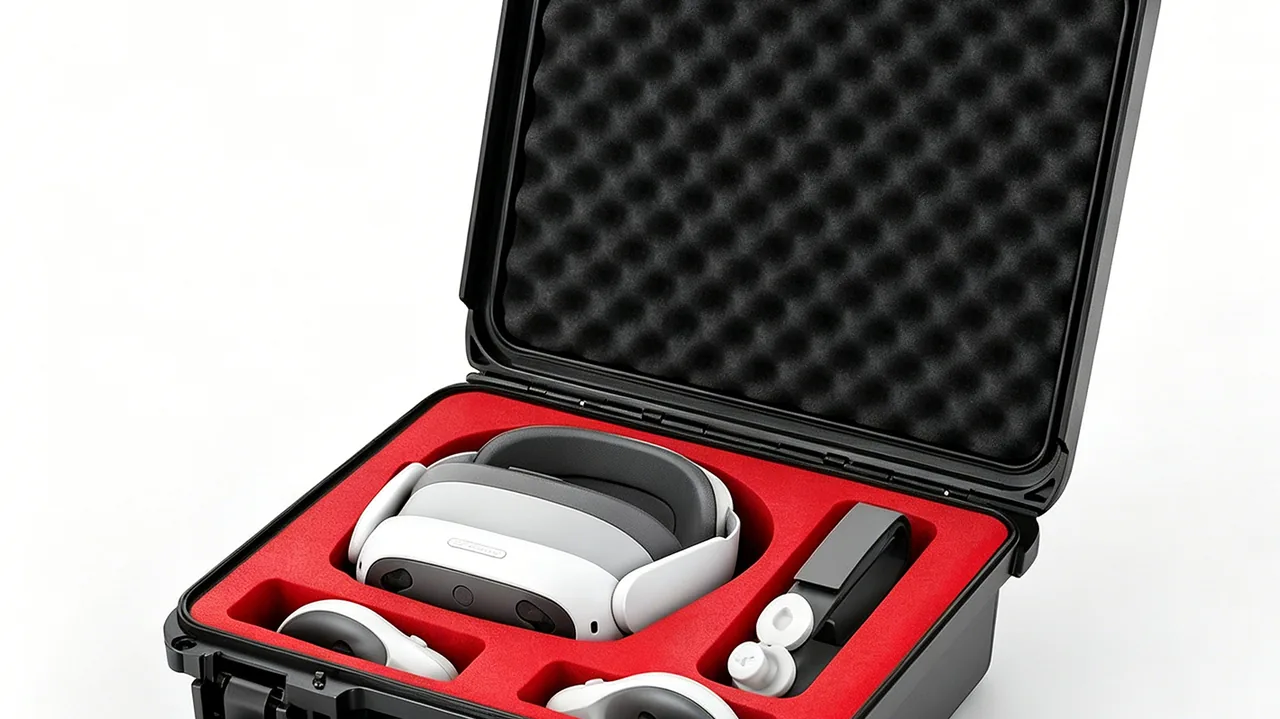
The hardest test for a protective case rarely happens in transit. It happens after the case has been placed on a rack and left alone. During handling, the shell absorbs impacts that last milliseconds; in a warehouse, that same shell carries the weight of everything above it for three or five years, breathes with every day-night temperature cycle, and slowly absorbs moisture through a gasket that nobody looks at. During reinspection openings in several equipment depots we kept finding the same pattern: the outer shell is intact, the latches open cleanly, the tamper seal shows no damage, and yet the liner edges have chalked white, the hinge backs show spot corrosion, the paper packing list has cockled and stuck together, and the side labels have lifted at the corners until the barcode can no longer be scanned. Long-term keeping is not a matter of putting equipment away and forgetting it; it is an engineering discipline in which time itself is the load variable.
For that reason, JUNZHIJIA applies one principle whenever we define a storage case: an acceptable long-term keeping case must present three verifiable timelines - a static structural margin, a sealing durability margin and a moisture control margin - rather than a single pass report from one transport test. This article follows both threads from polymer creep and liner set through stacking, sealing, moisture control, labelling, rotation, records and acceptance criteria.
Table of Contents
- Defining Long-Term Storage and Three Failure Families
- Shell Materials Under Prolonged Static Load
- Liner Compression Creep and Permanent Set
- Stacking Tiers and Rack Load Ratings
- Seal Condition and Valve Management During Sealing Periods
- Moisture Control: Desiccant Loading and Dew Point Margin
- Labelling, Tags and Numbering Schemes
- FIFO Rules and Batch Rotation
- Temperature, Humidity and Pest Monitoring Logs
- Inbound, Outbound and Re-inspection Criteria
- Configuring Cases for Different Warehouse Environments
- Selection Checklist and Procurement Specification Points
- Frequently Asked Questions FAQ
- Conclusion and Related Reading
Defining Long-Term Storage and Three Failure Families
Practice divides storage time into three bands. Short-term keeping covers turnaround storage of less than six months, where residual transport stress still dominates, the polymer has not yet entered a visible creep phase, and management effort belongs almost entirely to dust and splash protection. Medium-term keeping runs from six to twenty-four months and is the most neglected band, because most organisations only count stock at twelve or twenty-four month intervals, which is precisely the window where compression set, gasket stress relaxation and paper mildew concentrate. Long-term keeping starts at twenty-four months, and by then the deciding factor has moved away from the case itself to environmental governance: whether relative humidity stays stable, whether ultraviolet and ozone exposure exist, and whether insects or rodents can reach the rack.
Running alongside the time axis are three failure families. Structural failure comes from sustained static load, producing creep deflection, shell bulging and sidewall flare when the stacking limit is exceeded; its signature symptom is that lid and base no longer meet on a continuous sealing line. Interfacial failure covers loss of foam rebound, debonding between gasket and groove, coating chalking and adhesive label release; these failures accumulate silently while the case sits still and then reveal themselves all at once when somebody opens the lid. Contents failure covers rust, mildew, dull plating or lithium cell passivation caused by excessive humidity inside the box. Every depot should map these families against its own stock.
| Storage period | Dominant stress | Typical symptom | Recommended inspection interval |
|---|---|---|---|
| --- | --- | --- | --- |
| 0-6 months | Residual transport stress, occasional condensation | Damp cartons, surface staining | At put-away and at issue |
| 6-24 months | Static creep, stress relaxation | Liner set, reduced gasket recovery | Every 6 months |
| Over 24 months | Hygrothermal ageing, pests, ultraviolet | Internal mildew, spot corrosion, brittle labels | Every 3 months |
Defining the bands matters because it converts vague periodic checks into scheduled events with stated criteria. A mature warehouse system binds storage period to inspection depth in a two-dimensional matrix rather than applying one crude routine to everything.
Shell Materials Under Prolonged Static Load
When a shell carries load for months, the controlling property is no longer short-term tensile strength but creep modulus and long-term allowable stress. Take impact copolymer polypropylene: at twenty-three degrees its one-year creep modulus typically runs only forty to sixty per cent of the short-term flexural modulus, and every ten degrees of temperature rise accelerates the creep rate noticeably. That means the five-layer stack calculated from short-term strength may simply not hold in a top-floor warehouse at forty degrees in summer. High density polyethylene keeps its toughness at low temperature, which suits unheated northern depots and winter container moves, but its lower stiffness lets sidewalls bulge under sustained full load unless ribs and body taper compensate structurally. PC/ABS blends hold tight dimensions and suit instrument cases where external geometry matters, though they are notch sensitive and can stress crack around certain solvents.
The second variable is environmental ageing. Polypropylene is highly sensitive to ultraviolet; unstabilised product chalks and shifts colour after a few hundred hours of direct sun. Sustained-storage selection should therefore specify a masterbatch carrying carbon black or a hindered amine light stabiliser package, with carbon black typically above two per cent for adequate screening. The third variable is environmental stress cracking, particularly relevant because many warehouses keep surfactant cleaners, rust preventives or insecticides near stored cases; those media contact the polypropylene surface and, under strain, can initiate microcracks, so wiping the shell with unapproved chemicals must be prohibited in the storage instruction.
| Material | Recommended sustained load | Low-temperature behaviour | Main watch point |
|---|---|---|---|
| --- | --- | --- | --- |
| Impact copolymer PP | Within 40% of short-term strength | Toughness drops below 0C | Creep, ultraviolet ageing |
| HDPE | Within 35% of short-term strength | Retains toughness to -40C | Sidewall bulge, low stiffness |
| PC/ABS blend | Within 50% of short-term strength | Stable above -20C | Notch sensitivity, solvent cracking |
| Glass-filled PP | Within 55% of short-term strength | Stable above -20C | Fibre bloom, rough surface |
Once selected, long-term allowable compressive load should be written into the technical agreement as a numeric clause, with the supplier asked for creep or sustained-load data rather than an informal assurance based on experience.
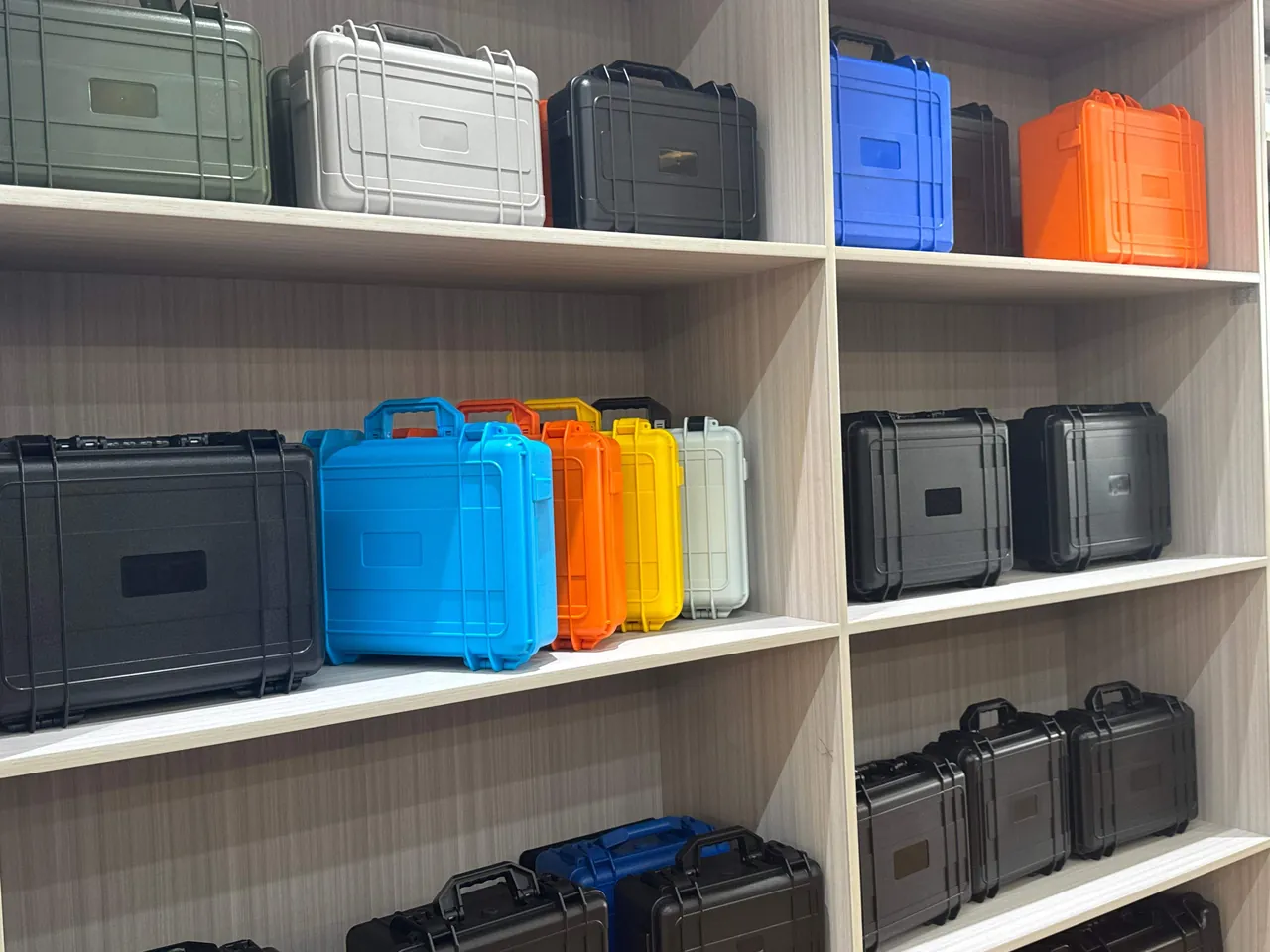
Liner Compression Creep and Permanent Set
The liner is usually the first component to fail in long-term keeping and usually the least examined. Foam under constant compression shows two components: recoverable elastic deflection and permanent compression set. Designers habitually work from the stress at twenty-five per cent indentation, but what actually governs service life is the compression level at which the foam is held while it sits. Practical guidance keeps sustained static loading in the range that produces eight to fifteen per cent deflection; beyond roughly twenty-five per cent sustained deflection, visible rebound loss tends to appear within months.
Material choice moves the result considerably. Cross-linked polyethylene and EVA have closed cells with fine structure and low compression set, so they suit five-year sealed keeping; non-cross-linked expanded polyethylene wins on cost and cushioning efficiency but shows larger residual deformation under sustained load and should therefore serve as transport cushioning rather than long-term support; flexible polyurethane rebounds well but resists humid heat poorly and hydrolyses in southern coastal depots. Before choosing, review the comparative figures in EPE vs EVA Tool Foam Comparison so that a transport-grade liner is not mistakenly specified into a keeping application. Where one case must serve both roles, use a modular approach: let Removable Case Divider Systems carry location and vertical load, and keep foam only as contact cushioning.
| Liner material | Typical density | Recommended sustained compression | Set limit | Application |
|---|---|---|---|---|
| --- | --- | --- | --- | --- |
| IXPE | 33-67 kg/m3 | 8%-12% | 10% max | Five years or longer sealed |
| EVA | 60-120 kg/m3 | 10%-15% | 12% max | Precision parts, long contact |
| EPE | 20-35 kg/m3 | 8% max | 20% max | Transport first, storage second |
| Flexible PU | 25-45 kg/m3 | 10% max | 15% max | Light load in dry stores |
| Extruded PE board | 40 kg/m3 or more | 5%-8% | 8% max | Heavy item support blocks |
For keeping periods beyond three years, place a witness coupon from the same batch and thickness inside the case, uncompressed, and archive it with the unit. At reinspection, compare the coupon's free thickness with the recovered thickness of the loaded liner; if the loss exceeds the limit above, retire the whole liner set without opening every cavity destructively.
Stacking Tiers and Rack Load Ratings
Stacking applies the largest static load a case will ever see, and it is the easiest to underestimate. If unit case weight is G and the stack is n tiers, the bottom case carries roughly (n-1) x G, while published capacity usually comes from a compression test on an empty body under ideal conditions, leaving a safety factor in between. Standard practice caps sustained stacking load at forty to fifty per cent of the tested compression limit, corresponding to a safety factor above two, and then applies a further twenty to thirty per cent reduction wherever forklift traffic, uneven floors or warped pallets introduce disturbance. Verification can cite GB/T 4857.3 for static load stacking and ASTM D642 for compression, with directed stack reliability quantified through the relevant section of ASTM D4169 or ISTA 3E.
Rack storage differs from floor stacking. Beam racking supports the pallet or case over localised strips, putting the body into end-supported or point-loaded conditions quite unlike the uniform loading of a laboratory platen. When selecting Stackable Cases, confirm that the base has continuous bearing edges and interlocking features, and that some form of male-female nesting prevents interlayer slip. The most common real-world failure is simple: heavy cases are bridged across two beams with no dunnage, leaving the unsupported base permanently bowed.
| Stack height | 15 kg unit | 25 kg unit | 40 kg unit | Recommended base form |
|---|---|---|---|---|
| --- | --- | --- | --- | --- |
| 3 tiers | 30 kg bottom | 50 kg bottom | 80 kg bottom | Flat base sufficient |
| 5 tiers | 60 kg bottom | 100 kg bottom | 160 kg bottom | Ribs plus nesting lugs |
| 8 tiers | 105 kg bottom | 175 kg bottom | Not recommended | Pallet plus wrap required |
| Beam racking | Point loading | Beam across 80% of base width | Full dunnage needed | Flat pallet preferred |
Above eight tiers, switch to pallet plus racking so that the pallet carries the span and the cases carry only interlayer pressure. Whatever the layout, specify whether sheets are used between layers, whether stretch wrap is applied, and whether stacks interlock in a bonded pattern.
Seal Condition and Valve Management During Sealing Periods
Faced with a multi-year seal-up, most teams reach first for maximum latch force, crushing the gasket to its stop. That tactic wins during a short transit because it maximises spray resistance, but during long-term keeping it backfires: elastomer seals under sustained overcompression undergo stress relaxation, recovery can fall from above ninety per cent to below sixty per cent within months, and once the material loses its memory no amount of retightening restores the original line pressure. Recommended practice keeps deflection inside the designed compression band, normally twenty to thirty per cent of the free section height, rather than bottoming out. The role of the optional Case Pressure Equalization Valves becomes subtle here: the same component that balances day-night pressure differences is also a path for external moisture, so the preservation procedure must choose one route and write it down.
Two routes cover most situations. Where the warehouse is dehumidified and relative humidity stays below sixty per cent all year, leave the valve fitted with an expanded PTFE microporous membrane in service, let pressure equalise continuously, and avoid panel suck-in or bulging while building-level dehumidification protects the interior. Where the environment is uncontrolled, field shelters or coastal temporary stores, close the valve, fit a threaded moisture plug or desiccant cartridge, convert the case into a near-sealed humidity buffer, and rely on internal desiccant. The corrosion risk difference between these two routes mirrors exactly what Ammo Storage Box Sealing argues: stronger sealing is not automatically better, it has to match the environmental capability available.
Maintenance of the seal itself cannot be skipped. Silicone and EPDM gaskets benefit from a thin film of neutral silicone grease after long compression to slow surface crazing, and every reinspection should look for permanent indentation, migrated tacky residue and mildew spotting. If a cross-section has become flat and square where it used to be round or D-shaped, recovery is exhausted and the gasket must be replaced before the next put-away cycle.
Moisture Control: Desiccant Loading and Dew Point Margin
Humidity is the busiest variable in long-term keeping. Most precision equipment prefers forty to fifty-five per cent relative humidity: below thirty per cent many plastics, leather and wood lose moisture and embrittle, while above sixty per cent corrosion and mould growth accelerate sharply. In a semi-sealed case the tools are desiccant plus humidity indicator card. A practical estimate for a well-sealed body starts at one to one and a half kilograms of fine-pore silica gel per cubic metre of useful internal volume, adjusted upward for sealing duration, shell permeation and planned opening frequency; the MIL-D-3464 unit definition also helps when reconciling with imported consumables, one unit corresponding to roughly thirty-three grams.
Three details matter more than total mass. First, preconditioning: bulk silica gel picks up water from room air the moment the drum is opened, so repack it quickly in a dry room into breathable non-woven sachets that still contain dust. Second, reading: keep a humidity indicator card in the case, treat the sixty per cent spot turning pink as the change threshold, and treat a discoloured forty per cent spot as evidence of prolonged high humidity requiring inspection of the contents for early rust. Third, dew point margin: where the case sees large daily temperature swings, verify that the coldest internal surface stays at least five degrees above the internal dew point, because even a compliant average humidity will still produce night-time condensation. External rain and damp walls are handled as described in Rain and Humidity Resistance for Outdoor Cases.
| Case volume | Good seal | Average seal | Opened 1-2 times per year | Recommended form |
|---|---|---|---|---|
| --- | --- | --- | --- | --- |
| 20 L | 25 g | 40 g | 50 g | Sachet plus card |
| 60 L | 70 g | 110 g | 140 g | Cartridge plus card |
| 120 L | 140 g | 220 g | 280 g | Cartridge plus card |
| 300 L | 350 g | 550 g | 700 g | Redundant twin cartridges |
Loading figures are reference points, not guarantees. Run one complete cycle with indicator cards, measure actual consumption, and feed the measured rate back as a correction factor that becomes the depot's own empirical curve.
Labelling, Tags and Numbering Schemes
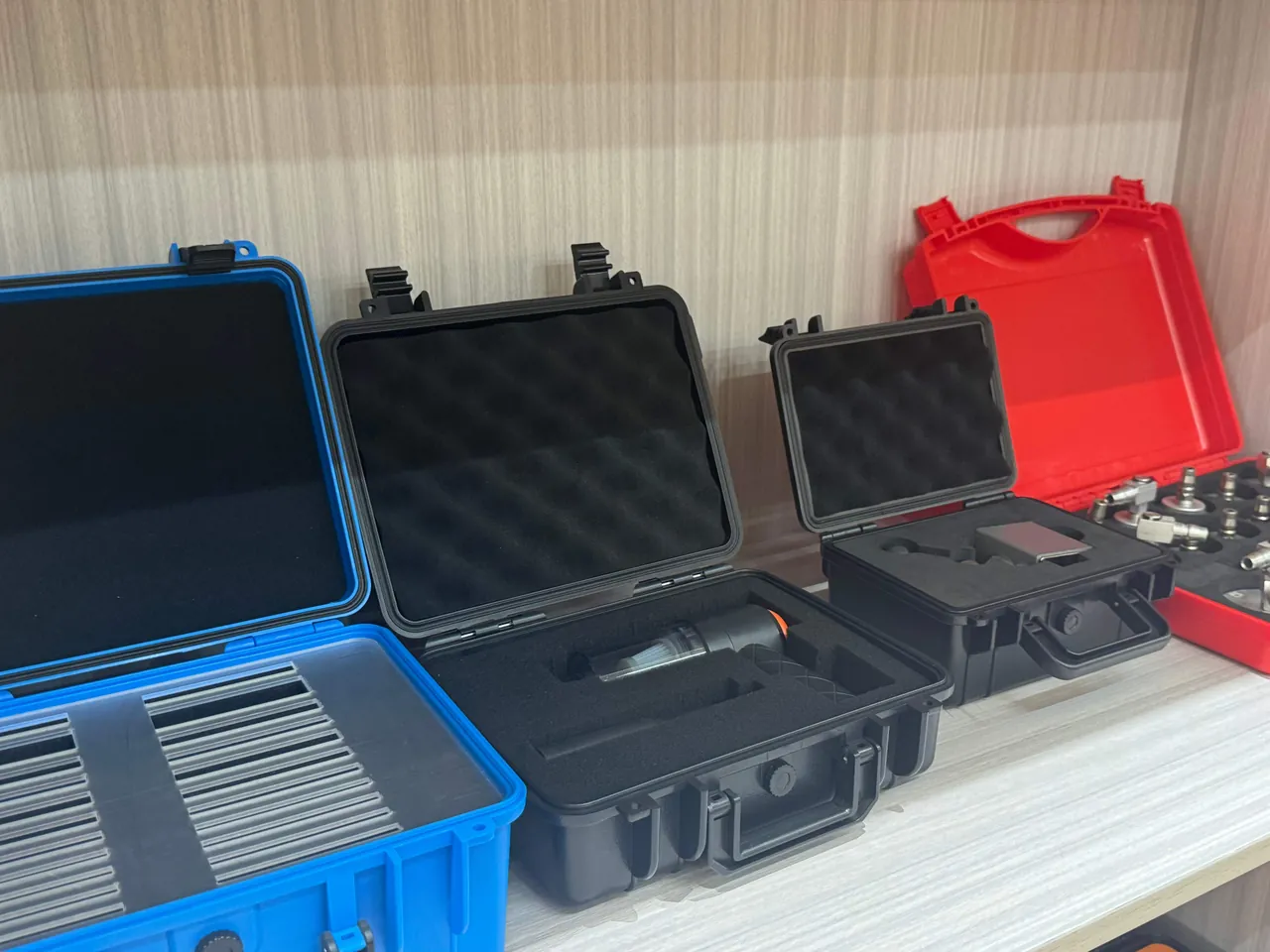
Whether long-term storage stays affordable depends largely on how well identifiers were designed. A usable code carries four pieces of information: ownership, expressed as project or unit code; category, expressed as a content class; sequence, expressed as a unique case number; and state, expressed as current seal status or latest reinspection lot. A compact form is project dash category dash four-digit sequence dash reinspection quarter, for example P2411-EL-0037-24Q3, kept under twenty characters so that it prints cleanly as a QR symbol yet stays readable by eye.
Carrier choice decides whether that code survives. Standard coated paper labels routinely curl, embrittle and scuff their barcode within six months, so long-term storage wants a polyester face stock with a weather-resistant adhesive plus overlaminate, or laser-printable polypropylene synthetic paper where laminating is not permitted. Acceptance is easy to test: after labelling, hold samples at sixty degrees for seven days, run cross-hatch adhesion and finger-rub checks, and require no edge lift, no smearing and a barcode that still reads on an ordinary scanner. Three functional markings also belong on the side: maximum stacking height, up-arrow with centre-of-gravity mark, and Keep Dry or Fragile pictograms. Colour coding is the cheapest way to speed audits: rotate label base colour each quarter and a walk down the aisle reveals any case that has passed its reinspection window.
| Label layer | Information carried | Recommended carrier | Update frequency |
|---|---|---|---|
| --- | --- | --- | --- |
| Asset layer | Case number, asset ID, QR code | Laminated polyester | Once |
| Lot layer | Put-away lot, expiry date | Polyester | Every put-away |
| Status layer | Quarterly colour tag, seal number | Synthetic paper | Each quarter or sealing |
| Handling layer | Stack limit, Keep Dry, centre of gravity | Screen print or in-mould label | Once |
Once a numbering scheme is fixed it should rarely change. When migration is unavoidable, retain the old code as a history field and record the mapping, otherwise archived inspection records lose their link to physical cases and the traceability chain breaks.
FIFO Rules and Batch Rotation
First-in first-out sounds elementary, yet it fails in real warehouses with remarkable frequency. The root cause is simple: organisations enforce FIFO in the ledger while their physical layout works against it. Double-deep racking, aisle dead ends and temporary floor stacks all push the older lots into inaccessible positions, so operators understandably pick the nearest case, and before long ledger and reality have diverged completely. Making FIFO real requires the layout to enforce sequence physically. One-way gravity flow lanes do this most decisively, provided the rollers are checked for base marking; single-row drive-in racking with a rule of in on the right, out on the left achieves most of the benefit at far lower cost and combines naturally with quarterly colour coding.
The other half of rotation is age banding. Split inventory into zero to six months, six to twelve, twelve to twenty-four and beyond twenty-four, mapped respectively to no reinspection, visual reinspection, sampled opening and full inspection with consumable replacement. This concentrates finite inspection labour where risk actually sits instead of spreading it evenly. Categories such as Emergency Supply Reserve Cases, which never move until the day they are desperately needed, also merit a triggered rotation: if stock has not been drawn near expiry, replace it three months early and cascade the withdrawn items into secondary use rather than scrapping an entire lot at once.
Three traps deserve explicit mention. The first is replenishment mixing, where a new lot shares locations with the old and the two become visually indistinguishable. The second is the remainder case, the handful of units left at the end of a lot, which tends to be dropped into whatever gap is closest and thereby becomes invisible to rotation. The third is the returned unit: anything coming back must be regraded before it rejoins its original lot, otherwise used consumables re-enter prime stock.
Temperature, Humidity and Pest Monitoring Logs
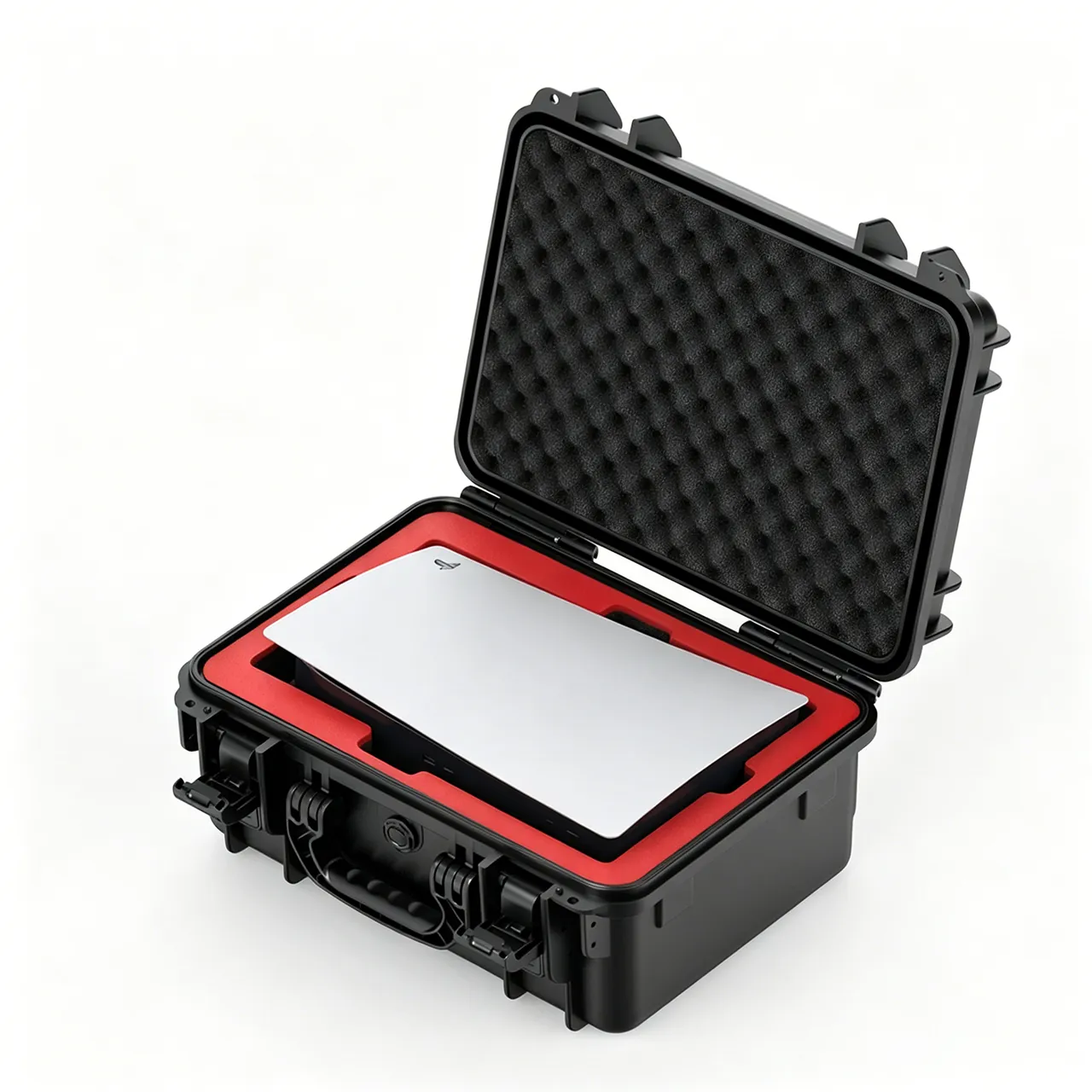
Without data there is no management. A long-term store needs at least two record sets: an environmental baseline and a case-level sampling log. Baseline monitoring uses fixed temperature and humidity loggers positioned by worst-case logic rather than convenience, siting one high and one low, one near the door and one deep inside, one along the external wall and one on the inner wall. Loggers must retain extremes with their timestamps.
Thresholds must be written before any alarm has meaning. Common practice triggers ventilation or dehumidification when relative humidity exceeds sixty per cent for forty-eight consecutive hours, triggers a dew point review when daily swing exceeds fifteen degrees, and triggers relocation or shading above forty degrees. Pest control adds sticky monitors at rack corners and beneath pallets, counted monthly; a doubling of springtail or booklouse counts usually indicates that floor-level humidity control has failed first. Retention should follow the quality system, three years minimum under ISO 9001 and longer where defence or medical regulations apply.
| Log field | Definition | Frequency | Abnormal criterion |
|---|---|---|---|
| --- | --- | --- | --- |
| Zone ID | Down to individual rack bay | Fixed | N/A |
| Temperature and RH | With extremes and timestamps | 10-15 min | Over 60% RH for 48 h |
| Case number and lot | Sampling target identity | Each sampling | Mismatch with ledger |
| HIC spot state | Discolouration at 40% and 60% | Quarterly | 40% spot changed |
| Seal appearance | Indent, tackiness, crazing | Half-yearly | Flat permanent section |
| Pest capture count | Monthly trap statistics | Monthly | Doubling month on month |
Logs are worth keeping for their trend rather than any single value. One excursion usually means a door left open or a rainy week; three consecutive weeks trending upward is the thing that actually needs action.
Inbound, Outbound and Re-inspection Criteria
String the controls together and you get a three-stage process. Inbound answers whether the lot may enter, checking external integrity, seal condition, desiccant expiry and label legibility. In-store answers whether intervention is needed, using periodic rounds and environmental logs to decide on opening. Outbound answers whether what leaves is serviceable, using reinspection and sampling to confirm contents. All three stages need tabulated criteria rather than descriptions that depend on one experienced technician's judgement.
Sampling should cite ISO 2859-1 directly, single sampling under normal inspection with general inspection level II and a stated acceptable quality limit, selecting sample size by lot size. For long-term reinspection most organisations tighten the AQL by one grade relative to goods-in acceptance, because failures here originate from environment rather than manufacturing variation. Defect classes can be mapped against those defined in Custom Case Acceptance and AQL Sampling and re-linked to storage conditions.
| Stage | Check item | Criterion | Action |
|---|---|---|---|
| --- | --- | --- | --- |
| Inbound | Desiccant expiry | HIC 40% spot still blue | Replace if expired |
| Inbound | Label legibility | One-pass barcode scan | Reprint with laminate |
| In-store | Zone humidity | 60% RH or below | Start dehumidification |
| In-store | Stack geometry | No interlayer offset or bulge | Reduce tiers, add sheets |
| Outbound | Seal recovery | 90% of original height in 24 h | Release after regasketing |
| Outbound | Contents appearance | No rust, no mildew | Route to repair or scrap |
Any criterion needing a special instrument will simply be skipped.
Configuring Cases for Different Warehouse Environments
Even though it is all called storage, building types behave very differently. Mid-level floors of a conventional building are relatively stable, while the top floor can exceed fifty degrees in summer because of roof radiation. Corrugated steel sheds cost little but swing hard between day and night and condense readily. Automated high-bay stores are efficient but demand tight base dimensional tolerance. Containerised temporary storage is flexible yet produces an intense greenhouse effect. Mapping environment to countermeasures once saves arguing about it every season.
| Environment | Dominant risk | Key controls | Case configuration |
|---|---|---|---|
| --- | --- | --- | --- |
| Mid-level building floor | Broadly stable | Routine rounds | Standard specification |
| Top floor or steel shed | Heat, night condensation | Shading plus dehumidifier | Light colour, redundant desiccant |
| Automated high bay | Jamming from size drift | Base tolerance 1.5 mm | Flat base with locating edges |
| Container temporary store | Above 60C in summer | Ventilation retrofit, off-peak work | Heat-resistant grade, light colour |
| Field shelter | Damp, windblown dust, pests | Sealing, desiccant, pest control | Fully sealed, optional ePTFE valve |
Colour matters in the exposed cases, not only aesthetically. Dark shells can run more than ten degrees hotter than pale ones under the same sun, and that heat propagates inward. Where outdoor or semi-outdoor keeping is unavoidable, prefer pale grey or off-white and use light stabiliser packages that are not solely carbon black based, since carbon black delivers excellent weatherability at the cost of heat absorption.
Selection Checklist and Procurement Specification Points
The final step collapses everything above into a specification you can actually tender. Failures usually trace back to documents that state only dimensions and colour: suppliers then quote the lowest-cost interpretation, everything looks perfect for twelve months, and the whole population fails together in year two. A storage-oriented specification needs at least twelve quantified clauses: sustained allowable load, sustained allowable stacking tiers, liner density and set limits, seal material and compression set limit, desiccant form and loading, humidity indicator provision, labelling system and durability verification, ingress protection code with its standard reference, weathering requirement, batch acceptance sampling terms, documentation pack list and spare part availability period.
| No. | Clause | Suggested quantification |
|---|---|---|
| --- | --- | --- |
| 1 | Sustained allowable load | Percentage of rated load plus test method |
| 2 | Stacking tiers | Tier count, duration, test standard |
| 3 | Liner density | kg/m3 with tolerance |
| 4 | Liner residual set | Percentage limit plus test temperature |
| 5 | Seal material | Grade plus hardness range |
| 6 | Seal compression set | Percentage plus test duration |
| 7 | Desiccant and indicator | Loading plus change threshold |
| 8 | Labelling system | Coding rule plus weathering check |
| 9 | Ingress rating | IP code plus IEC 60529 or GB/T 4208 |
| 10 | Weathering requirement | UV ageing hours plus colour shift limit |
| 11 | Sampling acceptance | ISO 2859-1 plus chosen AQL |
| 12 | Spare availability | Years plus minimum order quantity |
Putting this table into a tender annex shows which cost is real and which saving was bought by downgrading material grade. Humidity-critical collections such as archives or specimens should additionally consult Archival Storage Cases and bring active buffer materials into the specification.
Frequently Asked Questions FAQ
Q: Should case latches be closed to maximum tightness during long-term storage?
A: No, and the reason is the difference between transit and keeping. Transit asks for instantaneous sealing performance, while keeping asks the elastomer to retain recovery capacity across the whole storage period, and those two goals pull in opposite directions. Under near-limit compression a rubber or elastomer gasket undergoes stress relaxation as molecular chains rearrange under sustained strain; recovery often drops from above ninety per cent to below sixty per cent within half a year, and once memory is lost no amount of retightening restores the original line pressure. The practical rule is to keep deflection inside the designed compression band, normally twenty to thirty per cent of free section height, and verify visually that lid and base meet evenly around the whole perimeter rather than relying on two hard-driven latches. Use a torque or detent indication where the case provides it, record the Achieved compression at each opening so the next inspector compares like with like. The same restriction applies to moulded profiles and O-rings, not only to foam gaskets.
Q: How often does case foam liner actually need replacing?
A: There is no universal interval, because material, compression ratio and temperature interact. The dependable method is measurement rather than calendar, using a witness coupon retained from the same batch and thickness as the working liner, stored uncompressed in the case or in the same room. At reinspection, compare the coupon's free thickness with the recovered thickness of the loaded liner; if the loss exceeds the limit for that material - generally ten to twelve per cent for cross-linked polyethylene and EVA, twenty per cent for non-cross-linked types - declare the liner set retired. In a twenty-three degree store with compression held below fifteen per cent, cross-linked foam commonly carries load stably for more than five years; push summer storage above forty degrees or compression above twenty-five per cent and life may fall below two years. Visible cues matter more than a date: chalking, edge crumbling and a permanent depression you can see at a glance all call for immediate replacement. Where two densities are combined in one cavity, measure each layer separately, because softer layers tend to hide behind stiffer ones.
Q: How much desiccant should a case contain, and how often should it be changed?
A: Loading comes first, then interval. Estimate loading from useful internal volume: start at one to one and a half kilograms of fine-pore silica gel per cubic metre for a well-sealed body, take the higher figure from the volume table where sealing is average or the case is opened once or twice a year, and add twenty to thirty per cent where ambient humidity is persistently high. The change interval should not be mechanical; let the indicator card decide. Keep a humidity indicator card inside the case and treat colour change at the sixty per cent spot as the replacement threshold; if the forty per cent spot has also changed, the interior has been running wet for a long time and the contents need checking for early rust or mildew. A common handling error undermines both: leaving bulk gel exposed to room air while repacking, so that it arrives already saturated. Repack quickly in a dry space, use breathable non-woven sachets, keep the drum sealed, and after one full cycle back-calculate using measured consumption.
Q: Will plastic cases slowly deform under sustained full stack loading?
A: Yes, and that deformation is precisely what creep means. Under constant stress a polymer continues to strain over time; impact copolymer polypropylene typically retains only forty to sixty per cent of its short-term flexural modulus after a year at room temperature, and elevated temperature accelerates further. Design must therefore work from long-term allowable stress, not short-term strength, usually taking forty to fifty per cent of short-term strength as the sustained limit with a safety factor no lower than two. Structure compensates alongside material: rib orientation should route upper load into the bottom bearing edges, and nesting lugs plus interlocking features prevent interlayer slip and eccentric loading. Above eight tiers convert to pallet plus racking so the pallet takes the span and cases see only interlayer pressure. As a field check, measure sidewall bulge with a feeler gauge after an evening shift; more than three millimetres means reduce tiers. Where optical or metrology equipment is stored, take the first honest reading after the first hot season, since any dimensional change also shifts cushioning clearance.
Q: Where should humidity loggers be placed to give representative readings?
A: A single logger is almost never representative, so build a worst-case grid instead. Warehouse conditions are not uniform: the external wall follows outdoor temperature most directly and becomes the cold spot in winter or hot spot in summer; the door zone swings most because of traffic; high rack levels run two to four degrees warmer than the floor because warm air rises, while floor level, especially in rainy season, is usually the first place to exceed humidity limits. The recommended minimum grid places one logger near the door and one deep inside, one along the external wall and one on the inner wall, one high and one low, then treats the worst of these as the controlling point. Set a common ten to fifteen minute interval and keep extremes with timestamps. If budget allows only three points, cover low level, door zone and external wall, since those three reveal problems earliest. Keep every logger out of direct draughts and away from dehumidifier discharge, both of which distort readings badly.
Q: What sampling proportion suits reinspection before issue?
A: Separate routine reinspection from pre-issue reinspection. Routine work targets stock in place and uses statistical sampling, citing ISO 2859-1 single sampling under normal inspection, sample size read from lot size at general inspection level II. Because storage failures originate from environment rather than manufacturing variation, most organisations tighten the acceptable quality limit by one grade relative to goods-in acceptance, for example moving a major defect limit from 1.0 to 0.65. Pre-issue reinspection is different: it covers a lot about to be used or delivered, where a miss has immediate consequences, so a sampled scheme normally gains a layer of targeted full checks. Every case gets a visual pass on seal recovery and indicator card state because both take seconds and both carry severe consequences; liner thickness and label adhesion stay on sampling. Additionally, any lot that produced a nonconformity at the previous routine reinspection should automatically escalate to tightened inspection, which is what the switching rules require. Record lot size and sample size on every inspection sheet, because that record is what makes the result auditable later.
Q: Can cases survive sixty degree temperatures inside summer containers?
A: Internal temperatures above sixty degrees are routine in open-yard containers, and ordinary polypropylene shows clear short-term stiffness loss there, with accelerated ageing and eventual embrittlement if the exposure repeats. Judging suitability takes three values: heat deflection temperature under load, upper continuous service temperature, and low-temperature brittleness point. Most impact copolymer grades carry a continuous service ceiling around eighty degrees, so sixty degrees is survivable in the short term but structural margin falls sharply, which is why stack height should drop by at least two tiers whenever such conditions are expected. Thermal mitigation is equally important: choose shaded yard positions or fit shade netting, retrofit container ventilation, schedule work outside the midday peak, and specify pale shell colours to reduce solar absorption. Where contents are lithium cells, pharmaceuticals or coated optics, do not judge by what the case tolerates at all; redefine the storage concept from the maximum storage temperature the contents permit. In practice condensation inside the container often damages contents sooner than the recorded peak temperature does.
Q: How can FIFO be enforced without adding much labour?
A: Make first-in first-out automatic through layout and visual cues rather than something people have to remember. First, eliminate storage modes that require moving cases to reach anything: use single-row drive-in racking with a firm convention of new lots in from the right and issues taken from the left, so an operator follows correct sequence without deciding anything; if budget permits, gravity flow lanes enforce it even harder, provided you check roller marking on case bases. Second, apply quarterly colour tags as a visual signal: rotate the label base colour each quarter and a glance down the aisle identifies anything past its reinspection window without opening a ledger. Third, control the three exception types deliberately: record lot and put-away date on the location card at every replenishment, collect remainder cases into one clearly identified bay, and require returned units to be regraded before rejoining their original lot. Those three steps add almost no work yet sharply reduce ledger drift and bulk expiry write-off.
Conclusion and Related Reading
Long-term storage ultimately asks one thing: make time explicit. Numerical margins turn crawling failure into routine work. JUNZHIJIA supports OEM and ODM programmes from crate sealing to delivery.
Related Reading