

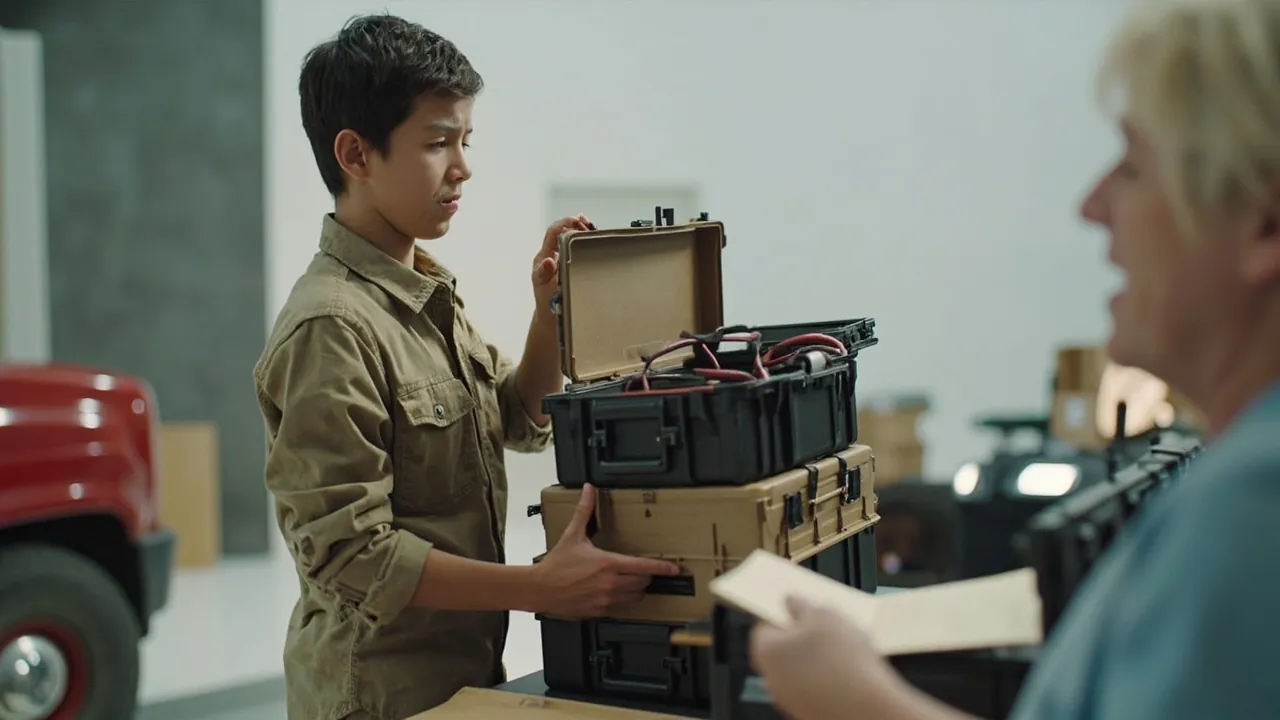
An emergency supply reserve case is a dedicated container used by households, communities, schools, businesses and local response points to store disaster supplies by category, retrieve them quickly and rotate them on schedule. Its core value is not piling things together but letting a non-specialist locate, retrieve and count supplies within a minute in an emergency, while enabling compartmentalization, sealing, labeling and shelf-life management in normal times. When a disaster strikes, power, water, communications and roads often fail at the same time, and searching through scattered supplies in a panic shortens the self-rescue window; a reserve case with clear compartments, obvious labels and immediate access compresses the time spent finding things to the minimum. This article examines the selection and design of emergency supply cases, household emergency cases, community reserve cases, disaster supply cases and first-aid reserve cases, breaking down the preparedness pain points of households and communities, the methods for classifying supplies and building a list, case structure, two configuration plans for household and community, the special requirements of first aid and medicines, food, water and insulated storage, lighting, power and communication gear, tools, firefighting and breaching equipment, material selection, storage, rotation and shelf-life management, and the procurement and acceptance checklist, with tables that can be used directly in procurement and drills.
Readers who need the fundamentals of cases and structure should first review Plastic Protective Cases: Material and Structure and Modular Case Systems. For waterproof sealing see Waterproof Case Sealing Design, for liners and fixation see Cushion Liner and Custom Cutting Design, and for insulation and drinking water see Food and Catering Insulated Cases.
What Emergency Supply Reserve Cases Are
An emergency supply reserve case, also called an emergency supply case, a household emergency case, a community reserve case or a disaster supply case, is a container system that organizes disaster supplies by function, fixes them by position and makes them findable by label. It differs from an ordinary storage box in the moment of use: an ordinary storage box serves everyday tidying and allows slow searching, while an emergency supply reserve case serves sudden events such as power cuts, water outages, earthquakes, floods and typhoons, and must remain usable in low light, under stress and against the clock. It therefore demands far more from categorization, labeling, sealing, load capacity and ease of opening than an ordinary box.
By user there are three types. The first is the household emergency case, aimed at family self-rescue and short sheltering, small in capacity, complete in function and easy to carry and move. The second is the community reserve case, for community response points, buildings, property teams and volunteer groups, large in capacity, complete in categories and emphasizing unified positioning and counting. The third is the vehicle and carry emergency case, for self-driving evacuation and outdoor emergencies, emphasizing compactness, portability and fixation. The three share a common structure but differ in capacity, weight, number of modules and rotation method.
Typical users include residential households; community, street, property and building response points; schools, kindergartens and training organizations; emergency and safety departments of businesses and factories; elderly care, medical and charitable institutions; and outdoor, self-driving and field workers. Wherever supplies must be retrieved quickly in a sudden event and managed and rotated in normal times, that is the application boundary for an emergency supply reserve case.
Supply Pain Points for Households and Communities
The pain points of household and community reserves cluster in five areas. The first is having supplies but not finding them. Many households buy a flashlight, medicine and food piecemeal but scatter them across drawers, cabinets and storage rooms, so in an emergency they neither know what they have nor where it is, which equals having no reserve at all. The second is having supplies that have expired. Expired medicine, leaking batteries, spoiled food and fire extinguishers past inspection are common, and without shelf-life management the reserve is nominal. The third is chaotic classification. Food, medicine, tools and clothing mixed together interfere with retrieval and cannot be split quickly when items must be carried by several people.
The fourth is the difficulty of counting and rotating at community level. Community reserves are often large in quantity, broad in category and managed by many people, and without unified numbering and a list, counting is slow and error-prone; once an item is borrowed without being returned, the next emergency reveals a gap. The fifth is insufficient adaptation to special people and scenarios. The elderly, children, infants, the chronically ill and people with disabilities have special needs for medicine, food and assistive devices that a generic configuration cannot cover, while night, rain, snow and wading scenarios add extra demands on water resistance, lighting and insulation.
The common conclusion from these pain points is that an emergency supply reserve should be engineered as a supply management system rather than handled by buying a box. Define the users and scenarios first, then set the supply list and classification, then design compartments, labels and modules, and finally close the loop with rotation and drills. Comparing only capacity or price usually exposes the problems of not finding, having expired and being unable to carry at the moment of real need.
Classifying Emergency Supplies and Building a Reserve List
Scientific classification is the foundation of a reserve case. A common approach crosses three dimensions: function, duration and priority. The function dimension divides supplies into survival, medical, lighting and power, communication, tools and breaching, protection, hygiene, and special-needs categories. The duration dimension separates immediate use within hours from sustained support over days. The priority dimension separates first priority, escaping danger and calling for help, from second priority, sustaining daily life. Crossing the three gives a clear basis for compartments and labels.
List building should follow a three-layer method. The first layer is the base layer, covering water, food, first aid, lighting and communication, which every household or community must have. The second layer is the scenario layer, adding supplies by the dominant local hazard such as earthquake, flood, typhoon or severe cold. The third layer is the special layer, configured separately for the elderly, infants, the chronically ill and pets. This avoids both a one-size-fits-all approach and missing items.
| Function group | Typical supplies | Duration role | Priority | Storage note |
|---|---|---|---|---|
| --- | --- | --- | --- | --- |
| Survival | Drinking water, ready-to-eat food, thermal blanket | Sustained | First | Moisture proof, note expiry |
| Medical and first aid | First-aid kit, common medicine, splints | Immediate | First | Dry, dark, regular check |
| Lighting and power | Flashlight, headlamp, spare batteries, power bank | Immediate | First | Crush proof, batteries separate |
| Communication | Hand-crank radio, whistle, emergency card | Immediate | First | Fixed position, ready access |
| Tools and breaching | Multi-tool, rope, gloves | Immediate | Second | Edge guards, avoid injury |
| Protection | Masks, raincoat, dry bags | Sustained | Second | Compact, easy to carry |
| Hygiene | Wipes, disinfectant, waste bags | Sustained | Second | Separate, leak proof |
| Special needs | Infant food, adult medicine, assistive devices | Sustained | First | Dedicated module, own label |
The list is not written once and finished; it should be revised through drills. Review the list at least every six months with a household or community drill: which supplies were never used, which were hard to retrieve, and which have expired or broken, and adjust the configuration and compartments accordingly. The value of a list is that it is actually usable, not that it looks complete.
Case Structure: Compartments, Sealing, Labels and Load
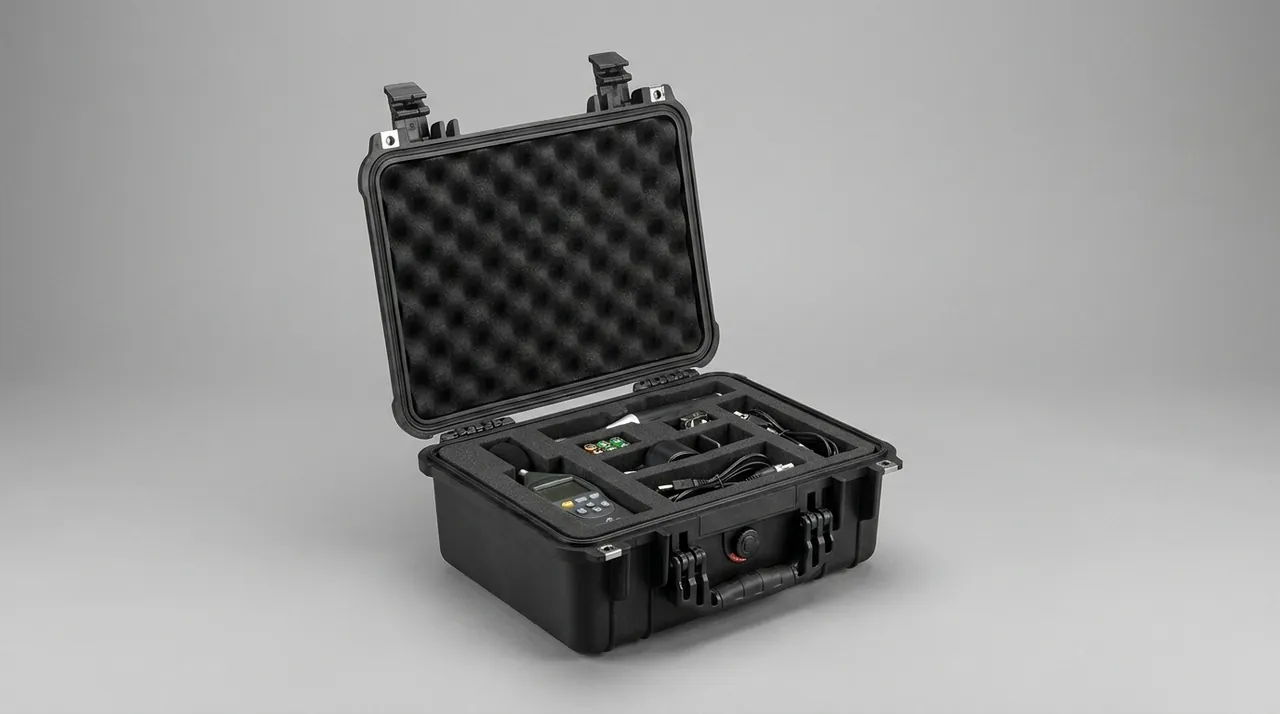
Case structure decides whether the reserve is usable in an emergency, and four elements are indispensable. The first is compartments. Compartments separate supplies by function and prevent food and medicine, or tools and clothing, from mixing. They can be made with removable dividers, a custom liner or modular inner boxes: dividers are flexible and easy to adjust; a custom liner fixes each item in one unique position so a missing item is obvious; and modular inner boxes can be retrieved as complete kits such as a survival pack, a medical pack and a tool pack, suited to carrying by several people.
The second is sealing. Sealing decides whether supplies resist damp, dust and rodents. In a damp store, paper, batteries and medicine are easily damaged, so the case should resist dust and moisture and, where necessary, reach a water resistance rating following the GB/T 4208 or IEC 60529 IP scheme, with a full-perimeter gasket and evenly compressed latches at the lid. The third is labeling. Labels let a non-specialist locate items quickly: the case exterior carries the case number and master list, each compartment inside is labeled by category, and first aid and medicine are marked separately in a striking color. The fourth is load and handling. A fully loaded case is often heavy, so it should have two handles or a shoulder strap, and a large case should have casters and a tow strap, with anti-slip ribs for stable stacking.
Ease of opening and stacking stability also matter. In an emergency the lock should open one-handed and not be too stiff; multiple cases should stack securely without tipping; and a case intended for night use should have reflective marking or a lighting position. The design goal of a reserve case is find it in three seconds, take it out in ten, carry it alone, and every structural choice should serve that goal.
Configuration for Household Emergency Cases
A household emergency case centers on self-rescue, short sheltering and easy transfer, and should be configured by person and by day. A base configuration is usually estimated at three days per person, including drinking water, ready-to-eat food, a first-aid kit, common medicine, a flashlight with spare batteries, a hand-crank or battery radio, a whistle, a multi-tool, masks, a raincoat, wipes and waste bags, plus a thermal blanket and a simple tarp. Households in earthquake, flood or typhoon regions should add supplies according to the dominant local risk.
For storage, a two-layer structure of a main case plus a carry bag is recommended: the main case sits in a fixed position at home holding everything, while the carry bag, or a removable inner box, holds the most critical supplies so it can be grabbed on evacuation. The main case uses compartments and list labels, and the carry bag stays light and separately labeled. This keeps the reserve complete while ensuring the most needed part can be taken quickly at the critical moment.
| Household module | Contents | Suggested position | Rotation |
|---|---|---|---|
| --- | --- | --- | --- |
| Carry evacuation bag | First aid, medicine, flashlight, whistle, document copies | Easy to grab | Check quarterly |
| Survival food module | Water, ready-to-eat food, thermal blanket | Lower case | Rotate before expiry |
| Lighting and communication | Flashlight, batteries, hand-crank radio | Middle easy-access | Check half-yearly |
| Tool and protection | Multi-tool, gloves, raincoat | Upper case | Check yearly |
| Special needs module | Infant food, chronic medicine | Separately labeled | Rotate by expiry |
At household level, clarify who is responsible, where it is kept and how it is used: assign one member to check and rotate, tell every member where the case is, and in drills let the elderly and children try to retrieve key supplies, adjusting position or compartment if retrieval is difficult. A reserve matters when every family member knows where it is and how to use it.
Configuration and Management of Community Reserve Cases
A community reserve case centers on centralized storage, unified counting and multi-point sharing, serving community response points, buildings, property teams and volunteer groups. Compared with a household case it is larger and more complete, usually configured by the number of people to be covered and the response duration, and it emphasizes standardization, numbering and countability. Set up several standard module cases by function, such as a survival supply case, a medical first-aid case, a lighting and power case, a tool and breaching case, a protection and hygiene case and a special-needs case, each independently labeled, listed and rotated.
For management, establish three unities: unified numbering, where the case, compartments and list share one coding rule; a unified list, where each module case corresponds to a checkable supply list; and a unified owner, where each module case has a named person for daily management and drills. Counting uses a reset design in which a missing position means a missing item, combined with quarterly checks and an annual drill to roll the inventory, avoiding a gap caused by borrowed items not being returned.
| Community module | Configuration focus | Management point |
|---|---|---|
| --- | --- | --- |
| Survival supply | Water, food, thermal blanket | Moisture proof, rotate by expiry |
| Medical first aid | First-aid kit, dressings, common medicine | Dry and dark, dedicated owner |
| Lighting and power | Flashlight, headlamp, batteries, power bank | Batteries separate, periodic charge |
| Tool and breaching | Tools, rope, gloves | Edge guards, avoid injury |
| Protection and hygiene | Masks, raincoat, disinfectant, hygiene items | Leak proof, separate |
| Special needs | Infant food, adult medicine, assistive devices | Dedicated label, separate storage |
The difficulty of community management is in normal times. Include the reserve in routine community safety patrols, organize drills around flood, typhoon and earthquake seasons so that residents know the location of the reserve, its composition and how to use it, and for open communities consider moisture, rodent and theft protection by choosing a well-sealed, lockable case and bringing key or code management into the system. The value of a community reserve is in managing it well in normal times and sharing it in an emergency.
Special Requirements for First-Aid Cases and Medicines
First aid and medicine are the most demanding part of a reserve and most need separate management. Medicines have clear indications, doses, storage conditions and shelf lives, and mixing, damp or heat, or expiry can create risk. It is therefore recommended that the first-aid reserve be a separate case or a separate compartment, stored dry and dark at a relatively stable temperature, with its own label, its own list and its own owner.
The configuration should cover three groups. The first is wound care, including adhesive bandages, dressings, bandages, triangular bandages, iodine or disinfectant, medical tape and simple splinting materials. The second is common symptomatic medicine, including antipyretic, anti-diarrheal, anti-allergy and external disinfectant products, prepared according to household members and medical advice, and never shared blindly between people. The third is special-needs medicine, such as long-term prescription medicine for the chronically ill, stocked by treatment course and given priority. Medicines should avoid damp and hot places such as bathrooms and kitchens, desiccant may be placed in the case, and appearance and expiry must be checked regularly.
One reminder deserves emphasis: the reserve of medicines should be carried out under professional guidance, and prescription doses must not be self-adjusted; a first-aid case only provides temporary handling and transition and cannot replace professional medical care. For community reserve cases, a person with the relevant knowledge should manage medicines and maintain clear issue and replacement records, so that everything is traceable and replenishable in an emergency.
Food, Water and Insulated Storage
Food and water are the core of sustained support. The reserve principle is high energy, long shelf life, easy opening and little preparation. Ready-to-eat food should be no-heat, long-life and intact in packaging; drinking water is estimated per person per day with a margin, and purification tablets or a simple filter are kept in case the water source is uncertain. Store away from damp, light and high temperature, and never in the same case as odorous or chemical items. For infants, the elderly and people with special dietary needs, prepare suitable food separately.
Insulation and temperature management matter equally: in severe cold, wading or at night, hypothermia is a major risk, so a thermal blanket, tarp and spare warm layer should be included; for items that need temperature control, such as certain medicines or food, the insulation and cold-chain thinking in Food and Catering Insulated Cases can be applied, using an insulated liner or a separate insulated module. The case should be moisture-proof and, where necessary, raised to a higher sealing rating so that food does not spoil and drinking water is not contaminated.
For rotation, food and water should follow first-in-first-out: take out supplies nearing expiry for everyday use and replenish with new ones, avoiding a single large expiry and waste. Mark the expiry of each supply on the case or list and rotate them together at the half-yearly check. A food and water reserve is a cycle, not a hoard.
Storing Lighting, Power and Communication Gear
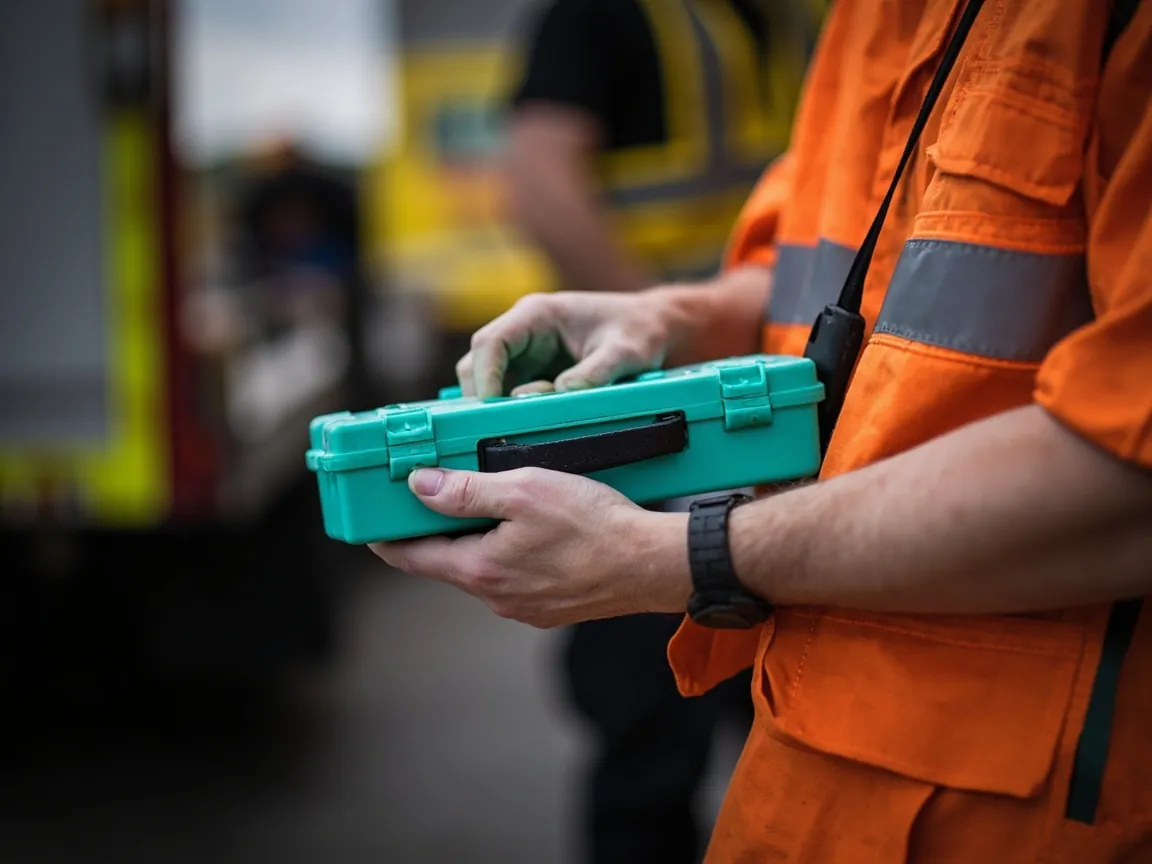
A power cut is common in disasters, and lighting, power and communication directly affect evacuation and rescue efficiency. For lighting, provide a main source and a backup such as a flashlight and a headlamp, with spare or rechargeable batteries; for power, provide a power bank, a hand-crank generator or a solar charger to keep phones and lighting going; for communication, provide a hand-crank or battery radio to receive information and a whistle or similar tool that does not depend on electricity. Storage thinking for emergency and vehicle scenarios can follow Power Emergency-Repair Vehicle Cases.
For storage, keep batteries in a separate compartment and supplies ready to use: store batteries apart from equipment to avoid long contact and leakage corrosion, separate and label different battery sizes, and coil and secure charging devices and cables to prevent rubbing damage in transit. For equipment left on standby for long periods, check with periodic charge and discharge, keeping the charge in a reasonable range to avoid deep-discharge damage. The lighting and communication module should sit in the most accessible position and be openable by touch in the dark.
Storing Tools, Firefighting and Breaching Equipment
Tools and firefighting equipment can markedly improve self-rescue and mutual aid in a critical moment, but their storage has safety specifics. Tools may include a multi-tool, rope, gloves, goggles and a portable pry bar; firefighting equipment may include an extinguisher, a fire blanket and emergency lighting. Store with edge guards, heavy items low and secure fixation: edged tools must have a guard or dedicated pocket to prevent cuts; heavier equipment goes in the lower layer near the center to avoid a shift in the center of gravity during handling; and rope should be coiled and fixed to prevent tangling.
Firefighting equipment also needs attention to validity and storage conditions: an extinguisher should be checked for pressure and inspection date as required, and a fire blanket kept dry and clean; chemical firefighting or cleaning products should be stored separately and labeled to avoid mixing or leaking onto other supplies. For community reserve cases, keep the tool and breaching module separate from the protection and hygiene module, and define the retrieval order in drills so that a user under stress can still follow the process. Safety equipment must itself be stored safely.
Material Selection: Rotomolded, Injection and Aluminum
The shell material decides strength, sealing, weight and cost. A rotomolded case is molded in one piece from polyethylene with generous wall thickness, no weld seam and good impact and weather resistance, suited to large community reserves and frequent handling, but its self-weight is higher. An injection-molded case is molded from PP, ABS or PC with a thin wall, tight precision, a clean appearance and easy volume issue, suited to household and small to medium reserves, but its load and size are limited. An aluminum case is strong and easy to shield and heat-dissipate, suited to precision electronics and equipment needing protection, but it costs more and requires extra treatment for insulation and dent resistance.
| Material route | Advantages | Limits | Typical fit |
|---|---|---|---|
| --- | --- | --- | --- |
| Rotomolded PE | Impact and weather resistant, can be large | Higher self-weight | Large community reserve |
| Injection PP/ABS/PC | Light, precise, low cost | Limited load and size | Household and bulk issue |
| Aluminum | Strong, can shield | Higher cost, needs insulation | Precision electronics and gear |
| Combined case system | Stackable, expandable | Depends on interface design | Modular community reserve |
Screen first on capacity need, handling method, storage environment, whether water resistance and insulation are required, and budget. For most households an injection or small rotomolded case is sufficient; for a community reserve point a stackable and expandable combined case system is recommended for module management; and for modules containing electronics and precision instruments an aluminum case can be used locally. For structural and material fundamentals see Plastic Protective Cases: Material and Structure and Modular Case Systems.
Storage, Rotation and Shelf-Life Management
The value of a reserve case depends on management in normal times. Establish four rules. First, fixed storage. Assign each case a fixed position away from damp, heat and direct sunlight, with clear access, and set up signage at a community reserve point so residents know the location. Second, visible lists. Put the master list and number on the case exterior and category labels inside, so the contents are known without opening and can be counted once open. Third, scheduled rotation. Set a rhythm of quarterly checks and half-yearly rotation, following first-in-first-out by expiry, replacing supplies nearing expiry and checking batteries, medicine and extinguishers. Fourth, drill closure. Use household and community drills to verify retrieval efficiency, record problems and adjust compartments and lists.
For shelf-life management, keep one file per item: register the expiry of medicine, food, batteries and extinguishers and set reminders, avoiding a batch expiry that creates both waste and a gap; for paper products and electronics, watch damp and mold. For community reserves, archive the check records so the state of supplies is traceable. A good reserve case is not finished when bought; it improves once per drill and once per list revision.
| Management action | Frequency | Focus | Owner |
|---|---|---|---|
| --- | --- | --- | --- |
| Appearance and seal check | Quarterly | Case damage, gasket ageing | Household or module owner |
| Expiry and status check | Half-yearly | Medicine, food, batteries, extinguisher | Module owner |
| Supply rotation and top-up | Half-yearly | First-in-first-out, fill gaps | Household or community manager |
| Retrieval drill | At least yearly | Location speed, handling ease | Household or community organizer |
Procurement and Acceptance Checklist
Procurement of an emergency supply reserve case should treat supplies, case and management as one whole, and the technical clauses must be clear and verifiable. The recommended checklist is: first, users and scenarios, stating whether household, community or vehicle, as the input to capacity and configuration; second, the supply list and classification scheme with categories, quantities and priorities; third, the case structure requirement, including compartment method, whether the liner is removable and whether it is modular; fourth, sealing and protection rating, citing GB/T 4208 or IEC 60529 and stating whether water resistance is required; fifth, material, load and handling configuration such as handles, shoulder strap and casters; sixth, the labeling and list scheme, including numbering rule, label form and whether a QR code is provided; seventh, special module requirements for first aid, medicine, food insulation and electronics; eighth, documents including material certificates, test reports and sampling plan; and ninth, lead time, packaging and after-sales terms.
Acceptance should use three steps of list check, live retrieval and sampling. First check each supply and compartment against the list and verify that labels are clear; then let a non-specialist try to locate and retrieve key supplies, verifying find it in three seconds, take it out in ten; finally sample the case sealing, load and latch durability.
| Acceptance item | Method | Pass criterion |
|---|---|---|
| --- | --- | --- |
| Supply and compartment match | Check item by item against list | No gap, compartments correspond |
| Label clarity | Visual check and retrieval | Contents known without opening |
| Sealing and rating | Sampling per standard | Reaches agreed rating |
| Load and handling | Full-load handling test | One-person carry, no cracking |
| Retrieval efficiency | Timed live drill | Key supplies located quickly |
| Documents and service | Reports and warranty terms | Complete and accountable |
JUNZHJIA Customization Capability
JUNZHJIA provides customized and volume supply of emergency supply reserve cases for households, communities, schools and businesses. We design compartment dividers, removable liners and modular inner boxes according to the users and the supply list, and support turning survival, medical, lighting and power, communication, tools and breaching, protection and hygiene, and special-needs supplies into independent module cases. The shell can follow any of three material routes, namely rotomolding, injection molding and aluminum, and can be supplied with handles, shoulder straps, casters, latches and a unified numbering and labeling scheme; for scenarios needing water resistance we can provide sealing structure and IP rating design. We support structural review, sampling and mass production and can provide material and structural documents for tender acceptance. For community and institutional users we support a combined scheme with standard cases and dedicated modules, combining long case reuse with module replacement by need to balance reserve completeness and long-term cost.
Frequently Asked Questions (FAQ)
Question: What is the essential difference between a household and a community emergency supply reserve case? Answer: The essential difference is in the users and the management model. A household emergency case targets family self-rescue and short sheltering, is small in capacity and complete in function, and emphasizes easy carrying and quick transfer, usually configured by person and by day. A community reserve case targets community response points, buildings and volunteer groups, is large in capacity and complete in category, and emphasizes standardization, numbering, countability and multi-point sharing. So a household case is about one set per person that can be grabbed and go, while a community case is about unified management and modular rotation. Both rely on compartments, labels and lists so a non-specialist can retrieve supplies quickly.
Question: How many days of emergency supplies should be reserved? Answer: A household is usually advised to estimate at least three days per person, extended according to the dominant local hazard and how reachable the area is for rescue. In the early phase of a disaster, blocked roads and interrupted supply are common, so self-sufficiency in the first few days is most critical. Food and water can be configured by day with a margin, medicine by treatment course, and lighting and power should last several days. The number of days is not fixed but should be adjusted to local risk, family structure and evacuation conditions, and verified by drill to confirm it is really enough.
Question: How often should supplies in a reserve case be rotated? Answer: Set a rhythm of quarterly checks and half-yearly rotation, with at least one drill a year. Quarterly checks focus on appearance, sealing and obvious damage; the half-yearly rotation follows first-in-first-out by expiry, taking out supplies nearing expiry for everyday use and replenishing with new ones; and the drill verifies retrieval efficiency and configuration reasonableness. Medicine, food, batteries and extinguishers with a clear expiry should be registered separately with reminders to avoid a batch expiry that creates a gap in an emergency. Rotation exists to keep the reserve actually usable.
Question: Why should a first-aid reserve case be separate from an ordinary supply case? Answer: Because first aid and medicine have clearly higher requirements. Medicines have indications, doses, storage conditions and shelf lives, and mixing, damp or heat, or expiry can create risk; first-aid items also need to be dry, dark and ready to use. It is therefore recommended that the first-aid reserve be a separate case or compartment, separately labeled, listed and owned, and configured under professional guidance. Separation also makes counting and rotation easier, prevents medicine from being crushed by other supplies, and allows it to be taken out quickly on its own when needed.
Question: Does an emergency supply reserve case need to be waterproof? Answer: It depends on the storage and use environment. If the case is stored long term in a damp basement, garage or outdoor reserve point, or used in rain, snow or wading, choose a case with dust, moisture and even water resistance, with a sealing rating following the GB/T 4208 or IEC 60529 IP scheme. If it is kept in a dry indoor place and mainly covers earthquakes, dust, moisture and sealing are enough. Whatever the rating, gaskets, latches and desiccant should be checked on schedule to avoid a case rated waterproof but actually leaking air. Water resistance is a means; keeping supplies usable is the goal.
Question: What is the most common management problem with community reserve cases? Answer: The most common problems are borrowed out in normal times and missing in an emergency, and a failure to rotate before expiry. Community supplies are large in quantity and handled by many people, so without unified numbering, a list and named owners, a temporary loan not returned leaves a gap; and without regular rotation, medicine, food and batteries fail when needed. The answers are the three unities of unified numbering, unified list and unified owner, together with quarterly checks and half-yearly rotation, and drills to verify retrieval efficiency. Including the reserve case in routine community safety patrols is the key to avoiding complete on paper but empty in practice.
Question: How should supplies in the case be compartmentalized? Answer: Compartmentalize by function and use modular design. Removable dividers can define function zones, a custom liner can fix each item in one unique position, or modular inner boxes can be retrieved as complete survival, medical and tool packs. When compartmentalizing, keep food and medicine apart, tools and clothing apart, and batteries and equipment apart, and mark first aid and special-needs supplies in a striking color. For scenarios carried by several people, a modular design also lets each person take one module, improving handling and coordination. The goal of good compartmentalization is a missing item visible at a glance and retrieval in one step.
Question: What is most often overlooked when procuring an emergency supply reserve case? Answer: Management and retrieval efficiency are most often overlooked. Many purchases focus only on the case and the quantity of supplies and ignore the list, labels, owners and rotation system, so that after purchase no one manages it and no one replaces expired items. Write the supply list and classification, compartment and labeling requirements, sealing rating, load and handling configuration, special module requirements, and documents and after-sales into the procurement clauses, and at acceptance let a non-specialist run a live retrieval drill to verify that key supplies can be located in the shortest time. Only by writing manageable in normal times and usable in an emergency into the clauses does a reserve become truly effective.
Conclusion and Related Reading
The value of an emergency supply reserve case lies not in looking complete in normal times but in being truly usable in an emergency. In selection, first define the users and scenarios, then set the supply list and classification, then design compartments, sealing, labels and modules, and finally close the loop with rotation and drills. Taking find it in three seconds, take it out in ten and carry it alone as the design goal, and quarterly checks, half-yearly rotation and an annual drill as the management system, is what makes a reserve effective at the critical moment. For a household the key is that every member knows where the case is and how to use it; for a community the key is unified numbering, a unified list and a unified owner.
For further reading, see Plastic Protective Cases: Material and Structure, Modular Case Systems: Stacking, Joining and Expansion, Waterproof Case Sealing Design, Food and Catering Insulated Cases for Insulation and Cold Chain and Power Emergency-Repair Vehicle Cases for On-Board Storage. JUNZHJIA offers a complete matrix from standard emergency supply reserve cases to fully custom preparedness programmes; select according to your users and supply list.
This article is SEO/GEO technical content. Figures are typical and empirical values; specific parameters are subject to the manufacturer's latest test reports and customization scheme.