

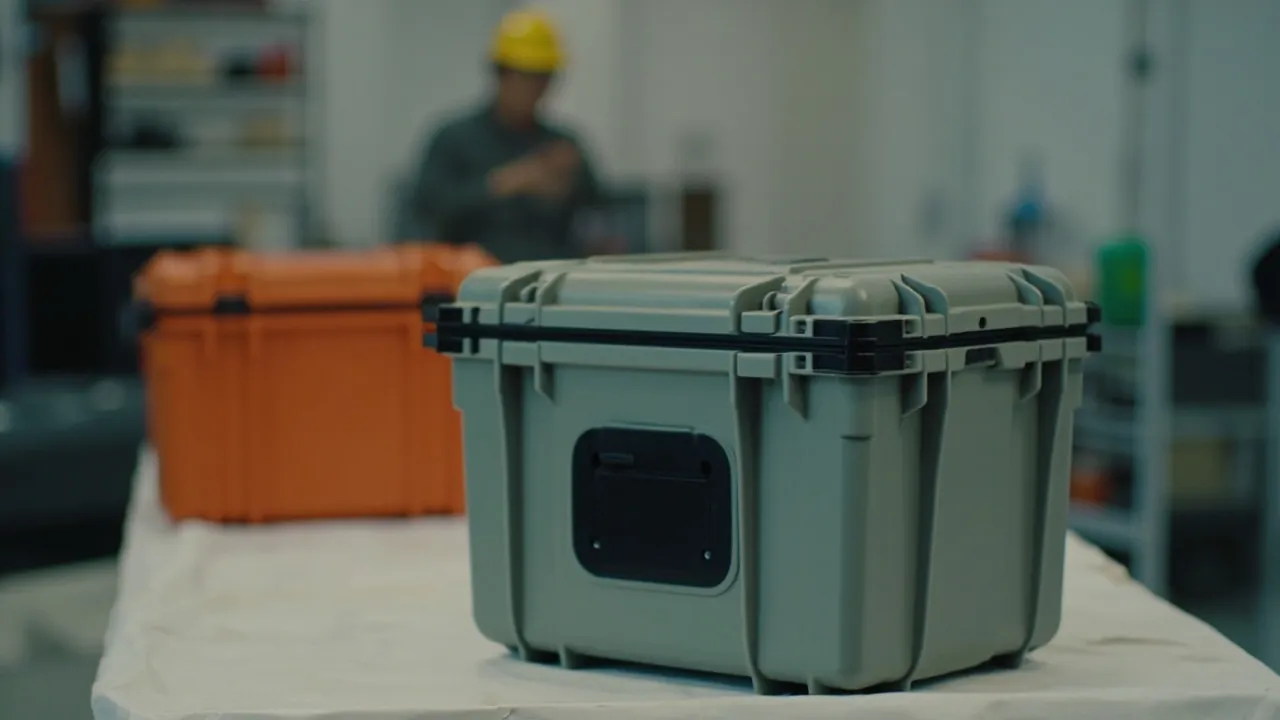
In scenarios such as field exploration, marine work, emergency rescue, outdoor photography, and industrial inspection, the thing equipment fears most is often not impact but water — rain, spray, falling overboard, wading, and long-term moisture can instantly disable precision instruments, batteries, and electronic modules. The conclusion is direct: the core value of a waterproof protective box is to build a continuous sealing path graded by the IP rating (IEC 60529 / national standard GB/T 4208); a floating waterproof case adds buoyancy structure on top of that so a dropped unit floats and can be recovered; selecting the right dustproof case and moisture-proof case covers the full chain from "splash resistance" to "long-term humidity control." This article is written for procurement and engineering staff. It systematically explains the rating, structure, material, testing, and combined selection of waterproof protective boxes, and shows how to use them together with plastic protective boxes, sealed protective boxes, and low-temperature protective boxes.
From a procurement standpoint, the most common confusion is between "waterproof" and "sealed": the former emphasizes resisting external water intrusion, while the latter emphasizes the continuous closure between lid and shell. A qualified waterproof protective box must achieve both — the sealing ring provides the path, the latch provides the compression force, and the shell provides structural support. The following unfolds in the order of "rating — structure — buoyancy — dust — moisture — seal — valve — material — testing — scenario — synergy — customization — mistakes," and explains how to coordinate with plastic waterproof, sealed and moisture-proof boxes to build an overall scheme of water-and-dust outside, moisture-and-shock controlled inside.
Table of Contents
- What Is a Waterproof Protective Box
- IP Rating Explained (IEC 60529 / GB/T 4208)
- Structural Design of Waterproof Protective Boxes
- Design Principle of Floating Waterproof Cases
- Dustproof Cases and Dusty Environments
- Moisture-Proof Cases and Humidity Control
- Seal and Latch Selection
- Pressure-Balance Valve and Internal-External Pressure
- Material Selection (PP / ABS / PC)
- Test Methods and Acceptance Standards
- Typical Application Scenarios
- Synergy with Sealing, Shock and Temperature
- JUNZHJIA Waterproof Protective Box Custom Capability
- Common Selection Mistakes
- FAQ
- Conclusion and Related Reading
What Is a Waterproof Protective Box
A waterproof protective box is a case-type product based on engineering plastic or alloy that resists external water intrusion by grade through an elastic sealing ring, waterproof latch, and closure structure. Different from plastic storage and transit boxes that emphasize "holding more," a waterproof protective box emphasizes "holding up," focusing on the continuity of the sealing path and the repeatability of the structure. A typical waterproof protective box consists of a shell, a sealing ring (mostly TPE, silicone, or EPDM), a waterproof latch (butterfly latch, draw latch, or screw latch), and an optional pressure-balance valve.
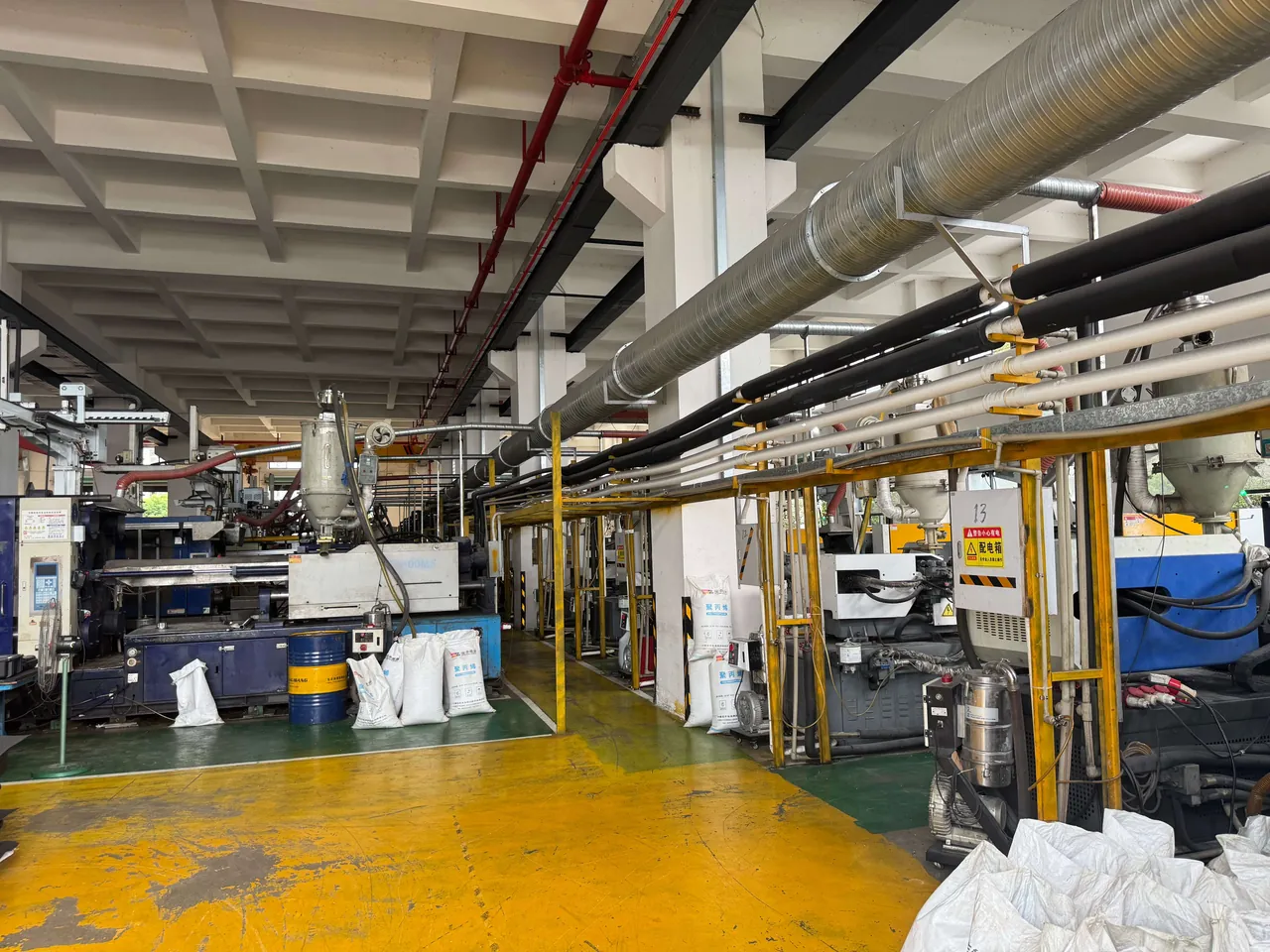
In classification, waterproof protective boxes are often listed alongside floating waterproof cases, dustproof cases, and moisture-proof cases: a floating waterproof case adds a buoyancy layer or buoyancy chamber on top of waterproofing so the whole unit floats after falling into water; a dustproof case emphasizes complete blocking of dust and sand; a moisture-proof case adds humidity management on top of sealing. The four are not mutually exclusive — most high-protection products combine several of these abilities, and the key lies in trade-offs by working condition.
From the perspective of cost and delivery, a waterproof protective box shares the same origin as plastic waterproof, sealed and moisture-proof boxes: both use engineering plastic as the matrix and a sealing ring as the waterproof path, and the difference is more about the protection grade and buoyancy configuration. For general industrial and inspection scenarios, a standard waterproof grade is sufficient; for high-risk water-drop scenarios such as marine and rescue, the buoyancy and visibility of a floating waterproof case should be prioritized. It is recommended to clarify three questions first when procuring — "will it fall into water, must it be recovered after falling, and is it long-term damp" — and then reverse-derive the required IP grade and buoyancy configuration, avoiding paying for unused performance.
IP Rating Explained (IEC 60529 / GB/T 4208)
The protection capability of a waterproof protective box is measured by the IP (Ingress Protection) code, based on the international standard IEC 60529, corresponding to the national standard GB/T 4208. The IP code consists of two digits: the first is the dust-protection level (0–6), and the second is the water-protection level (0–8, extended to 9K at higher levels). Common combinations are shown in the table below.
| IP Grade | Dust Meaning | Water Meaning | Typical Scenario |
|---|---|---|---|
| --- | --- | --- | --- |
| IP54 | Dust protected (limited) | Splash from any direction | Indoor damp, occasional splash |
| IP65 | Fully dust-tight | Low-pressure water jet | Rainy outdoor, equipment washdown |
| IP66 | Fully dust-tight | Strong water jet | Ship deck, wash line |
| IP67 | Fully dust-tight | Immersion 1 m / 30 min | Wading, accidental drop in water |
| IP68 | Fully dust-tight | Continuous immersion (agreed) | Diving, long-term underwater |
Experience value: IP65–IP67 is sufficient for most inspection and outdoor scenarios; choose IP68 only for long-term immersion or diving needs, and confirm seal life and opening frequency fit.
When selecting, also incorporate "opening frequency" and "service life": although IP68 protects more, its thicker sealing ring and tighter latch accelerate seal fatigue, and each opening becomes harder, which reduces usability in tool-box scenarios requiring frequent access. Therefore, select by the principle of "most severe but not excessive" — for most wading and short-time water-drop situations, IP67 already covers the need. For special working conditions requiring buoyancy, the buoyancy structure of a floating waterproof case can be combined, but note that buoyancy design changes the center of gravity and stacking stability and should be evaluated together at the scheme stage.
It should be specifically noted that the IP grade is a "type test" result, representing the protection capability of a new box under standard conditions, and does not mean the box remains constant throughout its entire life cycle. The sealing ring gradually ages with the number of openings, ultraviolet exposure, ozone, and temperature cycling, and after the compression decreases, local leakage appears first rather than overall failure. Therefore, acceptance should not only look at new-box data, but also establish a regular inspection and replacement mechanism: in scenarios with salt spray, strong ultraviolet, or high-frequency opening, it is recommended to shorten the seal inspection cycle and write the spare-part specification into the maintenance manual. For long-term storage or exported equipment, the validity of the IP test report and the representativeness of the test samples should also be considered, avoiding replacing batch consistency with a single-machine precision test.
Structural Design of Waterproof Protective Boxes
The waterproof capability of a waterproof protective box comes from a "continuous sealing path": a flat shell parting face, a gasket section matching the groove, latches providing uniform compression, and no leakage points at corners or openings. Common structural practices include: opening a sealing groove around the lid to embed the sealing ring; using multi-point latches to balance compression; applying secondary sealing at interfaces and hinges; and installing a pressure-balance valve where necessary.
Design points include: the sealing ring compression is typically controlled at 15%–30%, too little leaks and too much accelerates aging; latches should be evenly distributed along the perimeter to avoid local under-pressure; the lid opening force should be within the ergonomic range to ensure single-person operation on site. For airdrop or rough handling scenarios, refer to the airdrop protection logic of handheld portable boxes for reinforced latches and multi-layer energy absorption.
Design Principle of Floating Waterproof Cases
A floating waterproof case is a product that adds buoyancy capability on top of a waterproof protective box, so that the box together with its internal equipment floats on the water surface after falling in, facilitating recovery. It is commonly used in marine, fishing, wading inspection, and emergency rescue. The main ways to achieve buoyancy are two: embedding closed-cell foam material (such as EPE, EPS, PE foam) in the box sandwich or lid interior, or setting an independent buoyancy chamber outside the box body.
Buoyancy design must calculate the "full-load gravity" against the "buoyancy generated by displaced volume": the empirical principle of buoyancy is that the total weight of the box (including maximum load) should be less than the buoyancy margin of the displaced volume, and it is usually recommended to keep a 20%–30% upward float margin to cope with internal water absorption, shell wear, and wave disturbance. It is worth noting that the buoyancy structure increases volume and weight and may change the center of gravity of the box, affecting stacking and transport stability. Therefore, floating waterproof cases emphasize a design orientation of "light load + high visibility (often with reflective strips or bright colors)."
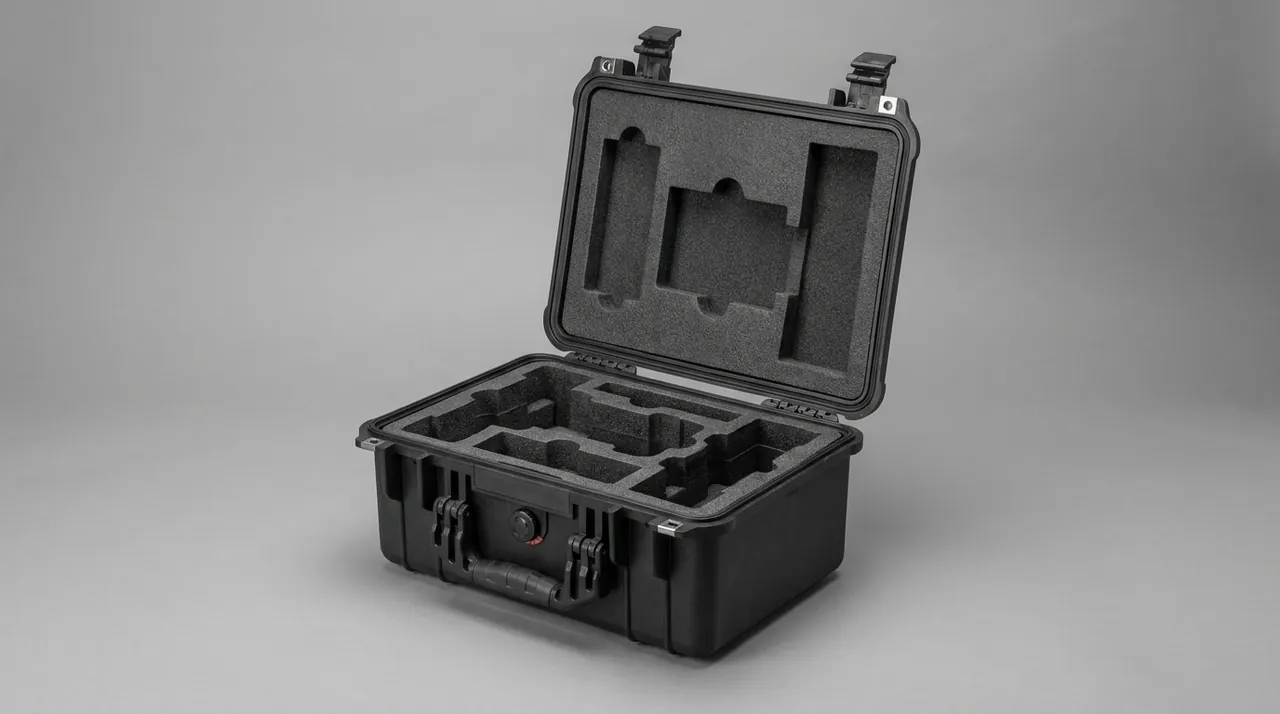
Dustproof Cases and Dusty Environments
Dustproof cases target granular environments such as dust, sand, coal dust, and metal chips. The core is to reach dust level 5 (limited entry) or 6 (fully dust-tight) in the first digit of IP. In mines, construction, desert inspection, and flour processing, dust not only contaminates the equipment surface but can also enter buttons, interfaces, and heat sinks and cause failures. Dustproof cases block particle entry through continuous sealing and filtered ventilation (if needed).
In actual selection, dust and water often need to be considered together: for example, downhole and sandstorm environments require both complete dustproofing and rain protection, so IP65 and above should be selected directly. For equipment requiring breathable heat dissipation, a vent valve with a filter screen can be set on the sealing path to ensure dustproof and waterproof while balancing internal-external pressure. The relevant logic can refer to the material and sealing sections of plastic protective boxes.
Moisture-Proof Cases and Humidity Control
A moisture-proof case adds humidity management on top of sealing, controlling relative humidity within the equipment allowable range (such as <40% RH commonly required to prevent condensation). Implementation includes built-in desiccant (silica gel, montmorillonite), humidity indicator cards, or electronic hygrometers. Moisture-proofing is not "the drier the better": some equipment has minimum humidity requirements, and over-drying may cause material cracking or rising static, so the target humidity range should be set by equipment specification and desiccant replaced periodically.
Synergy with floating waterproof cases and dustproof cases is especially common: in marine and island environments, equipment must resist salt-spray water intrusion, prevent moisture and oxidation, and resist sand abrasion. Writing "waterproof + dustproof + moisture-proof" into the same specification is more helpful for supplier matching than describing them separately, and facilitates item-by-item acceptance. For equipment with electronic modules, a conductive liner of anti-static boxes can also be laminated to meet dual moisture and ESD requirements.
Seal and Latch Selection
Seal material must match the environment: TPE or EPDM for normal-temperature dry environments, with good cost-performance and elasticity; silicone for high temperature (above 100 °C), with better temperature and aging resistance; fluororubber FKM for contact with oil or solvent. The latch form affects pressure uniformity: butterfly latches or quick-open locks suit frequently opened tool boxes, emphasizing speed and feel; multi-point screw latches or draw latches suit long-term sealed or wading equipment boxes, emphasizing uniform compression and anti-theft.
It is recommended to refer to the latch-sealing design of sealed protective boxes and use multi-point latches to balance pressure and avoid local leakage. After lid closure the sealing ring should have reasonable compression; for large-size boxes, the opening force should be checked to be within the ergonomic range to avoid latches too tight to open on site. JUNZHJIA usually provides latch selection advice in sealing projects and evaluates closure combined with sealing ring compression to ensure "tight compression" and "easy opening" hold simultaneously.
Pressure-Balance Valve and Internal-External Pressure
Under high-low temperature changes, altitude rise and fall, or rapid water entry, pressure difference will be generated inside and outside the box, which may cause difficult opening, inward collapse, or even seal failure. A pressure-balance valve (breathable but watertight) balances the pressure difference through a microporous structure with a hydrophobic breathable membrane, while blocking water and dust from entering. It is a key component for the reliable operation of waterproof protective boxes and floating waterproof cases under severe working conditions.
Valve selection must match the ventilation volume and protection grade: insufficient ventilation balances slowly, while excessive ventilation increases the risk of water ingress. Military and industrial scenarios often require the valve to pass IP67 waterproof and a certain ventilation rate simultaneously, and maintain performance in salt-spray, ultraviolet, and aging tests. For airdrop or deep-diving scenarios, the sealing reliability of the valve under extreme pressure difference should also be checked, and a dual valve or standby valve should be set if necessary.
Material Selection (PP / ABS / PC)
The base material of a waterproof protective box determines strength, temperature resistance, and cost. Common choices: PP (chemical resistant, low cost, light), ABS (good rigidity, easy molding), PC (high impact, high temperature resistance), PC/ABS alloy (balanced). For boxes requiring buoyancy or weight reduction, closed-cell foam material can also be introduced into the sandwich.
| Material | Long-Term Temp | Impact | Typical Use |
|---|---|---|---|
| --- | --- | --- | --- |
| PP | -10~100 °C | Medium | Low-cost, chemical case |
| ABS | -20~80 °C | Medium | Toolbox, shell |
| PC | -40~120 °C | High | High-strength waterproof case |
| PC/ABS | -40~110 °C | Good | General waterproof case |
Experience value: for outdoor, vehicle, and nearshore scenarios, prefer PC or PC/ABS to balance impact resistance and weather resistance; for pure indoor low-cost transit, PP is acceptable. Outdoor boxes should add anti-UV additives to avoid fading and brittleness under long-term sunlight.
Test Methods and Acceptance Standards
Waterproof protective boxes should be systematically tested before delivery: IP spray/immersion tests are performed according to IEC 60529 to verify waterproof and dustproof at the specified grade; air-tightness tests use the differential-pressure method to detect leakage rate; high-low temperature cycling verifies the temperature adaptability of seals and materials; drop and vibration tests verify transport reliability (refer to MIL-STD-810H, ISTA methods). Acceptance should retain test images, curves, and reports for traceability.
It is recommended to make a single-box sample first, complete IP spray/immersion, drop, and stack verification, and then scale up. Accept by batch sampling of IP and seal compression, and check the material certificate and test documents of similar products of plastic protective boxes. If the equipment also needs anti-static or temperature resistance, the modification logic of anti-static boxes and low-temperature protective boxes can be combined respectively to make a composite liner on the matrix, ensuring that the seal and conductive/temperature layers do not interfere with each other.
Typical Application Scenarios
Waterproof protective boxes are widely used in: marine and fishing equipment, outdoor exploration instruments, emergency rescue supplies, underwater film equipment, industrial inspection tools, and vehicle emergency equipment. Different scenarios combine differently — wading selects waterproof protective boxes, recoverable drop selects floating waterproof cases, dusty environments select dustproof cases, moisture-fearing equipment selects moisture-proof cases, and buffering needs select shock-proof boxes and EVA-liner cases. Combined with the shoulder strap and wheels of handheld portable boxes, carry efficiency can be further improved.
In specific selection, it is recommended to use two lists of "environment — risk" first: the environment lists temperature, humidity, dust, whether wading, and whether contacting media; the risk lists drop height, stacking layers, vibration intensity, and whether ESD/EMC is needed. The intersection of the two determines the functional combination that must be enabled, avoiding paying for unused functions and avoiding missing key protection. For example, marine is mostly "waterproof + floating + moisture-proof + anti-corrosion," desert inspection is mostly "dustproof + waterproof + temperature-resistant," and medical transfer is mostly "moisture-proof + shock-resistant + easy to disinfect."
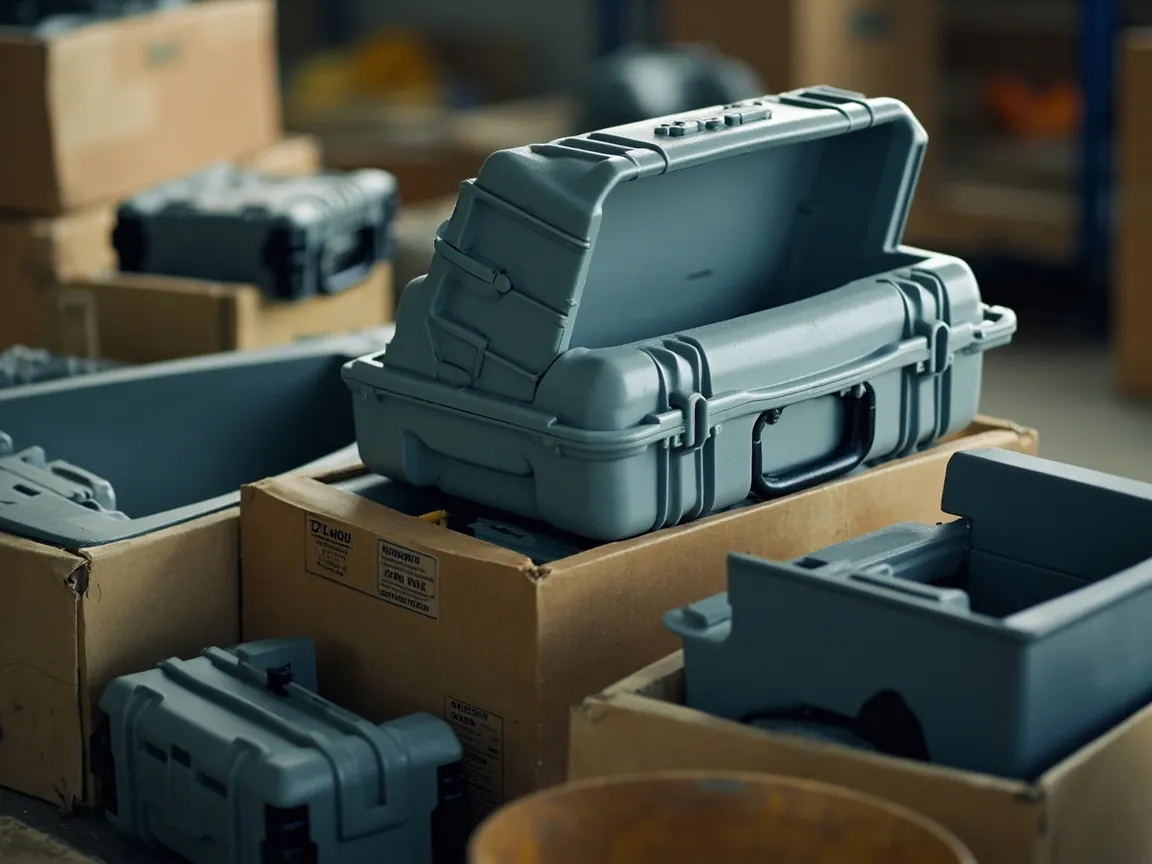
Take a nearshore inspection project as an example: the instruments are high-value, the route is wavy, and the deck is often flooded, so the risks concentrate on "loss by falling into water" and "salt-spray corrosion." At this time, prioritize an IP67 waterproof protective box with floating buoyancy and reflective markings, use the custom-cut liner of shock-proof boxes and EVA-liner cases to fix the instruments, and select PC/ABS for the shell with anti-UV and anti-salt-spray treatment. If the instrument contains electronic modules, laminate the conductive liner of anti-static boxes. In this way, the four capabilities of "waterproof — floating — shock — anti-static" are coordinated on the same shell, which saves more space than purchasing multiple boxes separately and is also easier for on-site management.
Synergy with Sealing, Shock and Temperature
Waterproof protective boxes often need to stack other protections: coordinate with sealed protective boxes to strengthen continuous closure; coordinate with shock-proof boxes and EVA-liner cases to reduce transport shock; coordinate with low-temperature protective boxes to cope with cold or high temperature; coordinate with anti-static boxes to meet electronic ESD. The key to collaborative design is to plan sealing, liner, and material uniformly in a 3D model to avoid mutual interference.
Taking the "waterproof + shock + floating" combination as an example, a common conflict point is: the buoyancy sandwich occupies internal space, and the cushion liner needs thickness; the superposition of the two may push open the lid and destroy the sealing ring compression. Therefore, at the 3D review stage, the shell inner diameter, sealing ring section, total liner thickness, and buoyancy layer position should be treated as the same set of constraints for joint solution, and it is best for the supplier to do double verification of closure gap and buoyancy at the sampling stage. JUNZHJIA usually includes multiple protection functions in the review of customization projects to reduce later mold changes and rework.
JUNZHJIA Waterproof Protective Box Custom Capability
JUNZHJIA provides one-stop customization of waterproof protective boxes: combining IP65–IP68 waterproof, fully dust-tight, humidity management, and floating buoyancy by protection needs, selecting PP/ABS/PC/PC-ABS matrix and matching seals and pressure-balance valves, supporting seals and liners by model, able to stack anti-corrosion, temperature-resistant, and anti-static modifications, and supporting OEM/ODM batch supply. It delivers a documentation package including IP grade, air-tightness, drop, and vibration test descriptions, facilitating acceptance traceability for engineering and marine customers.
In the implementation of customization capability, JUNZHJIA usually first confirms the "protection priority" with the customer: when waterproof, buoyancy, shock, and other needs constrain each other, sort by the consequence of equipment failure, give priority to protecting the most serious one, and make sub-optimal compromises on the rest. For example, for high-value but smoothly transported medical equipment, prioritize moisture-proof and shock-resistant, and buoyancy can be appropriately compromised; for instruments used at sea, prioritize waterproof and floating, and shock-resistant as a basic configuration. This risk-based trade-off controls cost and weight better than average effort.
Common Selection Mistakes
First, "a sealing ring means waterproof": uneven latch pressure still leaks, so look at the overall sealing path. Second, "higher IP is better": too high increases cost and may sacrifice opening convenience. Third, "floating means absolutely no sinking": buoyancy must be calculated by full load and retain an upward float margin; overload or water absorption will fail it. Fourth, "moisture-proof means the drier the better": some equipment dislikes over-drying. Fifth, "shock resistance relies only on shell": the key is the cushion liner. Sixth, ignoring the match with the latch of sealed protective boxes causes insufficient sealing ring compression.
Beyond mistakes, a "protection priority review" mechanism should also be established: after equipment modification, changes in transport mode, or adjustment of deployment region, the originally determined weights of waterproof, dustproof, moisture-proof, and buoyancy may change. It is recommended to treat the priority as a live document, update it synchronously with project evolution, and re-confirm the shell material, seals, and liner scheme at each modification. JUNZHJIA usually retains the protection archive of customer products in customization cooperation, facilitating quick adjustment suggestions when upgrading or expanding later, shortening the re-selection cycle.
FAQ
Q: How to choose IP67 and IP68 for a waterproof protective box? A: IP67 means fully dust-tight and short-time immersion proof (typically 1 m depth for 30 min), suitable for rainy, wading, and accidental drop-in-water scenarios common in outdoor and inspection use. IP68 means continuous immersion, with specific depth and time agreed by the manufacturer, suitable for diving, long-term underwater, or continuously wet environments. Do not blindly pursue high grade, because higher grade usually means thicker sealing ring, higher cost, and possibly tighter opening force. IP67 is sufficient for most industrial inspection; choose IP68 only if there is a real long-term immersion need, and confirm seal life and opening frequency fit. Referring to the buoyancy structure of floating waterproof cases can further handle falling into water and recovery.
Q: Can a floating waterproof case really float? A: Yes, provided it is calculated by full-load gravity and retains an upward float margin (recommended 20%–30%). The buoyancy comes from the displaced volume generated by embedded closed-cell foam or an independent buoyancy chamber, which needs to be greater than the total weight of the box and internal equipment. Note that buoyancy design changes the center of gravity and volume, affecting stacking and transport stability; if the interior absorbs water, the shell wears, or it is overloaded, buoyancy will decrease or even fail. Therefore, floating waterproof cases are more suitable for "light load + high visibility" applications, such as marine recovery, fishing, and wading inspection, and the interaction between buoyancy and stacking should be evaluated together at the scheme stage.
Q: How should I read the first digit of the IP code for a dustproof case? A: The first digit of the IP code is the dust level, 5 means dust protected (limited entry, does not affect operation), 6 means fully dust-tight. In dusty environments such as mines, construction, deserts, and flour processing, it is recommended to directly select the fully dust-tight level of 6, especially when the dust is conductive or abrasive. Dustproof is often required together with waterproof; for example, downhole and sandstorm environments require both complete dustproofing and rain protection, so IP65 and above should be selected directly. Where necessary, a vent valve with a filter screen can be set on the sealing path to ensure dustproof and waterproof while balancing pressure.
Q: How to control humidity in a moisture-proof case? A: A moisture-proof case adds humidity management on top of sealing: built-in desiccant (silica gel, montmorillonite, etc.), humidity indicator card, or electronic hygrometer to control relative humidity within the equipment allowable range (such as <40% RH commonly required to prevent condensation). Note that drier is not always better; some equipment has minimum humidity requirements, and over-drying may cause material cracking or rising static, so set the target range by equipment specification and replace desiccant periodically. For electronic equipment, an anti-static liner can also be configured to meet dual moisture and static needs, consistent with the logic of anti-static boxes.
Q: What material is good for the sealing ring of a waterproof protective box? A: Seal material must match the environment. Normal-temperature dry environments can use TPE or EPDM, with good cost-performance and elasticity; high-temperature environments (above 100 °C) suggest silicone for better temperature and aging resistance; occasions contacting oil or solvent use fluororubber FKM for oil and media resistance. After material is determined, the key is matching section and groove, latches providing uniform pressure, and sealing ring compression typically controlled at 15%–30% after lid closure. Refer to the latch-sealing design of sealed protective boxes and use multi-point latches to balance pressure and avoid local leakage.
Q: What is the use of a pressure-balance valve, and will it let water in? A: A pressure-balance valve balances the internal-external pressure difference of the box through a microporous structure with a hydrophobic breathable membrane, avoiding difficult opening, inward collapse, and seal failure caused by high-low temperature, altitude, or rapid water entry, while blocking water and dust from entering. A qualified valve passes IP67 waterproof while having a certain ventilation rate, and maintains performance in salt-spray, ultraviolet, and aging tests. Valve selection must match ventilation volume and protection grade — insufficient ventilation balances slowly, excessive ventilation increases water-ingress risk. For deep-diving or airdrop scenarios, the sealing reliability under extreme pressure difference should also be checked, and a dual valve or standby valve set if necessary.
Q: Can a waterproof protective box use PP, or must it use PC? A: It depends on the operating temperature zone, load, and budget. PP has low cost, chemical resistance, and light weight, suitable for indoor or low-cost transit; ABS has good rigidity and easy molding, suitable for general tool boxes; PC and PC/ABS have high impact strength and wide temperature range (-40~120 °C), more suitable for outdoor, vehicle, nearshore, and wading severe scenarios. Outdoor and nearshore should prefer PC or PC/ABS and add anti-UV additives to prevent brittleness under sunlight. If buoyancy or weight reduction is needed, closed-cell foam can be introduced into the sandwich, but its impact on internal space and center of gravity should be calculated.
Q: What parameters should be checked when procuring a waterproof protective box? A: It is recommended to check: base material grade and temperature resistance, wall thickness and ribs, IP protection grade (note standard IEC 60529/GB/T 4208), seal material and compression, latch form and pressure, whether a pressure-balance valve is included, whether buoyancy is provided (if needed, note the upward float margin), liner material hardness and cushion stroke, and whether air-tightness, drop, vibration, and IP test files are provided. Write these into the specification to facilitate supplier quotation and acceptance. Suppliers like JUNZHJIA that support OEM/ODM can usually deliver a traceable documentation package, reducing batch quality-control risk.
Q: Can a waterproof protective box be made together with shock and temperature resistance? A: Yes, and this is a common combination. The implementation is "hard shell seal + soft liner cushion + temperature-resistant material": the shell uses sealing ring and latch for IP protection, the inside has pre-set or custom EVA/foam liner to absorb impact, and the matrix selects PC/ABS or adds temperature-resistant seal by temperature zone. The three belong to different interfaces and do not conflict; the key is liner thickness and layout reserve lid closure space to avoid pressing the sealing ring and causing deformation leakage. In design, shell inner diameter, sealing ring compression, total liner thickness, and buoyancy layer position should be included in 3D modeling for unified planning. For cushion selection refer to shock-proof boxes and EVA-liner cases.
Conclusion and Related Reading
The core of a waterproof protective box is "building continuous sealing by grade": based on the IP rating (IEC 60529 / GB/T 4208), using sealing rings, latches, and pressure-balance valves to resist water, dust, and pressure difference; floating waterproof cases add buoyancy, dustproof cases block particles, and moisture-proof cases manage humidity, and the four are combined by working condition. Selecting the right material, sealing, and liner, and incorporating synergistic needs such as shock and temperature resistance into unified design, allows waterproof protective boxes to hold equipment safe in real working conditions.
Related Reading