

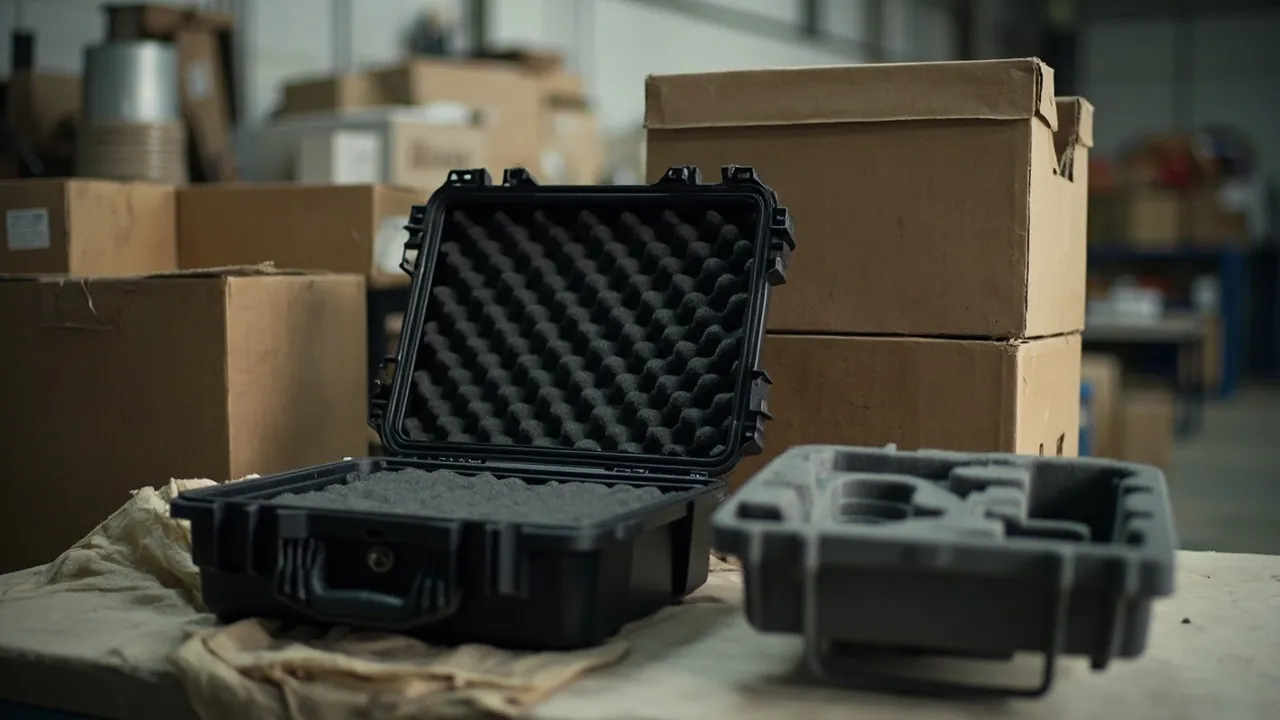
Precision instruments, optical lenses, medical devices, and electronic modules are rarely destroyed by a single dramatic fall during transit. Far more often, they suffer from the slow accumulation of invisible vibration and repeated low-level shock. The conclusion is direct: what determines whether a protective case actually saves valuable equipment is usually not the hard shell, but the cushioning liner that conforms to the equipment; specifying an EVA-liner case with custom-cut foam can reduce damage from drops and transport vibration to the lowest practical level. This article is written for procurement specialists, quality engineers, and technical buyers. It systematically explains the structure of shock-proof boxes, the properties of cushioning materials, the custom-cutting process, and how to build a complete protection plan together with the requirements outlined in precision instrument case selection and medical equipment boxes.
A shock-proof protective box is not simply a "box with sponge inside." A qualified cushioning-liner case must meet four dimensions at the same time: material, density, cutting accuracy, and fixation method. It must also work in concert with the sealing structure of an external plastic waterproof box. The sections below give parameters and standards that can be dropped directly into a purchase specification and an acceptance test plan.
From failure statistics, most equipment damage in transit is not "broken by falling" but "damaged by shaking" and "damaged by accumulation": too-large liner clearance lets the equipment shift and collide inside the box, or long-term vibration fatigues solder joints and connectors. Therefore the design focus of a shock-proof box is not to make the shell thicker, but to let the liner "fix, separate, and cushion" each piece of equipment. The article proceeds in the order of principle, material, structure, standard, process, and selection, and explains how to coordinate with the specific requirements of precision instrument case selection and medical equipment boxes to form a complete cushioning protection.
Table of Contents
- What Are Shock-Proof Boxes and EVA-Liner Cases
- Core Principles of Cushioning Liners
- Comparison of Common Liner Materials
- Structural Design of Shock-Proof Boxes
- Damping Parameters and Test Standards
- Custom Cutting Process for EVA-Liner Cases
- Selection Steps for Custom-Cut Cases
- Density and Hardness Grades of Foam-Liner Cases
- Differentiated Requirements by Equipment Type
- Synergy Between Liner and Waterproof Sealing
- Drop and Vibration Testing in Transit
- JUNZHJIA Custom Liner and OEM/ODM Capability
- Common Application Mistakes with Cushioning Liners
- FAQ
- Conclusion and Related Reading
What Are Shock-Proof Boxes and EVA-Liner Cases
A shock-proof protective box is a case type that integrates a cushioning layer inside the shell to absorb impact energy from transit drops, vehicle vibration, and handling collisions. Its core consists of two parts: a rigid shell, usually injection-molded from engineering plastic, and a flexible liner, usually a foamed material. An EVA-liner case specifically refers to a protective box whose liner body is made of ethylene-vinyl acetate copolymer (EVA) foam board. Because EVA combines resilience, chemical resistance, and easy cutting, it has become the mainstream choice for mid- and high-end instrument transport cases.
The word "liner" is the key. It separates the equipment from the hard shell so that impact energy is first absorbed by the foam and then released slowly, preventing the equipment body from bearing force directly. A custom-cut case goes further by carving recesses, clips, and dividers into the liner according to the equipment shape, so that every instrument has its own place and cannot shift or rub during transport. For high-value and complex-shaped equipment, pairing a sealed protective box shell with a custom liner is the most robust engineering combination.
Core Principles of Cushioning Liners
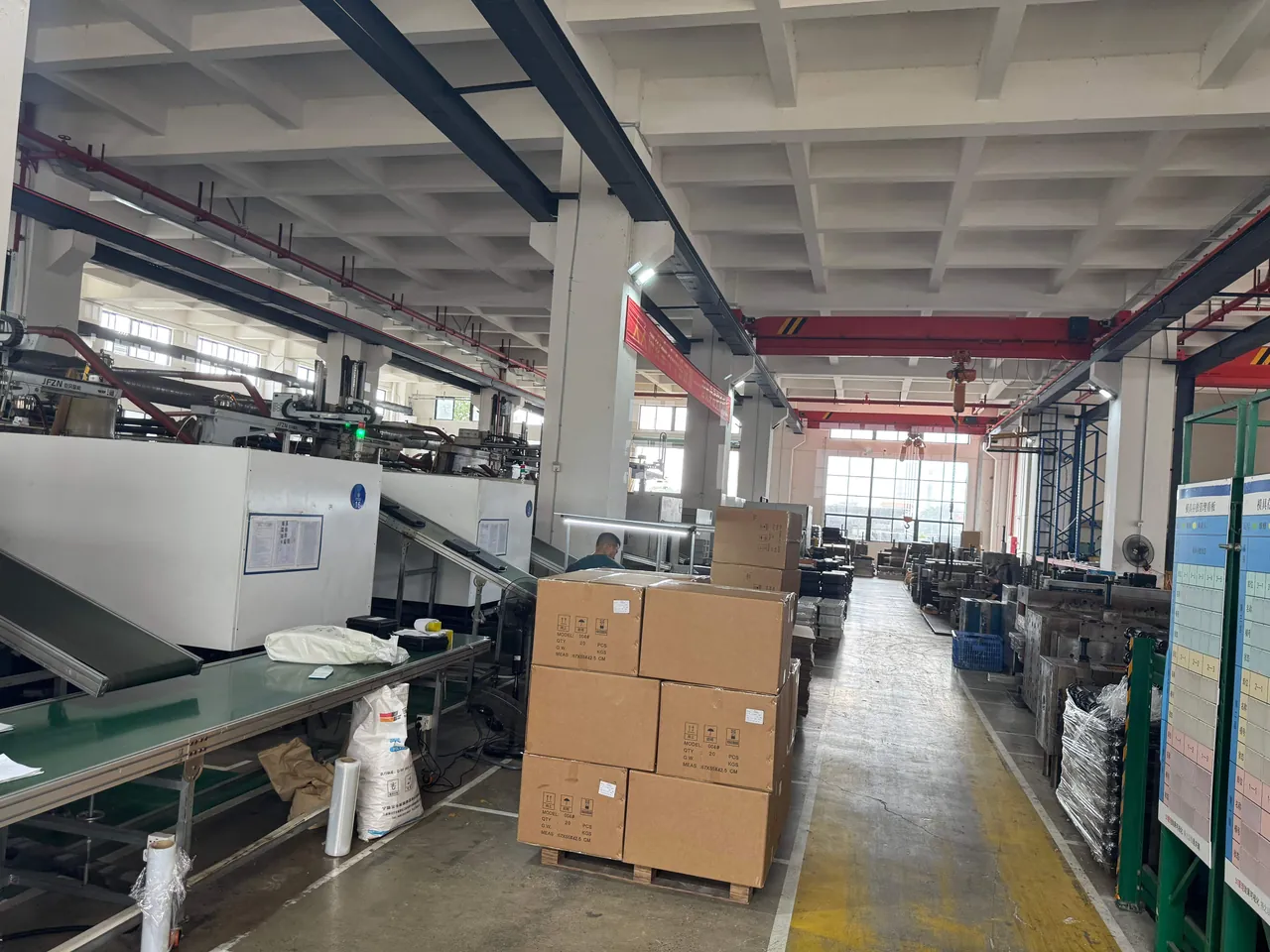
The essence of cushioning is "extend the force time, lower the peak acceleration." When a protective case drops, the ground reaction force travels through the shell to the liner; the foam is compressed and deformed, and the impact energy is converted into elastic potential energy of the material plus a small amount of plastic deformation heat. By energy conservation, the longer the liner compression stroke and the softer the material (within a reasonable range), the lower the peak acceleration g-value the equipment experiences.
Another key point is resonance control. Random vibration from vehicle transport is concentrated in the 5–200 Hz band. If the liner's natural frequency is close to this range, resonance amplification occurs and damage is actually worsened. A qualified cushioning-liner case designs the system natural frequency to be offset from common vibration sources, typically recommended to be below one-half of the equipment's tolerance frequency. For electronic device carry cases that contain electronic modules, this point is especially important. A practical way to judge resonance risk early is to measure the equipment's own fragile-axis response on a shaker and compare it with the liner's measured transmissibility; if the equipment tolerates only a narrow band, choose a liner whose transmissibility rolls off before that band. This is cheaper than discovering resonance after a damaged shipment and re-cutting the liner.
| Impact Source | Typical Peak Acceleration Reference | Liner Target |
|---|---|---|
| --- | --- | --- |
| Manual handling drop 1 m | 50–150 g (no cushion) | Reduce to 20–40 g |
| Vehicle road transport vibration | 2–8 g | Cut peak by over 60% |
| Airdrop / rough handling | Over 200 g | Professional multi-layer absorption |
Experience value: for most precision instruments, the liner should control the peak acceleration from a free drop to within one-third of the equipment's allowable value, and retain at least 2 mm margin to prevent insufficient cushioning after material aging.
In actual selection, one must also distinguish two needs: "impact cushioning" and "vibration isolation." A drop is a short-term high-g impact absorbed by the foam compression stroke; road transport is a long-term random vibration suppressed by system stiffness and damping. Their material requirements differ — impact prefers higher density and shorter stroke, while vibration prefers lower density and a damping layer. Therefore a good cushioning-liner case often uses a layered design: a low-density slow-rebound top layer for vibration and a high-density bottom layer for impact, combined with the protection experience of electronic device carry cases so the equipment stays controlled under every condition. This also explains why "softer is better" is a myth: over-soft foam bottoms out during a drop and loses cushioning, and heavy parts may even hit the shell directly.
Comparison of Common Liner Materials
Foam materials used for foam-liner cases mainly include EVA, PU (polyurethane) foam, PE (polyethylene) foam, and IXPE (irradiated cross-linked polyethylene), each with clearly different properties.
| Material | Resilience | Temperature | Compression Set | Cutability | Typical Use |
|---|---|---|---|---|---|
| --- | --- | --- | --- | --- | --- |
| EVA | High | -40~70 ℃ | Excellent | Excellent (CNC/die-cut) | Instruments, lenses, tools |
| PU foam | Medium | -30~80 ℃ | Good | Good | Light equipment fill |
| PE foam | Medium | -50~90 ℃ | Excellent | Medium | Heavy cargo pad |
| IXPE | High | -60~100 ℃ | Excellent | Excellent | Premium moisture/ESD liner |
The advantage of an EVA-liner case lies in its wide hardness range (typically Shore C 20–65). It can serve both as a soft contact layer protecting paint and as a hard support layer fixing the body. For electronic parts that also need anti-static boxes protection, a conductive layer can be laminated onto the EVA surface or an anti-static modified compound can be selected.
It must be emphasized that the material table is only a starting point; the final protection effect depends on the combination of "material + density + cutting + fixation." The same EVA board, with the wrong density or too-large recess clearance, will be greatly reduced in protection. Therefore, for high-tolerance scenarios such as measuring-tool cases, we suggest writing the liner density, hardness, and clearance tolerance into the specification and asking the supplier for first-article measurement data. For batch procurement, the material grade should also be reviewed periodically to prevent substitution with inferior material. If the equipment is also moisture-sensitive, you can combine a plastic moisture-proof box as a sealed liner to achieve cushioning and moisture control in one box.
Structural Design of Shock-Proof Boxes
The shell structure directly determines whether the liner can function. A qualified shock-proof box should have: sufficient wall thickness (typically 3–5 mm, thicker at load-bearing positions), internal ribs, rounded transitions for stress dispersion, and bosses or slots convenient for fixing the liner. If the shell deforms too much during a drop, even the best liner will fail.
Liner fixation methods commonly include three types: adhesive backing, mechanical clips, and embedded pre-cut slots. Adhesive is suitable for light liners, mechanical clips for washable designs, and embedded fixation clips the liner directly into shell bosses, which is the most stable. In custom projects JUNZHJIA usually selects the fixation scheme according to equipment weight and disassembly frequency, and reserves a cooperation gap with the sealing ring structure of a plastic waterproof box. A useful detail is to provide access ribs or pull tabs at pocket edges so operators can extract the device without prying against the foam, which otherwise tears the liner over time. Also leave a small clearance at the lid side so the closed lid gently pre-loads the equipment without crushing it; too much pre-load slowly compresses the foam and shortens its life, while none lets the device rattle. These small geometry choices decide whether the liner feels precise or sloppy after a hundred open-close cycles.
Damping Parameters and Test Standards
Cushion design cannot rely on feel alone; it needs quantifiable standards and tests. The industry widely adopts the ISTA (International Safe Transit Association) series and MIL-STD-810H environmental engineering methods. ISTA 3A/3E gives procedures for drops, vibration, and compression in single-parcel and unitized transport; MIL-STD-810H method 516.8 for drop and 514.8 for vibration applies to military-grade equipment.
| Standard | Focus | Recommended Use |
|---|---|---|
| --- | --- | --- |
| ISTA 3A | Single parcel transit composite | Commercial instrument courier |
| ISTA 3E | Unitized transport unit | Batch factory equipment |
| MIL-STD-810H 516.8 | Drop impact | Military / field equipment |
| MIL-STD-810H 514.8 | Random vibration | Vehicle / airborne transport |
Experience value: for acceptance, it is recommended to run at least one complete ISTA 3A cycle and retain video records of a 0.8 m drop height, as part of the supplier's quality documentation package.
Custom Cutting Process for EVA-Liner Cases
The soul of a custom-cut case is "conformance." There are two mainstream processes: CNC milling and die-cut pressing. CNC suits small-batch, multi-variety, complex-shape, high-tolerance scenarios; it can read the equipment 3D model directly to generate tool paths. Die-cut suits large batches with regular shapes and low unit cost but requires a tooling die. For mixed fleets, keep both options open: prototype by CNC to prove the geometry, then switch to die-cut only for the stable, high-volume items so you get speed without locking in a die for parts that still change. This staged approach also limits rework cost when a device is revised mid-program.
Cutting accuracy directly affects protection. Generally the liner recess and equipment shape require a single-side gap of 0.5–1.5 mm: too large and the equipment shakes, too small and it is hard to take out and may press the paint. For high-tolerance instruments such as measuring-tool cases, gap control is especially important.
Selection Steps for Custom-Cut Cases
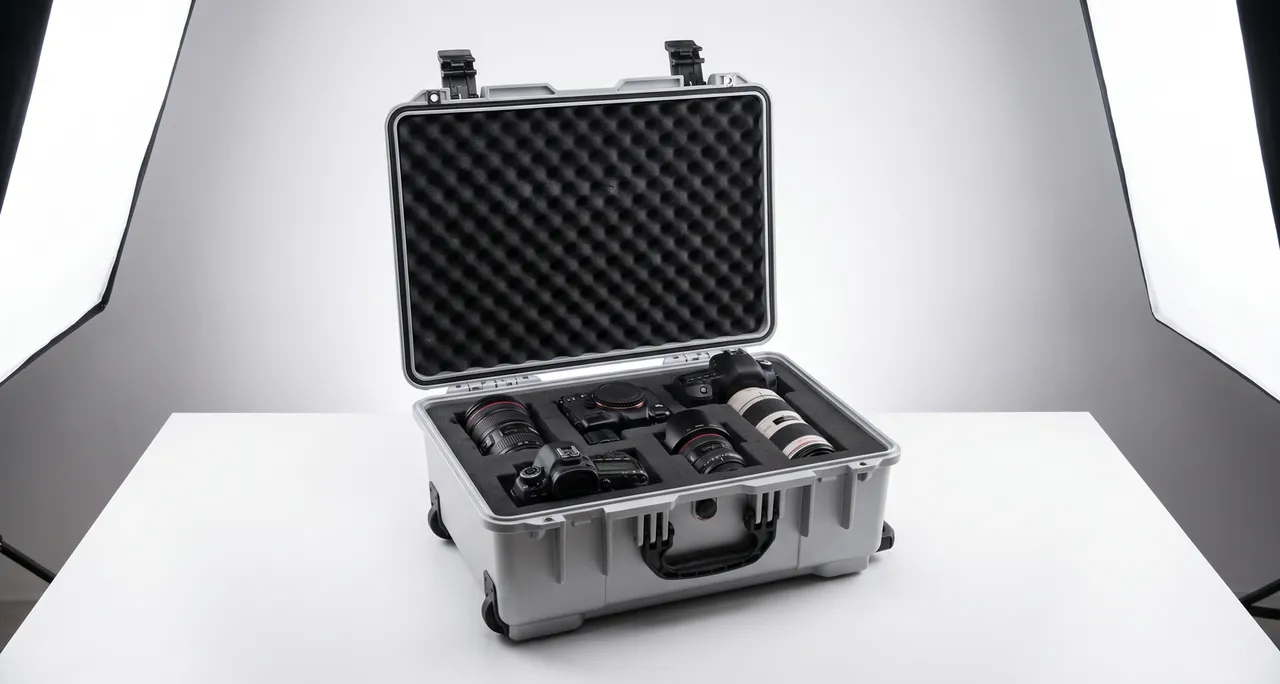
To select a custom-cut case for equipment, follow these seven steps:
- Measure the equipment outline dimensions and center of gravity; mark protruding fragile parts (knobs, interfaces, lenses).
- Count the equipment list and maximum weight the single case must hold.
- Determine the transport mode (courier/road/air/airdrop) and select the shell grade accordingly.
- Select liner material and hardness, matching the equipment allowable shock value and temperature zone.
- Design recess layout, ensuring centered gravity, heavy parts at bottom, fragile parts in independent clips.
- Output 2D layout and 3D tool path, make a sample to confirm take-out feel.
- Run drop/vibration verification, then freeze drawings and acceptance criteria.
This step shares the logic of modular storage in hardware toolbox series: always "list first, then structure."
Density and Hardness Grades of Foam-Liner Cases
The performance of a foam-liner case depends heavily on density and hardness. EVA common density is 35–120 kg/m³; higher density gives stronger support and faster rebound but shorter cushion stroke; lower density is softer with longer stroke but prone to collapse under long pressure.
| Density Range (kg/m³) | Shore Hardness (C) | Suitable Equipment |
|---|---|---|
| --- | --- | --- |
| 35–55 | 20–35 | Light electronics, sensors |
| 55–80 | 35–50 | General instruments, tools |
| 80–120 | 50–65 | Heavy equipment, machined parts |
Selection principle: heavy equipment uses high density for bottom load layer, upper layer uses low density for soft contact; valuable paint surfaces prioritize low-density slow-rebound material. When combined with anti-static boxes, note that the conductive layer must not sacrifice the cushion stroke.
Differentiated Requirements by Equipment Type
Different equipment types have completely different liner demands. Precision measuring instruments require low vibration transmission and dimensional stability; optical lenses require dust-free soft contact and anti-press-mark; medical devices require easy disinfection and liquid ingress prevention; electronic modules add anti-static. Therefore, when building a complete plan, refer to the special requirements of precision instrument case selection and medical equipment boxes, and treat the liner as part of the equipment.
Synergy Between Liner and Waterproof Sealing
Cushioning and sealing are two independent yet cooperative systems: the liner handles "impact," the shell seal handles "water and dust." If you only build a shock-proof box without the sealing ring of a plastic waterproof box, the equipment may still fail from moisture; conversely, sealing without cushioning still lets drop impact damage the inside. Engineering recommends a "hard shell seal + soft liner cushion" dual-layer approach, which can be combined with the latch structure of a sealed protective box to improve overall airtightness.
Drop and Vibration Testing in Transit
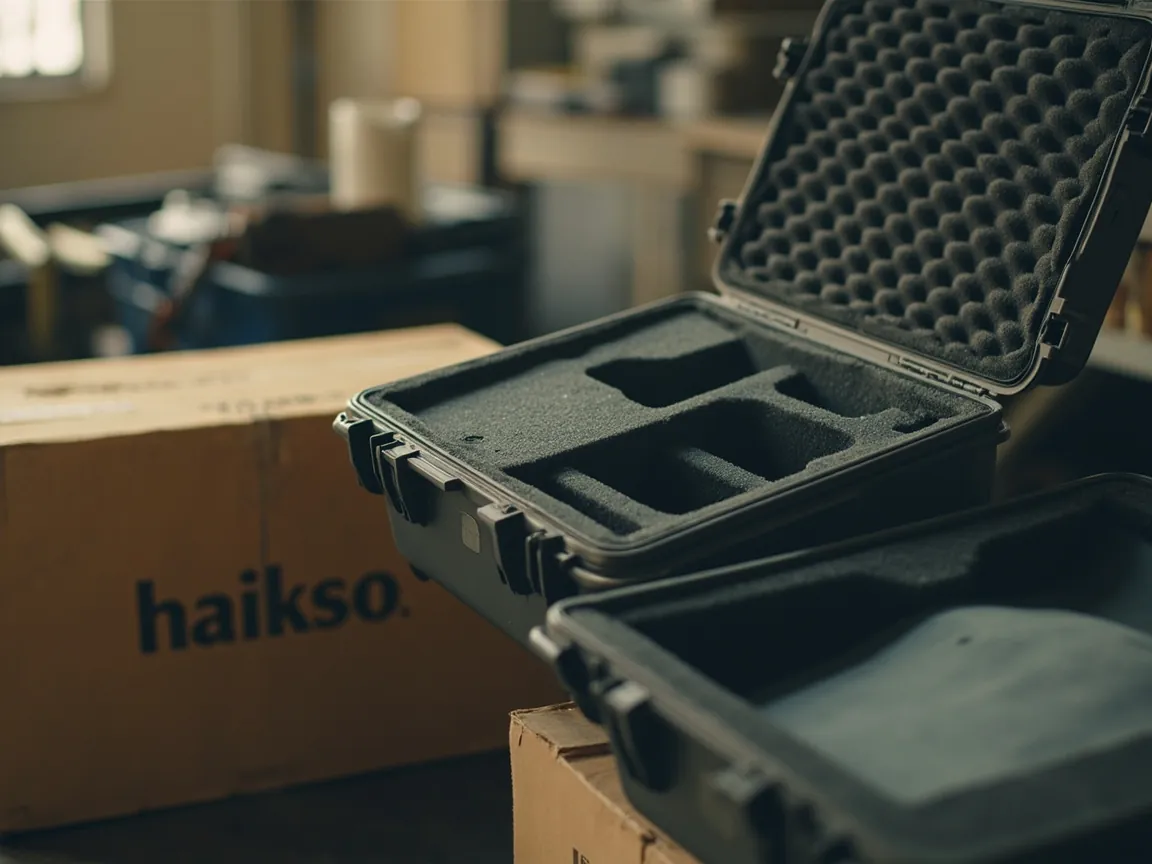
Acceptance testing must cover the real chain. Drop testing recommends several times each for corners, edges, and faces, with height by transport grade; vibration testing uses a random vibration spectrum to simulate road/air transport. Record equipment acceleration response and confirm the peak is below the allowable value. For airdrop scenarios, also refer to the airdrop protection design of handheld portable boxes and run multi-layer absorption verification.
When compiling the test plan, we suggest writing the "equipment allowable acceleration" as a hard metric into the specification: first check the equipment manual or ask the manufacturer for the maximum impact g-value and vibration level it can withstand, then back-calculate the density, thickness, and stroke the liner needs. Many buyers only say "needs shock proof" without a quantified target, so acceptance can only judge by eye whether the foam is thick enough, which is insufficient. A more robust approach is to require the supplier to provide a test report with acceleration curves and compare the margin against the allowable value. For equipment with optical or electronic modules, you can also combine the protection experience of electronic device carry cases and add locally thickened pads at fragile locations.
JUNZHJIA Custom Liner and OEM/ODM Capability
On custom-cut case projects, JUNZHJIA provides one-stop service from equipment surveying, liner material selection, CNC precision carving, to shell seal-kit matching. It supports OEM/ODM batch supply, can match sealing rings and latches by customer model, and delivers a documentation package including drop and vibration test descriptions. For composite liners requiring anti-static or moisture-proof performance, JUNZHJIA can also apply conductive or water-blocking modification on EVA base material to meet electronics and pharmaceutical scenarios. Whether paired with a plastic waterproof box or built as a standalone case, it can be executed to the purchase specification.
Common Application Mistakes with Cushioning Liners
First, "softer is better": over-soft foam collapses after long pressure and loses support. Second, "one layer fits all": different equipment should be separately clipped to avoid mutual collision. Third, "look only at shell, ignore liner": much damage happens at liner displacement, not shell rupture. Fourth, "ignore temperature zone": some foams harden and lose rebound at low temperature, so select temperature-resistant material following the logic of low-temperature protective boxes.
Procurement Specification Template, Acceptance Checklist and Transit Chain Design
To turn the parameters and standards above into an actual purchase document, we recommend the structured template below, which writes material, density, cutting precision, test standard, and delivery files into one place, so that a supplier cannot substitute a generic foam for a custom liner and quietly downgrade the protection.
| Spec Item | Recommended Wording | Acceptance Basis |
|---|---|---|
| --- | --- | --- |
| Liner material | EVA foam board, Shore C 35–50 | Material grade report |
| Density and hardness | 55–80 kg/m³ | Third-party test report |
| Cutting clearance | 0.5–1.5 mm single side | First-article CMM |
| Fixation method | Embedded slot + adhesive | Pull-force sampling |
| Test standard | ISTA 3A / MIL-STD-810H 516.8 | Test report + video |
| Delivery file | Drop/vibration curve, material cert | Archive traceability |
In the procurement flow, we suggest asking the supplier to prototype for a single unit first, confirm the take-out feel, recess fit, and cushion stroke, then scale to pilot and mass production. For relatively standardized products such as the hardware toolbox series, you can further ask the manufacturer for a liner module library and combine modules to shorten lead time and lower unit cost. In acceptance, sample drops and vibration per batch, and keep video and acceleration curves as traceability evidence; this is especially important for military, police, and medical customers.
The transit chain design also affects liner life and protection. Long-distance road transport combined with frequent handling causes more cumulative damage than a single air shipment, so the specification should state the expected number of transports, mode, and handling intensity, letting the supplier choose density, thickness, and layering. If the equipment is also used in a low-temperature protective box environment, write the temperature zone into the liner material requirement to avoid low-temperature hardening. For scenarios that also require anti-static, follow the logic of anti-static boxes and apply conductive modification on the EVA base, ensuring the conductive layer does not sacrifice the cushion stroke.
On cost, the investment in a custom-cut case should go to "protection of fragile parts": prioritize independent clips and thickened pads for protruding parts such as lenses, knobs, interfaces, and sensors, while the main body can use general recesses to reduce machining difficulty. For mass-produced equipment, CNC carving cost per piece is diluted by quantity, while die-cutting has the lowest unit cost after the minimum order is reached. In either process, freeze the clearance tolerance and material grade in the drawing to prevent later batches from substituting inferior material. JUNZHJIA typically provides one-stop delivery from surveying, material selection, and carving to test documentation, making it easy for the buyer to write all the points above into one specification and accept item by item.
FAQ
Q: What is the difference between an EVA-liner case and a common sponge box? A: An EVA-liner case uses ethylene-vinyl acetate copolymer foam board, which has higher resilience, better resistance to compression set, and a wider adjustable hardness range, and is easy to CNC-carve recesses that conform to equipment shape. Common sponge (mostly PU open-cell foam) has poor rebound, easily collapses under pressure, and is hard to cut with high precision, making it more suitable for cheap light filling. For precision instruments and valuable equipment, EVA's dimensional stability over long-term use is clearly superior and provides reliable cushioning continuously. In addition, EVA has better chemical resistance and is less likely to absorb water or mold; paired with a moisture-proof shell it extends the life of the whole protective case.
Q: How long does a custom-cut case usually take to prototype? A: The prototyping cycle depends on process and complexity. CNC carving requires no tooling die, so typically the first sample can be completed within a few working days after equipment 3D data or physical surveying is ready; it suits small-batch multi-variety and complex-shape instruments. Die-cut needs a cutting die first, so front preparation is longer, but unit cost is low and consistency is high in large batches. It is recommended to provide the equipment list, outline dimensions, center of gravity, and fragile part locations first, so the supplier can evaluate and schedule. After prototyping, always run take-out feel and drop verification, confirm gap and cushion stroke meet the target, then freeze the drawings. To shorten the cycle further, supply a 3D model or a physical sample of the device rather than only a sketch, because accurate geometry lets the supplier carve the first liner closer to final and cuts revision loops. If the equipment changes often, ask for a modular liner where only one pocket is re-cut, so a model update does not mean a whole new case. Agree the acceptance method up front so the prototype is judged on the same drop and fit criteria as the volume units.
Q: How to choose the density of a cushioning-liner case? A: Density selection follows the principle of "heavy parts high density, light parts low density, valuable paint slow rebound." Generally density 35–55 kg/m³ with Shore C 20–35 suits light electronics and sensors; 55–80 kg/m³ suits general instruments and tools; 80–120 kg/m³ suits heavy equipment and machined parts. In practice a layered design is often used: high density at the bottom for load bearing, low density at the top for soft contact protecting paint. Always combine equipment weight, transport mode, and allowable shock value for calculation, rather than estimating by feel.
Q: Can a liner be used in a waterproof box? Will it affect sealing? A: Yes, and it is recommended to use them together. The liner is fixed on the internal boss or adhesive layer of the shell and does not directly contact the sealing ring, so it does not destroy the sealing path of a plastic waterproof box. The key is that liner thickness and layout must reserve closure space for the lid, avoiding compression of the sealing ring during closing that would cause deformation and leakage. In customization, the shell inner diameter, sealing ring compression, and total liner thickness should all be included in 3D modeling to ensure reasonable compression remains after closure. This way it cushions impact and maintains the IP rating at the same time. This joint design is now standard for field kits that face both shock and rain.
Q: If transport vibration is large, how to prevent liner resonance? A: The core of preventing resonance is to keep the liner-equipment system natural frequency away from common vibration source bands (road transport mostly 5–200 Hz). You can change system stiffness by adjusting foam density, thickness, and contact area, making the natural frequency below about one-half of the equipment tolerance frequency; you can also use different hardness materials in layers to introduce damping that dissipates vibration energy. In acceptance, use a random vibration spectrum test and record equipment acceleration response, confirming no resonance peak or that the peak is effectively suppressed. For vehicle and airborne equipment, it is recommended to run a special verification referencing MIL-STD-810H 514.8.
Q: What special requirements does medical equipment liner have? A: Besides cushioning, a medical equipment liner must consider hygiene and contamination prevention. The material should be easy to wipe and disinfect, non-absorbent, and non-shedding to avoid cross-contamination; for equipment with liquid or reagent, the liner layout must prevent leakage, with independent clips and absorbent layers. Some scenarios require the liner itself to have certain flame-retardant and chemical-resistant properties. Design should combine the special specification of medical equipment boxes, separating fragile consumables, sharps, and the host into different compartments, and noting the disinfection method and material compatibility in the documentation package. Traceability here protects the patient, not just the audit file.
Q: Can anti-static and cushioning be balanced? A: Yes, they can be balanced. The common approach is to add conductive carbon black into the EVA base material or laminate a conductive layer on the surface, giving the liner electrostatic dissipation ability while retaining the foam cushion stroke; you can also place an anti-static foam divider inside the EVA-liner case. The key is that the conductive layer must not significantly sacrifice rebound and compression, otherwise cushioning fails. Anti-static boxes solve ESD more holistically, while cushioning-liner cases focus on mechanical protection; the two are often combined to meet both ESD and impact requirements.
Q: How long does a set of liner last, and when should it be replaced? A: Liner life depends on material, load, and transport frequency. EVA can be used for several years under normal temperature and reasonable load; if obvious press marks that cannot rebound, surface cracking, shedding, or fixation adhesive failure appear, it should be replaced promptly. It is recommended to include the liner in regular inspection: before and after each long-distance transport, check whether the recess is deformed, whether the equipment still fits, and whether the clip is loose. For high-value equipment, preventive replacement by transport count or time avoids insufficient cushioning at a critical moment due to material aging.
Q: How to ensure consistency of every liner in batch procurement? A: Consistency comes from standardized process and acceptance. CNC carving relies on digital tool paths and fixtures; die-cut relies on dies and positioning; both can achieve high inter-batch consistency. The key is to write liner drawings, material grade, density and hardness, and gap tolerance into the purchase specification, and require the supplier to provide first-article and sampling records per batch. In acceptance, run drop/vibration verification per ISTA or enterprise standard and retain test files. Suppliers like JUNZHJIA that support OEM/ODM can usually deliver a documentation package including test descriptions, facilitating batch quality traceability. Beyond paperwork, lock the process variables that drive variation: foam batch, carving tool or die, and the clamping fixture, then audit them at incoming. A cheap way to catch drift early is to keep one approved liner as a master and compare new batches against it for pocket depth, fit, and closing force before release. If the supplier cannot show a controlled process and first-article evidence, a good price will not save you from inconsistent protection across the shipment. A few minutes of incoming comparison saves far more than the inspection cost it appears to add.
Conclusion and Related Reading
The value of a shock-proof box is ultimately reflected in the equipment arriving intact. Selecting the right liner material, doing custom cutting well, pairing with a qualified sealing shell, and verifying with standard tests can reduce transit damage risk to a controllable range. We hope the parameters and steps in this article can be used directly in your purchase specification and acceptance process.
Related Reading