

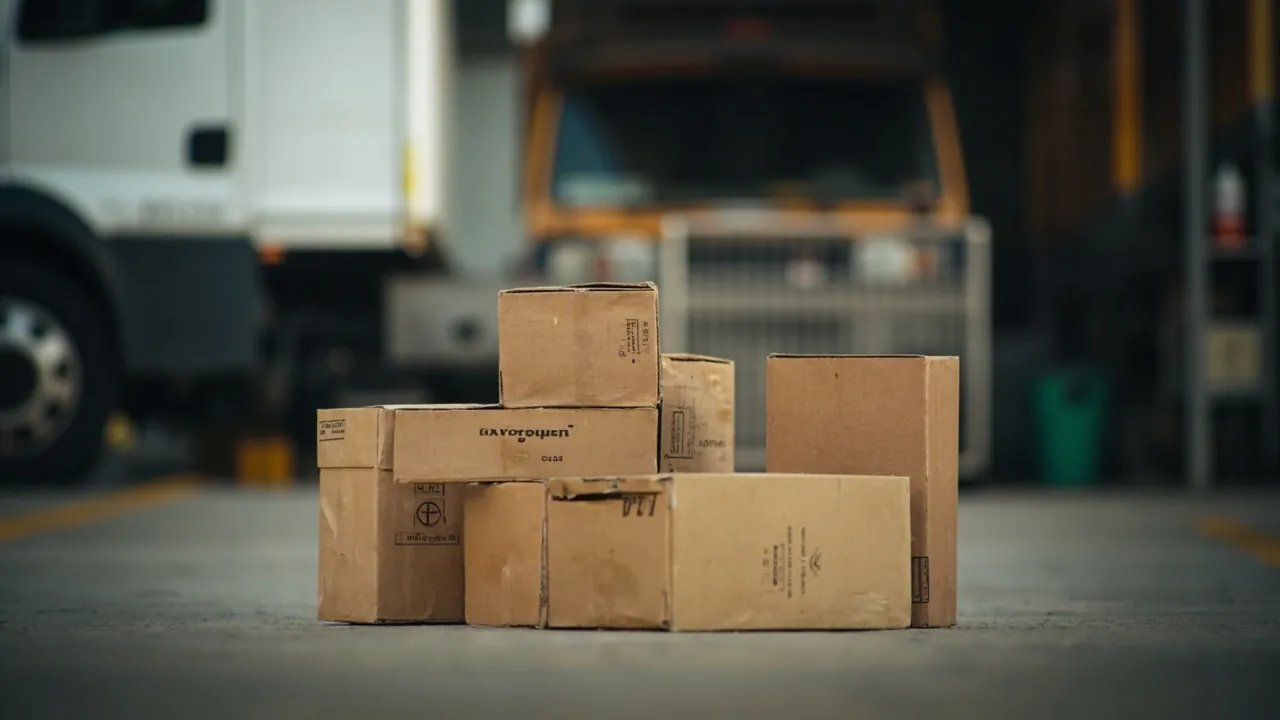
Handheld portable boxes, shoulder-strap portable boxes, and wheeled transport boxes are the key equipment for the "last-mile carry": short-distance handheld, mid-distance shoulder, long-distance wheeled towing—three forms covering the complete handling chain from workstation to site, from vehicle to floor. The bottom line up front: matching carry method to distance and weight can cut handling fatigue by 40% to 70% and significantly lower device-drop and bump probability—the selection core is the balance among center of gravity, ergonomics, and protection.
This article covers the structure, ergonomics, protection, and scenarios of portable and transport cases, helping procurement and field staff build a selection framework. For sealed and waterproof needs of the same family, refer to the IP-rating approach in our waterproof protective boxes and floating waterproof cases article.
Table of Contents
- Scenario Layering of Carry and Transport
- Structural Points of Handheld Portable Boxes
- Ergonomics of Shoulder-Strap Portable Boxes
- Wheels and Handle of Wheeled Transport Boxes
- Stacking Design of Stacking Transport Boxes
- Impact Structure of Airdrop Protective Boxes
- Visibility and Protection of Transparent Window Boxes
- Center of Gravity, Balance and Anti-Tipping
- Protection Rating and Liner Coordination
- Material and Lightweighting
- Size Module and Transport Tool Matching
- Selection Checklist and Procurement Advice
- Industry Application Cases
- Maintenance and Lifecycle Management
- FAQ
- Conclusion and Related Reading
Scenario Layering of Carry and Transport
Handling is not a single action but a continuous spectrum layered by distance and load. Within 5 m, workstation pick-and-place is most natural by hand; 5–50 m workshop or floor moves are more efficient with a shoulder strap freeing both hands; beyond 50 m on platforms, aprons, and warehouse aisles, wheeled towing is the sustainable solution. Wrongly "hand-carrying long distances" or "shoulder-carrying overload" both bring fatigue and drop risk.
Layered selection also optimizes protection: handheld boxes emphasize compact size and quick open, shoulder boxes emphasize back-fit and vibration damping, wheeled cases emphasize wheel durability and handle stability. The three can combine by task—main unit in a wheeled case, accessories in a shoulder box, body-check items in a matching handheld box. When JUNZHJIA takes OEM work, it often plans the size and liner consistency of all three forms at once by "task path," avoiding internal incompatibility between different case types.
Typical fit ranges for the three carry forms:
| Carry Form | Suggested Distance | Suggested Weight/Box | Core Demand | Typical Scenario |
|---|---|---|---|---|
| --- | --- | --- | --- | --- |
| Handheld portable box | ≤5 m | ≤8 kg | Compact, quick open, anti-rattle | Workstation pick, body check |
| Shoulder-strap portable box | 5–50 m | ≤15 kg | Back-fit, damping, free hands | Workshop move, hill patrol |
| Wheeled transport box | ≥50 m | ≤30 kg (towed) | Wheel durability, handle stable | Apron, warehouse, loading |
Note the table is an experience range; final choice should weigh user strength, ground condition, and device value rather than mechanically applying it.
It should be noted that the boundary between carry cases and protective cases is blurring: modern portable cases commonly integrate IP protection, damping liners, and locking structures, essentially a fusion of "protective case + carry accessories." Related protection logic is in plastic protective boxes and plastic toolboxes.
Structural Points of Handheld Portable Boxes
The core of a handheld portable box is small, fast, and stable. Structural points: handle arc fits the palm, lid quick-open positioning, light wall, internal anti-rattle divider. Handle width is recommended ≥18 mm with soft-rubber cover to spread palm pressure; lid and body should have clear open/close positioning so it will not pop open accidentally while walking.
For field work needing frequent opening, damped hinges or one-click latches let single-hand operation; for valuable devices, handle and latch bases should embed metal inserts for load. Internal dividers should follow "heavy bottom, light top" so the center of gravity is near the grip, reducing swing torque. If the handheld box needs waterproofing, the lid mouth should have a gasket groove, referencing the sealing structure in sealed protective boxes and latch-sealed cases.
Handheld boxes also serve as liner modules inside large cases—embedding several handheld boxes into a transport case keeps the transport case's strength while gaining fine small-item management on site, a typical box-in-box application.
In medical and testing scenarios, handheld boxes must balance hygiene and quick check: prefer rounded one-shot molded, burr-free, no-dirt-trap structures whose material resists alcohol or quaternary-ammonium disinfectants without swelling; embed a removable divider tray washed and disinfected as a whole after use while the box body only gets external wiping, ensuring cleanliness and extending life. JUNZHJIA can provide material and structure advice per industry hygiene requirements with cleaning notes attached. For light-sensitive reagents, a liner-blackout version reflects the functional thinking in plastic waterproof, sealed and moisture-proof boxes.
Ergonomics of Shoulder-Strap Portable Boxes
Shoulder-strap portable boxes target mid-distance carry, with the key being to fit weight to the body and reduce swing. Design points: strap width ≥40 mm with breathable pad, main load point aligned with shoulder-neck; box back should have a back-conforming curve and anti-slip texture to avoid slapping the body while moving; quick-release buckles allow single-shoulder and cross-body switching.
Center-of-gravity control decides comfort: devices should be as close to the back panel and body centerline as possible, box thickness not too deep to avoid forward lean. For bilateral load, pair straps into a backpack-style carry to spread load evenly across both shoulders and hips. For devices with lithium batteries, the shoulder box must also consider heat dissipation and battery protection on drop, complying with UN38.3 and IATA related packaging rules.
Strap material should resist UV and sweat, with reinforced stitching at seams; metal buckles choose anti-rust grade to avoid corrosion in coastal or humid environments. JUNZHJIA can provide custom advice on strap length, width, and anchor points per user carry habits.
Shoulder boxes often face a "hard to access" contradiction: to take something while worn, you must remove or swing the box to the chest. The solution is a quick-open sub-pocket on the box front for frequently used small items (recorder, test strip, tool) accessed without removal, while the main compartment still carries weight on the back. This "main-sub compartment split" balances load stability and operation convenience, especially for patrol and sampling that record while walking. For night work, add reflective strips on strap or body for visibility.
Wheels and Handle of Wheeled Transport Boxes
Wheeled transport boxes are the main force for long-distance handling; wheels and handle decide experience and life. Prefer dual-bearing silent wheels, diameter 50–75 mm balancing obstacle clearance and storage; wheel frame should embed metal or use reinforced nylon to avoid plastic frame cracking on gravel. Brake wheels are useful for fixing on slopes or in vehicle compartments.
Handles split into single and double rod: single is light and compact; double is stable and can carry an outer bag. Tube wall thickness and latch decide bending resistance; under full load towing there should be no obvious wobble or auto-retraction. The box bottom should have wear-resistant corner guards and anti-scratch strips, so on ground contact the guards take force rather than the box body.
Wheel maintenance is often overlooked: sand in bearings causes noise and jamming, recommend periodic cleaning and lubrication; after muddy or salt-spray use, rinse and dry to extend life. For air random baggage, wheels must survive continuous conveyor impact; confirm wheel-frame-to-body connection strength test data at purchase.
The handle-to-body joint of a wheeled case is another load concentration: towing transmits road reaction through the handle to the body, and if the joint relies only on plastic threads it can loosen under long vibration. Professional design embeds metal nuts or uses a steel core shaft through the wall to transfer load to metal. At purchase, do a "full-load tow over bumps" test, watching the handle root and wheel frame for abnormal noise or displacement. JUNZHJIA can provide handle and wheel-frame connection-strength validation in OEM, with attached test notes for acceptance.
Stacking Design of Stacking Transport Boxes
Stacking transport boxes interlock through locator bosses for multi-layer stable stacking, suited to warehousing, container loading, and vehicle fixation. Design points match plastic stacking boxes: large guide chamfer, sufficient contact area, no outward expansion after stacking.
In transport, stacking also needs tying and anti-slip: strap or wrap the whole stack to prevent forward surge on braking; heavy bottom, light top, centered gravity; add anti-slip mat on smooth truck floors. Actual stack layers should be 1–2 fewer than static allowance, with each layer a full box and aligned. After arrival, sample-match to ensure any two boxes stack smoothly with even gaps.
For automated high-bay warehouses, the box bottom should reserve a guide structure matching conveyor rollers or chains to avoid jamming from dimensional deviation.
To improve stacking safety, fit corner guards or stretch wrap around the whole stack and mark height limits on over-tall stacks. For stacking transport boxes loaded in a vehicle, use straps diagonally anchored to the vehicle's fixation points to prevent the whole stack surging forward on hard braking; if the floor is smooth, add an anti-slip mat or grid under the bottom layer. JUNZHJIA can provide stacking-simulation advice and limit-accessory lists based on customer stacking height and load, helping turn "theoretically stackable" into "actually stable."
Impact Structure of Airdrop Protective Boxes
Airdrop protective boxes face the harshest drop and impact duty, requiring greatly strengthened structure. The shell uses high-toughness PC or PC alloy with locally thickened walls; besides cushioning liner inside, tie-down straps prevent content shift, and reinforced ribs with anti-puncture layers at weak corners.
Airdrop impact energy far exceeds ordinary handling drops, so the liner must be designed with buffer travel per expected landing overload, keeping device acceleration within the allowable band. Hinges, latches, and handles also need impact resistance to avoid detachment at the moment of landing. Related military drop can reference MIL-STD-810H method 516.8 procedures, but airdrop should add higher magnitude and multiple-impact validation.
Airdrop boxes should also consider parachute-line anchor points, location markings, and reflective strips for quick search and recovery after landing. JUNZHJIA can provide structure and buffer simulation advice per airdrop load and landing environment.
Real airdrop validation is hard to fully reproduce at the R&D stage, so adopt a graded-validation strategy: first use a drop tower for single-unit process drops to confirm shell and latches; then low-height whole-unit drops into a sand pit or simulated landing to confirm liner and tie-downs; finally small-batch validation under real airdrop conditions. Record and archive overload data at each level as the acceptance baseline for later batches. For critical-task loads, also prepare backup cases and quick-swap liners to shorten re-sortie preparation time.
Visibility and Protection of Transparent Window Boxes
Transparent window boxes balance "visible stock" and "visible status" in portable transport. Window material is usually PC or PMMA, bonded to the body by two-shot molding or ultrasonic welding to ensure the seam does not leak. Window area should cover the main item's visible range without weakening the box load path.
In protection, the transparent window must still meet the overall IP rating—the weld between window and body is critical and needs immersion and negative-pressure validation; in severe cold PC windows may embrittle, so confirm the applicable temperature band. For confidential or light-sensitive materials, optional internal blackout curtains or external blackout film can be provided.
Transparent windows also ease counting and audit: confirm content integrity without opening, reducing seal wear and contamination risk from frequent opening. Related moisture-proof thinking is in high-temp and low-temp protective boxes. A well-placed window turns a closed box into a self-explaining one that any inspector can verify at a glance.
Center of Gravity, Balance and Anti-Tipping
Regardless of carry form, center-of-gravity control is the first element of safety protection. Handheld box center of gravity should be near the grip; shoulder box should fit back and centerline; wheeled case center of gravity should fall mid-rear of the wheel-axis line to avoid backward lean or forward flip from top-heavy.
Balance tips: place the heaviest device lowest and centered, light items and consumables on top; symmetrical left-right layout prevents eccentric load; an empty-wheel-end-slightly-heavy wheeled case aids stability. For irregular devices, use a custom liner to fix near its geometric center with buffer in all six directions, consistent with shock-proof boxes and EVA liner cases.
Sudden stop and turn in transport create horizontal inertial force; straps and internal limit bands offset this load, preventing content from shifting and colliding inside the cavity. This is why airdrop and vehicle scenarios must configure tie-down straps.
A simple field check ties all this together: with the box fully loaded, lift it by the intended grip and feel whether it wants to tip or swing; if it does, move the heaviest item toward the grip or the wheel axis and re-test. Repeat until the loaded box feels neutral in your hand. This two-minute check catches most center-of-gravity mistakes before they become dropped-device incidents on a real job.
Protection Rating and Liner Coordination
The protection rating of carry cases follows the IP code of IEC 60529 (mirroring GB/T 4208). Portable boxes commonly range IP54 (dust and splash) to IP67 (dust tight, temporary immersion). Wheeled transport boxes, often placed at vehicle bottoms or loaded in rain, are recommended no lower than IP65; wading or field work recommends IP67.
Liner and protection are a paired project: the box provides shell protection, the liner provides internal damping. EVA, PU foam, pearl cotton and other materials are custom-cut to the device shape so the device is constrained in all six directions. For precision instruments, liner hardness must match the device's vibration-sensitive band. JUNZHJIA supports custom-cut liners from device drawings, with optional silk-screen labels or zone colors on the liner.
For airtight scenarios, also watch pressure balance: transport with significant altitude change should fit a pressure-equalization valve (breathable, water-blocking membrane) to avoid hard opening or dust intake; structure is in sealed protective boxes and latch-sealed cases.
For passive cold-chain portable transport, add an insulated sandwich or foamed liner to the wall to form a "insulated case + ice pack / phase-change material" passive cold-chain structure, related to vaccine cold-chain cases and medicine insulated boxes. Here protection rating and insulation must be balanced: the seal must block water and dust yet not let condensation from temperature difference corrode the device; a drain or absorbent layer may be needed. JUNZHJIA can design the sandwich and ice-pack-position scheme per hold-time and envelope constraints.
Material and Lightweighting
Carry cases are extremely weight-sensitive; material choice directly decides experience. PP is lightest but average toughness; ABS is rigid; PC has highest toughness and impact resistance, suited to demanding use and transparent windows; modified PP/ABS blend balances light weight and performance.
Lightweighting means include topology optimization hollowing non-load areas, locally thickening load points, foamed sandwich or thin-wall high-strength structures. For air random baggage, every kilogram saved matters for freight, so PC topology weight removal with aluminum handle skeleton is a common combo. Specific properties follow the material TDS.
Material orientation for common carry cases:
| Material | Density (typical) | Toughness | Suited Form | Note |
|---|---|---|---|---|
| --- | --- | --- | --- | --- |
| PP | 0.90–0.91 g/cm³ | Medium | Handheld, shoulder box | Lightest, chemical resistant |
| ABS | 1.04–1.06 g/cm³ | Medium-high | All case types | Rigid, easy to mold |
| PC | 1.20–1.22 g/cm³ | High | Wheeled, window, airdrop | Impact resistant, can be clear |
| Modified PP/ABS | 0.95–1.10 g/cm³ | High | General carry case | Balanced light/performance |
Values are industry experience ranges; follow the material maker's TDS. For flame retardancy add halogen-free retardant to UL94; for static-sensitive devices use anti-static version with matching liner. When in doubt between two materials, choose the one whose failure mode is gradual rather than sudden—a box that deforms warns you, a box that shatters surprises you.
For weathering, outdoor long-term boxes should add UV masterbatch to prevent yellowing and embrittlement; chemical or coastal environments consider acid-alkali resistant coating and anti-rust metal parts. For static-sensitive devices, both box and liner need anti-static; details in anti-static boxes and EMI shielded cases.
Size Module and Transport Tool Matching
Carry-case size must match transport tools to deliver value. Air random baggage must meet airline size and weight limits; rail and car trunks consider length/width/height; elevators and corridor corners decide the maximum passable size. Recommend measuring the "bottleneck size" of common paths first, then deriving the box module.
For container and vehicle loading, calculate loading rate: box dimensions divisible by pallet and truck give minimal void and most stable fixation. For multi-box combined transport, prefer an interlock-stackable series to reduce straps. Export or multi-site scenarios adopt common modules (e.g., Euro box) for cross-region interchange.
Modularization also simplifies stock: one shell with different liners covers many devices, reducing inventory variety.
When standardizing carry cases, recommend a pilot task first: pick a real task path, rearrange the handheld/shoulder/wheeled combo by modular boxes, and record handling time, device-bump count, and fatigue feedback before and after, using data to convince other teams. Many carry improvements stall because "everyone uses their own box, sizes incompatible"; once modules unify, cross-team borrowing, cross-site transfer, and spare commonality all get much smoother. JUNZHJIA can provide a module-selection table and 3D layout advice to shorten the cycle from selection to deployment.
Selection Checklist and Procurement Advice
Condense into an executable checklist:
- Map the task path and bottleneck sizes (workstation—vehicle—floor).
- Determine handheld/shoulder/wheeled combo by distance and weight.
- Set protection rating (IP) and drop standard (e.g., MIL-STD-810H).
- Design liner scheme (EVA/foam/custom cut) and tie-down straps.
- Confirm wheel, handle, strap, latch and other accessory parameters.
- Align transport-tool module and stacking method.
- Request material TDS, wheel-frame strength and seal test documents.
Recommend a small pilot on the real path before volume. JUNZHJIA can provide structure, wheel, and seal test documents during prototyping for internal acceptance archiving.
Finally, keep the decision in writing. A short spec sheet—task path, carry-form combo, IP rating, liner and tie-down scheme, accessory parameters, module, and referenced standards—prevents scope creep between quote and delivery and gives receiving inspection a clear pass/fail basis. Attach photos of the approved prototype and keep a sealed reference sample; when a later batch feels or looks different, the sample settles the dispute quickly without halting the line. Treat the carry case as fixed infrastructure whose consistency pays back on every trip.
Industry Application Cases
- Film location: wheeled case for lights and batteries, shoulder box for lenses on person, handheld box for memory cards.
- Rural medical: wheeled case for portable ultrasound, shoulder box for emergency drugs, adapting to no-road sections.
- Military squad: airdrop protective box delivers comms modules, wheeled case for position supplies.
- Power inspection: shoulder box with detector climbing hills, wheeled case with backup power.
- Third-party testing: handheld box with sampling gear into the field, IP67 secures rainy operation.
The common thread is "path first, form second, protection third," not uniformly buying big cases. Across all these cases, the win comes from matching the box to the actual journey rather than to a catalog photo.
Maintenance and Lifecycle Management
Carry-case maintenance focuses on moving parts: clean and lubricate wheel bearings periodically, check and reinforce strap stitching, confirm handle latch no looseness, wipe gasket to prevent sand. When idle long, store half-open to avoid permanent gasket flattening; wheeled cases stand or hang wheel-end to reduce long-term wheel compression deformation.
Lifecycle: build a batch ledger recording cumulative mileage or handling count; wheels, handle, and strap are wear parts kept as separate spares; retire or replace on wheel-frame crack, handle retraction, strap wear, or gasket leak. JUNZHJIA can supply model-matched wheel, handle, and seal spare kits for batch maintenance.
From a total-cost-of-ownership view, the value of a portable case lies not only in unit price but in the usable life of moving parts and spare availability. A case with replaceable wheels is more economical than scrapping the whole; listing wheels and handle as standard spares avoids "one broken wheel, whole case idle." When accounting, include "wheel replacement, strap repair, and device delay from case failure within three years" to approach true cost better than pure price comparison. For global OEM customers, JUNZHJIA can set spare-part hubs in key regions or provide localized supply to shorten downtime.
A practical habit is to color-code wheeled-case feet or shoulder-box buckles by team or site; when boxes from different lines mix during peak season, the color lets staff sort them back without reading every label. Combined with the batch ledger, maintenance becomes planned: you know which cases approach retirement and can pre-order spares before failures appear on the floor, rather than scrambling reactively. A brief monthly photo audit against the approved baseline keeps the whole fleet honest long after launch excitement fades.
FAQ
Q: How do I choose among handheld, shoulder, and wheeled? A: Choose by distance and weight layering. Within 5 m workstation pick-and-place use handheld; 5–50 m workshop or floor moves use shoulder to free both hands; beyond 50 m on platforms, aprons, warehouse aisles use wheeled towing. Overloading handheld or long-distance shoulder both raise fatigue and drop risk. Real tasks often combine: main unit in wheeled case, accessories in shoulder box, body-check items in matching handheld box. The key is not buying one type but planning the three forms' size and liner consistency by "task path," with the supplier planning at once if needed.
Q: How to choose durable wheels for a wheeled transport case? A: Prefer dual-bearing silent wheels, diameter 50–75 mm balancing obstacle clearance and storage; wheel frame embeds metal or uses reinforced nylon to avoid plastic cracking on gravel; brake wheels for slopes or vehicle fixation. In maintenance, periodically clean bearing sand and lubricate; after muddy or salt-spray use rinse and dry. For air random baggage confirm wheel-frame-to-body connection strength test data; wheels must survive continuous conveyor impact. Wheels are wear parts, keep spares.
Q: How to carry a shoulder box more easily and safely? A: Strap width ≥40 mm with breathable pad, main load point aligned with shoulder-neck; box back has back-conforming curve and anti-slip texture to reduce slapping; devices as close to back panel and centerline as possible, box not too deep to avoid forward lean. For bilateral load, pair into backpack-style carry spreading load across both shoulders and hips. Lithium-battery devices need heat dissipation and drop battery protection, complying with UN38.3 and IATA packaging. Strap stitching reinforced, metal buckles anti-rust, especially in coastal environments.
Q: How does an airdrop protective box differ from a normal transport case? A: Airdrop absorbs far higher energy than ordinary handling drops and needs major strengthening: shell of high-toughness PC or alloy with locally thickened walls; liner designed with buffer travel per expected landing overload, keeping device acceleration in the allowable band; tie-down straps prevent content shift, weak corners get ribs and anti-puncture layers; hinges, latches, handles resist impact to avoid detachment. Also consider parachute-line anchors, location markings, reflective strips for recovery. Validation should add higher magnitude and multiple impacts on top of MIL-STD-810H drop logic.
Q: How to stack a stacking transport box stably? A: Rely on locator boss interlock, large guide chamfer, sufficient contact area, no outward expansion. In transport, strap or wrap the whole stack to prevent forward surge on braking; heavy bottom, light top, centered gravity; anti-slip mat on smooth truck floors. Actual layers 1–2 fewer than static allowance, each layer full box and aligned. After arrival sample-match to confirm any two boxes stack smoothly with even gaps. Automated warehouse boxes reserve conveyor guide structure at bottom to avoid jamming.
Q: Will a transparent window become a leak weak point? A: Yes, the weld between window and body is the sealing key. Window material is usually PC or PMMA bonded by two-shot molding or ultrasonic welding, needing immersion and negative-pressure validation for no leak; in severe cold PC may embrittle, confirm temperature band. The whole must still meet IP rating, and the weld is a mandatory inspection item. For confidential or light-sensitive materials, optional blackout curtain or external film. The window benefit is counting without opening, reducing opening wear and contamination.
Q: How exactly do I control center of gravity? A: Handheld box center of gravity near grip; shoulder box fits back and centerline; wheeled case center of gravity falls mid-rear of wheel-axis line to avoid backward lean or forward flip. Heaviest device lowest and centered, light consumables on top, symmetrical left-right to prevent eccentric load. Irregular devices use custom liner fixed near geometric center with six-direction buffer. Sudden stop and turn create horizontal inertial force offset by straps and internal limit bands; airdrop and vehicle scenarios must fit tie-down straps to prevent shift-impact.
Q: How do I specify the protection rating of a carry case? A: Per IEC 60529 (GB/T 4208) IP code. Portable boxes commonly IP54 to IP67; wheeled cases often at vehicle bottom or loaded in rain recommend no lower than IP65, wading or field work IP67. Protection is shell plus liner: box gives shell protection, liner (EVA/foam/pearl cotton) custom-cut gives internal damping, precision instruments liner hardness matching vibration-sensitive band. Large altitude change should fit a pressure-equalization valve to avoid hard opening or dust intake.
Q: What special requirements does air random baggage impose on carry cases? A: Core is weight budget and conveyor impact resistance. Airlines charge by weight, so the box should be as light as protection allows, using PC topology weight removal with aluminum handle skeleton; wheels, handle, latches survive continuous conveyor impact; lithium batteries comply with UN38.3 and IATA related packaging. Recommend a real checked-baggage trial after prototyping before volume. Also serialization, tamper labels, and in-lid material list compliance documents, which can be planned upfront in the OEM stage.
Conclusion and Related Reading
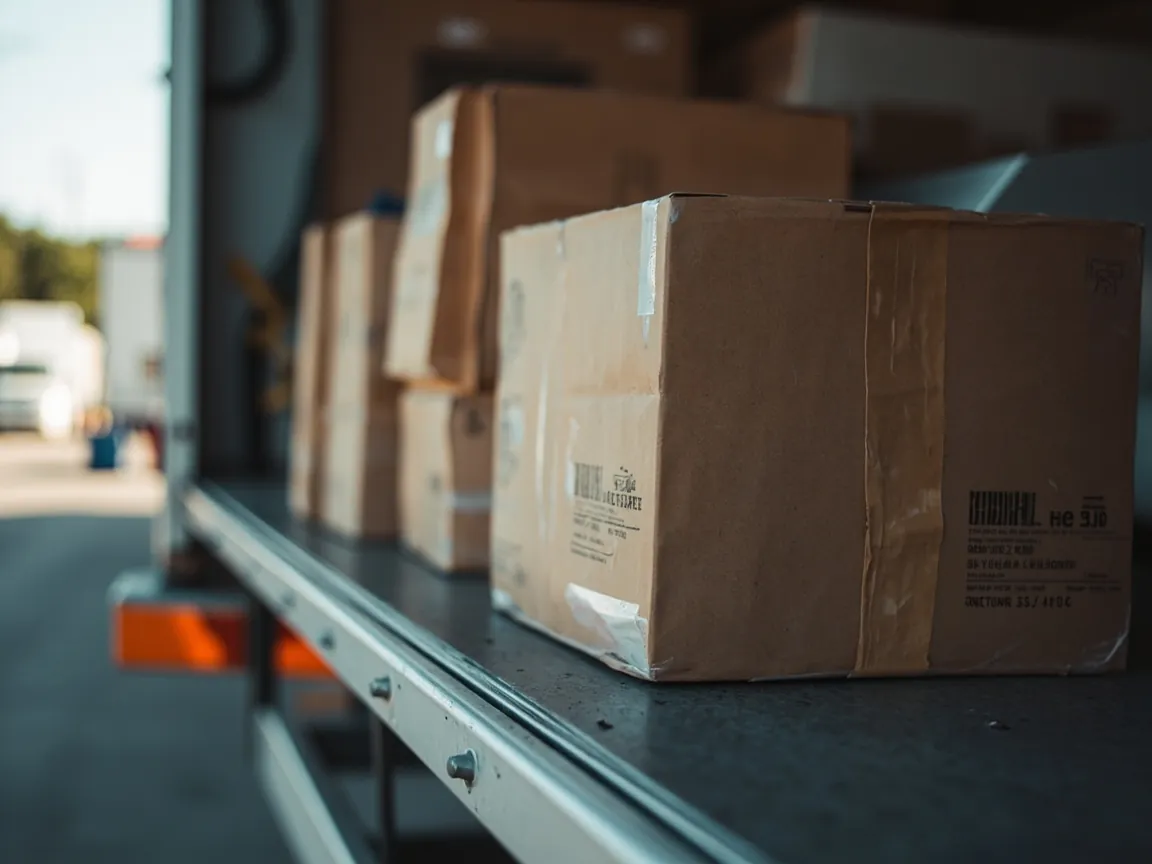
The selection logic of portable and transport cases is "path first, form second, protection third": first see the complete handling chain from workstation to site, then assign handheld, shoulder, and wheeled forms by distance and weight, and finally lock the device in a safe band with protection rating and liner. Center-of-gravity control runs through it all and is the root of lowering fatigue and drops. In procurement, communicate path sizes and accessory parameters up front and write test documents into acceptance to obtain a truly usable carry system. The return shows up in fewer strained backs, fewer dropped devices, and faster moves from depot to job site.
Related Reading