

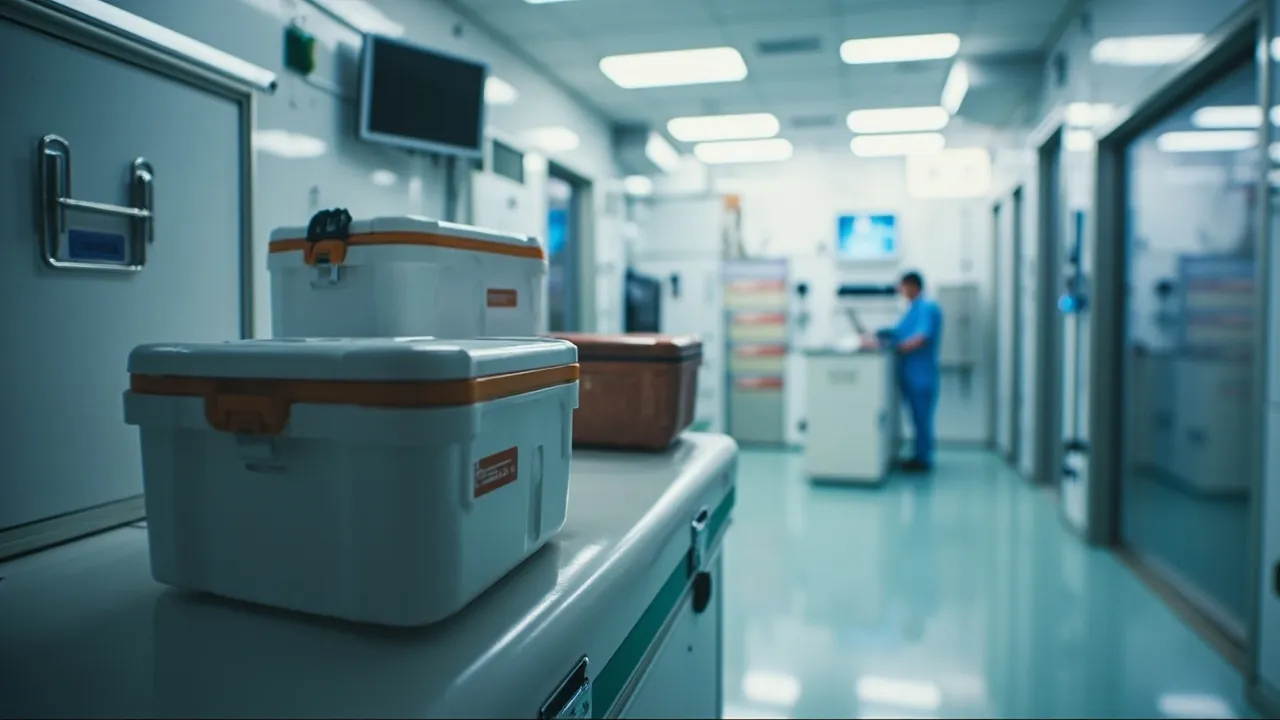
Vaccines, biologics, and most injectable drugs depend heavily on temperature throughout the chain; leaving the 2-8 C band may inactivate potency, and cold-chain breaks most often happen in the "last mile" transfer and temporary storage. The core conclusion: selecting a pharma cold-chain case centers on triple assurance of "passive insulation plus temperature monitoring plus traceability", keeping temperature in the target band and turning every transfer segment into auditable data. This article covers three families - vaccine cold-chain cases, medicine insulated boxes, and biological sample transfer cases - and also addresses compact solutions such as vaccine cold-chain boxes.
The pain point of pharma cold chain is "narrow band, low tolerance, heavy responsibility": vaccines 2-8 C, some biologics -20 C or even deep cold, over-temperature means scrap invisible to the naked eye. A case with insufficient insulation or missing monitoring leaves breaks unaccountable. Selection should reverse from "target temperature plus transit time plus compliance". The following expands item by item.
Table of Contents
- Mission and Temperature Baseline of Pharma Cold-Chain Cases
- Passive Insulation Structure of Vaccine Cold-Chain Cases
- Phase-Change Material Solution of Medicine Insulated Boxes
- Wide-Temperature and Leak-Proof of Biological Sample Transfer Cases
- Compact and Home-Visit Vaccine Cold-Chain Boxes
- Insulation and Temperature Standards: GSP, WHO and YY
- Materials and Insulation-Layer Design
- Phase-Change Coolant and Temperature Hold
- Temperature Monitoring and Data Retention
- Loading Rules and Field Operation
- Test Documentation and Certification
- OEM/ODM and Procurement Advice
- Common Selection Mistakes
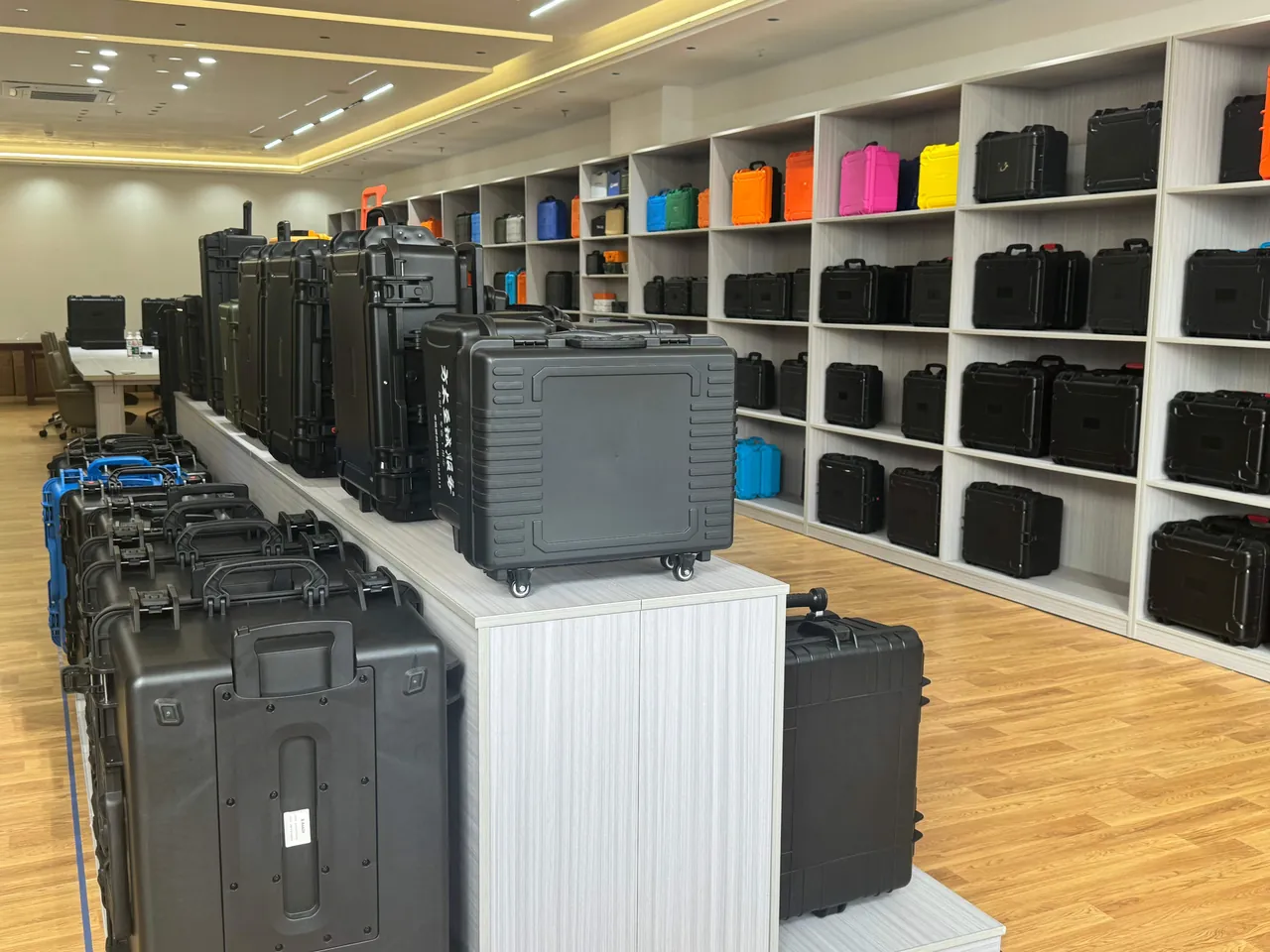
Mission and Temperature Baseline of Pharma Cold-Chain Cases
Pharma cold-chain cases serve CDC, vaccination sites, pharmacies, biologics companies, and disaster medicine; the mission is "still effective at the needle tip". Temperature baseline varies by category: inactivated vaccines and most injectables 2-8 C; live attenuated vaccines mostly 2-8 C but freeze-prohibited; some biologics -20 C; mRNA types once required -70 C deep cold. The case must be designed by target temperature, not generic.
Break risk concentrates in transfer and temporary storage: vehicle sun exposure, frequent opening, wrong coolant layout all over-temperature. Passive insulation relies on wall thickness and insulation cotton, active on thermoelectric or ice packs. Related sample cold chain references Emergency Transport Cases & Blood Collection Boxes. Case protection IP65 rain-dust, clean liner disinfectable.
Passive Insulation Structure of Vaccine Cold-Chain Cases
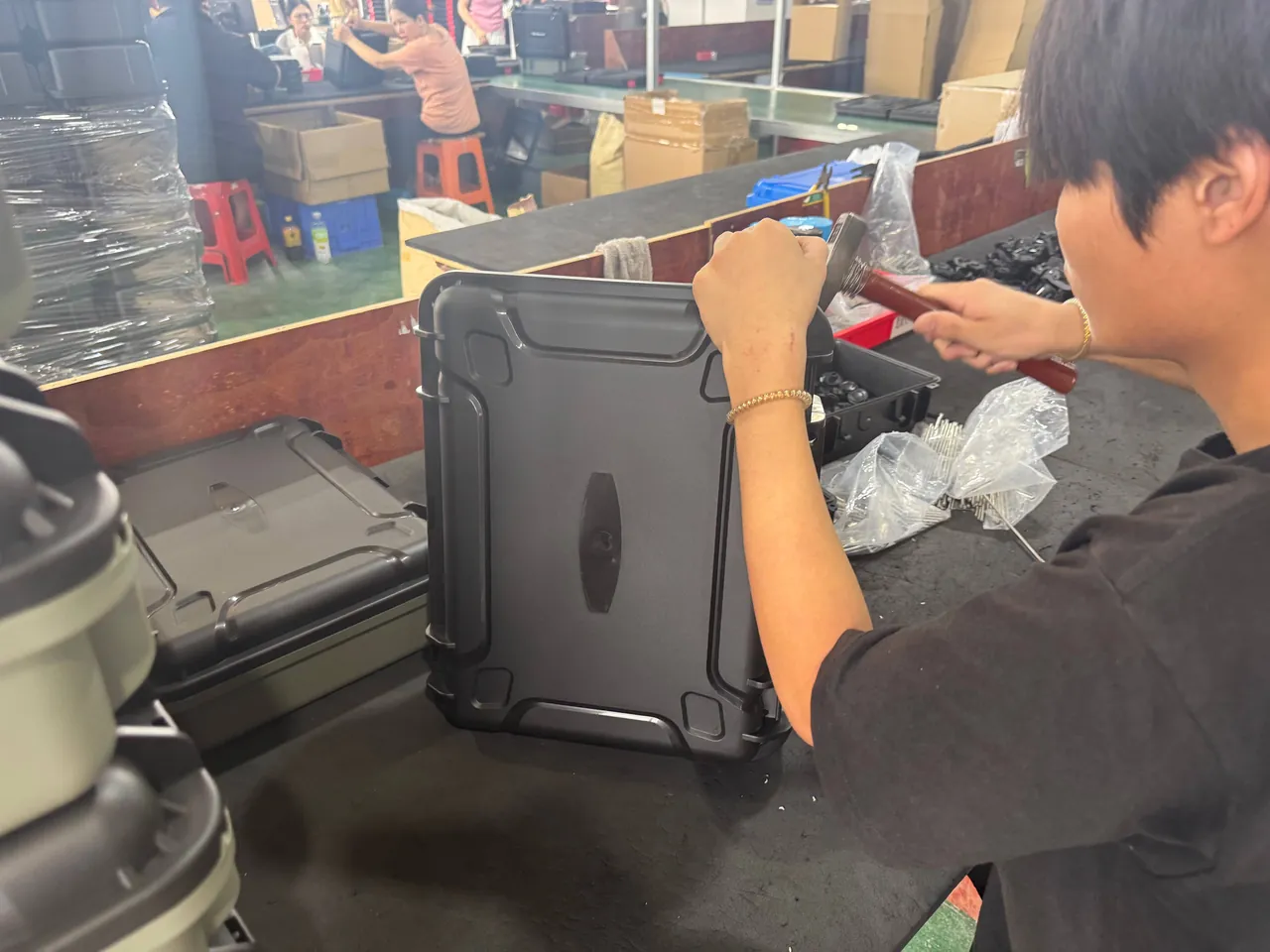
Vaccine cold-chain cases are mainly passive insulation: wall interlayer is closed-cell insulation cotton (PU or VIP vacuum panel), lid double-seal against cold leak. A typical 25-50 mm insulation layer can hold 2-8 C for an experience range of several to over ten hours at external 30-35 C, decided by wall thickness, coolant, and opening frequency. VIP panel insulates far better than normal cotton, suiting long transit.
Inner tank uses food-grade PP or HDPE, easy-clean disinfectable; vaccine positions fixed grids against tipping. Coolant (ice pack / PCM bag) pre-cooled to target band then placed around and on top, forming cold wrap. JUNZHJIA can build inner tank and coolant layout by vaccine spec, providing insulation and seal test records. For batch vaccination, cases can unify asset numbers and QR.
Phase-Change Material Solution of Medicine Insulated Boxes
Medicine insulated boxes target injections, oral drugs, and external drugs, temperature bands mostly 2-8 C or 8-25 C room temp. Phase-change material (PCM) chooses phase point by target temperature: 2-8 C uses 5 C phase-change ice bag, -20 C uses corresponding low-temp phase block. PCM advantage is stable temperature during phase change, less fluctuation than pure ice.
Loading principle: PCM pre-cooled/heated near phase point, compartment-isolated from drugs to avoid local freeze injury; humidity-sensitive drugs with desiccant. Case IP65, field IP67. For diagnostic with cold-chain reagents, related thinking references the cold-storage compartment in Portable Diagnostic Equipment Cases. JUNZHJIA can build inner tank and PCM layout by drug list, providing material biocompatibility notes.
In real-world deployment of the protective case, sealing performance must be verified against GB/T 4208, which is equivalent to IEC 60529, with IP67 as the common target: fully dust-tight and able to survive immersion at 1 m depth for 30 minutes. For units that are airdropped, vehicle-mounted, or shipboard-transported, it is advisable to add MIL-STD-810H drop (Method 516.8) and random vibration (Method 514.8) to confirm environmental adaptability, and to require a formal test report with a defined sampling plan at acceptance rather than relying on the manufacturer's claimed rating. JUNZHJIA can supply the corresponding documentation package for batch OEM programs. Related approaches are described in the equipment case program. Flame retardancy and corrosion resistance are hard thresholds for the enclosure in harsh conditions. The shell is preferably modified PP, ABS, or PC and should be rated under UL94, typically targeting V-0 or V-1; salt-fog and damp-heat environments are tested per GB/T 10125 neutral salt spray, with metal parts preferably 316 stainless steel or corrosion-resistant engineering plastics. For this class of equipment case, the service life of latches, hinges, and gaskets under corrosion often decides the usable years of the whole case earlier than the shell itself does. Related approaches are described in the equipment case program. Scenario-based selection beats parameter stacking. If the case is for alpine border duty, prioritize weatherability, UV resistance, and low-temperature toughness; if shipboard, prioritize salt-fog corrosion resistance and anti-sway fixation; if urban emergency, prioritize fast open-close and modular swap. For this case, list the usage profile (temperature, humidity, drop, vibration, exposure media) first, then match material, seal, and liner backward, avoiding both over-design and under-protection. Related approaches are described in the equipment case program. From a maintenance-support angle, the case should be field-repairable. The liner is custom-cut to the tool or spare list, with edges and pressure parts in separate pockets; common latches and gaskets are made field-replaceable. For this case, attach a concise maintenance card: inspect gasket, lubricate latch, dehumidify liner every 3 to 6 months; strengthen corrosion control in salt fog; rotate stock to stay fresh, sharing standardized upkeep with similar equipment to keep missions uninterrupted. Related approaches are described in the equipment case program. Material and structure decide reliability under harsh duty. Wall thickness is usually 2.5 to 4 mm with thickened corners and stiffeners against deformation; PC may be used for transparent status viewing but needs UV treatment against yellowing. For this case, impact resistance depends not only on the shell but also on latch load paths and lid hinge design; in severe environments prefer metal-cored axles and widened latch bolts, validated to IK08 or above. Related approaches are described in the equipment case program.
Wide-Temperature and Leak-Proof of Biological Sample Transfer Cases
Biological sample transfer cases transport blood, tissue, body fluid, and cultures, wide temperature span (2-8 C, -20 C, even liquid-nitrogen deep cold), and need leak-proof. Inner tank uses sealable leak-proof material, sample containers double-cap with absorbent cotton, limiting spread if broken. Deep-cold uses vacuum flask or dry-ice compartment with vent against internal pressure.
Case IP65, clean environment transparent lid visual. Sample positions independently fixed against collision; temp-humidity logged throughout. For infectious samples, follow corresponding biosafety transport rules with GHS labels. Related leak-proof thinking is consistent with Hazardous-Chemical Test Cases. JUNZHJIA can build compartment inner tanks and absorbent config by sample list, providing media and temperature notes.
Transport fixation is the easily-overlooked step. When cases are stacked, anti-slip ribs and locating bosses keep the stack stable; single-stack height limits and counterweights must be stated in the specification. Vehicle transport fixes the case with webbing through the lift-ring so it does not shift during hard braking or cornering. ISTA procedures (e.g., ISTA 2A/3A) simulate accumulated damage from road and intermodal shipping and serve as a useful reference method before the equipment case leaves the factory, markedly reducing field open-box breakage rates. Related approaches are described in the equipment case program. On standards mutual recognition, export or defense-trade cases often need parallel standards: domestic IP per GB/T 4208, international IP per IEC 60529 equivalently; environmental testing per MIL-STD-810H or associated GJB methods; flame per UL94 or the corresponding national standard. For the buyer, requiring readable test reports with sampling plans is more valuable than a single pass/fail verdict and lets the same evidence chain be reused across multiple national acceptances. Related approaches are described in the equipment case program.
Compact and Home-Visit Vaccine Cold-Chain Boxes
The vaccine cold-chain box is the compact version of the vaccine cold-chain case, for home-visit vaccination, single carry, and temporary points. Small volume, low coolant capacity, so shorter transit, with shoulder strap and handle dual mode. Protection IP65, liner disinfectable. Box PCM pre-cooled around placed, holding 2-8 C experience value several hours, suiting community and village-doctor short duties.
Choose case or box by "transit plus item amount": all-day multi-point uses case, single home-visit uses box. JUNZHJIA can output "case plus box" two inner tanks for one vaccine, shared inventory, task swap. Related box-series references Medical Equipment Boxes & Instrument Boxes. For disaster medicine, cases should coordinate storage with Field Medical Cases & Combat First-Aid Kits.
Cushioning and liner are the core of protecting precision contents. High-density EVA is custom-cut to the three-dimensional profile of the equipment; heavy items use contoured pockets plus straps, optics get independent shock-isolated compartments, and tool edges get separate cut-resistant pockets. The buffering design should address both impact (IK-rated 0.5 to 20 J) and long-term compression creep. JUNZHJIA can produce custom-cut liners from the equipment list so every item is individually located and stays put when opened or closed, with modular dividers replaceable in the field. Related approaches are described in the equipment case program. On risk control, configuration errors of the case are costly: mixed weapons and ammunition, sample leakage, or instrument shock damage all translate directly into mission failure. For this case, run a failure-mode analysis (FMEA thinking) before design freeze to identify high risks such as seal failure, fixation loosening, temperature drift, and EMC interference, and add redundancy; before delivery, use ISTA/MIL-STD sampling verification so every batch falls within an acceptable quality interval rather than depending on one sample case passing. Related approaches are described in the equipment case program.
Insulation and Temperature Standards: GSP, WHO and YY
Pharma cold chain cites GSP (Good Supply Practice) requirements for storage and transport temperature, vaccines by corresponding immunization-program cold-chain management; WHO vaccine cold-chain guide gives passive-case and ice-pack validation methods; device-body electrical safety references YY 0505, GB 9706. The case is not a device but inner-tank material should be food-grade, biocompatible, easy-clean.
The table gives common category grading:
| Category | Target Temp | Suggested Structure | Transport |
|---|---|---|---|
| --- | --- | --- | --- |
| Inactivated vaccine | 2-8 C | Passive + PCM | Transit temp log |
| Live attenuated vaccine | 2-8 C no freeze | Passive + PCM | Freeze-injury verify |
| Biologics | -20 C | PCM / deep cold | Low-temp hold |
| Drugs (room) | 8-25 C | PCM | Temp log |
| Bio sample | Wide | Leak-proof tank | Biosafety |
Grading and temperature requirements should enter acceptance, avoiding verbal debate. More cold-chain standards in Logistics Monitoring Cases & Cold-Chain Recorder Cases.
Temperature control and seal-failure analysis matter greatly. Gaskets are preferably foamed silicone or EPDM, retaining elasticity from -40 deg C to +80 deg C; extreme ranges require high-low temperature cycling (MIL-STD-810H Methods 502.7/501.7) to confirm no embrittlement or leakage. For cases holding electronics, reagents, or samples, reserve a slot for a temperature-humidity data logger so the whole transit is recorded and traceable at goods receipt, supporting accountability and acceptance evidence. Related approaches are described in the equipment case program. In real-world deployment of the protective case, sealing performance must be verified against GB/T 4208, which is equivalent to IEC 60529, with IP67 as the common target: fully dust-tight and able to survive immersion at 1 m depth for 30 minutes. For units that are airdropped, vehicle-mounted, or shipboard-transported, it is advisable to add MIL-STD-810H drop (Method 516.8) and random vibration (Method 514.8) to confirm environmental adaptability, and to require a formal test report with a defined sampling plan at acceptance rather than relying on the manufacturer's claimed rating. JUNZHJIA can supply the corresponding documentation package for batch OEM programs. Related approaches are described in the equipment case program. Flame retardancy and corrosion resistance are hard thresholds for the enclosure in harsh conditions. The shell is preferably modified PP, ABS, or PC and should be rated under UL94, typically targeting V-0 or V-1; salt-fog and damp-heat environments are tested per GB/T 10125 neutral salt spray, with metal parts preferably 316 stainless steel or corrosion-resistant engineering plastics. For this class of equipment case, the service life of latches, hinges, and gaskets under corrosion often decides the usable years of the whole case earlier than the shell itself does. Related approaches are described in the equipment case program.
Materials and Insulation-Layer Design
Case shell modified PP, ABS/PC; insulation layer PU foam or VIP vacuum panel, the latter better per thickness but puncture-fragile needing protection. Inner tank food-grade PP/HDPE, disinfectable. Gasket EPDM or silicone closed-cell foam, double-seal against cold leak. Lid with latches anti-misopen.
Insulation design reverses thickness from target temperature and transit: long transit uses VIP or thickened PU; short duty normal PU suffices. JUNZHJIA recommends material and insulation by list, delivery file with insulation and seal notes. For coastal or outdoor, shell UV and salt-fog resistant; related treatment references PV Inspection Equipment Cases & Wind-Turbine Maintenance Toolkits.
Procurement acceptance should write the case metrics into a technical specification and close the loop with test documents. The core checklist: IP rating (GB/T 4208), drop and vibration (MIL-STD-810H), flame rating (UL94), impact (IK level), non-spark latches and cycle life, certifications and compliance files, lead time and OEM/ODM capability. For batch programs, sample first to confirm liner and protection, then validate in a small batch, then mass-produce, avoiding systemic risk from a single large order placed blindly. Related approaches are described in the equipment case program. Transport fixation is the easily-overlooked step. When cases are stacked, anti-slip ribs and locating bosses keep the stack stable; single-stack height limits and counterweights must be stated in the specification. Vehicle transport fixes the case with webbing through the lift-ring so it does not shift during hard braking or cornering. ISTA procedures (e.g., ISTA 2A/3A) simulate accumulated damage from road and intermodal shipping and serve as a useful reference method before the equipment case leaves the factory, markedly reducing field open-box breakage rates. Related approaches are described in the equipment case program. Cushioning and liner are the core of protecting precision contents. High-density EVA is custom-cut to the three-dimensional profile of the equipment; heavy items use contoured pockets plus straps, optics get independent shock-isolated compartments, and tool edges get separate cut-resistant pockets. The buffering design should address both impact (IK-rated 0.5 to 20 J) and long-term compression creep. JUNZHJIA can produce custom-cut liners from the equipment list so every item is individually located and stays put when opened or closed, with modular dividers replaceable in the field. Related approaches are described in the equipment case program.
Phase-Change Coolant and Temperature Hold
Coolant (ice pack / PCM bag) is the "cold source" of passive chain. Choose phase point matching target: 2-8 C uses 5 C PCM, -20 C uses low-temp phase block. Pre-cool/heated near phase point before loading, compartment-isolated from drugs to avoid local freeze injury; placed around and on top forming cold wrap.
Temperature hold time is decided by wall thickness, coolant mass, opening frequency, and ambient, needing measured transit-spectrum verification not nominal value. JUNZHJIA can build coolant layout and inner tank by vaccine/drug list with insulation test records. For deep-cold samples, dry ice or liquid-nitrogen compartment needs vent against internal pressure, related design references biological sample transfer case practice.
In operational composition, the equipment case is rarely used alone; it is paired with command, communication, medical, and supply units into a system. Taking this case as an example, it can interface with command-comms, scene-investigation, and maintenance-support units to form a complete chain such as command-weapon-support or detect-handle-review. Select interfaces and standardized outer dimensions early so same-batch cases stack, intermodal-ship, and share maintenance, lowering lifecycle management and inventory cost. Related approaches are described in the equipment case program. Material and structure decide reliability under harsh duty. Wall thickness is usually 2.5 to 4 mm with thickened corners and stiffeners against deformation; PC may be used for transparent status viewing but needs UV treatment against yellowing. For this case, impact resistance depends not only on the shell but also on latch load paths and lid hinge design; in severe environments prefer metal-cored axles and widened latch bolts, validated to IK08 or above. Related approaches are described in the equipment case program. Temperature control and seal-failure analysis matter greatly. Gaskets are preferably foamed silicone or EPDM, retaining elasticity from -40 deg C to +80 deg C; extreme ranges require high-low temperature cycling (MIL-STD-810H Methods 502.7/501.7) to confirm no embrittlement or leakage. For cases holding electronics, reagents, or samples, reserve a slot for a temperature-humidity data logger so the whole transit is recorded and traceable at goods receipt, supporting accountability and acceptance evidence. Related approaches are described in the equipment case program.
Temperature Monitoring and Data Retention
Temperature is the "evidence" of cold chain. An in-case temperature logger or Bluetooth tag records throughout and is readable; on arrival check over-limit then evaluate scrap. Data includes batch, transit, person, and temperature curve, with RFID or QR for "case-vaccine-person" tracing. Some scenarios use real-time upload instead of on-site read.
JUNZHJIA provides batch traceability and test summaries at delivery for CDC and pharmacy systems. Related data thinking references Logistics Monitoring Cases & Cold-Chain Recorder Cases. For clean medical reagents, inner tank disinfectable with sterilization indicator, thinking referencing Surgical Instrument Cases & Dental/Ophthalmic Instrument Protection.
Procurement acceptance should write the case metrics into a technical specification and close the loop with test documents. The core checklist: IP rating (GB/T 4208), drop and vibration (MIL-STD-810H), flame rating (UL94), impact (IK level), non-spark latches and cycle life, certifications and compliance files, lead time and OEM/ODM capability. For batch programs, sample first to confirm liner and protection, then validate in a small batch, then mass-produce, avoiding systemic risk from a single large order placed blindly. Related approaches are described in the equipment case program.
Loading Rules and Field Operation
Standard flow: coolant pre-cool to phase point, case pre-cool balance, load by list with drugs and PCM compartment-separated, fix against shift, place temperature logger, close and verify seal, avoid sun in transport, on arrival read temperature before opening, evaluate scrap if abnormal. Frequent opening uses "quick-access compartment" to reduce cold loss.
Site chooses shade for temporary storage, avoid direct sun and sealed hot vehicle. For disaster or field, cases should coordinate with Emergency Command Comms Cases & Scene Investigation Kits for communication and data return. Loading density and placement affect cold uniformity, should reference maker-validated layout.
From a lifecycle-cost view, the equipment case should not be compared on unit price alone. Gasket aging, liner replacement, latch repair, and re-verification all incur ongoing cost; a one-case-one-file record of batch, repair, and rotation minimizes the chance of missing a case before mission. For scaled outfitting, modular liners and universal gasket kits cut spare-part variety and let the front line self-replace, raising equipment readiness. Related approaches are described in the equipment case program. EMC and ESD protection are not negligible for electronic contents. Cases holding PCBs, batteries, or sensors should use conductive liners and grounding following general ESD practice (in the spirit of IEC 61340); for radiated or strong-magnetic environments add a shielding layer. When the case involves night-vision, comms, or detection gear, transport and storage avoid strong magnetic fields and unknown radiation, with temperature, humidity, and shock logging forming an auditable transit file. Related approaches are described in the equipment case program. In operational composition, the equipment case is rarely used alone; it is paired with command, communication, medical, and supply units into a system. Taking this case as an example, it can interface with command-comms, scene-investigation, and maintenance-support units to form a complete chain such as command-weapon-support or detect-handle-review. Select interfaces and standardized outer dimensions early so same-batch cases stack, intermodal-ship, and share maintenance, lowering lifecycle management and inventory cost. Related approaches are described in the equipment case program.
Test Documentation and Certification
Delivery files should contain insulation performance report (transit temp curve), seal report, inner-tank food-grade/biocompatible note, PCM phase-point validation, IP report, factory inspection sheet. Export or overseas projects need corresponding market medical and cold-chain compliance statements. Files numbered, sample photos, co-signed.
JUNZHJIA provides bilingual test summaries and traceability numbers by batch, supporting OEM/ODM customers into acceptance. Testing turns "experience values" into "citable conclusions", key for overseas customs and CDC acceptance. Related quality spec references the delivery requirements in Security Inspection Cases & Explosion-Proof Inspection Toolkits, keeping cross-project consistency.
Packaging and marking are the last compliance step. Hazardous, weapon, or sample classes must have matching seal numbers, consistent in-case manifest and shipping note, and full traceability; high-visibility color and warning marks aid identification and inventory. For cross-border or defense-trade scenes, reserve a certification nameplate position stating IP, applied standard, and manufacturer, together with GB/T 4208 and MIL-STD-810H documents, reducing customs and acceptance friction. Related approaches are described in the equipment case program.
OEM/ODM and Procurement Advice
CDC and vaccination units often run multi-site, multi-category; recommend "standard case type plus swappable inner tank plus case-box same structure": fix insulation case type and latches, swap inner tank and PCM by category; one vaccine outputs case and box two. Shells batch-purchased spread cost, inner tanks small-batch custom, inventory drops.
Communicate with the maker: category and target temperature, transit time, real-time monitoring needed or not. JUNZHJIA supports from single-case customization to full-line OEM/ODM, inner tanks by model, PCM layout by drawing, plus test files. Contract should specify target temperature band, temperature-validation method, acceptance standard number, warranty and spare supply; writing standard numbers into contract gives a basis for disputes.
Common Selection Mistakes
Mistake one: normal foam box replacing, insufficient insulation breaks chain. Mistake two: PCM phase point mismatch, freeze injury or over-temp. Mistake three: coolant mixed with drugs, local freeze injury. Mistake four: no temperature log, over-temp unknown unaccountable. Mistake five: frequent opening, cold loss. Mistake six: inner tank not food-grade, contamination. Mistake seven: no batch tracing, scrap hard to find.
The core to avoid is the three elements "target temperature plus transit plus traceability", writing temperature validation into files. Using Vaccine Cold-Chain Cases & Medicine Insulated Boxes as reference shortens evaluation.
Frequently Asked Questions
Q: How long can a vaccine cold-chain case hold 2-8 C, is passive insulation enough? A: Hold time is decided by wall thickness, coolant mass, opening frequency, and ambient, not fixed. Experience shows a 25-50 mm closed-cell insulation layer (PU or VIP) at external 30-35 C can hold 2-8 C for several to over ten hours; VIP vacuum panel insulates better suiting long transit. Passive insulation relies on wall thickness and coolant (PCM) pre-cooled near 5 C placed around and on top forming cold wrap, enough for most vaccination transit; extra-long transit or deep-cold categories need active cooling or dry-ice compartment. Always verify by measured transit-spectrum temp curve not nominal value. JUNZHJIA builds inner tank and coolant layout by vaccine spec with insulation and seal test records, turning "hold time" into a citable conclusion.
Q: Medicine insulated boxes use pure ice or phase-change material, why? A: Prefer phase-change material (PCM). Pure ice phase-changes at 0 C, easily dropping surrounding below 0 C causing drug freeze injury; PCM chooses phase point by target (2-8 C uses 5 C phase bag, -20 C uses low-temp phase block), absorbing heat stably with less fluctuation. Loading: PCM pre-cooled/heated near phase point, compartment-isolated from drugs to avoid local freeze injury; humidity-sensitive drugs with desiccant. Case IP65, field IP67. JUNZHJIA builds inner tank and PCM layout by drug list with material biocompatibility notes. Related diagnostic cold-storage thinking references the cold-storage compartment in portable diagnostic equipment cases.
Q: How do biological sample transfer cases balance wide temperature and leak-proof? A: Biological samples span wide temperature (2-8 C, -20 C, liquid-nitrogen deep cold) and need leak-proof. Inner tank uses sealable leak-proof material, sample containers double-cap with absorbent cotton limiting spread if broken; deep cold uses vacuum flask or dry-ice compartment with vent against internal pressure. Case IP65, clean environment transparent lid visual, sample positions independently fixed against collision, temp-humidity logged throughout. Infectious samples follow corresponding biosafety transport rules with GHS labels. JUNZHJIA builds compartment inner tanks and absorbent config by sample list with media and temperature notes; related leak-proof thinking consistent with hazardous-chemical test cases, unified leak-proof requirements.
Q: What scenarios suit vaccine cold-chain boxes, difference from cases? A: The box is the compact version, for home-visit vaccination, single carry, temporary points. Small volume, low coolant, shorter transit, shoulder strap handle dual mode, protection IP65, liner disinfectable, box PCM pre-cooled around holding 2-8 C experience value several hours, suiting community and village-doctor short duties. Choose case or box by transit and item amount: all-day multi-point uses case, single home-visit uses box. JUNZHJIA can output case and box two inner tanks for one vaccine, shared inventory, task swap; related box-series references medical equipment boxes and instrument boxes, in disaster medicine cases also coordinate storage with field medical cases.
Q: Why must pharma cold chain log temperature, how to trace? A: Temperature is cold-chain evidence; over-temp may inactivate invisible to naked eye, no log leaves breaks unaccountable. An in-case temperature logger or Bluetooth tag records throughout, on arrival read over-limit then evaluate scrap; data includes batch, transit, person, temperature curve, with RFID or QR for "case-vaccine-person" tracing, some scenarios real-time upload instead of on-site read. JUNZHJIA provides batch traceability and test summaries at delivery into CDC and pharmacy systems; related data thinking references logistics monitoring cases and cold-chain recorder cases, turning environment data into auditable evidence. For clean medical reagents inner tank disinfectable with sterilization indicator.
Q: What are vaccine loading rules, what if opening frequently? A: Standard flow: coolant pre-cool to phase point, case pre-cool balance, load by list with drugs and PCM compartment-separated, fix against shift, place temperature logger, close and verify seal, avoid sun in transport, on arrival read temperature before opening, evaluate scrap if abnormal. Frequent opening uses "quick-access compartment" to reduce cold loss, site chooses shade avoiding direct sun and sealed hot vehicle. Loading density and placement affect cold uniformity, reference maker-validated layout. JUNZHJIA builds inner tank and coolant layout by vaccine spec with insulation test records, turning loading rules into a verifiable inner-tank structure.
Q: Why must inner-tank material be food-grade, can normal plastic work? A: No. Vaccines and drugs directly or nearly contact the inner tank; normal plastic may leach harmful substances or be hard to fully clean causing cross-contamination, must use food-grade PP/HDPE, disinfectable, biocompatible, easy-clean. Deep-cold and leak-proof scenarios need temperature-resistant and sealed inner tank; clean environment transparent lid visual. JUNZHJIA recommends material and insulation by list, delivery file with insulation, seal, and inner-tank material notes. For coastal or outdoor shell UV and salt-fog resistant, related treatment references the salt-fog solution in PV inspection equipment cases and wind-turbine maintenance toolkits, writing "clean" into delivery evidence.
Q: What must test files contain, any extra export requirements? A: Basic files should contain insulation performance report (transit temp curve), seal report, inner-tank food-grade/biocompatible note, PCM phase-point validation, IP report, factory inspection sheet, numbered, sample photos, co-signed. Export or overseas projects need corresponding market medical and cold-chain compliance statements, some markets require corresponding language. Files issued by qualified labs, avoiding verbal guarantees. JUNZHJIA provides bilingual test summaries and traceability numbers by batch for direct overseas and CDC acceptance. Writing target temperature band, temperature-validation method, and standard numbers into the contract is the most effective way to reduce acceptance disputes and ease overseas customs.
Q: How to use case-box same structure to lower multi-category inventory? A: First sort the large case types shared by multi-category units, fix insulation case type and latch accessories, swap inner tank and PCM by category; one vaccine outputs case and box two, the box as home-visit or temporary module. Benefits: shells batch-purchased spread cost, inner tanks small-batch custom, inventory variety drops. Key points: shell reserves uniform inner-tank fixing, inner tank numbered to category and task, build borrow-return ledger. For units running vaccine, drug, bio-sample together, this system balances temperature consistency and task flexibility, annual re-inspection only targets the shell, inner tanks and PCM supplemented as needed, lowering total ownership cost.
Conclusion and Related Reading
Selecting pharma cold-chain cases has the baseline "still effective at the needle tip": define passive insulation and PCM by target temperature and transit, define responsibility by temperature monitoring and traceability, define cleanliness by food-grade inner tank. Vaccine cold-chain cases, medicine insulated boxes, and biological sample transfer cases each emphasize different points; vaccine cold-chain boxes are compact supplements for corresponding scenarios. Whether case or box, all revolve around temperature control, leak-proof, and traceability.
Related Reading