

In scenarios such as outdoor exploration, industrial inspection, medical transfer, and electronics repair, equipment needs not only to "fit inside" but also to "hold up" — waterproofing, sealing, moisture-proofing, shock resistance, and pressure resistance each relate to whether the equipment can work normally in harsh environments. The conclusion is direct: functional plastic cases are not a single category, but a product series based on engineering plastic with sealing rings, latches, liners, and structural reinforcement combined by protection function; selecting the right plastic waterproof box, sealed box, and moisture-proof box achieves the overall protection of "water and dust outside, moisture and shock controlled inside." This article is written for procurement and engineering staff. It systematically explains the material, sealing, moisture control, and customization of functional plastic cases, and shows how to select them together with plastic protective boxes and sealed protective boxes.
The value of functional plastic cases lies in "on-demand combination": the same shell can derive different versions such as waterproof, sealed, moisture-proof, shock-resistant, and pressure-resistant, or be customized by model into custom plastic boxes and plastic liner boxes. The following gives parameters and standards that can be used directly in specifications. From a practical standpoint, the biggest advantage is lifecycle flexibility — a single qualified shell can serve several product variants, so inventory, spare parts, and documentation all stay simpler than maintaining many unrelated boxes.
Table of Contents
- What Are Functional Plastic Cases
- Engineering Plastic Material Basics
- Plastic Waterproof Boxes and IP Rating
- Sealing Structure of Plastic Sealed Boxes
- Plastic Moisture-Proof Boxes and Humidity Control
- Cushioning Implementation of Plastic Shock-Resistant Boxes
- Plastic Pressure-Resistant Boxes and Stack Load
- Custom Plastic Boxes and Model Tooling
- Plastic Liner Boxes and Zoned Storage
- Synergy with Anti-Static and Temperature Resistance
- Typical Application Scenarios
- JUNZHJIA Functional Plastic Case Custom Capability
- Common Application Mistakes
- Procurement Specification Template and Acceptance
- FAQ
- Conclusion and Related Reading
What Are Functional Plastic Cases
Functional plastic cases refer to case-type products injection-molded from engineering plastics such as PP, ABS, and PC, with structural reinforcement for one or more protection needs (waterproof, sealed, moisture-proof, shock-resistant, pressure-resistant). Different from traditional plastic storage and transit boxes that emphasize "holding more," functional plastic cases emphasize "holding up," focusing on sealing paths, latch strength, and environmental adaptability.
A typical plastic waterproof box includes: shell, elastic sealing ring (mostly TPE/silicone), waterproof latch or clasp, and necessary vent/pressure-balance valve. A plastic sealed box strengthens continuous sealing on this basis; a plastic moisture-proof box adds drying and humidity indication; a plastic shock-resistant box has a built-in cushion layer; a plastic pressure-resistant box strengthens wall thickness and ribs to bear stack load. The logic is modular: you pick a base shell, then decide which protection functions to layer on, rather than starting from scratch for every new device.
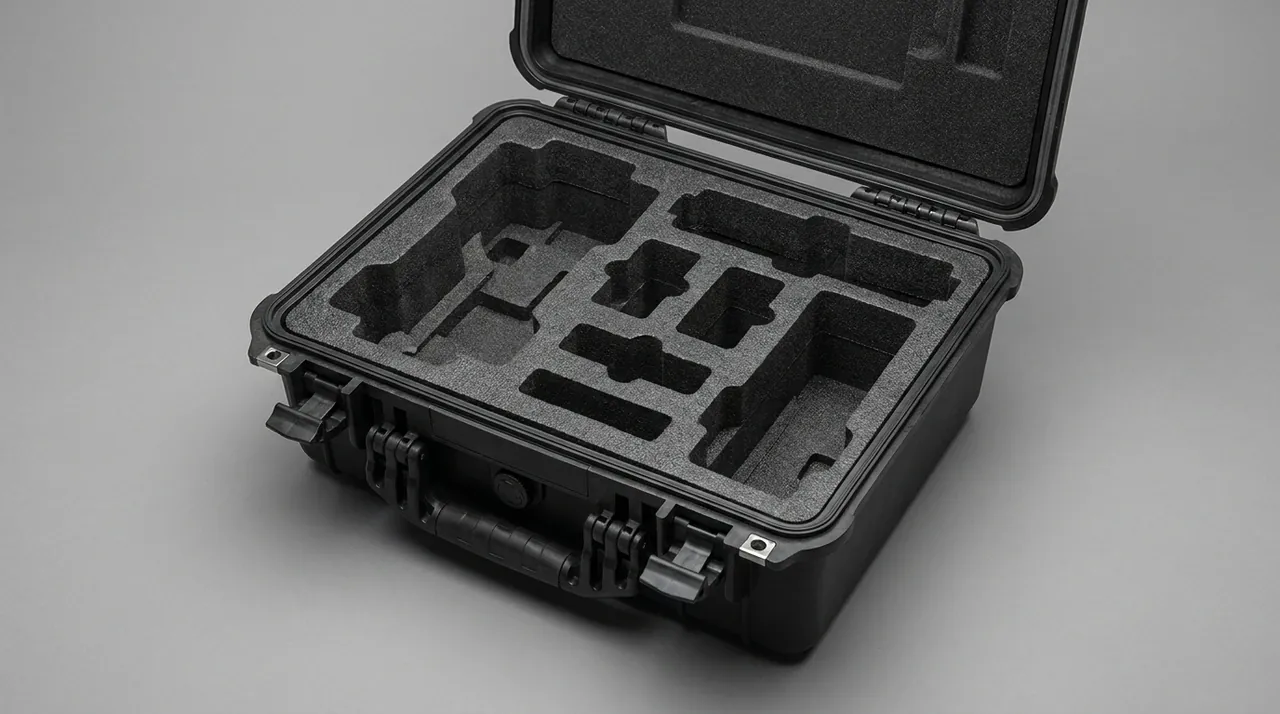
From a procurement perspective, the most confusing distinction is between a "storage box" and a "protection case": the former solves capacity, the latter solves survivability. When equipment is high-value, the environment is harsh, or the transport chain is long, protection should be selected first, and storage becomes an internal organization method. The sections below unfold in the order of "material — sealing — moisture — cushion — pressure — customization," and explain how to coordinate with plastic protective boxes and sealed protective boxes to build an overall scheme of water-and-dust outside and moisture-and-shock controlled inside.
Engineering Plastic Material Basics
The base material of functional plastic cases determines strength, temperature resistance, and cost. Common choices are PP (chemical resistant, low cost), ABS (good rigidity, easy molding), PC (high impact, high temperature resistance), and PC/ABS alloy (balanced). Material selection should combine operating temperature zone, load, and budget; see the material section of plastic protective boxes for details.
| Material | Density (g/cm³) | Long-Term Temp | Impact | Typical Use |
|---|---|---|---|---|
| --- | --- | --- | --- | --- |
| PP | 0.90 | -10~100 ℃ | Medium | Chemical, low-cost case |
| ABS | 1.05 | -20~80 ℃ | Medium | Toolbox, shell |
| PC | 1.20 | -40~120 ℃ | High | High-strength case |
| PC/ABS | 1.15 | -40~110 ℃ | Good | General protection case |
Experience value: for outdoor and vehicle scenarios, prefer PC or PC/ABS to balance impact resistance and weather resistance; for pure indoor low-cost transit, PP is acceptable.
Material choice also depends on later process: PC has better transparency, suitable for cases with transparent window like transparent window boxes; ABS is easy to plate and paint, suitable for appearance parts; PP has good weldability, suitable for large welded cases. For outdoor cases requiring weather and UV resistance, anti-UV additives should be added to the material, otherwise long-term sunlight will fade and embrittle. JUNZHJIA usually gives material suggestions based on the use environment on the selection of plastic protective boxes, avoiding early failure caused by material mismatch. When specifying, always ask the supplier for the material grade and a certificate of conformity, because "PC" alone covers a wide range of grades with very different impact and temperature performance.
Plastic Waterproof Boxes and IP Rating
The protection capability of a plastic waterproof box is measured by IP rating, based on the dust- and water-protection code of IEC 60529 (national standard GB/T 4208). Common grades: IP65 (dust-tight, water jet proof), IP67 (dust-tight, short-time immersion 1 m/30 min), IP68 (dust-tight, continuous immersion, depth and time by agreement). For floating needs, refer to the floating design of waterproof protective boxes and floating waterproof cases.
| IP Grade | Dust | Water Meaning | Suitable |
|---|---|---|---|
| --- | --- | --- | --- |
| IP65 | Fully dust-tight | Low-pressure water jet | Rainy outdoor |
| IP67 | Fully dust-tight | Immersion 1 m/30 min | Wading, drop in puddle |
| IP68 | Fully dust-tight | Continuous immersion (agreed) | Diving, long-term wet |
Experience value: do not blindly pursue high IP68; consider seal life, opening frequency, and cost; IP67 is sufficient for most inspection scenarios.
The IP grade must also be linked to "opening frequency" and "service life": although IP68 protects more, its thicker sealing ring and tighter latch accelerate seal fatigue, and each opening becomes harder, which reduces usability in tool-box scenarios requiring frequent access. Therefore, select by the principle of "most severe but not excessive" — for most inspection and outdoor scenarios IP67 already covers wading and short-time drop; choose IP68 only for long-term immersion or diving, and confirm seal life and opening frequency fit. Note that IP is a type-test result representing a new box under standard conditions, not a constant across the whole life cycle; the sealing ring ages with openings, UV, ozone, and temperature cycling, so acceptance should include a periodic inspection and spare-part plan rather than relying only on new-box data. For special working conditions requiring buoyancy, combine the floating structure of waterproof protective boxes, but note that buoyancy design may change the center of gravity and stacking stability and should be evaluated together at the scheme stage.
Sealing Structure of Plastic Sealed Boxes
The core of a plastic sealed box is the "continuous sealing path." Structural points: flat shell parting face, matching gasket section and groove, latches providing uniform compression force, and no leakage points at corners. Latch form affects pressure uniformity; it is recommended to refer to the latch-sealing design of sealed protective boxes and use multi-point latches or butterfly latches to balance pressure.
Seal material must match the environment: TPE/EPDM for normal temperature, silicone for high temperature, fluororubber for oil resistance. After lid closure the sealing ring should have reasonable compression (typically 15%–30%); too small leaks, too large accelerates aging. A pressure-balance valve can relieve internal-external pressure difference from temperature or altitude changes, avoiding difficult opening or seal failure. In practice, the valve should be specified by ventilation rate and protection grade simultaneously, because insufficient ventilation balances slowly while excessive ventilation increases water-ingress risk.
In sealing-structure selection, the latch form should also be determined by the "opening scenario": frequently opened tool boxes suit butterfly or quick-open latches emphasizing speed and feel; long-term sealed or wading equipment boxes suit multi-point screw or draw latches emphasizing uniform compression and anti-theft. For large boxes requiring single-person operation, the opening force should be checked to be within the ergonomic range to avoid latches too tight to open on site. JUNZHJIA usually provides latch-selection advice in sealed protective box projects and performs closure evaluation combined with sealing-ring compression, ensuring "tight compression" and "easy opening" hold simultaneously rather than compromising one for the other.
Plastic Moisture-Proof Boxes and Humidity Control
A plastic moisture-proof box adds humidity management on top of sealing: built-in desiccant (silica gel, montmorillonite), humidity indicator card, or electronic hygrometer to control relative humidity within the equipment allowable range (such as <40% RH to prevent condensation). Suitable for optics, electronics, pharmaceuticals, and archives against mold and oxidation.
Moisture-proof is not "the drier the better": some equipment has minimum humidity requirements, and over-drying may cause material cracking or rising static. Design should set the target humidity range by equipment specification and replace desiccant periodically. Combining the logic of anti-static boxes, an anti-static liner can be configured inside the moisture-proof box to meet dual moisture and static requirements. Desiccant choice also matters: silica gel can often be regenerated by baking for cyclic use; montmorillonite is low-cost and stable for long-term storage; indicator desiccant changes color when saturated, letting inspection staff judge at a glance whether replacement is needed. Whichever is used, reserve a desiccant position inside the sealed box and write the replacement cycle into the maintenance manual; for optics and precision electronics, avoid desiccant-package dust contaminating lenses or contacts by using an independent mesh bag or sealed small box.
Cushioning Implementation of Plastic Shock-Resistant Boxes
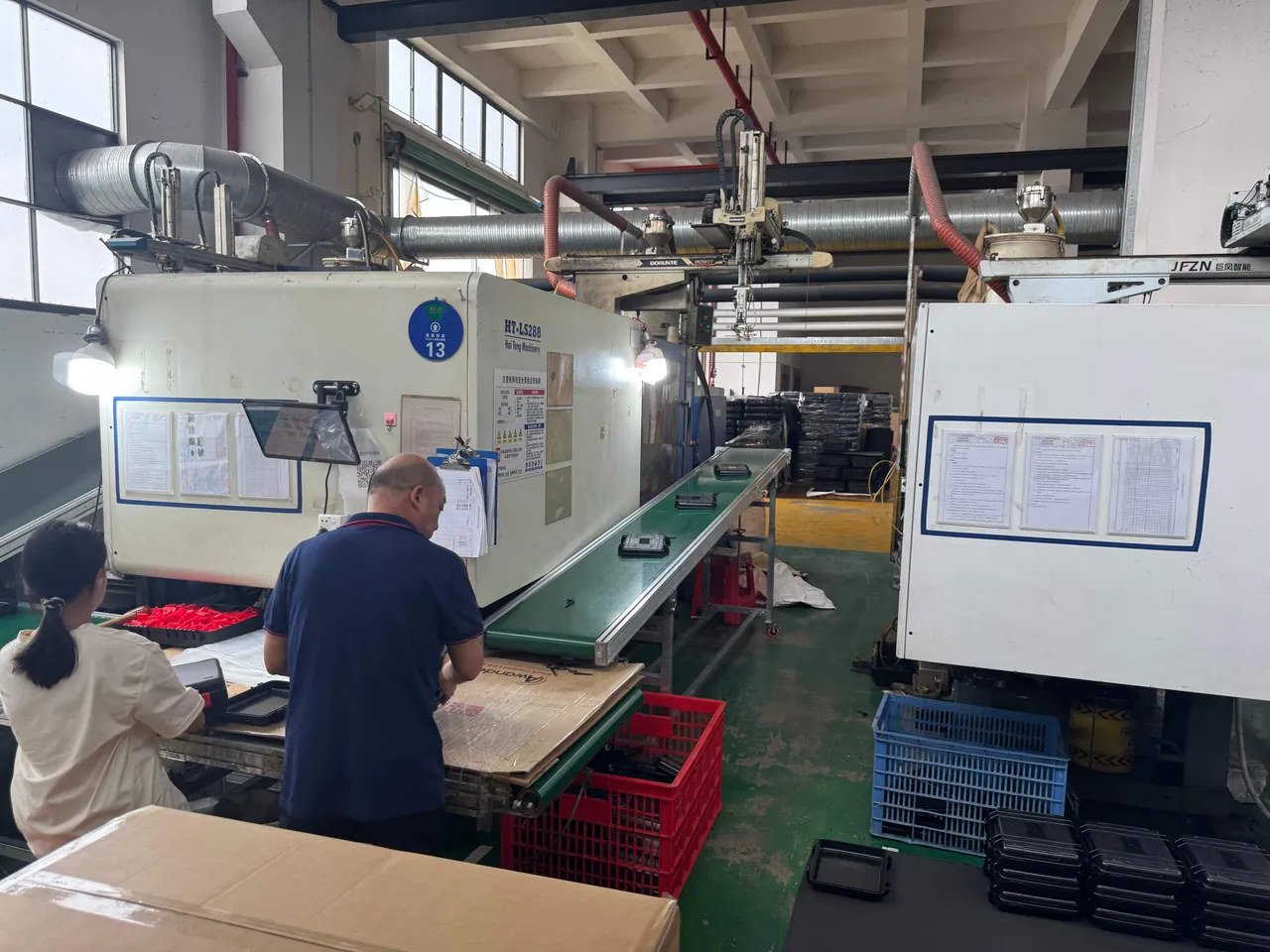
A plastic shock-resistant box has a built-in cushion layer inside the shell to absorb drop and transport vibration. Implementation can be pre-set EVA liner, removable foam layer, or custom-cut recesses. The cushion layer must conform to the equipment shape to avoid displacement friction. For detailed selection see the cushioning principle and material grading of shock-proof boxes and EVA-liner cases.
Design points: heavy parts sink, fragile parts in independent clips, liner thickness reserves lid closure space. For airdrop or rough handling scenarios, combine the airdrop protection logic of handheld portable boxes for multi-layer absorption and reinforced latches. Beyond material choice, the cushion layout should follow the equipment's center of gravity: place the heaviest component at the bottom and center, surround fragile protrusions with higher-density foam, and keep clearance for the lid so the compression of the sealing ring is never sacrificed for cushion thickness. A useful verification is a "shake test" — after closing the lid, the equipment should not move audibly inside; any rattle means the liner needs adjustment before transport approval.
Plastic Pressure-Resistant Boxes and Stack Load
Plastic pressure-resistant boxes withstand stacking and static load by thickening walls, adding ribs, and optimizing rounded corners. Bearing capacity is measured by stack load (uniform pressure the top box bears) and single-box allowable load, calculated by combining transport stacking layers. Long-term stacking should also consider creep; prefer PC/ABS or glass-fiber reinforced material.
| Structural Measure | Contribution to Pressure Resistance | Note |
|---|---|---|
| --- | --- | --- |
| Increase wall thickness | Directly improve stiffness | Adds weight and cost |
| Add ribs | Suppress deformation | More complex mold |
| Rounded corners | Stress dispersion | Improve impact resistance |
| Glass-fiber reinforce | Significantly raise stiffness | Surface needs treatment |
In engineering implementation, pressure resistance and portability are often a contradiction: thickening walls and adding ribs improves stack capability but increases self-weight and reduces carry efficiency. Therefore, the selection of plastic pressure-resistant boxes should be based on the real stacking layers rather than the theoretical maximum — first count the highest stacking number in transport and storage, then design with a safety factor above that number, avoiding "extreme for extreme's sake" that causes unnecessary weight and cost. For scenarios needing both carry and stack, use high-strength alloy hinges and latches, reinforce locally rather than thicken overall, or borrow the wheels and shoulder strap design of handheld portable boxes to separate "stackable" from "carryable." Acceptance should run a timed compression test at rated stack load and record whether the permanent deformation of the box is within the allowable range.
Custom Plastic Boxes and Model Tooling
Custom plastic boxes refer to case types customized by customer equipment shape and functional needs. Common approaches: modify liner on a generic shell (low cost, short cycle), or tool and inject by model (consistent batch, low unit cost). Before tooling, provide equipment list, outline dimensions, protection grade, and interface positions; the supplier does 3D design and sampling accordingly.
Customization should be written into a clear specification: material grade, wall thickness, IP grade, latch form, liner material and hardness, acceptance standard. JUNZHJIA supports OEM/ODM batch customization, can cooperate with the molding process of plastic protective boxes, match seals and liners by model, and deliver a documentation package including test descriptions. When planning tooling, also include "later maintenance" in the design: latches, hinges, and sealing rings are wearing parts and should be made separately replaceable rather than integrated with the shell; sealing rings should come with spare-part specifications and replacement-cycle advice so customers can build an inspection system. For exported or long-storage equipment, consider spare-part availability and prefer generic-spec seals and fasteners. JUNZHJIA usually attaches a wearing-part list and replacement guide with the box in plastic protective box customization and makes key parts standard to reduce the customer's full-lifecycle maintenance cost.
Plastic Liner Boxes and Zoned Storage
Plastic liner boxes emphasize "internal zoning and fixation." By configuring injection or cut liners inside the shell, tools, instruments, and consumables are placed in separate compartments, preventing displacement collision and improving take-out efficiency. This is consistent with the storage logic of plastic storage and transit boxes but emphasizes synergy with shell sealing and shock resistance.
Design can modularize the liner: bottom foam cushion, middle clip fixation, top transparent bag for consumables. For equipment with electronic modules, the liner can be laminated with a conductive layer to balance the ESD requirement of anti-static boxes. In modular practice, prioritize a "standard module + custom clip" hybrid: bottom cushion and middle general divider use standard modules for quick assembly, and only the device-unique protrusions get custom cutting, which guarantees fit while compressing single-box cost and lead time. For frequently reconfigured equipment, design a reconfigurable liner with hook-and-loop or slots. This is consistent with the flexible storage logic of plastic parts boxes but emphasizes synergy with shell sealing path and cushion stroke, avoiding a liner too high to push open the lid or too soft to cause displacement.
Synergy with Anti-Static and Temperature Resistance
Functional plastic cases often need to stack other protections: anti-static for electronics (conductive liner + grounding), temperature resistance for cold/high-temperature zones (temperature-resistant material + temperature-resistant seal), anti-corrosion for corrosive occasions (anti-corrosion material + isolation coating). Specifically refer to the material selection and sealing coordination of low-temperature protective boxes. The key to collaborative design is to plan sealing, liner, and material uniformly in a 3D model to avoid mutual interference.
Taking the "waterproof + shock + anti-static" combination as an example, a common conflict is: sealing requires the lid to close and compress, while an over-thick liner pushes the lid open and destroys compression; a conductive liner that blocks the seal-contact path may also affect grounding. Therefore, in the collaborative design of plastic sealed boxes, the shell inner diameter, sealing-ring section, total liner thickness, and conductive-layer position should be solved together as one set of constraints, ideally with the supplier doing dual verification of closure gap and conductive path at the sampling stage. JUNZHJIA usually includes multiple protection functions in the 3D review of customization projects to reduce later mold changes and rework.
Typical Application Scenarios
Functional plastic cases are widely used in: outdoor exploration instrument cases, industrial inspection toolboxes, medical consumable transfer cases, electronics repair carry cases, vehicle emergency cases, and marine equipment cases. Different scenarios combine differently: wading selects plastic waterproof boxes, moisture-fear selects plastic moisture-proof boxes, fragile selects plastic shock-resistant boxes, stacking selects plastic pressure-resistant boxes, special equipment selects custom plastic boxes. Combined with the shoulder strap and wheels of handheld portable boxes, carry efficiency can be further improved.
In specific selection, use two lists of "environment — risk" to subtract: the environment lists temperature, humidity, dust, whether wading, and whether contacting media; the risk lists drop height, stacking layers, vibration intensity, and whether ESD/EMC is needed. The intersection determines the mandatory function combination, avoiding paying for unused functions and avoiding missing key protection. For example, outdoor exploration is mostly "waterproof + shock + low-temperature," factory inspection is mostly "sealed + anti-corrosion + pressure-resistant," and medical transfer is mostly "moisture-proof + shock + easy to disinfect." Handing this list to the supplier usually yields a more matching plastic waterproof box solution than a verbal description.
JUNZHJIA Functional Plastic Case Custom Capability
JUNZHJIA provides one-stop customization of functional plastic cases: combining waterproof, sealed, moisture-proof, shock-resistant, and pressure-resistant functions by protection needs, selecting PP/ABS/PC/PC-ABS matrix and matching seals, supporting custom plastic box tooling and plastic liner box zoning design, able to stack anti-static, temperature-resistant, and anti-corrosion modifications, supporting OEM/ODM batch supply and matching seals by model. It delivers a documentation package including IP grade, drop and vibration test descriptions, facilitating acceptance traceability for engineering and medical customers.
In implementing customization, JUNZHJIA usually first confirms the "protection priority" with the customer: when waterproof, shock, pressure, and other needs constrain each other, sort by the consequence of equipment failure, give priority to protecting the most serious one, and make sub-optimal compromises on the rest. For example, for high-value but smoothly transported medical equipment, prioritize moisture-proof and shock-resistant, and pressure-resistant can be appropriately compromised; for long-distance stacked industrial spares, prioritize pressure-resistant and sealed, and shock does a basic configuration. This risk-based trade-off controls cost and weight better than average effort. Customers can also write the priority directly into the specification so the supplier's customization has a basis.
Common Application Mistakes
First, "a sealing ring means waterproof": uneven latch pressure still leaks, so look at the overall sealing path. Second, "higher IP is better": too high increases cost and may sacrifice opening convenience. Third, "moisture-proof means the drier the better": some equipment dislikes over-drying. Fourth, "shock resistance relies only on shell": the key is the cushion liner. Fifth, "customization equals expensive": liner-level customization is often low-cost with high return. Sixth, ignoring the match with the latch of sealed protective boxes causes insufficient sealing ring compression.
Beyond mistakes, a "protection priority review" mechanism should be established: after equipment modification, changes in transport mode, or adjustment of deployment region, the originally determined weights of waterproof, sealed, shock, and pressure may change. It is recommended to treat priority as a live document, update it synchronously with project evolution, and re-confirm the shell material, seals, and liner scheme at each modification. JUNZHJIA usually retains the protection archive of customer products in customization cooperation, facilitating quick adjustment suggestions when upgrading or expanding later, shortening the re-selection cycle. This is more efficient than starting over each time and also benefits batch consistency.
Procurement Specification Template and Acceptance
To truly put waterproof, sealed, moisture-proof, shock, and pressure needs into documents, use the structured template below to write material, IP, sealing, liner, and testing at once, avoiding suppliers passing off a "lidded plastic box" as a functional protection case, and avoiding writing only "waterproof" with no standard or verification.
| Spec Item | Suggested Wording | Acceptance Basis |
|---|---|---|
| --- | --- | --- |
| Base material | PC / PC-ABS (note grade) | Material certificate |
| IP grade | IP67 (IEC 60529 / GB/T 4208) | Third-party IP test |
| Seal material | Silicone / EPDM (by environment) | Temp and compression |
| Latch form | Multi-point latch / butterfly latch | Compression uniformity spot check |
| Liner material | EVA Shore C 35–50 | Density and hardness report |
| Delivery file | IP, drop, vibration test description | Archive traceability |
For procurement, make a single-box sample first, verify IP spray/immersion, drop, and stack before scaling up. For storage-biased products, refer to the zoning logic of plastic storage and transit boxes; for protection-biased, adopt the sealing and liner scheme above directly. Acceptance should batch-sample IP and seal compression and retain test images and curves. If the equipment also needs anti-static or temperature resistance, combine the modification logic of anti-static boxes and low-temperature protective boxes on the matrix with a composite liner, ensuring the seal and conductive/temperature layers do not interfere. On cost, invest first in the "sealing path" and "liner fit": uneven latch compression or liner displacement affects protection more than a more expensive shell. For mass-produced equipment, liner-level customization on a generic shell controls cost while gaining near-tooling consistency. JUNZHJIA supports OEM/ODM, matches seals and liners by model, and delivers a documentation package including IP, drop, and vibration test descriptions, letting engineering and medical customers write the above points into one specification and accept item by item.
FAQ
Q: How to choose IP67 and IP68 for a plastic waterproof box? A: IP67 means fully dust-tight and short-time immersion proof (typically 1 m depth for 30 min), suitable for rainy, wading, and accidental drop-in-water scenarios common in outdoor and inspection use. IP68 means continuous immersion, with specific depth and time agreed by the manufacturer, suitable for diving, long-term underwater, or continuously wet environments. Do not blindly pursue high grade, because higher grade usually means thicker sealing ring, higher cost, and possibly tighter opening force. IP67 is sufficient for most industrial inspection; choose IP68 only if there is a real long-term immersion need, and confirm seal life and opening frequency fit. Also remember IP is a type-test result, so plan a seal-inspection cycle rather than trusting new-box data alone. Referring to the floating design of waterproof protective boxes and floating waterproof cases can further handle falling into water and recovery.
Q: What material is good for the sealing ring of a plastic sealed box? A: Seal material must match the environment. Normal-temperature dry environments can use TPE or EPDM, with good cost-performance and elasticity; high-temperature environments (above 100 ℃) suggest silicone for better temperature and aging resistance; occasions contacting oil or solvent use fluororubber FKM for oil and media resistance. After material is determined, the key is matching section and groove, latches providing uniform pressure, and sealing ring compression typically controlled at 15%–30% after lid closure. For large boxes, check the opening force is within ergonomic range. Refer to the latch-sealing design of sealed protective boxes and use multi-point latches to balance pressure and avoid local leakage. A pressure-balance valve specified by ventilation rate and grade further protects the seal under altitude or temperature change.
Q: How to control humidity in a plastic moisture-proof box? A: A moisture-proof box adds humidity management on top of sealing: built-in desiccant (silica gel, montmorillonite, etc.), humidity indicator card, or electronic hygrometer to control relative humidity within the equipment allowable range (such as <40% RH commonly required to prevent condensation). Note that drier is not always better; some equipment has minimum humidity requirements, and over-drying may cause material cracking or rising static, so set the target range by equipment specification and replace desiccant periodically. For electronic equipment, an anti-static liner can also be configured to meet dual moisture and static needs, consistent with the logic of anti-static boxes. Choose desiccant by use: regenerable silica gel for cyclic use, montmorillonite for long storage, indicator type for visual check.
Q: How to select the cushion layer of a plastic shock-resistant box? A: Cushion layer selection follows equipment weight and fragility. Light electronics can use low-density EVA or PU foam; general instruments use medium-density EVA; heavy equipment uses high-density bottom layer plus soft-contact top layer. The key is liner conforming to equipment shape, heavy parts sinking, fragile parts in independent clips, and reserving lid closure space. Follow the equipment center of gravity: heaviest at bottom-center, fragile protrusions surrounded by higher-density foam, clearance kept for the lid so seal compression is never sacrificed. A "shake test" after closing the lid verifies the liner — any rattle means adjustment before transport. For detailed grading and cutting process see shock-proof boxes and EVA-liner cases. For airdrop or rough handling, also combine the airdrop protection of handheld portable boxes for multi-layer absorption.
Q: How many layers can a plastic pressure-resistant box stack? A: Stacking layers depend on single-box allowable load, stack load, and material creep. Design improves stiffness by increasing wall thickness, adding ribs, rounded corners, and glass-fiber reinforcement; calculation should ensure the uniform pressure the bottom box bears (sum of all upper boxes' gravity) does not exceed its stack load, with a safety factor reserved. Base the design on real stacking layers rather than theoretical maximum, then add a safety factor. Long-term stacking must also consider creep, preferring PC/ABS or glass-fiber reinforced material. For carry-and-stack scenarios, use high-strength alloy hinges and local reinforcement, or borrow the wheels and straps of handheld portable boxes. Acceptance can run a stacking test and record whether box deformation after specified time is within the allowable range.
Q: Does a custom plastic box always need tooling? A: Not necessarily. Customization has two levels: light customization modifies the liner on a generic shell (cut foam, add clips), low cost and short cycle, suitable for small-batch multi-variety; deep customization tools and injects by model, consistent batch and low unit cost but with upfront mold investment, suitable for large batches. It is recommended to provide equipment list, outline dimensions, protection grade, and interface positions first, and the supplier recommends a plan after evaluation. In either level, make wearing parts (latches, hinges, seals) separately replaceable and provide spare-part specs. JUNZHJIA supports OEM/ODM and can match seals and liners by model on the process of plastic protective boxes.
Q: What is the difference between a plastic liner box and a ordinary storage box? A: Ordinary plastic storage and transit boxes emphasize "holding more and sorting clearly," mostly open or simple lids with limited protection; plastic liner boxes emphasize "fixed firmly and protected well," with liner coordinated with shell sealing and shock resistance, often with cushion layer and clips to prevent transport displacement collision. The liner can be modular: bottom foam cushion, middle clip, top transparent bag for consumables. With electronic modules the liner can be laminated with a conductive layer for ESD. In short, the liner box is the extension of functional plastic cases in "internal protection," and a "standard module + custom clip" hybrid controls cost while guaranteeing fit.
Q: Can a functional plastic case be both waterproof and shock-resistant? A: Yes, and this is a common combination. The implementation is "hard shell seal + soft liner cushion": the shell uses sealing ring and latch for IP protection, and the inside has pre-set or custom EVA/foam liner to absorb impact. The two belong to different interfaces and do not conflict; the key is liner thickness and layout reserve lid closure space to avoid pressing the sealing ring and causing deformation leakage. In design, shell inner diameter, sealing ring compression, and total liner thickness should be included in 3D modeling for unified planning, and a shake test should confirm no equipment movement. For cushion selection refer to shock-proof boxes and EVA-liner cases.
Q: What parameters should be checked when procuring functional plastic cases? A: It is recommended to check: base material grade and temperature resistance, wall thickness and ribs, IP protection grade (note standard IEC 60529/GB/T 4208), seal material and compression, latch form and pressure, liner material hardness and cushion stroke, stack load (if pressure-resistant needed), whether custom and OEM supply are supported, and whether drop/vibration/IP test files are provided. Write these into the specification to facilitate supplier quotation and acceptance; use the procurement template above to make them auditable. Suppliers like JUNZHJIA that support OEM/ODM can usually deliver a traceable documentation package, reducing batch quality-control risk, and can match seals and liners by model for consistent field performance.
Conclusion and Related Reading
The core of functional plastic cases is "on-demand combined protection": based on engineering plastic, stacking structures and liners by waterproof, sealed, moisture-proof, shock-resistant, and pressure-resistant needs. Selecting the right material, sealing, and liner, and incorporating synergistic needs such as anti-static and temperature resistance into unified design, allows plastic waterproof, sealed, and moisture-proof boxes to hold equipment safe in real working conditions.
Related Reading