

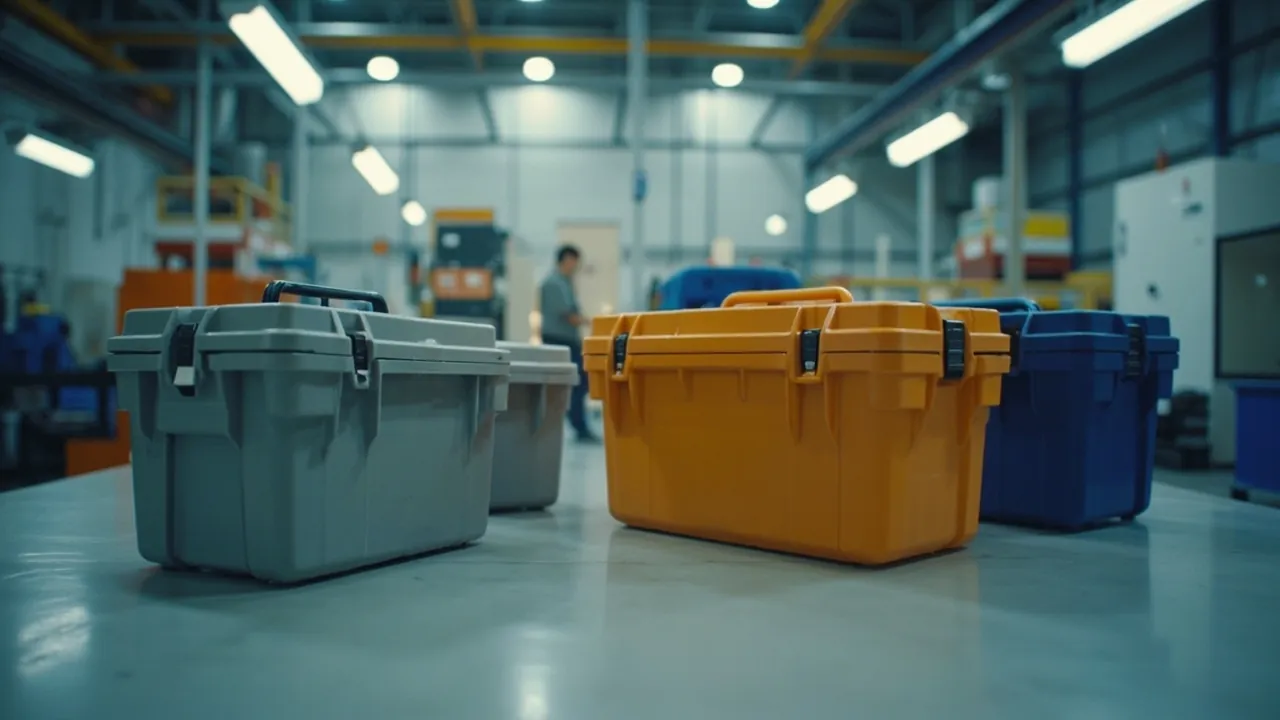
Plastic protective boxes have become the mainstream choice for carrying and storing equipment across industrial, aviation, defense, and electronics sectors because engineering plastics deliver a combination of light weight, corrosion resistance, and high toughness. The bottom line up front: at equivalent protective performance, modified PP, ABS, and PC enclosures are typically 40% to 60% lighter than metal cases and show more stable long-term reliability under salt spray, oil, and drop-impact conditions. Procurement teams should therefore select by the four dimensions of material, structure, sealing, and load capacity rather than by price alone.
This article systematically breaks down the core parameters of plastic protective cases, from material formulation and box structure to ingress protection, cushioning liners, and a practical selection checklist. Whether you are a procurement engineer, an equipment manager, or an OEM/ODM partner, you can use this piece as a reference for selection and acceptance. Users who need liners cut to a specific device shape or matching seal kits can review the custom-cutting approach described in our shock-proof boxes and EVA liner cases guide.
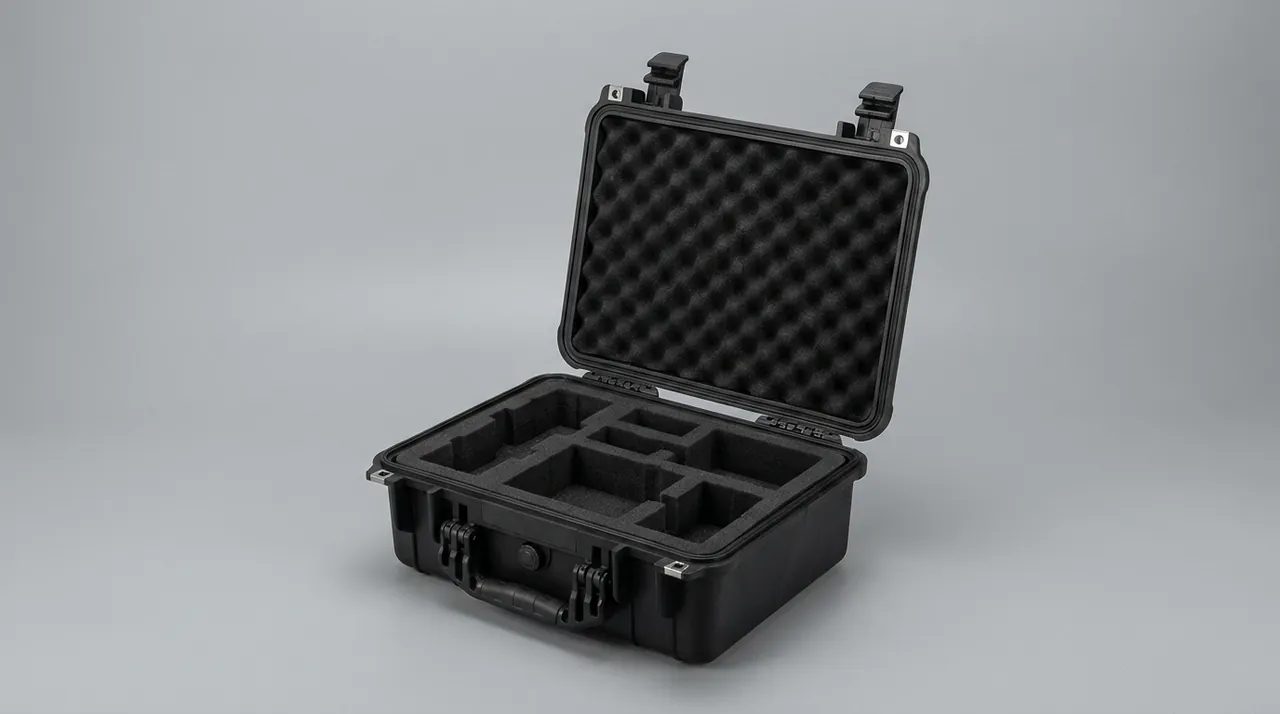
Table of Contents
- Core Value and Use Cases of Plastic Protective Cases
- Engineering Plastic Materials: PP, ABS, PC and Modified Compounds
- Box Structure Design and Force Analysis
- Protection Ratings and Sealing Systems (IP/IK)
- Dimensions, Stacking and Load Parameters
- Modular Interior of Plastic Toolboxes
- Locking and Anti-Theft Design of Plastic Safety Boxes
- Lightweight and Transport Compliance of Plastic Aviation Cases
- Damping Liners for Plastic Equipment and Instrument Cases
- Parts Management with Plastic Hardware Boxes
- Surface Treatment and Weathering Resistance
- Selection Checklist for Procurement
- Industry Applications and Case Studies
- Maintenance, Cleaning and Lifecycle Management
- FAQ
- Conclusion and Related Reading
Core Value and Use Cases of Plastic Protective Cases
The reason plastic protective cases are rapidly replacing traditional wooden and sheet-metal boxes in industry and defense lies in four characteristics: light, tough, stable, and economical. Light means significantly lower weight than metal at the same volume. Tough means energy is absorbed through elastic deformation on impact rather than cracking. Stable means the material shows small dimensional and performance drift across temperature and humidity changes. Economical means maintenance-free, recyclable, and low lifecycle cost.
For B2B users, the most common deployment scenarios for a plastic protective box include in-plant circulation of precision instruments, field service by after-sales engineers, random transport of aviation equipment, squad-level issue of military and police gear, and anti-static circulation of electronic components. These scenarios share common requirements for drop resistance, vibration resistance, dust and water protection, and easy stacking, which engineering plastic cases meet simultaneously.
Before selection, clarify three questions: device weight and shape, transport mode (air/land/sea), and site environment (dust/rain/salt spray/temperature swing). These three variables directly determine the material grade, wall thickness, and sealing scheme. When JUNZHJIA takes on an OEM/ODM order, it typically first collects the device's 3D drawing and duty-cycle table, then issues a material and structure recommendation, avoiding experience-based selection that leads to over- or under-protection.
Engineering Plastic Materials: PP, ABS, PC and Modified Compounds
The backbone of any plastic protective case is its material. There are four mainstream choices, each with a different performance orientation:
| Material | Density (g/cm³) | Notched Impact Strength (typical, kJ/m²) | Temp Range (typical) | Key Advantage | Typical Use |
|---|---|---|---|---|---|
| --- | --- | --- | --- | --- | --- |
| PP (Polypropylene) | 0.90–0.91 | 5–10 | -20°C to 80°C | Light, chemical resistant, low cost | Transit boxes, parts boxes, tool inserts |
| ABS | 1.04–1.06 | 15–25 | -20°C to 80°C | Rigid, easy to mold, good surface | Instrument cases, equipment shells |
| PC (Polycarbonate) | 1.20–1.22 | 50–70 | -40°C to 120°C | High toughness, optional clear, impact resistant | Aviation cases, window parts, demanding boxes |
| Modified PP/ABS blend | 0.95–1.10 | 25–45 | -30°C to 100°C | Balanced, cost-effective | General protective case bodies |
Note that the values above are industry experience ranges; specific grades must follow the material maker's technical data sheet (TDS). For flame-retardant requirements, brominated or halogen-free retardants can be added so the box reaches UL94 V-0 or V-2. For static-sensitive electronics, conductive carbon black or permanent anti-static masterbatch is blended in to form the ESD-safe structure discussed in our anti-static boxes and EMI shielded cases article.
Modification ideas also include glass-fiber reinforcement for rigidity, elastomer toughening for low-temperature ductility, and UV stabilizers to slow outdoor aging. The JUNZHJIA Zhongshan plant can add dedicated additives to the base resin according to the user's duty cycle, so that one mold yields different performance grades for product line diversification.
From sustainability and compliance angles, material choice should also consider recycling marks and food/medical contact grades. If the box is used for medical samples or food-related transit, confirm the base resin meets the relevant food-contact material regulations (such as migration limits) and prefer single-material designs for easier end-of-life sorting; composites with many additives need stricter separation in recycling. For devices exported to the EU, also watch REACH and RoHS restrictions on specific hazardous substances (certain retardants, plasticizers), and state a banned-substance list in the procurement technical agreement to avoid rejection on compliance grounds after arrival.
Box Structure Design and Force Analysis
A case is not a simple shell plus lid; its load path determines service life. Key structures include ribs, corner radii, metal inserts at latch bases, hinge bushings, bottom feet, and stacking locator bosses.
Ribs spread localized impact loads across the whole side wall. As a rule of thumb, for an injection-molded case with 2.5–4.0 mm wall, rib height of 2–3× wall and rib thickness of 0.6–0.8× wall significantly improves bending stiffness without meaningful weight gain. Corners use large radii rather than right angles to reduce stress concentration and lower crack probability on drops.
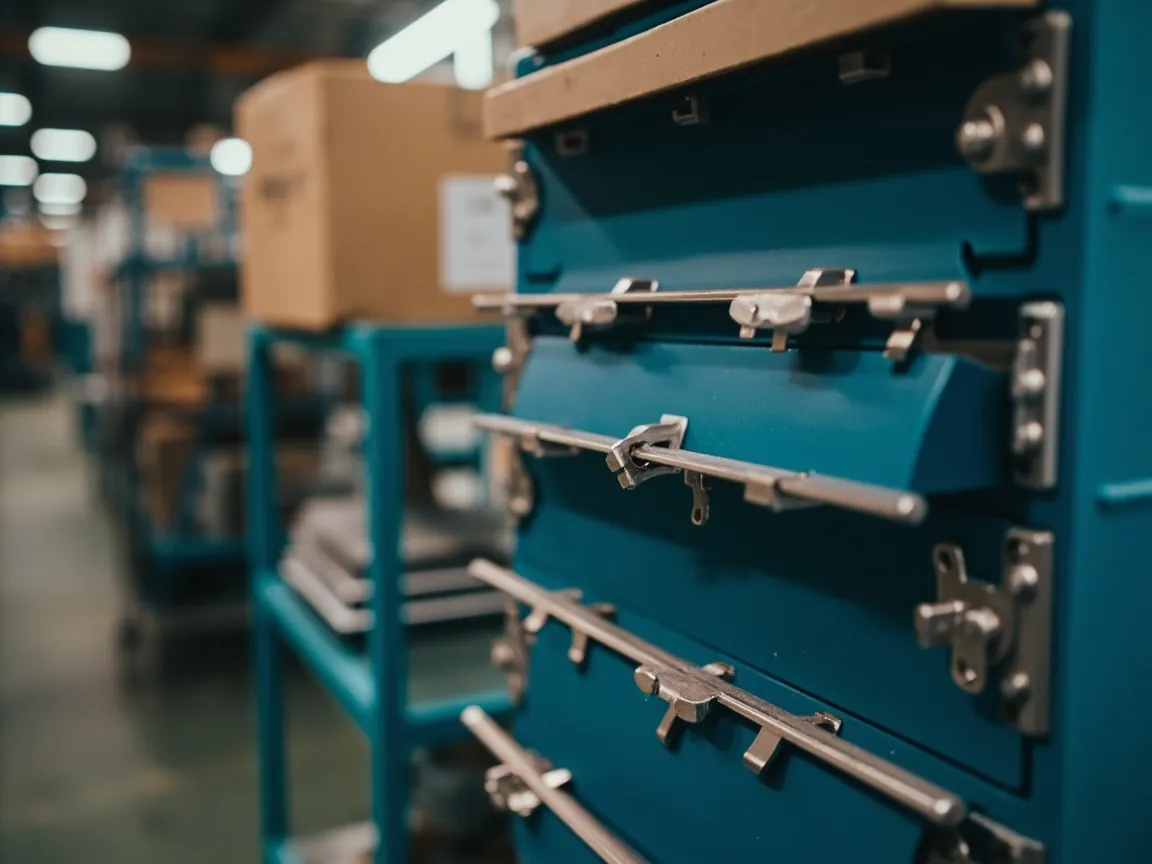
Latch bases and hinges are the most loaded areas. A professional plastic protective box embeds metal inserts (nuts/bushings) at these points so concentrated force transmits to metal rather than plastic. This is especially important for sealed protective boxes and latch-sealed cases, where airtightness depends on continuous latch pressure; if the latch base creeps, the seal fails.
Bottom feet and stacking bosses ensure aligned load points when stacked, preventing upper weight from pressing weak faces. The stacking locator also prevents transport slip, which matters for both sea and air random baggage.
Wall thickness is another lever in structural design. Too thin loses rigidity and creeps; too thick adds weight, lengthens cycle time, and risks sink marks. As a rule, small handheld cases use 2.0–2.5 mm, medium cases 2.5–3.5 mm, large heavy-duty cases 3.5–4.5 mm, with local thickening or metal inserts at load concentration. For cases needing a clear window, the window is usually PC or PMMA bonded to the body by two-shot molding or ultrasonic welding so the seam is never a leak path.
Protection Ratings and Sealing Systems (IP/IK)
Ingress protection is the most cited parameter. Under IEC 60529 (mirroring GB/T 4208), the IP code's first digit is dust (0–6) and the second is water (0–8/9K). Common industrial cases reach IP65 (dust tight, low-pressure water jet); high-spec units reach IP67 (dust tight, temporary immersion) or even IP68 (continuous immersion).
| IP Code | Dust Meaning | Water Meaning | Suitable Scenario |
|---|---|---|---|
| --- | --- | --- | --- |
| IP54 | Limited dust | Splash water | General plant transit |
| IP65 | Fully dust tight | Water jet (low pressure) | Outdoor patrol, vehicle mounted |
| IP67 | Dust tight | 1 m depth, 30 min | Rain combat, wading, emergency |
| IP68 | Dust tight | Maker-agreed depth/time | Submersion, long immersion |
For impact, the IK code (IEC 62262) describes resistance to mechanical collision; IK08 (5 J) and IK10 (20 J) are common for transit cases. Drop testing often references MIL-STD-810H method 516.8 procedures, where the case must retain seal and open/close function after drops from specified heights across a -29°C to 63°C range.
The sealing system comprises an elastomer gasket (usually EPDM or silicone), the lid compression face, and latch pressure. Gasket compression is generally controlled at 15%–30%; too low leaks, too high accelerates permanent set. JUNZHJIA can supply model-matched seal kits and include compression verification notes with each batch to ease acceptance.
For transport with significant altitude change (such as air random baggage or plateau patrol), temperature and pressure differences create negative pressure inside the case, making it hard to open and even drawing in dust. In such cases fit a pressure-equalization valve (breathable but water-blocking membrane) on the lid or side wall to balance internal and external pressure while keeping the water rating. The valve body material must match the case weathering grade, and maintenance should check whether the breathable membrane is clogged or damaged.
Dimensions, Stacking and Load Parameters
Avoid the "buy big" trap. Too large an interior lets the device rattle; too small cannot fit the liner. Recommend interior = device envelope plus 20–40 mm buffer, then add wall thickness for exterior. Common exterior size bands (L×W×H, mm): small within 200×150×100, medium 300–500×220–350×150–250, large above 600×400×300. To match a standard logistics pallet (1200×1000 mm), prefer modular sizes divisible by the pallet to reduce void in containers.
Stacking load is the static pressure the bottom case endures under multi-layer stacking. Injection PP cases typically sustain static loads tens of times their own weight, but users should rely on the maker's stack test data. Dynamic load during transport magnifies instantaneous force, so actual stack layers should be 1–2 fewer than static allowance.
When planning a shipment, also account for the pallet edge effect: cases at the pallet perimeter bear more vibration than those in the center, so strap or stretch-wrap the whole stack and place the heaviest cases at the bottom center. For sea transport, consider container sweat and salt-air corrosion on metal inserts and latches; specify stainless or coated hardware and add desiccant if humidity is high. Document the stack height and orientation on the packing list so downstream handling follows the validated configuration rather than ad-hoc stacking that voids the protection design.
Modular Interior of Plastic Toolboxes
A plastic toolbox differs from a plain storage box in organization. Professional tool interiors include handle, lid net pocket, movable dividers, drawer tray, tool straps, and a foam layer with swappable pick-pluck grids. Modularity lets users reconfigure the cavity quickly by tool set.
For high-frequency access repair, tiered trays beat a single large cavity. Top layer holds common screwdrivers and multimeters, middle holds consumables, bottom holds heavy gear. Some boxes integrate a clear parts bag inside the lid for small-item inventory. See hardware toolboxes and power/manual/repair tool boxes for further tool classification advice.
Another value of modular interiors is reusability: one shell with different liners serves different teams or models, reducing stock variety. This is exactly why OEM customers favor the "one shell, many liners" approach.
When specifying the interior, think in zones rather than a single cavity. A common layout places fixed tools on the lid (measured pockets or elastic loops), loose consumables in a removable tray, and the heaviest or most fragile device in a custom-cut foam bed at the bottom where the center of gravity sits lowest. Color-coding each zone—blue for electrical, red for sharp or dangerous, green for medical—lets a technician confirm completeness at a glance before closing. For kits that change often, use pick-and-pluck foam that the user can shape on site, then replace with CNC-cut foam once the final layout is settled, balancing speed and precision.
Locking and Anti-Theft Design of Plastic Safety Boxes
Plastic safety boxes emphasize content control, common for documents, keys, valuable spares, medicine, or confidential media. Locking ranges from simple clasp to dual lock holes, to combination lock, to padlock hasp.
Anti-theft does not mean absolute pick-proof; it raises the cost of breaking in and leaves traces as a deterrent. Common methods: thicken and embed metal at the lock area, add anti-pry return flanges at lid-body hinges, and fit a padlock hasp for user-supplied locks. For transport supervision, reserve a lead-seal hole or RFID bay inside for logistics seals.
Safety boxes must also handle opening life. The latch and clasp should not show plastic relaxation after tens of thousands of cycles, so these parts often use high-wear engineering plastics like PA (nylon) or POM (acetal) rather than common PP.
Lightweight and Transport Compliance of Plastic Aviation Cases
Plastic aviation cases target random checked baggage and airdrop, with core value being maximum protection within a weight budget. Aviation is extremely weight-sensitive; every extra kilogram becomes freight cost, so materials lean to PC or modified PP blends with topology-optimized weight removal in non-load areas.
For transport compliance, random baggage must meet airline size and weight limits; devices with lithium batteries must also comply with UN38.3 and IATA dangerous-goods rules on accompanying battery packaging. Wheels, handles, and stack interfaces must survive continuous conveyor impact.
For airdrop, the case needs higher impact and puncture resistance plus internal cushioning and tie-down straps to prevent content shift. Compare the transport design points in our handheld, shoulder-strap and wheeled transport boxes article.
Compliance paperwork is as important as the physical case. Air carriers may require a declaration that the packed contents meet their dangerous-goods policy, and military or government shipments often need serialization, tamper-evident seals, and a bill of materials inside the lid. Build these requirements into the design early: reserve a document pouch, engrave or laser-mark the serial near the latch, and standardise the lid-label format across the fleet so any handler can read it. JUNZHJIA supports OEM marking and can pre-install tamper labels or RFID tags during assembly, reducing field preparation time for the end user.
Damping Liners for Plastic Equipment and Instrument Cases
The core challenge for plastic equipment cases and plastic instrument cases is damping plus positioning. Devices are valuable and vibration-sensitive, so the liner must lock the device near the geometric center and leave a buffer layer in all six directions.
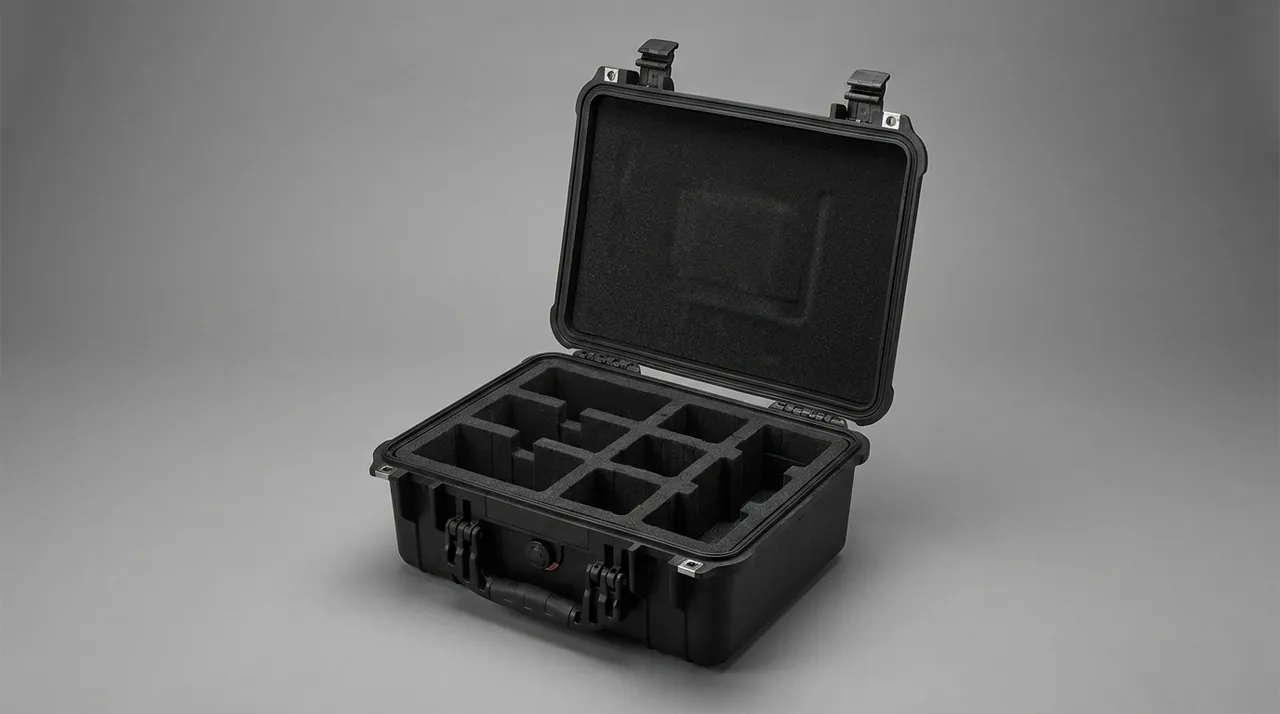
Liner materials commonly include EVA, PU foam, EPE pearl cotton, and cross-linked foams. Cutting methods include CNC milling, hot-wire cutting, and compression molding. For irregular devices, 3D scan the shape then CNC rout for fit. JUNZHJIA supports custom-cut liners from drawings or physical samples, with optional silk-screen labels or zone colors on the liner to improve pick/place efficiency.
Damping design must also consider resonance: some precision instruments are sensitive to liner stiffness at certain frequencies; provide the device's vibration-sensitive band so a structure engineer matches liner hardness (Shore C). This logic aligns with the anti-vibration reasoning in precision instrument cases.
For field service where the same case must protect both a heavy main unit and delicate probes, split the interior so the heavy unit sits low and central while probes nest in a shallower, firmer pocket above it; this keeps the combined center of gravity low and stops the lighter items from being crushed. Label each pocket with the part name and quantity so a quick visual check confirms the kit is complete before the technician leaves the depot.
Beyond hardness, liner thickness and cavity clearance decide performance. A common mistake is over-cutting the pocket so the device sits loose; the correct cut leaves 3–10 mm of foam around the device so the foam, not the device wall, takes the shock. For very fragile items, use a two-layer approach: a firmer base layer for support and a softer top layer for impact absorption. Document the liner drawing and foam spec with the case so future reorders are identical, and keep a few spare liners in stock because foam also ages and loses resilience after years of compression cycles.
Parts Management with Plastic Hardware Boxes
Plastic hardware boxes solve the "small parts disappear" problem, common for screws, nuts, bearings, blades, and drills. Their structure features multi-cell dividers, clear lid, stackability, and clasps.
Classification tips: divide by size gradient rather than brand to avoid one cell filled by large parts while small ones have no room; put high-frequency parts in the easy middle layer; give corrosive parts an independent sealed cell. For sharp blades, raise cell walls and fit elastic retainers to prevent lid puncture—see the subdivision advice in screw, nut and bearing parts boxes.
Hardware boxes also serve as liner modules inside larger cases—embedding several small boxes into a big case keeps structural strength while gaining fine management. This "box-in-box" idea is widespread in maintenance squads.
On the shop-floor logistics level, plastic hardware boxes pair with flow racks and kanban systems to form the basic unit of one-piece flow or lights-out replenishment. When a cell drops below the safety stock line, the system prompts replenishment to avoid line-stop for missing parts. For high-mix low-volume manufacturing, this standardized small-box system significantly lowers pick errors. In selection, focus on clasp strength and stacking locator precision so the box is stable on the rack and easy to handle; for cold storage or dust prevention, choose a sealed-lid version, consistent with the functional-case thinking in our plastic waterproof, sealed and moisture-proof boxes article.
Surface Treatment and Weathering Resistance
Surface treatment affects durability and identification. Common processes: matte powder coat (anti-glare, scratch resistant), silk-screen/ pad-print LOGO, laser marking, label slot. Outdoor long-term boxes should add UV masterbatch to prevent yellowing and embrittlement; chemical environments consider acid-alkali resistant coatings.
Color is not just beauty but a management tool: red for emergency, yellow for warning, blue for electronics, green for medical. Establish a color-to-use table in bulk purchase to lower mis-grab probability. Surfaces should also have drain slopes and anti-pooling grooves to avoid water accumulation that accelerates aging.
On label durability, silk-screen and pad-print outperform adhesive stickers for frequent handling; laser marking is nearly indelible and suits military or compliance scenarios needing permanent traceability numbers. If the case needs logistics labels, reserve a flat label zone away from ribs and handles to ensure scan success. For anti-static surfaces, beyond the conductive masterbatch, a permanent anti-static coating can be added so surface resistance stays stable in range without decaying through wiping.
Selection Checklist for Procurement
Condense into an executable checklist for purchase and acceptance:
- Define device weight, shape, and fragile direction.
- Determine transport mode and environment (temperature/humidity, dust, rain, salt spray).
- Select material grade (PP/ABS/PC/blend) and wall thickness.
- Set protection rating (IP/IK) and drop standard (e.g., MIL-STD-810H).
- Design liner scheme (EVA/foam/custom cut).
- Confirm latches, stacking, wheels, handle and other accessories.
- Request material TDS, seal verification notes, and batch consistency report.
Recommend actual drop and immersion validation in a small pilot before volume production. JUNZHJIA can provide structure and seal test documents during prototyping to help the buyer complete internal acceptance archiving.
Finally, keep the selection decision in writing. A short specification sheet—covering material, wall thickness, IP/IK rating, liner type, accessories, and the referenced standards—prevents scope creep between quote and delivery and gives the receiving inspection a clear pass/fail basis. Attach photos of the approved prototype and keep a sealed reference sample; when a later batch looks or feels different, the sample settles the dispute quickly without halting the whole line.
Industry Applications and Case Studies
- Electronics manufacturing: SMT lines use PP transit boxes for PCB in-plant flow, with anti-static versions reducing yield loss.
- Medical patrol: portable ultrasound in a PC instrument case for rural clinics, liner custom-cut to probe shape.
- Defense squad: aviation case with EVA liner carries comms modules within checked-baggage weight budget.
- Wind-power O&M: modified PP service case in nacelle resists oil and day-night temperature swing.
- Third-party testing: instrument case for field sampling gear, IP67 secures rainy operation.
The common thread is selection order of "duty cycle first, material second, structure third" rather than pure price comparison.
Notably, cross-industry cases often share one shell platform. For example, a medium PP case can serve as a PCB transit box with anti-static liner in an electronics plant, a repair box with tool tray at a service station, and a sampling box with instrument slots at a testing lab—this "one shell, many liners" modular thinking sharply reduces stock variety and tooling investment, and eases unified maintenance and gasket stock. For group users with large annual volume and many categories, lock in 2–3 standard shell sizes first, then differentiate by liner and accessories.
Maintenance, Cleaning and Lifecycle Management
Plastic protective cases are low maintenance but not zero. Recommend periodically wiping the gasket with neutral cleaner to prevent grit wear on the compression face; store half-open when idle to avoid permanent gasket flattening; avoid long-term full pressure on the bottom case when stacked.
Lifecycle tips: build a batch ledger recording first-use date and cumulative drops; for critical-task cases (aviation, defense) set a forced retirement cycle or retire by test result; keep gaskets as separate spares, with supplementary maintenance notes in our waterproof protective boxes and floating waterproof cases article.
From a total-cost-of-ownership (TCO) view, the advantage of a plastic protective case lies not only in unit price but also in hidden savings from no painting, no rust prevention, recyclability, and low damage rate. Metal cases need periodic anti-rust and repainting; wooden cases absorb moisture, mold, and are hard to clean; engineering plastic cases need almost no surface maintenance under normal duty. When accounting, include "repairs, replacements, and device damage caused by packaging failure within three years" to reveal the true cost-performance of the plastic solution. For OEM customers with global supply, JUNZHJIA can set up spare-part hubs in key regions or provide localized gasket replenishment to shorten maintenance downtime.
FAQ
Q: Should I choose a plastic or a metal protective case? A: It depends on the scenario. Plastic cases win on light weight, corrosion resistance, maintenance-free operation, and cost, suiting most industrial, electronics, aviation, and daily carry uses. Metal cases (aluminum, steel) win on extreme strength, puncture resistance, EMI shielding, and high-temperature tolerance, suiting harsh mechanical environments or shielded applications. If the device is weight-sensitive and the environment has no strong puncture risk, a plastic protective box is usually the better solution. List the device weight, transport mode, and site hazards first, then compare against the material performance table; request samples of both schemes if needed.
Q: How do I choose among PP, ABS, and PC? A: Look at three indicators: budget, toughness, and temperature. PP is lightest and cheapest with good chemical resistance but average toughness, good for transit and parts boxes. ABS is rigid and easy to finish attractively, good for instrument and equipment shells. PC has the highest toughness, survives low temperature and impact, good for aviation cases and demanding protection. For balanced cost-performance, a modified PP/ABS blend is a common compromise. Always base decisions on the material maker's TDS rather than the grade name.
Q: What is the difference between IP67 and IP68, and how do I specify it? A: IP67 means dust tight and immersion in 1 m water for 30 minutes without ingress. IP68 means dust tight and immersion at a maker-agreed deeper depth and longer time; there is no single number, so buyer and seller must agree. Normal wading, rain combat, and emergency use are fine with IP67; for long submersion or diving, agree on specific IP68 depth and duration and test at acceptance. Write the requirement as "IP67 per GB/T 4208" or "IP68, depth X m, time Y min".
Q: Why custom-cut the liner instead of just stuffing foam? A: Loose foam is cheap but the device is not precisely located, so it rattles and collides in transit and buffering drops sharply, plus pick/place is inefficient. A custom-cut liner routes the device shape so it is constrained in all six directions with even buffer layers, protecting and easing return-to-position. For precision instruments, medical devices, and comms modules, custom liners are a necessary investment. JUNZHJIA can CNC-cut from drawings or physical samples and support zone labeling on the liner.
Q: How high can a plastic case stack, and how do I compute safe layers? A: Stacking has static and dynamic capacity. Static is long-term warehouse load; dynamic is the instantaneous magnification under transport vibration. Safe layers should be static-allowed layers minus 1–2, with each layer a full case and aligned center of gravity. Use the maker's stack test report rather than experience estimates, especially for sea and long-distance land transport with obvious bumping.
Q: What special requirements does aviation random checked baggage impose on the case? A: Core is weight budget and conveyor impact resistance. Aviation charges by weight, so the case should be as light as protection allows, using PC or modified PP blend with topology weight removal; wheels, handle, and latches must survive continuous baggage-system impact; devices with lithium batteries must also meet UN38.3 and IATA related packaging rules. Recommend a real checked-baggage trial after prototyping before volume commitment.
Q: How often should the gasket be replaced, and how do I know it is time? A: There is no fixed cycle; it depends on frequency and environment. Indicators: visible cracks or permanent flat deformation, noticeably lower sealing pressure feel after closing, or leakage in immersion test. Keep gaskets as separate spares and sample compression at each batch arrival. Salt spray and strong UV accelerate aging, so shorten inspection intervals. JUNZHJIA can supply model-matched seal kits for batch replacement.
Q: How does an anti-static box differ structurally from a normal box? A: An anti-static box blends conductive carbon black or permanent anti-static masterbatch so surface resistance lands in the anti-static band (typically 10^6–10^11 ohms) and pairs with conductive inserts and grounding structure; a normal box is an insulator that accumulates static harming sensitive devices. If the device contains PCB, chips, or sensors, prefer the anti-static version and ensure the liner also has corresponding anti-static performance to avoid the "box anti-static, liner insulating" gap.
Q: How do I guarantee consistency in bulk purchase? A: The key is writing acceptance criteria into the contract appendix. Require the supplier to provide material TDS, first-article inspection report, batch sampling IP/IK test records, and liner fit photos; agree on an AQL sampling plan and non-conformance handling; for critical-task cases request per-batch test documents. Complete drop and immersion validation at prototyping, then accept volume against the prototype baseline to greatly reduce batch variation risk.
Conclusion and Related Reading
The value of a plastic protective case is not in "looking tough" but in the systematic match of material, structure, sealing, and liner. Using the four-dimension selection method of this article—material sets the tone, structure sets the life, sealing sets the protection, liner sets the safety—can significantly lower equipment transport loss rates. In procurement, state the duty cycle clearly, write the standard firmly, and make acceptance real to obtain a stable and reliable batch solution.
Related Reading