


A modular case system is a method of combining several standard protective cases into a single load-bearing unit through stacking, interlocks and join latches. A single protective case solves the protection of one piece of equipment; a case group solves the transport, deployment and expansion of an entire system. Through unified modules and interlocking structures, multiple cases can be quickly assembled into a stable whole that keeps each case sealed individually while gaining combined rigidity and a unified outer envelope. JUNZHJIA builds modular case groups across three lines: rotomolded, injection-molded and aluminum, emphasizing module compatibility, rapid joining and field expansion. This article explains the selection of case groups systematically, from stacking interlock principles, join latches, size modules and material choices to cooperation with tool carts and instrument carts, helping military units, emergency repair teams and field crews pack a whole vehicle of equipment into a coordinated group of cases.
What Is a Modular Case System
A modular case system is made of standard cases, interlocking parts and join latches. Each case is itself an independent protective case that can be used alone, but through the tongue-and-groove between lid and base, side latches and alignment pins, several cases can be stacked vertically and joined side by side into a group that will not fall apart. The core value is "building a system from standard parts": add or remove cases as the mission changes, without tooling a non-standard monolithic case.
Compared with a single large case, the advantage of a case group lies in flexibility and repairability: replace one damaged case, scale small cases up or down as the mission shifts, and split or join for transport. For troops and repair teams that need "a whole system ready to move at any time", a case group significantly shortens setup and teardown time. Users who only need single-case protection can refer to the rotomolded case forming principles.
In the JUNZHJIA product range, case groups run alongside three single-case lines: rotomolded groups are rugged, injection-molded groups are light and standard, and aluminum groups provide shielding and load capacity. Users mix them by working condition, even combining rotomolded and aluminum cases within the same group, separating outer protection from inner shielding in layers.
To decide whether a case group is needed, ask three questions: does the equipment form a system, will it be deployed and torn down repeatedly, and will it scale with the mission? If all three are yes, a case group delivers the most value; if only a single valuable item is moved occasionally, a single case is more economical. The economics of a case group come from standard-part reuse: the same cases can flow and recombine across different missions without tooling a new monolithic design each time, and a damaged case is replaced alone rather than dragging the whole set. For budget-sensitive units, it is advisable to fit one standard group for the most common mission first, then expand with spare cases as missions require, avoiding a one-off overspend. JUNZHJIA can propose a case group configuration from a system list, defining base case types, expansion case types and interlock counts, so procurement lands the budget on the most reusable module.
Stacking and Interlock Principles
Stacking relies on matching tongue-and-groove between the upper case base and the lower case lid: the upper case bottom drops into the lower case lid recess, held by friction and limiting ribs against side slip. Interlocks further lock the adjoining corners of neighboring cases with metal or engineering-plastic interlock parts, so the group does not misalign during push and vibration. A good interlock stays aligned when empty or fully loaded, and can be assembled or removed by hand quickly.
Interlock strength depends on the interlock part material and quantity. Rotomolded groups often embed metal inserts at corners with quick-lock pins; aluminum groups use profile corner brackets and clasps; injection-molded groups use clip-on corner locks. JUNZHJIA unifies the interlock interface on standard series so different sizes within the same series can be mixed. Stacking layers are limited by the single-case load and the interlock rating; overload will crush the lower layer or release the lock.
The design rule is "fix total height first, then fix layers": when total height exceeds two meters the wind-load and overturning risk rises, so reduce layers and add straps or a back frame. The group base should be fitted with forklift slots or casters for integrated movement. For groups that change site frequently, the whole group can be covered with a rain cover or loaded into a vehicle body.
The load path of the interlock must be considered as a whole: during transport the group's inertia is transferred by the interlock parts and finally reaches the case corners and base. If interlocks are fitted only on one side, the other side tends to gap during a hard turn; fit them at four corners, or at least in diagonal pairs, so the load is symmetric. The number of interlock parts grows with layers and weight and must not be reduced to save parts. Rotomolded groups can use fewer interlocks because the case body itself is rigid; injection-molded groups are lighter and need more interlocks to keep the combined stiffness. Even distribution and symmetry are the two rules of interlock layout, and the basis for a group that stays aligned and tight over long use.
Join Latches and Alignment Pins
Join latches lock side-by-side neighboring cases into one body, preventing them from shifting against each other during pushing. Common forms are side clasps, quick lever locks and alignment pin holes. Alignment pins keep upper and lower cases aligned, avoiding offset that would load the interlock unevenly. JUNZHJIA places standard pin holes and clasp positions on the side so any case in the same series can be joined in parallel.
Latches should be corrosion resistant, operable with one hand, and anti-loosening. Outdoor and vehicle cases use stainless steel or dacromet hardware that will not seize in salt spray. Alignment pins are recommended as quick-insert pins: insert and set during deployment, pull and separate during teardown. For groups that need electrical interconnection, the side can reserve cable pass-through holes and waterproof connectors so equipment wiring across cases is not broken.
Joining also needs ergonomics: latch height within reach, with lock feedback such as a click or an indicator window, avoiding the false belief that it is locked. Some JUNZHJIA models use a visible lock indicator to reduce misoperation. Related sealing can be combined with waterproof rating and IP realization.
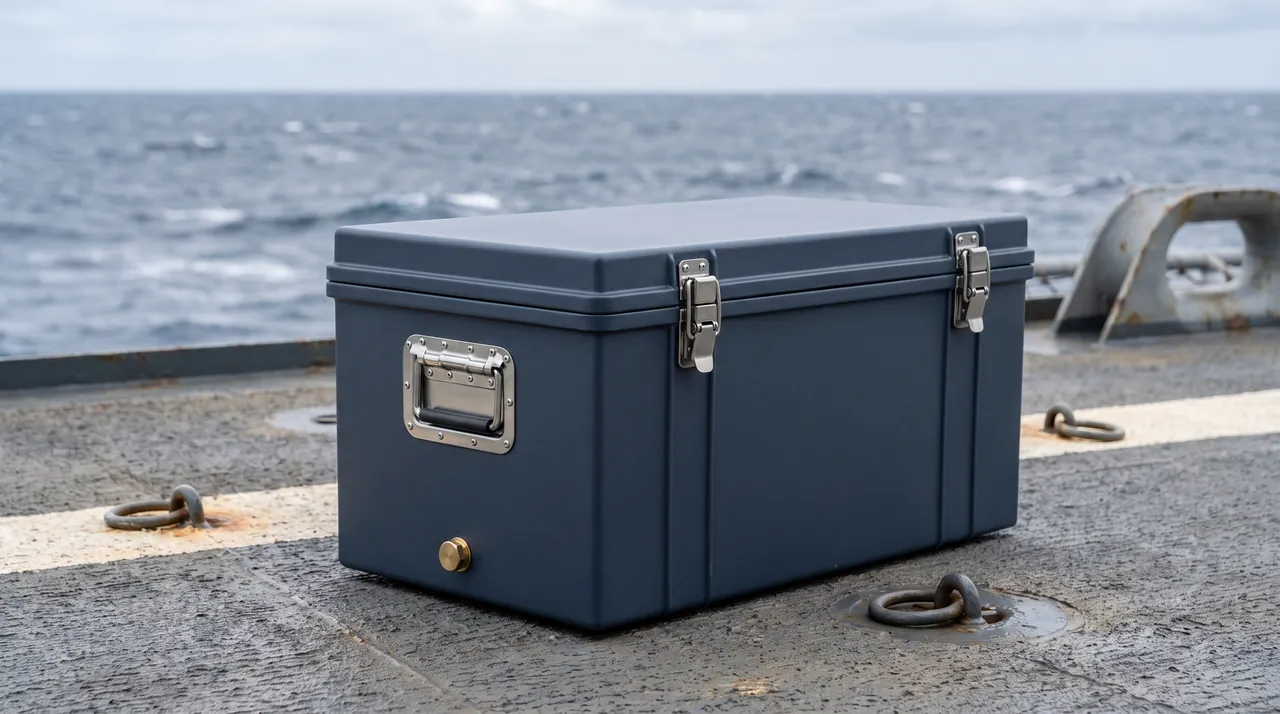
Size Modules and Compatibility
The key of a case group system is a unified module: the length, width and height of cases in the same series are integer multiples of the module, so any two cases can be aligned for stacking and parallel joining. Common modules take a "standard unit" as the base, such as a base unit of 300x200 or 600x400, with large cases being integer multiples of small cases. Once the module is unified, dividers, liners and casters also become interchangeable.
Compatibility is divided into intra-series and cross-series. Intra-series (all rotomolded or all aluminum) share the same module and stack seamlessly; cross-series mixing needs adapters because materials and tongue-and-groove differ. JUNZHJIA keeps module compatibility between standard series and supplies adapter corner brackets for cross-line combination. When purchasing, confirm the module family of the required cases to avoid buying "close relatives" that cannot be joined.
The module also affects liner and label interchange: same-module cases share liners, making spares easy to obtain; unified label positions make asset management convenient. For long-term projects, a standard module is more favorable for expansion and repair than a fully non-standard design. Related small-part storage can be combined with the parts box series.
Module planning should leave room for expansion: choose a base module for the current system, then check whether future case types fall on the same module. If expansion is uncertain, prefer a more universal module series rather than an isolated small module chosen to save space. Once the module is fixed, liners, dividers, casters and label positions should all be standardized to it, forming an asset of one module with many years of reuse. During procurement, ask the supplier for a module compatibility list that states which case types share a series and which need adapters, so expansion is not blocked later.
Material Routes and Selection
A case group can follow three material routes: rotomolded, injection-molded or aluminum. Rotomolded groups are seamless as a whole, drop resistant and suited to field and heavy loads; injection-molded groups are light, dimensionally accurate and suited to batch standard products; aluminum groups provide shielding and load capacity for precision electronic equipment. The same mission can mix them: rotomolded outside for abuse resistance, aluminum inside for shielding.
| Route | Advantage | Disadvantage | Suitable for |
|---|---|---|---|
| --- | --- | --- | --- |
| Rotomolded group | Drop resistant, seamless, can be large | Heavy, slightly wider tolerance | Field heavy load |
| Injection group | Light, accurate, cheap at volume | Size limited, weak to press | Standard mass production |
| Aluminum group | Shielding, load, precision | Expensive, dents easily | Precision electronics |
Selection depends on mission attributes: field repair chooses rotomolded, batch issue chooses injection-molded, electronic equipment chooses aluminum. JUNZHJIA keeps the three lines interface-compatible, letting users build cases in layers of "outer abuse resistance, inner shielding". For inner layers with high shielding requirements, refer to aluminum case material and shielding.
Load Capacity and Stack Stability
The load of a case group is the sum of each case load, but stability depends on the weakest link: the lower case lid, the interlock part and the base alignment. When stacking, place heavy on the bottom and light on top, with the center of gravity centered, to avoid eccentric overturning. JUNZHJIA recommends matching group total height and total weight with casters or a pallet; for extra height or weight add straps and a back frame.
During dynamic transport, the group is subjected to acceleration, braking and turning forces, and the interlock and latches must resist shear. Procurement should ask for the whole-group stack and intermodal test data, not just the single-case rating. For vehicle case groups, add anti-slip pads under the base and secure with straps through the limiting ribs in the compartment to avoid sliding during hard braking.
When moving up and down stairs, the group should be split into small cases for separate transport and assembled on site, to avoid an overall weight that is hard to move. For long-term fixed use, the group rests on leveling feet for greater stability. Related load comparison is in the rotomolded case structure analysis.
The table below gives an empirical match between common stack layers and interlock configuration, for preliminary planning only; the actual result is governed by whole-group stack and intermodal testing.
| Stack layers | Recommended scenario | Interlock requirement | Note |
|---|---|---|---|
| --- | --- | --- | --- |
| 2 layers | High-frequency transit, manual handling | Corner interlocks + straps | Low center, most stable |
| 3 layers | Vehicle-fixed, short distance | All-corner interlock + limiting ribs | Keep heavy bottom, light top |
| 4 layers and above | Fixed storage, rare movement | Add back frame or wall restraint | Wind load and overturning risk rise |
It must be stressed that the layer counts in the table are a recommended starting point, not an upper-limit commitment. Load per unit area, ground flatness and whether the group is vehicle-fixed all change the usable layers. On site, do a full-load static stack and a short push test, watching whether the lower case lid sinks and whether the interlock loosens; only then write it into the operating procedure.
Sealing and Ingress Protection
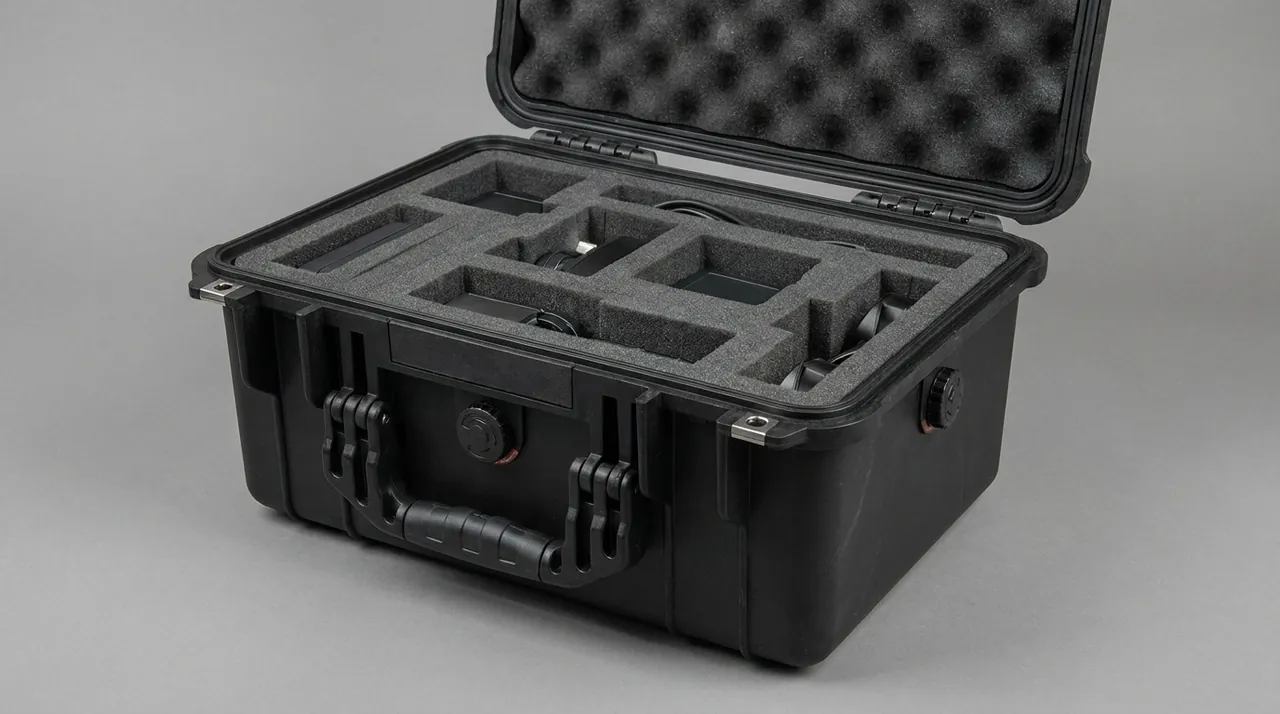
A case group is sealed by each case independently; after combination the overall protection depends on the single-case rating and the seam treatment. A single case can reach IP65 or IP67; if the joining face uses sealing latches and gaskets, the original rating of each case is not broken. JUNZHJIA fits a sealing strip on the joining face so that each case does not take in water when the group is transferred in rain.
It should be noted that the joining seam itself is not a sealing face; water may seep through the latch gap into the space between cases but not into the cases. Therefore the overall waterproofing of a case group should be understood as "each case is waterproof" rather than "the group shell is seamless". For applications needing overall airtight or watertight integrity, a monolithic large case or a sealed container-style structure should be used instead. Venting and wiring interfaces still need waterproof treatment; equipment with holes is fitted with waterproof breathable valves and connectors.
Select an IP rating matching the working condition: indoor storage IP54, field vehicle IP65 or above, short immersion IP67. Blindly choosing a higher rating only adds cost unnecessarily. More is in waterproof rating and IP realization.
Even though each case is sealed independently, a rain cover is still recommended when the group is transferred in rain, protecting the seams and hardware and reducing pooling and corrosion. For transport with air-pressure changes, such as air freight or high altitude, fit a waterproof breathable valve so the pressure difference does not lift the seal or draw in water. Wiring interfaces are the weak point of sealing; use waterproof connectors with sealing rings and provide strain relief so pulling the cable does not break the seal. For groups that need cross-case power, place standard pass-through holes on the side with plugs, sealing them when unused.
Internal Modular Dividers
The "modular" of a case group is also reflected internally: each case can be fitted with standard dividers, drawers, trays and straps, so that the devices of the whole system each have their place. JUNZHJIA supplies same-module liners and accessories, replacing one damaged piece at a time, and reconfiguring dividers as the mission changes.
Liners are selected by device shape: instruments use suspended EVA, small parts use partitions or blister trays, cables use cable managers. For precision devices, the cushion liner case approach also applies; adding shock pads inside the case prevents vibration. The case group can also set identifiers and checklists, so you know what is missing at a glance when deployed.
Internal modularization reduces search time and misassembly, and helps inventory and audit. For multi-case systems, it is recommended to label the content and number of each case, forming a "case group list" that is clear at shift handover.
The degree of liner standardization directly determines the reuse efficiency of the group: if every case liner is custom-built for one device, it is scrapped when the mission changes, and the flexibility of the group is lost. A better practice is a two-layer liner of a universal base liner plus a dedicated upper layer: the base liner is unified by module and supports drawers, trays and straps, while the upper layer is device-specific and replaceable. When the mission changes, only the upper layer is replaced, cutting cost and lead time sharply. JUNZHJIA can supply same-module base liners and replaceable upper layers, helping users balance expansion and maintenance.
Rapid Deployment and Relocation
The biggest selling point of a case group system is speed: on site, remove the cover, pull pins, open latches, and assemble a workstation in minutes; for teardown, reverse the operation and load into the vehicle to leave. Compared with a non-standard monolithic case, the group does not need special handling tools; standard forklift slots and casters move it as a whole.
The deployment process can be standardized: lay the base cases first, stack the middle layer, then lock the top layer, and finally fix with straps. JUNZHJIA provides deployment diagrams and numbers so that even novices can assemble by the drawing. For drills and emergency repairs, standardized deployment significantly shortens time and improves response. Workstations that need to move with the vehicle can go directly onto a tool cart and cabinet or an instrument cart and lab trolley.
Standardized deployment relies on three things: a diagram, numbers and drills. With the deployment diagram, case and layer numbers, and regular practice, even a new member can reproduce the assembly in minutes. Drills should record time and bottlenecks, feeding them back into the numbering or diagram for continuous improvement. For emergency repair, time is the core metric, and the value of a case group is exactly ready on arrival. JUNZHJIA can supply number labels and deployment cards with the group, helping the user fix the deployment process into a procedure.

Typical Application Scenarios
Case group systems are suitable for "one system, ready to move at any time": military communications and radar support, power emergency repair, emergency communications, film and television location shooting, and military on-site support. Their commonality is many devices, needing to form a system, and requiring rapid deployment and teardown.
In military and aviation, case groups assemble the entire set of tools and spares for line maintenance into a pushable and liftable unit; in emergencies, case groups serve as material storage and distribution units, ready to assemble and use on arrival. A reminder: if only a single piece of equipment is transported, a single protective case is lighter; only when "forming a system" do you go to a case group. Before selection, clarify the system scale and deployment frequency.
Difference from Single Protective Cases
A single protective case solves single-piece protection; a case group solves system combination. A single case is independently sealed and simple in structure; a case group gains combined rigidity through interlocks and latches, more complex in structure but flexible. Selection depends on "whether it forms a system": single piece uses a single case, system uses a case group.
Mixed strategy: still use respective protective cases for valuable single pieces, then join multiple cases into a group, balancing single-piece protection with system transport. JUNZHJIA recommends "single case meets standard, case group compatible", that is, each case first meets its own IP and load, then talk about combination. Related single-case selection is in military protective case selection.
Modularity also changes how a unit plans its equipment over time. Instead of treating each case as a one-off purchase, the unit treats the module family as an inventory standard: new equipment is specified to fit an existing case footprint, and surplus cases are redeployed rather than retired. This discipline lowers the cost of every future addition and makes training simpler, because operators learn one set of stacking, latching and labeling conventions that apply across the fleet. Where a program spans several years, the module choice made at the start effectively sets the ceiling on how cheaply and quickly the fleet can grow. JUNZHJIA supports this by keeping interlock interfaces and module families stable across production runs, so a case ordered today still joins a group assembled years earlier, protecting the user's long-term investment.
Working with Tool Carts and Instrument Carts
A case group can be fixed on a tool cart or instrument cart to form a "mobile case group". The cart provides casters and a worktop, the case group provides layered protection; the combination lets the whole system move within a site and go into a box for long distance. JUNZHJIA supplies vehicle fixing parts so that a standard case group can be locked in the vehicle body without sliding.
The key point of cooperation is dimensional connection: the case group base should fit into the door layer or fixed worktop, and the latch corresponds to the vehicle fixing point. For precision instrument case groups, add shock pads on the cart for double protection. Related vehicle ideas are in the shock design of the instrument cart and lab trolley.
Selection and Procurement
Procurement in four steps: define the system, select the module, set the material, and fit the interlock. First list the equipment inventory and deployment frequency of the system; then set the module series and required case types; then select rotomolded, injection-molded or aluminum and mixing by working condition; finally fit interlock parts, latches and casters.
The contract should state: module family, dimensions and load of each case, IP rating, interlock method and rating, latch material, casters and straps, and spare parts list. Military or certified projects need material and test reports. Customization includes non-standard case types and adapters, but keep module compatibility as far as possible for expansion.
Do not be led astray by "universal case group"; land on module compatibility, interlock rating and single-case rating. Acceptance is based on on-site assembly and stack intermodal test, checking alignment, lock and overall stability.
Total cost of ownership should be part of the evaluation: the purchase price is only the start; spare availability for interlocks and latches, liner reuse rate, case repairability, and whether expansion needs new tooling all significantly affect multi-year cost. A standard-module group, with interchangeable spares and case-by-case expansion, usually has a lower long-term total cost of ownership than a non-standard monolithic case. Write the spare parts list and supply term into the contract, and make module compatibility a hard requirement so expansion is not blocked. In phased implementation, land the base group first, then add expansion cases by mission, keeping both risk and budget controllable.
In film and transit work, a case group turns camera, lenses, lighting and power into a pushable unit that leaves as soon as the shoot wraps; in power emergency repair, it loads instruments, spares and consumables in layers and deploys by number on site, shortening restoration time. The common trait across scenarios is systematic, fast and expandable, which is exactly the boundary of a case group's use. If the task is only a single item back and forth, a single protective case is lighter and cheaper; do not use a case group for its own sake.
Use and Maintenance
Daily maintenance: clean and lubricate latches and interlock parts, prevent loss of alignment pins; regularly check the elasticity of the sealing ring, replace if hardened or cracked; clean casters of entangled wires and debris. In salt spray environment, remove rust and repaint hardware, and maintain the luster of stainless parts.
Inspection: whether the interlock is locked, whether the latch is anti-loosening, whether the case lid is aligned, whether the base anti-slip and straps are intact. If case deformation or interlock failure is found, stop use and return for repair. For long-term storage, avoid light, keep off the ground, lay flat; splitting the group into single cases saves more space.
Maintenance should follow a schedule: clean and lubricate after every mission, check sealing and interlocks monthly, check hardware corrosion and case cracks quarterly, and run a full-load stack test annually. If interlock parts wear, latch spring force drops or the sealing strip hardens, replace promptly rather than forcing continued use. Keep spares against a wear-parts list, especially interlocks, alignment pins, sealing strips and casters. Recording maintenance in asset management reveals the remaining life and replacement point of the group, avoiding failure during a critical mission.
Sustainability and Customization
Case groups have long life, are repairable, have interchangeable accessories, and a standard module helps expansion. Steel and aluminum are recyclable, and rotomolded polyethylene can also be reground. JUNZHJIA keeps standard interlock parts, latches and liner spares, with small repairs extending life. During customization, include repairable, replaceable and recyclable items as indicators.
Procurement can require material declarations and restricted-substance lists, which is especially important for export projects. A standard module is more favorable for spares and expansion than a fully non-standard design. Include case groups in asset management, with labels and lists, to extend effective life and reduce total cost of ownership.
Module discipline also pays off in storage and logistics. A case group can serve as a stackable storage unit shelved by module, so picking and counting are faster than with loose boxes; in research and testing, a group keeps instruments, probes and consumables layered, integrating transport with on-site setup. Different scenarios weight the requirements differently: field heavy load cares about strength and casters, indoor standard cares about dimensions and appearance, and electronics care about shielding and static. A user should define the primary scenario before selecting, then set material and interlock by that scenario, rather than over-configuring to cover every case and inflating cost and weight.
Frequently Asked Questions (FAQ)
Question: How to choose between a modular case group and a monolithic large case? Answer: A single piece of equipment is lighter in a single protective case; only when you have a whole system that needs rapid deployment and teardown do you go to a case group. A case group is flexible and scalable, replace one damaged piece at a time; a monolithic large case is sealed as a whole but indivisible and expensive as non-standard.
Question: Can cases of different materials be joined together? Answer: Intra-series (all rotomolded or all aluminum) share the same module and can be mixed; cross-series mixing needs adapter corner brackets because tongue-and-groove and materials differ. JUNZHJIA keeps standard adapters for cross-line combination; confirm the module family before purchase.
Question: How many layers is it safe to stack a case group? Answer: Depends on the single-case load and interlock rating, heavy bottom light top, center of gravity centered. Total height over two meters raises wind-load and overturning risk, so reduce layers and add straps and back frame. Acceptance is based on overall stack intermodal test, not just single-case rating.
Question: Is a case group waterproof as a whole? Answer: A case group is sealed by each case independently; the joining seam is not a sealing face. When a single case is IP65 or IP67 each case does not take in water, but water may enter the space between cases without entering the cases. For overall airtight or watertight integrity, use a monolithic large case or a sealed container structure.
Question: Will the join latches rust and seize outdoors? Answer: Use stainless steel or dacromet hardware that will not seize in salt spray. Alignment pins are quick-insert pins, insert during deployment and pull during teardown. Clean and lubricate regularly, with lock feedback to prevent false locking.
Question: Can a case group go directly onto a tool cart or instrument cart? Answer: Yes and it is recommended. The cart provides casters and worktop, the case group provides layered protection, and vehicle fixing parts lock the group without sliding. Dimensional connection lets the group fit into the door layer or fixed worktop; precision groups add shock pads on the cart.
Question: How to fit internal dividers? Answer: Same-module liners are interchangeable; instruments use suspended EVA, small parts use partitions, cables use cable managers. Replace one damaged piece at a time, reconfigure as the mission changes. Label content and number of each case to form a case group list clear at shift handover.
Question: How to standardize rapid deployment? Answer: Lay base cases first, stack middle layer, lock top layer, fix with straps, operating by the JUNZHJIA deployment diagram and numbers. Standardized deployment shortens emergency repair and drill time and improves response.
Question: How long does a custom case group take and what is the minimum order? Answer: Standard module combination has short lead time and low minimum order; non-standard case types and adapters are at the level of weeks by drawing. It is recommended to standardize first then expand, making spares easier to obtain and later adding or removing small cases.