


In takeaway and group-meal delivery, the last mile from kitchen to customer is where food loses heat fastest. The conclusion: choosing the right catering insulated case is not about how thick the wall is, but about matching three things together - insulation material, sealing structure and cool-pack configuration - and then working backwards from delivery duration (30/60/120 minutes) and target temperature band (hot chain at or above 60 C, chilled at or below 8 C, frozen at or below -18 C). This article sets out the structure, materials, cool-pack logic, test standards and acceptance checklist for catering insulated cases, food insulated boxes, takeaway insulated cases, cold-chain meal boxes and delivery insulated cases, so that restaurant chains, group-meal operators, fresh-food e-commerce and B2B buyers can quote it directly.
Many buyers look only at how many portions fit and at the unit price, ignoring hold-time curves, seal life and hygiene design. The result is hot meals arriving below 60 C, chilled food warming past spec, customer complaints and even food-safety risk. This article turns insulation from vague experience into measurable parameters, using actionable structure, material, cool-pack, testing and acceptance methods - so that a catering insulated case becomes a genuine guarantee of delivery quality rather than a cost burden.
Table of Contents
- Core Metrics for Food Insulated Cases: Hold Time and Temperature Band
- How Insulation Works: Case Structure, Insulation Layer and Sealing
- Comparing Insulation Materials and Shell Materials
- Cold-Hot Dual-Use Sealing and Latch Design
- Delivery Insulated Cases: Capacity and Rider Fit
- Group-Meal and Canteen Delivery: Large Capacity and Stacking
- Cold-Chain Meal Boxes and Cool-Pack Configuration
- Temperature Validation and Testing Standards
- Food Safety and Easy-Clean Design
- Customization: Printing, Compartments and Removable Liners
- Delivery Case Selection and Acceptance Checklist
- Maintenance and Service-Life Management
- Common Selection Mistakes
- Frequently Asked Questions
Core Metrics for Food Insulated Cases: Hold Time and Temperature Band
The value of a catering insulated case is defined by three metrics: hold time, temperature-band stability and loading ratio. For the hot chain, the food's core temperature on arrival must not fall below 60 C - the benchmark used by most local regulators and group-meal tenders. For the cold chain, chilled goods must stay at or below 8 C and frozen goods at or below -18 C. Hold time is not an absolute "how many hours the case can hold" number; it is the time during which core temperature stays inside the target band, at a given ambient temperature and loading ratio. At 35 C in summer versus 0 C in winter, the effective hold time of the same case can differ by more than 30 percent, so selection must be tied to real operating conditions.
Loading ratio matters just as much: the larger the empty space inside the case, the stronger the air convection and the faster the heat exchange. Experience shows that below about 60 percent loading, hold time drops noticeably, while near full load (85 to 95 percent) performance is at its best. Buyers should therefore size the case to the per-trip delivery volume rather than simply reaching for the largest box.
| Delivery scenario | Typical duration | Target band | Recommended case configuration |
|---|---|---|---|
| --- | --- | --- | --- |
| Takeaway hot meal | 30-45 min | Core at or above 60 C | EPP insulated case, double lid, silicone gasket |
| Group-meal hot chain | 60-120 min | Core at or above 60 C | PU foam case, heat packs, stackable body |
| Fresh chilled | 30-90 min | 0-8 C | PU case, cool packs, temperature logger |
| Frozen delivery | 60-180 min | At or below -18 C | High-density PU, double cool packs, strong latches |
| Mixed hot and cold | 30-60 min | Dual zone | Centre divider, two-temperature case |
Tip: tender documents often say "holds heat for more than 2 hours". Ask bidders for the test conditions - ambient temperature, loading ratio and target band - in a single three-part statement, otherwise the numbers are not comparable.
How Insulation Works: Case Structure, Insulation Layer and Sealing
Insulation is essentially the suppression of three heat paths: conduction, convection and radiation. The case is made of four parts - shell, insulation layer, liner and sealing structure. The shell takes the knocks of handling, the insulation layer reduces conduction, the liner provides easy cleaning and food-grade contact, and the sealing structure cuts off air convection. All four are essential; many "poor insulation" complaints trace back not to a thin insulation layer but to a warped lid that has broken the seal.
For conduction, the lower the thermal conductivity of a material, the less heat passes through per unit time. For convection, air movement inside the case carries heat from warm zones to cold zones, so internal compartments and dividers indirectly improve insulation. For radiation, a low-emissivity (shiny) liner reduces radiative exchange, which matters especially in frozen cases.
It is worth stressing that seal geometry matters more than simply adding thickness. Common practice includes a one-piece silicone or TPE gasket around the lid, twin latches that compress it evenly, and a stepped lip between the case mouth and the lid to prevent a direct thermal bridge. Typical signs of a failed seal are condensation on the wall and edge zones warming first; during acceptance, a thermal-imaging camera can reveal whether the lid line shows an obvious bridge.
Beyond that, the corners and handle mounts are classic thermal bridges. If a metal handle or screw passes straight through the insulation layer, it conducts outside heat rapidly into the case; the right approach is a thermal break between metal parts and body, or a one-piece moulded plastic handle. The mating surface between lid and mouth should use a labyrinth (stepped) design to lengthen the leak path, so that even a slightly aged gasket maintains a basic seal. For very long-hold cold-chain cases, an additional reflective film outside the liner further reduces radiative transfer. Understanding these three heat paths is what lets you find better optimisations than simply thickening the wall.
Comparing Insulation Materials and Shell Materials
The insulation layer determines hold time, weight and cost. Typical materials and experience values are as follows:
| Insulation material | Thermal conductivity (typical) | Insulation | Weight | Typical use |
|---|---|---|---|---|
| --- | --- | --- | --- | --- |
| EPS foam | about 0.038 W/(m K) | Medium | Light | Low-cost short-haul takeaway |
| EPP foam | about 0.037 W/(m K) | Medium-high | Light | Takeaway, group meal, recyclable use |
| Rigid PU foam | about 0.022-0.026 W/(m K) | High | Medium | Long-hold cold chain, fresh delivery |
| VIP vacuum panel | about 0.004-0.008 W/(m K) | Very high | Medium | Extreme hold time, premium pharma |
| Aerogel composite | about 0.015-0.020 W/(m K) | High | Light | Premium lightweight use |
Shell material decides durability and appearance. PP is low cost, impact resistant and easy to clean, which suits high-frequency takeaway use. ABS is stiffer and takes printing and shaping better, which suits group-meal cases with branding. PC has the highest impact strength but a higher price. Where a lightweight soft bag is needed, an Oxford fabric plus pearl-cotton composite can be used, but its sealing and crush resistance are weaker than a hard shell. Cold-chain meal boxes usually combine a food-grade PP liner with a PU insulation layer, balancing insulation against hygiene.
Insulation thickness is not a case of "the thicker the better" either; it should match volume and target duration. As a guide, 15-25 mm suits short-haul takeaway, 25-40 mm suits group meals, and 40-60 mm suits long-hold cold chain. Thickening blindly sacrifices loading ratio and adds dead weight, which actually reduces effective insulation. Select the duration and temperature band first, then work back to material and thickness, and finally confirm with a measured curve.
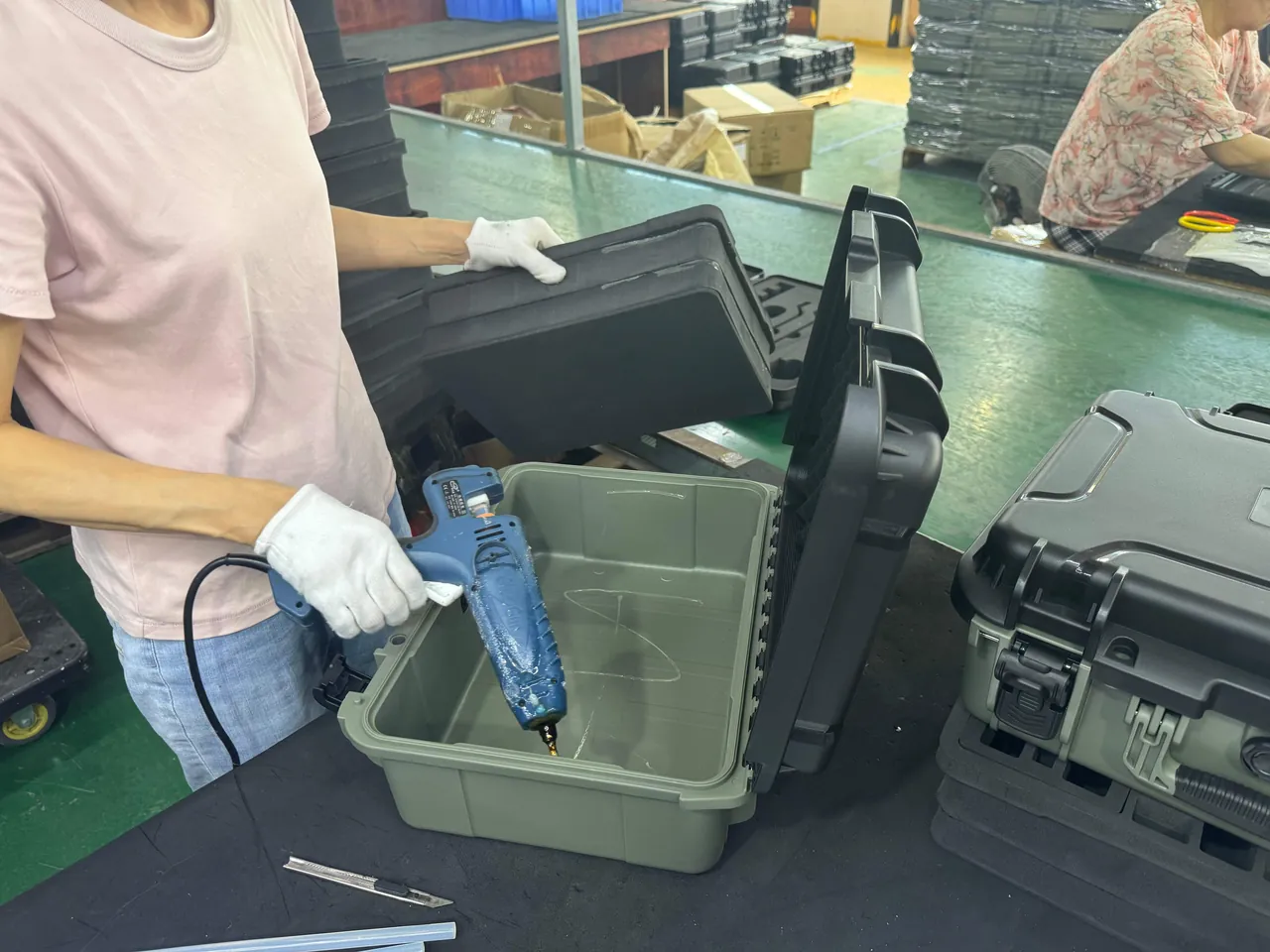
JUNZHJIA can match insulation thickness to the delivery temperature band and duration, and supply food-grade liners with matching gaskets, which helps restaurant chains standardise specifications.
Cold-Hot Dual-Use Sealing and Latch Design
For a single case to serve both hot and cold chains, sealing and latches must work across both. Silicone hardens at low temperature, losing elasticity, and ages faster when hot, so the gasket should use a wide-temperature silicone (experience range -40 C to +120 C) and avoid long-term direct contact with grease. Latches should be metal or glass-filled nylon that applies even pressure to the gasket and opens one-handed, so a rider wearing gloves can work quickly.
Cold-hot dual use also needs condensate management. When delivering chilled items, condensation forms on the outer wall, and if the case is not water-resistant, it can seep into the insulation layer and degrade performance. The shell should therefore offer some water resistance and may include an internal drainage channel. When delivering hot food, steam can condense inside the lid and drip onto food, so an absorbent or drainage feature in the lid helps.
A practical approach: run one full-load test with ice packs and one with hot water at the target duration, log core temperature at several time points, and only then buy in volume. This is far more reliable than trusting a supplier's brochure.
Delivery Insulated Cases: Capacity and Rider Fit
The core constraints for a takeaway insulated case are on-vehicle, grab-and-go, and set-down. Capacity follows the per-order volume: 30-45 L is common for a single rider, while 50-60 L suits multi-order or drink-heavy runs. Dimensions must match the e-bike rear rack and tail box; too long harms cornering balance, too wide can cause scraping. The case should detach quickly, with straps or clips fixing it to the rack so the whole box can be removed for cleaning after the run.
Structure and detail points:
- One-handed lid opening that works with gloves on;
- Internal compartments separating hot food from cold drinks to avoid temperature and odour mixing;
- Spill-resistant openings so soup does not leak out;
- Wear-resistant base that does not crack after long friction with the rack;
- Weight kept within the range a rider can lift with one hand.
For takeaway work, every extra kilogram of case weight adds to a rider's daily fatigue, so lightweight high-insulation materials such as EPP are preferable to simply thickening PU. A delivery insulated case also needs spill and water protection. Once soup or milk tea spills, it seeps into insulation seams, which is both hard to clean and harmful to insulation. A removable waterproof liner or tray can hold spill-prone items together, and a recessed base or sump keeps liquid away from electronics or the rider. For wet-weather delivery, the lid should have a drip edge that stops rain running along the seam. Light weight, spill resistance and quick access are the three features that separate a delivery insulated case from other insulated boxes.
Group-Meal and Canteen Delivery: Large Capacity and Stacking
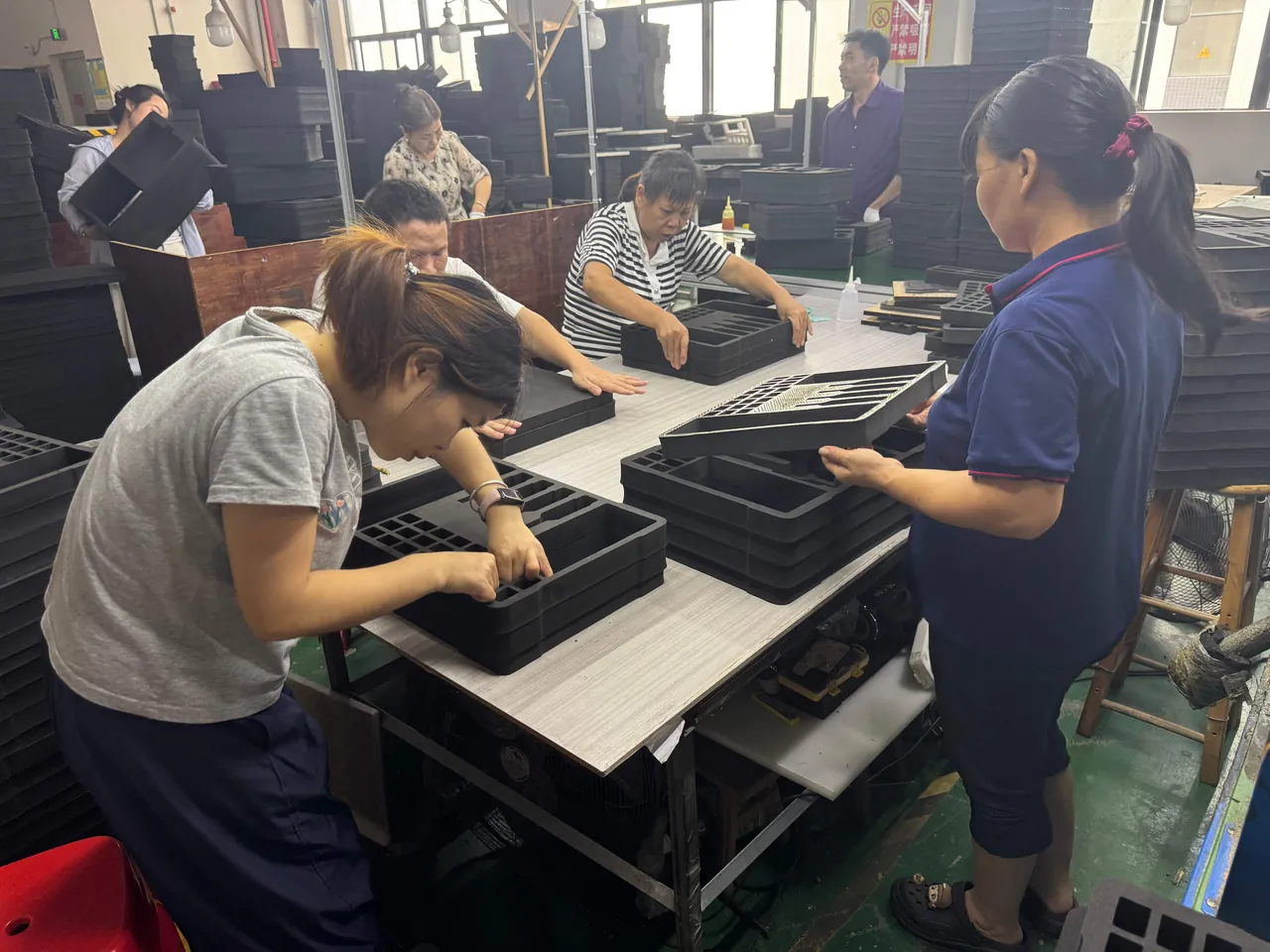
Group-meal delivery serves schools, hospitals, industrial parks and large events, and is characterised by large volume per run, medium distances and tight time windows. The usual approach is several 50-80 L food insulated cases running in parallel, with central distribution at each drop point. These scenarios require stacking: matching ribs or recesses on lid and base let loaded cases stack two high or more without sliding, saving vehicle space and reducing double handling.
Three technical points dominate group-meal insulation:
- Heat-pack support: place heat packs or hot-water bottles inside, layering the heat source with the meal boxes to extend the high-temperature plateau;
- Multi-drop delivery: label cases by drop point and check them off on arrival to avoid mis-delivery or omissions;
- Temperature evidence: for important group-meal projects, place a temperature logger inside and export the curve after delivery as acceptance evidence.
For cold-chain group meals such as salads, sushi or cold dishes, switch to a PU case with cool packs and keep hot and cold food strictly in separate vehicles or cases, avoiding the cross-effect of "one side hot, one side cold" in the same box. Writing the route so that the number of lid openings is minimised is one of the cheapest ways to protect hold time, because every opening lets in outside air.
Cold-Chain Meal Boxes and Cool-Pack Configuration
A cold-chain meal box and its cool packs are the "cold source" of cold-chain delivery. Cool packs (also called ice boxes or gel packs) use phase-change material to absorb a large amount of latent heat as it melts, holding the case interior at 0-8 C or in the frozen band. Key selection points:
| Cool source | Phase-change band | Latent capacity | Use |
|---|---|---|---|
| --- | --- | --- | --- |
| Plain water ice | 0 C | Medium | Short-haul chilled |
| Gel ice box | Adjustable, -12 C to 0 C | High | Fresh food, chilled |
| Phase-change panel | Custom by formulation | Very high | Frozen, long hold |
| Dry ice | -78 C | Extremely high | Ultra-low temperature, special goods |
The principle is to match the cold source to the heat load: the larger the case, the higher the ambient temperature and the longer the duration, the greater the required cooling capacity. A practical rule is to start at 1-1.5 kg of phase-change packs per 10 L of internal volume, double it for frozen work, and then fine-tune against measurement. Place the cold source close to the walls and biased to the top, forming an even field as cold air sinks; a little internal void aids air circulation, but too much accelerates heat exchange, so balance the two. Cold-chain meal boxes and cool packs should be selected as a set, avoiding the mismatch of a good case with a weak cold source, or a strong cold source with a leaky case.
Note: cool packs must never touch food directly, which can cause freezer burn or affect texture. Isolate them with a divider or liner, and make sure the material is food-grade.
Temperature Validation and Testing Standards
Insulation performance must rest on verifiable evidence. Relevant systems include the ISTA series of simulated transport tests (for example 3A for parcels and 7D for thermal packaging), the GB/T family and cold-food transport rules linked to food cold chains, and supplier-specific enterprise standards. The most common validation method for thermal packaging is the hold-time curve: place sensors at several points inside the case, record temperature over N hours at a set ambient temperature, and plot a time-temperature curve to confirm the whole run stays within the target band.
On method, use at least three to five sensors (centre, four corners, near the lid), with a sampling interval no longer than five minutes and a test duration covering the longest route plus 20 percent margin. The record should include ambient temperature, loading ratio, hot or cold source configuration and the number of lid openings, so the test can be repeated and compared. If a supplier gives a single number without test conditions, treat it as unreliable.
At procurement, request the hold-time test report (with ambient temperature, loading ratio and duration), the environmental and food-contact compliance statement, and where necessary drop and stacking test records. This mirrors the validation logic of pharma cold-chain boxes - both insist on letting curves and data speak rather than verbal promises.
Food Safety and Easy-Clean Design
A catering insulated case touches food or meal boxes directly, so hygiene design is not negotiable. Key points include a food-grade PP or PE liner with a smooth, dead-corner-free surface; liners and dividers that pull out for whole-case cleaning; rounded internal corners that do not trap residue; and a replaceable gasket that resists mould. The case should tolerate standard food-grade cleaners and dry quickly.
Where raw and cooked items are mixed, use different case colours or labels to prevent cross-contamination. If chilled fresh food and cooked food travel together, they must be physically separated. Hygiene management can follow HACCP thinking, making clean, sanitise, dry and document a fixed cycle with check points built into the delivery process.
Cold-chain meal boxes in particular should avoid absorbent liners that hold moisture and odour; a smooth, sealed, easily wiped surface is preferred. For cases used with hot oil-rich food, confirm that the liner material is compatible with fats at temperature, since some plastics soften or release substances under prolonged hot-oil contact. Supplying a written cleaning and sanitising procedure with every batch helps chain operators train staff consistently and pass audits.
Customization: Printing, Compartments and Removable Liners
Restaurant chains and group-meal operators often need customisation. Common options include case colour and brand printing, internal compartments sized to meal boxes, replaceable liners, and added temperature display or logging modules. Customisation significantly improves delivery efficiency - fixed compartments speed up packing and reduce mis-packing.
The typical flow is: state requirements and meal-box dimensions, produce a structure drawing and liner layout, prototype to validate insulation and fit, then move to volume production. JUNZHJIA supports OEM/ODM for catering insulated cases, with brand-colour printing, compartments based on meal-box modules, and matching gaskets and test documentation for head-office standardisation and acceptance. For dual-zone cold-chain meal box solutions that need hot and cold zones, a centre divider can create two temperature zones. Modularity also matters: designing compartments around standard meal-box dimensions means different dishes share the same boxes, so a menu change does not require a new mould. Modular design lowers long-term cost and supports standardised packing across delivery points.
Delivery Case Selection and Acceptance Checklist
Turning selection into a checklist avoids guesswork. Check each item:
| Check item | Requirement | Note |
|---|---|---|
| --- | --- | --- |
| Hold time | Meets target duration | Tie to ambient temperature and loading ratio |
| Target band | Hot at or above 60 C / cold at or below 8 C | Match the business |
| Insulation material | EPP or PU by scenario | PU for long hold |
| Sealing structure | One-piece wide-temperature silicone | Inspect the lid line for bridges |
| Latches | One-handed, even compression | Test with gloves |
| Hygiene design | Food-grade liner, removable | Rounded corners, no dead spots |
| Stacking | Two high when loaded | With anti-slip ribs |
| Test documents | Hold-time curves and reports | Acceptance evidence |
At acceptance, run a live spot check: make one real trip at the true loading ratio and duration, and measure core temperature against spec. Signing off item by item against the checklist is far more effective than arguing after the fact. For more structural thinking, see portable transport cases and plastic functional boxes.
Maintenance and Service-Life Management
A catering insulated case is a high-frequency consumable, and good maintenance clearly extends its life. Daily practice: empty and wipe the liner after every run, clean the gasket with water and air-dry it; avoid prolonged sun exposure and high-temperature baking, which age the shell and insulation; check latch hinges regularly and re-tighten when loose; and store with the lid open when out of service to prevent the gasket deforming under load.
For service-life management, keep a case register recording purchase batch, in-service date and repairs, and set a gasket replacement interval (experience: every 12-18 months, or immediately on hardening or cracking). When a case deforms, hold time drops noticeably, or the seal fails, retire it from food delivery - repurpose it for non-food use or scrap it, so it does not become a food-safety liability. On rotation, allocate cases by route and type, avoiding the mismatch of a heavy case on a short run and a light case on a long one; set rotation and inspection cycles for high-frequency cases to spread wear evenly. In hot seasons, shorten the cleaning interval and strengthen drying to avoid odour and microbial growth in a warm, humid environment. Shifting maintenance from "fix it when broken" to "service it on schedule" improves both usable life and insulation consistency.
Common Selection Mistakes
Mistake one: looking only at wall thickness and ignoring sealing and loading ratio. A failed seal is more deadly than a thin insulation layer. Mistake two: one case for everything, mixing hot and cold and causing cross-effects. Mistake three: ignoring ambient temperature, selecting on winter experience for summer work, so hold time falls short. Mistake four: buying too large, so the loading ratio drops and insulation gets worse. Mistake five: chasing price while ignoring hygiene design, leaving hard-to-clean liners and food-safety risk. Mistake six: no test documentation, so tenders or major-customer audits cannot be evidenced. Working from the standards and structural methods in this article systematically avoids these problems.
Frequently Asked Questions
Question: Can a catering insulated case really hold heat for 2 hours? Answer: Whether it holds for 2 hours depends on four conditions: ambient temperature, loading ratio, insulation material and lid sealing. In experience terms, a PU foam case near full load at normal ambient temperature can hold a high-temperature plateau for 2 hours; but high summer heat or a low loading ratio shortens that noticeably. A claim of "2 hours" is therefore meaningful only when tied to test conditions. At procurement, ask for a complete report covering ambient temperature, loading ratio, target band and duration, and run your own full-load test. For very long holds, combine VIP vacuum panels or add heat packs to extend the plateau, and make sure internal compartments are in place to reduce convective loss.
Question: What is the difference between a takeaway insulated case and a food insulated box? Answer: The two are often used interchangeably, but the emphasis differs. A takeaway insulated case stresses on-vehicle use, quick access, light weight and drop resistance, is sized to an e-bike rack, and is usually EPP with a one-handed lid. A food insulated box covers a wider range, including large-capacity boxes for group meals, canteens and central kitchens, stressing hold time, stacking and hygiene. Judge by the real scenario: a single-rider short trip calls for a lightweight takeaway insulated case, while multi-drop group-meal delivery calls for a large, stackable food insulated box with heat packs and temperature evidence. Both rest on the same three-way match of insulation layer, sealing and loading ratio, only the weighting differs.
Question: How many cool packs does a cold-chain meal box need? Answer: There is no fixed number; estimate by internal volume, target duration and ambient temperature, then correct by measurement. As a guide, start from the principle that a larger case, longer duration and hotter ambient all require more cooling capacity, then test the core-temperature curve under real conditions. If temperature exceeds the band mid-route, add cool packs or switch to a phase-change panel with a lower phase-change temperature. For layout, place the cold source at the top and around the sides for chilled goods, since cold air sinks, and use dry ice or a low-temperature phase-change panel for frozen work. Always isolate the cold source from food with a divider to avoid freezer burn or texture damage. As with pharma cold-chain boxes, the key to the cold chain is matching the cold source to the heat load, not piling on cold packs.
Question: How do group-meal deliveries stay within spec across many drop points? Answer: The core is divide, stack, document and optimise the route. Divide by drop point and label each case, stack the loaded cases in the vehicle to reduce double handling and the number of lid openings, since every opening lets in warm air and shortens hold time. Plan the route in one consistent order, far-to-near or near-to-far, to cut total transit time. For important projects, place a temperature logger inside and export the curve on arrival as acceptance evidence. For strict settings such as hospitals and schools, use separate vehicles or cases for hot and cold food to avoid cross-effects. As a rule of thumb, keeping lid openings to a minimum and loading at 85 percent or more noticeably improves insulation performance.
Question: Does the liner of an insulated case have to be food-grade? Answer: It is strongly recommended. A catering insulated case touches food directly or indirectly, and a liner that does not meet food-contact requirements can release harmful substances in a hot, oily environment, creating a food-safety risk. Choose a food-grade PP or PE liner with a smooth, dead-corner-free surface that is easy to clean and tolerant of standard food-grade cleaners. Soft-bag liners should also use food-grade fabric. Request the food-contact compliance statement at procurement. Where raw and cooked items are mixed, distinguish cases by colour or label, separate them physically, and follow a fixed clean, sanitise, dry and document cycle so hygiene management reaches the shop floor.
Question: Can one case handle both hot and cold? Answer: Yes, but with a dual-zone design rather than simple mixing. Add a centre divider to create two independent chambers, put heat packs on one side for heat and cool packs on the other for cold, and seal each separately to cut convective exchange between them. Without a divider, hot food and cold drinks in one case interfere with each other, the hot food is pulled down by the cold source and the cold items warmed by the hot source, and neither reaches spec. The key to mixed hot and cold is therefore physical isolation plus independent hot and cold sources. If the mixed volume is small, using separate cases is the safer choice. For related structure, see the compartment thinking in cold-chain meal boxes and portable transport cases.
Question: How often should the gasket of a delivery insulated case be replaced? Answer: As a guide, every 12-18 months, or immediately if it hardens, cracks or loses rebound. The gasket is the gatekeeper of insulation; once it ages, air convection inside the case increases, hold time drops noticeably, and condensation can seep into the shell and dampen the insulation layer. Daily maintenance should wipe it with water and air-dry after every run, avoiding grease and prolonged sun exposure. Keep the lid open during long storage so the gasket is not deformed under constant load. Keep a case register recording gasket replacement dates, and fold the cycle into procurement and maintenance plans. JUNZHJIA can supply matching gaskets by model for consistent replacement.
Question: Can insulated cases be customised with a brand? Answer: Yes, and the value to a chain brand is clear. Common options include case colour and brand printing, internal compartments based on meal-box modules, replaceable liners, and added temperature display or logging modules. Fixed compartments raise packing efficiency and cut mis-packing, while brand printing strengthens customer recognition. The flow is generally: state requirements and meal-box dimensions, produce a structure drawing and liner layout, prototype to validate insulation and fit, then move to volume production. JUNZHJIA supports OEM/ODM for catering insulated cases, with brand-colour printing, modular compartments and matching gaskets and test documentation for head-office standardisation. Always run an insulation test at the prototype stage to confirm the custom structure does not compromise the target band.
Question: What documents are most often missed in tenders for insulated cases? Answer: The most commonly missed are traceable insulation and compliance documents: a hold-time test report or curve covering ambient temperature, loading ratio and duration; a food-contact material compliance statement; material and environmental notes; where needed, drop and stacking test records; and a commitment on gasket replacement interval and spare-part supply. Many buyers bid with only appearance photos and a price, then discover the gap at evaluation or acceptance. Set out the insulation performance target, warranty period, gasket replacement interval and spare-part supply in the contract, and pilot a small batch on major-customer projects, confirming that insulation and sealing stay stable in real delivery before buying in volume - moving the risk upstream.
Conclusion and Related Reading
Choosing a catering insulated case is fundamentally a matching problem of temperature band, duration and loading ratio. Align the insulation material, sealing structure and cool-pack configuration, then validate with a hold-time curve and land it with an acceptance checklist, and takeaway and group-meal delivery will reliably meet spec. At procurement, favour suppliers who can provide food-grade liners, test documentation and customisation, so that insulation becomes a manageable parameter rather than a matter of experience.
Related Reading