

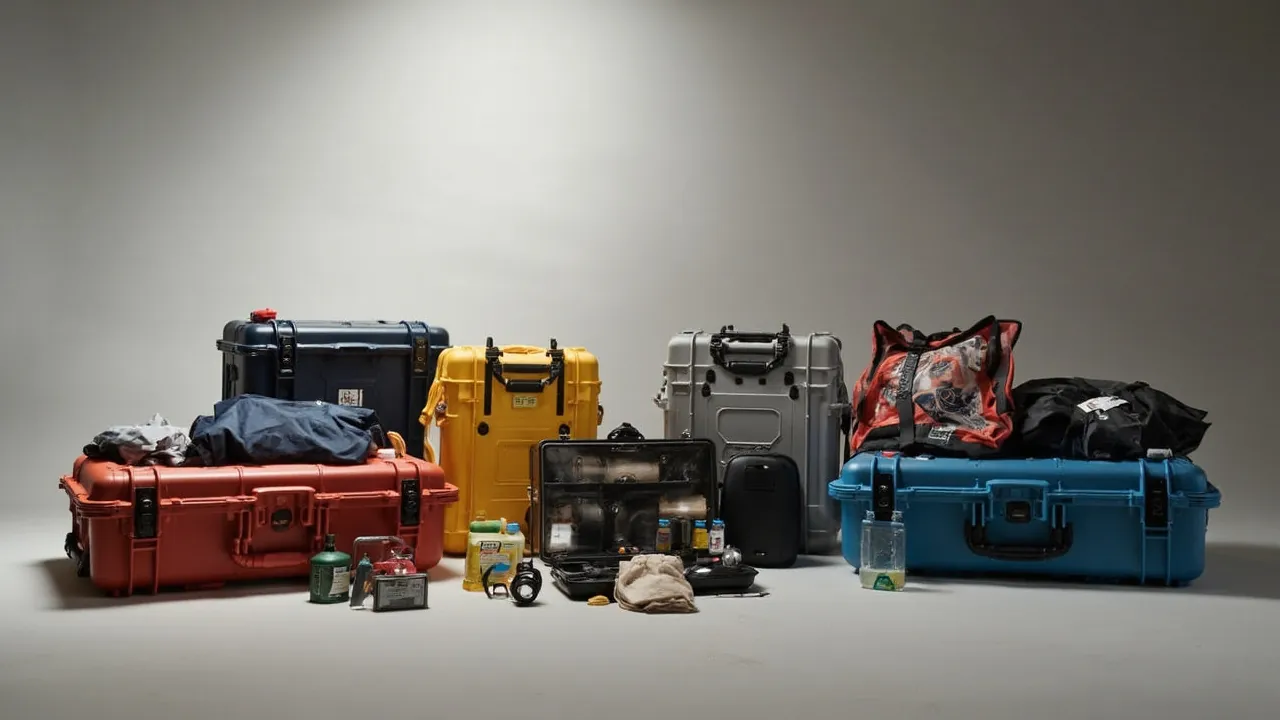
Power emergency repair is a race against time: once a fault occurs, the repair truck must reach the site as fast as possible, and tools and equipment must be ready to use and within arm's reach. The conclusion: the point of a power emergency-repair vehicle case is not how much it holds, but how well it follows four principles - on-board mounting, fast access, live-line protection and easy inventory - turning a distribution repair case, an emergency repair vehicle case and a repair tool cart into one mobile, standardised work unit. This article sets out the structure, materials, mounting, protection, testing and acceptance methods for power repair vehicle cases, emergency repair vehicle cases, distribution repair cases and repair tool carts, for procurement by utilities, distribution O and M teams and emergency repair units.
Many units simply pile tools into ordinary plastic boxes or canvas bags: they scatter under vibration, get damp in rain, and leave no insulated tool to hand during live work - slowing repairs and creating safety hazards. The main difference between a vehicle case and an ordinary toolbox is that the vehicle case is "automotive grade": it must withstand sustained vehicle vibration, temperature cycling and damp, while supporting fast work and inventory at night and in bad weather. This article turns those design points into parameters that procurement can check item by item.
Table of Contents
- Core Requirements for Power Repair Vehicle Cases: On-Board, Fast-Access, Reliable
- Operating Environment and Ingress Protection Ratings
- Case Material and Structure Selection
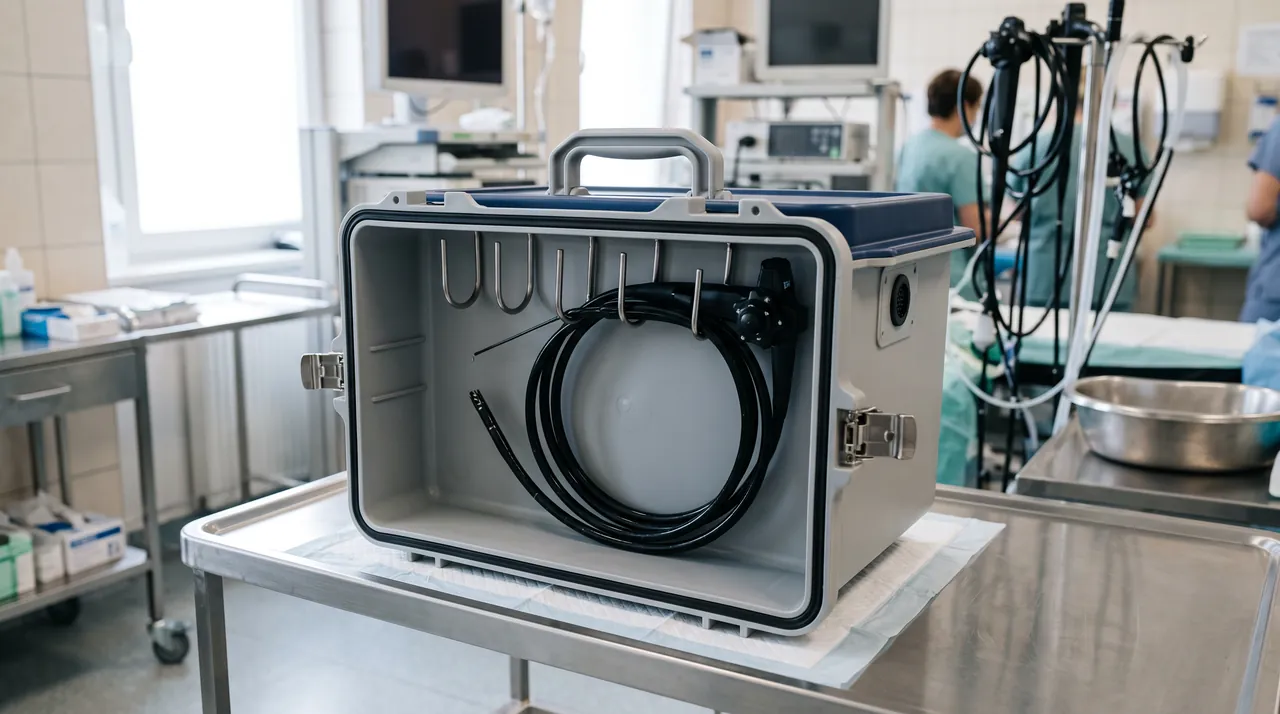
- On-Board Mounting and Vibration Damping
- Distribution Repair Case Tool Zoning and Fast Access
- Modular Storage for Repair Tool Carts
- Protecting Live-Line Test Equipment
- Insulation, Moisture Protection and Corrosion Resistance
- On-Board Power and Emergency Lighting
- Tagging, Inventory and Workflow Management
- Customisation and OEM/ODM
- Selection and Acceptance Checklist
- Maintenance and Service-Life Management
- Common Selection Mistakes
- Frequently Asked Questions
Core Requirements for Power Repair Vehicle Cases: On-Board, Fast-Access, Reliable
The primary requirement of a power repair vehicle case is to be reliably on board and available in seconds. Repair sites are often roadside, under a pole, in a distribution room or in the field, with short work windows and poor conditions. If tools cannot be fixed in the vehicle and pulled out quickly, valuable time is lost to searching. The design goal can therefore be quantified in three lines: mounted firmly (no displacement or detachment under vibration), fast to access (one-handed opening, clear zoning) and status-clear (a missing item is obvious when the lid opens).
These three goals explain how a vehicle case differs from an ordinary toolbox. An ordinary box chases capacity; a vehicle case balances fixing against order. An ordinary box can be set down anywhere; a vehicle case needs a bracket or slot to lock it into the cabin. An ordinary box can stack tools inside; a vehicle case must zone and limit them to prevent wear and rattling under vibration. Experience shows that after repair crews adopt divided vehicle cases, on-site access time drops noticeably and the rework caused by forgotten tools falls sharply.
A vehicle case also has to couple to the repair workflow: by arranging tool positions along the sequence test for voltage, earth, work, restore supply, the work steps map directly onto the internal zones, which compresses operation time further. From a management view, the vehicle case is also a mobile asset store. Whether tools are complete, whether insulated items are within their validity period and whether consumables need replenishing are all reflected directly in the state of the case, making the case a faster check than an after-the-fact count. Selection should therefore treat "easy to inventory" as equal in importance to "protective", and reserve a tag position and contents-card slot on every case and module so that hand-written labels do not fall off later.
It also helps to separate the fleet into two tiers. A first-response case holds only the most common tools and test gear, so a single responder can carry and open it quickly, while a second-tier cart carries heavy or rarely used items and follows only on larger jobs. This tiering keeps the daily load light without leaving the crew short when a job grows. In practice, the first-response case decides repair speed and the second-tier cart decides repair depth, and both should share one numbering scheme so that items moved between them can still be traced. Planning them together at the selection stage is far cheaper than reorganising later.
Operating Environment and Ingress Protection Ratings
The operating environment sets the protection rating. A vehicle case must cope with sustained low-frequency vehicle vibration, temperature cycling (a hot cab in summer, low temperatures in winter), rain, snow and damp, dust, and the oil and salt spray found in distribution rooms. Mapped to standards: dust and water protection follows IEC 60529 (Chinese GB/T 4208) IP ratings, with IP65 normal for on-board use and IP67 for wading or long outdoor exposure. Impact follows the IEC 62262 IK rating, with IK08 or above recommended for vehicle use. Vibration and temperature cycling can follow MIL-STD-810H Method 514 (vibration) and Methods 501/502 (high and low temperature), with transit drop per Method 516.8. Flame retardancy can be specified to UL 94 V-1 or better to meet cab and distribution-room safety requirements.
| Operating environment | Main threat | Suggested protection |
|---|---|---|
| --- | --- | --- |
| Urban on-board | Vibration, dust | IP65 + IK08 |
| Rain and wading repair | Water ingress, damp | IP67 + drainage |
| Inside distribution room | Oil, salt spray | Oil and corrosion resistant liner |
| Summer heat | Heat ageing | Wide-temperature material, UL 94 flame rating |
| Night work | Hard to find tools | Zoned labelling + lighting |
Tip: IP and IK ratings need third-party test reports, so request them at procurement; a rating printed only in marketing material cannot be trusted.
Besides this, a repair truck may stand for long periods next to a distribution room or pad-mounted transformer, so the case must tolerate some oil and electromagnetic exposure. The case itself does not provide EMI shielding, but for electronic test gear inside, a conductive liner or shielding pouch is still worth adding as auxiliary protection, so that strong fields do not disturb readings. In dusty or salt-spray regions, metal parts should be checked regularly for corrosion. Treating environmental adaptability as a precondition rather than an add-on is what prevents the "it only failed after we bought it" outcome.
Seasonal variation deserves its own check. A case that behaves well in spring may fail in a summer cab where surface temperatures rise far above ambient, softening some plastics and speeding gasket ageing, or in a winter cab where cold makes seals stiff and brittle. Where the same fleet operates across climate zones, the specification should be written to the worst case rather than the average, and field crews should report back on any seasonal issues so the next purchase can be corrected. Building a simple feedback loop from crews to procurement is one of the least expensive ways to keep a vehicle case fleet dependable.
Case Material and Structure Selection
Vehicle case material balances strength, weight, weather resistance and cost. Common options compare as follows:
| Material | Weight | Rigidity / impact | Weather resistance | Use |
|---|---|---|---|---|
| --- | --- | --- | --- | --- |
| Modified PP | Light | Medium | Good | General tool vehicle case |
| ABS | Medium | Medium-high | Medium | Mixed instrument and tool case |
| PC | Medium-high | High | Good | High-value live-line test gear |
| Rotomoulded PE | Heavy | Very high | Very good | Large repair tool cart body |
| Aluminium frame composite | Medium | High | Good | Fixed precision instrument case |
Structurally, a vehicle case should thicken its four corners, use rounded transitions and add stiffening ribs to the base, with a stepped fit between lid and mouth to block direct moisture or heat transfer. Hinges and latches should be metal or glass-filled nylon, with at least two latches evenly distributed. For a heavier repair tool cart body, castors or drag feet can be added underneath while keeping forklift slots or lifting points for loading. JUNZHJIA can match case dimensions and liner layout to the vehicle and the tool list, and supply gaskets and test documentation.
On-Board Mounting and Vibration Damping
On-board mounting is what separates a vehicle case from an ordinary box. There are three common approaches: bracket and slot (a quick-release slot on the base or side, locking to a cabin rail), strap and latch (fabric or metal straps through the case handle) and slide and drawer (the whole case mounted on a cabin drawer rail, pulled out for use). The choice follows case weight and access frequency: light cases suit slots or straps, heavy cases suit a rail or fixed bracket.
For damping, a rubber pad between case and cabin reduces direct vibration transfer, while a custom-cut EVA or PE foam liner holds tools in place, limiting displacement in all three axes and eliminating both wear and rattle. Experience shows that a badly mounted case will work its latches loose under sustained vibration and may even slide out, so a mounting and latch check should be part of the pre-trip routine. The vibration spectrum of a vehicle is dominated by sustained low frequency, which over time fatigues metal tools and loosens solder joints in electronics, so damping should not rely on "one layer of soft rubber" but form a three-stage buffer of case mounting, damping pad and liner retention. For a heavy case deep in the cabin, access matters too: a pull-out rail that brings the case forward before opening avoids bending and lifting in a cramped space. Considering damping together with ergonomics is what makes a vehicle case genuinely usable.
Distribution Repair Case Tool Zoning and Fast Access
A distribution repair case serves fault work in distribution rooms, pad-mounted transformers and low-voltage lines, where tool types are mixed and use frequency varies widely. The zoning principle is layer by frequency, arrange by procedure: the most-used items - voltage detector, insulating gloves, insulating rod, spanner set - go in the top layer or near the mouth; less-used spares and earth leads go to the bottom; small loss-prone items (bolts, clamps, fuses) use individual divided trays.
| Zone | Common tools and parts | Position |
|---|---|---|
| --- | --- | --- |
| Live work | Voltage detector, insulating gloves, insulating rod | Top, fast access |
| General tools | Spanners, pliers, screwdriver set | Middle |
| Spares and consumables | Fuses, clamps, bolts, cable ties | Bottom, divided |
| Safety protection | Insulating mat, warning tape, goggles | Side compartment |
Fast access means one-handed opening that works with insulating gloves, with latches that resist accidental release; a tool silhouette inside the case makes a missing item obvious on opening. This "silhouette plus zoning" approach mirrors the storage logic of a substation toolbox. Zoning must also consider physical separation of live and non-live items: voltage detectors, insulating gloves and rods should be stored separately from metal tools such as spanners and pliers, so that collisions during handling do not damage the insulation layer; insulating gloves are best kept in a dedicated bag or cavity to avoid pinching and perforation. Small items such as fuses and clamps go into transparent divided trays, which both prevent loss and show the remaining quantity at a glance. Zoning across three dimensions - procedure, voltage and live status - is what makes a distribution repair case fit the site.
Fast access is not only about latches. It is also about reach and visibility. Items used every day should sit no deeper than the first layer, with labels or silhouettes readable under dim light, while items used once a month can be packed lower. Where a case holds two layers, a removable upper tray that lifts out as a single unit can expose the lower layer without unpacking everything. Colour coding, standardised counts per pocket and a simple "return to marked place" rule all reduce the time crew members spend deciding where things belong. Small as these measures seem, they compound across hundreds of site visits per year.
Modular Storage for Repair Tool Carts
When tools and equipment are numerous, a single case cannot cover everything, and a modular storage system on a repair tool cart is a better fit: the cart frame carries several detachable module cases, divided by function into tool, instrument, cable and safety modules, so that a task can pull out only what it needs and reduce handling. The value of modularity is combine by task, replenish by module: when a module's consumables run out, only that module changes, leaving the rest untouched.
Key points for a modular system:
- Modules and frame share a single quick-release interface for consistent plugging;
- Each module carries an ID and contents list matching the master register;
- Heavy modules sit low and light modules high, lowering the centre of gravity;
- The cart has braked castors so it does not roll once positioned;
- Where work at height is needed, the cart should push and pull with one person and have good ground clearance.
This thinking parallels the modular approach of industrial equipment cases: combine by scenario and manage by ID.

Protecting Live-Line Test Equipment
A repair truck often carries live-line test and measurement gear such as thermal imagers, insulation resistance testers, partial-discharge detectors, clamp meters and multimeters. These are sensitive to vibration, damp, dust and static, so their protection requirements exceed those of ordinary tools. The approach is a dedicated instrument case with a foam or custom-cut EVA liner, rated IP65 or above; where electronics are involved, add a static-dissipative liner and grounding; for temperature and humidity-sensitive equipment, place desiccant or a humidity indicator card inside the case, which is especially important on long trips or in humid seasons.
Instrument cases should be kept separate from tool cases so that metal tools do not strike the instruments. Equipment that regularly travels in the vehicle should be fixed in the same module to avoid repeated handling. This "instrument plus custom liner" protection logic follows the experience of industrial detection instrument cases and the instrument box series.
Insulation, Moisture Protection and Corrosion Resistance
Power work imposes hard requirements on insulation and moisture protection. A vehicle case should include a dedicated insulated tool zone: insulating gloves, mats and rods must be stored separately, avoiding oil and metal tools that degrade insulation performance. Case material should be an insulating, non-absorbent, oil and corrosion resistant engineering plastic, and metal parts should be rust-protected. For sealing, the gasket should be wide-temperature silicone, balancing low-temperature elasticity against high-temperature ageing resistance.
On moisture, a desiccant compartment and humidity indicator inside the case help, with the case kept sealed during long storage; after work in rain, tools should be wiped dry before returning to the case to avoid a permanently damp liner. In coastal or salt-spray environments, metal parts should be stainless steel or otherwise corrosion-treated. Treating insulation and moisture protection as independent design items rather than afterthoughts is the key distinction between a power vehicle case and an ordinary toolbox.
On-Board Power and Emergency Lighting
Night and bad-weather repair depends heavily on lighting and power. A vehicle case system can integrate an on-board power module and emergency lighting: the power module supplies test gear, lighting and power tools, while the lighting module provides both a focused beam and area flood for finding items in the case and working on site. Key points include an independent, vibration-mounted power bay with a unified interface; lighting fixed to the inside of the lid by magnet or clip so it comes on when the lid opens; and cables stored separately to prevent tangling and damage.
Power and lighting are auxiliary but critical, and should be part of overall selection rather than a later addition. For modules containing lithium batteries, note fire isolation and transport compliance (for example the requirements for shipping lithium batteries), and keep the battery bay separate from the tool bay to avoid short circuits and mechanical damage. On capacity planning, size the battery for the longest single job plus test-gear and lighting consumption, with 30 percent margin; for long outages, hot-swappable spare batteries allow uninterrupted supply. Lighting should cover both close-up focused work and area flood, and be water and drop resistant. Unifying the power and lighting interface lets modules from different batches be interchanged, reducing the configuration burden on crews.
Safety grounding also matters here. When a case carries power modules and electronic test gear together, the grounded parts should be clearly identified so that a crew does not inadvertently create a fault path. Cable management should keep high-current leads away from sensitive signal cables to limit interference, and any connector that can be mated incorrectly should be keyed so that it can only go together one way. These details are easy to design in from the start and expensive to correct in the field, which is why they are best settled at the prototype stage rather than after a fleet has been delivered.

Tagging, Inventory and Workflow Management
The value of a vehicle case ultimately shows up in workflow efficiency. Build a system of ID plus list plus master register: give every case and module a unique ID (for example QC-01 for a distribution case, GJ-02 for a tool module), attach a contents card listing tools and quantities, keep the master register with the crew, and reconcile against the card before departure and after return. An ID system quickly locates a missing item and its responsible case, easing replenishment and performance review.
For workflow, map the test-voltage, earth, work, restore-supply sequence to the internal zones so that each step naturally brings out the needed tools; handovers use the same list, so that "tools of unknown whereabouts" does not happen. This ID and inventory logic matches the numbering system of a vehicle repair toolkit and clearly reduces loss and rework.
Customisation and OEM/ODM
Because tool combinations vary by crew, voltage level and work type, a standard case rarely fits perfectly and customisation is common. Options include case dimensions and internal layout, a liner CNC-cut to tool silhouettes, brand colour and unit printing, detachable modules, and added power and lighting modules. Customisation markedly improves access efficiency and reduces mis-packing.
The flow is generally: provide the tool list and dimensions (or send samples), confirm material, protection rating and liner plan, produce a structure drawing, prototype and accept, then move to volume production. JUNZHJIA supports OEM/ODM for power repair vehicle cases, with brand-colour printing, zoning by tool list and matching gaskets and test documentation for standardisation and acceptance. For large repair tool cart bodies, the process of a rotomoulded protective case can further raise overall strength. Customisation also covers liners, labelling and accessories as a set: hand the tool list, work procedure and intended layout to the supplier and let them propose the whole scheme, rather than discovering after delivery that something does not fit. Where procurement is staged, prototype and trial a small batch first, confirm real-world access and mounting, then buy in volume - keeping the decision risk upstream.
Selection and Acceptance Checklist
Turning selection into a checklist avoids guesswork. Check each item:
| Check item | Requirement | Note |
|---|---|---|
| --- | --- | --- |
| Protection rating | IP65 on-board / IP67 wading | Request third-party reports |
| Impact | IK08 or above | Thickened corners |
| Flame rating | UL 94 V-1 or above | Required for cab use |
| Mounting | Bracket / rail / strap | No displacement under vibration |
| Liner | Custom-cut EVA | Zero tool movement |
| Insulated zone | Dedicated tool zone | Avoid oil and metal mixing |
| Moisture protection | Desiccant + humidity indicator | Required in humid regions |
| Inventory | ID + contents card | Reconcile on departure and return |
| Test documents | Reports supplied | For acceptance |
At acceptance, run a live road test: load the tools, drive the real route, and check whether mounting points loosen, the liner shifts or the latches still compress. Signing off item by item against the checklist is more effective than arguing afterwards. For more on-board storage thinking, see the auto repair toolbox and the tool cart and cabinet.
Maintenance and Service-Life Management
A vehicle case lives with vibration and temperature cycling, and good maintenance clearly extends its life. Daily practice: empty and wipe after each job, drain water and air-dry the gasket; check latch and bracket bolts and re-tighten when loose; replace damaged liners promptly so tools do not contact the case wall; and keep the lid slightly open when out of service so the gasket is not deformed under constant load.
For service-life management, keep a case register recording purchase batch, in-service date and repairs, and set a gasket replacement interval (experience: every 12-18 months, or immediately on hardening or cracking). When a case clearly deforms, its protection rating fails or its mounting structure breaks, retire it from the repair fleet. For the insulated tool zone, also keep periodic test records for insulating tools, checking withstand voltage and appearance on schedule, and withdrawing any that are overdue or non-compliant. Case counting can be merged with the crew's tool handover into a single sheet to avoid duplicate work. Putting case maintenance, gasket replacement and insulation testing under one register keeps the whole repair tool system traceable and auditable.
Spare parts should also be planned rather than improvised. Gaskets, latches, liner inserts and lighting units are the parts most likely to wear or fail, so a modest stock of each, matched to the models in service, avoids a whole case sitting idle for want of a small component. The register should record which models are in service and how many of each, so replenishment can be scheduled rather than triggered by a breakdown. Where a model is being phased out, the register makes it easy to consolidate and standardise the fleet at the next replacement cycle instead of drifting into ever more variants.
Common Selection Mistakes
Mistake one: looking only at capacity, not mounting, so the case slides or even falls out in the vehicle. Mistake two: substituting an ordinary toolbox for a vehicle case, so the liner shifts under vibration and tools wear. Mistake three: ignoring the insulated zone, mixing insulating tools with oily metal and degrading insulation. Mistake four: overstating the protection rating without third-party reports. Mistake five: no IDs or lists, so a lost tool cannot be traced. Mistake six: bolting on power and lighting after the fact, leaving cables untidy and poorly fixed. A further common mistake is treating the case as a one-off purchase and neglecting liner replenishment, gasket replacement and module expansion. A vehicle case is a long-life work system, so selection should weigh spare-part supply, expandability and maintenance cost, not only the first purchase price. Factoring in whole-life cost is what yields a case that truly fits the repair mission.
One more mistake is designing the case around a single vehicle. When the fleet includes several truck models, a case that fits only one will fragment storage practice and prevent crews from swapping vehicles. Standardising on a small number of case sizes and mounting interfaces, even if a bracket differs per vehicle, keeps tools portable between trucks and simplifies both training and procurement. The aim is not one perfect case for every job but a small, coherent family of cases that a crew can learn once and use everywhere, which is what durable repair efficiency actually rests on.
Frequently Asked Questions
Question: Does a power repair vehicle case have to be IP67? Answer: Not necessarily; it depends on the real working environment. On urban roads with occasional rain, IP65 dust and splash protection is enough. For wading repairs, long outdoor exposure or snow regions, mud and water will get in, so IP67 or higher is needed. Judge by actual road conditions and weather exposure rather than comparing ratings. At procurement, request the IP test report and confirm the gasket is one-piece and the latches compress evenly, otherwise the nominal rating will not hold. This matches the tiering of a substation toolbox: IP65 for normal use, IP67 for wading. JUNZHJIA supplies gaskets and test documentation by model for verification and acceptance.
Question: How should a vehicle case be mounted so it does not shake loose? Answer: The key is a dedicated mounting structure rather than simply putting it in the back. Light cases can use a quick-release slot or metal straps on a rail; heavy cases suit a drawer rail or fixed bracket. A rubber damping pad between case and cabin reduces vibration transfer, and latches should be metal or glass-filled nylon that compress evenly when closed. Experience shows that a poorly mounted case will loosen its latches and may slide under long vibration, so a mounting check should be part of the pre-trip routine. As with a vehicle repair toolkit, the first duty of a vehicle case is to stay put and be easy to pull out. JUNZHJIA can supply brackets and liner plans by vehicle model.
Question: Why do vehicle cases stress insulation and moisture protection? Answer: Because power work has hard insulation safety requirements, while the vehicle environment is damp and dusty. If insulating gloves and rods are mixed with oil and metal tools, insulation performance drops and live work becomes far riskier; a permanently damp case also accelerates corrosion and ages insulating parts. A vehicle case should therefore have a dedicated insulated zone, insulating engineering plastics, wide-temperature silicone sealing and a desiccant compartment. Treating insulation and moisture protection as independent design items is the core distinction from an ordinary toolbox. In coastal salt-spray environments, metal parts also need corrosion treatment.
Question: Is modular storage on a repair tool cart worth it? Answer: When tools and equipment are numerous, yes. Modularity splits tools, instruments, cables and safety gear into detachable modules so a task can pull out only what it needs, reducing handling; when a module's consumables run out, only that module changes, which is efficient to replenish. The requirements are a unified quick-release interface, module IDs matching the master register, heavy modules low to lower the centre of gravity, and braked castors. The thinking matches that of industrial equipment cases. If the tool set is small, a single vehicle case is enough and a modular system is unnecessary.
Question: How should live-line test equipment be protected on board? Answer: Live-line test gear is sensitive to vibration, damp and dust and is static-sensitive, so its requirements exceed ordinary tools. Use a dedicated instrument case with a foam or custom-cut EVA liner rated IP65 or above; add a static-dissipative liner and grounding where electronics are involved; and place desiccant or a humidity indicator card inside for temperature and humidity-sensitive equipment. Instrument cases should be kept apart from tool cases so metal tools do not strike them. Equipment that regularly travels in the vehicle should be fixed in the same module to avoid repeated handling. Related experience appears in industrial detection instrument cases and the instrument box series.
Question: Should on-board power and lighting be a separate option? Answer: It is better to include them in overall selection than to add them later. Night and bad-weather repair depends heavily on lighting and power; if added on the fly, cables are untidy and poorly fixed, which adds fault and safety risk. The sensible approach is an independent, vibration-mounted power bay with a unified interface; lighting fixed to the inside of the lid by magnet or clip so it comes on when the lid opens; and cables stored separately. Modules containing lithium batteries need fire isolation and compliance with lithium battery transport rules. Designing power and lighting together with the tool system markedly improves night repair efficiency.
Question: Is a custom vehicle case worth the cost? Answer: It pays off well when a crew's tool set is fixed and models are standardised. A standard case rarely fits odd-shaped tools and instruments, so items slide in transit, get scratched, rattle and get lost; a liner CNC-cut to the real part or drawing holds tools with zero movement and allows grab-and-go on site. For utilities, JUNZHJIA's OEM/ODM can also print brand colours and unit names, zone by tool list and supply matching gaskets and test documentation for standardisation and acceptance. With complete prototype data the lead time is short, and the whole approach is less trouble than repeatedly buying generic cases, while also supporting consistent IDs and clear accountability.
Question: What should be watched when transporting repair truck tools? Answer: Three things: mounting, protection and compliance. Mounting: lock the case into the cabin with a bracket or rail, and check latches and bolts. Protection: choose the IP and IK rating for the environment, keep instruments and tools in separate cases, and store insulated tools separately and dry. Compliance: equipment with lithium batteries must follow transport requirements, and heavy cases need forklift slots or lifting points to prevent handling injuries. In addition, build an ID and list register and reconcile on departure and return, keeping high-value instruments on the person or locked. These measures follow the on-board logic of a new-energy diagnostic case and move repair risk upstream.
Conclusion and Related Reading
The value of a power repair vehicle case is that it solves the three most common on-site questions in one go: where are the tools, can they be used immediately, and is the set complete. Design around the four principles of on-board mounting, fast access, live-line protection and easy inventory, choose the right material and protection rating, and land it with an acceptance checklist, and both repair efficiency and work safety improve markedly. At procurement, favour suppliers who can provide test documentation, custom liners and on-board mounting solutions, and fold the case into the crew's standard configuration list so that models are unified, spares are interchangeable and maintenance is traceable.
Related Reading