

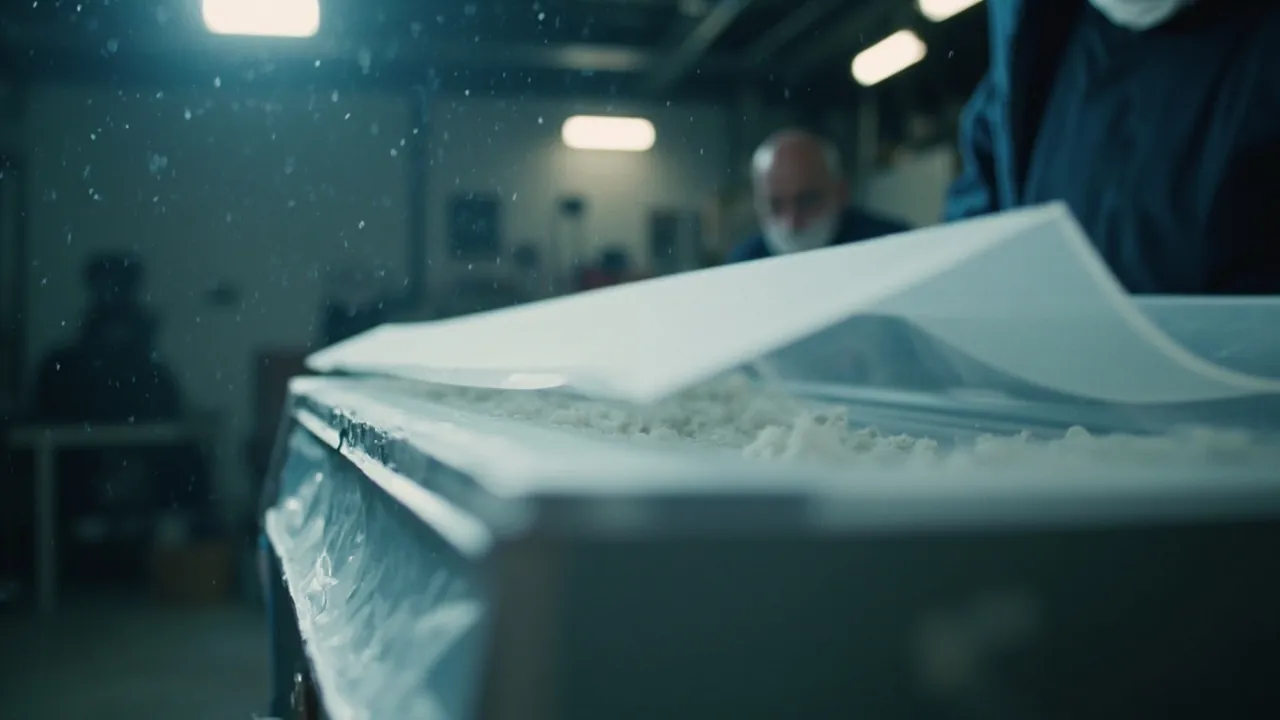
Short answer: sealing is the single most important capability of a storage case, and the one that can never be reliably retrofitted, because it decides whether the contents are still in their original condition after several years. The damage caused by moisture is not a minor surface dampness: for metal parts it means corrosion and pitting; for hygroscopic powder materials it means caking, declining chemical stability and a shortened storage life; for electronic and optical components it means short circuits, mould growth and coating damage. The engineering meaning of sealing is very concrete — whether the rim uses a groove-compressed structure, whether the gasket can be replaced, and whether the ingress rating is stated digit by digit and supported by testing. An EPDM-sealed case rated IP67 and a box that only relies on the lid pressing shut, with no ingress testing at all, can produce results an order of magnitude apart under warehouse humidity swings and day-night temperature cycles.
This article is written for engineers and procurement professionals. It turns "sealing" into measurable, acceptable engineering language: the four paths by which moisture enters, the mechanisms by which stored items degrade, the relationship between relative humidity and dew point, the essential difference between flat and groove sealing, seal compound selection, the boundaries of IP6X, IPX5 and IPX7, immersion and jet test methods, the logic of desiccant and humidity indicator cards, condensation under thermal cycling, and seal life management for long-term storage. All figures are typical or empirical values; actual projects should follow supplier drawings and third-party test reports.
Table of Contents
- The direct answer: sealing is the first determinant of storage success
- Where moisture comes from: four entry paths
- The general effect of moisture on stored items
- Key metrics: relative humidity, dew point and critical humidity
- Seal architecture: flat versus groove-compressed sealing
- Seal compounds: choosing between NBR, EPDM, VMQ and FKM
- Ingress ratings: the boundaries of IP6X, IPX5 and IPX7
- Seal verification: how immersion and jet tests are performed
- Moisture management: desiccant, indicator cards and VCI
- Thermal cycling and condensation: the hidden enemy of a sealed case
- Managing seal life in long-term storage
- Seal solution and application comparison table
- Procurement and verification checklist
- FAQ
- Conclusion and further reading
The direct answer: sealing is the first determinant of storage success
Among all the properties of a storage container, sealing holds a special position: it is the only capability that cannot be reliably obtained through later modification.
A comparison makes this clear. Insufficient rigidity can be supplemented with an external frame; a lock of inadequate grade can be replaced with a better padlock; an unsuitable liner can be reconfigured with different foam; inadequate stacking strength can be addressed by reducing the number of layers. All of these are adjustable and recoverable. Sealing is not. If the rim is a flat structure with no sealing groove, there is no machining allowance, and an added weather strip can only form flat contact with no compression control and no resistance to lateral movement. This is why sealing is governed by design: it has to be right at the design stage.
The role of the seal can be stated in one sentence: to separate the internal environment from the external one. That separation has three values:
- Excluding liquid water: rain, washdown, standing water and water crossings in transit.
- Excluding water vapour: water molecules in humid air diffuse continuously toward the drier side, and this is the most easily overlooked and longest-acting path.
- Excluding dust and particulates: dust is itself a contaminant, and once it absorbs moisture it becomes a local corrosion initiation site.
Of the three, vapour control is the hardest and the most critical in long-term storage, because liquid water is event-driven — it only appears when it rains — whereas vapour is continuous: as long as a humidity difference exists across the wall, it keeps acting. This is why a storage case cannot be judged only on whether rain gets in, but also on what happens after three years in a humid warehouse. For how steel containers perform over long storage, see military steel ammo can long-term storage.
Where moisture comes from: four entry paths
Many people assume that a tight lid means water cannot get in. In reality, moisture reaches a closed container by four independent paths, and blocking any one of them is not enough.
Path one: leakage at the sealing face. The rim is the dominant channel. Leakage comes from three causes: insufficient gasket compression, where latch travel and groove depth do not match; an uneven sealing face, where insufficient shell rigidity deforms the rim; and gasket ageing, where compression set increases and rebound declines. Of these, the first two are design problems and the third is a service-life problem.
Path two: moisture exchange at the moment of opening. This is the most underestimated path. Every time the case is opened, internal and external air exchange, and humid outside air enters and stays inside. After a single opening in a humid environment, internal relative humidity can rise from 40 percent to over 70 percent within minutes. If the case is then left closed for a long period, that moisture acts slowly inside. A sealed case's moisture protection is therefore strongly correlated with how often it is opened.
Path three: permeation through the material itself. Plastics are not absolutely impermeable to water vapour. Water vapour transmission rates differ between polymers, and the thinner the wall and the higher the temperature, the greater the transmission. This is usually far smaller than leakage at the sealing face, but over a multi-year storage period it cannot be ignored. This is why long-term storage favours material systems with greater wall thickness and higher crystallinity.
Path four: leakage at penetrations. Handles, hinges, pressure equalization valves, nameplates and grounding studs all penetrate the wall, and each is a potential leak point. A compliant design seals each opening independently with a gasket, O-ring or integrated insert, and includes them in ingress rating testing.
The four paths map to four countermeasures: structural design (groove sealing), usage management (fewer openings, faster access), material selection (low transmission, adequate wall thickness), and structural integrity (sealed penetrations). Implementing only one of them cripples the overall moisture protection.
The general effect of moisture on stored items
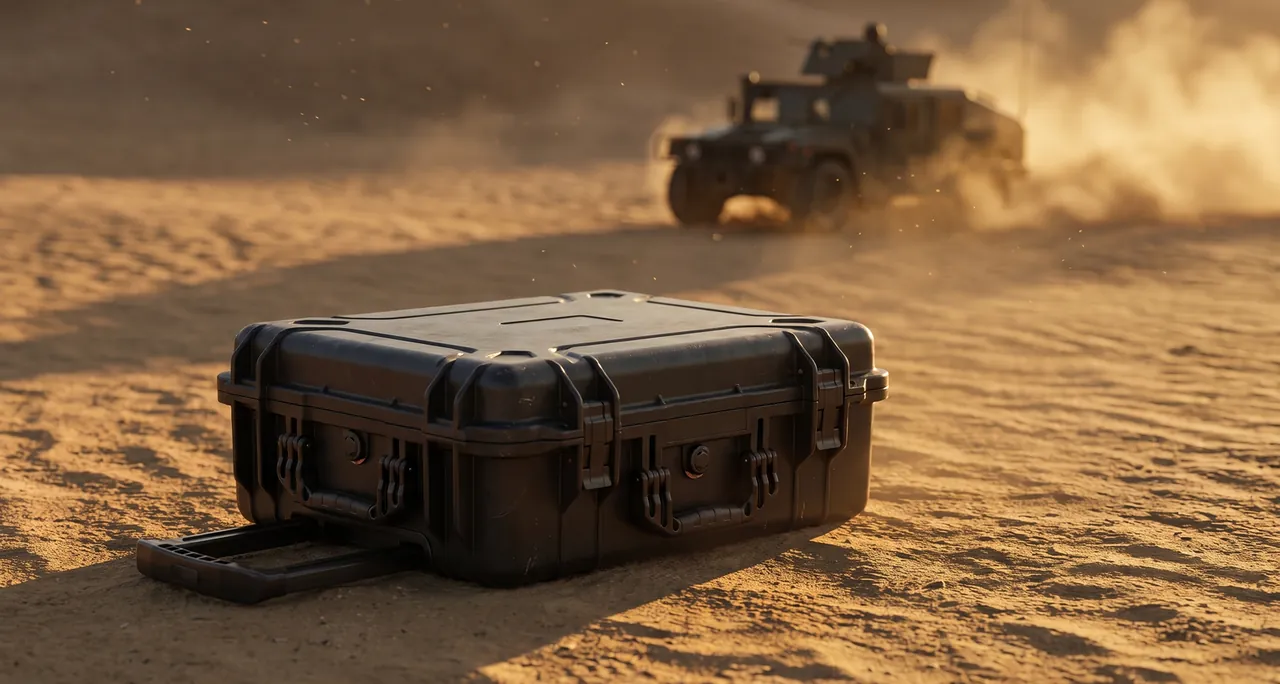
Moisture is the number one enemy of storage because it acts on different materials by different mechanisms, yet the outcome is always an irreversible loss of performance.
Metal parts: electrochemical corrosion. Above a critical relative humidity, a continuous water film forms on a metal surface and creates the necessary conditions for electrochemical corrosion. The corrosion product, rust, has a larger volume, which can seize mating surfaces and damage precision faces. Pitting is especially dangerous: it grows inward from small surface pores, so the appearance changes little while the section loss may already be significant. For steel parts, sustained relative humidity above the critical value directly accelerates corrosion.
Hygroscopic powder materials: moisture uptake, caking and reduced stability. Many powders are hygroscopic and absorb water when exposed to humid air. The consequences are threefold. Physically, water on particle surfaces creates adhesion, forming cakes and reducing flowability. Chemically, water may participate in or catalyse slow reactions, reducing stability and shortening shelf life. In terms of uniformity, absorption usually starts at the surface, leaving different states within a single batch. These materials are usually more humidity-sensitive than metals and therefore demand a higher level of sealing.
Electronic and electrical components: reduced insulation and electrochemical migration. Moisture lowers insulation resistance, potentially causing leakage current and short circuits. Under applied bias, metal ions can migrate electrochemically and form dendrites that eventually cause short-circuit failure. These failures are often latent — normal at dispatch and only appearing after a period in storage.
Optical and precision devices: mould and coating damage. Optical surfaces in humid conditions readily support mould growth, and the organic acids secreted by mould attack optical coatings. This damage is usually unrepairable.
Timber and textiles: mould and loss of strength. Cellulosic materials absorb water and provide growth conditions for microorganisms, and mould affects not only appearance but strength.
Consolidating these effects yields a procurement principle: the more humidity-sensitive the contents, the higher the required sealing grade and moisture management. Metal parts may need IP65 plus VCI; hygroscopic powders and electronic devices should reach IP67 with desiccant and a humidity indicator card.
| Content type | Main moisture mechanism | Consequence | Recommended sealing grade (empirical) | Additional measures |
|---|---|---|---|---|
| --- | --- | --- | --- | --- |
| Steel metal parts | Electrochemical corrosion, pitting | Rust, seized mating faces | IP65 and above | VCI corrosion inhibition |
| Hygroscopic powders | Moisture uptake, caking | Caking, reduced stability | IP67 | Desiccant plus indicator card |
| Electronic components | Insulation loss, ion migration | Leakage, short-circuit failure | IP67 | Desiccant, anti-static liner |
| Optical precision items | Mould, coating attack | Surface damage, unrepairable | IP67 | Desiccant, anti-mould treatment |
| Cellulosic materials | Water uptake, mould | Strength loss, mould spots | IP65 | Desiccant, ventilation management |
Key metrics: relative humidity, dew point and critical humidity
To understand why sealing matters, three humidity concepts must come first, because they define what counts as "wet".
Relative humidity (RH). The ratio of actual water vapour in the air to the saturation vapour content at that temperature, expressed as a percentage. The critical point is that relative humidity is a function of temperature. The same amount of water vapour produces a higher relative humidity at a lower temperature, which is why cooling causes condensation.
Dew point. The temperature to which air must be cooled, with water content unchanged, for relative humidity to reach 100 percent. The smaller the gap between the dew point and the actual temperature, the higher the condensation risk. The engineering method is straightforward: compare the dew point with the surface temperature — if a surface is colder than the dew point, condensation will form on it.
Critical relative humidity. The corrosion rate of metals is not linearly related to relative humidity; there is a threshold below which corrosion is very slow and above which it rises sharply. The threshold varies with metal type and surface condition, with a common empirical value around 60 percent. This is why humidity control targets in storage are usually set below 60 percent, and precision and long-term storage applications often require lower still.
These concepts produce two practical conclusions:
- To judge a case, ask what internal humidity it can maintain, not merely whether water gets in. The former is the outcome metric; the latter is only a means.
- Sealing plus desiccant is fundamentally about pushing internal relative humidity below the critical value. Sealing reduces the rate at which external vapour enters, which slows desiccant consumption; the desiccant absorbs the vapour that has already entered, actively lowering humidity. Neither is sufficient alone: with sealing but no desiccant, moisture already inside cannot be removed; with desiccant but no sealing, the desiccant saturates quickly and fails.
Seal architecture: flat versus groove-compressed sealing
This is the most fundamental difference in a storage case, and the hardest to remedy later.
Flat sealing. A self-adhesive foam strip is applied to the rim, or the two lips simply meet, and the latch presses the two plastic parts together. There are three problems. Compression is uncontrolled, so after latching the pressure distribution is highly uneven, highest at corners and lowest along the straight runs. The foam itself absorbs water and loses rebound after prolonged damp exposure. And because the lip is a flat, ungrooved face, the sealing element shifts as soon as it sees a lateral force.
Groove-compressed sealing. A U-shaped or rectangular groove is machined into the rim and fitted with an O-ring or profile extrusion seal. The principle is that the groove limits lateral movement while the latch travel provides a defined vertical compression. The compression ratio is commonly designed into the 20 to 30 percent range, where rubber sits in its most elastic state, providing enough contact stress to seal without taking a permanent set from over-compression.
| Comparison | Flat sealing | Groove-compressed sealing |
|---|---|---|
| --- | --- | --- |
| Sealing face | Flat contact plus self-adhesive foam | Continuous groove plus O-ring or profile seal |
| Compression control | Uncontrolled, depends on latch stiffness | Set by groove depth and latch travel |
| Lateral resistance | Poor | Good, limited by the groove |
| Corner sealing | Prone to lifting and breaks | Moulded or fully vulcanized, one piece |
| Replaceability | Mostly one-time | Seal can be replaced separately |
| Long-term rebound | Declines as foam ages | Rubber retains elasticity for years |
| Typical protection level | Around IPX4 to IPX5 | Around IP65 to IP67 |
| Maintenance | Usually none, but failure means scrap | Periodic inspection, replaceable spares |
For long-term storage, replaceability is extremely valuable: gaskets are consumables that age with time. Replaceability means the life of the case is no longer capped by the life of the gasket, and that is the essential difference between a case that lasts ten years and one that lasts three. Design points appear in outdoor case seal ring and outdoor case waterproof design.
Seal compounds: choosing between NBR, EPDM, VMQ and FKM
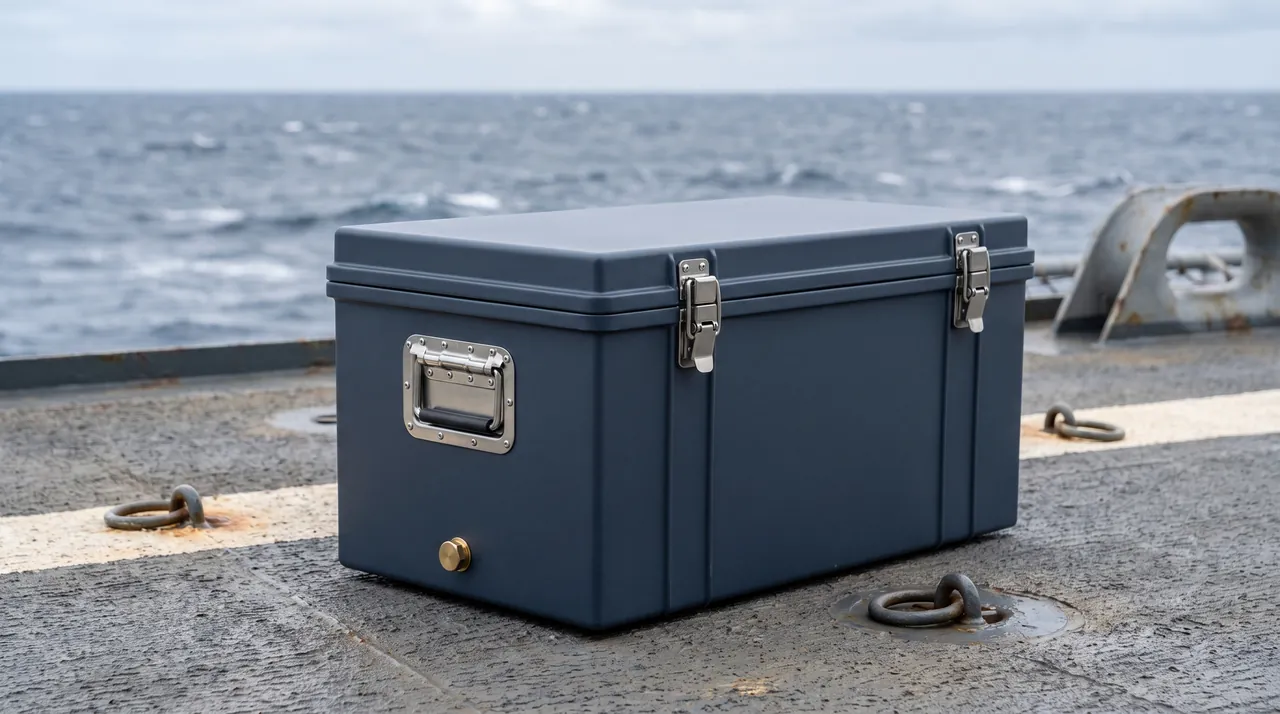
The gasket is the executing element of the sealing system, and compound choice directly determines life and suitability.
| Compound | Oil resistance | Weather and water resistance | Temperature range (empirical) | Relative cost | Suitable application |
|---|---|---|---|---|---|
| --- | --- | --- | --- | --- | --- |
| Nitrile NBR | Excellent | Moderate | -30 °C to +100 °C | Low | Contact with oils |
| EPDM | Poor | Excellent | -40 °C to +120 °C | Medium | Outdoors, long-term storage (mainstream) |
| Silicone VMQ | Poor | Good | -50 °C to +200 °C | Medium-high | Extreme temperature environments |
| Fluoroelastomer FKM | Excellent | Excellent | -20 °C to +200 °C | High | Aggressive chemicals and high temperature |
Selection reduces to three questions: how wide is the temperature range, is there contact with oil or chemicals, and is there long-term outdoor exposure?
- Long-term outdoor storage with rain and vapour as the main exposure: EPDM.
- Contact with lubricating or hydraulic oil: NBR.
- Extreme temperatures, whether severe cold or high heat: VMQ.
- Aggressive chemicals or sustained high temperature: FKM.
Hardness is the second key parameter, commonly 50 to 70 Shore A. Too hard makes it difficult for the gasket to conform to an uneven sealing face; too soft makes it liable to be extruded from the groove or to deform under pressure. More importantly, groove cross-section, gasket profile, hardness and compression set must be designed as a set, and none can be changed in isolation. Changing only the compound without checking hardness is a common cause of failure. A full comparison appears in case seal materials.
Ingress ratings: the boundaries of IP6X, IPX5 and IPX7
Ingress protection follows IEC 60529, with the Chinese national equivalent GB/T 4208-2017, written as IP plus two characteristic digits.
- First digit (0-6): protection against solid foreign objects and dust. Level 5 is dust protected, allowing limited ingress that does not impair operation; level 6 is dust-tight, with no dust ingress.
- Second digit (0-9): water protection. Level 4 is splash, 5 is water jets, 6 is powerful water jets, 7 is temporary immersion, commonly 1 m for 30 minutes, and 8 is continuous immersion with conditions agreed between buyer and supplier.
Criterion one: IPX5 and IPX7 test two different failure modes. IPX5 uses a dynamic jet to assess seal integrity under water impact; IPX7 uses static water pressure to assess seal integrity under immersion. The standard is explicit that the two are not a simple progression — a sample that passes immersion does not automatically pass the jet test. A technical agreement should state each digit, for example IP6X + IPX5 + IPX7, and should explicitly reject substituting X.
Criterion two: the dust rating is often overlooked but equally important for long-term storage. Dust is itself a contaminant, and worse, it absorbs moisture and becomes a local corrosion core. Storage cases should therefore require at least IP6X.
Criterion three: the ingress rating describes the as-delivered condition. It does not guarantee that the case remains compliant after a given number of open-close cycles. Procurement should therefore also obtain the gasket's compression set figure and cycle-life data. A full explanation appears in what is an IP67 rating.
Seal verification: how immersion and jet tests are performed
Water resistance cannot rest on promises; it rests on testing. Three verification methods have clear application areas.
One, third-party standard testing, the highest confidence. Ingress protection is assessed to IEC 60529 / GB/T 4208-2017. The report must state every digit of the rating, the test conditions including water depth, duration, nozzle specification and pressure, and the acceptance method. This suits first shipments, major projects and dispute resolution. Methods are described in IP67 submersion test.
Two, a simple spray screen, usable on site. Use an ordinary spray gun at 2-3 m, spraying each face for at least one minute from all directions, concentrating on latches, hinges, handle roots and corners. Place dry paper tissue and a humidity indicator card inside and inspect immediately after the test. This suits first-article approval and periodic sampling, and it screens out most products with a poor seal architecture.
Three, negative or positive pressure leak testing, for volume and high-requirement applications. Apply slight positive or negative pressure to a sealed case and observe the pressure decay rate or look for bubbles. It is fast and repeatable, which suits batch inspection at the factory, but it requires dedicated tooling and baseline data.
Approaches not recommended: placing valuable items in a case and simply immersing it. If the seal fails, the loss is irreversible. Any destructive test should be run on an empty case or with substitute loads.
Moisture management: desiccant, indicator cards and VCI

Sealing controls how quickly external vapour gets in; moisture management controls how low internal humidity is driven. The two work together rather than replacing each other.
Desiccant. Common types include silica gel, which is general-purpose, indicative and regenerable; molecular sieve, which has strong adsorption capacity at low humidity; and montmorillonite, which is low-cost with moderate capacity. Selection points:
- Quantity calculation: the required amount relates to the free internal volume, the sealing grade, the storage duration and the external humidity level. A practical approach is to estimate from free volume times a coefficient, then verify by measurement.
- Replaceability: long-term storage requires replaceable or regenerable desiccant with a defined change interval.
- Placement: position it where air can circulate, and avoid fully wrapping it in foam, which renders it ineffective.
Humidity indicator cards. These provide a low-cost, high-value way to confirm internal humidity visually. Prefer models with an irreversible indicator point: once the threshold is exceeded, the colour changes and does not revert, which allows a history of exposure to be traced.
VCI corrosion-inhibiting materials. For steel parts, using VCI film, paper or bags in a closed space forms a molecular-level protective layer on metal surfaces that suppresses electrochemical corrosion. VCI and sealing are strongly synergistic: VCI needs a relatively closed space to maintain an effective concentration, so it performs poorly in a case with a weak seal.
Sequence matters: confirm that items are dry, add VCI material, add desiccant, add the humidity indicator card, then close and latch the lid. Any error in the sequence, such as placing a wet item inside, defeats the whole moisture management scheme.
Thermal cycling and condensation: the hidden enemy of a sealed case
The most counter-intuitive behaviour of a sealed case is that the better the seal, the more pronounced internal condensation can be. The reason is that condensation originates from moisture already inside the case, not from leakage inward.
The mechanism is this: by day the case warms, the internal air expands and holds more vapour; at night the temperature falls, the air can hold less, and the surplus condenses on the inner walls and on items. Sealing only governs whether external moisture can enter; it cannot prevent this process.
Thermal cycling also creates a second problem: the breathing effect. Temperature change expands and contracts the internal gas, producing a cyclic pressure differential. That differential causes repeated small movements and a pumping action at the gasket, which over time can accelerate seal fatigue. A case fitted with a pressure equalization valve can relieve this — passing air but not water — letting the pressure equalize slowly. See outdoor case pressure valve.
Four countermeasures against condensation:
- Load items dry. Never put a wet raincoat, a damp towel or a condensation-covered tool into a sealed case.
- Use replaceable desiccant. Actively absorbing internal vapour is the most direct and effective measure.
- Control temperature swings. Avoid direct sun by day and sudden cooling at night; keep the storage position out of light with a small temperature differential.
- Use a pressure equalization valve where needed. It relieves the differential but cannot replace desiccant.
Managing seal life in long-term storage
Seals are consumables, and that is the core insight of long-term storage management. Three management actions maximize seal life.
First, establish an inspection interval. A visual and tactile inspection every 6 to 12 months is recommended:
- Check that the gasket is continuous, with no cuts, flash, hardening or tackiness.
- Check that it rebounds promptly when pressed.
- Close the lid without latching and use thin paper or a feeler gauge around the perimeter to check for even resistance.
- Close each latch and confirm consistent clamping force with a definite engagement.
- Check that hinges, handles, pressure valves and other penetrations have independent sealing.
Second, standardize the replacement procedure. Four points matter: match the specification, since groove cross-section, gasket profile and Shore hardness must match the original; match the compound to the application; handle the joint, since a continuously moulded ring is most reliable and a joined strip must be flush and away from corners; and inspect after assembly by the method above. Never change only the compound without checking hardness.
Third, manage spare parts inventory. Gaskets, latches and hinges are consumables. Confirming that they can be ordered separately and keeping replacement instructions significantly extends case life. For batch users, stock spares in a sensible proportion to consumption.
For judging whether water resistance claims are genuine, see waterproof ammo box really waterproof. For the sealing contrast between categories, see military ammo box versus ordinary box.
Seal solution and application comparison table
The preceding analysis condenses into an application table for direct selection.
| Storage application | Environmental severity | Recommended seal solution | Recommended rating | Additional management |
|---|---|---|---|---|
| --- | --- | --- | --- | --- |
| Dry indoor shelving | Low | Groove seal with replaceable gasket | IP6X | Humidity indicator card |
| Ordinary warehouse | Medium | Groove seal with EPDM gasket | IP6X + IPX5 | Desiccant, periodic inspection |
| Humid warehouse or basement | Medium-high | Groove seal with EPDM, thicker liner | IP6X + IPX7 | Desiccant, VCI, indicator card |
| Open storage or container | High | Groove seal with EPDM, pressure valve | IP6X + IPX5 + IPX7 | Desiccant, periodic re-testing |
| Coastal humidity and salt spray | Very high | Groove seal with stainless hardware | IP6X + IPX7 | VCI, desiccant, shorter intervals |
| Long cycle, over 3 years | Set by environment | Replaceable gasket is mandatory | Per environment | Spares inventory, scheduled replacement |
Procurement and verification checklist
Writing requirements as acceptance clauses is the most effective way to prevent later disputes. Six areas should be covered.
One, seal architecture. Specify the rim form: whether it has a continuous sealing groove, the groove cross-section, U-shaped or rectangular, and its dimensional tolerances; specify how the gasket is fitted and whether it can be replaced separately.
Two, gasket specification. Compound such as NBR, EPDM, VMQ or FKM; Shore hardness such as 60 ± 5 Shore A; compression set requirement; and operating temperature range.
Three, ingress rating. State each digit, for example IP6X + IPX5 + IPX7, and explicitly reject substituting X. Also state the reference standard, IEC 60529 / GB/T 4208-2017, and the acceptance conditions.
Four, testing and documentation. Require a third-party ingress rating report, and check that the model, photographs and test conditions on the report match the actual product. Be wary of vague wording such as "similar reference model".
Five, moisture management package. Desiccant quantity and change interval recommendations, humidity indicator cards, VCI materials where needed, and liner material with confirmation that it is closed-cell.
Six, spares and maintenance. A spare parts list with lead times for gaskets, latches and hinges, plus gasket replacement instructions.
JUNZHJIA is manufactured by KeXin New Materials (Guangdong) Co., Ltd., covering protective cases, toolboxes, rugged storage cases and waterproof junction boxes, serving wholesale, agency, OEM/ODM and global supply. Within the clause framework above, seal compound and hardness, ingress rating schemes, hardware systems and liner configurations can be tailored to the customer's storage conditions, with corresponding test documentation and spare parts support.
FAQ
Q: What metric should actually be used to measure sealing performance?
A: The most direct and comparable metric is the ingress rating, per IEC 60529, with the Chinese national equivalent GB/T 4208-2017. But a single digit is not enough; at least three things should be examined. The first is the dust rating: require at least IP6X, dust-tight, because dust that absorbs moisture becomes a local corrosion core. The second is the water rating: rain alone is satisfied around IPX5, while washdown or standing-water risk calls for IPX7, commonly 1 m for 30 minutes. The third is the long-term behaviour of the gasket, meaning the compound, Shore hardness, commonly 50-70 Shore A, and the compression set figure, which together determine how long the rating is maintained. Note that an ingress rating describes the as-delivered condition; it does not guarantee compliance after a number of open-close cycles, so cycle-life and clamping-force decay data should also be requested. In practice, the fastest way to judge a case is to look at the rim: a continuous sealing groove with a separately replaceable gasket indicates a modern design, whereas flat contact with a one-time adhesive strip warrants caution regardless of the claimed rating.
Q: How serious is moisture damage to stored items? Is it irreversible?
A: In the great majority of cases it is irreversible, or repairable only at very high cost. The mechanisms differ by material. Metal parts above the critical relative humidity form a continuous water film that creates the conditions for electrochemical corrosion, producing rust and pitting; pitting grows inward from small surface pores, with little visible change but potentially significant section loss, and it cannot be fully restored by descaling. Hygroscopic powders cake and lose flowability, while moisture may participate in or catalyse slow reactions that reduce stability over the storage period, and even re-drying may not fully restore the original state. Electronic components lose insulation resistance when damp, and under bias may undergo electrochemical ion migration that forms dendrites and eventually short circuits; these failures are often latent, normal at dispatch and appearing only after storage. Optical devices that grow mould suffer coating attack from organic acids, and the damage is usually unrepairable. Precisely because the damage is irreversible, sealing has to be right at the design stage — it is the one capability that cannot be reliably retrofitted.
Q: If I put desiccant in the case, does that mean I do not need such a good seal?
A: The opposite is true. Desiccant and sealing work together, and the worse the seal, the faster the desiccant is consumed. Desiccant absorbs vapour that has already entered the case and drives internal relative humidity below the critical value for metal corrosion; sealing reduces the rate at which external vapour enters. Neither is sufficient alone. With sealing but no desiccant, the vapour already inside, plus what enters each time the case is opened, cannot be removed and condensation still occurs. With desiccant but no sealing, external moisture keeps flowing in and the desiccant saturates quickly — in a poorly sealed case the desiccant might need changing weekly, which is not economically viable. The correct logic is therefore: first use groove sealing to bring the ingress rate down to a low level, then use an appropriate quantity of desiccant to absorb the remaining vapour, and finally monitor internal conditions with a humidity indicator card. The required desiccant quantity relates to free internal volume, sealing grade, storage duration and external humidity; estimate from empirical coefficients first, then verify by measurement and adjust the change interval.
Q: Why does a better-sealed case actually condense more inside?
A: Because condensation originates from moisture already inside the case, not from leakage inward, so it has no direct causal link to seal quality. The mechanism is that by day the case warms, the internal air expands and holds more vapour, and at night the temperature falls, the air can hold less, and the surplus condenses on the inner walls and on items. Sealing only governs whether external moisture can enter; it cannot stop this process. That is also why the correct response is not to open the lid to ventilate, which would forfeit the rating entirely, but to do four things. First, load items dry; never put a wet raincoat, a damp towel or a condensation-covered tool into a sealed case. Second, use a replaceable desiccant pack to actively absorb internal vapour. Third, control temperature swings by keeping the case out of direct sun and away from sudden cooling, in a position with a small temperature differential. Fourth, use a pressure equalization valve where needed. The valve passes air but not water, relieving the differential and breathing effect caused by temperature change, but it balances pressure rather than humidity and cannot replace desiccant.
Q: Should I choose IPX5 or IPX7?
A: The difference lies in the form the water takes. IPX5 tests water jets, applied through a 6.3 mm nozzle at a defined distance and flow rate from all directions, assessing seal integrity under dynamic impact. IPX7 tests temporary immersion, commonly 1 m for 30 minutes, assessing seal integrity under static pressure. Because the failure modes differ, the standard is explicit that the two are not a simple progression: a sample that passes immersion does not automatically pass the jet test. Ask two questions: is the site a place of washdown and storms, or a place where water may pool? Ordinary warehouses and indoor shelving are usually fine around IPX5; open storage, basements, flood-prone ground and washdown areas should specify IPX7. If both conditions are possible, require IP6X + IPX5 + IPX7 together and ask the supplier for evidence digit by digit. Note that an ingress rating describes the as-delivered condition and does not guarantee compliance after long use, so also request the gasket compression set figure and cycle-life data.
Q: How do I know when a gasket has aged and needs replacing?
A: The criterion is condition, not elapsed time. Inspect every 6 to 12 months, looking for four signs. First, hardening or tackiness: the surface becomes hard or develops a sticky feel, indicating ageing. Second, slow rebound: it does not quickly return to shape after being pressed. Third, permanent compression marks: a clear depression remains after release, meaning compression set has exceeded limits. Fourth, cuts and flash: cracks, notches or burrs become leak paths. Also perform a gap check by closing the lid without latching and sliding thin paper or a feeler gauge around the perimeter; if resistance varies sharply and some sections have none at all, the sealing face is uneven or the gasket is already deformed. Four points apply when replacing. Match the specification: groove cross-section, gasket profile and Shore hardness, commonly 50-70 Shore A, must match the original. Match the compound: EPDM for long-term outdoor storage, NBR for oil contact, VMQ for extreme temperatures, FKM for aggressive chemicals. Handle the joint: a continuously moulded ring is most reliable, and if a strip is joined the joint must be flush and away from corners. Then re-inspect after assembly. Never change only the compound without checking hardness.
Q: Beyond sealing, what else is needed for long-term storage?
A: Sealing is the foundation but not the whole picture. Four things should be in place. First, desiccant, with quantity related to free internal volume, sealing grade, storage duration and external humidity, and with replaceable or regenerable material and a defined change interval; place it where air circulates and avoid fully wrapping it in foam. Second, a humidity indicator card to confirm internal humidity visually, preferably with an irreversible indicator point so that once the threshold is exceeded the colour change persists and a history of exposure can be traced. Third, VCI corrosion-inhibiting material for steel parts, maintaining a corrosion-inhibiting atmosphere in a closed space; it is strongly synergistic with sealing, since VCI needs a relatively closed space to maintain an effective concentration. Fourth, liner selection: long-term storage must use closed-cell EVA or PE foam and must never use water-absorbing open-cell polyurethane sponge, which becomes a second internal moisture source once saturated. Usage habits matter too: minimize unnecessary openings, work quickly when accessing contents, and ensure everything is dry before it goes in. See waterproof ammo box really waterproof.
Q: During procurement, how do I verify that a supplier's sealing claims are genuine?
A: Verify in three tiers. Tier one is visual and tactile inspection on receipt, done for every batch: check that the gasket is continuous with no cuts or flash and that it rebounds promptly; close the lid without latching and use thin paper or a feeler gauge around the perimeter to check gap evenness; close each latch and confirm consistent force with a definite engagement; check that hinges, handles, pressure valve and nameplate penetrations have independent sealing. Tier two is a simple spray screen for first articles and periodic sampling: use an ordinary spray gun at 2-3 m, spraying each face for at least one minute from all directions and concentrating on latches, hinges, handle roots and corners, with dry paper tissue and a humidity indicator card inside and inspection immediately afterwards. Tier three is third-party re-testing of ingress protection to IEC 60529 / GB/T 4208-2017, for first shipments, major projects and disputes. In every tier, check that the model, photographs and test conditions on the report match the actual product, and be wary of vague wording such as "similar reference model" or "same-platform product" — different configurations on one platform can have entirely different seals and cannot be cross-referenced.
Q: In a humid warehouse, does stacking method affect sealing?
A: Yes, and this is frequently overlooked. Two factors are at work. The first is creep under long-term load: a plastic case deforms slowly under sustained stacking load, the walls bulge and the rim loses flatness, which locally lifts the gasket. The engineering response is to assess long-term stacking strength against the storage period, commonly graded at 1, 3 or 5 years, using a practical estimate of 30 to 50 percent of short-term compressive strength, with a further reduction for creep-sensitive materials such as HDPE. Match the footprint to a pallet module so loads transfer directly into reinforced regions, and avoid one-sided overhang that causes torsion. The second is base moisture wicking: a case resting directly on damp concrete or soil absorbs moisture and corrodes faster, so add runners or stand it on a grate to keep air moving underneath. The third is placement: heat significantly accelerates creep and seal ageing, so do not store cases long term in direct sun or in the hottest part of a building. For acceptance, a simple test works: stack at full load for 72 hours, then unload and measure the rim diagonal difference and gap change; if the deviation is significant and does not recover, the stacking design is inadequate. See case stacking structure.
Conclusion and further reading
Back to the title question: the importance of sealing in a storage case can be summarized in one sentence — it is the only capability that cannot be remedied after the fact. Rigidity can be reinforced, locks can be upgraded, liners can be swapped, stacking can be reduced, but sealing has to be right at the design stage: a rim without a sealing groove can be fitted with any number of strips and still only achieve flat contact. The damage caused by moisture is equally irreversible: metal pitting, caking and reduced stability in powders, ion migration in electronics and mould in optics cannot be undone by drying.
Three actionable recommendations. First, write sealing as acceptance clauses — groove geometry, gasket compound and hardness, ingress rating digit by digit, compression set figure and cycle-life data. Second, use sealing and moisture management as a package — groove sealing reduces the ingress rate, desiccant drives internal humidity below the critical value, and a humidity indicator card provides traceable monitoring. Third, manage seals as consumables — set an inspection interval, standardize the replacement procedure and keep a spare parts inventory; for a modest cost, the life of the case can be doubled.
JUNZHJIA is manufactured by KeXin New Materials (Guangdong) Co., Ltd., covering protective cases, toolboxes, rugged storage cases and waterproof junction boxes, serving wholesale, agency, OEM/ODM and global supply. Seal compound and hardness, ingress rating schemes, hardware systems and liner configurations can be configured to the customer's storage conditions, with corresponding test documentation and spare parts support.
Further reading