

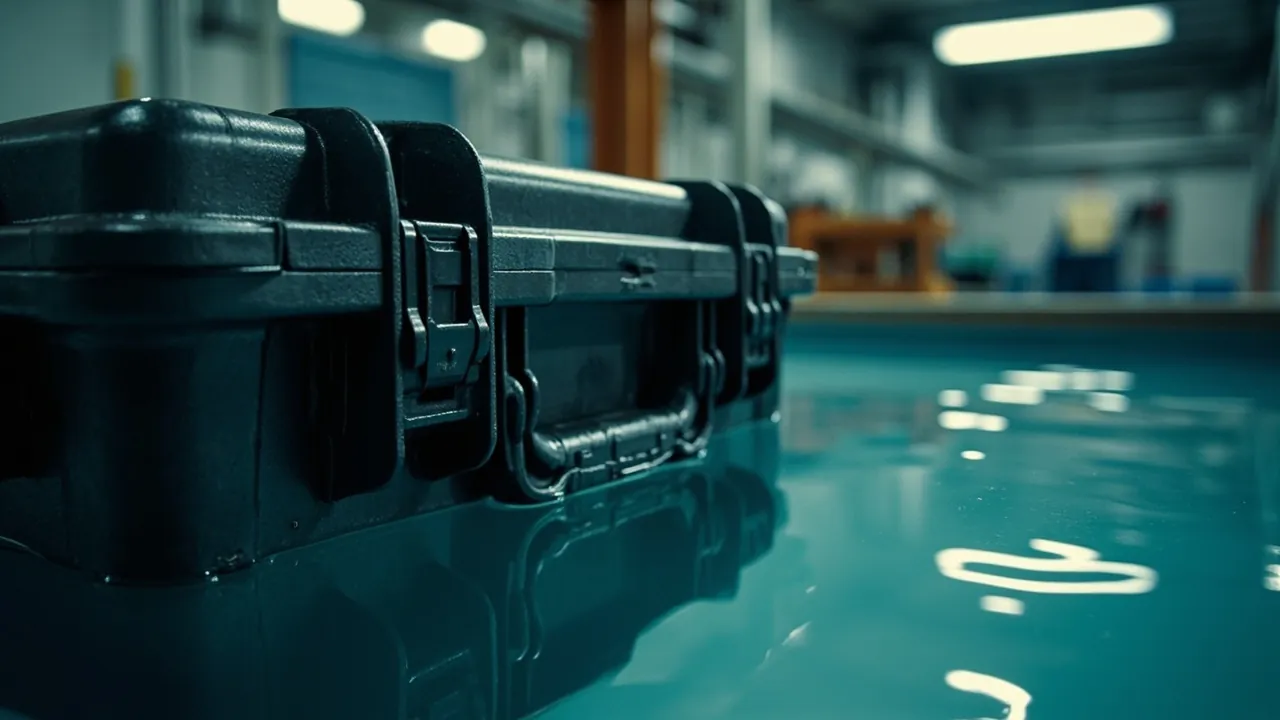
Short answer: a properly built waterproof case genuinely keeps water out — but "waterproof" is not a label, it is a verifiable structural commitment that depends on three conditions at once: a continuous compression seal, a body stiff enough to hold the sealing faces in contact, and a closing force that is stable and repeatable. The O-ring establishes the sealing interface; body stiffness keeps that interface in contact through stacking, handling and temperature change; the latch delivers a defined compression. Fail any one and the case will leak. An aged seal loses its resilience, a rim that deflects slightly under stacking lifts the sealing face locally, and a plastic catch whose closing force decays month by month lets compression slip below the effective range. So the right way to judge whether a case is truly waterproof is not to accept an assurance, but to read the structure (grooved or flat), read the test (which level under IEC 60529 / GB/T 4208-2017), and read the recoverability (can the seal be replaced on its own). This article takes apart O-ring compression ratios and groove fit, explains the mechanism by which stackable design affects sealing, sets out the acceptance criteria for each water level, proposes a reliability matrix that combines alternating immersion with thermal cycling and stacking, and gives five tiers of verification you can run at goods-in without specialist equipment. All figures are typical or empirical values; the supplier's drawings and test reports govern.
Table of Contents
- Start with the conclusion: three preconditions for waterproofing
- Seal architecture sets the ceiling: grooved compression versus flat contact
- How an O-ring works: compression ratio and groove fit
- Seal materials and four typical failure modes
- How stackable design affects sealing: stiffness, creep and rim flatness
- Seals and closing force are coupled: decay in latch force means ingress
- Water levels explained: IPX4 through IPX8
- Why water levels are not a progression
- A reliability test matrix: alternating immersion, thermal cycling and stacking
- Five tiers of field verification, from visual to third-party re-test
- Common failure points: hinges, handles, pressure valves, nameplates
- Maintenance and spares: making water resistance recoverable
- Key clauses for a technical agreement
- FAQ
- Closing remarks and related reading
Start with the conclusion: three preconditions for waterproofing
Put "waterproof" into engineering language and it describes a state in which a failure mode has been excluded: under a specified head of water, duration, orientation and temperature, no harmful ingress appears inside the enclosure. Reaching that state requires three conditions to hold simultaneously.
Condition one: the sealing interface exists and is continuous. The rim must carry a continuous, unbroken, flash-free elastomer seal, and its compression must be set by the structure — which is precisely the generational gap between grooved sealing and flat contact.
Condition two: body stiffness keeps the sealing faces in contact. A seal provides contact stress, but contact stress only means something when the two faces are parallel and in contact. If the rim shifts by a fraction of a millimetre under stacking, handling or torsion, the seal lifts locally and hydrostatic pressure finds the opening. Stiffness is not a bonus property meaning "stronger" — it is a precondition for the sealing function.
Condition three: closing force is stable and repeatable. The latch compresses the seal, and compression is set by groove depth and latch travel together. If the latch relaxes under long-term closure and closing force declines month by month, compression falls out of the effective band and the seal fails. Seal life therefore often equals the life of the latch's closing force.
| Precondition | Component responsible | Typical failure | Recoverable? |
|---|---|---|---|
| --- | --- | --- | --- |
| Continuous sealing interface | O-ring / profiled extruded gasket | Corner gaps, ageing cracks, broken contact pattern | Yes, by replacing the seal |
| Rigid rim contact | Wall ribs, rim roll, metal hinge pin | Rim gap after stacking, diagonal misalignment | Structural, hard to correct later |
| Stable closing force | Stainless cam latch / lever latch | Force decay, latch popping open | Yes, by replacing the latch |
Of the three, only the first and third can be restored by replacing parts; the second is decided by design. So the first question in any procurement conversation should be "does the rim have a groove?", not "is it waterproof?".
Seal architecture sets the ceiling: grooved compression versus flat contact
This is where every waterproofing discussion begins, and it is the main source of the price gap between product classes.
Flat contact. The rim is a flat ring or a simple step, a self-adhesive foam strip is applied, and the latch presses the two plastic faces together. Three inherent problems follow.
- Compression is uncontrolled. Once latched, pressure distribution around the rim is highly uneven — highest at corners, lowest at the mid-span of straight runs. The lowest-pressure location is usually where ingress starts.
- The seal displaces. A flat face provides no retention, so the strip moves laterally under shear — torsion, sliding, vacuum pull — and can be squeezed out of the sealing face altogether.
- Foam absorbs water. Open-cell foam loses resilience once damp, creating a degradation path in which the case seals less well the longer it is used.
Grooved compression. A continuous U-shaped or rectangular groove is machined into the rim and an O-ring or profiled extruded gasket is seated in it. The principle reduces to one sentence: the groove fixes lateral position, and latch travel fixes longitudinal compression. Those two constraints bound the seal's deformation within a controlled range, so performance does not depend on the assembly operator's feel and does not drift with repeated cycling. Design essentials are in outdoor case seal ring design and outdoor case waterproof design.
| Item | Flat contact | Grooved compression |
|---|---|---|
| --- | --- | --- |
| Groove | None | Continuous U-shaped or rectangular groove |
| Compression control | Uncontrolled; depends on latch stiffness | Set by groove depth and latch travel |
| Lateral displacement | Poor | Good (groove retains the seal) |
| Corner treatment | Butt-joined adhesive, prone to lifting | One-piece moulded or fully vulcanised, seamless |
| Seal replacement | Usually one-time | Replaceable on its own |
| Drift after repeated cycling | Noticeable | Small |
| Typical achievable level | Around IPX4 | IP65–IP67 |
How an O-ring works: compression ratio and groove fit
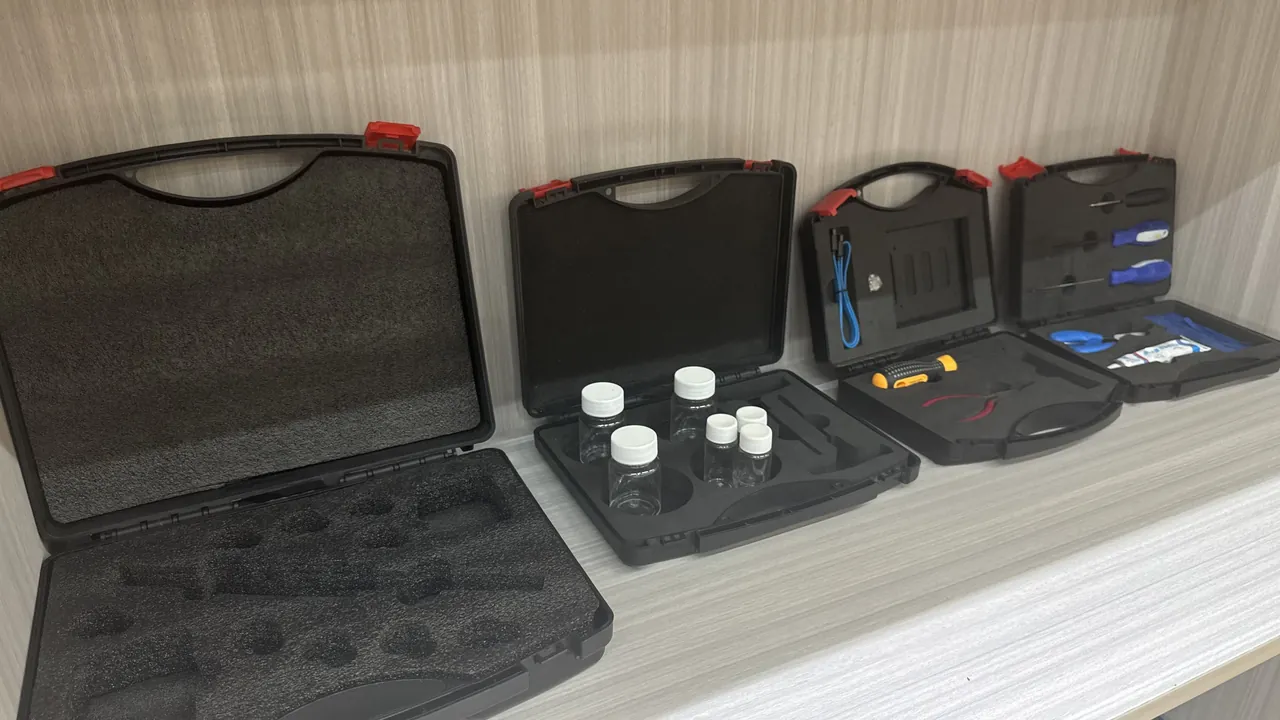
The O-ring is the most common seal and the most commonly misunderstood. Its mechanism is not "plugging a gap" but generating contact stress by elastic deformation, so that contact stress always exceeds the pressure of the medium being sealed.
Compression ratio is the first core parameter. It is the proportion by which the seal is flattened in the assembled state:
Compression ratio = (free sectional height − assembled sectional height) ÷ free sectional height × 100 %
Industry practice designs compression into the 20 % to 30 % band. Below 20 %, contact stress is insufficient and leakage begins under hydrostatic pressure. Above 30 %, the rubber sits permanently over-compressed, compression set accelerates, and life is shortened. Case products typically take a mid-range value as a compromise between sealing reliability and life.
Groove fit is the second core parameter. The groove cross-section must be larger than the seal cross-section, leaving roughly 10 % to 25 % volumetric allowance (an empirical figure) so the rubber has somewhere to flow when compressed rather than being trapped. A groove that is too shallow pushes compression past the upper limit or makes assembly difficult; too deep and compression falls short; too narrow and the rubber has nowhere to go, producing abnormally high local stress. Three dimensions — groove width, groove depth and seal section diameter — must be designed as a set.
The third parameter is surface roughness and flatness. Rough sealing faces leave microscopic pits the rubber cannot fill, which become micro-leak paths. Poor flatness distributes contact stress unevenly. Practice commonly controls the groove floor and mating face to Ra 1.6–3.2 μm (an empirical band) and requires assembled rim flatness to stay inside a small tolerance band.
| Design parameter | Typical range | Effect | Common error |
|---|---|---|---|
| --- | --- | --- | --- |
| Compression ratio | 20 %–30 % | Low leaks; high accelerates ageing | Not verified against actual groove depth |
| Groove fill ratio | 70 %–85 % | Low lets the seal move; high concentrates stress | Groove too narrow, assembly difficult |
| Seal hardness | 50–70 Shore A | Too hard contacts poorly; too soft extrudes | Changing material without changing hardness |
| Sealing face roughness | Ra 1.6–3.2 μm | Too rough creates micro leak paths | Insufficient mould polishing |
| Corner treatment | One-piece moulding | A joint is the first leak point | Butt-joined and bonded corners |
Seal materials and four typical failure modes
Material sets the seal's life in a given environment, and the failure mode sets how soon ingress begins.
Nitrile (NBR). Best oil resistance at moderate cost, but only fair ozone and weather resistance; it hardens under prolonged outdoor exposure. Suited to industrial environments with oil mist.
EPDM. The best all-round combination of weather, water, ozone and ageing resistance, and the mainstream choice for outdoor cases. Its weakness is poor resistance to mineral oil. For cases whose primary job is keeping water out, EPDM is usually the first choice.
Silicone (VMQ). The widest temperature range, roughly -50 °C to +200 °C, with good low-temperature flexibility, but poor oil resistance, modest tear strength and susceptibility to certain solvents. Suited to alternating high and low temperature duty.
Fluoroelastomer (FKM). The best chemical and high-temperature resistance at the highest cost. Suited to contact with oils, solvents or elevated temperature.
The four typical failure modes:
- Compression set. A seal held compressed long term undergoes irreversible chain rearrangement, fails to recover its free sectional height, and loses contact stress. This is the most common failure and the main reason a case that never leaked for two years starts seeping.
- Age cracking. UV, ozone and heat accelerate ageing; fine surface cracks appear and grow into through-paths under repeated compression.
- Chemical swelling. Contact with an incompatible medium swells or shrinks the rubber, changing dimensions and hardness and destroying the groove fit.
- Mechanical damage. Scratches during assembly, flash pinching and embedded debris create local defects. Debris trapped on a sealing face is pressed into a permanent pit when the lid closes — the most commonly overlooked item in field maintenance.
A full comparison of material against medium, temperature and life is in case seal materials.
How stackable design affects sealing: stiffness, creep and rim flatness
This section answers a causal chain that is easily skipped: why "stackable" directly determines whether a case keeps water out.
Stacking generates two kinds of load. The first is vertical static load: the weight of upper cases transfers through the contact faces into the lower rim. The second is bending and torsion: when the stacking surface is not perfectly flat, when case dimensions carry tolerance, or when one side is lifted during handling, the body twists. Both loads end up acting on the rim's sealing face.
Rim flatness is the physical precondition for sealing. Grooved sealing works only if compression between the groove and the mating face is uniform. If the rim deflects by 0.5 mm under stack load, compression at that location falls proportionally — from 25 % to below 15 % — and contact stress can no longer resist hydrostatic pressure. The rim roll thickness, the rib layout and the through-going metal hinge pin are therefore part of the waterproofing system, not separate features.
Creep makes the problem worsen over time. Plastics deform slowly under sustained load. Even if short-term stacking looks fine, the body slowly bulges and the rim slowly loses flatness over months. The engineering response is to estimate long-term stacking strength at 30 % to 50 % of short-term compressive strength (an empirical figure), reduce further for creep-prone materials such as HDPE, and to thicken the rim roll while running vertical ribs along the load path to reduce creep. Structural essentials are in case stacking structure.
A reproducible verification method. Load the case fully, stack to the target layer count, leave for 72 hours, then unload and measure the rim diagonal difference and the maximum rim gap; then immediately run a spray or immersion check. A waterproofing test performed in the stacked condition is far closer to real use than one performed on an empty case. This step is routinely omitted from incoming inspection.
Seals and closing force are coupled: decay in latch force means ingress
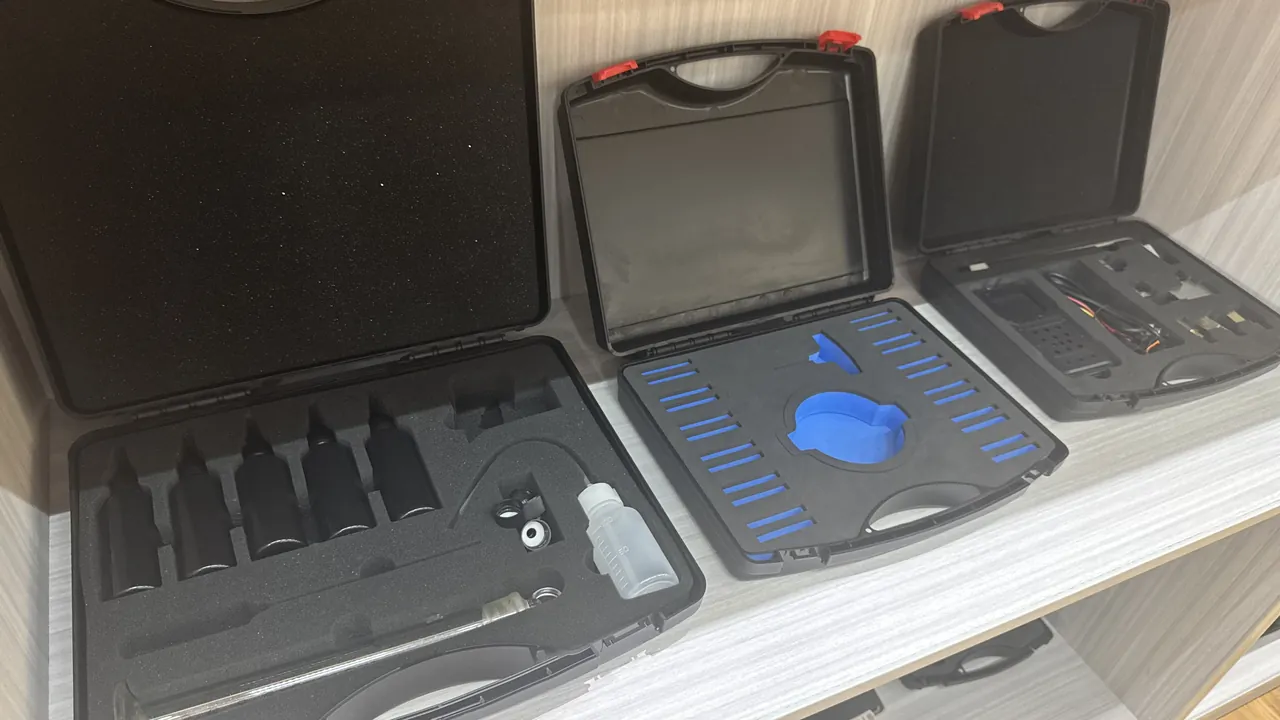
The latch compresses the seal, so decay in closing force converts directly into reduced seal compression.
Consider a quantified relationship. Suppose a case is designed for 25 % seal compression, of which the latch contributes 20 percentage points and seal resilience 5. If closing force decays by 30 % over two years, compression may fall from 25 % to around 18 % — still on the edge of the usable band. A little more decay and it drops below the 20 % floor and enters the leakage risk zone. This is why "no leaks in year one, seeping by year three" is a classic phenomenon with a clear physical mechanism.
Plastic catches and metal latches behave very differently on that curve:
- One-piece plastic catches close by elastic deformation of the polymer. Held closed long term, they relax noticeably; at low temperature they become brittle and snap.
- Metal cam-action latches use a cam profile and close over-centre, giving stable and adjustable closing force with a flat decay curve.
- Lever-action compression latches have long travel and high compression, suited to thick-section seals.
Buyers should require three things: initial closing force, the proportion retained after a specified number of cycles, and whether an anti-loosening feature exists (for example over-centre self-locking between catch and seat, or a positive retaining detent). Watch also for a common design error: raising latch travel to accommodate a padlock, which under-compresses the seal. The correct approach is to fit the lock without affecting compression. Details are in case latch selection.
Water levels explained: IPX4 through IPX8
The water level is the second digit of the IP code, defined by IEC 60529, mirrored in China by GB/T 4208-2017, *Degrees of protection provided by enclosures (IP Code)*. The common levels are:
| Second digit | Name | Test basis (key points) | Acceptance | Typical duty |
|---|---|---|---|---|
| --- | --- | --- | --- | --- |
| IPX4 | Splash-proof | Oscillating tube or spray head, splashing from all directions | No harmful effect | Sheltered outdoor use, occasional splash |
| IPX5 | Jet-proof | 6.3 mm nozzle, defined distance and flow, jets from all directions | No harmful ingress | Open-air work, washable |
| IPX6 | Powerful jet-proof | 12.5 mm nozzle, higher flow, jets from all directions | No harmful ingress | Decks, heavy wash-down |
| IPX7 | Temporary immersion | Commonly 1 m for 30 minutes | No harmful ingress | Possible standing water |
| IPX8 | Continuous immersion | Depth and duration agreed between supplier and buyer | No harmful ingress | Sustained underwater, special duty |
The common IPX7 condition of 1 m for 30 minutes does not mean "any depth, any duration". If service involves deeper or longer immersion, specify IPX8 with the depth and duration written into the technical agreement. Full explanations are in what is IP67 rating and IP67 immersion test.
Why water levels are not a progression
This is the most widely misunderstood point in procurement: a sample that passes IPX7 will not necessarily pass the IPX5 or IPX6 jet tests.
The reason is that the assessed failure modes differ.
- IPX5 and IPX6 assess dynamic water impact. A high-velocity stream carries momentum, pushing the seal inward, driving water into micro-gaps and creating local high pressure at the outer edge of the sealing face. Here the governing properties are extrusion resistance and groove retention.
- IPX7 and IPX8 assess static head pressure. Water acts on the sealing face uniformly, at a pressure proportional to depth. Here the governing property is whether contact stress exceeds the hydrostatic pressure; impact resistance is not the point.
A case built around a soft, highly compressed seal may perform well at IPX7 yet leak under a powerful jet because the seal is extruded into the groove clearance. Conversely, a case with high impact resistance but low contact stress may pass IPX5 and then seep slowly at 1 m of static head.
Conclusion: the technical agreement must spell out each digit, for example "IP6X + IPX5 + IPX7", and must state that substitution with X is not acceptable. Reports should cover every declared level, not just one.
A reliability test matrix: alternating immersion, thermal cycling and stacking
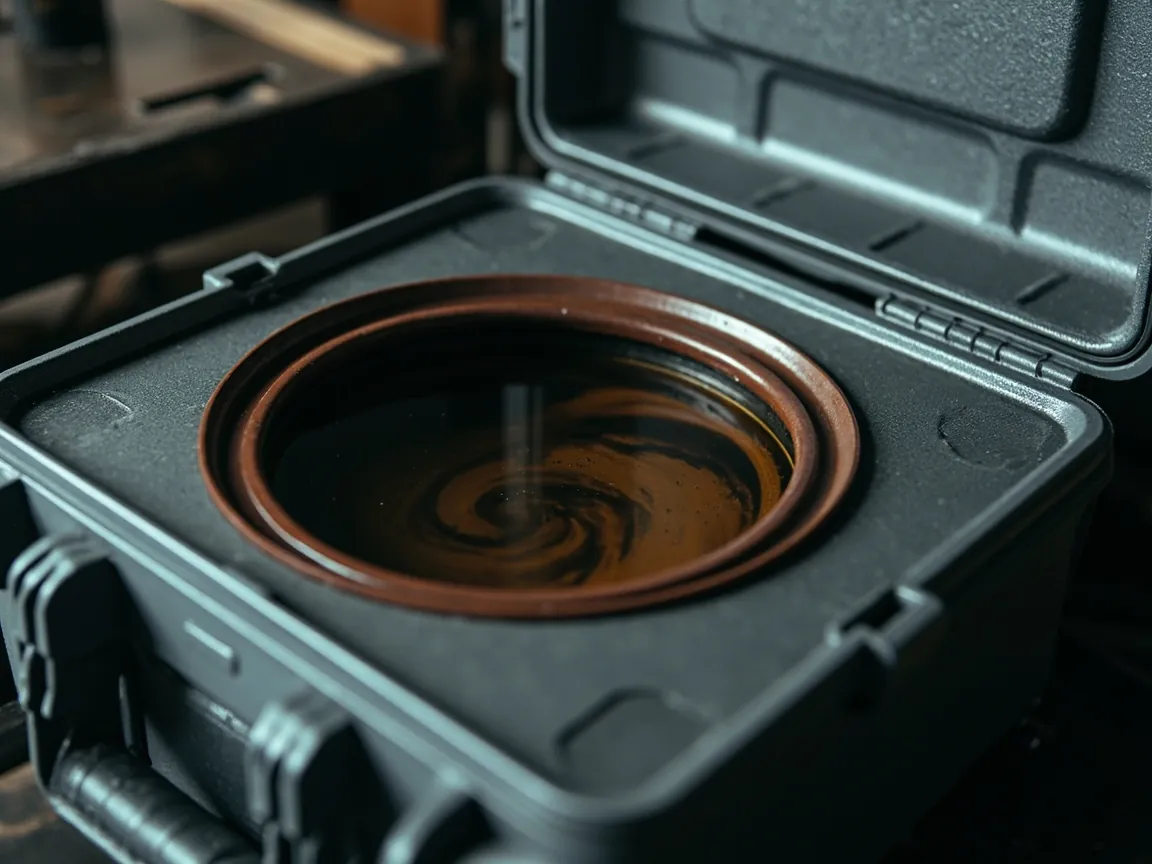
Passing IPX7 once only shows that a sample did not leak at one moment. It says nothing about a product that must not leak over five years. To assess reliability, loads must be superimposed. The matrix below is a design approach you can write into a technical agreement.
| Test | Superimposed load | Reference | What to observe |
|---|---|---|---|
| --- | --- | --- | --- |
| Alternating immersion | Repeated immersion and removal | Extended from IEC 60529 immersion conditions | Whether the seal progressively loses resilience |
| Immersion after thermal cycling | Alternating high and low temperature plus immersion | MIL-STD-810H thermal shock plus immersion methods | Whether dissimilar-material interfaces crack |
| Immersion in the stacked state | Fully loaded stack plus immersion | ASTM D4169 stacking plus IPX7 approach | Whether rim deflection causes ingress |
| Immersion after cycling life | Defined closure cycles plus immersion | Company internal life specification | Whether seal and latch degrade |
| Immersion after vibration | Transport vibration plus immersion | ASTM D4169 / ISTA series | Latch loosening and seal displacement |
| Seal check after salt spray | Salt spray corrosion plus seal function | ISO 9227 / GB/T 10125 | Whether metal corrosion affects compression |
| Rain and blowing rain | Heavy rain plus wind pressure | MIL-STD-810H Method 506 | Penetration under static rain |
Two notes.
- Alternating immersion is the closest to real use. In service a case is not immersed continuously; it is repeatedly wetted and dried. Thermal expansion and contraction plus repeated seal compression and recovery markedly accelerate degradation.
- The stacked-condition immersion test has the highest value, because an empty case tends to pass "perfectly", while in service the case is almost always stacked or under load. This test exposes designs with insufficient stiffness.
JUNZHJIA selects combinations of these tests to the customer's duty cycle across wholesale, distribution and OEM/ODM programmes, and issues the corresponding test documentation and configuration records.
Five tiers of field verification, from visual to third-party re-test
Five tiers you can run at goods-in with no specialist equipment, in ascending order of cost and credibility.
Tier one: visual and tactile (every delivery).
- Is the seal continuous, with no gaps, flash, obvious colour variation or surface tackiness?
- Does it rebound promptly when pressed, leaving no lingering indentation?
- With the lid closed but unlatched, is the gap uniform all round when checked with a feeler gauge or paper strip?
- Does latching each catch give a consistent force and a definite detent?
- Do hinges, handles, pressure valves and nameplates all have independent sealing at the openings?
Tier two: paper strip and pressure tape (first article). Place thin paper strips or pressure-sensitive tape evenly around the rim, close and latch the lid, then reopen and inspect. The strips should be compressed to a similar degree all round, and the tape impression should be continuous with uniform width. A broken or locally missing impression is direct evidence of poor sealing-face contact.
Tier three: simple spray screening (first article and sampling). Spray from about 2 m to 3 m in all directions with a normal spray gun, at least one minute per face, concentrating on latches, hinges, handle roots and corners. Place dry tissue and a humidity indicator card inside and open immediately after the test. This cannot serve as a conformity judgement, but it is very effective batch-consistency screening.
Tier four: immersion (first article and periodic). Place absorbent paper and ballast inside so the case stays submerged at 1 m for 30 minutes and can still be retrieved easily (a net and frame works well). On removal, dry the exterior, then open and inspect the paper and indicator card. Note that this test is consumable for the case — dry the outside thoroughly before opening so residual water does not run in.
Tier five: third-party re-test. Commission ingress protection classification to IEC 60529 / GB/T 4208-2017, optionally adding thermal cycling, vibration and salt spray. Always verify that the model, configuration and photographs in the report match the delivered goods, and treat "tested on a similar model" or "based on the same series" as a warning sign.
Common failure points: hinges, handles, pressure valves, nameplates
When a case leaks, the problem is often not the seal itself but a place you assumed needed no sealing. Seven high-frequency failure points:
- Hinge bosses. If a hinge pin passes through the wall without sealing, water follows the bore. The correct approach is to mould the hinge boss into the wall so it does not penetrate, or to seal the bore.
- Handle roots. A through-wall handle shaft is likewise a leak path. A one-piece moulded or over-moulded handle has no such issue.
- Pressure valves. Waterproof breather valves use a microporous membrane (ePTFE-type materials) whose pores are far smaller than a water droplet and far larger than a water vapour molecule, so they equalise pressure while blocking liquid water. The precondition is that the report must correspond to the valved configuration; once the membrane is clogged by oil or dust, or torn, it becomes a leak path.
- Nameplates and labels. A riveted nameplate is a common through-wall point. Bonding or moulding in is correct.
- Rim corners. Stress at the corner is the most complex, and if the seal is butt-joined from four lengths, the joint is where leakage begins. Prefer one-piece moulded or fully vulcanised corners.
- Mould parting lines. If a parting line falls on the sealing path, flash and burrs damage the sealing face.
- Groove contamination. In service, dust, grease and fine sand lodge in the groove and are pressed into permanent pits. This failure is entirely preventable through maintenance.
Design detail for valves and pressure equalisation is in outdoor case pressure valve design.
Maintenance and spares: making water resistance recoverable
Water resistance is not bought once and forgotten; it is maintainable — provided maintainability is purchased along with the case.
Maintenance checklist (quarterly is a sensible default):
- Clean the groove and seal with water and a soft cloth; avoid petroleum-based solvents;
- Check the seal for cracks, cuts, chalking, tackiness or obvious discolouration;
- Check whether latch closing force has dropped noticeably, or whether anything is loose or rattling;
- Check hinge play and lid alignment;
- Check whether the valve membrane is clogged or damaged;
- Check the rim for scratches, deformation or contamination;
- For stored cases, check desiccant condition and the humidity indicator card.
Replacement criteria — replace the seal if any one applies:
- Cracks, cuts or a through-going score on the surface;
- An indentation that does not recover after pressing (compression set out of limit);
- A section that is visibly flattened and will not rebound, compared with a new part;
- A contact impression that is discontinuous or uneven in depth;
- Any problem found during spray or immersion checking.
Three things to do at the purchasing stage:
- Confirm that seals, catches and hinges can be ordered separately, and obtain part numbers and replacement instructions;
- Stock a set of wear parts up front and confirm the spare parts lead time;
- Obtain material certification for the seal (material, hardness, compression set figures) so that substitutions of "the same size but a different material" cannot appear.
A note on lubrication. Most elastomer seals are not compatible with petroleum-based lubricants, which accelerate ageing. Where lubrication is genuinely needed, use a silicone grease compatible with the seal material and keep the quantity small.
Key clauses for a technical agreement
The analysis above, condensed into a clause list you can reuse.
| Clause area | Suggested wording |
|---|---|
| --- | --- |
| Ingress protection | IP6X + IPX5 + IPX7, each digit stated; substitution with X not acceptable |
| Seal architecture | Rim must use continuous grooved compression sealing; groove and seal designed as a set |
| Seal material | EPDM, 60 ± 5 Shore A, compression set within an agreed limit |
| Seal replacement | Seal must be removable and replaceable on its own, with instructions supplied |
| Corner treatment | Seal corners must be one-piece moulded or fully vulcanised; butt-bonded corners not acceptable |
| Latch | Stainless cam-action latch, retaining at least 80 % of initial closing force after 5,000 cycles |
| Stiffness | After 72 hours of fully loaded stacking at the target layer count, rim diagonal difference and maximum gap must not exceed agreed values |
| Opening seals | Every opening — hinges, handles, pressure valve, nameplate — must have independent sealing |
| Pressure valve | Protection rating report must be for the valved configuration |
| Testing and documentation | Type-test reports required; model, configuration and photographs must match the delivered goods |
| Spares | Spare parts list and lead time for seals, catches and hinges |
A general negotiating principle: replace the adjective "waterproof" with the four nouns "structure, level, test, recoverability". Suppliers who can meet all four are very likely selling a genuinely waterproof product; those who can only supply the adjective deserve careful assessment. For the structural comparison, see military ammo box versus ordinary storage box.
FAQ
Q: Is a waterproof ammo box really waterproof, or is it marketing language? A: A properly built product genuinely keeps water out, but "waterproof" must be made concrete as a verifiable level and structure — otherwise it is indeed marketing language. Test it in three steps. First, the structure: is the rim a continuous grooved compression seal or flat contact? The former controls compression and resists lateral displacement; the latter controls neither. Second, the level: is a water level such as IPX5 or IPX7 declared explicitly to IEC 60529 / GB/T 4208-2017, digit by digit, with X not accepted? Third, recoverability: can the seal be replaced on its own, is there a closing-force decay figure for the latch, and are spares available? A product that clears all three has a structural commitment. A product missing any one is an adjective. Note also that an ingress protection rating describes the enclosure, not the dryness of the internal air — long-term storage still needs desiccant and a humidity indicator card.
Q: What is the essential difference between an O-ring and an ordinary gasket strip? A: Whether compression is bounded by the structure. An O-ring normally sits in a machined groove: the groove fixes its lateral position and latch travel fixes longitudinal compression, so the 20 % to 30 % design band is achieved consistently, without depending on assembly feel and without drifting over repeated cycles. An ordinary strip — particularly self-adhesive foam — is applied to a flat face with no groove retention, so compression depends entirely on how hard the latch squeezes two plastic faces together, and that pressure is highly uneven around the rim: high at corners, low at mid-span, with leakage typically starting mid-span. O-rings can also be replaced individually and come in a wide choice of materials (NBR/EPDM/VMQ/FKM), whereas self-adhesive foam is generally single-use and loses resilience once damp. At selection stage, "is there a groove" is a more fundamental question than "what material is the ring".
Q: Why does stackable design affect waterproofing? A: Because stacking applies load directly to the rim's sealing face. Stacking generates two loads: vertical static load from the weight above, and torsion from uneven stacking surfaces, dimensional tolerance or one-sided handling. If stiffness is insufficient, the rim deflects by a fraction of a millimetre, seal compression falls proportionally — from 25 % to below 15 % — and contact stress can no longer hold back hydrostatic pressure, so water enters where the rim has lost flatness. Creep is more insidious still: plastics deform slowly under sustained load, so short-term stacking looks fine while the rim slowly loses flatness over months and water resistance degrades with it. The engineering response has three parts: estimate long-term stacking strength at 30 % to 50 % of short-term compressive strength with an additional reduction for creep-prone materials; thicken the rim roll and run vertical ribs on the load path; and at acceptance, run a combined test — 72 hours of fully loaded stacking followed by immersion — which is far closer to real use than an empty-case immersion test.
Q: Can IPX5 and IPX7 substitute for each other? A: No. The standard states explicitly that water levels are not a simple progression. IPX5 assesses dynamic water impact: a 6.3 mm nozzle jets from all directions at a defined distance and flow rate, and the momentum of the stream pushes the seal inward, drives water into micro-gaps and creates local high pressure at the outer edge of the sealing face. Extrusion resistance and groove retention govern here. IPX7 assesses static head pressure: water acts uniformly on the sealing face at a pressure proportional to depth, so the governing question is whether contact stress exceeds hydrostatic pressure, and impact resistance is not the point. The result is that a product can pass IPX7 and fail IPX5, or the reverse. Decide from the physical form of water on site: wash-down and driving rain point to IPX5, possible standing water points to IPX7, and if both are possible, require both — for example IP6X + IPX5 + IPX7.
Q: Why does a case stay dry for a year and then start leaking in year three? A: It is a classic phenomenon with three clear mechanisms acting together. The first is compression set in the seal: rubber held compressed undergoes irreversible chain rearrangement, fails to recover its free sectional height, and contact stress declines year on year. The second is stress relaxation in the latch: a plastic catch held closed loses closing force month by month, compression falls with it, and once it drops below the 20 % floor it enters the leakage risk zone. The third is creep in the body: under stack load the polymer deforms slowly, the rim slowly loses flatness, and the sealing face lifts locally. All three degrade monotonically with time, so "no leaks in year one" says nothing about year five. The response is to require closing-force decay figures and seal compression set figures at purchase, to run quarterly maintenance checks in service, and to replace seals on condition rather than on a fixed calendar.
Q: How can I check whether a case leaks without specialist equipment? A: Four tiers. Tier one, visual and tactile: check the seal is continuous without gaps or flash, rebounds promptly when pressed, that the gap around the rim is uniform with the lid closed but unlatched, that each catch latches with consistent force, and that every opening has independent sealing. Tier two, paper strip and pressure tape: place thin paper strips or pressure tape evenly around the rim, close and latch, then reopen — a discontinuous or unevenly wide impression is direct evidence of poor contact. Tier three, simple spray: spray from 2 m to 3 m in all directions with a normal spray gun, at least one minute per face, concentrating on latches, hinges, handle roots and corners, with dry tissue and a humidity indicator card inside. Tier four, immersion: put absorbent paper and ballast inside, hold at 1 m for 30 minutes, then retrieve — and dry the exterior thoroughly before opening so residual water does not run in. Tier four is consumable for the case and is best reserved for first articles and periodic verification.
Q: How often should the seal be replaced? A: Judge on condition rather than a fixed calendar, though as a reference band, indoor environments merit inspection every one to two years, while outdoor, coastal, high-temperature or frequently cycled duty should be shortened to six to twelve months. Five signals call for immediate replacement: cracks, cuts, tackiness, chalking or obvious discolouration; an indentation that does not recover after pressing (compression set out of limit); a visibly flattened section that will not rebound compared with a new part; a discontinuous or unevenly deep contact impression; and any problem found during spray or immersion checking. When replacing, note three things: clean the groove, since residual dust is pressed into permanent pits; use a part of the same specification and material rather than a "close enough" substitute; and avoid petroleum-based lubricants, which accelerate ageing in most rubbers. At the purchasing stage, stock wear parts and confirm the supply lead time — that is what makes water resistance recoverable.
Q: Can a case with a pressure valve still achieve IP67? A: Yes, subject to three conditions. First, the report must correspond to the valved configuration. A waterproof breather valve uses a microporous membrane (ePTFE-type materials) whose pores are far smaller than a water droplet and far larger than a water vapour molecule, so in principle it equalises pressure while blocking liquid water — but the ingress protection test must have been run on the actual valved assembly. Backing a valved product with a report from the same model without the valve is the most common audit failure. Second, membrane condition must be part of maintenance. A membrane clogged by oil or dust loses its breathing function, and a torn membrane is a direct leak path, so valve inspection and replacement belong on the maintenance list. Third, the installation process must be sound. The joint between valve body and case (threaded or press-fit) needs its own sealing, not just the valve core. Write "must still meet IP6X and IPX7 in the valved configuration" into the technical agreement and require the matching report.
Q: Why can water levels not be inferred from one another? A: Because different levels assess different failure modes rather than different intensities of the same failure mode. IPX4 (splashing) and IPX5/IPX6 (jetting) assess seal reliability under dynamic water impact, where the governing factors are extrusion resistance, groove retention and whether latch clamping force can resist the momentum of the stream. IPX7/IPX8 (immersion) assess seal reliability under static head pressure, where the governing factor is whether contact stress exceeds the hydrostatic pressure that scales with depth. The two failure modes are sensitive to different design features: a softer seal performs well under static head but can be extruded into clearance by a jet, while a case with low contact stress may survive jetting and still seep slowly under 1 m of static head. IEC 60529 therefore states that water levels are not a simple progression. Write each required level into the agreement — for example IP6X + IPX5 + IPX7 — and require the report to cover all declared levels rather than testing one and inferring the rest.
Closing remarks and related reading
Back to the question in the title: a waterproof ammo box really is waterproof, provided it simultaneously has a continuous grooved compression seal, enough stiffness to keep the rim flat, and a stable repeatable closing force. The O-ring creates the sealing interface, body stiffness keeps that interface in contact through stacking and temperature change, and the metal latch keeps compression stable over years. Remove any one and waterproofing fails at some point in time. That failure is rarely sudden: it follows the gradual path of "dry in year one, seeping in year three", driven by seal compression set, latch stress relaxation and body creep acting together.
Three things to act on. First, translate "waterproof" into structure and level — ask about grooves, ask about material and hardness, ask about each digit; do not accept adjectives. Second, superimpose test conditions — immersion in the stacked state, immersion after thermal cycling, immersion after cycling life — which is far closer to real use than a single empty-case immersion. Third, write maintainability into the contract — seals, catches and hinges orderable separately, with a stated spare parts lead time, so that water resistance is recoverable rather than one-time.
JUNZHJIA, manufactured by KeXin New Materials (Guangdong) Co., Ltd., covers protective cases, tool cases, military-specification storage boxes and waterproof junction boxes, serving wholesale, distribution, OEM/ODM and global supply. The company configures seal materials, groove designs and latch types to the customer's duty cycle, with corresponding test documentation and spare parts support.
Related reading