

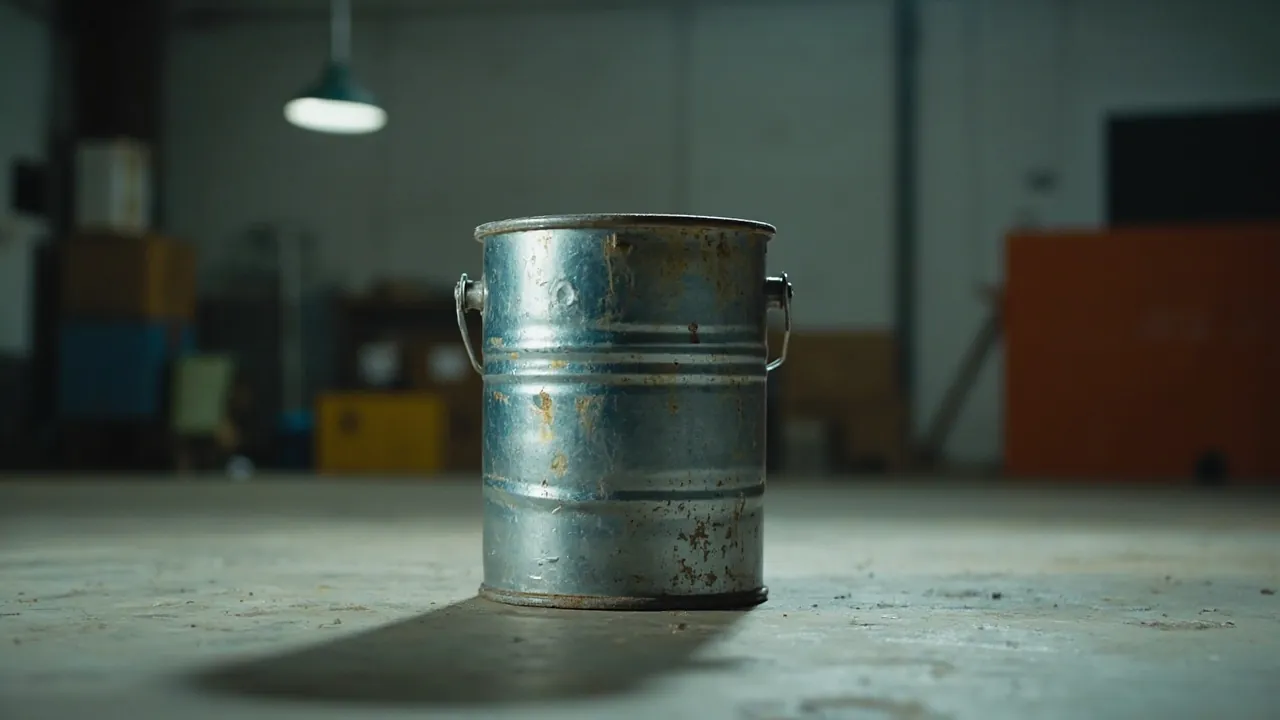
Short answer: steel cases hold their advantage in long-term storage because of three physical mechanisms that polymers struggle to match at the same time — near-zero water vapour permeability, a shell that can be made seam-free, and negligible creep under sustained stack load. The first keeps internal humidity low and predictable: steel does not transmit water vapour, so once the sealing interface is sound the interior is a genuine vapour barrier rather than a barrier that merely slows transmission. The second makes sealing reliable: steel can be lock-seamed or continuously welded into one body, collapsing the number of potential leak points to the single rim opening, whereas a moulded polymer part necessarily has parting lines, gates and insert holes. The third means long-term stacking does not slowly collapse: steel barely creeps at ambient temperature, while a polymer case bulges slowly and loses rim flatness under sustained load, which eventually undermines the seal. The trade-off is equally clear: steel corrodes. The long-term storage capability of a steel can is therefore not a property of the material but of the system around it — substrate, coating, plating, vapour-phase corrosion inhibition and desiccant working together. This article works through steel material grades, forming processes, the three lines of corrosion defence, how to read salt spray and rust grading, VCI and desiccant strategy, and the clauses and inspection points worth writing into a technical agreement. Figures are typical or empirical values; the supplier's drawings and test reports govern.
Table of Contents
- Start with the conclusion: three physical advantages of steel
- Product definition and common structures
- Material grades: cold-rolled, galvanised or stainless
- Forming processes: lock seaming, welding and deep drawing
- How moisture protection works: permeability and the metal wall
- Three lines of corrosion defence: coating, plating, vapour-phase inhibition
- Coating systems explained: phosphating, electrocoat and powder
- How to read salt spray: ISO 9227 and ASTM B117
- Rust grading: ISO 4628 and ASTM D610
- VCI and desiccant: the long-term storage combination
- Long-term stacking and stiffness: the structural advantage
- Steel versus polymer cases: matching the duty
- Seals on steel cases: special considerations
- Technical agreement clauses and acceptance points
- FAQ
- Closing remarks and related reading
Start with the conclusion: three physical advantages of steel
Reduce "suitable for long-term storage" to measurable properties and the advantages of a steel case concentrate in three places.
One: extremely low water vapour permeability. Every polymer transmits some water vapour — water molecules adsorb into free volume between chains, diffuse, and desorb, moving gradually through the wall. A steel shell offers no such path. Provided the openings are properly sealed, the interior is a true vapour barrier. For contents that must be stored for years without frequent opening and desiccant topping up, this is the most valuable property of the three.
Two: a seam-free shell. Metal can be lock-seamed or continuously welded into one body, collapsing every potential leak path to the single ring of the rim. A moulded polymer part necessarily carries parting lines, gates and insert holes, each of which needs separate sealing.
Three: negligible creep at ambient temperature. Steel barely creeps at room temperature under normal stress, so dimensions remain stable under long-term high stacking. A polymer case deforms slowly under sustained load, the rim gradually loses flatness, and the seal weakens — a mechanism already examined in is a waterproof ammo box really waterproof.
| Dimension | Steel case | Polymer case | Significance for long-term storage |
|---|---|---|---|
| --- | --- | --- | --- |
| Water vapour transmission | Essentially zero | Some transmission | Steel holds low humidity more easily |
| Structural seams | Can be reduced to the rim only | Parting lines, insert holes and more | Fewer leak paths in steel |
| Ambient creep | Negligible | Noticeable | Steel stays dimensionally stable when stacked |
| Weight | High | Low | Polymer is easier to handle manually |
| Corrosion resistance | Depends on the coating system | Inherently rust-free | Steel needs coating maintenance |
| Puncture resistance | Excellent | Good | Steel resists sharp-object damage better |
| Cost structure | Material plus stamping, welding, finishing | Tooling plus moulding | Steel carries a higher labour share |
In one sentence: the long-term storage capability of a steel case comes from "zero permeability, no seams, no creep", and whether those three deliver depends on whether the surface treatment system is complete.
Product definition and common structures
In B2B procurement language, a "steel ammo can" means a rigid container with a steel body, formed by stamping combined with seaming or welding, used for the long-term storage and transfer of equipment and supplies. It is a packaging class product, and everything used to evaluate it is a measurable physical quantity:
- Sheet thickness (commonly 0.6 mm to 1.5 mm, an empirical band);
- External dimensions and stacking footprint;
- Internal effective volume (litres);
- Tare and gross weight (kg);
- Surface treatment system and salt spray duration;
- Ingress protection (IP code);
- Stacking strength and storage period.
Three common structures dominate:
- Rectangular lidded can (broadly the traditional specification box form). Body and lid are separate, secured by latch structures around the perimeter or by hinges with latches, with a seal at the rim. It opens easily, stacks on a flat face, and is the most common form in industrial packaging.
- Hinged flip-lid can. Lid and body joined by a metal hinge, opening on one side and locked by a latch. Suited to frequent access.
- Deep-drawn cylindrical can. Formed from a single blank with a smaller opening closed by a press lid or screw cap. The most reliable sealing, but access is awkward and load density is lower than a rectangular form.
What sheet thickness means in engineering terms. Thickness sets compressive and puncture resistance, but thicker is not automatically better: it raises tare weight and stamping difficulty linearly, and makes springback control after forming more complex. Practice back-calculates thickness from the fully loaded stacking requirement, then recovers stiffness by pressing ribs into flat panels rather than simply adding material. A pressed rib divides a large panel into short-span cells and equivalently raises bending resistance, which is how thin sheet achieves high stiffness — the same logic as reinforcement ribs in polymer cases, covered in high-strength case structure.
Material grades: cold-rolled, galvanised or stainless
Material choice is the starting point for long-term storage performance.
Cold-rolled low-carbon steel (SPCC and similar). The most common and least expensive route. The surface is flat and formability is good, but the substrate itself has almost no corrosion resistance and depends entirely on the subsequent coating. Suited to dry inland environments, indoor warehousing, and suppliers with a complete paint line.
Galvanised steel (electrogalvanised SECC / hot-dip galvanised SGCC). A zinc layer protects the steel substrate by sacrificial action: even if the coating is scratched locally, the zinc corrodes preferentially and delays substrate rusting. Hot-dip zinc layers are thicker and more corrosion resistant; electrogalvanised layers are thinner but more uniform in appearance and well suited to paint pre-treatment. Relevant material standards include GB/T 2518, *Continuously hot-dip zinc-coated steel sheet and strip*, and ASTM A653.
Stainless steel (304 / 316 families). Protected by a passive surface film and almost never needing a coating. Grade 304 suits general outdoor and damp environments; grade 316, which contains molybdenum, performs noticeably better in chloride-bearing environments such as coastal sites, marine atmospheres and chemical plants. The penalties are material and processing cost, and the fact that scratches and contamination disrupt the passive film, so cleanliness must be maintained.
| Material route | Corrosion mechanism | Salt spray performance (typical reference) | Relative cost | Suitable duty |
|---|---|---|---|---|
| --- | --- | --- | --- | --- |
| Cold-rolled steel plus paint | Coating barrier | System dependent; hundreds of hours achievable | Low | Inland indoor, dry storage |
| Electrogalvanised steel | Sacrificial zinc | Moderate | Low-medium | General outdoor, painted |
| Hot-dip galvanised steel | Thick sacrificial zinc | Good | Medium | Damp outdoor, general coastal |
| 304 stainless | Passive film | Good | High | Damp, general chemical exposure |
| 316 stainless | Molybdenum-bearing passive film | Very good | Very high | Coastal, marine, chloride-bearing |
Selection logic: look at chloride concentration and humidity first, then decide whether coating maintenance is acceptable. Dry inland environments are served by cold-rolled steel with paint; coastal and high-humidity sites favour hot-dip galvanising or 304; marine atmospheres and chloride-bearing sites should be assessed against 316 directly. Full material comparisons are in outdoor case material selection and waterproof box material choice.
Forming processes: lock seaming, welding and deep drawing
The process decides how many potential leak points end up in the shell.
Lock seaming. Two folded edges are interlocked and flattened to form a mechanical joint. It needs no welding, gives a flat appearance and suits thin sheet. The trade-off is that seam tightness must be controlled, and the seam itself is a potential crevice-corrosion site that must be closed by coating or sealant.
Continuous welding (seam or laser). Produces a metallurgical bond and the best gas-tightness. The trade-off is that the heat-affected zone alters the microstructure and can introduce distortion and residual stress, so post-weld treatment is mandatory — passivation for stainless, painting for carbon steel.
Deep drawing. A single blank is drawn into a seamless body, giving the most reliable sealing. The trade-off is that depth is limited by drawability, and both tooling and press capacity are substantial.
The critical engineering point is rim accuracy. Whatever the forming route, the rim is the only opening that must rely on a seal, so rim flatness, groove machining accuracy and edge radius directly set the achievable ingress protection. Metal rims have the advantage that a groove can be milled or stamped to tighter dimensional accuracy, which suits compression sealing. They also require burr and sharp-edge control so the seal is not cut during assembly.
How moisture protection works: permeability and the metal wall
This section explains an often overlooked physical difference, and it is the core of the steel case's long-term storage advantage.
The mechanism of vapour transmission. Water molecules cross a polymer wall by adsorbing into its free volume, diffusing, and desorbing on the other side. The rate depends on the material's vapour transmission coefficient, wall thickness, and the vapour pressure difference across the wall. A polymer case wall may be several millimetres thick, but its transmission coefficient is not low, so over long time scales — months to years — a slow ingress of moisture occurs. For contents that include metal parts, precision instruments or humidity-sensitive items, that slow accumulation must be offset by desiccant.
How a metal wall differs. Steel, along with aluminium and stainless, is a dense metal and water vapour cannot diffuse through its lattice. Internal and external vapour exchange therefore depends almost entirely on the sealing interface and the seal material, not on the wall. This makes humidity management more predictable: as long as the seal holds, the only sources of ingress are (a) permeation through the seal itself and (b) air exchange when the case is opened.
Three practical consequences follow.
- Reducing the number of openings is the single most effective way to extend storage life. Every opening replaces dried internal air. Practice suggests managing long-term storage cases on an annual inspection rhythm rather than a monthly one.
- Desiccant quantity should be estimated from "free air volume + annual openings + seal permeation", not from case volume multiplied by a fixed factor.
- The seal is the only weak point. A steel body will not leak; a seal will. Seal material, hardness, compression set and replacement interval therefore belong in the technical agreement. Material comparisons are in case seal materials.
Three lines of corrosion defence: coating, plating, vapour-phase inhibition
Corrosion protection on a steel case is not one measure but a combination of three functions.
Line one: the barrier (coating or plating). It isolates the steel substrate from the corrosive medium. Its effectiveness depends on three things — adhesion, density, and behaviour once damaged. Poor adhesion leads to blistering and lifting after a scratch; poor density lets the medium permeate slowly; and if the coating has no inhibiting action once breached, corrosion spreads laterally along the interface. Plating's advantage is exactly that it still protects after damage: zinc acts as the anode and corrodes preferentially to protect the steel, a mechanism that matters most at scratches.
Line two: electrochemical inhibition (zinc plating, zinc-rich primer). Sacrificial anodic action or passivation slows corrosion. Zinc-rich primers are a standard element of heavy-duty systems, working on the same principle as galvanising — zinc particles in the film provide cathodic protection at the damaged site.
Line three: vapour-phase inhibition (VCI). Active inhibition inside a sealed space. VCI materials sublime continuously, and the inhibiting molecules adsorb onto metal surfaces to form a mono- or multi-molecular protective layer, blocking the pathways by which water and oxygen act, and reaching crevices and pits that paint cannot cover. Its effectiveness depends heavily on sealing: the better the case seals, the longer the VCI concentration is retained and the longer its useful life.
The three are complementary, not alternatives: the coating protects the case, the VCI protects the contents. Many users do only one and end up with either a rusty case or rusty metal parts inside.
Coating systems explained: phosphating, electrocoat and powder
Coating carbon steel is not "spraying a coat of paint"; it is a process chain.
Pre-treatment: degrease, descale, phosphate (or zirconium conversion). Phosphating grows a microporous crystalline phosphate film on the steel surface, which markedly improves coating adhesion and provides some initial corrosion resistance. Pre-treatment quality often decides final life more than the paint itself — residual oil and unremoved rust are the primary causes of early coating failure.
Primer: electrocoat (cathodic electrocoat is common) or a zinc-rich primer. Electrocoat deposits uniformly under an electric field, which is especially advantageous for internal cavities, welds and edges that are otherwise hard to cover — the main reason electrocoat primers are recommended on steel containers. Typical film thickness is in the 15–25 μm band.
Topcoat: powder or liquid. Powder coating is solvent-free, builds a thicker film (typically 60–120 μm) and offers good weather and mechanical performance, making it a common choice for outdoor cases. Liquid coatings give more flexibility in colour and gloss.
One frequently neglected area: the interior. The inside of a steel case needs treatment too. If the cavity is bare carbon steel, rust spots can still form under prolonged high humidity even with VCI present, and they contaminate the contents. Practice is to give the interior at least phosphating plus electrocoat, or to specify galvanised or stainless material.
| Process step | Purpose | Typical parameters (empirical) | Common cause of failure |
|---|---|---|---|
| --- | --- | --- | --- |
| Degrease and descale | Remove contamination that harms adhesion | Depends on part and process | Residual oil, rust left behind |
| Phosphate / conversion | Improve adhesion and initial corrosion resistance | Film weight controlled by process | Aged bath, over-thick brittle film |
| Electrocoat primer | Uniform coverage of cavities and edges | 15–25 μm film | Unstable electrocoat parameters, under-curing |
| Powder topcoat | Weather and mechanical protection | 60–120 μm film | Poor pre-treatment, under-curing |
| Curing | Form the cross-linked structure | Temperature and time per the coating system | Insufficient temperature causing under-cure |
How to read salt spray: ISO 9227 and ASTM B117
Salt spray testing is the most frequently cited corrosion-resistance basis in steel case procurement, and the most frequently misread.
Standards. ISO 9227, *Corrosion tests in artificial atmospheres — Salt spray tests*, and ASTM B117 in the United States are the usual neutral salt spray (NSS) methods; the Chinese counterpart is GB/T 10125, *Corrosion tests in artificial atmospheres — Salt spray tests*. All three are closely comparable in NSS conditions: a defined sodium chloride solution, defined pH and temperature, and continuous spraying.
The key reading principle: salt spray hours cannot be compared across systems. A 200-hour result is comparable only within the same coating system, the same film thickness and the same acceptance criterion. Comparing hours between different systems means nothing. The technical agreement should therefore state coating system + film thickness + acceptance criterion + duration — not merely "passes 500 hours of salt spray".
The acceptance criterion matters more than the duration. Common criteria include time to red rust, blistering grade, scribe creep width and loss of adhesion. Writing only "no rust" without stating the observation method and grading standard guarantees a dispute at acceptance.
Three test details that are easily missed.
- The scribe test. A scratch is cut through the coating to the substrate before the panel goes into the chamber, and the creep width on either side is measured afterwards. This is the most valuable item for assessing "protection after damage", and it is what separates galvanised from non-galvanised systems.
- Post-test handling. Samples must be cleaned and dried as specified after the test. Grading straight out of the chamber mistakes salt deposits for corrosion products.
- Correlation with natural exposure is limited. Salt spray is an accelerated test used for comparison and screening; real service life still needs exposure testing and environment classification, for example the environmental categories in the ISO 12944 framework.
Rust grading: ISO 4628 and ASTM D610
Duration alone is not enough; a grading language is also needed.
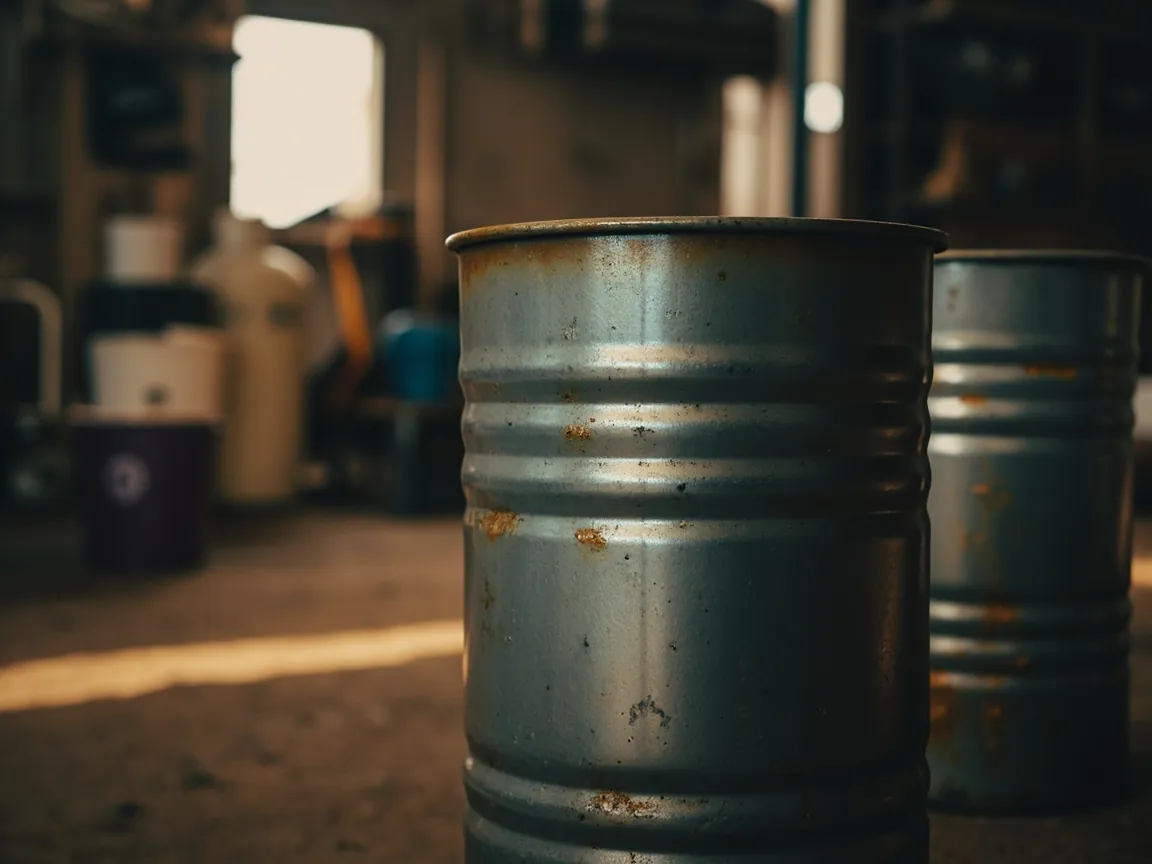
The ISO 4628 series defines how coating defects are assessed, and the rust-related part is ISO 4628-3, which grades degree of rusting. ASTM D610 expresses rusting as a percentage of surface area on a scale from 0 to 10. The two are often cited together.
A practical acceptance statement reads: "After 480 hours of neutral salt spray to ISO 9227, the sample shall show a rust grade no worse than Ri 2 to ISO 4628-3, a rusted area not exceeding 1 % to ASTM D610, and a single-side scribe creep width not exceeding 2 mm (empirical value)." The virtue of this wording is that every element has a method and a threshold that can be independently verified.
Adhesion assessment matters just as much. Common methods are the cross-cut test (ISO 2409) and the pull-off test (ISO 4624). Inadequate adhesion usually shows up in salt spray as blistering rather than rusting — the medium permeates along the interface, causing lifting, and rust spots appear afterwards. Blistering grade must therefore be recorded alongside rust in any salt spray evaluation.
| Grading dimension | Standard | Expression | Suggested threshold (empirical) |
|---|---|---|---|
| --- | --- | --- | --- |
| Rust grade | ISO 4628-3 | Ri 0 to Ri 5 | No worse than Ri 2 |
| Rusted area | ASTM D610 | Scale 0 to 10 (area percentage) | Not exceeding 1 % |
| Blistering | ISO 4628-2 | Quantity and size grading | None, or very slight |
| Scribe creep | Per the salt spray scribe method | Single-side creep width | Not exceeding 2 mm |
| Adhesion | ISO 2409 / ISO 4624 | Cross-cut grade / pull-off strength | Cross-cut no worse than class 1 |
VCI and desiccant: the long-term storage combination
The long-term storage capability of a steel case is delivered by two systems working together: the case itself, and the internal microclimate.
How VCI works. VCI materials — film, paper, slow-release emitters — sublime within a sealed space, and the inhibiting molecules adsorb onto metal surfaces to form a protective layer. Their advantage is that they reach places coatings and grease cannot — crevices, threads, pits, blind holes. The relevant materials standard is MIL-PRF-3420 for volatile corrosion inhibitor treated packaging materials, and inhibiting ability is commonly evaluated by methods such as NACE TM0208.
How desiccant works. It adsorbs moisture inside the case, holding relative humidity below a critical value. Metal corrosion has a humidity threshold — an empirical value often cited in the 40 % to 60 % relative humidity band, varying with metal and surface condition — and holding internal humidity below that threshold is the most direct physical means of preventing corrosion. Bagged desiccant standards include MIL-D-3464 and the corresponding Chinese specifications.
How the two interact.
- VCI needs a degree of sealing. If the case seals poorly and air exchange is frequent, the VCI concentration cannot be maintained and useful life falls sharply.
- Desiccant needs space. Free air volume must remain inside the case for desiccant and a humidity indicator card; overloading compresses that volume.
- Neither substitutes for the other. VCI without humidity control sees the inhibiting layer diluted by moisture in a humid environment. Desiccant without vapour-phase inhibition leaves bare metal to rust as soon as humidity excursions exceed the threshold.
| Storage period (empirical) | Case sealing requirement | Internal measures | Inspection rhythm |
|---|---|---|---|
| --- | --- | --- | --- |
| 6–12 months | IP6X + IPX5 | Desiccant plus indicator card | Open and inspect every 6 months |
| 1–3 years | IP6X + IPX7 | Desiccant plus VCI film/paper plus indicator card | Annual opening and inspection |
| 3–5 years | IP6X + IPX7, seal in good condition | Enhanced VCI plus measured desiccant plus indicator card | Check the card annually, re-inspect contents every 2–3 years |
| Beyond 5 years | IP6X + IPX8 as agreed | Bespoke interior plus VCI plus desiccant plus temperature/humidity logging | Per project specification |
Long-term stacking and stiffness: the structural advantage
Long-term warehousing usually means tall stacks, and tall stacks are exactly where steel performs best.
The creep difference is decisive. Steel barely creeps at ambient temperature under normal stress, so long-term fully loaded stacking does not slowly deform the body; the rim stays flat and seal compression stays stable. A polymer case does the opposite: it bulges slowly and loses rim flatness under sustained load, directly weakening the seal. This is the main technical reason long-term storage gravitates to steel.
Compression and puncture resistance differ just as clearly. Steel's elastic modulus and yield strength far exceed those of commodity polymers, so equal or thinner walls deliver higher compressive and puncture resistance. That matters in warehousing and transfer where sharp objects or forklift contact are possible.
Three stacking design points.
- Modular footprint. Top and bottom faces should match pallet modules such as 1200 mm × 1000 mm and 1200 mm × 800 mm, improving space utilisation and spreading load evenly.
- Location features on the lid. Upper cases should engage lower ones through locating grooves or flanges so stacking cannot misalign laterally and concentrate load.
- Stacking strength verified against the storage period. Steel creep is theoretically negligible, but the local buckling risk of ribbed panels under long-term load still needs calculation, particularly on large panels with thin sheet. Structural thinking is in case stacking structure.
Steel versus polymer cases: matching the duty
Material selection is really duty matching. The table below gives directly usable criteria.
| Duty condition | Preferred | Reason |
|---|---|---|
| --- | --- | --- |
| Storage beyond 3 years, tall stacks | Steel | No creep; rim stays flat |
| Frequent manual handling, weight critical | Polymer (HDPE) | Low tare weight, higher payload |
| Coastal, marine atmosphere, chloride | 316 stainless or hot-dip galvanised | Passive film or thick zinc layer resists chloride |
| Low temperature (below -30 °C) | HDPE or stainless | Avoids low-temperature coating embrittlement |
| Heavy wash-down, high IP requirement | Steel with grooved seal | Stiffness keeps the sealing face in contact |
| Insulation or non-magnetic required | Polymer or aluminium | Metal unsuitable |
| Flame retardancy or static dissipation basis | Steel | Metal structure provides the basis |
| Budget sensitive, dry indoor storage | Cold-rolled steel plus paint | Lowest cost that still meets the need |
A practical rule of thumb: use storage period and handling frequency as the two axes. Long storage, low handling → steel. Short storage, frequent handling → polymer. When both are high, the usual compromise is a steel frame with a polymer skin, or a polymer case with metal hinges and latches. For the wider comparison, see military ammo box versus ordinary storage box.
Seals on steel cases: special considerations
The steel body will not leak; the seal is the only weak point, and there are five metal-specific considerations.
First, deburr metal edges. Stamped or sheared steel edges carry microscopic burrs that cut the seal during assembly. Process the edges by deburring and radiusing, and confirm at first-article inspection under magnification that the groove edge has no sharp edge.
Second, isolate dissimilar metals. Stainless grooves against carbon steel parts, or aluminium contacting steel, can both drive galvanic corrosion. Insulating pads, coating isolation or material unification are the usual remedies.
Third, calculate thermal expansion differences. The expansion coefficient of metal differs considerably from rubber, so seal compression changes through a temperature cycle. For wide-temperature duty, verify at both temperature extremes that compression still falls in the effective band.
Fourth, do not skip corrosion protection inside the groove. The groove collects water and contamination; untreated, its floor can pit and destroy the flatness of the sealing face. Treat the groove together with the rim, or use stainless material.
Fifth, design for seal replacement. A steel groove is machined, generally to higher accuracy and more amenable to replacement. Confirm that the seal can be ordered separately and obtain the specification and replacement instructions.
Technical agreement clauses and acceptance points
The analysis above, condensed into reusable clauses.
| Clause area | Suggested wording |
|---|---|
| --- | --- |
| Material | State the steel grade (for example cold-rolled low-carbon / hot-dip galvanised / 304 / 316), plating type and coating weight |
| Sheet thickness | State thickness with tolerance, and the rib pattern and layout |
| Surface treatment | Pre-treatment (degrease, descale, phosphate/conversion), primer type and film thickness, topcoat type and film thickness |
| Interior treatment | Interior must receive equivalent pre-treatment and primer, or be exposed stainless |
| Corrosion resistance | Specified NSS duration to ISO 9227, graded to ISO 4628-3 and ASTM D610, including scribe creep |
| Adhesion | Cross-cut to ISO 2409, no worse than class 1 |
| Ingress protection | Each digit stated, for example IP6X + IPX7; substitution with X not acceptable |
| Sealing | Grooved compression seal; seal material and hardness, for example EPDM at 60 ± 5 Shore A |
| Stacking | After 72 hours of fully loaded stacking at the target layer count, rim deformation must not exceed agreed values |
| Documentation | Material certificates, plating/coating test reports, salt spray report, IP report; model and photographs to match the delivered goods |
| Spares | Spare parts list and lead time for seals, catches and hinges |
The three items most likely to cause trouble at acceptance. First, whether the interior has been treated — many suppliers coat only the outside and leave the cavity bare. Second, whether the salt spray sample is the same system and film thickness as the delivered product. Third, whether groove edges have been deburred. All three can be verified at first article with visual inspection and simple tools.
JUNZHJIA, manufactured by KeXin New Materials (Guangdong) Co., Ltd., covers protective cases, tool cases, military-specification storage boxes and waterproof junction boxes, serving wholesale, distribution, OEM/ODM and global supply. The company configures steel or polymer material systems, surface treatment options and sealing arrangements to the customer's environment, with corresponding test documentation and spare parts support.
FAQ
Q: Why do steel ammo cans suit long-term storage? What is the core reason? A: Three physical mechanisms that polymers struggle to match simultaneously. First, extremely low water vapour permeability: water molecules diffuse slowly through the free volume between polymer chains, but cannot diffuse through a dense metal lattice, so vapour exchange in a steel case depends almost entirely on the sealing interface rather than the wall — making humidity management far more predictable. Second, a seam-free shell: metal can be lock-seamed or continuously welded into a single body, collapsing potential leak paths to the rim alone, while a moulded polymer part necessarily has parting lines, gates and insert holes. Third, negligible ambient creep: steel barely creeps at room temperature, so tall long-term stacks do not slowly deform the body, whereas a polymer case bulges, loses rim flatness and weakens its seal. That said, these advantages only deliver if the system around the steel is complete — coating, plating, vapour-phase inhibition and desiccant. Steel corrodes, so long-term storage capability comes from the system, not the material.
Q: Will a steel case definitely rust? How is that prevented? A: The substrate will rust, but three lines of defence hold it within acceptable limits. The first is the barrier: a coating or plating isolates the substrate from the corrosive medium, and its effectiveness depends on adhesion, density and behaviour after damage. The second is electrochemical inhibition: a zinc layer or zinc-rich primer corrodes preferentially at a scratch to protect the substrate, a mechanism that is the key advantage of galvanised systems over paint-only systems and can be verified by the salt spray scribe test. The third is vapour-phase inhibition: VCI materials sublime inside a sealed space and adsorb onto metal surfaces, reaching crevices, pits and blind holes that coatings and grease cannot. The three are complementary, not alternatives: the coating protects the case, the VCI protects the contents. The most common failure in practice is doing only one — and ending up with either a rusty case or rusty contents. Interior treatment is the most often neglected item; a bare carbon steel cavity will still form rust spots under prolonged humidity and contaminate the contents.
Q: What does 480 hours of salt spray actually mean? A: It means a corrosion performance result within a specific coating system, at a specific film thickness, against a specific acceptance criterion — it cannot be compared across systems. The technical agreement must therefore state all four: coating system, film thickness, acceptance criterion and duration. Writing only "passes 480 hours of salt spray" is incomplete. The acceptance criterion matters more than the duration; common criteria include time to red rust, blistering grade, scribe creep width and loss of adhesion, and writing only "no rust" without stating observation method and grading standard guarantees a dispute. Three further details are worth noting. First, the scribe test — scratching through to the substrate before the panel enters the chamber — is the most valuable item for assessing protection after damage, and it separates galvanised from non-galvanised systems. Second, post-test cleaning and drying must be carried out as specified, otherwise salt deposits are mistaken for corrosion products. Third, salt spray is an accelerated test for comparison and screening; real service life still needs exposure testing and environment classification, for example the ISO 12944 categories.
Q: Do VCI and desiccant need to be used together? A: Yes, and their mechanisms are complementary. VCI builds an inhibiting layer on metal surfaces and reaches crevices, threads, pits and blind holes that coatings and grease cannot cover. Desiccant holds internal relative humidity below a critical value, which is the most direct physical means of preventing corrosion — metal corrosion has a humidity threshold, an empirical value often cited in the 40 % to 60 % relative humidity band depending on metal and surface condition. VCI without humidity control sees the inhibiting layer diluted by moisture in a humid environment. Desiccant without vapour-phase inhibition leaves bare metal to rust as soon as humidity excursions exceed the threshold. Both also depend on case sealing: if air exchange prevents the VCI concentration from being maintained, useful life falls sharply, and desiccant is consumed continuously and fails quickly if the case is opened often. The engineering recipe is therefore "good sealing + VCI + measured desiccant + humidity indicator card", with the inspection rhythm written into the storage procedure.
Q: How should the desiccant quantity be determined? A: Not by multiplying case volume by a fixed factor. Estimate from three variables. The first is free air volume — effective case volume minus the volume of contents and lining. That is the moisture carrier, and a fuller case has less free air but also more violent humidity fluctuation. The second is annual openings, since every opening replaces dried internal air and introduces fresh moisture, so more frequent access consumes desiccant faster. The third is seal permeation, since better sealing slows external moisture ingress. In practice, determine the initial charge from the target storage period — 1, 3 or 5 years — together with those three variables, then verify in service with a humidity indicator card: if the card changes colour earlier than expected, either the quantity is short or the seal is poor, and both need investigating. Leave enough free space inside for desiccant and the card; overloading compresses it. Related requirements are in what is IP67 rating.
Q: How do I choose between a steel case and a polymer case? A: Use storage period and handling frequency as the two axes. Long storage and low handling frequency — for example three-year warehousing under tall stacks — points to steel, because steel does not creep, the rim stays flat, and stacking strength and puncture resistance are both better. Short storage and frequent handling — daily transfers, mostly manual — points to polymer, because HDPE cases have low tare weight and therefore higher net payload at the same volume, and they retain toughness at -30 °C to -40 °C. When both are high, the usual compromise is a steel frame with a polymer skin, or a polymer case with metal hinges and latches — both mature practice in industrial packaging. Two hard constraints also apply: insulation or non-magnetic requirements rule out steel, and coastal, marine or chloride-bearing environments should be assessed against 316 stainless or hot-dip galvanising first. A fuller comparison is in waterproof box material choice.
Q: Does the interior of a steel case need corrosion protection? A: Yes, and this is the most commonly neglected item. Many suppliers treat only the exterior and leave the cavity as bare carbon steel. The result is a case that looks fine outside while rust spots form inside under prolonged humidity, and the rust and rust dust contaminate the contents — for precision parts, electronics or clean-demand items, that is worse than the case itself rusting. Practice recommends giving the interior at least the same pre-treatment as the exterior (degrease, descale, phosphate or conversion) plus an electrocoat primer. Electrocoat deposits uniformly under an electric field, which is especially advantageous for internal cavities, welds and edges that are otherwise hard to cover — the main reason it is recommended for steel containers. Where internal coating is impractical, because of cleanliness requirements or the need for static dissipation, switch to galvanised or stainless material. At first-article inspection, check the interior with a borescope or a strong torch and confirm no bare substrate, no runs and no missed areas.
Q: What special requirements apply to seals on steel cases? A: The steel body will not leak, so the seal is the only weak point, with five metal-specific considerations. First, deburr metal edges — stamped or sheared edges carry microscopic burrs that cut the seal during assembly, so deburring and radiusing are required. Second, isolate dissimilar metals — stainless against carbon steel, or aluminium against steel, can drive galvanic corrosion, remedied by insulating pads, coating isolation or material unification. Third, calculate thermal expansion differences — metal and rubber differ significantly, so verify at both temperature extremes that compression remains in the 20 % to 30 % effective band. Fourth, do not skip groove corrosion protection — the groove collects water and contamination, and an untreated floor can pit and destroy sealing-face flatness, so treat it together with the rim. Fifth, design for replacement — a machined steel groove is generally more accurate and easier to service, so confirm the seal can be ordered separately and obtain its specification and replacement instructions.
Q: For long-term storage, does the warehouse environment still need controlling? A: Yes. The case is only the first line of defence. First, control warehouse temperature and humidity. However good the seal, a warehouse held at high temperature and humidity increases the load on the seal through the breathing effect caused by temperature differentials, and holding relative humidity in a sensible band markedly extends the life of the internal desiccant. Second, avoid prolonged direct sunlight, since UV accelerates both exterior coating ageing and seal ageing; outdoor or semi-outdoor storage should be shaded. Third, control stack height and duration. Steel is theoretically creep-free, but ribbed thin panels still carry a local buckling risk under long-term load, so verify stacking strength against the storage period and rotate stacks for inspection. Fourth, establish an opening and inspection regime. Set the interval by storage period — 6 months, 1 year, or 2 to 3 years — read the humidity indicator card before inspecting contents, and record environmental data to build a traceable file. Pairing case selection with warehouse management is what turns "suitable for long-term storage" from a material property into a deliverable outcome.
Closing remarks and related reading
Back to the question in the title: steel cans suit long-term storage because of three physical mechanisms polymers struggle to match at once — near-zero water vapour permeability, a shell that can be made seam-free, and negligible ambient creep. These correspond to predictable internal humidity, leak paths collapsed to the rim alone, and a rim that stays flat under tall stacks. But steel corrodes, so the capability is not inherent to the material; it is delivered by the system of coating, plating, vapour-phase inhibition and desiccant. Remove any layer and long-term storage suffers — most commonly through an untreated interior, a salt spray report from a different system, or a barrier layer with no vapour-phase inhibition.
Three things to act on. First, choose material by environment — look at chloride concentration and humidity: dry inland takes cold-rolled steel with paint, coastal and humid sites favour hot-dip galvanising or 304, and marine atmospheres should be assessed against 316. Second, write corrosion resistance as verifiable clauses — coating system, film thickness, salt spray standard and duration, together with ISO 4628-3 and ASTM D610 thresholds and a scribe creep requirement. Third, design the internal microclimate as a system — VCI, desiccant, humidity indicator card and an inspection rhythm together, plus confirmed replaceable seals.
JUNZHJIA, manufactured by KeXin New Materials (Guangdong) Co., Ltd., covers protective cases, tool cases, military-specification storage boxes and waterproof junction boxes, and serves wholesale, distribution, OEM/ODM and global supply customers. Material systems, surface treatment and sealing arrangements can be configured to the customer's environment, with test documentation and spare parts support.
Related reading