

People selecting an outdoor enclosure usually start by asking which material is best, and that question has no answer. Across a single parameter table, ABS, cast aluminium and stainless steel each take first place in four categories. ABS is lightest, cheapest and the best insulator. Cast aluminium dissipates heat and shields electromagnetic fields better than anything else. Stainless steel resists corrosion and resists abuse better than both. The useful question is what this particular position has to defend against. Will it be struck? Does it sit in summer sun at 70 degrees Celsius with a variable speed drive inside? Or is it bolted to a handrail two hundred metres from the sea? Answer that and the material usually decides itself inside thirty seconds.
This article targets the selection of outdoor waterproof junction boxes and sealed electrical enclosures. It opens with a parameter table you can use directly, then works through the four axes of mechanics, heat, chemistry and electromagnetics, and closes with application mapping and life-cycle cost. Atmospheric corrosivity follows ISO 12944, salt spray ISO 9227, ultraviolet ageing ISO 4892-2, flame and heat resistance IEC 60695 and UL 94. Points that commonly cause confusion are called out explicitly.
Contents
- What Material Decides, and What It Does Not
- Four Judgement Axes: Force, Heat, Chemistry, Electricity
- ABS: The Most Common and the Most Misunderstood
- PC and PC/ABS: Transparency Plus Impact Strength
- PP and Modified Polypropylene: Cold Toughness at Low Cost
- Cast Aluminium: Where Heat, Shielding and Strength Meet
- Stainless Steel 304 and 316: The Last Line Against Corrosion
- Complete Parameter Comparison Table
- Weathering and Ultraviolet Ageing: Real Service Life of Plastics
- Heat Dissipation and Temperature Rise: When Metal Becomes Mandatory
- Corrosion Mechanisms: Galvanic, Pitting and Stress Cracking
- Life-Cycle Cost: Beyond the Purchase Price
- Selection Workflow and Application Table
- Frequently Asked Questions (FAQ)
- Closing Notes and Further Reading
What Material Decides, and What It Does Not
Drawing the boundary first saves a great deal of argument.
Material decides mechanical strength and impact resistance, thermal conductivity and therefore whether active cooling is needed, weathering and ultraviolet resistance, resistance to chemicals and corrosion, electromagnetic shielding performance, and a large part of both cost and weight.
Material does not directly decide the ingress rating. IP codes come from structure and sealing design, not from what the housing is made of. An ABS box and a stainless steel box both reach IP67 provided the seal cross-section, compression ratio, clamping point density and flatness are held to equivalent standards. The reverse is equally true: IP54 products built from expensive stainless steel are common enough, because a welded and folded metal shell is harder to keep flat, and flatness is what makes the gasket seal. That reasoning is developed further in Why Do Outdoor Waterproof Boxes Leak: Five Seal Failure Causes and Fixes.
A second area of confusion is the combined effect of wall thickness and material. At equal wall thickness, stainless steel is more than two orders of magnitude stronger than ABS. Compared at equal weight rather than equal thickness, however, plastic can be built much thicker because its density is so low, and the actual stiffness gap narrows to a few times. Engineering comparison should therefore be made on an equal-stiffness basis, a point that returns in the cost section below.
A third misconception is that metal is inherently more durable. Without specifying the environment the statement is meaningless. Ordinary die-cast aluminium on a coastal site without qualified surface treatment can show white rust and begin powdering within two or three years, while ABS with a suitable UV stabiliser package lasts eight to ten years in the same position. Everything starts from describing the environment properly.
Four Judgement Axes: Force, Heat, Chemistry, Electricity
Score each material from one to five on four axes and the highest total usually gives the answer.
Force means mechanical load and impact: drops during handling, being kicked, stones and hail, and long-term vibration. On sites such as construction, mining and bridge pipe racks this axis carries the most weight. Stainless steel scores best. Cast aluminium follows but carries a brittle fracture risk, since elongation is only 1 to 2 percent. Plastics absorb energy through toughness and generally need ribs and generous radii to compensate.
Heat carries two meanings. The first is the working temperature range of the material itself, which should cover the lowest recorded ambient temperature plus ten degrees of margin, plus the surface temperature reached under direct summer sun, commonly measured at 65 to 75 degrees Celsius. The second is the need to dissipate heat generated inside. Once a variable speed drive, a switching power supply or a power module sits in the box, the conductivity advantage of metal shows up immediately.
Chemistry covers chemical attack from the surroundings: salt spray, sulphur dioxide, acid rain, fertiliser and livestock volatiles, chlorides around swimming pools, and industrial cleaning agents. Here 316 stainless leads, some specialist plastics outperform metals against acids and alkalis, and cast aluminium is weak on both sides of the pH scale and depends on its coating.
Electricity covers insulation, flame resistance and electromagnetic compatibility. Plastic insulates naturally and needs no earth path through the shell, but provides no shielding at all, so sensitive electronics in a strong field need their own metal screen. Metal shields naturally but must be bonded reliably; otherwise it becomes a coupling antenna instead. Flame performance depends on the UL 94 classification and glow-wire temperature, and is unrelated to whether the shell conducts.
Putting these four axes into one scoring sheet removes most of the subjectivity from internal purchasing reviews, where opinion otherwise tends to follow whichever supplier spoke last.
ABS: The Most Common and the Most Misunderstood
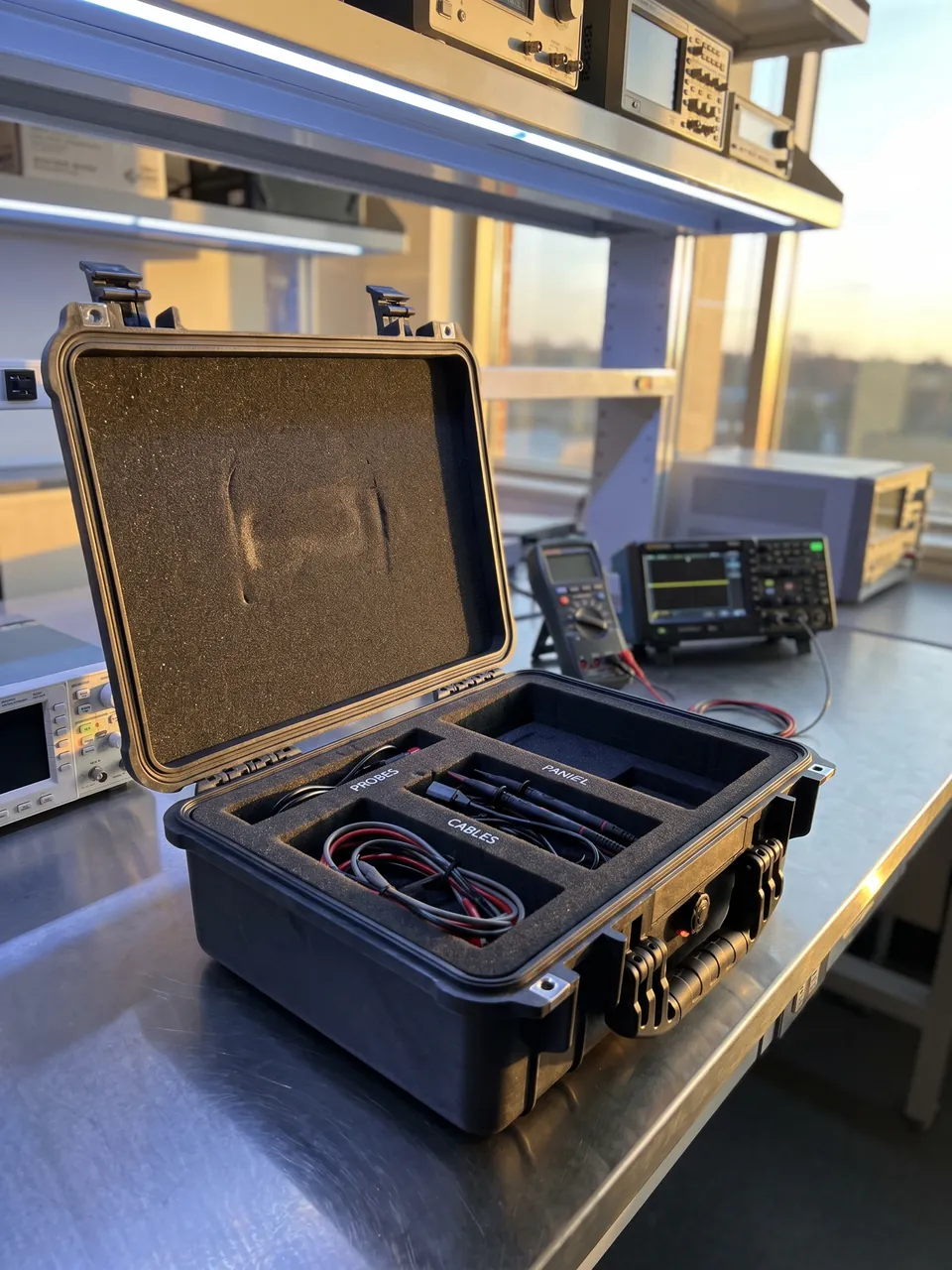
Acrylonitrile butadiene styrene, known universally as ABS, holds the largest share of engineering plastic waterproof enclosures, because its overall property set lands right on the balance point required by most outdoor locations.
Typical figures: density 1.04 to 1.06 grams per cubic centimetre; tensile strength 40 to 50 megapascals; flexural modulus 2000 to 2500 megapascals; notched Charpy impact 15 to 25 kilojoules per square metre; heat deflection temperature under 1.82 megapascals load 85 to 100 degrees Celsius; dielectric strength 15 to 20 kilovolts per millimetre; volume resistivity of the order of 10 to the power 14 ohm centimetres. Flame-retardant grades reach UL 94 V-0, and glow-wire testing to IEC 60695-2-11 commonly specifies either 750 or 850 degrees Celsius.
The advantages are clear enough. Density is one third that of aluminium and one eighth that of stainless steel, so a box can be lifted and fixed single-handed. It insulates, with no earthing conductor required through the shell. It moulds easily, allowing ribs, snap fits, integral hinges and seal grooves to be produced in one shot, all of which need extra parts in metal. Colour runs through the material, so scratches still show the base colour rather than exposing bare metal under paint.
Two weaknesses must be stated plainly.
The first is ultraviolet ageing. The butadiene phase in ABS contains double bonds, which ultraviolet radiation attacks preferentially. Unstabilised material shows obvious yellowing, chalking and loss of impact strength after two or three years outdoors. Outdoor ABS enclosures therefore must use a UV-stabilised grade, typically carrying hindered amine light stabilisers and ultraviolet absorbers, or an external coating. Ask for xenon-arc ageing data at purchase; the common requirement is ISO 4892-2 to 1000 hours cumulative irradiation with colour change below 3 delta E and retained tensile strength above 70 percent.
The second is low-temperature embrittlement. General-purpose ABS becomes brittle at around minus 20 degrees Celsius, so in severe northern climates a housing struck in winter can crack outright. There are three answers: specify a low-temperature modified ABS grade, move to polypropylene copolymer, or design away from thin walls and sharp corners and specify additional thickness for northern projects.
ABS also resists some organic solvents poorly, including ketones, esters and chlorinated hydrocarbons, so locations with solvent contact should move to polypropylene or polycarbonate.
PC and PC/ABS: Transparency Plus Impact Strength
Polycarbonate appears in waterproof enclosures for two reasons: where a sight glass is required, and where impact resistance matters.
Key figures: density 1.20 grams per cubic centimetre; tensile strength 55 to 70 megapascals; flexural modulus 2200 to 2400 megapascals; notched impact strength as high as 60 to 90 kilojoules per square metre, roughly three to four times general-purpose ABS; heat deflection temperature 125 to 135 degrees Celsius; light transmission up to 88 to 90 percent; dielectric strength 15 to 20 kilovolts per millimetre. Those numbers explain both why sight glasses on outdoor lighting, surveillance and photovoltaic combiner boxes are almost always polycarbonate, and why positions likely to be trodden on are worth specifying it.
Three limitations need to be flagged. Weathering requires extra treatment: polycarbonate yellows and degrades under ultraviolet exposure, so outdoor use demands UV stabilisers or a hard coat, otherwise yellowing and embrittlement appear within a year or two. Resistance to stress cracking is poor: polycarbonate is sensitive to alcohols, some oils, plasticisers and certain cleaning agents, and silver streaking or cracking develops where chemical contact coincides with assembly stress. Cost runs above ABS, typically 60 to 100 percent higher.
PC/ABS blends are the compromise. They keep much of the toughness and the higher heat deflection temperature, usually between 100 and 120 degrees Celsius, while improving flow during moulding, reducing cost and lessening sensitivity to stress cracking. For projects needing weathering on a controlled budget, PC/ABS is frequently more practical than straight polycarbonate.
Glass fibre reinforcement deserves a separate mention. Adding 20 to 30 percent glass fibre to PC or PBT can double the flexural modulus beyond 5000 megapascals and raise the heat deflection temperature with it, suiting large enclosures with long spans that would otherwise distort. The price is a rougher surface, since fibres break through and the sealing face needs extra attention, lower impact strength, and a colour range effectively limited to dark shades. When specifying a glass-filled grade, confirm that the moulding process can hold the seal groove flat.
PP and Modified Polypropylene: Cold Toughness at Low Cost
Polypropylene rarely gets a mention in these discussions, yet for two situations it is the correct answer: cold environments and corrosive environments.
Typical figures for copolymer polypropylene: density of only 0.90 to 0.91 grams per cubic centimetre, the lightest of the common engineering plastics; tensile strength 25 to 35 megapascals; flexural modulus 1000 to 1500 megapascals; heat deflection temperature around 80 to 100 degrees Celsius at 0.45 megapascals load but only 50 to 60 degrees at 1.82 megapascals; dielectric strength 20 to 30 kilovolts per millimetre.
Its two outstanding merits are low-temperature toughness, with a brittle point that can fall to minus 30 degrees Celsius or below, suiting severe northern winters, cold stores and high plateaus, and outstanding resistance to acids, alkalis and salts, which puts it ahead of most metals around electroplating, chemicals, livestock farming and swimming pools. Its drawbacks are equally clear. Stiffness is low, so heavy ribbing becomes mandatory. The heat deflection temperature is poor, so no strong heat source can be placed inside. Standard polypropylene weathers worse than ASA, so long-term outdoor use needs a dedicated ultraviolet-stabilised formula. Polypropylene therefore serves combined cold-plus-chemical duty rather than acting as a universal substitute.
Cast Aluminium: Where Heat, Shielding and Strength Meet
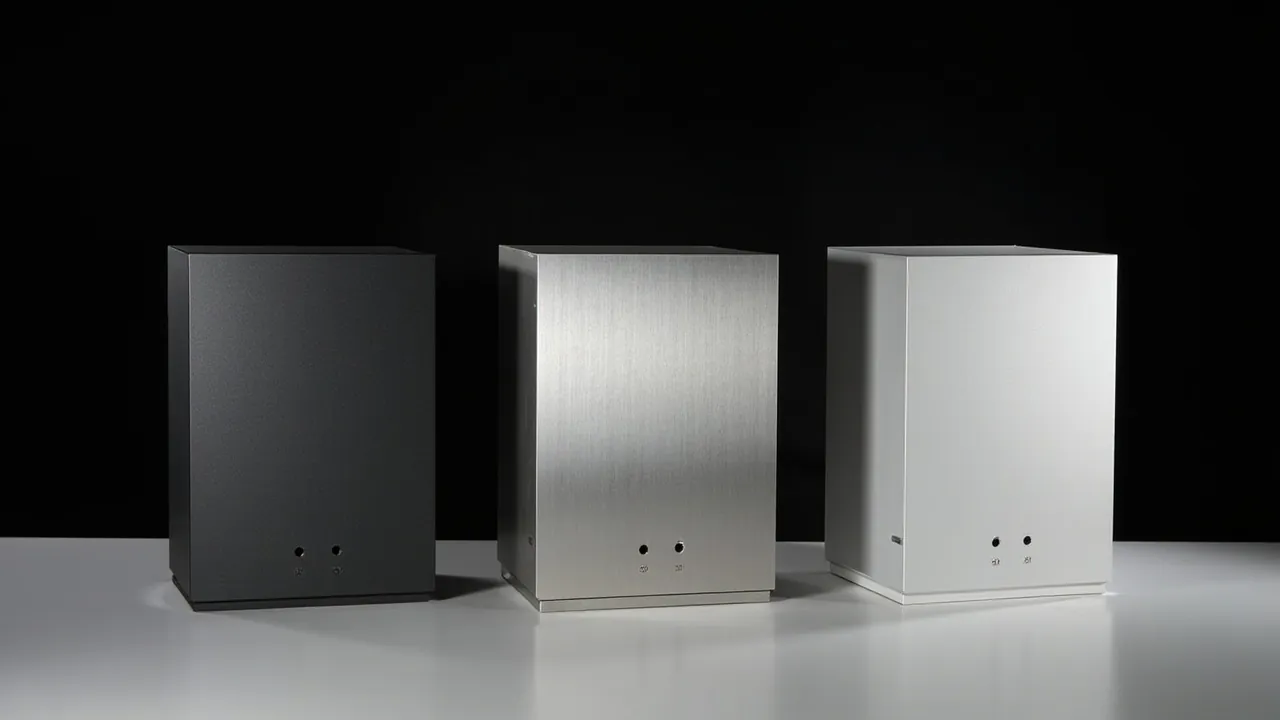
Die-cast aluminium housings show up wherever industrial control boxes, outdoor mechatronic equipment shells and low-voltage enclosures with meaningful heat dissipation are needed. The grade used most in China is ADC12, corresponding to national standard YL113, roughly 9.6 to 12 percent silicon, 1.5 to 3.5 percent copper and the balance aluminium.
Its principal figures: density 2.70 grams per cubic centimetre; tensile strength around 230 to 310 megapascals; elongation only 1 to 2 percent, which is the single most important weakness of die-cast aluminium; thermal conductivity around 96 watts per metre kelvin; coefficient of linear expansion about 21 micrometres per metre kelvin; melting range roughly 570 to 590 degrees Celsius.
Four advantages deserve separate treatment. Heat: conductivity is more than four hundred times that of plastic, so the shell itself acts as a large heat sink, and for enclosures holding drives, power modules or switch-mode supplies, natural convection alone can pull internal temperature rise down by 10 to 20 kelvin. Shielding: a complete metal shell provides 40 to 80 decibels of attenuation between 30 megahertz and 1 gigahertz, against effectively zero for an untreated plastic shell. Rigidity: deformation under equivalent load is far smaller than plastic, suiting heavier internal equipment or threads cut directly in the wall. Combustibility: metal does not burn, so UL 94 never enters the discussion in fire-sensitive premises.
Four limitations run alongside. Weight, about 2.6 times ABS for the same volume, so large units need two people to install. Brittleness, with elongation of 1 to 2 percent meaning that severe impact cracks rather than dents. Corrosion sensitivity, since high silicon content makes anodising unsatisfactory, leaving a grey uneven film, so powder coating or passivation is used instead, and once the coating is scratched the aluminium beneath pits and develops white rust quickly. Cost, roughly four to six times an ABS enclosure of the same size.
The minimum finish requirements belong in the purchase document: chromate or zirconium conversion treatment before coating; powder coat thickness 60 to 120 micrometres; neutral salt spray to ISO 9227 for more than 480 hours with no substrate corrosion and creep-back from a scribe no greater than 2 millimetres on either side.
Stainless Steel 304 and 316: The Last Line Against Corrosion
Stainless housings appear in three kinds of place: food and pharmaceutical plants, coastal high-salt locations, and anywhere high strength and resistance to abuse are required. The usual grades are 304 and 316.
Comparison of key figures: 304 has a density of 7.93 grams per cubic centimetre, tensile strength 505 to 620 megapascals, yield strength around 215 megapascals, elongation above 40 percent and therefore toughness far superior to die-cast aluminium, thermal conductivity about 16 watts per metre kelvin, coefficient of expansion 17.3 micrometres per metre kelvin, and a pitting resistance equivalent number of roughly 19. With 2 to 3 percent molybdenum added, 316 raises that number to 24 to 26, giving clearly better resistance to pitting and crevice corrosion in chloride environments, with similar mechanical properties otherwise.
One criterion decides between them: whether chloride is present, and at what concentration. In inland cities with ordinary atmosphere, no salt and no acid or alkali, 304 is entirely adequate, easily lasts beyond twenty years and costs 30 to 50 percent less than 316. Within two kilometres of the coast, on ship decks, at swimming pool water treatment plants, or in pickling and seafood processing, chloride levels are high and 316 becomes mandatory, because 304 will develop spot rusting within one to three years and it spreads.
Three further cautions apply. Stainless is not stainless in every condition: chloride combined with high temperature and low flow provokes pitting and stress corrosion cracking even in 316, and permanent seawater immersion may require duplex grades or non-metallic solutions. Weld quality governs service life, so seams must be pickled and passivated, since residual oxide colouring becomes the starting point for corrosion. Fabrication cost is higher, since cutting, bending and drilling stainless exceed both aluminium and plastic, and the direction of surface brushing should be written into the specification, otherwise adjacent units visibly clash.
Complete Parameter Comparison Table
The table below sets every relevant figure side by side for use in design review. Cost index takes an ABS enclosure of the same size as 1.0 and will vary with volume and fabrication complexity.
| Parameter | ABS | PC | PP copolymer | Die-cast aluminium ADC12 | Stainless 304 | Stainless 316 |
|---|---|---|---|---|---|---|
| --- | --- | --- | --- | --- | --- | --- |
| Density (grams per cubic centimetre) | 1.05 | 1.20 | 0.90 | 2.70 | 7.93 | 7.98 |
| Tensile strength (megapascals) | 40 to 50 | 55 to 70 | 25 to 35 | 230 to 310 | 505 to 620 | 485 to 620 |
| Notched impact (kilojoules per square metre) | 15 to 25 | 60 to 90 | no break | very low | high | high |
| Elongation at break | 20 to 40 percent | 60 to 120 percent | high | 1 to 2 percent | over 40 percent | over 40 percent |
| Heat deflection temperature (degrees Celsius) | 85 to 100 | 125 to 135 | 50 to 60 | not applicable | not applicable | not applicable |
| Continuous service temperature (degrees Celsius) | minus 20 to 70 | minus 40 to 115 | minus 30 to 90 | minus 40 to 200 | minus 40 to 400 | minus 40 to 400 |
| Thermal conductivity (watts per metre kelvin) | 0.17 to 0.25 | 0.20 | 0.15 to 0.22 | 96 | 16 | 16 |
| Expansion coefficient (micrometres per metre kelvin) | 80 to 100 | 65 to 70 | 100 to 150 | 21 | 17.3 | 16.5 |
| Dielectric strength (kilovolts per millimetre) | 15 to 20 | 15 to 20 | 20 to 30 | conductor | conductor | conductor |
| Electromagnetic shielding (decibels) | 0 | 0 | 0 | 40 to 80 | 60 to 100 | 60 to 100 |
| Weathering to ultraviolet | needs stabiliser | needs coating | needs stabiliser | depends on coating | excellent | excellent |
| Salt spray resistance | excellent | good | excellent | depends on coating | good | excellent |
| Acid and alkali resistance | fair | fair | excellent | poor | good | excellent |
| Flammability (UL 94) | HB to V-0 | V-2 to V-0 | HB | non-combustible | non-combustible | non-combustible |
| Relative cost index | 1.0 | 1.6 to 2.0 | 0.7 to 0.9 | 4 to 6 | 8 to 12 | 11 to 16 |
Three cautions when reading it. First, a no-break impact result for plastic does not mean it never breaks; brittle temperature rather than room-temperature impact is what matters in cold climates. Second, the conductivity advantage of metal only counts if heat actually reaches the shell, so choosing cast aluminium is wasted money if the heat source sits on an inner shelf with no thermal path to the wall. Third, expansion coefficients differ enormously, so combinations such as a metal shell with a plastic gasket or a metal shell carrying a plastic panel need relative movement calculated, otherwise the seal compression drifts with the seasons. Extreme temperature effects on outdoor enclosure materials covers this in more detail.
Weathering and Ultraviolet Ageing: Real Service Life of Plastics
The service life of plastics outdoors is governed mainly by the combination of ultraviolet radiation, temperature and water, with ultraviolet dominating. Ultraviolet accounts for only a few percent of the total energy reaching ground level, yet its photon energy suffices to break most polymer chains.
Two accelerated methods dominate. Xenon-arc ageing, ISO 4892-2, has the spectrum closest to sunlight and usually requires 1000 hours cumulative irradiation, rising to 2000 hours in severe duties, after which colour change stays below 3 delta E and retained tensile or impact strength stays above 70 percent. Fluorescent ultraviolet ageing, ISO 4892-3 or ASTM G154 with UVA-340 lamps, runs faster but correlates less well with real exposure, so it suits batch consistency checks rather than life prediction.
Materials differ widely. Because ABS carries double bonds in its butadiene phase, unstabilised material shows obvious yellowing and chalking within two to three years in temperate climates; adding hindered amine light stabilisers and ultraviolet absorbers extends that to eight to ten years or more. Polycarbonate yellows even more readily, though hard coatings address it at extra cost and with limited scratch resistance. Standard polypropylene has the weakest ultraviolet resistance among commodity plastics and normally achieves durability through carbon black, which is so effective and so nearly free that outdoor polypropylene products are almost always black. Light colours need a dedicated weathering grade, and cost rises accordingly.
ASA deserves a specific mention. Structurally similar to ABS except that acrylate rubber replaces butadiene, it carries no readily attacked double bonds, so it weathers far better than ABS and can be produced in light colours without a coating. Its drawbacks are higher resin price and fewer available grades, which is why it mostly appears in premium outdoor parts. Where a project demands both light colour and long life, ASA belongs on the enquiry list.
Beyond the material itself, two factors kill service life. The first is superimposed stress: a housing under residual assembly stress weathers significantly faster, so the rule about not pulling an enclosure flat with its screws is as much about life as about water. The second is chemical synergy, since cleaning agents, cooking oil fumes and ammonia in livestock buildings all accelerate ultraviolet ageing, and in those environments a sun shield delivers more than a higher grade of resin.
Heat Dissipation and Temperature Rise: When Metal Becomes Mandatory
A rough but serviceable calculation answers whether metal is necessary.
First, total dissipated power. Sum the losses: a switch-mode supply at 8 to 15 percent of output power; a variable speed drive at 3 to 5 percent of its rating; ordinary relays at 1 to 2 watts each; terminal and conductor losses negligible at low voltage and current, though they should be taken as I squared R on high-current circuits.
Second, what natural convection can carry away. Q equals h times S times delta T, where h is the surface heat transfer coefficient, taken as 5 to 8 watts per square metre kelvin indoors and 10 to 15 outdoors with wind, S is the effective radiating area, and delta T is the acceptable difference between internal air and ambient.
Take an enclosure 300 by 400 by 200 millimetres. Total surface is about 0.52 square metres, say 0.4 allowing for the wall-mounted face. With 25 watts dissipated internally, h at 10 and a target rise of no more than 15 kelvin, the arrangement carries roughly 10 times 0.4 times 15, or 60 watts, comfortably above 25, so plastic suffices. Raise dissipation to 80 watts and the same arithmetic needs more than 20 kelvin to balance, pushing the interior above the rating of most components. At that point cast aluminium earns its keep by spreading the hot spot across the whole shell, which in practice lowers internal temperature rise by 10 to 20 kelvin under identical conditions.
One prerequisite is easily missed: heat has to reach the shell in the first place. If the dissipating component sits on a plastic inner shelf with no connection to the housing, the conductivity of a cast aluminium outer shell does nothing at all. Specifying metal therefore means specifying a thermal path: bolt the dissipation component to a machined face on the housing with thermal grease or a thermal pad, or clamp it through an aluminium heat spreader to the wall. Without that connection, cast aluminium is simply extra expense.
In the opposite situation, where nothing dissipates heat inside and the site bakes in southern summer sun, plastic is the better choice. Metal absorbs and conducts solar load into the interior: measured at midday in summer, air inside a dark metal box can exceed 60 degrees Celsius while a light-coloured plastic box under the same irradiance typically runs 5 to 10 degrees cooler. For enclosures that only need protection from sun rather than from internal heat, light-coloured ASA or UV-stabilised light ABS, plus a sun shield where possible, beats switching to metal.
Corrosion Mechanisms: Galvanic, Pitting and Stress Cracking
Asking merely whether something rusts misses most of the picture. Outdoor enclosures face at least four corrosion mechanisms calling for completely different defences.
Uniform corrosion is the most visible. White and red rust on ordinary galvanised steel belongs here, and defence consists of coatings plus adequate thickness, typically at least 65 micrometres for hot-dip galvanising.
Galvanic corrosion occurs when two metals of different potential touch in the presence of an electrolyte, even a film of condensation. Three classic traps: stainless bolts in an aluminium housing, copper lugs clamped to an aluminium enclosure, and carbon steel brackets contacting a stainless box. The metal with the more negative potential corrodes faster. Defence means avoiding direct contact between dissimilar metals, inserting insulating washers, or at least giving the sacrificial side extra thickness as corrosion allowance. On the galvanic series, magnesium, zinc and aluminium run negative in that order, then iron, nickel, copper and stainless run progressively positive, and the wider the gap the greater the risk.
Pitting and crevice corrosion are the characteristic failure modes of stainless steel, driven by chlorides. They are local: a pit only tens of micrometres across drives inward in chloride-bearing conditions while the surface may show almost no staining until it perforates. Crevices under gaskets or beneath bolt heads carry higher risk because oxygen is depleted there. Defence means raising molybdenum content in proportion to chloride, that is moving from 304 to 316, designing out water traps, and pickling and passivating welds to restore the oxide film.
Stress corrosion cracking results from tensile stress acting together with a specific medium, commonly chlorides at elevated temperature for stainless and ammonia for copper alloys. Its practical lesson for outdoor enclosures is simple: never force a housing flat with its fasteners, and never tighten bolts far beyond design torque, because both introduce sustained tensile stress.
Corrosivity classification follows ISO 12944 from C1 to C5: C1 is dry interior, C2 low-pollution rural, C3 urban and general industrial, C4 high-salt coastal, chemical plants and swimming pools, C5 humid saline offshore industry. Most urban low-voltage projects fall in C3 and coastal installations in C4 or even C5. Writing that class into the specification is far more reliable than a vague instruction to use stainless steel.
Life-Cycle Cost: Beyond the Purchase Price
Widening the view from unit price to whole life reverses several conclusions. The table below assumes a mid-sized enclosure wall-mounted at 1.5 metres with a ten-year design life. Figures are relative, intended for comparison rather than quotation.
| Cost element | ABS | PC | Die-cast aluminium | Stainless 304 |
|---|---|---|---|---|
| --- | --- | --- | --- | --- |
| Purchase price index | 1.0 | 1.8 | 5.0 | 10.0 |
| Installation labour index | 1.0, one person unaided | 1.0 | 1.5, two people | 1.8, two people plus brackets |
| Additional support structure | usually none | usually none | sometimes reinforced fixings | usually required |
| Earthing work | internal bar only | internal bar only | shell bonding required | shell bonding required |
| Inspections over ten years | 3 to 5 | 3 to 5 | 5 to 8, including coating repair | 3 to 5 |
| Coating refurbishment | not needed | not needed | likely one or two repaints | usually not needed |
| End-of-life scrap value | very low | very low | some | relatively high |
Three practical conclusions emerge.
First, wherever no special requirement applies, ABS still carries the lowest total cost, often by several times, and that gap does not close simply because metal looks tougher. Only three conditions change the answer: high internal dissipation, a need for electromagnetic shielding, or severe corrosion combined with impact risk.
Second, stainless steel is rarely expensive because of the metal alone; the cost sits in fabrication and installation. The same cut-out and curve takes several times the labour in stainless as in plastic, and once transport and bracket costs arising from weight are added, the installed figure spreads wider than the purchase index suggests. Decide against total installed cost, not ex-works price.
Third, die-cast aluminium carries a mid-life expense that is easy to overlook: coating refurbishment. In coastal districts, or where winter de-icing salt is used, aluminium enclosures often need stripping and repainting between years five and eight. Where access is difficult, as on bridge girders or towers, a single day with a mobile platform can cost more than the enclosure itself. In those positions move straight to 316 stainless, or back to ABS with external protection.
One further cost resists quantification yet belongs in the calculation: failure loss. A day of downtime caused by water in a control cabinet, or the loss of evidence when a surveillance enclosure corrodes through, routinely exceeds the material price difference by two orders of magnitude. Calibrate with one question: how many times the price of this enclosure is the equipment inside it worth? The higher the multiple, the more the material should be stepped up.
Selection Workflow and Application Table
The preceding content compresses into four executable steps.
Step one, two hard gates by elimination. Is there more than 50 watts dissipated internally, which decides whether metal is needed for heat? Is there a strong interference source nearby or a sensitive signal to protect, which decides whether shielding is needed? Satisfying either moves straight to cast aluminium or stainless. Satisfying neither starts the assessment among plastics.
Step two, classify the environment to ISO 12944. C2 and below suits standard plastics; C3 suits ABS with UV stabilisation or polypropylene; C4 demands 316 stainless, glass-reinforced polyester or specialist plastics; C5 warrants exposure racks before specifying.
Step three, weigh mechanical risk. Where dropping, impact, foot traffic or vandalism are plausible, choose tough materials such as polycarbonate, PC/ABS or polypropylene, or stainless steel. Cast aluminium is paradoxically the least suitable here, because it is brittle.
Step four, work out the installed cost. Bring installation, supports, earthing, maintenance and failure risk into the estimate and align it with the budget.
The application table below gives a defensible first-pass answer.
| Application | Recommended material | Reason |
|---|---|---|
| --- | --- | --- |
| Residential low-voltage and surveillance junction boxes | ABS with UV stabiliser | Lowest cost, insulating, easy to fix, little maintenance over ten years |
| Severe northern cold and cold store exteriors | PP copolymer or low-temperature ABS | Retains toughness below minus 30 degrees Celsius |
| Chemical dosing skids needing a sight glass | PC or PC/ABS | High impact plus visibility, provided solvent contact is avoided |
| Photovoltaic combiner boxes with power electronics | Coated die-cast aluminium | Needs heat spreading and shielding, with shell equipotential bonding |
| Drive control boxes and outdoor cabinets | Die-cast aluminium or painted steel | High dissipation plus shielding and structural load |
| Seawalls and docks within two kilometres of the sea | 316 stainless or glass-reinforced polyester | Chloride levels high enough to pit 304 |
| Food and pharmaceutical areas | 304 or 316 stainless | Wash-down tolerant and hygienic |
| Chemical storage and electroplating shops | PP or PVDF lining | Chemical stability superior to metal |
| Mines, tunnels and explosive atmospheres | Certified cast aluminium or stainless | Explosion protection governs selection, not material alone |
| Temporary site distribution | ABS | Short life cycle, cost sensitive, negligible scrap recovery |
Frequently Asked Questions (FAQ)
Q: Is there one material that suits every situation? A: No. Trying to cover every case with a single material over-specifies some positions and under-protects others. A pragmatic approach is to split a project into two or three environmental classes and fix one material per class, producing two or three standard specifications. On a coastal campus, for instance, indoor low-voltage rooms take ABS, general outdoor positions take UV-stabilised ABS, and seawalls plus high corrosion zones take 316 stainless. Complexity stays under control without specifying the most expensive material everywhere.
Q: Must a metal enclosure be bonded? A: Yes, and it is not optional. Bonding a conductive shell serves two purposes. It gives fault current a defined return path if insulation fails, so that the protective device operates quickly, and it establishes a stable reference potential so the shell does not act as a coupling antenna. Use the manufacturer's earth stud with a serrated washer back to the earth network, having abraded the contact face clean of oxide and coating and applied conductive paste before tightening. Size the conductor for the maximum prospective fault current; small outdoor enclosures are usually not less than 4 square millimetres.
Q: Can die-cast aluminium be anodised? A: It can, but results are poor and the process is generally not recommended. High silicon content means the silicon phase does not participate in film formation, leaving a grey, uneven coating with high porosity. The normal route is conversion treatment followed by powder coating at 60 to 120 micrometres. Where an anodised appearance is essential, switch to extruded aluminium sections or a low-silicon casting grade, at higher cost. Whichever route is chosen, verify it by salt spray to ISO 9227, typically requiring more than 480 hours without visible corrosion.
Q: Why do some ABS enclosures go brittle in two years while others survive ten? A: Three factors usually explain it. The first is whether the resin is a weathering grade; material carrying hindered amine light stabilisers and ultraviolet absorbers lasts three to five times longer than unstabilised resin, and looks identical, which is why xenon-arc data should be requested. The second is residual assembly stress, since a housing under stress weathers markedly faster. The third is colour: dark products, black especially, usually contain carbon black, itself an efficient ultraviolet screen, so they outlast light colours. Light-coloured parts need extra stabilisation to match. Asking the manufacturer for retained strength before and after ISO 4892-2 exposure is the most direct check available.
Q: Does 316 stainless genuinely never rust? A: It does corrode under the right conditions. Molybdenum raises the pitting resistance equivalent number to roughly 24 to 26 against about 19 for 304, but pitting and crevice corrosion still occur where elevated temperature combines with high chloride concentration and low flow. Three situations deserve particular care: permanent full or partial immersion in seawater; surfaces facing sea spray that are never washed down with fresh water; and crevices under gaskets or bolt heads where water sits. Welding matters greatly too, since seams left unpassivated rust early. Countermeasures include duplex grades, regular fresh-water rinsing, and detailing that avoids standing water.
Q: Can different materials be mixed within one project? A: Yes, and it is usually sensible, provided two issues are handled. Earthing arrangements must be consistent: a plastic box still needs an internal earth bar properly connected, while a metal box additionally requires shell bonding, and the two must not be confused. Spare parts and seals need separate control, because different shells specify different tightening torques and may use different seal cross-sections, so mixing invites incorrect compression. Where appearance matters, note that adjacent enclosures of different materials show visible colour differences, so agree finishes before releasing the layout.
Q: Does fitting a polycarbonate sight glass compromise the ingress rating? A: That depends on construction rather than material. Two approaches exist. Either the window is integrally moulded or welded into the housing, or it is a framed pane clamped with screws onto a gasket. The first gives better integrity but needs dedicated tooling; the second allows later replacement at the cost of an extra sealing line, so purchase against a full-product IP test report that covers the windowed version rather than a bare one. Also note that polycarbonate and the housing material expand differently, and the relative movement needs calculating when a PC window is fitted into a metal shell, otherwise the frame loosens between winter and summer.
Q: In a coastal industrial atmosphere, does adding an external shield help an aluminium enclosure? A: It helps, but understand the mechanism. A shield blocks ultraviolet radiation and direct salt deposition; it does nothing to neutralise chloride already adhering to the surface. The effective answer is a three-layer combination. Material must be sound in its own right: 316 stainless, or aluminium with a qualified coating system. Position must avoid direct sea spray, favouring the leeward side or a sheltered face. Only then does external protection come in, such as sun shields and rain caps. Stacking all three is what brings actual service life up to the design figure.
Closing Notes and Further Reading
Material selection is essentially translating the environment into parameters, then translating parameters into price. ABS wins on weight, cost, insulation and mouldability, suiting the great majority of ordinary outdoor positions. Cast aluminium wins on heat and shielding, suiting enclosures carrying power electronics or needing electromagnetic compatibility. 316 stainless wins against chloride corrosion, suiting coastal and high-hygiene duties. Polycarbonate wins on transparency and impact, suiting sight glasses and positions exposed to foot traffic. Polypropylene wins on cold toughness and chemical resistance, suiting northern and chemical sites.
The reliable sequence is: make one binary decision on metal versus plastic from dissipation and electromagnetic requirements, set the grade from corrosion class, then calibrate against installation and maintenance cost. Running the process backwards, starting from whether a material seems good, tends to produce either expensive mistakes or early failures. Four items belong in the technical specification: atmospheric corrosivity class, ingress rating with its governing standard, dissipation and acceptable temperature rise, and the documentation package, meaning ultraviolet ageing data, salt spray data and the flammability certificate. With those four settled, material choice rarely goes wrong.
JUNZHJIA builds its waterproof junction box and sealed electrical enclosure range at its Zhongshan plant across ABS, polycarbonate, glass-filled ABS, die-cast aluminium and stainless steel, supplying ageing and salt spray documentation to suit project conditions, with OEM and ODM service, wholesale volumes and worldwide delivery.
Further reading