

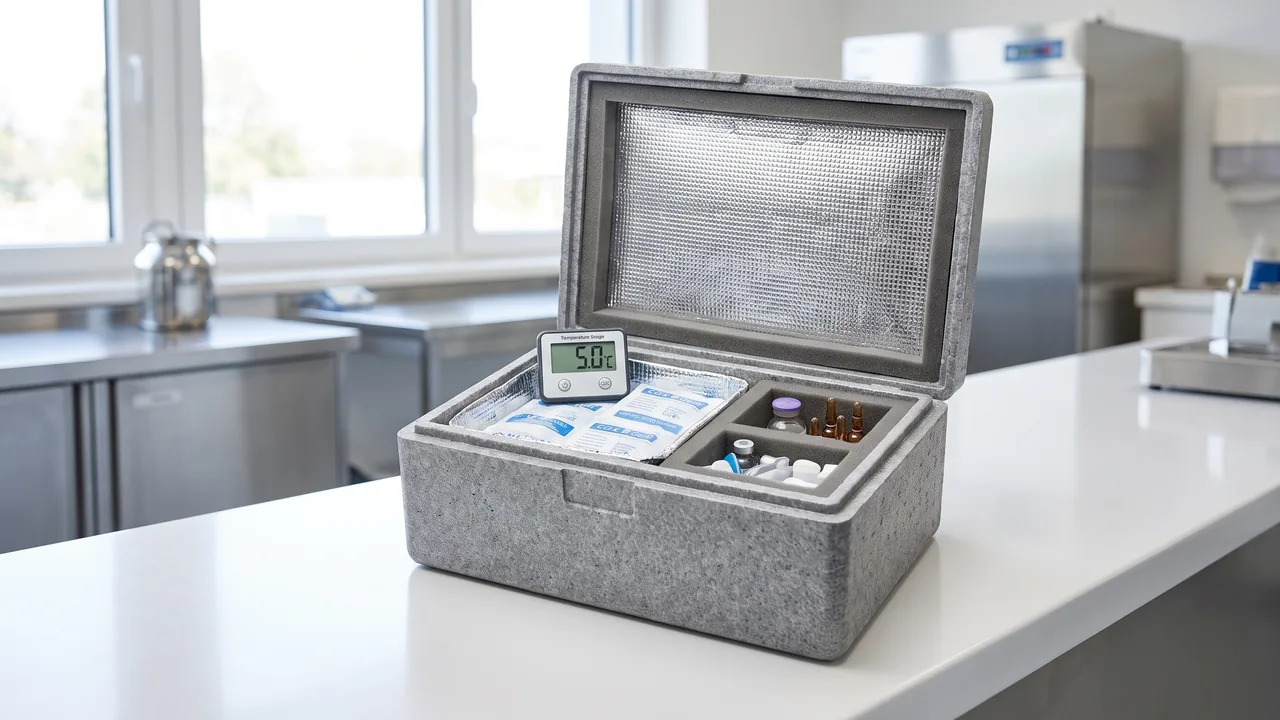
The deterioration of paper records rarely comes from a single cause. Acid hydrolysis, mold metabolism, insect feeding, ultraviolet oxidation, and the fiber fatigue caused by repeated moisture uptake and release all advance together across a timescale of decades, and most of the loss becomes irreversible long before it is visible to the eye. An archival storage case can control three of these factors: the relative humidity inside the case, biological activity within that micro-environment, and the light and mechanical wear the documents receive. The conclusion is that the design goal of an archival-grade case is not to seal the documents away hermetically, but to build a stable micro-environment for each carrier type with small temperature and humidity swings, materials that release no harmful substances of their own, and a balanced way for internal and external air pressure to equalize. This article gives, by carrier type, the relative humidity windows, the practical dosage values for desiccants and humidity-conditioning materials, the criteria for acid-free materials, the separate requirements for microfilm, and a workable method for sealing and acceptance.
Personnel responsible for document preservation, collection relocation, or the construction of a corporate records room often face two contradictory requirements: a limited budget, yet accountability for decades of preservation outcome. The common approach is to buy a batch of ordinary plastic totes plus a few packets of desiccant. In the short term nothing seems wrong, but three to five years later the case walls show condensation, the edges of the files show mold spots, and paper that was once crisp has become curled and brittle. Blaming the loss on a humid southern climate solves nothing; what is really missing is a parameter system that links humidity, materials, and sealing method together.
Table of Contents
- 1. Risk Model: Decomposing Long-Term Preservation into Controllable Parameters
- 2. Humidity as the Primary Variable: RH Windows and Desiccant Dosage
- 3. Pest and Mold Control: From Material Selection to the In-Box Microenvironment
- 4. Light Avoidance and UV Control: Differences Across Paper, Ink, and Film
- 5. Archival-Grade Acid-Free Materials: pH, Alkaline Reserve, and Compatibility
- 6. Long-Term Sealing and Breather Valves: Tighter Is Not Better
- 7. Securing Files, Rare Books, and Irregular Documents
- 8. Microfilm and Photographic Media: Independent Space and Climate
- 9. Case Structure and Hardware: Low Moisture Vapor Transmission and Low Emission
- 10. Transit and Retrieval Scenarios: Short-Distance Protection from Vault to Reading Room
- 11. Testing, Acceptance, and Records: Proving a Case Meets the Standard
- 12. How JUNZHIJIA Delivers Archival Storage Cases
- 13. Typical Configurations and Selection Cross-Reference
- Frequently Asked Questions (FAQ)
- Conclusion and Related Reading
1. Risk Model: Decomposing Long-Term Preservation into Controllable Parameters
Archival carriers are not one material but a set of materials with greatly differing properties. Placing them in the same case and treating them with the same humidity conditions is the wrong starting point in itself.
Handmade paper is a relatively stable carrier. Paper made from hemp, bark, and bamboo fibers is long, low in lignin, and usually formed with neutral or weakly alkaline processes, giving it a far longer life than machine-made paper under equal conditions.
Machine-made paper is a product of the mid-nineteenth century onward. Mechanical wood-pulp paper retains lignin, and lignin generates acidic groups under light and oxygen, which then catalyzes cellulose hydrolysis and forms a self-accelerating acidification process. The pH of such paper keeps falling over time and is the most common problem in archival care.
Photographic carriers are silver-halide gelatin layers coated on a paper or film base. The gelatin layer is extremely sensitive to humidity; repeated uptake and release causes uneven expansion and contraction, leading to emulsion cracking or separation from the base. Color photographs add the problem of dye-layer dark fading.
Microfilm is silver-halide gelatin coated on a film base that progressed through nitrocellulose, acetate, and polyester stages. An acetate base hydrolyzes and releases acetic acid when humidity is too high or temperature too warm, and that acid then accelerates its own hydrolysis, a self-catalyzing phenomenon known as vinegar syndrome.
Magnetic media and optical discs are newer carriers with independent requirements for temperature, humidity, and magnetic fields.
Four classes of degradation mechanism can proceed in parallel, and most are irreversible:
| Degradation mechanism | Trigger | Typical symptom | Reversible? |
|---|---|---|---|
| --- | --- | --- | --- |
| Acid hydrolysis | Prolonged high RH, high temp, inherent acidity | Yellowing, brittleness, edge fracture | Irreversible; deacidification only slows it |
| Photo-oxidation | Accumulated UV and blue light | Yellowing, ink fade, dye layer fading | Irreversible |
| Biological decay | RH above 65%, temp 20-30 C | Mold, foxing, insect holes | Mold partly treatable; insect damage irreversible |
| Mechanical fatigue | Repeated moisture cycling, stacking, handling | Curling, creasing, corner break | Irreversible |
| Substrate self-decomposition | Acetate base hydrolysis, nitrate base oxidation | Film souring, blocking, image yellowing | Irreversible; only low temp slows |
Once these mechanisms are understood, the boundaries of case design become clear. A case cannot repair paper that has already acidified, nor reverse dye fading that has already occurred. What it can do is hold temperature swing, humidity level, light exposure, biological activity, and mechanical stress within thresholds, thereby noticeably slowing those processes. As a rule of thumb, every 5 C drop in temperature roughly halves the chemical degradation rate of paper; with temperature fixed, lowering relative humidity from 65% to 50% essentially suppresses mold growth. This also explains why archive budgets prioritize temperature and humidity control, and why the storage case is a supplementary means of extending vault conditions into transport and retrieval.
2. Humidity as the Primary Variable: RH Windows and Desiccant Dosage
Among all parameters, humidity has the widest impact and is most easily oversimplified. Many people treat "lower humidity is better" as a principle, which is wrong for archives.
There is an equilibrium relationship between the moisture content of paper and the surrounding relative humidity. At room temperature, every 10% change in relative humidity changes the equilibrium moisture content of paper by roughly 1% to 1.5% (typical value). That change directly drives dimensional change; the transverse shrinkage of machine paper between 30% and 70% relative humidity can reach 0.2% to 0.5%. This is nothing for a single sheet, but for a tightly bound book the constrained paper near the spine cannot expand freely and can only wrinkle; for a large map, the shrinkage difference between edge and center forms a wavy distortion. So the real design target is not "low humidity" but "stable humidity located inside a window."
The conventional window for paper records is relative humidity 45% to 55%, with deviation allowed but preferably not beyond 40% to 60%. Below 40%, paper becomes brittle, curling worsens, and static adhesion increases; above 60%, mold gains germination conditions, and above 65% the risk rises rapidly. For temperature, the recommended range for paper is 16 to 20 C, with daily swing held within +/-2 C and daily relative humidity swing within +/-5%. This last point is easier to ignore than the absolute value, and easier to lose control of during transport.
Different carriers have different windows, and mixed loading must follow the strictest class:
| Carrier type | Recommended temp | Recommended RH | Key limit |
|---|---|---|---|
| --- | --- | --- | --- |
| Handmade paper, rare books | 16-20 C | 45%-55% | Control RH fluctuation, avoid spine wrinkle |
| Machine paper files, documents | 16-20 C | 45%-55% | Upper limit not above 60%, lower not below 40% |
| B&W silver gelatin photos | 15-20 C | 30%-50% | Gelatin hates high humidity, cycling |
| Color photos | 2-10 C (long term) | 30%-50% | Low temp slows dye dark fading |
| Silver microfilm | <= 21 C | 20%-40% | Low RH suppresses gelatin blocking, mold |
| Acetate base film | <= 18 C | 20%-40% | Low temp/RH slows vinegar syndrome |
| Magnetic tape | 17-20 C | 40%-50% | Low RH causes lubricant bleed, avoid magnetic fields |
Desiccant selection requires distinguishing two concepts: dehumidifying type and humidity-conditioning type. Dehumidifying materials aim to push internal relative humidity as low as possible; silica gel, molecular sieve, and montmorillonite all belong to this class. Conditioning materials (such as pre-conditioned silica gel or certain salt-impregnated materials) absorb when humidity rises and release when it falls, holding internal humidity inside a narrow band rather than pulling it down unidirectionally. For paper records, conditioning materials usually outperform an equal weight of dehumidifying materials because they also suppress fluctuation.
Dosage estimation can start from typical values. For a sealed case with 50 L internal net volume, if the goal is to hold internal relative humidity near 50% for 30 days, untreated silica gel can be specified at 200 to 350 g; if pre-conditioned silica gel or a dedicated conditioning panel is used, configure by the ratio of inner wall surface area to panel area, where a single panel typically covers 30 to 50 L of net volume. Both numbers must be understood as a starting point, not a conclusion.
Many factors affect actual demand. The moisture content of the records themselves is the most critical: if a batch of files has just been taken from a high-humidity vault, the water they carry is considerable, so the documents should first equilibrate with the environment before sealing. The moisture vapor transmission of the gasket matters equally; a case with high transmission may let in enough water vapor within 30 days to cancel the entire desiccant. Day-night temperature differences during transit cause water vapor inside to condense and re-evaporate repeatedly on the walls, equivalent to a continuous humidity cycle. Opening frequency directly determines desiccant life, because every opening lets internal humidity re-equilibrate with the environment.
The workable procedure therefore is: start from the typical value, place a four-color humidity indicator card (common change points at 30%, 40%, 50%, 60%) and a data-logging hygrothermograph inside the case (relative humidity accuracy suggested at +/-2%, temperature at +/-0.5 C), then read the record after one real transit or one storage period and adjust the next batch accordingly, fixing the result as the institution's standard operating parameter. For how gasket materials affect transmission, see the seal material selection guide.
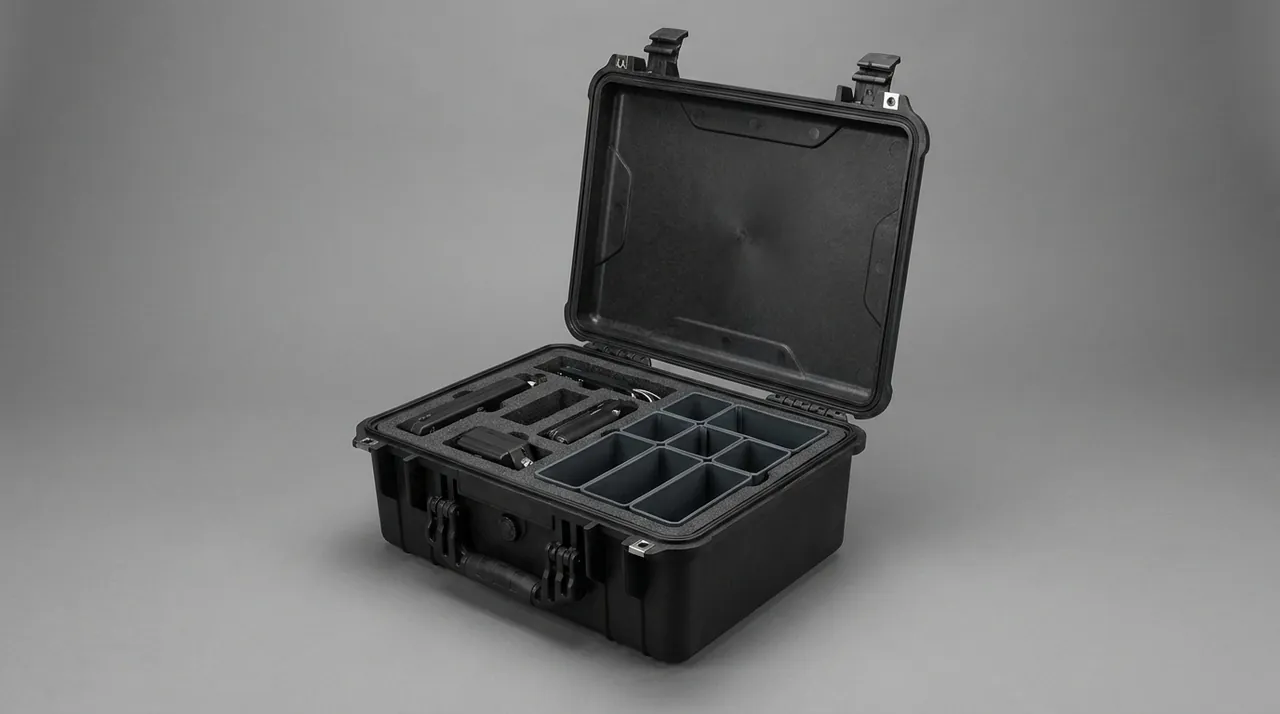
3. Pest and Mold Control: From Material Selection to the In-Box Microenvironment
Biological degradation is more controllable than many expect, because mold and insects both depend strongly on humidity and temperature.
Start with mold. Mold spores are almost everywhere; the issue is not whether they exist but whether they can germinate. The germination threshold for most common collection molds is around 65% relative humidity, most active at 20 to 30 C; below 60% germination is essentially suppressed, and below 55% it nearly stops. This means holding internal relative humidity steadily below 55% is the most effective anti-mold measure, more reliable than any chemical treatment and without introducing new risk.
Mold damage has two layers. The first is visible colonies and stains. The second is easier to ignore: during metabolism mold produces organic acids that deposit in paper fibers and accelerate acid hydrolysis, forming so-called foxing, those pale red-brown spots with clear boundaries that are the product of localized acidification. Thus even after a surface cleaning, the chemical consequence of one mold event persists.
Then insects. Common pests in records storage include silverfish, booklice, tobacco beetle, carpet beetle, cockroaches, and termites. Their shared trait is feeding on paper, adhesives, leather, or starch pastes, and a high-humidity environment is itself their suitable habitat. Four case-level measures are controllable:
First, cut off the food source. Starch glue, dextrin glue, and animal glue are all insect food. When using acid-free materials, also confirm the adhesive system contains no starch or dextrin. Residual starch glue in ordinary corrugated board is a common hazard.
Second, block the pest entry. One main role of a sealed case is to stop adult entry and larval spread. Long-open archive boxes are a free passage for pests.
Third, avoid improper repellents. Traditional repellents such as camphor and naphthalene volatilize and are adsorbed by paper; long contact harms both paper and staff health, so modern archival standards do not recommend them inside a closed case. Spraying insecticide directly is equally unacceptable, as solvent and active ingredients penetrate paper.
Fourth, consider inert-gas treatment. Museums and archives often use low-oxygen treatment for infected items, lowering oxygen below 0.3% for about two weeks to kill all insect stages. This is a professional measure needing dedicated equipment and monitoring; the case itself does not perform it, but can reserve an airtight interface.
It must be clear that desiccant itself kills no insect and no microbe; it only removes the suitable condition by changing the environment. Treating desiccant as an insecticide is a common conceptual confusion in archival care.
| Biological risk | Trigger | Case-level control | Not recommended |
|---|---|---|---|
| --- | --- | --- | --- |
| Mold germination | RH > 65%, 20-30 C | Control RH below 55%, limit temp swing | Only airing or surface wiping |
| Silverfish, booklice | High RH, starch/glue food | Acid-free starch-free materials, sealed isolation | Camphor or naphthalene in case |
| Tobacco beetle, carpet beetle | High temp, animal glue/leather | Low temp storage, isolate infected items | Spraying insecticide directly |
| Termites | Wooden packaging, prolonged high RH | Avoid wooden pallets and wooden liners | Long-term wooden case storage |
| Rodent gnawing | Poor housekeeping | Rigid shell barrier plus facility rodent control | Paper outer box on floor |
4. Light Avoidance and UV Control: Differences Across Paper, Ink, and Film
Light damage is cumulative; every exposure leaves a permanent, irreversible mark. For archives, light avoidance is not "just put it in the dark" but something to be quantified.
Two common control metrics exist. One is the ultraviolet content of the light source, usually required below 75 microwatts per lumen. The other is the product of illuminance and exposure duration, the cumulative exposure. Reading illuminance for paper records is generally held within 50 lux; short exhibitions may relax to 100 lux with limited display time. The meaning of these two numbers is that halving illuminance doubles allowable display time, but total exposure does not thereby decrease.
Carriers differ markedly in light sensitivity. Machine paper high in lignin yellows rapidly under photo-oxidation, the most typical degradation of newspapers and old journals. Lignin-containing paper is especially sensitive to blue light, because blue photons carry more energy and more easily break chemical bonds in the lignin molecule. For inks, blue and red ink usually fade more easily than black carbon ink; the dye layer of color photographs is most light-sensitive and needs long-term storage at 2 to 10 C.
For an archival storage case, light-avoidance design appears in three places. The shell should use an opaque material; a dark injection-molded polypropylene case blocks most visible and ultraviolet light. A transparent window is not recommended; if unavoidable, the window material should be UV-blocking modified polycarbonate and used only during retrieval. The liner material should also be dark and free of brighteners, because fluorescent brighteners migrate under light and participate in photochemical reactions.
Lighting during retrieval deserves separate mention. Ordinary fluorescent lamps in reading rooms add extra exposure through their ultraviolet output and flicker. Switching to low-UV LED sources, controlling single-retrieval duration, and closing the case immediately when not in use cost very little yet work more directly than upgrading case materials.
5. Archival-Grade Acid-Free Materials: pH, Alkaline Reserve, and Compatibility
Acid-free materials are what most separate an archival case from an ordinary protective case. An ordinary case pursues strength and sealing; an archival case must also ensure that every material touching or sharing the closed space with the documents releases no harmful substances to them.
Constraints come mainly from three aspects: the pH and alkaline reserve of materials, the volatile substances they release, and their compatibility with image carriers.
pH and alkaline reserve apply to paper and board. ISO 9706 sets clear requirements for permanent paper, including a Kappa number below 5 (a lignin measure), an alkaline reserve of at least 2% (as calcium carbonate), and a pH in the alkaline range. ANSI/NISO Z39.48 sets similar requirements for permanent publication paper. ISO 11108 goes further for archival paper with higher durability and alkaline reserve. Board used for archive boxes, backing sheets, and interleaving should meet the same class of criteria rather than merely bearing the label "acid-free."
Volatile substances are assessed more directly. A case stays closed for long periods, so any gas released by its materials accumulates to a notable concentration. Acetic acid, formic acid, sulfides, ammonia, and plasticizer vapor all react with paper, metal clips, and silver-halide images. The most common method is the Oddy test: seal copper, silver, and lead coupons with the material under test at 60 C for 28 days and observe whether the coupons discolor or corrode. For materials in direct contact with photographs and film, also refer to the photographic activity test of ISO 18916, assessing whether the material causes silver image discoloration or gelatin degradation.
Combining these two requirement classes yields a selection list for archival case materials:
| Part | Recommended material | Criterion/basis | Avoid |
|---|---|---|---|
| --- | --- | --- | --- |
| Case shell | Injection PP, PC (UV-blocking modified) | Low MVTR, no plasticizer migration | High recycled content, soft PVC |
| Gasket | Silicone (low-emission formula) | Low compression set, low extractables | Sulfur-cured EPDM (harmful to silver) |
| Liner support | Acid-free corrugated, acid-free cotton paper, PET nonwoven | Alkaline pH, Oddy pass | Ordinary corrugated, kraft, lignin board |
| Document separator | PET film, PE film, acid-free tissue | Meets ISO 18902 enclosure req | Soft PVC, rubber, brightener film |
| Mounts and clips | Acid-free folders, PET sleeves, acid-free ties | No starch or dextrin adhesive | Rubber bands, metal clips, ordinary tape |
| Hardware | Stainless steel (oil-free or inert lube) | No volatile lubricant bleed | Galvanized steel with ordinary lithium grease |
One easily overlooked point: letting liner material touch documents directly is wrong. Whatever the foam formulation, long contact carries the risk of plasticizer or residual monomer migration. The correct approach is to add a layer of polyester film or acid-free tissue between foam and document; the foam performs only shape support and cushioning, not contact. This point should be written explicitly into the custom liner drawing.
6. Long-Term Sealing and Breather Valves: Tighter Is Not Better
A common misconception about archival cases is to understand "sealing" as tighter being better, ideally a vacuum jar. That direction is wrong.
The reason is pressure. Gas inside a closed case follows the gas law; every 10 C temperature change produces roughly a 3.4% volume change (typical value). A 50 L net-volume case, if daytime temperature rises from 20 C to 30 C, sees internal pressure rise and the gasket pushed outward; at night the temperature falls, internal negative pressure forms, and the gasket is pulled inward. A once-daily cycle keeps the gasket in repeated deformation, accelerating permanent set; meanwhile internal water vapor condenses on the cooler walls and document surfaces, forming dew.
The problem at the moment of opening is equally clear. A fully sealed case, once opened, equilibrates humidity almost instantly; the accumulated low-humidity environment is destroyed within minutes. The desiccant and conditioning material must restart, a process usually taking hours to days.
A more reasonable solution is "controlled breathability." Fitting the case with a pressure-equalization valve built around an expanded polytetrafluoroethylene membrane allows gas to pass slowly while blocking liquid water and dust. Internal pressure then balances with temperature in time, the gasket no longer bears repeated pressure differential loads, and internal water vapor is not drawn in "breath-like" pulses by the differential. For valve selection principles, mounting position, and common failure modes, see the pressure equalization valve technical note.
It must be stressed that an archival case is not an IP67 diving device. IP67 tests short-term immersion; the relevant metric for an archival case is moisture vapor transmission and humidity-holding ability. These are different design goals: the former must keep water out at 1 meter depth for 30 minutes, the latter must keep internal relative humidity from drifting out of the target window for 60 days. Designing an archival case to diving standards yields a heavy, hard-to-open case with a fragile gasket, and not necessarily better transmission performance.
7. Securing Files, Rare Books, and Irregular Documents
The principle of securing documents differs entirely from securing equipment. Equipment can be clamped into position; documents can only be supported by shape matching. Any sustained pressure leaves a mark on paper, and paper deformation is permanent.
The key point for files and documents is upright storage rather than flat stacking. When a full file box stands upright, the paper's own weight distributes along the fiber direction and the load is even; flat stacking beyond three layers puts the bottom files under sustained static load, and with humidity-change expansion this easily causes creases and blocking. Upright storage needs acid-free support boards to hold the file boxes so they do not deform in the stack.
The key point for rare books and thread-bound volumes is flat storage without pressing the spine. The binding thread sits at the spine; vertical storage puts the whole weight on that thread, and over time the thread loosens and pages shift. A cloth wrapper (han-tao) is an effective protective form, but its material must also be archival grade; the inner wall of a traditional wooden book box releases acidic substances and needs an acid-free liner added inside before use.
Large-format documents such as maps, drawings, and posters have two suitable storage methods. When rolled, the roll diameter should not be below 100 mm; too small a diameter forms permanent arc creases on the paper surface that will not flatten when unrolled. When stored flat, acid-free boards clamp above and below, but the clamping force must come from edge fixing rather than face pressure.
Irregular documents include rubbings, seals, photograph albums, textiles, and leather-bound items. Their shared trait is that they cannot be fixed by regular cutouts. The workable approach is flexible pads of expanded polyethylene or polyester nonwoven that limit movement by the material's own shape wrapping, rather than by clamping pressure. Every surface touching the document should be isolated with polyester film.
Photographs and films have an extra requirement: they must not share space with sulfur-containing materials. Sulfides react with the silver image to form silver sulfide, seen as the image turning from black to brown-yellow. So the gaskets and adhesives of film boxes and photo envelopes must be confirmed sulfur-free.
Five fixing methods must be absolutely avoided: rubber bands (aging then sticking to paper), metal clips (corrosion and rust marks on paper), ordinary transparent tape (adhesive migration and acidification), staples (perforation and rust), and over-tight strapping (permanent pressure creases).
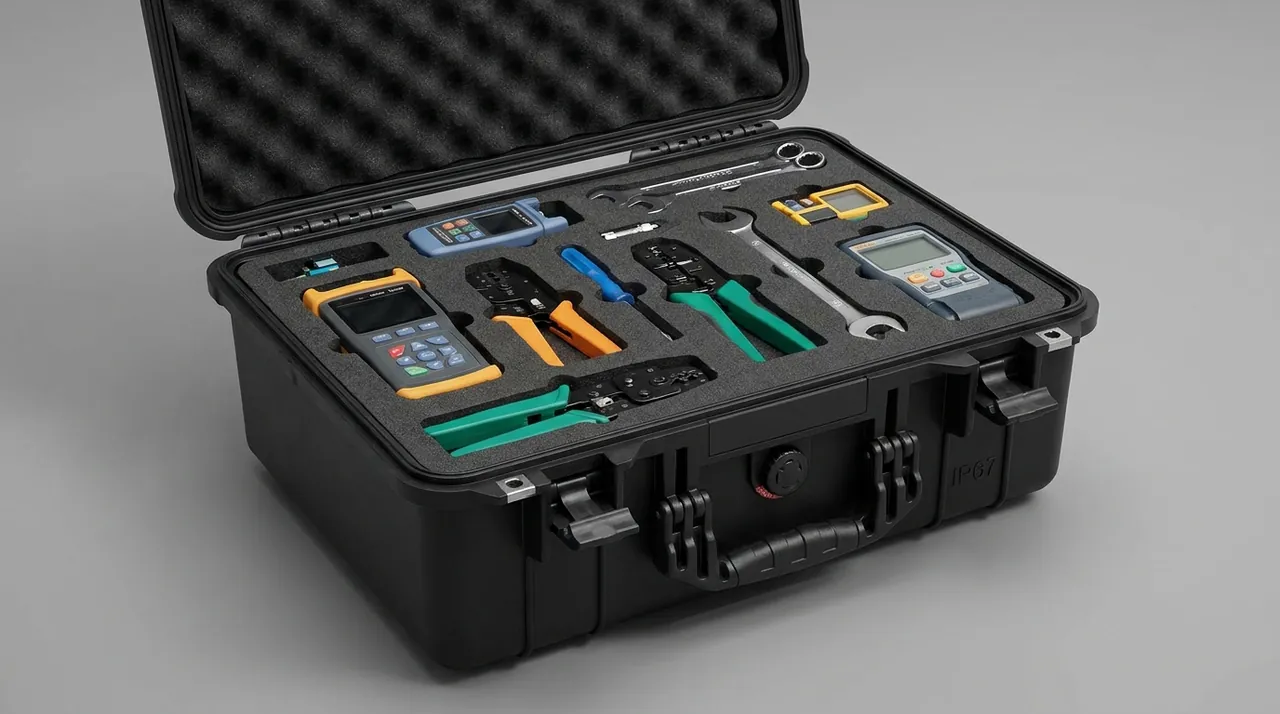
8. Microfilm and Photographic Media: Independent Space and Climate
The temperature and humidity windows of microfilm and paper records differ greatly; placing them in the same compartment of one case inevitably puts one party at a disadvantage. A workable compromise is compartmentalization, each with its own independent micro-environment.
Microfilm by photosensitive layer and base divides into several classes with different sensitivities. Silver-halide gelatin film has the best image stability but is sensitive to relative humidity swings and oxidizing gases; diazo film is low-cost and easy to copy, but fears light and alkali and fades under long exposure; vesicular film images by tiny bubbles and fears heat and pressure, since pressure alters the bubble structure. The three cannot share one storage parameter set.
Acetate base degradation needs separate handling. Cellulose acetate hydrolysis releases acetic acid, and that acid lowers the hydrolysis activation energy, forming a self-catalyzing loop. Gas chromatography can detect the internal acetic acid concentration, the common method to judge vinegar syndrome. Two control means exist: low-temperature low-humidity storage to lower hydrolysis rate, and placing a molecular sieve or activated-carbon adsorption layer inside to remove the released acetic acid. The adsorption layer needs periodic replacement, the cycle determined from actual monitoring.
Silver-halide film storage usually cites the ISO 18911 and ISO 5466 systems; acetate and polyester bases differ slightly, but the general direction is temperature not above 21 C and relative humidity held in the lower 20% to 40% band. The first role of low humidity is to suppress gelatin-layer water uptake and swelling, avoiding blocking between rolled films; the second is to suppress mold, because the film gelatin layer is a good substrate for it.
Color photographs are more temperature-sensitive. Dye-layer dark fading proceeds continuously at room temperature, and lowering temperature to 2 to 10 C significantly slows it, but the lower temperature must not let humidity rise with it, or it triggers gelatin-layer problems. This combination requires a color-photo case with both low-temperature adaptability and low moisture transmission. For case material behavior at low temperature, see the wide-temperature protective case technical note.
Magnetic media and other carriers also have their own boundaries. Magnetic tape below 35% relative humidity may show lubricant bleed and static accumulation, so its recommended humidity band is actually higher than film at 40% to 50%; it must also stay away from any sustained magnetic field source, including magnetic clasps, magnetized tools, and speakers. Optical discs are temperature-insensitive but fear scratches and ultraviolet, and should be stored in separate enclosures.
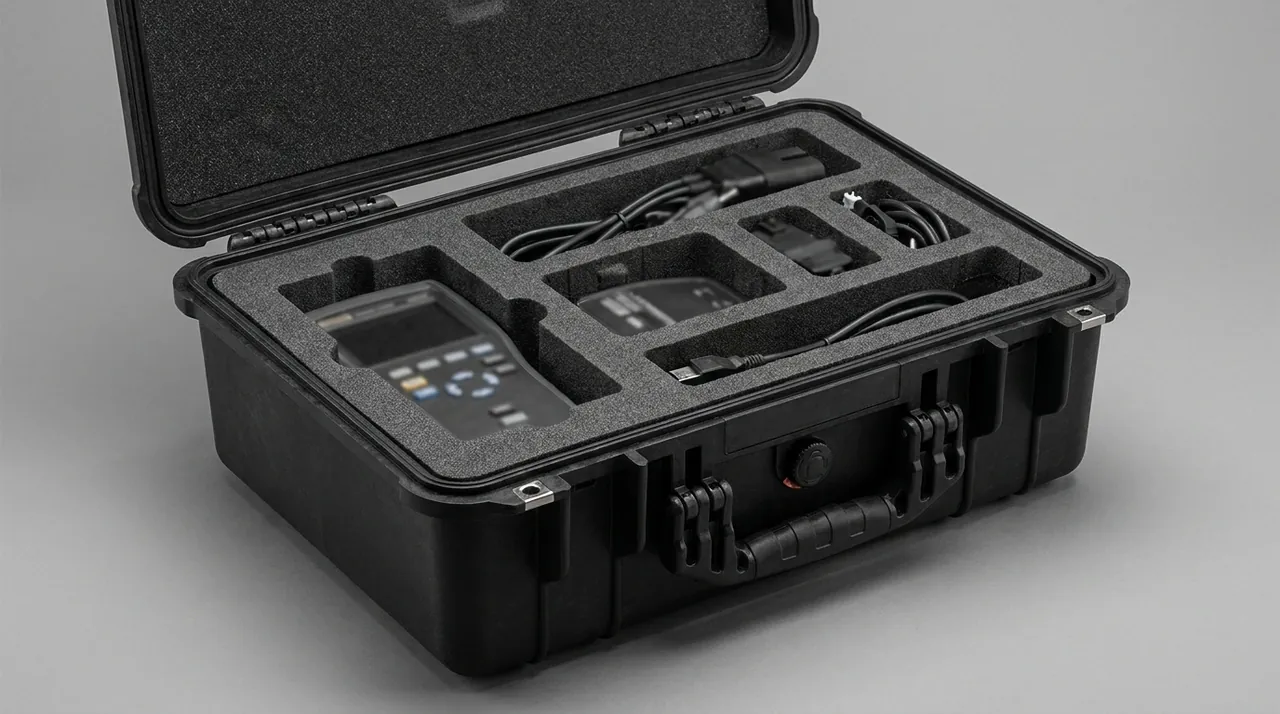
| Media | Temp max | RH window | In-case add-on | Absolute taboo |
|---|---|---|---|---|
| --- | --- | --- | --- | --- |
| Silver microfilm | 21 C | 20%-40% | Molecular sieve layer, dark | Sulfur gaskets, repeated opening |
| Acetate base film | 18 C | 20%-40% | Acetic acid adsorbent, isolated | Mixing with hydrolyzed reels |
| Diazo film | 21 C | 30%-50% | Full darkness | Alkaline material contact |
| Vesicular film | 21 C | 30%-50% | Avoid any surface pressure | Stacking under pressure |
| B&W silver photo | 20 C | 30%-50% | PET sleeve isolation | Sulfur or plasticizer materials |
| Color photo | 10 C | 30%-50% | Low temp, low MVTR case | High temp plus high humidity |
| Magnetic tape | 20 C | 40%-50% | Non-magnetic structure, anti-static | Strong field, RH below 35% |
9. Case Structure and Hardware: Low Moisture Vapor Transmission and Low Emission
An archival case need not withstand the shock levels of marine or construction equipment, but its requirement for the chemical inertness of the material itself is higher. This means the evaluation criteria for structure and hardware differ from industrial protective cases.
The moisture vapor transmission rate of the case material is the primary metric. Polypropylene transmission is typically on the order of 0.1 to 0.5 grams per square meter per day (typical value, varying with thickness and temperature), polyethylene is close, and both are far below ordinary board and wood. Metal and glass transmit even less, but are heavy, fragile, and unsuitable for cases needing frequent handling. The problem with wooden cases is not the transmission rate itself but that wood continuously releases organic acids and terpenes, and is a suitable habitat for pests, so it is not recommended as a long-term archival container.
The design point for hinges and latches is to avoid volatile substances. Ordinary luggage hardware has lithium grease at the pivot, which releases hydrocarbon vapor in a closed space over time. Archival case hardware should use an oil-free assembly structure, or an inert lubricant confirmed not to react with paper and image materials. The preload of the latch must match the gasket compression; a compression design in the 25% to 35% range both ensures sealing and avoids accelerated aging from over-compression. For how hinges and latches coordinate with the gasket, see the hinge, latch and gasket coordination design.
Gasket material selection needs re-examination in the archival scenario. The foamed EPDM common in industrial cases is low-cost and weather-resistant, but its sulfur-accelerator system may release trace sulfides under long closed conditions, harmful to silver-halide images. Silicone gasket's low-extractable character suits archival cases better, at the cost of higher price and slightly weaker tear resistance. If the case must also hold silver photographs or film, this trade-off should tilt toward silicone.
Inner surface treatment also needs care. Avoid solvent-based coatings, including sprayed color paint and varnish; if the case needs coloring, use masterbatch at the injection stage rather than post-coating. Printing-faced board should not be adhered inside, because printing ink may contain solvent residue and metallic pigments.
One more often-overlooked item is case cleaning. Before use, the new case should be wiped inside with a lint-free cloth and deionized water to remove mold-release residue and production dust, then ventilated and dried thoroughly before sealing. During use, cleaners containing ammonia or chlorine must not be used, because they seep into foam and release long-term in the closed space. Related practice is in the protective case cleaning and maintenance note.
10. Transit and Retrieval Scenarios: Short-Distance Protection from Vault to Reading Room
Archive transport distances are usually short, but the risk does not fall accordingly, because every transfer contains two high-risk links: a temperature-humidity environment switch and manual handling.
The environment-switch risk can be quantified. If records are stored long-term in a vault at 20 C and 50% relative humidity, while the destination reading room is at 26 C and 65% relative humidity, the vapor pressure difference is considerable. Opening immediately, the document surface rapidly takes up moisture, paper expands, the gelatin layer swells with water, and condensation risk appears. The safe approach is to rest first in a transition zone, letting the case temperature approach the environment before opening. The typical practice is about 1 hour of rest per 10 C difference as a starting point, adjusted by measurement; for film and photo carriers the transition should be longer.
Manual-handling risk comes from two details. One is stacking: during transit, archive cases are often temporarily stacked on carts, and stacking beyond five layers puts the bottom case under sustained static pressure, deforming it and thus compressing liner and documents. The other is single-case weight: a full file case usually weighs 15 to 25 kg, and above 25 kg the drop risk of manual handling rises markedly, and the displacement and friction damage to documents after a drop are often worse than the case damage.
Monitoring during transit should include three records: the in-case hygrothermograph record, the transport-environment hygrothermograph record, and a shock record. The first two judge after the fact whether exposure beyond the window occurred; the third confirms whether a drop beyond the design condition happened. The value of these records is that once degradation signs appear, one can tell whether it was an environment problem or a handling problem rather than attributing it vaguely. Outer-packaging marks may use the moisture-proof, sun-proof, upward, and no-roll symbols of GB/T 191.
The retrieval link also has a non-physical risk to control: document loss. A transit case should have a fixed manifest slot and case-number label, with compartments mapped one-to-one to the manifest and checked compartment by compartment at handover. In large collection-relocation projects, poor manifest management often causes more loss than physical damage. The compartment structure can use a removable divider system, convenient for adjusting bays and manifest structure per project; see the removable divider system note for the specific scheme.
11. Testing, Acceptance, and Records: Proving a Case Meets the Standard
Acceptance of an archival case cannot be only a transport test, because a transport test examines structural strength, while the core metric of an archival case is humidity-holding ability and material compatibility.
The transport-test part can follow the general systems. GB/T 4857.5 specifies the drop test method, GB/T 4857.23 the random-vibration method, ISTA 3A and 3E apply to parcel transport and unitized loads respectively, and ASTM D4169 applies to performance tests organized by distribution cycle. These tests confirm that case and liner will not fail under handling, stacking, and vibration; for specific scheme design see the GB/T 4857 transport packaging test implementation.
The special-test part is the key for an archival case and should include at least three items:
The first is the humidity-holding test. Place a calibrated hygrothermograph and the specified amount of conditioning material in the case, seal it, and place it in a constant-temperature-humidity chamber at 40 C and 85% relative humidity for 7 days, then read the internal relative humidity curve. The criterion is that internal relative humidity stays within the target window throughout and no condensation occurs.
The second is the temperature-cycle test. Run 5 cycles of 24 hours each between -10 C and +40 C, recording internal humidity swing and case deformation. This exposes permanent set of the gasket under repeated pressure differential and the wall-condensation tendency.
The third is the material-compatibility test. Run the Oddy test on all materials sharing the space with documents (liner, separator, gasket, hardware, label adhesive); for materials in direct contact with photographs and film, run the photographic activity test per ISO 18916. The test report should be issued by a laboratory with the relevant capability.
The acceptance procedure should build records by batch, putting every item onto a checkable document:
| Acceptance stage | Check content | Criterion | Record form |
|---|---|---|---|
| --- | --- | --- | --- |
| Incoming material | Acid-free board pH and alkaline reserve, foam density/hardness | Material test report | Batch retained sample + report archive |
| Assembly | Liner cutout dimensions, separator covering all contact faces | Drawing dimensional tolerance | Dimensional inspection report |
| Special test | Humidity holding, temp cycle, material compatibility | In-window judgment before/after | Test report + data curve |
| Batch sampling | Gasket compression, hardware assembly, case appearance | GB/T 2828.1 sampling | Sampling record |
| Delivery | Case number, manifest, keys, valve notes | Consistent with purchase agreement | Delivery checklist |
The sampling scheme should distinguish defect classes: insufficient gasket compression, missing separator, or material failing the Oddy test are critical defects judged at zero acceptance; appearance color difference or label-position deviation are minor defects handled by normal AQL.
12. How JUNZHIJIA Delivers Archival Storage Cases
JUNZHIJIA does not provide a mere case in the field of archive and document storage, but the ability to deliver material compliance, structural design, and long-term supply consistency as a package.
Material compliance is the first layer. Once an archival case mixes in ordinary corrugated board or sulfur-containing gaskets, the preservation condition of the whole case is dragged down, and such problems are completely invisible from appearance after assembly. JUNZHIJIA locks the material source by an archival-grade list: liner and support use acid-free board or acid-free cotton-paper systems, the separator between documents uses polyester or polyethylene film, the gasket is silicone or a low-sulfur formula depending on whether it touches silver-halide images, and hardware uses oil-free assembly. The pH, alkaline reserve, and Oddy test results of materials can be supplied per project requirement, for the institution to merge into its own collection-protection archive.
Structural design is the second layer. The liner design logic of an archival case differs from an equipment case: equipment is clamped, documents are supported. JUNZHIJIA designs support per carrier type: files use upright support boards and bookend structures, rare books use flat flexible pads, maps use large-diameter reel positions or edge-clamped board positions, and film uses independent thin-layer drawer positions. All contact faces are marked on the drawing with separator position and material code, avoiding wrong material on site.
Long-term supply consistency is the third layer. Collection projects are often purchased in batches over many years; if the hardness of gaskets or the performance of conditioning material drifts between batches, cases of different batches in the same vault behave inconsistently, troubling environment management. JUNZHIJIA retains samples by batch and records key parameters such as gasket hardness, foam density, and board pH, so the institution can use retained samples for comparison confirmation at batch change.
On delivery mode, JUNZHIJIA supports OEM and ODM, can customize by collection dimensions and manifest structure, and also provides wholesale, agency, and global supply support. The product is manufactured by Kexin New Materials (Guangdong) Co., Ltd.
13. Typical Configurations and Selection Cross-Reference
Putting the earlier parameters into concrete scenarios, the following table is a reference. The dimensions and materials are starting suggestions; actual design needs review against the measured dimensions and carrier composition of the collection.
| Scenario | Carrier mix | Suggested internal dims | Key config | Est. weight |
|---|---|---|---|---|
| --- | --- | --- | --- | --- |
| Enterprise archive daily turnover | Machine paper files, document boxes | 600 x 450 x 350 mm | Upright support + acid-free interleaving + 4-color humidity card | 18-25 kg |
| Rare book collection | Thread-bound books, cases | 500 x 400 x 300 mm | Flat flexible pad + silicone gasket + humidity panel | 12-20 kg |
| Drawing and map library | Large drawings, posters | 900 x 150 mm reel or 800 x 600 x 100 mm board | Large dia reel cradle or edge-clamped board | 10-18 kg |
| Microfilm library | Silver and acetate reels | 400 x 300 x 250 mm | Independent thin-layer slots + molecular sieve + 20%-40% RH | 8-14 kg |
| Photo and image collection | B&W and color photos | 450 x 350 x 250 mm | PET sleeves + low MVTR case + low temp adaptation | 8-15 kg |
| Collection relocation pallet | Mixed carriers | Per pallet size | Compartmentalized + breather valve + temp/humidity/shock logging | Varies |
Three practical suggestions for selection. First, group by carrier first, then decide the case type. A mixed-carrier case must be compartmentalized and set the whole-case parameters by the strictest carrier, or you are treating the most sensitive holdings by the loosest condition. Second, do not increase desiccant without limit to lower internal humidity. Over-drying makes paper brittle and film gelatin over-shrink, not worth the cost; the correct approach is to stabilize humidity inside the window with conditioning material rather than pulling it down continuously. Third, bring consumable replacement into daily management. Desiccant, conditioning panels, and adsorption layers all have saturation cycles that need frequency set and recorded from measured data, or the case may be found failed only two years after commissioning.
Frequently Asked Questions (FAQ)
Q: Is a more tightly sealed archival storage case always better?
A: Not at all. A fully sealed case creates two distinct problems. The first is pressure: the gas inside follows the gas law, and a 10 degree Celsius swing produces roughly a 3.4 percent volume change, so the gasket is pushed outward and pulled inward on a daily cycle, which over time produces permanent compression set and ultimately destroys the seal itself. The second is condensation: moisture inside condenses on cooler walls and on the documents, forming liquid water that is far more damaging to paper and gelatin than vapor. A better approach is a pressure-equalization valve built around an expanded polytetrafluoroethylene membrane that lets gas pass slowly while blocking liquid water and dust, so internal pressure tracks temperature changes. The right acceptance metric is moisture vapor transmission and humidity-holding capacity, not a short-term immersion standard such as IP67. Designing an archival case to dive-rated tightness yields a heavy, hard-to-open box with a fragile gasket and no better moisture performance.
Q: How much desiccant should be used, and how often should it be replaced?
A: Dosage must be estimated from volume, gasket performance, and cycle together, starting from typical values then calibrating by measurement. For a sealed case with 50 L net volume, if the goal is to hold relative humidity near 50% for 30 days, untreated silica gel can start at 200 to 350 g; with pre-conditioned silica gel or a dedicated panel, a single panel typically covers 30 to 50 L of net volume. But the largest variable is the moisture content of the documents themselves; files just taken from a humid vault carry much water and should first equilibrate with the environment before sealing. The replacement cycle cannot follow fixed months; it should be based on the in-case four-color humidity card and logger data: when the card shows relative humidity has stably risen above the target window ceiling, the desiccant is near saturation and needs replacement. An archive should put each case's dosage and replacement record into a ledger, forming traceable consumable management.
Q: Why can ordinary cardboard boxes or wooden cases not be used directly for archives?
A: Because the chemical nature of both materials conflicts with long-term archival requirements. Ordinary corrugated board is mostly mechanical wood pulp or mixed pulp containing lignin, which generates acidic substances under light and oxygen, and the starch glue in the board is pest food, so it is itself an acidic and pest-attracting environment. Wooden cases are worse: wood continuously releases organic acids, terpenes, and aldehydes whose accumulation in a closed space accelerates paper acidification and harms silver-halide images; wood is also a suitable habitat for termites and wood-boring pests. The released vapors also soften adhesives and can fog photographic emulsions over time. The danger is that these effects are invisible at purchase and only surface years later as yellowing and foxing. If a wooden outer case is unavoidable, the correct approach is to use the wood only as an external transport container, with a separate archival-grade acid-free inner case or an opaque low-transmission liner inside, and ensure documents never touch the wood directly.
Q: Can silica desiccant be placed in the same compartment as rare books directly?
A: Direct contact is not recommended; they should be separated. The reason has two sides. Physically, silica grains rub against the paper surface under transit vibration; rare-book paper is weak and easily gets scratches or fuzz. Chemically and structurally, direct contact forms a locally over-dry micro-environment where paper right against the desiccant has markedly lower moisture than its surroundings, creating a humidity gradient that leads to local shrinkage, curling, or even cracking. The correct approach is to pack the desiccant or conditioning material in a breathable but particle-tight acid-free paper bag or polyester nonwoven bag, fixed in an independent compartment or inside the lid, acting through spatial diffusion rather than pressing on the documents. Keep a distance between desiccant and protected items so internal humidity equilibrates slowly through air, which also protects the book boards from abrasive contact. This matters more with conditioning material, whose release process needs surrounding air circulation to be even.
Q: Can microfilm and paper records be placed in the same case?
A: Same-compartment storage is not recommended, because their relative-humidity windows barely overlap. Paper records suit 45% to 55%, while silver and acetate microfilm suggest a lower 20% to 40%, and color photographs 30% to 50%. Forcing them together inevitably pushes one party off its condition: paper pulled to 30% becomes clearly brittle with worse curling; film kept at 55% sees gelatin swell and reels block, with rising mold risk. Moreover, acetate-base hydrolysis releases acetic acid whose gas in a closed space accelerates the acidification of other materials, harming paper. The temperature needs diverge as well, since film prefers cooler storage than paper. Mixed storage also complicates any later decision to move one carrier to a colder vault, because the shared case cannot be split without repacking. If transport in one case is truly necessary, use a removable divider system to make independent compartments, each with its own conditioning material and adsorption layer, and keep a solid partition between the two so air does not flow freely.
Q: Why is foam liner not recommended to touch documents directly in an archival case?
A: Because of material-migration risk, which is hard to detect in the short term. Foam uses blowing agents, stabilizers, and plasticizers in production; even at very low residual levels these slowly volatilize under long closed conditions and deposit on paper, gelatin, or dye layers. Consequences include locally softened yellowing paper, silver-image discoloration, and adhesive failure. Even good closed-cell material, with long-term face contact, may leave marks from surface extractables that cannot be washed out later. The common practice is to let foam perform only shape support and cushioning, adding a layer of polyester film or acid-free tissue between foam and document. The separator should cover every potentially contacting face, not just the bottom, and should be specified by material code on the drawing. At acceptance the separator's presence and full coverage should be verified under the critical-defect class, since a missing layer is impossible to see once the case is closed and in use. This requirement should be a separate annotation on the custom liner drawing and a critical-defect check at acceptance.
Q: How can one verify that an archival case really holds humidity, rather than trusting the manufacturer's claims?
A: One needs dynamic data rather than static nominal values, centered on three tests. First is the humidity-holding test: put a calibrated hygrothermograph and specified conditioning material in the case, seal it, place it in a constant-temperature-humidity chamber at 40 C and 85% relative humidity for 7 days, read the internal curve, and require it never to leave the target window nor show condensation. Second is the temperature-cycle test: complete 5 cycles of 24 hours between -10 C and +40 C, checking whether the gasket shows permanent set and the wall shows condensation. Third is the material-compatibility test: run the Oddy test on all materials and, for those touching photographs or film, the photographic activity test per ISO 18916. All three reports should come from a capable laboratory. After receiving them, also check whether the test conditions match your actual transit and storage conditions; conclusions cannot be applied directly when the difference is too large.
Q: What is the most easily overlooked risk during document transit?
A: It is the two seemingly ordinary links of temperature-humidity environment switching and handling stacking. The harm of environment switching is often underestimated: if documents are stored long-term at 20 C and 50% relative humidity while the destination reading room is at 26 C and 65%, opening directly makes the document surface rapidly take up moisture, paper expands and the gelatin layer absorbs water. The safe approach is to let the case rest first in a transition zone, with a typical start of about 1 hour per 10 C difference, longer for film and photos. The handling problem centers on stacking and single-case weight: full file cases are often stacked above five layers on carts, and the bottom case deforms under pressure; above 25 kg the drop risk of manual handling rises markedly. It is advised to write the temperature-transition rest time, stacking limit, and single-case weight limit directly into the relocation work procedure.
Conclusion and Related Reading
The technical substance of an archival case lies in parameter and material compliance: a stable humidity window, a pressure-balanced seal, and materials that emit nothing over decades. JUNZHIJIA customizes liner structures to your collection, supplying acid-free materials and silicone or low-sulfur sealing; the product is manufactured by Kexin New Materials (Guangdong) Co., Ltd.
Related Reading