

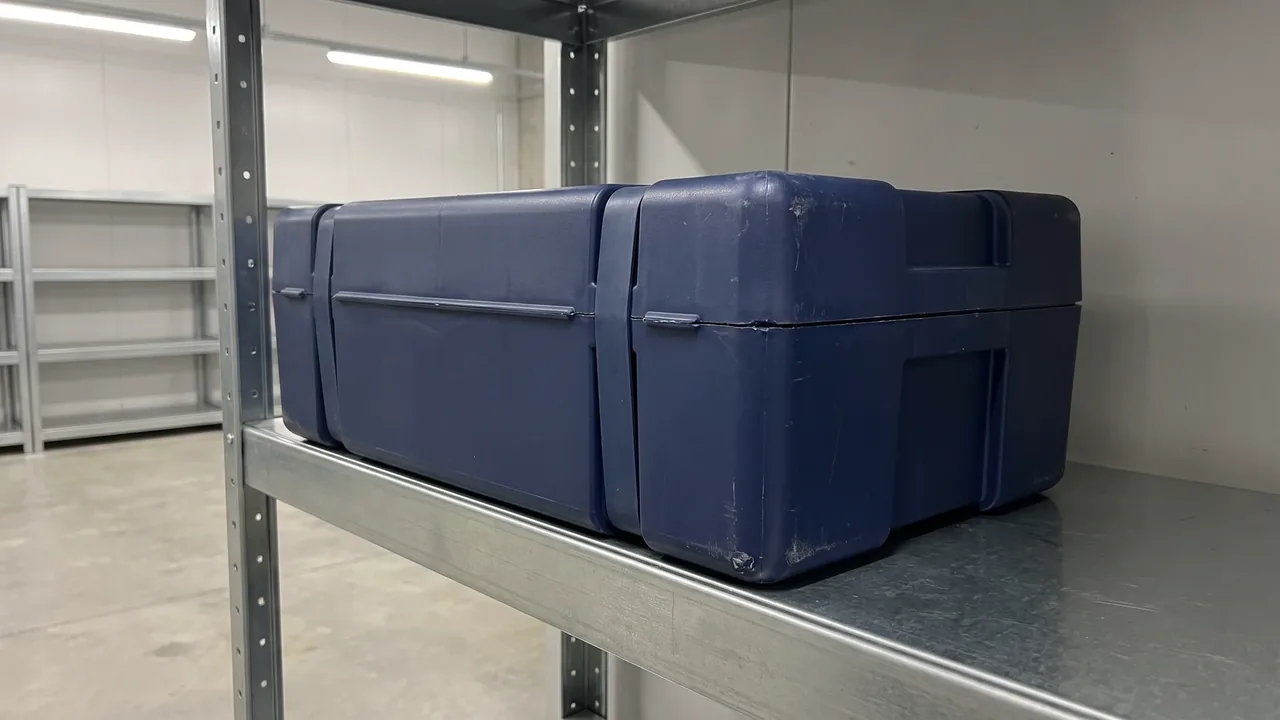
The reusable shipping and storage container is a returnable protective enclosure built for closed-loop logistics. Its task is not to "complete one shipment" but to turn single-use packaging consumption into a loop asset that can travel back, be serviced, reissued, and measured. A reusable unit must cycle hundreds of times between dispatch ground, customer site, recovery, cleaning, and re-loading, keeping its protection and seal every round while driving the per-cycle cost below single-use packaging across its whole life. This article unpacks, from a protective-case manufacturer's point of view, the general requirements a reusable container should meet in returnable-logistics economics, material reuse cycles, internal restraint, marking traceability, seal-loop custody, stacking for return, protection retention, maintenance and reissue, asset inventory, and military acceptance, and gives procurement a checklist they can drop straight into a technical agreement. It must be stated plainly that this article discusses the packaging container only; the nature, handling, and any defense-trade export of whatever is loaded inside are governed by local regulations and export control requirements, and the container supplier's duty is to translate loop, reuse, and traceability into a box structure that is mass-producible and serviceable many times. JUNZHIJIA manufactures rotomolded and aluminum protective cases over the long term, and the experience below references this kind of volume production process.
Written from the bench of a protective-case manufacturer, this guide deliberately stays within the boundary of the container. It does not describe which cargo the box holds, how it is dispatched, or the controls that govern its movement; those sit with the cargo authority and the logistics manager. What it does offer is the engineering reasoning a buyer can use to turn a vague "reusable case" request into a numbered technical agreement, and to ask the right questions when two quotations look identical on paper but diverge sharply on the returnable economics they actually deliver. The rest of the article walks the returnable loop link by link, from whole-life cost to on-site acceptance.
The Mission: Turning One-Use Packaging into a Loop Asset
The reusable container faces a closed loop of "dispatch, arrive, recover, re-dispatch" rather than single-use consumption. At dispatch it must load fast and stack stably; at arrival it must let the receiver count fast and store on the spot; at recovery it must fold or nest empty to cut return freight; at reissue it must return to factory state after cleaning and service. This mission means the core of a reusable container is not "sturdy and durable" but "comes back, is serviceable, is measurable, is manageable." Replacing single-use packaging with a loop asset is the fundamental way to cut long-term logistics cost and packaging waste, and the basis on which modern closed-loop supply chains move from consuming packaging to managing it.
Broken down, the mission has four capabilities: returnable, serviceable, measurable, traceable. Returnable means the box loads and fixes stably at both ends; serviceable means consumables are replaceable and structure refinishable so one box serves hundreds of rounds; measurable means every cycle can enter a cost model so "is reuse worth it" has a data answer; traceable means each box's identity and location are queryable so assets are not lost and responsibility closes. The manufacturer must reserve interfaces for these four in the structure: a foldable or nestable design, replaceable latch and gasket, a readable identity code, and a verifiable seal position, all of which are the engineering details that make loop capability real.
Concretely, a reusable container earns its name only when three conditions hold together: the per-cycle cost is below single-use packaging, the reuse count of one box reaches the economic threshold, and the asset recovery rate is high enough. Miss any one and the reusable box reverts to a sunk asset that "can be bought but not recovered," which is exactly why many circular projects fail. The remainder of this article treats those three conditions as engineering requirements with measurable acceptance criteria, so a buyer can specify them in numbers rather than adjectives, and can judge whether a quotation really runs the loop.
The Core of Returnable Economics: Whole-Life Cost, Not Unit Price
The biggest difference between a reusable container and single-use packaging is that its economics must be measured by whole-life cost, not purchase unit price. A reusable box may cost ten times a single-use box, but if it cycles two hundred times and only needs light service each round, the per-cycle cost falls below single-use; conversely, if recovery is low and service is dear, even a cheap unit price does not pay. Therefore procurement should build a cost model: purchase price divided by reuse count, plus per-round service, plus per-round freight difference, then compared with the single-use per-cycle cost. Writing this model into the technical agreement is more reliable than comparing unit prices at purchase, and avoids a circular project giving up in year one because the math was wrong.
The key variables of whole-life cost are reuse count and recovery rate, and both are decided by structure. A foldable or nestable design cuts return freight sharply, the most direct lever on returnable economics; a replaceable consumable decides how many rounds one box serves; a readable identity code decides asset recovery. The manufacturer should reserve interfaces for all three in the structure rather than making the box "sturdy but unrecoverable." Front-loading reuse count and recovery rate into the structure is a more cost-relevant metric for the buyer than "is it sturdy," and the essence that distinguishes a reusable container from an ordinary transport case.
Whole-life cost should also include loss and depreciation. A loop asset inevitably has loss and damage, so the model should include an annual loss rate; the manufacturer should provide a replaceable-part list and service interval so the buyer can estimate annual service cost. Writing loss and service into the agreement is more reliable than discovering "half the boxes were lost" mid-project and then remedying, and avoids returnable economics being quietly eaten by hidden asset drain, exactly the invisible reason many "looks worth it" circular projects ultimately fail.
Material Routes: Deciding the Reuse Count
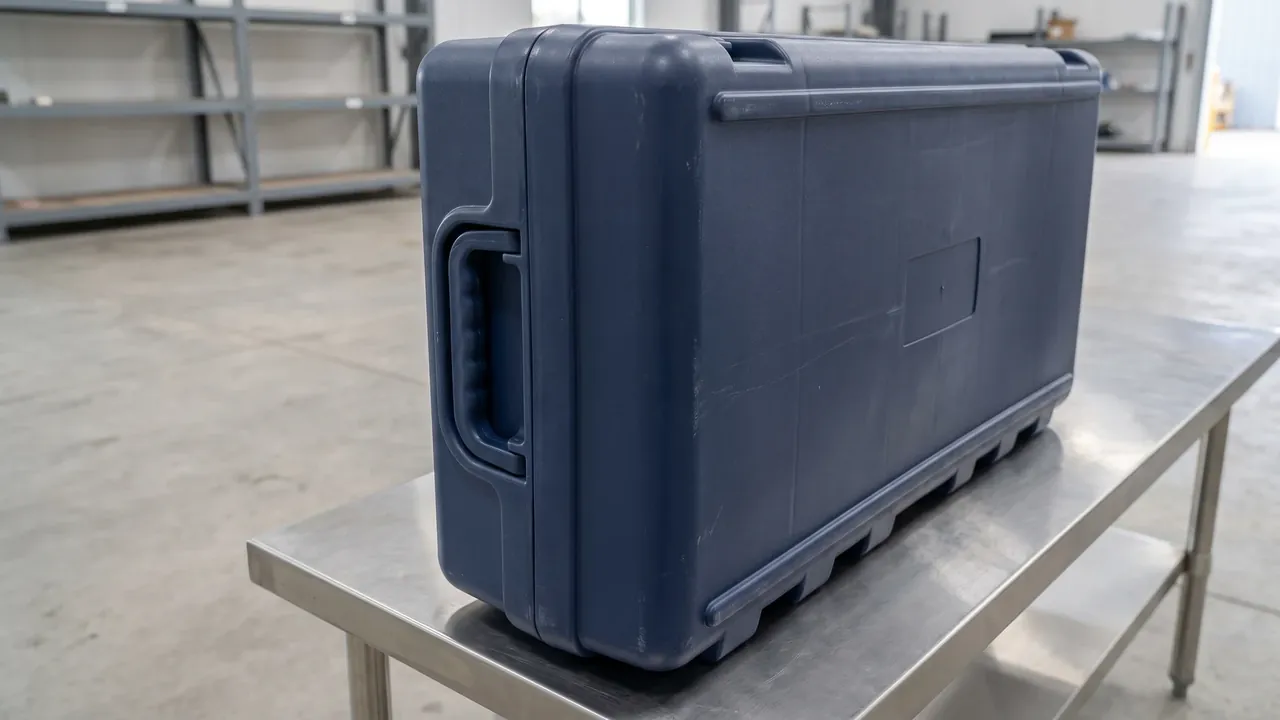
The material choice of a reusable container directly decides its reuse count. Rotomolded HDPE is integrally molded, seam-free, impact-resistant, and heat-repairable, giving the best whole-shell consistency over hundreds of cycles and leading closed-loop logistics; aluminum shells are rigid and field-straightenable, suiting weight-critical or high-rigidity loops; composite fiber wins most on specific strength but needs factory service, suiting high-value low-volume. Material is not "the more expensive the better" but reverse-derived from target reuse count and on-site service condition: a poor site with a high target count should prefer field-treatable rotomold or aluminum over factory-service composite. Writing the material reason as verifiable reuse notes is the core by which a buyer distinguishes a "select-by-experience" quotation.
Whichever material is chosen, the reusable container should place serviceability on a par with protectiveness. The value of a loop box is realized over many services, so consumables should be designed for hand or common-tool replacement: gasket pull-and-swap, latch detachable, hinge replaceable, liner removable for cleaning. The manufacturer should deliver a consumable list and replacement guide at handoff so the site can restore function without returning to factory. Writing serviceability into the technical agreement is more reliable than discovering "broken means scrap" mid-loop and then remedying, and avoids one box leaving the loop over one small part's failure.
A second material consideration is refinish and reissue. After several rounds a reusable box may need full refinish: re-sealing, re-marking, re-checking structure. The manufacturer should provide the refinish process and decision criteria so the buyer can decide between refinish and retirement on evidence, not a flat year limit. Front-loading the refinish standard into delivery is the key that keeps a loop asset economic, and avoids "still repairable yet retired" waste or "should have retired but kept in use" failure risk.
Marking and Visibility: Identity Is the Asset
In closed-loop logistics, the marking system of a reusable container is the asset system. A reusable unit's identity code decides whether it can be counted, tracked, and costed, so the box should provide a tamper-proof serial and QR at a readable position and reserve an RFID position so automatic counting is possible. Marking should let warehouse, hub, and receiver complete identification and logging within seconds rather than copying numbers by hand. Visibility is the cheapest way to cut loop-management cost, and aligns with the "marking is a management interface" idea of the logistics support box.
Marking materials and process must survive repeated use. A reusable box endures hundreds of handling and washing cycles, and paper labels fall off fast, so identity marks should prefer laser engraving, embossing, or weatherproof plates over stickers; the updatable task list can use a clear window card that is both weatherproof and easy to change. The manufacturer should deliver marking maintenance guidance: which marks are fixed, which are field-updatable, and how to verify after update. Writing marking into the technical agreement is more reliable than discovering "can't tell whose box this is" mid-loop, and avoids asset loss from a fallen label, exactly the most common asset-drain channel in circular projects.
Beyond the marks themselves, the reusable container should make re-marking a controlled act. When a box is repurposed between batches, the old class mark must be cleanly removable or permanently overprinted, not taped over, because a taped-over mark that peels at the wrong moment can send the box to the wrong destination or confuse asset ownership. The manufacturer should design the marking surface so updates are deliberate: a recessed window for the swap card, a laser-engraved serial that cannot be tampered with. Treating re-marking as a controlled change is what keeps a large loop fleet's book and physical stock matching across years of reuse, and is the "front-loaded marking, fast handover" idea of the deployable hard case landing in the loop scene.
Internal Restraint and Reusable Liner
The liner system of a reusable container has one goal: keep cargo in place across hundreds of cycles, and the liner itself must also be reusable and washable. EVA and EPE foams fix cargo in pre-cut cavities; divider panels and adjustable trays handle mixed loads; but unlike a single-use box, a reusable box liner should prefer removable, replaceable modules so the liner can be swapped alone when the cargo batch changes or it is soiled, rather than scrapping the whole box. Writing liner reusability into acceptance is returnable economics showing on the restraint dimension.
The trade-off between custom and universal liner depends on how stable the cargo organization is. Fixed-kitted cargo suits CNC-cut typed liners with high consistency; changing-batch cargo suits adjustable dividers and modular trays using zoning logic rather than per-item cutting. Either way, the reusable box should guarantee "pick on open, secure on reset" without special tools, which directly decides restraint quality on the next load and loop efficiency. Writing the reset as a diagram on the inner lid is low-cost and high-return; if reset depends on one specific person, quality drifts when that person leaves, and that is the human-factor risk large-batch loops fear most.
A detail often missed is liner-to-cleaning coordination. A reusable box often needs cleaning at recovery, and a liner that cannot be removed becomes a contamination dead corner that carries the previous batch's residue into the next. Therefore the reusable box liner should be a material and structure that comes out whole for washing, with cleaning methods and prohibitions (for example a foam not machine-washable, a coating allergic to a solvent). Front-loading the cleaning boundary into the structure is more reliable than improvising how to wipe at recovery, and avoids the wrong cleaner damaging the liner and shortening the loop life.
Locks and Seals: The Closed-Loop Custody Chain
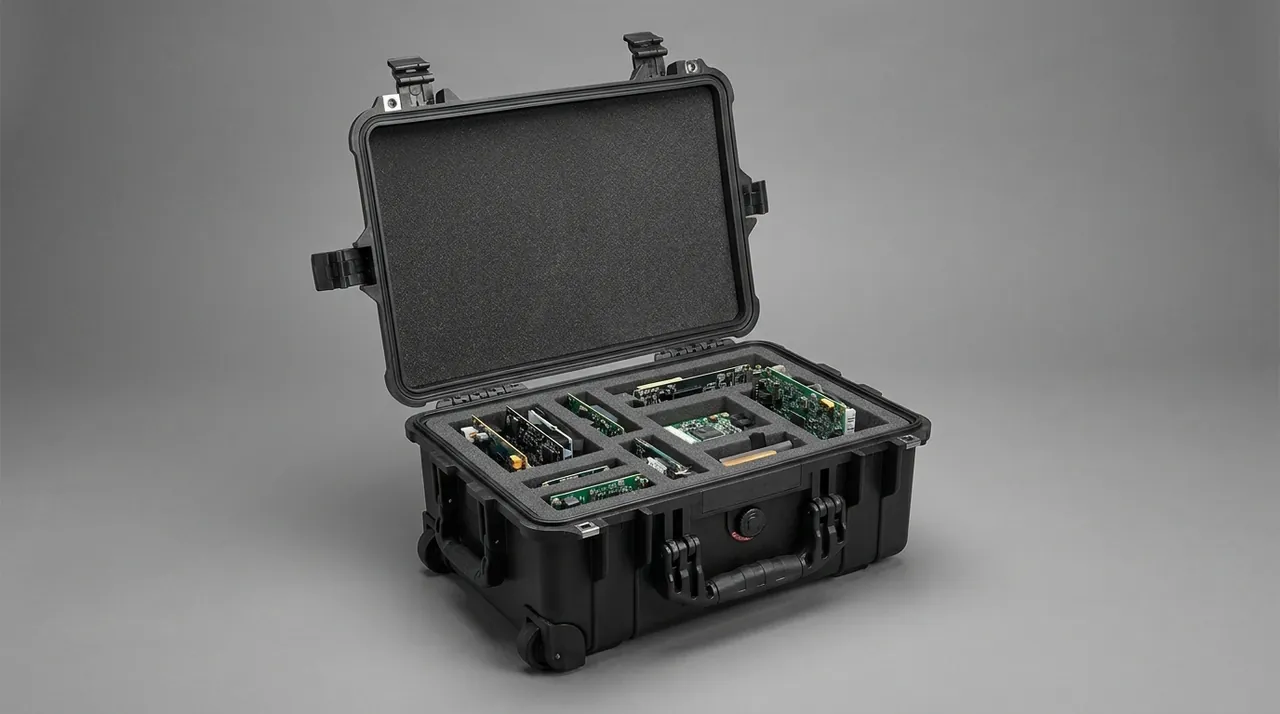
In closed-loop logistics, seal management decides whether responsibility can close. A reusable box usually has two lock layers: a quick-open latch for daily access, and a numbered seal added at handover. The seal number binds to the handover sheet, and every opening generates a record, ensuring a definite answer to "was it opened." Unlike a single-use box, a reusable box's seal cost accumulates over cycles, so it should prefer a reusable seal or electronic seal so the per-cycle seal cost approaches zero. Writing reusable sealing into the technical agreement is returnable economics showing on the traceability dimension.
Traceability is also the core of asset management. The reusable box should provide both a QR code and a laser serial on the identification panel so manual verification survives a scanner outage; with RFID, whole-pallet automatic counting becomes possible so "which box is where, how many rounds" is one-click. This "automatic identity" design matters especially in loop scenes, because assets span many years and units, and any identity mismatch voids cost accounting and the responsibility chain. Front-loading automatic traceability into the structure is the key action within the manufacturer's responsibility boundary and the basis the buyer can rely on at inventory and audit, consistent with the sealed-to-opened traceability of the war reserve case, only the reusable box extends the concern from single seal to multi-round cycling.
The seal and traceability should also link to cycle counting. Each round of a reusable box should record the open count and service node so "how many rounds this box has cycled, is it due for service" is queryable at inventory. When a batch cycles across years, any counting mismatch voids the maintenance plan, so the identity and counting system must be front-loaded into the structure rather than tallied afterward. High-value assets can upgrade to time-stamped electronic seals that record at each custody point, turning the loop responsibility chain from manual ledger to system trace, so "is it due" has a definite answer and asset drain across multi-unit loops drops sharply.
Stacking and Palletization: Return Loading Efficiency
In closed-loop logistics, the stacking design of a reusable container relates not only to storage but to return efficiency. On dispatch the boxes stack loaded; on recovery they return empty; if empty boxes cannot fold or nest, return freight eats the returnable economics. Therefore the reusable container should prioritize a folding or nesting design that compresses empty volume sharply; at the same time, top and bottom stacking bosses must align so load transfers vertically to the main structure, not onto thin walls or latches. Writing the return compression ratio into the technical agreement is the metric the buyer should most quantify yet most often overlooks when judging returnable economics.
Palletization is the key interface that lets a reusable container join the loop system. External dimensions should prioritize alignment to standard pallets and container inner widths so multiple boxes tile a pallet without gaps or overhang; the base should have features that work with pallet straps or anti-slip mats, preventing the whole load from sliding both ways. This interface looks like a sizing issue but decides whether the reusable box truly enters closed-loop logistics or gets re-stacked at every node. For return, palletization also directly affects empty-box loading and freight cost, the last mile turning "a box" into "a loop unit," and it shares the stack-to-pallet discipline of the stackable container.
Stacking should also consider structural decay after reuse. After hundreds of stacks, bosses and locator pins may wear, so these should be designed replaceable or reinforceable so stacking capacity does not fall with cycling. The manufacturer should state the stacking tier limit and boss replaceability in the technical agreement so the buyer maintains stacking safety over the long cycle. Front-loading structural decay into the design is more reliable than finding "it stacks unstably now" mid-loop and then remedying, and avoids a whole stack losing tiers and wasting warehouse space because one box wore down.
Protection Grade and Sealing: Retention After Many Cycles
The protection grade of a reusable container must be written as "retained after reuse," not an ex-factory single test value. A reusable box must hold its IP grade after hundreds of open-close cycles, so the gasket should be a pull-and-swap design so a leak can be repaired rather than scrapping the box; the latch should give clear feedback when not fully engaged so "is it closed tight" is readable at a glance; perimeter compression uniformity and corner continuity should be re-checkable on site with a simple method. Writing "retained after reuse" into the technical agreement is the core by which a buyer distinguishes a reusable quote from an ordinary one, and aligns with the "grade sealing by environment profile" idea of the temperature-controlled case.
Seal reusability also shows in material choice. The gasket must be a weatherproof elastomer that still rebounds after repeated compression and washing, and does not leach or stick to the shell over long use. The manufacturer should provide a recommended gasket replacement interval and spare number so the buyer replaces on demand rather than by feel. Writing seal reusability into the delivery spec is more reliable than arguing "should this have been replaced" after a leak, and avoids a whole batch of loop boxes failing collectively as gaskets age.
A further key of protection grade is recovery after cleaning. After recovery and cleaning, if the seal face retains cleaner or moisture it accelerates aging or affects sealing, so there should be a dry-and-recheck step after cleaning. The manufacturer should provide the post-clean recheck guidance and tolerable cleaning methods, writing "cleaning is restoration" into the delivery spec. Front-loading the cleaning boundary into the structure is the key that keeps a loop box protective across hundreds of rounds, and a dimension ordinary transport cases often ignore.
Maintenance and Reissue: Cleaning, Service, Refinish
The economics of a reusable container rest on maintainability, so the maintenance system matters more than a general case. A full service should include: cleaning (remove residue and soil), service (check latch, gasket, hinge, boss), replace (swap consumables at end of life), and refinish (re-seal and re-mark where needed). The manufacturer should provide a service checklist, decision criteria, and replaceable-part numbers so the site can act by procedure rather than by feel. Writing the service procedure into the technical agreement is the key that keeps a loop asset at low ownership cost, and avoids "small faults unserviced, big faults scrapped."
A frequently overlooked detail of service is the service record. Each round of service for a reusable box should leave a trace so "how many times serviced, what was replaced, is it due next round" is queryable. The manufacturer should reserve a service-record position in the structure or bind the record to the identity system so service moves from human memory to system trace. Front-loading the service record into the structure is the basis for a manageable loop asset, and the data source the buyer can rely on in cost accounting, avoiding service cost becoming a murky account.
A further key of service is pre-reissue verification. A cleaned and serviced box should be verified before reissue, confirming seal, latch, marking, and structure all meet standard, not "it looks clean so send it." The manufacturer should provide a reissue verification checklist so a nonconforming box is stopped before entry. Front-loading verification into reissue is the key that keeps a loop box reliable across years of reuse, and avoids an unserviced box entering the loop, failing at the customer, and damaging the trust of the whole circular project.
Military Acceptance: Mapping MIL-STD-810H to GJB for Cycles
Military acceptance of a reusable container usually maps to MIL-STD-810H and the corresponding GJB methods, but the focus differs from a single-trip case: beyond generic drop, vibration, and salt spray, the reusable container should add cycle-related verification such as seal retention after repeated open-close, structural decay after repeated stacking, material leaching after repeated cleaning, and readability of seal-open records. Turning "loop capability" from a claim into a set of acceptable tests is the core by which a buyer distinguishes a reusable quote from an ordinary one. The test profile should bind to the real cycle count rather than single use, because only a profile matching the cycle count predicts long-term performance.
Military testing should not be read only for a pass mark, but for whether the report maps to the box after cycling. The reusable container acceptance report should record: gasket rebound after N opens, boss deformation after N stacks, material change after N washes, and the durability floor of latch and marking under salt spray. These findings feed directly back into material and structure improvement, where the test budget earns its return. A supplier without a report can only promise verbally, with nothing to compare when it fails mid-reuse; a supplier with a report has committed to specific test conditions checkable line by line. The bound object should be the real batch, not a generic sample, because the consistency of batch reusable boxes shows exactly in every box reproducing the report's conclusion.
The deeper value is the improvement loop: aligning field failure with lab failure modes forces material or structure optimization. For example if a gasket hardens after two hundred rounds, the lab should reproduce it with accelerated aging at the same cycles, then use the gasket compound and section as the mold-change basis. Writing this loop into the technical agreement makes the reusable box not "accepted once, then unchanged" but continuously converging with cycle feedback. This is consistent with the "drive iteration by test profile" idea of the military rotomolded case, only the reusable box extends the test goal from single-trip protection to multi-cycle retention.
Export and Compliance Documents: Trade Requirements for Loop Containers
When a reusable container is exported or moved cross-border with cargo, its compliance documents are more complex than a single-use box. Beyond the general UN packaging certification (where applicable), packing list, and material conformity, a loop container also needs a reuse-count declaration, a third-party test report number, and traceable batch records so the physical box, certificate, and report correspond one to one. Wooden packaging must meet IPPC fumigation or exemption; metal and plastic focus on material declaration and recyclability marking. The typical failure is document inconsistency: certificate box type, report status, and actually shipped box do not match, often detained at the port. Writing the boundary of "container compliance" versus "cargo compliance" clearly is the premise that cross-border loops avoid responsibility disputes.
Export should also separate the boundary of "container compliance" from "cargo compliance." The reusable container manufacturer is responsible only for the container's structure and sealing; the cargo compliance is the cargo party's, and the two must not be confused. Therefore the technical agreement should state which reuse declarations the container provides, who issues them, and for how long, while the cargo compliance is separately the buyer's or cargo party's responsibility. Writing the boundary clearly is more reliable than arguing "who owns this box" at the port, and avoids mistakenly pushing cargo responsibility onto the container manufacturer. It must be restated that this article discusses the container only; export is governed by local regulations and export control requirements, and the manufacturer's duty is to build compliance into the box, not to replace the cargo or regulatory body.
In practice, the reusable container export documents should attach a list-style annex stating version, validity, and issuing body, re-verified against the certificate before each production. The cross-border nature of loop containers makes document version management more critical than single-batch export: the same box type in different years may correspond to different test standards, and if documents are not updated per batch, an old report with a new box fails at the port. Binding the document version to the production batch is the most overlooked yet most fatal link in reusable container export compliance.
Asset Inventory and Tracking: Making the Loop Measurable
The economics of a reusable container ultimately land on asset inventory and tracking. If a loop box cannot be counted, its recovery rate and loss rate cannot be accounted, and returnable economics cannot be verified. Therefore the box should provide an automatically readable identity system (QR plus RFID) so whole-pallet counting is possible; the manufacturer should provide the identity code rule and read interface so the buyer can connect its own asset system. Writing "measurable" into the technical agreement is the key that takes a circular project from "feels worth it" to "data proves it worth it."
Tracking should also cover location and state. A reusable box in the loop may be in transit, in store, at the customer, or in service, and different states carry different cost, so the identity system should record state, not only identity. The manufacturer should reserve a state mark or electronic tag position in the structure so the buyer can count by state. Front-loading state tracking into the structure is the basis of loop asset management, and the data source the buyer can rely on when optimizing recovery rate.
The ultimate purpose of tracking is to cut loss. The biggest hidden cost of a loop asset is drain, so the identity system should link with the handover seal so "who held this box last" is queryable. High-value assets can upgrade to electronic tags with position records so drain is detected before it happens. Front-loading traceability and drain control into the structure is the key that keeps a circular project at high recovery, and avoids "half the boxes lost" making an otherwise worthwhile loop unprofitable.
Procurement Checklist: Writing "Reusable Case" into a Technical Agreement
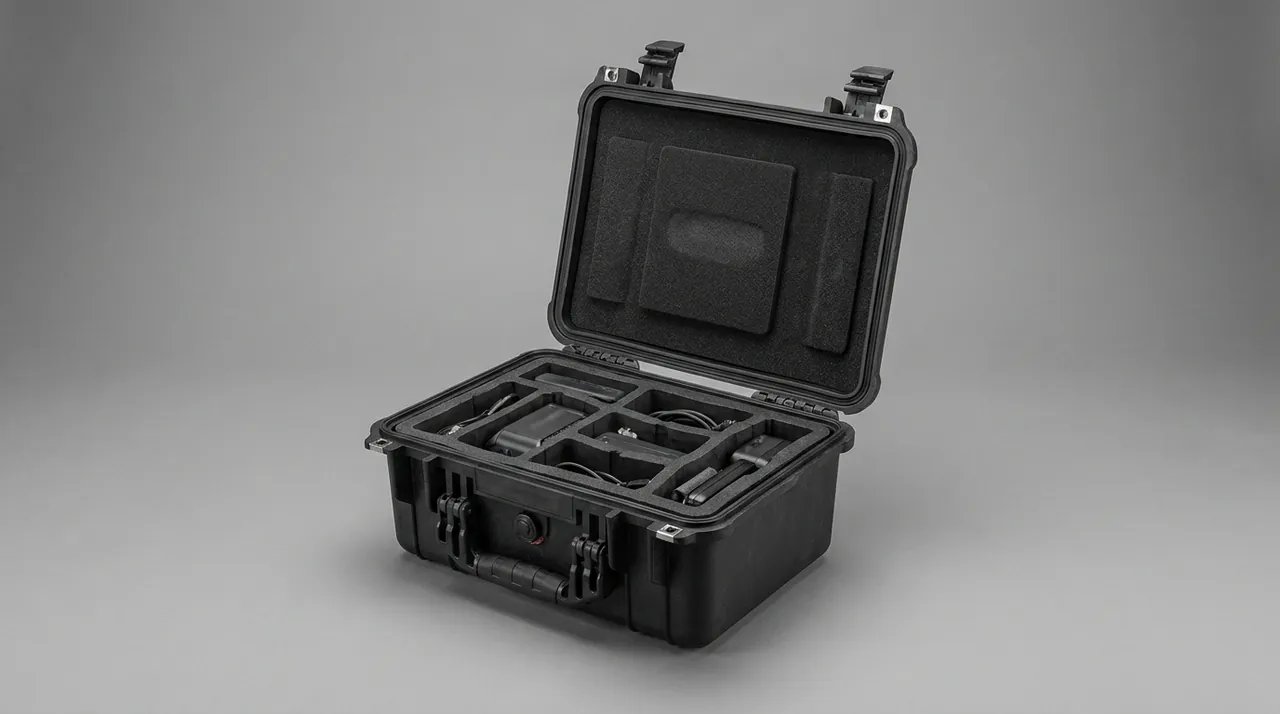
Buying a reusable container should not stop at "a sturdy box" but turn every line above into an acceptable clause. The checklist should at least include: whole-life cost model and target reuse count, return compression ratio (fold/nest), material reuse and serviceability, consumable list and replacement guide, liner removable and modular, reusable seal and electronic traceability, stacking tier and boss replaceability, seal retention after reuse, cleaning and reissue verification, refinish criteria, military cycle test profile with bound batch, and export document list with version management. Writing this list into the technical agreement gives the buyer the right to question quotations rather than picking boxes by feel at acceptance.
Procurement should also write "recovery rate" and "service cost" into the requirement. The real cost of a reusable container is not the unit price but how many rounds it can cycle, how cheap each round is to service, and how high the recovery rate is. Once those numbers are estimated honestly, every line of the checklist gains a budget anchor. It must be restated that this article discusses the packaging container; cargo storage, transport, and export are governed by local regulations and export control requirements, and the container manufacturer's duty is to translate loop, reuse, and traceability into a mass-producible box structure, not to replace the cargo or regulatory body. Writing the checklist into the agreement is the first step that turns "returnable logistics" from a slogan into an auditable engineering fact.
Same-Structure Scenes: Industrial Returnable Packaging
The reusable container's design logic is not only for the military; in industrial returnable packaging it is the same structure. Closed-loop logistics of auto parts, electronics contract manufacturing, and cold-chain fresh goods equally needs returnable, measurable, and traceable units, differing only in marking class and dispatching body. Therefore the reusable container's folding structure, modular liner, and automatic tracking can migrate directly to the industrial system, letting the two share production and spares and cut total cost of ownership. The manufacturer should reserve interfaces for "civil-military common structure" rather than making incompatible molds for each version, and aligns with the "standardized zoning interface" idea of the equipment case and gear case.
The civilian scene also stresses reachability and readability. Industrial-site handlers are often non-military, so the reusable container marking should highlight the asset number and return method so anyone sees how to return before custom shape. The box should reserve multilingual or pictogram card positions so cross-region loops need no repaint to swap the list. Writing "readable by civilians" into the design is the last mile taking the reusable container from military to industrial loops, and the key to its real scaled-reuse value.
The industrial scene sometimes demands lower cost more than the military. The core of returnable packaging is unit economics, so the industrial version should emphasize the fold ratio, consumable cost, and service convenience more than the military version. The manufacturer can provide a simplified service guide and an economics calculator so the customer can quickly judge "is reuse worth it." Front-loading the economics calculation into selection is the key that makes the reusable container truly deliver "returnable" value, and avoids a project discovering only after investment that the loop cannot run within its logistics radius.
Closing
The reliability of a reusable container is written into every detail of cycling and measurement: comes back, serviceable, measurable, manageable. Buy it as a loop-asset system, not as a sturdier box. Related Reading: Stackable Container, Transit Case and Shipping Case, Logistics Support Box.
Frequently Asked Questions
Q: Why must a reusable container be measured by whole-life cost; is unit price not enough? A: Because a reusable box's purchase price is often ten times a single-use box, so unit price alone looks "absurdly expensive"; only by dividing the purchase price by the reuse count and adding per-round service and freight difference do you get the true per-cycle cost, then compared with single-use packaging. The key variables of returnable economics are reuse count and recovery rate, and both are decided by structure: a foldable design cuts return freight, a replaceable consumable raises the reuse count, and a readable identity code raises recovery. Writing this model into the technical agreement lets the buyer distinguish a "real loop" from "bought but unrecoverable" with acceptable clauses. The typical field failure is a project that counted only the purchase price, gave up the loop in year one because the math was wrong, and left boxes piled in the warehouse, exactly where whole-life costing would have saved it. A further point is that the model should be re-run after the first full year, because recovery and service cost only become visible once the loop has actually turned, and a first-year snapshot can flatter a design that will not survive the second.
Q: Why does a reusable container liner stress washable rather than stuffed-with-foam? A: Because a reusable box cycles many times and empty boxes are recovered and washed, a liner that cannot be removed becomes a contamination dead corner that carries the previous batch's residue into the next. A washable liner lets the recovery loop clean and dry thoroughly before refilling, making the loop life cycle controllable; stuffed foam limits well but cannot be cleaned and will accumulate residue over long cycling. The manufacturer should commit the liner's washable cycles and tolerable methods, writing "recoverable then renewable" as an acceptance metric. At acceptance the buyer should remove and refit the liner once without tools and confirm no dead corner, rather than only checking restraint, because a well-restrained but unwashed liner will expose contamination risk in the third reuse cycle, and damage the trust of the whole circular project, a cost paid by the operator rather than the factory. A practical tip is to require a cleaning validation at the quoted liner grade, because a liner that looks washable on paper but loses shape after a few cycles silently raises the recovery reject rate, a cost the operator absorbs while the drawing still looks sound.
Q: How does a reusable container raise its recovery rate? A: Recovery rate is the crux of returnable economics, because asset drain quietly eats all the savings. Three things raise recovery: first, an identity system (QR plus laser serial plus RFID) so every box can be automatically counted and tracked; second, a handover-seal link so "who held this box last" is queryable; third, a structural value design so the box is valuable enough that all parties return it rather than discard it. The manufacturer should provide the identity encoding rule and read interface so the customer can connect its asset system. Field experience is that a loop box without an identity system can lose up to twenty percent a year, while one with automatic counting drops to single digits, a gap that often decides project profit or loss, showing that "measurable" is not a bonus but a precondition for a loop. A further gain is simpler dispute resolution, because a box with a readable round count settles "this one is worn out" questions with data rather than argument, which keeps the return conversation about the box rather than about trust.
Q: What documents differ from a single-use box when a reusable container is exported? A: Beyond the general packing list and material conformity, a loop container also needs a reuse-count declaration, a third-party test report number, and traceable batch records so the physical box, certificate, and report correspond one to one; wooden packaging needs IPPC fumigation or exemption, metal and plastic focus on material declaration and recyclability. The biggest failure is document inconsistency: certificate box type, report status, and shipped box mismatch often get detained. Also separate "container compliance" from "cargo compliance" — the manufacturer only owns the container structure, the cargo compliance is the cargo party's, and the agreement must state who issues which and for how long. The cross-border nature of loop containers means the document version must bind to the production batch; an old report with a new box fails at the port, and starting paperwork two weeks early typically halves clearance time, so a reusable exporter should treat document versioning as a standing cost of the loop rather than a one-off chore.
Q: Why should a reusable container's stacking consider the return compression ratio? A: Because if empty boxes are not compressed on the return leg, freight eats the whole returnable economics. On dispatch the boxes stack loaded; on recovery they return empty; if the box cannot fold or nest, the return leg carries air at the same volume, and the cost is high enough to make the loop uneconomical. Therefore the reusable container should prioritize a folding or nesting design that compresses empty volume sharply, and write the compression ratio into the agreement as an acceptable metric. The field lesson is that many circular projects looked only at one-way loading efficiency, ignored the return, and ended with freight higher than single-use; writing the return compression ratio together with palletization into the agreement reflects the true loop cost and avoids unstable stacks or excess footprint pushing warehouse cost back up. A practical measure is to require the compression ratio as a tested figure, not a drawing claim, because a nesting design that works on paper often jams once dust and grit enter the interface after a few cycles, turning a theoretical saving into a handling nuisance.
Q: Why should a reusable container's seal preferably be reusable? A: Because a loop box's seal cost accumulates over cycles; a single-use seal over hundreds of rounds becomes a significant expense, so it should prefer a reusable seal or electronic seal so the per-cycle seal cost approaches zero. An electronic seal can also record time and location at each handover so "was it opened, how many rounds" has a definite answer, turning the responsibility chain from manual ledger to system trace. The manufacturer should reserve an electronic seal position in the structure so traceability does not depend on a disposable consumable. Writing reusable sealing and electronic traceability into the agreement is returnable economics showing on the traceability dimension, and avoids "traceability costs more than the box" making the circular project lose money despite the design. A further consideration is compatibility: the electronic seal must speak the same protocol as the customer's asset system, otherwise a beautifully reusable tag becomes a stranded consumable that no reader can read, which is exactly how traceability quietly returns to being a pure expense rather than an asset.
Q: Can a reusable container be civil-military common to cut total cost? A: Yes, and it should be. Closed-loop logistics of auto parts, electronics contract manufacturing, and cold-chain fresh goods equally needs returnable, measurable, and traceable units, differing only in marking class and dispatching body, so the reusable container's folding structure, modular liner, and automatic tracking can migrate directly to the industrial system, letting the two share production and spares and cut total cost of ownership. The manufacturer should reserve interfaces for "civil-military common structure" rather than making two incompatible molds. The civilian scene should also stress cost-effectiveness: marking highlights asset number and return method, with multilingual or pictogram card positions so cross-region loops need no repaint. Writing "readable by civilians" into the design is the last mile taking the reusable container from military to industrial loops, and the key to its real scaled-reuse value, avoiding dual-tooling that wastes the most money over a decade of service. Procurement should therefore ask for the common-structure option explicitly in the agreement, because the saving shows up only after years of parallel service, not on the first invoice, and a vague "we can also do a civilian version" rarely delivers the shared-tooling payoff.
Q: Why should a reusable container's military test be a cycle verification? A: Because a single-use box verifies "not broken once," while a reusable box must verify "still not broken after N times," and the two have entirely different failure modes. The reusable container report should record gasket rebound after N opens, boss deformation after N stacks, material change after N washes, and latch and marking durability under salt spray; these findings feed directly back into material and structure improvement, where the test budget earns its return. A supplier without a report can only promise verbally, with nothing to compare when it fails mid-reuse; a supplier with a report has committed to specific cycle conditions checkable line by line. The report should also bind to the real batch rather than a generic sample, because the consistency of batch reusable boxes shows exactly in every box reproducing the conclusion. The deeper value is the improvement loop: aligning field failure with lab failure modes forces mold change, so the reusable box converges continuously with cycle feedback rather than staying unchanged after one acceptance.