

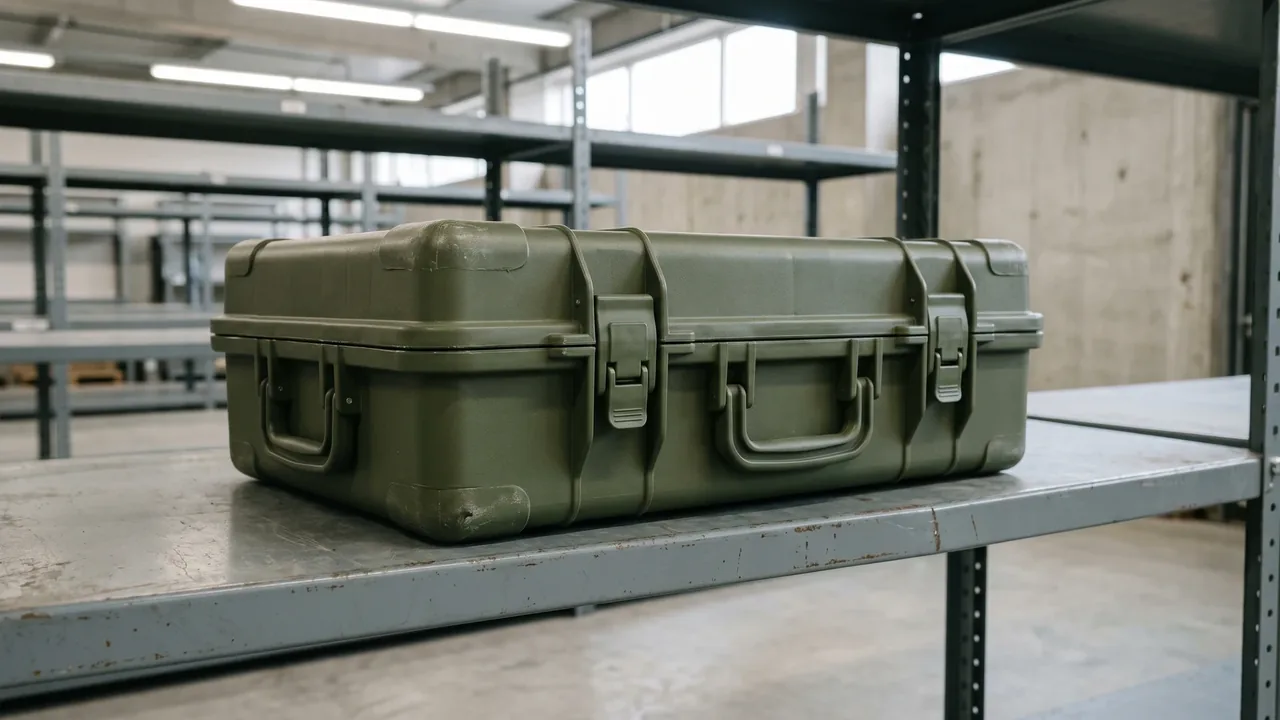
The temperature-controlled case is a thermally stable protective enclosure built for cold chain, pharmaceuticals, precision instruments, and sensitive goods. Its task is not to "make it a bit cooler" but to turn a deliverable temperature window into a box capability that can be validated, recorded, and traced. A temperature-controlled case must hold its internal temperature within the allowed band across preconditioning, loading, transit, staging, and opening, surviving low-pressure airfreight, ground heat, and long dwell, while letting the receiver see at a glance "was the temperature exceeded, is the data continuous." This article unpacks, from a protective-case manufacturer's point of view, the general requirements a temperature-controlled case should meet in thermal achievement, passive and active routes, insulation material, phase-change material, temperature window and MKT, internal restraint, temperature recording and data integrity, sealing and pressure, preconditioning and reissue, and military acceptance, and gives procurement a checklist they can drop straight into a technical agreement. It must be stated plainly that this article discusses the packaging container only; the compliance, prescription nature, and any defense-trade export of the goods inside are governed by local regulations and export control requirements, and the container supplier's duty is to translate temperature control, restraint, recording, and traceability into a mass-producible box structure. JUNZHIJIA manufactures rotomolded and aluminum protective cases over the long term, and the experience below references this kind of volume production process.
Written from the bench of a protective-case manufacturer, this guide deliberately stays within the boundary of the container. It does not describe which pharmaceuticals or goods the box holds, how they are administered, or the controls that govern their movement; those sit with the medical authority, the drug responsible party, and the regulator. What it does offer is the engineering reasoning a buyer can use to turn a vague "temperature-controlled case" request into a numbered technical agreement, and to ask the right questions when two quotations look identical on paper but diverge sharply on the thermal capability they actually deliver. The rest of the article walks the temperature chain link by link, from the temperature window to on-site acceptance.
The Mission: Turning a Temperature Window into a Deliverable Capability
The temperature-controlled case faces a chain of "precondition, load, transit, stage, open" rather than a single trip. At preconditioning it must bring the cold source or phase-change material to its start state; at loading it must let the operator fill and seal by procedure; in transit it must hold the temperature window across low-pressure airfreight, ground heat, and long dwell; at staging it must keep insulating in a warehouse without mains power; at opening it must let the receiver see at a glance whether the whole trip exceeded the window. This mission means the core of a temperature-controlled case is not "better insulating" but "window controllable, process recordable, data queryable, responsibility closable." Turning a temperature window into a standard box unit is the fundamental way to cut cold-chain and pharmaceutical logistics complexity, and the basis on which modern temperature-controlled transport moves from "add ice by experience" to "deliver by data."
Broken down, the mission has four capabilities: temperature maintainable, process recordable, data traceable, state handover-able. Temperature maintainable means the box holds the internal temperature in band within the rated environment and duration; process recordable means the whole trip is sampled continuously rather than only at the ends; data traceable means the record is tamper-proof and deliverable to the receiver; state handover-able means the temperature state at opening is readable at a glance. The manufacturer must reserve interfaces for these four in the structure: insulation layer and cold-source bay, data logger position, data interface, and status indicator, all of which are the engineering details that make thermal capability real.
Concretely, a temperature-controlled case earns its name only when three conditions hold together: it holds the window within the rated duration and environment, the whole-trip data is continuous and readable, and the opening state is judged at a glance. Miss any one and the temperature-controlled case reverts to "a box with ice," which is exactly the uncertainty temperature-controlled transport was built to remove. The remainder of this article treats those three conditions as engineering requirements with measurable acceptance criteria, so a buyer can specify them in numbers rather than adjectives, and can reject a quotation that only promises thermal control in a render.
The Core of Thermal Achievement: Passive Insulation and Active Control
The biggest difference between a temperature-controlled case and an ordinary transport case is that it must solve "heat in and out," and there are only two routes: passive insulation and active control. Passive insulation relies on a highly insulated shell plus a cold source (ice packs, dry ice, phase-change material) to hold the window; it is structurally simple, needs no power, and suits one to a few trips. Active control relies on an internal cooling/heating unit plus power and a controller, giving precise control over long duration and reuse, but needs power, costs more, and is structurally complex. Selection should not compare "control accuracy" alone but look at transit duration, environmental severity, reusability, and power availability: short one-way trips suit passive, long repeated or precise-window trips suit active, and the two can combine into "active holding plus passive backup." Writing this dividing line into the technical agreement is the core by which a buyer distinguishes a thermal quote from a merely insulated box.
Passive and active routes differ sharply in structural requirements. The passive route must build enough insulation into the wall and reserve a cold-source bay so the cold source does not touch the goods and the temperature distributes evenly; the active route must place air ducts or conducting surfaces inside so heat and cold transfer evenly without local over-cooling. The manufacturer should state at delivery which route's shell suits which environment and duration, avoiding using a passive box for a long route or omitting power redundancy on an active box. Binding the route to the structure in the agreement is more reliable than discovering "it can't hold" mid-transit, and aligns with the "drive selection by environment profile" idea of the military rotomolded case.
A second layer of route choice is whole-life cost. An active box is costly per unit but amortizes through reuse, while a passive box is cheap per unit but consumes cold source each trip. The manufacturer should provide the per-trip cost estimate and reuse count for both, so the buyer compares total cost by actual route and duration rather than unit price. Writing the cost model into the technical agreement is the buyer's tool for judging thermal economics, and avoids buying an expensive active box on a short route or using an underpowered passive box on a long one, exactly the point most easily overlooked yet most affecting delivery.
Material Routes: Insulation, Phase-Change, Structure
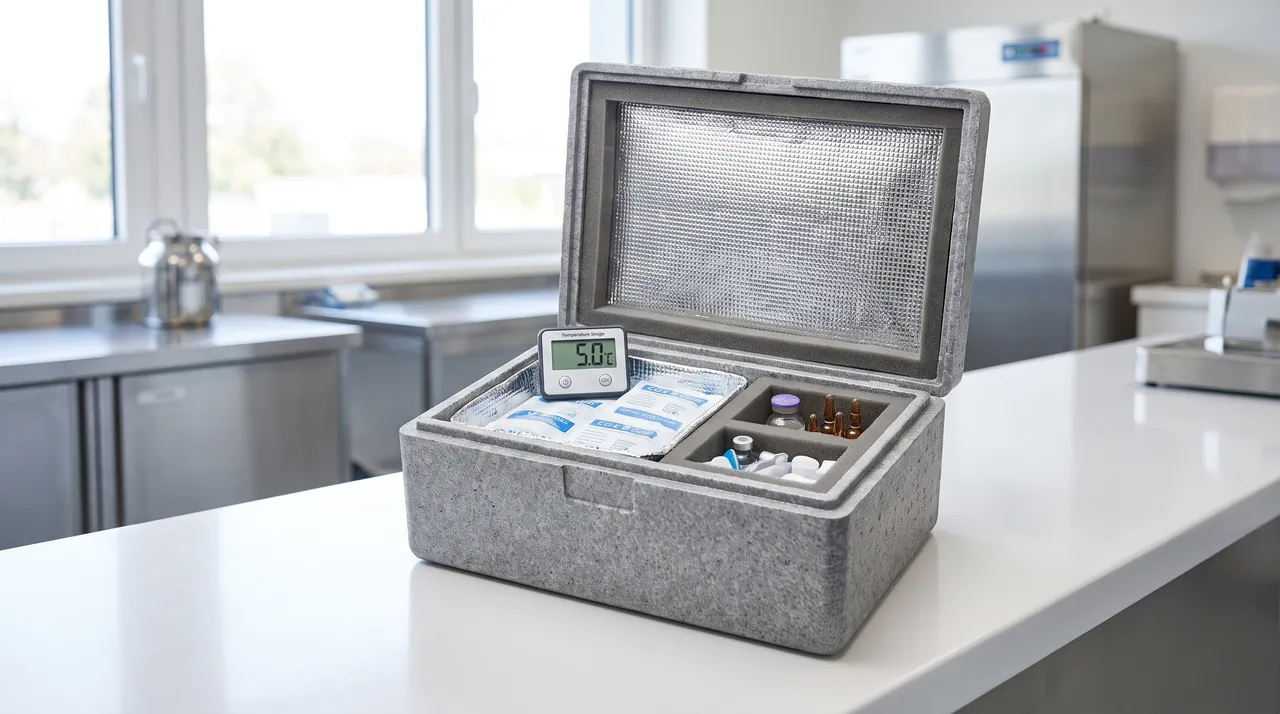
Material choice for a temperature-controlled case must solve insulation and structure at once. The insulation layer commonly uses polyurethane or vacuum insulated panel (VIP); the former is low-cost and easy to form, the latter is thermally efficient but brittle and needs protection. The shell commonly uses rotomolded HDPE, aluminum, or composite, wrapping the insulation inside so it both insulates and resists impact. The cold source commonly uses ice packs, dry ice, and phase-change material (PCM): ice packs are cheap but fix the temperature near zero, dry ice reaches very low temperature but is a dangerous-goods shipment, and PCM can be designed to release or absorb latent heat at a chosen temperature point. Material is not "the thicker the better" but reverse-derived from window temperature, duration, and environment. Writing the insulation reason as a verifiable thermal note is the core by which a buyer distinguishes a "thicken by experience" quotation.
Whichever material is chosen, the temperature-controlled case should place temperature uniformity on a par with insulation duration. If the cold source sits in one corner, the outer goods lose temperature first and the near-source goods over-cool, so even if the average is in band a local point may be out. Therefore the shell should design a cold-source bay and air duct so heat and cold distribute evenly, and the manufacturer should provide temperature-distribution data at typical loading. Writing uniformity into the technical agreement is more reliable than arguing "the average is fine" at acceptance, and avoids drug failure or equipment condensation caused by a local over-cold point.
A second material consideration is preconditioning and reissue. A passive box's cold source needs preconditioning (PCM freezing, dry-ice topping up); an active box needs pre-cooling/pre-heating before transit, so the shell should be easy to precondition. The manufacturer should provide the preconditioning procedure and time so the operator prepares by procedure rather than improvising. Writing preconditioning into the delivery spec is the key that makes a temperature-controlled case repeatedly deliverable, and avoids a start temperature already out of window because preconditioning was insufficient, exactly the most common failure starting point of passive thermal control.
Temperature Window and Validation: MKT and Whole-Trip Continuity
The reliability of a temperature-controlled case must be defined by the temperature window and validation, not a vague "it insulates." The temperature window is the allowed upper and lower limit (such as 2 to 8 C or 15 to 25 C), and MKT (Mean Kinetic Temperature) is used to assess the cumulative effect of temperature fluctuation on sensitive goods. Validation should cover the rated environment (high/low), rated duration, and typical loading, proving the internal temperature stays in band throughout; the key is "whole-trip continuity" rather than "ends in band," because a short mid-trip excursion can cause irreversible damage. Writing the window and validation into the technical agreement is the core by which a buyer distinguishes a thermal quote from an ordinary one, and aligns with the "extend shelf life by environmental isolation" idea of the ration box, only the temperature-controlled case upgrades isolation to active holding.
Validation should not be read only for a pass conclusion but for whether the data is continuous and credible. The temperature-controlled case validation report should record: the whole-trip temperature curve, cold-source depletion time, the worst point under environmental extremes, and the recovery time after a door opening. These data feed directly back into insulation and cold-source improvement, where the validation budget earns its return. A supplier without continuous data can only promise "we insulate well," while a supplier with continuous data can be checked line by line. The bound object should be the real box type and typical loading, because the consistency of batch thermal control shows exactly in every box reproducing the curve.
The deeper value is the validation-to-field loop: if the field shows an excursion, it should trace back to an environment over expectation, insufficient preconditioning, or box failure, and improve accordingly. Writing this loop into the technical agreement makes the temperature-controlled case not "validated once, then unchanged" but continuously converging with field data. This is consistent with the "drive validation by environment profile" idea of the flight case, only the temperature-controlled case adds temperature window and duration as two more dimensions to the profile.
Internal Restraint and Cold-Source Layout
The liner system of a temperature-controlled case has two goals: keep the goods in place under vibration, and make the heat exchange between cold source and goods even and controllable. EVA and EPE foams fix the goods, dividers and trays handle mixed loads, and the cold-source bay and conducting divider separate cold source from goods so cooling is even rather than locally over-cold. The liner is not "stuff it with foam" but assigns force and thermal load by the goods' mass center and heat-sensitive point, so transport shock is dispersed and temperature transfers evenly. Writing restraint and cold-source layout as acceptable metrics is the core difference of a temperature-controlled case over an ordinary storage box on both stability and uniformity dimensions.
The trade-off between custom and universal liner depends on the goods' organization and heat sensitivity. Fixed kitting suits a typed liner with fixed cold-source positions, giving consistent protection and uniformity; ad-hoc tasks suit adjustable dividers and swappable cold-source modules, using zoning logic rather than per-item cutting. Either way, the temperature-controlled case should guarantee "pick on open, secure on reset" and quick recovery after a door opening. Writing the reset as a diagram on the inner lid is low-cost and high-return; if reset depends on one person, the restraint and cold-source layout drift when that person leaves, and that is the human-factor risk batch thermal control fears most.
A detail often missed is the isolation of cold source from goods. If the cold source touches the goods directly, the near area over-cools and condenses, harming the goods; therefore a conducting divider or buffer cavity should let the cold source transfer through air or a conducting surface evenly. The manufacturer should give the minimum clearance and isolation method between cold source and goods, writing "no over-cold" into acceptance rather than discovering condensation at acceptance. Front-loading cold-source isolation into the structure is the essential action that keeps the window stable over a long transit, and the basis the buyer can rely on at inventory.
Temperature Recording and Data Integrity
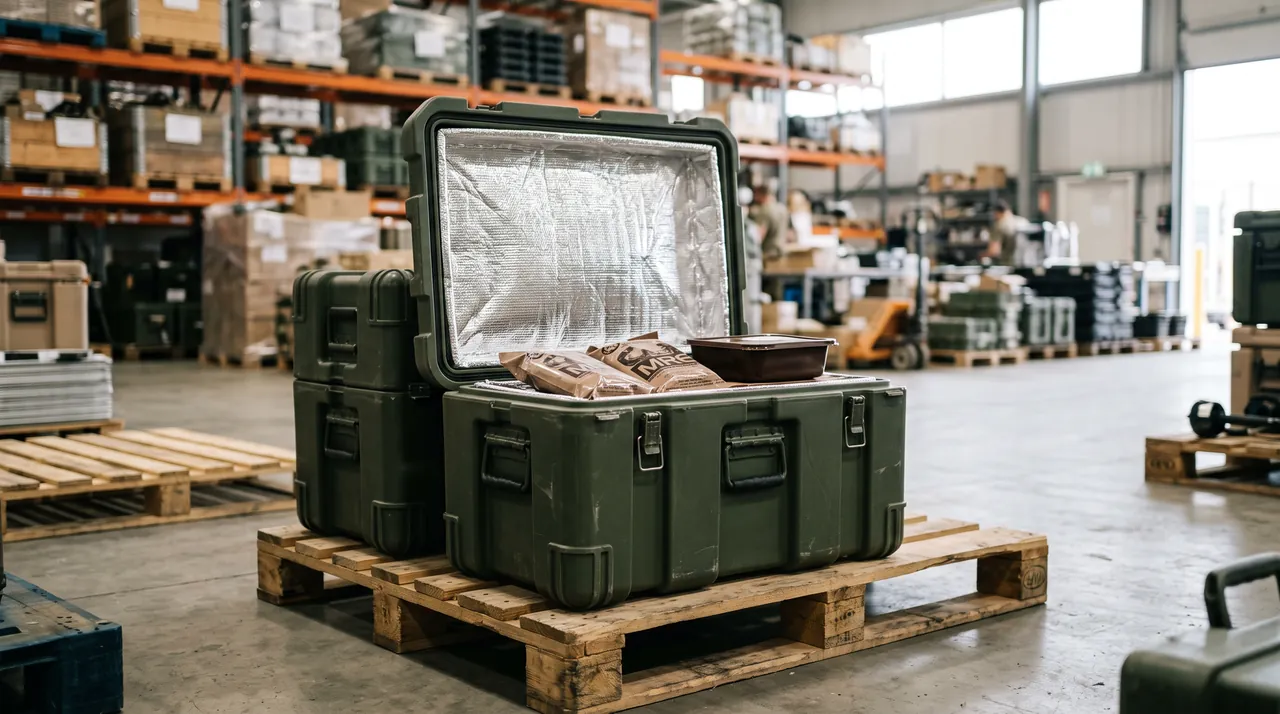
Another boundary between a temperature-controlled case and an ordinary box is that it must record temperature, not only maintain it. A temperature-controlled case should build in or reserve a data-logger position so the whole trip is sampled continuously, readable, exportable, and deliverable to the receiver at opening. The record should carry timestamps and tamper-proof storage so "was it exceeded" has objective evidence; the data interface should be easy to export so the receiver can bring it into the quality system. Writing data integrity into the technical agreement is the core by which a buyer distinguishes a thermal quote from a merely insulated box, and aligns with the "sealed-to-opened traceability" idea of the war reserve case, only the temperature-controlled case extends traceability from the seal to the temperature curve.
Data integrity also shows in logger reliability and calibration. If a logger is uncalibrated or loses power mid-trip, the curve breaks and loses evidentiary value, so a logger with a calibration certificate and power-loss protection should be chosen, and the calibration interval specified in the agreement. The manufacturer should provide the logger's mounting position, power, and data port so calibration and maintenance are feasible. Writing logger reliability into the technical agreement is more reliable than discovering "the data is lost" at delivery and then remedying, and avoids a whole batch being rejected by the receiver for missing data.
A second layer of data value is quality release. The receiver often needs temperature data to release sensitive goods, so the temperature-controlled case should let the data be read instantly at opening rather than searched afterward. The manufacturer can provide a local display and export interface so the receiver verifies at the moment of opening. Front-loading "data delivered at opening" into the structure is the key that upgrades the temperature-controlled case from "insulated container" to "quality delivery unit," and the basis the buyer can rely on at audit, avoiding delayed release from poor data handover.
Sealing and Pressure: The Case and the Airfreight Environment
Temperature-controlled cases often ship by air, so the sealing system must balance insulation and pressure. The pressurized hold still has lower pressure than ground; if the box is fully airtight, the differential after climb may balloon it or break the seal, so the temperature-controlled case should carry a balance valve or slow-release structure so pressure change does not break the insulation layer and seal. At the same time the seal must keep external heat and moisture out, avoiding condensation inside that affects temperature and goods. Writing pressure adaptation into the technical agreement is the key by which a buyer distinguishes a thermal quote from an ordinary insulated box, and aligns with the "balance breathable with waterproof" idea of the flight case.
Sealing should also consider recovery after a door opening. A temperature-controlled case may be opened for inspection in transit, and each opening introduces external heat and breaks the temperature stratification, so the box should be designed for quick recovery: thicker inner-lid insulation, minimized opening area, adequate cold-source margin. The manufacturer should provide the recovery time after a door opening so the buyer assesses the inspection impact. Writing recovery time into the technical agreement is more reliable than finding "temperature exceeded" after an inspection and then remedying, and avoids one open door costing a whole batch its window.
A further key of sealing is condensation prevention. When the inside and outside differ widely, the shell surfaces and goods may condense, and condensation harms drug labels or device circuits. Therefore the box should design a condensation-prevention structure or indicator port so the operator can judge the risk. The manufacturer should provide condensation advice and an indicator position. Front-loading condensation prevention into the structure is the key that keeps goods intact across climate-spanning transit, and a dimension ordinary cases often ignore.
Preconditioning and Reissue: Cold-Source State and Procedure
The reliability of a temperature-controlled case depends heavily on the preconditioning procedure. A passive box's cold source must reach its start state before use (PCM fully frozen, dry ice topped up), and an active box must pre-cool/pre-heat before transit, otherwise the start temperature is already out of window. Therefore the manufacturer should provide an executable preconditioning procedure: cold-source preconditioning temperature and time, box pre-cool time before loading, and temperature confirmation before sealing. Writing preconditioning into the delivery spec is the key that makes a temperature-controlled case repeatedly deliverable, and avoids "out of band before departure" from insufficient preconditioning.
Preconditioning should also include loading discipline. Loading should be completed within a time limit and with minimal door-open time, and goods should be pre-cooled into the window before loading, avoiding using the box's cold source to cool a whole batch. The manufacturer should post loading steps and time limits inside the box so the operator executes by procedure. Front-loading loading discipline into the structure is the key that keeps the window in the real field, and avoids exhausting the cold source through overlong loading, exactly the most common failure link of passive thermal control.
A third layer of reissue is cold-source reuse and replacement. PCM can be re-frozen and reused, but ages with cycles, so the use count should be recorded with a replacement threshold; ice packs and dry ice are consumables. The manufacturer should provide the cold-source reuse note and replacement threshold so the buyer replaces by data rather than by feel. Writing cold-source life into the delivery spec is the key to the long-term economics of a temperature-controlled case, and avoids insulation capacity quietly falling through aged cold source without anyone knowing.
Military Acceptance: Mapping MIL-STD-810H to GJB Thermal
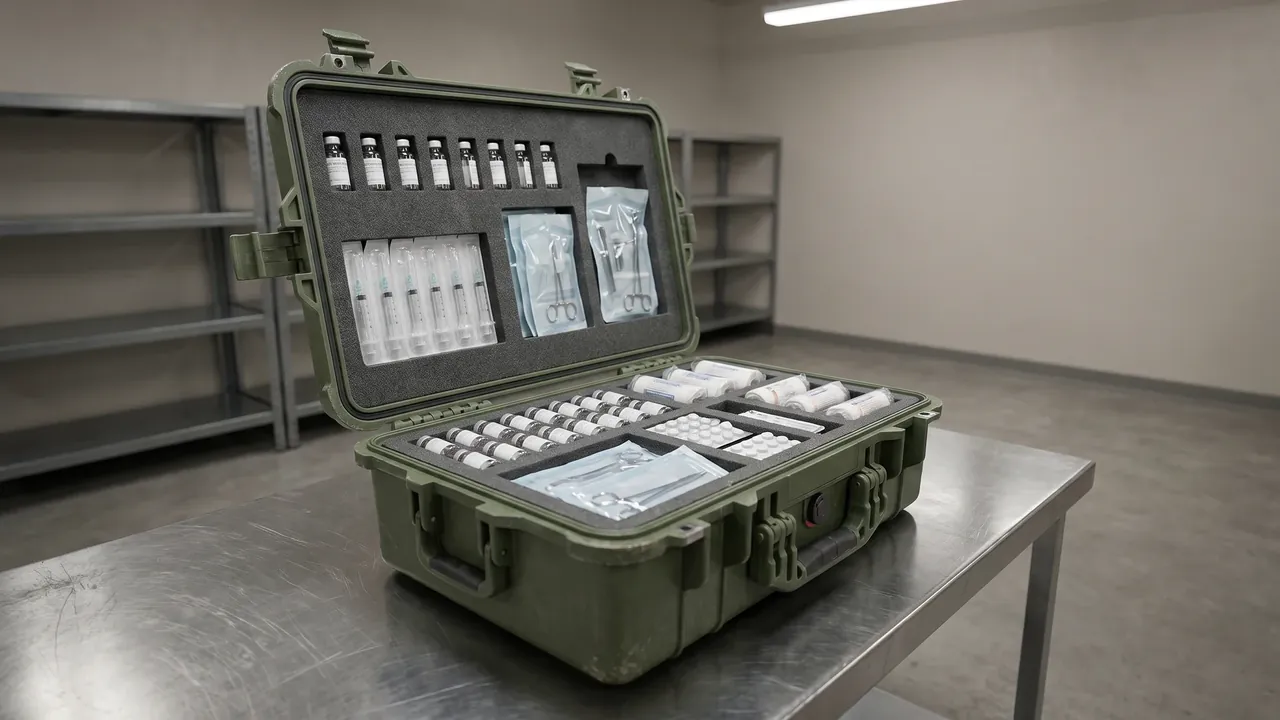
Military acceptance of a temperature-controlled case usually maps to MIL-STD-810H and the corresponding GJB methods, but the focus differs from an ordinary transport case: beyond generic drop, vibration, and salt spray, the temperature-controlled case should add thermal-related verification such as hold duration under high/low temperature, recovery after a door opening, seal retention under pressure change, and logger reliability and data integrity. Turning "thermal capability" from a claim into a set of acceptable tests is the core by which a buyer distinguishes a thermal quote from an ordinary insulated box. The test profile should bind to the real route and environment, because only a test matching the actual scenario predicts field performance.
Military testing should not be read only for a pass mark, but for whether the report maps to the specific box. The temperature-controlled case acceptance report should record: the worst-point temperature under environmental extremes, cold-source depletion time, the recovery curve after a door opening, and the seal and insulation after pressure cycling. These data feed directly back into insulation and cold-source improvement, where the test budget earns its return. A supplier without a report can only promise verbally, with nothing to compare in an excursion dispute; a supplier with a report has committed to specific test conditions checkable line by line. The bound object should be the real batch, not a generic sample, because the consistency of batch thermal control shows exactly in every box reproducing the curve.
The deeper value is the improvement loop: aligning the real field excursion point with the lab failure mode forces insulation or cold-source optimization. For example if a transfer dwell depletes the cold source, the lab should reproduce the hold at the same duration, then use the insulation thickness and cold-source configuration as the mold-change basis. Writing this loop into the technical agreement makes the temperature-controlled case not "validated once, then unchanged" but continuously converging with field data. This is consistent with the "drive iteration by test profile" idea of the flight case, only the temperature-controlled case extends the test goal from protection to the temperature window.
Export and Compliance Documents: Trade Requirements for Thermal Containers
When a temperature-controlled case is exported or moved cross-border with pharmaceuticals or sensitive goods, its compliance documents are more complex than an ordinary case. Beyond the general UN packaging certification (where applicable), packing list, and material conformity, a thermal container also needs a temperature validation report, a logger calibration certificate, and traceable batch records so the physical box, certificate, and report correspond one to one. Dry ice, where used, is a dangerous good whose packaging and declaration must meet the relevant rules; wooden packaging must meet IPPC fumigation or exemption. The typical failure is document inconsistency: certificate box type, report status, and actually shipped box do not match, often detained at the port. Writing the boundary of "container compliance" versus "goods compliance" clearly is the premise that cross-border thermal transport avoids responsibility disputes.
Export should also separate the boundary of "container compliance" from "goods compliance." The temperature-controlled case manufacturer is responsible only for the container's structure, insulation, and recording; the goods compliance is the goods party's, and the two must not be confused. Therefore the technical agreement should state which temperature reports the container provides, who issues them, and for how long, while the goods compliance is separately the buyer's or goods party's responsibility. Writing the boundary clearly is more reliable than arguing "who owns this box" at the port, and avoids mistakenly pushing goods responsibility onto the container manufacturer. It must be restated that this article discusses the container only; export is governed by local regulations and export control requirements, and the manufacturer's duty is to build compliance into the box, not to replace the goods or regulatory body.
In practice, the temperature-controlled case export documents should attach a list-style annex stating version, validity, and issuing body, re-verified against the certificate before each production, starting paperwork two weeks early typically halving clearance time. The temperature-controlled case's multi-batch, long-cycle nature makes document version management more critical than single-batch export: the same box type in different years may correspond to different validation standards, and if documents are not updated per batch, an old report with a new box fails at the port. Binding the document version to the production batch is the most overlooked yet most fatal link in temperature-controlled case export compliance.
Long Seal and Spares: Life Management of Logger and Cold Source
Temperature-controlled cases are mostly reusable assets, so long seal and spare management matters more than an ordinary case. A temperature-controlled box may serve years, during which logger, gasket, insulation, and cold source all age; without replaceable-part numbers, a whole box becomes undeliverable over one failed part. The manufacturer should deliver a complete spare list with part numbers so the buyer procures by drawing rather than verbal inquiry. Front-loading spares into delivery is the key that keeps a temperature-controlled case at low ownership cost over the whole cycle, and avoids a key thermal box being out of service for a missing part, exactly the management action reusable thermal control should most use.
Seal should also include logger maintenance. A temperature logger needs periodic calibration and battery management, otherwise it fails at the critical moment. The manufacturer should provide the calibration interval and battery replacement guide, and bind the calibration record to the box file. Writing logger maintenance into the technical agreement is more reliable than discovering "the logger is dead" at delivery and then remedying, and avoids a whole batch being rejected for missing data, exactly the most fatal hidden risk of thermal delivery.
A third layer of seal is insulation aging. Insulation capacity falls after repeated use and moisture ingress, so a recheck interval and criterion for insulation capacity should be specified. The manufacturer should provide the insulation recheck method so the buyer judges whether to continue by data. Front-loading insulation aging into the maintenance procedure is the key that keeps the window stable over years of reuse, and avoids the window silently failing as insulation quietly declines.
Procurement Checklist: Writing "Temperature-Controlled Case" into an Agreement
Buying a temperature-controlled case should not stop at "an insulated box" but turn every line above into an acceptable clause. The checklist should at least include: temperature window and rated environment duration, passive/active route and power redundancy, insulation thermal note and uniformity, cold-source type and preconditioning procedure, liner restraint and cold-source isolation, logger calibration and data integrity, recovery time after a door opening, pressure adaptation and condensation prevention, logger and cold-source life, military thermal test profile with bound batch, export document list with version management, and spare part numbers with insulation recheck. Writing this list into the technical agreement gives the buyer the right to question quotations rather than picking boxes by feel at acceptance.
Procurement should also write "route duration" and "whole-life cost" into the requirement. The real cost of a temperature-controlled case is not the unit price but whether it holds the window on the rated route, whether the record is deliverable, and how dear the service and cold source are. Once those numbers are estimated honestly, every line of the checklist gains a budget anchor. It must be restated that this article discusses the packaging container; goods storage, transport, and export are governed by local regulations and export control requirements, and the container manufacturer's duty is to translate temperature control, restraint, recording, and traceability into a mass-producible box structure, not to replace the goods or regulatory body. Writing the checklist into the agreement is the first step that turns "thermal delivery" from a slogan into an auditable engineering fact.
Same-Structure Scenes: Pharmaceutical and Precision-Instrument Thermal
The temperature-controlled case's design logic is not only for the military; in pharmaceutical and precision-instrument thermal control it is the same structure. Vaccines, biologics, in-vitro diagnostic reagents, and precision instruments equally need a temperature window, data integrity, and traceability, differing only in marking class and regulatory requirement. Therefore the temperature-controlled case's passive/active route, logger, and validation method can migrate directly to the medical system, letting the two share production and spares and cut total cost of ownership. The manufacturer should reserve interfaces for "civil-military common structure" rather than making incompatible molds for each version, and aligns with the "standardized zoning interface" idea of the equipment case and gear case.
The civilian scene also stresses data delivery and compliance documents. The medical system often requires temperature data to travel with the goods and be auditable, so the temperature-controlled case should let data be read and exported instantly at opening and provide a calibration certificate. The box should reserve multilingual or pictogram card positions so cross-region transport needs no repaint to swap the list. Writing "auditable data" into the design is the last mile taking the temperature-controlled case from military to medical public service, and the key to its real scaled-reuse value.
The medical scene sometimes demands stricter validation. Regulatory audit often requires validation reports and calibration certificates to be complete, so the medical version should emphasize auditability in data integrity and documentation even more than the military version. The manufacturer can provide a validation template and document list so the customer connects to its quality system quickly. Front-loading documentation into delivery is the key that makes the temperature-controlled case truly deliver "compliant delivery" value, and avoids a qualified thermal box being unable to enter the medical supply chain for missing documents.
Closing
The reliability of a temperature-controlled case is written into every detail of the temperature window and data: holds, records fully, queries, hands over clearly. Buy it as a thermal-delivery system, not as a better-insulated box. Related Reading: Flight Case, Ration Box, Equipment Case and Gear Case.
Frequently Asked Questions
Q: Why must a temperature-controlled case validate "whole-trip continuity" rather than only the start and end temperatures? A: Because sensitive goods are often damaged by a short mid-trip excursion, and "ends in band" does not mean the whole trip was safe; a single transfer dwell can push the internal temperature past the window while start-and-end checks see nothing. Therefore validation should cover the rated environment, rated duration, and typical loading, proving the internal temperature holds in band throughout, and use MKT to assess the cumulative effect of fluctuation; the record must be continuous, timestamped, and tamper-proof. Writing the window and validation into the technical agreement lets the buyer distinguish a "real thermal case" from "a box with ice" with acceptable clauses. The typical field failure is a project that measured only the ends, exceeded the window mid-trip, and found out only when the goods failed at receipt, with the responsibility boundary already blurred because "continuous data was never required." A practical tip is to demand the curve as a delivery file, not a summary, because a summary hides exactly the excursion that matters.
Q: How should a temperature-controlled case choose between passive insulation and active control? A: Look at transit duration, environmental severity, reusability, and power availability, not control accuracy alone. Short one-way trips suit passive insulation: a highly insulated shell plus a cold source, simple and powerless; long repeated or precise-window trips suit active control: an internal cooling/heating unit plus power, giving precise control over long duration and reuse. The two can also combine into "active holding plus passive backup." Financially, an active box costs more per unit but amortizes through reuse, while a passive box is cheap per unit but consumes cold source each trip, so total cost should be compared by actual route. Writing this dividing line into the agreement lets the buyer avoid buying an expensive active box on a short route or using an underpowered passive box on a long one, exactly the choice most easily overlooked yet most affecting delivery. A practical step is to model the box against the worst plausible dwell in the route, not the average, because a schedule slip or a tarmac wait is exactly where a marginal route choice fails, and a box sized for the average will look excellent on paper and still lose the window on the day.
Q: Why does a temperature-controlled case need to record data; is insulation alone not enough? A: Because the receiver usually needs temperature data to release sensitive goods, and insulation without a record means an excursion cannot be self-proven, blamed, or released. A further point is that the record must survive the trip itself: a logger with enough battery and memory for the worst-case duration, mounted where it reads the goods rather than the wall, because a sensor in the wrong place produces a clean curve that tells the wrong story and quietly defeats the whole point of recording. The temperature-controlled case should build in or reserve a data-logger position, sampling continuously with timestamps, tamper-proof, and readable, exportable, and deliverable at opening. The logger must have a calibration certificate and power-loss protection, because a broken curve loses evidentiary value, so the agreement should specify the calibration interval and mounting position. Field experience is that a batch without data may be rejected even if it never actually exceeded, while a batch with complete data releases fast. Writing data integrity into the agreement is the key that upgrades the case from "insulated container" to "quality delivery unit," and the basis the buyer can rely on at audit.
Q: What documents differ from an ordinary case when a temperature-controlled case is exported? A: Beyond the general packing list and material conformity, a thermal container also needs a temperature validation report, a logger calibration certificate, and traceable batch records so the physical box, certificate, and report correspond one to one; dry ice is a dangerous good whose packaging and declaration must meet the relevant rules; wooden packaging needs IPPC fumigation or exemption. The biggest failure is document inconsistency: certificate box type, report status, and shipped box mismatch often get detained. Also separate "container compliance" from "goods compliance" — the manufacturer only owns the container structure, insulation, and recording, the goods compliance is the goods party's, and the agreement must state who issues which and for how long. The temperature-controlled case's multi-batch long cycle means the document version must bind to the production batch; an old report with a new box fails at the port, and starting paperwork two weeks early typically halves clearance time.
Q: Why should a temperature-controlled case consider recovery after a door opening? A: Because a transfer may open the box for inspection, and each opening introduces external heat and breaks the temperature stratification, so slow recovery can cost a whole batch its window. The temperature-controlled case should be designed for quick recovery: thicker inner-lid insulation, minimized opening area, adequate cold-source margin, and published recovery-time data so the buyer assesses the inspection impact. The field lesson is that a box designed only for continuous holding, after one inspection opening, takes so long to recover that it exceeds at receipt; writing recovery time into the agreement is more reliable than arguing afterward, and avoids one open door costing a whole batch its window. This matters especially on long multi-transfer routes, where each inspection adds disturbance and recovery capability decides delivery success, a point short-route designs routinely miss. A practical tip is to require the recovery time as a measured figure at the rated loading, not a claim, because a box that recovers quickly when empty often recovers slowly when full, and the full-load case is the one that actually ships.
Q: Why must a temperature-controlled case logger be calibrated and battery-managed? A: Because the logger is the only source of temperature evidence, and if it is uncalibrated or loses power the curve breaks and loses evidentiary value, so the receiver may reject a whole batch. Therefore a logger with a calibration certificate and power-loss protection should be chosen, with a calibration interval and battery replacement guide specified in the agreement, and the calibration record bound to the box file. The manufacturer should provide the mounting position, power, and data port so calibration and maintenance are feasible. Field experience is that a logger dead at the critical moment equals no proof for the whole batch; writing logger reliability into the technical agreement is the key that keeps the temperature-controlled case deliverable over years of reuse, and the basis the buyer can rely on at audit, more reliable than discovering "the data is lost" at delivery and then remedying. A further safeguard is a spare logger kept with the box, so a failure at loading does not stop the shipment, and the calibration record can be checked before departure rather than reconstructed afterward.
Q: Can a temperature-controlled case be civil-military common to cut total cost? A: Yes, and it should be. Transport of vaccines, biologics, in-vitro diagnostic reagents, and precision instruments equally needs a temperature window, data integrity, and traceability, differing only in marking class and regulatory requirement, so the temperature-controlled case's passive/active route, logger, and validation method can migrate directly to the medical system, letting the two share production and spares and cut total cost of ownership. The manufacturer should reserve interfaces for "civil-military common structure" rather than making two incompatible molds. The civilian scene should also stress auditable data: logger data delivered with the goods, calibration certificates complete, with multilingual or pictogram card positions. Writing "auditable data" into the design is the last mile taking the temperature-controlled case from military to medical public service, and the key to its real scaled-reuse value, avoiding dual-tooling that wastes the most money over a decade of service. Procurement should therefore ask for the common-structure option explicitly in the agreement, because the saving shows up only after years of parallel service, not on the first invoice, and a shared logger, gasket, and cold-source bay across both versions means the medical chain and the field unit draw from one spare pool rather than duplicating it.
Q: Why should the temperature-controlled case military test add thermal verification rather than generic items only? A: Because generic items (drop, vibration, salt spray) only prove the box does not break, not that it "holds the window before breaking," and the failure modes of a temperature-controlled case are exactly insulation decay, cold-source depletion, or data interruption. Therefore the military test should add thermal verification: worst-point temperature under environmental extremes, cold-source depletion time, the recovery curve after a door opening, and the seal and insulation after pressure cycling; these data feed directly back into insulation and cold-source improvement, where the test budget earns its return. A supplier without a report can only promise verbally, with nothing to compare in an excursion dispute; a supplier with a report has committed to specific test conditions checkable line by line. The report should also bind to the real batch rather than a generic sample, because the consistency of batch thermal control shows exactly in every box reproducing the curve. The deeper value is the improvement loop: aligning the field excursion with lab failure modes forces mold change, so the temperature-controlled case converges continuously with data rather than staying unchanged after one validation.