

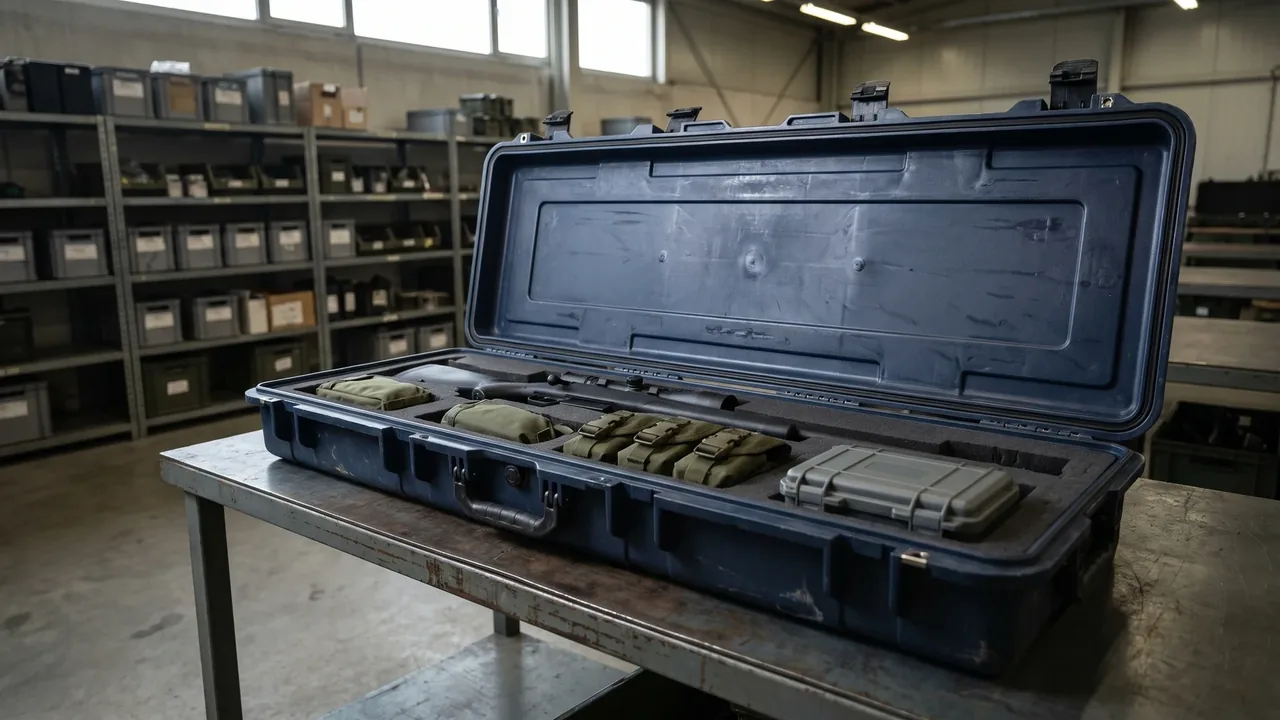
The military flight case and the military air transport case are protective enclosures engineered for air-containerized storage and transit. Their task is not to "survive a drop" but to turn equipment, in the cabin environment of low pressure, temperature and humidity swings, sustained vibration, and frequent customs transfer, into an airfreight unit that can be standardized, loaded quickly, and traced end to end. A military flight case is pre-packed at base, mated to a Unit Load Device (ULD) at the cargo terminal, subjected to the altitude and vibration profile inside the hold, rapidly re-configured at an overseas hub, and must satisfy both a military technical agreement and civil air-cargo operating rules. This article unpacks, from a protective-case manufacturer's point of view, the general requirements a military flight case should meet in dimension modules, weight-to-rigidity trade, air-marking, internal restraint, seal traceability, stack center-of-gravity, pressure sealing, cabin environment, civil-air compliance, and military acceptance, and gives procurement a checklist they can drop straight into a technical agreement. It must be stated plainly that this article discusses the packaging container only; the hazard classification, handling, and any defense-trade export of whatever is loaded inside are governed by local regulations and export control requirements, and the container supplier's duty is to translate airfreight adaptation, restraint, sealing, and traceability into a mass-producible box structure. JUNZHIJIA manufactures rotomolded and aluminum protective cases over the long term, and the experience below references this kind of volume production process.
Written from the bench of a protective-case manufacturer, this guide deliberately stays within the boundary of the container. It does not describe which equipment the box holds, how it is declared, or the controls that govern its movement; those sit with the equipment authority, the air-safety reviewer, and the regulator. What it does offer is the engineering reasoning a buyer can use to turn a vague "airfreight case" request into a numbered technical agreement, and to ask the right questions when two quotations look identical on paper but diverge sharply on the airfreight capability they actually deliver. The rest of the article walks the airfreight chain link by link, from the standard module to on-site acceptance.
The Mission: Turning Equipment into a Loadable Airfreight Unit
The military flight case faces an air chain of "pre-pack, unitize, cabin, transfer, deploy" rather than a single road trip. At base it must be pre-packed to the equipment so the front can open and take; at the cargo terminal it must mate to ULD and pallet modules so multiple boxes tile a board without gaps; in the hold it must absorb the pressure differential of altitude change and the sustained vibration profile; at the overseas hub it must re-load and be counted quickly; at the deploy point it must let a handler judge contents and state without opening. This mission means the core of a military flight case is not "more shock-proof" but "recognizable, boardable, stable, traceable." Abstracting equipment into a standard air case plus standard liner is the fundamental way to cut air-chain complexity, and the basis on which modern airlift support moves from item-level loading to unit-level load planning.
Broken down, the mission has four capabilities: module fit, weight-to-rigidity, restraint stability, and full traceability. Module fit means the shell aligns to the ULD so hold space is not wasted; weight-to-rigidity means enough load capacity within the weight limit so the shell does not eat lift; restraint stability means the loaded equipment does not shift or collide under vibration; full traceability means every load and handover leaves a record so the responsibility chain still closes across customs and units. The manufacturer must reserve interfaces for these four in the structure: a base aligned to the ULD, optimized wall and rib, a custom restraint liner, and a verifiable seal position, all of which are the engineering details that make airfreight capability real.
Concretely, a military flight case earns its name only when three conditions hold together: the envelope is standard enough to share ULD and forklift slots with other boxes, the structure is light yet strong enough to carry the rated equipment within the weight limit, and the identity is readable enough that any handler can tell what is inside, how heavy, and where the center of gravity is without opening it. Miss any one and the box reverts to a bulky load that "fits but does not board," which is exactly the waste air-containerization was built to remove. The remainder of this article treats those three conditions as engineering requirements with measurable acceptance criteria, so a buyer can specify them in numbers rather than adjectives, and can reject a quotation that only describes them in adjectives.
The Core of Airfreight Fit: Dimension Modules Mating to the ULD
The biggest difference between a military flight case and an ordinary transport case is that it must obey the geometric constraints of the air unit. The ULD in the hold (such as PMC/PAG plates, AKE containers) has a fixed inner width and height limit; any box beyond the module wastes space, overhangs, or cannot be fixed. Therefore the military flight case envelope should prioritize alignment to standard pallet and ULD inner clear dimensions so multiple boxes tile edge to edge with no overhang; the base should have interfaces that work with the ULD net or rail so the whole load does not slide in turbulence. This interface looks like a sizing issue but decides whether the box truly enters air-containerization or gets re-stacked at every terminal. Writing the module into the technical agreement is more reliable than finding "this box will not fit the board" at load planning and then coordinating a fix.
Module fit also brings a frequently overlooked detail: consistency between stackable and side-set orientations. Hold space is tight, and the same box may stand stacked or be side-fixed, so the box should keep its seal and structure in any orientation, and latches and liner should not fail when the orientation changes. The manufacturer should mark each face's load and seal direction so the load planner never side-fixes a "vertical-only" box. Writing orientation constraints together with the module into the agreement is the key that decides whether a military flight case serves stably in real load planning, and is the most worthwhile investment within the manufacturer's responsibility boundary, solving more field problems than simply thickening the wall.
Module fit should also show in coordination with sister box types. Airtlift often deploys in groups, so the military flight case should share stacking bosses and locator pins with the stackable container, letting boxes of different purposes tile stably on one board; and share list and seal interfaces with the transit case and shipping case so transfer needs no re-labeling. This coordination lets the air unit re-form quickly at the hub rather than re-stacking from zero each batch. Standardizing the coordination interface is more reliable than discovering "box types are not interchangeable" mid-mission, and is exactly the intent of air-containerization to cut support complexity.
Material Routes: Trading Weight Against Rigidity
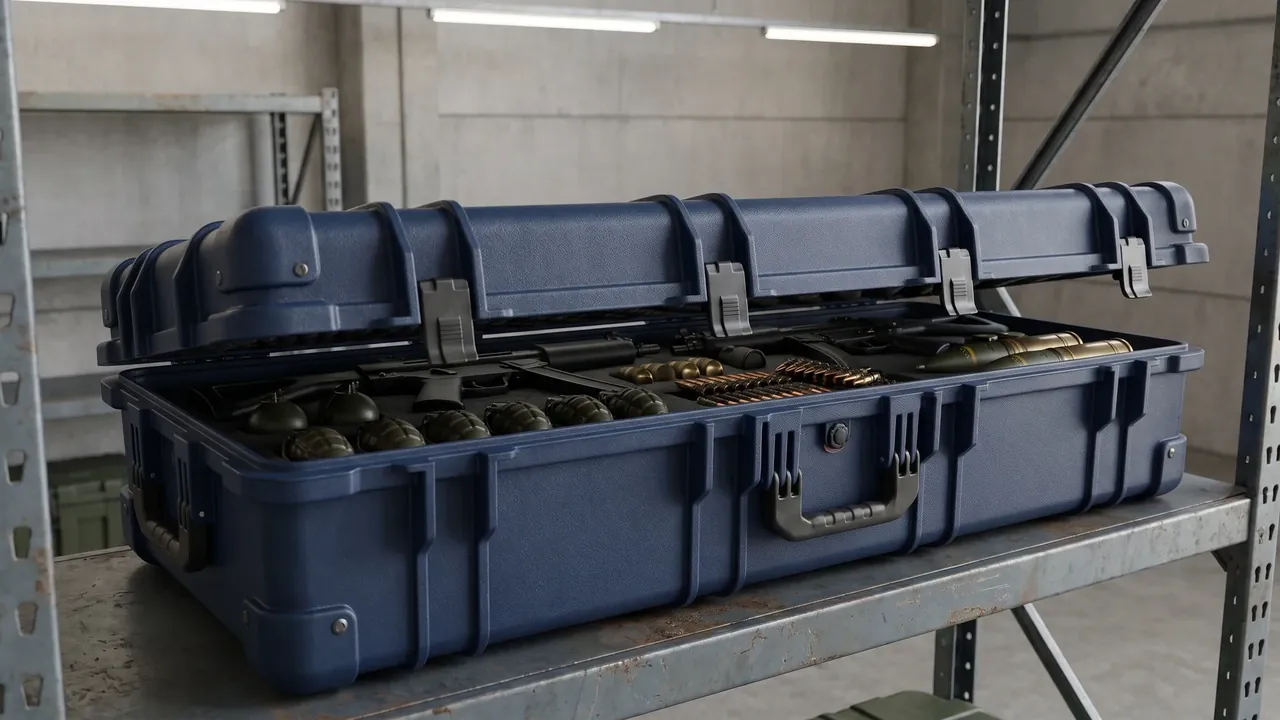
The military flight case has three common material routes: aluminum, rotomolded HDPE, and composite fiber. Aluminum shells are rigid, light, and fast-conducting, suiting weight-critical and high-rigidity scenes, but cost rises fast with size and corner welds need extra treatment against fatigue; rotomolded HDPE is integrally molded with no seam and no dead corner, winning on cost and consistency in volume, fitting thousands of boxes in long service, with the drawback of lower specific strength than aluminum; composite fiber wins most on specific strength but batch consistency and repairability need separate assessment, suiting high-value low-volume. Airtlift is extremely sensitive to self-weight, so material choice is essentially an engineering trade of "converting every kilogram of self-weight into lift."
Whichever material is chosen, the military flight case should place the weight-to-load ratio on a par with protectiveness. The aluminum box should give wall and rib force notes so the buyer checks deformation under rated load; the rotomolded box should give wall-thickness distribution and rib layout so the weak face is not the failure point under vibration; the composite box should give batch-consistency declaration and repairability notes. The manufacturer should state at delivery which faces are main-load and which are weight-reducible, avoiding "thicken the whole box" as the only plan. Writing the self-weight target into the technical agreement is more reliable than complaining "this box is too heavy" at load planning, and avoids wasting precious lift on unnecessary wall.
A second material consideration is repair and whole-life cost. An aluminum box can be field-straightened or patched after a knock; a rotomolded box can be heat-repaired or panel-swapped on local damage; a composite box needs return to factory. Overseas air points often lack professional repair, so the military flight case should prefer materials and structures that are field-treatable or module-replaceable, so a damaged box can still recover basic seal and load at the front. The manufacturer should give damage-assessment guidance and replaceable-part numbers, writing "damaged but recoverable" into the delivery spec, more reliable than finding "a broken box is scrap" mid-mission, and avoiding one key box's damage dragging down a whole load planning.
Pressure and Sealing: Low Pressure and High Humidity in the Hold
The military flight case in the hold faces not "rain" but the low pressure at cruise altitude and the temperature-humidity swing of the cargo bay. The pressurized hold still has lower pressure than ground; a box sealed too tight on the ground may, after climb, let the differential pop a weak seal or balloon the liner; sealed too loose, humid airflow enters and condenses. Therefore the military flight case sealing system should balance "breathable" with "waterproof": a balance valve for equipment needing full airtight, a perimeter elastomer seal for ordinary equipment, so pressure change does not break the seal. This point is barely asked on ordinary land cases but is an airfreight safety floor on the military flight case, consistent with the "stable sealed environment" logic of the ordnance packing box, only airfreight turns the environment from static storage to dynamic differential.
Sealing should also manage condensation. The hold and terminal differ widely in temperature, and the shell and cavity may sweat; if the loaded equipment fears moisture, the liner should reserve a desiccant bay with a humidity indicator so the handler sees the state at a glance. The manufacturer should give desiccant capacity advice and replacement interval, writing "moisture control is maintainable" into the technical agreement rather than arguing "is this damp" at acceptance. Front-loading condensation control into the structure is the key that decides whether a military flight case keeps equipment intact across climate-spanning airlift, and a dimension ordinary transport cases often ignore.
A further key of pressure adaptation is the opening rhythm. After landing the box returns from low pressure to normal; if internal negative pressure is not balanced before forcing the lid, it may damage the liner or anomalize the seal. Therefore the military flight case should design a balance hint or slow-open structure so the handler opens after ground rest rather than prying in a tense unloading scene. Such details look trivial but decide whether the box keeps its seal and contents intact in real use, and are the most worthwhile investment within the manufacturer's responsibility boundary, solving more field failures than simply adding material.
Internal Restraint and Shock-Absorbing Liner
The liner system of a military flight case has one goal: keep each loaded item in its place under vibration and bump, with no collision. EVA and EPE foams fix single items in pre-cut cavities; divider panels and adjustable trays handle multi-component kits; straps and restraint blocks handle irregular shapes. The liner is not "stuff it with foam" but assigns force to the mass center and vulnerable point of each item so the sustained cabin vibration is dispersed and absorbed rather than concentrated on one edge causing shift or liner tear. Writing restraint as an acceptable displacement is the core difference of a military flight case over an ordinary storage box on the stability dimension.
The trade-off between fixed and universal liner depends on how the equipment is organized. Fixed-baseline kits suit CNC-cut typed liners with high consistency; ad-hoc tasks suit adjustable dividers and modular trays using zoning logic rather than per-item cutting. Either way, the military flight case should guarantee "pick on open, secure on reset" without special tools, which directly decides restraint quality on the next airlift and accuracy on the next opening. Writing the reset as a diagram on the inner lid is low-cost and high-return; if reset depends on one specific handler's memory, quality drifts when that person leaves, and that is the human-factor risk large-batch airlift fears most.
A detail often missed is liner-to-shell coordination. Under vibration a liner that detaches from the shell lets the equipment bounce a second time inside the cavity, so the liner should clamp the shell or form its own shell so restraint does not depend on the shell shape. The manufacturer should give the liner-shell fit tolerance and clamp method, writing "liner stays put" into acceptance rather than discovering "foam loosened" after transit. Front-loading liner-shell coordination into the structure is the essential action that keeps equipment intact under long-route sustained vibration, and the basis the buyer can rely on at inventory, far more than simply filling the box.
Locks and Seals: The Responsibility Chain Across Customs
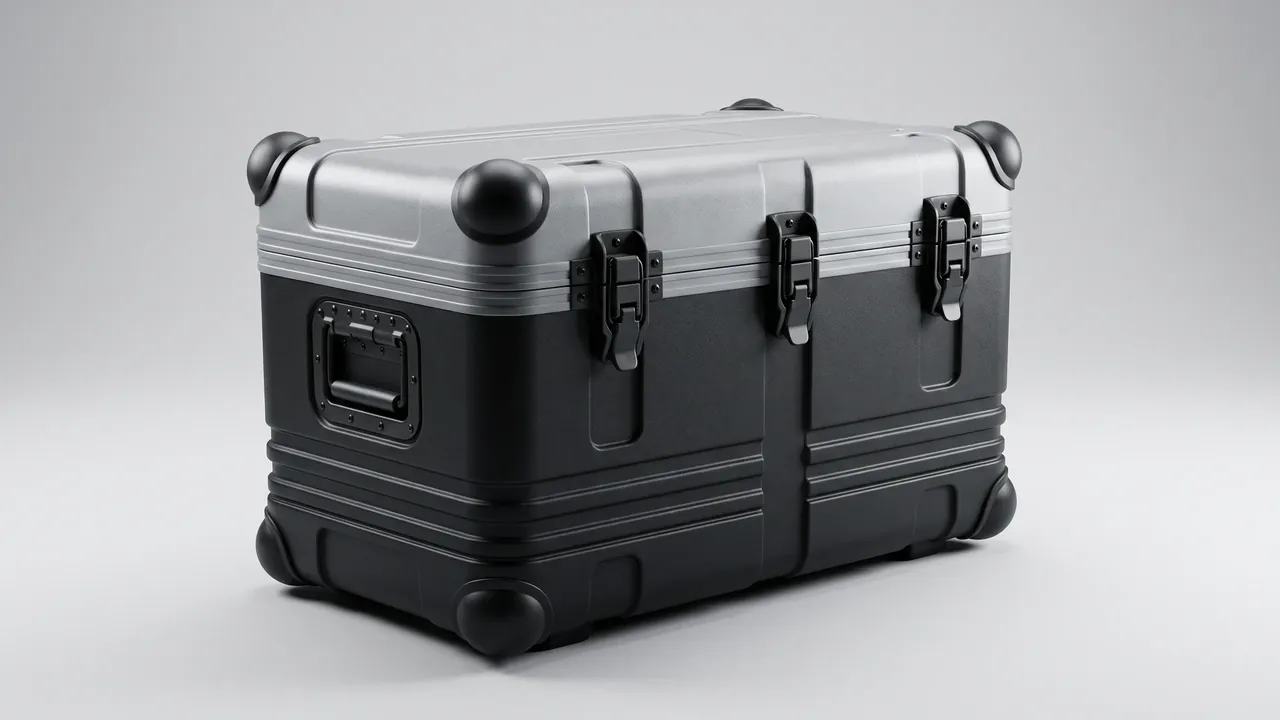
In cross-customs, cross-unit airlift, seal management matters more than for a single box. A military flight case usually has two lock layers: a quick-open latch for daily access, and a numbered seal added at transfer. The seal number binds to the waybill, and every opening generates a record, ensuring a definite answer to "was it opened." High-value or sensitive batches can upgrade to RFID seals that automatically record time and location at each custody point, turning the responsibility chain from manual check to system trace, reducing human error and raising credibility across multi-unit handovers. This is consistent with the sealed-to-opened traceability of the war reserve case, only airfreight extends the custody point across customs and borders.
Traceability also lives in the identity system. The military flight case should provide both a QR code and an embossed serial on the identification panel, so manual verification survives a scanner outage; a hidden verification code inside the lid guards against malicious replacement of the external plate. This dual identity matters especially in mass airlift, because a batch may cross many terminals and years, and any single identity mismatch voids every later record. Front-loading traceability into the box structure, rather than pasting paper after the fact, is the key action within the manufacturer's responsibility boundary and the basis the buyer can rely on at inventory and audit.
The seal should also link to load planning. The military flight case seal or list should record pack date and contents class so every transfer can check "is this box still within its agreement window." When a batch circulates across years, any mismatch of identity or date voids load planning management, so the identity and date system must be front-loaded into the structure rather than pasted on afterward. High-value batches can upgrade to time-stamped seals that record time at each custody point, turning the responsibility chain from manual ledger to system trace, so "is it compliant" has a definite answer and mis-load risk across multi-unit handovers drops sharply.
Stacking and Center of Gravity: Positioning Inside the Hold
Military flight cases rarely sit single in the hold; more often they stack densely and mate to ULD and net. Stacking strength depends on bearing surface, ribs, and locator pins working together: top and bottom stacking bosses must align so load transfers vertically to the main structure, not onto thin walls or latches; locator pins prevent inter-layer sliding, avoiding collapse during flight bump or hard turn. The manufacturer should give a clear maximum tier and single-tier load, marked visibly, not buried in a manual. This is consistent with the load-design logic of the heavy-duty protective case, only airfreight stacks the stacking constraint on top of flight acceleration.
Center-of-gravity control is another key that distinguishes the military flight case from ordinary cases. Hold load planning demands a controllable center of gravity per board, so the box should mark the center-of-gravity and single-box weight so the planner distributes heavy and light boxes evenly, avoiding imbalance that rejects the ULD. The manufacturer should provide in the technical agreement the center-of-gravity data for empty and typical loads so the buyer can calculate before load planning. Front-loading center-of-gravity data into the structure is more reliable than weighing and placing on the spot at the terminal, and avoids an imbalanced board being rejected at handling, exactly the hard requirement of air-containerization for "controllable unit."
Stacking should also consider the special hold environment. The military flight case in the hold may sit under negative pressure and temperature change, so the base should have features that work with the ULD rail or strap, reducing whole-load slide; latches and bosses should keep function in any orientation so side-fix does not fail. The manufacturer should mark the minimum fixing face and strap positions in the technical agreement so load planning does not leave the bottom box hanging. Writing this into acceptance is more reliable than finding the bottom box sliding in the hold and then remedying, and avoids a whole board unbalancing from one box's shift.
Air Marking and Visibility: Making the Box Speak
A military flight case is handled and quickly identified by many people in transit, so its marking system matters more than for ordinary cases. A qualified military flight case should provide at a readable position: box type, contents class, weight and center-of-gravity mark, open indicator, stacking limit, air-module number, and a scannable identity code. Marking should let warehouse, terminal, and front personnel complete identification and load planning within seconds — see the class from afar, see the contents up close, scan the whereabouts — instead of everyone opening the box to search. Visibility is the cheapest way to cut communication cost across the air chain, and aligns with the "marking is a management interface" idea of the logistics support box.
Marking materials and process must survive the environment. Terminal and apron conditions quickly fade and peel paper labels, so identity and class markings should prefer silkscreen, engraving, or weatherproof plates over stickers; the updatable task list can use a clear window card that is both weatherproof and easy to change. The manufacturer should deliver marking maintenance guidance: which marks are fixed, which are field-updatable, and how to verify after update. Writing marking into the technical agreement is more reliable than discovering "can't tell what this box holds" mid-support and then fixing it, and avoids mis-identification causing wrong-load accidents. A military flight case's marking should also highlight the air module and weight limit so any handler sees "can it board" before "box model."
Beyond the marks themselves, the military flight case should make re-marking a controlled act. When a box is repurposed between tasks, the old class mark must be cleanly removable or permanently overprinted, not taped over, because a taped-over mark that peels at the wrong moment can send a box to the wrong destination. The manufacturer should design the marking surface so updates are deliberate: a recessed window for the swap card, an engraved class code replaced only with an authorized insert. Treating re-marking as a controlled change, like a configuration change on any managed asset, is what keeps a large box fleet honest across years of reuse, and is the "controllable unit" floor of air-containerization.
Cabin Environment Profile: Temperature, Vibration, Salt Spray
The military flight case in real airlift simultaneously endures temperature swing, sustained vibration, and terminal salt spray, so its environmental adaptation should be written as an acceptable profile rather than a vague "weatherproof." On temperature, the non-pressurized hold may be cold and ground exposure hot, so material and seal should keep function within the agreed band; on vibration, the cabin profile is broad-band sustained rather than single shock, so liner and latch should hold without loosening under long vibration; on salt spray, coastal terminals and deck corrode metal, so aluminum and steel parts should be anodized or coated. Writing environment as a profile is the core by which a buyer distinguishes an airlift quote from an ordinary one, and aligns with the "drive selection by environment profile" idea of the military rotomolded case.
The environment profile should not be read only for a pass mark, but for whether the report maps to the specific box. The military flight case acceptance report should record: whether the seal rebounds after temperature cycling, whether the liner truly kept equipment still under the vibration profile, the durability floor of latch and marking under salt spray. These findings feed directly back into mold and liner improvement, where the test budget earns its return. A supplier without a report can only promise verbally, with nothing to compare in a dispute; a supplier with a report has committed to specific test conditions checkable line by line. The bound object should be the real batch, not a generic sample, because the consistency of bulk airlift shows exactly in every box reproducing the report's conclusion.
The deeper value is the improvement loop: aligning field damage with lab failure modes forces mold or liner optimization. For example if a liner tears at a corner in transit, the lab should reproduce it with vibration at the same corner, then use the liner section and clamp as the mold-change basis. Writing this loop into the technical agreement makes the military flight case not "accepted once, then unchanged" but continuously converging with field feedback. This is consistent with the "pre-pack, rapid deploy" idea of the deployable hard case, only airfreight extends the environment profile from land to cabin and cross-climate routes.
Rapid Handling and Airdrop Link
The military flight case in the air chain often needs to link with airdrop scenes, so its structure should reserve interfaces for rapid handling and emergency delivery. Rapid handling demands a base that mates the ULD net and handles and forklift slots that fit ergonomics, so few personnel can board and de-board; emergency delivery demands the box be able, when needed, to mate the sling and cushion attachments of the airdrop case, so one box serves both regular airfreight and temporary airdrop. Writing "linkable" into the interface standard is more reliable than discovering "box types incompatible" mid-mission, and is the key that takes air support from "per-box management" to "common unit."
Link also shows in liner convertibility. The same box uses a typed liner for restraint in regular airfreight and swaps a cushion liner for energy absorption in temporary airdrop, so the liner interface should be standardized so swap needs no box change. The manufacturer should provide the liner interface standard and interchange specification so modules of different scenes work in the same shell rather than closed parts only the original factory can fit. Writing interface standardization into the technical agreement is more reliable than discovering "modules not interchangeable" mid-mission. Link capability directly decides the military flight case's flexibility in sudden tasks, and is the most overlooked yet most combat-valuable dimension at selection.
A further key of rapid handling is count efficiency. The military flight case after landing often needs minute-level count and issue, so the box should make re-marking and list reading a controlled act so the handler confirms contents and quantity without opening. The manufacturer can build the list card position and weatherproof clear window into the lid so the list is readable and swappable per task. Front-loading count into the structure is the core action that keeps a military flight case accurate in mass airlift, and the basis the buyer can rely on at inventory and audit, more reliable than opening boxes at the terminal.
Civil Air Compliance: Container Boundary and Hazard Separation
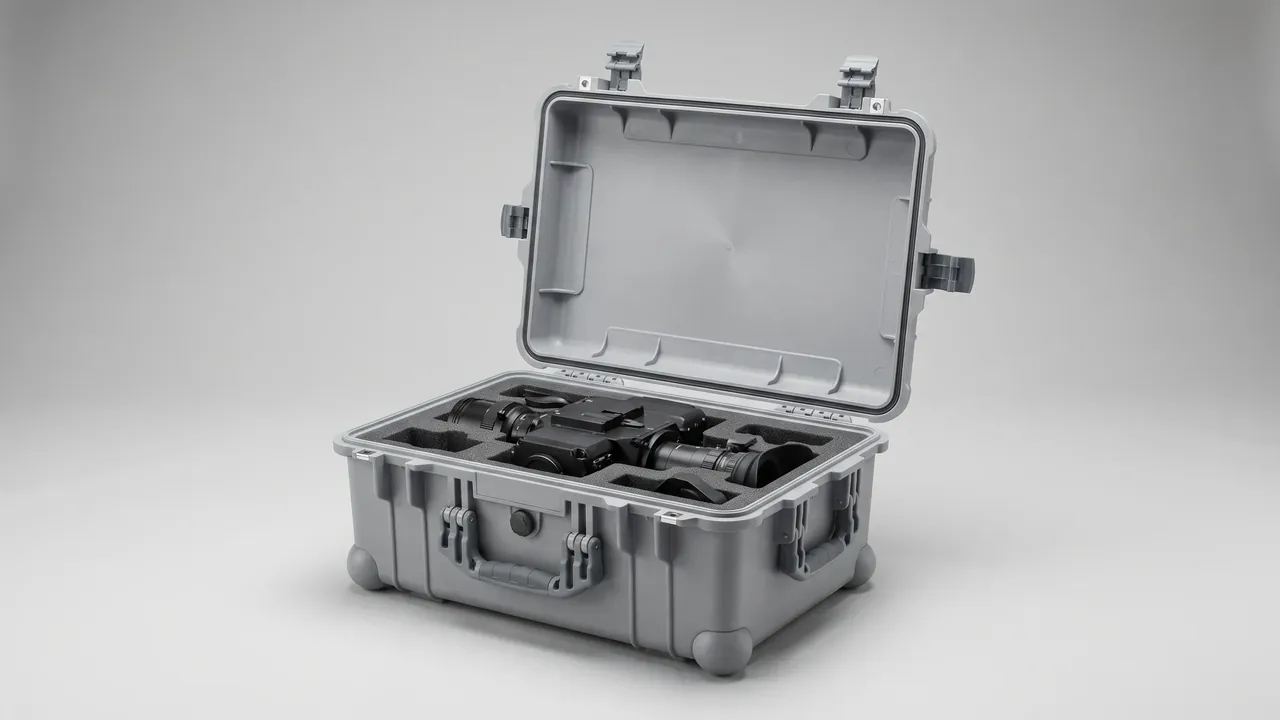
When a military flight case moves through civil air cargo, its compliance is more complex than an ordinary case, but the boundary must be clear: the container manufacturer owns the box's module, strength, sealing, and marking; the hazard classification, declaration, and separation of whatever is loaded inside are the shipper's and the air-safety reviewer's. Therefore the military flight case should reserve visible prompt positions for hazard separation on structure and marking (such as "away from heat," "this way up"), but never replace the shipper's duty to classify the contents. Writing the boundary of "container compliance" versus "contents compliance" clearly is more reliable than arguing "who owns this box" at the terminal, and avoids mistakenly pushing safety-classification duty onto the container manufacturer. It must be restated that this article discusses the container only; airfreight is governed by local regulations and air-safety rules, and the manufacturer's duty is to build adaptation into the box, not to replace the shipper or regulator.
Civil-air compliance also shows in document and marking consistency. The military flight case's multi-batch, long-cycle nature makes module-version and marking-version management more critical than single-batch airfreight: the same box type in different years may correspond to different ULD standards, and if documents are not updated per batch, an old module with a new board fails at the terminal. The manufacturer should give module and marking version notes and re-verify against the agreement before each production, starting paperwork early typically halving clearance and load planning time. Binding the version to the production batch is the most overlooked yet most fatal link in cross-border airfreight compliance for the military flight case.
In practice, the military flight case's compliance documents should attach a list-style annex stating version, validity, and issuing body, re-verified against the certificate before each production. The shell should also provide the marking positions required by UN packaging certification where applicable, so the container is verifiable under the corresponding hazard class, but such verification presumes the contents are correctly classified and declared by the shipper. Front-loading the marking positions into the structure is the key that truly joins civil air-cargo operating rules, rather than sticking labels at the terminal.
Military Acceptance: Mapping MIL-STD-810H to GJB Air Methods
Military acceptance of the military flight case usually maps to MIL-STD-810H and the corresponding GJB methods, but the focus differs from an ordinary transport case: beyond generic drop and salt spray, the military flight case should add air-related verification such as liner displacement under the vibration profile, seal rebound after temperature cycling, body deformation under altitude differential, and stack stability under strap fixing. Turning "airfreight adaptation" from a claim into a set of acceptable tests is the core by which a buyer distinguishes an airlift quote from an ordinary one. The test profile should bind to the real route rather than be requested generically, because only a profile matching the actual airfreight scenario predicts field performance, consistent with the "drive verification by environment profile" idea of the temperature-controlled case.
Military testing should not be read only for a pass mark, but for whether the report maps to the specific box. The military flight case acceptance report should record: whether the liner truly kept equipment still under the vibration profile, whether the seal rebounded after temperature cycling, the body deformation under altitude differential, and whether the stack stayed stable under strap fixing. These findings feed directly back into mold and liner improvement, where the test budget earns its return. A supplier without a report can only promise verbally, with nothing to compare in a dispute; a supplier with a report has committed to specific test conditions checkable line by line. The bound object should be the real batch, not a generic sample, because the consistency of bulk airlift shows exactly in every box reproducing the report's conclusion.
The deeper value is the improvement loop: aligning field damage with lab failure modes forces mold or liner optimization. For example if a liner tears at a corner in transit, the lab should reproduce it with vibration at the same corner, then use the liner section and clamp as the mold-change basis. Writing this loop into the technical agreement makes the military flight case not "accepted once, then unchanged" but continuously converging with field feedback. This is consistent with the "drive mold iteration by test profile" idea of the military rotomolded case, only airfreight extends the test goal from protection to module and vibration stability.
Export and Cross-Border Documents: Trade Requirements for Air Containers
When a military flight case is exported or moved cross-border by air with equipment, its compliance documents are more complex than an ordinary case. Beyond the general UN packaging certification (where applicable), packing list, and material conformity, an air container also needs a module declaration, a third-party test report number, and traceable batch records so the physical box, certificate, and report correspond one to one. Wooden packaging must meet IPPC fumigation or exemption; metal and plastic focus on material declaration and recyclability marking. The typical failure is document inconsistency: certificate box type, report status, and actually shipped box do not match, often rejected at the port or terminal. Writing the boundary of "container compliance" versus "contents compliance" clearly is the premise that defense-trade export avoids responsibility disputes.
Export should also separate the boundary of "container compliance" from "contents compliance." The military flight case manufacturer is responsible only for the container's module and sealing; the shipper owns the safety classification and declaration of the loaded equipment; the two must not be confused. Therefore the technical agreement should state which module declarations the container provides, who issues them, and for how long, while the contents compliance is separately the buyer's or equipment party's responsibility. Writing the boundary clearly is more reliable than arguing "who owns this box" at the terminal, and avoids mistakenly pushing safety-classification duty onto the container manufacturer. It must be restated that this article discusses the container only; export is governed by local regulations and export control requirements, and the manufacturer's duty is to build compliance into the box, not to replace the equipment or regulatory body.
In practice, the military flight case export documents should attach a list-style annex stating version, validity, and issuing body, re-verified against the certificate before each production, starting paperwork two weeks early typically halving clearance time. The military flight case's multi-batch, long-cycle nature makes document version management more critical than single-batch export: the same box type in different years may correspond to different ULD or test standards, and if documents are not updated per batch, an old report with a new box fails at the terminal. Binding the document version to the production batch is the most overlooked yet most fatal link in military flight case export compliance.
Procurement Checklist: Writing "Flight Case" into a Technical Agreement
Buying a military flight case should not stop at "a sturdy air case" but turn every line above into an acceptable clause. The checklist should at least include: envelope module aligned to ULD, weight-to-load ratio and weight-reduction target, pressure balance and sealing method, liner restraint displacement, stacking tier and single-tier load, center-of-gravity mark and single-box weight, seal and dual-identity traceability, readable marking positions and weatherproof process, environment profile (temperature/vibration/salt spray) with bound batch, civil-air compliance marking positions and version management, and military test profile with acceptance report. Writing this list into the technical agreement gives the buyer the right to question quotations rather than picking boxes by feel at acceptance.
Procurement should also write "air route" and "load planning rhythm" into the requirement. The real cost of a military flight case is not the unit price but how many routes it can reliably board, how cheap each route is to maintain, and whether it still holds the module and seal floor across customs handovers. Once those two numbers are estimated honestly, every line of the checklist gains a budget anchor. It must be restated that this article discusses the packaging container; airfreight and export are governed by local regulations and air-safety rules, and the container manufacturer's duty is to translate module, restraint, sealing, and traceability into a mass-producible box structure, not to replace the shipper or regulator. Writing the checklist into the agreement is the first step that turns "air-containerized support" from a slogan into an auditable engineering fact.
Frequently Asked Questions
Q: Why must a military flight case stress ULD modules; is an ordinary case not enough? A: Because airlift capacity is locked by the ULD geometry, while an ordinary case only solves "the box is not broken"; the military flight case must also solve "fits the board, fills it, stays fixed." The difference is threefold: first, the envelope must align to standard pallet and ULD inner clearance, which an ordinary case does not care about; second, the base must have strap and rail interfaces, while an ordinary case only needs to be forkable; third, every orientation should keep seal and structure, while an ordinary case often stands vertical only. Writing these three into the technical agreement lets the buyer distinguish a "real air case" from "just a forkable box" with acceptable clauses. The typical field failure is an ordinary case holding equipment that at the terminal exceeds the module, leaves gaps, and has nowhere to hang the strap, forcing re-stack or rejection, with the responsibility boundary already blurred because "module was never written." Specifying it turns a vague promise into a checkable fact.
Q: Why does a military flight case liner stress shell coordination rather than stuffed foam? A: Because the cabin is broad-band sustained vibration, not a single shock; a liner detached from the shell lets the equipment bounce a second time inside the cavity, losing all restraint. A coordinated liner clamps the shell or forms its own shell so restraint does not depend on the shell shape, keeping items in place under vibration. The manufacturer should give liner-shell fit tolerance and clamp method, writing "liner stays put" into acceptance rather than discovering "foam loosened" after transit. At acceptance the buyer should remove and refit the liner once without tools and confirm no looseness, not only checking restraint, because a well-restrained but loose liner will expose shift risk on the long route. An ordinary storage box only wants filling; the military flight case wants zero second bounce under vibration, which is the core stability difference and the most overlooked link in airfreight safety, paid by the support unit rather than the factory.
Q: How does a military flight case handle hold low pressure and condensation? A: The pressurized hold still has lower pressure than ground, and a box sealed too tight may let the differential pop a weak seal or balloon the liner after climb; sealed too loose, humid airflow enters and condenses. Therefore the military flight case should balance "breathable" with "waterproof": a balance valve for airtight equipment, a perimeter elastomer seal for ordinary. Condensation control uses a desiccant bay and humidity indicator in the liner so the handler sees the state at a glance. The manufacturer should give desiccant capacity and replacement interval, writing "moisture control is maintainable" into the agreement. A practical tip is to require a humidity-indicator check at the quoted desiccant grade, because an indicator that looks fine on paper but saturates early silently raises the reject rate at the forward point, a cost paid by the support unit rather than the factory. Field experience is that on cross-climate routes the shell and cavity sweat easily; moisture-fearing equipment without a desiccant bay is damp on landing, and the responsibility boundary was already blurred because "pressure adaptation was never written," exactly the line most worth front-loading into the technical agreement.
Q: What documents differ from an ordinary case when a military flight case is exported? A: Beyond the general packing list and material conformity, an air container also needs a module declaration, a third-party test report number, and traceable batch records so the physical box, certificate, and report correspond one to one; wooden packaging needs IPPC fumigation or exemption, metal and plastic focus on material declaration and recyclability. The biggest failure is document inconsistency: certificate box type, report status, and shipped box mismatch often get rejected at the terminal. Also separate "container compliance" from "contents compliance" — the manufacturer only owns the container module and seal, the equipment classification is the shipper's, and the agreement must state who issues which and for how long. The military flight case's multi-batch long cycle means the module version must bind to the production batch; an old report with a new box fails at the terminal, and starting paperwork two weeks early typically halves clearance time. A sound practice is to attach the document annex with version, validity, and issuing body, and re-verify against the certificate before each new production.
Q: Why does the center-of-gravity mark of a military flight case matter? A: Because hold load planning demands a controllable center of gravity per board; if a single box has no center-of-gravity mark, the planner cannot distribute heavy and light boxes evenly, and imbalance rejects the ULD. The military flight case should mark the center of gravity and single-box weight so calculation is possible before load planning rather than weighing on the spot at the terminal. The manufacturer should provide in the technical agreement the center-of-gravity data for empty and typical loads, and state the tolerance of that data so the planner knows how much margin to keep. The field lesson is a batch with total weight but no center of gravity, placed by feel, ends imbalanced and rejected at handling, delaying the whole batch; a further lesson is that an unmarked box also blocks quick re-board when a flight is swapped, because nobody can re-plan without the number. Front-loading center-of-gravity data into the structure is more reliable than opening boxes afterward, and avoids an imbalanced board becoming a flight safety hazard, exactly the hard requirement of air-containerization for "controllable unit."
Q: Why should a military flight case seal preferably carry a time stamp? A: Because a military flight case circulates across many terminals and years, a seal numbered but not timed breaks the responsibility chain — you do not know when this box was packed, opened how many times, or which customs it passed. A time-stamped seal records time and location at each handover, giving a definite answer to "was it opened midway, is it compliant," turning the duty from manual ledger to system trace and markedly cutting mis-load risk across multi-unit handovers. High-value or sensitive batches should upgrade to RFID seals so custody records are one-click. Dual identity (QR plus embossed serial plus hidden lid code) defends against external plate replacement, verifiable even if any single point fails. Linking the seal to load planning and writing it into the structure is the essential difference of a military flight case over an ordinary storage box on the traceability dimension, and the one that survives the multi-year, multi-customs reality of airlift.
Q: Can a military flight case link with an airdrop case? A: Yes, and it should be. The air chain often shifts from regular airfreight to emergency airdrop, so the military flight case should reserve sling and cushion attachment interfaces so one box serves both regular airfreight and temporary airdrop, and a standardized liner interface lets it swap a cushion liner for energy absorption without changing the box. The manufacturer should provide the liner and attachment interface standard and interchange specification so modules of different scenes work in the same shell rather than closed parts only the original factory can fit. Writing link into the technical agreement is more reliable than discovering "box types incompatible" mid-mission, and is the key that takes air support from "per-box management" to "common unit." A further gain is shared spare inventory: a common liner, strap, and latch across both scenes means the air point draws from one spare pool, cutting stockout risk and shelf space for parts. The field value is that sudden tasks need no whole-batch box swap for a scene change, directly cutting support complexity and spare-part variety, which is exactly where per-scene tooling wastes the most money over a decade of service.
Q: Why should the military test report not be read only for a pass stamp? A: Because a pass stamp only says "passed," not "how, and which box." The military flight case report should record liner displacement under the vibration profile, seal rebound after temperature cycling, body deformation under altitude differential, and stack stability under strap fixing; these findings feed directly back into mold and liner improvement, where the test budget earns its return. A supplier without a report can only promise verbally, with nothing to compare in a dispute; a supplier with a report has committed to specific test conditions checkable line by line. The report should also bind to the real batch rather than a generic sample, because the consistency of bulk airlift shows exactly in every box reproducing the conclusion. The deeper value is the improvement loop: aligning field damage with lab failure modes forces mold change, so the military flight case converges continuously with feedback rather than staying unchanged after one acceptance, which is the only way bulk airfreight enclosures stay trustworthy across years of circulation.
Closing
The reliability of a military flight case is written into every detail of module fit and full traceability: envelope on board, weight controllable, restraint no bounce, seal closed-loop. Buy it as an airfreight system, not as a lighter transport box. Related Reading: Airdrop Case Design, Stackable Container, Transit Case and Shipping Case.