

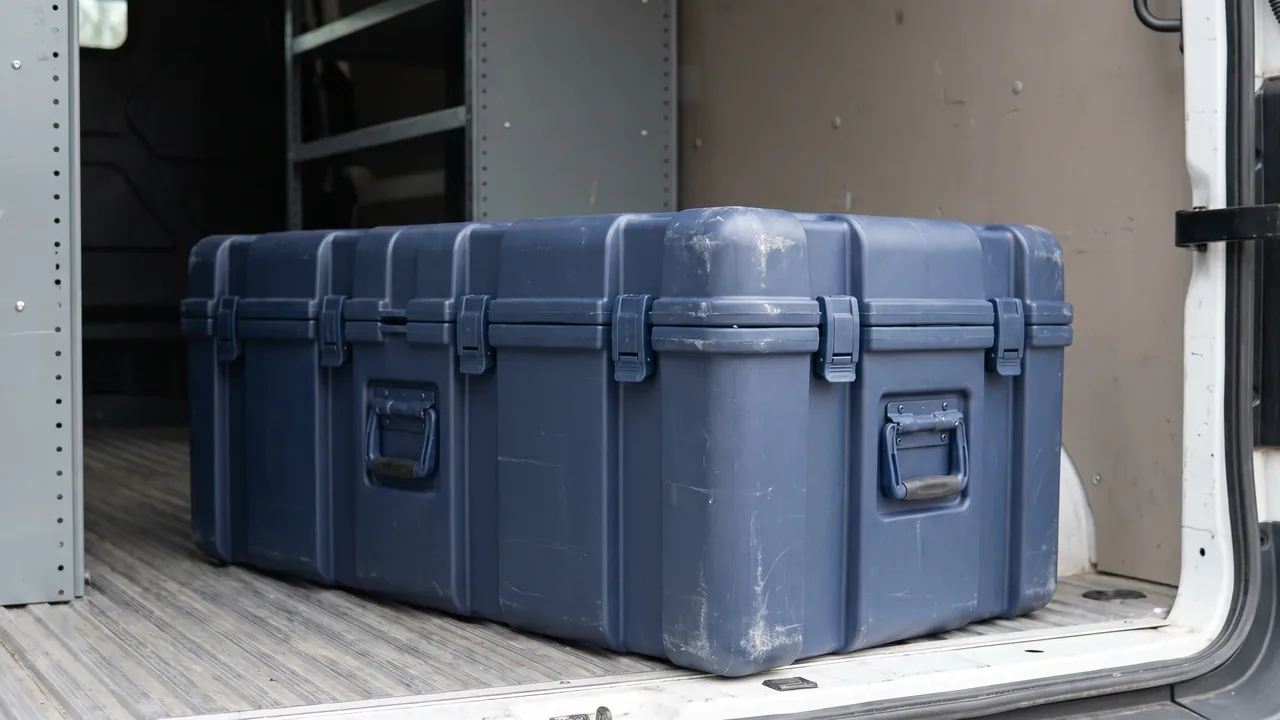
In a logistics hub, a single shipment passes through cross-dock centers, airport cargo terminals, and border warehouses before it reaches its consignee, and every one of those nodes means unloading, sorting, re-consolidation, and loading again. The containers that carry goods through this chain of handovers are the transit case and the shipping case. Industry practice tends to call a box designed to move between transport legs without being opened a Transit Case, while a box designed to be opened at a node, sorted, repacked onto a new outbound load, and sealed again is usually called a Shipping Case. The two roles differ at the hub, yet they share one set of engineering constraints: far more handling cycles than ordinary freight, uncontrolled staging environments, and a complex chain of custody. This article unpacks the real requirements that hub nodes place on transit cases and shipping cases from a protective case manufacturer's point of view: durability, identification, stacking, rain protection, multimodal switching, fast open and re-seal, traceability, and test validation, one topic at a time, so that procurement teams can specify the right container instead of learning the difference after cargo has already been damaged.
Why Hub Nodes Push Containers to Their Limits
A shipment moving on a direct route may be handled two or three times. The same shipment moving through a hub network will typically be handled more than twenty times, and in extreme cases the count reaches forty. Forklift tines, pallet truck noses, conveyor drops, roll cage hard braking, and manual placement all impose loads on the case body from different directions. To make matters more difficult, most hub handling is done by third parties who know nothing about the specific box in their hands. "Handle with care" cannot be treated as a design assumption in this environment; at best it is a hope, and a fragile one at that, because the person handling the case at three in the morning has no incentive to read the label.
A manufacturer designing hub-grade transit cases treats the worst handler as a design input. Drop angles are not limited to the standard six faces and three edges; the list extends to drag-and-slide abrasion, repeated knocks on a single corner, and long-term static load while buried at the bottom of a stack. Wall thickness, rib layout, and corner protection are all sized against this input rather than against an idealized handling process. The point is simple: what a hub node tests is not the average performance of a case but its lower bound. A box that performs well under careful treatment tells you nothing about how it will survive its fourth month inside a cross-dock where nobody knows who dropped it last, which is exactly the condition that eliminates weak designs.
The time dimension matters just as much. Hub volume is volatile: promotion weeks, quarter-end shipping, and the rush before public holidays can push a case through four or five load-unload cycles in a single night, while the trough of the same season may leave it sitting on an open yard for a week. This alternating pattern of high-frequency impact followed by long static dwell damages a case body more than continuous handling does, because gaskets deform slowly under sustained compression and latches accumulate plastic displacement impact by impact. Manufacturers therefore amplify the load spectrum with a peak factor during life calculation, ensuring the case still carries margin through its busiest week instead of being sized against the annual average, and the result is a container that fails late rather than early.
Transit Case and Shipping Case: Two Roles for the Same Cargo
Many buyers treat the transit case and the shipping case as one product when they request quotations, but the two play different roles inside a hub. The core value of a transit case is continuity between legs: goods are never unpacked between transport segments, and the case itself, together with its seal, moves directly into the next leg. Its sealing system, seal-compatibility features, and external identification must all stay effective across repeated custody changes. For the basic anatomy of this category, see our earlier guide to the transit case.
The core value of a shipping case, by contrast, is re-consolidation inside the node: the case arrives, is opened, its internal tray allows fast picking, and after sorting it is repacked for a new destination and sealed for departure. It functions as a mobile shelving unit that the hub reuses many times per day, so internal zoning and open-close efficiency matter more than long-term hermetic sealing. When procurement confuses the two roles, the usual outcomes are predictable: shipping cases pressed into transit service age their gaskets quickly in outdoor staging, while transit cases pressed into sorting service destroy their internal fitments within months. Define the role first, then negotiate the structure. The engineering cost difference between the two is real, and it is far smaller than the cost of using either one in the wrong place, which is why role clarity belongs at the top of the specification.
Roles also drift over time. A container can change jobs across its working life: during peak season it runs leg-to-leg without being opened, and during the quiet months it rotates back into the warehouse as a sorting asset; as a customer's network expands, a fleet that once ran a two-point shuttle gets absorbed into a multi-node system. For such mixed demand, manufacturers commonly recommend a hybrid approach: build the shell to transit-case durability and select the internals for shipping-case duty. Sealing and corner protection are specified at the higher grade, while the internal tray is engineered as a module that lifts out whole or swaps piece by piece. A fleet built this way moves between the two roles by changing internals only, never the shell, which raises asset utilization and simplifies management at the same time, and it is the pattern most often chosen by operators who cannot predict which role a given case will fill next month.
The Fatigue Ledger: Hinge, Latch, and Handle Life Under High-Frequency Handling
The switch count of a hub-grade case can be stated numerically. A shipping case in daily rotation can easily pass one thousand open-close cycles per year, ten times the count for an ordinary industrial packaging box. At that frequency, hinges and latches stop being "open and close" components and become fatigue parts with explicit life targets. Steel-pin hinges running on stainless shafts outlast plain molded living hinges by a wide margin; latches are best built as composites, with a metal base carrying the load and an engineering-plastic pressure plate protecting the case body from direct metal contact, so that wear shows on a replaceable part rather than on the shell.
Handles and tow bars are the most underestimated fatigue points of all. In hub service, cases are lifted, dragged, and hauled up and down continuously, and a handle root without a metal insert will first whiten under repeated bending and then crack. The standard manufacturing response is to embed metal bushings at every handle anchor and to add internal ribs that spread the pull load across a wider section of wall. Buyers evaluating suppliers should ask for load-carrying cycle data rather than catalog adjectives. A useful reference is our article on latch cycle life testing, which explains how latch force decay is measured under load; hinge structure selection is covered in depth in high-strength hinge design. Together these two components decide whether a case retires gracefully after years of hub service or fails suddenly in the middle of a shift, and the difference is visible only if you read the test report rather than the brochure.
Fatigue failure follows a recognizable sequence, and buyers who know the early signs gain real leverage. A latch first shows gradual loss of engagement force: the action simply feels looser, nobody on the floor considers it abnormal, and the problem only surfaces when a lid springs open after a hard bump. A hinge first shows increasing play, a few millimeters of sideways movement in the lid that puts uneven pressure on the gasket, and the next rain finds water tracing in along the hinge side. Molded parts add a third mode: creep, where a handle carrying a loaded case under constant tension stretches slowly until the mounting holes have elongated visibly. The manufacturing response is a service program with scheduled sampling: each year a fixed percentage of the fleet is pulled for engagement-force and hinge-play re-measurement, and units outside tolerance go back for part replacement rather than waiting to fail in service, which converts unpredictable breakage into a planned, budgeted maintenance line.
Sortation and Identification: Scan Panels, Label Windows, and Visual Management
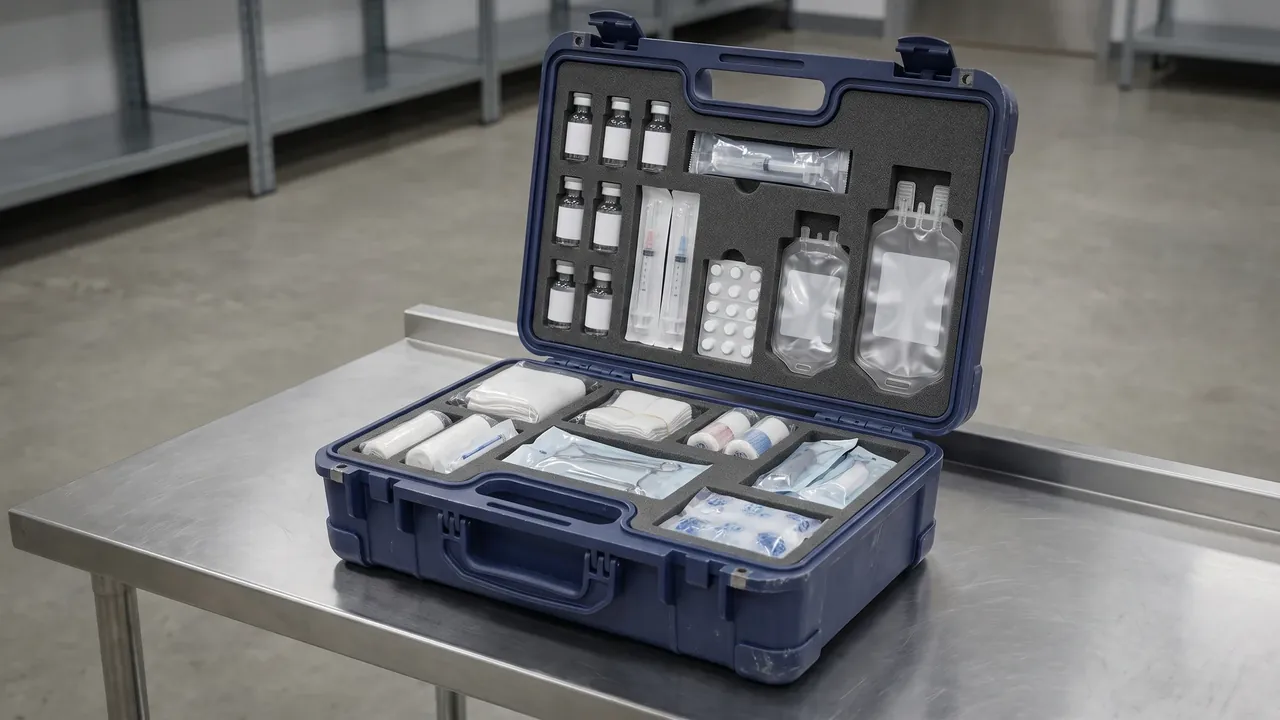
A hub sorting line processes hundreds of items per minute, and the speed at which a container can be identified directly determines sorting throughput. Transit cases and shipping cases must therefore reserve a dedicated identification panel: a flat, abrasion-resistant area away from corners and edges, reserved for barcodes, RFID tags, or a directly printed serial number. That panel should never sit next to a latch, because regions gripped by hands wear labels fastest, and it should not sit at the bottom edge of the body, which is the first place conveyor belts and pallet truck forks grind away, so placement is an engineering decision rather than a cosmetic afterthought.
Color is the second layer of identification. When hubs sort by lane, by batch, or by priority, differently colored lids or latch sets let operators pre-sort from several meters away, which is faster than reading any barcode. The common approach in practice is to keep the body color uniform across the fleet and use latch color, lid edge color, or swappable identification clips for flow control, with the color scheme aligned to the hub's own operating rules. A full treatment of this method appears in our article on case color visual management; the broader system of labels and asset tracking is described in case labeling and asset tracking. Combined, a scan panel plus a disciplined color code gives the hub two independent identification channels, so a failure of one does not stall the line, and operators can keep moving even when a label is smudged or a scanner drops offline.
Stacking and Floor Fit: Speaking the Size Language of Roll Cages, Pallets, and Racks
Floor space in a hub is permanently scarce, and whether a container stacks cleanly and fits a roll cage or pallet without dead corners directly determines warehouse efficiency. The footprint of a shipping case should align to standard pallet modules such as 1200 by 1000 millimeters or 1100 by 1100 millimeters so that every pallet layer packs full, and the case top and bottom should carry matching stacking bosses and recesses so that stacked units interlock and resist sliding when pushed. Stacking capability is never "build it as tall as possible"; it is calculated layer by layer for a fully loaded case, with the walls and corners of the bottom layer sized against the total stack load, because the bottom case carries every case above it and its failure collapses the column.
Roll cage fit is the requirement most buyers forget. Short-distance moves inside hubs rely heavily on wheeled roll cages, and if the case's external width does not match the cage door clearance, handlers will jam cases in sideways or double-stack them dangerously. Manufacturers normally supply a recommended placement diagram for each case model inside standard cages and derive the maximum external width from the door clearance. Empty-case returns add one more requirement: nestable designs that shrink the return volume of an empty case to a third of its shipping volume cut reverse logistics cost dramatically. The structural details of stacking are covered in case stacking structure; general stackable selection is discussed in stackable case; and pallet load planning is treated in case stackability and pallet planning, each of which feeds the same footprint decision that governs daily hub throughput.
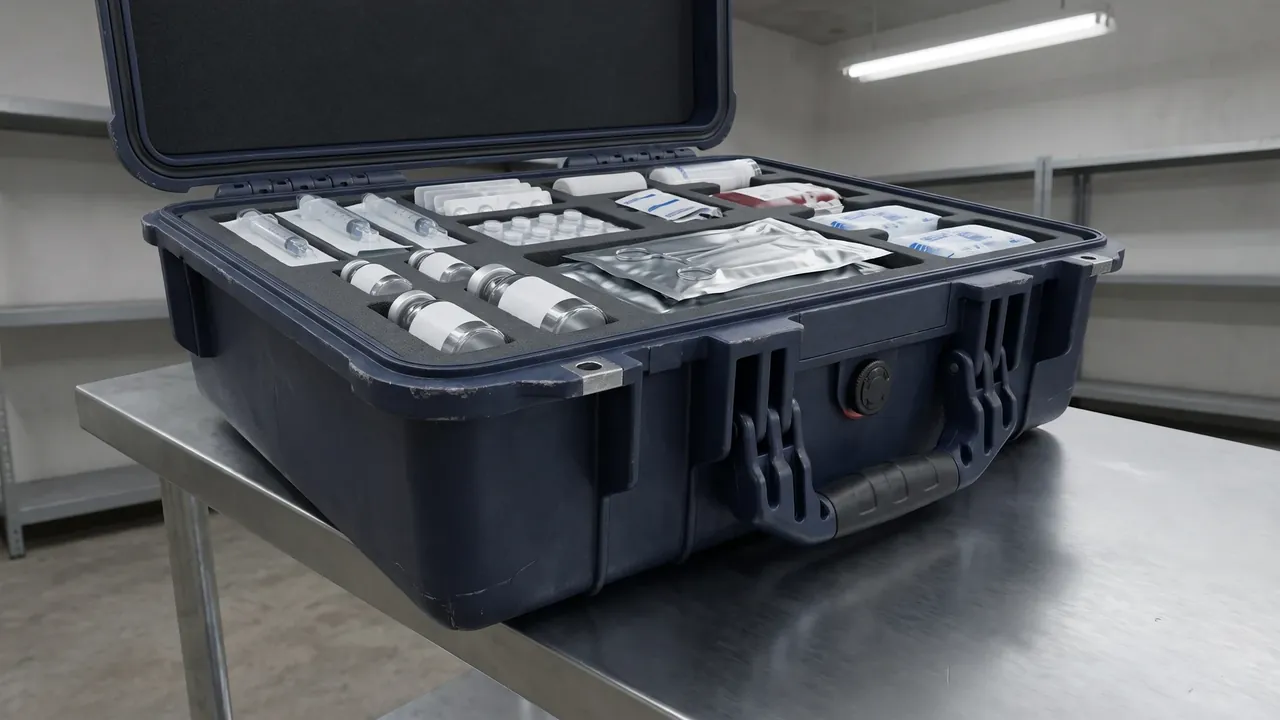
Vertical utilization is the quiet multiplier. A case whose height is a clean fraction of the rack bay fills the cube without wasted air, while an odd height leaves a dead band that no second tier can use. Hub planners increasingly specify case heights in whole subdivisions of the rack module, accepting a slightly shorter case in exchange for a guaranteed extra tier, because the cumulative floor-space saving across a yearly throughput dwarfs the modest volume given up per unit. The same logic applies to aisle access: cases that present a flat, grabbable face to the picker reduce reach time, and a rounded or obstructed face costs seconds per pick that compound into hours across a shift.
Rain and Moisture Protection for Short-Term Staging: The Window Between Platform and Canopy
Hub staging is short but uncontrolled: one night, one weekend, one rain shower that nobody forecast. During that window a transit case must defend itself. Sealing is the first line of defense, and the compression of the gasket around the full lid perimeter, together with the continuity of the corner joints, decides whether the case really keeps splashing water out. For outdoor service the selection logic starts at IP65, with IP67 preferred for demanding routes; this is explained systematically in our article on outdoor case rain and humidity protection.
Moisture is subtler than rain. Day-night temperature swings make the air inside a sealed case breathe, and when the temperature drops at night, water vapor condenses onto the cargo. This is precisely why high-grade transit cases carry a pressure equalization valve: the valve exchanges air without admitting water, solving underpressure and condensation at the same time, a mechanism explained in pressure equalization valve. Inside the case, a desiccant compartment and a moisture-resistant liner complete the defense, and the overall approach to condensation control is described in condensation control in cases. For batches staged fully in the open, manufacturers recommend a drain channel detail along the bottom edge so that ground moisture rising overnight cannot wick into the case from below, and a simple pre-staging check of the gasket line for trapped grit prevents the single most common cause of a leak that no rating could have predicted. A practical inspection routine turns this protection into a managed process rather than a hope. Before any outdoor staging window, the lid gasket should be wiped clean of grit that would otherwise hold a corner slightly open, the valve membrane should be checked for blockage by adhesive or dust, and the desiccant indicator should be read so a saturated cartridge is swapped before it becomes a moisture source instead of a sink. These three checks take under a minute per case and convert an invisible failure mode into a scheduled, visible task, which is the difference between a case that performs on paper and one that performs on the platform through a wet season.
Multimodal Switching: How Air, Road, and Sea Make Different Demands
International freight often starts by air, continues by road, and finishes by sea, and the container must switch between all three without modification. Air freight concentrates its demands on loading and restraint: external dimensions must fit standard unit load devices, nothing may protrude to scratch neighboring cargo, latches must accept customs seals, and tie-down points must survive the inertia loads of flight. The specific adaptation of military boxes to air transport is treated separately in our article on the military flight case.
On the road leg, the focus moves to forklifting and lashing: the case needs standard fork pockets whose center spacing matches common fork widths, and the side lashing points must land webbing loads on structural ribs rather than on the lid. At sea, the enemies are salt fog and long-term stack pressure, so every hardware item must be stainless steel or validated by a full salt-spray program, and the walls must be checked against the declared number of stacking tiers. Cross-border freight adds one more scenario: customs inspection. A structure that opens quickly for inspection and reseals cleanly shortens dwell time measurably, and the related compliance points are summarized in protective case cross-border logistics guide. A case designed for all three modes shares one body, one set of interfaces, and one identification panel, which is exactly what makes multimodal switching affordable. One further multimodal point is documentation: a case that switches modes without modification still needs a single data sheet listing its air, road, and sea limits in one place, so a forwarder in any mode can confirm compliance without calling the manufacturer. Suppliers should deliver that combined load and sealing data as a version-stamped controlled document, because an out-of-date limit sheet is itself a failure mode when a case is pressed into a route it was never tested for.
Fast Open and Re-Seal: The Engineering of Opening Inside a Sortation Rhythm
Hub sortation is billed by the second. When a handler opens a shipping case, picks, and reseals, compressing that full sequence below one minute raises the daily throughput of a sorting lane by a visible step. The first element of fast opening is latch force and operating space: openable with one hand, openable with gloves on, with a short and unambiguous latch stroke. The lid should hold open at a wide angle without falling back, and the internal tray should lift out as a group so that items come out in batches instead of being picked out piece by piece.
Re-sealing must be equally fast, and it must be confirmable: the latch should give a clear tactile and audible signal when fully engaged, so an operator knows the case is locked without looking at it. This matters most just before outbound consolidation, because a case that leaves the hub half-latched is one of the most common causes of cargo spillage downstream. One more detail is routinely ignored: underpressure. A case moved from a cold storeroom onto a warm platform contracts the air inside, and a well-sealed case actually becomes hard to open, which is why the pressure equalization valve serves as both a moisture component and a fast-open component. Where the fast-open layout includes wheels and a tow bar, interference between the bar and the latch line must be checked early; selection guidance appears in the wheeled case buying guide. Training compounds the engineering: a fast-open case still depends on the operator resealing it correctly, so the closure sequence should be simple enough to teach in under a minute and obvious enough that a wrong step is visible, and a one-page laminated card attached inside the lid measurably reduces half-latched departures because the instruction travels with the case.
Loss and Damage Traceability: Seals, RFID, and the Chain of Custody
A hub network involves many hands, and when goods go missing or are substituted, responsibility is reconstructed entirely from handover records. The container serves this chain twice over: as the carrier of the goods and as the carrier of evidence. The baseline tool is the numbered plastic security seal. Binding the seal number to the waybill and checking seal number and integrity at receipt answers one question conclusively: whether the case was opened in transit. For high-value batches, electronic seals or RFID seals upgrade the record automatically with time and location at both application and verification, and one scan at each custody point completes the check.
The case itself is traced through its serial number system. The manufacturer supplies both a QR code and an embossed serial number on the identification panel, so manual lookup survives a scanner outage, and a hidden verification code inside the lid guards against malicious replacement of the external plate.
!Custom logistics turnover case used in the transit case stage for transit caseFleet-level asset management, including rental rotation and batch cycling, can be implemented with the scheme described in case asset QR code tracking. When traceability is engineered this way, loss rates move from tenths of a percent toward hundredths, and on high-value freight that difference is paid in cash, not in percentages. Exception handling is the part of the chain most often overlooked: when a seal is found broken on arrival, the procedure must be defined in advance, with a hold on the contents, a photographed record, and a named owner for the investigation, because a broken seal treated as routine is how small losses become systemic and how the chain of custody loses its value as evidence.

From Laboratory to Platform: Mapping ISTA Transport Tests as a Manufacturer
Transport testing for hub scenarios generally follows the ISTA series. ISTA 1A covers drop and stacking for a single package and suits baseline durability checks for one transit case; ISTA 2A adds vibration and atmospheric conditioning and tracks a fuller distribution cycle more closely; ISTA 3A targets the composite stresses of e-commerce and intensive hub transfer, combining random vibration with multiple drops. The manufacturer's selection advice is to match the test profile to the actual route rather than to buy the highest number: running 3A on a case that only travels a domestic road network is over-validation, while running 1A alone on a multimodal international route is under-validation. The difference between the two common grades is compared in ISTA 1A versus 2A, and the complete procedure is laid out in ISTA transport testing procedure.
The value of the report goes beyond a pass mark. Drop tests leave a clear deformation record at the corners, vibration tests expose insufficient liner restraint, and these findings feed directly back into mold and liner design, which is where the testing budget earns its return. Hub customers usually hold real damage data from their own platforms, and aligning the damaged locations observed in the field with the failure modes reproduced in the laboratory is the single most effective improvement loop a manufacturer can run. The report should be re-issued whenever the case design, liner, or hardware changes, because a report tied to an obsolete configuration protects no one once the product has been revised, and treating it as a living requirement is what keeps the test relevant through the product's service life.
Transit Notes for Military Trade Cargo
Military trade customers push every requirement above to a higher threshold: batch segregation, seal classification, customs supervision, and dual-signature verification at every issue and receipt, with no exceptions. At the container level, the case must support unified seal number management, the identification panel must carry bilingual or even trilingual markings, and the stacking and restraint interfaces must satisfy both military transport equipment and civilian intermodal standards simultaneously. The standards framework and preservation requirements for such packaging are covered in our article on the ordnance packing box; how ammunition-class cargo is containerized for transfer is described in the ammunition transit case guide; and the general military-standard test framework appears in GJB military standard case.
It should be stated plainly that the transport organization of military trade cargo is governed by local regulations and export control requirements, and this article discusses the packaging container only. The container manufacturer's role is to translate custody and traceability requirements into case structures that can be produced in volume, not to participate in the management of the cargo itself. Keeping that boundary clear protects both the buyer and the supplier, and it keeps the technical conversation where it belongs: on hinges, seals, panels, and load paths, which is the engineering that a container supplier can actually stand behind.
A Manufacturer's Selection Checklist for Hub-Grade Cases
Finally, a parameter framework that procurement teams can lift directly into a request for quotation. Structure: whether external dimensions align to pallet and roll cage modules, empty-case weight, the declared number of stacking tiers, and the positions of fork pockets and lashing points. Durability: open-close cycle life of hinges and latches, handle load test data, and salt-spray test hours. Environment: IP rating, gasket material, the presence of a pressure equalization valve, and desiccant compartment capacity. Identification: the position and size of the scan panel, the color management scheme, and the serial number format. Traceability: seal type, whether disposable or RFID, and whether the latch accepts customs seals. Validation: an ISTA report or equivalent, with drop height and vibration spectrum stated.
Buying hub-grade transit and shipping cases is, in essence, paying for handling cycles and custody events. Once those two numbers are estimated honestly, every line of the framework above acquires a budget anchor. For fleet-level acceptance details, our references on logistics warehouse transport cases and the reusable shipping and storage container provide further reading on the economics of returnable packaging. The discipline of writing these parameters into the purchase order, rather than selecting on price alone, is what separates a hub operation that ages gracefully from one that lurches from claim to claim.
Cost of Ownership: Buying the Hub-Grade Case as an Operating Asset
The purchase price of a hub-grade case sits visibly above that of a basic industrial box, and procurement teams rightly ask what justifies the gap. The answer lives in handling cycles and custody events, the two variables a hub multiplies. A basic box sized for five handling events per journey may survive one leg, but placed into a hub rotation it reaches its failure mode within weeks, after which cargo damage, replacement cost, and downtime exceed the original saving several times over. A hub-grade case, by contrast, is sized for thousands of open-close cycles and dozens of annual handling events, so its cost per handling event is often lower once the full lifecycle is counted. The honest way to compare is to estimate the annual handling count for the intended route, divide the case price by that count, and compare the resulting cost per event against the expected damage rate of a cheaper alternative; on busy hub routes the cheaper box almost always loses. This calculation also exposes where the money goes: fatigue-rated hinges, stainless hardware, color-managed identification, and a redundant sealing system are not luxury features but the components that keep the cost per event low, and buyers who run this number before purchase typically choose hub-grade construction for any case that will see more than a few hundred handovers per year.
Residual value is the second half of the calculation that buyers overlook. A hub-grade case built with replaceable hardware keeps a serviceable shell alive after its first latch wears out, so the second and third lives of the asset cost only the spare parts, whereas a basic box is scrapped whole. Manufacturers that publish a spare-parts list and a recommended service interval make this residual value real rather than theoretical, and fleet managers who track per-case repair history can retire units on data instead of on guesswork. The same logic applies to fleet standardization: buying one hub-grade platform across many case sizes lets a single spare-parts kit and a single training module serve the whole fleet, which lowers the hidden overhead that incompatible basic boxes impose through their variety. Taken together, lifecycle costing turns the higher sticker price into a lower cost per handling event, which is the only number that survives contact with a busy hub floor.
Frequently Asked Questions
Q: What is the single most important difference between a transit case and an ordinary shipping box? A: The difference lies in handling frequency and custody environment. An ordinary shipping box is designed around one complete transport leg with three to five handling events under relatively controlled conditions. A transit case is designed around a hub network with more than twenty handling events, uncontrolled staging environments, and a changing cast of operators at every node. That difference forces reinforcement in specific areas: hinges and latches must be fatigue-checked for high cycle counts, corners need extra covering and stiffening, the sealing system must survive outdoor staging, and the identification panel must let an unfamiliar operator sort the case correctly at first glance. An ordinary box optimizes protection for one journey; a transit case optimizes stability across hundreds of handovers. The price difference is real, but placing an ordinary box into a hub network almost always returns the saving several times over as cargo damage and turnover delays, which is why experienced logistics buyers specify hub-grade construction from the start. The distinction also shapes spare-parts strategy, because hub-grade cases are designed to be serviced in the field with replaceable latches and hinges, whereas a basic box is discarded once its closure fails.
Q: How many open-close cycles must latches and hinges survive to count as hub grade? A: Manufacturers generally set the open-close life of an ordinary industrial case between one thousand and three thousand cycles, while hub-grade transit cases should be rated for at least five thousand, with high-rotation applications specifying ten thousand. The assessment is not a bare switch count but a load-carrying cycle: the latch is cycled repeatedly while the lid is under compression, and the hinge is exercised with the case fully loaded, while latch engagement force and hinge play are recorded along the way. At the end of rated life, engagement force should remain above a defined fraction of the initial value, and no self-opening may occur. Buyers should request the supplier's load-carrying cycle curves, ideally from a third party, rather than accepting a one-line catalog claim. A case with insufficient cycle life performs identically to a good one for the first three months, then begins failing in batches across the hub at the six-month mark, and replacement at that point costs far more than the specification difference would have. Cycle life should also be read against temperature, since cold environments stiffen gaskets and raise latch force, so suppliers should state the rated range rather than a single nominal figure that hides cold-weather degradation.
Q: Will a transit case take on water if it is staged outdoors on a platform overnight? A: A case built to hub-grade standards will not. Three details decide the outcome: the continuity and compression of the gasket around the whole lid perimeter, the quality of the corner joint assembly, and the drainage design. A compliant transit case should show no visible leakage under a water splash test and should keep the interior dry through short-term immersion at IP67 level. The real threat is not rain but condensation: when the temperature falls overnight, water vapor inside the sealed case condenses onto the cargo, so the goods can be damp even though not a single drop entered. This is why a high-grade transit case must carry a pressure equalization valve, allowing the case to breathe with temperature changes without admitting water, supported inside by a desiccant compartment and a moisture-resistant liner. If the cases you have purchased have only basic gaskets and no valve, fill the desiccant compartment before outdoor staging and inspect the inner walls for condensation marks the next morning as a practical readiness check. Staging discipline matters as much as the seal itself, because keeping cases off bare ground on pallets and avoiding stacked burial during rain reduces the real exposure far more than any rating printed on the lid.
Q: What hard requirements does air freight place on a transit case? A: Air freight concentrates its demands on loading compatibility and restraint safety. For loading, the external dimensions must work with standard unit load devices, nothing may protrude beyond the case outline, handles should stow flat after loading so they cannot scratch neighboring cargo or the container liner, and latches must accept seals, with some routings requiring customs-grade seals specifically. For restraint, the case needs tie-down points rated for flight inertia loads, and the webbing forces must land on structural reinforcements rather than on the lid itself. Cargo hold temperature and humidity also differ sharply from ground conditions, so sensitive contents call for a pressure equalization valve and cushioning materials validated at low temperature. The most reliable procurement practice for airfreighted transit cases is to require the manufacturer to supply a stowage diagram and restraint plan for the specific case model inside the relevant container type, and then to work exactly to that plan on the ramp instead of improvising at load time. Forwarders increasingly ask for a digital stowage file rather than a paper diagram, so specifying the delivery format up front avoids a late rework when the cargo is already at the terminal.
Q: How should a buyer choose between disposable seals and RFID seals for traceability? A: Choose by cargo value and handover density. Numbered disposable plastic seals are inexpensive and simple to use; once the seal number is bound to the waybill, a complete chain of responsibility exists, which suits batches of moderate value with routine handover frequency. Their weakness is that verification is manual, and at high volumes checks get skipped. RFID seals record application, movement, and verification automatically with time and location, so one scan per custody point completes the check, and the same infrastructure supports fleet-level asset counting inside the warehouse management system. This suits high-value freight moving through networks with many participants. The cost of RFID is not limited to the tags; readers and system integration must be budgeted, and that investment should be justified with real volumes. The common middle path is to fit fixed RFID tags for fleet asset tracking while using disposable seals to control opening authority at the goods level, running both layers in parallel with a controlled budget and an unbroken traceability chain. Whichever seal type is chosen, the discipline of recording the number at every handover matters more than the technology, because a missing entry in the chain is what turns a routine check into a dispute.
Q: Why should an ISTA test report be treated as a hard requirement in procurement? A: Because the report translates "this case is strong" into verifiable data. A drop test documents the condition of the case after impact from a defined height in defined orientations; a vibration test documents how the liner and restraint performed under a simulated transport spectrum; a stacking test establishes the load limit. A supplier without a report can only promise verbally, and there is nothing to compare against when damage claims arise, whereas a supplier with a report has committed to specific test conditions that can be checked line by line during acceptance disputes. The deeper value is the feedback loop: the failure modes in the report, such as corner deformation or seal separation, correspond to the damage patterns actually observed on hub platforms, and buyers can use that alignment to demand mold or liner improvements. The report should be tied to the buyer's real routing in the technical agreement rather than requested generically, because a test profile that matches the actual logistics scenario is the only kind that predicts field performance, and the report must be re-issued whenever the case design or hardware changes so it never loses its authority.
Q: What additional requirements apply to a case when military trade cargo is in transit? A: The additional requirements concentrate on seal management and batch segregation. On seals, the case latches must accept uniformly numbered seals that both parties verify by number at every handover, with a record generated for each opening event, and the identification panel must carry bilingual or multilingual markings with a prominent position reserved for regulatory inspection. On segregation, cargo from different batches must not be mixed during flow, so case colors or swappable identification clips must make batches distinguishable at a glance to prevent cross-batching during hub sortation. Stacking and restraint interfaces must satisfy both military transport equipment and civilian intermodal equipment simultaneously, so that a case moving from a dedicated military leg onto a civilian trunk line needs no re-palletizing. Note that transport organization for such cargo is governed by local regulations and export control requirements, and this discussion covers the packaging container only; the container supplier's boundary of responsibility is to embody these custody requirements in the case structure itself, while the cargo movement remains the customer's domain under the applicable rules.
Closing
A hub forgives nothing: every weak hinge and every missing valve eventually shows up as a claim. Specify for the worst shift, not the best, and treat the case as an operating asset whose cost per handling event is the only number that matters. Related Reading: transit case, stackable case, ISTA transport testing procedure.