

The short answer: a tumble test places a packaged product inside a slowly rotating hexagonal drum, where it repeatedly falls over on itself, accumulating impact by repetition rather than by height. The difference between ISTA 1A and ISTA 2A is the degree of simulation. ISTA 1A is a non-simulation integrity test: fixed-frequency vibration plus one set of weight-banded drops, intended to establish basic strength. ISTA 2A is a partial simulation performance test, adding atmospheric conditioning, a compression or stacking stage, and random vibration before the drops, so that it assesses whether the package still protects the product after a realistic sequence. In one line: 1A answers whether it is strong enough, and 2A answers whether it is still strong enough after heat, humidity, stacking and vibration. One important clarification up front: the tumble test is not part of ISTA 1A or 2A. It belongs mainly to ASTM D6179 and to postal and parcel-handling practices, while the ISTA system represents the equivalent stress through the rotational and free drops of ISTA 3A.
In purchasing and factory audits, tumble testing and ISTA specification are frequently conflated, and the technical requirement ends up vague. A customer asks for a tumble test and the supplier returns an ISTA 1A report. A tender says ISTA 2A but the execution covers only drops and skips conditioning and vibration. The consequences are real. A case can come through dry, room-temperature, single-unit drop testing without a scratch, then after a humid season, a 60 C container, three tiers of stacking and a thousand kilometres of road vibration reach the end user with loose latches, a distorted case mouth, a gasket that has lost its compression, and eventually water ingress or a crack. The 1A versus 2A distinction is, at heart, the distinction between looking at strength alone and looking at whether strength is retained through a realistic environmental sequence.
This guide is written for procurement, export and structural engineering staff working with protective cases. It works through the principle and parameters of the tumble test, the structure of the ISTA series from 1 to 7, the full composition of 1A and 2A with an item-by-item comparison, the logic behind drop height and count bands, how ISO 4180 and ASTM D6179 divide the work, the positioning problem when a protective case is both product and packaging, and a checklist you can take straight into tender evaluation. All heights, counts, durations and climatic values quoted are typical industry or standard-recommended values. Binding conditions are whatever the standard revision and the agreed test plan specify.
Contents
- What the tumble test, ISTA 1A and ISTA 2A each examine
- Why protective cases need transport packaging testing
- What a tumble test is: hexagonal drum and rotational drop
- What ISTA is: the test system from Series 1 to Series 7
- ISTA 1A: what a non-simulation integrity test contains
- ISTA 2A: what a partial simulation test contains
- ISTA 1A and 2A side by side
- Setting drop height and count: weight bands
- Where the tumble test sits in the ISTA system and how it relates to 3A
- Dividing the work with ISO 4180 and ASTM D6179
- Three special issues when testing protective cases
- Acceptance criteria and common failure modes
- Reading a test report, and how to choose a procedure
- Frequently Asked Questions
- Conclusion and Related Reading
What the tumble test, ISTA 1A and ISTA 2A each examine
Separate three things first.
First, a tumble test examines cumulative damage from repeated low-energy impacts. A hexagonal drum rotates slowly, typically a few to a dozen revolutions per minute. The package is carried up the wall and falls, again and again, for dozens to hundreds of cycles. The signature is low drop height, very high repetition, random attitude, and impact concentrated on corners and edges. That makes it particularly good at exposing corner crush, closure failure, shifting of cushioning, and damage to the product itself such as chipped corners or popped latches. It represents rough manual handling, parcel sorting and packages tumbling on conveyors.
Second, ISTA 1A examines whether basic strength is sufficient. It has two parts: fixed-displacement, fixed-frequency sinusoidal vibration, typically around 25 mm peak to peak, for the duration the standard specifies, followed by one set of drops, commonly ten, at heights banded by package weight and size. 1A does not control temperature or humidity, does not stack, and does not use a random spectrum. It is therefore quick and cheap, and works well as a screening threshold.
Third, ISTA 2A examines whether the product is still protected after a simulated environmental sequence. The typical order is atmospheric conditioning, optional controlled temperature and humidity, compression or stacking, random vibration with or without a top load, and finally drops. Because humidity, temperature, sustained pressure and random vibration are included, 2A can catch failures that need time and environment to appear: material softened by moisture uptake, gasket compression set, corrugated creep, and latches working loose under vibration.
Selection rule in one sentence: for domestic short-haul work where the only question is whether it survives a drop, run 1A. For export by sea, where high humidity, heat and stacking must be covered, run 2A. For parcel delivery channels, where sorting and repeated throwing must be simulated, run 3A. These are not grades of severity. They simulate different things.
Why protective cases need transport packaging testing
A protective case exists to deliver what is inside it safely. The journey before delivery is far more complex than most users imagine. A typical export chain includes stacking in the warehouse after production, container loading, sea freight in which internal temperatures can sit at 50 to 65 C and relative humidity can exceed 90 per cent for weeks, discharge at the destination port, truck distribution, regional warehousing, and final delivery by parcel carrier or third-party logistics. Four classes of stress dominate.
- Sustained static load. Stacking applies long-term pressure that makes plastics creep, corrugated compress, and cushioning lose resilience. This is a time multiplied by load effect.
- Vibration. Random road vibration applies repeated alternating loads at latches, hinges and liner fasteners, the classic route to loosened fasteners and fatigue cracks.
- Shock. Handling drops, sorting throws and sudden braking concentrate energy into a high peak, cracking corners and damaging contents.
- Climate. High humidity degrades the mechanical performance of some materials. Heat softens plastics and accelerates gasket ageing. Thermal cycling produces condensation inside the case.
These four are coupled, not independent. A case that survives a drop when dry at room temperature may behave completely differently after taking up moisture and losing stiffness in the heat. This is exactly why the ISTA 2 Series exists: it abandons the single strength threshold in favour of a simplified environmental sequence that approximates real logistics. Once that is clear, the difference between 1A and 2A becomes obvious. For how the test systems divide their work, see how ISTA transport testing is run and how a stacking load test is performed.
What a tumble test is: hexagonal drum and rotational drop
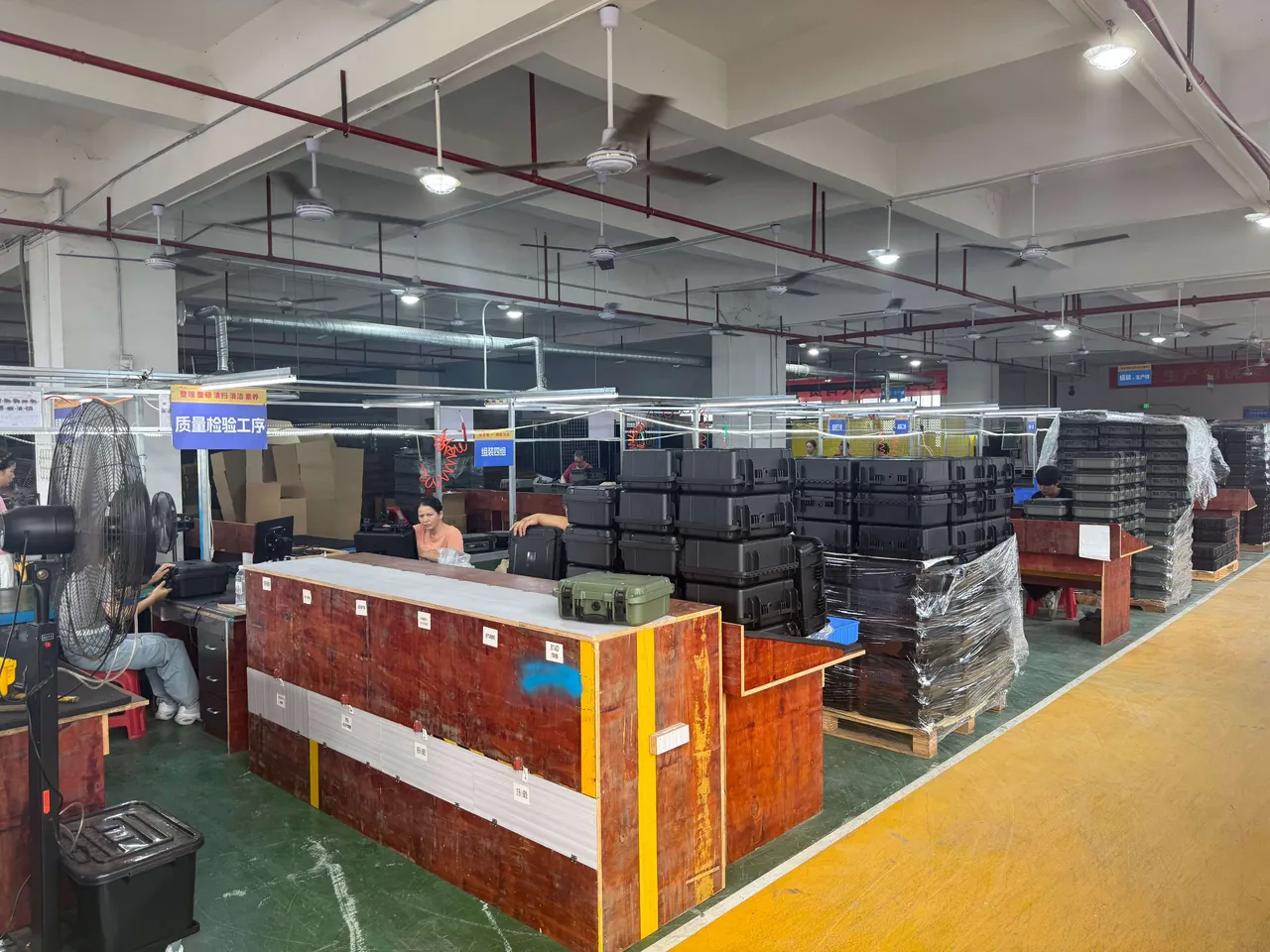
The core apparatus is a hexagonal or octagonal rotating drum, usually steel-lined with internal flights or flanges. The package is placed inside. The drum turns slowly and the package is carried up, tumbles, falls, and is carried up again. Three aspects of the engineering logic deserve attention.
First, it substitutes repetition for height. The individual drop height is modest, but dozens to hundreds of repetitions accumulate damage equivalent to a smaller number of high-energy drops. This matches parcel sorting behaviour, where a package is not dropped two metres once but kicked off a half-metre ledge a dozen times.
Second, it randomises attitude naturally. Because every tumble lands differently, the drum automatically covers corner, edge and face impacts without anyone arranging a drop sequence. This is the essential difference from a standard drop test: a drop test seeks a reproducible specified attitude, while a tumble test seeks randomised overall coverage.
Third, it is especially hard on corners. The internal angles and flights of the drum steer the package toward corner impacts, so crushing, cracking and tape failure almost always appear at corners first. For a protective case, corners are also where wall thickness transitions and mould parting lines sit, which makes them a structural weak point.
| Item | Typical practice | Engineering meaning |
|---|---|---|
| --- | --- | --- |
| Drum shape | Hexagonal or octagonal rotating drum | Random attitude, corner-first impacts |
| Rotation speed | A few to a dozen rpm | Low speed, mimics manual handling and tumbling |
| Test quantity | Per the standard, commonly on the order of 100 falls | Impact accumulated by repetition |
| What to watch | Corners, latches, closure, internal movement | Cumulative damage and random-attitude failure |
| Acceptance | Package intact, product functional | The criteria must be agreed in advance |
It must be stated plainly: the tumble test is not a component of ISTA 1A or 2A. It appears mainly in rough-handling methods such as ASTM D6179, and in postal and courier operating procedures. The ISTA system places the equivalent stress in the 3 Series, particularly the ISTA 3A parcel procedure, as rotational drop, free drop and concentrated impact. When a customer asks for a tumble test, therefore, the first task is to establish what they actually care about. If the concern is strength after repeated throwing, ISTA 3A or ASTM D6179 is the right answer. If tumble test is simply shorthand for transport testing, move the conversation back to the standard language of ISTA 1A and 2A.
What ISTA is: the test system from Series 1 to Series 7
ISTA, the International Safe Transit Association, publishes transport packaging performance test procedures. Its structure organises tests by degree of simulation and by distribution channel, rather than by individual mechanical load case.
- Series 1: Non-Simulation Integrity. Basic vibration and shock only, to establish the overall strength of package and product without simulating a specific environment. Typical procedures are 1A for packages under 68 kg, 1B above 68 kg, plus 1C, 1D, 1E and 1G.
- Series 2: Partial Simulation Performance. Adds atmospheric conditioning, compression or random vibration to the basic mechanical items, assessing protection through a more realistic sequence. Typical procedures are 2A, 2B and 2C.
- Series 3: General Simulation Performance. Aimed at specific distribution channels such as parcel, less-than-truckload, truckload and unitised loads, with random vibration, rotational drop, free drop and concentrated impact. Typical procedures are 3A for parcel delivery and 3B, 3E and 3F.
- Series 4: Enhanced Simulation Performance. For harsher conditions and longer chains.
- Series 5: Focused Simulation Performance. Targeted at specific product categories or specific hazards.
- Series 6: Member Performance. Custom procedures for ISTA members.
- Series 7: Development. Exploratory testing during new product development.
Understanding the series matters more than memorising procedures. Customers often say only that they want ISTA testing, without naming the level. Ask three questions: what is the package weight and shape, what is the distribution channel, and must temperature, humidity and stacking be simulated. Answer those three and you can land on 1A, 2A or 3A. Without them, the report may be technically valid and still not address the customer's real intent.
ISTA 1A: what a non-simulation integrity test contains
ISTA 1A covers packaged products weighing up to 68 kg, about 150 lb, and is the most widely used entry-level procedure. Its typical structure has two parts.
Part one, vibration. 1A uses fixed-frequency, fixed-displacement sinusoidal vibration, typically around 25 mm peak to peak, not random vibration. The equipment is a shaker with fixed displacement control. The sample sits in its normal transport attitude, no top load is applied, and vibration continues for the specified number of cycles. Fixed-frequency vibration has the advantage of low equipment cost and intuitive results, and the disadvantage that it does not represent the broadband random energy of real road transport. It is therefore closer to a strength screen than an environment simulation.
Part two, drop. Drop height and impact location are banded by package weight and size, and ten drops are performed covering faces, edges and corners in different attitudes. The sequence and locations are normally specified, for example corner drop followed by edge drop followed by face drop, so that results are comparable between laboratories.
Acceptance: the package should show no damage that would impair transport or protection, and the product should remain intact and functional. The acceptance wording must be settled before testing. How much package deformation counts as passing, and whether product surface marks are permitted, are two questions that must be answered in advance, or the report cannot be compared with anything.
| Component | Typical ISTA 1A content | Included |
|---|---|---|
| --- | --- | --- |
| Atmospheric conditioning | No controlled temperature or humidity stage | No |
| Compression or stacking | No sustained pressure test | No |
| Vibration | Fixed-frequency, fixed-displacement sinusoidal | Yes |
| Random vibration | No random spectrum used | No |
| Drop | Weight-banded, ten drops | Yes |
| Top load | No top load during vibration | No |
ISTA 2A: what a partial simulation test contains
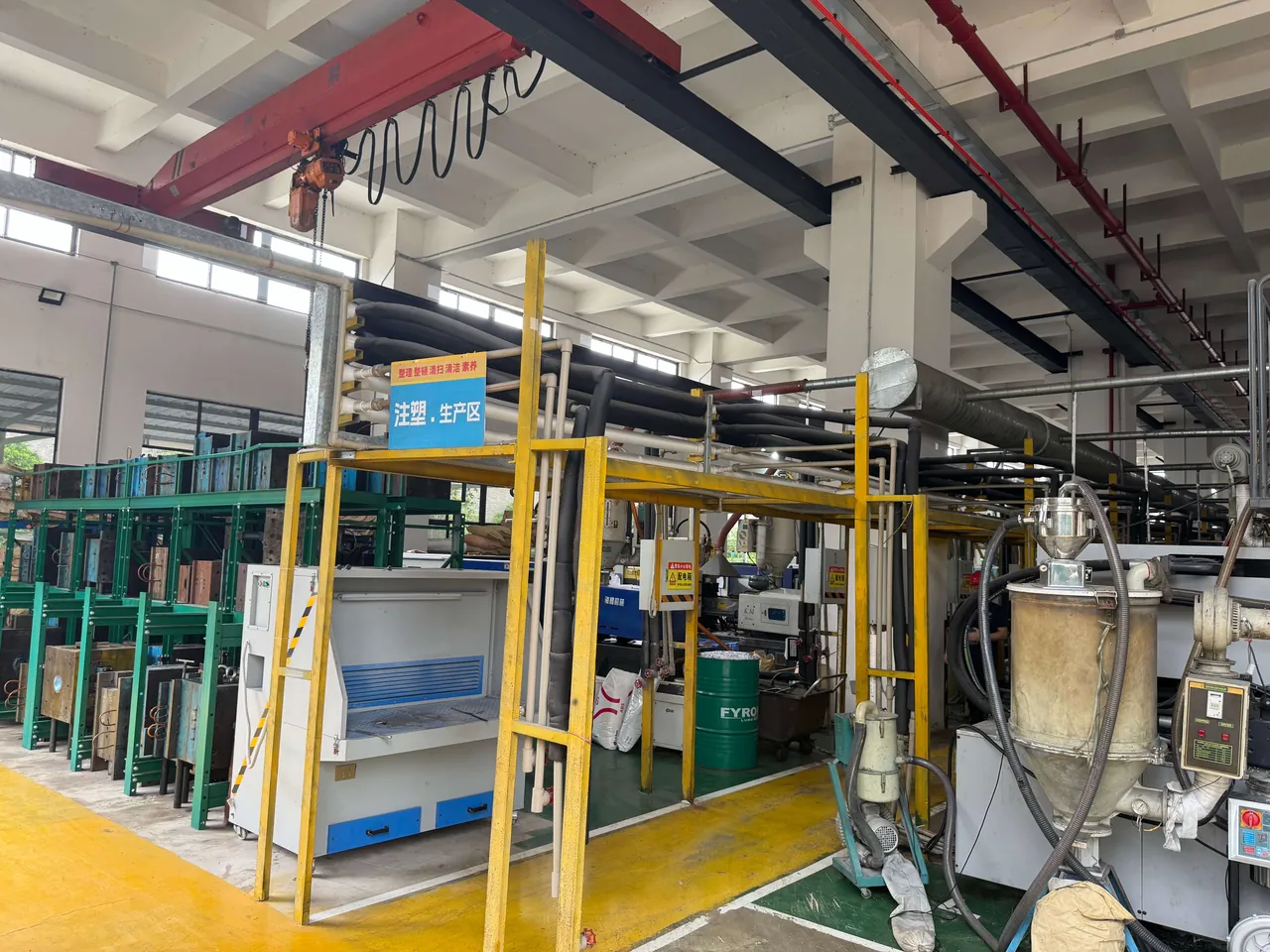
ISTA 2A also covers packages under 68 kg, but as a partial simulation procedure it brings environment and time into the sequence. Typical composition follows.
Stage one, atmospheric conditioning. The sample is held at specified temperature and humidity, choosing between ambient and controlled conditions. Controlled combinations commonly used in practice include a warm, humid environment around 38 C and 85 per cent relative humidity and a standard laboratory condition around 23 C and 50 per cent relative humidity, representing containers, rainy seasons or the periods before and after cold chain handling. The purpose is to put the material into the moisture content and temperature state it will actually have on the route before mechanical testing begins.
Stage two, compression or stacking. A calculated stacking load is applied and held for a defined period, typically on the order of one hour, either as constant load or constant deflection. It tests creep and crushing under warehouse and container stacking.
Stage three, random vibration. A random spectrum described by a power spectral density curve is applied, with or without a top load. Random vibration is far closer to real road excitation than sinusoidal vibration, and is particularly effective at revealing loosened fasteners and displaced cushioning.
Stage four, drop. A banded set of drops similar to 1A. The important point is that the 2A drops happen after the sample has already been through humidity, pressure and vibration. The test therefore does not measure what a new case does when dropped. It measures what a case does when dropped after a round of logistics stress.
| Sequence | Typical ISTA 2A content | Difference from 1A |
|---|---|---|
| --- | --- | --- |
| 1 | Atmospheric conditioning, ambient or controlled | 1A has no such stage |
| 2 | Compression or stacking under sustained load | 1A has no such stage |
| 3 | Random vibration, optionally with top load | 1A is fixed-frequency with no top load |
| 4 | Drop test | Present, but after environmental and mechanical stress |
| Acceptance | Package intact, product functional | Emphasis on retention after the sequence |
Compressing the difference into one image: 1A is a single health check, while 2A is a health check after running a distance first. For cases exported by sea over long chains, 2A carries markedly more weight.
ISTA 1A and 2A side by side
| Item | ISTA 1A | ISTA 2A |
|---|---|---|
| --- | --- | --- |
| Procedure type | Non-simulation integrity | Partial simulation performance |
| Applicable to | Packages under 68 kg | Packages under 68 kg |
| Atmospheric conditioning | None | Yes, ambient or controlled |
| Compression or stacking | None | Yes, sustained load |
| Vibration type | Fixed-frequency fixed-displacement sinusoidal | Random, optionally with top load |
| Drop | Yes, ten drops | Yes, after environmental and mechanical stress |
| Purpose | Establish overall strength | Establish protection through a realistic sequence |
| Time and cost | Short, low | Long, high |
| Typical use | Domestic, short haul, strength screening | Export, sea freight, long chains, customer mandates |
| Typical failures found | Corner crush, closure failure | Moisture softening, stacking creep, loosened fasteners, seal failure |
Two selection errors are common. The first is to write 1A everywhere to save budget, then face a wave of complaints after shipping to a humid region. The second is to test only when the customer demands it, which means the cause of a complaint cannot be separated into design or logistics after the fact. A practical approach is to tier by product positioning: 1A as the factory gate for standard domestic lines, 2A for export and customer-specified lines, and 3A in addition for small models sold through parcel channels.
Setting drop height and count: weight bands
Drop parameters are not chosen at random. They are banded by package weight, sometimes with size, on a simple principle: the heavier the package, the lower the drop height. Energy at a given height scales linearly with mass, so an extreme height is neither realistic nor meaningful. The table below shows typical empirical bands to illustrate the pattern. Exact values must come from the standard revision and the test plan in use.
| Package weight (typical band) | Empirical drop height | Notes |
|---|---|---|
| --- | --- | --- |
| 0 to about 9 kg | On the order of 750 mm | Carryable one-handed, highest throwing risk |
| About 9 to 18 kg | On the order of 600 mm | Two-handed, typical for small and medium cases |
| About 18 to 27 kg | On the order of 500 mm | Near the practical manual handling limit |
| About 27 to 45 kg | On the order of 450 mm | Two-person lift, lower drop risk |
| About 45 to 68 kg | On the order of 400 mm | Mechanical handling dominates |
Count and attitude matter just as much. Standard procedures normally specify a fixed set of drops including a corner drop with successive impacts on the same corner, edge drops on adjacent edges, and face drops on the principal faces, commonly totalling around ten. The fixed sequence exists so that results are comparable between laboratories and batches. If a customer asks only for ten drops without specifying attitude and order, the report becomes much harder to compare. Write the attitude sequence into the test plan.
One point is specific to protective cases: whether the case is loaded. An empty-case drop reveals the structural strength of the shell, but not the reaction of the contents. A loaded drop, especially with heavy contents and internal clearance, produces secondary impacts as the contents strike the wall, and that is often the real cause of a cracked shell. Configure the ballast to match the customer's actual packing scheme and state the loading condition in the report. For impact-resistant structural design, see designing high-strength case structures.
Where the tumble test sits in the ISTA system and how it relates to 3A
As established, the tumble test is not in ISTA 1A or 2A. So who carries it in the ISTA system? The answer is the 3 Series, in particular ISTA 3A for parcel delivery. 3A covers small parcels, typically up to around 70 kg depending on the edition, and includes atmospheric conditioning, random vibration with or without top load, rotational drop including flat and edge orientations, free drop, and concentrated impact, along with other items in specific cases.
The combination of rotational and free drops is the standardised, reproducible way of approximating the random throwing that a tumble test represents. The differences can be summarised like this.
| Item | Tumble test | ISTA 3A rotational and free drop |
|---|---|---|
| --- | --- | --- |
| Attitude | Random and unpredictable | Specified attitudes and order |
| Reproducibility | Lower | High |
| Energy per event | Lower | Higher, including concentrated impact |
| Coverage method | Accumulated by repetition | Covered by a set of typical attitudes |
| Standard home | ASTM D6179, postal and courier practices | ISTA 3 Series |
Practical advice for buyers. If the customer is an e-commerce seller, a parcel shipper or a small-parcel distributor, require ISTA 3A rather than a vague tumble test. If the customer is in construction machinery, defence or large equipment, where the case itself is heavy and moves on pallets with forklifts, focus on 2A and stacking, supplemented by the rough-handling methods of ASTM D6179 for drop, tumble, push and tip. Being clear about which method simulates which condition is worth more than arguing about whether to run a drum.
Dividing the work with ISO 4180 and ASTM D6179
These three families often appear together in one technical requirement, and their roles are in fact distinct.
- ISTA series: provides directly executable complete procedures, with sequence, parameters, counts and acceptance, ready to be handed to a laboratory.
- ISO 4180: provides general rules for constructing performance test schedules for complete, filled transport packages. It guides how individual tests should be combined into a logical schedule rather than fixing one set of parameters.
- ASTM D6179: provides rough-handling test methods for unitised loads and large shipping cases and crates, including drop, tumble, push and tip, suited to heavy and large packages.
- GB/T 4857 series: the Chinese system of basic test methods for transport packages, with parts corresponding to drop, sinusoidal vibration and random vibration, and commonly cited by customers working to national standards.
| Document | Nature | Primary use | Product form |
|---|---|---|---|
| --- | --- | --- | --- |
| ISTA 1A / 2A / 3A | Executable procedures | Direct laboratory testing and reporting | Small and medium packages, protective cases |
| ISO 4180 | Schedule construction rules | Combining tests into a schedule | All transport packages |
| ASTM D6179 | Rough handling methods | Drop, tumble, push, tip | Large cases, crates, unitised loads |
| GB/T 4857 series | Basic test methods | Domestic projects, individual test items | All transport packages |
A sensible combination: design the schedule using ISO 4180, run the main test body to ISTA 1A, 2A or 3A, supplement with ASTM D6179 rough handling for heavy items, and cite the corresponding GB/T 4857 parts when a domestic report is required. This covers the different citation habits of customers without doing the same work three times.
Three special issues when testing protective cases
A protective case differs from a corrugated box in three ways that are easily overlooked.
First, the case is both product and packaging. A corrugated box only has to protect its contents, and damage to the box itself is acceptable. A protective case is itself the item the customer is buying, so scratches, deformed latches and loose hinges are unacceptable failures. Acceptance must therefore be stricter than for a carton: not only must the contents be intact, the case's own function and appearance must fall within agreed limits. Settle this before testing, or a report judged on carton logic will conclude pass while concealing exactly what the customer cares about.
Second, sealing must be retested. The core value of a protective case is dust and water protection, and transport testing changes case-mouth flatness and gasket compression. Best practice is to retest sealing after the transport test, for example with an immersion or airtightness check, specifically to catch the hidden chain in which a case only leaks after being knocked about. This matches the sequence logic used in military standards, as described in tailoring MIL-STD-810 testing and how the IP67 submersion test is run.
Third, latches and hinges are the number one vibration risk. Random vibration applies repeated alternating loads to latches and hinges, gradually releasing latches, shifting hinge pins axially and loosening fasteners. Measure latch opening force and case-mouth gap before and after the test, and use the numbers to detect progressive degradation. See choosing case latches and latch cycle life testing.
Acceptance criteria and common failure modes
| Failure mode | Typical symptom | Main cause | Improvement |
|---|---|---|---|
| --- | --- | --- | --- |
| Corner crush or crack | Cracks or whitening at corners | Thin corner walls, small radii, brittle at low temperature | Larger radii, thicker corners, internal support ribs |
| Case-mouth distortion | Gap at the mouth after testing | Insufficient lid stiffness, latch spacing too wide | Stiffen lid ribs, add latches |
| Latch release | Lid springs open by itself | Latch works loose under vibration, low retention | Raise retention force, add anti-release feature |
| Hinge loosening | Pin shifts, action becomes slack | Excessive pin and bore clearance, fasteners loosening | Tighten fit, add locking provisions |
| Liner displacement | Liner and contents shift inside | Insufficient retention, cushioning compression set | Add positive location, use stable cushioning |
| Seal failure | Ingress found on retest | Case-mouth distortion or gasket compression set | Raise mouth stiffness, low set seal material |
| Surface marking | Scuffs and coating loss | Rubbing between parts and against the drum | Improve surface treatment, add separators and liner |
| Creep deformation | Body sags slowly after stacking | Plastic creep under sustained load | Increase wall thickness and ribs, reduce tier count |
Write the acceptance criteria in three parts. First, package integrity: no damage to the case that would impair protection. Second, product function: latches, hinges, handles and sealing all operate correctly. Third, performance retention: sealing and critical dimensions within tolerance after the test. With all three stated, the report has engineering value.
Reading a test report, and how to choose a procedure
When a transport test report arrives, check the following.
- Procedure number and revision. Is it ISTA 1A, 2A or 3A, and which year edition? Parameters and sequences can differ between editions.
- Sample condition. Are model, weight, dimensions, loading state, liner configuration and ballast scheme stated, and consistent with production?
- Climatic conditions. What temperature and humidity, for how long? If controlled, is the actual trace attached?
- Compression load. In 2A, how was the stacking load calculated from tier height and density, how long was it held, and was it constant load or constant deflection?
- Vibration spectrum and duration. Is the power spectral density curve, overall RMS acceleration and duration attached? Was a top load applied?
- Drop attitude and order. Are heights, count and attitude sequence stated, with photographs or video?
- Post-test inspection. Were function and structure checked? Was sealing retested? What were the acceptance criteria?
- Change rules. Does a change to packaging, liner, case structure or material trigger re-verification?
A report that gives only a conclusion and no sequence cannot be assessed for rigour. If a customer asks simply for ISTA testing, ask the three questions back: package weight and shape, distribution channel, and whether temperature, humidity and stacking must be simulated. Then choose between 1A, 2A and 3A, and write the acceptance criteria into the requirement at the same time.
Frequently Asked Questions
Q: What is the core difference between ISTA 1A and 2A? A: The core difference is the degree of simulation, that is, whether the environment and time factors of real logistics are brought into the test. ISTA 1A is a non-simulation integrity test: fixed-frequency fixed-displacement sinusoidal vibration plus one weight-banded set of drops, run at room temperature and humidity on a single unit, to establish whether the package and product clear a basic strength threshold in the shortest possible time. ISTA 2A is a partial simulation performance test: it adds atmospheric conditioning, optionally at controlled temperature and humidity, a compression or stacking stage, and random vibration, and only then performs the drops, so it assesses whether protection is retained after a simplified logistics stress sequence. In practice, the same case can sail through 1A and still fail in 2A, exposing gasket compression set, latches releasing under random vibration, or a case mouth distorted by stacking creep. Which one you choose depends on whether the product is exported, whether it travels by sea, and the customer's channel and acceptance habits.
Q: Is the tumble test part of ISTA 1A or 2A? A: No. A tumble test uses a hexagonal or octagonal rotating drum in which the package repeatedly falls as the drum turns, accumulating impact by repetition. It appears mainly in rough-handling test methods such as ASTM D6179, which covers unitised loads and large shipping cases, and in postal and courier operating procedures. Neither ISTA 1A nor 2A includes a tumble item. The ISTA system places the equivalent stress in the 3 Series, particularly the 3A parcel procedure, through a standardised combination of rotational drop in flat and edge orientations, free drop and concentrated impact that approximates real sorting and throwing. When a customer asks for a tumble test, the right first step is to establish the condition they want to simulate. Repeated parcel throwing maps to ISTA 3A. Rough handling of heavy cases maps to ASTM D6179. Being clear about the condition is more valuable than arguing about equipment.
Q: Should a protective case be tested empty or loaded? A: They answer different questions, so run both and state each condition in the report. An empty-case test reveals the structural strength of the case itself, including corner crush resistance, latch and hinge retention under vibration, and loss of case-mouth flatness after impact, and is useful for evaluating the structural design. A loaded test reveals the interaction between contents and case: with heavy contents and internal clearance, the load strikes the wall repeatedly during drops and vibration, producing secondary impacts, and that is often the real reason for a cracked shell, a damaged liner or cracks around an insert. Because a protective case is both packaging and product, appearance and function must also be judged, including scuffs, coating loss, latch deformation and loss of sealing. The practical recommendation is to test with the customer's actual packing configuration, including liner, ballast and dividers, and to record ballast mass, centre of gravity and fixing method so the result can be reproduced.
Q: What is the difference between random and sinusoidal vibration, and why does 2A use random? A: Sinusoidal vibration is a single frequency oscillating in a regular pattern, either fixed-frequency or swept. Fixed-frequency sinusoidal vibration has a low equipment barrier and intuitive results, making it useful for strength screening, but it concentrates energy at one frequency and cannot represent real transport. Random vibration contains many frequency components simultaneously across a band, described by a power spectral density curve, and its energy distribution is much closer to the excitation measured on the floor of a truck or railcar. ISTA 2A uses random vibration because its goal is partial simulation of real logistics, requiring a more realistic energy distribution to expose loosened fasteners, displaced cushioning, structural fatigue and resonance damage. A common practical outcome is a sample that behaves well under fixed-frequency sinusoidal vibration but releases a latch or shifts its liner under random vibration because some band excites a structural resonance. For export and long-chain products, random vibration is the more valuable test.
Q: Should an export case going by sea use ISTA 1A or 2A? A: Choose 2A, and add stacking and a sealing retest where appropriate. The sea freight chain carries four stress classes at once: prolonged heat and humidity inside the container, where temperatures can reach 50 to 65 C and relative humidity can exceed 90 per cent, sustained static load from multiple stacking tiers, random vibration from road and rail, and drop impact during handling and distribution. 1A covers only vibration and drop, with no control of temperature and humidity and no stacking, so it cannot catch failures that need time and environment to appear, such as loss of mechanical performance after moisture uptake, plastic creep under sustained load, and accelerated gasket ageing in heat. The conditioning, compression and random vibration of 2A map onto the first three stress classes, and the final drops map onto the fourth. A more robust approach is to append a sealing retest after 2A, creating the order of environmental and mechanical stress first and sealing verification afterwards, specifically to catch the hidden chain in which case-mouth distortion leads to water ingress.
Q: How are drop height and count decided, and can I choose them myself? A: Drop height and count are not free choices. They are banded by package weight, sometimes with size, in the applicable procedure. The principle is that heavier packages drop from lower heights, because energy at a given height scales linearly with mass, so an excessive height is unrealistic and produces damage unrelated to the service condition. Empirically, packages below about 9 kg may correspond to roughly 750 mm, 9 to 18 kg to roughly 600 mm, 18 to 27 kg to roughly 500 mm, and heavier packages step down toward 400 mm, with exact values coming from the standard revision. Count is usually fixed at around ten drops with a specified attitude sequence including corner, edge and face impacts, so that results are comparable between laboratories. If a customer writes only ten drops without specifying attitude and order, comparability drops sharply. State the weight band, drop height, attitude sequence and count in the test plan to avoid later dispute.
Q: Is it worth retesting sealing before and after the test? A: Yes, especially for a product whose selling point is its ingress protection rating. Transport testing changes sealing through three routes. Drop and shock cause local distortion of the case mouth or warping of the lid, opening gaps in a previously seated face. Random vibration gradually releases latches or loosens fasteners, reducing actual gasket compression. Stacking applies sustained load that makes plastic creep and changes case-mouth flatness. These changes often do not show as immediate ingress at room temperature and pressure, because the gasket still has elastic margin, but they surface in service under cold contraction, pressure washing or prolonged immersion. Design the sequence so that stress comes first and performance verification comes after: transport testing first, sealing retest second, with the method and conditions recorded. That yields the conclusion that protection is still compliant after logistics, rather than merely at the factory gate.
Q: The customer writes only that ISTA testing is required. How do I pin down the procedure? A: Ask three questions to narrow it down. First, package weight and shape: is it a small item under 68 kg or 70 kg, or a heavier palletised or large case? That determines whether it falls in Series 1, 2 or 3. Second, distribution channel: parcel, less-than-truckload, truckload, sea container or multimodal? Different channels map to different simulation procedures, with parcel smalls typically mapping to 3A and truckload and sea freight typically to Series 2. Third, whether temperature, humidity and stacking must be simulated, that is, whether the customer cares about humidity, heat or long-term storage. If so, a procedure containing conditioning and compression is needed, which means Series 2. Once those three are answered, confirm the procedure number and edition year with the laboratory, and specify sample condition, ballast scheme, drop attitude sequence and acceptance criteria. Writing these into the technical requirement prevents testing to the wrong procedure and makes supplier quotations and reports comparable.
Q: When a transport test fails, what should be changed first? A: Prioritise latches and hinges, case-mouth stiffness, corner structure, then liner retention. Latches and hinges are the top vibration risk; release and loosening usually stem from insufficient retention force, too few latches or excessive spacing, and can be improved by raising retention, adding anti-release features and adjusting spacing and count. Insufficient case-mouth stiffness allows a gap to appear after testing and then affects sealing, so stiffen the lid ribs and refine wall thickness transitions. Corner crush and cracking usually relate to thin corner walls and small radii, so increase radii, thicken locally and add internal support ribs, the same logic used in impact-resistant design. Liner displacement produces secondary impacts, so add positive location and choose cushioning with stable resilience. After any change, re-verify, and write the re-verification rule for packaging, liner and material changes into the agreement so that changes are never left untested.
Conclusion and Related Reading
Back to the question in the title. A tumble test places a package in a slowly rotating hexagonal drum where it repeatedly falls over on itself, accumulating impact by repetition and covering corners and edges in random attitudes, and it belongs mainly to ASTM D6179 and postal and courier practices. The difference between ISTA 1A and ISTA 2A lies in simulation: 1A runs fixed-frequency vibration and drops and answers whether the package is strong enough, while 2A adds atmospheric conditioning, compression and random vibration and answers whether it is still strong enough after a stretch of logistics stress. The ISTA system assigns the random-throwing stress that a tumble test represents to the rotational and free drops of 3A. These are not grades of severity. They simulate different things.
Three actions follow. First, write the procedure number, edition year and acceptance criteria into the technical requirement rather than a bare statement of ISTA compliance, and ask back the three questions on weight and shape, channel, and whether temperature, humidity and stacking must be simulated. Second, write transport stress first and sealing retest second into the test sequence, specifically to catch the hidden chain in which case-mouth distortion leads to water ingress. Third, include the case itself in the acceptance criteria, since a protective case is both packaging and product, and appearance, latch function and sealing all need defined limits.
JUNZHJIA, manufactured by KeXin New Materials (Guangdong) Co., Ltd., produces protective cases, tool cases, military-specification storage cases and waterproof junction boxes for wholesale, distribution, OEM and ODM supply worldwide. We can recommend the appropriate transport test procedures and ballast arrangements based on a customer's distribution channel and packing scheme, provide structural documentation, material data and test records, and agree acceptance wording and re-verification rules with the customer.
Related Reading