

Short answer: a stacking test is not about whether a case can take one squeeze — it is about whether the case keeps deforming under a sustained static load. A protective case sitting at the bottom of a five-high warehouse stack, at the base of a container load, or on a pallet for months carries a static load that lasts for weeks or months, which is an entirely different duty from a momentary impact in transit. A stacking test answers three questions: under how much load, for how long, and with how much permanent deformation allowed. The standard engineering approach follows GB/T 4857.3 (static load stacking) or GB/T 4857.4 (compression tester stacking), with conditioning per GB/T 4857.2, and uses the ASTM D642 compression method to obtain a load-deflection curve. The pass criterion is normally written as: after holding the specified load for the specified time, the specimen shows no collapse, no latch failure, and permanent deformation within the specified limit. This article gives the formula for stacking load, a standards responsibility table, a comparison of three test methods, how to write a pass criterion, five typical failure modes and their troubleshooting paths, and a load parameter checklist you can paste directly into an enquiry or an acceptance document.
One common misunderstanding needs correcting first: many buyers treat case load capacity as a fixed number, when in reality capacity is a function of load, time, temperature and support condition. The same case that survives a week at room temperature may deform badly after three months in a 40 C warehouse, because plastic creeps much faster as it approaches its heat deflection temperature. Equally, whether the base is fully supported or overhanging a pallet edge can change measured capacity substantially. Load capacity for a protective case must therefore always be expressed as a set of conditions, never as a single figure. This is consistent with how transport safety is assessed overall; see outdoor protective case transport safety.
Table of Contents
- Short Answer: Stacking Tests Measure Creep Under Long-Term Static Load
- Why Storage Requires Stacking Verification: Three Real Load Sources
- How to Calculate the Stacking Load: Working Back from Stack Height
- Standards Responsibilities: GB/T 4857.3, GB/T 4857.4, ISO 4180 and ASTM D642
- How ASTM D642 Compression Testing Works: Specimen, Rate and Curve Reading
- Three Ways to Run a Stacking Test: Dead Load, Compression Tester, Real Stack
- Key Test Parameters: Load, Duration and Conditioning
- Pass Criteria: What Does Passing a Stacking Test Actually Mean
- Five Typical Failure Modes and Troubleshooting Paths
- Stacking Versus Vibration: Static and Dynamic Loads Are Not Substitutes
- How Case Structure Affects Load Capacity: Ribs, Wall Thickness and Base Design
- Putting Stacking Data to Work in Storage Design and Procurement
- Load Configuration and Documentation in OEM/ODM Projects
- Frequently Asked Questions
- Conclusion and Further Reading
Short Answer: Stacking Tests Measure Creep Under Long-Term Static Load
Define the object precisely and every later parameter gains a reference frame.
A stacking test applies a sustained static compressive load to a specimen under controlled temperature and humidity, and measures its deformation, structural integrity and functional retention.
Its fundamental difference from drop and vibration testing is the time scale:
- Drop testing: millisecond loads with very high peak stress, assessing impact resistance and energy absorption, covered in drop test height by weight;
- Vibration testing: cyclic loads from minutes to hours, assessing fatigue and resonance;
- Stacking testing: sustained loads from days to months, assessing creep — the slow accumulation of permanent deformation in plastic under constant stress.
Creep is the real mechanism of stacking failure. Thermoplastic materials such as polypropylene, high-density polyethylene and engineering ABS all creep at room temperature, only slowly; for roughly every 10 C rise in temperature the creep rate often multiplies. The most common failure of a bottom case is therefore not instant crushing but side walls slowly bulging outward, the lid slowly sinking, the base slowly dishing, until the case no longer seals, the latches misalign and the foam insert loses its support.
This conclusion drives two practical consequences. First, a stacking test must specify a duration; compressing momentarily to a load without rupture proves very little. Second, stacking capacity must state the test temperature, because room-temperature data cannot simply be extrapolated to a hot warehouse.
Why Storage Requires Stacking Verification: Three Real Load Sources
Stacking tests are not an academic exercise; they map onto three real situations.
Source one: multi-tier warehouse storage. This is the dominant and longest-lasting load. To use space efficiently, warehouses stack protective cases three to six high, often on pallets and racks for long periods. The bottom case carries the weight of everything above it, sustained over months.
Source two: container and sea freight stowage. Cargo inside a container may be stacked several metres high, so the bottom case carries not only the cases above but also a dynamic increment caused by vessel roll. The hot, humid marine environment (container temperatures commonly 35 to 50 C with relative humidity above 80 percent) accelerates both creep and seal ageing; see outdoor protective case sea freight.
Source three: stacking during transport and transhipment. Pallets pick up a dynamic increment from vibration in transit. The duration is short, but it superimposes on creep damage. International distribution packaging schemes such as the ISTA series and ASTM D4169 treat stacking as one element alongside vibration and drop; see ISTA transport testing procedure.
| Load source | Duration | Load character | Temperature | Primary risk |
|---|---|---|---|---|
| --- | --- | --- | --- | --- |
| Multi-tier warehouse | Weeks to months | Constant static, cumulative | Ambient, over 40 C in summer | Creep deformation, lid sinking |
| Container or sea stowage | Weeks | Static plus roll increment | 35 to 50 C, RH above 80 percent | Accelerated creep, seal ageing |
| Palletised transport | Hours to days | Static plus vibration increment | Varies | Fatigue and creep combined |
| Overhanging rack edge | Long term | Concentrated local load | Varies | Local base dishing, corner cracking |
Together these three sources show that the core variables of stacking verification are how much load, for how long, and at what temperature. Omit any one and the result cannot be used for storage design.
How to Calculate the Stacking Load: Working Back from Stack Height
Before testing you must compute the test load, and the test load comes from the real stack height. There are two equivalent approaches.
Approach one: by number of tiers.
F = (n - 1) x m x g x k
Here n is the number of stacked tiers, m is the fully loaded mass of one case in kilograms, g is 9.81 m/s squared, and k is a safety factor covering long-term creep, temperature and humidity, imperfect stacking and dynamic increments; engineering practice commonly uses 1.5 to 2.0, and higher for harsh duties. Note the (n - 1) term, because the bottom case does not need to carry its own weight.
For example, with a 30 kg fully loaded case, five tiers, and a safety factor of 1.6, the bottom case carries approximately
F = (5 - 1) x 30 x 9.81 x 1.6 = about 1,883 N
Approach two: by stack height. When stack height is given in metres, convert to an equivalent pressure:
p = rho equivalent x H x g x k
Here H is the total stack height in metres and rho equivalent is the equivalent bulk density of the stack. For a known case type you can also use an empirical factor of kilopascals per metre of stack height.
| Tiers (30 kg loaded per case) | Load without factor | With k=1.6 | With k=2.0 |
|---|---|---|---|
| --- | --- | --- | --- |
| 3 tiers | 589 N | 942 N | 1,177 N |
| 4 tiers | 883 N | 1,413 N | 1,766 N |
| 5 tiers | 1,178 N | 1,885 N | 2,356 N |
| 6 tiers | 1,472 N | 2,355 N | 2,944 N |
| 8 tiers | 2,060 N | 3,296 N | 4,120 N |
The test load must be chosen for the worst credible case, not the average. Worst case means the highest tier count, the highest ambient temperature, the longest duration and the poorest pallet support. Selecting the worst case and adding a safety factor is what allows a laboratory conclusion to cover real storage.
Standards Responsibilities: GB/T 4857.3, GB/T 4857.4, ISO 4180 and ASTM D642
Several standards touch stacking, each covering a different layer. Understanding the division is what lets you cite the right standard in a report.
| Standard | Role | Key provisions | Typical use |
|---|---|---|---|
| --- | --- | --- | --- |
| GB/T 4857.2 | Temperature and humidity conditioning | Specifies conditioning atmosphere and time | Prerequisite for all tests |
| GB/T 4857.3 | Static load stacking test | Dead weights apply the specified load and duration | Simulating long-term storage |
| GB/T 4857.4 | Stacking test using a compression tester | Machine applies and holds a constant load | Where load and deflection must be precise |
| ISO 4180 | Complete, filled transport packages | Gives test schedules and performance levels | Export product scheme design |
| ASTM D642 | Compressive strength of shipping containers | Constant-rate loading to produce a load-deflection curve | Obtaining compression strength and stiffness |
| ASTM D4169 | Performance testing of shipping containers | Defines distribution cycles and test sequence | North American scheme design |
The division of labour reads like this. GB/T 4857.2 is the prerequisite: specimens must be conditioned to equilibrium or results are not comparable. GB/T 4857.3 and GB/T 4857.4 are the two ways of performing the stacking test itself, differing only in the loading device. ASTM D642 measures the compression performance of the structure; it does not specify a hold time but specifies the loading rate and records the curve. ISO 4180 and ASTM D4169 sit at the scheme level, deciding which items are run in which atmosphere and in which order.
A common error is treating ASTM D642 as a stacking test. Strictly, the objectives differ: D642 yields compressive strength, either a peak or the load at a defined deflection, and that is an instantaneous or short-time result, whereas a stacking test asks how the case behaves after being loaded for hours or days. The former is the base data, the latter its extension in time. A report that cites only ASTM D642 while claiming a stacking pass is misapplying the standard.
For structurally demanding applications the GB/T 4857 series is often combined with national military standard methods, and the overall framework for environmental qualification is described in MIL-STD-810H case compliance.
How ASTM D642 Compression Testing Works: Specimen, Rate and Curve Reading
Because stacking capacity rests on compression performance, the key points of ASTM D642 are worth setting out, so that a supplier data sheet can be read properly.
Specimen preparation. The specimen should be a complete production case fitted with its actual insert and hardware. Where the aim is the structural strength of the case alone, an empty case or a standard filler may be specified. The usual sample size is three to five units, and the minimum result is taken as the conservative value. Specimens must be conditioned to the atmosphere specified in GB/T 4857.2 so that moisture content and temperature reach equilibrium.
Placement. The specimen sits in its normal service attitude between two rigid platens. The platens must be stiff enough that their own deflection is negligible. If platen stiffness is inadequate, the measured deflection includes machine deflection and the data look optimistic. This point is critical when reviewing supplier data.
Loading rate. ASTM D642 uses constant-rate loading, commonly about 12.7 mm per minute. Rate affects the result: the faster the loading, the more elastic the response and the higher the measured peak. Any comparison between two data sets must therefore confirm that the loading rates match.
Three characteristic values in the curve:
- Initial linear stiffness: the near-straight initial portion whose slope reflects overall compressive stiffness;
- Yield or knee: the load at which the curve visibly flattens, usually where the side wall begins to buckle or yield, and the practical reference for working load;
- Peak or load at defined deflection: some cases show a peak followed by a drop as the structure becomes unstable, while others use the load at a defined deflection, such as 6.4 mm or two per cent of case height, as the strength index.
| Curve feature | Meaning | Engineering use |
|---|---|---|
| --- | --- | --- |
| Slope of initial linear portion | Overall compressive stiffness | Estimating elastic deflection and stack stability |
| Load at yield knee | Side wall begins to buckle or yield | Setting an upper working load |
| Load at defined deflection | Load needed to reach a specified deflection | Comparing case types on a like-for-like basis |
| Drop after peak | Structural instability | Signals that service above the peak is unsafe |
The curve is a load-deflection relationship, not a load-time relationship. Creep information must come from a stacking test, which adds the time dimension; the two are complementary.
Three Ways to Run a Stacking Test: Dead Load, Compression Tester, Real Stack
Three practical methods exist, each with its own fit.
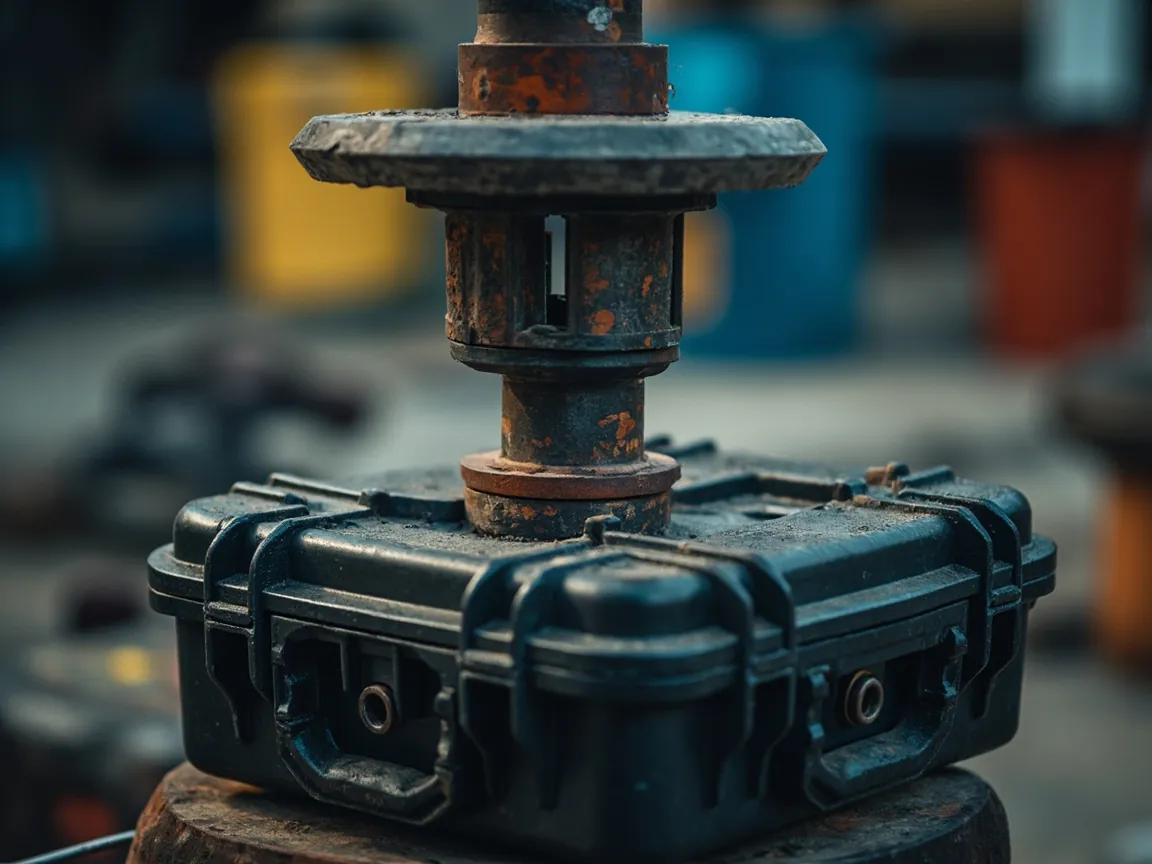
Method one: dead load, per GB/T 4857.3. Weights or a loading platform are placed directly on the specimen and held for the specified time. The advantages are simple equipment, low cost and the ability to run several specimens in parallel; the drawbacks are high loading stiffness, a need for guarding if the specimen collapses suddenly, and coarse load adjustment.
Method two: compression tester, per GB/T 4857.4. A materials testing machine applies and maintains a constant load and can record load and displacement online, suiting cases where precise data such as deflection over time is needed. Accuracy and data completeness are high; equipment cost is high and specimen size is limited by the machine envelope.
Method three: real stack. Fully loaded cases are stacked to the real tier count and observed over months in a real or simulated warehouse. This is the closest to real duty, but the cycle is long, floor space is large and the atmosphere is hard to control, so it is normally reserved for type approval or critical projects.
| Method | Standard basis | Advantages | Drawbacks | Typical use |
|---|---|---|---|---|
| --- | --- | --- | --- | --- |
| Dead load | GB/T 4857.3 | Simple, low cost, parallel runs | Coarse load control, needs guarding | Routine acceptance, batch sampling |
| Compression tester | GB/T 4857.4 and ASTM D642 | High accuracy, records curves | Expensive, size limited | Type testing, development |
| Real stack | Company or customer specification | Closest to real duty | Long cycle, large footprint | Critical projects, long-term validation |
The three methods combine well. Development uses the compression tester to obtain curves and locate weak points; after design freeze, dead load provides batch sampling; and for key accounts a real stack provides final validation. This combination controls cost while keeping the conclusion reliable.
Key Test Parameters: Load, Duration and Conditioning
Parameters that are not stated make any conclusion meaningless. Four groups must be explicit.
Parameter one: test load. Calculated from the formula above, stating the safety factor and the tier count it was derived from. A report should read "test load X N, corresponding to Y tiers fully loaded with k = Z," not simply a bare number.
Parameter two: duration. Common practice is 24, 48 or 72 hours, and harsh duties such as long-term storage or sea freight may run seven days or more. The longer the hold, the more complete the creep and the more conservative the conclusion. A one-hour hold only shows that the case does not collapse under short-term load, which does not represent warehouse stacking.
Parameter three: conditioning and test atmosphere. Conditioning follows GB/T 4857.2, commonly 23 C and 50 per cent relative humidity (standard atmosphere) or 40 C and 90 per cent relative humidity (hot humid). Hot and humid conditions are among the worst credible cases that a stacking test should cover, because temperature directly accelerates creep. Material behaviour with temperature is described in outdoor protective case temperature extremes.
Parameter four: measurements and locations. At minimum, measure deflection during loading, permanent deflection after unloading, and the condition of functional parts such as latches, hinges, pressure valves and seals. Deflection is normally measured at the four corners and the centre, taking the maximum.
| Parameter | Typical value | Note |
|---|---|---|
| --- | --- | --- |
| Test load | From formula, k = 1.5 to 2.0 | Must state derivation |
| Duration | 24 h / 48 h / 72 h / 7 days | Longer is more conservative |
| Conditioning | 23 C, 50 percent RH or 40 C, 90 percent RH | Per GB/T 4857.2 |
| Deflection points | Four corners plus centre, take maximum | Record during and after loading |
| Sample size | Three to five units, take minimum | Conservative value |
Pass Criteria: What Does Passing a Stacking Test Actually Mean
Pass criteria must be measurable and reproducible. Write them as a combination of four clauses.
Clause one: structural integrity. After unloading, the specimen shows no collapse, cracks, delamination or through-thickness damage.
Clause two: permanent deformation limit. After unloading and a specified recovery time, typically 30 minutes, permanent deflection in the height direction does not exceed the specified value, commonly one to three per cent of case height, or an absolute figure set by the customer. Permanent deformation matters more than elastic deflection during loading, because it is the direct evidence of creep damage.
Clause three: functional retention. Latches still open and close normally, hinges do not bind, the pressure valve breathes, and seals show no displacement or permanent set. For waterproof cases a whole-enclosure IP retest can follow; see IP67 submersion test.
Clause four: appearance and safety. No visible bulging, no sharp deformation, and no risk of a latch accidentally releasing.
A well-written pass criterion reads: after conditioning at 40 C and 90 per cent relative humidity for 24 hours, the specimen is loaded with a constant 1,885 N for 72 hours; after a 30-minute recovery, permanent height deflection does not exceed three per cent, latches and hinges function normally, and there is no cracking or delamination.
Pass criteria must be agreed before the test, not assessed by eye afterwards. Agreeing them in advance is what prevents disputes.
Five Typical Failure Modes and Troubleshooting Paths
Stacking failures follow recognisable patterns, and identifying the mode speeds up diagnosis.
Failure one: side wall bulging outward. The most common mode. It stems from insufficient bending stiffness in the side wall, a lack of horizontal ribs or insufficient wall thickness. Remedies: add transverse ribs, adjust wall thickness, optimise the length-to-width ratio; see high strength case structure.
Failure two: lid sinking or central dishing. Usually found on types with a large lid area and little support. Remedies: add lid ribs or internal support columns, and improve insert support.
Failure three: corner cracking or stress whitening. Corners concentrate stress, so an undersized radius or insufficient toughness leads to cracking under sustained load. Remedies: increase corner radius, optimise gate location and weld lines.
Failure four: latch release or hinge deformation. Deflection of the case misaligns the latches, allowing accidental release. Remedies: increase stiffness at the latch and case interface, and use metal reinforcement.
Failure five: insert collapse with damage to the protected item. The case structure survives, but the foam insert is compacted under long-term load and loses cushioning. Remedies: increase insert density or switch to a foam with better creep resistance; see case seal and insert materials.
| Failure mode | Direct cause | Design direction |
|---|---|---|
| --- | --- | --- |
| Side wall bulging | Insufficient wall stiffness | Add transverse ribs, increase thickness |
| Lid sinking | Insufficient lid support | Add lid ribs, internal supports |
| Corner cracking | Stress concentration, low toughness | Increase radius, optimise material |
| Latch release | Deflection causes misalignment | Increase interface stiffness, metal reinforcement |
| Insert collapse | Foam creep compaction | Higher density, different material |
Stacking Versus Vibration: Static and Dynamic Loads Are Not Substitutes
Many buyers cite a vibration pass as evidence that a case can be stacked. That inference does not hold.
Stacking is a quasi-static long-term load whose failure mechanism is creep and stability loss, on a time scale of days to months. Vibration is a cyclic dynamic load whose failure mechanism is fatigue and resonance, on a time scale of minutes to hours. They exercise different structural properties: stacking tests long-term stiffness and creep resistance, while vibration tests fastener retention and resonance avoidance, the latter covered in vibration testing and transport resonance.
Conclusion: stacking data must come from a stacking test and cannot be extrapolated from vibration or drop data, and the reverse also holds. A complete packaging qualification programme runs stacking, vibration, drop and impact together and follows the sequence set by ISTA or ASTM D4169, because order affects the outcome: vibration followed by stacking can produce cumulative damage that the reverse order does not.
How Case Structure Affects Load Capacity: Ribs, Wall Thickness and Base Design
With the same material and the same internal volume, structural design can change load capacity several-fold.
Factor one: ribs. Ribs are the most cost-effective way to raise bending stiffness. Well-placed transverse and longitudinal ribs can substantially increase compressive capacity without adding much weight. Rib spacing, height and thickness must be designed to the stiffness requirement; if spacing is too wide, the panel between ribs still bulges.
Factor two: wall thickness. Thickness contributes roughly linearly to stiffness, but weight and cost rise linearly too, and thick walls tend to sink marks and internal stress. Engineering practice prefers ribs over simply thickening.
Factor three: base design. The base carries the load directly in stacking. A flat, well-supported base distributes load evenly; if the base spans widely unsupported or is carried only around its perimeter, the centre will dish noticeably. See case stacking structure.
Factor four: material choice. Polypropylene and HDPE offer good toughness but moderate stiffness and creep resistance; engineering ABS is stiffer but somewhat less tough; glass-fibre reinforced grades markedly improve stiffness and creep resistance at higher cost and with more difficult appearance control. Material selection balances load capacity, weight, cost and appearance; see protective case plastic materials.
Factor five: fit accuracy. The mating faces between case and lid and the latch positions govern load transfer. With a good fit, stacked cases transfer load like a column; with a poor fit, load concentrates at a few contact points and causes local crushing.
Putting Stacking Data to Work in Storage Design and Procurement
Stacking data is not for the archive; it drives storage and purchasing decisions directly.
Use one: setting the tier limit. Work back from the safe load obtained in testing to the permitted tier count, with margin:
Permitted tiers = safe load divided by (loaded case mass x g x k), plus 1
Use two: managing storage temperature. If testing passed only at room temperature, a hot warehouse must either reduce the tier count or move to a case type with better temperature performance. Temperature is the most sensitive variable in stacking capacity and must be stated explicitly in the report.
Use three: designing pallets and racking. If the base must not overhang, specify full support on the pallet; if rack beam spacing is wide, add a deck panel.
Use four: as a technical condition in enquiry and acceptance. State in the enquiry: tier count, loaded mass per case, test load and safety factor, duration, conditioning atmosphere, permanent deformation limit and pass criteria, and require a report. Only then are quotations comparable.
Use five: monitoring batch consistency. After design freeze, a simplified method with lower load and shorter duration can monitor material and process variation. See custom case acceptance AQL.
Load Configuration and Documentation in OEM/ODM Projects
JUNZHJIA, manufactured by KeXin New Materials (Guangdong) Co., Ltd., supplies protective cases, tool boxes, military-specification storage cases and waterproof junction boxes for wholesale, distribution, OEM/ODM and global supply. For stacking and load requirements, projects can typically be configured in the following ways:
- Structure and material: rib layout, wall thickness and base support designed to the target tier count, with material selected against load and weight targets;
- Insert matching: EVA, EPE or PU inserts and densities chosen for the protected item and the long-term load, so that the insert does not collapse first;
- Test documentation: stacking test reports, compression curves and whole-enclosure IP verification, optionally combined with environmental qualification methods such as MIL-STD-810H and distribution schemes such as ISTA and ASTM D4169;
- Marking and traceability: load and stacking recommendations can be marked on the case so warehouse staff can follow them.
Bring the four inputs of tier count, loaded mass, storage temperature and duration to the supplier early. Raising a load requirement after the structure is frozen usually means a mould change, with a significant cost and lead time penalty.
Frequently Asked Questions
Q: Can a stacking test and a drop test substitute for each other? A: No, because they exercise completely different failure mechanisms. A stacking test applies a long-term static load over days to weeks and assesses the creep and stability of the plastic. A drop test applies a millisecond impact load with very high peak stress and assesses impact resistance and energy absorption. A case may survive stacking yet crack on a drop, or survive a drop yet deform slowly under long-term stacking. A complete packaging qualification programme therefore runs both, combined in the sequence set by ISTA or ASTM D4169, because vibration followed by stacking and stacking followed by vibration can give different results. If cost forces a priority order, choose by real risk: long-term storage dominated duties start with stacking, while multi-leg transhipment dominated duties start with drop and vibration.
Q: What test load should be used, and how should the safety factor be set? A: The test load follows the real stack, using F = (n - 1) x m x g x k, where n is the tier count, m the loaded mass of one case in kilograms, g is 9.81 m/s squared and k is the safety factor. The safety factor is where engineering judgement matters most. Ordinary storage may use 1.5 to 1.6; if any two of the following apply, use 1.8 to 2.0 or higher: storage temperature persistently above 35 C, stacking for more than a month, uncertain pallet support, irregular stacking, sea freight or multiple transhipment legs, or high-value or irreplaceable contents. Note also that the formula uses (n - 1), because the bottom case does not carry its own weight. The report must state the value of k and the reason for it, otherwise the load figure cannot be independently checked.
Q: Why hold for 72 hours rather than just one hour? A: A one-hour hold proves only that the case does not collapse under short-term load and says nothing about warehouse stacking, because the signature of plastic creep is fast initial deformation followed by slow but continuing deformation. Plotting deflection against time, which is often close to a straight line on logarithmic axes, allows long-term behaviour to be extrapolated. A one-hour hold sits in the steepest initial part of that line, so the measured deflection is small and heavily optimistic; a 24 to 72 hour hold reaches a more stable creep stage and yields data worth extrapolating. Industry practice commonly uses 24, 48 or 72 hours, with seven days or more for long-term storage and sea freight. A longer hold is more conservative but costs more, so choose by real storage duty rather than stretching the duration automatically. Where a customer requires an extended cycle, agree staged loading and intermediate observation points in the contract.
Q: How much does high temperature affect stacking capacity? A: A great deal, because the creep rate of thermoplastics is highly temperature sensitive: for roughly every 10 C rise, the creep rate often multiplies. A month in a 40 C warehouse can therefore produce far more permanent deformation than the same month at 23 C, and can approach the level seen over several months at room temperature. Stacking data obtained only at room temperature cannot therefore be applied directly to hot warehouse design. Engineering advice: test at the worst temperature case; if the warehouse can reach 40 to 45 C, conditioning and hold conditions should reflect that. Where this is impossible, state a reduced tier limit in the storage procedure. Note also that high temperature softens seals and accelerates ageing, so a hot stacking test is best combined with a whole-enclosure seal retest, avoiding a case that passes structurally but leaks.
Q: The case did not collapse but the latches will not open. Is that a pass? A: No. A stacking pass requires structural integrity, permanent deformation and functional retention together, and failing any one is a fail. Latches that will not open normally show that the case deformed sufficiently under sustained load to change the mating geometry, which in service means difficult access and, in an emergency, an inability to open the case promptly. A correct assessment includes: after unloading and a specified recovery time, latches operate within normal effort, hinges do not bind, the pressure valve breathes, seals show no displacement or permanent set, permanent height deflection stays within the limit, commonly one to three per cent, and there is no cracking, delamination or bulging. Agree these clauses as acceptance criteria before the test and report each one rather than writing a blanket statement that appearance is normal.
Q: Without test equipment, how can a buyer do a simple stacking check? A: Several low-cost approximations are possible, though their limits should be understood. Option one: real stack with observation. Stack fully loaded cases to the target tier count, mark the bottom case around its perimeter, measure height change periodically with a straight edge, and observe over 7 to 30 days for bulging or latch problems. This is closest to real duty, but record temperature and humidity or the data are not comparable. Option two: distributed dead weights. Load sandbags, water bags or steel blocks evenly to the calculated load, hold for 24 to 72 hours and measure deflection; the weights must be distributed evenly, since point loading creates false failures. Option three: request the supplier report and check the conditions. Verify that the load derivation, safety factor, duration, conditioning atmosphere and pass criteria match your own storage duty. Any simplified method has poor control of temperature and humidity, so treat the result as screening rather than formal acceptance, and use a properly specified test for critical projects.
Q: Should the stacking specimen be fitted with its insert and contents, or be empty? A: It depends on the objective, but the choice must be stated in the report, and the two must never be compared directly. To assess a complete case in real storage, the specimen should be a production case fitted with its actual insert and a mass simulating the protected item, because the insert shares part of the load and may itself collapse first, a path an empty case cannot reveal. To assess the structural load capacity of the case itself, an empty case or a standard filler may be used, which makes comparison across case types easier. In practice, type testing uses a loaded simulated unit, while structural development and comparison use an empty case or standard unit. Note especially that when the insert carries load, its long-term creep behaviour must be confirmed, or a hidden failure can occur in which the case is intact but the insert has compacted and the contents are damaged. Insert and seal material guidance is in case seal and insert materials.
Q: What extra requirements apply to stacking under sea freight? A: Sea freight is one of the harshest stacking duty combinations and needs three additional considerations. First, combined temperature and humidity. Container interiors can hold 35 to 50 C and above 80 per cent relative humidity for long periods; heat accelerates creep and moisture accelerates seal and metal ageing, so test conditions should reflect that combination rather than the standard atmosphere alone. Second, dynamic increment. Vessel roll adds dynamic load to the stack. Individual amplitudes are modest, but they superimpose on creep damage, so raise the safety factor to 1.8 or 2.0 and above. Third, long duration. Sea freight plus storage at both ends commonly totals weeks to months, so set the test duration accordingly, using staged loading or logarithmic extrapolation where necessary. Also address salt spray and condensation, because corrosion of metal latches, hinges and screws can precede structural failure; assess it with ISO 9227 neutral salt spray testing, as described in salt spray test hours for cases.
Q: Can stacking capacity simply be increased by thickening the walls? A: It can be increased, but it is not the best solution and it has clear side effects. Thickening does raise bending stiffness, roughly linearly, but it brings three problems. First, weight and material cost rise linearly with it, and on large cases the extra weight affects handling and freight cost. Second, thick walls tend to sink marks, internal stress and uneven cooling in moulding, producing appearance defects and warping that actually reduce structural consistency. Third, added stiffness does not relieve stress concentration, so corners and latch positions may remain the weak points. A combined approach is preferred: raise the section second moment of area with transverse and longitudinal ribs, which is the most cost-effective step; optimise corner radii and transitions to reduce stress concentration; adjust base support and internal structure so load transfers evenly; and consider glass-fibre reinforced or higher-stiffness engineering plastics. Only after these steps should critical areas be locally thickened rather than thickening the whole case. See high strength case structure and case stacking structure.
Conclusion and Further Reading
Back to the title question: to run a stacking test on a protective case, derive the test load from the real stack height, apply that load as a sustained static compression under controlled temperature and humidity for the specified duration, and judge the result on structural integrity, permanent deformation and functional retention. The core question is not whether the case crushes but whether it still works after being loaded for a long time, because creep is the real enemy in storage. Every stacking conclusion must therefore carry four conditions: how much load, for how long, at what temperature, and with how much deformation allowed. Omit any one and the number cannot be used for storage design.
Three actionable recommendations. First, calculate the load before discussing testing, using F = (n - 1) x m x g x k, and state the tier count, loaded mass and safety factor, typically 1.5 to 2.0. Second, test the worst credible case: highest storage temperature, longest duration, poorest support, conditioned as required by GB/T 4857.2 and run to GB/T 4857.3 or GB/T 4857.4. Third, write the pass criteria into the contract, specifying the permanent deformation limit, commonly one to three per cent, functional retention and any whole-enclosure IP retest, so that no dispute arises afterwards.
JUNZHJIA, manufactured by KeXin New Materials (Guangdong) Co., Ltd., supplies protective cases, tool boxes, military-specification storage cases and waterproof junction boxes for wholesale, distribution, OEM/ODM and global supply, configuring case structure, ribs and inserts to the target tier count and storage duty, and providing stacking test reports, compression curves and whole-enclosure verification documentation.
Further Reading