

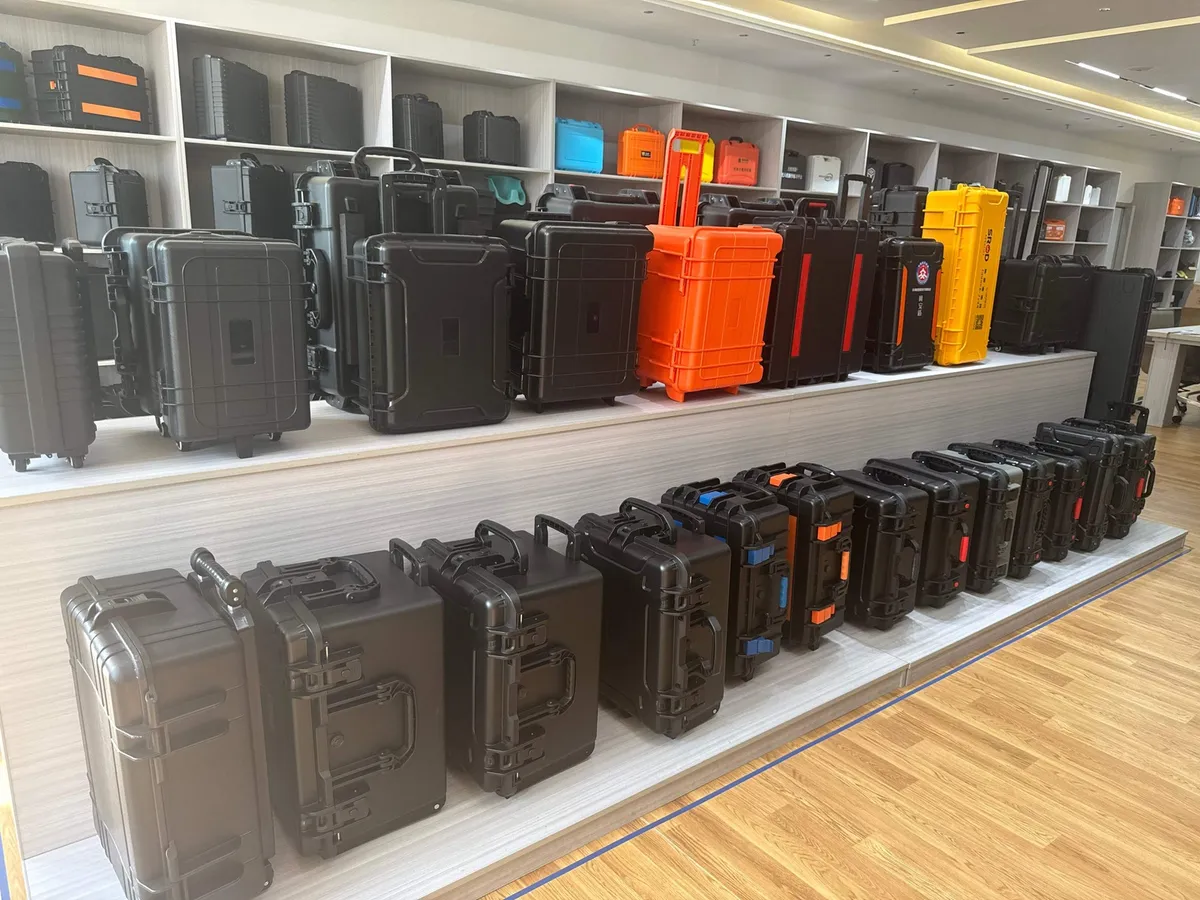
A wheeled protective case is worth it when the loaded weight passes roughly 15–20 kg, or when one trip covers more than about 50 metres of flat ground. Below that threshold, a hand-carry case is lighter, cheaper and stacks better. Above it, wheels turn a two-person lift into a one-person roll, and they reduce the back and shoulder strain that causes most handling injuries in the field.
Wheel Material, Bearings and Diameter
The wheel assembly is the part most likely to fail first, so it deserves more scrutiny than the shell. Three variables matter: tread material, bearing type, and diameter.
| Variable | Common options | What it means in use |
|---|---|---|
| Tread material | Polyurethane, hard nylon/plastic, rubber | Polyurethane rolls more quietly and generally outlasts hard plastic on mixed surfaces; hard plastic is cheaper but noisier and wears faster on rough ground |
| Bearing | Plain bore, ball bearing, sealed ball bearing | Sealed bearings keep dust and grit out of the race, which is the most common cause of a wheel seizing |
| Diameter | Approx. 50 mm, 65 mm, 75 mm+ | Smaller wheels turn more easily in tight aisles; larger wheels roll over gravel, thresholds and cable runs with less effort |
Ask one more question before buying: can the wheel assembly be replaced? A case that accepts a spare wheel kit can be repaired in the field instead of retired.
Handle Geometry and Ergonomics
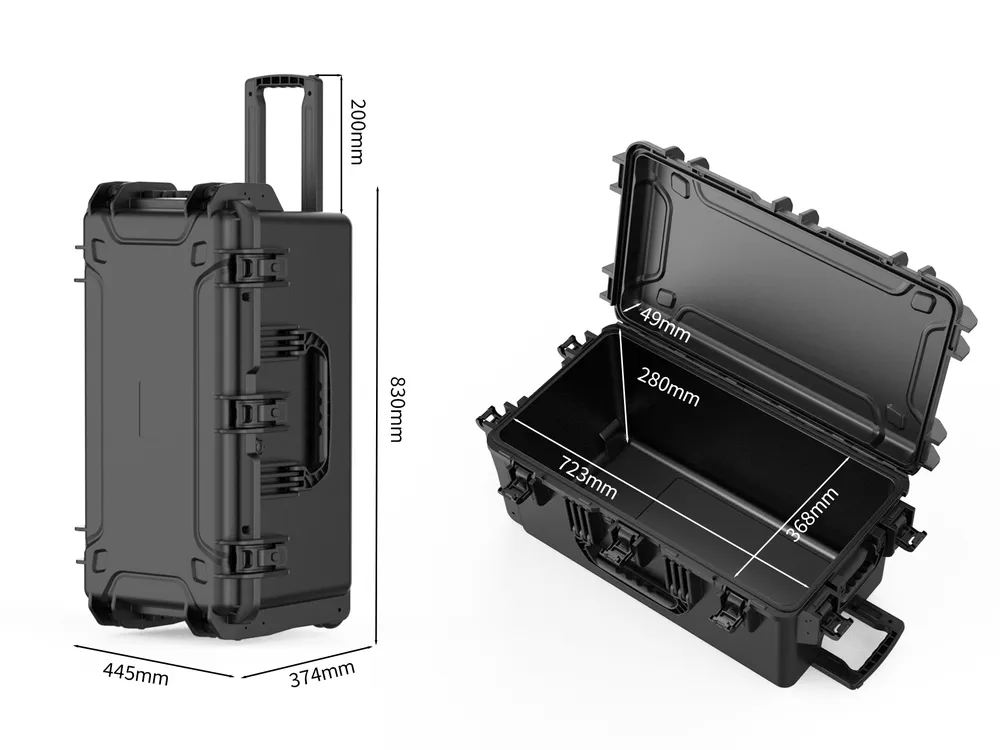
A telescoping handle should extend far enough that you are not kicking the case, lock positively at more than one height, and retract without play. Check the grip: a padded, slightly rounded grip spreads the load across the palm on long terminal walks. Also look at the top and side grab handles, because stairs and vehicle loading still require lifting.
Size and Airline Limits
If the case will fly, size and weight rules decide the purchase as much as the gear does. Most carriers publish a 62 linear inch limit (length + width + height measured with wheels and handles included) and a 23 kg / 50 lb per-bag allowance before overweight fees apply. Budget and regional carriers often apply tighter caps, so verify with the specific airline before ordering.
| Rule | Typical value | Why it matters |
|---|---|---|
| Checked linear limit | 62 linear inches / 158 cm | Length + width + height including protruding wheels and handles |
| Checked weight allowance | 23 kg / 50 lb per bag | Overweight fees commonly start above this figure |
| Carry-on limit | Around 22 × 14 × 9 in | Only the smallest wheeled cases qualify; most people check them |
Shell, Seal and Stackability
Wheels change how a case is handled, not what it protects against. Look for the same fundamentals as any hard case: a continuous gasket, positive latches, and a stated IP rating backed by a test report. Moulded stacking ribs matter more than usual on wheeled cases, because tall wheeled boxes are the ones most often stacked in warehouses and truck beds. An automatic pressure equalization valve is worth having on any case that flies, since it lets you open the lid after cabin pressure changes.
Pre-Purchase Checklist
- Weigh the fully loaded case on a scale before you commit to a size
- Roll the empty case across a hard seam or threshold and listen: grinding or wobble predicts early failure
- Extend the handle fully and push from the shoulder, not the wrist — the case should track straight
- Confirm the wheel assemblies are replaceable and spares are available
- Check the stated IP rating and ask for the test report rather than the marketing line
- Load heavy items low and near the wheel end, then stand the case upright to confirm it does not tip
Ready to compare builds? Start with the JUNZHIJIA wheeled series, or browse the full case lineup to size a shell before choosing wheels. If your gear is heavy but rarely moved far, the hard case vs soft tool bag comparison may be a better read.
Related Products
- Wheeled Series — Wheeled Protective Cases; Portable Transport Cases
- WL6-6232 ABS Wheeled Protective Case — model WL6-6232
- All protective cases and toolboxes: 7 series, 158 models