

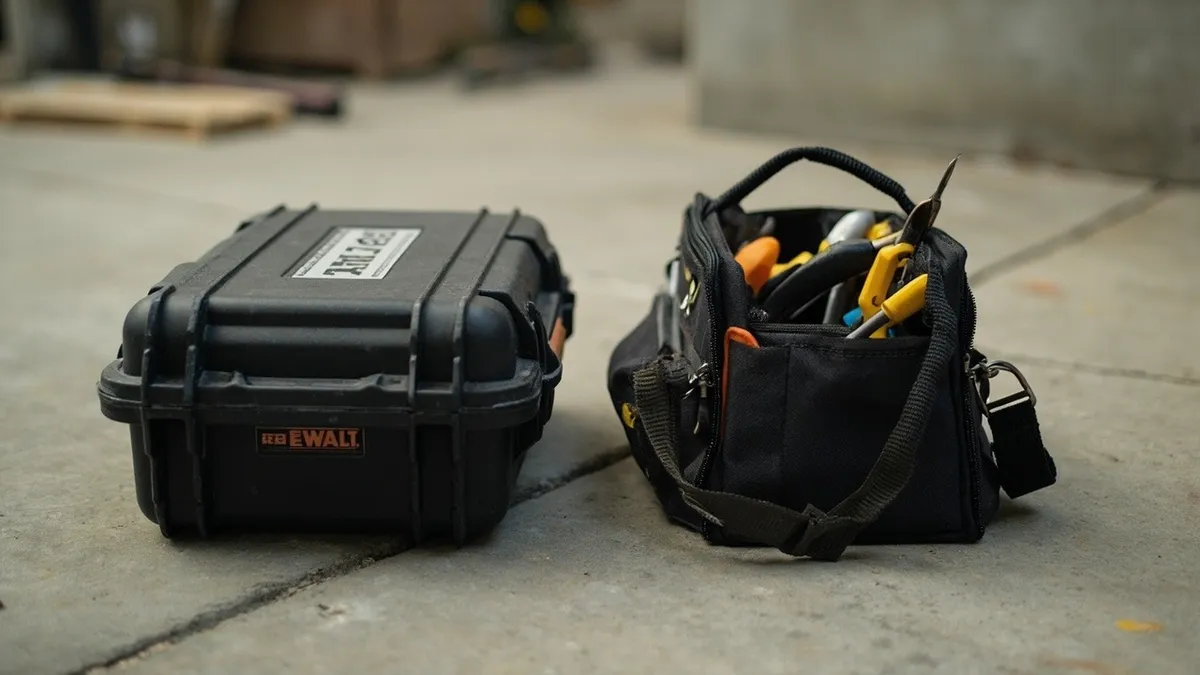
Choose a hard case when protection, sealing, and organization matter most; choose a soft bag when carry weight and access speed matter most. If you need a single decision rule, use this one: when a tool costs more than roughly three times the price of the case that would protect it, buy the case.
Head-to-Head Comparison
| Dimension | Hard case | Soft tool bag |
|---|---|---|
| Impact & crush protection | Rigid shell absorbs drops and stacking loads | Minimal — fabric offers no crush resistance |
| Weather & dust | Gasket-sealed versions reach IP67 | Coated fabric resists splashes only; dust works in |
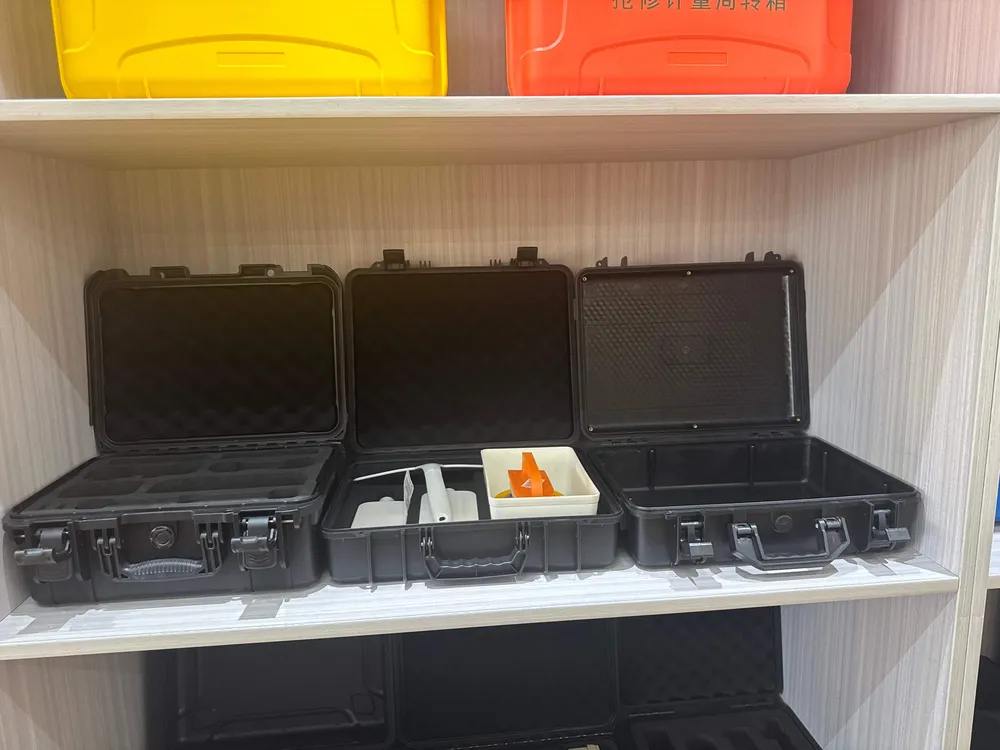
| Organization | Foam or dividers; fixed position per tool | Pockets and loops; fast but looser discipline |
| Carry comfort | Heavier; handles, shoulder straps, wheels on large sizes | Light, conforms to the body, climbs ladders well |
| Access speed | Open lid, full view of everything | Grab-and-go pockets, fastest for hand tools |
| Typical cost | Highest of the storage options | Lowest of the storage options |
When the Hard Case Wins
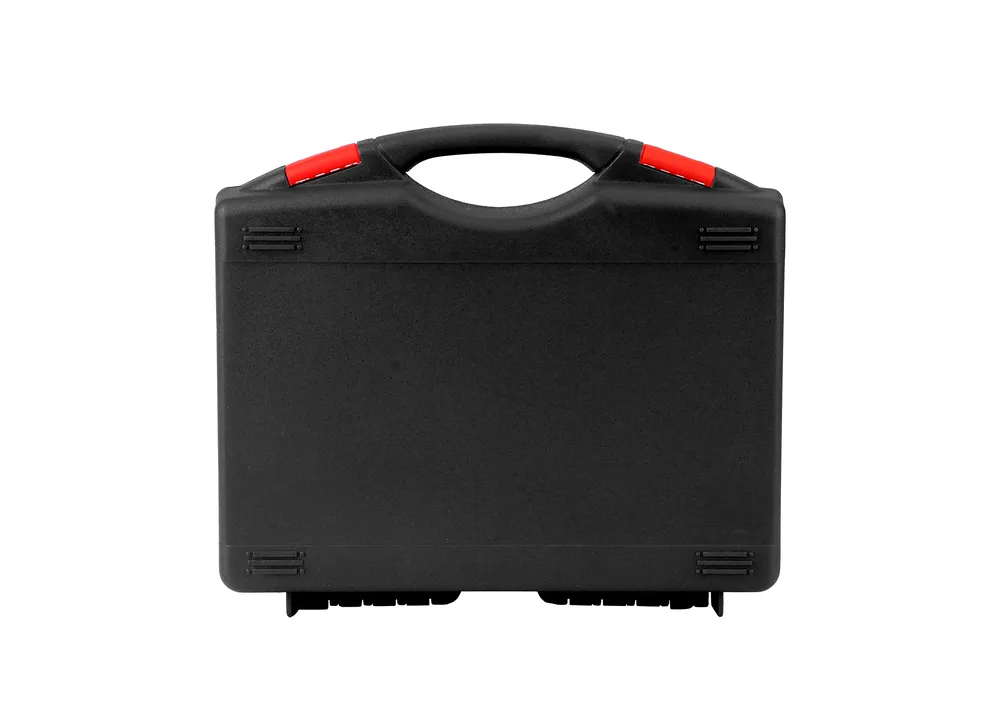
- The tool costs far more than the case — meters, laser levels, inspection cameras, cordless kits
- Tools ride in trucks, get checked as baggage, or wait on wet, dusty sites
- The kit is shared between crews and missing tools cost money
- Anything calibrated or fragile travels in the load
When the Bag Wins
- You carry tools on your body all day — ladders, crawl spaces, finished interiors
- The load is cheap, tough hand tools that shrug off knocks
- Speed of access beats protection: service calls with a fixed small kit
- Weight and bulk are the binding constraints, not weather
The 3x Rule, and When to Break It
The three-times heuristic prices the case against replacement cost, but two factors bend it. Downtime: if a broken tool stops a job, the real cost is the lost day, not the tool — buy the case anyway. Calibration: for instruments, the risk is invisible drift rather than obvious breakage, so calibrated gear gets a case regardless of the ratio.
A Practical Setup by Trade
| Trade / role | Recommended split |
|---|---|
| Electrician | Bag for hand tools; compact hard case for meters and testers |
| Carpenter / remodeler | Bag for daily carry; case for lasers and cordless kit transport |
| Plumber / HVAC | Case for inspection cameras and gauges; bag for wrenches |
| Surveyor / inspector | Hard case for instruments; padded bag for accessories |
| Field service with vehicle | Wheeled hard case as the master kit; small bag for the walk-in |
JUNZHIJIA builds PP tool cases from pocket-size to wheeled master kits — see the 0 Series tool and utility cases, the WL0-2005 hardware tool case, and the wheeled series for heavy loads.
Related Products
- 8 Series — Gun Cases; Military Equipment Cases; Camera Equipment Cases; Drone Cases; Watch Cases; Knife Cases; First Aid Cases; Electronics Equipment Cases
- WL8-2812 PP Gun Case — model WL8-2812
- All protective cases and toolboxes: 7 series, 158 models