

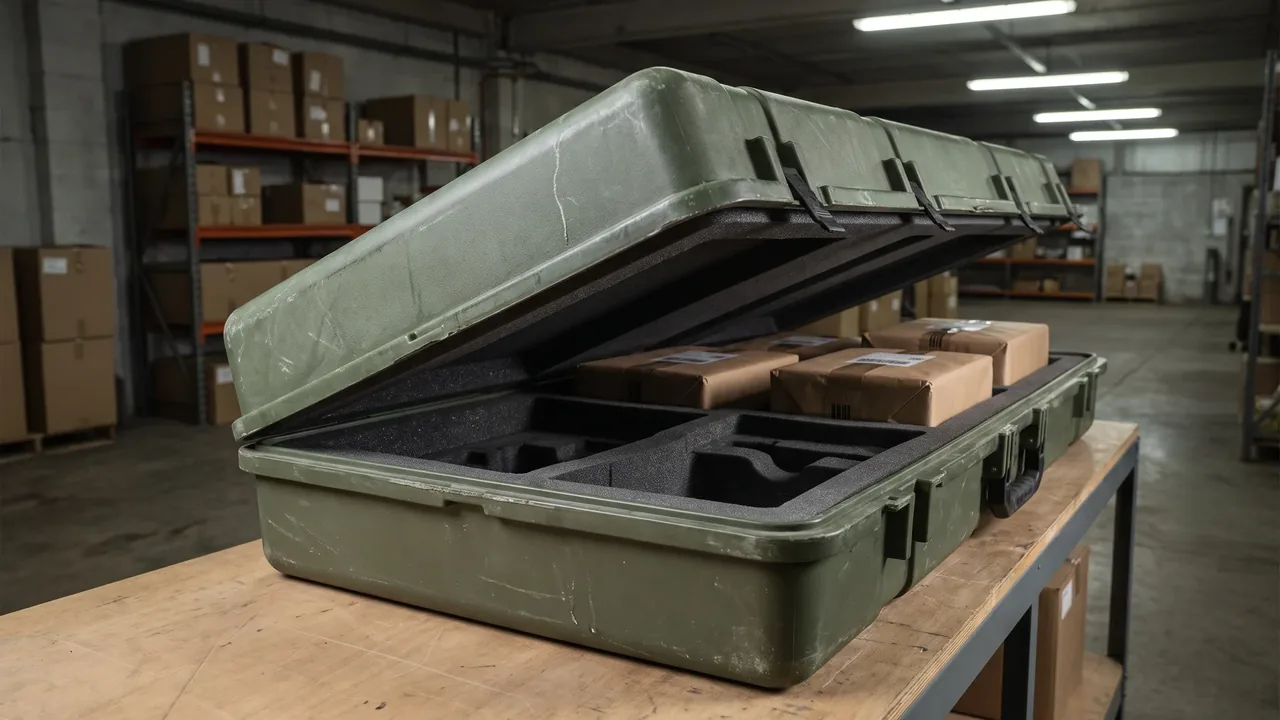
The ordnance packing box is a specialized protective container built for the long-term preservation, base rotation, and export transfer of ordnance-class materiel and spares. Its core task is not ordinary single-trip shipping; it is to keep ordnance equipment and components isolated from humidity, salt fog, shock, and unauthorized opening across storage periods that can stretch to months or years, while still allowing fast unsealing, inventory, and re-delivery when needed. This article unpacks the general technical requirements an ordnance packing box should meet in material, sealing, liner, corrosion inhibition, stacking, locking, and traceability, from a protective case manufacturer's point of view, and gives procurement teams a checklist they can drop straight into a technical agreement. It must be stated plainly that this article discusses the packaging container only; the storage and transport of ordnance-class materiel is governed by local regulations and export control requirements, and the container supplier's duty is to embody those requirements in the box and document structure.
Written from the bench of a protective-case manufacturer, this guide deliberately stays within the boundary of the container. It does not describe what the box holds, how that content is handled, or the controls that govern its movement; those sit with the custodian and the regulator. What it does offer is the engineering reasoning a buyer can use to turn a vague "military-grade case" request into a numbered technical agreement, and to ask the right questions when two quotations look identical on paper but diverge sharply on the preservation they actually deliver. The rest of the article walks the preservation chain link by link, from the first sealed day to the final audit.
The Mission Profile and Preservation Cycle of the Ordnance Packing Box
An ordnance packing box does not face a single journey but a long-cycle chain built around the rhythm of sealed storage, rotation, and re-sealing. During the sealed period the box sits relatively still, and the real damage comes from slow environmental erosion: high salt fog at coastal bases, day-night temperature swings in warehouse storage, humidity swings through the rainy season, and handling shocks from repeated put-away and retrieval. Therefore the design starting point is not "survive one drop" but "remain internally dry, metal parts rust-free, and seals intact when opened after three years of storage." This mission profile forces the box to clear three lines at once: corrosion inhibition, sealing, and traceability, and a weakness on any one line zeroes out the other two.
Breaking the preservation cycle into phases makes the requirements concrete: intake sealing, in-storage rotation, and outbound unsealing. The intake phase requires interior and exterior cleaning, with desiccant and vapor-corrosion inhibitor packs loaded by equivalence; the in-storage phase requires stable stacking load and periodically inspectable seals; the outbound phase requires the unsealing record to correspond one to one with the seal number for easy verification. The manufacturer must reserve interfaces for these three phases in the structural design: a replaceable desiccant window, a re-verifiable seal position, and visible alignment marks on the stacking locator pins. These small design choices often matter more for actual preservation than simply thickening the wall, because they let the user act on the box rather than guess at its condition.
A useful contrast is the difference between an ordnance packing box and a standard industrial packaging box, which is examined in the military box versus military case guide. The industrial box is sized for a single shipment; the ordnance box is sized for a custody chain that may span several custodians and multiple years, so its reliability budget is spent on sealing continuity and identity integrity rather than on a one-time crush rating. This cross-cycle interface logic is consistent with the sealed-to-opened traceability emphasized in the ammunition packing box standard; the difference is only that ordnance materiel tolerates identity mismatch far less, so any single break between seal and record voids every later audit.
Material Routes: Trade-offs Among Rotomolded HDPE, Aluminum, and Composite Fiber
Three material routes are common for ordnance packing boxes, each with its own fit. Rotomolded HDPE cases are integrally molded with no weld seam, and offer good salt-fog and weathering resistance, making them the conservative choice for long-term preservation, especially for bulky and irregular spares; aluminum cases have high rigidity and low tare weight and suit air transport, but welds and corners need additional corrosion treatment; composite fiber cases win on specific strength and suit weight-critical air scenarios, but cost and repairability must be assessed separately. Selection should not look at single-point performance alone, but at the whole preservation chain: in a coastal high-humidity environment, the overall corrosion resistance consistency of a rotomolded box usually beats a metal box that must be leak-checked point by point.
Whichever material is chosen, the ordnance packing box should place maintainability on a par with protectiveness. A metal box's coating, once scratched, needs prompt touch-up or it will pit from the scratch and grow inward; a rotomolded box, while paint-free, still needs protection from long local compression by sharp objects that causes stress whitening. The manufacturer should state the maintenance boundary at delivery: which damage can be handled on site, which needs return to factory, and the corresponding inspection interval. Writing the maintenance boundary into the technical agreement saves both sides more time than arguing at acceptance over whether "this counts as a defect," because the standard becomes a shared reference rather than a negotiation.
The rotomolded route shares engineering logic with the broader family of rotomolded transport cases, but the ordnance variant adds continuous sealing and a permanent identity panel that ordinary transport cases do not require. When the buyer specifies a material, the technical agreement should name the grade, the wall thickness at load-bearing zones, and the acceptance test for that grade rather than a generic "rotomolded plastic" label that hides the actual specification. On the detail of weld and corner corrosion control, the ordnance box's demand for whole-box consistency aligns with the "no natural weak point" logic of the metal ammunition container specification, only raised from point-by-point leak check to entire-shell integrity.
From a full-life view, another material consideration is spare parts and repair radius. A rotomolded shell that cracks locally usually cannot be repaired to equivalence on site, so the manufacturer should offer a same-mold spare shell or a fast swap plan; a metal box can be field-sanded and repainted after pitting, but the patch material must be compatible with the original coating system, or it accelerates galvanic corrosion. Writing "repair radius" and "spare delivery lead time" into the technical agreement reflects true cost of ownership better than comparing only the initial unit price, because an ordnance preservation box often accompanies a batch of materiel across its whole service life, and the saved margin at purchase cannot cover a preservation interruption caused by having no shell to swap.
Sealing and Pressure Equalization: IP Protection and Anti-Condensation
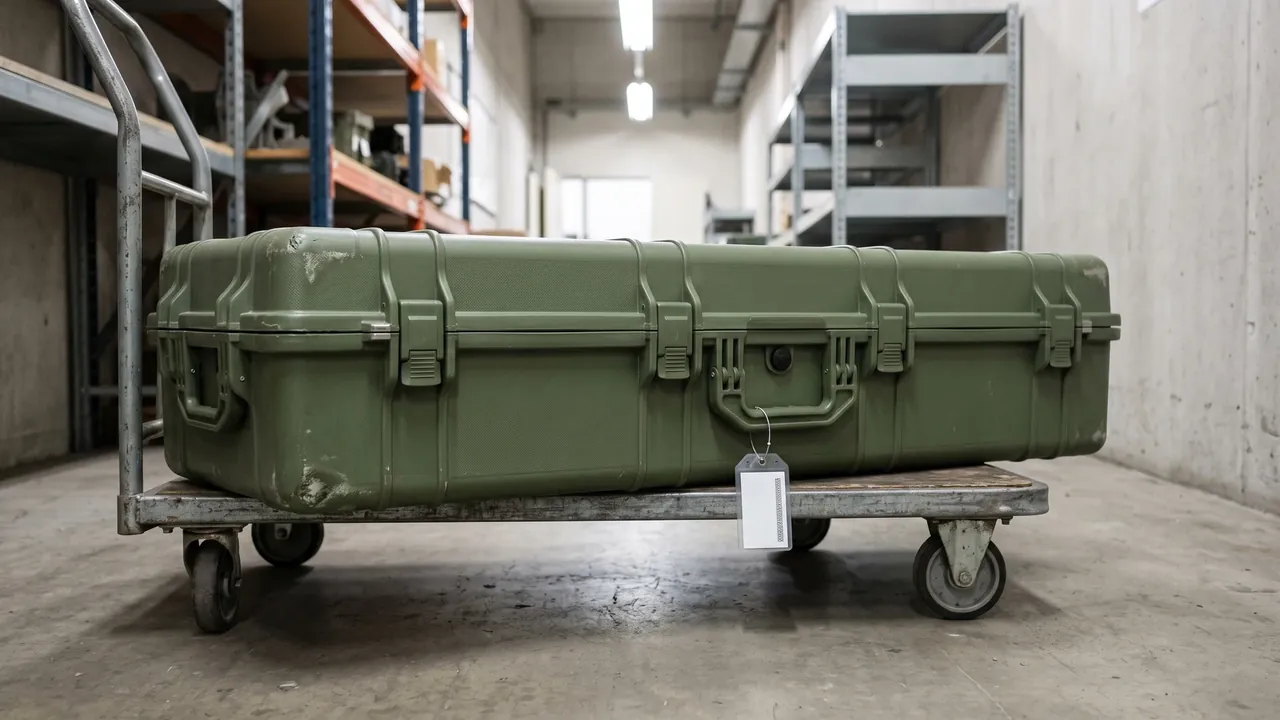
The sealing system of an ordnance packing box must solve two apparently contradictory problems: outside water and dust must not enter, yet inside air must still balance with temperature changes. External protection normally starts at IP65 as a baseline, rising to IP67 for more demanding preservation; the key lies in the uniform compression of the gasket around the full perimeter and the continuity of the corner joints, because any section of virtual compression becomes a water channel in the rainy season. Internal anti-condensation relies on the pressure equalization valve: when nighttime cooling shrinks the internal air and creates negative pressure, the valve lets dry outside air slowly refill without admitting water droplets, preventing condensation from wetting metal parts.
Condensation is the most underestimated failure mode in preservation. Many assume "a tight lid means no moisture worry," but the better the seal, the more the day-night breathing depends on the valve; once the valve is blocked by label adhesive or dust, negative pressure pulls humidity in through any micro-gap and condenses into a water film on the metal. Therefore the ordnance packing box should keep a clean channel at the valve mouth and check valve patency before unsealing. For very long storage, desiccant indicators and vapor-corrosion inhibitor packs should be loaded by equivalence to the internal volume, with the replacement interval written into the maintenance manual rather than merely stating "loaded," because the manual is what the user will actually follow at the two-year inspection.
The sealing philosophy here is shared with tactical hard cases, where perimeter gasket continuity is also the deciding factor between a dry interior and a ruined contents set. The ordnance box simply extends the same principle across a far longer sealed interval, which is why the valve, not the latch, deserves the most design attention.
At the highest preservation grades the sealing system adds redundancy: a secondary seal chamber sits behind the primary gasket, so if the primary seal fails from an accidental cut, the secondary chamber still holds the interior dry and buys time for repair. This redundancy matters especially in coastal bases and ocean transit, where the box often cannot be serviced mid-route, and the secondary chamber turns an otherwise irreversible failure into a controlled, recoverable one. Redundancy is not waste but an engineering trade that converts "one failure ends everything" into "failure is bounded and restorable"; it demands that the manufacturer calculate the secondary chamber's compression and lap position at the molding stage rather than slapping an extra strip onto a finished box.
VCI Vapor Inhibition and Desiccant: A Dual Rust-Prevention Strategy
Metal ordnance parts fear not a single heavy impact during long storage but continuous micro-environment corrosion. Ordnance packing boxes widely adopt a "desiccant humidity control plus VCI vapor corrosion inhibition" dual strategy: the desiccant pushes internal relative humidity into a safe band, while the VCI forms a molecular-level protective film on the metal surface, still slowing rust even if local humidity briefly rises. The two are complementary, not substitutes: with desiccant alone, a slight seal leak fails fast; with vapor inhibitor alone, the film struggles in a high-humidity environment.
Engineering is about "equivalence," not "presence or absence." Desiccant loading should match internal volume, expected storage duration, and local climate grade; VCI packs should sit near the cavity opening of rust-prone parts rather than stuffed in a corner. The manufacturer should provide loading-equivalence advice and write the inspection method for "whether the inhibitor pack has failed and the desiccant saturated" into the maintenance manual. For boxes that need repeated unsealing and re-sealing, every re-sealing should re-check desiccant status and replace as needed, otherwise the second preservation quality silently drops below the first, and the problem only surfaces at the next opening cycle when the damage is already done.
A practical field check is the indicator card. Most VCI packs ship with a humidity or corrosion indicator that changes color at the failure threshold, so a quick lid-open glance tells the user whether the protection is still active without lab testing. Specifying indicator cards in the technical agreement turns an invisible chemical process into a visible, trainable check, and pairs naturally with the desiccant status window mentioned earlier; together they give the base a two-signal preservation dashboard that any storekeeper can read, which is exactly the kind of low-cost, high-return design that separates a usable ordnance box from a merely specified one.
This dual strategy is also relevant for long-haul transfer where the box may sit in a humid port for weeks; the transit and shipping case guide covers the logistics side, while the ordnance box adds the equivalence table that turns "loaded" into a measurable, inspectable quantity with a defined replacement date.
Liner and Restraint: Keeping the Equipment "Still" Inside the Box
Ordnance equipment and spares are complex in shape with many edges, and relative displacement during transport and handling is the main cause of scratches and deformation. The liner system of an ordnance packing box has one goal: keep the contents "still" inside. EVA and EPE foams fix each item in its own position through pre-cut cavities; restraint straps and divider panels handle long shafts and multi-item assemblies; anti-static liners serve precision electronic ordnance spares. The liner is not "stuff it with foam," but distributes impact energy by assigning force to the mass center and vulnerable points, so the energy is absorbed rather than concentrated on one edge.
The trade-off between custom and universal liners depends on batch size and turnover. Large same-type batches suit CNC-precision cut fixed liners with high protection consistency; small multi-variety batches suit adjustable dividers and modular trays, using zoning logic rather than per-item cutting for restraint. Either way, the ordnance packing box should guarantee "take out on open, fix on reset" — the operator can return the equipment to its position without special tools, which directly decides re-sealing quality. Writing the liner reset as illustrated steps stuck inside the lid is a low-cost, high-return design that prevents the most common field failure: a tray reassembled wrong after the first opening.
Liner restraint also protects against the stacking loads discussed later; a well-seated liner keeps the mass centered so the box above distributes force through the load path instead of cantilevering on a corner. This is a shared concern with stackable containers, where inter-layer alignment depends as much on the interior load as on the exterior bosses.
Liner design must also account for the cost of re-confirmation after opening. In scenarios with repeated unsealing, the rest position of every item and the tension of every restraint strap bear directly on re-sealing quality, so making "reset and secure" a visualized, trainable action beats relying on one technician's memory. Some high-value batches screen the equipment number and rest diagram onto the liner, letting any operator complete the reset without training; this slightly raises manufacturing cost but turns re-sealing consistency from personal skill into product design, markedly reducing in-transit displacement and edge scratches caused by human error during long-cycle preservation.
Stacking, Lifting, and Forking: The Load Path Must Be Continuous
Ordnance packing boxes rarely sit single in a warehouse; more often they are multi-layer stacks and grouped handling. Stacking strength depends on the synergy of bearing surface, ribs, and locator pins: the top and bottom stacking bosses must align so the load transfers vertically to the main load-bearing structure rather than pressing on thin walls or latches. Locator pins also prevent inter-layer sliding; without interlock, a stack topples like dominoes during an earthquake or a forklift hard brake. The manufacturer should give a clear maximum stacking tier and maximum single-tier load, marked on a visible position of the box.
Lifting and forking interfaces must "hide the force." Lift points, fork pockets, and lashing rings must land on structurally reinforced zones so the pulling force travels along the main frame rather than stretching the shell locally. Ordnance packing boxes often move in tight warehouses or on decks, so fork pocket width must match common fork spacing, and lift points must attach quickly without protruding beyond the box outline to avoid scraping neighbor boxes. These interfaces look trivial but decide efficiency and safety in actual turnover; listing them line by line in the technical agreement is more reliable than coordinating after delivery, when a wrong pocket spacing already cost a shift of lost loading time.
The same load-path discipline appears in heavy transport where a heavy-duty protective case must survive both the crane and the stack; the ordnance box makes the load path a permanent, visible feature rather than an emergent property of a thick wall, which is what lets the buyer trust the stated stacking tier.
Locks, Seals, and Tamper-Evident Traceability
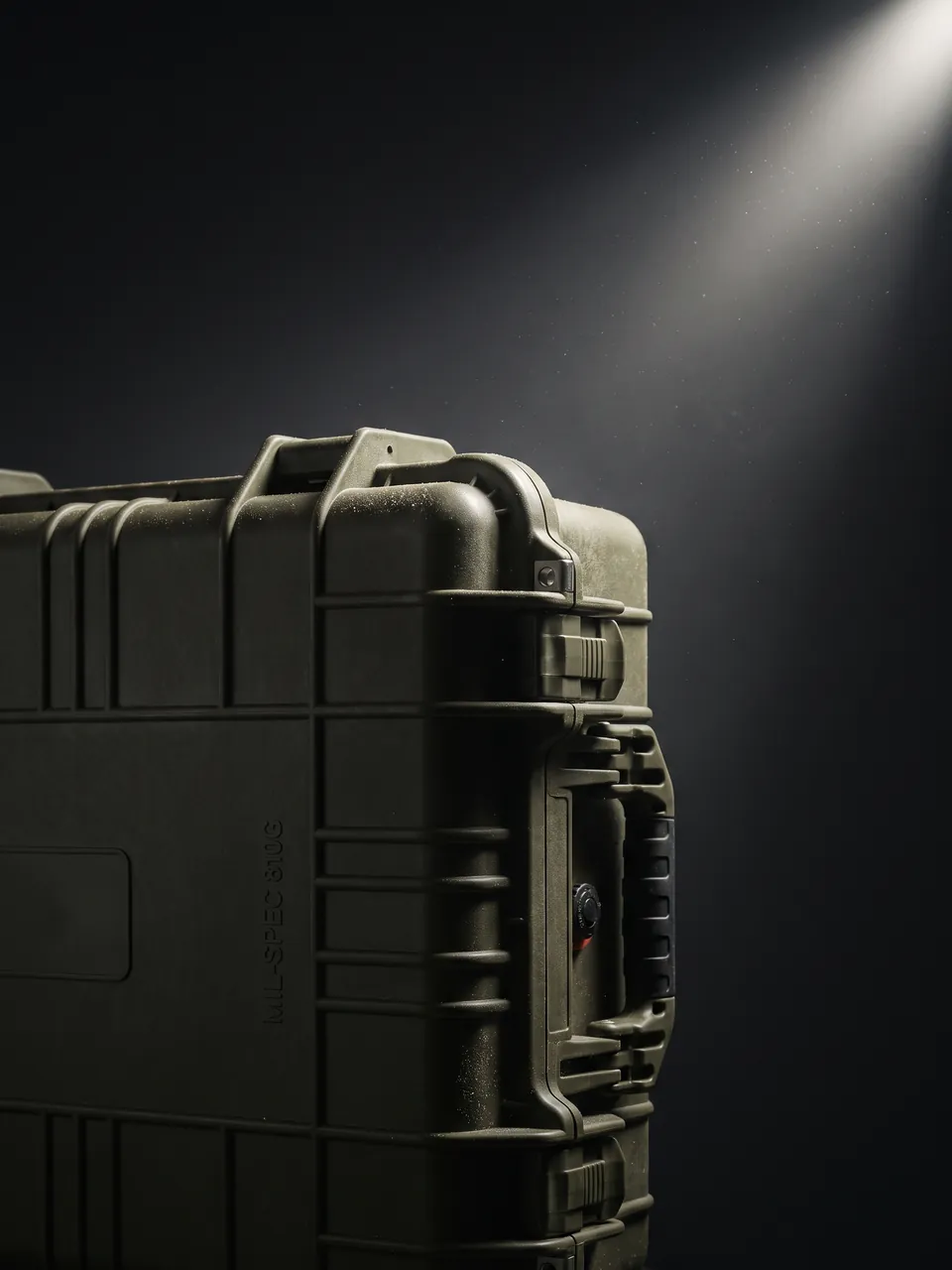
Seal management for ordnance-class materiel is far stricter than for ordinary cargo. An ordnance packing box usually has two lock layers: a quick-open latch for daily access, and a numbered plastic or electronic seal added at handover. The seal number binds to the handover sheet, and every opening generates a record, ensuring a definite answer to "was it opened." High-value batches can upgrade to RFID seals that automatically record time and location at each custody point, turning the responsibility chain from manual check to system-kept trace, so the audit question becomes a query rather than a dispute.
Traceability also lives in the box's identity system. The ordnance packing box should provide both a QR code and an embossed serial number on the identification panel, so manual verification survives a scanner outage; a hidden verification code inside the lid guards against malicious replacement of the external plate. This dual-identity design matters especially in ordnance preservation, because a batch may cross multiple custodians and years, and any single identity mismatch voids every later record. Front-loading traceability into the box structure, rather than pasting paper after the fact, is the key action within the manufacturer's responsibility boundary, and it is the cheapest place to spend the reliability budget.
Identity integrity is also a concern for war reserve cases, where the same box may be opened only once in a decade and the serial must still read cleanly; the ordnance box extends that with a hidden code so a swapped plate cannot pass inspection unnoticed.
Digital traceability also delivers a qualitative jump in audit efficiency. Once seal numbers, handover times, and custodian units all enter the system, inventory no longer needs opening every box to check paper sheets; a terminal pulls the whole batch status in one query. When a responsibility dispute arises, the system record offers a tamper-evident timeline instead of several people's recalled memories. For ordnance materiel crossing borders and custodians, this audit capability directly lowers trust cost and reconciliation workload, and is the core step by which modern preservation management moves from "human guard" to "technical guard," working with the RFID seals and hidden codes described earlier to form a complete responsibility chain from box to system.
Export Packaging and UN Certification: Governed by Local Regulations
When ordnance-class materiel involves export, the packaging container adds a layer of compliance. Where dangerous-goods classification applies, UN packaging certification, packing lists, and material conformity documents must be complete, and the physical box, certificate, and test report must correspond one to one; wooden packaging must meet IPPC fumigation or exemption declaration, while metal and plastic packaging focus on material declaration and recyclability marking. It must be emphasized that this article discusses the packaging container only; whether ordnance-class materiel may be exported, which channel it takes, and which controls apply are entirely governed by local regulations and export control requirements, and the container supplier's duty is to embody these traceability and compliance requirements in the box and document structure.
The most typical failure in export scenarios is "document inconsistency": the box type on the UN certificate, the state in the test report, and the actually shipped box do not match, and the batch is often detained at some port. The manufacturer's sound practice is to attach the document list as an annex to the technical agreement, stating version, validity, and issuing body, and to re-verify against the certificate before each new box goes into production. Starting the paperwork two weeks early usually halves clearance time; carriers and freight forwarders should receive the same annex, because most detention incidents begin with a document the shipper never saw and the box sitting on a quay while the paperwork is argued.
Test Validation: Mapping from MIL-STD-810H to GJB
An ordnance packing box cannot be accepted on "looks sturdy" alone; it must fall to repeatable tests. Vibration, drop, temperature-humidity cycling, and salt spray are the four basic tests: vibration verifies whether the liner restraint truly keeps equipment still, drop verifies corner and latch behavior under accidental impact, temperature-humidity cycling verifies sealing and inhibition stability across seasons, and salt spray verifies the anti-corrosion floor of long storage. MIL-STD-810H and GJB military standards provide the test method framework, and the manufacturer should map the specific route to the corresponding test profile rather than loosely claiming "tested to military standard," because a generic claim hides which conditions were actually applied.
The value of the test report goes beyond a pass mark. Drops leave recognizable deformation records at corners, vibration exposes insufficient liner restraint, and these findings feed directly back into mold and liner improvement, which is where the test budget truly earns its return. Procurement teams for ordnance packing boxes usually hold real damage data from their own base platforms; aligning field-observed damage locations with laboratory-reproduced failure modes is the most effective improvement loop a manufacturer can run. It is advisable to write the test profile into the technical agreement, selected by the real route rather than the highest grade, so as to neither under-validate nor over-validate and spend the certification budget where it predicts field performance. This route-mapping method follows the MIL-STD-810H and GJB framework shared with the military standard case, the only difference being that ordnance materiel demands the preservation cycle itself enter the profile input.
The test profile selection should also cover the extremes of the environmental spectrum rather than a single point. In real deployment the box may first sit in a hot, humid port, then transfer to a cold, dry high-plateau depot, and finally rest long-term in a salt-fog environment; if testing follows only one location's climate, failures in the other phases are missed. Procurement should therefore write "full environmental spectrum" into the technical agreement as a test input, requiring the manufacturer to give a profile covering combined sequences of high-low temperature, damp heat, salt spray, and vibration, and to use the worst-order sequence as the acceptance threshold. This route-based test design predicts field performance far better than chasing the four words "military standard passed," and convinces auditors that the box's reliability is an evidence chain, not a slogan.
Inspection and Acceptance: What Procurement Should Verify On-Site
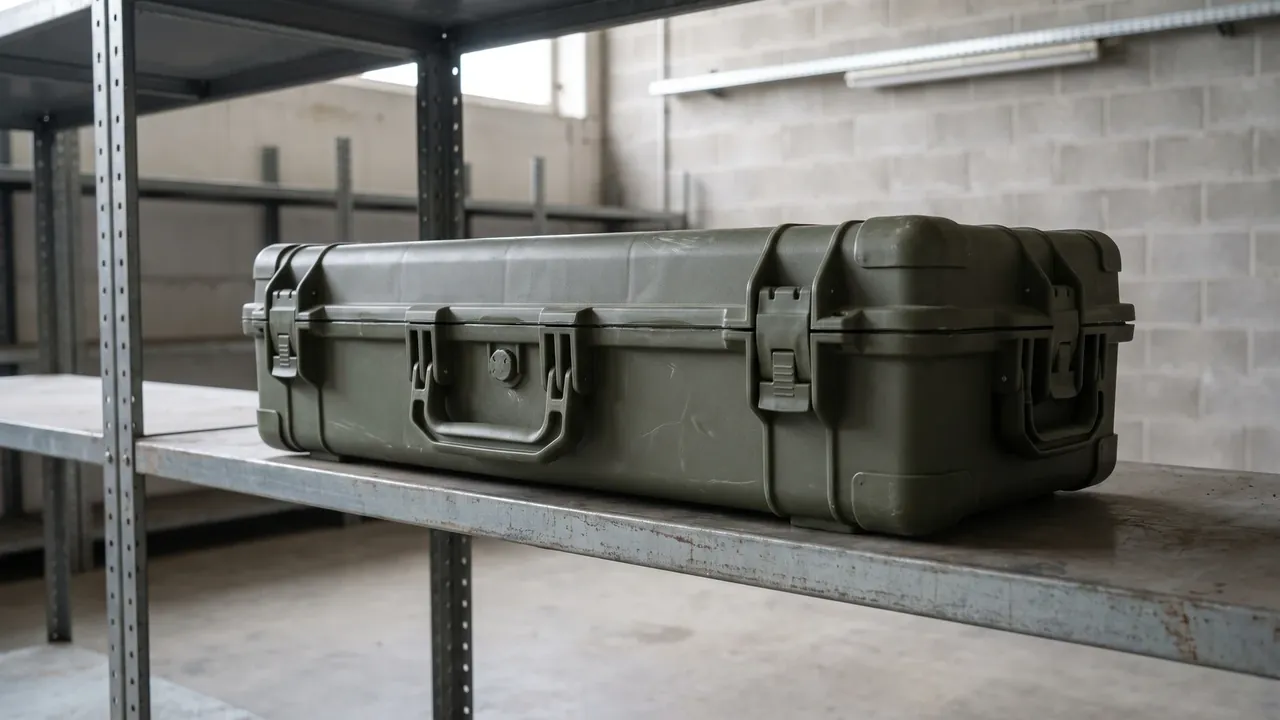
Acceptance is where the paper specification meets the delivered box, and a few on-site checks catch most failures before custody transfer. First, verify the identity panel: the embossed serial must match the handover sheet, the QR must scan to the same record, and the hidden code inside the lid must correspond. Second, verify sealing: press the lid at the corners and listen for even gasket contact, then confirm the pressure equalization valve is clear and moves freely. Third, verify the inhibitor status: confirm desiccant and VCI packs are present, correctly placed, and dated for replacement. Fourth, verify the liner: each cavity should grip its item without force and release without tools, proving the reset logic actually works in the user's hands.
A second class of checks covers the structural claims. Confirm the marked maximum stacking tier against the actual boss alignment, and try a dry fit of two boxes to see whether the locator pins truly interlock rather than relying on friction. Confirm fork pocket spacing against the base's handling equipment, and confirm lash points sit on reinforced zones and not on thin shell. These checks take minutes on the first article and prevent a whole batch from entering storage with a tolerance the warehouse cannot use. The technical agreement should name which checks are first-article and which are per-batch, so acceptance is repeatable across deliveries and across the years the box will stay sealed.
Where a first-article check fails, the right response is to stop the batch, not to waive the line. A single misaligned boss or a missing hidden code is rarely isolated; it usually signals a mold or assembly setting that will repeat across the whole run. The technical agreement should state that any first-article failure triggers a root-cause review before mass production resumes, and that the buyer keeps the right to re-inspect at a later delivery without notice. This discipline turns acceptance from a signature into a control point, and it is far cheaper than discovering a systematic flaw after a thousand boxes have entered a decade-long storage cycle where rework is nearly impossible.
Environmental Logging and Smart Monitoring: From Passive to Observable Preservation
The biggest risk in long-term preservation is not a single impact but "not being able to see." Once the lid closes, the internal humidity, temperature change, and whether the box was opened are all known only after the fact under the traditional lead-seal plus paper-record model. Ordnance packing boxes are moving from passive preservation to observable preservation: a temperature and humidity logger bay inside the case lets periodic reads tell whether the desiccant is still effective and the VCI still active; writing seal numbers and the time-space stamp of every handover into a traceable system turns the responsibility chain from "by memory" to "by data." This shift does not require the box itself to be smart, only that the box reserves structural interfaces for the logger, the electronic seal, and the readable serial number, which is exactly why earlier sections stressed front-loading traceability into the structure.
The key to landing this is interface standardization. The logger bay should be tool-free to access, should not compete with the liner for space, and should not break the seal when accessed; the electronic seal's power and read port should avoid load-bearing zones so they do not become structural weak points. For large batches spanning years and custodians, centralized reading beats opening every box: a reader swept across cases at a turnaround node recovers temperature-humidity curves and handover records in bulk, cutting labor and reducing the secondary contamination risk of opening. The manufacturer should deliver interface dimensions and read protocols, and the buyer should fold these reads into the periodic inspection regime, turning preservation from "check again in three years" into "visible every month" and exposing the most destructive invisible failure inside a window where it can still be handled.
A Selection Checklist for Ordnance Packing Boxes
Finally, a parameter framework procurement can lift directly into a tender and technical agreement. Structure: whether external dimensions align to pallet and rack modules, empty-case weight, declared stacking tiers, and fork-pocket and lashing-point positions. Preservation: IP rating, gasket material, presence of a pressure equalization valve, desiccant and VCI loading equivalence and replacement interval. Durability: hinge and latch open-close life, handle load test, salt-spray test hours. Liner: zoning logic, restraint method, anti-static and adjustability. Traceability: identification panel position and size, seal type and electronic-seal support, serial number format. Validation: an ISTA or equivalent report stating drop height and vibration spectrum, mapped to the real logistics route rather than requested generically.
Buying an ordnance packing box is, in essence, paying for the preservation cycle and the number of handovers. Once those two numbers are estimated honestly, every line of the framework gains a budget anchor. It must be restated that this article discusses the packaging container only; the storage, transport, and export of ordnance-class materiel are governed by local regulations and export control requirements, and the container manufacturer's duty is to translate corrosion inhibition, sealing, restraint, and traceability requirements into a mass-producible box structure, not to participate in the management of the materiel itself. The checklist above is the contract's backbone: where it is specific, disputes shrink; where it is vague, they grow.
Frequently Asked Questions
Q: What is the core difference between an ordnance packing box and a standard industrial packaging box? A: The core difference lies in the mission cycle and the chain of responsibility. A standard industrial packaging box is designed around a single shipment with three to five controlled handlings; an ordnance packing box is designed around a multi-year chain of sealed storage, rotation, and re-sealing, and must keep the interior dry, metal rust-free, and seals intact under salt fog, temperature-humidity cycling, and repeated custody transfers. This forces it to clear corrosion inhibition, sealing, and traceability simultaneously, and a weakness on any line voids the other two. The price gap is real, but putting a standard box into ordnance preservation almost always returns as rust damage and custody disputes several times over, so experienced buyers specify the military grade from the start. The difference also shows in spare-parts strategy: ordnance boxes are designed with field-replaceable latches and liners, while a standard box is often scrapped whole once its closure fails.
Q: What is the most overlooked failure mode in long-term preservation? A: The most overlooked mode is condensation, not water ingress. Many assume a tight lid means no moisture worry, but the better the seal, the more the day-night breathing depends on the pressure equalization valve; once blocked by label adhesive or dust, negative pressure pulls humidity through micro-gaps to form a water film on metal. Another blind spot is desiccant and VCI loading equivalence: stating "loaded" without volume matching and replacement interval means the inhibitor pack has often silently failed by the second re-sealing. There is also periodic seal inspection: if seals are never checked during storage, problems found at opening cannot be traced to which handover. A fourth blind spot is the humidity indicator itself; many boxes ship without a visible status window, so the user has no idea whether the desiccant is saturated until the metal is already spotted. Writing valve cleaning, desiccant status, seal inspection, and indicator reading into the maintenance manual matters more for actual preservation than simply thickening the wall, because the manual is the document the user will actually follow at the scheduled inspection, not the sales brochure that promised protection.
Q: Must VCI vapor inhibition and desiccant be used together? A: Strongly recommended together, because they are complementary rather than substitutable. The desiccant pushes internal relative humidity into a safe band, while the VCI forms a molecular protective film on metal, still slowing rust even if local humidity briefly rises. With desiccant alone, a slight seal leak fails fast; with vapor inhibitor alone, the film struggles in high humidity. Engineering is about equivalence: desiccant loading matches volume, duration, and climate grade, and VCI packs sit near rust-prone cavity openings. For boxes needing repeated unsealing and re-sealing, every re-sealing should re-check desiccant status and replace as needed, otherwise the second preservation quality drops below the first. A common mistake is treating the two as interchangeable line items in a bill of materials rather than as a coupled system; procurement should ask the manufacturer for a written loading table that names the desiccant mass, the VCI pack count, and the replacement month, and should reject any quotation that only says "rust prevention included" without those numbers, because only the numbers let the user verify the second preservation at the two-year inspection.
Q: Which packaging documents are needed when exporting ordnance packing boxes? A: Where dangerous-goods classification applies, UN packaging certification, packing lists, and material conformity documents must be complete, with the physical box, certificate, and test report corresponding one to one; wooden packaging must meet IPPC fumigation or exemption declaration, while metal and plastic focus on material declaration and recyclability marking. The most typical failure is document inconsistency: the box type on the UN certificate, the state in the test report, and the actually shipped box do not match, and the batch is often detained at some port. The sound practice is to attach the document list to the technical agreement with version, validity, and issuing body, re-verify against the certificate before each new production, and start the paperwork two weeks early to typically halve clearance time. This article discusses the container only; export is governed by local regulations and export control requirements, and the box must carry the compliance structure rather than the authority to export.
Q: How should the maximum stacking tier be determined safely? A: The maximum stacking tier is not an experience number but is decided by the synergy of bearing surface, ribs, and locator pins. The top and bottom stacking bosses must align so the load transfers vertically to the main load-bearing structure, not pressing on thin walls or latches; locator pins also prevent inter-layer sliding, avoiding stack collapse during a forklift hard brake or earthquake. The manufacturer should give a clear maximum tier and single-tier load, marked visibly on the box. Verification should calculate layer by layer under full-load conditions rather than only testing the bottom box, because the truly stressed part is the sidewall and corner of the bottom-tier box. A further safeguard is an eccentric-load note: real warehouses rarely stack perfectly centered, and a forklift jolt adds instant side load, so the stated tier should also carry an allowed eccentricity range, beyond which the stack becomes unstable. Writing both the limit and the eccentricity into the technical agreement avoids the risk of warehouses arbitrarily adding tiers to save space, which is how most stack collapses actually begin in practice rather than in the design office.
Q: Why does the ordnance packing box need a dual-identity seal design? A: Dual identity means the identification panel provides both a QR code and an embossed serial number, with a hidden verification code inside the lid, so traceability holds even if any single point fails. When the scanner fails or the label wears, the embossed serial still allows manual verification; if the external plate is maliciously replaced, the internal code exposes it. Ordnance materiel often crosses multiple custodians and years, and any single identity mismatch voids all later records, so the identity system must be front-loaded into the box structure rather than pasted on afterward. The hidden code also defeats a subtler attack: an insider swapping the external plate while leaving the contents untouched, which a single-identifier system would never catch. High-value batches can upgrade to RFID seals that automatically record time and location at each custody point, turning the responsibility chain from manual check to system trace, so the question "was it opened" has a definite answer recorded in the system rather than recalled by a clerk who may have moved units since the handover.
Q: Why should the test report not be read only for a pass mark? A: Because the report translates "this box is sturdy" into verifiable data. Drops record corner deformation after impact, vibration records whether the liner truly kept equipment still, and salt spray records the anti-corrosion floor, and these findings feed directly back into mold and liner improvement, which is where the test budget earns its return. A supplier without a report can only promise verbally, and there is nothing to compare when damage claims arise; a supplier with a report has committed to specific test conditions that can be checked line by line during acceptance disputes. The deeper value is the improvement loop: aligning field damage locations with laboratory failure modes forces mold or liner optimization. A further benefit is comparability across batches and suppliers, because a stated drop height and vibration spectrum let the buyer rank options on the same scale instead of relying on marketing language. The report should bind to the real route rather than be requested generically, because only a profile matching the actual logistics scenario predicts field performance and protects the buyer's budget from paying for a grade the route never experiences.
Q: What on-site checks catch most failures before custody transfer? A: Four groups of checks cover most risks. Identity: embossed serial matches the handover sheet, QR scans to the same record, hidden lid code corresponds. Sealing: even gasket contact at corners, pressure equalization valve clear and moving freely. Inhibition: desiccant and VCI packs present, correctly placed, dated for replacement. Liner: each cavity grips its item without force and releases without tools, proving the reset logic works in the user's hands. A second class covers structural claims: marked stacking tier against actual boss alignment, dry-fit interlock of locator pins, fork pocket spacing against base equipment, and lash points on reinforced zones. These minutes-long checks on the first article prevent a whole batch from entering storage with a tolerance the warehouse cannot use, and the technical agreement should name which are first-article and which are per-batch.
Closing
The reliability of an ordnance packing box is written into every detail of the preservation cycle: inhibitor equivalence, valve patency, seal review, and continuous load path. Buy it as a long-cycle operating asset, not as a thicker box. Related Reading: Rotomolded Transport Case, War Reserve Case, Transit Case and Shipping Case.