

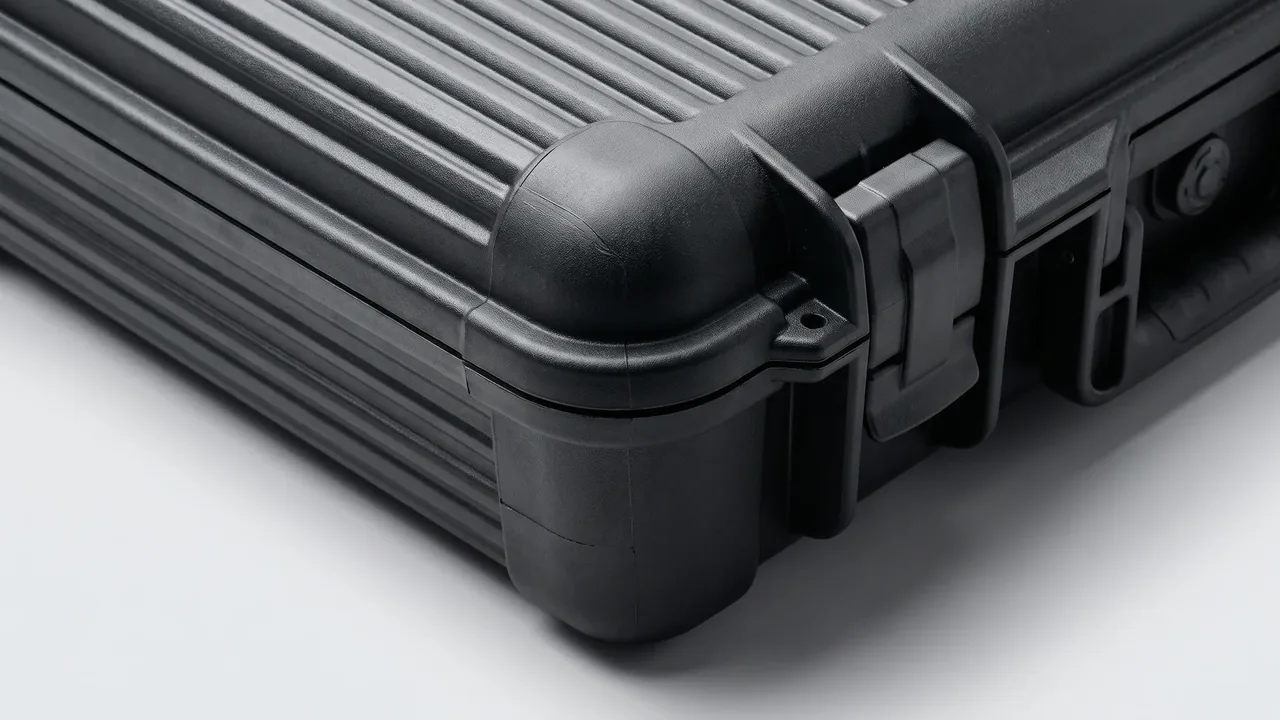
A Metal Ammunition Container is the oldest and most durable family of rigid packaging in the ordnance supply chain. Wherever a container has to resist impact, resist crushing, resist puncture, or survive long-term storage and repeated opening and closing, a metal box body usually makes a stronger case for itself than wood, paperboard or ordinary plastic. It uses steel or aluminium sheet as the load-bearing structure, folded, formed, welded or riveted into a closed cavity, then fitted with liners, gaskets, locks and markings to become a managed, traceable storage and transport item.
The real question for a buyer is a material question: should a Metal Ammunition Box be steel or aluminium? A steel Metal Ammunition Box is stiff, low cost per unit area, and highly resistant to deformation and puncture, at the price of higher self-weight and mandatory rust protection. An aluminium box is light, does not produce red rust and looks neat, but it settles a different set of accounts on stiffness, welding process and repairability. JUNZHIJIA builds both steel and aluminium protective container solutions, and this article takes a manufacturer's view, working through material properties, forming processes, stiffness design, liners and sealing, rust and moisture control, locking and stacking, certification and traceability, and finally the selection decision, for ammunition packaging manufacturers and professional procurement teams. This article discusses the structural engineering of packaging containers only; for military trade or export, local regulations and export control requirements always take precedence.
The Place of Metal Ammunition Containers in the Packaging System
Military packaging materials fall into roughly five routes: wood, paperboard, plastics (including engineering plastics and rotational-moulded HDPE), fibre composites, and metals. The Metal Ammunition Container occupies a distinctive position because it is usually not a single-trip dispatch package but a recoverable, reusable "equipment-type" container. That attribute has two immediate consequences.
First, whole-life cost is calculated differently. A metal box costs more at first purchase than a carton or crate of the same size, but once the price is spread across the number of trips it makes, it is frequently the cheaper option, so turnover rate, repair cost and end-of-life handling all belong in the evaluation rather than the purchase price alone. Second, a metal box demands higher structural integrity. Every opening, stacking and lift consumes structural life, and welds, seams, hinges and latches are the fatigue-sensitive points; if any one of them is weak, long-term handling will magnify it into a seal failure or a structural crack.
Within the metal route, the choice narrows to steel and aluminium. They are not substitutes for one another; each suits a different load spectrum, handling pattern and service environment. Understanding that split is the precondition for every engineering trade-off that follows. Against plastic cases the boundary is equally clear. Plastic wins on weight, freedom from rust protection and the ease of moulding complex cavities, and it suits moderate loads and mild environments. Metal wins on a higher stiffness ceiling, a wider temperature range, and more thorough resistance to puncture and crushing, and in applications that need electromagnetic shielding, welded gas-tightness or resistance to a sharp impact it has almost no substitute. Selection is therefore rarely a single question of "metal or plastic"; it is first a judgement about the severity of the duty and the environment, and only then an internal decision about steel or aluminium. Settling that judgement early gives every later argument about gauge, rib pattern, liner and coating a common standard.
Steel vs Aluminium: A Direct Comparison of Material Properties
A steel box body is usually made from low-carbon or low-alloy structural steel sheet, with a density of about 7.8 g/cm³. An aluminium body typically uses 5xxx series alloy such as 5052 or 6xxx series such as 6061, with a density of about 2.7 g/cm³, roughly one third that of steel. The density gap directly sets the weight difference at equal thickness: compared thickness for thickness, the aluminium box is clearly lighter.
Strength and stiffness, however, cannot be read from thickness alone. The elastic modulus of aluminium is about one third that of steel, so to reach the same bending stiffness an aluminium part generally needs thicker sheet or a taller section, and part of the weight advantage is given back. A fair engineering comparison is therefore made at equal stiffness, that is, with both bodies deflecting the same amount under the same load, and only then comparing weight and cost. The result is often not what intuition suggests.
On corrosion resistance, steel depends on a coating, galvanising or electrophoresis to build a barrier, and once that barrier is breached, rust spreads from the break. Aluminium forms a dense oxide film naturally and re-passivates after damage, so it is more stable in humid and salt-fog environments, although pitting from chloride ions and galvanic corrosion from contact with dissimilar metals still need to be controlled. On weldability, low-carbon steel is mature, cheap and easy to repair in the field, whereas aluminium conducts heat quickly and softens noticeably in the heat-affected zone, so welding needs dedicated process control and riveting or extruded-section joints are more common. On cost, aluminium is usually more expensive per unit weight, and per finished part the gap widens further because of greater thickness and more complex processing. On repairability, local deformation in a steel box can be straightened and a weld can be repaired; an aluminium box is harder to straighten and welding repair raises the process bar. These differences underpin every trade-off that follows.
Forming Steel Box Bodies: Folding, Welding and Seaming
The typical route for a steel box body is blanking, folding, forming, welding, flattening, surface treatment and assembly. Fold radius is related to sheet thickness; a radius that is too small produces micro-cracks on the outside of the bend, which become the starting point for later corrosion and cracking, so a minimum fold radius belongs on the drawing. Welding is matched to the location: spot welding for lap joints, seam welding for edges that must be continuously sealed, and gas-shielded welding for corners and load-bearing areas. Weld quality directly sets both strength and gas-tightness.
The box mouth flange is the datum surface for sealing, and after welding it must be re-formed so that flatness meets the compression requirement of the gasket; otherwise even the best gasket will not be pressed home. Weld sequence therefore has to control heat input and distortion, using back-step welding or fixturing where necessary. Bodies that must be gas-tight should also be leak-tested to confirm that no weld contains a through defect.
Seaming folds and interlocks the sheet edge, which raises edge stiffness, removes the risk of a cut hand, and tucks the raw cut edge inside the fold to reduce corrosion start points. Seams and reinforcement ribs are usually used together: the edge carries local stiffness and safety, the pressed rib carries overall stiffness. This group of shop-floor processes decides whether a steel box can hold its shape through long-term handling.
Several easily overlooked details also affect the finished product. Weld spatter and slag must be removed after welding; left in the cavity they form hard points that can score the liner and seed coating defects. Where an internal weld cannot be dressed, a liner can cover it, or the design can reduce the number of internal welds by using formed parts. Every opening, such as a pressure-equalisation valve port or a marking window, should be cut before welding or riveting, not after coating is complete, because secondary machining breaks the anti-corrosion layer. A gas-tight body should be leak-tested again after fittings are installed, confirming that assembly has not introduced a fresh leak path.
Forming Aluminium Box Bodies: Extrusion and Riveting
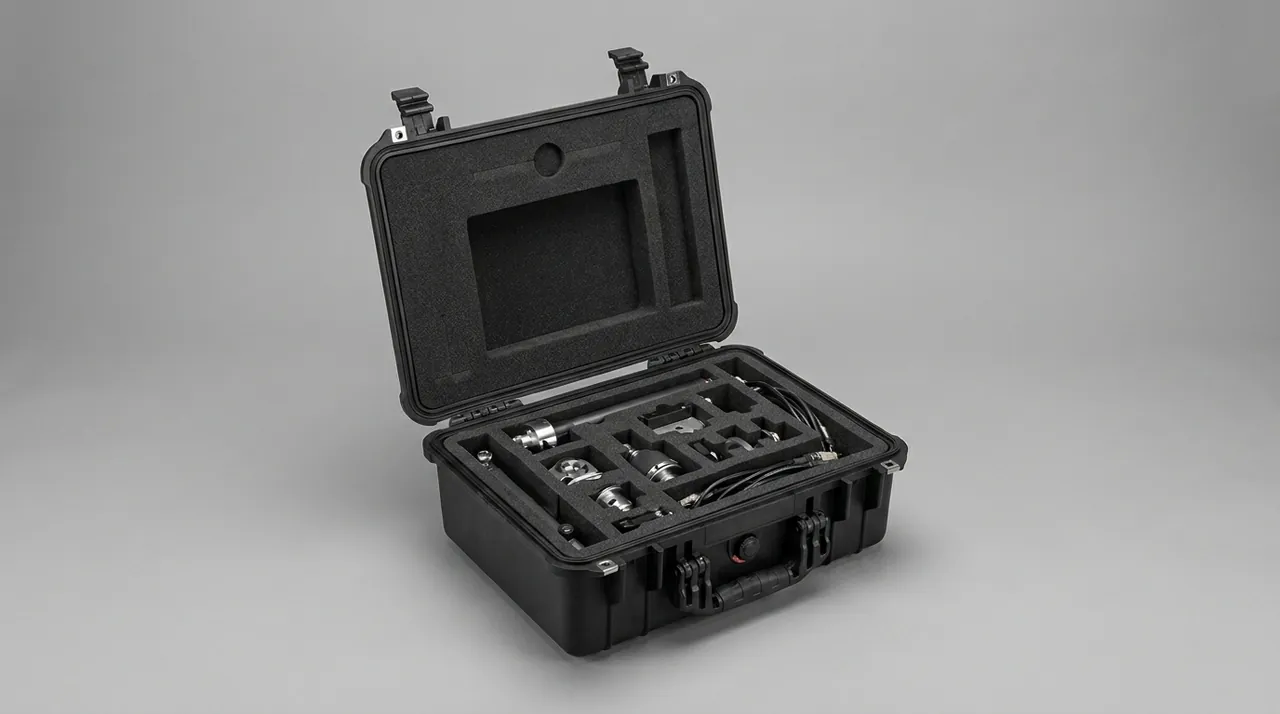
Aluminium bodies make heavy use of extruded sections for frames and corner posts, extruding the reinforcement directly into the profile, for example a T-slot in the inner wall for liner clips or dividers. Panels and frames can be riveted or friction-stir welded. Compared with fusion welding, the extruded-section plus riveting combination puts more weight on joint design, because connection quality depends on hole position, rivet selection and mating surfaces rather than on a single weld bead.
Riveting brings freedom from heat effects, easy dismantling and convenient field repair. Its drawbacks are that holes are stress raisers and can loosen under long-term vibration, so anti-loosening measures and correct rivet spacing are needed. Anodising is the most common surface treatment for aluminium, building a wear-resistant, corrosion-resistant oxide layer on the surface while making colour and marking easier.
Dissimilar-metal contact deserves particular attention. If an aluminium panel touches a steel fastener or steel hinge for a long period in a humid environment, a galvanic couple forms and the aluminium, acting as the anode, corrodes faster. The engineering answer is an insulating pad at the interface, a coating that separates the metals, or fasteners of the same alloy family.
Wall Thickness, Reinforcement Ribs and Body Stiffness
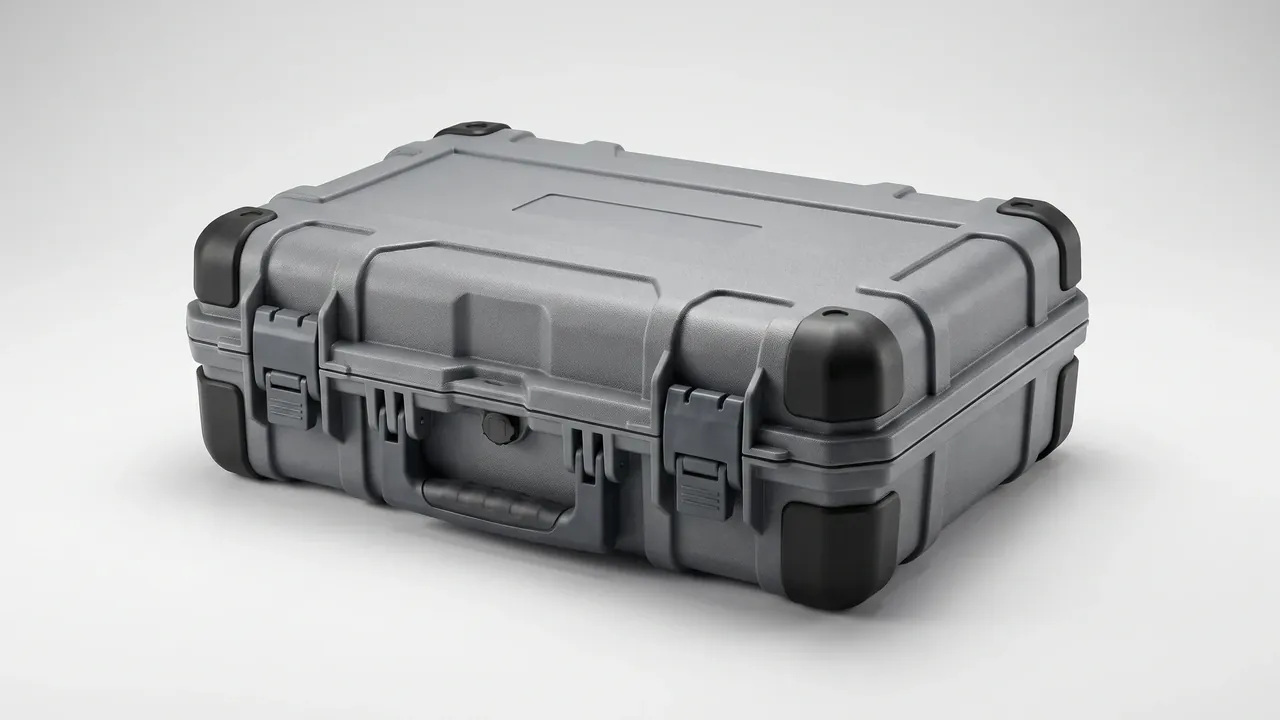
The bending stiffness of a body depends on the elastic modulus of the material and the moment of inertia of the section. For a metal box, raising the section height, for example by corrugating the wall or pressing vertical ribs into it, is usually more efficient than simply thickening the sheet, because the moment of inertia grows with roughly the cube of the height while weight grows only linearly. This is the core method by which a metal box trades lightness for stiffness, and it is a different logic from a plastic case that resists bending through overall wall thickness.
Rib layout should follow the load path. Vertical ribs carry stacking load and lateral compression, horizontal ring ribs raise the wall's resistance to bulging, and corners are reinforced by folds, corner wraps or dedicated corner posts. Spacing that is too wide allows bulging between ribs, while spacing that is too tight adds folding steps and cost, so finite element analysis or a stacking test is normally used to settle it.
A steel box can also be locally reinforced with a doubler plate or a slightly thicker sheet in highly stressed regions, while an aluminium box tends to thicken the loaded section by using an extruded profile directly. Whichever route is taken, wall thickness, rib profile, rib spacing and allowable load should be issued as one set of parameters rather than as a bare thickness figure. On the relationship between gauge and strength, see case wall thickness and strength; on rib logic, see reinforcement ribs and case stiffness.
Verification affects both cost and schedule. A simple body can be estimated with an empirical formula and then confirmed with a stacking and drop test. A more complex body with a non-intuitive load path is better analysed first to locate high-stress regions, then reinforced precisely with ribs or doubler plates, rather than thickening the whole body, which consumes material without necessarily hitting the critical area. In testing, the loading direction and boundary conditions should reflect real use: a stacking test should reproduce the actual stacking attitude and pallet restraint, and a drop test should cover the worst-case impact points, otherwise the conclusions will be optimistic.
Liners and Cushioning: Securing Contents Inside a Metal Box
A metal box is stiff, but its inner surfaces are hard and conduct heat well. If contents touch the wall directly, impact passes through almost undamped, and condensation from temperature swings forms right at the equipment surface. A liner inside a metal box is therefore not merely gap filling; it serves four functions at once: cushioning, location, thermal separation and anti-slip.
The common materials are closed-cell foams in three families, EVA, EPE and EPDM. EVA has low compression set, stable resilience and can be finely shaped, which suits precise contour fitting. EPE is lighter, cushions well and costs less, which suits energy-absorbing bases or general compartments. EPDM is balanced in weather resistance, ageing resistance and temperature tolerance, which suits long storage and wide temperature swings. A practical compromise is layering: a softer, finer foam against the contents to fit the contour, and a firmer, more resilient foam against the wall to spread the load, forming a soft-to-hard energy-absorption gradient.
Compartmentalisation matters just as much. Without dividers, several items will collide in transit and the plating and paint on metal parts will soon show dents. The method is to cut separate pockets to the contour of each item and to use a single formed divider between pockets. Where the layout must be rearranged by task, modular liner units can be used, following the logic of a removable divider system; for material layering, see foam types inside a case.
How the liner is fixed also deserves attention. A liner can be adhesive-bonded, hook-and-loop fastened, clipped or held by trim strips. Adhesive is simplest but can release under temperature swings and vibration. Hook-and-loop is easy to change and suits units that adjust pockets often. Clips and trim strips hang the liner on the slots of the inner profile, which is stable and unlikely to fall away. In the base of a steel box, the most heavily worn area, a wear pad under the liner extends liner life and protects the coating. Designing the liner as a replaceable consumable fits the long-service positioning of a metal box far better than bonding it down once and for all.
Sealing Structure and IP Protection Rating
Steel and aluminium bodies seal by the same logic: a gasket groove in the mouth flange, a gasket seated in it, and compression created by the latches. The degree of protection is described by the IP code defined in IEC 60529 and GB/T 4208. IP65 means dust-tight and protected against water jets, and IP67 means dust-tight and protected against short immersion. Because a metal box is often used in the field and on vehicles, IP67 is the usual recommendation, with a pressure-equalisation valve added as needed to handle the pressure difference of air transport and cross-climate shipment.
Sealing reliability rests on three things. The first is the match between groove and gasket: the ratio of groove depth to gasket diameter must produce a stable compression when the latches are closed, neither under-compressed so it leaks nor over-compressed so the gasket takes a permanent set. The second is gasket material and ageing: silicone, EPDM and nitrile have different temperature and media strengths, and loss of resilience over time is the most common root cause of seal failure, so it belongs on the periodic inspection list. The third is flange flatness, which is where a metal box is more likely to fail than a plastic one: welding distortion and incomplete flange re-forming leave a section of the gasket under-compressed.
Metal boxes have one more variable, condensation and dissimilar metals. Moisture inside can condense on the cold wall and collect along the gasket groove, so the design should give the cavity floor a drainage and collection concept, or use the liner to separate contents from the cold wall. For gasket material selection see case gasket and O-ring materials, and for the overall waterproofing approach see outdoor case waterproof design.
Rust and Moisture Control: Coatings, VCI and Desiccants
The rust-protection system of a steel container is usually three-layered: a base layer of phosphating or galvanising that bonds to the substrate; a middle layer of primer or electrophoresis, with electrophoresis giving more even coverage of complex shapes and internal cavities; and a top layer of powder coating or baked enamel for weather and wear resistance. Coating quality is judged by film thickness, adhesion and edge coverage, because edges and welds are where the coating is thinnest and fails first. Aluminium does not produce red rust, but it still needs anodising or painting in salt-fog service, and contact with steel parts should be avoided.
Beyond barriers, the internal environment is controlled with vapour corrosion inhibitor (VCI) and desiccants. VCI material slowly releases corrosion-inhibiting compounds inside a closed space and forms a molecular film on metal surfaces, which suits long-term storage of steel parts. Desiccants are sized to cavity volume and storage period to absorb moisture that enters. A humidity indicator card lets a user judge the internal state without opening the box. Used together, the three create a reasonably stable micro-environment inside a metal box, continuous with the approach described in long-term storage of military steel ammo cans.
Locks, Hinges and Tamper-Evident Seals
Locking hardware on a metal box serves both fastening and security. A draw latch provides stable clamping and is the component that actually sets gasket compression. A mechanical lock or padlock hasp restricts who may open the box. A recessed lock hides the lock body inside the shell, reducing the surfaces exposed to prying and impact. Latch count and spacing are not a case of more is better; they must match the body size and gasket compression requirement so that clamping force is distributed evenly along the mouth, or the seal will fail where compression is short.
Hinges carry the entire load of opening, and pin, leaf and limit features must withstand long, frequent cycling without excessive play. A heavy lid should have a limit stay so that it does not fall back onto fingers or crush the gasket. Where opening must be recorded, a single-use tamper-evident seal can be fitted, carrying a unique number tied to the asset register so that "was it opened" is a question with an answer. On latch types see case latch selection, and on lock options see case lock customization.
Stacking Load, Lifting and Forklift Interfaces
The core of stacking a metal box is to let the load travel through the structure rather than sit on the middle of the lid or on the contents. The top and bottom of the body should carry matching bearing surfaces and locating features, so the weight of the box above passes down through the walls and ribs. The number of stacked layers must be calculated from the body's load capacity and the contents' weight, and the permitted limit should be marked on the body rather than left to on-site judgement.
Lifting and forklift interfaces should also land on load-bearing structure. Lifting points should be symmetrical and as close as practicable to the centre of gravity, to avoid twist from an off-centre lift. Fork pockets belong in the base, with depth and position matched to common fork sizes. One advantage of a metal box is that dedicated lifting eyes and corner wraps can be welded or riveted at the corners, spreading a concentrated load into the body frame.
Interface reliability has to be proved over time. After many trips, the wall panels near lifting points and fork pockets should be checked for cracks, deformation or weld cracking, and a body with structural damage should be withdrawn for assessment. For stacking and pallet planning see case stacking and pallet planning.
Marking and Traceability: Barcodes, RFID and Asset Registers
Traceability begins with a numbering rule that is both consistent and aligned with the asset register: body number, pocket number and asset number must correspond, so that physical counting and system reconciliation confirm each other. The technology can follow the management granularity. Barcodes and QR codes are cheap and quick to deploy and suit management by unit or batch. RFID can be read in bulk at a distance and suits warehouse issue and return as well as fleet inventory.
Metal imposes one special constraint on RFID: it shields radio signals, and a tag pressed directly onto a metal surface loses much of its read range. The usual engineering answer is an on-metal tag, or a non-metallic window in the body, such as an inset plastic plate, as the tag mounting position. The tag itself must survive ultraviolet light, temperature and humidity cycling and daily wiping, and its position should avoid areas of frequent friction and impact.
For items that circulate repeatedly, the numbering should also connect to issue, return, maintenance and seal records to form a complete chain of custody. For related practice see case asset QR code tracking.
Military Standards and Export Packaging Certification
Testing and certification of a metal ammunition container normally follow two lines: environmental adaptability and transport safety. Environmental adaptability can reference the relevant MIL-STD-810H test methods, covering vibration, mechanical shock, temperature and humidity cycling and salt fog, to verify structural integrity and protection in transport and storage conditions; domestic projects often reference the requirements of the GJB series of military standards.
On transport safety, packaging used to carry regulated goods normally has to pass performance tests under the applicable packaging specification, such as drop, stacking, gas-tightness or hydraulic tests, and obtain the corresponding packaging certification. Because a metal box is stiff and reusable, it can often qualify for reuse after the tests are passed, which is a different logic from single-trip packaging certification.
It must be stressed again that military trade and export projects must also observe local regulations and export control requirements beyond packaging certification, and this article discusses only the structural engineering of the container, not the properties of any goods. For general military-standard testing practice see MIL-STD-810H compliance and GJB military standard cases, and for export packaging certification see ammo transport box certifications.
Choosing Between Steel and Aluminium
Reduced to a selection decision, the differences above can be judged duty by duty. Where a project wants the lowest purchase cost, needs very high resistance to crushing and puncture, and has welding repair available on site, a steel solution is usually the better fit. Where a project is weight-sensitive, handles the box frequently, operates in humid or salt-fog conditions, and wants to avoid repeated touch-up painting, an aluminium solution pays back more clearly over its life.
The split goes further. For long indoor storage under heavy stacking, a steel box carries compression more comfortably. For sea freight across climate zones in wet, humid conditions, an aluminium box is easier to live with. For frequent manual handling with a weight limit per box, aluminium cuts the handling burden noticeably. For air freight billed by weight, aluminium saves freight cost. For high volumes where cost matters and the box stays mostly in a fixed warehouse, steel offers a lower cost per unit volume. Where weight and compression must both be met, a hybrid steel-and-aluminium structure can give the load-bearing duty to steel and the shell and panels to aluminium.
Whichever is chosen, material, gauge, stiffness targets, sealing class, coating system and certification requirements should be written as one complete technical specification and quoted against, rather than compared as a single unit price. For material comparisons see aluminium versus stainless steel toolboxes and case weight and strength balance, and for the material evolution see military storage box material evolution.
Metal Ammunition Container FAQ
Q: What is the most fundamental difference between a steel and an aluminium ammunition box? A: The difference lies in the combination of density and elastic modulus. Steel is about three times denser than aluminium and about three times stiffer, so at equal thickness a steel box is both heavier and harder while an aluminium box is lighter but deforms more readily. That relationship drives every later trade-off. A steel box obtains stiffness from the material itself: lower cost, strong resistance to crushing and puncture, but mandatory rust protection and high self-weight. An aluminium box compensates for lower modulus through section design: lighter, more corrosion-resistant, neater in appearance, but reaching the same stiffness usually needs thicker sheet or a taller section. Neither is absolutely better; the question is only which one matches the duty.
In practice the choice is driven by the duty cycle: steel wins where the container is stacked high, dragged across yards and handled roughly, while aluminium wins where weight limits, manual handling or vehicle payloads dominate. Price the decision over the whole life of the fleet, including repair, coating renewal and the handling equipment each material implies.
Q: Why can steel and aluminium boxes not be compared thickness for thickness? A: Because equal thickness is not equal stiffness. The elastic modulus of aluminium is roughly one third that of steel, so an aluminium box at the same gauge as a steel one will deflect noticeably more under compression and bending, and its mouth flange flatness will be harder to hold, which directly affects sealing. A fair comparison brings both bodies to an equal-stiffness state, deflecting the same amount under the same load. At that point the aluminium body usually needs thicker sheet or a taller section, part of its weight advantage is given back, and its cost is often higher. Procurement should ask the supplier for weight, cost and allowable load at equal stiffness, not for a bare thickness figure.
The practical comparison is therefore a stiffness-matched design exercise: keep the internal volume, the sealing class and the stacking load constant, and let the wall gauge, the rib spacing and the material change together. Quote the resulting empty weight and the achievable stack height side by side, and the material question answers itself.
Q: Does an aluminium ammunition box need no rust protection at all? A: That is not the right conclusion. Aluminium does not produce red rust, but it does oxidise and can suffer pitting, especially in salt-fog environments containing chloride ions, where the surface oxide film may break down locally into pits. In addition, when aluminium remains in contact with steel fasteners or hinges in a humid environment, a galvanic couple forms and the aluminium, as the anode, is corroded faster, a risk more serious than visible surface oxidation. An aluminium box therefore normally needs anodising or painting, and dissimilar-metal interfaces should carry an insulating layer or use fasteners of the same alloy family. The low maintenance of aluminium is relative; periodic inspection and protective design remain necessary.
Design for the environment the boxes actually see: where salt spray or de-icing salts are present, specify a coating system and keep drainage paths clear, because trapped electrolyte is what turns a harmless oxide layer into pitting. Galvanic couples deserve equal attention, since a stainless fastener in an aluminium wall behaves differently from the same fastener in steel.
Q: Why is the liner inside a metal ammunition container more demanding than in a plastic case? A: Because the inner surface of a metal box is hard and conducts heat quickly, so the demands for cushioning and thermal separation are higher. A hard inner wall passes impact to the contents with almost no damping, and temperature swings make the metal wall a condensation surface, so moisture can settle right next to the equipment. The liner therefore has to serve four functions at once: cushioning, location, thermal separation and anti-slip. It is formed in closed-cell foam to the contour as compartments, layered as a soft-to-hard gradient to absorb shock, and used as a foam layer that separates contents from the cold wall. Compared with a plastic case, the liner in a metal box needs closer co-design with the body structure rather than a simple sheet of flat foam.
Specify the liner as part of the container rather than an accessory: define the foam family, the contact pressure under load, and how the liner is retained so it cannot migrate during handling. A metal box also conducts heat, so in cold climates the liner doubles as a thermal break, which is one more reason to treat it as a design element.
Q: How should the sealing class be set, and is a pressure-equalisation valve necessary? A: The sealing class follows the service environment. Where rain, spray and dust dominate, IP65 is sufficient. Where short immersion, sustained high humidity or a field outpost is expected, design to IP67. Metal boxes need particular care over mouth flange flatness, because welding distortion leaves parts of the gasket under-compressed, a problem far more frequent than in plastic cases and one that must be solved by controlling weld sequence and re-forming the flange. A pressure-equalisation valve is valuable in air transport and cross-climate shipment: it slowly balances internal and external pressure through a waterproof breathable membrane while blocking liquid water and dust, and it should be designed together with the gasket as one system.
Treat the valve and the gasket as one engineered system with a shared pressure band, and test them together: a seal that holds at static pressure can still pump moisture past a valve that is sized wrongly. On metal boxes, keep the valve body isolated from the wall material where galvanic corrosion is possible, and make the element replaceable without special tools.
Q: What is most often overlooked when stacking metal boxes? A: The load path is most often overlooked. If the top and bottom of a metal box have no matching bearing surfaces and locating features, the weight above can end up on the middle of the lid or on the contents; over time the lid bulges, the seal fails and the contents carry sustained pressure. The correct approach is to let the load travel down through the walls and ribs, and to mark the permitted number of layers on the body. After many trips, the panels near lifting points and fork pockets should also be checked for cracks or weld cracking, because damage there usually appears before overall deformation and is an important structural safety indicator.
Verify the load path with a loaded stacking test that includes the pallet adapter if one is used, and inspect the corner fittings after the test for local buckling or weld fatigue. Print the permitted stack height on the box, and audit real warehouses against it, because stacking abuse is the most common way a sound design is quietly overloaded.
Q: Why do traceability labels on metal boxes need special design? A: Because metal shields radio signals. An RFID tag pressed directly onto a metal surface loses much of its read range or cannot be read at all, so metal boxes generally need an on-metal tag or a non-metallic window reserved in the body as a tag mounting position. Beyond read performance, the tag must survive ultraviolet light, temperature and humidity cycling and daily wiping, and its position should avoid areas of frequent friction and impact. The numbering rule should also align with the asset register so that body number, pocket number and asset number correspond, making physical counting and system reconciliation confirm each other.
Choose the technology for the surface it will live on: an etched or stamped asset number survives paint wear and helps manual counting, while an on-metal tag needs an approved spacer and a position verified by a real read test on a loaded, stacked pallet. Fix that position in the specification so labels are applied identically across the fleet.
Q: What packaging certifications does a metal ammunition container need for military export?
A: Two lines normally need to be covered: environmental adaptability and transport safety. Environmental adaptability can reference the relevant MIL-STD-810H methods to verify structural integrity and protection under vibration, mechanical shock, temperature and humidity cycling and salt fog, with domestic projects often referencing the GJB series. On transport safety, packaging carrying regulated goods normally has to complete drop, stacking, gas-tightness or hydraulic performance tests under the applicable specification and obtain certification. Because a metal box is reusable, it can often qualify for reuse once the tests are passed. Export projects must also observe local regulations and export control requirements; this article covers container structure only, not any property of the goods.
Conclusion and Related Reading
The steel-versus-aluminium decision is an ordering of stiffness, weight, corrosion resistance, cost and repairability against the duty. Design material, gauge and ribs, liner, sealing, locking and traceability as one system so every parameter serves a defined load spectrum. JUNZHIJIA supports metal body selection, liner tooling, sealing schemes and documentation; the manufacturer is Kexin New Materials (Guangdong) Co., Ltd.
Related Reading