

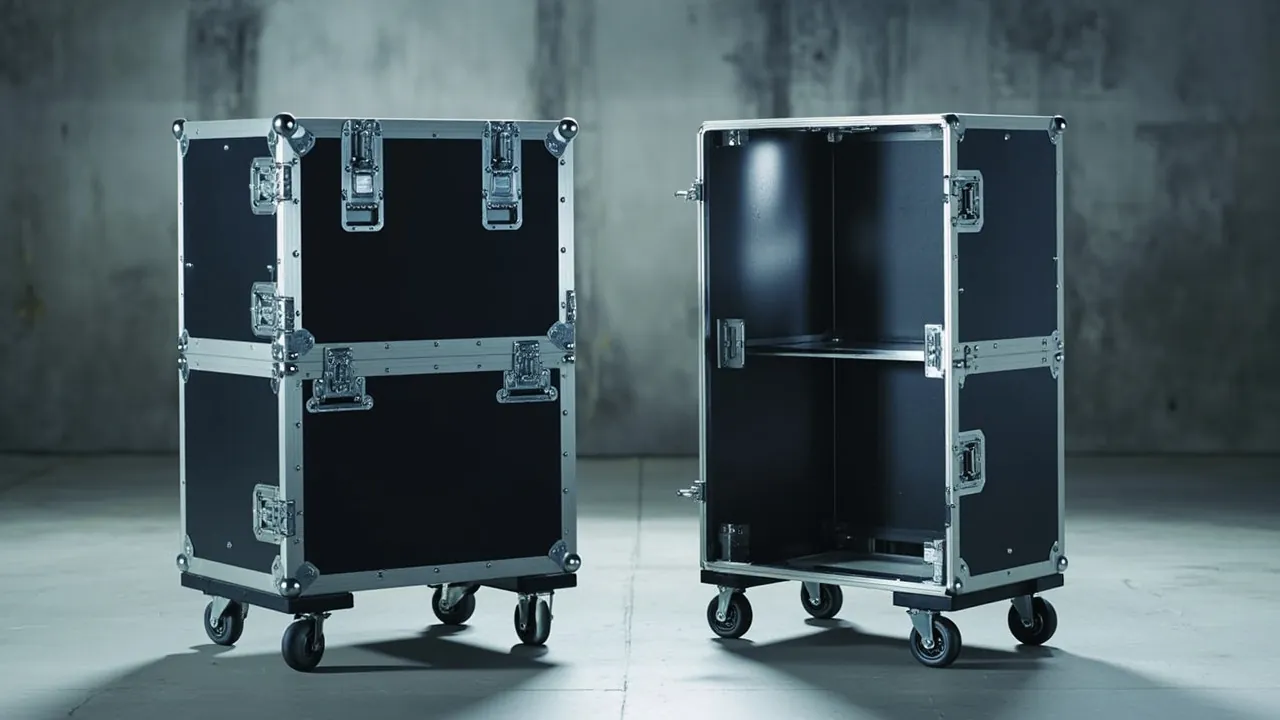
Bottom line first: the material evolution of military storage boxes is the result of three lines of progress advancing at once, weight reduction, corrosion resistance, and manufacturability. From wood and leather, to steel, to aluminum, and now to engineering plastics and composites, each material transition was never as simple as "the new material is better." It was a reallocation of weight, strength, corrosion resistance, sealing, cost, and production capacity. Steel's strength and rigidity remain hard to fully replace, but its density is about 7.85 g/cm³ and it depends on coatings and plating for corrosion protection. Aluminum drops density to roughly 2.70 g/cm³ but brings galvanic corrosion and welding challenges. Engineering plastics such as HDPE and PP drop density further to 0.90 to 0.96 g/cm³, enabling one-piece molding, integral sealing, and coating-free corrosion resistance, at the cost of lower stiffness that structure must compensate for. In one sentence: the direction of evolution is not "replace heavy materials with lighter ones," but "trade structural efficiency for weight and trade the material's own corrosion resistance for coating processes."
This article is written for procurement, structural, and industrial design staff. It breaks the evolution into four layers: history (what each of the four stages solved and what new constraints it introduced), materials (property comparisons across steel, aluminum, HDPE, PP, ABS, PC, PA, and composites), engineering (how to account for lightweighting and how corrosion and sealing technology evolved alongside), and decisions (an executable material selection matrix by scenario). Throughout, the military storage box is treated strictly as an industrial packaging and transport container, with no discussion of the items it holds.
Table of Contents
- Bottom Line: The Three Lines Behind the Material Evolution
- Four Stages: Wood and Leather, Steel, Aluminum, and Engineering Plastics
- Stage One: The Era of Wood and Leather Boxes
- Stage Two: The Golden Age of Steel Boxes
- Stage Three: Aluminum and the First Real Weight Reduction
- Stage Four: The Broad Adoption of Engineering Plastics
- Key Material Property Comparison
- The Engineering Math of Lightweighting: Where the Savings Come From
- How Corrosion Protection Evolved in Step
- How Sealing Technology Evolved: From Paper Gaskets to O-Rings
- The Modern Standard System for Military Storage Boxes
- A Material Selection Decision Matrix
- Future Directions: Composites, Bio-Based, and Recycled
- Frequently Asked Questions
- Conclusion and Further Reading
Bottom Line: The Three Lines Behind the Material Evolution
To understand the material evolution, do not ask only which material is more advanced. Ask which pain point each generation solved and what new constraint it introduced. Three lines run through the whole story.
Line one: weight reduction. A central tension in military storage is how much of the payload the box's own weight consumes. A 10 kg steel box carrying 30 kg of materiel yields a 40 kg unit in which 25 percent of the weight is a "box tax." Where large volumes move, are handled repeatedly, and are lifted by people, that tax is expensive. Engineering plastics cut density to roughly one eighth of steel, and even accounting for the thicker walls that lower stiffness demands, the real weight saving remains substantial.
Line two: corrosion resistance. The life of a steel box is largely set by its coating and plating. Once the coating is breached, corrosion starts at the breach and spreads. The evolution path is from adding a protective layer on the surface (paint, zinc plating) to making the material itself corrosion resistant (plastics, stainless steel, anodized aluminum). That is not just a technology shift but a maintenance shift: coating systems need periodic inspection and repair, while inherently corrosion-resistant materials are nearly maintenance free.
Line three: manufacturability. Steel boxes depend on stamping, bending, welding, and riveting, with many operations, heavy tooling, and long lines. Engineering plastics allow one-shot injection molding of the shell, ribs, hinge bosses, latch bosses, and seal groove together, sharply reducing part count and assembly operations. This often matters more to cost and capacity than the raw material price.
Together, the three lines lead to one conclusion: material evolution is not a linear replacement but a process of reallocating weights by scenario. Where extreme strength and temperature resistance are needed, steel remains irreplaceable. Where light weight, corrosion resistance, high volume, and integral sealing are needed, engineering plastics have become mainstream.
Four Stages: Wood and Leather, Steel, Aluminum, and Engineering Plastics
Dividing the evolution into four stages makes the drivers and the residual problems clear.
| Stage | Primary materials | Driver | Pain point solved | New problem introduced |
|---|---|---|---|---|
| --- | --- | --- | --- | --- |
| One | Wood, leather, canvas | Hand manufacture, local sourcing | Portable, offers cover | Moisture, rot, low strength, poor sealing |
| Two | Steel plate (low carbon) | Industrial stamping and welding | High strength, scalable, good sealing | Heavy, must be protected, rusts |
| Three | Aluminum alloy | Aviation and motorized transport | Significant weight reduction | High cost, galvanic corrosion, hard to weld |
| Four | Engineering plastics and composites | Injection molding and materials science | Light, corrosion resistant, one-piece, coating free | Lower stiffness, limited heat tolerance, structure must compensate |
The stages are not hard replacements. Steel, aluminum, and plastic boxes still coexist today, and even within one system different uses call for different materials. The question is never which is more advanced but which fits the scenario.
Stage One: The Era of Wood and Leather Boxes
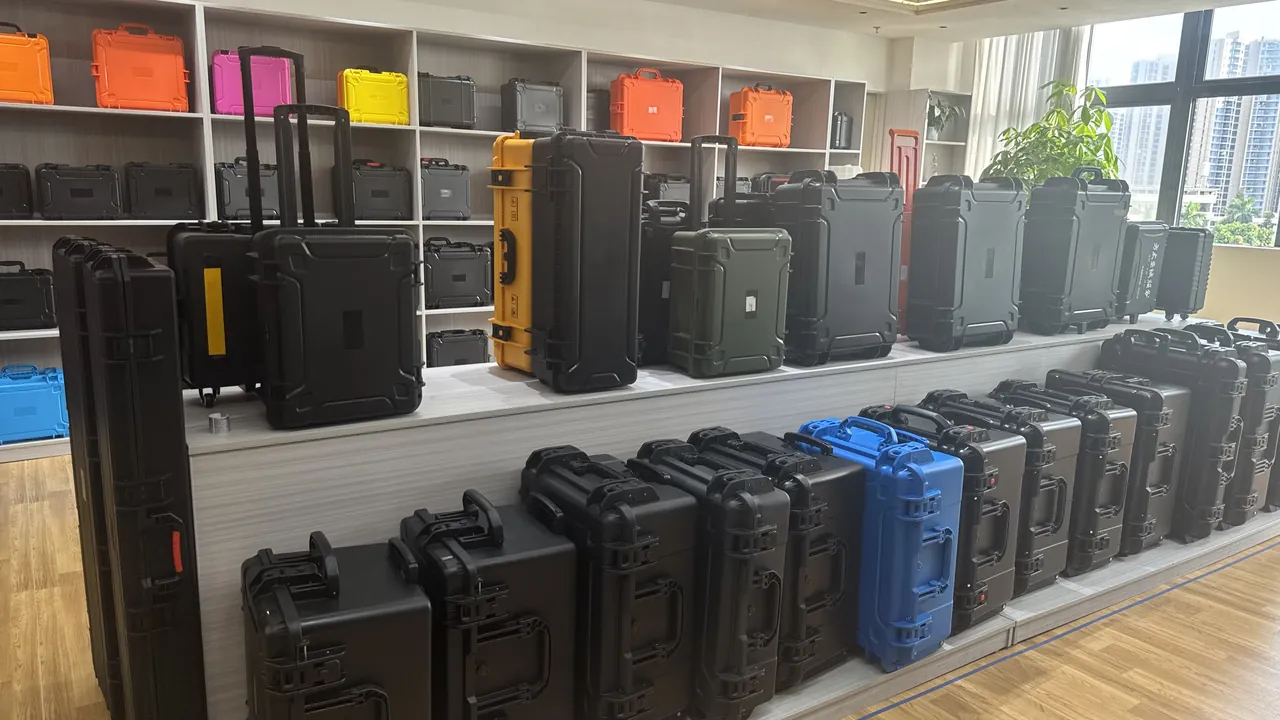
Before large-scale industrialization, storage and transport containers were mainly wood, leather, canvas, and metal corner brackets. Wood provided rigidity through planks and frames, leather provided portability through flexibility, and metal corners and nails provided local reinforcement.
This generation solved availability. Wood and leather could be sourced locally and worked by hand, requiring no complex metallurgy or machinery. Where transport distances were short, loads light, and environments controlled, the combination was reasonable.
But it had three insurmountable weaknesses:
- Moisture and biological degradation. Wood swells, warps, and molds when it absorbs water, and its service life in prolonged damp conditions is short. Leather likewise fears water and mold.
- Poor sealing. Wood and leather are porous, and seams cannot form a continuous sealing face, so water vapor and dust enter.
- Insufficient strength and consistency. Wood properties vary enormously with species, moisture content, and grain direction, making batch consistency difficult, and wood cracks under impact.
A problem that persists to this day: cross-border compliance for wood packaging. Wood packaging can carry pests, and international trade generally requires treatment by heat or fumigation with an applied mark under ISPM 15 (International Standards for Phytosanitary Measures No. 15). This rule still affects every export business using wooden crates and is one real reason wood packaging has been progressively replaced.
Stage Two: The Golden Age of Steel Boxes
Industrialization brought stamping, bending, welding, and riveting, and steel boxes became mainstream. Steel's core strengths are clear: high strength, good rigidity, weldability, stampability, and a sealing face that is easy to machine.
Engineering strengths of steel boxes:
- Strong impact and compressive resistance. Steel's elastic modulus is on the order of 200 GPa, far above plastics, so at equal wall thickness it offers a clear stiffness advantage, making it ideal for stacking and load-bearing.
- Easy sealing face. Metal flanges can be machined to high flatness, forming a reliable sealing interface with a gasket.
- Repairability. Local dents can be straightened and coatings patched, which has real value over a long service life.
- Wide temperature range. Performance is stable hot and cold, without the softening and embrittlement issues of plastics.
Engineering costs of steel boxes:
- High density. About 7.85 g/cm³, over eight times plastics, making self-weight a direct deduction from payload.
- Corrosion protection is mandatory. Low carbon steel corrodes continuously in damp conditions and must be protected by a coating system (primer plus topcoat) or plating (zinc). Such systems can be assessed against ISO 9227 salt spray.
- The coating is the life-limiting factor. Once it is breached in handling, corrosion starts at the breach and spreads beneath the coating, producing the hidden failure of a sound-looking surface over rusted-through metal.
- Many manufacturing steps. Stamping, forming, welding, grinding, pretreatment, coating, and curing make a long, energy-intensive process with a large footprint.
The historical value of the steel box is that it established the basic framework of container engineering: flange sealing, latch compression, stacking reinforcement, and corrosion protection systems. These concepts remain the design foundation for every material today. For how steel boxes perform in long-term storage, see why military steel ammo cans suit long-term storage.
Stage Three: Aluminum and the First Real Weight Reduction
Aluminum was the first genuine weight reduction. Aluminum has a density of about 2.70 g/cm³, roughly one third of steel, can achieve considerable strength through alloying (series such as 5052, 6061, and 7075) and heat treatment, and naturally forms a dense oxide film in air that provides some corrosion resistance.
Strengths of aluminum boxes:
- Significant weight reduction. At equal or comparable strength, an aluminum box is usually markedly lighter than steel.
- Better corrosion resistance than carbon steel. The natural oxide film provides baseline protection, and anodizing further improves corrosion resistance and surface hardness.
- Good thermal conductivity. This aids temperature equalization, though it also means a larger internal-to-external temperature gradient under extreme swings.
- High recyclable value. Mature recycling systems give aluminum strong residual value.
Engineering challenges of aluminum boxes:
- Higher cost. Both material and processing costs typically exceed carbon steel.
- Lower stiffness than steel. Aluminum's elastic modulus is on the order of 70 GPa, about one third of steel, so achieving equal stiffness usually requires larger sections, partly offsetting the density advantage.
- Complex welding. Aluminum welding is sensitive to parameters, the heat-affected zone loses strength markedly, and porosity and cracking are common.
- Galvanic corrosion risk. In contact with other metals, especially stainless steel and copper, aluminum forms a galvanic couple in damp conditions and is preferentially attacked as the more active metal. Hardware selection and isolation measures are therefore critical.
- Poor resistance to strong alkalis and certain salts. Aluminum's oxide film is unstable in strong alkali, which constrains the environment.
Overall, aluminum found its niche where weight reduction matters but strength and temperature requirements remain high, such as air transport and containers for motorized equipment. It did not become a general replacement because cost and stiffness remain unresolved.
Stage Four: The Broad Adoption of Engineering Plastics
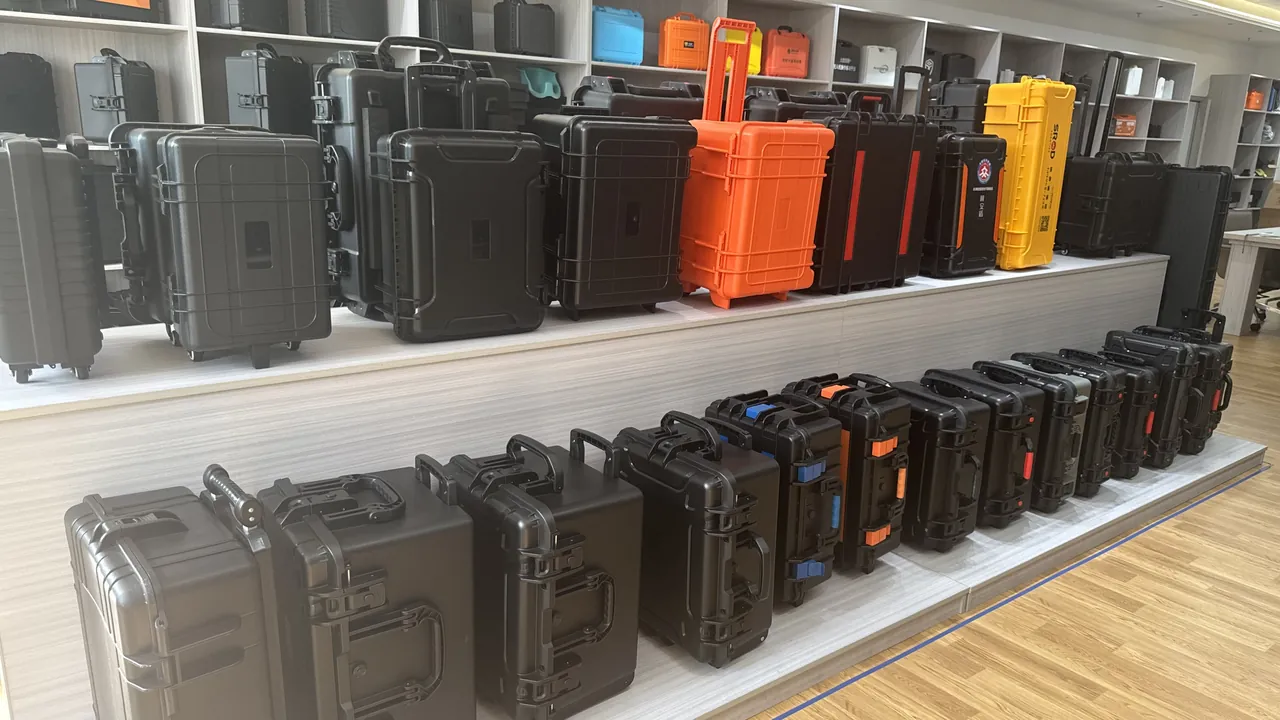
Engineering plastics changed the whole design logic. What they bring is not just lower weight but one-piece molding, integral sealing, coating-free corrosion resistance, and a sharp reduction in part count — an entire manufacturing paradigm shift.
Main materials and their positioning:
HDPE (high-density polyethylene). Density around 0.94 to 0.96 g/cm³, tough, with excellent chemical resistance, outstanding low-temperature impact performance, and very low water absorption (test methods may reference ASTM D570). It is the mainstream material for large protective and transport cases. Its weaknesses are moderate stiffness and a limited temperature ceiling, usually offset by rib and wall design.
PP (polypropylene). Density around 0.90 to 0.91 g/cm³, among the lowest of common plastics, with better stiffness and heat resistance than HDPE and excellent chemical resistance, suited to cases sensitive to self-weight that still need stiffness. Its weakness is pronounced low-temperature brittleness, improved by copolymer modification. For related advantages, see advantages of PP outdoor cases.
ABS. Good stiffness, high surface quality, easy plating and painting, and good dimensional stability, suited to visible parts and medium-load boxes. Its weakness is moderate weathering, so long outdoor use needs UV stabilizers or surface treatment.
PC (polycarbonate). Outstanding impact resistance (notched impact strength among the highest of thermoplastics) and high transparency, suited to scenarios needing high impact resistance and visibility. Its weaknesses are moderate weathering and chemical resistance, higher cost, and notch sensitivity.
PA (nylon). Wear resistant, tough, and oil resistant, with strength and stiffness rising markedly when glass fiber (GF) is added, suited to structural parts, hinges, and latches. Its weakness is relatively high water absorption, with dimensions changing noticeably with humidity.
PC/ABS blends and TPE. PC/ABS balances stiffness and impact for boxes needing both appearance and structure; TPE serves seals and soft edge trim, providing elasticity and feel.
| Material | Density (g/cm³) | Impact | Stiffness | Weathering | Chemical | Max temp | Water uptake | Typical use |
|---|---|---|---|---|---|---|---|---|
| --- | --- | --- | --- | --- | --- | --- | --- | --- |
| Low carbon steel | ~7.85 | High | Very high | Needs coating | Medium | High | Not applicable | High-strength load-bearing boxes |
| Aluminum alloy | ~2.70 | Medium-high | Medium-high | Good (anodized) | Medium | High | Not applicable | Air transport containers |
| HDPE | 0.94 to 0.96 | High (excellent cold) | Medium | Excellent | Excellent | Medium | Very low | Large protective cases |
| PP | 0.90 to 0.91 | Medium (brittle cold) | Medium-high | Excellent | Excellent | Medium-high | Low | Lightweight cases |
| ABS | 1.04 to 1.07 | Medium-high | High | Fair | Fair | Medium | Low | Visible parts, medium-load boxes |
| PC | 1.20 to 1.22 | Very high | High | Fair | Fair | Medium-high | Low | High-impact cases |
| PA (GF reinforced) | 1.15 to 1.35 | High | High | Fair | Good | Medium-high | Medium-high | Hinges, latches, structural parts |
| PC/ABS | 1.10 to 1.20 | High | High | Fair | Fair | Medium | Low | Structure and appearance combined |
A critical engineering insight: lightweighting is not achieved by swapping material alone. Plastic elastic modulus is typically a few tens of times lower than steel, so equal stiffness must be achieved through rib layout, wall thickness gradients, radius transitions, and overall box geometry. This design freedom is in fact the advantage of plastics: stiffness can be placed where it is needed. For related structural design, see high-strength case structure and wall thickness and strength.
Key Material Property Comparison
Beyond the table above, here is a comparison arranged by engineering concern for quick decisions:
| Concern | Best choice | Second choice | To avoid |
|---|---|---|---|
| --- | --- | --- | --- |
| Very high stiffness | Low carbon steel | Aluminum alloy | Thin-wall pure HDPE |
| Very low self-weight | PP | HDPE | Steel |
| Cold impact resistance | HDPE, PC | PA | Ordinary PP |
| Peak impact resistance | PC | PC/ABS | Thin-wall ABS |
| Weathering, maintenance free | HDPE, PP | PC/ABS with UV package | Ordinary ABS outdoors long term |
| Chemical resistance | HDPE, PP | PA | Coated steel once breached |
| High temperature | Steel, aluminum | PA, PP | HDPE, PC |
| Machinable sealing face | Steel, aluminum | ABS, PC | Wood, low-precision plastic parts |
| One-piece molding | HDPE, PP, ABS | PC | Steel, aluminum |
| Repairability | Steel | Aluminum | Thermoplastics (limited weld repair) |
A practical selection principle: do not try to satisfy every requirement with one material. Distribute materials along the load path. Use high-stiffness materials for load-bearing and pressure areas (steel, aluminum, glass-filled PA), easy-to-form materials for sealing and appearance areas (HDPE, PP, ABS), and elastic materials for cushioning and seals (TPE, EPDM, silicone). This multi-material approach is exactly what modern premium boxes do in practice.
The Engineering Math of Lightweighting: Where the Savings Come From
The value of weight reduction must be accounted for properly: how much is saved, and at what cost.
Benefits of weight reduction:
- Higher payload ratio. For a 40 kg transport unit, cutting the box from 10 kg to 4 kg raises the payload share from 75 to 90 percent, roughly a 20 percent gain in transport efficiency.
- Lower manual handling load. With a single-person limit usually taken as 20 to 25 kg, every kilogram removed from the box is another kilogram of materiel available.
- Lower transport energy and cost. Air and long-haul transport are especially weight sensitive.
- Fewer handling injuries. A lighter box reduces the injury risk of repeated handling.
Costs of weight reduction:
- Lower stiffness must be compensated structurally, which may add wall thickness or ribs and partly offset the saving.
- Lower temperature ceiling, with plastic stiffness falling noticeably in heat.
- Long-term creep under sustained load, requiring separate assessment for long stacking.
- Reduced repairability, since field repair options for thermoplastics are limited.
A simplified lightweighting path chart:
| Path | Approach | Weight potential | Cost |
|---|---|---|---|
| --- | --- | --- | --- |
| Change material | Steel to plastic | High | Lower stiffness and heat tolerance |
| Reduce wall thickness | Rely on structural reinforcement | Medium | Needs precise design, higher risk |
| Optimize structure | Ribs, radii, graded thickness | Medium | Greater tooling complexity |
| Reduce part count | One-piece molding instead of assembly | Medium | Higher tooling investment |
| Local reinforcement | Reinforced material at key points | Medium-low | Complex process (over-molding, inserts) |
An easily missed cost item: total lifecycle. A steel box may cost less initially but needs periodic coating inspection and repair; a plastic box costs more initially but is nearly maintenance free. Comparing two materials should therefore compare total lifecycle cost, not unit purchase price. This matters especially in bulk procurement.
How Corrosion Protection Evolved in Step
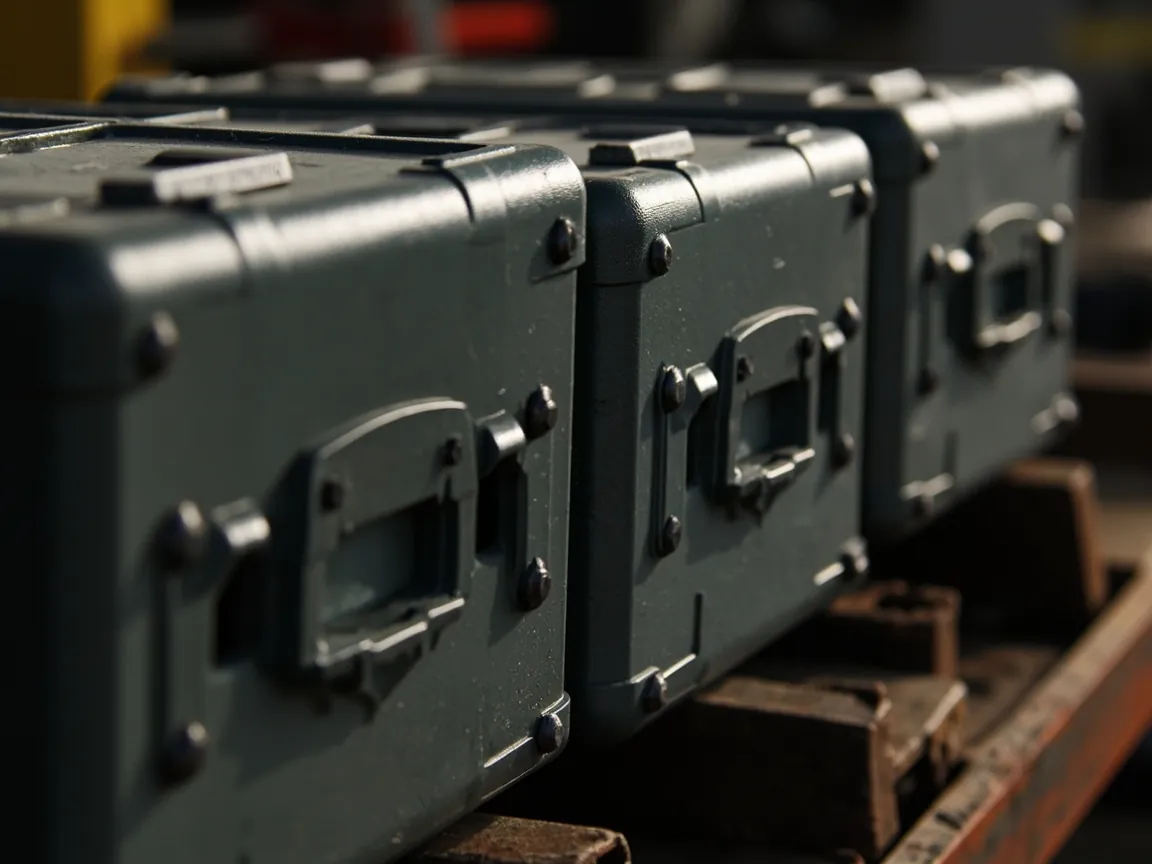
Corrosion resistance is the second line of the evolution, and its technical path moved from surface protection toward inherent material resistance.
Coating systems on steel. A typical steel box corrosion system is pretreatment plus primer plus topcoat. Pretreatment, whether degreasing, descaling, phosphating, or blasting, sets adhesion; the primer provides baseline corrosion protection, commonly epoxy based; the topcoat provides weathering and appearance. Military use has dedicated coating specifications, for example the specification families for epoxy primers and polyurethane or polyurea topcoats. The key metrics of a coating system are adhesion, salt spray hours, and impact resistance, assessed against ISO 9227.
Plating on steel parts. Zinc plating is the most common approach, protecting the steel substrate by sacrificial action. A zinc layer still offers some protection at a breach, which is its advantage over paint. But protection is limited in range, and cut edges and weld heat-affected zones are often the corrosion initiation points.
Anodizing on aluminum. Electrochemical treatment grows a dense oxide film on aluminum, markedly improving corrosion resistance and surface hardness. The corrosion resistance of an anodized film is still bounded, and caution is needed in strong alkali and high-chloride environments.
Inherent material resistance in plastics. HDPE and PP do not react with water or most acids and bases, so they resist corrosion long term without any coating. This changes the maintenance logic fundamentally: no coating inspection, no patching, and no hidden "rusted through under sound paint" failure.
Corrosion protection comparison:
| Technology | Applies to | Main mechanism | Maintenance | Failure mode | Reference standard |
|---|---|---|---|---|---|
| --- | --- | --- | --- | --- | --- |
| Coating system | Steel | Physical barrier plus inhibitor | Periodic inspection and repair | Rust at breach, spread under coating | ISO 9227 |
| Zinc plating | Steel | Sacrificial anode plus barrier | Low | Plating consumption, cut-edge rust | ISO 9227 |
| Anodizing | Aluminum | Dense oxide film | Low | Fails in strong alkali or high chloride | ISO 9227 |
| Inherent resistance | Plastics | Chemical inertness | Very low | Aging, UV degradation | GB/T 16422 |
| VCI support | Metal interiors | Vapor-phase inhibition | Periodic replacement | Inhibitor depletion | MIL-PRF-3420 family |
An important lesson: corrosion systems and sealing systems must be matched. A poorly sealed box will corrode its metal hardware and internal metal items even if the shell material is corrosion resistant; conversely, a well-sealed box made of a non-resistant material will fail on the outside first. Neither can be neglected.
How Sealing Technology Evolved: From Paper Gaskets to O-Rings
Sealing technology evolved alongside materials, because how well a sealing face can be machined depends directly on the material.
Generation one: paper gaskets and felt. Early boxes used paper, felt, or oil-impregnated fiber, relying on compression for a physical barrier. Sealing capability was limited, and such materials absorbed water and aged quickly, offering only dust protection and brief splash resistance.
Generation two: rubber flat gaskets. With the growth of the rubber industry, flat gaskets in natural rubber and nitrile rubber became widespread. Sealing improved, but flange flatness requirements were high and compression control was difficult.
Generation three: O-rings and profile seals. O-rings form a line-contact seal at a controlled compression ratio and tolerate flange flatness better, making them the mainstream solution in modern protective cases. Seal materials also broadened from natural rubber to EPDM, silicone, and fluoroelastomer, selected by temperature, weathering, and chemical needs. For material comparisons, see seal material selection.
Generation four: labyrinth structures and multi-stage sealing. Premium cases often use a multi-stage design of labyrinth plus primary seal plus secondary seal, progressively attenuating water entry while managing venting and pressure balance.
| Generation | Typical form | Sealing capability | Flange precision required | Materials | Applicable rating |
|---|---|---|---|---|---|
| --- | --- | --- | --- | --- | --- |
| One | Paper, felt | Low | Low | Paper, fiber | Dust protection mainly |
| Two | Rubber flat gasket | Medium | High | Natural rubber, NBR | IP54 class |
| Three | O-ring, profile seal | High | Medium | EPDM, silicone, fluoroelastomer | IP65 to IP67 |
| Four | Labyrinth plus multi-stage | Very high | Medium-high | Combined materials | IP67 and above |
A key point: achievable sealing rating depends on the material's dimensional stability. Dimensional change in plastics under temperature and humidity directly affects seal compression, so sealing design on an engineering plastic case must account for the material's thermal expansion and moisture expansion, compensating where necessary through seal groove geometry. For related design, see waterproof design for outdoor cases.
The Modern Standard System for Military Storage Boxes
Design, testing, and acceptance of modern transport containers rest on a system of standards, best understood across four dimensions.
Protection and sealing.
- IEC 60529 / GB/T 4208-2017: enclosure ingress protection (IP code), defining dust and water classifications and test methods.
- IEC 62262 / GB/T 20138: enclosure resistance to mechanical impact (IK code).
Environmental adaptability.
- MIL-STD-810H: environmental engineering considerations and laboratory tests, covering low pressure, high temperature, low temperature, temperature shock, humidity, mold, salt fog, sand and dust, vibration, and shock, and a core reference for military environmental performance.
- ISO 9227: neutral salt spray, assessing corrosion resistance of metal parts and coatings.
- GB/T 16422 / ISO 4892: plastics exposure to laboratory light sources, assessing UV aging.
Transport packaging.
- MIL-STD-2073-1: U.S. Department of Defense packaging requirements, defining preservation, packaging, and unitization methods.
- ISTA series and ASTM D4169: shipping container performance tests simulating distribution hazards.
- ATA 300: air transport container performance specification for air cargo containers.
- ISPM 15: international phytosanitary standard for wood packaging material.
Materials and flame retardancy.
- UL94: plastic flammability classification, with a separate HF series for foams.
- ASTM D256 / ISO 179 (impact), ASTM D638 / ISO 527 (tensile), ASTM D790 / ISO 178 (flexural), ASTM D648 / ISO 75 (heat deflection temperature), and ASTM D570 (water absorption) cover material property testing.
| Dimension | Core standards | Focus | Applies to |
|---|---|---|---|
| --- | --- | --- | --- |
| Protection and sealing | IEC 60529 / GB/T 4208 | Dust and water classification | All boxes |
| Impact | IEC 62262 / GB/T 20138 | IK impact energy | Knock-prone scenarios |
| Environmental | MIL-STD-810H | Temperature, humidity, vibration, shock, salt fog | Military and harsh environments |
| Corrosion | ISO 9227 | Salt spray hours | Metal parts and coatings |
| UV aging | GB/T 16422 / ISO 4892 | Long outdoor exposure | Plastic cases |
| Transport | MIL-STD-2073-1, ISTA, ATA 300 | Distribution hazard simulation | Transport containers |
| Wood packaging | ISPM 15 | Cross-border quarantine | Wood packaging |
| Material properties | ASTM and ISO series | Impact, tensile, heat deflection | Material selection |
| Flame retardancy | UL94 | Flammability classification | Power, rail, and similar |
A Material Selection Decision Matrix
Consolidating the discussion into an actionable decision matrix, recommended by scenario.
| Scenario | Recommended material | Alternative | Key consideration | Watch out for |
|---|---|---|---|---|
| --- | --- | --- | --- | --- |
| Long-term indoor storage | HDPE, PP | ABS | Maintenance free, corrosion resistant | Stacking creep |
| Vehicle transport | HDPE, PC/ABS | Aluminum alloy | Vibration and impact | Deformation in hot cabins |
| Air transport | Aluminum alloy, PC | PP | Light, load bearing | Cost, galvanic corrosion |
| Sea export | HDPE, PP | Aluminum alloy | Salt fog and moisture | Wood parts need ISPM 15 |
| Extreme cold | HDPE, PC | PA | Cold impact resistance | Ordinary PP embrittles |
| High temperature | Steel, aluminum | PA, PP | Heat tolerance | HDPE and PC soften |
| High-strength load bearing | Steel | Aluminum alloy, GF-PA | Stiffness | Self-weight and corrosion |
| Precision instrument transport | PC/ABS, PC | ABS | Impact resistance, precision molding | ESD and insert matching |
| High appearance requirement | ABS, PC/ABS | PC | Surface quality | Weathering needs a package |
| High volume, low cost | PP, HDPE | ABS | One-piece molding, coating free | Tooling investment |
One decision-making rule: identify the single non-negotiable requirement first, then trade off the rest. In air transport, for example, weight is non-negotiable, so prefer aluminum or PC. In coastal sea freight, salt fog resistance is non-negotiable, so prefer HDPE, PP, or anodized aluminum. Lock the critical item and rank the rest by cost and process, and selection stops going in circles.
For a broader view of material and process choice, see engineering plastics for protective cases and the differences among PP, ABS, and PC.
Future Directions: Composites, Bio-Based, and Recycled
The evolution has not stopped. Three directions deserve attention.
Direction one: fiber-reinforced composites. Glass- or carbon-fiber reinforced composites achieve high stiffness and strength at lower density, an important path to "less weight without less strength." The challenges are cost, forming processes such as RTM, autoclave, and long-fiber injection, and recycling difficulty. In premium transport containers, composites have already replaced some metal structural parts.
Direction two: bio-based and recycled materials. Bio-based polyethylene, for example from sugarcane ethanol, is chemically identical to conventional PE and can use existing forming and recycling systems, while recycled content (PCR) use is expanding. The main constraints are property consistency and supply chain stability, so use in load-bearing structural parts still needs careful assessment.
Direction three: multi-material integration and functional integration. Through over-molding, insert molding, and co-extrusion, structural, sealing, and functional layers are formed in one step, reducing assembly operations and improving seal reliability. Meanwhile, boxes are integrating pressure valves, humidity indication, and electronic tags such as UID marking.
A pragmatic judgment: no single material will dominate the future. The more likely picture is multi-material collaboration that allocates materials along the load path, combined with integrated forming processes, achieving a better balance across weight, strength, corrosion resistance, and cost.
Frequently Asked Questions
Q: Why did military storage boxes move from steel to engineering plastics?
A: Three main drivers. First, weight reduction: steel's density is about 7.85 g/cm³, while HDPE is about 0.94 to 0.96 and PP about 0.90 to 0.91. Even accounting for the thicker walls and ribs that lower plastic stiffness requires, the real saving is substantial, and it directly raises the payload ratio and lowers handling and transport cost. Second, corrosion resistance: steel depends on coatings or plating, and once the coating is breached, corrosion starts at the breach and spreads beneath it, producing the hidden failure of sound-looking paint over rusted-through metal, whereas HDPE and PP are inherently resistant to water and most chemicals and need no coating, shifting maintenance from periodic inspection and repair to near zero. Third, manufacturability: engineering plastics can be injection molded in one piece, forming shell, ribs, hinge bosses, latch bosses, and seal groove together, sharply cutting part count and assembly steps. Plastics are not a universal replacement, though: where very high stiffness, high temperature resistance, and long-term load bearing are required, steel remains irreplaceable.
Q: Aluminum boxes are lighter than steel, so why did they not fully replace steel?
A: Aluminum does offer a weight advantage, with a density of about 2.70 g/cm³, roughly one third of steel, but three constraints prevented it from becoming a general replacement. First, stiffness: aluminum's elastic modulus is on the order of 70 GPa, about one third of steel, so achieving equal stiffness usually requires larger sections, partly offsetting the density gain and constraining design freedom. Second, cost: aluminum material and processing typically cost more than carbon steel. Third, process and corrosion: aluminum welding is parameter sensitive with marked heat-affected-zone strength loss, and aluminum in contact with other metals forms a galvanic couple and is preferentially attacked as the more active metal in damp conditions, so hardware must be kept in one material family or isolated with insulation. Aluminum's oxide film is also unstable in strong alkali. As a result, aluminum is positioned mainly where weight reduction matters but strength and temperature requirements remain high, such as air transport and containers for motorized equipment, rather than as a universal solution.
Q: Plastic boxes are less stiff than steel. How is that compensated?
A: Through structural design that places stiffness where it is needed. Five main means. First, rib layout, using longitudinal, transverse, and grid ribs to raise bending stiffness, where rib height typically contributes more than rib thickness. Second, wall thickness gradients, thickening highly loaded areas and thinning lightly loaded ones, avoiding the weight and sink-mark problems of uniform thickening. Third, radii and transitions, avoiding sharp corners that concentrate stress while forming effective load paths at corners. Fourth, overall geometry, using curved, arched, or box sections to raise bending and torsional stiffness. Fifth, local reinforcement, using inserts, over-molding, or glass-filled materials at hinges and latch bosses. Note that these measures must be settled at the tooling stage; they cannot be retrofitted by simply adding thickness later, so a plastic box's structural design must be fully validated before the mold is cut. For related design logic, see the high-strength case structure and wall thickness topics.
Q: How can I judge whether a plastic box is strong enough?
A: From five angles. First, material identification and property data: require the supplier to state the material family (HDPE, PP, ABS, PC, or a blend) and key properties such as tensile strength, flexural modulus, notched impact strength, and heat deflection temperature, rather than just "engineering plastic." Second, structural detail: examine whether rib layout is sensible, whether corners have radius transitions, whether hinge and latch bosses have local reinforcement or inserts, and whether the base has load-bearing ribs. Third, wall thickness uniformity: tap or use ultrasonic gauging; abrupt thickness changes are often sink marks and stress concentrations. Fourth, measured validation: require drop, vibration, and stacking static load data, or verify against standards such as ISTA, ASTM D4169, or MIL-STD-810H. Fifth, temperature behavior: plastic stiffness falls as temperature rises, so confirm real load capacity when hot rather than relying on room-temperature data. The most direct check is one fully loaded drop test and one stacking static load test, watching for cracks, permanent deformation, or latch failure.
Q: Can wood packaging still be used, and what should be watched?
A: Yes, but cross-border compliance and scenario suitability must be observed. Wood packaging, including crates, pallets, and dunnage, is subject to phytosanitary requirements in international trade and generally must be heat treated or fumigated under ISPM 15 (International Standards for Phytosanitary Measures No. 15) and marked with a country code, treatment code, and producer code, or it may be refused or require return at the destination. Beyond compliance, wood packaging has four engineering limits: it warps and molds when damp; it seals poorly and cannot form a continuous sealing face; strength consistency varies widely with species, moisture content, and grain direction; and it cracks under impact. Its role in modern logistics is therefore mainly one-trip or short-cycle heavy-duty outer packaging and cases with low sealing or long-term storage needs. Where long-term moisture, dust, and corrosion protection is required, switch to engineering plastic or metal containers with better sealing, or use a combination of a wood outer crate and a sealed inner case.
Q: What problems do plastic boxes have at high or low temperature?
A: Temperature is the main performance boundary for plastic boxes. At high temperature there are three problems: stiffness falls, reducing load bearing and stacking capacity, with creep deformation under sustained load; dimensional stability degrades as some materials approach their softening range, changing latch and seal compression; and materials may release volatiles. At low temperature there are also three: materials become brittle and crack more readily under impact, a pronounced weakness in ordinary PP; foams and elastic seals harden, reducing cushioning and sealing; and dimensional shrinkage affects seal compression. Selection should therefore state the operating temperature range and verify the two combined conditions of low temperature plus drop and high temperature plus stacking separately. Reference the relevant MIL-STD-810H methods for high temperature, low temperature, and temperature shock, or require supplier data at those temperatures. As a general rule, HDPE and PC perform well in cold, PA and PP have higher temperature ceilings, and PC and ABS need additive packages for weathering. For more on material behavior at temperature extremes, see the outdoor case material selection topic.
Q: Is there a relationship between a military storage box's protection rating and its material?
A: Yes, directly, but material is not the only factor. The protection rating (IP code, under IEC 60529 and GB/T 4208-2017) describes dust and water resistance, and it depends on three things working together: seal material and compression design, flange flatness and stiffness, and latch force distribution. Material influences the achievable ceiling indirectly through all three: metal flanges machine to high flatness while plastics rely on tooling precision; lower plastic stiffness makes the box deform more readily under compression and stacking, affecting uniform seal compression; and thermal and moisture expansion in plastics change seal groove dimensions and hence compression. Reaching a high rating such as IP67 in an engineering plastic case therefore requires dedicated design of seal groove geometry, latch count, and flange stiffness. Conversely, a material that is not corrosion resistant or ages readily will see its rating decay even with correct sealing design. The right approach is to confirm material, structure, and test reports together, not to read the rating label alone.
Q: Which way will military storage box materials develop next?
A: Three directions deserve attention. First, fiber-reinforced composites using glass or carbon fiber to gain high stiffness and strength at lower density, an important path to less weight without less strength, with the challenges being cost, forming processes, and recycling difficulty; they already appear in some structural parts of premium transport containers. Second, bio-based and recycled materials: bio-based polyethylene is chemically identical to conventional PE and can use existing forming and recycling systems, and recycled content use is expanding, with the main constraints being property consistency and supply chain stability, so load-bearing structural use still needs careful assessment. Third, multi-material integration and functional integration, using over-molding, insert molding, and co-extrusion to form structural, sealing, and functional layers in one step while integrating pressure valves, humidity indication, and electronic tags. Overall, no single material will dominate; the more likely future is multi-material collaboration that allocates materials along the load path, combined with integrated forming, achieving a better balance across weight, strength, corrosion resistance, and cost.
Conclusion and Further Reading
Back to the original question: the material evolution of military storage boxes follows a path from solving problems with material strength to solving them with structural efficiency and material characteristics. Wood and leather solved availability. Steel boxes established the basic framework of container engineering. Aluminum delivered the first real weight reduction. Engineering plastics changed the entire logic of manufacturing and maintenance through one-piece molding, integral sealing, and coating-free corrosion resistance. Three lines, weight reduction, corrosion resistance, and manufacturability, have driven this evolution throughout, and every material transition was a reallocation of weight, strength, corrosion resistance, cost, and production capacity rather than a simple replacement.
Three executable recommendations. First, lock the single non-negotiable requirement (weight, corrosion resistance, temperature, or cost), then trade off the rest in order, avoiding endless oscillation among competing demands. Second, allocate materials along the load path: high-stiffness materials for load bearing, easy-to-form materials for sealing and appearance, and elastic materials for seals and cushioning, rather than forcing one material to carry everything. Third, write standards and verification into the technical agreement, specifying IP and IK ratings, environmental test methods, material property targets, and transport test references, and requiring reports that match the delivered goods. In wholesale, distribution, and OEM/ODM projects for protective cases and military-style storage and transport boxes, JUNZHJIA can provide material selection, structural design, tooling development, and test documentation matched to the application, helping customers find the right balance among lightweighting, corrosion resistance, and strength for their own operating conditions.
Further Reading