

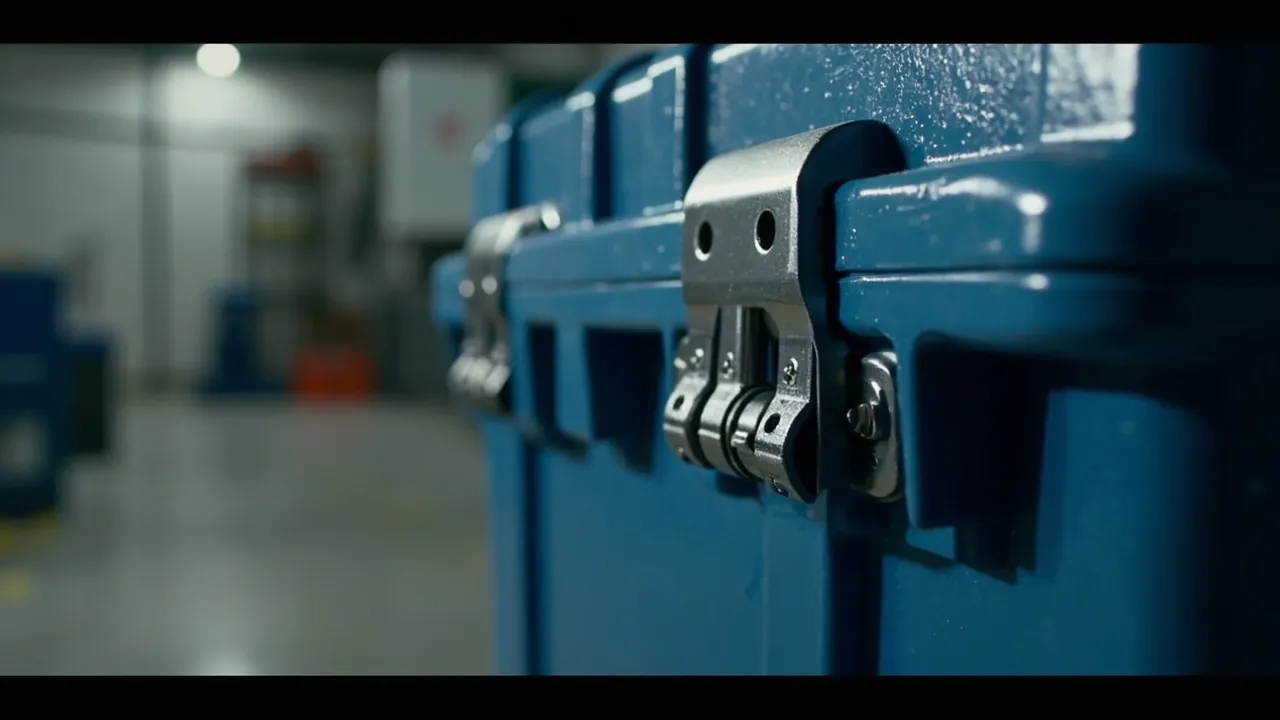
Short answer: yes, protective case locks can absolutely be customized — but before you place an order you must answer one question. Do you need "prevent accidental opening," or do you need "resist deliberate attack"? The first is solved by secondary latch insurance: a padlock hole, a retaining hook, a back-stop dog. The second requires a mechanical key lock, a combination lock, or a reinforced lock seat. The two approaches can differ in cost by a factor of three or more, while the IP67 rating depends only on the sealing structure, not on the lock type — and that is the single most common misunderstanding in procurement enquiries. This article breaks protective case locking into four tiers: latch insurance, padlock hole, mechanical key lock, and combination lock. For each tier it gives the structural essentials, achievable ingress protection, customization freedom, cost magnitude and outdoor reliability ranking. It then sets out a three-level definition of anti-theft design, the pathways by which a lock affects IP sealing, a material and corrosion-resistance selection table, TSA air-travel compliance notes, and a lock customization parameter list you can paste straight into an enquiry.
One more point before we begin. Many buyers treat "the case has a combination lock" as a mark of quality, yet overlook the fact that the strength of a combination lock depends on how the lock body is attached to the case, not on how many digits the code has. A three-digit combination lock mounted on a thin wall can be less resistant to attack than an ordinary latch with a concealed padlock hole. This article therefore does not rank locks by "type," but organizes everything around protection objective, use scenario, and verifiable metrics, so that engineering and procurement teams can fix requirements before the quotation stage.
Table of Contents
- Short Answer: Separate Two Kinds of Lock Before You Discuss Customization
- The Four Functional Tiers of Case Locking
- Padlock Holes: The Simplest Customization, and the Most Misunderstood
- Mechanical Key Locks and Cylinder Selection: Outdoor Reliability Ranking
- Combination Lock Integration: Where Structure and Sealing Conflict
- Latches and Locks: Never Confuse "Clamped Shut" with "Locked"
- A Three-Level Definition of Anti-Theft Design: Anti-Opening, Anti-Prying, Anti-Attack
- How Lock Customization Affects IP67 Ingress Protection
- Materials and Corrosion Resistance: Stainless Steel, Zinc Alloy and Engineering Plastics
- TSA and Air Transport Compliance Notes
- Test References: IEC 60529, GB/T 4208 and MIL-STD-810H
- Quotation Essentials and the Prototyping Workflow for Custom Locks
- Integrating Locks and Branding in OEM/ODM Projects
- Frequently Asked Questions
- Conclusion and Further Reading
Short Answer: Separate Two Kinds of Lock Before You Discuss Customization
Divide the requirement into two categories and every subsequent trade-off becomes clear.
Category one: accidental opening prevention. The goal is to stop the lid from popping open because of transport vibration, stacking pressure, or handling knocks. Typical solutions are a padlock hole in the latch, a retaining hook, a two-stage press release, or a back-stop dog. These do not stop a person, but they are low cost, highly reliable, and do not compromise sealing. For the vast majority of industrial and logistics scenarios, this is the real requirement.
Category two: security and tamper resistance. The goal is to resist deliberate, tool-assisted attack or unauthorised opening. Typical solutions are a mechanical key lock, a combination lock, a steel cable hole, or a reinforced metal lock seat. These introduce new openings, new load paths and new cost, and almost all of them impose additional demands on the seal design.
A one-line rule: if the case will never be handled in transit by someone who wants to see what is inside, you need category one — not a combination lock.
The real pain point is often misdiagnosed. When a customer complains that "the case came open in transit," the first reaction is "we need a combination lock." But the root cause is usually insufficient latch retention force or inadequate seal-groove rebound. Adding a combination lock then solves nothing, and because the opening damages the seal, it introduces a water-ingress risk. For the underlying sealing principle, see case hinge, latch and seal coordination.
The Four Functional Tiers of Case Locking
To make quoting straightforward, classify locks by functional tier rather than by whether a code is involved.
| Tier | Name | Primary function | Typical structure | Requires opening | Cost magnitude (relative) | Achievable IP |
|---|---|---|---|---|---|---|
| --- | --- | --- | --- | --- | --- | --- |
| L1 | Latch secondary insurance | Anti-opening | Padlock hole, retaining hook, back-stop dog | No (can be moulded in) | 1.0 | No effect on IP67 |
| L2 | Mechanical key lock | Unauthorised-opening prevention | Zinc alloy cylinder plus rotating pawl | Yes (lid face or side) | 1.8-2.5 | Needs seal design; can reach IP67 |
| L3 | Combination lock | Unauthorised-opening prevention, keyless | 3-digit or 4-digit dial body | Yes (mainly lid face) | 2.5-4.0 | Needs seal design; IP65-IP67 |
| L4 | Reinforced locking point | Anti-pry, anti-attack | Stainless lock seat plus cable hole or shackle | Yes (reinforced structure) | 3.0-5.0 | Localised impact; needs whole-case check |
The most important information in this table is the last column. A lock is not an isolated accessory; it is a structural opening and a stress concentration point on the case. The higher the tier, the greater the demand for local reinforcement, seal transition and assembly tolerance. The correct customization sequence is therefore: fix the ingress protection level and use scenario first, then choose the lock tier, and only then modify the case structure — not the other way round.
Note that the cost magnitude column is a relative multiple, useful only for quickly sizing a budget. Actual pricing depends on material, volume, tooling amortisation and assembly labour, and must be calculated against a specific configuration in a formal enquiry.
Padlock Holes: The Simplest Customization, and the Most Misunderstood
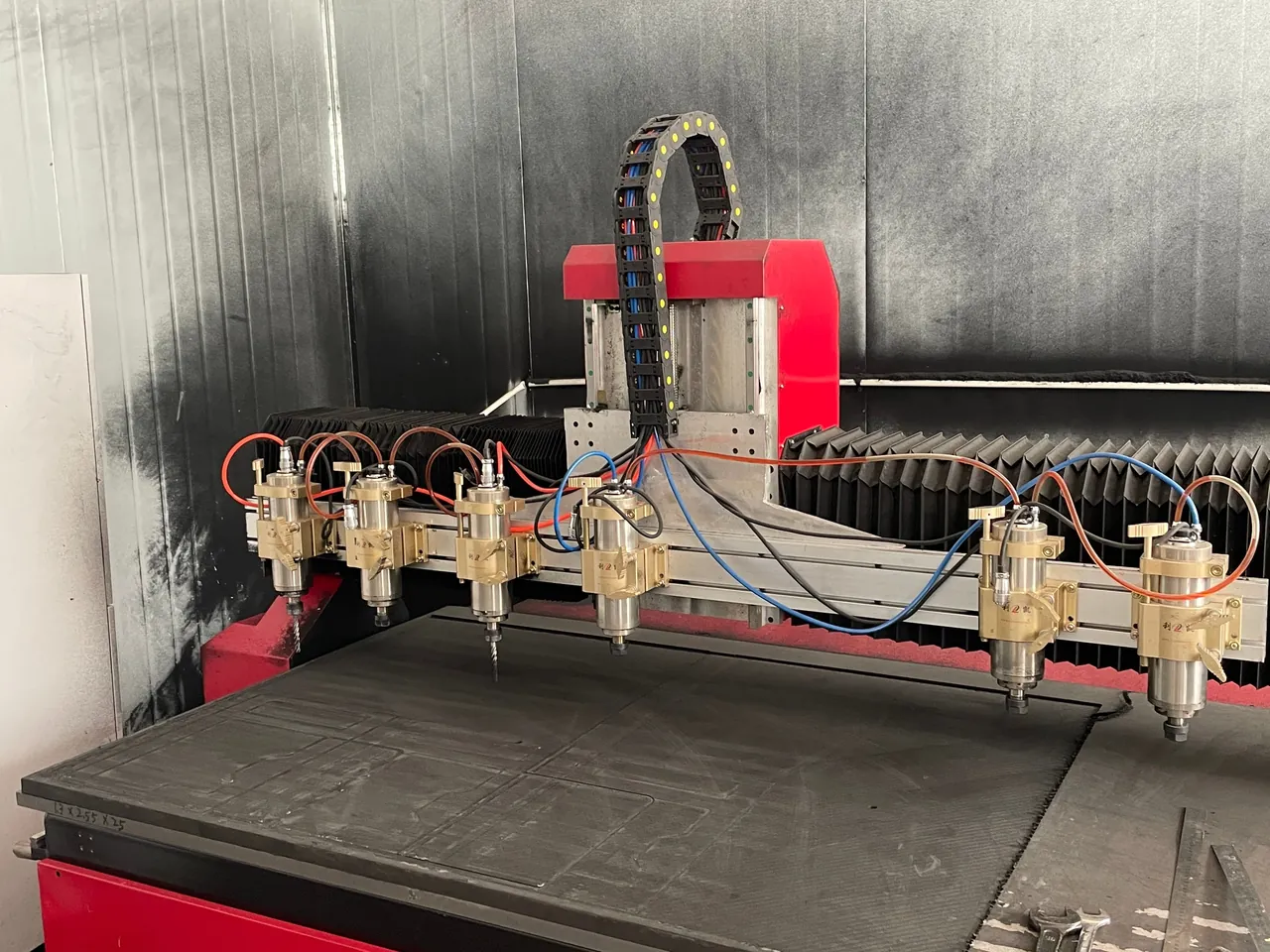
A padlock hole is a through-hole reserved in two latches (or in a latch and the case body) so the user can thread a padlock of their own through it. The structure is simple and the cost extremely low, but four technical points must be confirmed in advance.
First, the hole diameter must match the shackle diameter. Common padlock shackle diameters are 4 mm, 5 mm, 6 mm and 8 mm. A hole that is too small will not accept the lock; a hole that is too large lets the lid be pulled open by a gap while the lock is still in place, defeating the purpose. As a rule of thumb, hole diameter equals shackle diameter plus 0.8-1.5 mm, leaving assembly clearance while keeping the usable gap as small as possible.
Second, hole position dictates anti-pry strength. A hole at the root of the latch arm resists prying better than one at the tip, because the load arm is shorter and deformation is smaller. A hole drilled into a thin-wall zone without reinforcement can be torn out entirely by a single pry.
Third, does the hole pass through the sealing face? This is the critical point. If the hole only passes through the two plastic arms of the latch and never enters the sealed cavity, it has almost no effect on IP performance. But if the hole is placed in the lid face or case wall within the sealing zone for "convenience," it becomes a water path and must be isolated by a metal insert, a gasket, or a dedicated sealed pocket.
Fourth, user-supplied padlocks create management problems. In bulk logistics and warehousing, keys are scattered among operators, and "whose lock is this" is often harder to manage than "how strong is the lock." A numbered combination lock is frequently the better answer.
An improved, moulded-in approach is to reserve a reinforced boss and through-hole directly in the tool, giving a hole-wall thickness of 3-5 mm in engineering plastic (an empirical value) and avoiding the burrs and stress concentration caused by post-drilling. This follows the same logic as high-strength case structural design: make the load point a natural extension of the structure rather than a later add-on.
Mechanical Key Locks and Cylinder Selection: Outdoor Reliability Ranking
The mechanical key lock is the most traditional security solution. Its reliability ranking depends on three things: security grade, cylinder type, and protective treatment.
Ranked by cylinder structure (low to high):
- Single-row pin tumbler cylinder. Simple construction, few key bitting variations, high cross-keying rate. Suitable for low-value contents and internal management.
- Double-row pin tumbler cylinder. More bitting combinations, lower cross-keying rate. The most common configuration in industrial cases.
- Disc or wafer cylinder. Better resistance to manipulation, flat key profile, suited to thin lock bodies with limited space.
- Pin tumbler with side-bar. Lowest cross-keying rate, found in higher-security products, also the highest cost.
Ranked by protective treatment. Outdoor locks face rain, salt spray, sand and temperature swings, and corrosion treatment is more often overlooked than cylinder structure:
- Chrome or nickel plating. Good appearance, moderate corrosion resistance; long outdoor exposure can cause pitting.
- Stainless body and cylinder. Best corrosion resistance, higher cost, suited to marine and high-humidity environments.
- Zinc alloy with passivation and coating. Moderate cost, the most common compromise, but white rust appears readily where the coating is damaged.
One easily overlooked detail: cylinder dust protection. The keyway is a direct path for sand and dust, which jam the pins. A cylinder with a dust shutter or rubber plug typically lasts far longer in service than a bare one.
For projects involving long-term outdoor storage or sea freight, write salt-spray test requirements for the lock directly into the technical agreement — for example, a neutral salt spray test to ISO 9227 with a specified duration and acceptance criterion — rather than merely specifying "stainless steel."
Combination Lock Integration: Where Structure and Sealing Conflict
Combination locks are keyless, shareable and re-codeable, which makes them popular in bulk logistics and equipment rental. Integration is harder than a padlock hole or a key lock, however, because of structural conflict.
Conflict one: lock body thickness versus lid strength. A combination lock needs internal space for the dials and bolt, which consumes lid thickness. If the lid is a thin-wall structure, the lock seat must be locally thickened or ribbed, otherwise the lock body will crush the lid under load.
Conflict two: isolating the opening from the sealed cavity. A combination lock usually needs a fairly large assembly opening in the lid face or side. If that opening connects to the sealed cavity, it must be isolated by a dedicated sealed pocket, an O-ring, and a metal insert. The approach is to mount the lock body in a separate recess, separate the bottom of the lock body from the case interior with a gasket, and seal between lock body and case with sealant or a sealing ring.
Conflict three: accumulated assembly tolerance. The lock bolt must align precisely with the catch on the case. Injection-moulded plastic cases have shrinkage tolerance, and the lock body has its own dimensional tolerance; the two stack up and the bolt may miss. As a rule of thumb, design the bolt-to-catch clearance at 0.5-1.2 mm and use an adjustable catch.
Conflict four: emergency access and re-coding. A combination lock must have an emergency access route, such as a concealed keyway or a master code, otherwise a forgotten code means the case can only be opened destructively. This matters especially in bulk rental.
Taken together, the value of a combination lock lies in keyless management and traceability, not in absolute strength. With proper design and verification it can achieve IP65-IP67, but if the body is simply riveted to an untreated thin wall, water will get in during rain or immersion. For the definition of ingress protection levels, see understanding the IP67 rating and case pressure valves and breathable membranes.
Latches and Locks: Never Confuse "Clamped Shut" with "Locked"
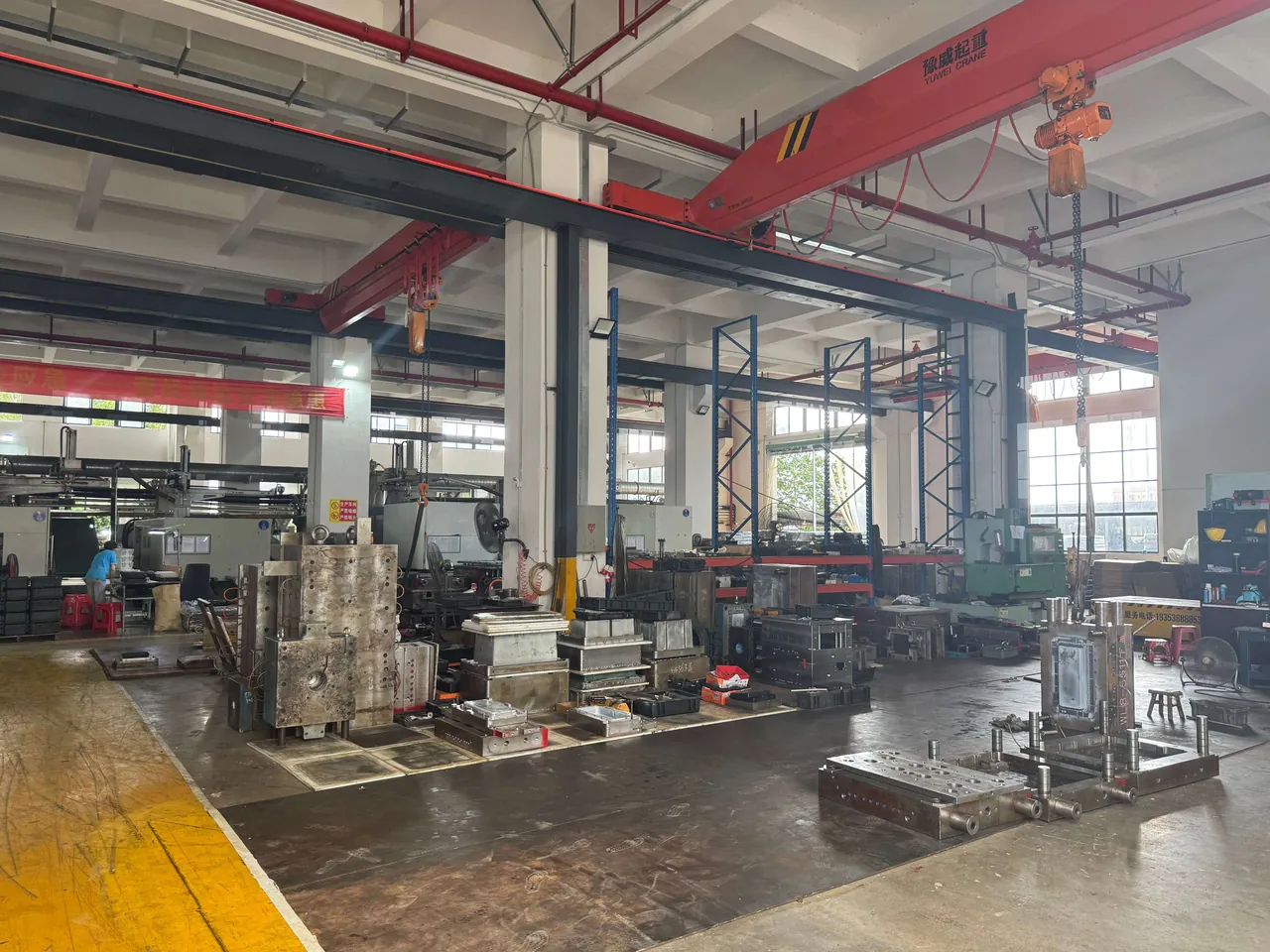
In the structural system of a protective case, the latch and the lock are two distinct functional layers, and many design failures come from conflating them.
The latch's job is to provide continuous, even, resettable clamping force, compressing the seal to its design compression (commonly 25-40%, depending on material) to form the seal. It carries no security duty.
The lock's job is to restrict the opening action, and it depends on the closed state that the latch has already established. If the latch itself has insufficient retention force, no lock can help — because the lid can be pulled open without releasing the latch.
The correct design order is therefore: secure the latch's self-locking and retention performance first, then add the lock. Specifically:
- The latch should have over-centre self-locking, meaning an extra force is needed to release it once closed, preventing vibration from opening it.
- Latch count should cover the seal perimeter; cases with a long edge over 400 mm usually need two or more latches to prevent local seal rebound from creating a gap.
- The lock should be positioned close to the latch, forming a nearby constraint.
For latch types and retention force selection, see protective case latch selection. A practical field test: if it takes noticeable effort to pull the lid open by hand, latch retention is adequate; if it opens with a light tug, adding a lock is only psychological comfort.
A Three-Level Definition of Anti-Theft Design: Anti-Opening, Anti-Prying, Anti-Attack
"Anti-theft" is a vague term. It should be defined in the technical agreement at three levels, each mapped to verifiable metrics.
Level one: anti-opening. The goal is resistance to transport vibration and stacking. A verifiable approach is to run the loaded case through a transport packaging vibration test sequence (such as the GB/T 4857 series or ASTM D4169) and then check that the lid remains closed and the latch has not released.
Level two: anti-prying. The goal is resistance to rapid opening with simple tools such as a screwdriver or pry bar. A verifiable approach is to apply a specified prying moment and observe whether the latch releases or the case takes permanent deformation. Plastic cases typically deform elastically first and then yield locally, so rib orientation and wall thickness at the latch root are critical.
Level three: anti-attack. The goal is resistance to deliberate attack with tools. This goes beyond the reasonable design envelope of an ordinary engineering-plastic case and normally requires a metal lock seat, a cable shackle, or an external hard-shell lock. For such requirements the more realistic answer is to switch to a steel case or add a metal locking plate, rather than endlessly reinforcing a plastic body.
An important reality check: the upper limit of a plastic protective case's anti-theft strength is set by the failure strength of the case material, not by the lock. When an attacker can simply destroy the case body, lock grade becomes irrelevant. Paying for a high-security lock on an ordinary wall-thickness case is the poorest value configuration. For the relationship between material strength and structure, see protective case plastic materials compared.
How Lock Customization Affects IP67 Ingress Protection
This is the point that must be made clearly in any engineering review. IP67 is a whole-enclosure sealing concept, and any opening that crosses the sealing boundary is a potential failure point. There are three pathways by which a lock affects ingress protection.
Pathway one: direct penetration. The assembly opening connects the case interior to the outside environment. Without sealing, water ingress is guaranteed. This is the most serious and also the most easily avoided problem — simply separate the lock mounting zone from the sealed cavity at the design stage.
Pathway two: indirect leakage. The assembly opening does not fully penetrate, but alters the compression path of the seal or locally thins the seal groove. For example, an opening near the sealing face can prevent the seal from compressing evenly at that point, creating a micro-gap. This type of failure often does not appear in a static test but shows up after temperature cycling or vibration.
Pathway three: stress-induced failure. When the lock is loaded, it transmits stress into the case, deforming the seal groove or warping the case rim. This is especially pronounced under full-load lifting or stacking.
Three countermeasures follow: first, place the lock mounting zone on the dry side of the sealing boundary where possible, so it does not connect to the sealed cavity; second, where penetration is unavoidable, use a triple isolation of metal insert, gasket and sealing ring; third, land the lock's load points at rib intersections so force is not transmitted to the seal groove.
For verification, a case fitted with a lock should not be tested as a bare body. It should be tested as a complete assembly to IEC 60529 / GB/T 4208-2017, with lock function checked before and after. For the test method itself, see IP67 submersion testing.
Materials and Corrosion Resistance: Stainless Steel, Zinc Alloy and Engineering Plastics
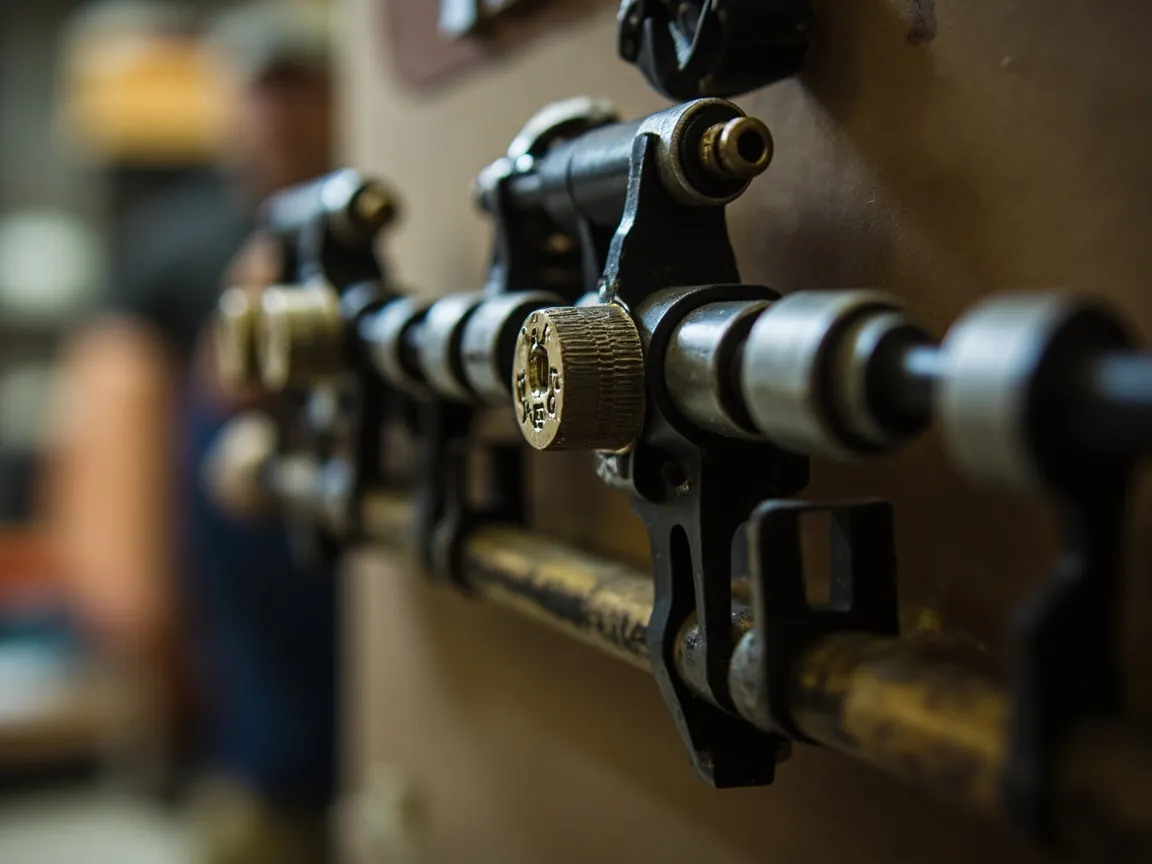
Lock material determines outdoor service life directly. The table below compares common options (typical values; refer to supplier datasheets and test reports for actual figures).
| Material | Tensile strength (typical) | Salt spray resistance (neutral salt spray, empirical) | Relative cost | Suitable scenarios | Notes |
|---|---|---|---|---|---|
| --- | --- | --- | --- | --- | --- |
| Engineering plastic (POM / PA+GF) | Medium | Fair (does not rust, but low strength) | Low | Anti-opening, light duty | Creeps under load; needs metal inserts |
| Zinc alloy (die-cast and passivated) | Medium-high | White rust from 48-96 h | Medium | General key locks, combination bodies | Coating damage corrodes first |
| Stainless steel 304 | High | Over 200 h | High | Marine, high humidity, long outdoor exposure | Costly; needs galvanic isolation from other metals |
| Stainless steel 316 | High | Over 500 h | Very high | Marine engineering, chemical environments | Hard to machine, highest cost |
| Nylon with glass fibre | Medium-high | Good (non-conductive, non-rusting) | Medium | Lightweight latches, insulating scenarios | Needs UV stabiliser for long exposure |
A note on galvanic corrosion. When a stainless lock contacts an aluminium component or a carbon-steel fastener, a galvanic couple forms in wet conditions and accelerates corrosion of the more active metal. Countermeasures are insulating washers, same-material fasteners, or sealant at the contact face.
A note on UV ageing. Plastic locks and case bodies used outdoors need UV ageing assessment, for example artificial weathering to the ISO 4892 series, evaluating colour change and retention of mechanical properties. Glass-fibre reinforced parts show more pronounced colour shift, so state an acceptable colour-drift range at selection.
TSA and Air Transport Compliance Notes
For cases that must be shipped by air or checked as baggage, lock selection involves compliance questions.
TSA-recognised locks. These allow screeners to open the case with a master key, avoiding forced cutting. For equipment cases that fly internationally on a regular basis, a TSA-recognised lock prevents the "lock cut, case damaged" outcome. Note carefully, however: a TSA-recognised lock means a master opening path exists, so it is not a true security lock. It is suited to anti-opening and routine management only.
Battery and dangerous goods limits in air transport. If the case carries lithium-battery equipment, air transport imposes additional packaging requirements (for example UN 38.3 related testing and packing instructions). In that case the lock only needs to prevent accidental opening; the priority is the compliance documentation.
Customs inspection. If a case is subject to customs inspection, a heavily locked configuration can make opening difficult. A practical approach is to provide traceable lock serial numbers and include an opening guide and spare parts with the shipment.
Test References: IEC 60529, GB/T 4208 and MIL-STD-810H
A credible custom lock proposal should state which standards were applied and which tests were run. Common references:
- IEC 60529 / GB/T 4208-2017, Degrees of protection provided by enclosures (IP code). Defines dust and water test methods and acceptance. Core basis for verifying whole-case sealing after a lock opening is introduced. IP6X is dust-tight; IPX7 is short-term immersion.
- MIL-STD-810H, Environmental Engineering Considerations and Laboratory Tests. Method 506 (rain), Method 507 (humidity), Method 509 (salt fog) can assess lock reliability in harsh environments.
- ISO 9227, Corrosion tests in artificial atmospheres — salt spray tests. Used to grade the corrosion resistance of metal locks.
- ISO 4892 series, Plastics — Methods of exposure to laboratory light sources. Used to assess UV ageing of plastic locks and case bodies.
- ASTM D638 / ASTM D790, tensile and flexural properties of plastics. Used to assess lock seat and latch material performance.
- UL94, flammability of plastic materials. Used where flame retardance is required, such as electrical equipment enclosures.
Run verification at three levels: first article gets whole-assembly IP testing plus lock function checks; production lots get appearance and assembly dimension checks; major projects add salt spray and UV ageing. Emphasise that the model, lock configuration and photographs in any report must match the delivered goods, otherwise the results do not correspond to the actual state.
Quotation Essentials and the Prototyping Workflow for Custom Locks
The spread in custom lock quotations is usually not about how expensive the lock is, but about how many units the change is spread across. Follow this sequence to move uncertainty forward.
Step 1: fix the requirement tier. Confirm whether this is L1 (anti-opening) or L2-L3 (security), whether TSA recognition is required, and what salt-spray grade is expected.
Step 2: confirm whether the case uses an existing tool. If a lock is being added to an existing case tool, assess whether an opening is feasible and whether a slider or insert must be added. If the tool must be modified, cost rises significantly; see custom case mould cost analysis.
Step 3: confirm whether the lock can be a standard part. Prefer an existing supplier lock adapted through a custom mounting seat over developing a completely new lock.
Step 4: define MOQ and prototype stages. Prototyping usually splits into a appearance model (validating form and assembly) and a patent sample (validating structure and sealing). A custom lock project should include at least one assembled plus IP-verified sample; see custom case prototyping timeline.
Step 5: write the acceptance criteria. The agreement should state lock model, material, surface finish, opening-force range, retention-force requirement, ingress protection verification method and acceptance, and spare parts and key management.
| Information an enquiry should provide | Explanation | Consequence if missing |
|---|---|---|
| --- | --- | --- |
| Protection objective tier | Anti-opening / anti-pry / anti-attack | Over- or under-specified solution |
| Operating environment | Indoor / outdoor / marine / aviation | Wrong material and corrosion selection |
| TSA recognition needed | Yes / no | Lock cut in air transport |
| Existing tool or new tool | Existing / new | Wrong tooling cost and lead time |
| Standard lock possible | Yes / no | Cost varies several-fold |
| Annual volume and batch rhythm | Quantity and delivery cadence | Distorted MOQ and unit price |
| Test reports required | IP / salt spray / ageing | No basis at acceptance |
| Key or code management | Single key / keyed alike / master code | Management chaos later |
Integrating Locks and Branding in OEM/ODM Projects
In OEM/ODM work, the lock is often more than a functional part: it must integrate with brand identity, serial-number management and after-sales spares.
Branding treatment. Lock appearance — colour, surface texture, body shape — can be aligned with the case colourway. Logos are commonly applied to the lock body or near the latch by insert, screen printing or laser engraving; see protective case logo printing methods. Because lock bodies have many curved surfaces, screen-print adhesion and abrasion resistance on curved faces must be verified separately.
Serial numbers and traceability. For bulk rental or asset-management customers, a unique serial can be laser-engraved on the lock body or case and matched to the delivery list, easing stocktaking and re-coding.
Spares and after-sales. Locks are moving parts and therefore wear items. Agree the spare supply route (lock only, cylinder only, keys) and the supply duration in the agreement.
JUNZHJIA, manufactured by KeXin New Materials (Guangdong) Co., Ltd., configures lock tiers to the customer's protection objective and use scenario, offering padlock holes, mechanical key locks, combination locks and reinforced locking points as a complete package, and in wholesale, distribution and OEM/ODM projects supplies lock spares, serial-number management and the corresponding test documentation.
Frequently Asked Questions
Q: Can protective case locks really be customized, and to what degree? A: Yes, but the depth of customization depends on whether your case uses an existing tool or a new one. With an existing tool, what can be changed is mainly the padlock hole diameter and position, the lock mounting seat, the lock style and colourway, and whether metal inserts are added; these changes are usually achieved by adding a slider or by post-machining, so cost stays controllable. With a new tool, you can design the lock mounting zone, reinforcement boss, dedicated sealed pocket and latch linkage from scratch, giving maximum freedom but also higher tooling cost and longer lead time. The most cost-effective practical route is to prefer an existing supplier lock and adapt it through a custom mounting seat rather than developing a new lock. That way you get customized appearance and function while borrowing the reliability and spare-parts supply of a mature lock. In the enquiry, state the protection objective tier, operating environment, annual volume and whether test reports are needed, so the supplier can quote an accurate scope.
Q: Which is more theft-resistant, a combination lock or a padlock hole? A: That depends on what "theft-resistant" means. The strength of a padlock hole is entirely determined by the padlock the user supplies — with a high-security anti-pry padlock, its resistance to attack usually exceeds a built-in combination lock. But padlock keys are distributed, so who locked it and who holds a key is often hard to trace. The combination lock's advantage is keyless operation, shareability, re-codeability and traceability, suiting bulk rental and multi-user management, but its strength is limited by how the body attaches to the case; mounted on a thin wall without reinforcement, its anti-pry capability is limited. The correct judgement is therefore: for resistance to tool attack, choose a padlock hole with a high-security padlock, or a metal locking point; for keyless multi-user management and traceability, choose a combination lock. The two can be combined, for example a combination lock with an emergency padlock hole, balancing daily management and emergency reinforcement. Whichever you choose, confirm that the opening does not breach the sealed cavity, or waterproofing will fail first.
Q: After adding a combination lock, can the case still hold IP67? A: Yes, provided the design is right and the whole assembly is verified. The key is that the lock opening must not connect directly to the sealed cavity. Mount the lock body in a separate recess or pocket, separate the bottom of the body from the case interior with a gasket, seal between body and case with a sealing ring or sealant, and add a metal insert where needed to prevent thin-wall deformation. After this treatment the opening exists only on the dry side and forms no water path. Verification must not be done on a bare case; test the complete assembly to IEC 60529 / GB/T 4208-2017 and check that the lock still opens and closes normally afterwards. Two common failure modes are leakage appearing only after temperature cycling despite a pass in static testing, and micro-gaps from seal-groove deformation when the lock is loaded. Write both the ingress protection verification method and the lock function check into the agreement as the shared basis for acceptance.
Q: Are latches and locks the same thing? Why can't they be conflated? A: No, they sit at different functional layers. The latch provides continuous, even, resettable clamping force to compress the seal to its design compression and form the seal; it carries no security duty. The lock restricts the opening action and depends on the closed state the latch has already established. If latch retention is insufficient, the lid can be pulled open without releasing the latch, and no lock can help. The correct order is to perfect the latch first, then add the lock: the latch should have over-centre self-locking, requiring an extra force to release after closing, so vibration cannot open it; cases with a long edge over 400 mm usually need two or more latches to prevent local seal rebound; and the lock should sit close to the latch. A practical field test: if it takes noticeable effort to pull the lid open by hand, latch retention is adequate; if it opens with a light tug, adding a lock is only psychological comfort.
Q: How should I choose lock materials for outdoor use? A: Grade the choice by how harsh the environment is. For indoor or sheltered use, die-cast zinc alloy with passivation or coating is enough and cost-effective. For long-term outdoor exposure, use at least a stainless steel 304 body and cylinder, and specify salt spray test time and acceptance per ISO 9227 rather than merely writing "stainless steel." For marine, chemical or high-humidity high-salt environments, use stainless steel 316, whose empirical salt spray resistance can exceed 500 h. Two easily overlooked details: cylinder dust protection, since outdoor sand and dust enter the keyway and jam the pins, so a cylinder with a dust shutter or rubber plug lasts markedly longer; and galvanic corrosion, where a stainless lock contacting aluminium or carbon steel accelerates corrosion of the more active metal, countered by insulating washers, same-material fasteners, or sealant at the contact face. Plastic locks also need UV ageing assessment, for example artificial weathering to the ISO 4892 series.
Q: Which scenarios genuinely need anti-attack grade locks? A: Scenarios that require "resistance to deliberate tool attack" are actually few: high-value equipment transport, valuable instrument storage, unmanned outdoor equipment enclosures. But recognise clearly that the upper limit of a plastic protective case's anti-theft strength is set by the failure strength of the case material, not the lock. When an attacker can simply destroy the case body, lock grade is irrelevant. For genuine anti-attack requirements, the more realistic answer is to switch to a steel case, or add a metal locking plate, or use a cable to anchor the case to an immovable point, rather than endlessly reinforcing a plastic body. If the budget is limited and security must still improve, the priority should be: first increase case and lock-seat thickness and ribs, then raise lock grade, and only then consider cables and anchoring. Choosing an over-specified security lock on an ordinary wall-thickness case is the poorest value configuration.
Q: Why do custom lock quotations vary so widely? A: The difference is usually not how expensive the lock is, but how many units the change absorbs. Four factors dominate: whether the case uses an existing tool — adding a lock to an existing tool may need only a slider or post-machining, whereas a new tool involves tooling cost and lead time; whether the lock can be a standard part — an existing lock with a custom mounting seat is far cheaper than a fully new lock; whether special surface treatment or testing is required — salt spray, UV ageing and whole-assembly IP verification all add test cost; and annual volume and batch rhythm — small batches in many runs push unit cost up. Providing complete information up front matters most: protection objective tier, operating environment, TSA requirement, tool status, whether a standard lock is acceptable, annual volume and delivery cadence, test report needs, and key or code management. The more complete the input, the closer the quote is to the real landed cost, and the less likely late cost additions. See custom case MOQ baseline for the volume logic.
Q: Are locks wear items, and how should spares be agreed? A: Locks contain moving parts — cylinder, pins, dials, bolt, return spring — that wear over time, so they are wear items. Three common failure modes: pin wear causing stiff key operation or cross-keying; dial wear causing inaccurate code alignment; bolt or catch wear causing incomplete locking. Agree three things in the purchase agreement: the spare supply route, specifying whether lock body, cylinder or full lock is supplied separately and whether key blanks are available; the spare supply duration, for example guaranteeing spare availability for a number of years from delivery; and replacement convenience, preferring a lock that can be removed and replaced without destroying the case, for example one fixed by internal screws or clips rather than fully riveted. For bulk rental and asset management, also agree a key system of keyed-alike or grouped keyed-alike, plus re-coding and key-duplication services, to avoid management breakdown later.
Q: What are the pros and cons of a TSA lock on a protective case? A: A TSA-recognised lock allows screeners to open the case with a master key, chiefly avoiding forced cutting or case damage at security checks, which is practical for equipment cases flying internationally on a regular basis. The cost is clear: a master opening path exists, so it is not a true security lock and suits only anti-opening and routine management. In other words, a TSA lock prevents the lid from popping open in transit and avoids the loss of a cut lock, but it does not protect contents from deliberate removal. Decide by transport mode: for purely domestic road and warehouse transport, no TSA lock is needed — choose an ordinary solution to the anti-opening or security requirement; for frequent international air freight with no high-value contents, a TSA lock reduces damage; for high-value equipment, prioritise case strength and locking points, and handle TSA and security requirements separately, using a dual-lock solution where necessary.
Conclusion and Further Reading
Back to the title question: protective case locks can be customized, but "customizable" does not mean "the more complex the better." The correct path is to define the protection objective first — anti-opening, anti-pry or anti-attack — then choose the lock tier accordingly, and finally modify the case structure and seal design in response. The relative cost of the four tiers can differ by a factor of three or more, and whether IP67 survives depends on whether the opening is isolated from the sealed cavity and whether whole-assembly verification was performed, not on the lock type.
Three actionable recommendations: first, diagnose the requirement — "the case came open in transit" is usually insufficient latch retention, not a missing combination lock. Second, treat every opening as a sealing problem — place the lock mounting zone on the dry side where possible, and where penetration is unavoidable use the triple isolation of metal insert, gasket and sealing ring. Third, verify the assembly, not the bare case — test to IEC 60529 / GB/T 4208-2017 with the lock fitted, and write lock model, material, surface finish, opening force and retention force into the agreement.
JUNZHJIA, manufactured by KeXin New Materials (Guangdong) Co., Ltd., supplies protective cases, tool boxes, military-specification storage cases and waterproof junction boxes for wholesale, distribution, OEM/ODM and global supply, configuring lock tiers to the protection objective with serial-number management, spare parts and test documentation.
Further Reading