


There is no single number, but the ranges are predictable. Pure open-tool customization, meaning inserts, printing, color, and hardware only, can start as low as tens to hundreds of pieces. Projects involving localized structural improvement or a new accessory typically land in the hundreds to one or two thousand range. Projects requiring a brand new injection mold generally start at several thousand pieces, and complex cases can require ten thousand or more. The logic behind that ladder is simple: MOQ is not an arbitrary gate set by the supplier, it is fixed cost divided by an acceptable per-unit amortization. The higher the fixed cost and the lower the acceptable amortization, the higher the MOQ.
The real difficulty in practice is a mismatch of expectations. Marketing wants a small pilot batch to test the market and scale later. The supplier quotes an MOQ an order of magnitude higher. The two sides stall. What actually needs discussing is not whether the quantity can be reduced but how the fixed cost will be handled. Fixed cost can be transferred to the buyer, amortized into unit price, deferred through one production run delivered in installments, or eliminated by redesigning around it. Understanding those four paths is what makes MOQ negotiable. This guide breaks down where MOQ comes from, gives empirical ranges by customization type, lists five workable routes for small batches and six leverage points for negotiation, and adds a risk checklist specific to small orders, so buying teams can compress a first order to an affordable size without sacrificing quality.
Table of Contents
- 1. What MOQ Really Is: Fixed Cost Divided by Acceptable Amortization
- 2. The Four Cost Sources Behind MOQ
- 3. MOQ Ranges by Customization Type
- 4. Why Open Tool Customization Allows a Very Low MOQ
- 5. Where the Floor Sits for New Tooling
- 6. Five Workable Routes for Small Batch Orders
- 7. Tier Pricing and Choosing Your First Order Size
- 8. Consolidation: Merging Multiple Needs Into One Batch
- 9. Six Leverage Points for Negotiating MOQ
- 10. Common Small Batch Risks and How to Avoid Them
- 11. Balancing Lead Time, Inventory, and Working Capital
- 12. How JUNZHJIA Supports Small Batch Programs
- 13. Writing MOQ Terms Into the Contract
- Frequently Asked Questions
- Conclusion and Further Reading
1. What MOQ Really Is: Fixed Cost Divided by Acceptable Amortization
Treat MOQ as a division and most arguments become clear immediately:
MOQ is approximately total order fixed cost divided by acceptable per-unit amortization
Order fixed cost includes plate and tooling fees, mold cost, programming and sampling, line changeover and setup time, and material minimums driven by upstream supply. Acceptable per-unit amortization depends on product price and industry practice. Empirically, fixed cost amortization should not exceed 20 to 30 percent of unit selling price, otherwise the price loses competitiveness or the supplier works without margin.
Three practical conclusions follow directly:
First, the most effective way to lower MOQ is not to ask for a concession but to reduce fixed cost. Replacing a tooling project with open-tool customization can cut fixed cost by an order of magnitude, and MOQ falls with it.
Second, if fixed cost cannot be reduced, change who carries it. When the buyer pays plate or tooling fees up front, the supplier no longer needs to recover them through volume, and MOQ can often drop immediately.
Third, quantity and price are one relationship, not two independent variables. Accepting a higher unit price for a lower MOQ is simply the buyer taking on the fixed cost amortization.
2. The Four Cost Sources Behind MOQ
| Cost source | Content | Amortized by volume | Can the buyer absorb it for lower MOQ |
|---|---|---|---|
| --- | --- | --- | --- |
| Plates and tooling | Screen stencils, pad printing plates, UV print fixtures, inspection jigs | Yes | Yes, by paying the tooling fee |
| Molds | Injection, blow, and cutting dies | Yes | Yes, but the amount is large and ownership must be defined |
| Material minimums | Masterbatch, specialty fabric, dedicated foam, special hardware | Partly | Yes, by accepting full roll or full lot purchase |
| Changeover and setup | Material purge, parameter setup, first article approval, pilot run | Yes | Partly, by reducing color and specification count |
Material minimums are the most commonly overlooked item. A custom masterbatch carries a minimum from the color house, so even a few hundred cases require purchasing the full lot. Imported foam is sold by the roll, and one roll may cover over a thousand inserts, which means running a hundred pieces leaves a large surplus. These upstream minimums propagate upward and become the binding constraint on the whole order. Even a willing supplier cannot override them.
So when a supplier says a color cannot be run in small batches, it is usually not a capability limit but an upstream minimum on masterbatch or fabric. There are two solutions: switch to a close existing color, or accept the full lot purchase and handle the surplus yourself.
3. MOQ Ranges by Customization Type
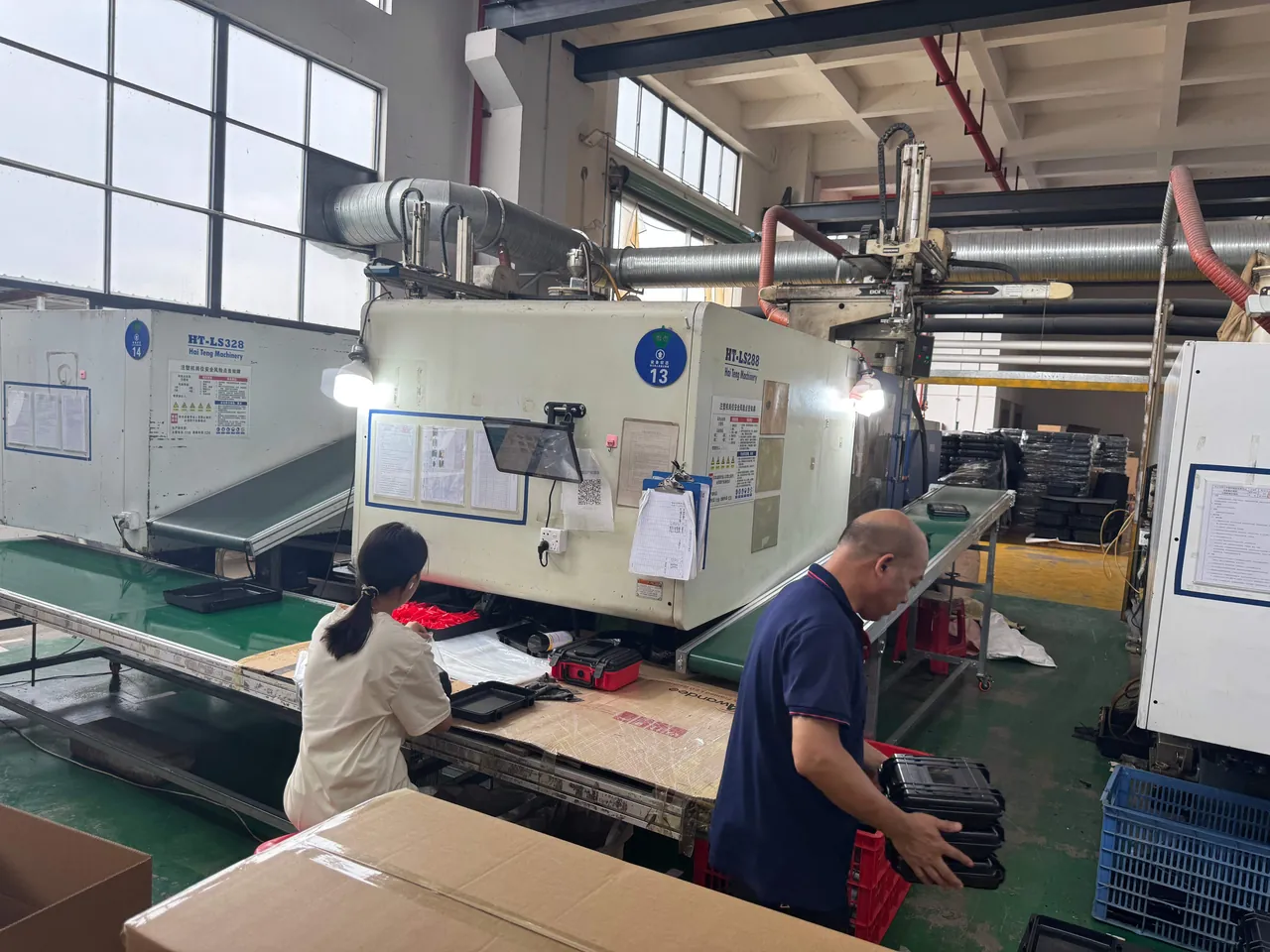
The ranges below are empirical industry values for early estimation. Actual figures vary with case model, material, and the supplier's capacity structure.
| Customization type | Typical fixed cost | Empirical MOQ range | First order price tendency | Lead time tendency |
|---|---|---|---|---|
| --- | --- | --- | --- | --- |
| Insert only (EVA or PU cutting) | Programming and sampling | Tens to hundreds | Close to standard | Short |
| Marking only | Screen or fixture | Tens to hundreds | Slightly higher | Short |
| Specified color within existing material system | Masterbatch minimum | Hundreds to thousands | Depends on masterbatch | Moderate |
| Specialty color requiring custom masterbatch | Full masterbatch lot | Thousands | Noticeably higher | Longer |
| Hardware swap where the open tool already provides mounts | Nearly none | Low, possibly tens | Close to standard | Short |
| Hardware addition requiring tooling or a new part | Accessory tooling | Hundreds to one or two thousand | Moderately higher | Moderate |
| Localized structural improvement via inserts | Insert machining | Hundreds to thousands | Moderately higher | Moderate |
| New tooling, small to mid case | Complete mold | Several thousand and up | Higher | Longer |
| New tooling, large or complex case | Complete mold plus multiple trials | Ten thousand and up | Noticeably higher | Long |
Two cautions apply. First, the ranges are order-of-magnitude references, not commitments; projects of the same type can differ by several times depending on case size. Second, the ladder is not impassable. By absorbing fixed cost, a project that appears to need several thousand pieces can often be brought down to a few hundred.
4. Why Open Tool Customization Allows a Very Low MOQ
The low MOQ of open tool customization comes from one fact: the fixed cost of the case body has already been amortized across historical orders, so the current order only carries the fixed cost unique to this run.
A typical open tool order has only three fixed cost items: insert programming and sampling, marking plates or fixtures, and changeover setup time. The absolute amounts are modest, so amortizing them across tens or hundreds of pieces remains acceptable.
Note that open tooling does not mean lower quality. Open tool cases often have gone through several rounds of iteration and market validation, with a mature process window and stable dimensions that a brand new mold cannot match in the short term. For most small and mid projects, using open tooling to deliver brand-specific customization, meaning a dedicated insert plus dedicated marking plus a specified color, is already enough to establish product identity. For how far insert customization can go, see the EVA insert customization process. For the thresholds of each marking method, see five branding methods compared.
5. Where the Floor Sits for New Tooling
If a project genuinely needs a new mold, the MOQ discussion shifts framework. The question becomes how to handle the tooling fee rather than how to reduce the quantity. Three arrangements dominate.
Buyer pays and owns the tool: the supplier does not need to recover tooling through volume, so MOQ can drop significantly, usually constrained only by material minimums and the minimum viable changeover batch. This is the most direct way to compress a first order, at the cost of upfront cash.
Buyer pays, supplier owns: the buyer gets a slightly better price, but ownership stays with the supplier and transfer requires negotiation. It suits long partnerships where switching suppliers is not planned.
Supplier funds and amortizes into unit price: zero upfront cost for the buyer, but a noticeably higher unit price and a higher MOQ to protect the supplier's recovery.
Whichever arrangement is chosen, the contract should record the tool number and storage location, acceptance criteria and trial rounds, life commitment and maintenance responsibility, the documentation package at transfer, and the notification obligation for discontinuation or material change. These clauses matter especially in small batch projects, because small batches usually mean follow-on orders, and how controllable the tool is determines the cost and lead time of those follow-ups.
6. Five Workable Routes for Small Batch Orders
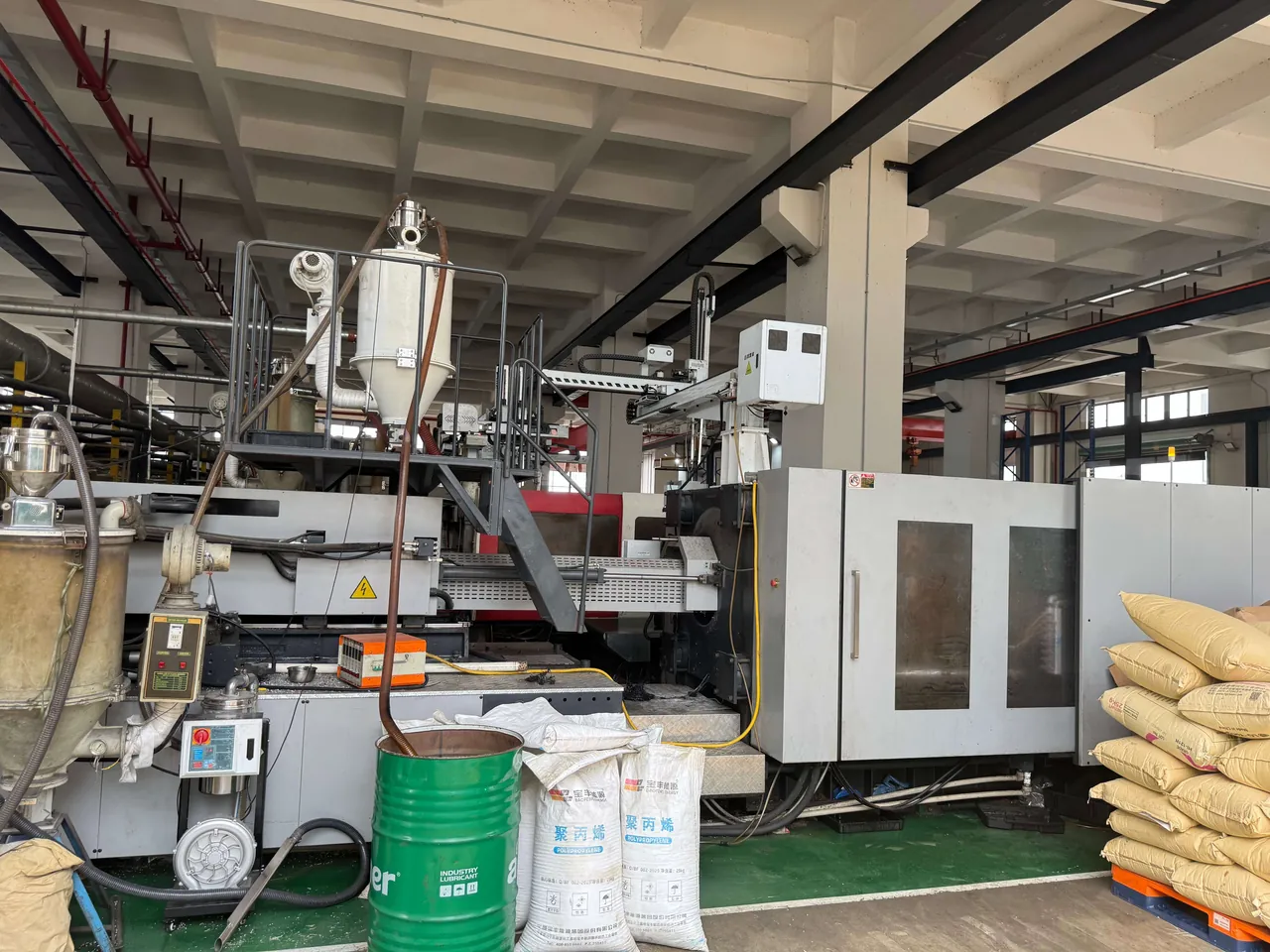
The following five routes are proven in practice and can be combined.
- Open tool plus insert customization: reuse an existing case body and add a dedicated insert. Fixed cost is the lowest, minimums can be tens of pieces, and it suits pilots and sample distribution.
- Open tool plus marking: apply screen printing, pad printing, UV printing, or laser marking to an open tool case. With UV printing or laser marking, single-piece minimums are possible.
- Close color substitution: drop the custom masterbatch and use the nearest existing color from the supplier's palette, or adjust the brand standard to fit available colors. This is the most effective way to eliminate an upstream minimum.
- Selectively absorb fixed cost: the buyer pays the plate or tooling fee, dropping MOQ from thousands to hundreds. It suits projects certain to place follow-on orders.
- One production run, staged delivery: produce to MOQ in one run but deliver and settle in installments. The supplier's one-time investment is unchanged while the buyer's working capital and storage pressure drop noticeably. This is the most common compromise between small batches and low MOQ.
Empirically, combining routes four and five works best: the buyer absorbs fixed cost to lower MOQ, then uses staged delivery to relieve cash and storage pressure. Together, these two routes make many projects that were judged impossible actually feasible.
7. Tier Pricing and Choosing Your First Order Size
Suppliers usually offer tiers such as 500, 1,000, and 3,000 pieces. The buyer must judge which tier the first order should hit.
Three principles apply. First, look at real demand, not at the size of the discount. If annual demand is genuinely 800 pieces, stocking 3,000 to reach a lower tier ties up cash and space in 2,200 extra units that may become obsolete after a product revision. Second, convert storage and capital costs before comparing. The apparent saving from a tier difference multiplied by quantity must be reduced by the capital cost, storage cost, and obsolescence risk of the extra inventory. Third, weigh revision risk. If the product may be revised within a year, the first order should hug real demand and leave scaling until the version is stable.
A practical approach is to place the first order at the minimum viable batch to validate the market, while agreeing with the supplier on how long the tier pricing remains valid. Once demand is confirmed, place the larger order. This avoids inventory risk while preserving the option of a lower price later.
8. Consolidation: Merging Multiple Needs Into One Batch
Another way to handle small orders is not to reduce demand but to merge it.
Color consolidation: when several distributors each request a different color, consolidate to a small number of colors and distinguish ownership through marking, rather than running a separate masterbatch for each.
Specification consolidation: merge several close sizes into one specification and differentiate internal configuration through the insert. The case body then needs only one changeover, while insert work flexes as a post-process.
Timing consolidation: combine several small orders spread across a quarter into one production run with staged delivery. The supplier performs one changeover and one setup, and the buyer gets pricing close to a volume order.
Cross-model consolidation: cases of different models sharing the same material and masterbatch can be scheduled in consecutive production windows, reducing purge cycles.
Consolidation requires the buyer to coordinate internally. For companies with multiple regions or product lines, it takes one internal conversation, but the payoff usually exceeds what repeated price pressure with the supplier would achieve.
9. Six Leverage Points for Negotiating MOQ
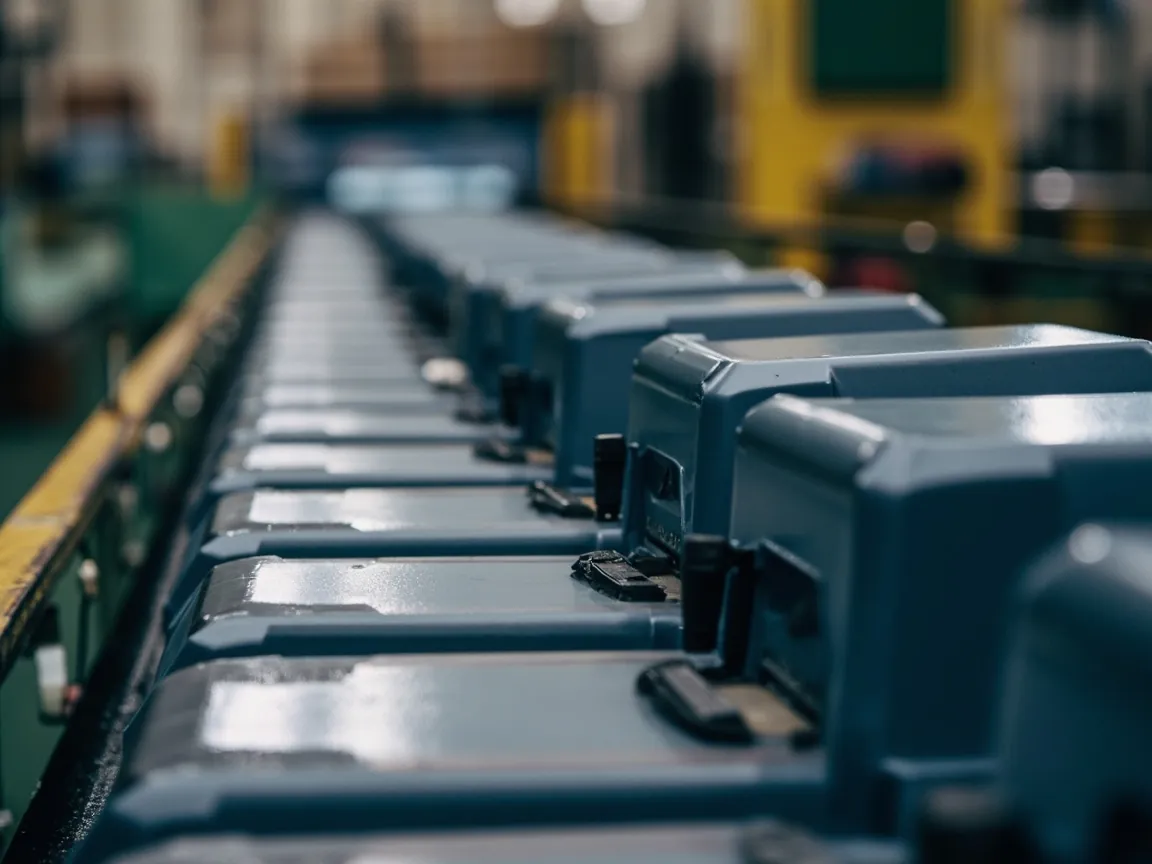
- Absorb fixed cost: offer to pay plate, tooling, or sampling fees, removing recovery pressure from the supplier. This is the strongest lever available.
- Commit to future volume: provide annual usage forecasts or letters of intent so the supplier views the first order as the start of a long relationship. Keep commitments flexible so that not meeting them does not damage the relationship.
- Accept a longer lead time: allow the order to slot into gaps in the existing schedule, reducing changeover loss.
- Reduce specifications and colors: going from three colors to two, or from five specifications to three, directly cuts changeovers and material minimums.
- Accept standard packaging: custom packaging in a small batch adds fixed investment, while standard packaging lowers the barrier noticeably.
- Accept full lot material purchase: for masterbatch, specialty foam, and dedicated fabric that carry upstream minimums, buying the full lot and handling the surplus opens many routes that would otherwise be closed.
Note that lowering MOQ and lowering price usually cannot both be achieved. If a supplier concedes on both, it often signals a compromise on quality, lead time, or material grade. Buyers should set priorities rather than demand the best of everything.
10. Common Small Batch Risks and How to Avoid Them
| Risk | Manifestation | Mitigation |
|---|---|---|
| --- | --- | --- |
| Upstream material waste | Large surplus from full lot masterbatch or fabric purchase | Switch to an existing color or plan a use for the surplus |
| Changeover cost pass-through | Unit price well above standard product | Accept higher price for lower MOQ and require the pricing logic to be stated |
| Long first article approval | Repeated sampling delays delivery | Prepare all data at once and allow two approval rounds |
| Batch consistency | Frequent changeovers widen color deviation between batches | Require a retained golden sample and run color checks on each delivery batch |
| Low supplier priority | Small orders scheduled last | Reserve a production window early or consolidate orders to raise priority |
| Unclear mold or fixture ownership | Follow-on orders face unfavorable cost and lead time | Write ownership and transfer clauses into the first contract |
| Obsolescence after a revision | Extra inventory cannot be consumed | Keep the first order close to real demand and scale after the version stabilizes |
For batch consistency and acceptance sampling, agree on a clear sampling plan and decision rule in the contract, following standard count-based sampling practice such as the GB/T 2828.1 and ISO 2859-1 families, and specify how nonconforming lots are handled. If the product carries an ingress protection requirement, agree on the sampling ratio and criteria for full case ingress protection validation, referencing IEC 60529 and GB/T 4208.
11. Balancing Lead Time, Inventory, and Working Capital
The hidden cost of small batch purchasing mostly sits in capital and storage rather than unit price. A simple annual comparison helps: list total cost under a low MOQ high unit price option and under a high MOQ low unit price option, covering purchase cost, capital cost, storage cost, obsolescence disposal, and revision losses, then compare.
Empirically, for projects with annual demand below a thousand pieces and a revision cycle within a year, the low MOQ high unit price option often costs less in total, because obsolescence and revision losses are heavily compressed. For mature products with stable demand and a long unchanged version, the volume discount is genuinely realized.
On storage, protective cases are bulky and carry a much higher storage cost per unit than typical consumer goods. Where the supplier can offer staged delivery or consignment, the buyer's capital and storage pressure drops noticeably. Such arrangements are usually negotiable in long-term relationships.
12. How JUNZHJIA Supports Small Batch Programs
JUNZHJIA, manufactured by KeXin New Materials (Guangdong) Co., Ltd. at its Zhongshan facility, supports small batch projects across protective cases, toolboxes, military weapon cases, and waterproof junction boxes in the following ways. Open tool cases with custom inserts and marking are recommended first, keeping fixed cost at the programming and plate level so the first order can be small. For projects that genuinely need tooling, the buyer may fund the mold with ownership defined in the contract in exchange for a lower minimum. For color and fabric requirements constrained by upstream minimums, the constraint is disclosed and close color substitutions or other viable options are proposed. One production run with staged delivery is also available to ease the buyer's cash and storage pressure. Specific MOQ, unit price, and lead time are assessed against case model, customization scope, and material availability, so supply target annual volume, first order size, the customization list, and the desired lead time with the inquiry.
13. Writing MOQ Terms Into the Contract
Verbal agreement on a small batch is not enough. Because a small order is precisely the situation where follow-on quantities are uncertain, the terms that govern the second and third order matter as much as the terms for the first. The clauses below are the ones that most often decide whether a small batch program stays workable.
| Clause | What it should state | Why it matters in a small batch |
|---|---|---|
| --- | --- | --- |
| MOQ definition | Whether the minimum applies to order quantity, per model, per color, or per shipment | A single minimum applied per color can multiply the real threshold |
| Fixed cost treatment | Which of plate, tooling, and sampling fees are paid up front and which are amortized | Determines whether the unit price carries a hidden recovery charge |
| Tier pricing validity | How long the quoted tiers remain valid | Preserves the option to scale at the agreed price |
| Tooling or fixture ownership | Owner, storage location, maintenance responsibility, and transfer conditions | Decides the cost and lead time of every follow-on order |
| Color and material lock | The approved color plate, masterbatch lot reference, and material grades | Prevents silent substitution when a small order is rerun |
| Batch consistency | Sampling plan, decision rule, and how nonconforming lots are handled | Small batches mean frequent changeovers, so batch-to-batch deviation is the main risk |
| Staged delivery | Delivery quantities, intervals, and settlement terms | Turns one production run into manageable cash and storage exposure |
| Surplus material | Who owns leftover masterbatch, fabric, or foam | Upstream minimums create surplus that must be assigned somewhere |
| Revision handling | Notice period and cost treatment when the design changes | Small orders are often followed by revisions before volume is reached |
| Discontinuation notice | Notice period if a material or component is discontinued | Protects the buyer from an unplanned redesign |
Two of these deserve emphasis because they are routinely omitted.
MOQ definition sounds trivial but is not. A supplier quoting "MOQ 1,000" may mean 1,000 pieces total, or 1,000 pieces per model, or 1,000 pieces per color. In a program with three colors and two models, the difference between those readings is a factor of six. Always state the unit to which the minimum applies, and confirm whether trial or sample quantities count toward it.
Surplus material is the quiet cost of small batches. When a custom masterbatch or a roll of imported foam must be purchased in full, someone owns what remains after the order ships. If the contract is silent, the supplier normally retains it and prices the next order as if the material were new, while the buyer has already paid for it through the unit price. Options are to let the supplier retain the surplus in exchange for a price concession on the follow-on order, to buy the surplus outright and store it for future use, or to design the color and material plan to avoid surplus entirely.
Empirically, small batch programs fail on the follow-on order far more often than on the first. The first order gets attention because both sides are watching it. The second order is where pricing ladders, tooling access, and material availability quietly revert to default assumptions. Writing these terms down in the first contract costs one meeting and prevents most of that.
Frequently Asked Questions
Q: What MOQ generally applies to custom protective cases?
A: There is no single figure, but ranges can be estimated by customization type. Projects that only change the insert, only apply marking, or swap hardware where the open tool already provides mounts have low fixed cost, with minimums typically in the tens to hundreds of pieces. A specified color within the existing material system usually requires hundreds to thousands of pieces, and a custom masterbatch is constrained by the color house minimum, often requiring thousands. Projects involving localized structural improvement or a new accessory part commonly land between hundreds and one or two thousand pieces. Projects needing a brand new injection mold generally start at several thousand pieces, and complex or large cases may require ten thousand or more. These are order-of-magnitude references, and actual figures can vary several times over depending on case size and material.
Q: Why do MOQ quotations from different suppliers vary so much?
A: Because MOQ is fixed cost divided by acceptable amortization, and suppliers have very different fixed cost structures. The deciding factors include whether existing open tooling can be used, whether masterbatch or fabric is already in stock, whether the equipment suits small batch changeovers, and whether the supplier views the first order as the start of a long partnership. Upstream material minimums also propagate upward, since custom masterbatch and imported foam are purchased in full lots, meaning the material side will not permit a small run even if the supplier is willing. So when you hear that a color cannot be run in small batches, it is usually not a processing limit but an upstream material minimum. Solutions are to switch to a close color or accept the full lot purchase and dispose of the surplus yourself.
Q: Are there workable options for small orders?
A: Five proven routes exist and can be combined. First, open tool plus insert customization, reusing an existing body with a dedicated insert at the lowest fixed cost. Second, open tool plus marking, where UV printing or laser marking can start from a single piece. Third, close color substitution, dropping the custom masterbatch for the nearest existing color. Fourth, selectively absorbing fixed cost by paying plate or tooling fees, which can bring MOQ from thousands down to hundreds. Fifth, one production run with staged delivery, producing to MOQ while delivering and settling in installments, so the supplier's one-time investment is unchanged while the buyer's cash and storage pressure drops. Combining the fourth and fifth routes works best in practice.
Q: How different are open tool and new tool customization?
A: The main difference is not quality but fixed cost and flexibility. Open tool customization has fixed cost already amortized across historical orders, so the current order carries only insert programming and sampling, marking plates, and changeover setup. That yields low MOQ, short lead time, and a unit price close to standard. New tooling requires a complete mold and multiple trial rounds, with a long recovery cycle, so MOQ is noticeably higher and unit price greater. However, the design freedom differs as well: outer dimensions, internal parting, wall thickness structure, latch and hinge positions, and seal groove cross sections are features of the plastic body that only new tooling can change. The selection question is therefore whether your requirement sits on the case body or on the accessories. Once that boundary is clear, the MOQ expectation is settled too.
Q: How can I negotiate a lower MOQ?
A: Six levers work well. First, absorb fixed cost by paying plate, tooling, or sampling fees, which directly removes recovery pressure from the supplier and is the most effective approach. Second, provide annual usage forecasts or letters of intent while keeping the commitment flexible. Third, accept a longer lead time so the order fits into schedule gaps. Fourth, reduce specifications and colors to cut changeovers and material minimums. Fifth, accept standard packaging, since custom packaging in a small batch raises fixed investment considerably. Sixth, accept full lot material purchases and handle surplus yourself where an upstream minimum applies. Note that lowering MOQ and lowering price usually cannot be achieved at the same time. If a supplier concedes on both, it often signals a compromise in quality, lead time, or material grade.
Q: Why is the unit price so much higher on small orders?
A: Because fixed cost is spread over fewer pieces. Fixed cost includes plate and tooling fees, programming and sampling, changeover and setup time, and surplus from material minimums. The smaller the batch, the more fixed cost each unit carries. Small batches also raise changeover frequency, and changeover involves purging, material changes, parameter setup, and first article approval, time costs unrelated to output. To judge whether a price is reasonable, ask for the quotation to be broken down into material, processing, plate or tooling, and unit amortization, so you can see where the premium comes from. If it comes mostly from plates and tooling that could be paid once, the buyer can choose to absorb that cost and lower the unit price.
Q: What pitfalls are common in small batch purchasing?
A: Seven stand out. First, upstream material waste from full lot masterbatch or fabric purchases. Second, changeover cost pass-through with a unit price well above standard and no transparency. Third, long first article approval from repeated sampling. Fourth, batch consistency risk, since frequent changeovers can widen color deviation. Fifth, low supplier priority, with small orders scheduled last. Sixth, unclear mold or fixture ownership, leaving follow-on orders exposed on cost and lead time. Seventh, obsolescence after a revision when extra stock cannot be consumed. Mitigations include preparing all data at once with two approval rounds allowed, requiring a retained golden sample with color checks per batch, writing ownership and transfer clauses into the first contract, and keeping the first order close to real demand while leaving scaling until the version is stable.
Q: How large should the first order be?
A: Three principles apply. First, look at real demand rather than the size of the tier discount. If annual demand is 800 pieces and you stock 3,000 to reach a lower tier, the surplus ties up cash and space and may become obsolete. Second, convert storage and capital costs before comparing, since the saving from a tier difference multiplied by quantity must be reduced by the capital cost, storage cost, and obsolescence risk of the extra stock. Third, weigh revision risk, because if the product may be revised within a year the first order should hug real demand. A practical approach is to place the first order at the minimum viable batch to validate the market, agree with the supplier on how long tier pricing stays valid, and place the larger order once demand is confirmed, avoiding inventory risk while preserving the option of a lower price.
Conclusion and Further Reading
MOQ is not a gate set by suppliers but an arithmetic problem about fixed cost. Once fixed cost is broken into plates and tooling, molds, material minimums, and changeover, the routes to a lower MOQ become clear: eliminate what can be eliminated by switching to open tooling and close colors, transfer what cannot be eliminated by having the buyer fund plates and tooling, amortize what cannot be transferred by accepting a higher unit price, and defer what cannot be amortized through one production run with staged delivery. For most small and mid projects, open tool cases with custom inserts, marking, and color already establish product identity while keeping the first order affordable. First order size should hug real demand, leaving scaling and price reduction until the version is stable. JUNZHJIA assesses MOQ, unit price, and lead time against case model, customization scope, and material availability, and supports one production run with staged delivery, with the final plan determined by actual assessment.
Further Reading