

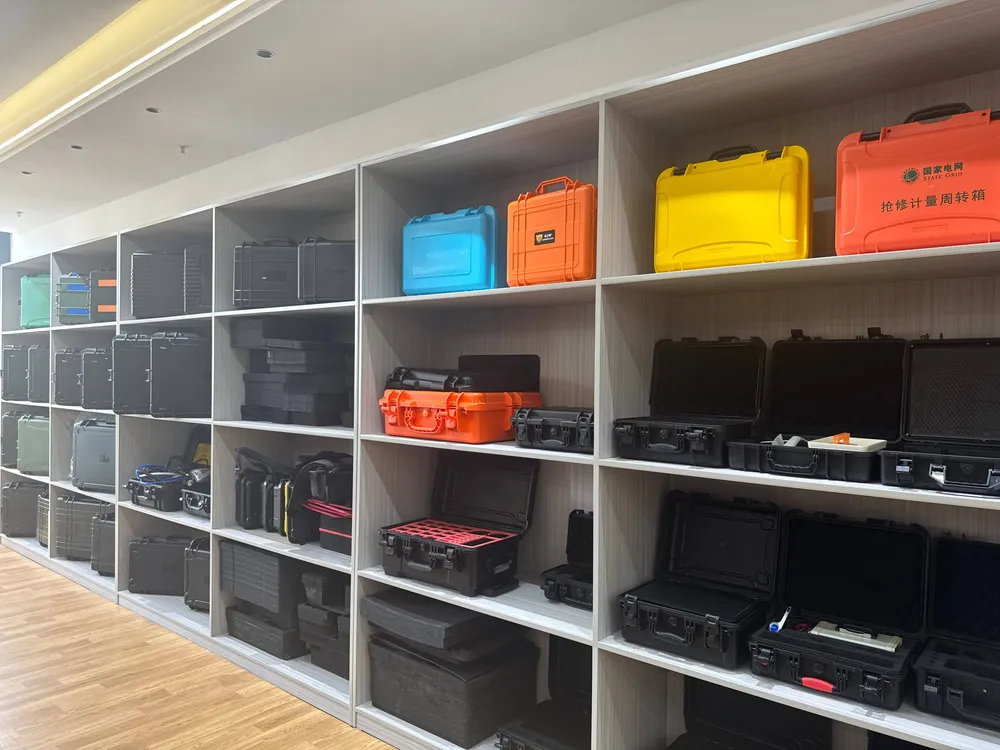
Visual management means designing a workplace so that its state is apparent without reading anything. For a fleet of cases that principle is easy to apply and pays back quickly: if the right case is obvious at a glance, it does not get mis-picked, and if a missing one is obvious at a glance, it does not get left behind.
Designing a Scheme People Will Follow
| Principle | Why it matters |
|---|---|
| Few categories | Beyond about five or six colours, people stop remembering the code |
| One meaning per colour | A colour that means two things in different contexts causes errors |
| High contrast | Colours must stay distinguishable in poor light and after fading |
| Colour plus label | Colour is fast but ambiguous; text is precise but slow. Use both |
| Stable over time | Changing the scheme invalidates what everyone has learned |
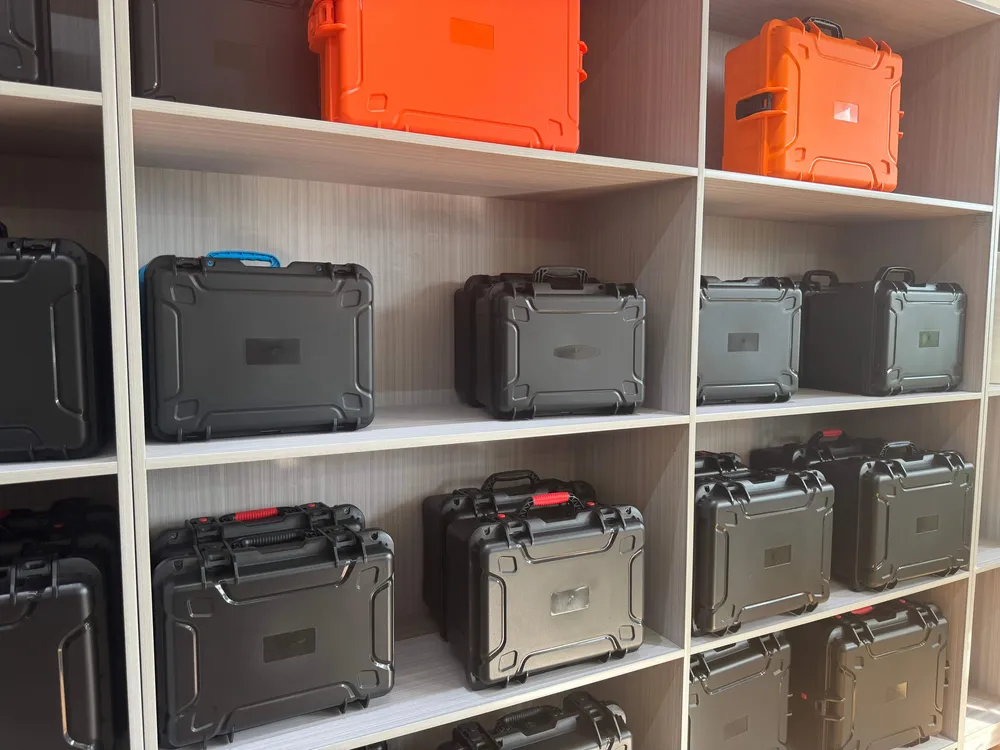
What to Encode
Choose the dimension that prevents your most common error:
- By function or department — the most common scheme; prevents cases crossing between teams.
- By contents category — tools, consumables, instruments, spares.
- By destination or vehicle — prevents cases loading onto the wrong truck.
- By inspection or calibration state — makes overdue items visible without opening anything.
- By hazard or handling requirement — where contents need particular care.
Avoid encoding two dimensions in colour alone. If you need both function and destination, use colour for one and a label, band or tag for the other.
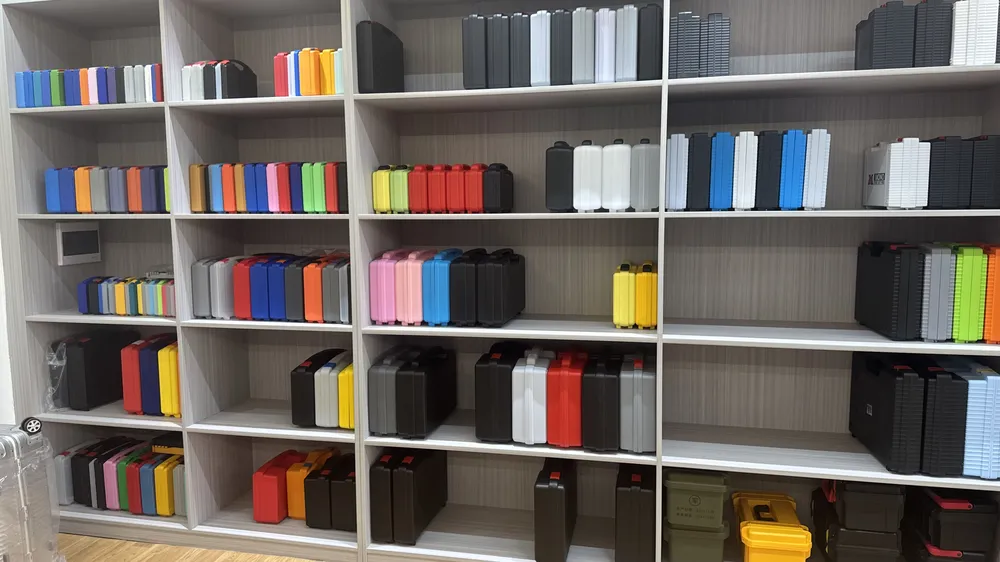
Colour Durability
Colour coding fails silently as cases fade. Sunlight, cleaning chemicals and abrasion all shift appearance, and two colours that were clearly different when new can converge over a few years of outdoor service. Mitigations: choose stabilised pigments, prefer high-contrast pairings, keep the text label as the authoritative identifier, and recheck the scheme during periodic inspection.
Storage Visualisation
The same logic applies to where cases live. Marked floor positions or shelf outlines show at a glance what belongs where and what is missing; standardised stacking makes a gap obvious; and a simple shadow board or outline for hand-carried kits makes absences visible before departure.
For identification schemes that carry codes as well as colour, see our article on case labelling and asset tracking.