

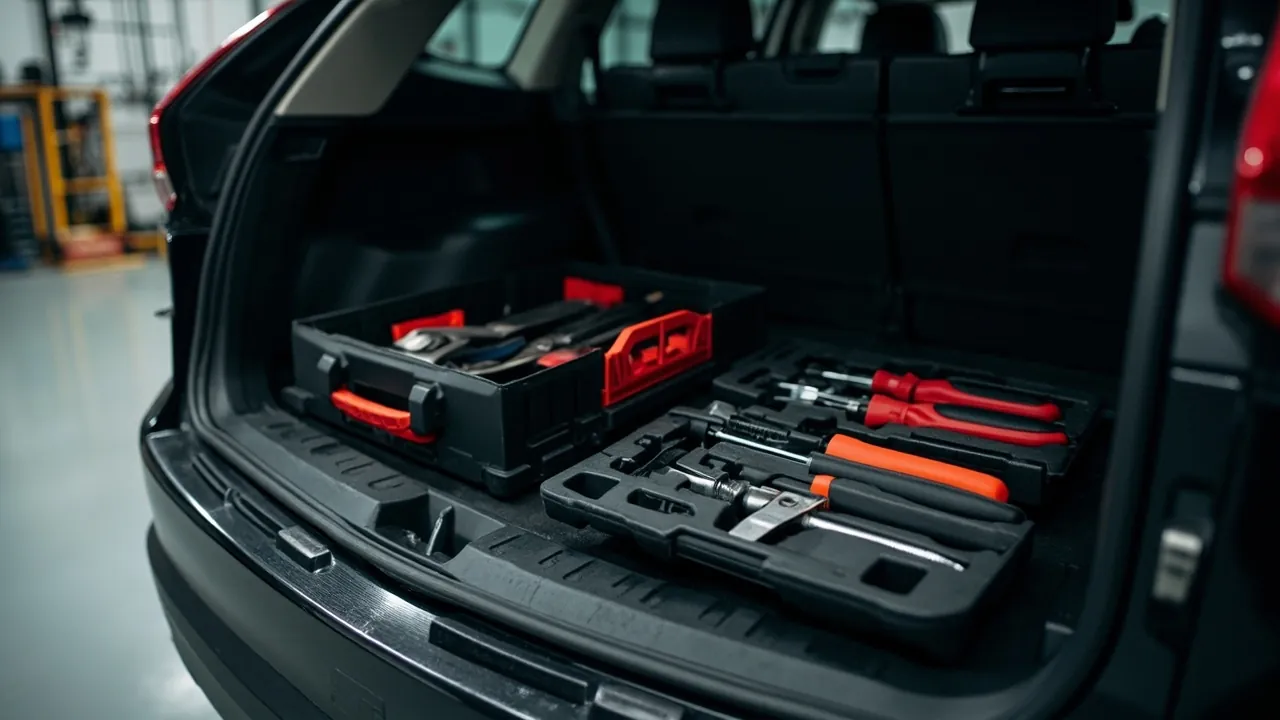
Start with the conclusion: the point of a car toolbox is not how much it holds. It is whether the things you will actually need on the road can be reached the moment you need them. The approach experienced drivers and fleet managers converge on is the three-ring method. Ring one is emergency and safety - the items you simply cannot skip, because going without them risks personal injury or turns a small incident into a serious one: warning triangle, high-visibility vest, fire extinguisher, window breaker and seatbelt cutter, first aid kit, tow rope, jump leads. Ring two is self-recovery from common faults: tyre change, jump start, bulb and fuse replacement, screen wash, tightening something loose, basic electrical checks. Ring three, only then, is comfort and convenience: multi-tool, cable ties, tape, rags, gloves. The mistake almost everyone makes is filling ring three to overflowing while ring one has gaps in it. The other common mistake is loading the entire home tool kit into the boot: it adds weight and fuel burn, it clutters the luggage space, it becomes a projectile under hard braking - and roughly eighty per cent of it will not be used once in three years.
What makes a vehicle different from a garage is four things. It vibrates continuously, so things loosen, threads back off and sharp objects wear through cases and neighbours. It sees extreme temperatures, from a sealed cabin in summer sun that is far hotter than ambient down to minus twenty or thirty degrees in a northern winter. Space is limited and irregular - a boot is not a box. And there are legal and safety obligations: warning triangles and high-visibility vests are mandatory equipment in some jurisdictions and for some vehicle classes. On top of all that, anything not secured becomes a dangerous projectile in a collision or emergency stop, which is the single heaviest safety principle in choosing and placing a car toolbox. This article works through environment, the three rings, itemised lists, differences by vehicle type, case selection, temperature effects, placement and securing, and a quarterly inspection routine - with tables you can copy directly.
Table of Contents
- The Short Answer: The Three-Ring Method
- Four Things That Make a Vehicle Different: Vibration, Temperature, Space, Safety
- Ring One: Emergency and Safety (Non-Negotiable)
- Ring Two: Self-Recovery from Common Faults (Best Value)
- Ring Three: Comfort and Convenience (Selective, Keep It Small)
- The Full Packing List: Purpose, Priority and Substitutes
- Consumables and Small Spares
- Lighting and Electronics: Why a Headlamp Beats a Torch
- Adjusting by Vehicle Type: Saloon, SUV, Pickup, Electric
- Choosing a Car Toolbox: Size, Securing Method, Ingress Rating
- Heat and Cold: What They Do to Tools and Cases
- Placement and Securing: Centre of Gravity, Access Path, Projectile Risk
- Quarterly Inspection and Update Checklist
- Frequently Asked Questions
- Conclusion and Further Reading
The Short Answer: The Three-Ring Method
The three-ring method allocates limited vehicle space by probability of use multiplied by severity of consequence.
Ring one: emergency and safety. The test is "if I need this and do not have it, someone could be hurt or a small incident becomes a big one." These items share a profile: low probability of use - you may go a year without touching them - but severe consequences when missing. They must be carried, and they must be checked for expiry and condition on a schedule. Typical members: warning triangle, high-visibility vest, fire extinguisher, window breaker and seatbelt cutter, first aid kit, tow rope, jump leads or a jump starter pack.
Ring two: self-recovery from common faults. The test is "this happens reasonably often, I can fix it myself, and calling recovery is expensive or slow." Medium probability, and by far the best return on investment - this is the bulk of the car toolbox. Typical members: spare wheel and tyre-change tools (jack, socket wrench, the correct wheel bolt socket), tyre pressure gauge and portable compressor, puncture repair kit, bulbs and fuses, screen wash, coolant, a little engine oil, insulating tape, cable ties, a basic electrical tester.
Ring three: comfort and convenience. The test is "useful but not critical; better to have it, nothing happens if I do not." This is the ring that grows uncontrollably, so it needs an active cap. Typical members: multi-tool, utility knife, rags, gloves, rain poncho, folding bucket, folding chair, sunshade, rubbish bags.
Suggested split of capacity: ring one 20% to 25%, ring two 55% to 60%, ring three no more than 20% to 25%. If ring three is over half, the configuration is unbalanced and needs cutting back.
Three principles that get forgotten:
- Checking matters more than filling. Fire extinguishers expire, first aid contents expire, jump lead terminals oxidise, compressor batteries self-discharge, and screen wash has to become winter-grade before the cold arrives. Inspect quarterly and set a reminder in your phone calendar.
- Knowing how to use it matters more than owning it. A jack is useless if you do not know where the jacking point is; jump leads are useless if you do not know the connection order. After buying a car or changing the kit, practise a wheel change and a jump start once, somewhere safe.
- Securing matters more than capacity. The core risk in a vehicle is not running out of space; it is something flying forward under braking. An unsecured 10 kilogram case in a 50 km/h emergency stop generates force easily capable of serious injury. Everything carried in a vehicle must be secured or inside a closed compartment.
Four Things That Make a Vehicle Different: Vibration, Temperature, Space, Safety
These four are what separate a car toolbox from a garage toolbox.
One: continuous vibration. Everything in a moving vehicle sits in a low-frequency vibratory environment, and that causes three problems. Threaded connections back off - case latches, screws on tools, and even spare wheel retainers can gradually loosen. Wear occurs as tools rub against each other and against the case wall, removing coatings, dulling edges and abrading the shell. Fatigue appears as cracks in plastic parts at stresses far below the static strength, particularly at handle roots and hinges.
Countermeasures: secure the tools (routed foam or straps, nothing free to roll), check tightness periodically, and choose a case with good structural stiffness and overload margin. The fatigue side of this is discussed in toolbox durability and rib design.
Two: extreme temperature. A sealed cabin in direct sun reaches temperatures far above ambient, especially around the dashboard, while a northern winter cabin can fall to minus twenty or thirty degrees. Three consequences follow. Plastic softens and distorts as the temperature approaches the material's deflection temperature under load (HDT, measured per the GB/T 1634 series). Materials embrittle when cold, so a drop or knock is far more likely to crack. Contents fail: aerosol cans change internal pressure, adhesives and tapes lose their properties, batteries lose performance, screen wash and coolant freeze.
See heat deformation of toolboxes stored in vehicles for the detail. The three essentials: keep the case out of direct sun, pick a material with a higher HDT and good low-temperature toughness, and assess temperature-sensitive items - aerosols, adhesives, electronics, liquids - individually.
Three: limited, irregular space. A boot is not a box. There are wheel arch intrusions, a spare wheel well, and a raked seat back. That means the case has to match the shape of the space, not just the volume. Measure the usable space - length, width and height, noting the narrowest point between the wheel arches - and then choose the case. The right way to think about volume is in toolbox capacity calculation.
Four: safety and regulation. Three points. Mandatory equipment: warning triangle, high-visibility vest and fire extinguisher are compulsory in some regions and for some vehicle classes - commercial vehicles, trucks and coaches especially - so check local requirements. Dangerous goods limits: fuel cans, large flammable aerosols and certain compressed gas cylinders may be prohibited in a vehicle and are hazardous regardless. Projectile risk: unsecured heavy items cause secondary injuries in a crash. That is the floor principle for everything carried in a vehicle.
Ring One: Emergency and Safety (Non-Negotiable)
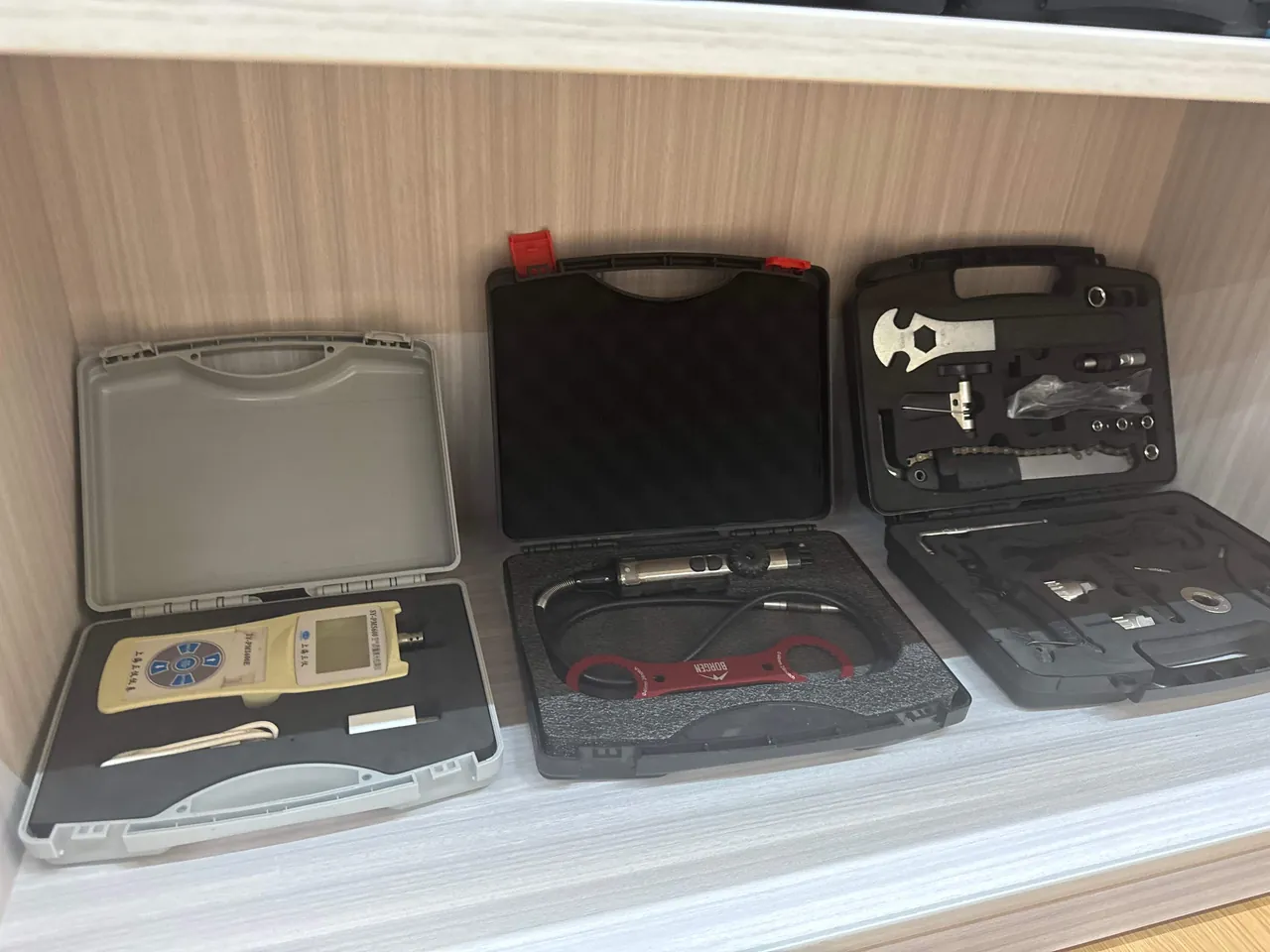
This ring is not about value for money. It is about whether you have it.
| Item | Purpose | Key specification points | Check interval |
|---|---|---|---|
| --- | --- | --- | --- |
| Warning triangle | Warns approaching traffic | Adequate reflective area, stable stand, storage case | Before every long trip |
| High-visibility vest | Being seen when outside the car | Meets the applicable standard; one per occupant | Every six months |
| Fire extinguisher | Putting out a small fire | Automotive rating, in date, gauge in the green | Gauge monthly; replace by date |
| Window breaker and seatbelt cutter | Escape after a crash | Within reach of the driver, not in the boot | Every six months |
| First aid kit | Treating injuries | Gauze, bandages, tourniquet, plasters, gloves; watch expiry dates | Quarterly |
| Tow rope or tow bar | Recovery when immobilised | Rated above vehicle weight; correct length and fittings | Annual, check for wear |
| Jump leads or jump starter pack | Starting with a flat battery | Adequate cable cross-section; strong clamp bite | Quarterly, check insulation and clamps |
| Portable compressor and tyre gauge | Restoring tyre pressure | Pressure and flow adequate for the tyres; gauge accuracy | Quarterly, run it once |
Details that get missed:
The window breaker belongs beside the driver. After a crash, if the doors are jammed or the vehicle is in water, occupants may not be able to reach the boot. Fix it in the driver's door pocket, on the sun visor, or in the centre console - it costs almost nothing and it is worth a great deal. The seatbelt cutter belongs there too, for the same reason.
Jump lead cross-section matters; do not buy on price alone. Starting current is large, and undersized cable drops so much voltage that the engine will not turn, while the cable itself heats. For a family car, choose a generously sized set and check the length - too short and it will not reach when the vehicles are side by side. If budget allows, a lithium jump starter pack is the easier option: no second vehicle needed, and most include a light and USB output. The caveats are heat exposure in a closed cabin and self-discharge, so top it up every three to six months.
Choosing and securing a fire extinguisher. Automotive extinguishers are commonly dry powder or water-based, each with its own range of suitable fire classes. What matters more is securing it: an extinguisher rolling around damages the valve and can injure someone, so use a dedicated bracket on a boot side wall or under a seat. Watch the expiry date and the gauge - if the needle has dropped out of the green, replace or recharge it.
First aid expiry is routinely ignored. Gauze, tape and antiseptics all expire, and ointments and antiseptic solutions especially. Check quarterly and replace anything out of date.
Ring Two: Self-Recovery from Common Faults (Best Value)
This is the main body of the car toolbox and the best return on the space it takes.
Wheel changing - highest priority. The spare and its tools are the most common roadside self-recovery job. A complete set includes: the spare wheel (or a repair kit, depending on the vehicle), the jack, the wheel bolt socket (matched to the vehicle's bolt size), and the locking wheel nut adapter if the car has locking nuts. The adapter must be in the car and you must know where it is - a surprising number of people discover it is missing only when they need to change a wheel.
Knowledge that has to come with it: the jacking points marked in the owner's manual - jack in the wrong place and you will damage the sill or the car will slip off; the bolt tightening sequence - diagonally, in stages; and the tightening torque - too loose and the wheel can come off, too tight and you stretch the studs or damage the hub, so use a torque wrench where you can. Practise once every six months somewhere safe.
Tyre pressure and inflation. A portable compressor plus a separate pressure gauge is the highest-value pair in the kit. Note that the gauge built into most compressors is of limited accuracy, so verify with a separate gauge. The correct pressure is on the label in the driver's door aperture or inside the fuel flap, not on the tyre sidewall - the sidewall figure is the maximum the tyre will take, not the recommended pressure.
Bulbs and fuses. Lamp failure and blown fuses are the most common minor roadside faults. Carry: bulbs in the specifications listed in the manual (dipped beam, stop, indicator), blade fuses in the ratings the car uses, and a small puller. Check the manual for specification and access before you buy - on some cars a bulb change requires bumper removal and is not a roadside job.
Fluids. Screen wash - winter grade is mandatory in cold weather, summer grade or bug-remover otherwise; coolant, matched to the factory specification, since mixing chemistries can produce deposits; a small quantity of engine oil of the correct viscosity, mainly for checking and topping up before long trips; and possibly brake fluid and power steering fluid, but only if you understand the procedure. Liquids must be well sealed and secured - a leak contaminates the boot, smells, and can corrode.
Basic electrics and mechanics. Insulating tape, cable ties in several lengths, wire connectors, a small multimeter or test lamp, and needle-nose pliers plus diagonal cutters. These are small and cheap, and they resolve a large share of temporary faults.
Recovery. A tow rope or bar, a pair of gloves, and for off-road use, traction boards and a folding shovel. The rope's rated capacity must exceed the vehicle weight, and the rope itself should be checked for wear and broken strands.
| Category | Items | Priority | Size / weight | Notes |
|---|---|---|---|---|
| --- | --- | --- | --- | --- |
| Wheel change | Jack, socket wrench, locking nut adapter | Very high | Large / heavy | Know the jacking point and torque |
| Tyre pressure | Portable compressor, pressure gauge | High | Medium / medium | Built-in gauges are approximate |
| Puncture repair | Plug kit or sealant | Medium-high | Small / light | Temporary; get it professionally repaired |
| Electrical | Fuse assortment, common bulbs, test lamp | High | Small / light | Confirm specs from the manual |
| Fluids | Screen wash, coolant, a little oil | Medium | Medium-large / heavy | Must be sealed and secured |
| Fastening | Screwdriver set, pliers, adjustable spanner | Medium-high | Medium / medium | For loosening and temporary fixes |
| Connecting | Insulating tape, cable ties, connectors | High | Small / light | Cheap, frequently used |
| Recovery | Tow rope, gloves, folding shovel | Medium | Medium-large / medium | Rated above vehicle weight |
Ring Three: Comfort and Convenience (Selective, Keep It Small)
This is the ring that escapes control, so put a hard limit on it.
Worth carrying: a multi-tool (one tool standing in for several, ideal where space is tight), a utility knife, several rags, disposable gloves (for wheel changes and fuel), a rain poncho, a folding bucket, large rubbish bags (remarkably versatile - wet items, improvised rain cover, waste), tissues and wet wipes, a headlamp or torch, and a little cash with an emergency contact card.
Leave behind or think twice: a full socket set (bulky and heavy, rarely needed on the road), large power tools unless it is a work vehicle, boxes of assorted nuts and bolts unless you know the exact sizes, flammable items such as petrol cans or large aerosol cans, and anything you have not used in the car for two years.
One useful pruning rule. At each quarterly check, pull out everything in ring three that went unused last quarter and ask: "if I ran into the situation that needs this right now, would I regret not having it?" If the answer is no, take it out of the car. Anything unused across two consecutive checks should leave the vehicle kit.
Why weight control matters concretely. Permanent extra load increases fuel consumption - small per vehicle, but quantifiable across a fleet. More importantly, every extra kilogram of unsecured load adds risk in a hard stop or a crash. Trimming is not stinginess; it is a safety and cost win together.
The Full Packing List: Purpose, Priority and Substitutes
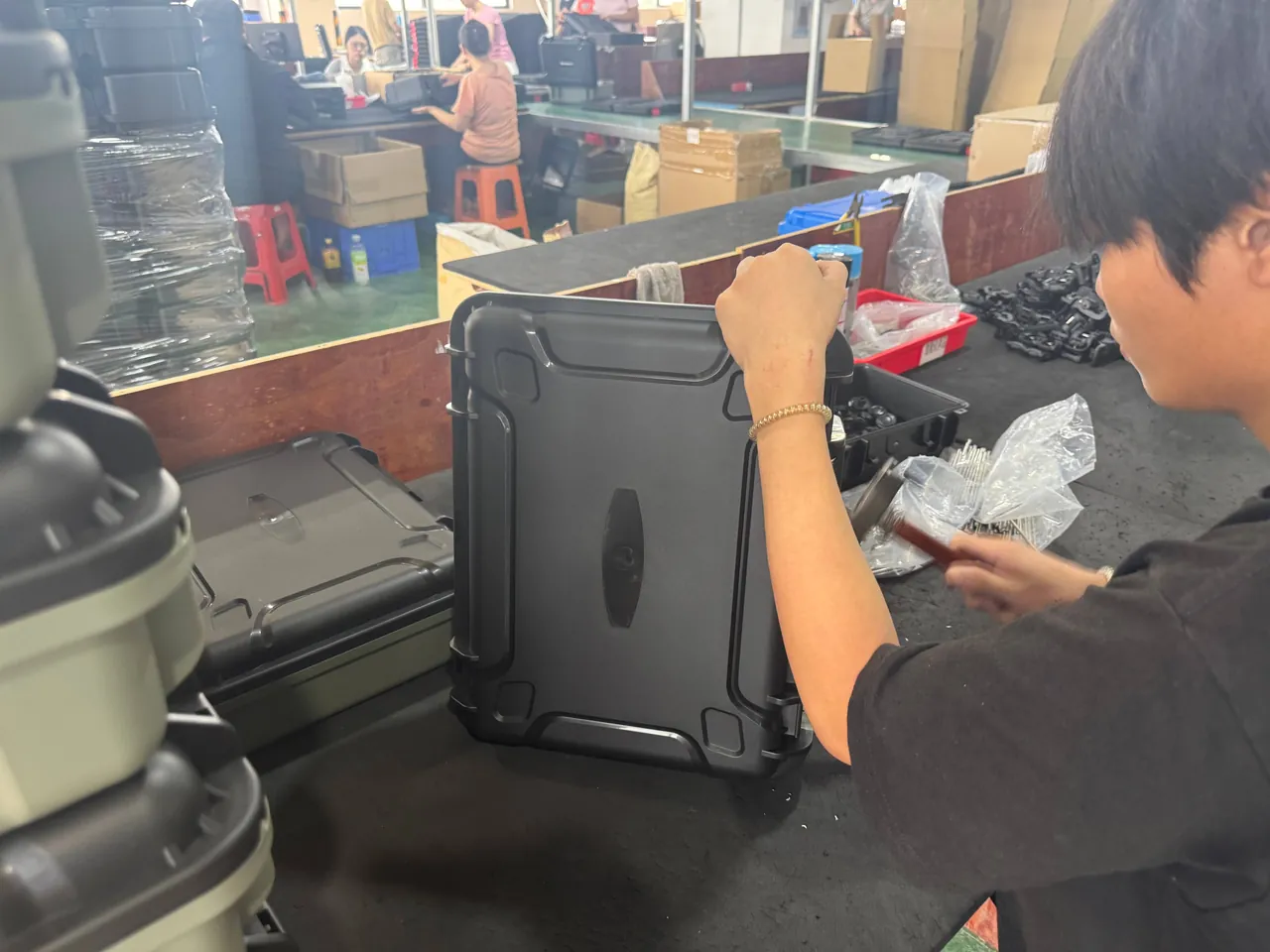
A complete list you can copy, sorted by priority. Print it and tick it off.
| Priority | Item | Purpose | Substitute or supplement | Suggested location |
|---|---|---|---|---|
| --- | --- | --- | --- | --- |
| 1 | Warning triangle | Warn traffic of a breakdown | None - essential | Boot, easy to reach |
| 1 | High-visibility vest | Visibility when outside | None - essential | Driver door pocket or console |
| 1 | Fire extinguisher | Small fires | None - essential | Boot, on a bracket |
| 1 | Window breaker + belt cutter | Escape after a crash | None - essential | Within driver's reach |
| 1 | First aid kit | Injury treatment | None - essential | Boot or under a seat |
| 2 | Spare, jack, socket | Wheel change | Repair kit (temporary) | Spare well / boot |
| 2 | Jump leads or jump starter | Flat battery start | Either, or both | Boot |
| 2 | Tow rope | Recovery | Paid breakdown service | Boot |
| 2 | Compressor + pressure gauge | Inflation and checking | Petrol station or service area | Boot |
| 3 | Fuse assortment + bulbs | Electrical and lighting faults | Workshop | Inside the toolbox |
| 3 | Insulating tape + cable ties | Temporary fixing and insulation | No good substitute | Inside the toolbox |
| 3 | Screwdrivers, pliers, adjustable spanner | Fastening and temporary repair | Multi-tool (partly) | Inside the toolbox |
| 3 | Work gloves + disposable gloves | Hand protection | None | Inside the toolbox |
| 4 | Screen wash (winter grade in cold) | Cleaning the windscreen | Top up at a service area | Boot, sealed |
| 4 | Coolant (matching spec) | Topping up | Breakdown service | Boot, sealed |
| 4 | A little engine oil (right viscosity) | Topping up on long trips | Service area | Boot, sealed |
| 4 | Headlamp or torch + spare batteries | Night work | Phone light (weak) | Toolbox or console |
| 5 | Multi-tool | General small jobs | Screwdriver set | Toolbox or console |
| 5 | Utility knife | Cutting | Scissors | Inside the toolbox |
| 5 | Rags, wet wipes, tissues | Cleaning | None | Toolbox or door pocket |
| 5 | Rain poncho | Working in rain | None | Boot |
| 5 | Large rubbish bags | Many uses | None | Door pocket |
| 5 | Folding bucket | Washing, carrying water | None | Boot |
How to use it: priority 1 is safety - nothing may be missing. Priority 2 is common self-recovery - strongly recommended complete. Priority 3 is frequently used tools. Priority 4 is fluids and lighting. Priority 5 is comfort, take it or leave it.
Consumables and Small Spares
Beyond "tools", there is a category that is constantly overlooked and consistently useful: consumables and small spares.
Fixing and connecting: cable ties in several lengths (100, 200 and 300 millimetres), insulating tape (PVC electrical tape - note it stiffens in the cold, so consider a low-temperature grade for winter), cloth duct tape, double-sided tape, and wire or twist ties.
Sealing and repair: a tyre plug kit and tool, or sealant; self-amalgamating rubber tape for temporary repair of hoses and harnesses; adhesive - a cyanoacrylate and a general-purpose glue, noting that heat in a cabin can kill both; and spare seals or gaskets if you know the vehicle's common leak points.
Electrical: fuses in the manual's specifications and several ratings, bulbs for dipped beam, stop and indicator to the manual's spec, a short reel of stranded copper wire, terminals and heat-shrink sleeving, and spare batteries for the torch and pressure gauge - remembering that heat accelerates self-discharge.
Cleaning and protection: several rags, wet wipes, tissues, disposable gloves (nitrile outlasts polythene and resists oil), safety glasses for dusty jobs under the car, and a respirator mask for working underneath or in dust.
Documents and information: registration and insurance documents, or confirmation that digital versions are acceptable; insurance and breakdown contact numbers; the owner's manual - or a digital copy, for bulb specifications, fuse locations and jacking points; and a handwritten emergency contact card.
One important storage rule: these small items must be compartmentalised, never loose. Loose small parts mix and abrade under vibration, and can work their way into the lid sealing face or the latch mechanism. Use a multi-cell organizer or a divided tray - a textbook application of the three-layer architecture described in tool organizer box versus toolbox: the outer case protects and secures, the inner organizer sorts.
Lighting and Electronics: Why a Headlamp Beats a Torch
Night roadside work - wheel changes, checks, jump starts - needs light, and there is a clear practical verdict here: a headlamp suits a vehicle better than a torch.
The reason is that changing a wheel, jump starting or looking underneath all need both hands, and holding a torch means either giving up one hand or clamping it in your teeth or under your shoulder. A headlamp frees both hands and points the beam wherever you look, which is particularly valuable in an engine bay or under a car.
| Lighting option | Hands free | Beam follows gaze | Size | Typical use |
|---|---|---|---|---|
| --- | --- | --- | --- | --- |
| Headlamp | Yes | Yes | Small | Wheel change, under-car checks, jump start |
| Straight torch | No | No | Small | Quick looks, distance |
| Right-angle / free-standing torch | Partly | Partly | Medium | Stands up as a work light |
| Work light with bracket or magnet | Yes | Partly | Medium-large | Floods the whole work area |
| Phone light | No | No | Nothing extra | Emergency only; limited output and runtime |
Recommended configuration: one headlamp as the primary, plus a small torch as backup and for distance. If budget allows, add a magnetic work light - flooding the whole area works far better than a single point of light.
Three points on battery management. Use alkaline cells or low-self-discharge rechargeables, because ordinary rechargeables can be flat after a few months in storage. Store batteries reversed or removed, since leaving them in a lamp risks slow discharge or leakage damage. Check and replace on a schedule - inspect quarterly and replace alkalines annually whether used or not; the cost of leaking cells is far higher than the cost of batteries.
A specific warning about electronics in a hot cabin. Lithium cells age faster at high temperature and present a safety risk in extremes. Jump starter packs, power banks and compressors with lithium batteries should not live in a sun-exposed closed cabin - keep them in a shaded part of the boot or take them indoors. In very cold weather lithium performance drops markedly, so in northern winters a jump pack needs insulation and regular topping up.
Adjusting by Vehicle Type: Saloon, SUV, Pickup, Electric
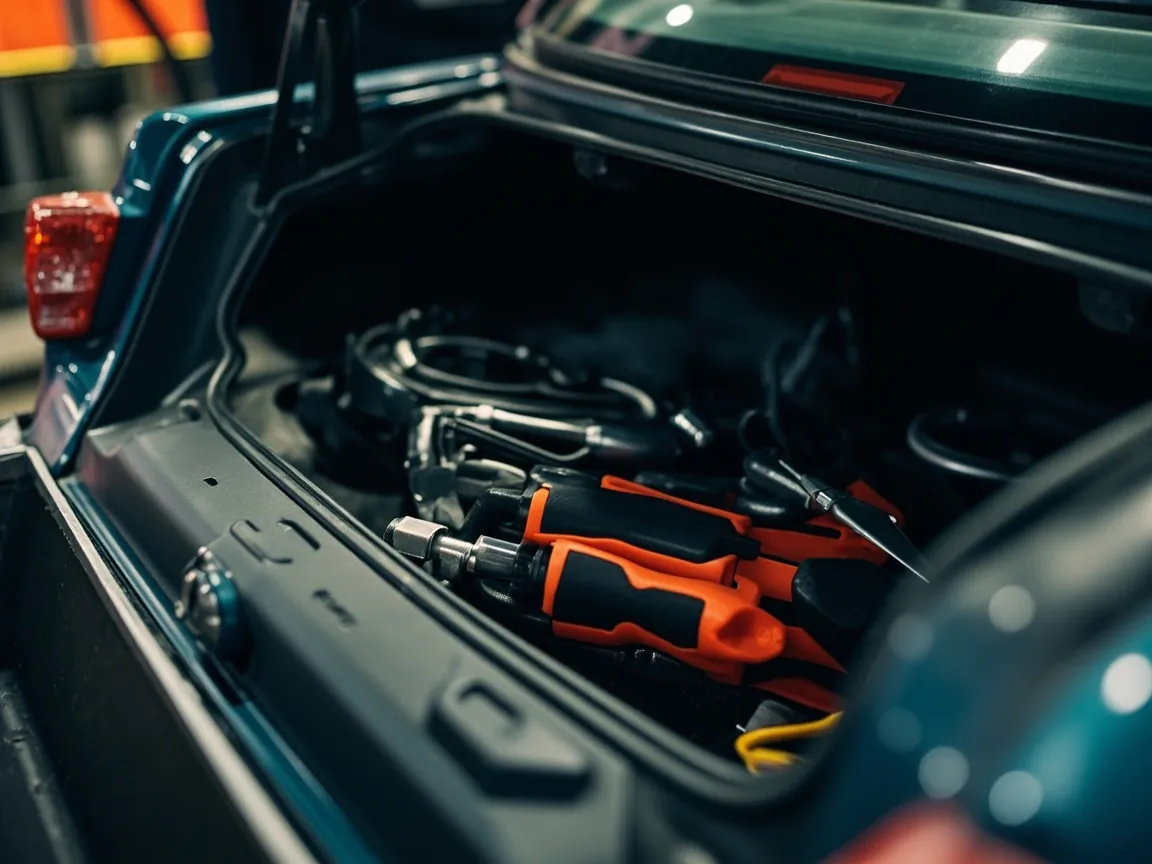
One list does not fit all; adjust it to the vehicle and the use.
| Vehicle / use | Configuration focus | Add | Trim |
|---|---|---|---|
| --- | --- | --- | --- |
| Family saloon, city use | Emergency plus basic self-recovery | Window breaker, jump leads or pack, compressor | Large tools, recovery gear |
| Family saloon, frequent long trips | Complete self-recovery | Full spare kit, fluids, headlamp, tow rope | Nothing |
| SUV / off-road | Recovery and remote self-help | Traction boards, high-rated tow rope, folding shovel, plug kit, high-flow compressor | Urban small tools |
| Pickup / commercial | Load carrying and work tools | Lashing straps, bed net, case mounting brackets, heavy gloves | Unrelated comfort items |
| Electric (BEV/PHEV) | No-spare contingency and HV safety | Plug kit, compressor, insulating gloves for professional use, jump pack for the 12 V battery | Engine oil, spark plugs; jump leads less central |
| Commercial passenger (taxi, ride-hail, coach) | Regulatory compliance and passenger safety | Extinguisher, triangle, first aid as required; vests for occupants | Personal items |
Notes on electric vehicles:
First, most electric cars carry no spare wheel, to save weight and space, and come with a repair kit and compressor instead. That makes puncture repair capability more important, and it means knowing how the kit works - read the instructions in advance rather than at the roadside - and understanding its temporary nature: most sealants come with speed and distance limits, and the tyre should be professionally repaired or replaced promptly.
Second, the role of jump leads changes. The traction battery is not started by jump leads, but the 12 volt auxiliary battery can still go flat, and it wakes the car and powers the locks and control units, so a flat one can leave the vehicle completely dead. Jump leads or a jump pack therefore still have a role, but check the manual for the correct connection points - many vehicles provide dedicated jump terminals and you should not work directly on the traction battery or on unverified terminals.
Third, the high-voltage safety boundary. High-voltage components - orange harnesses, the traction battery, the inverter - are dangerous. Non-specialists must not touch or attempt repair on them. Keep the carried kit to the low-voltage and mechanical side, and call professional recovery for anything high-voltage.
Pickups and commercial vehicles need better securing. An open bed exposes everything to weather and sun, and rides harder. Recommendations: the case needs a positive fixing method - U-bolts, a dedicated bracket or lashing straps; the case needs dust and water protection, IP54 at minimum and higher for an open bed; and consider theft resistance, with a design that takes a padlock. Metal boxes are common in pickup beds but corrosion protection matters - see stainless versus plastic toolboxes outdoors.
Choosing a Car Toolbox: Size, Securing Method, Ingress Rating
Three threads to selection.
Size: measure the space, then choose the case. Measure the usable cuboid in the boot or bed - length, width and height - paying particular attention to the narrowest point between the wheel arches, the height limit above a spare wheel well, and the real height once the boot lid is closed. Then choose against that, leaving a few centimetres of fitting margin. Check the external dimensions including handles, wheels and latch projections, not the "capacity" in the catalogue. The right way to read volume is in toolbox capacity calculation.
Securing: the first priority in a vehicle. Four approaches:
| Method | Best for | Strengths | Watch out for |
|---|---|---|---|
| --- | --- | --- | --- |
| Boot bracket or strap | Saloon and SUV boots | Low cost, universal | Needs anchor points; check strap tension regularly |
| Non-slip mat plus barrier | Light loads, city use | Simple, no modification | Prevents sliding only, not projectile risk |
| Bed bracket or U-bolts | Pickup beds | Rigid, theft resistant | May need drilling or existing holes |
| Under-seat or spare-well storage | Space-limited vehicles | Low centre of gravity, boot stays free | Awkward access; weigh it up |
The decisive test: will it move under hard braking? Put the case where you plan to keep it and shove it forward hard. If it slides or tips, the securing is not good enough.
Ingress rating: set by where it lives. A case in a closed boot mainly faces dust and temperature swings, so IP54 is usually enough. A case in an open pickup bed or on a roof rack faces rain and sun directly, so specify IP65 or better and think about shading. IP67 only enters the picture where immersion or a low, flood-prone position is possible. For the ratings themselves, see waterproof versus normal toolboxes and IP54 versus IP65.
Handle and carrying ergonomics. A car toolbox gets lifted in and out often, so handle comfort and balance matter. Loaded, the centre of gravity should sit near the middle of the handle so the wrist is not fighting an offset load - see portable toolbox handle balance. For heavier cases, tens of kilogrammes, consider a wheeled design, but note that wheeled cases are harder to secure in a boot because they roll - see wheeled versus standard toolboxes.
Interior structure. The interior must hold things in place - routed foam, straps or a divided tray - so nothing rolls under vibration. See internal compartment design for toolboxes.
Heat and Cold: What They Do to Tools and Cases
This deserves its own section, because it decides what can and cannot live in a car.
Three consequences of summer heat:
- The case softens and distorts. As the temperature approaches the material's deflection temperature under load (HDT, measured per the GB/T 1634 series), the modulus falls and the case sags - or permanently deforms - under the weight of its contents or a stack. Temperatures near the dashboard are the highest, so a toolbox should never live in direct sun. The mechanism and field measurements are in heat deformation of toolboxes stored in vehicles.
- Contents fail. Adhesives and tapes soften, run and lose grip. Aerosol cans - tyre sealant, cleaner sprays - gain internal pressure and risk leaking or bursting. Lithium cells age faster and carry a safety risk. Some plastics give off odour or deform.
- Ageing accelerates. Sustained heat, especially with direct sun, accelerates thermal-oxidative and UV degradation: discolouration, embrittlement and loss of strength.
Three consequences of winter cold:
- Plastic embrittles. Toughness falls, so a case that would shrug off a knock in summer can crack when dropped in winter.
- Seals stiffen. Any gasket hardens and loses elasticity, so sealing performance drops - this is also why a waterproof case feels tighter to open in the cold.
- Contents and tools change behaviour. Screen wash must be winter grade or the reservoir and lines will freeze and crack. Battery performance falls markedly. Some greases thicken. Tapes lose their tack.
So there are three things that should not live in a car: aerosol and compressed gas cans (heat risk); high-capacity lithium battery devices (accelerated ageing, and a safety risk in extremes - never leave them in direct sun); and heat-sensitive adhesives and medicines (they lose efficacy or spoil).
On material choice: if the case will sit in the vehicle through both extremes, choose a grade with good low-temperature toughness and a higher HDT - ABS, or an impact-modified PP copolymer, both behave better than ordinary PP homopolymer. See PP versus ABS toolbox materials.
Placement and Securing: Centre of Gravity, Access Path, Projectile Risk
Once the kit is right and the case is chosen, the last step is putting it in the right place.
Principle one: heavy items low and forward. The lower and more central the centre of gravity, the more stable the vehicle. So the toolbox belongs at the bottom of the boot, as close to the rear seat back as possible - nearer the vehicle's centre of mass - not at the very outer edge, where it adds to the swinging moment. That matters especially off-road or in hard driving.
Principle two: short access path for frequently needed items. The warning triangle, vest, gloves and torch are things you may need in a hurry at the roadside, so they belong where you can reach them the moment the boot opens, not buried at the bottom. Better still, keep the vest in the driver's door pocket or centre console, so you never have to stand at the back of the car in traffic to fetch it - on a motorway at night that is a material safety difference.
Principle three: projectile prevention is the floor. Everything is either secured or inside a closed compartment. Concretely: strap or barrier the case in the boot; secure or stow anything on the rear seats; never put heavy items on the parcel shelf below the rear screen, where a hard stop fires them straight into the front seats; and do not use loose boot clutter as "padding."
Principle four: do not obstruct sight lines or operations. Nothing should block the view through the rear screen, prevent the boot lid opening and closing, or block access to the spare wheel - if the spare lives under the boot floor, the toolbox must not sit on top of it.
Principle five: layer and secure the interior. Inside the case: heavy at the bottom, light on top; sharp tools - screwdrivers, knives - sleeved or located so they cannot pierce the shell or cut someone; liquids sealed separately and upright, ideally inside a leak-proof container; small items - fuses, cable ties, bulbs - in divided cells.
A simple acceptance test: once it is loaded, push the case firmly forward, then left, then right, simulating a hard stop and a hard turn. If it moves more than a few centimetres, the securing needs improving.
Quarterly Inspection and Update Checklist
Vehicle kits fail far more often through expiry or change of state than through being worn out. Work through the following each quarter, and before any long trip.
Quarterly, fifteen minutes:
- Fire extinguisher. Is the gauge needle in the green? Is the expiry date approaching? Any corrosion or damage? Is the bracket secure?
- First aid kit. Is everything present? Check expiry on gauze, antiseptic and ointments. Top up what has been used.
- Triangle and vest. Intact, reflective strips attached, stand usable.
- Window breaker. Still in place beside the driver, and physically sound.
- Jump leads or jump pack. Leads: insulation cracked, clamp springs strong, terminals oxidised? Pack: state of charge - keep it high, top it up if low.
- Compressor and gauge. Run the compressor once; many seize from long disuse. Check the gauge reads sensibly.
- Spare wheel. Check the pressure - spares leak down slowly, and this is the single most commonly missed check - and look for cracking or ageing of the tread.
- Fluids. Levels and leaks on screen wash, coolant and oil; before winter, confirm the screen wash is winter grade.
- Batteries. Charge and any leakage in torch, headlamp and pressure gauge.
- Tools and case. Rust on tools, cracks in the case, latches intact, contents still organised.
Annually, additionally:
- Replace torch and headlamp batteries whether used or not, to prevent leakage.
- Check the tow rope for wear, broken strands and ageing.
- Check straps and fixing hardware for ageing; webbing degrades under UV and abrasion.
- Re-check bulb and fuse specifications in the manual if the vehicle or lighting has changed.
- Re-run the three-ring assessment. Take out anything unused in the past year and consider removing it; add anything you needed and did not have.
Before every long trip, five minutes:
- Spare tyre pressure; tools present; triangle and vest present; screen wash level; tyre pressures on all four plus the spare; emergency contact information available.
Set a quarterly reminder in your phone calendar, or this list will be forgotten. Printing it as an A5 card and keeping it inside the toolbox works just as well.
Frequently Asked Questions
Q: Should a car toolbox go in the boot or on the back seat? A: The boot, preferably as close to the rear seat back as possible. Three reasons. Safety: the boot is a comparatively enclosed space, so in a crash its contents are far better contained than anything in the passenger compartment, and an object on the back seat becomes a projectile threatening occupants under hard braking. Visibility: nothing in the boot blocks the rear screen. Tidiness: the boot is the space designed for carrying things. Two exceptions. Items needed in an emergency belong in the cabin - the high-visibility vest, the window breaker and belt cutter, and a torch should all be within the driver's reach, in a door pocket, the centre console or a visor clip, because after a crash you may not be able to open the boot and you should not be standing behind the car in traffic rummaging. And if the boot is already full, the under-seat storage some cars have is acceptable, provided the case cannot slide out under braking. Wherever it goes, securing is non-negotiable - strap or barrier it in the boot, and secure or box anything on the seats.
Q: It gets very hot inside a car in summer. Will that damage the toolbox and its contents? A: Yes, and it helps to split it three ways. The case itself: as the temperature approaches the material's deflection temperature under load (HDT, per the GB/T 1634 series), the plastic modulus falls and the case sags - or permanently deforms - under the weight of its contents or a stack. ABS generally has a higher HDT than PP, which is one reason ABS cases behave better under heavy solar load. The contents: adhesives and tapes soften and lose grip, aerosol cans gain internal pressure, lithium cells age faster, some plastics give off odour or distort, and screen wash and coolant evaporate faster. Long-term: heat plus direct sun accelerates thermal-oxidative and UV ageing, showing up as discolouration, embrittlement and loss of strength. The responses are direct. Do not leave the toolbox in direct sun - never on the dashboard or under the rear screen; a shaded part of the boot is far better. Do not keep aerosol cans, high-capacity lithium devices or heat-sensitive adhesives and medicines in the vehicle long-term. Choose a material with a higher HDT and better weathering. And inspect the case and contents quarterly. The mechanism is analysed in heat deformation of toolboxes stored in vehicles.
Q: Electric cars have no spare wheel. How should the kit be configured? A: Three adjustments. First, puncture repair becomes central. Most electric cars omit the spare to save weight and space and supply a repair kit and compressor instead, so make sure the kit is in date, that you understand how to use it - read the instructions before you need them, not at the roadside - and that you know it is temporary: most sealants carry speed and distance limits, and the tyre should be professionally repaired or replaced soon after. Second, the compressor matters more. With no spare, the ability to reinflate and drive safely to a workshop is critical, so choose a unit whose rated pressure and flow suit car tyres, and verify with a separate gauge. Third, jump starting changes role but stays useful. The traction battery is not jump-started, but the 12 volt auxiliary battery can still go flat, and since it wakes the car and powers the locks and control units, a flat one can leave the vehicle completely dead. So jump leads or a jump pack still earn their place - but check the manual for the correct connection points first, because many vehicles provide dedicated jump terminals and you should not work directly on the traction battery or on unverified terminals. One safety boundary bears repeating: high-voltage components - orange harnesses, the traction battery, the inverter - are dangerous, and non-specialists must not touch them. Call professional recovery for anything high-voltage, and keep the carried kit to low-voltage and mechanical tasks.
Q: Does a car toolbox need to be waterproof? Can water get into a closed boot? A: In a closed boot the urgency is low, and dust and splash protection around IP54 is normally enough. The logic is simple: the boot of a saloon is a comparatively dry environment and does not get rained on. But it is not zero risk, and there are three real sources. Accidental liquid spillage - screen wash, engine oil or coolant carried in the boot can soak the case and contents if a container seals badly or tips over. Wet items brought in - umbrellas, wet raincoats, damp rags and tools retrieved from the rain keep the boot permanently humid, which rusts tools and grows mould. Washing and cleaning - an ageing boot seal can admit water during a pressure wash, and water runs in when the interior is cleaned. So the practical advice is: a boot-mounted toolbox should at least resist splashes and keep dust out, and liquids should travel sealed, upright and separated; if the case sits in an open pickup bed, on a roof rack, or anywhere it will be rained on directly, then specify IP65 or better. For the ratings themselves see IP54 versus IP65 and waterproof versus normal toolboxes. One further note: do not expect the inner organizer to be independently waterproof - the waterproofing duty belongs on the outer case, and the inner box only needs splash resistance.
Q: Is the most complete possible kit the best one? How much is right? A: No - quite the opposite. The first principle of vehicle kit is "enough, and no more." Three reasons. Safety: every unsecured or poorly secured kilogram is another projectile in a hard stop or a crash, and a boot packed with tools is a workshop's worth of inertia travelling with you. Cost: permanent extra load raises fuel consumption, and across a fleet that is a quantifiable operating cost. Usability: the more you carry, the harder it is to find anything, so in a real emergency you cannot get to it - which defeats the whole purpose. Apply the three-ring test: ring one complete, no exceptions; ring two complete for your vehicle and use; ring three actively capped at roughly 20% to 25% of the total. A practical pruning rule: at each quarterly check, take out every ring-three item unused in the past three months and ask "if I needed this right now, would I regret not having it?" If no, it comes out of the car. Two consecutive checks unused means it leaves the kit. The money worth spending is not on more, it is on better - a headlamp instead of a torch, thicker jump leads, the tyre gauge you keep meaning to buy.
Q: What should I watch for with the wheel change kit? A lot of people hit problems the first time. A: A wheel change is the roadside job you are most likely to do yourself, and the one most likely to fall apart at the critical moment. Four recurring problems. The spare is flat. Spares leak down slowly, and it is the single most commonly skipped pressure check - a great many people discover a soft spare the first time they need it. Check the spare whenever you check the other four, at least quarterly. The locking nut adapter has gone missing. With locking wheel nuts fitted, no adapter means no wheel off. It is small and easily left in a drawer or lost. Decide where it lives - with the jack is sensible - and confirm where that is when you buy the car. Jacking in the wrong place. Wrong placement damages the sill or underbody, or the car slips off the jack, which is genuinely dangerous. The correct points are illustrated in the owner's manual; look them up in advance rather than guessing at the roadside. Bolts that will not come off, or will not come undone. Long-undisturbed bolts can seize, and bolts previously tightened with an impact wrench may simply not shift with the kit wrench. Use a torque wrench to the manual's figure where you can, and check bolt tightness after a tyre change season. When changing a wheel: handbrake on, chock a wheel, place the warning triangle at a safe distance, and do not work on a slope.
Q: Plastic or metal for a car toolbox? A: For vehicle use, engineering plastic is usually the better first choice, though where it goes matters. Plastic's advantages matter a lot in a car: light, which makes lifting it in and out easier and cuts fuel; no rust, which is decisive in a damp boot; electrically insulating, which is safer during jump starts and electrical work; easy to seal to a high rating because the gasket channel comes from the mould; absorbs impact and springs back; and lower cost. Metal's advantages: higher structural strength and puncture resistance, better abrasion resistance, better theft resistance because it can be padlocked, and tolerance of higher local loads. But metal's weaknesses in a vehicle are equally clear: it corrodes once the coating is breached, and a damp boot or an open pickup bed will find that breach; it is heavy to lift in and out; it conducts, which is a hazard during electrical work; and at equal weight it carries more inertia in a crash. Recommendation: engineering plastic for a saloon or SUV boot; metal is defensible for an open pickup bed where theft resistance and heavy loads matter, provided corrosion protection and securing are properly handled; for rough off-road work consider a high-strength protective case. The comparisons are spelled out in plastic versus metal toolboxes and stainless versus plastic toolboxes outdoors. Whichever you choose, securing comes first.
Q: What should a fleet watch for when standardising vehicle toolboxes? A: Fleet buying differs from personal buying in three ways. Standardisation: one model means spares are interchangeable - latches, seals, inserts - training is uniform because everyone knows where things are, and reordering is simple. Settle on one or two models that cover almost every vehicle rather than a different case per model. Manageability: choose for easy inspection and stock-taking - routed foam outlines so a gap is obvious, standardised cell labelling, and the content list printed as a card inside the case. For a fleet of dozens, that materially cuts audit cost. Traceability and accountability: set the inspection interval and the responsible person, make the quarterly check a procedure rather than a reminder, and keep an inspection card in the case recording date and who checked it. On the purchase terms, specify: material and ingress rating including temperature range; internal clear dimensions and real usable volume; rated load; fixing method and accessories such as straps and brackets; latch and hinge life; and the replaceability and spare-part availability of wearing items such as gaskets. For fleets with custom requirements, JUNZHJIA can supply a standardised case and insert configuration per vehicle type and tool list, supporting fleet-wide standardisation.
Conclusion and Further Reading
Back to the question: what belongs in a car toolbox? The answer is "configure it by the three-ring method, do not pile it up by tool category."
Three sentences to take away.
First, ring one - safety and emergency - must be complete, and the window breaker and high-visibility vest belong beside the driver, not in the boot. The test for this ring is not how often it is used; it is how bad it is to be without it.
Second, ring two - self-recovery - is the best value in the kit, and its priorities are spare tyre pressure, puncture repair and inflation capability, jump starting, and bulbs and fuses. The rule here is "check the manual before you buy" - the wrong specification means you are carrying something you cannot use.
Third, ring three - comfort and convenience - needs an active cap at around a fifth of the total. The value of a vehicle kit is not completeness; it is being able to reach what you need instantly, and not having it turn into a hazard under hard braking.
Two principles that cut across all three rings: securing matters more than capacity, because an unsecured heavy object is a projectile; and checking matters more than filling, because extinguishers expire, spares go soft and batteries leak.
JUNZHJIA is manufactured by KeXin New Materials (Guangdong) Co., Ltd. at its Zhongshan facility, supplying protective cases, toolboxes, military and ammunition cases and IP67 waterproof enclosures to wholesale, distribution and OEM/ODM customers worldwide. For fleet and industry customers, cases and insert configurations can be standardised to vehicle type, tool list and fixing method, with material and ingress ratings documented by model, supporting a standardised vehicle kit and inspection regime.
Further Reading