

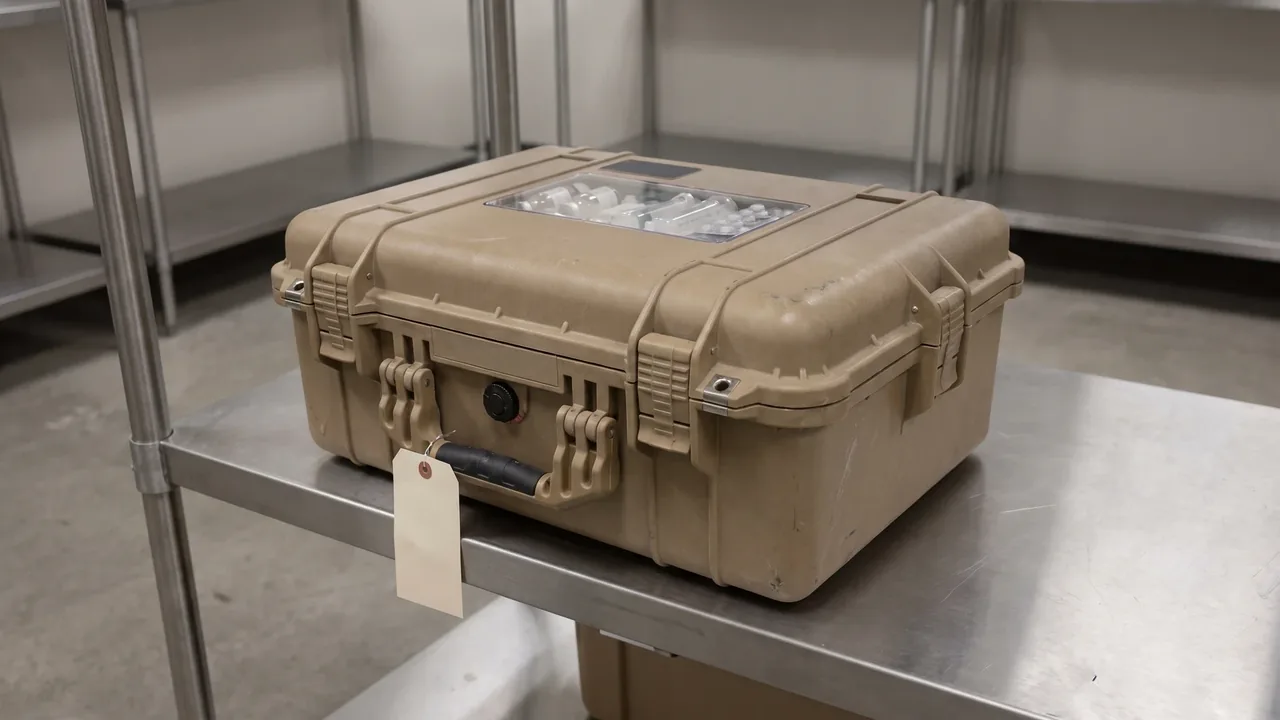
A rescue case is a standardized equipment case built for fire rescue teams, earthquake rescue squads, and civil rescue organizations, holding breaching, lighting, medical, and communications supplies so they stay organized, protected, and ready to deploy. This article covers only the protective container, examining shell materials, sealing, cushioning liners, modular configuration, stacking, and labeling from an engineering standpoint; it does not describe the chemical or medical nature of any contained item. Where cross-border movement is involved, local law and export controls apply, and the discussion stays with the packaging container. The wider picture appears in Emergency Kit Cases: Protection and Configuration of Response Supplies, while Disaster Relief Cases: Modular Storage and Transport of Relief Supplies shows how large batches are grouped into case families. Inside the rescue system the case serves both as a carry unit and as a dispatch node, so its container quality shapes first-response speed and how intact supplies arrive. A well-specified case also cuts training effort, because crews memorize one standard layout rather than a shelf of ad-hoc boxes, and it doubles as a teaching aid on scene. Specifying the case across the whole custody chain lowers lifecycle cost too, since fewer damaged or lost items let it pay for itself in a few deployments and one standard family shrinks the depot's stock of case-specific consumables. In practice the case is judged not by a single metric but by how well storage, transport, and retrieval fit together as one system. Across a fleet, the case family becomes a common language, so anyone trained on one box can read another and a spare crew can step in without retraining on unfamiliar packaging, which matters most when a second wave of responders arrives to relieve the first.
How a Rescue Case Fits Its Role
The core job of a rescue case is to give emergency supplies a modular, instantly usable home so that responders can grab the right kit inside the golden window. What sets it apart from an ordinary storage bin is the balance of modularity, standardization, and rapid deployment: cells are organized by mission pack, box types, labels, and liner modules are unified, and gear can be pulled in a preset order the moment the lid opens. An earthquake squad often carries the case on foot into a collapse zone, so it must be light yet survive drops; fire rescue adds heat, smoke, and spray, pushing sealing and structure to the front of the requirement. Planning starts by profiling supplies by category, weight, and retrieval frequency, then choosing case size and modules accordingly, instead of cramming everything into one big box. A rescue case is never a universal container, and any use beyond its rated load or protection grade erodes reliability, so the line between what it is for and what it is not must be drawn in advance. That discipline also makes the case predictable for a relieving crew, which can take over a known layout without a long familiarization tour. Predictability of that kind is the real product of disciplined container design, and it is what lets a unit plan around its cases instead of improvising at the worst moment.
Choosing a Shell: ABS, PP, or Aluminum
The shell material sets the case's weight, stiffness, and weather resistance from the outset. ABS engineering plastic holds tight tolerances and finishes well, suiting injection shells that demand precise liner fit. PP polypropylene is tougher and shrugs off low-temperature impact, and being lighter at equal wall thickness it suits cases carried on foot. Aluminum is stiffest and carries the highest protection grade, but it costs weight and money, so it is usually limited to fixed or heavy-duty storage. A fuller comparison of materials and molding is given in Case Shell: Structural Materials and Molding Process of Protective Cases. In real procurement, rescue teams mostly rely on PP or ABS injection shells because they balance moisture resistance, drop survival, and budget; if static-sensitive devices ride along, an anti-static foam layer can be added, though container-external behavior is outside this text. Temperature matters as well: cold regions favor PP for crack resistance, while high heat or rigid support may justify aluminum. Beyond the resin grade, wall thickness and rib layout change stiffness just as much, so before a large order ask the maker for a cross-section and a load analysis, and confirm the rated stack load and lifting points rather than trusting a material name. For cases that live outdoors or near the sea, add UV-stabilized resin and corrosion treatment, and list metal fittings as consumables to control total lifecycle cost. A clear material decision at procurement also simplifies the spare-parts list, because the depot then stocks one family of seals and latches for the whole fleet. Documenting the chosen material, wall thickness, and surface treatment in the procurement file helps later audits, since the same specification can then be checked against delivered units without renegotiating intent.
Sealing and Keeping Moisture Out
During storms, floods, or maritime rescue, moisture control is the case's most basic defense, because once water gets in the usable state of the contents is in doubt. Effective dryness needs sealing and absorption working together. First, the lid closes onto the Case Seal Strip: The Key Waterproof and Dustproof Accessory for Protective Cases, laying a continuous seal face that keeps outside vapor out. Second, a desiccant pouch or humidity indicator card inside takes up residual moisture and shows its state. The structure behind immersion protection is covered in Waterproof Cases: Sealing Structure & Immersion Protection, and what a protection code actually means is explained in What Is an IP67 Protective Case? Core Protection and Selection. Note that sealing protects only the interior volume, and the chemical or medical stability of contained items is not discussed here. After muddy or very humid use, inspect the seal seam for continuity and swap desiccant the moment it saturates, so protection stays a closed loop. Where a supply bay needs higher airtightness, a secondary seal lip inside the lid gives a redundant barrier should the main seal fail, which lowers ingress risk across long storage or a submerged leg of the journey.
Foam Cushioning and Modular Cells
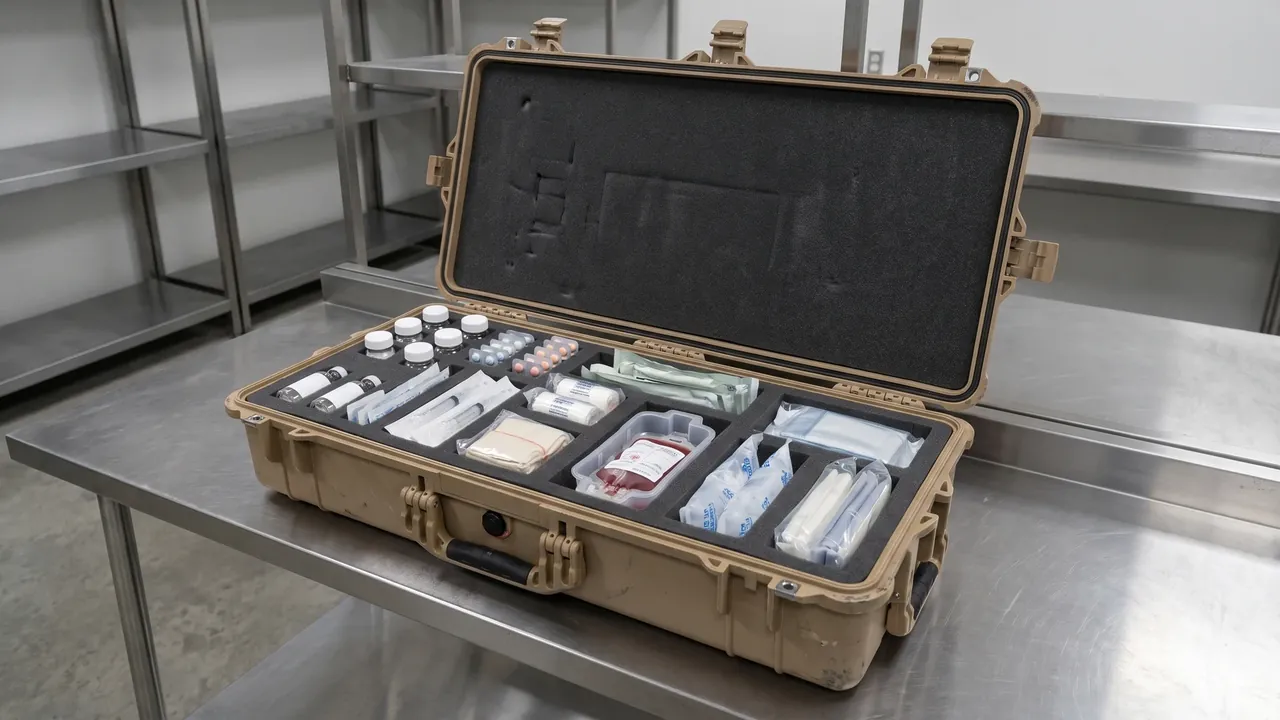
Rescue supplies come in many forms, from metal tools to precision instruments and consumables, and transit vibration and impact are the leading sources of hidden damage. Cushioning comes from the Case Foam Lining: Cushioning and Customization of Case Interiors, whose cutouts and milled pockets seat each item in its own cavity so nothing collides. For modules that change often, the Can You Add Dividers to a Protective Case? Designing a Removable Divider System approach allows cells to be rearranged without new tooling. Modular zoning cuts damage and doubles as an index for retrieval: one label per module, with the module code tied to a mission pack. EVA and PE foam are the common liners, differing in rebound and moisture uptake, and the maker should recommend density from item weight and shape. The liner must also keep buffer margin so that on a drop the foam deforms and absorbs energy instead of passing the shock to the supply. A layered liner can put heavy tools below and light consumables above, preventing crush damage and matching the order in which gear is deployed.
Organizing by Mission Pack
What truly separates a rescue case from an ordinary storage box is the way it organizes space by mission. Rescue work runs by mission pack, for instance breaching, lighting, medical, and communications, and each pack maps to a fixed set of modules inside the case. Planned well, the box moves from barely fits to retrieve on plan. The split usually weighs three dimensions: function, retrieval frequency, and urgency. The most-used items go in the top module reachable as the lid opens; critical-path items get a separate lidded cavity so they cannot be mis-picked. Location planning can borrow the long-term-keeping idea from Storage Cases: Long-Term Keeping and Warehouse Management: low-frequency items sink, high-frequency items move forward. For standard fasteners and loose small parts, the fine-cell scheme in Screw, Nut & Bearing Parts Boxes: Fastener Sorting transfers straight into the rescue case liner. Modules are never final; teams should keep correcting locations from drill records so the contents track real consumption. When supplies multiply, add cases sideways rather than stacking one box taller, so reachability and deployment speed hold up. A simple rule of thumb is that no module should need more than two moves to reach, which keeps even a loaded case fast to serve during an unplanned night call. The layout should also survive a change of personnel, so the coding and the physical cells are written down in a way a new team can pick up without asking a dozen questions.
Getting Gear Out Fast: Labels and Inventory
Rapid deployment is where a rescue case earns its keep. When a team must gather supplies by plan within minutes of arrival, the labeling system has to be readable by eye and by machine. The baseline is a weatherproof label per module giving name, specification, and quantity. The advanced route brings in Digital Management for Protective Cases: Asset Numbering and QR Code Traceability, assigning a unique QR code to every case and module so a handheld terminal can scan it in and out. Deployment speed comes from standardization: fixed locations, uniform labels, one coding rule, so any shift works by the same logic. Across several cases, QR codes also chain the transfer records between boxes, heading off duplicate buying on one side and silent shortages on the other. Label stock must resist oil and abrasion, and silk-screened category words on the shell help at a distance. The deployment flow itself belongs in the rescue plan, spelling out the triggers for pre-departure, en-route, and on-scene retrieval so the standard becomes a field action rather than a shelf idea.
Stacking, Transport, and Impact Control
Rescue cases are stacked in depots, trucks, and helicopter bays, and whether the stack holds depends on the Case Stacking Corner: Load-Bearing and Alignment Hardware for Stacked Cases at the four corners, which passes inter-layer load downward and locks position with an alignment stop. The general method is set out in Stackable Cases: Warehouse Turnaround & Stacking Protection. Vibration on the move is taken up by shell stiffness and liner together; Shockproof Cases: Cushioning Structure & Impact Isolation Design explains the buffer layering in detail. A firm reminder: the number of layers is bounded by the rated stack load, because overload crushes the lower seal strip and leaves hidden deformation, so weigh and height-check every load and tie the cases down in the vehicle to stop sideways slide. On long road or air moves, factor in the surface or cabin spectrum and the carrier's suspension, and add an anti-vibration pad between case and carrier when needed, cutting high-frequency transmission to the supplies and extending their usable storage window. Paint the safe stack height on the case panel, so a hurried dock crew cannot quietly go past that figure while the clock runs.
Temperature, Humidity, and Reserve Stock
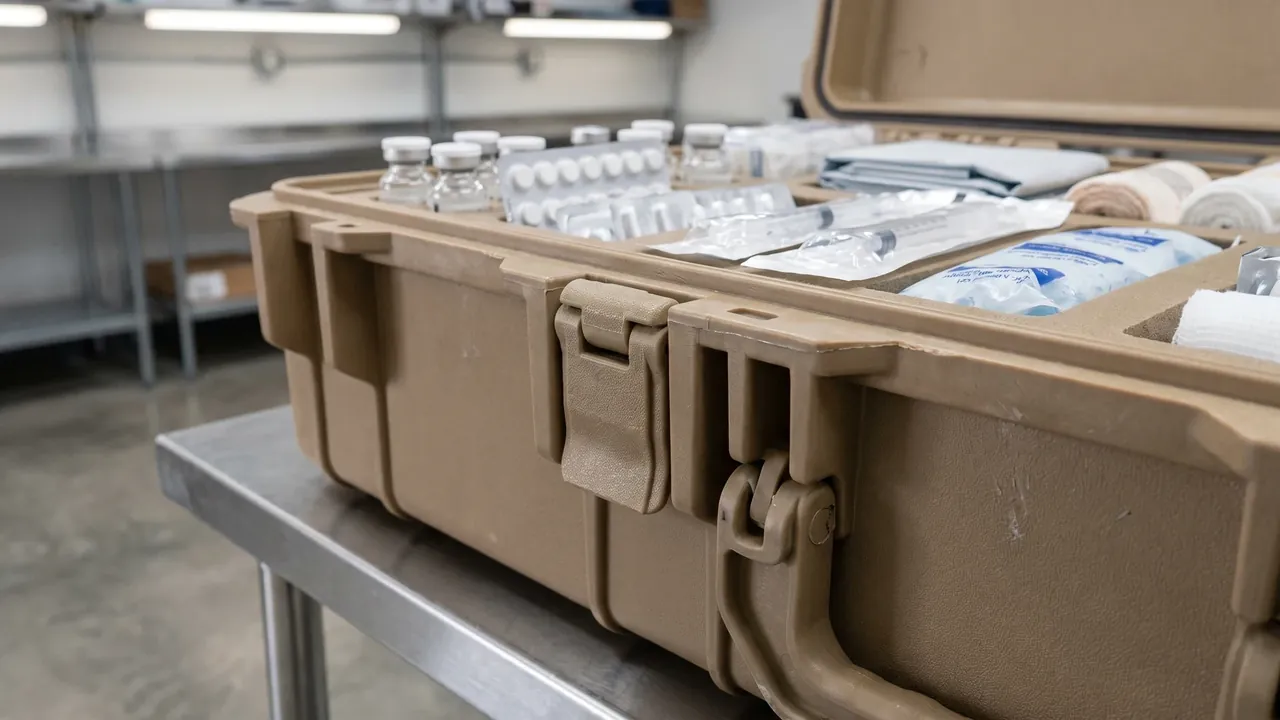
A rescue case is also a small inventory node for the response point. The safety-stock method in How Should Protective Case Inventory Be Planned? Setting Safety Stock for Common Specifications can set the minimum holding line for critical supplies inside the case. With a humidity indicator or a small logger, crews catch an abnormal interior state early, such as humidity creeping up after the desiccant gives out. How Should Protective Cases Be Stored? Moisture and Sunlight Rules for Warehousing makes clear that single-case protection and warehouse management back each other up. Safety stock should be computed from consumption history and replenishment lead time, not guessed, so nothing runs dry in peak disaster season and nothing piles up off-season. For supplies with a clear seasonal pattern, use dynamic safety stock and lift the floor before flood season or a cold snap. Logger curves double as traceability evidence, proving the supplies stayed in a controlled environment throughout storage and transit, and pairing the case with a short consumable list lets the crew reorder desiccant and seals on one purchase order instead of scrambling when the indicator first turns pink.
Latches, Corners, and Tying Down in Transit
On the move the case must resist both theft and accidental opening, and Case Latch: Pressure and Theft Resistance Hardware for Protective Cases covers latch pressure and anti-theft design together. A plain press latch is fine for daily use, while a latch with a hole takes a cable seal or padlock for accountable scenarios. Stacking corners were covered earlier; with the latches they form the case's outer frame, one governing opening and the other governing stacking. For fixing, straps should run through handles or dedicated slots so the case stays put under hard braking and rough roads, free of knocks against other cases or the carrier wall. A case fixed long term can gain anti-slip feet to damp resonance. At a shared response point, the seal number and handover record belong in the ledger, so every opening traces to a named person, deterring both theft and wrong picks and closing the management loop. A cracked latch tongue found at a quarterly check is far cheaper to replace than a loose load spilled on a wet road at night.
Certification Marks Explained: IP67, GJB, MIL-STD-810H
Buyers soon meet the certification trio of IP67, GJB, and MIL-STD-810H. IP67 means the case tolerates immersion to a stated depth and time without ingress, a direct read on sealing. GJB, the domestic military standard, lays down environment and mechanical test requirements from a defense-compliance angle, explained in GJB Military Standard Cases: Defense Compliance & Testing Notes. For how temperature shock, vibration, and drop are actually run, Military-Grade Test Items and How Cases Qualify is a systematic walkthrough. Be clear that certification only proves the container under stated conditions; whether any contained item meets trade or export control is not judged here and follows local law. When comparing certificates, ask for the original test report instead of trusting a nameplate. Even at the same grade, makers differ widely in seal design, wall thickness, and latch count, so the specific test conditions in the report carry more weight than the code itself.
Standard Handling as One of the Equipment Cases
In the end a rescue case is a member of the equipment-case family, and standardization is what multiplies its value. Field Camp Case: Living and Equipment Storage for Field Bivouac shows case groups cooperating in the field, while Logistics Support Box: Modular Resupply Configuration argues for organizing resupply by module. With Reusable Shipping and Storage Container: Economics of Returnable Logistics, one pool of rescue cases can cycle through depot, carrier, and site, cutting one-way packaging waste. Standardization also means a common box type, label, and liner module, so later batches swap cells and parts freely, shrinking the non-standard item count on the support chain and speeding response. When several teams adopt one case standard, cross-team transfers and temporary loans become practical, compressing preparation time and lifting asset utilization across the response chain. The gain is largest during surge demand, when a known layout lets a relieving crew take over without a long tour of an unfamiliar box that would otherwise cost the team its scarcest resource: time. Consistent standards also let planners forecast consumable demand more accurately, because one family of seals and latches serves every box in the pool instead of a long tail of odd parts.
Color Coding and Quick Recognition
On a rescue scene cases stand side by side, and color is the cheapest way to tell them apart. Can Protective Case Colors Be Customized? Pantone References and Masterbatch Notes confirms custom coloring is available. A rescue case can be colored by mission pack, one hue for breaching and another for medical, paired with a silk-screened category word so crews read the contents from a distance. Color complements the label system but never replaces module codes, since shade drifts under low light or with age. Once fixed, the scheme belongs in the rescue plan so later purchases keep the same palette and avoid same-color, different-class mix-ups. For temporarily requisitioned civilian boxes, a colored ring or face strip flags ownership, though the factory palette is best long term. Color can also carry warning meaning, marking boxes with controlled contents in a set hue; this article covers container identification only, not the control classification of contained items.
Care, Cleaning, and Replacing Worn Parts
A rescue case is built to last, yet it still asks for care. Protective Case Spare Parts: A Stocking List for Serviceable Items names the gaskets, latch tongues, and handles worth holding in the depot. Day-to-day attention is modest: look over the gasket for flattening, wipe dust from the foam, keep labels readable, and renew the gasket as soon as it stiffens or a catch stops springing back. Ten Common Quality Faults to Watch When Buying Protective Cases helps a buyer spot a thin wall or a poorly welded catch at goods-in. How Many Years Does a Protective Case Serve? Factors Behind Longevity notes that service life follows the polymer, the duty cycle, and the climate, and that clean handling and sensible storage add years. Wash with a mild soap rather than a solvent that eats the gasket and shell; ahead of a long idle, dry the foam, renew the desiccant, and rack the case clear of the floor. Slip a care card into a clear sleeve on the lid so whoever opens the case sees the steps, and small faults get caught long before they strand a team in the field.
Common Questions
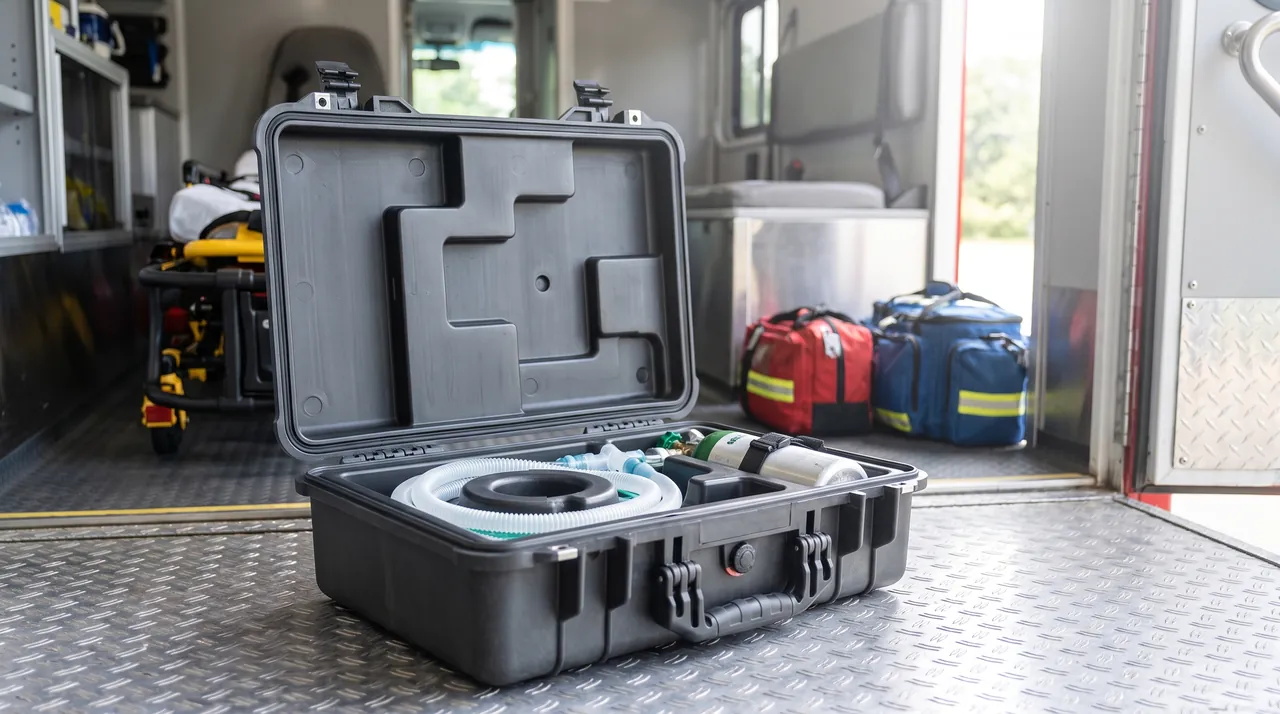
Q: How is a rescue case different from a normal toolbox? A: Set the two side by side and the split shows up in purpose, not size. A toolbox exists to hold hand tools and get them out fast; a rescue case exists to keep response supplies ready to move and evenly tracked, so its design leans on modular cells, one common standard, damp control, and shock damping. Open a rescue case and you tend to find a full gasket set, a shaped liner, position labels, and sometimes a QR asset tag, where a toolbox is usually just an open tray. Picking a rescue case also means committing to a planned, digitized hand-off of gear, which cuts the minutes before a team rolls and makes stock visible at a glance. Only the container is discussed here, not the chemistry or medical nature of what rides inside; trade and export rules follow local law. Keep buying, receiving, and the ledger for these cases apart from ordinary tool stock, or the count blurs and a real gap hides until the worst moment. Most units end up owning both kinds, but the rescue case is the one that goes to the incident rather than waiting at the depot.
Q: Which shell material should I choose for a rescue case? A: Choosing a shell means weighing three pressures at once: how heavy it is, how stiff it is, and what it costs. Where tolerances are tight and a liner must drop in cleanly, ABS in an injection mould is the natural fit, since it machines to size and takes a finish. PP brings more toughness and keeps working in the cold, and it trims weight at the same wall thickness, so it suits a box that is lifted by hand again and again. Aluminum tops both stiffness and the protection grade, but it is the heaviest and priciest of the three and generally earns its place only in fixed or very heavy duty. For the everyday rescue squad, PP or ABS already covers both damp and drop. Look at the temperature band the case will see and whether mud or salt will be around, and add a surface treatment if weather calls for it. What matters here is the container only; how a stored item behaves with the material is outside this text and follows local law and export control. Cold regions reward PP's resistance to cracking, while a metal option should be justified by a real need for rigidity or load support, not by habit. Comparing wall thickness and rib patterns across suppliers says more than the resin name on its own.
Q: What is the effective way to keep a rescue case dry? A: Keeping a case dry takes two habits that must run side by side. Close the lid and the gasket lays a single unbroken face against the shell, shutting out outside vapour, so that gasket has to be watched for flattening and age. Add a desiccant bag or a humidity card inside, and leftover moisture is drawn off while the card shows what is happening. Where the air is very wet or the case may go under, fit a second gasket in the lid or step up to a higher grade. Bear in mind that dryness only looks after the space inside; it cannot change how a stored item takes on water, so lift the lid only briefly and shut it promptly. For moves across a border or into a harsh environment, follow local regulation and export control, since this text addresses the packaging alone. A saturated desiccant has to go straight away, and paired with the card reading it forms a record that holds relative humidity where it should be.
Q: What real help does modular configuration give a rescue case? A: A mission-based layout swaps hunting on scene for pulling to a plan. Let every mission pack own a fixed cell and match the cell code to the plan, and a squad can take gear in order the moment it arrives, with no recount. QR tags tie the cases together too, so a transfer between boxes leaves a trail and neither a double order nor a quiet gap slips through. Three things improve at once: a critical module is confirmed before wheels roll, gear comes out in seconds on arrival, and after a drill the cells are easy to adjust. Write one coding rule into the rescue plan so each shift reads it the same way. The container-side scheme is all that is covered here, not the information rules for the contents. Set beside jumbled packing, a module layout can still be found by hand and colour tag in the dark and the din, which keeps a wrong grab from costing seconds that matter.
Q: How should the foam liner be arranged to cut supply damage? A: Each item wants its own close-fitting pocket. Route or cut the foam so fragile pieces rest in individual hollows and cannot knock together on the road, and where a shape is awkward, layer the foam so light consumables ride above and heavy tools sit below. EVA and PE behave differently in bounce and in how much water they take up, so pick density against the weight carried. A removable divider set handles modules that keep changing without any new tooling. Leave a label patch at each hollow so pockets line up with codes and counting is quick. Foam only softens mechanical shock; chemical or medical shielding of the contents is beyond this piece and follows local rules. On impact the foam gives and soaks up the energy, so size its thickness and density to the drop the case could take rather than packing it in at random. Where a single case serves several packs, colour-coded inserts let the crew swap the interior for the day's task while the outer shell stays the same.
Q: What should I watch when stacking rescue cases? A: Whether a stack holds comes down to the corner blocks and the load figure printed for the case. Each corner block carries weight from the layer above into the shell and presents a lug that keeps boxes from wandering out of line; no layer may carry more than the rated stack load, or the gasket underneath is squeezed flat and deforms invisibly. Take the time to total each load's weight and height before lifting, since an over-tall pile loses its footing. Inside a vehicle or cabin, strap the stack so a hard stop cannot send boxes sliding into one another. Kept in a depot for months, the case should follow the moisture-and-sun rules: raised off the ground and out of direct light, so the polymer ages slowly. These figures govern the container alone; whether the contents tolerate stacking is a separate matter left to local rules. Finally, mount a height-limit plate where loaders can see it, so a rushed crew at the dock does not quietly exceed the number under deadline pressure.
Q: Can the latch on a rescue case provide theft resistance? A: A latch slows an unauthorised hand; it does not stop a determined one. Its first job is the closing squeeze that keeps the lid shut on the move, and its second is an embedded core or an outside padlock that blocks casual opening. On scene or in a shared store, a catch latch with an anti-mistake feature stays shut yet still opens quickly when speed matters. Where a person must answer for the kit, a holed latch tongue carries a cable seal or padlock, and the seal number plus the handover record enters the ledger so each opening is traceable to a named individual, which discourages both theft and a wrong grab. Serious protection pairs storage control with asset records instead of betting everything on one case's latch, and that closed loop is what keeps a response chain dependable. Pairing the case with a short consumable list also lets the crew reorder latches on the same order, so a failed catch does not stall a deployment far from supply.
Q: How does a QR inventory system work for a rescue case? A: With QR tags, the system points the handler at the gear instead of the handler hunting for it. Code every cell or item type once, and a handheld reader logs the item out and back in while the system keeps stock current and raises a flag on shortfalls. The same tags chain the records between cases, so a duplicate order or a silent gap is caught early. Three gains stand out: a critical item is confirmed before departure, recovery is written off the moment it happens, and the monthly count becomes a sweep of a reader rather than a manual tally, which cuts mistakes sharply. Settle on one coding rule and put it in the rescue plan so every shift runs it the same way. Only the container-side labelling is in view here. Against a plain barcode, a QR block holds more and shrugs off dirt, which suits a greasy field where a failed scan could hold up a grab.