


Field hydrology stations sit at river cross-sections, reservoir banks, mountain stream outlets and irrigation headworks. Most of them are a long way from paved roads, so gear arrives on foot or by small vehicle and then stays outdoors for months. The case that stores, carries and protects the equipment is the first link in that field chain, and it is the part that meets weather, mud and impact before anything else. A water conservancy protective case takes no part in any measurement. Its job is simply to keep rain, silt, humidity, vibration and collision on the outside of the wall, so the interior stays dry, clean and stable. This article deals only with the container itself: shell materials, foam lining, gaskets and ingress protection, flotation, mud-facing surfaces, handle load paths, carry systems, stacking and transport, temperature thinking, and the tests and certifications that support selection.
Because hydrology sites differ so sharply, the practical approach is to define what the case must survive at each location first, and then compare structures against that list. A unit on an open reservoir bank meets wind-driven spray; one in a mountain gully meets a sudden, silt-heavy surge; one at an irrigation head meets more people, carts and knocks. Treating these as the same job usually ends in a case that is overbuilt in one place and weak in another.
1. What Field Hydrology Sites Demand From a Case
A hydrology station usually sits at a river cross-section, below a dam, at a mountain stream outlet or at an irrigation head. These places share one practical problem: they are a long way from paved roads. Equipment arrives on foot or by small vehicle, and once installed it stays in the open for months. Through the rainy season the case is soaked again and again; when a flood peak passes, a case on the bank may be briefly submerged, and when the water drops the base is buried in fine silt. Strong summer sunlight and wide day-night temperature swings make ordinary plastics brittle over time. In engineering terms the container must resist four kinds of stress at once: weathering, liquid ingress, particle ingress and mechanical impact. If any one of them is handled poorly, the protected space loses its value, so selection should not stop at volume and appearance. The requirements should be broken into structure items that can be checked one by one. Field work such as geological exploration faces similar conditions, and its practices are worth reviewing for similar field conditions.
Service interval matters just as much. A deployment can run for months without recovery, so seals and latches must survive repeated opening, straps must cope with the added weight of soaked gear, and shell colours should stay recognisable after fading. Weighing these long-term factors is closer to field reality than chasing a single extreme number. The same reasoning applies to the accessories rather than the shell alone. A short site list that records exposure, route and storage method can be reused when the next batch is ordered, so the specification grows out of documented experience instead of being rebuilt from scratch every time, and the people who actually carry the case end up with a say in what gets bought. Keeping that list short is the point; a handful of honest observations is more useful than a long form nobody fills in. The list is worth revisiting once a year, because routes and watering patterns at a station do change over time.
2. Shell Materials and Molding for Field Cases
The shell is the first barrier, and it decides impact resistance, weathering behaviour and overall stiffness. Rotomolded linear low-density polyethylene is the most common answer for field cases: it is formed in one piece with no seam, holds an even wall thickness, resists low-temperature cracking, and can carry stiffening ribs and stacking steps straight from the mold. Where more rigidity is needed, high-density polyethylene or a glass-reinforced compound may be used. Where strength plus heat dissipation matter more, an aluminium frame with riveted corners is possible, though weight and cost climb with it. Material choice should be weighed against the working temperature range, expected years of sunlight exposure, internal load and the way the case will be moved, rather than against one mechanical figure in isolation. Reinforcement layout and molding detail are discussed further under case shell design.
Stiffness is not decided by material alone. The direction of the ribs, the radius at each corner and the width of the flange all change how much a local area will deflect. A field case dragged across mud wears at the base and the corners first, so those regions are often thickened or given a wear strip. Two further points are worth noting: a gently tapered wall thickness avoids the internal stress that builds when thickness changes too fast, and a flat, untwisted opening flange is essential, because a warped flange will prevent even the best gasket from pressing evenly. Where the climate is severe, it can be useful to request a short sample of the same material batch and expose it to sunlight and a cold bend before ordering in volume, so the decision rests on a visible result rather than on a data sheet alone. Colour is a practical factor as well: a light shell stays cooler in strong sun and makes cracks or contamination easier to see, which helps inspection. For very hot or very cold sites, the working temperature range should be stated to the supplier at the outset, because the same polymer grade can behave quite differently once the range is widened.
3. Foam Lining and Custom Cavity Layout
The shell handles outside impact and intrusion; inside, the lining spreads the load. The usual method is to cut polyethylene or ethylene-vinyl acetate foam to the shape of the equipment, giving every item its own position so nothing knocks against a neighbour in transit. A layered lining can use soft foam on top for cushioning and denser foam below for support, balancing contact and backing. Foam density has to match the internal weight: too soft and a heavy part sinks into the cavity under vibration and presses on the next one; too hard and it stops absorbing shock. Small filler blocks can tighten the empty gaps. If the equipment is sensitive to temperature or static, an insulating or conductive layer can be added. Layering and custom layout are covered in more detail under foam lining layout.
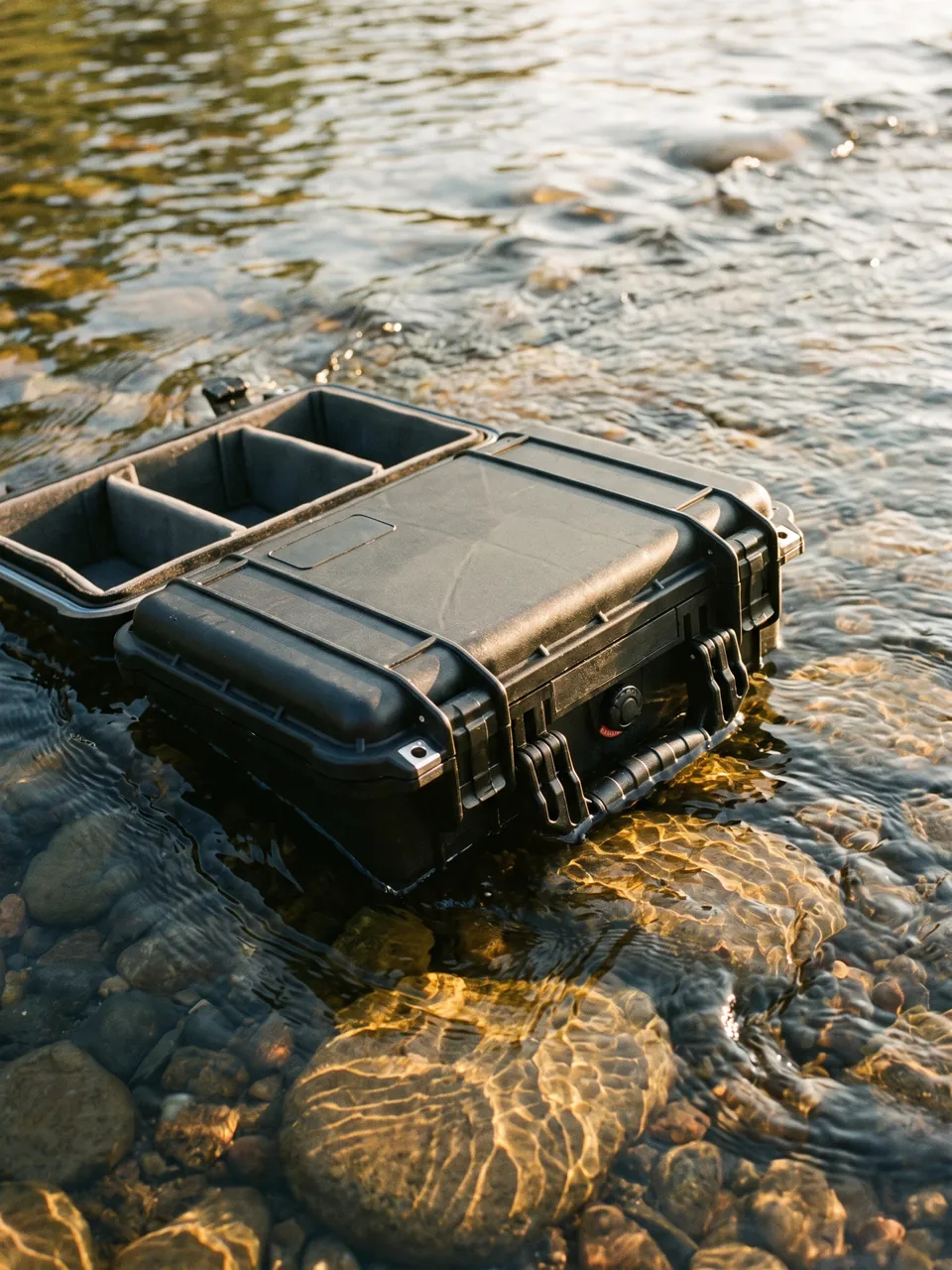
When planning cavities, divide by weight. Put heavier parts near the handle or the base so the load path stays short, and place delicate items in the middle layer with foam wrapped around them. Finger gaps speed up handling on site and reduce the wear caused by constant digging. For fast field assembly, cables, spares and tools can be given separate small pockets so nothing has to be searched through. A locating slot or pin between lining and shell is worth adding, because once a lining block shifts, the surfaces that once held the load no longer line up and a heavy part may end up against the bare wall. A closed-cell foam is the better choice when the equipment is often wet, since it absorbs less water and drains more readily than an open-cell product, and leaving a little clearance at the base of each cavity lets any residual water settle away from the parts instead of pooling under them. A lining that can be lifted out for cleaning is easier to keep dry than one that is bonded permanently in place.
4. Gasket Sealing and Watertight Interfaces
Sealing decides whether the case keeps rain out, and the weak points are usually not the lid itself but the interfaces and any cable entries. A closed-cell rubber or silicone gasket runs between lid and body, forming a continuous compressed face along the rim. Its cross-section, hardness and compression have to suit the closing force of the latches: too little compression leaks, too much speeds ageing and makes the case hard to close. Corners concentrate stress, so the gasket should be molded as one piece or joined carefully there. Where cables or connectors pass through, a sealing ring and a compression nut belong on the flange, with a drip lip on the outside so water runs off instead of pooling. Gasket types and selection points are set out under seal strip selection.
After use, the gasket groove collects fine sand, and those grains become a leak path the next time the lid is pressed down. Rinsing and drying the groove before storing the case is a cheap habit with real value. A gasket has a service life of its own; when it hardens, cracks or takes a permanent set, replace the whole run rather than patching one section. It is also worth matching gasket material to the climate: some compounds stiffen in the cold and recover slowly, leaving a short-lived gap, while others tolerate oil better than sunlight. A spare gasket kept with the case is a small item that pays for itself, because a torn seal can often be replaced on site in minutes, whereas a case that lacks one may sit unused for weeks. When a lid seal is replaced, check the whole compression line rather than only the damaged part, since uneven pressure at the corners will simply move the problem elsewhere. On a case that is opened daily, a slightly softer gasket is often a better compromise than a very hard one that seals perfectly on paper but wears out sooner in practice. The same logic applies to the latch force, which is best judged by actually closing the case a few times rather than by reading a figure.
5. Ingress Protection: Rain, Dust and Immersion Limits
The protection figures seen on a data sheet are really two separate ratings written together: the first digit refers to solid particles, the second to liquids. A field hydrology site normally needs dust protection and spray protection at the same time, and some positions also see brief immersion, which places different demands on the shell seal, the interfaces and the pressure-equalisation path. It should be said plainly that a rating is the result of a laboratory test; it is not a promise that no water will enter at any depth or duration. Water pressure, temperature change and gasket ageing all shift real behaviour, so treating the rating as a screening threshold rather than a guarantee fits sound engineering practice. A digit-by-digit reading of the codes is given under ingress protection grades.
For most bank-side stations, spray protection plus dust protection already covers long outdoor duty. Only where a unit sits in the drawdown zone or may be flooded is it necessary to raise the sealing spec to an immersion condition and add flotation and recovery planning, instead of using the same case for both situations. Comparing site risk, exposure time and inspection frequency on a short table makes that choice more consistent. A further caution is that a rating test is usually run in still, room-temperature water, while a flood brings cooler water, moving current and suspended sediment, so it is safer to treat the rating as a starting point than as an endpoint. On crucial sites it can also help to place a simple water-line marker inside the case, so that if an unexpected submersion happens, the people inspecting afterwards can tell whether the interior was actually reached and act accordingly. On a site with a serious flooding risk, the cheaper option is often to raise the case onto a small platform rather than to buy a heavier sealed model. Matching the protection to the real water level keeps both cost and weight under control.
6. Flotation and Anti-Sink Design for Waterside Sites
Some hydrology points sit on the water surface or close to it, and for those a case that floats and can be recovered matters more than sealing alone. Buoyancy comes from the balance between displaced volume and internal weight; an empty or lightly loaded case usually floats naturally, but a case filled with metal mounts or heavy parts needs buoyancy blocks built in at the design stage, or a double-wall structure with separate buoyancy chambers. Attitude in the water deserves attention too: with a high centre of gravity the case can roll over and put its interfaces downward, which raises the risk of seepage, so weight placement and centre of buoyancy have to be considered together. Recovery and immersion practice is discussed under waterside case practice.
To make a floating case easier to spot, reflective patches and a tether ring can be fitted to the outside. The tether ring doubles as a recovery point and has to take the pull of moving water without tearing the wall, so its fixing belongs in the structural design rather than being added later as a drilled hole. If the water level changes often, a bright colour block and a number help identify the case in murky water and tie it to its equipment record. Flotation is not the same as sealing; even a floating case still feels water pressure at its interfaces, so the two should be designed together. Buoyancy margin is best left a little generous, to absorb the changes that come as foam ages. For a case that has to float and also face long sun exposure, the shell material needs to resist ultraviolet ageing as well, otherwise the buoyancy structure stays intact while the wall develops brittle cracks. It is worth testing the intended load in still water before deployment, because a case that floats when empty can behave very differently once the working payload is inside it. A short note of the tested load and the observed attitude saves a lot of guessing later.
7. Mud Ingress, Silt Drainage and Pressure Equalization
Silt left behind by receding water is one of the hardest opponents a field case meets. Fine particles work into latch gaps, gasket grooves and handle pivots, and once dry they jam the moving parts. Three responses help: simplify external moving parts and reduce narrow grooves, leave a channel around pivots and latches so they can be rinsed, and give the base slightly raised feet so the case does not sit flat in the mud. Pressure equalisation cannot be ignored either. A sudden temperature change creates a pressure difference that can suck the gasket flat, and over time that ruins the seal. A vent valve or a labyrinth relief channel lets pressure equalise slowly while still blocking liquid. Seal behaviour in muddy water is discussed under immersion seal checks.
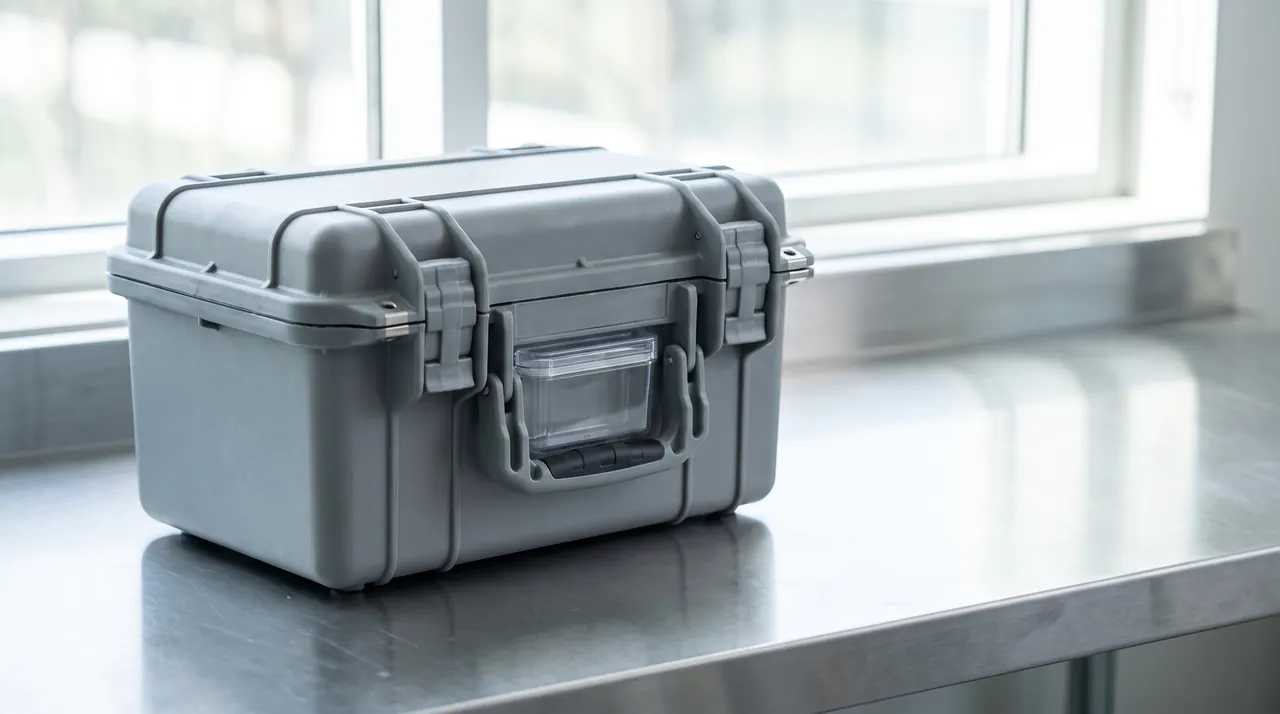
In the field, a soft brush and low-pressure water should loosen the mud before a full rinse, and a hard tool should never be scraped across the gasket. Once rinsed, open the lid and let residual water evaporate before closing again. For sites that stay muddy for long periods, choose a case with fewer external grooves that is easier to flush. The relief path itself should run long or use a membrane that passes air but not water, and it should never be placed in a low spot where it becomes an entry point. During routine inspection, press the relief element lightly with a hand to make sure silt has not blocked it, because a blocked vent restores the pressure difference it was meant to remove. Reducing the number of small external features also cuts the places where silt can collect, so a simpler outer form is often easier to keep serviceable than a case with many cosmetic recesses. Where a latch or hinge can be unbolted for cleaning, that small design decision can extend the working life of the whole fitting. On muddy sites, a case that can be hosed down and put back together quickly will stay in service far longer than one that has to be partly dismantled.
8. Damp Season Humidity and Mold Control
High humidity threatens the inside of a case slowly and continuously. Sealing keeps rain out, but the damp air trapped at closing time, plus the moisture that enters each time the case is opened, accumulates inside and condenses on cold surfaces as the temperature swings between day and night. Countermeasures include reusable desiccant packs, an absorbent layer behind the lining, and a humidity indicator card that can be checked on a schedule. A case stored for a long period should not sit directly on a damp store-room floor; raise it and keep air moving around it. For temperature-sensitive cavities, an insulating layer behind the lining slows internal temperature swings and reduces how often condensation forms; the reasoning is set out under thermal insulation ideas.
In a long damp season, leave the case open to air in a ventilated place before storing it, and replace or dry desiccant that has become saturated instead of sealing it back in. The store room itself should be kept dry. Checking humidity does not have to mean opening the lid every time: a colour-change card behind a viewing window can be read from outside, which cuts the number of openings and the moisture each one brings in. On lining material, a low-absorption foam that wipes clean is easier to keep free of mold, and any case that has shown mold should be dried and wiped thoroughly before reuse. If a case is stored for a long time, leaving a very narrow air gap under a rain cover lets the interior breathe slowly without letting rainwater in. Tracking the reading on the indicator card over a season also builds a picture of how quickly each site gains moisture, which tells the team how often desiccant has to be changed at that particular location rather than at a fixed interval everywhere. A dry case that is closed with clean, dry gear is far easier to keep dry than one that seals damp equipment inside it.
9. Latches, Hinges and Handle Load Paths
Latches, hinges and handles carry the most concentrated loads on a case and fail most often in the field. A latch has to press the seal while still being easy to work in gloves. Snap and push types each have trade-offs: the snap latch closes hard but is stiff to open, the push latch is quick but may not compress the gasket enough. A hinge has to carry the lid weight through repeated openings; metal hinges last well but can corrode, and engineering-plastic hinges are light but need attention in cold weather. The points where a handle meets the body should be part of a reinforced structure rather than relying on a few screws. How these parts behave under impact is discussed under drop impact checks.
The general rule is to let the case carry the main load and let the fittings connect and lock. Then a single failed fitting cannot break the case apart or let the lid swing open suddenly. Carrying spare latches and small wear parts with the case makes field repair simple. When selecting, check interchangeability as well: if hinges and latches are shared across a series, spare stock becomes far easier to manage, whereas a unique set of hardware per size means a field failure may wait on a factory shipment. Treating fitting standardisation as a hidden criterion pays off over time, and a one-piece molded handle attachment holds up better under a full load than a bolted-on part. For a handle that has to lift a heavy case, a lightly textured grip area is a small detail that matters in the rain, since a wet hand is far more likely to slip. It is also worth checking that both latches close with a similar feel; when one side needs noticeably more force, the seal is usually being compressed unevenly, and that imbalance will shorten the life of the gasket. A worn latch that no longer holds its setting should be replaced early rather than tightened repeatedly, since a loose lid is harder on the seal than a new latch is on the budget.
10. Carry Systems: Backpack, Trolley and Field Handling
From the road to the monitoring point there is often a stretch with no path, and the carry method decides how efficient the field work is. Short moves suit a handle or shoulder strap; longer ones suit a backpack system that spreads weight across the shoulders and waist. A wheeled trolley is easy on flat ground but sinks or breaks on mud and broken slopes. Selection should judge the worst route, not the best one, and the case may need external attachment points so straps or a drag line can be added on the spot. Where a site connects with other handling equipment, the shape and grip points can follow ideas used in ground handling cases.
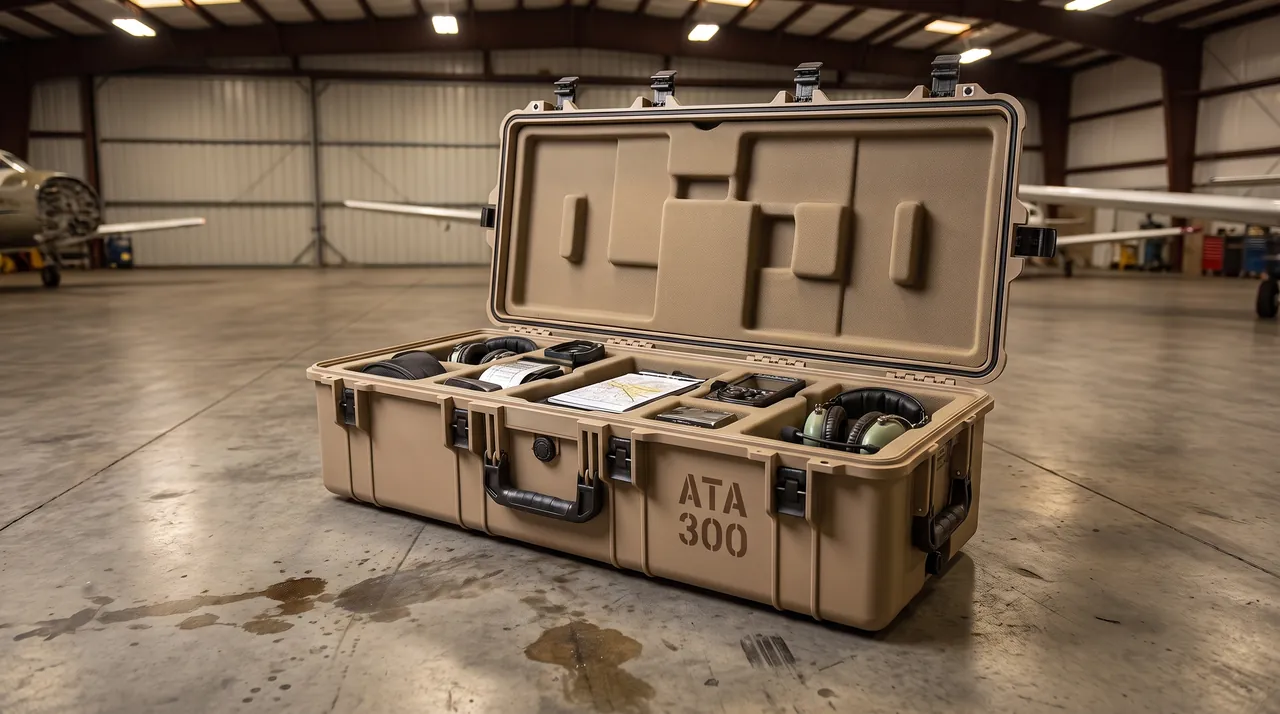
Straps should join the case through wide webbing and metal buckles so that a long pull does not tear a small area, and adjustable straps let workers of different builds share the same case. Wheels are best made removable, so a damaged unit can be swapped quickly instead of scrapping the whole case. Routes often cross narrow bridges, stone steps or brush, and the outer dimensions and handle position affect how easily a case passes; walking the most common route once before buying reveals more than a data sheet, and test-carrying the case both empty and full shows whether the centre of gravity feels right. On mountain sites, padding at the shoulder contact points makes a long carry noticeably easier. Where a single trip can move only one case, the choice of size matters more than the choice of fittings, so it is worth balancing capacity against how many trips the route demands. Trying the case empty and loaded on the actual approach before buying also reveals whether the handle sits at a comfortable height, which is far easier to judge on the ground than from a drawing. A carry system that suits the terrain is worth more than one that merely looks robust in a catalogue.
11. Stacking Corners and Transport Restraint
In a temporary store or transfer point, cases are often stacked to save space, which is where stacking corners and locating features matter. The corner transfers the weight of the upper case to the frame of the lower one rather than the middle of its wall, and it limits horizontal sliding so the stack does not shift under vibration. Heavier cases go at the bottom and lighter ones on top, with flat, clean faces and no trapped debris between them. For long transport, straps and tie-down points should connect the case to the vehicle or pallet as one unit and reduce back-and-forth movement. Corner construction is covered under stacking corner design, and load verification under stack load checks.
It is worth remembering that an empty stack behaves very differently from a loaded one. For long storage, assess the lower case at full load and leave margin in the stack height. If the floor is uneven the stack leans more easily, so level the ground and add simple limits at the corners. For long-held batches, record the number of layers and the storage time so no case spends too long at the bottom and takes a permanent set. Between cases, a separator pad prevents hard shells from rubbing and wearing away the markings, and with a pallet, confirm that the pallet itself suits the case size so nothing is left bridging in the air. Tightening straps should pull against the frame rather than a thin wall, since a strap drawn across a flat panel can leave a dent that never recovers. A short written rule for the store room, covering order of stacking and maximum height, keeps the practice consistent when staff change. Posting that rule where the cases are actually stored is the difference between a policy and a habit. Where storage space is tight, it is usually better to add shelving than to add another layer to the stack, since the load on the bottom case rises faster than the space saved.
12. Field Maintenance, Cleaning and Service Life
The reliability of a case is built by routine care, not by one heavy-duty design. After each field job, check the gasket for hardening and cracks, the latches for looseness, and the shell for cracks or deep scratches. Rinse off silt and salt, and apply a little weather-resistant grease to moving parts. On cases exposed to damp or coastal mist, metal fittings corrode first, so inspecting hardware and replacing damaged parts on a schedule is cheaper than scrapping the whole case. Corrosion behaviour and the pace of maintenance are discussed in the environment categories under corrosion test context, and the effects of a long haul are covered under transport test routines.
A simple maintenance log, recording what each inspection found and how it was handled, helps decide whether a case is worth keeping in service and gives real feedback to the next purchase. Maintenance is not about taking things apart often; it is about catching small problems before they accumulate. Spares belong in that routine too: gaskets, latches, desiccant and straps are consumables, and keeping a small stock means a reported fault can be fixed at once instead of leaving equipment idle. A one-page fault list carried with the case lets staff with limited experience handle most small problems, and noting fade and wear during inspection helps judge when a whole batch should be replaced. Consumables and common spares belong in the store under the same routine, so a reported fault does not wait on a factory shipment. Faults recorded once, such as a leak or a rusted fitting, deserve a follow-up check on the next visit, to confirm the fix actually held rather than simply appearing to work at the time. Over a few seasons those records turn into a clear picture of which parts of the case, and which sites, deserve the most attention. That evidence is far more persuasive than a general impression when it is time to justify a change of supplier or a different case design.
13. Testing, Certification and Compliance Notes
Whether a case is reliable ultimately rests on repeatable tests. Common items include drop, random vibration, immersion, salt spray and stacking, matching impact in handling, long-haul vibration, brief flooding, damp corrosion and warehouse load. When choosing a third-party lab, confirm that its scope covers the relevant standards and keep complete original records, instrument calibration certificates and specimen photos for traceability. Cross-industry transport may also bring admission rules for rail intermodal or transport marking, covered respectively under case certification, rail intermodal rules and transport marking rules. A test report supports selection; it is not a permanent guarantee. Because field conditions vary so widely, the conditions and conclusions in a report should be compared with the actual site before they are adopted. When one batch of cases is going to several climate zones, it is worth checking the relevant test items for each zone rather than letting a single report stand in for all of them. Keeping the records together also makes the next procurement faster, since the evidence that supported the first decision is still on file. A single cover sheet that lists each case model against the standards it was tested to makes that archive quick to use. If a standard is revised, the sheet also shows at a glance which cases may need to be reassessed before the next order is placed.
It should also be made clear that this article deals throughout with the structure, materials and fittings of the case as a container. It does not assess the inherent properties of anything placed inside, and it offers no view on whether particular goods may be shipped. Wherever cross-border transport, export or re-export is involved, the applicable laws and export-control requirements differ by country and region, so the party responsible for that consignment should carry out its own assessment against destination rules and bear the corresponding responsibility. This article is information at the container-engineering level only and cannot replace any compliance conclusion.
Frequently Asked Questions
Q: How does a water conservancy protective case differ from an ordinary tool box? A: The main difference comes down to long-term outdoor exposure. An ordinary tool box is designed for indoor or short-term use, and its seams, latches and materials are not tuned for continuous rain, strong sunlight and day-night temperature swings. A water conservancy protective case is organised around long field deployment, from the shell compound and gasket compression to the drainage features and stacking corners. It places more emphasis on seal durability, maintainable fittings and recoverability after a fall into water. Even when two cases look similar, the material grades, wall thickness distribution and fitting specifications are often not interchangeable, so selection should not be based on appearance or volume alone. Buyers should compare the four stress categories a site imposes and check each one against the structure, rather than accepting a single headline rating as proof of suitability. A useful habit is to record which part of the case failed first on the units already in service; that history usually points to the weak point faster than a specification table, and it tells the buyer where to spend the budget on the next order.
Q: Will the seams of a case leak after long periods of rain? A: Leakage depends on the integrity of the sealing structure, not on whether a seam is visible. If the gasket is continuous, compression is right and the latches are properly closed, rain tends to stay on the rim and drain away; once the gasket ages, sand fills the groove or a latch works loose, water follows the gap. Judgement should therefore be based on compression recovery and surface condition after a period of use, not on how a new case performs. Cleaning the groove, checking gasket hardness and replacing the whole run when needed are more reliable than a temporary dab of sealant. It is also worth remembering that rain alone does not automatically cause a leak; what usually accelerates failure is repeated expansion and contraction from temperature change, which gradually removes the gasket's elasticity, so regions with sharp temperature cycles need shorter inspection intervals. Keeping a small stock of replacement gaskets makes that routine practical, and a simple note of when each gasket was fitted turns guesswork into a scheduled task.
Q: Can the interior become damp and condense during long storage? A: It can, because sealing blocks liquid water from outside but cannot stop the moisture carried in when the case is closed or the condensation caused by temperature difference. The countermeasures are to control the humidity of the air when closing, to use reusable desiccant, and to place an easy-to-read humidity indicator card inside. If the equipment is very sensitive to moisture, an absorbent or insulating layer can be added to the lining to reduce the temperature swing at the internal surface. The key is to build a habit of checking and replacing desiccant on a schedule rather than leaving it in place indefinitely. Where possible, add a replaceable absorbent pack and record its replacement date in the maintenance log, so moisture risk stays within a manageable range. Where a station is left unattended for a full season, a slightly oversized desiccant pack is a cheap safeguard, since it simply extends the time before saturation and gives the next inspection more margin. If the reading on the indicator card climbs faster than expected in a short period, that is itself useful evidence that the seal or the closing procedure needs attention.
Q: Can a case still be used after it has been briefly submerged in a flood? A: Whether it can be reused depends on its actual condition after submersion, not on a simple yes or no. First check the gasket groove for trapped silt, the latches for distortion and the shell for cracks, then dry the case and leave it open to ventilate so residual water inside evaporates fully. If water clearly entered, assess whether the lining has absorbed moisture and whether hardware has corroded, and replace the affected parts before putting the case back into service. For cases deployed for long periods in the drawdown zone, it is better to raise the sealing and flotation spec at the selection stage than to patch the problem afterwards. During the check, also look for wear at the base and corners from water scouring, because a thinned area should enter a replacement assessment even if the seal is still sound. If the case held pressure well and no water entered, the main job is simply to dry it thoroughly before it is closed again, since trapping damp air inside after a flood is the most common way a case that survived submersion later develops corrosion or mold.
Q: How should mud that has clogged the case and its latches be handled on site? A: Start by softening the surface mud with a soft brush or low-pressure water before rinsing, then work on the fine sand in the gasket groove, the latch pivots and the handle joints, avoiding hard tools on the rubber. After rinsing, dry the case and ventilate it, confirming that the moving parts spring back freely before closing. If mud has dried and jammed the hardware, soak it to soften rather than forcing the latch, which could snap it. For cases used in muddy conditions for long periods, choose a design with fewer external grooves that is easier to flush. Where possible, keep a soft brush and a small bottle of water on site and clean the case before leaving, which is far easier than dealing with hardened silt later. A second point is worth stressing: mud does not have to reach the interior to cause trouble, because the secondary damage it does to latches, hinges and pivots can take a case out of service even when the shell and the seal are still intact.
Q: How should the choice between backpack carry and trolley carry be made? A: Base it on the worst route, not the best one. A wheeled trolley saves effort on flat ground over a long distance, but on mud, broken slopes or a ditch crossing the wheels sink or break, and a backpack system is steadier because the weight is spread across the shoulders and waist. The practical answer is to give the case both strap attachment points and a wheel mounting position, so the carry method can be changed to suit the task. Whichever method is used, the grip points need enough connection strength to avoid a local tear during lifting. Where a worker has to hold a rail or a rope while crossing a slope, a single-handed pull point on the case is worth planning, so no one has to let go of the case to keep balance. It also helps to standardise the carry system across a fleet, because a strap that fits one case can then be swapped onto another when a unit is damaged, and field teams do not have to remember several different fitting types.
Q: Can a case be deformed if boxes are stacked for storage? A: There is a risk, especially when empty cases are stacked or the stack is too high. Stacking corners guide the upper load into the frame of the lower case rather than the middle of its wall, but if the faces are not flat, debris is trapped between them, or the lower case is empty, the load can still exceed the design range. A safer approach is to assess the lower case at full load, limit the stack height, put heavier cases at the bottom, and inspect the faces for dents or bulging during long storage. When storage lasts a long time, a flat pad between layers spreads the load and reduces the chance of a concentrated pressure point, and recording layers and duration helps avoid leaving any case too long at the bottom of the stack. The difference between an empty and a loaded stack is easy to underestimate, so when in doubt, lower the stack and inspect more often rather than trusting a comfortable-looking arrangement.
Q: What transport tests are needed to move equipment to a remote station? A: Choose the items according to the environment that will actually be met. Rough mountain roads correspond to random vibration, drops and knocks during transfer to a drop test, brief flooding to an immersion test, damp or coastal conditions to a salt spray test, and temporary warehouse stacking to a stacking test. There is no need to chase the largest number of tests; instead, make the conditions as close as possible to the real route and storage method, and keep traceable records. That way the conclusions have value for field selection and use. Where possible, also run a full-load carry trial before delivery, watch how the fittings behave under real load, and feed anything found back to the supplier for adjustment before a bulk order. The list of tests can look long, but the point is not to run everything; it is to match each test to a condition the case will really meet, so the results can be compared directly with the route and the storage method, and the report becomes a working document rather than a formality.
Q: What should be noted on compliance when a case is exported for use abroad? A: The first point to be clear about is that the transport and customs requirements for a container and the regulatory requirements for its contents are two different matters and should not be judged together. The laws and export-control rules involved in cross-border transport, export or re-export differ by destination, and the party responsible for that consignment should assess them against local rules and bear the corresponding responsibility. This article discusses only the container structure and reaches no conclusion about the compliance of any particular goods, and it cannot serve as a basis for customs clearance or declaration. For any shipment that crosses a border, consult the applicable requirements for that route and keep the assessment with the shipping documents. Because the rules change over time and differ between destinations, a check made for one shipment does not automatically carry over to the next one, and the responsible party is the one who has to confirm it is still current before dispatch.