

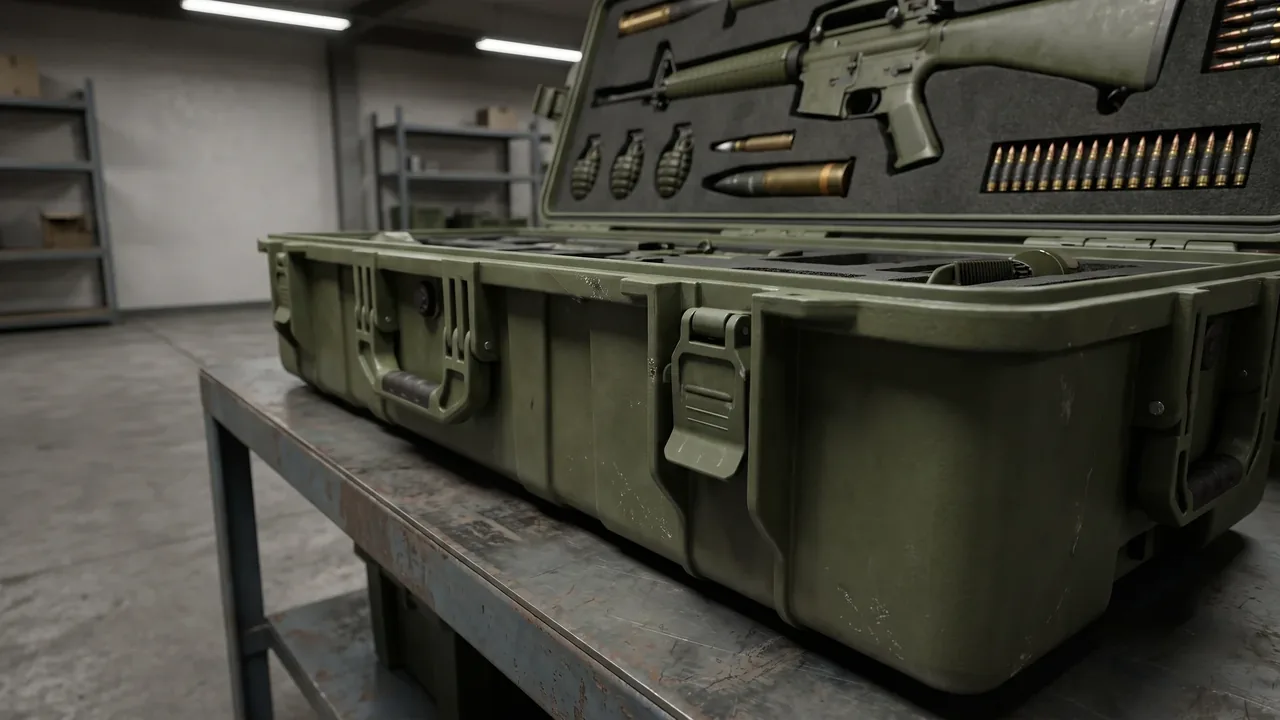
A protective case for airport ground support is a modular container system used to consolidate aircraft ground equipment, maintenance tools, and general support items for apron operations. The apron environment has distinctive characteristics: tight space, high-frequency turnaround, a large proportion of open-air work, and the coexistence of rain, snow, de-icing fluid, and washdown water. A case must therefore do far more than store items; it must remain structurally intact and reliably sealed while being pushed, temporarily staged, and loaded onto vehicles, and it must support fast, gloved handling under poor lighting.
This article follows the theme of modular carry. It discusses how the Case Shell: Structural Materials and Molding Process of Protective Cases and the Foam Lining: Cushioning and Custom Layout for Protective Case Interiors cooperate in the apron scenario, and it explains how sealing, stacking, and handling determine whether a case survives repeated turnaround. The discussion is limited to the container structure itself; the nature and internal construction of any packed items are outside its scope, and cross-border transport and export are matters for the responsible party to assess separately against applicable law.
Airport ground support is organized around a working shift rather than a fixed workshop. A team may begin the day with a line-maintenance task, switch to an inspection round, and then support a de-icing operation, all within a few hours. Each switch changes the equipment needed but rarely changes the vehicle, the storage rack, or the route across the apron. Modular carry answers this pattern by decoupling a durable shell platform from interchangeable interior modules, so that the same case body can serve several tasks. Getting that decoupling right requires attention to shell stiffness, caster geometry, seal continuity, corner hardware, and labeling, because a weakness in any one of these appears as a failure in the field rather than as a drawing error.
The sections that follow move from the operating conditions that shape the container, through the composition of the modular system, to the practical points of selection, verification, and maintenance. The goal is to give procurement and ground-support teams a checklist that links each claim about a case to evidence they can review, so that a container choice is made against the real mission profile rather than against a generic specification sheet. Where a claim cannot be tied to evidence, it should be treated as a question to raise with the supplier before any order is placed.
Apron Operating Conditions and Case Structure
The first constraint on an airport ground support case comes from high-frequency turnaround and open-air exposure. Unlike tool management inside a workshop, ground equipment must be taken out and returned between flights, so a case has to withstand repeated vibration and knocks while being pushed, carried up and down boarding bridges, and left temporarily on the apron. Apron surfaces include expansion joints, painted lines, and wheel chocks, and casters of the wrong size will jam on them. At the same time, de-icing fluid, rain, snow, and washdown water stay on the case surface for long periods, which places corrosion and waterproofing demands on the shell material and the Waterproof Seal Strip: Structure and Selection for Protective Cases. For this reason, apron container design usually treats structural stiffness, mobility, and sealing reliability as equally important rather than pursuing capacity alone.
The choice of structure must also match the molding route described in the Case Shell: Structural Materials and Molding Process of Protective Cases; injection molding, rotational molding, and panel fabrication differ in wall-thickness uniformity and impact behavior, and the right compromise depends on how the crew actually carries the case. Apron work is time-critical, with frequent opening and closing and short individual pick times, so lid latches, hinge travel, and opening form must support one-handed operation. This is where modular carry pays off: by pre-assigning equipment to numbered sub-cases, the handler can take a full case against a checklist instead of searching on site. When a mission changes from routine line maintenance to special support or de-icing, only the relevant module has to be swapped. That container-level organization also allows tidy staging in vehicle holds and apron storage areas with the help of the Stacking Corners: Stacking Corners and Limit Structures for Protective Cases, reducing wasted searching and movement. Where a case is shared between crews, the same container-level discipline keeps handover records aligned with the physical state of the load, so that an outgoing and an incoming crew work from the same picture. A unit that standardizes its cases this way spends less time searching for equipment and more time on the aircraft, which is the real measure of apron efficiency.
Composition and Tiering of the Modular Carry System
A modular carry system usually consists of a host case, several sub-cases, and connecting and identification parts. The host case carries the full load and is pushed or towed, so it normally has a caster set, a handle, or a towing point. Sub-cases are divided by tool category, mission type, or workstation, and their sizes form a stepped series so that they can be stacked or placed side by side in the same host case. Connecting parts include stacking corners, locating slots, and strap points that keep sub-cases from shifting during transport. Identification parts include color blocks, number plates, and QR labels for quick checking and in-service tracking. Reliability comes from the standardized fit between these parts, and any mismatch at an interface is amplified during turnaround, which is why interface rules are usually fixed before the case outline is settled.
Tiering is normally done by mission profile rather than by simple size grouping. A routine line-maintenance module might hold common wrenches, seals, and quick-repair tools; a de-icing module leans toward spraying and inspection items; a special-support module is configured in advance for a flight task. Each module is labeled externally with a mission code and applicable aircraft type, and internally it relies on the Foam Lining: Cushioning and Custom Layout for Protective Case Interiors to create fixed positions, so that a missing item is obvious at a glance after the equipment is pulled out. Sizes across modules should stay compatible; designing footprints to a common modulus, for example, allows any two sub-cases to stack stably and share one push cart. As the number of modules grows, color management can be used to indicate priority so that staff still find the target case quickly under pressure, turning kit preparation from repeated searching into straightforward picking. Tiering should be reviewed whenever a new aircraft type enters service, because a module that suited one fleet may not cover the equipment another fleet requires, and an outdated tier wastes both space and handling time. Keeping the series small also keeps training and storage simple, which matters where crews rotate frequently. Whenever possible, a module should also be consumed in the same order as the task, so that the first item needed is the first one reached.
Form Factor, Casters, and Handle Fit
The physical limits on apron movement are mainly the boarding-bridge slope, the bridge threshold, apron joints, and the height of a vehicle hold. A case that is too boxy tends to scrape when passing a threshold, and a case with a high center of gravity may tip on a ramp. During design of the Case Shell: Structural Materials and Molding Process of Protective Cases, ground clearance, caster diameter, and wheel track are therefore treated as key parameters so the case rolls smoothly over common joints and ramps. The outline should also match the hold opening, the lifting platform, and the storage cabinet, so that a case is never too large to move in or out despite fitting the load.
Casters are usually a mix of fixed and swivel wheels; a front-swivel, rear-fixed layout favors long straight pushes, while four swivel wheels ease turning in tight spaces. The handle travel must suit operators of different heights, and the grip material must prevent slipping when gloves are worn. For a case that must go up and down boarding bridges, stability against sideways push should be assessed, and lowering the load center or widening the wheel track may be necessary. For long transfers between apron and hangar, a towing eye can be added alongside the Stacking Corners: Stacking Corners and Limit Structures for Protective Cases so the case can move in a train behind a tug. Fit should not be judged from drawings alone; a real push test across thresholds, ramps, and lift entrances confirms it, and a Drop Test: Structural Verification of Protective Cases Under Shipping Impact can cover accidental knocks so that mobility and structural margin are evaluated together. A simple rule is to test the case at its heaviest expected load, because push resistance and turning radius change noticeably once the case is full, and a case that rolls easily when empty may become difficult to steer when loaded. Recording the test result in the technical file gives the next procurement a known baseline instead of an assumption, and it also exposes any doorway or bridge entrance that needs attention before the case is accepted.
Lining Zones and Equipment Retention
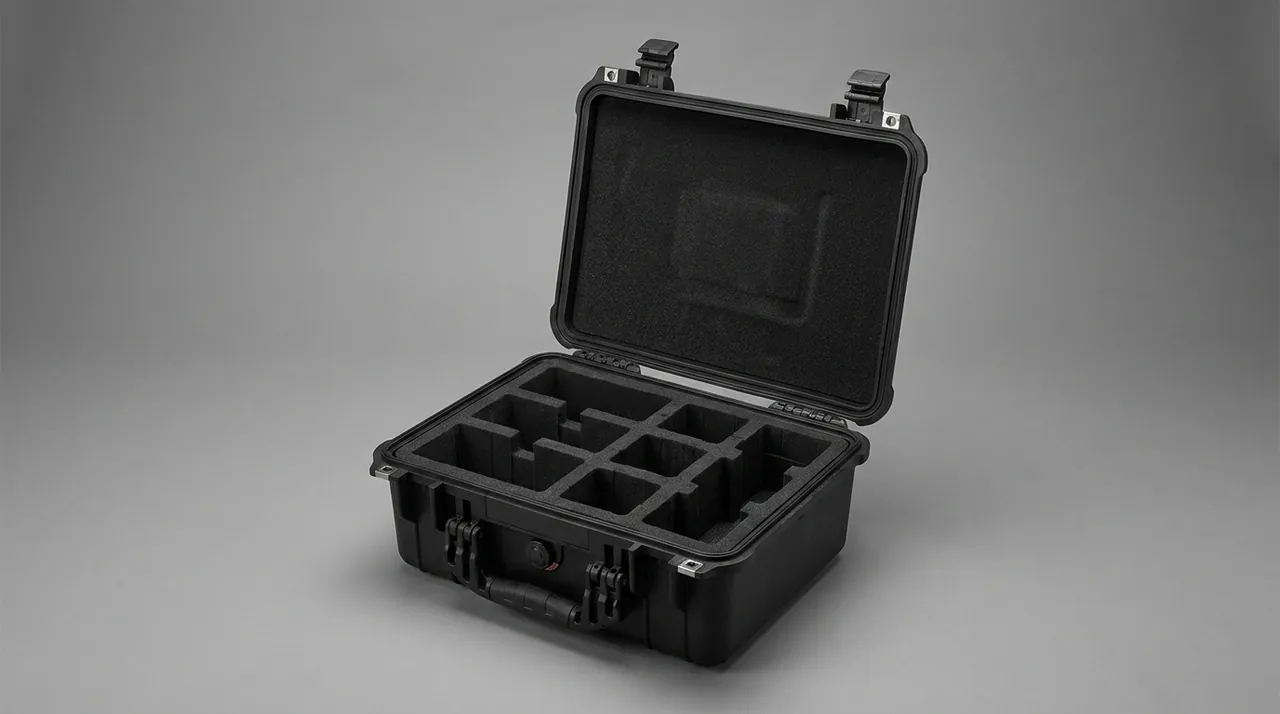
The lining is the internal layout of the whole carry system. A good layout keeps every item in place, makes it easy to take and return, and makes a missing item obvious. Regular-shaped general tools can sit in pre-cut foam recesses, while irregular or fragile items are better held in closed-cell foam or a molded Foam Lining: Cushioning and Custom Layout for Protective Case Interiors that wraps them in a cushioning layer. The layout must match the opening direction: a front-opening case suits long items inserted vertically, a top-opening case suits flat items laid out side by side, and a drawer arrangement suits a tool set presented layer by layer in the order of the work, so that retrieval order matches task order.
Besides foam recesses, retention can use hook-and-loop straps, elastic clamps, and adjustable dividers. Straps suit cylindrical or rod-like items, clamps suit instruments that are frequently handled, and adjustable dividers allow the interior to be reorganized as missions change. It must be stressed that lining only improves cushioning and positioning; it cannot replace container sealing. When a case is used in rain, snow, or washdown conditions, sealing is still provided jointly by the Waterproof Seal Strip: Structure and Selection for Protective Cases and the latches. For precision items that need damping, the suspended approach of the Optical Instrument Case: Zoned Protection and Vibration Damping for Precision Optics can be borrowed, adding an independent cushioning layer that lowers the vibration reaching the equipment so that positioning and damping are handled in the same lining design. The lining should also be easy to clean and to replace, because oil, grit, and de-icing residue accumulate in the apron environment, and a soiled or compressed insert loses both its fit and its cushioning value. Closed-cell materials are easier to wipe down and do not soak up liquids, while finger recesses beside each item make retrieval comfortable even through gloves. Where several items resemble one another, distinct colors or outline marks reduce the chance of a wrong pick, and the insert should be reviewed whenever the tool list changes.
Sealing Against Rain, Snow, and Washdown
The apron is a typical open-air environment where a case may be briefly exposed to rainfall, snow, and de-icing spray, and may also be washed down. Sealing depends on the match between the gasket cross-section and its groove, the even distribution of latch compression, and the continuity of the seal around corners. The gasket material must stay elastic at low temperature so it does not harden and lose contact; groove depth and width must match the gasket compression ratio so that effective contact is maintained over time. Selection can follow the cross-section and hardness guidance in the Waterproof Seal Strip: Structure and Selection for Protective Cases, and compatibility with the de-icing fluids common on aprons should be confirmed as well.
The number and position of latches determine whether compression is spread evenly around the closing perimeter; too few latch points leave the far side under-compressed and create a leak path. For a case with a pressure valve or ports, these openings should be sealed individually, and their reliability often decides the waterproof performance of the whole case. Any repair weld or secondary machining on the shell should also be inspected, so that a local defect does not admit water. Sealing level can be assessed against the IP Rating: Decoding Ingress Protection Grades for Protective Cases to confirm that the declared grade matches actual needs, and the Salt Spray Test: Corrosion Resistance Verification for Protective Cases shows how the gasket and metal parts age under long exposure, so that short-term waterproofing and long-term weathering are judged together. In service, the seal should be checked after rain or a washdown for trapped water and grit in the groove, and any residue should be cleared so that particles do not grind the sealing surface and gradually open a path. Because many apron cases are opened and closed dozens of times a shift, the latch stroke and hinge condition deserve the same attention as the gasket itself. A spare gasket held in stock shortens the time a case sits out of service when a seal finally hardens or tears.
Stacking and Corner Hardware in Apron Turnaround
Apron staging areas and vehicle holds have limited space, so cases often have to be stacked vertically to save floor area. Stacking reliability is mainly decided by side-wall stiffness and corner hardware: the corners provide location and a load path between layers, preventing the weight of an upper case from pressing directly on the weak lid surface. If the corners are too low or not flat, a stack will rock and, under sustained vibration, may loosen the latches. The design points in the Stacking Corners: Stacking Corners and Limit Structures for Protective Cases can be applied, and the load path should be planned together with the position of shell stiffening ribs.
In practice, the number of stacked layers should stay within the case rating so as not to exceed the bearing limit of the bottom case. Sub-cases carrying heavy equipment should be placed at the bottom for a stable center of gravity, while empty and light cases can go on top. If a stack is to be kept while a vehicle is moving, straps or a limit frame are needed to prevent sideways slip. Stacking capability can be checked with a Stacking Test: Stacking Load Verification for Protective Cases that records the deformation of the bottom case under a specified load and time, and a Vibration Test: Random Vibration Verification for Protective Cases can then show whether the stack stays stable under continuous shaking, giving a storage plan that is both space-efficient and safe. A common mistake is to keep stacking after a case has been loaded more heavily than usual, which overloads the bottom unit and leaves the latches under constant strain. Posting the permitted layer count on the case itself, rather than only in a manual, helps operators apply the rule correctly under time pressure. Where a stack is moved regularly, a pallet or a wheeled base under the bottom case distributes the load and makes the whole stack easier to relocate without breaking it down.
Carrying, Lifting, and Label Legibility
Apron support stresses efficiency, and the way a case is carried directly affects pace and crew effort. Short moves use casters and hand grips, while long or cross-area transfers may use a tug, a flatbed, or lifting equipment. A hand grip must be ergonomic, with anti-slip texture, and must stay intact when fully loaded; lifting points should be clearly marked so an operator does not pick an arbitrary position and damage the case. For a case with the lightweight Case Shell: Structural Materials and Molding Process of Protective Cases design, reinforcement at local load points deserves special attention so that weight saving never comes at the cost of a critical structural area.
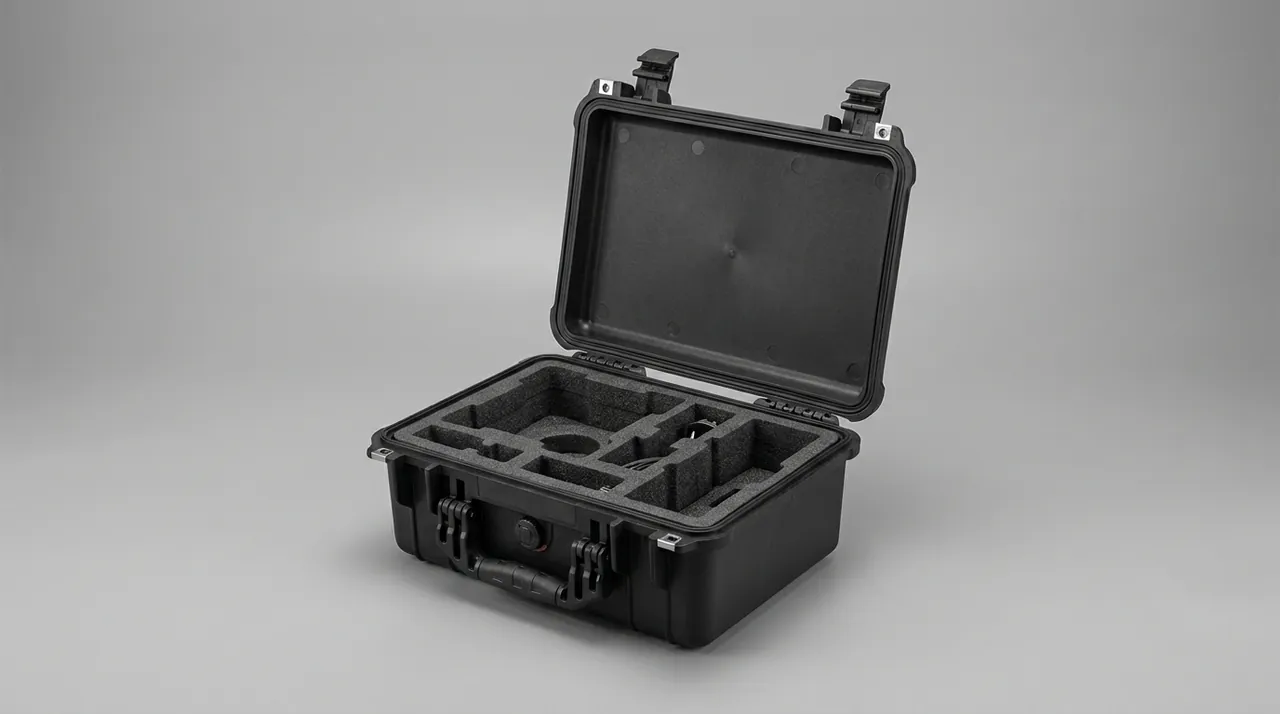
Label legibility is what makes modular carry work in practice. The outside of a case should use large mission codes and high-contrast color blocks so that staff can tell them apart from several meters away; QR or radio tags support in-service tracking and handover records, cutting manual counting time. Labels must resist abrasion and weathering so that rain, snow, or oil does not blur them quickly. For cases distinguished by aircraft type or workstation, a replaceable label slot near the handle lets the same case be re-labeled when the mission changes. The discipline of carrying and labeling often decides whether a crew can prepare equipment within a limited window, and it also affects the real service life of the case, so grip strength, lifting points, and label format should be agreed with the supplier at the procurement stage. It also helps to standardize where the number, mission code, and any hazard mark sit on the case, so that a glance from one angle is enough to identify a unit without walking around it. For cases that travel between bases, the label content should be readable to an outside carrier as well as to the home crew, which reduces misrouting and re-handling. A periodic label audit, folded into the normal equipment check, catches faded or missing marks before they cause a mix-up.
Pairing With Temperature-Controlled and Optical Cases
Ground support equipment is diverse, ranging from general tools to environment-sensitive instruments and moisture-prone parts. A single case type cannot cover every need, so the usual approach is a general module case supported by a few special cases. A module used to carry optical measuring or inspection instruments, for example, can adopt the structure of the Optical Instrument Case: Zoned Protection and Vibration Damping for Precision Optics, using independent cushioning and positioning to reduce transport vibration. A module for temperature-sensitive equipment can borrow the insulation and constant-temperature ideas of the Temperature-Controlled Case: How Constant Temperature Is Achieved and Verified, lowering the effect of day-night temperature swings, so that special needs are met inside one carry system.
Connection and stacking between different case types also need a common modulus. If a special case has a footprint different from the general modules, it will overhang or misalign when stacked and undermine overall stability. Procurement should therefore plan footprint, corner position, and handle height together so that all case types can be mixed in a stack and share one push cart. Special cases are also usually heavier, so they belong on the lower layer of a stack and must stay within the load range of the Stacking Corners: Stacking Corners and Limit Structures for Protective Cases. Through modular combination, a crew can cover more mission types without adding case count, turning the limited vehicle space into an equipment platform that can be reorganized as needed. It is worth planning the mixed layout on a vehicle floor sketch, marking where each case goes and in what order it is loaded and unloaded, because a case that is easy to take out in the morning can be blocked by another by the end of the shift. Heavy special cases belong low and toward the center of the vehicle to keep the load balanced, while frequently used general modules should sit at the opening. Reviewing the layout whenever a mission set changes keeps the platform practical rather than theoretical.
Environmental Verification and Test Division of Work
From a verification standpoint, an apron case must satisfy both structural and environmental criteria. Structural criteria answer whether the case stays intact during carrying, stacking, and transport; environmental criteria answer whether it keeps working under rain, snow, corrosion, and temperature swings. The two cannot replace each other: passing a Drop Test: Structural Verification of Protective Cases Under Shipping Impact does not mean the seal interface will not leak under sustained water pressure, and passing the Salt Spray Test: Corrosion Resistance Verification for Protective Cases does not mean the latches stay reliable after frequent cycling. They describe different failure mechanisms.
The usual verification order is to run structural tests first, confirming no irreversible deformation, and then environmental tests, so that structural damage does not disturb the sealing and corrosion criteria. For products that must meet transport certification, the test combination should follow the frameworks of UN Certification: Transport Safety Certification for Protective Cases and ISTA Test: Transport Test Procedure for Protective Cases. When reviewing reports, the purchaser should check whether each test passed independently rather than reading only the overall conclusion, so that a short board in sealing, material, or structure can be located precisely. That finding can then be turned into an agreed corrective action with the supplier, keeping the case at a predictable protection level across its whole service life. The test report should record specimen condition, fixture arrangement, and acceptance thresholds in enough detail for a later batch to be compared against it, since an undocumented test cannot support a design change. Where a series covers several sizes, the most heavily stressed size is usually chosen as the representative specimen so that its result can speak for the line. Any change of material, gasket supplier, or molding tool should trigger a review of whether the earlier verification still applies, and skipping that review is the most common way a previously sound case quietly loses its margin. Keeping the original report on file with the case number makes that comparison quick.
Equipment Count and In-Service Management
Mission switching is frequent in apron support, and equipment counting and in-service management directly affect dispatch speed and error rate. Modular carry naturally supports checklist management: each module has a fixed list, each position in the case holds one item, and a returning crew only has to check for empty positions to spot a missing item. With color management and numbering, both sides of a handover can confirm status in seconds instead of counting item by item. This approach demands that lining positions map one-to-one to the list and that each position shape constrains the item, so that checking an empty slot is the same as checking the list.
In-service management can also use the label system on the case exterior. QR or radio tags bind the case identity to a management ledger, so the location, borrowing, and return of equipment are all recorded. For modules stored for long periods, internal humidity and the temperature-humidity boundary addressed by the Temperature-Controlled Case: How Constant Temperature Is Achieved and Verified should be considered, and a desiccant or humidity indicator card may be added to keep equipment from getting damp while idle. The stability of the container affects the consistency of management data: if a lining position loosens and equipment shifts during transport, the count will be distorted, so the retention effect of the Foam Lining: Cushioning and Custom Layout for Protective Case Interiors should be rechecked periodically as part of the management system, keeping the ledger and the physical state aligned. A short scan during a quiet period, such as after the last flight of a shift, keeps the record fresh without interrupting active work, and it costs far less than a full recount. When a module is borrowed across teams, the scan also marks the responsibility point, so that any missing item can be traced to a specific stage rather than argued over. If the same item is repeatedly found missing, the cause is often a hard-to-reach position in the lining rather than carelessness, and the layout should be adjusted accordingly.
Configuration Examples for Typical Support Missions
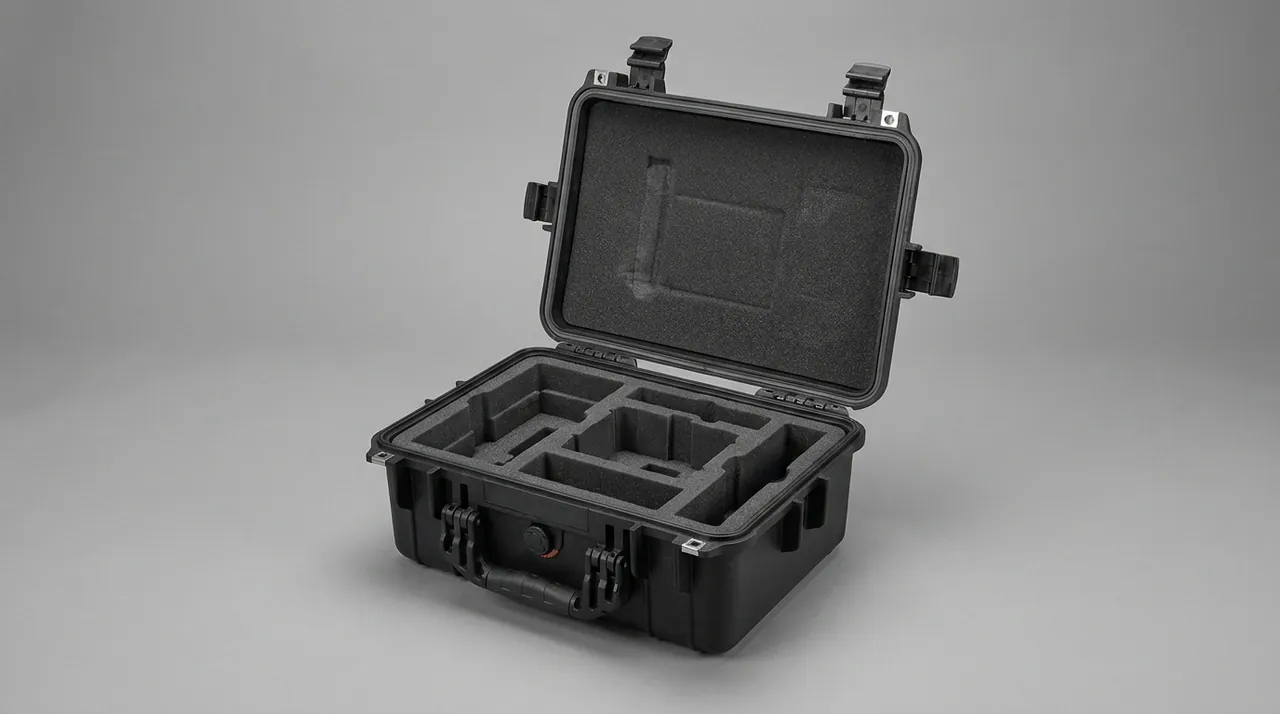
For routine line maintenance, a ground support crew might carry three modules: a common tools module, a seals and consumables module, and an inspection and measuring module. The common tools module holds regular-shaped items and uses pre-cut foam; the seals and consumables module has many small items and suits adjustable dividers forming small cells; the inspection and measuring module contains precision equipment and can borrow the cushioning approach of the Optical Instrument Case: Zoned Protection and Vibration Damping for Precision Optics. The three modules share one footprint modulus and can be stacked in a single host case, moving from vehicle to stand in one trip and cutting back-and-forth fetching.
In de-icing or special-weather missions, the module contents change while the container structure usually stays the same, which is the modular principle of changing the contents without changing the bottle. Color labels can then mark mission priority so that staff pick the right case quickly under pressure. When the mission scope grows, spare module cases can be added and stowed in the vehicle hold, with the stacking layout following the load rules of the Stacking Corners: Stacking Corners and Limit Structures for Protective Cases. By predefining several standard modules, a support unit can reorganize equipment quickly when a task changes at short notice instead of searching for loose tools, and that is exactly the practical value of modular carry under the intense rhythm of apron work. It helps to standardize the numbering rule and the list version for each module, so that old and new modules can run in parallel without being confused on site. For modules used on nearly every shift, keeping a second identical insert in reserve allows one to be cleaned or repaired while the other stays in service, which keeps missions from being delayed by maintenance. The set of standard modules should be reviewed at the same time as the flight schedule, so that the carry system follows the work instead of lagging behind it.
Selection and Procurement Points
Selection should break a use scenario into a checklist of verifiable indicators. The first step clarifies movement conditions, including threshold height, ramp slope, and hold dimensions, which fix the case outline and caster configuration. The second step clarifies environmental conditions, including whether the case is outdoors, whether it contacts de-icing fluid, and the minimum temperature, which fix sealing and material. The third step clarifies equipment categories and weight distribution, which fix the lining layout and stacking tiers. Every indicator should have matching evidence; sealing can reference the IP Rating: Decoding Ingress Protection Grades for Protective Cases, and structure can reference the Drop Test: Structural Verification of Protective Cases Under Shipping Impact, so that selection moves from judgment by experience to judgment by evidence.
Procurement should also protect series consistency and commonality, so that cases from different batches still stack together. Interface parameters such as corner position, handle height, and caster mounting-hole spacing should be standardized and written into the technical agreement for later expansion. For products intended for export, the transport and export compliance documents should also be confirmed as complete, and the framework of UN Certification: Transport Safety Certification for Protective Cases helps in understanding those requirements. Overall, the point of selection is not to pick the largest or sturdiest case but to match the structural capability of the container to the real support mission and to keep it compatible as the mission scope grows. At the contract level, it is reasonable to agree a sampling ratio and a procedure for handling non-conforming units, and to require the supplier to issue a consistency statement whenever a production batch changes. Such terms keep the purchased result stable over years of use, rather than depending on the goodwill of a single shipment. Writing the acceptance criteria into the technical agreement also gives both sides a shared reference when a dispute arises, so that the discussion stays on measurable requirements instead of impressions. A short specification checklist, reviewed before the order is placed, prevents most later disagreements.
Maintenance and Standards Basis
Once a case is in service, maintenance decides whether it keeps its designed performance over the long term. Routine checks should cover whether latches open and close smoothly, whether the gasket shows marks or aging, whether casters jam, and whether corner hardware is deformed. As a key sealing part, the gasket ages at a rate closely tied to the environment, and it can be replaced per the advice of the Waterproof Seal Strip: Structure and Selection for Protective Cases. If a stacking corner cracks or wears, its load capacity should be assessed before continued use. Scratches and oil on the shell should be cleaned promptly to avoid leaving corrosive media in contact, and maintenance records should be filed together with the case number for traceability.
On standards, the design and verification of the container structure can reference transport packaging and ingress protection specifications and form a complete evidence chain together with tests such as the Stacking Test: Stacking Load Verification for Protective Cases. It should be specifically stated that this article only discusses how the protective case container structure is applied in the airport ground support scenario, and does not involve the nature, composition, or internal construction of any packed items; the cross-border transport and export of related products must comply with local laws, regulations, and export control requirements, and the responsible party must carry out a separate compliance assessment. A passing container structure only means it has the corresponding protection under specific conditions; it does not replace the user's site operating rules and safety management, and actual use should follow the technical procedures of the ground support unit. When a case reaches the end of its service life, it should be retired through the asset process rather than kept in use while damaged, since a weakened container is a safety risk as well as a reliability one, and the lining materials should be recycled according to local environmental rules. Keeping the maintenance history attached to the case number makes that judgment easier and supports orderly replacement planning instead of emergency purchases.
Frequently Asked Questions
Q: Why does the apron environment stress case sealing and not just impact resistance? A: Because the apron presents rain, snow, de-icing spray, and washdown water at the same time, and once water enters the case, the equipment inside may get damp or corroded within a short period and become unusable. Impact resistance answers whether the structure cracks under a knock or fall, while sealing answers whether liquid can enter, and the two have different failure mechanisms and cannot replace each other. In a scenario with frequent open-air turnaround, the hidden damage from water ingress is often harder to notice and trace than a visible dent. A case therefore usually has to meet both structural strength and sealing requirements, and each should be checked with its own evidence during selection, rather than letting a single indicator stand for the whole protection capability. A practical habit is to treat the case as part of the protection system rather than as a plain box, and to record which waterproofing claim each unit carries, so that a damp finding can be traced to a specific seal arrangement. Reviewing that record after every wet-weather period turns an isolated incident into useful maintenance information.
Q: What is the main advantage of modular carry over a single mixed case? A: Modular carry assigns equipment to fixed sub-cases by mission or category, so that taking and returning items are both done at the case level, which cuts on-site searching time and counting errors significantly. A single mixed case is flexible when first loaded, but as items multiply, locating and checking them relies more and more on individual memory, and missing or misplaced items appear after a crew rotation. Modular carry also eases mission switching, because when the support content changes only the relevant module has to be replaced rather than the whole case being reorganized. In addition, a common modulus lets different modules stack together and share a push cart, raising turnaround efficiency and making storage and vehicle space planning more stable and predictable over time. The modulus should also cover handle height and corner position, not just footprint, because mismatched handles make stacked modules awkward to lift as a unit. Reviewing the module list once a season keeps it aligned with the current mission set and stops obsolete modules from crowding the vehicle.
Q: How should the casters and handle be matched to apron movement? A: The point of matching is to keep the case rolling smoothly over the thresholds, ramps, and joints that are common on an apron. It is usually recommended to combine swivel front wheels with fixed rear wheels, balancing turning flexibility against long straight pushes; caster diameter should be enough to cross floor joints and painted lines, and the wheel track should keep the case from tipping under sideways push. Handle travel must suit operators of different heights, and the grip should be easy to hold while wearing gloves. The final result should be confirmed by a real push test rather than judged from drawing dimensions, and where necessary the push resistance and turning radius at full load should also be assessed, so that a single jamming point does not disturb the support rhythm under real apron conditions. It is also worth noting that a case is often pushed over a wet or oily surface, so the grip and the wheel material should tolerate both rather than only dry indoor floors. A short trial on the actual apron route, with the real load, reveals more than any specification figure.
Q: Can the lining foam replace the sealing structure? A: No. The purpose of lining foam is to cushion vibration, constrain equipment position, and support fixed-position management; it is part of the case's internal environment and cannot stop external liquid from entering through the closing interface. Sealing is achieved jointly by the gasket, the groove fit, and latch compression, and it decides whether the case stays dry inside under rain, snow, and washdown. Making the foam thicker does not change the blocking ability of the closing interface. The correct approach is to make the sealing good first and then use the lining to raise damping and positioning, with each doing its own job; neither is dispensable, and both the verification evidence and the aging replacement plan should be checked during procurement. A practical check is to confirm that the two roles are covered by separate evidence: a sealing test or ingress rating for the seal, and a lining specification for cushioning and retention. Treating them as one combined claim is how gaps appear between what a case promises and what it delivers.
Q: Why is it recommended to run structural tests before environmental tests? A: Because in real turnaround a case often experiences structural loads such as drop, vibration, and stacking first, and then enters a damp or corrosive environment. If environmental tests are run first and a pass is issued, then structural loads are applied afterwards, the effect of structural damage on sealing and corrosion resistance may be hidden. Running structural loads first and then assessing sealing and corrosion more truthfully reflects how an injured case behaves under environmental stress. The common order is therefore to finish the structural verification, confirm there is no irreversible deformation, and only then assess sealing and corrosion, so that the conclusion is closer to the real service state and it is easier to allocate responsibility afterwards. The sequence also mirrors what a case actually experiences, since equipment is normally dropped or shaken in transit before it meets water or salt. Recording the order in the report makes the logic clear and prevents a later reviewer from mistaking a structural pass for an environmental one.
Q: How should the number of stacked layers be determined? A: The number of stacked layers is mainly constrained by the bearing capacity of the bottom case, the corner hardware, and the equipment weight distribution. The declared stacking load should be treated as the upper limit, combined with the actual loaded weight, and heavy cases should go on the lower layers to lower the center of gravity. The height and flatness of the corners decide whether an upper case sits stably, and if the corners are too weak the stack will rock and the latches may loosen. When a stack is kept while a vehicle is moving, straps or a limit frame must also prevent sideways slip. It is advisable to confirm the deformation of the bottom case under a specified load and time with a stacking test, and then set the safe layer count with some margin for frequent turnaround. The declared figure is usually a limit rather than a daily target, so it is sensible to operate below it in routine service. Marking the permitted layer count on the case prevents an operator from guessing under time pressure.
Q: What environmental exposures should an apron case account for? A: The apron is a typically mixed open and semi-open environment, where a case may be affected by rain, snow, de-icing fluid, washdown water, ultraviolet radiation, and day-night temperature swings at the same time. Rain and washdown test the sealing; de-icing fluid and standing water may contain corrosive components and test the material and surface treatment; ultraviolet radiation accelerates plastic aging and gasket hardening; and temperature swings may cause internal condensation. Selection should therefore assess sealing, corrosion resistance, ultraviolet resistance, and humidity control together rather than focusing on one item, and where necessary each should be verified by a corresponding test, with the conclusions written into the procurement technical agreement as acceptance criteria. A simple way to keep track is to list the exposures for the intended route and match each to a verification item, so that no single factor is assumed to cover the rest. Where a route crosses between open apron and covered areas, the worst case should set the specification.
Q: How can in-service equipment management be tied to the case structure? A: The key is to make interior positions map one-to-one to the list, so that checking an empty slot is the same as checking the list. Structurally, each position shape should constrain the equipment position, leaving an obvious cavity when an item is pulled out so that a missing item is easy to spot; the case exterior then carries a number, color block, or QR code that binds its identity into an electronic ledger. Management then no longer depends on counting item by item, and both handover speed and accuracy improve. If a lining position loosens and equipment shifts during transport, the count will be distorted, so the retention effect should be rechecked periodically as part of the management system, with the list version updated whenever the mission changes. Keeping the list version under control matters as much as the physical layout, because a list that no longer matches the insert will mislead the count it is meant to support. A short scan during a quiet moment keeps everything current without disturbing the flow of work.