

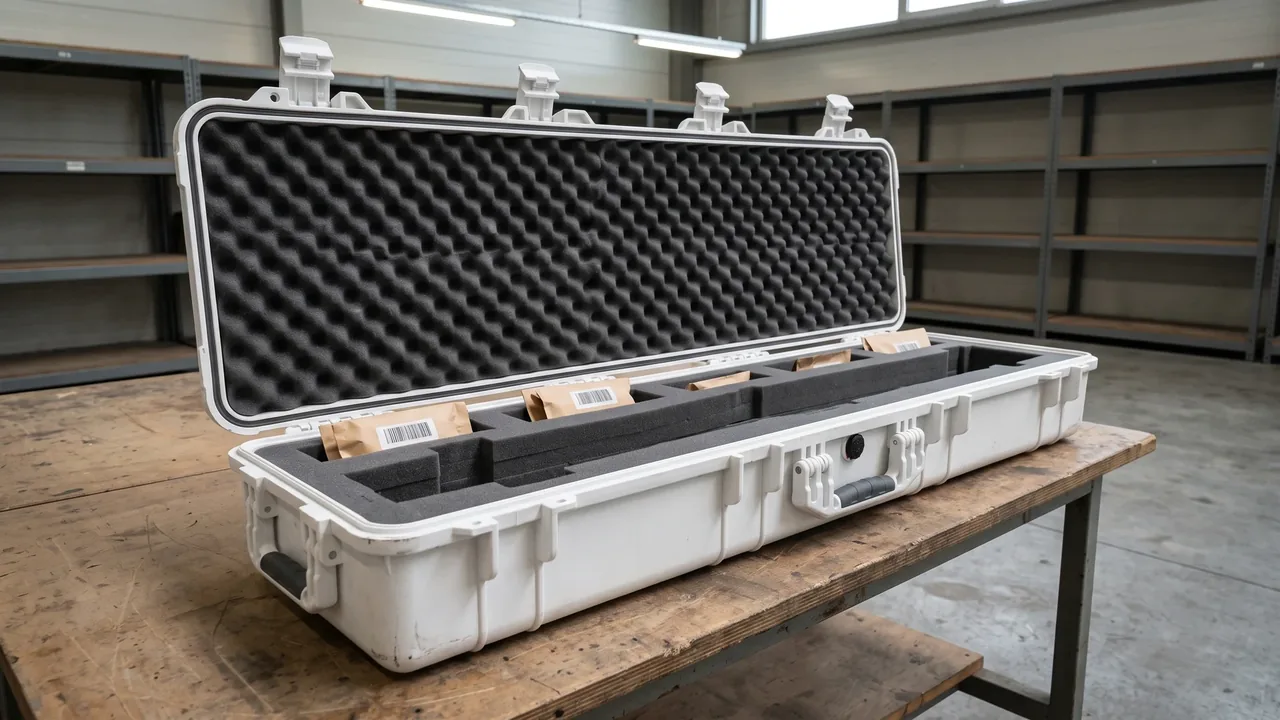
An optical instrument case is a specialized protective container built for microscopes, telescopes, spectrometers, laser rangefinders, sighting optics, lens assemblies and coated optical elements. Unlike a generic storage box, an optical instrument case must simultaneously address a rigid shell, zoned interior liner, shock isolation and sealed dust protection, because optical equipment is usually expensive and extremely sensitive to vibration, humidity, particulates and surface scratches. When buyers search for terms such as Optical Instrument Case or Instrument Case, what they really care about is not how the box looks, but whether the container can consistently protect costly optical systems from displacement, mold, and abrasion through long-haul shipping, field training, warehouse turnover and daily handling. This article explains, from a container-engineering perspective, how optical instrument cases are specified across material selection, liner zoning, shock isolation, sealing, stacking, certification and procurement acceptance, so engineers and buyers can build a practical selection framework and avoid the common mistakes that lead to damaged shipments.
Application Scenarios and Protected Objects
The objects protected by an optical instrument case are typically high-value, high-precision optical components such as objective lenses, eyepieces, prisms, beam splitters, filters, fiber couplers and coated mirrors. If such parts absorb an impact above the allowable threshold during transit, the consequence may be a recoverable shift or, worse, a chipped edge or detached coating. In surveying institutes, optical manufacturers, reconnaissance equipment sections and research laboratories, optical instrument cases are widely used for factory acceptance, field operations, factory recalibration and cross-region transfers. Compared with a general Instrument Cases: Precision Meter Transport & Protection, an optical instrument case puts far more emphasis on fixed positioning and anti-displacement, because once an optical element slides inside the box it may rub against the liner, generate debris, and even collide with neighboring parts. Therefore, planning must begin with the external dimensions, weight distribution, center of gravity and most vulnerable stress points of the contents, then derive the liner cutout and zoning logic. Only with that data in hand can an optical instrument case deliver true zoned protection rather than becoming a pretty empty shell, which is also the central concern of a Precision Instrument Cases: CMM, Spectrometer & Laser Rangefinder Protection.
Beyond these classic users, optical instrument cases also serve broadcast and film crews carrying lens kits, university teaching labs moving demonstration optics between campuses, and maintenance teams servicing laser alignment equipment in factories. In each setting the requirement is the same: the container must keep the optical path undisturbed from bench to field and back. A useful planning habit is to build a simple content profile for every case, listing each item, its mass, its fragile axis and its required orientation, then reviewing that profile with the foam designer before tooling. This small upfront step prevents the majority of fit problems and keeps the downstream customization cycle short, which is especially valuable when several case variants are ordered together.
Shell Materials: ABS, PP and Aluminum Trade-offs
The shell of an optical instrument case usually follows either an engineering-plastic or a metal route. Among engineering plastics, ABS, PP and modified PP are most common; they are formed by injection or rotational molding and offer light weight, low cost and strong formability. Aluminum alloy shells earn their place in heavy-load and high-value applications through higher rigidity, better thermal conduction and longer service life. An ABS shell has high surface hardness and good impact toughness, but its brittleness rises in low-temperature environments. A PP shell performs better in cold conditions yet has slightly lower surface hardness. An aluminum shell excels at compression resistance and deformation control at the cost of greater weight and higher price. Selection should weigh transport mode, stacking height, temperature range and budget. For most optical instrument cases, plastic shells suit medium loads, frequent handling and weight-sensitive missions, while aluminum structures fit long-term storage, heavy stacking or harsh field conditions. The material thinking overlaps with the discussion in Case Shell: Structural Materials and Molding Process of Protective Cases and the broader What Common Plastic Materials Are Used in Protective Cases?.
Weight and portability also demand trade-offs. Optical instruments themselves are often heavy, so if the shell adds too much mass, single-person carry becomes exhausting. For short- to mid-range transfers, a lightweight engineered-plastic shell paired with wheels and a telescoping handle is a common configuration that keeps rigidity while reducing handling load. For instruments that must be carried by one person into mountainous terrain, shoulder straps or modular external mounts let the case integrate with a frame pack. Lightweight design must never cut shell wall thickness or reinforcement ribs, or corner cracking appears in drop tests. Buyers should request wall-thickness and rib-distribution drawings and judge them against expected drop height and stacking layers. Like the selection logic in Detection Instrument Case: Protective Storage for Field Test Equipment, an optical case should weigh portability, rigidity, and protection grade on one trade-off table rather than chasing a single metric in isolation, because optimizing one dimension at the expense of another usually surfaces as damage during the first rough transit.
Liner Zoning: Fixed Positioning of Precision Elements
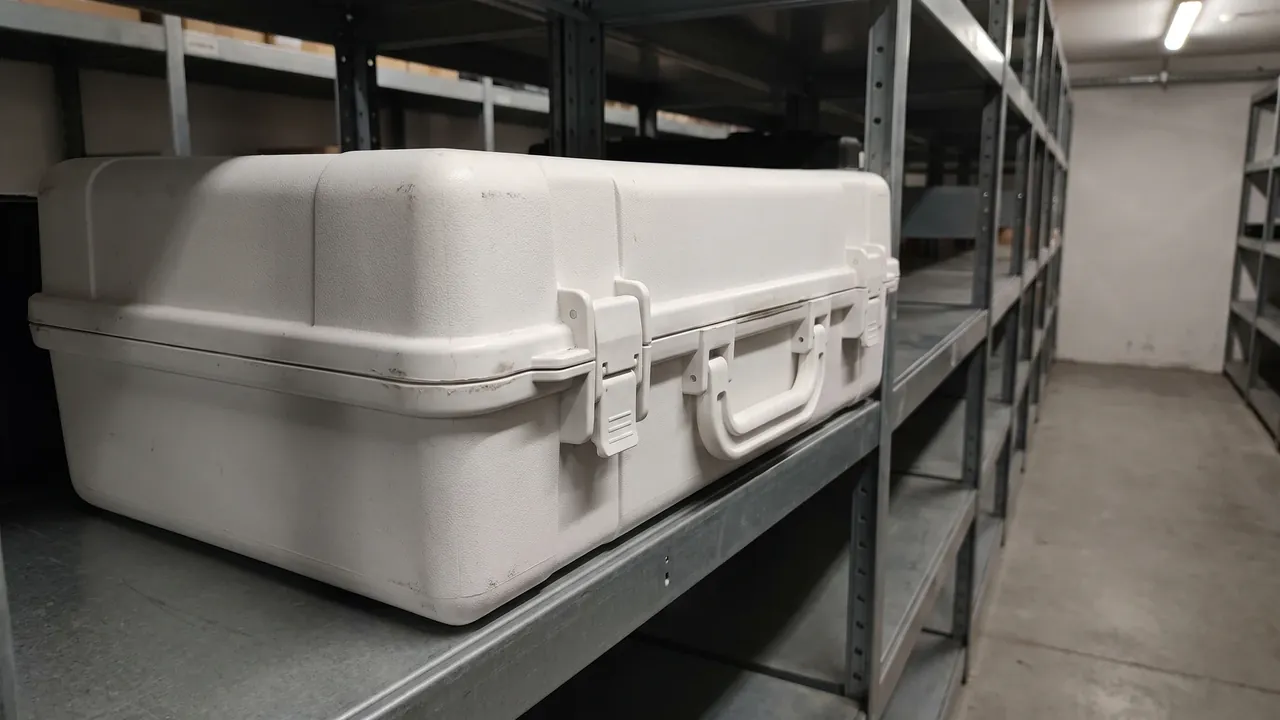
The foam liner is the core component that gives an optical instrument case its zoned protection, with common materials including EVA, EPE, XPE and PU. The central goal of zoning is to give every optical element an independent, well-fitting cavity so it cannot move under any orientation. In practice two methods dominate: CNC-carved form-fitting inserts based on the equipment shape, and pick-and-pluck foam that operators tear into grids on site. Flat square elements such as filter plates are usually held by layered trays plus elastic retainers, while cylindrical lens barrels use half-round grooves with straps. Regardless of method, the liner thickness, density and resilience must match the contents' weight; too heavy crushes the foam, too light provides insufficient damping. A rational liner zone prevents displacement and absorbs external shock energy layer by layer, making it an irreplaceable part of the shock system. The underlying thinking is consistent with the general approach to Case Foam Lining: Cushioning and Customization of Case Interiors and the What Foam Should a Protective Case Insert Use? EVA vs EPE vs XPE vs PU Compared.
Shock Isolation Principles: Impact Decoupling and Frequency Response
Shock isolation in an optical instrument case is not simply stuffing soft foam inside; it is building an impact-decoupling system. When the shell receives a drop or road-vibration excitation, external energy passes through the shell into the liner, where foam compression absorbs and attenuates it. An ideal design watches three parameters: foam stiffness, system natural frequency and the allowable acceleration of the contents. When the excitation frequency is far above the natural frequency, isolation is best; otherwise vibration may be amplified. Engineers therefore combine multiple foam layers of different hardness to keep the key optical element's response acceleration within a safe band. For random transit vibration, besides the foam itself, cushion pads between case and vehicle, straps and locator bosses all form part of the isolation chain. Understanding frequency response helps determine foam density and cutout depth at the molding stage instead of fixing problems later. These are the same general principles applied in Shockproof Cases: Cushioning Structure & Impact Isolation Design and the selection of Precision Instrument Protective Case: Shock Protection and Safety for Metrology and Calibration Equipment.
Sealing and Dust Control: Achieving IP67
Besides shock, the greatest enemies of optical gear are dust and water ingress. To reach a rating such as IP67, an optical instrument case relies on the seal strip around the lid and the engagement structure of the shell. The usual method is a continuous seal groove along the lid into which an integrally vulcanized or loop-joined elastic gasket is fitted; when latches compress the lid, the gasket is squeezed into a uniform face seal. To achieve stable waterproofing, the gasket material is often EPDM or silicone for aging, ozone and wide-temperature resistance. Beyond the main seal, a poorly designed vent can become a water channel, so cases that must balance internal and external pressure should use a How to Choose a Pressure Equalization Valve for a Protective Case: Breathable Membrane Specifications with a waterproof breathable membrane that lets gas pass while blocking droplets. Seal quality directly decides whether an optical instrument case can protect internal lens assemblies in rain, dust and salt spray, so the gasket and sealing process are key acceptance items, as detailed in the Case Seal Strip: The Key Waterproof and Dustproof Accessory for Protective Cases and What Materials Are Used for Protective-Case Seals, and How Do You Choose?.
Mold and Humidity Control: Protecting Optical Assemblies
Optical assemblies are highly prone to mold in hot, humid environments, and once mold adheres to a coated surface it is extremely difficult to clean and may permanently damage the anti-reflection film. An optical instrument case manages humidity through two paths: a reserved desiccant compartment or silica pocket that lowers local humidity by absorption, and a breathable yet water-blocking liner that prevents condensation from forming on the lens. For long-term storage, pairing the VCI concept with humidity indicator cards and periodic desiccant replacement is recommended. Also, when a case moves from low temperature to high humidity, surface and internal condensation may appear; a breathable valve and slow-open lid design reduce sudden condensation. It must be emphasized that everything discussed here is container-level mold and humidity management and does not touch the internal structure or formulation of any optical equipment; specific operation should follow the equipment manufacturer's instructions and local regulations, and the same container-only principle is echoed in related Optical Lens & Coated-Element Cases: Cleanroom & Scratch Protection.
A further consideration is the choice of desiccant form. Indicating silica gel that changes color at saturation lets handlers decide at a glance whether replacement is due, while non-indicating types are preferred when color residue could contaminate a clean environment. The desiccant volume should be sized to the internal air volume and the expected sealed duration, with a margin for humid climates. Some operators add a small humidity logger inside the case for high-value shipments, giving an auditable record if a claim arises. None of these measures alter the optics themselves; they are purely environmental controls exercised by the container and its accessories, kept fully separate from the protected instrument's own specifications and care instructions.
Latches and Pressure Resistance: Structural Safety in Transit
Latches are the key accessory that keeps an optical instrument case closed and resists accidental opening during handling and shipping. Common forms include press buckles, butterfly clasps, top-bottom locks and lockable anti-theft bases. For cases shipped by air or to high altitude, external pressure changes create an outward push on the lid, so the latch must resist vibration loosening and, together with a breathable valve, balance the pressure differential to avoid the lid being forced open. Another dimension of pressure design is stacking: when multiple cases are stacked, the bottom case bears the weight of all above, so the latch mounting and shell ribs must work together to spread the load across the shell rather than relying on latch points alone. During selection, focus on latch material, cycle life and anti-loosening structure, and when necessary consult the Case Latch: Pressure and Theft Resistance Hardware for Protective Cases guidance on pressure and theft resistance to ensure structural safety throughout transit.

Stacking and Limiting: Stability of Multiple Cases
In warehousing and transport, optical instrument cases are often stacked to save space. Stacking stability depends on the top-surface flatness, the four-corner stacking corners and the limiting structure. A stacking corner is a metal or plastic piece mounted at the case corners; it conducts the upper case's weight to the lower case's reinforcement ribs and provides alignment during stacking to prevent horizontal slip. In addition to stacking corners, the lid-top anti-slip pattern and bottom locator bosses also participate in interlocking. For cases holding precision optics, stacking height must be strictly controlled, because excessive stacking amplifies bottom-case compression and thus weakens the liner's grip on the elements. When planning warehouse layout, determine a safe layer height from stacking test data and apply the load-bearing and alignment principles of Case Stacking Corner: Load-Bearing and Alignment Hardware for Stacked Cases so the whole column forms a stable load-sharing body rather than separate units, which is also explained in How Do Protective Cases Achieve Stable Stacking? Stacking Ribs, Locator Bosses, and Interlocking Principles.
Labeling and Asset Management: QR Tracking and Visual Control
In large organizations, optical instrument cases are managed as case groups, but judging contents and status by sight alone is unreliable. A sound practice reserves a label area on the shell carrying the asset number, equipment name, person responsible and inspection date, optionally with a QR code for scan-based inventory. Color visual management is also used to distinguish categories of optical equipment, for example by color separating visible-light, infrared and laser devices to reduce mispick probability. Labels must resist weather, wear and solvent attack, and should be placed clear of the seal face and load zones. Using QR codes and color together, warehouse staff can count and dispatch stock without opening cases, protecting optics from unnecessary opening disturbance while raising turnover efficiency. This thinking aligns with Case Labeling and Asset Tracking and Case Color Visual Management in asset control programs used by equipment-intensive units.
Certification and Standards: MIL-STD-810H and GJB
To enter military or high-end research supply chains, an optical instrument case often must meet a series of environmental and reliability standards. Internationally, What Does MIL-STD-810 Testing Cover? How Protective Cases Comply defines high-low temperature, humidity, vibration, shock and drop tests to verify protection under harsh conditions; domestically, the GJB Military Standard Cases: China Defense Compliance & Testing sets requirements on material, structure and testing of protective cases. For optical equipment, vibration and shock are especially critical because they relate directly to lens shift and edge-chipping risk. When accepting delivery, ask the supplier for the matching test reports and check that the test conditions reflect the real transport scenario. It must be clear that this article discusses only the container's compliance path under relevant standards; the export and transfer of specific equipment must follow local regulations and export control. Related context also appears in the broader Equipment Cases: General Instrument & Gear Transport Protection category.
Custom Molding and Liner Processing
When a standard optical instrument case cannot fit specially shaped equipment, a bespoke molding path becomes necessary. Molding breaks into shell injection tooling and liner foam work: the shell tool sets the external shape, wall thickness, ribs and latch mounts, while the liner is CNC carved or thermoformed from the equipment's 3D model. Before customization, a tooling review must confirm parting line, draft angle, shrinkage and first-trial validation to avoid flash or dimensional deviation in mass production. The liner stage confirms foam density, color and flame class, and designs support and buffer zones at vulnerable points. Although tooling has higher upfront cost, it maximizes fixed positioning and shock isolation and lowers long-term breakage and rework cost. Process points extend to Case Shell: Structural Materials and Molding Process of Protective Cases and the choosing a custom case foam insert: the factors to weigh, which together give packaging engineers a full picture of the production chain.
Field Workflow: Packing, Transit and Unpacking
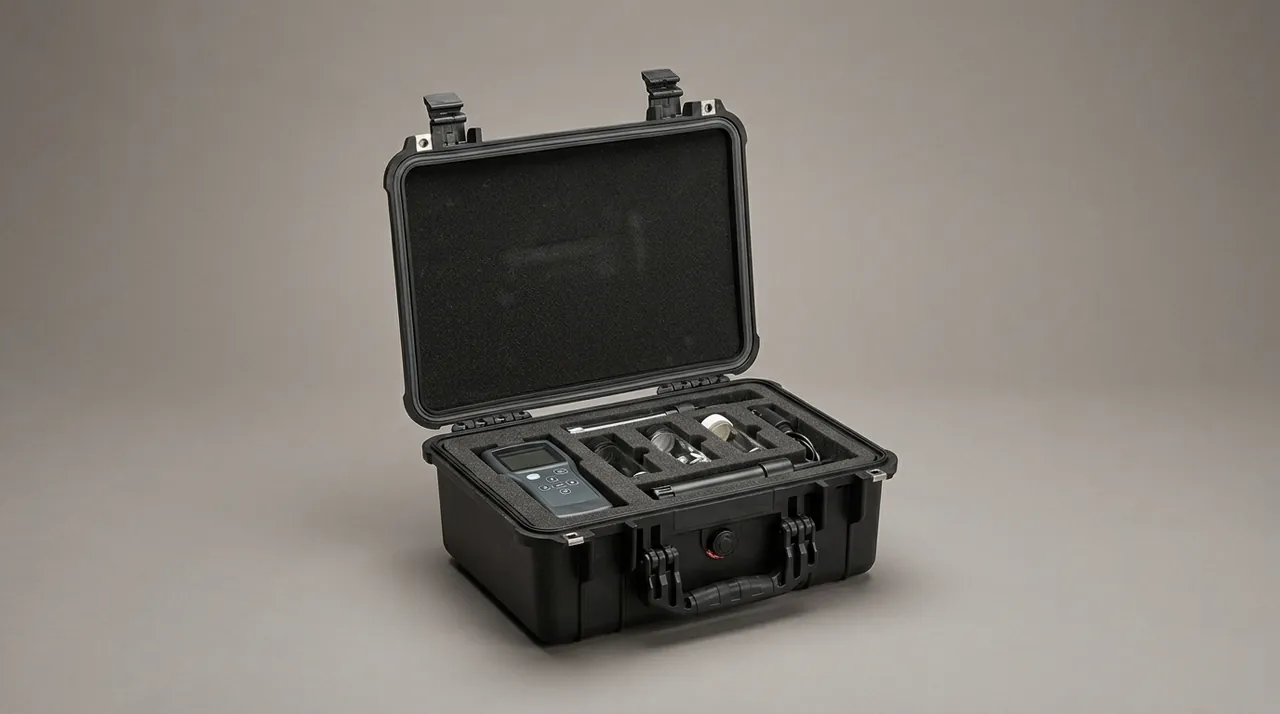
A qualified optical instrument case only delivers its design performance under a disciplined workflow. Before packing, check the list and confirm desiccant status and liner integrity; place elements into preset cavities without forcing; before closing, clear debris from the seal face and ensure the gasket is not twisted. While moving, hold the case upright or in the marked orientation, strapped down so it cannot slide; when stacking in layers, line up the stacking corners. On arrival, open in a clean, wind-free area to keep dust off the lens, and close or transfer the case promptly after taking items out. A disciplined process significantly extends liner and gasket life and minimizes human damage. For units with cross-region flow, attach the packing list and acceptance record to the case to form a traceable closed loop, and consider the reuse economics discussed in Reusable Shipping and Storage Container: Economics of Returnable Logistics when planning fleet size and rotation. It is also good practice to photograph the liner layout before first use so that any later discrepancy in cavity fit can be caught early. Training handlers on the correct orientation markings reduces the chance of placing a heavy module on top of a fragile one, which remains one of the most common causes of in-transit optical damage across every case type.
Beyond the single-case routine, fleet-level discipline matters when dozens of optical instrument cases move together. Group cases by climate sensitivity, keep desiccant expiry dates visible, and avoid mixing cases that require different handling orientations on the same pallet. A simple transit checklist posted at the dispatch point, covering lid seal inspection, strap tension and stacking alignment, pays for itself after preventing a single damaged shipment. These operational habits complement the physical design and turn a well-engineered container into a reliable protection system rather than an isolated hardware purchase that depends on luck to perform.
Common Faults and Maintenance: Gasket Aging and Foam Replacement
Over a long working life, the faults that show up most on an optical instrument case involve two wear parts: the gasket and the liner. Exposed to UV, ozone and repeated squeezing, the gasket slowly stiffens, splits or loses its spring, cutting waterproof and dustproof ability; at that point it should be swapped on a schedule for a same-spec item. The foam liner may develop dents, crumbs or collapse after repeated handling and compression, which weakens positioning; patching locally or re-lining completely brings it back. Should latches or hinges work loose or jam, adjust or swap them without delay to prevent a lid popping open in transit. Maintenance also includes cleaning the shell with neutral detergent, avoiding solvents that corrode shell and gasket. A regular inspection and consumable-replacement log is the guarantee of long-term reliability, and the general Protective Case Cleaning and Maintenance method applies here as well, with intervals tuned to duty cycle and climate exposure of the deployed case fleet.
Procurement Pitfalls: Specification and Acceptance
A frequent mistake when buying an optical instrument case is weighing price while overlooking the specification. A full specification ought to list shell material, wall thickness, liner material and density, seal rating, latch type, stacking load, temperature range and certification. On delivery, check by hand that the lid closes cleanly, the gasket runs unbroken, the liner suits the equipment, the latch engages fully and the stack sits stable. For critical batches, sample drop and vibration tests and keep records. For boxes claiming a standard, require the original test report. Solidifying the spec and acceptance checklist effectively avoids inferior substitution and mismatch, and the How to Avoid Procurement Pitfalls When Buying Protective Cases: Ten Common Quality Problems summarizes this systematically, while How Do You Write Tender Specifications for Protective Cases? Key Points for Compiling a Technical Specification helps translate needs into enforceable contract language with measurable acceptance criteria.
Frequently Asked Questions
Q: How is an optical instrument case different from a normal instrument case? A: The core difference is that an optical instrument case emphasizes fixed positioning and shock protection for precision optical elements, while a normal instrument case only needs to hold the device and close tightly. An optical instrument case designs independent cavities for vulnerable parts such as objective lenses, prisms and filters, and pairs them with multi-layer foam to keep external shock acceleration within a safe range. In addition, it pays far more attention to sealed dust control and moisture-mold prevention, because particulates and humidity directly damage coatings and surfaces. In materials, it often uses rigid yet light engineering plastic or aluminum shells with continuous gaskets. In short, an optical instrument case is a dedicated container aimed at zero displacement, low vibration and clean humidity control rather than a generic storage box, and its design logic overlaps with the general Instrument Cases category while adding the extra discipline that delicate optics demand from every transit and storage scenario, including stricter liner tolerances and cleaner internal environments.
Q: Which foam should the liner of an optical instrument case use? A: Liner foam selection should balance density, resilience and fit. EVA foam feels fine, rebounds well and is easy to CNC carve, making it ideal for form-fitting cavities. EPE and XPE foams are cheaper and closed-cell waterproof, suitable as buffer base layers. PU foam performs steadily in high-density support scenarios. Flat square elements such as filter plates often use layered trays plus elastic retainers, while cylindrical barrels use half-round grooves with straps. The key principle is that foam density must match the contents' weight; too heavy crushes the foam, too light under-damps. Selection can follow the foam material comparison and the custom foam factor checklist, with small-batch trial fitting when necessary to verify the result before mass production begins and to confirm that the chosen density survives repeated compression without permanent set across the expected service life of the deployed case in field conditions. Keeping a spare liner on hand for high-use cases further shortens downtime when a cavity eventually wears out.
Q: How does an optical instrument case achieve moisture and mold control? A: Moisture and mold control in an optical instrument case relies on three paths. First, a desiccant compartment or silica pocket lowers local humidity and is monitored with humidity indicator cards on a regular basis. Second, a breathable yet water-blocking liner reduces condensation forming on the lens surface. Third, when moving between large temperature differences, a breathable valve with waterproof membrane slows sudden condensation. It must be emphasized that these measures are all container-level humidity management and do not involve the structure or formulation of optical equipment itself. For long-term storage, replace desiccants periodically and inspect in ventilated conditions; specific operation should follow the equipment instructions and local regulations to remain compliant and safe throughout the storage period, and the same container-only principle applies to every climate-controlled storage recommendation made in this article without exception or implied coverage of the protected items. Operators should still log humidity checks so that any drift is visible before it reaches the optics.
Q: What stacking issues should be noted when transporting optical instrument cases? A: When stacking optical instrument cases in transport and storage, first line up the four corner fittings so the load above travels down through the reinforcing ribs into the lower case rather than pressing on latches or seal faces. Second, control the stacking layer height, because excessive stacking amplifies bottom-case compression and thus weakens the liner's grip on optical elements. Third, after stacking, strap or limit the whole column to prevent horizontal slip during transit. Finally, determine a safe layer height from stacking test data and apply color-coded management for different categories. Following these points saves space while guaranteeing safety, and they reflect the load-bearing and alignment principles applied in Case Stacking Corner designs used by protective-case fleets that face rough handling and uneven pallet loads through long deployments in many climates and terrains. Documenting the approved stack height on the case exterior helps new handlers comply without special training. Periodic re-verification after the case has absorbed a heavy shock is also advisable to confirm the liner still holds its shape.
Q: What structure is needed for an optical instrument case to reach IP67? A: Reaching IP67 depends on continuous sealing and a compression structure. The usual method is a continuous seal groove along the lid into which an integrally vulcanized or loop-joined elastic gasket is fitted; when latches compress the lid, the gasket is uniformly squeezed into a face seal. The gasket material is often EPDM or silicone for aging and wide-temperature resistance. Also, if the case has a vent, it must use a pressure equalization valve with waterproof breathable membrane to avoid becoming a water channel. At acceptance, check that the gasket is continuous without breaks, the lid closes tightly and the latch compresses fully. Relevant sealing structure and materials are covered in the Case Seal Strip guide and the case seal materials selection reference for buyers and engineers who must verify waterproof claims before approving a production batch of protective cases. A simple squeeze test of the gasket after delivery can reveal voids that paperwork alone would miss.
Q: What is the custom molding workflow for an optical instrument case? A: Custom work on an optical instrument case normally separates into liner processing and shell tooling. During the shell phase the outer form, wall thickness and latch mounts are derived from the equipment's 3D model; after a tooling review confirms parting line, draft angle and shrinkage, a trial mold validates dimensions. In the liner stage, zoned foam is CNC carved or thermoformed based on equipment shape and vulnerable points. Before customization, confirm foam density, color and flame class, and design support zones at fragile points. Although tooling has higher upfront cost, it maximizes fixed positioning and shock isolation and lowers long-term breakage cost. Process details extend to Case Shell molding and the custom foam insert factor checklist used by packaging engineers during project kickoff and validation phases, ensuring the finished case matches the protected equipment exactly and passes acceptance. A documented first-article inspection at the supplier is the cheapest insurance against a full non-conforming batch.
Q: Why does the latch of an optical instrument case need a breathable valve? A: When an optical instrument case is shipped by air or to high altitude, external pressure changes rapidly with elevation and creates a differential push on the lid inward or outward. With only latches and no valve to balance pressure, the lid may be forced open or become hard to open, even damaging the seal structure. The breathable valve contains a waterproof membrane that lets gas pass slowly to balance differential pressure while blocking droplets and dust. Thus the latch handles vibration loosening and theft resistance, while the valve handles pressure balance, and together they guarantee closed safety throughout transit. Selection can refer to the pressure equalization valve specifications and the Case Latch pressure-resistance configuration principles for reliable field performance under rapidly changing atmospheric conditions at altitude with confident sealing. Ignoring this balance is a frequent cause of lid seal fatigue on cases that otherwise meet every other specification. Pairing the valve with a properly rated latch therefore protects both the seal and the contents on every flight.
Q: How should the specification for purchasing an optical instrument case be written? A: When purchasing an optical instrument case, the specification ought to cover, at a minimum, wall thickness and shell material, liner density and material, seal rating, latch type, stacking load, temperature range, certification and a liner zoning drawing. On delivery, examine lid closure, gasket continuity, liner fit, latch engagement and stacking stability by hand, and run sample drop and vibration tests for critical batches. For boxes claiming compliance, require the original test report. Solidifying the spec and acceptance checklist effectively avoids mismatch. For a more systematic method, see the tender-specification guide and the procurement pitfall checklist; between them they help a buyer turn requirements into contract wording that can be enforced, with acceptance criteria that can be measured and remedies spelled out should any supplier ship non-conforming goods. Treating the specification as a living document also lets later case variants reuse the same template with small edits. This continuity reduces procurement lead time when a unit expands its optical inventory and needs additional matched cases.
Q: Can an optical instrument case store valuable lens assemblies long term? A: An optical instrument case can be used for long-term storage of valuable lens assemblies, but three supporting measures are required. First, keep the interior dry by replacing desiccants regularly and monitoring humidity indicator cards. Second, avoid direct sunlight and high temperature to slow gasket aging and liner deformation. Third, periodically open for ventilated inspection to prevent mold from quietly growing in a sealed environment. Long-term storage cases should stand upright, avoid heavy pressure, and bear an outer asset label for stocktaking. Note that this piece deals only with the container's storage conditions; the preservation standards of the assemblies themselves should follow the manufacturer's instructions and local regulations to ensure both protection and compliance with applicable storage and handling rules for the specific optical equipment involved. The container simply provides the controlled envelope in which those rules can be applied consistently over time. Provided the envelope is maintained, the optics inside remain stable across many storage and transit cycles.