

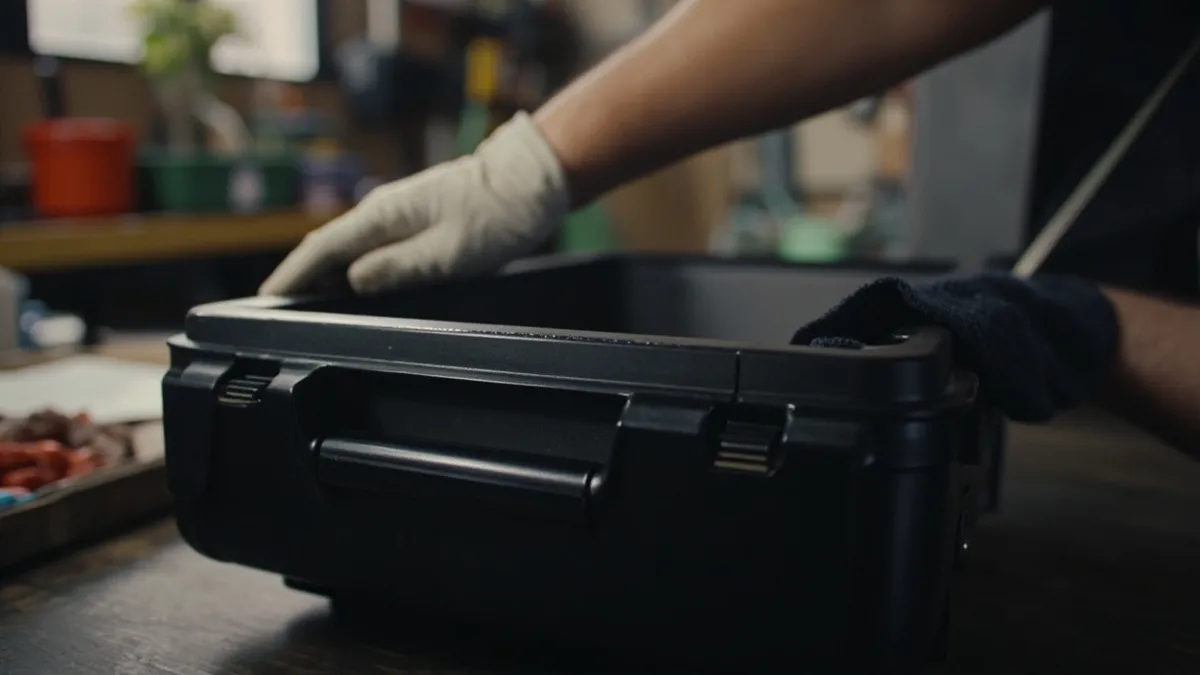
Clean a protective case with mild dish soap in warm water, or 70% isopropyl alcohol on a cloth when you need disinfection. Never use bleach, ammonia, acetone or abrasive cleaners, and lubricate the gasket with pure silicone grease only — petroleum jelly and WD-40 swell rubber and destroy the seal. Dry the case fully with the lid open before you store it.
Safe and Unsafe Cleaners
The shell is usually ABS or polypropylene, and the seal is a rubber gasket. A cleaner that is fine for one can damage the other, which is why the safe list is short.
| Product | Verdict | Why |
|---|---|---|
| Mild dish soap in warm water (~1 tsp per cup) | Safe | Removes dirt and grease without attacking gasket rubber or the shell |
| 70% isopropyl alcohol on a cloth | Safe for disinfection | Effective on surfaces; higher concentrations can embrittle some rubber compounds over time |
| Bleach / chlorine cleaners | Never | Makes rubber seals brittle and destroys waterproofing, often invisibly at first |
| Ammonia-based cleaners | Never | Can cause stress cracking in polypropylene shells, visible as white marks at corners |
| Acetone, paint thinner, strong solvents | Never | Dissolves plastics and permanently destroys seals |
| Abrasive powders or pads | Never | Scratches surfaces and creates stress concentration points |

Step-by-Step Cleaning
- Empty the case completely and take the foam out; shake and brush loose debris from corners
- Rinse off heavy mud with a gentle hose setting — never a pressure washer, which can force water past the seals
- Wash the exterior with the soap solution and a microfibre cloth, working from top to bottom
- Clean the interior with less water so nothing pools, then wipe it dry
- Clean the seal groove and the gasket with a barely damp cloth and inspect for cracks or flat spots
- Apply a thin, even film of pure silicone grease to the gasket and reseat it without twisting
- Leave the case open in a ventilated area until it is completely dry before closing it
Gasket Care Is the Whole Game
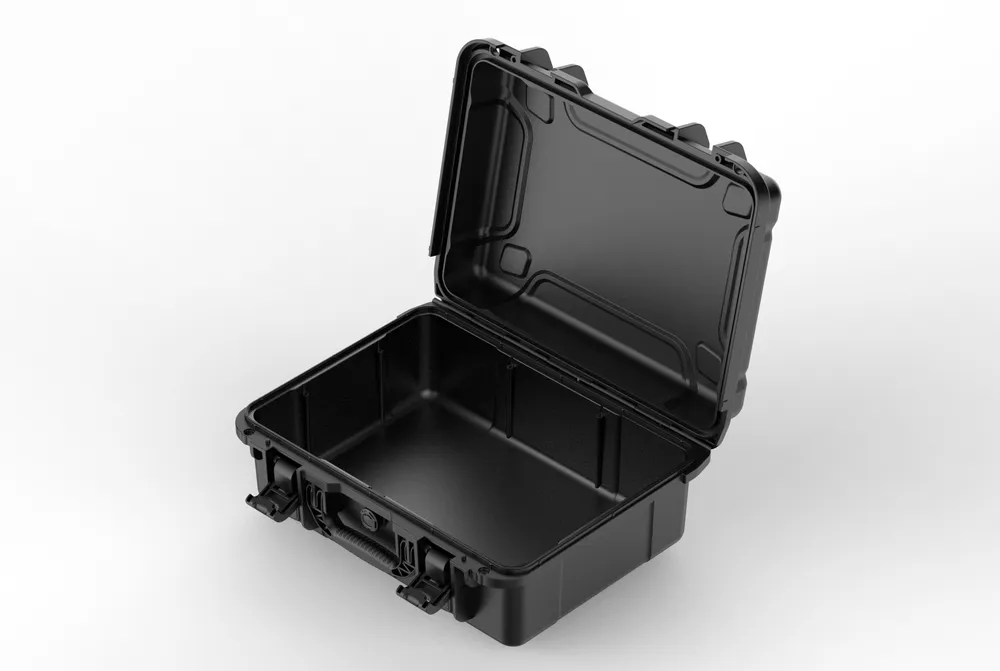
The gasket is the only thing standing between an IP67 rating and a wet interior. Pull it out of its channel, wipe it, clean the channel, inspect for cracks, tears or permanent flat spots, then lubricate with pure silicone grease and reseat it flush. Replace a damaged gasket rather than hoping it recovers — it is the cheapest part of the case and the most consequential.
Latches, Hinges, Valve and Foam
- Latches and hinges: open and close each one, flush out grit, and confirm the latch still engages positively
- Pressure equalization valve: check that the cap turns freely and the valve is not blocked by debris
- Foam: vacuum rather than wash; if it feels crunchy or leaves residue on your fingers it has degraded and should be replaced
- Odours: dry fully, then use baking soda or activated charcoal in the closed case for about 48 hours
- Storage: cool, dry and ventilated, with a silica gel packet inside; avoid damp basements and hot attics
Quick integrity check: place a dry tissue inside, close the case, submerge it in a tub for 5–10 minutes, then open it. If the tissue is damp, investigate the gasket, the latches and the valve before you trust the case with real equipment.
Keeping a case in service? See the foam insert guide for replacement interiors, review what your IP67 rating actually promises, or browse the current lineup if a shell is beyond repair.
Related Products
- 8 Series — Gun Cases; Military Equipment Cases; Camera Equipment Cases; Drone Cases; Watch Cases; Knife Cases; First Aid Cases; Electronics Equipment Cases
- WL8-2812 PP Gun Case — model WL8-2812
- All protective cases and toolboxes: 7 series, 158 models