

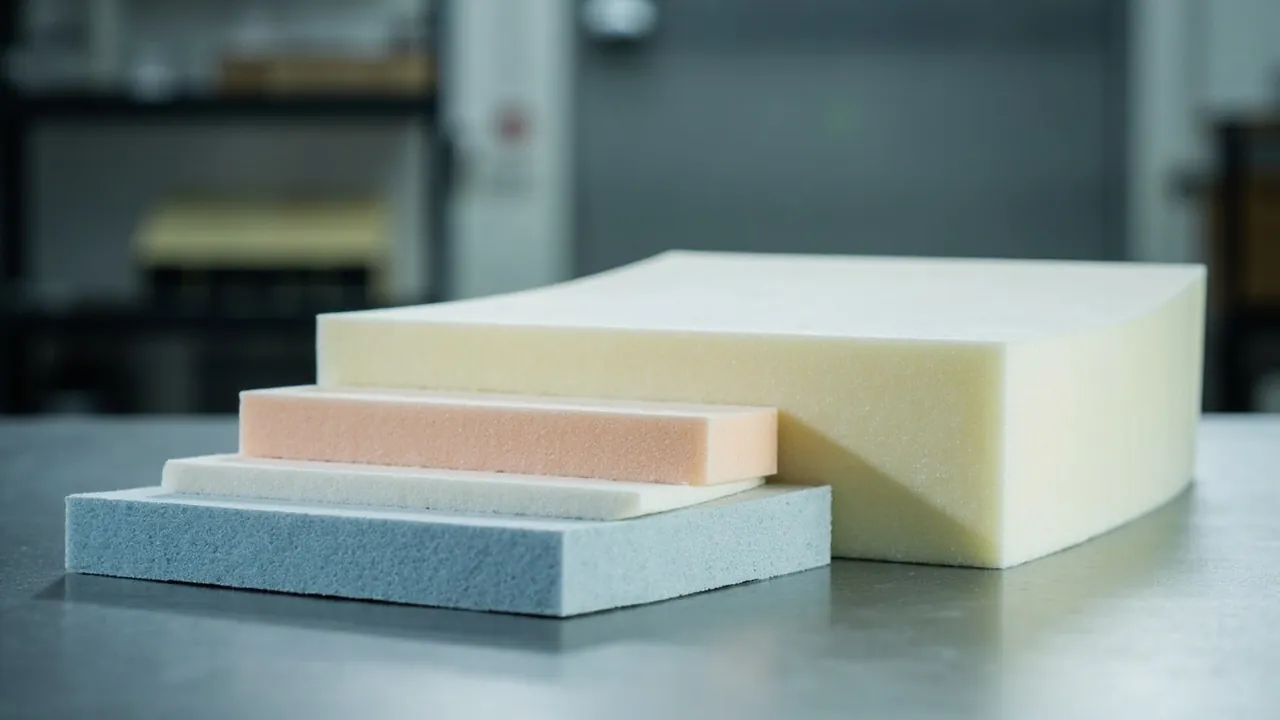
Short answer: there is no single best insert material, only a material that matches the protection objective. If cushioning and repeatable cut-out forming matter most, favour EVA. If low cost, light weight and general protection matter most, favour EPE. If a fine surface, moderate hardness and flat finish matter most, favour XPE. Consider PU foam only when soft conformity and low-cost filling matter more than moisture uptake and ageing. The correct order of selection is: define the protection objective (cushioning, location, moisture control, ease of access), then set density and thickness, and only then compare the four materials. What decides the actual result is usually not the material name but three parameters — density (kg/m³), thickness (mm) and compression and resilience — which together determine whether the cushioning curve matches the item weight and the expected drop height. This article covers the structural differences between the four foams, what the key performance indicators mean, the pros and cons of each, a scenario decision path, cushioning design, how processing affects performance, and environmental and compliance considerations. All figures are typical or empirical values; the supplier's data sheet and actual testing govern, and cushioning calculations should be verified with methods such as ASTM D3574.
Two common approaches to insert selection are both flawed. The first is to copy what a peer bought, even though the case size and item weight differ, so the cushioning does not match. The second is to assume harder is better or softer is better, ignoring that foam works by spreading impact energy over time and distance rather than by providing hardness. Insert problems are usually not "wrong material" but "wrong density or thickness" — the same EVA at 20 mm and at 40 mm can differ by an order of magnitude in protection. The focus here is therefore not a material ranking but a repeatable selection logic. It is written for sourcing and engineering staff at brand owners, trading companies and equipment makers who configure inserts for instruments, tools, equipment and samples.
Table of Contents
- Start with the conclusion: objective first, foam second
- What the four foams are: structural differences between EVA, EPE, XPE and PU
- Reading the key indicators: density, hardness, compression set and resilience
- EVA foam: characteristics, uses and limits
- EPE foam: characteristics, uses and limits
- XPE foam: characteristics, uses and limits
- PU foam: characteristics, uses and limits
- Side-by-side comparison and a selection decision path
- Cushioning design: how thickness, density and drop height relate
- How processing affects performance
- Environmental and compliance factors: moisture, ageing, flame retardancy and static
- Cost, supply and prototype verification
- FAQ
- Closing remarks and related reading
Start with the conclusion: objective first, foam second
An insert serves four functions, and their priority differs by scenario. Material choice should follow the priority.
- Cushioning: spread drop or vibration energy over a longer time to lower peak acceleration.
- Location: keep contents from shifting or colliding in transit.
- Moisture and dust control: block water vapour and dust from reaching the contents.
- Ease of access: allow quick removal and return.
The logic is simple:
- If the item is a precision instrument that must not be knocked — cushioning first; the material must hold peak acceleration below the item's tolerance at the target drop height.
- If the item is a set of tools in several sizes — location first; a rigid divider or pre-cut foam suits better and the material itself is secondary.
- If the environment is damp or storage is long — moisture control first; choose closed-cell foam (EVA, EPE, XPE are closed-cell) and avoid open-cell PU.
- If access is frequent — convenience first; cut-out tolerance and structure matter more than the material.
Remember one hard distinction first: EVA, EPE and XPE are closed-cell (independent bubble) systems, while PU foam is mostly open-cell (interconnected bubble). This distinction decides water absorption, moisture control and ageing behaviour, and is the first watershed in selection. For a fuller classification of inserts, see case interior foam types.
What the four foams are: structural differences between EVA, EPE, XPE and PU
All four are called foam, but their chemistry and foaming differ considerably.
EVA (ethylene-vinyl acetate). A copolymer of ethylene and vinyl acetate; a higher vinyl acetate (VA) content makes the material softer and more elastic. Usually moulded or foamed into a closed-cell structure. It offers good resilience, tolerates repeated compression well, and machines easily for CNC cut-outs and lamination.
EPE (expanded polyethylene). Made by foaming low-density polyethylene into a closed-cell structure. It is light, low cost and absorbs impact well, but its compression resilience is only moderate and its surface is soft and easily marked.
XPE (cross-linked polyethylene). Polyethylene is cross-linked before foaming, giving finer, more uniform cells in a closed-cell structure. Compared with EPE, XPE has a flatter, finer surface, better dimensional stability and higher tear resistance.
PU (polyurethane foam). Produced by reacting polyols with isocyanates, usually into an open-cell structure. It is soft, conforms well and is low cost, and can be made in a wide range of densities and hardnesses. But its open cells absorb water and oil, it ages readily, and it can crumble over time.
| Material | Chemical base | Cell structure | Typical hand-feel | Main advantage |
|---|---|---|---|---|
| --- | --- | --- | --- | --- |
| EVA | Ethylene-vinyl acetate copolymer | Closed-cell | Elastic, slightly tough | Cushioning and resilience, easy to machine |
| EPE | Low-density polyethylene | Closed-cell | Light and soft | Low cost, impact absorption |
| XPE | Cross-linked polyethylene | Closed-cell (fine) | Flat and fine | Dimensional stability, tear resistance |
| PU | Polyurethane | Mostly open-cell | Soft and conforming | Softness, low cost, conformity |
The practical meaning of structure: in a closed-cell material each bubble is independent, so water vapour struggles to enter and moisture control is good. In an open-cell material the bubbles connect, so water and oil penetrate easily, which suits dry or short-term uses. This is why long-term storage should rule out PU. Read it together with outdoor protective case interior cushioning.
Reading the key indicators: density, hardness, compression set and resilience
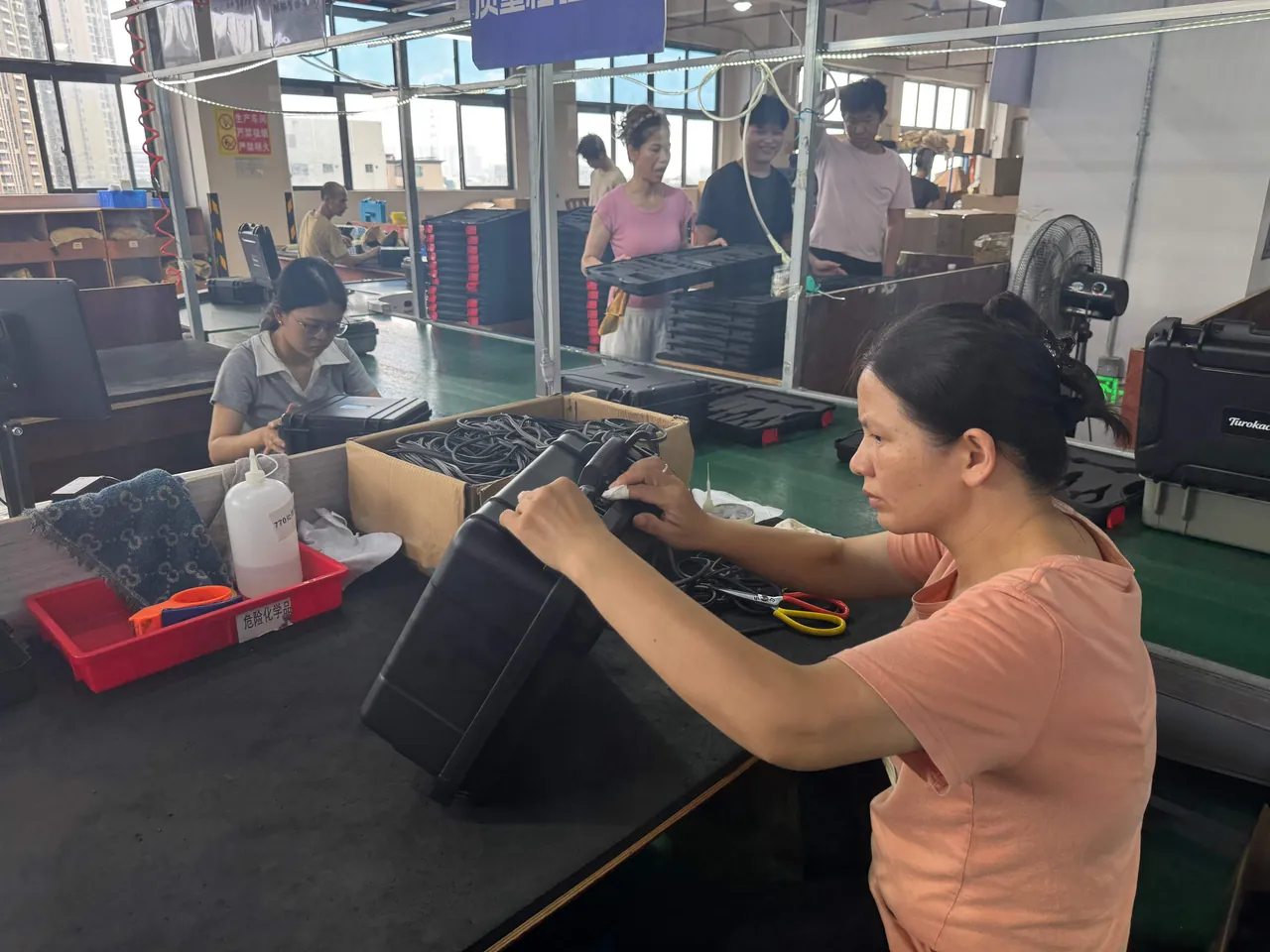
Choosing a material is really choosing indicators. Four matter most and are often misread.
Density (kg/m³). Mass per unit volume. Higher density is not automatically better; it must match the cushioning objective. Higher density usually carries more load and wears better, but at the same thickness is harder, heavier and costlier; lower density is softer and lighter but can collapse under a heavy item. Density testing commonly references ISO 845.
Hardness (Shore or indentation). Describes resistance to local indentation and must match the item weight.
Compression set. The proportion of deformation that does not recover after sustained compression, commonly referencing ISO 1856. This is especially critical for a case that presses on its contents for long periods: a foam with a high compression set stops recovering after sustained load and its cushioning falls permanently.
Resilience (ball rebound). Describes how fast elasticity recovers. Fast-recovering material suits repeated access; slow-recovering material absorbs energy better but returns slowly.
| Indicator | Meaning | Reference standard | Selection impact |
|---|---|---|---|
| --- | --- | --- | --- |
| Density | Mass per unit volume | ISO 845 | Load, weight, cost |
| Hardness | Resistance to local indentation | Indentation hardness method | Match to item weight |
| Compression set | Non-recovering proportion after load | ISO 1856 | Long-term storage reliability |
| Resilience | Speed of elastic recovery | Ball rebound method | Repeated access experience |
A practical warning: selecting on density alone while ignoring compression set fails in long-term storage. For a case pressing on a heavier item for a long time, confirm the compression set figure. Full cushioning and compression test methods can reference ASTM D3574.
EVA foam: characteristics, uses and limits
Characteristics. EVA is the most common mid-to-high-end choice for protective case inserts, especially where CNC cut-outs and lamination are needed.
Advantages:
- A good balance of cushioning and resilience, recovering after repeated compression and suiting frequent access.
- Closed-cell structure with low water absorption and good moisture control, suiting damp or long-term storage.
- Good machinability: easy CNC cutting, lamination and cut-out forming, allowing cavities that fit irregular items.
- Hardness can be tuned by adjusting VA content and density to match a wide range of item weights.
Limits:
- Costs more than EPE and PU.
- Higher-density EVA is heavier, adding to overall case weight.
- It stiffens at very low temperature, so low-temperature duty needs confirmation of low-temperature performance.
Typical uses: precision instruments, measuring tools, photographic equipment, electronic devices, and any situation needing repeated access and close conformity. For process detail on custom inserts, see the custom EVA insert process.
EPE foam: characteristics, uses and limits
Characteristics. EPE is the usual choice for cost-sensitive projects.
Advantages:
- Low cost, low density and light weight, suiting cost- and weight-sensitive applications.
- Good impact energy absorption, suiting single-trip or short-term transport cushioning.
- Closed-cell structure with basic moisture control.
Limits:
- Only moderate compression resilience, so it loses shape after repeated compression and is unsuitable for intensive reuse.
- A softer surface means cut edges are less crisp and can sag in long use.
- Dimensional stability and tear resistance are below XPE.
Typical uses: lower-value items, short-term transport, and in-case filling or interleaving. If the item is valuable or must be reused long term, move to EVA or XPE.
XPE foam: characteristics, uses and limits
Characteristics. XPE can be seen as an upgraded EPE, with cross-linking improving cell structure and performance.
Advantages:
- Fine, uniform cells and a flat, fine surface for a good appearance.
- Good dimensional stability, resisting deformation, with crisp cut edges.
- High tear resistance and a longer service life than EPE.
- Closed-cell structure with good moisture control.
Limits:
- Costs more than EPE.
- Feels firmer, so it may conform less than PU where softness is wanted.
- Where very high hardness is needed, high-density EVA is easier to tune.
Typical uses: situations requiring appearance, long service, crisp edges and dimensional stability, such as branded customer-facing packaging and equipment cases opened frequently.
PU foam: characteristics, uses and limits
Characteristics. PU is known for soft conformity and low cost.
Advantages:
- Soft and conforming, wrapping irregular items closely.
- Low cost, with a wide adjustable density and hardness range.
- A soft hand-feel that suits a close cushioning layer.
Limits (evaluate carefully):
- Mostly open-cell, absorbing water and oil, so unsuitable for damp environments or liquid contact.
- Ages and crumbles, potentially contaminating contents over time.
- Higher compression set, so cushioning falls after sustained load.
- Some formulations release odour or substances, which needs care with precision equipment or long storage.
Typical uses: short-term cushioning in dry environments, filling for non-precision items, single-use packaging inserts. If the item is precision equipment, a metal part, or needs long storage, rule out PU and move to a closed-cell material. If PU's soft conformity is still wanted, build a composite with a closed-cell outer layer and a soft inner layer.
Side-by-side comparison and a selection decision path
Place the four materials in one table and give a decision path.
| Comparison | EVA | EPE | XPE | PU |
|---|---|---|---|---|
| --- | --- | --- | --- | --- |
| Cell structure | Closed-cell | Closed-cell | Closed-cell (fine) | Mostly open-cell |
| Cushioning and resilience | Excellent | Moderate | Good | Moderate |
| Moisture control | Excellent | Good | Excellent | Poor |
| Dimensional stability | Good | Moderate | Excellent | Moderate |
| Surface flatness | Good | Moderate | Excellent | Moderate |
| Repeated compression | Excellent | Moderate | Good | Moderate |
| Tear resistance | Good | Moderate | Excellent | Poor |
| Ageing resistance | Good | Good | Good | Poor |
| Weight | Medium | Low | Medium | Low |
| Cost | High | Low | Medium | Low |
| Typical use | Precision items, repeated access | Low-cost transport | Appearance and durability | Soft conformity, short term |
Selection decision path (ask four questions in order):
- Long-term storage or damp environment? Yes → rule out PU; choose EVA/XPE (or EPE).
- Frequent access and crisp edges needed? Yes → favour EVA or XPE.
- Appearance and branded delivery required? Yes → favour XPE.
- Cost and weight highly sensitive and use is short term? Yes → EPE is more economical.
Pre-cut foam and rigid dividers are often compared side by side; see case dividers versus foam and pre-cut foam design.
Cushioning design: how thickness, density and drop height relate
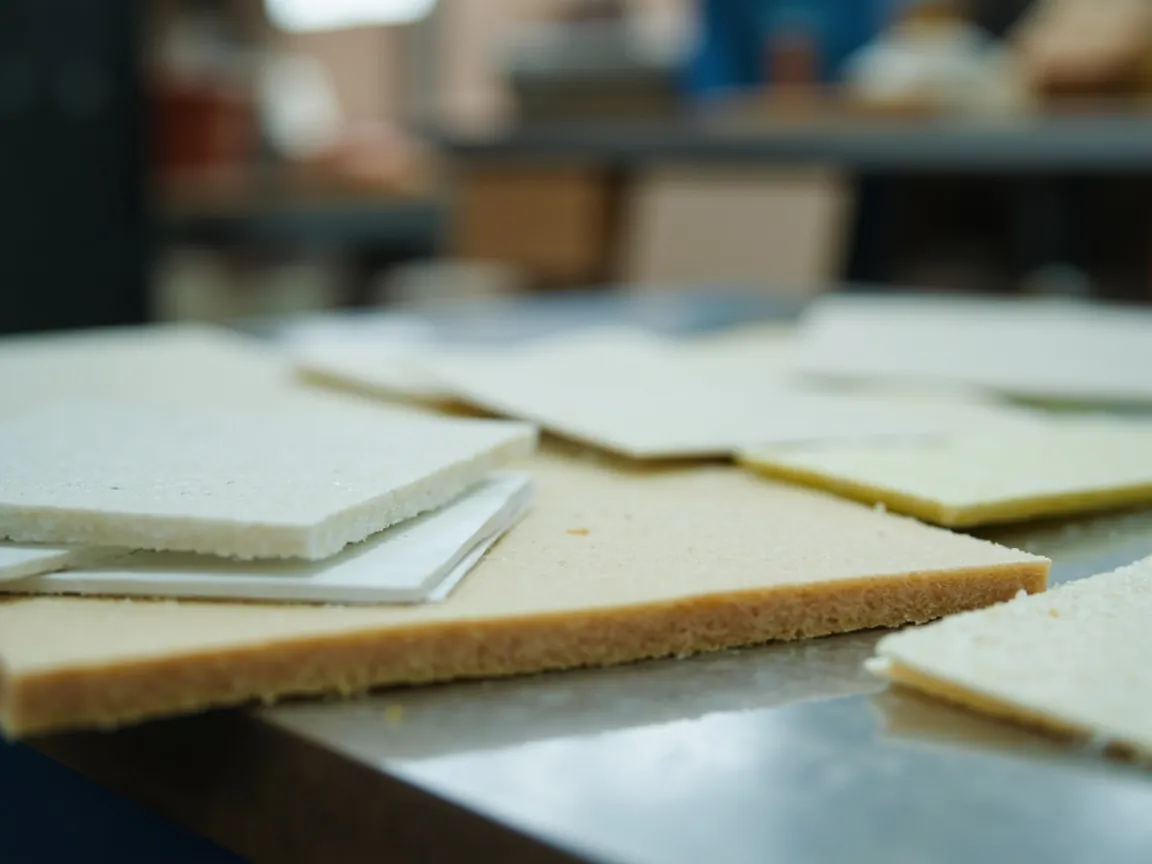
This part is most often overlooked and yet decides protection. Insert thickness is not chosen by feel; it follows from item weight, expected drop height and the item's tolerance together.
The basic logic: during a drop, the foam must absorb energy within a certain compression travel. The heavier the item and the higher the drop, the longer the cushioning travel — that is, the thickness — must be. If the thickness is insufficient, the foam compresses fully and the impact passes straight to the item; if the density is too low, the foam collapses under a heavy load and again loses its cushioning.
Three empirical relationships:
- Item weight increases → higher density or thicker foam needed.
- Expected drop height increases → thicker foam needed.
- Item impact tolerance falls (more delicate) → lower transmitted acceleration needed, usually meaning a thicker cushioning layer and a softer formulation.
| Item characteristic | Thickness tendency | Density tendency | Note |
|---|---|---|---|
| --- | --- | --- | --- |
| Light, impact-tolerant | Thinner | Medium | Mainly anti-scratch |
| Medium tools | Medium | Medium to high | Balances location |
| Precision instruments | Thicker | Medium | Lowers transmitted acceleration |
| Heavy equipment | Thicker | High | Prevents collapse |
| Irregular, fragile | Thicker, layered | Medium | Balance conformity and cushioning |
A practical recommendation: if a drop test is possible, do not rely on calculation alone. Run an actual drop test along the lines of the ISTA series or ASTM D4169, verified with an accelerometer or a simple sacrificial substitute. If testing is impossible, leave a margin in the thickness. For overall case protection, see understanding the IP67 rating.
How processing affects performance
With the same material, different processes produce different results. Choosing the material completes only half the job; processing decides the other half.
CNC cut-out: high precision and complex cavities are possible; edge quality depends on material density and tooling, and low density sags at the edge. Tool path and spindle speed affect cut smoothness.
Lamination: stacking foams of different densities or thicknesses creates a composite insert that both absorbs energy outside and locates inside. The choice of adhesive affects long-term reliability — a poor adhesive fails and delaminates under sustained load or heat.
Die cutting and punching: suits large volumes and simple shapes; tooling cost is low but shapes are limited.
Thermoforming: can produce cavities conforming to irregular items, but is sensitive to material and process parameters and needs prototype verification.
| Process | Precision | Suitable volume | Main risk |
|---|---|---|---|
| --- | --- | --- | --- |
| CNC cut-out | High | Small to medium-large | Edge sag (low density) |
| Lamination | Medium-high | Medium | Adhesive ageing and failure |
| Die cutting | Medium | Large | Limited shapes |
| Thermoforming | Medium | Medium to large | Parameter sensitivity, needs verification |
A reminder: the insert design variables go beyond the material. Cut-out tolerance, layer count and bonding method all affect the final result; for a systematic view see custom foam design factors.
Environmental and compliance factors: moisture, ageing, flame retardancy and static
How an insert behaves in real conditions often turns on the following.
- Moisture and ageing. Open-cell PU absorbs water and oil and ages; closed-cell materials perform better. Outdoor or damp duty should use closed-cell foam with desiccant.
- Temperature. High temperature can soften some materials or release odour; low temperature can make them hard and brittle. Extreme-temperature duty needs a confirmed operating range.
- Flame retardancy. Electrical equipment, lithium batteries or specific industries may require a UL94 rating.
- Static. Electronics and hazardous atmospheres need anti-static (ESD) inserts, so choose a material available in an anti-static formulation.
- Weathering. If the insert is exposed to light long term, assess it with artificial weathering methods such as ISO 4892.
- Odour and volatiles. Precision equipment or long sealed storage needs a low-volatile formulation.
Criterion: if the contents include metal parts or electronics, or must be stored long term, bring moisture, static and ageing into the assessment. Case sealing is a further layer of protection; see outdoor case waterproof design.
Cost, supply and prototype verification
Material choice ultimately lands on cost and supply feasibility.
The cost structure usually has four parts: the material itself, processing (cut-out, lamination, forming), tooling or die amortisation, and packaging and logistics. At small volumes, processing and amortisation often exceed the material cost, which is why a prototype quote is high and falls at production.
| Cost item | Influencing factor | Common optimisation |
|---|---|---|
| --- | --- | --- |
| Material | Density, thickness, formulation | Choose density to need, avoid over-specification |
| Processing | Cut-out complexity, layer count | Simplify cavities, reduce layers |
| Amortisation | Die or tooling and batch size | Raise volume or share a die |
| Packaging and logistics | Volume and weight | Optimise structure to cut weight |
Prototype verification recommendations: verify at least three things — dimensional fit (whether the item seats and releases reliably), cushioning effect (drop or vibration verification) and long-term behaviour (compression set and odour). For related order quantity and tooling amortisation see the custom case minimum order quantity baseline; for colour and appearance customisation see protective case colour customisation.
Supply considerations deserve the same attention as cost. Confirm that the chosen density and formulation are stocked rather than made to order, since a special density can carry a long lead time and a high minimum quantity. Ask what happens if the exact density is discontinued: whether a near-equivalent grade is available and how the change would be re-verified. For a long-running programme, keep a sample of the approved foam sealed and dated so that a future batch can be compared against it for density, colour and hand-feel. Where the insert is cut to a customer-specific cavity, note that the die or program belongs to that design, so a later design change may require a new one. Building these points into the supplier conversation early avoids a situation where a product is approved, scaled and then held up by an insert that cannot be reordered in the same specification.
JUNZHJIA, manufactured by KeXin New Materials (Guangdong) Co., Ltd., covers protective cases, toolboxes, military-specification storage boxes and waterproof junction boxes, serving wholesale, distribution, OEM/ODM and global supply. It provides selection, CNC cut-out, lamination and prototype verification of closed-cell inserts in EVA, EPE, XPE and similar materials, with inspection documents.
FAQ
Q: Should a protective case insert use EVA or EPE? A: It depends on use intensity and cost sensitivity. EVA offers good cushioning and resilience, recovers after repeated compression, is closed-cell for moisture control and machines easily into cut-outs and laminations, suiting precision instruments, measuring tools, photographic equipment and electronics that need repeated access and close conformity. EPE offers low cost, low density, light weight and good impact absorption, suiting lower-value items, short-term transport and in-case filling or interleaving. The key difference is long-term behaviour: EPE has only moderate compression resilience, loses shape after repeated compression, gives less crisp cut edges and can sag in long use, while EVA is clearly better here. The recommendation: if the item is valuable, reused long term, or needs crisp edges and dimensional stability, choose EVA; if the use is one-off or short-term and cost and weight are highly sensitive, EPE is more economical. Where surface flatness and durability must be higher still, consider cross-linked XPE. All three are closed-cell, so all control moisture better than open-cell PU.
Q: Can PU foam be used at all, and when must it be avoided? A: It can be used, but its window is narrow and three situations must be avoided. PU's advantages are softness, good conformity, low cost and a wide adjustable density and hardness range, suiting short-term cushioning in dry environments, filling for non-precision items and single-use packaging inserts. Three situations to avoid: first, damp conditions or possible liquid contact — PU is mostly open-cell and absorbs water and oil, which are then hard to remove; second, long-term storage of precision equipment and metal parts — PU ages and crumbles, possibly contaminating contents; third, long-term compression storage — PU has a higher compression set, so cushioning falls after sustained load. If PU's soft conformity is still wanted, build a composite: a closed-cell outer layer (EVA, EPE, XPE) for moisture control and support, and a soft inner layer for close cushioning. The test is simple: ask whether the case will be exposed to damp and whether the item will press on the insert for long — if either is yes, rule out a pure PU solution.
Q: Is higher foam density always better? A: No. Density reflects mass per unit volume; higher density usually carries more load and wears better, but at the same thickness is harder, heavier and costlier, while lower density is softer and lighter but can collapse under a heavy item. The right approach is to match density to item weight and expected drop height. The logic: the heavier the item and the higher the drop, the longer the cushioning travel needed; if the thickness is insufficient, the foam compresses fully and impact passes straight to the item; if the density is too low, the foam collapses under load and again loses cushioning. So high density is not high protection — using high-density foam for a light, small item simply converts hardness into weight and cost. More importantly, selecting on density alone while ignoring compression set fails in long-term storage. A case pressing on a heavier item for a long time must confirm the compression set figure (commonly referencing ISO 1856), or the material will stop recovering and lose cushioning permanently. Density testing commonly references ISO 845.
Q: How should insert thickness be determined? A: Thickness follows from three variables and cannot be chosen by feel. The relationship is: the heavier the item, the greater the expected drop height, and the more delicate the item, the greater the cushioning thickness required. The logic is that during a drop the foam must absorb energy within a certain compression travel — if the thickness is insufficient, the foam compresses fully and the impact passes straight to the item. Three empirical relationships: increasing item weight needs higher density or thicker foam; increasing drop height needs thicker foam; falling impact tolerance needs lower transmitted acceleration, usually meaning a thicker cushioning layer and a softer formulation. Rough scenario matching: light, impact-tolerant items use thinner foam at medium density; medium tools use medium thickness at medium-to-high density; precision instruments use thicker foam at medium density; heavy equipment uses thicker foam at high density to prevent collapse; irregular fragile items use thicker, layered structure. One practical recommendation: if a drop test is possible, do not rely on calculation alone. Run an actual drop test along the lines of the ISTA series or ASTM D4169 with an accelerometer or a sacrificial substitute; if testing is impossible, leave a margin in the thickness.
Q: What is the practical difference between closed-cell and open-cell foam? A: The difference decides moisture control, ageing behaviour and suitable applications. In closed-cell foam each bubble is independent, so water vapour and oil struggle to enter, giving good moisture control, dimensional stability and suitability for damp or long-term storage — typical examples are EVA, EPE and XPE. In open-cell foam the bubbles interconnect, so water and oil penetrate easily; it is soft and conforming but absorbs water and oil and ages and crumbles — the typical example is PU. The practical meaning is twofold. First, long-term storage or damp environments should rule out open-cell material and use desiccant alongside. Second, the soft conformity advantage of open-cell material can be retained in a composite — a closed-cell outer layer for moisture control and support, and a soft inner layer for close cushioning. Note also that even among closed-cell materials the cell fineness varies: cross-linked XPE has finer, more uniform cells, a flatter surface, better tear resistance and better dimensional stability than EPE. Case sealing is a further layer; the seal and the insert should be designed together.
Q: Does processing affect how well an insert protects? A: Yes, and substantially. Choosing the material completes only half the job; processing decides the other half. Four processes are common. CNC cut-out gives high precision and complex cavities, but edge quality depends on material density and tooling, and low density sags at the edge. Lamination stacks foams of different density or thickness into a composite that both absorbs energy outside and locates inside, but the adhesive affects long-term reliability — a poor adhesive fails and delaminates under sustained load or heat. Die cutting and punching suit large volumes and simple shapes with low tooling cost but limited shapes. Thermoforming can produce cavities conforming to irregular items, but is sensitive to material and process parameters and needs prototype verification. When evaluating a supplier, ask not only about the material but about the process: what equipment is used for cut-out, what adhesive is used for lamination, and how interlayer bond strength is verified. A common misconception is to equate "insert" with "a block of foam" — cut-out tolerance, layer count, bonding method and adhesive quality all affect the result and should be assessed together.
Q: What special requirements do electronics and metal parts place on inserts? A: They have different emphases. Electronics mainly need anti-static (ESD) protection: choose an insert available in an anti-static formulation and confirm surface resistance matches your sensitive device class; electronics also dislike moisture, so use closed-cell foam with desiccant. Metal parts mainly need moisture and corrosion protection: choose closed-cell foam (EVA, XPE) and avoid open-cell PU that holds water against a metal surface; for long storage, use VCI corrosion-inhibiting material and desiccant, and ensure the insert itself does not release acids or plasticisers. What both share is ageing and odour: in long sealed storage, choose a low-volatile formulation so the material does not age and crumble onto the contents. If the contents include lithium batteries or electrical equipment, confirm whether the insert meets a UL94 flame-retardancy requirement; for specialised industries, assess weathering with artificial weathering methods such as ISO 4892. A sensible order is to decide first which of moisture, static and corrosion is most critical, then choose material and accessories accordingly.
Q: Where does insert cost go, and how can it be optimised? A: Cost usually has four parts, and at small volumes processing and amortisation often exceed the material itself. The four are: the material itself (affected by density, thickness and formulation), processing (cut-out complexity and layer count, the main variable), tooling or die amortisation (strongly tied to volume), and packaging and logistics (affected by volume and weight). Four common optimisation directions: choose density to need, avoiding over-specification for light, small items; simplify cavities and reduce layers, since complexity and layer count raise processing cost quickly; raise volume or share a die to spread tooling cost, which explains why a prototype quote is high and falls at production; and optimise the structure to cut weight, lowering material and logistics cost. A caution: do not cut cost by lowering insert specification — the insert decides actual protection and its marginal return usually exceeds raising the case rating by one step. If the budget is tight, secure fit and cushioning first, then consider appearance and added features. The logic of order quantity and tooling amortisation is covered in the custom case minimum order quantity baseline.
Closing remarks and related reading
Back to the title question: there is no single best insert material, only a material that matches the protection objective. EVA suits precision equipment and repeated access, with the best cushioning, resilience and machinability; EPE suits cost- and weight-sensitive, short-term transport; XPE suits delivery requiring appearance and durability; PU is soft, conforming and low cost, but its open cells absorb water and oil and it ages, so it suits only dry, short-term use. The first watershed is closed-cell versus open-cell — long-term storage or damp environments rule out open-cell material, while a composite can retain soft conformity. What truly decides protection is not the material name but whether density, thickness and resilience match the item weight and expected drop height.
Three actionable recommendations. First, decide via four questions — long-term storage or damp, repeated access, appearance requirement, cost and weight sensitivity — whose answers point directly to a material. Second, let a test rather than a feeling set the thickness, running an actual drop test along the lines of the ISTA series or ASTM D4169 and leaving a margin where testing is impossible. Third, bring processing into the assessment, asking about cut-out equipment, laminating adhesive and interlayer bond verification, and confirming compression set (referencing ISO 1856) and density (referencing ISO 845).
JUNZHJIA, manufactured by KeXin New Materials (Guangdong) Co., Ltd., covers protective cases, toolboxes, military-specification storage boxes and waterproof junction boxes, serving wholesale, distribution, OEM/ODM and global supply, and provides selection, CNC cut-out, lamination and prototype verification of closed-cell inserts, with inspection documents.
Related reading